Home Blog Page 2681

FG has recovered $85m from Malabu Oil deal, says Malami

0

The Federal Government says it has recovered $85 million so far as part of the stolen funds from the Malabu Oil deal.

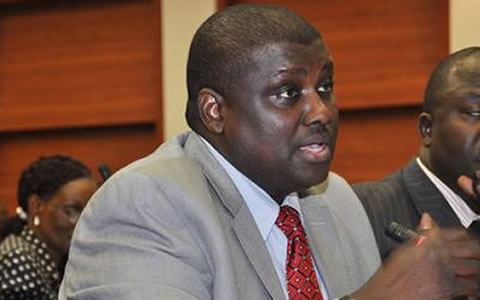
Abubakar Malami, Attorney General of the Federation and Minister of Justice, made this known at a consultative meeting on assets recovery in Abuja on Thursday.

Malami said the sum was recovered from the government of the United Kingdom, adding that the Nigerian government was intensifying its efforts to recover more funds.

He however said that some of the countries, where these funds had been stashed, were not cooperating with the Nigerian government.

He said several treaties had been signed between the Nigerian government and the governments of foreign nations to facilitate the return of stolen assets.

Already, Mohammed Adoke, former Attorney General of the Federation; Dan Etete, former Petroleum Minister; and Aliyu Abubakar, a businessman, are facing charges for alleged foul play in the Malabu oil deal, which involved the sale of oil block OPL 245 to two oil giants: Shell and AGIP.

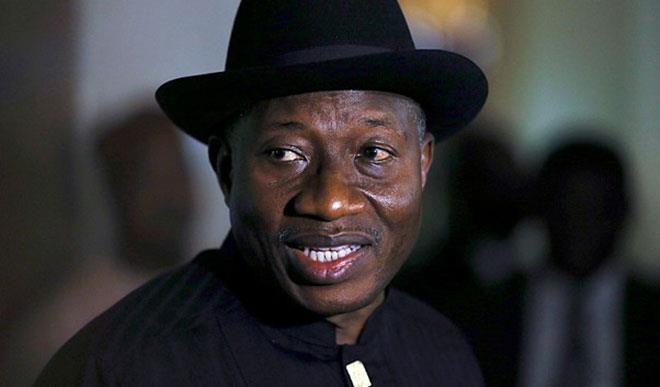
But Adoke had denied any wrongdoing, claiming that all the actions he took with regard to the deal were directed by Goodluck Jonathan, who was President at the time.

The House of Representatives Committee on Justice has invited Jonathan to appear before it and explain what he knows about the Malabu oil deal.

SPOTLIGHT: Underage girls who refused to detonate bombs strapped to them by Boko Haram

0


Photograph by Adam Ferguson

After the capture of the Sambisa Forest on Christmas Day 2016, the rate of suicide bomb attacks in Borno State dramatically increased — often carried out by teenage girls, most of whom were too young to even know what the insurgency is all about.

The New York Times tracked and caught up with 18 of such girls who were deployed as suicide bombers but, for one reason or another, they survived.

All of them narrated how they were captured by the insurgents and forced, or sometimes brainwashed, into strapping a suicide belt around their waists and detonating it in crowded areas.

“The girls didn’t want to kill anyone,” the NYT reported. “They walked in silence for a while, the weight of the explosives around their waists pulling down on them as they fingered the detonators and tried to think of a way out.”

Photograph by Adam Ferguson

“I don’t know how to get this thing off me,” Hadiza, 16, recalled saying as she headed out on her mission.

“What are you going to do with yours?” she asked the 12-year-old girl next to her, who was also wearing a bomb.

“I’m going to go off by myself and blow myself up,” the girl responded hopelessly.

Hadiza had been kidnapped by Boko Haram earlier this year, and while in the camp where they were being held hostage, a fighter approached her, asking for her hand in marriage. She rejected him.

“You’ll regret this,” the fighter told her.

A few days later, she was brought before a Boko Haram leader. He told her she would be going to the happiest place she could imagine. Hadiza thought she was going home. He was talking about heaven.

They came for her at night, she said, grabbing a suicide belt and attaching it to her waist. The fighters then sent her and the 12-year-old girl out on foot, alone, telling them to detonate the bombs at a camp for Nigerian civilians who have fled the violence Boko Haram has inflicted on the region.

“I knew I would die and kill other people, too,” Hadiza recalled. “I didn’t want that.”

According to the report, Boko Haram militants have carried out more than twice as many suicide bombings so far in 2017 than they did in all of 2016.

Photograph by Adam Ferguson

All of the girls that were interviewed recounted how armed militants forcibly tied suicide belts to their waists, or thrust bombs into their hands, before pushing them toward crowds of people.

Most were told that their religion compelled them to carry out the orders. And all of them resisted, preventing the attacks by begging ordinary citizens or the authorities to help them.

Aisha, 15, fled her home with her father and 10-year-old brother, but Boko Haram caught them. The fighters killed her father and, soon after, she watched them strap a bomb to her brother, squeeze him between two militants on a motorbike and speed away.

The two militants returned without him, cheering. Her little brother had blown up soldiers at a barracks, she learned. The militants told her not to cry for him. “He killed wicked people,” they told her.

Later, they tied a bomb on her, too, instructing her to head toward the same barracks.

Photograph by Adam Ferguson

Like some of the other girls, Aisha said she had considered walking off to an isolated spot and pressing the detonator, far from other people, to avoid hurting anyone else. Instead, she approached the soldiers and persuaded them to remove the explosives from her body, delicately.

“I told them, ‘My brother was here and killed some of your men,’” she said. “My brother wasn’t sensible enough to know he didn’t have to do it. He was only a small child.”

Other girls, whose full names are also being withheld out of concern for their security, had similar stories of terror and defiance.

So far this year, Boko Haram militants have carried out more than twice as many suicide bombings than they did in all of 2016.

You can read the full story here.

Misau: IGP bought two SUVs for Aisha Buhari without appropriation

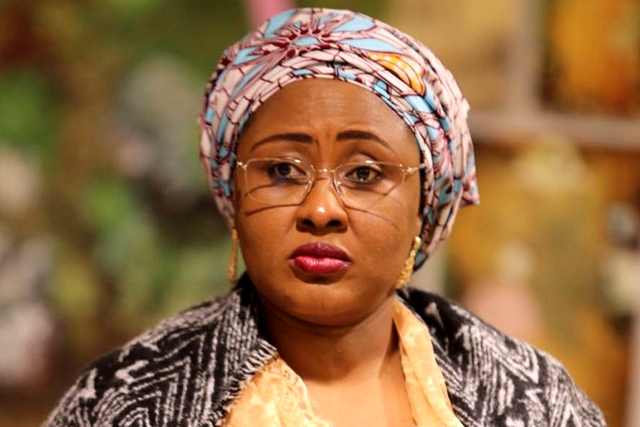
Isah Misau, senator representing Bauchi Central at the National Assembly, says Ibrahim Idris, the Inspector General of Police, approved the procurement of two Sport Utility Vehicles (SUVs) for Aisha Buhari, wife of President Muhammadu Buhari.

Misau made the new allegations on Wednesday when he reappeared before the Senate Committee on Ethics and Privileges, which is investigating his earlier allegation against the IGP.

He had claimed that Idris makes N10 billion monthly (N120 billion annually) in illegal payments to provide police security to top businesses and wealthy personalities in the country.

Misau also claimed that the IGP broke the police rules by impregnating a serving officer before getting married to her in a hurriedly arranged secret wedding.

The case has since been taken to the FCT High Court by the office of the Attorney General of the Federation.

Appearing before the Senate committee on Wednesday, Misau claimed to be in possession of documents showing details of how Aisha, through her Aide-De-Camp (ADC), had requested Idris to provide her with two vehicles, a Toyota Hiace and one Toyota Sienna.

“I still have some of those papers that the IG himself submitted to the court where the first lady (Mrs Buhari), through her ADC, requested for a Toyota Hiace and one Siena,” Misau said.

“The same day that the ADC wrote, the IGP minuted that she should be given two jeeps and it is not part of the appropriation.

“If you look at the appropriation, there is nowhere they said the first lady should be given two jeeps.”

Misau further accused Idris of “diverting the funds provided under the 2016 Appropriation Act for the acquisition of Armored Personnel Carrier (APC) to purchase of luxury cars”.

According to Misau, Idris “runs the police like a personal property by applying police resources and valuable assets to personal use by his children and close associates”.

Last week, Misau was arraigned before the FCT High Court on a five-count charge bordering on dissemination of falsehood against the police, the IGP, and the Police Service Commission.

He pleaded not guilty to all the charges and was granted bail in the sum of N5million and two sureties.

The case was adjourned to November 28 and 29 for continuation of trial.

Meanwhile, Aisha Buhari took to twitter on Thursday to deny the allegation, saying that she still makes use of her personal cars.

FLASHBACK: How four teenagers hijacked a Nigeria Airways plane ‘for MKO Abiola’

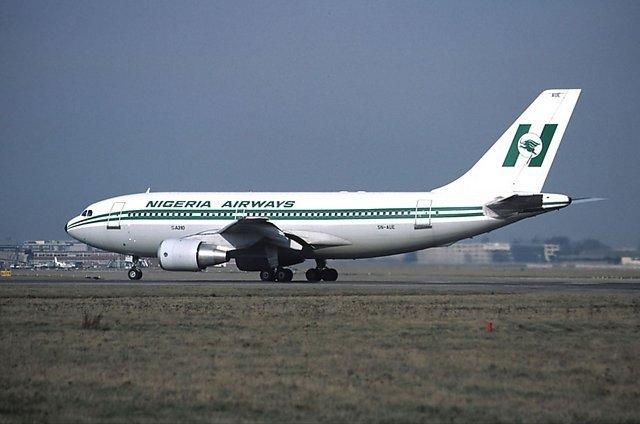
It was on this day 24 years ago that four Nigerian teenagers, irked by the illegal and unjust annulment of the June 12, 1993 general election by the Ibrahim Babangida administration, hijacked a Nigeria Airways aircraft flying from Lagos to Abuja and diverted it to Niamey, Niger Republic.

The incident took place on a Monday, October 25, 1993, at a time Ernest Shonekan, then Interim President, was struggling to hold a chaotic country together.

HOW IT HAPPENED

The young men — Richard Ogunderu, Kabir Adenuga, Benneth Oluwadaisi and Kenny Rasaq-Lawal — boarded the flight quite gently and waited till the pilot announced that passengers could unfasten their seat belts.

According to an account of the incident, as was later relayed by Ogunderu himself, the boys signaled to one another and seized the plane.

Passengers aboard the aircraft, including top businessmen and senior government officials, were bewildered to hear a voice, different from that of the pilot, addressing them in the moments that followed.

“Ladies and gentlemen, this plane has been taken over by the Movement for the Advancement of Democracy,” the rather tiny voice said. “Remain calm, we will not harm you. You will be told where the plane will land you.”

Ogunderu recalled that “the air hostesses were almost stone-dead, gripped by fear. They must not move else they would ‘be dead.'”

A passenger who was in the toilet was said to have remained indoors until one of the hijackers came to pull him out.

“We wanted change. Our action confirmed that when a system is inhumane, it could produce the extreme in all of us,” Ogunderu said in an interview in  2009.

“A system that cares not, a system that does not listen to our cries and our woes, a system that wants to exterminate us does not deserve a day of existence.”

Ogunderu was the leader of the pack and he narrated how he kick-started the hijack.

“I walked into the cockpit and seized the process, and then the others followed me. Two of us stood in the plane to intimidate the passengers. We took over the plane and asked the pilot to head for another country.”

DIVERSION TO NIAMEY

Independent sources said the initial plan was to divert the plane to Germany, but when it became obvious that they were running out of fuel, they decided to land in Niamey.

On landing, the hijackers found hundreds of armed gendarmes at the airport, but before then they had distributed their demands among the passengers, calling on the Nigerian government to overturn the annulment of the June 12 election and swear in MKO Abiola, the acclaimed winner of the election.

They gave the government 72 hours to meet their demands or else they would set the plane ablaze. However, they allowed 34 passengers to go and held onto the remaining 159 among whom were top Nigerian government officials.

The Nigerien police could not attack the plane by force, as they were unaware whether the attackers had military training or possessed explosives that could blow up the plane.

GAME UP!

The four held on to the plane for some days, trailed by bait negotiations until the gendarmes stormed the plane to rescue the passengers.

Ogunderu said: “They thought we were asleep, so they came under the cover of the night and fired several shots. They bombarded the plane. I think one person died.”

And so the four ‘musketeers’ were apprehended, their arms cramped on their back as they were handcuffed and taken to a prison in a community with day temperature in the range of 55 degree centigrade.

“We were poorly fed. We could neither speak Hausa nor French and nobody spoke English to us,” Ogunderu said.

“We were fired by the need to actualize June 12 through any means possible. We wanted to demonstrate rare courage that we could save Nigeria from the shackles of repression by giving a sense of courage to Nigerians.”

But he admitted that though they were motivated by the quest for freedom — freedom to choose our leaders — they “reacted in an extreme manner”.

As punishment, Ogunderu and his colleagues spent nine years and four months in prison in Niamey.

They had no contact with relatives and loved ones, from morning till night, for nine years.

But it was not all doom and gloom for the boys while in prison in Ndjamena, as among other things, they learnt how to speak French fluently.

Kabir improved his skill for drawing on canvass, sketching personalities and painting; Kenny kept his fashion design prowess alive throughout the gruesome nine years. Both returned to Niger Republic where their knowledge of French and their professions now earn them a fair living.

Ogunderu and Lawal returned to Nigeria, with the former attending the Alliance Francaise in Lagos where he brushed up his French language with a diploma degree.

Their only regrets, according to one of them, is that the “evil that Nigerians fought against several years back continues to luck around the country’s image”.

“Its unfortunate that our leaders continue to oppress us, the worst being that we cannot even choose our representatives in the face of fraudulent elections and the daring posture of the perpetrators of crime,” Ogunderu said.

ALERT: Only 30 percent of 1.7m UTME candidates are eligible for admission

The National Universities Commission (NUC) says only 30 per cent of the 1.7 million candidates who wrote the 2017 Unified Tertiary Matriculation Examination (UTME) are eligible admission.

Abubakar Rasheed, NUC Executive Secretary, disclosed this at a one-day public hearing on the regulatory conflict between Joint Admissions and Matriculation Board (JAMB) and universities in offering admission in Nigeria.

The hearing was organised by Senate committee on Tertiary Institutions and TETFund on Tuesday.

He said the limited spaces in tertiary institutions had made admission crisis inevitable in the country.

“The crisis of admission in this country is inevitable. Unless we expand spaces, we shall continue to have admission crisis in this country,” he said.

“Every exam has its own problem. We believe JAMB exam is credible and all of us operating in the system respect the results of JAMB exam.”

Speaking at the hearing, Ishaq Oloyede, JAMB Registrar, said there was no conflict between JAMB and universities in respect of admission.

Oloyede explained that most of the candidates who sit for JAMB examination annually do not have the required qualifications to gain admission.

He said: “It is not true that we have 1.7 million candidates that are ready to go into the Nigerian university system.

“Of the 1.7 million that took the exam I can say conveniently that not more than 30 per cent of them are prepared for admission; they are just trying. They do not have the five O-level required to go into the university.

“Secondly, let me also let us realize that 10 per cent of the 1.7 million that we see or 1.9 as the case may be they are not what can be categorized as belonging to the net enrolment ratio for entering tertiary education. They belong to the gross enrolment ratio.

“Eighty per cent of candidates sitting at the point of sitting do not have the O-level at all. They are awaiting results. So when we are building our theories and analysis, we need to be very cautious.

“If you score 400 over 400, and you do not have the five O-level, you cannot come into the university. The basic qualification is the five O-level.”

Maina’s family: This govt invited our son and gave him DSS security, why deny him now?


Family members of Abdulrasheed Maina say their son is not a criminal, rather he was begged by the Muhammadu Buhari administration to key into the change agenda.

Aliyu Maina, spokesperson of the family, said this at a press conference in Kaduna on Wednesday.

He was joined by Salihu Maina and Ladan Abdullahi, who are also members of the family.

He wondered why the government was denying Maina all of a sudden when it had assigned operatives of the Department of State Services to provide him security

“It is on record that Abdulrasheed Maina’s reform put to a stop the fraudulent withdrawal of huge sums from both the Nigerian Pension Board, the Nigerian Police Pension Board, etc,” Aliyu was quoted as saying by Daily Trust.

“Perhaps it is his noble efforts that made him enviable to the present administration when they came into power to convince him to come back and assist in its ‘CHANGE’ agenda.

“Abdulrasheed was in fact invited by this administration and he was promised security to come and clean up the mess and generate more revenue to government by blocking leakages.

“He succumbed to the present administration and came back to Nigeria. He has been working with the DSS for quite some time and he was given necessary security.

“There is a letter from the attorney-general of the federation where he gave his own legal opinion regarding the court verdict which was submitted to the Civil Service Commission and the head of service respectively.

“So, one wonders why all the agencies and various individuals responsible for his return are now denying.”

Aliyu said he was convinced his brother was being blackmailed by some cabal in the presidency, adding that the family would soon expose them.

“The cabals have gone to the extent of marking our house in red paints with an inscription of E.F.C.C under investigation,” he said.

“The EFCC is wrong in their action because Abdulrasheed inherited so many properties from his late father in Kaduna and Abuja; some of them were built before he was born, so how could he have acquired them fraudulently?

“The entire family of Abdullahi Maina is categorically stating that our son is not in any way a fraudster, rather he is a messiah who brought reforms into Nigerian Pension Scheme, whose effort saw the disappearance of pensioners roaming the streets of Abuja and other state capital in Nigeria.

“We are aware that all this act of calumny is not targeted against Abdulrasheed Maina alone but against the President of Federal Republic of Nigeria and the office of the Attorney General.

“We have contacted our lawyers, Messr Mamma Nasir & Co, and instructed them to act appropriately.

“We equally know that Abdulrasheed Maina is in possession of many facts against the cabal and interesting to the Nigerian populace, which he will disclose very soon.”

Malami on Maina’s recall: I won’t talk until Buhari gives me clearance

Abubakar Malami, Attorney General of the Federation and Minister of Justice, says he is ready to reveal all he knows about the reinstatement of Abdulrasheed Maina when he appears before the Senate.

However, he added a caveat: he won’t talk until he receives clearance from his “principal” — President Muhammadu Buhari.

Malami was reacting to reports that his office was fully involved in the recall of Maina, former Chairman of the Pension Reform Task Team (PRTT), who is currently on the wanted list of both the EFCC and the Police.

“I am a legal practitioner, who is always guided by law and public interest and will therefore not do anything that deviates from the law or breaches public interest,” Malami told journalists when asked to comment on his involvement in the Maina saga.

“I believe that Nigerians are entitled to know the truth in the entire saga and I am ready to speak directly to them when I appear before the Senate since I have been summoned by the legislature, which is investigating the matter.

“I will not however talk until I get clearance from my principal on the matter and I look forward to addressing anxious Nigerians on the matter when I appear before the senators.”

The Senate formed a committee on Tuesday to investigate Maina’s return to the country and subsequent promotion to the post of Director in the Ministry of Interior.

Main fled Nigeria to Dubai in 2013 after he was indicted and sacked from the civil service for spearheading massive fraud running into several billions of naira at PRTT.

However, he was secretly reinstated into the service — until Monday when public outcry forced Buhari to order his immediate disengagement.

CLARIFIED: Jonathan sacked Maina only RELUCTANTLY — and declined to prosecute him

The short-lived recall of Abdulrasheed Maina, former Chairman of the Pension Reform Task Team (PRTT), to the civil service has earned Goodluck Jonathan, former President, some public praise as someone who fought corruption better than Muhammadu Buhari. But the events of that period do not support this conclusion.

Actually, Jonathan literally allowed Maina walk free in 2013 in spite of a senate resolution urging him to prosecute the former pension reform boss.

Maina was a Director at the Customs, Immigrations, and Prisons Pension Office (CIPPO) in the Ministry of Interior before he was appointed PRTT Chairman by Steve Oronsaye, then Head of Service of the Federation, in 2010.

But Maina and Oronsaye also got enmeshed in the pension fraud they ought to be fighting, mindlessly looting the pension coffers of billions of naira.

MAINA’S SACK… FORCED BY THE SENATE

A Senate committee that was set up to probe the fraud almost got frustrated, as Maina refused to cooperate with its members.

The committee concluded its sitting and directed Mohammed Abubakar, Inspector-General of Police at the time, to arrest and prosecute Maina. The Senate committee also urged President Jonathan to disengage Maina from the civil service.

In fact, on February 14, 2013, David Mark, then Senate President, gave Jonathan a two-day ultimatum to sack Maina or face dire consequences.

“The executive has to choose between the Senate and Maina. He has crucified himself. If Maina remains, then the Senate would react appropriately,” Mark was reported as saying at the time.

“The Senate is not lacking in ideas on what to do. Nobody in this country is bigger than our democracy. I have been extremely patient with Maina, so that when we react, they will know that we have been fair.

“Whether the Police are serious about [arresting] Maina is something we are going to find out. This Senate is not going to allow this to linger on, if in two days they have not done anything, we can come here and convene and take a decision.

“This Senate has teeth to bite, the Senate will bite when it needs to bite; and when we decide to bite, there will be no room for escape.

“We have been pushed to the wall. The reaction is the correct reaction; no matter the depth of the Maina situation, nobody in this country will be left to go free if he is associated with Maina. No matter who is behind Maina, we are not going to accept it.”

The Senate then went ahead to adopt three motions moved by Victor Ndoma-Egba, the Senate Majority Leader, as follows:

“That Mr. Abdulrasheed Maina be dismissed from the Public Service of the Federal Republic of Nigeria immediately and be disengaged from all acts relating to public duty.

“That the Inspector General of Police appears before the Senate Committee on Police Affairs to give reasons why he did not act on the warrant issued by the President of the Senate.

“That Mr. Abdulrasheed Maina be investigated and prosecuted.”

However, reacting to the Senate resolution, Hassan Salihu, then spokesperson of the PRTT, said Maina was being persecuted despite having served the country with honesty and sincerity.

“Maina has never committed any offence to deserve this high level of persecution, even if he is an Assistant Director,” Salihu stated.

“We have done this assignment in the best interest of this country with all sincerity and honesty. It is only God that will save Nigeria.”

But in spite of the strong-worded resolutions by the Senate, Jonathan refused to act on the recommendations against Maina.

TECHNICALLY, MAINA SACKED HIMSELF

It was not until March 1, 2013, that rumuors started spreading that Maina may have been quietly removed at CIPPO.

In fact, Vanguard Newspaper quoted a civil servant as saying that it was only right for Maina to be replaced as he had already sacked himself by “running away from his job without any explanation”.

Maina’s replacement was eventually made official a week later on March 8, 2013. Olabisi Jaji, was posted from the Ministry of Environment to replace him, while Elizabeth Zenetini, from the Ministry of Agriculture, was appointed as her deputy.

JONATHAN SILENT ON PROSECUTION

Curiously, nothing was heard from Jonathan with regards to Maina’s prosecution in keeping with the recommendations of the Senate. On the contrary, Maina enjoyed executive protection, but was only eased out of service to avoid a looming head-to-head clash between the Presidency and the National Assembly.

In fact, anti-corruption sources say that in the early days of Maina’s disappearance, Jonathan was “fully aware” of his location.

Until he left office in 2015, there was no single time Jonathan showed interest in prosecuting Maina. Had the National Assembly not been recalcitrant in its demand for Maina’s sack, the ex-pension boss would still have remained in service — bar his arrest by law enforcement agents.

Some prisoners will vote in 2019 elections, says INEC

Certain categories of prison inmates whose crimes did not disenfranchise them will be allowed to vote in the 2019 general election, the Independent National Electoral Commission (INEC) has said.

Mahmood Yakubu, INEC Chairman, disclosed this in Abuja on Tuesday during a session tagged ‘Nigeria Civil Society Situation Room Dialogue’.

He said the Commission was already considering creating polling units in Nigerian prisons to give some categories of prisoners the opportunity to vote.

This followed ruling three years ago by a Federal High Court in Benin, Edo State, that prisoners have the right to vote in all elections conducted in the country.

Yakubu explained that only “certain categories of prisoners” would be given such an opportunity, depending on the nature of the crimes committed.

“We have already engaged the Comptroller-General of Prisons and we have statistics on the number of prisoners nationwide and the number of inmates registered,” he said.

“We are looking at the possibility of creating polling units in the prisons and to enable some categories of prisoners to vote.

“Ghana does it but there are some categories of prisoners who by the nature of crimes committed lose the right to vote. Whatever we can do to open up the process to ensure that as much as possible Nigerians are given the opportunity to vote, will be done.”

In December 2016, Prisoners in Nwasam Medium Prison,Ghana, voted in the December 7 election.

‘How did he enter the country?’ — Senate sets up committee to probe Maina’s recall

The Senate has set up a committee to investigate the circumstances that led to the reinstatement of Abdulrasheed Maina, ex-chairman of the Presidential Task Force on Pension Reforms, who is wanted for corruption.

This was following a motion that was moved by Isah Misau, the controversial Bauchi Senator who himself is currently undergoing forgery and libel charges at the FCT high court.

All the lawmakers who contributed to the motion described Maina’s reinstatement as an unfortunate development and a sign that some persons within the executive were working against the government.

However, Tayo Alasoadura said the Senate should not form a probe panel committee since Buhari had already ordered an investigation into the Maina saga.

“We should not always duplicate the Executive; if the Executive has ordered an investigation we shouldn’t order another,” Alasoadura said.

But after deliberations, the lawmakers mandated its committee on Public Service and Establishment to investigate the issue.

Olusola Adeyeye suggested that the Committee should include Chairman and Vice Chairman of the Committees on Interior, Judiciary and Anti Corruption.

He also said that the Chairman of the Committee on Public Service and Establishment should head the probe panel. The suggestions were adopted.

On Monday, President Muhammadu Buhari ordered Maina’s disengagement immediately after news broke that the fugitive had been secretly recalled into the federal civil service and promoted as a Director in the Ministry of Interior.

Buhari also queried the Head of Service of the Federation, demanding explanation as to what led to Maina’s recall. The report was submitted to Abba Kyari, Buhari’s Chief of Staff, on Monday evening. But its contents remain unknown.

Since the news of Maina’s reinstatement broke, the Ministry of Interior has been trading blames with the office of the Head of Service and the Civil Service Commission over who authorised the move.

However, documents seen by journalists point to the fact that not only were the three agencies expressly aware and approved the recall of Maina, who is wanted by the EFCC and Police, the Office of the Attorney General of the Federation and Minister of Justice also knew and approved of it.

In 2013, prior to his fleeing to the United Arab Emirates (UAE), Maina refused to attend series of hearings by a Senate Committee set up to probe the allegations of corruption against him.