The rise of ethnic and religious nationalism in Nigeria in the last decade has led to such high levels of tension that it’s prompted people to ask if it will survive as a country. Or if Nigeria is on the brink of another civil war.
What’s behind the growing tensions is unequal distribution of the country’s wealth. Inequality has caused mistrust among ethnic groups. This, in turn, has led to conflict and violence.
Nigeria has in fact been at war with itself for some time – a war that has become intensified in the last two decades.
A number of events illustrate this. For instance, militancy in the oil rich Niger Delta region started after the 2003 general elections where arms and ammunition were purchased by some politicians and handed to young people in an attempt to influence the elections. But after the elections, many young Nigerians, angered by high rates of unemployment, turned the weapons against their sponsors and the Nigerian state.
Another example is the role played by the Oodua Peoples Congress, a group that advocated for an autonomous region for the Yoruba speaking southwest Nigeria. The congress started its agitation in 1994, a year after the annulment of the 1993 presidential election won by M.K.O Abiola, a member of the Yoruba ethnic group. Their dominant message was the alleged marginalisation of the Yoruba ethnic group.
And in 2009 the Boko Haram insurgency erupted after the brutal murder of Mohammed Yusuf, an Islamic cleric based in Maiduguri who had started a movement seven years earlier to push for an end to corruption and action against inequality. He also supported Islamic practices in the northeast region of Nigeria. Yusuf was arrested by the police and died in custody in 2009. Many members of his sect immediately staged a peaceful protest. Protests later became violent when they started targeting police offices and police posts across the North.
Now there is a resurgence of opposition in Biafra. It echoes back to 1967 when the then military governor of the Eastern region of Nigeria, Col. Emeka Odumegwu Ojukwu declared the Igbo speaking East independent from Nigeria. This followed Igbos in the North being targeted after the first military coup d’etat that ended Nigeria’s first republic. The 1966 coup, mostly led by military officers from the Igbo speaking east of Nigeria, was perceived by many in the North to have specifically targeted and killed many Hausa/Fulani politicians from the Northern region.
Economic inequality cannot be separated from the root of all these developments. Nigerians are frustrated because they can see economic inequality growing at a faster pace than ever before and no one seems to be doing anything about it.
Will these agitations lead to an outright war in the scale of the 1960s civil war? There is no categorical answer to that. But I doubt that there will be another civil war on the scale of 1967-1970, although there may be large scale violence.
A HISTORY OF VIOLENCE
A 2003 picture of current Nigeria President Muhammadu Buhari with Chukwuemeka Odumegwu Ojukwu who led the failed Biafran secessionist war in the 60s. REUTERS/Howard Burditt
Violence has always been part of the history of economic and political marginalisation in Nigeria.
Examples can be drawn from the mass violence that led to the 1967-70 civil war as well as the ethno-religious violence of the 1970s, 1980s, 1990s and the 2000s. These included the Zango Kataf conflict, Maitatsine riots in the North between 1980 and 1985, the Agbekoya farmers uprising in the West 1968-70, the first iteration of the resurgence of Biafra by the Ralph Uwazuruike-led Movement for the Actualization of the Sovereign State of Biafra in 2000 and the national protests against the annulment of the June 12, 1993 presidential election won by Chief M.K.O. Abiola.
Many of these mass actions started as protests against perceived injustice. But they were aggravated by the forceful response of the Nigerian government. The protests all paralysed state activities. But none threatened the survival of the Nigerian state more than the oil related conflicts in the Niger Delta.
Beginning with the state murder of Niger Delta rights activist Ken Saro Wiwa in November 1995 and crystallising in the insurgency against oil corporations and the state, protest action in the Niger Delta have affected the production and sale of oil which is the mainstay of the Nigerian economy.
HOW NIGERIA GOT HERE
The resurgence of ethno-religious protests in Nigeria can be traced to the fact that wealth circulates among a small group of elites. Although they come from all ethnic and religious groups, they resort to fanning ethno-religious sentiments when they feel there’s a threat to their wealth. Cries of marginalisation becomes the dominant cry when they’re out of power.
The election of President Muhammadu Buhari in 2015, triggered new tensions. This is because he is considered a member of the Northern elite. Immediately after his election protests began supporting self-determination or secession by various groups from the South. These included the Indigenous People of Biafra in the South East as well as groups such as the Niger Delta Avengers in the South-South.
Control of Nigeria’s oil resources in the Niger Delta always comes into the mix. Recent clashes involving the Biafra group in Port Harcourt – capital city of oil rich Rivers State – must be understood in that context. It is no surprise that once again, the Niger Delta is at the heart of the current clamour for secession just as it was between 1966 and 1970 when oil extraction started taking root in Nigeria.
But there are important differences between today’s protests and those staged earlier in Nigeria’s history. The main ones include the fact that people are mobilised differently, and the way in which information is disseminated and consumed.
News travel faster than it used to and unfounded rumours spread like wildfire. Fuelling the tensions is the fact that hate speech is rife. The state is as guilty as the agitators. Voices of reason and objective analysis are lost in the noise especially now that everyone with a smart phone has become a ‘journalist’. In the confusion, the road to anarchy looms large over Nigeria.
WHAT’S TO BE DONE
An inclusive economic and political system is the only solution. The current public discourse is focused on political restructuring along ethnic lines. The calls for a political arrangement where major ethnic groups will have control over their geographical areas as well as resources therein might help. The danger is that rather than unify Nigeria, it would further divide the country along ethnic and religious lines.
What’s missing in the conversation is the fact that the environment for violence and oppression of most Nigerians has come about because of the way in which the country’s economy is structured. The elitist economy cuts across all ethnic groups. The disenfranchisement, marginalisation and exploitation defy ethnic colouration.
For restructuring to be meaningful, Nigeria must create an inclusive economic and political system where ethnic and religious affiliation will no longer be a defining factor in economic and political participation. What Nigerians need, and are clamouring for, is a country that will accommodate them regardless of ethnic or religious creed. Political, religious and ethnic tolerance is the key to economic and political success, therefore economic and political inclusivity must account for greater tolerance for it to be effective.
The World Court of Human Rights has unanimously ruled that there is no such thing as “right to homosexual marriage”.
Daily Independent reports that the proclamation was contained in a statement signed by 47 judges of the 47 countries of the Council of Europe that make up the full Court of Strasbourg.
The proclamation was based on a myriad of philosophical and anthropological considerations based on natural order, common sense, scientific reports and positive law.
In this historic resolution, the court held that the concept of family not only contemplates “the traditional concept of marriage, that is, the union of a man and a woman”, but also that they should not be imposed on governments to “obligation to open marriage to persons of the same sex”.
As for the principle of non-discrimination, the court also added that there is no discrimination, since “states are free to reserve marriage only to heterosexual couples”.
The judgment was based on Article 12 of the European Convention on Human Rights and is equivalent to article 23 of the International Covenant on Civil and Political Rights, which states that “the family is the natural and fundamental group unit of society and is entitled to protection by society and the State”.
Section 2 of the article states that “the right of men and women of marriageable age to marry and to found a family shall be recognized”.
The media will not be allowed to cover proceedings when the proposed trial of over 1,600 Boko Haram suspects commences on October 9.
Agence France-Presse, AFP, an international news agency, quoted an official of the Ministry of Justice as saying this on Friday, noting that the decision was due to security reasons.
According to the source who asked not to be identified, the decision was reached after a meeting between the government and the Department of State Services, DSS.
“There will be no access to the media,” the official said. “The decision was based on the need for confidentiality because of security issues that may come up during the trial.”
The source said the British High Commission, US Embassy in Abuja, the UN Office on Drugs and Crime, and the International Red Cross would be given “observer status” during the trial.
“They will be able to monitor how proceedings are carried out and obviously the suspects will be given legal representation,” he added.
The trials will take place simultaneously in military detention facilities in Kainji, Kogi state, New Bussa, in Niger state, and in Maiduguri, the Borno state capital, the birth place of the Boko Haram and which has been the worst-hit since the insurgency.
Local and international rights groups have criticised the Nigerian of arbitrary arrests and detention of suspects without investigation, as well as torturing arrested suspects. The military authorities have consistently denied such allegations.
Announcing the commencement of the trial of terror suspects last week, the Ministry of Justice explained that the delay in beginning the trials had been due to poor investigation techniques such as lack of forensic evidence, “over-reliance on confession-based evidence” and logistical problems.
As of September 11, only 13 cases linked to the eight-year insurgency had been concluded, with nine convictions.
The ban on the media during the hearings may raise further questions of credibility and transparency in the process.
An Abuja Division of the Appeal Court has ordered that Sambo Dasuki, former National Security Adviser to former president Goodluck Jonathan be made to appear in the trial of former Peoples Democratic Party spokesperson, Olisa Metuh.
The court set aside the decision of the Federal High Court, which refused to compel Dasuki’s appearance to issue the order.
The court in a brief ruling on Friday said the Federal High Court, Abuja presided by Okon Abang was wrong to have regarded Dasuki as a “non-compellable’ witness in the matter.
Metuh’s legal team had argued that Dasuki was a required witness since the money their client was accused of mismanaging came from his office.
The Appeal Court ruled that the privilege given to the lower court to sign a subpoena in civil or criminal matter is not for the personal use of the judge but for the procurement of justice.
This was as the court also ordered the SSS, in whose custody Dasuki has been for over one year, to provide him at the next date of the trial.
Emem Opashi is the director of the Sage School, an early childhood development centre in Abuja. Emen who is an early childhood educator and trainer also consults for local and international organizations on early childhood education. In this interview with Chikezie Omeje, she speaks on early childhood education in Nigeria.
What kind of school do you operate here?
It is an early childhood centre. We cater for children from six months to six years.
Why did you take it up to six years? Some children around the age of 4 are already in primary school
Primary school in Nigeria ideally is supposed to start at six years. If a child is leaving our setting, he or she will either be going to grade 1 in an American curriculum school or the original Nigerian school is supposed to be going to grade 1. If the child is going to a British curriculum school, it will be grade 2.
So, our five to six-year-old is actually a kindergarten, which is what the early childhood is supposed to be. But now some people feel they want their children to go to school much earlier, which is not meant to be the case.
What do you advise parents to do?
Because some people think their wards are brilliant, they think their kids should be in the university. Once they glimpse a certain level of maturity in the child, they tend to forget the child within. Actually, there is this emotional readiness that a child needs apart from the maturity they can glimpse.
So, it’s important that the child is ready to take the next step, not what the parents feel like, not because they want to reduce fees or show off to their neighbours or cousins. So it is important that a child is allowed to grow in terms of maturity and be ready to step into that higher class.
You talked about British and American curriculum schools, what exactly do you mean?
It’s actually from their approaches, and how some subjects are taught. The reason why we talk about them is that they happen to have an establishment in the early childhood education. But here in Nigeria, we are still working on ours. That is why many schools in Nigeria resort to the use of foreign curriculum or try to integrate what we have here in Nigeria with the British or American one.
The British curriculum is regularly updated and has learning objectives. It tells you what a child is supposed to be learning or what he or she should have learned at a particular age. It is one of the well-structured curricula for teachers to follow.
The American curriculum is very diverse. I think there are about 164 versions of American curriculum. It’s one of the richest curricula we have too. But we don’t have many schools using the American curriculum because we don’t have too many American version primary schools that the pupils will be going to. Their terminologies are a bit different because where we might say “Social Studies” they would have it as “Understanding the World”.
Do we have a Nigerian curriculum?
We have a teaching curriculum for teachers in Nigeria which is still being developed. Different states in Nigeria have different versions of early childhood curriculum.
So we don’t have a national curriculum?
I haven’t seen a national curriculum, but I have one which was compiled by the NERDC [Nigerian Educational Research and Development Council] because we work in a lot of many local communities.
Is it the one developed in collaboration with UNICEF?
Yes, that particular one was with UNICEF. But unfortunately, it wasn’t developed by people in the system. It is a very abstract curriculum. It doesn’t have enough things on mathematical development but it has things like security education which is helpful but not the way that it was written. So it has things that are not relevant or current to what we need to be teaching our children now. It was actually written by people who were not in the system. Even if the curriculum is to be updated, they should be able to get the right people to do the update, not just do the update on their own as policymakers.
What exactly is missing in the Nigerian curriculum?
They need to infuse things like critical thinking and problem-solving in the curriculum. The way the curriculum is done, we don’t really have the expected learning objectives. There is no room for differentiation demonstrated for the kids. What that means is that if you have exceeded this particular exercise like if you are doing number 1-10 but I am able to go up to 1-50, what provision is meant for me. And if you are doing 1-10 and only know 1-2, what provision is meant for me if I am in the same class with my age mates. Other curriculums have provisions for you to differentiate. Either you have exceeded what it is that you are teaching or can’t meet up and helping you to meet up. These are some of the things that need to go into the curriculum.
One challenge that’s often mentioned is that we don’t have enough qualified early childhood teachers
Yes, we are actually working on projects in five northern states, like Jigawa, Zamfara, Katsina, and Kaduna. We just realise that genuinely, we don’t have enough early childhood teachers who are qualified. We don’t yet have fully developed early childhood modules in the colleges of education. What we have are people who are not qualified. They are just nannies to take care of the children but the early childhood is one of the most important and crucial stages in anybody’s life. It is the highest rate of your brain development in your whole life. If you miss out these years, you are building on a shaky foundation when the children come to primary school. They can learn so much when you expose them to all the things they need to learn in the early years.
I went to a school in Jigawa State where we have 300 plus pupils in a class with one teacher. What they tell us in public schools is that the pupils come and they can turn them away. They keep coming to school and you keep receiving them. They are almost sitting on top of their heads inside the school in the name of going to school. But that is a major danger because if any infection comes up, everyone catches it. That is the problem of overcrowding. I asked that some of them have poultry farms but you don’t put your chickens like this, why do you put the children together in one place like this. You actually need to give them space. I know the government has good intention. It is not something we can achieve in six months or one year because people have to be trained.
The government has a policy stating that existing primary schools should have pre-school component. Do you think this policy has been implemented?
The ones I have been to, I noticed that they have a one-room space for 3-5-year-olds. At least they have taken the first step by providing a space. Some of the schools I have been to don’t have furniture. So they are sitting on mats. They don’t have learning resources. At this stage in their growth, the kids need to link their learning to concrete objects unless it won’t make any sense to them. This is when you start telling them what a book or a table is, and when you don’t have a tangible example of these things, it becomes a little confusing. You can’t teach them about the parts of the body without an illustration. It’s really not effective. Now that they have taken the first step of providing a space, they need to work on providing resources and being able to monitor.
What creative strategies have you adopted in teaching the children?
We are doing a lot of collaborative learning. We are using a strategy we call the flip classroom. This connects real life to what they are learning in school. We also have free flow activities where the children seem to just be playing but they are actually learning. In the early years, when they are playing, they are learning. It may look like disrupted environment but the teacher is observing and assessing how each child learns. We merge different methods to create a good learning environment. We design the activities to help in their critical thinking and communication.
I think playing is vital in the process of learning. Their understanding actually is demonstrated when they play. We even have pets that the children play within the premises because it is when the child plays that you can monitor the child and try to put something together in terms of the child’s behaviour.
Do you have government officials coming to supervise your school?
They do come from the department of quality assurance, I think. They do come to look at your curriculum. They always come to look for a thing or the other.
Do the officials have any problem with you making use of the American or British curriculum?
We have found a way to integrate the curriculum. It is impossible for you to absolutely neglect the culture of the country where you operate within. What we do basically is that, where we find topics in the Nigerian curriculum that is beneficiary to the kids, we find ways to integrate them into the curriculum that we are using.
In some areas, we don’t take from the Nigerian curriculum. I don’t think there is ICT component yet in the Nigerian curriculum but ICT is actually very important because we are in the 21st century. Most children are actually comfortable with technology. So we try to introduce it gradually to them.
Once you are able to demonstrate to the government officials that you are using both curriculums, so far we have been fine.
Why are the kids not taught in their mother tongues?
The important thing is getting the message across. So the question is which one works for you. If the kids can understand English better or any other language, make use of that. The thing is at this stage, children are able to understand about 11 languages due to the dynamics of their brain. If you think the children have a good command of English Language, you can use that; otherwise, you can use their mother tongue and then gradually introduce the English language.
I think the policy should be dynamic, considering the fact that we have many indigenous languages. I think we should have a mixture of both the mother tongue and English language. But one major hindrance is that we don’t have the adequate materials to teach in the local languages. Parents should also play a role by teaching their children the language they need to understand.
When a child is leaving here at the age of six, what are the things that are expected of the child cognitively?
We have excellent feedback from the school that they go to. By the time they are leaving here, 98% of the kids are able to read very fluently.
How long have you been running the school?
We started informally with the afterschool about 14 years ago. The school formally under its current name is actually 4 years. We have a consultancy groups, we manage other schools and consult with international agencies. We also do training both in the public and private sector.
What do we need to do to get the Nigerian children to the same level as their counterparts in developed countries?
I think the first thing we have to do is drop all excuses, decide what we want as a nation and realise that early childhood learning is vital for the children. College of education should train more teachers and we should bring back the dignity to what education is supposed to be. Basically, we should build up a dynamic model, work on our curriculum and follow the curriculum. I look forward to seeing when we say we are using the Nigerian curriculum.
I think we have to do more than what have been doing. No matter what we do in the private sector, we are merely scratching the surface. The public is where we have the numbers and that is where we have work to reach all the children. Everyone has to be a stakeholder. If you have no stake, you have nothing to lose. If you don’t have children or relatives in the public schools, then you might be inclined to overlook any necessary contribution that you can offer.
I met Professor Itse Sagay for the first and only time thus far one evening in the early 1990s. It was at his office in the law firm he set up somewhere around Alaka area of Surulere in Lagos after being forced out of the University of Benin—where he was dean of law—by a dominant reactionary group which could no longer stand his principled position on issues of the day.
Then, one young lawyer, Ogaga Ifowodo, worked in the firm. It was those heady days of fervent pro-democracy activities, when the term “hidden agenda” was a popular refrain ascribed to the transition rigmarole of the military regime of Ibrahim Babangida. I was then a staff writer at TELL magazine and had walked into Sagay’s office for an interview on the state of the nation.
Recalling the encounter now, it is striking that the learned senior advocate still retains the penetrating intellect and clear-sighted forthrightness with which he dissected military rule and its destructive effects on the polity. Then, as now, one could feel a man oozing with genuine patriotism as he radiated an acute sense of equity and justice, and awareness of the imperatives of democratic accountability and good governance as preconditions for the survival of Nigeria as a corporate entity. In a country swarming with an army of incorrigibly dishonest, thieving, opportunistic, wicked and self-centred elites whose only passion is to relish the mind-numbing suffering of the vast majority of the people, a man like Sagay is often hard to come by.
Put him in the same league with contemporaries like Gani Fawehinmi, Alao Aka-Bashorun and a few other irrepressible senior citizens at the front of the unending struggle for the triumph of social justice and orderly society, and the categorization would just be apt. A distinguished academic, titan of the legal profession and accomplished rights activist imbued with an indomitable DNA for saying it as it is, Sagay is also a dyed-in-the-wool defender of the oppressed. There are very, very few Nigerians of his privileged status who are consistently putting their heads on the chopping blocks in advancing the cause of a better society.
From his effusions, there is no doubt that Sagay is extremely angry about how post-colonial Nigeria has been terribly mismanaged over the decades by successive leaders—rulers more appropriately. And justifiably so, because no one who lives in Nigeria or lives elsewhere but aware of the great potential of the country would not be thoroughly disgusted by the long years of abominable leadership served by politicians and the military. In fact, not to be angry about Nigeria’s development trajectory would amount to a criminal diminution of the essence of being a stakeholder in the viability of one’s country.
Therefore, only individuals and groups such as the APC party leadership who have so far shown clearly that they are beneficiaries of the prevailing dysfunctional system will be affronted by Sagay’s anger, deployed in intermittent but consistent critical takes on the country’s situation, especially under a party that promised wholesale change but is still busy, after more than two years, struggling to spell what it promised. The typical “rogue elephant” that it is, the leadership has displayed crass incompetence to the point of unwittingly serving as the agency for the gradual depletion of the goodwill that earned it victory at the 2015 polls.
Rather than attack one with a long-standing tradition of objective criticisms, the party should honestly search its soul to find out whether Sagay was not correct in his assessment of its leadership. Given the timid, cry-baby response often witnessed when issues demand firm and decisive action from the party, which honest observer will not vindicate Sagay by handing down a verdict of unforgivable weakness on the party leadership? For example, yes, it is supposed to be a democracy, but the routine open defiance of the party by members undermines party cohesion, and any leadership that allows that attitude to linger qualifies to be described as not only weak, but also incompetent and directionless.
When a man who is not a member of the party but works for a government formed by the party offers a dispassionate critique of the party, no matter how blistering, the party would do itself great favour by stepping back to take a holistic look at its modus operandi. To reflexively hit back at Sagay without any iota of shame, describing him as one who was retrieved from “oblivion” to serve this government, is not only wrong, but also insults the integrity of one of the authentic champions and enablers of the current democracy, in spite of its glaring distortions, that the APC leadership enjoys today. Sagay has never been in “oblivion”; instead, since the start of the 4th Republic he has always lent his courageous voice to issues concerning how to create a better Nigeria.
And the APC leadership must know this: Sagay is one of the very few people who confer credibility on this government and make the public view it with some respect. No one, other than President Muhammadu Buhari and Vice President Yemi Osinbajo, enjoys that status. Certainly, Sagay is not a man to trifle with. It is not for nothing that he was appointed Chairman of the Presidential Advisory Committee Against Corruption (PACAC). And without his expert input, there is no way the anti-corruption war would make this much progress.
Therefore, instead of seeking to counter Sagay’s well-meaning criticisms, the APC leadership should first be full of thanks to Buhari for bringing such a man on board, and then shower praises on Sagay for his invaluable service to the APC and the country.
Godwin Onyeacholem is a journalist. He can be reached through email: gonyeacholem@gmail.com
On August 1, the Nigeria Immigration Service (NIS) announced that from January 2018, no Nigerian would be able to procure or renew an international passport without providing a National Identification Number (NIN). Coincidentally, that announcement came as ‘FISAYO SOYOMBO, Editor of the ICIR, was rounding off an investigation into the national ID enrolment process. His findings were discouraging. Extortion of members of the public, blackouts at enrolment centres, non-production of ID cards, staff disgruntlement and a budget that is heavy on food and wine but low on vital needs all prove that the project hasn’t fulfilled the objectives for which it was conceived 10 years ago.
“Won s’epe fun o ni? Oo p’oo r’owo mi ni?” It is the driver bellowing in raw Ibadan accent, wondering if the road user behind him is “cursed” and if he “didn’t see his hand”. In Ibadan, it is de rigueur to drive cars without a functioning indicator, so long the driver is willing to flap his outstretched hand when turning left, and the passenger seated by him is willing to oblige in the case of a right turn.
A short, bald, old man with full Ogbomoso tribal marks, the driver decelerates on the dusty road and pulls over by a structure that, from the outside, looks like a kiosk. To the left is a wooden bench sitting three middle-aged men sipping dry gin in the scorching mid-day sun; and to the right, a door left ajar plus a ragged generator in a state of extended disuse.
The driver indicates it is time his passenger disembarked but the journalist-passenger imagines there has been a mix-up: only a carpenter’s shop can be around here; this ‘kiosk’ can surely not be the Ibadan North-East Local Government, Iwo Road office of the National Identity Management Commission (NIMC). But it is.
Anti, won fe register o, an elderly woman hollers at the NIMC official within.
NO FUEL DONOR, NO REGISTRATION
“I’m sorry uncle, registration is not possible today,” says the fair-complexioned lady in a courteous, in fact apologetic, tone — the type that is uncharacteristic of Nigerian public service officials.
“We have not had power supply for some weeks now, so we have only been operating based on the goodwill of applicants who donate fuel to us. But we have not been that lucky today; no one has donated fuel to us.”
She directs the journalist — although she thinks he is just a random member of the public — to “special centres” where electricity supply is constant.
“You won’t have problems registering at the University College Hospital (UCH) because light is guaranteed,” she says. “Likewise the University of Ibadan (UI). You can go to either of these two special centres on any day of your choice.”
But UI and UCH are centres for the elite — for the professors, lecturers, undergraduates and postgraduates — the people who can pepper NIMC officers with verbose, grandiloquent English, who have the clouts to challenge NIMC’s systemic anomalies and the stage to expose them to the public. What about the NIMC centres for the common man — the ones at Beere, Oje, Oja-Oba, Ona Ara, those people who ‘have no one but God’?
N200 FUEL CONTRIBUTION FOR “FREE’’ REGISTRATION
Good day @nimc_ng i thought registration for National ID card is free.
People are being forced to pay #200 before registration in Auchi!!!
It is somewhat strange that at least three NIMC staff do not know that the Ona Ara Local Government registration centre is not located inside the LG secretariat itself, like the Iwo Road centre. A rigorous road journey — initially in a car but subsequently on a motorcycle — through Beere and Akanran to the Ona Ara LG secretariat turns out a fruitless journey, despite a downpour neither spares the cyclist nor his passenger. Following a detour, again by motorcycle, we finally locate the NIMC office at Ona Ara, arriving approximately two hours before the 4pm daily deadline for registering applicants. After a one-and-a-half-hour wait, the screeching sound of the generator comes to an abrupt end and a deafening silence descends upon the building.
“We’re out of fuel so it’s over for today,” declares a robustly-built man who had been carrying himself with the swagger of a supervisor. It is a news that devastates an aged couple who had been in the queue for more than two hours. The wife, ostensibly in her late sixties, wobbles towards one of the NIMC officers to register her displeasure with the development. She is told to return the following day, in the morning rather than the afternoon, and with a N200 contribution towards the fueling of the generator. The N200 fuel fee is not specific to the Ona Ara registration centre; it is common to hundreds of centres scattered all over the country where power supply is a challenge.
TWO UNCOMMON NIGERIANS
The situation is far worse at Ibadan South East Local Government centre, located at the LG office inside Mapo Hall, Oja Oba. For “some months” — predating back to July when this visit was made — the building housing the NIMC registration centre lacked power. Three people confirmed at different times that the situation was brought to the notice of the LG Chairman but nothing was done. Therefore, for the identity card registration to take place, members of the public contribute money to fuel the generator serving the centre.
“We’re done for today,” the NIMC official says as he switches off the generator at about 3pm on the day of the visit. The reason, he explains, is that he needs to save the remaining fuel to “pull the data” he had gathered all day.
Pulling the data is as important, if not more important, than the enrolment itself. Now, when registrants have been successfully enrolled, they are given what is called a Tracking Slip — a paper they must present roughly a week later to collect their National Identification Number (NIN). The information on the Tracking Slip is stored at NIMC’s back end, and this is what the enrolment officer uses to generate — or pull, in NIMC lingo — the NIN. Therefore, to register an applicant and not pull the NIN is waste of time, both for the officer and for the applicant.
A sudden agitation descends upon the waiting room. A young lady who has waited for long — long enough to have powered her dead phone to roughly 50 percent charge from a socket in the waiting room — responds with a strikingly long hiss. “Why didn’t you tell us from start you didn’t have enough fuel?” she yells. “Why waste my f**king time?”
The enrolment officer, a calm, clean-shaven, soft-spoken, simply but neatly dressed young man with a suspiciously innocent mien — one look at him and you can almost conclude he is a ‘pastor’ — attempts to placate the angry lady, who, rather than hear him out, angrily pulls out her phone from the socket and swings her voluptuous, scantily-covered hips out of the door.
“Okay, we will contribute fuel money,” offers another waiting applicant, as though saying we’re not all as ill-mannered as that one who just ignored you.
“No, I cannot collect money from you. Never!” the enrolment officer cuts in. “The only thing you can do is buy the fuel and empty it in the generator. But for me to collect your money, never.”
This NIMC official is surely not your everyday Nigerian. He belongs to a narrow clique of NIMC enrolment officers who will not demand a kobo from members of the public, and will not accept when offered. From Oyo and Anambra States, where many centres were physically visited, there were two shining lights, the other a fair-complexioned, pint-size woman who supervises the NIMC registration at Idemili North Local Government, Anambra State. One encounter with her and it is clear she loves her job; her banters are so intense, her passion so contagious and are personality so vivacious that even a sadist who enters her office must emerge from it with laughter.
30% EXTORTION FOR ‘OGA AT THE TOP’
I wonder if corruption can end in Nigeria. Your officials actually collected #1000 from me to do the reprint instead of #500
However, in numerous centres across the country, NIMC officials have developed the habit of extorting the people, mandating them to pay between N200 and N1,000 for fuel or for lamination, which ordinarily should cost no more than N100.
Dozie Chukwu (not real names, to protect him from victimisation), a repentant NIMC official in Anambra State who says “this is not the kind of livelihood I hoped for”, discusses the practice extensively.
“For my level, Level 8, I earn N71,000. From that N71,000, I am expected to fund my centre. They don’t give you anything to cushion the effects of the expenses on your budget,” Chukwu says blandly, though it didn’t stop his despondence from being spotted.
“In the past, we were given N10,000 to N15,000 monthly to run the centres. But for more than a year, if not two, the subventions have stopped. You are supposed to buy fuel for a generator, service it if it gets spoilt, buy paper, buy data to send your work and print it.
“To make things easier, we had to tell the applicants to pay N200 for lamination of the NIN slips; when you’re done, you have some money left — your spoil of war — something to make yourself happy after the stress.
“Then the most annoying part, which I think most people are scared of and will not tell you even if you went round all the centres in Anambra State, is that you are expected to remit 30% of whatever you make to the state.
“Now, you collect N200, you laminate the NIN slip; by the time you remit 30% to the centre, then there is nothing to share for the three or four of you at the centre. Therefore, people started increasing the amount of money. That is why you go to some centres, they collect ₦500 while others charge up to N1,000.
“So, because some staff have gotten used to this extra cash, every centre is self-sufficient; everybody is relaxed, nobody is complaining — because at the end of the day you go home with N3,000 or N4,000 in your pocket and you still have money to settle the oga at the top in the state. If you don’t do that, they won’t give you the NIN slip.”
ABUJA PART OF THE EXTORTION SCHEME
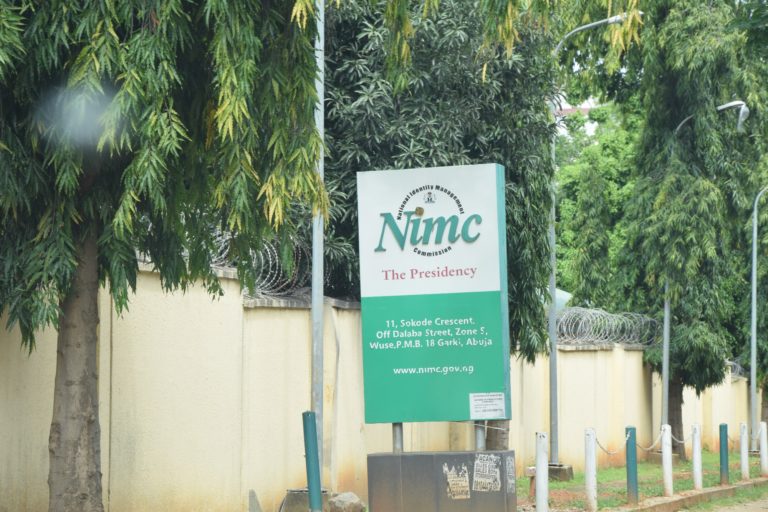
The NIMC headquarters at Wuse, Abuja
When the extortion first started, Chukwu’s superiors told him the proceeds were used to run the state office; that the state office was no longer getting subventions from Abuja. But even the state offices are now involved in the practice; they make their own money and remit to Abuja. Therefore, he thinks “the money we’re remitting to the state” has no other use than the “funding of an individual’s pocket”. It is a practice he has long been fed up with, one he “can’t even admit” to his child that he was once part of.
“Presently, there is misunderstanding between my colleague and I because I told him we’re stopping this [extortion]; I’m tired. I told him we’re stopping this ‘give me N100 here, give me N200 there’; I’m tired. If you want to effect change, you start from yourself, then you start pushing it forward. When we stopped, he said he would no longer work with me, instead he would leave the centre,” Chukwu says, penitence etched in his face.
“If a state submits its report of normal daily registration, I’m not sure Abuja will not be willing to provide any funds because they know that states are extorting applicants. But like I tell most of my colleagues, the day one of them is caught, their superiors will not defend them. That is why we’ve tried to talk to people; let’s stop this extortion. If we don’t have the money to run centres, let’s shut them down.
“But the practice is blossoming because nobody wants to talk. Secondly, no one wants to step out of his comfort zone, probably because you have established yourself in a particular centre and you know how much you make in a day. You won’t want to be sent to a new place.
“Personally, I have said it a million and one times: I’m not interested in this kind of money. I want my take home to be something that can sustain me, then I can save up. Most civil servants don’t get the opportunity for these daily extortion, but they receive other allowances that come quarterly or monthly. I have been here for four years, since 2013, and I have never received anything called allowance; I don’t know what it is. I get only my salary and you expect me, as a family man, to survive on that, for that long? It doesn’t work. That is the root of all the problem — no pension, no leave allowance, nothing!”
Asked what he had done to bring these concerns to the notice of the NIMC management, Chukwu says he is helpless — as are hundreds of other staff who are wary they could be forced to transit from disgruntled employees to ex-employees. That fear stems from a previous attempt to organise themselves into a union, which was deviously truncated by NIMC.
Indeed, the management played along, egging them on as they fixed an election date for a union, in conjunction with the Association of Senior Civil Servants (ASSCS). Suddenly, as the election date approached, NIMC struck the shepherd and the sheep was in no time scattered.
“All of a sudden, the whole thing turned upside down,” says Chukwu regretfully. “You know, we all thought that once the union came, it was the end of most of the anomalies we had been putting up with.
“Suddenly, there were phone calls from Abuja proscribing the election. Before we knew it, the man who was set to emerge Union President was transferred out of Anambra to Bayelsa State, without any explanation.
“That was how the agitation for union issue started fading, until it finally came to a halt. It became clear to all NIMC staff in the state that if anyone complained, the least punishment would be a transfer out of the state at sudden notice and without relocation allowance.”
MAKING — AND BREAKING — THE LAW
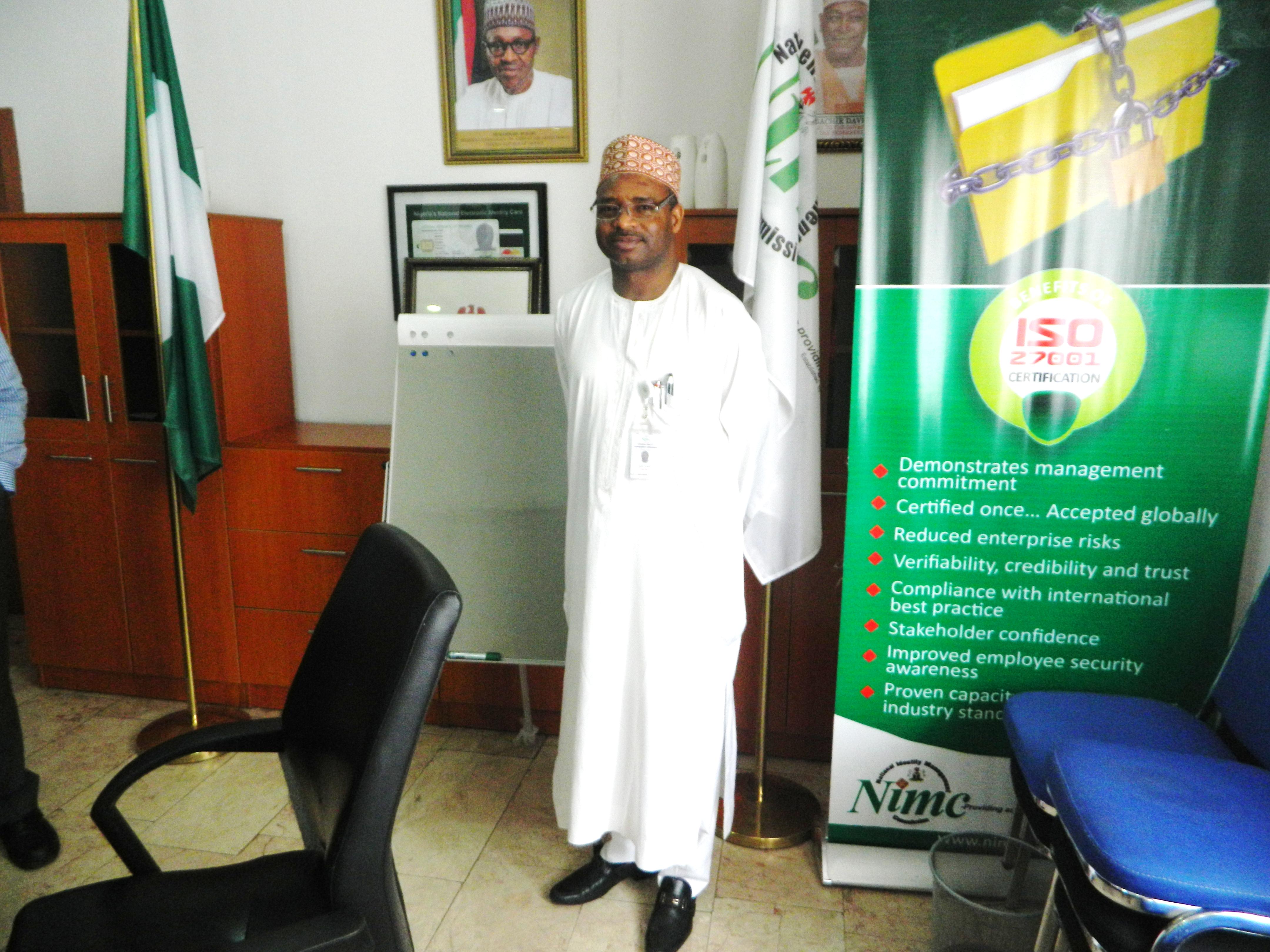
Engr. Aliyu Aziz, DG of NIMC
Having paid 30% of his extorted funds to the state — and watched his colleagues do the same — Chukwu no longer takes the NIMC headquarters seriously when it releases guidelines for operations. Indeed, NIMC outlawed the very act its staff, from the headquarters to state levels, are involved in.
In a document titled: ‘LEGAL AND REGULATORY COMPLIANCE REQUIREMENT FOR EMPLOYEES, CONSULTANTS, LICENSES, AGENTS AND SERVICE PROVIDERS OF THE COMMISSION & THE GENERAL PUBLIC’, the commission prohibits “all staff, consultants, service providers and security personnel and cleaners” from “collecting money and/or obtaining favours’ for the purpose of providing access to the commission, services of enrolment, card collection, activation or for the purpose of granting/obtaining a contract award”. Quoting “Sections 14, 20 and 21 of the ICPC Act, and Section 10 and 12 of the Code of Conduct Bureau and Tribunal Act, NIMC says the punishment for offenders will be dismissal and a seven-year jail term.
However, in at least three internal memos seen by the ICIR, NIMC encourages its staff to collect “material and financial support from their host state governments, political office holders and other prominent personalities”, and pay such monies “to the dedicated NIMC state account and not to the state coordinator’s account or any individual’s account”. The quoted memo was dated September 7, 2017 and released by the General Manager, Operations, signed by Florence Oloruntade; the NIMC DG/CEO was copied.
The ‘Legal and Regulatory’ document also says that “heads of Departments, regional and state coordinators, local government and special centre supervisors” who engage in “non-disclosure, diversion of financial aid and or material support to the commission from states, local governments and other persons or organisations without approval from the DG/CEO” will be dismissed in line with Section 13 of the Code of Conduct Bureau Act.
The violations of all these provisions are ongoing. For example, at the NIMC centre at Aiyekale in Ibadan, Oyo State, an official, unaware of the presence of the journalist, tells a prospective applicant, who does not have a valid ID card, to pay N500.
“Registering normally costs N2,000,” he says. “But because you do not have a valid ID, we will have to generate one for you. That one will cost you N500.”
DEDUCTION WITHOUT PENSION, COMPUTERS WITHOUT AIR CONDITIONERS
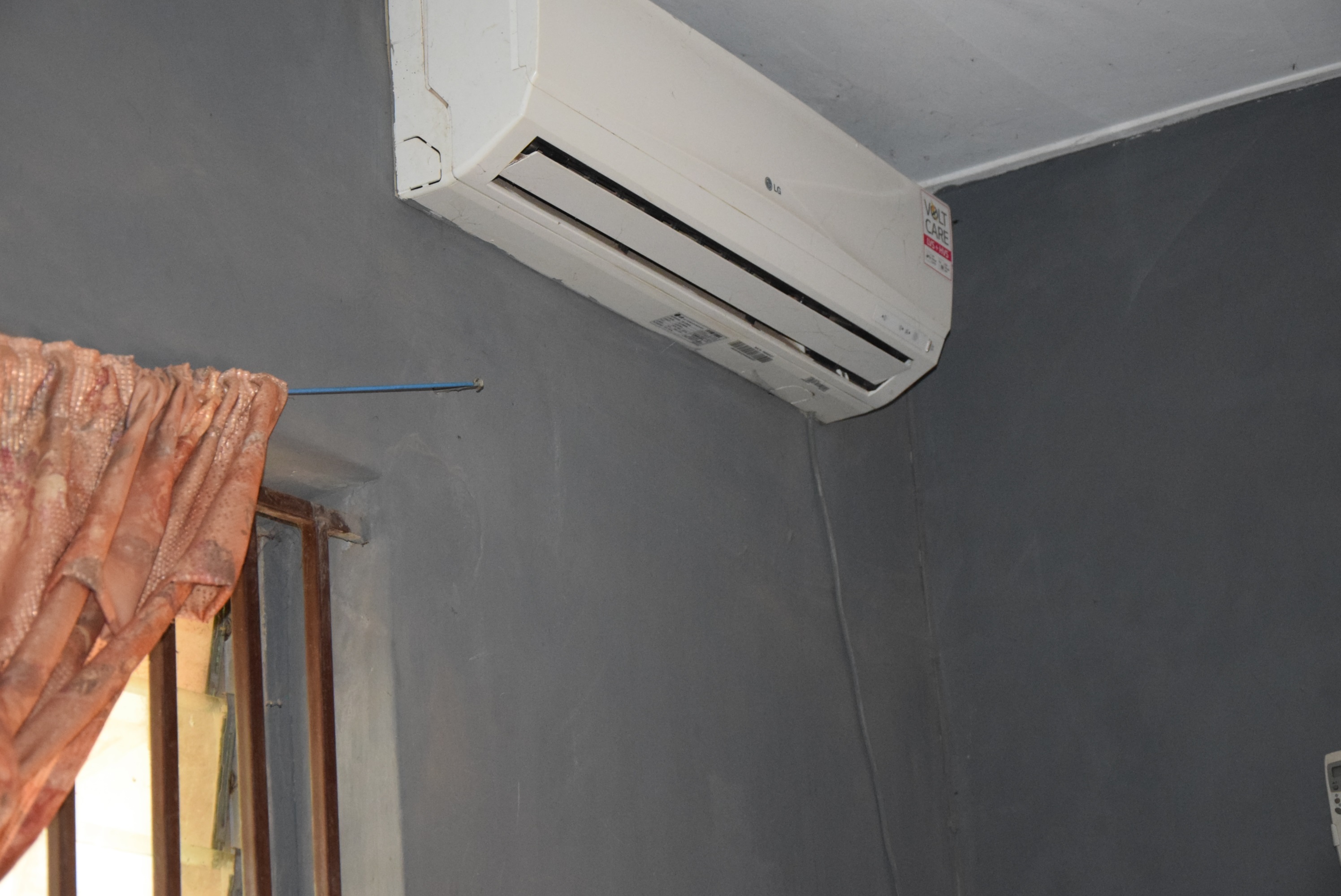
Decorative! This AC is not working.
In another document, titled the ‘NIMC Personnel Policy’, the commission states thus: “To succeed the system must be secured, have integrity, accessibility, reliability and confidentiality as its core”. However, in its relationship with staff, it fails to exhibit the afore-listed attributes. One example: NIMC lists pension and leave allowance as one of 20 fringe benefits that its full-time staff are entitled to. But, for at least three years, its staff have received neither.
Despite managing to scupper the formation of a staff union in Anambra and transferring the potential union President out of the state, NIMC states in its policy document: “In accordance with Nigerian Labour Law, members of staff of the NIMC are free to become members of Trade Unions or may elect not to belong to any Trade Union. Staff members may register and obtain membership in the Union that is appropriate for their role and position at the NIMC.”
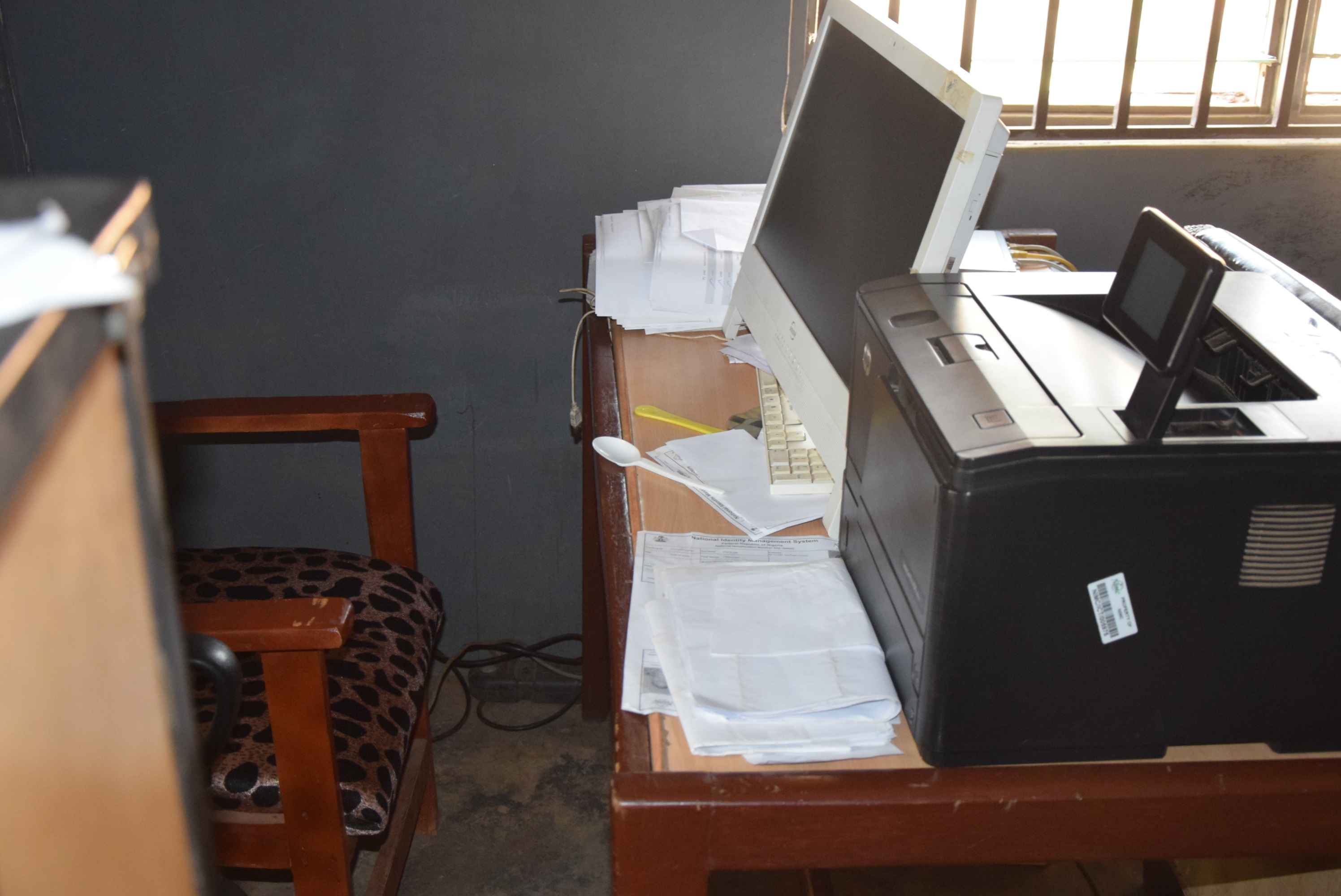
Contrary to its claim of “focusing on building a high performing workforce capable of delivering mission for the long term”, NIMC’s offices are anaemic and the conditions of work are triggers for low workforce performance. At the NIMC office at Ibadan North-East, only one of three computers is functioning. One has been moved away from the centre, while the other has been left unattended to in its dysfunctional state. With two of three computers non-functional, it is unsurprising that the air-conditioner is spoilt. Since hot environments impede the smooth functioning of computers, the NIMC officers usually roll up the window blinds. As revealed by pictures taken undercover, only two of the five bulbs in the office are working. Even the generator servicing the office is older than NIMC itself; it’s been in use since 2003!
Now, to the most bizarre of all. NIMC warns its staff against “illegal usage” of the Internet for “unofficial purposes”. “All internet and email services are provided for professional use only,” it says. “Very limited personal or non-business use is permissible.” Failure to adhere to this warning, it adds, would see the commission “invoke disciplinary measures” against the culprits.
But the NIMC is only trying to regulate the use of an internet connection that does not exist. So says the enrolment officers who spoke with the ICIR, numbering six in all.
“What internet?” one, based in Enugu State, asks derogatively. “The connection in question is the VSAT [Very Small Aperture Terminal]. But Internet connectivity with VSAT is so poor that we use resort to our personal phones or dongles to get the job done.”
“We’re the one supplying Internet to NIMC,” adds another, who works in Ogun State. “We’re the one who should be invoking disciplinary measures against NIMC for making us use our personal Internet for official purposes.”
NATIONAL ID — A FAILING PROJECT?
Don’t be deceived; that computer isn’t working.
As expected, these inefficiencies, mixed with staff disillusionment, are threatening to derail the targets of the identity card project.
“Before, if you didn’t meet the security criteria, a centre won’t be set up for you. The lighting must be perfect, there must be air conditioner or fan to cool the systems. There would be burglary; you don’t dismantle a system after setting up in a certain way,” Chukwu recalls.
“But this is not so today. Now, we carry systems in our hands; I’m used to carrying a backpack around with my laptop and keyboard inside. Now, you carry everything on your head; anywhere you see space, even if it lacks the standards, you just perch and use it the way it is.
“Previously, there was something called ‘Source Documents’ which the enrolment officer presents to show the work he has done. But now people register anyhow, anywhere; I think that right now, staff are just doing it for survival. It’s no more about the standards; the job has lost its taste.
“This was not why I signed up for the job in the first place; the quality of the job is not important anymore. I can come here with my system now and just set up. NIMC is not even interested in checking the quality of job again; anything that comes in, they use: wrong fingerprints, wrong NIN and all those stuff.”
Nigeria’s quest for a single, unified database of all its citizens led to the birth of the NIMC Act 2007, which provides for the establishment of the NIMC, empowered to: (i) foster the orderly development of an identity sector in Nigeria; (ii) issue a National Identity Smart Card to every registered person 16 years and above; and (iii) provide a secure means to access the National Identity Database so that an individual can irrefutably assert his/her identity.
Clearly, the first isn’t happening. The identity registration process is in a shambles at majority of the locations where applicants are not being extorted, as admitted by an enrolment officer in Ibadan: “The work environment is very poor; most of our offices don’t look the way a normal office should. Apart from that, we lack chairs for the applicants. People, both aged and young, stand in queues for hours until it is their turn. When the applicants don’t buy fuel for the generator, we can’t work.”
The second function — issuing ID cards to registered persons — isn’t happening as well. Moses Adegboyega, a retired civil servant who registered in Abeokuta in 2014 — three long years ago — still hasn’t received his ID card. Okafor Chigozie, a recent graduate of the University of Nigeria (UNN), Nsukka, registered in 2013. Four years on, his ID isn’t ready. Babawale Olakunle, an alumnus of the University of Ibadan, registered in Ibadan, also in 2013. Like others, he is still awaiting his card. In fact, he says not one ID card has been produced in the whole of Ibadan North-East, where he registered.
“My friends and I did our registration back in 2013, at the Ibadan North-East Local Government; because we all live in Iwo Road, we went as a group, the five of us,” he says.
“I can confirm to you that no single human being in Ibadan North-East has received the ID card from 2013 till date. This is because there is hardly a month when at least one of the five of us didn’t go to their office to complain. Once, when we threatened to foment trouble, other people in the LG begged us, saying no one had been issued a card since 2013.”
SPECIAL CANDIDATES AND SPECIAL CENTRES
Ex-president Goodluck Jonathan got his card in 2014, but what about ‘ordinary’ Nigerians?
While registrants in other parts of Oyo State are in endless wait for their ID cards, a privileged few get theirs — as it usually is with almost every public item in the country. These are the people who register at special centres, such as the University of Ibadan (UI), the University College Hospital (UCH) and The Polytechnic, Ibadan.
“I registered in 2014 and I have my ID card already,” says a UI professor who asked not to be named. “They say UI is a special centre. You stand a good chance of getting your card if you register here — same way you won’t experience the electricity problem that dogs registration in other centres.”
In Anambra, the case is not so much about special centres but about ‘special registrants’. Production of cards was halted more than a year ago due to lack of funds, but some people are not affected.
“The first batch that was produced, the cards were issued for free by MasterCard. And because they were issuing it free, no revenue was coming, so they could not acquire new ones,” Chukwu explains.
“I know some people who registered in 2013 and 2014, and already have their cards. I have mine, too, but ordinary registrants haven’t got theirs in the last one year — only prominent people.
“I know the governor [Willie Obiano] registered last year, so his card should be ready. His wife registered two years ago; hers should be ready as well. Na normal we-we dem take dey do the cards now.”
While it is true that registrants get their NIN soon after the enrolment, the NIN slip has so far proven an insufficient means of identification.
Abbas Audi, a victim of NIN slip rejection, lodged a complaint with the Facebook account of NIMC, writing on August 23: Even without the eID Card the NIN slip is widely accepted but why is it that Union Bank in Jalingo [Taraba State] branch still rejects it after the directive given by the apex bank CBN? Pls call them to order because they rejected 1 today 22/8/2017.
Oke Paul, another complainant, wrote on August 19: First bank PLC reject d NIN slip, pls help us out.
“It’s 4 years now I did mine in Kano it’s not still ready,” Sadiq Saeed, yet another complainant, wrote to the commission on August 9. “Banks have refused to accept the temporary slip. My first name is Sadiq and surname Saeed. NIN- 19735604837. Tracking ID- S7Y0NYFM80001VA. What’s happening? Can’t I just do a fresh one where other states are collecting theirs in 4 to 6 months?”
TO WHOM LESS IS GIVEN…
When contacted, the communications department of NIMC, says the commission’s challenges are directly linked to inadequate funding.
“Basically, NIMC is an agency of the Federal Government and electricity is a general problem in Nigeria,” says the official, who asked not to be named.
“We are fully dependent on government for funding. So, our budget from FG is what we work with. Most of our challenges are underlined by funding; that is number one. And our budget is so open for Nigerians… to see what NIMC has been getting, and then you can also see what has been allocated to us for electricity and generator.”
He denies the allegation that the NIMC headquarters is a beneficiary of state-level extortion, saying: “No, that is not true. Even as I’m talking to you right now, anybody who has evidence should bring it forward.
“These things are just allegations. Somebody just told you that; you have not done your own investigation to unravel how the state coordinator gets kickbacks. If you can do that, you will be helping Nigeria too. If you do that investigation on your own and you report to us we will appreciate it.”
Curiously, he admits that some extortion cases had been brought to the notice of the commission.
“There have been one or two cases that we have investigated,” he says. “If we see something like that, we have our own in-house mechanism. We have the special unit at the commission that goes out to investigate all of this, and when the case is beyond us we hand it over to state security.”
AT NIMC, REFRESHMENT IS MORE IMPORTANT THAN ELECTRICITY
Eat, drink, be merry, be happy; it’s a NIMC policy!
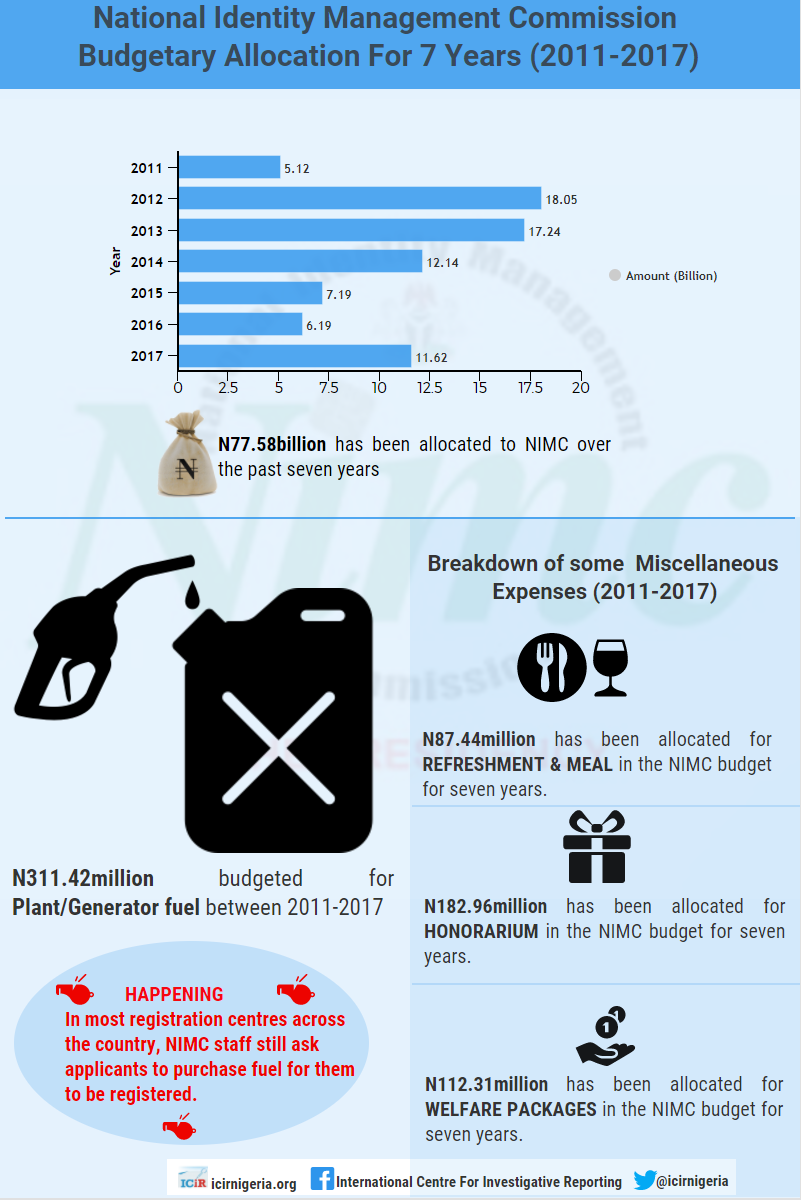
Truly, NIMC has a case for improved funding. When compared with similar biometric-capturing agencies, the gulf in funding is wide. For instance, while the Federal Road Safety Corps, which, among others, issues the driver’s licence, got N34.8bn in 2017, NIMC got N11.6bn. Whereas FRSC got N30.7bn in 2016, NIMC got N6.2bn. While FRSC’s budget over the last seven years is approximately N186bn, NIMC’s is N78bn.
Indeed, NIMC cannot be faulted for tying its inefficiency to inadequate funding, but it’s current spending is questionable. For example, in 2017, NIMC allocated N12m to generator fuel. The previous year, the ‘generator fuel’ figure was almost double: N24.7m. However, the millions of naira did not proportionately trickle down to all the problem centres visited. The special centres were immune from power outage not because NIMC fueled their generators but because they were sited in locations with their own internal mechanisms for surmounting the electricity challenge. In all, between 2011 and 2017, NIMC has earmarked N311.4m for fueling generators!
Make no mistake: refreshment is more important to NIMC than service delivery. In 2017, the commission earmarked N13.5m for “refreshment”. This is the same year that it separated N12m for “generator fuel”. Why is the refreshment budget outweighing the fuel budget by a whopping N1.5m? In all, between 2011 and 2017, NIMC allocated N87.4m to refreshment!
Elsewhere in its 2017 budget, a massive N17.5m is for “sitting and honorarium”. Mind you, this figure is the second lowest of the past seven years. In 2011, it was N39.2m. Between 2011 and 2017, NIMC has spent N183m on “sitting and honorarium”! Who are the people holding these sittings? And what are the services being rendered by recipients of these honoraria?
FRUSTRATION TEETERING ON THE ‘RED LINE’
Of the hundreds of thousands of disgruntled applicants, many are bombarding NIMC’s Facebook and Twitter accounts with their frustrations. Some of them are going over the edge, sending “hate” messages that perhaps “cross the national red lines”.
Basu MC wrote in early September: The most stupid commission in de Nigeria space, hate them with [passion], did reg. yrs back bt couldn’t see my card till date.
Engr Omoaghe wrote in August: I think this NIMC is fake. I did my registration since 19th September, 2013, till now, yet to be released. Poor Management, poor government, poor organization. Fake. (2months ago)
And the worst of all was from Ali Mark, on September 6. “F**k NIMC!” he said. “Failed ministry.”
The comments leave no one in doubt that the people are losing it. And that something must be done fast — by the Federal Government and the management of NIMC.
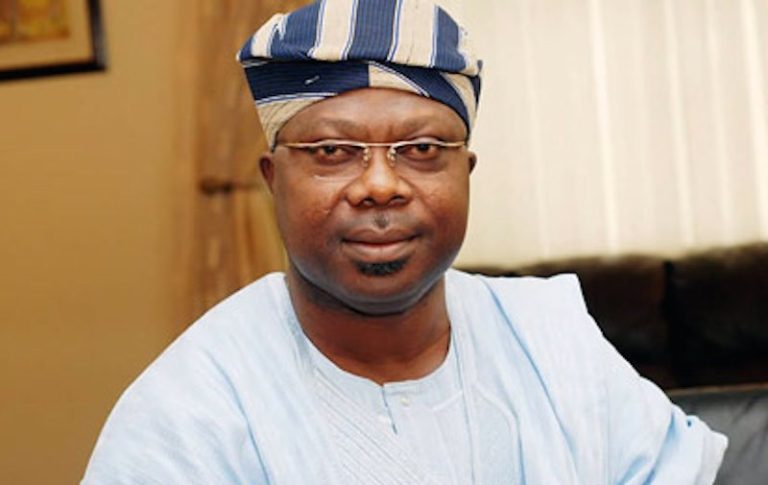
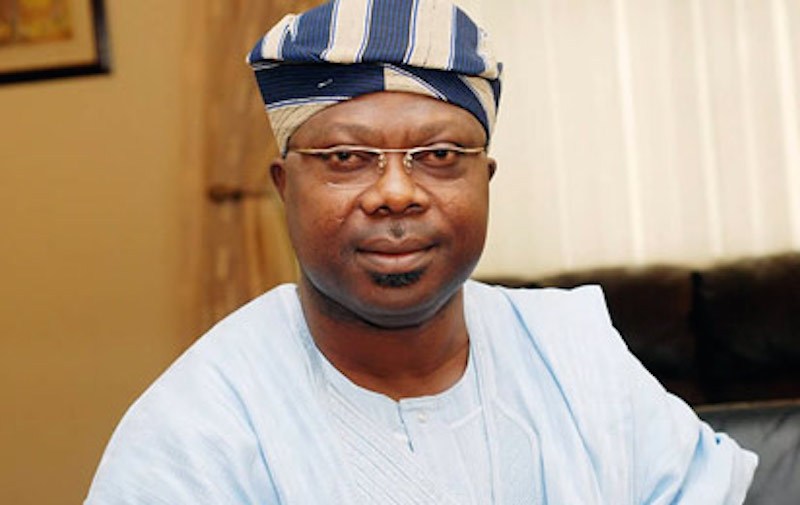
Iyola Omisore, former Deputy Governor of Osun State, says the State’s debt profile when shared among the people of the State stands at N37 million per individual.
Omsiore said this during an event in Abuja where Ayodele Fayose, the Governor of Ekiti State, declared his ambition to run for the 2019 presidential election.
Describing Fayose as a governor that has done well in managing the economy of Ekiti state, Omisore noted that the same cannot be said of Rauf Aregbesola, the current Governor of Osun State.
“Nigeria’s economy is the problem we’re having now,” Omisore said, “and if you cannot manage the State properly, you cannot manage the Nation properly.
“Fayose has struggled and he has strive hard to manage strongly the Ekiti State resources. You have seen the results of NECO and WAEC.
“Other States in the South West who were ruled by PDP in yester-years, they are all behind again in NECO and WAEC.
“I’m sure you know my state is lagging behind in WAEC and NECO, 27th. And somebody was telling me yesterday that the debt profile in my state, if you share it per person, (it is) N37 million per person.
“Per Individual in Osun State will pay debt in our State for the next 40 years. Ekiti State is owing no kobo. Fayose has managed everything according to what he has.
“So we believe that given a chance, he will do more. Give a man a little, you know what happened to the Bible that you give two people shekels to keep, one was given one shekel and another three shekels. One kept his, another one prospers his own.
“Fayose has prospered in what he has been given, he has shown that he has a vision, he has shown leadership at very very awkward time, when times are hard and these are what separate men from boys.
“We must be ruled by men not boys in this country.”
Fayose’s presidential declaration is coming despite the zoning structure of the Peoples Democratic Party which has seen the Presidential ticket of the Party zoned to the Northern region of the Country.
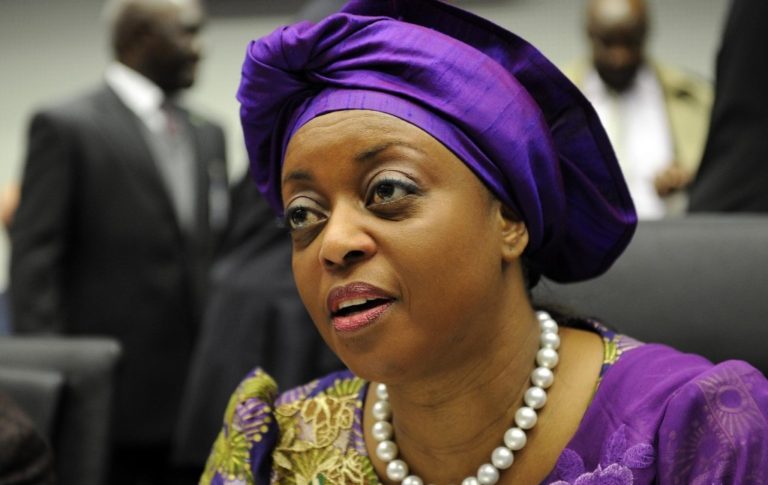
For allegedly receiving the sum of N362 million which was part of the N23 billion bribe allegedly distributed by Diezani Alison-Madueke, former Petroleum Resources Minister to influence the outcome of the 2015 presidential poll, the duo of Ibrahim Muhammed Umar and Sahabo Iya Hamman have been dragged to court by Economic and Financial Crimes Commission (EFCC).
The Gombe zonal office of Commission on Thursday arraigned the duo both serving and retired staff of the Independent National Electoral Commission (INEC), respectively, before Justice Nathan Musa of the Adamawa State High Court, Yola on a three-count charge bordering on conspiracy, corrupt procurement and receipt of monetary benefit.
Ibrahim, the electoral officer in charge of Yola South Local Government Area of Adamawa state, allegedly conspired with Sahabo, a retired INEC staff and Adamawa state coordinator of West African Network of Election Observers (WANEO) during the 2015 presidential election, were alleged to have collected the sum to influence the outcome of the 2015 elections.
Investigation revealed that N65.2 million from the money collected was shared among INEC officials in the state while N281.9m could not be accounted for by the accused persons.
Count two of the charge read, “That you, Ibrahim Mohammed Umar, Sahabo Iya Hamman and Mrs. Diezani Alison-Madueke (now at large) sometime between March and May, 2015 at Yola, Adamawa State within the jurisdiction of this honourable court, while being a public officer working with Independent National Electoral Commission (INEC), retired public servant and former Minister of Petroleum Resources (now at large) and in capacities, did corruptly procured monetary benefit of Three Hundred and Sixty Two Million Naira, (N362,000,000.00) in favour of Public Officer and staff working with Independent National Electoral Commission (INEC) of Adamawa State contrary to and punishable under Section 9 (1) (a) & (b) of the Independent Corrupt Practices and Other Related Offences Act, 2000.”
In a statement by Wilson Uwujaren, INEC Spokesperson, the accused persons pleaded not guilty to the charges while prosecution counsel A. Y. Muntaka asked the court to fix a date for trial and to remand them in prison custody.
While adjourning the case to October 17, 18 and 19, 2017, Justice Nathan granted bail to the accused in the sum of N10million each and two sureties in like sum. The sureties are also to have landed property worth N10m within the jurisdiction of the court which is to be verified by the court.
Akin Oyebode, a professor of International Law and Jurisprudence, at the University of Lagos, says there are many problems plaguing Nigeria as country and the real reason he adds that corruption must be fought to a halt before it kills the country soon.
“If drastic measures are not put in place urgently to contain it, corruption might ultimately result in the mortality of Nigeria as a nation-state,” Oyebode said on Thursday in Lagos.
He was speaking at a roundtable organised by the Socio-Economic Rights and Accountability Project, (SERAP) in collaboration with the National Endowment for Democracy (NED).
Oyebode who delivered a titled “Strategies for Mobilising Mass Action to Demand Anti-Corruption Reforms and an End to Impunity for Grand Corruption in Nigeria” stressed that mass action by the citizens is urgently needed to put pressure on authorities to end impunity for grand corruption in the country.
He said: “The people must be enlisted in the war against corruption. Nigerians should start anti-corruption clubs in schools, radio jingles should be put in place to fight corruption, carry placards, go outside, organise sit-ins like SERAP is doing presently, Nigerians should be mobilised against corruption and now take their destiny in their hands”.
“The fight should not be left alone to organizations like SERAP and when the state wants to attack organisations like SERAP, the masses should fight for them.”
He also condemned the move by the National Assembly to control Non-governmental Organisations through the NGO Bill noting that governments do not want anybody to act as impediment to their thievery activities.
“The recent attempt by the National Assembly with the NGO bill to control, monitor and eventually sequester CSOs all because of the excuse that some CSOs are corrupt should not be allowed. Cutting off the head is not the cure for headache, the bill is overkill.
“Corruption is now thriving more than ever before, despite the ongoing fight against it. However, international law has really helped with a plethora of laws against corruption, it now behoves on citizens to take advantage of this laws to fight against corruption,” he said.