Home Blog Page 2695

NLC to Bello: Stop using soldiers against our members

0

The leadership of Nigeria Labour Congress (NLC) has warned Yahaya Bello, the Governor of Kogi State to stop the use of soldiers to intimidate its members in the state who are on strike over unpaid salaries.

In a letter written to the Governor by Ayuba Wabba, NLC President and made available to ICIR, the Congress said “we advise that your officials be cautioned against the use of armed soldiers to intimidate workers as the military have no role in resolving industrial disputes.”

“Every dispute generated by issues between employers and employees can only be resolved ultimately through dialogue”.

According to the letter, the labour union said it has received reports that some officials of the state have been going around offices in company of armed soldiers in an attempt to compel striking workers to resume work.

The letter reads partly: “We have also received reports that your officials have been going around offices in company of armed soldiers in an attempt to compel striking workers to resume work rather than encourage productive dialogue that will amicably resolve all the issues that necessitated the strike.

Apart from salaries, some of the issues that have attracted deep concerns include the endless verification exercise which has raised so much suspicion that the exercise has been so prolonged to justify non-payment of salaries and pensions.

Industrial relations is not politics and it won’t augur well for government to accept advice driven by political considerations when clearly the system provides adequate opportunities to engage in dialogue. On our part, we have always encouraged dialogue. We must face the reality of the frosty relationship between your government and workers, which has obviously been promoted by those who gain from the escalating industrial crisis through political considerations.

We know that, with your background in public service, you are capable of handling the situation better but for those who act at the background drawing politicaln permutations with the plight of workers and pensioners.

We are ready to engage in transparent dialogue with you with the ultimate benefit of nipping the industrial crisis in the state in the overall interest of industrial peace and justice”.

Lagos is the worst city to be a driver in Africa, says Forbes

With 60 percent road traffic congestion and 10.70 meters per hour average driving speed, Lagos State is worst city to be a driver in Africa and the third worst in the world, according to a report by Forbes magazine.

According to the report, only Karachi, Pakistan and Kolkata, India, ranked higher than Lagos which is the only African city out of 100 cities of the world that were considered in the ratings

Dusseldorf, Germany came first as the best city for drivers, with 20 percent congestion, and 21.20mph average speed.

The criteria used to arrive at the report include: an analysis of local congestion levels, an average cost of parking and fuel, average roadway speeds, air pollution levels, number of traffic injuries, and road quality. Also considered is the frequency and perception of road rage.

Other cities included in the worst categories are: Ulaanbaatar – Mongolia; Mumbai – India; Bangalore – India; Ho Chin Minh City – Vietnam; Bogota – Colombia; Mexico city – Mexico and Istanbul – Turkey.

While the best cities to be a driver include: Dusseldorf – Germany; Dubai – UAE; Tokyo – Japan; Basel – Switzerland; Singapore – Singapore, Dortmund – Germany; Vienna – Austria; Munich – Germany and Calgary – Canada.

In May this year, Akinwumi Ambode, the Lagos State Governor, assure residents in the State that his administration will tackle the perennial issue of traffic congestion head on.

Ambode made the pledge during the commissioning of Pedestrian Bridges, Lay bys and Slip Road at the Ojodu Berger axis of the State.

“What we set out to achieve with this project was to ensure smooth flow of traffic along the express, safeguard the lives of our people,” Ambode said.

“If your neighbourhood or community is experiencing traffic challenges, be rest assured that we will soon be there.

“That is the only way we can progress and achieve our goal of being one of the world’s top centres for business, entertainment and leisure,” he said.

Obono-Obla: IPOB emblem or flag could fetch you 20 years imprisonment

Anyone found in possession of an emblem or flag of the Indigenous People of Biafra, IPOB risks a prison sentence of up to 20 years, says Okoi Obono-Obla, Special Assistant to President Muhammadu Buhari on Prosecution Matters.

However, if the group “repents” and becomes “born again”, the federal government may reconsider the proscription order against them.

Obono Obla, who spoke on African Independent Television, AIT, Obono-Obla said that Buhari was even more tolerant of IPOB than his predecessors were of various groups that threatened the nation in the past.

He recalled how former President Olusegun Obasanjo crushed the Oodua Peoples Congress, OPC, in the South West and how Goodluck Jonathan dealt with the Movement for the Actualisation of the Sovereign State of Biafra, MASSOB.

“The order (of proscription of IPOB) is final, it is not open to appeal. (But) tomorrow if they (IPOB) say, ‘look we will fight for the right of determination of the Igbo people within the ambit of the law’, if they repent, they will become a lawful organisation,” Obono-Obla said.

“Then the Attorney General can go back and de-proscribe them and say that they have repented, they have become born again. That it is the only right.

“For now, they are proscribed and anybody who is caught, if you finance IPOB, if you participate in their meeting, if you prevent anybody from arresting a member, … if you are arrested with an emblem, or a symbol or a flag of a proscribed organisation, it is 20 years imprisonment. So everybody has to be very careful.”

Obono-Obla said that the issue of human rights in how the federal government dealt with IPOB does not arise because according to international law, “when it comes to National Security, human rights must take the back seat.”

“Under the constitution, section 46, it states that government can make any law, but if you exercise your rights in a manner that threatens public order, public safety, then the government can take away that right from you, and that is what the government has done.”

It would be ethnic profiling and hate speech to declare Fulani herdsmen terrorists, says Presidency

Okoi Obono-Obla, the Special Assistant to President Muhammadu Buhari on Prosecution Matters, says it would amount to ethnic profiling and hate speech for the federal government to declare Fulani herdsmen terrorists.

Obono-Obla was speaking on Africa Independent Television, AIT, in respect to the recent proscription of the Independent People of Biafra, IPOB.

He said that the IPOB did not only engage in killings and attacking soldiers with petrol bombs, they also threatened the very existence of Nigeria, printed a parallel currency, designed a parallel flag and formed a parallel military and intelligence service, all of which the so-called Fulani herdsmen have not done.

“It would be ethnic profiling and an hate speech to label all Fulani herdsmen as those who are lawless,” Obono-Obla said.

“Most of the Fulani people are herdsmen, so it is wrong. Maybe there are few people among the Fulani herdsmen who do this but it is wrong, because I have seen Fulani Herdsmen, even in my community down south.

“I am from Cross River State, down south, in my community, the Fulani herdsmen live there peacefully, they even speak our local languages, because Cross River State is a mini Nigeria, the Fulani herdsmen they have integrated and they speak local languages and they are very peaceful people.

“So how can you label them terrorists or that the President should declare them as an unlawful society? It is not fair.

“The one you mentioned in Lagos (Badoo), the military have been dealing with them but they have not threatened the territorial integrity of Nigeria, they have not threatened the corporate existence of Nigeria, they have not printed a currency, they have not done a passport, they have not said they will make Lagos ungovernable, they have not been going about acquiring arms illegally, importing weapons into the country, saying that ‘we will wage war against Nigeria if you don’t organise a referendum’ they have not done that.”

Obono-Obla also said that the IPOB is operating as an illegal organisation in Nigeria because it was registered as a business concern in the State of California in USA.

“We recently discovered that the proscribed IPOB was registered as a company, as a business concern in the State of California in the United States,” he said.

“And the Law says if you are bringing a foreign company to Nigeria to do business, you have to go to the Corporate Affairs Commission, under section 53 of the Companies and Allied Matters Act and register that company, otherwise you are committing a criminal offence under section 54 of the Companies and Allied Matters Act, and you are liable to prosecution by the Attorney General of the Federation.

“So all these while, IPOB was operating illegally in Nigeria but now IPOB has been proscribed.


Nigeria’s foreign debt may hit $11.6 billion by 2027

Between 2017 and 2026, Nigeria’s foreign debt profile will have risen to $11.62 billion, the Debt Management Office says.

This includes some debts that will be due for redemption as well as interests that would have accumulated and redeemed on an annual basis.

In 2018, 2021 and 2023 Nigeria will have to pay more than $1 billion each year due to the fact that some Eurobonds issued by the Federal Government will be due for redemption then.

In 2018, the country will be parting with $1.19 billion, comprising of principal redemption of $716.09 million and interest payment of $475.8 million.

In 2021, Nigeria will part with $1.58 billion, made up of $1.12 billion principal redemption and $440.59 million interest payment.

By 2023, the country will have to part with $1.69bn.

“Increased debt service payments would be made in 2018, 2021 and 2023, amounting to $1,193.04m; $1,584.54m; and $1,694.85m, respectively, when the debut 6.75 per cent Jan 2021 $500m 10-year Eurobond issued in 2011 and the $1bn dual-tranche Eurobonds – 5.125 per cent July 2018 $500m five-year and July 2023 $500m 10-year issued in 2013 would be due for redemption,” the DMO said.

This year, Nigeria will have to part with a total of $668.83 million, comprising of $144.4 million in principal redemption and $524.43 million in interest payment.

In 2019, the total debt to be paid will amount to $781.13 million; in 2020, $983.01 million; and in 2022, $1.18 billion.

In 2024, 2025 and 2026, the total foreign debt to be paid will be $1.18 billion; $1.18 billion and $1.17 billion respectively.

Patience Oniha, Director-General of the Debt Management Office

The DMO said the actual payment in each of the years will likely be higher, since Nigeria is still making fresh commitments in terms of securing foreign loans.

In October 2016, the DMO said that the maximum amount of money the country can comfortably borrow in 2017 is $22.08 billion, and advised the federal government against excessive borrowing.

But less than one month after, President Muhammadu Buhari wrote a letter to the Senate requesting for leave to borrow about $30 billion with which to execute key infrastructural projects across the country between 2016 and 2018. The request was rejected by the lawmakers at the time but the executive arm of government said it will re-send the request.

However, in July this year, Anthony Ayine, the Auditor-General of the Federation said there is nothing wrong with Nigeria’s current rate of borrowing, since it is still within the minimum international benchmark.

“Borrowing as a concept is not wrong; it is utilisation of the borrowed funds that is the critical aspect that people should be concerned with,” Ayine said.

“If you are borrowing to address infrastructural problems like the present government is doing, if you are not borrowing for consumption, I don’t see anything wrong with the borrowing.”

NJC appoints judge controversially removed by Jonathan to head committee on corruption cases

The National Judicial Council has appointed Ayo Salami, a retired president of the Court of Appeal, as head of the committee to monitor corruption cases in Nigerian court.

This is contained in a statement issued by Soji Oye, spokesperson of the NJC, on Wednesday.

Salami was accused of misconduct and controversially removed as head of the court of appeal by former President Goodluck Jonathan despite several panels clearing him of any wrongdoing.

According to the statement, “the Committee’s primary functions include; Regular monitoring and evaluation of proceedings at designated courts for financial and economic crimes nationwide; advising the Chief Justice of Nigeria on how to eliminate delay in the trial of alleged corruption cases (and) giving feedback to the Council on progress of cases in the designated courts.”

Others include to “conduct background checks on judges selected for the designated courts and evaluating the performance of the designated courts.”

On September 18, Walter Onnoghen, the Chief Justice of Nigeria, CJN directed the various heads of courts across the country to designate at least one court in their various jurisdictions as Special Courts solely for the purpose of hearing and speedily determining corruption and financial crime cases.

“We have directed all heads of courts to designate in their various jurisdictions, one or more courts, depending on the volume of such cases, as Special Courts solely for the purpose of hearing and speedily determining corruption and financial crime cases,” Onnoghen said during a special court session to confer 29 lawyers with the title of Senior Advocate of Nigeria, SAN.

“Where such cases come on appeal, to either the Court of Appeal or the Supreme Court, special dates on each week, shall be fixed solely for hearing and determining such appeals.

“In order for the NJC to monitor and effectively enforce the foregoing policy, an Anti-Corruption Cases Trial Monitoring Committee will be constituted at the next Council meeting.”

We should set agenda for youth in politics or they will set one themselves, says Dogara

Yakubu Dogara, the Speaker of the House of Representatives, says African countries must make deliberate efforts to set an agenda for young people to take active part in governance or risk the consequences of allowing them set one themselves.

Dogara said this at the African Regional Conference of the International Parliamentary Union-Young Parliamentarians Forum, which held in the National Assembly complex in Abuja on Wednesday.

He said that as the region with the fastest growing youthful population in the world, Africa cannot afford the social and political costs of neglecting the young people.

“Any nation that fails to set an agenda for its youth must have wittingly or unwittingly outsourced that responsibility to the youths to set one for themselves. And that nation should be ready to bear the dire consequences in terms of social and political costs,” he said.

“This is a luxury African nations cannot afford because Africa has the fastest growing and most youthful population in the world at the moment.

“Government has a duty to develop clear policies and programmes for youth development and get the young ones involved in the planning, formulation, execution and supervision as a matter of necessity and clear demonstration of government commitment in creating a tolerant and inclusive society.

“The rising political insecurity, violent extremism and crises ravaging Africa is another issue that should be of concern to us as lawmakers.

“I want participants at this conference to carefully examine the relationship between youth unemployment/underemployment and upsurge in criminal activities, extremism and armed conflict on the continent.”

Dogara said participants at the conference must do more than proffer solutions to the challenges, but must take action to implement the decisions reached in their various countries.

He also urged young people to refuse to be used “as instruments of political or economic instability” but rather to be resolved at all times “to safeguard our democracy and the liberty that it offers”.

QUESTION: Are herdsmen criminals or terrorists?

0


Garba Shehu, presidential spokesman, last week stirred another public debate when he said herdsmen, who attack and kill citizens, are criminal gangs but not terrorists.

According to him, the government did not declare herdsmen as it did to the Indigenous People of Biafra, as terrorists because they are “only criminal gangs”.

“There is a difference between a criminal activity and a terrorist activity. Yes, some Fulani herdsmen are a criminal gang and they are being dealt with according to the law,” he said.

“But IPOB like Boko Haram has a territory they have carved out to themselves …as a sovereign state of its own…. They have shown the willingness to invade other neighbouring states. They have raised concerns in neighbouring Kogi and Benue states. They have said they are interested in taking over Bayelsa and Rivers. That is exactly what Boko Haram has done. This is not acceptable to the law of the country.”

If Shehu claims that herdsmen who kill, destroy properties and farm land are not terrorists, what makes a group a terrorist?

GLOBAL TERRORISM INDEX’S VERDICT

Nigeria is ranked third by the Global Terrorism Index (GTI) as of September 2017- the index measures the direct and indirect impact of terrorism, including its effects on lives lost, injuries, property damage and the psychological after effects in 163 countries of the world.  In the 2016 GTI report, Nigeria was among five countries with the highest impact from terrorism- Iraq, Afghanistan, Nigeria, Pakistan and Syria.

These five countries, the report says accounted for 72 per cent of all deaths from terrorism in 2015

It says the terrorism index in Nigeria increased to 9.31 in 2015 from 9.21 in 2014. Terrorism Index in Nigeria averaged 6.32 from 2002 until 2015, reaching an all-time high of 9.31 in 2015 and a record low of 3.86 in 2002. And GTI recognizes Boko Haram and Fulani herdsmen and uncategorized group as the causes of 4,940 deaths from 588 incidents.

Before the release of 2016 GTI report, the United Kingdom Independent reported on November 18, 2015,  that Nigerian Fulani militants named as fourth deadliest terror group in the world. The Independent quoted the Global Terrorism Index.

According to the report, in 2013, the Fulani killed around 80 people in total – but by 2014 the group had killed 1,229.

“Operating mainly in the middle belt of Nigeria, opposed to the north which is dominated by Boko Haram, the group recorded 847 deaths last year across five states, and has also been known to stage attacks in the Central African Republic (CAR), according to the latest report from the Global Terrorism Index” the newspaper reported .

Little is known about the group, despite the high toll they are inflicting on local civilian populations, but it is supposed the increased instability in CAR and Nigeria – despite some government successes against militant groups – has facilitated the group’s expansion.

It says as much as 92 per cent of their attacks target private citizens, reflecting the group’s primary concern over the ownership of farmland.

“Each attack claims an average of 11 lives, with the largest known in April 2014 killing as many as 200 people after a group of the militants targeted community leaders and residents during a meeting in central province Zamfara”.

In the past year Nigeria has experienced the greatest increase in deaths from terrorism, with 7,512 deaths reported – an increase of over 300 per cent – most of which have been claimed by Boko Haram.

HERDSMEN’S HAVOC

In March 2017, Vanguard Against Tiv Massacre (VATIM) said renewed Fulani herdsmen attack across Benue State, has killed no fewer than 500 people and displaced 300,000.

In a statement VATIM alleged a conspiracy of silence against Benue State.

“The recent crisis has so far resulted in over 500 reported cases of deaths in several communities in Buruku, Kwande, Agatu, Gwer East, Gwer West, Guma and Gboko, the worst hit been Buruku and Kwande local government areas with over 30,000 persons displaced and properties and livelihoods worth billions of Naira destroyed.

“These attacks have been incessant, predictable and preventable. In the last two weeks the following villages have been attacked by herdsmen: Mkovur, Ortese in Gboko just as Jingir, Agwabi, Gbanyam, and Tyogbenda are as well as Gbodi, Nzaav, Mbaav and Anyiase in Gboko, Buruku and Kwande local government areas respectively.

“In all cases, however, security agencies have been lackadaisical, and slow to respond. Despite the conspicuous nature of these attacks, not one person has been apprehended by the security agencies.

“In the last five years, no single person has been investigated or prosecuted for the attacks and killings carried out by the herdsmen in affected communities even where some persons have come forward claiming prior knowledge and presumed responsibility for such attacks (for example, the head of herdsmen in the Agatu community in March 2016).”

The group noted that the inaction by the government with regards to the attempted genocide on the Tiv, Idoma and other ethnic groups living in Benue State, directly contravenes the primary responsibility of the Government which is to protect lives and properties of its citizens as enshrined in Section 14 of the 1999 constitution of Nigeria.

VATIM called for urgent humanitarian relief and action, immediate enactment and implementation of appropriate legislation, urgent investigation and prosecution of parties behind the “suspected genocide”.

Also, in January 2017, the National Emergency Management Agency, NEMA, said 204 people have been killed in the Southern Kaduna crisis which was allegedly carried out by the Fulani herdsmen.

The clashes between Fulani herdsmen and locals in southern Kaduna have lasted months.

It is the first time a government agency is providing a figure of the attacks since they began last year.

The Catholic Church had earlier said 808 people were killed as of December 2016, a figure disputed by the Inspector General of Police Ibrahim Idris. The police Chief did not however give a contrary number.

The Catholic Church also said 1,422 houses, 16 Churches, 19 shops, and one primary school were destroyed.

Musa Ilella, NEMA North West zonal Coordinator, told Premium Times that the figure was for two Local Government Areas affected by the crisis, namely Kafanchan and Chikun LGAs.

The figure covers October, November and December, 2016 and early January, 2017, he said.

“Four districts in Kafanchan LGA namely: Linte,Goska,Dangoma and Kafanchan town recorded 194 deaths.

Some Fulani youths were said to have stormed Ungwan Uka village to avenge the death of a certain herdsman allegedly killed by some village youths at a farm in the area following which crisis erupted and claimed 37 lives.

Agyole Abeh, Commissioner of Police in Kaduna State, confirmed the incident to Channels TV.

Also, Abdullahi Ibrahim National Secretary of Miyetti Allah Cattle Breeders Association of Nigeria, said the attack which took place over the weekend followed the abduction of two Fulani indigenes in the area.

He added that the gunmen had also attacked Tsonho Damishi community in Chikun Local Government Area of the state where they destroyed houses.

Also on July 7, bandits suspected to be cattle rustlers had killed two policemen and a civilian in the Maigana District of Soba Local Government Area of the state.

According to the police, the incident happened when the policemen engaged the bandits, who have been terrorising communities in the region, in a gun battle.

The Police Commissioner said that the policemen were on a routine patrol in the area when they were ambushed by the gunmen who opened fire on them.

THE INTERNATIONAL CRISIS GROUP REPORT

In the executive summary of a report titled: Herders against farmers: Nigeria’s expanding deadly conflict, the International Crisis Group (ICG) neither categorised Fulani herdsmen as criminal gangs nor terrorists, but as a group involved in violent conflict with farmers over land.

The report released on September 19 also said attacks by herdsmen on farmers claimed approximately 2,500 people in 2016.

“ Violent conflicts between nomadic herders from northern Nigeria and sedentary agrarian communities in the central and southern zones have escalated in recent years and are spreading southward, threatening the country’s security and stability” says ICG.

The clashes, ICG says are becoming as potentially dangerous as the Boko Haram insurgency in the North east- ‘yet to date, response to the crisis at both the federal and state levels has been poor’.

The group did note in the report that these clashes are as a result of familiar problems – relating to land and water use, obstruction of traditional migration routes, livestock theft and crop damage, which it said – tend to trigger these disputes.

“But their roots run deeper. Drought and desertification have degraded pastures, dried up many natural water sources across Nigeria’s far-northern Sahelian belt and forced large numbers of herders to migrate south in search of grassland and water for their herds.”

It however did not categorised Fulani herdsmen as terrorists, but the ICG urged President Muhammadu Buhari’s administration and affected state governments to work together, taking immediate steps to shore up security for herders and farmers, strengthening conflict-resolution mechanisms and initiating longer-term efforts to reform livestock management practices, address negative environmental trends and curb cross-border movements of both cattle rustlers and armed herders.

Nigeria to pull out of 90 International organisations due to rising membership debts

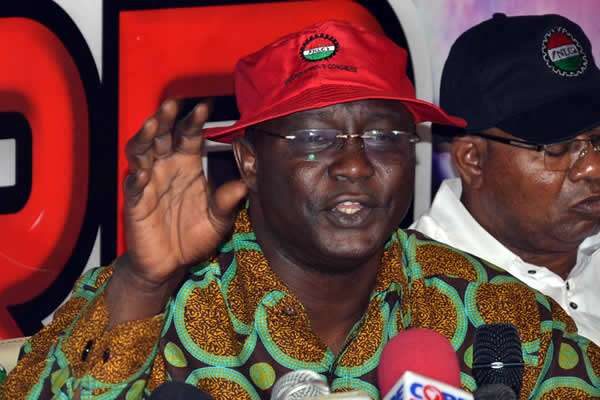
Nigeria will pull out of 90 international organisations, pruning the number of such bodies it belongs to from 310 to 220.

This was disclosed to state house correspondents by Kemi Adeosun, the Minister of Finance after the Federal Executive Council, FEC, meeting on Wednesday.

Adeosun said Nigeria pays about N70 million annually on membership subscriptions and currently owes about N120 million in the various organisations it belongs to, most of which are not necessary.

She said a committee has been set up to fine-tune the arrangements and submit a report within two weeks.

“Basically Nigeria is a member of 310 international organizations and a committee was set up to review the rationale of our continued membership of such large number of organizations, particularly in the light of the fact that in many cases we are not actually paying our financial obligations and subscriptions which is causing some embarrassment to Nigeria and our image abroad,” Adeosun said.

“In particular, it was discussed that there are some commitments made to international organizations by former presidents which were not cash backed.

“So when our delegations turn up at those organizations we become very embarrassed. So that was what drove the committee.”

“The committee made some recommendations, that out of the 310 organizations, 220 organizations should be retained and the rest we should withdraw membership from.

“But council directed that more work needed to be done, particularly there was a dispute as to the (exact) figure of how much is owed.

“The committee had a figure of about $120 million but we heard from Ministry of Finance and other ministries that is far more than that. Our subscriptions are in arrears in several major organizations.”

Using broom to prepare ewedu soup endangers your life, medical expert warns

Adegboyega Akere, a Consultant Gastroenterologist with the Department of Medicine, University College Hospital, Ibadan, says using broom to prepare ewedu soup could pose severe health challenges.

Ewedu is one of the local delicacies enjoyed in mostly the South-Western region of Nigeria. The delicacy derives its name from the vegetable (mallow leaves) with which it is prepared.

Preparation of ewedu soup entails using a special broom, known as ijabe, to mash the slimy vegetable.

However, Akere said that the age-old practice actually endangers the health of anyone who eats the soup as there could be deposits of broomsticks in the soup which when ingested, may not digest.

Akere narrated to the News Agency of Nigeria, NAN, how someone who had eaten ewedu soup containing a tiny piece of broomstick was rushed to the UCH recently.

“The broomstick settled in her intestine and did not digest. This resulted in the inflammation of the intestine,” he said.

“Two days after, the patient complained of severe stomach pains and a CT-Scan revealed that a broomstick was lodging inside her intestine.

“A surgical operation was carried out and in less than 24 hours, the patient was on her feet moving about.

“This clarion call is necessary because ewedu soup is the local soup of people in this part of Nigeria.

“The locals prefer it to any other soup; therefore, I will advise them to either blend or grind it on the stone before cooking. They should not use broom to mash the vegetable.

“Mothers must also be careful while preparing this soup, as it is the most common among the locals in weaning their babies,” he said he.

Ewedu is also known as Rama ayoyo among the Hausas, while the Igbos call it Kerenkere.