Home Blog Page 2724

FBI arrests Nigerian who ‘specialises’ in fraud and identity theft

FBI

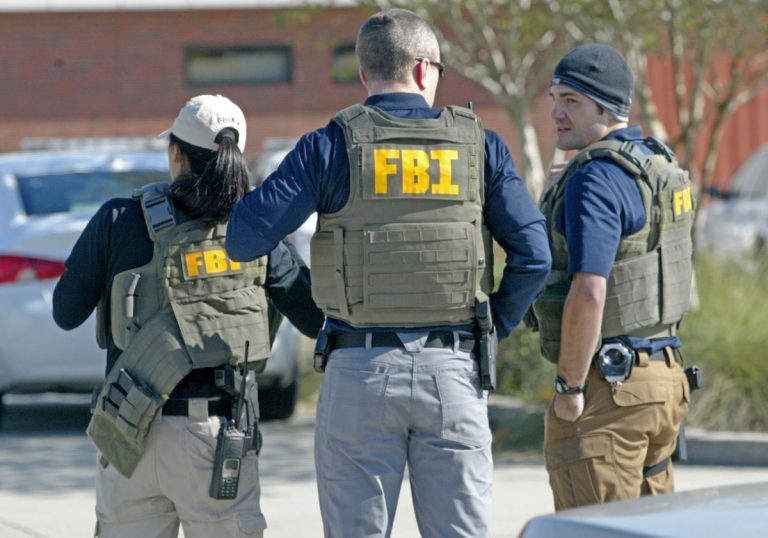
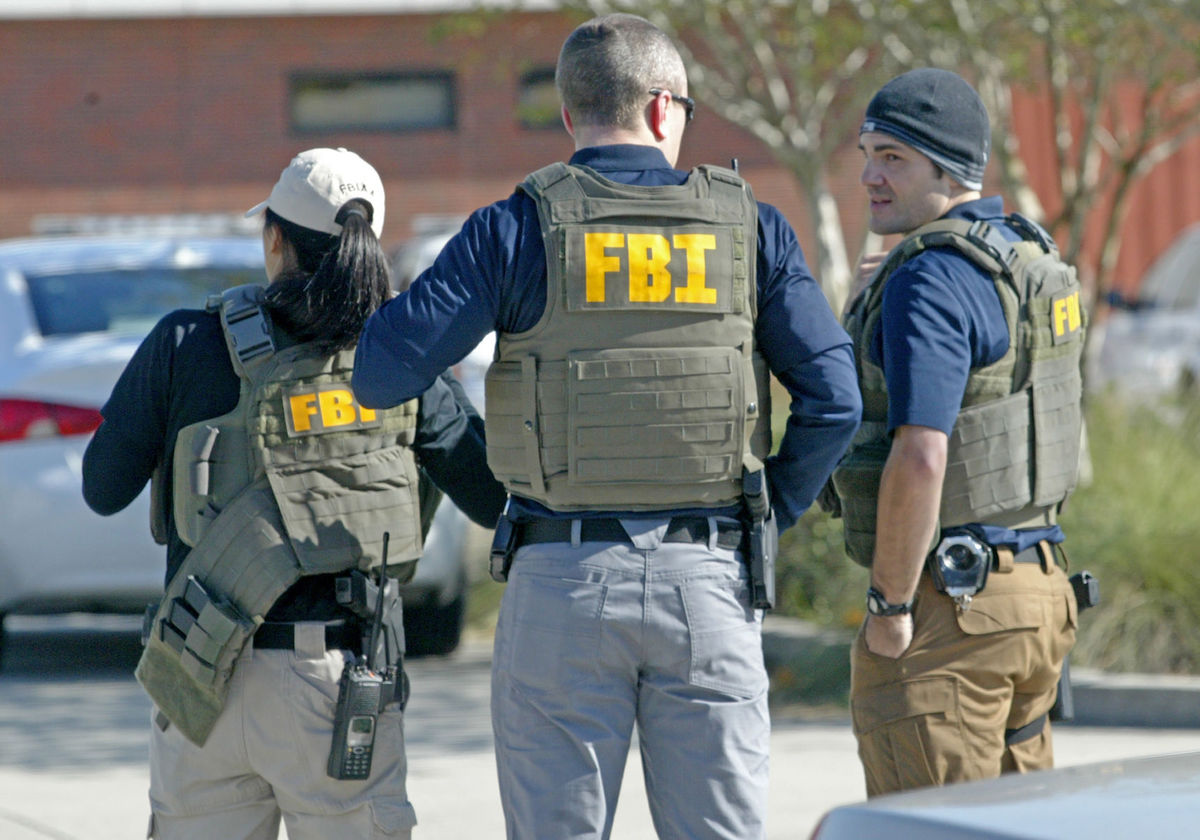
A Nigerian, Daniel Adekunle Ojo, has been arrested by the FBI in Durham, North Carolina, United States of America, and charged with fraud and identity theft offences.

Ojo, who had been in the US for 14 months, was arrested after he was linked to a phishing scheme that used an AOL and Gmail email accounts to target school districts in Connecticut and Minnesota in an effort to get employees’ personal information and file bogus tax returns.

 Ojo appeared before a US magistrate judge in Greensboro, N.C., and was ordered detained pending his transfer to the District of Connecticut.

He was arrested in his Durham home. Authorities said Ojo entered the US in May 2016 on a visitor’s visa and failed to leave on his scheduled departure date in June 2016.

His arrest was announced Friday by Deirdre M. Daly, United States Attorney for the District of Connecticut, Patricia M. Ferrick, Special Agent in Charge of the New Haven Division of the Federal Bureau of Investigation, and Joel P. Garland, Special Agent in Charge of Internal Revenue Service Criminal Investigation in New England.

Prosecutors said a school district employee in Glastonbury, Connecticut, received an email in February that appeared to be sent by another employee, who asked for tax information for 1,600 school district workers. 

The worker who received the email then forwarded the information, which was used in the scheme to file 122 bogus tax returns seeking nearly $600,000 in refunds, authorities said.

Officials said the Internal Revenue Service processed about six of the fake returns and electronically deposited nearly $37,000 in refunds to various bank accounts.

Investigators linked the email sent to the employee to Ojo, prosecutors said.

Officials also believe Ojo was involved in similar email schemes targeting school districts in Groton, Connecticut, and Bloomington, Minnesota.

In March, a Groton school employee emailed tax information of 1,300 employees in response to an email that appeared to be from the superintendent of schools. Authorities said the information was used to file about 66 fraudulent tax returns seeking about $364,000 in refunds. 

Officials said the fake returns weren’t processed because they had been flagged as being part of an identity theft scheme after school employees discovered the problem.

Prosecutors also said they linked the email account used by Ojo to a similar scam that obtained tax information for about 2,800 school employees in Bloomington earlier this year.

Eric Placke, a federal public defender in North Carolina who represented Ojo only for his initial court appearance, declined to comment on Friday. It’s not clear who Ojo’s attorney will be in Connecticut.

Daly urged the public to double-check links and email addresses before clicking on and responding to them, to avoid becoming an identity theft victim.

Understanding farmers-herdsmen conflict and the way forward

0


Fulani herdsmen

By Abdulrahman Usman Leme

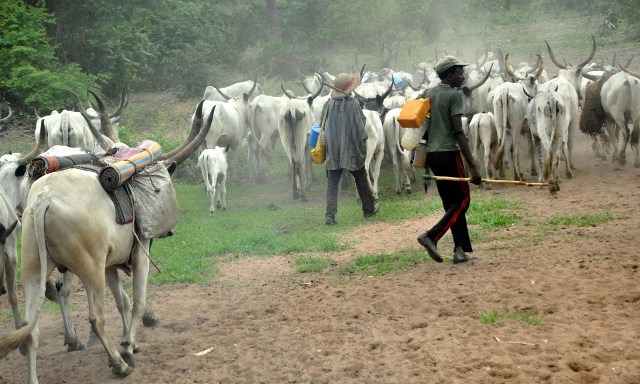
Nigeria has experienced a considerable increase in natural resource conflicts since the early 1990s. The increasing clashes between farmers and pastoralists have recently become worrisome, especially in wetland areas of the Middle Belt, North Central Nigeria. As expected, most media outlets both local and international have cashed in on the stories around the unfortunate conflict with highly exaggerated accounts motivated by ethnic and religious undertones.  This has led to increased misunderstandings and level of distrust among Nigerians.

Centuries back, many of the low-lying areas next to rivers in Nigeria was hardly used by farmers because of some wide-range of reasons. One of such was the exposure to diseases like river blindness and malaria. Another is the problem of erosion peculiar to these riverine areas. These areas instead were mainly used for grazing by nomadic herders and fishermen.

However, the increase in Nigeria’s population led to a need for much greater use of these lands, especially for food production. During Nigeria’s colonial era, large irrigation schemes to ensure freshly planted food crops became popular. These schemes however became unsustainable forcing successive governments to find alternatives. The need to have substitutes necessitated the introduction of theFadama projects in the early 90s to support traditional small-scale farmers. Fadama is a term denoting irrigable low-lying plains. The idea was to promote low cost technology for irrigation under the World Bank financing. The Fadama cultivation was promoted throughout the northern region.

The expansion of the project coincided with large-scale urbanization and a growing demand for horticultural products in all regions. This spread various types of dry season cultivation in many states and ultimately set the stage for the recurring farmers and herders’ clashes. The farmers, usually desperate to meet the growing demand for food items in growing urban centers and to feed their families took up more of the riverbanks to farm. Doing this meant they encountered struggles with the other users, especially the herders and even the marginal fishermen. The herders’ frustration and hostility came mostly from finding the grazing routes and access to watering points covered by tomatoes, cucumbers, vegetables and other crops planted by the farmers. This led to misunderstanding and clashes leading to loss of lives and property.

AT WHAT POINT DID IT BECOME A FULL-BLOWN WAR

Prior to 1999, security was considerably firmer than it is now. One of the weaknesses of civilian rule from 1999 till date is the poor and inadequate response to the security of lives and property. Internal crises were containable under pre- democracy era. Now, the police and/or security outfits are required to contain what initially used to be settled by village heads. The advent of democratic rule seems to have opened the gate of ethno-religious conflicts which manifested around the Farmer-Herder conflicts. Some politicians have cashed on the land use conflicts to feather their nest.  For example, in Mambilla Plateau of Taraba state, herders and farmers have lived peacefully together for centuries. There was never a history of any clash between the neighbours until around the years 2001 and 2002, and both crises are believed to have been politically motivated.

Smarting from the latest round of the clash, which started on June 18, 2017 after ethnic Mambilla militias descended on Fulani communities, people are still counting their massive losses due to unprovoked attacks on their lives and property. A number of people for example, are still missing Again these attacks were alleged to have been carried out at the behest of some political elements.

In the early years of return to democratic rule in Nigeria, Plateau State also witnessed ethno religious crisis. Many of the settled and transhumant pastoralists were caught up in the crisis between the urban Hausa-Fulani Muslim and the Christian tribes; which set the stage for subsequent conflicts that lasted many years. The situation has not been different in other states like Nassarawa, Benue and Kaduna. Again, just about the same period, we had the infamous Sharia crisis in 2000 which contributed to the already growing distrust among the urban Hausa-Fulani Muslims and their largely Christian tribe neighbors in Southern Kaduna. This of course has negatively affected the relationship between the transhumant pastoralists and the locals in Southern Kaduna.

Part of why these crises linger on is because both the people and successive state governments failed to commit to peace. We have seen recently in Plateau State, for example, that peace can be restored when both parties are committed to lasting peace. Efforts made by the state Government, NGOs, development partners, community and religious leaders and the warring parties to ensure peace has proved to be effective; so far Plateau state has been at its most nonviolent for the longest time since 1999.

We also cannot ignore the acts of criminality and banditry being perpetrated under the guise of the “herdsmen attacks”; and our obsession with one-sided narratives. A good example is that of the Zaki Biam killing that took place on 20th March in Benue State. The initial report was that “herdsmen” perpetuated the mass killing of the people of the town. The police however later reported after investigation that armed gangs led by the wanted militia leader, Terwase Agwaza, carried out the act.

MOVING FORWARD

Over the years, the Federal government created commissions to investigate and find comprehensive solutions for the crisis in the Middle Belt states. There was the presidential peace initiative committee in 2002, the Federal Administrative Panel of Inquiry in 2008, the Federal Advisory Committee in 2010, post advisory committees on security challenges in 2012 and so many others. Failure of successive Governments to implement any of the recommendations by the panels of inquiry set up to investigate previous crises is one reason it still lingers. Some months ago for example, the Kaduna State Government made an effort to implement one of such recommendations and it was widely sensationalized as “paying the herdsmen for killing people”; which ushers in the role of media in these crises.

If the media can do away with this culture of exaggerating every crisis and do more of developmental and investigative journalism, crises would be averted. For instance, the pre-dawn attacks in some parts of Plateau, Benue, Kaduna, Nassarawa and Taraba States was widely reported to be perpetuated by “unknown gunmen” between 2010 and 2012. ‘Unknown Gunmen’ easily became a lazy way to report the news as opposed to actually investigating the attacks or the people behind it.

The label was later switched to tagging every clash as a ‘reprisal attack by suspected Fulani herdsmen’ without reporting the original attacks that prompted these reprisals. The media keeps reporting the crisis with political and ethno-religious undertone, giving room for ethnic profiling of the entire Fulani race, accusing them of undertaking an ethnic cleansing agenda against the ‘Northern Minorities’. This narrative became even more popular when Muhammadu Buhari came into power as President of Nigeria and Nasir El-Rufai as Governor of Kaduna, both Fulani men, despite their resolve and continued efforts towards ending the crisis.

Today we see how this profiling of the Fulani people has misled some into to believing that every Fulani man is violent and one who does not deserve to live. Many have used this sentiment to justify the latest killings of the Fulani in Mambilla.

It is important for the reader to know that the term ‘Fulani’ doesn’t necessarily describe a particular tribe. It is an umbrella of different clans with distinct dialects in Nigeria and more than 17 African countries. So, if the media continues to give unverified blanket reports of this “herdsmen” crisis, it will only sow seeds of bad blood among Nigerians for crimes committed by criminals.

The Federal Government should as a matter of urgency review our border patrol system, thereby providing more security personnel, deployment of new technological facilities that will aid the immigration and other security agents to verify and admit any foreign herders entering the country. The officers must be trained to be able identify and stop illegal intruders from entering Nigeria. All herds must have the International Transhumance Certificate as provided by the ECOWAS Protocol on Transhumance.

The ECOWAS Transhumance Protocol of 1998 and the ECOWAS Protocol of Free Movement of Goods and Persons in West Africa also needs to be reviewed.  Both acts allow herders access to designated stock routes and grazing lands/reserves through the West African countries. The review should be put in place to ensure efficiency and to identify new routes and away from the routes have already been turned farmlands.

Another viable way of keeping the crisis minimal is creating and revitalizing grazing reserves, especially within states in the North that have already indicated interest in doing so. Over the years, the victims of these clashes have been shoved aside, with no form of compensation for the lives and properties lost. It is therefore imperative to create special tribunals to investigate, prosecute offenders and compensate victims. The media also has a part to play in this in form of undercover journalism; the bar has to be set high for reporters.

CONCLUSION

It is clear that internal security has continued to be a major challenge for the civilian rulers and there is an urgent need for review of our national security policy and strategy to accommodate these new dimensions of security challenges arising from the Famer/herder clashes.

*Leme (@Lemeveteran), wrote from Lagos

We should not compromise the unity of Nigeria

0

ADEDURO 1

By Olorunfemi Adeduro

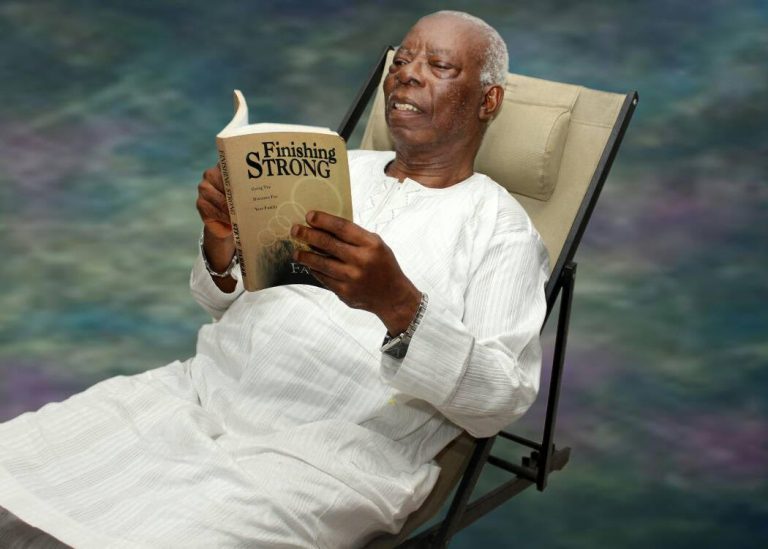
My name is William Olorunfemi Adeduro. Welcome to my greatest day of joy so far. Thank you for coming to celebrate God for lavishing His love on me for 80 eventful years. 

By the grace of God I am 4,171 weeks and 4 days old today.  I have lived with a frail body for 41 years but I have never suffered for a day. Despite being seriously sick since I was 39 years old, I have slept and woken up for 29, 201 days.

My book of chronicles is coloured with chapters of how God healed me from the conspiracy of afflictions. My frail but freed body is an aged tapestry with variegated marks hewed with the rampaging fingers of malaria, fever, cataract, hypertension, diabetes, prostrate cancer, heart issues and associated discomforts. Yet in all these I am more than conqueror through my Lord Jesus Christ.

A glorious joy overwhelmed me when my saviour found me and saved me after 60  seasons of dryness. I am glad to be a disciple of Jesus Christ by whom I have done greater works. I have struggled across many rivers of uncertainties and limitations. Yet my unlimited redeemer ensured that I have never been limited in life.

With a limited education that formally ended at Standard 6, I rose through the ranks in the Federal Civil Service. Having no godfather, the everlasting hand of God the father and the hand of diligence propelled me to retire at Level 13 in 1997. I was an Assistant Chief Superintendent of Press over graduates who possessed master’s degrees from world-class universities.

Just yesterday I turned eighty with a joyful heart. Today I shall sing even if my vocal cord sounds odd. Let me tell you my story when things went awry. Indulge me to write about life just before things went right. I was born on August 4, 1937 to the family of late Samuel Olugbemisoye Adeduro, the late high chief Adaja of Ondo Kingdom. My father was a successful farmer and produce merchant. My mother was Madam Oladimeji Adeduro Nee Akinkugbe.

I started my educational career between 1945 and 1955 in Ondo kingdom, Ondo State. I attended All Saints School, Ogbonkowo, Ondo and Ansarudeen Primary School. In those days a pupil was promoted from Primary 1a to 1b to 1c. Unlike today when pupils proceed from primary 1 to primary 2 in that order. So we spent eight years in primary school. I left school with Standard Six.

Out of his love for me and his succession plan in business, my father desired that I worked with him on the farm. However, my inquisitive and restless mind yearned for the bustling city of Lagos. So, in less than two years I found my way out of my father’s Owena farmland and village in Ondo State. I boldly came to Lagos in search of a greener pasture in March 1959.

On my arrival in Lagos I attended a private commercial school called Odunfa Commercial Institute. There I studied Shorthand, Typewriting and Accounting respectively. I also studied photography at Ola Photo Studios in Ebute Metta. The commercial education I had qualified me to secure my first paid job as a Clerk Typist with Guinea Insurance. After some time, I got another job as a daily paid worker as Graphic Arts Attendant with the Graphics Section in the Federal Ministry of Information. After some time, God granted me favour to be converted to standard scale on a permanent job as a civil servant.

Through the mercy of God I was able to work with supervisors who appreciated my diligence and promptness in reporting for work. I was always willing to go the extra mile to satisfy my supervisors. God used this my disposition to secure extra favour for me. In my determination to make a difference despite my limited formal education I devoted myself to God and the study of many books on literature, philosophy and religion. This paid off as I became intellectually strong to compete with colleagues who had university educations during promotion tests and came out tops.

Although my income was meagre, raising a family was a joy for me. My wife stoutly stood by me and for me to make me a successful husband and father. I am grateful to God for giving me a great woman who is caring, courageous, passionate, diligent and determined to raise a godly family. My better half, Julianah Ibilola Adeduro (nee Adenodi) from Ondo Kingdom is a rare gem and a virtuous woman who every family needs to blossom. Without this woman blessed with boundless energy and incredible gift of memory (my wife can still recall the telephone numbers of more than two hundred people from her brain without consulting a diary or contact book) I am sure I would not have gone this far in life. Thanks to the long suffering of my wife, we were tenants for 25 years in a one-room apartment (‘face-me-I-face-you type) at 86 Eleshin Street, Obalende, Lagos, yet we were able to successfully raise our five children as graduates who are all landlords and lady in Nigeria and USA today. To the glory of God, my wife and I own two houses in Nigeria.

My wife is very spiritual without being fetish even before we became born again some decades ago. Both of us successfully completed the School of Disciples programme about 20 years ago in The Redeemed Christian Church of God.

Through my experience, I can boldly say that any man who marries a wrong wife cannot live long and have good success.

My experience of living in Obalende since 1964 makes me realize that we should not compromise the unity of Nigeria. All those who are clamouring for a breakup and war do not have an understanding about the ravaging effects of disunity and civil war in a nation. Living and working next door to Dodan Barracks made me a living witness to the 1967 Civil War and all the coups d’etat in Nigeria. I am still terrified till today each time I remember what happened on the day General Muritala Muhammed was assassinated near my office on Ikoyi Road, Lagos. On the morning of that faithful Friday February 13, 1976 my colleagues and I were settling down in my office at the Graphic Arts section of the Federal Ministry of Information on Ikoyi Road when we heard gun shots. Initially, we thought it was the regular shots we often heard since were directly located behind Dodan Barracks. In fact we used to pass through Dodan Barracks from Obalende to Ikoyi in those days. One of my junior colleagues soon ran inside to inform us that some armed bandits had killed a man in a big Mercedes Benz at the junction of Road that takes you towards the road leading to Ikoyi Club. Since there was no fear of armed robbers or kidnappers as it is rampant today, we all trooped out of the office towards the direction of the scene. In our innocence, we wanted to go and offer help. But a series of gunshots suddenly ensued as we trooped towards the scene. Suddenly we saw many fiercely-looking armed men in army uniform threatening to shoot us. It was them we realised that a coup d’etat had occurred again. There was pandemonium as all my colleagues and I took to our heels. That day I ran to my home in Obalende with only a shoe on my left leg. I did not know when and where the shoe on my right leg fell off.

Coups d’etat and war are destructive to human lives and values. It is better to jaw-jaw and solve our challenges as a nation than to war-war. A United Nigeria is better for the future of our children. Personally, I believe that the journey of Nigeria to greatness, strategically charted by our leaders in the First Republic, was truncated by the long years of military rule. Unfortunately, what we have today in the so-called democracy are people who rule without the fear of God and an eye for the future.

I cannot truly tell you what I have done to live this long if not for the mercies of God that preserved me through times of storms. However, I believe that every human being who hopes to see the future should be fastidious in doing certain basic things. These include having a strong relationship with the almighty God. Without God you are empty, and an empty vessel has no value. When you don’t have value to God He won’t bother much about keeping you in a competitive world. Secondly, you must be careful to be moderate in everything you do. You must also live a life that is devoid of offence to God and man by pursuing peace in all situations. Thirdly, working hard and smart based on knowledge is desirable for anyone who desires to have good success.

In addition to these three, you must learn to be patient and delay gratification. One of the reasons why most people have integrity problems is because they are in a hurry to achieve certain things. For me, being slow and steady with a determined pursuit of purpose will ultimately win the race. This is why I was a tenant in a room apartment for 25 years despite the fact that I could not, at some point, afford to rent a flat or what my peers called “a more decent accommodation”. You see. I needed to be sure that I could train all my biological children to become graduates. I remember once that my first born, when he was in secondary school, requested that I should rent a flat because he saw that one of his classmates had a personal room in the flat that his parents rented in Akoka area of Lagos. I promptly told my son that we would not move out of the rented one-room apartment until I was able to see him through University education. That was the end of the pressure. To the glory of God, we stopped living in a rented apartment after my first son graduated from the university.

Look back, I am grateful to God that all my five children are successful graduates, with the eldest possessing a Ph.D. My first two children are pastors in the Redeemed Christian Church of God. My eldest child, Pastor (Dr.) Wale Adeduro, has grown to become an Assistant Pastor in Charge of Province in Ikoyi Lagos while his brother, Pastor Bolaji Adeduro,  is a Pastor in California, USA.

The fifth thing an individual should do is to be fully responsible for members of your immediate family. Ensure that you have a bond of love and unity with your spouse and children. This will happen if you endeavour to love all your children equally. Personally, I love my children equally and I have never given any other five of them preferential treatment over the others. This largely explains why there is a high degree of unity among my five children. I don’t need to remind you about the various court cases initiated by siblings contesting the wills of their late prominent fathers in Nigeria. Parents should avoid treating their children unequally. The older child is not supposed to be treated better than the younger. It is an error to give preferential treatment to any child.

At the end of the daytime, it is only your family that you have when the chips are down. An individual with a loving family will ultimately triumph in life.

You have to take care of your health by watching what you eat and drink. Regardless of the taste it leaves in your mouth, the classic unprocessed Nigerian meals remain the most nutritious and healthy food. I recommend that Nigerians who want to live well and longer should go back to the meals our parents ate before Nigeria’s independence in 1960.

The final responsibility you have is to pray and trust God for long life. If I had died at the age of fifty, I would not have become a landlord in Lagos. If I had died at the age of sixty I would not have become an American citizen.

As I take stock of my life today, I feel fulfilled and indebted to God for His loving kindnesses towards me. As I grew up in life, I realized that the name you bear tells a lot about your destiny. My parents named me Olorunfemi. This name simply translates to God Loves Me. Having woken up this morning, a day after I turned 80 years old, I am truly convinced that God Loves Me. I pray that God shall also show love to my children and their spouses, my grand children to my fourth generation, including all my well wishers and helpers  in the name of Jesus.

At 80, I wish I were younger. I could have done a lap of honour round the stadium to celebrate my God, my father in heaven and the lover of my soul.

Rise with me as my old body dances to the new rhythm of my spirit.  I have been renewed in my body, soul and spirit. God Loves Me!!!

 

EXCLUSIVE: FG failed to run security checks on nominees before announcing new ICPC board

Maimuna Aliyu 2
Maimuna Aliyu

The federal government announced a new board of the Independent Corrupt Practices and other related offences Commission (ICPC) without running security checks on the nominees, the ICIR can confirm.

The ICIR exclusively reported on Friday that two persons announced as members of the reconstituted board of the ICPC, Maimuna Aliyu and Sa’ad Alanamu, were being investigated on corruption allegations by the anti-corruption agency.

The report indicated that Aliyu, a former Executive Director at the government-owned Aso Savings and Loans, was being investigated for stealing and diversion of public funds and that charges were being drawn up against her by the ICPC before her appointment.

Alanamu is also being investigated for bribery, among other allegations, he allegedly collected from contractor while he was chairman of the Kwara State College of Education.

Now embarrassed by the revelations, the federal government has decided to replace the two persons nominated to the board who are under investigation by the agency.

A senior presidency source who can not be named told the ICIR late Friday that the government took the decision to replace the two of them after verifying the allegations that they were under investigation. He also said the decision to replace them would be announced next week.

He said that the government felt embarrassed that persons undergoing criminal investigations were announced as members of the board of the anti-corruption agencies handling their case.

However, another source in the government whose name can also not be mentioned told our reporter that the members of the ICPC board announced on Tuesday did not go through any security screening as is traditional for such appointees.

The source said that the appointees were picked from a long list of names that had piled up in the two years that the Muhammadu Buhari government came into office.

He said that the failure of the government to fill those positions led to a situation where a long list had developed of persons seeking appointment into several boards. Such appointments are used for political patronage and rewarding the party faithful.

However, lately, a lot of pressure, it was learnt, had been put on the government to fill some of the vacancies, leading to the recent announcement of appointments into some boards.

For example, at the National Salaries, Incomes and Wages Commission, Ekpo Nta, erstwhile ICPC Chairman, was named as full-time commissioner alongside two others, while four part-time commissioners were also named in addition to six other officials.

Similarly, appointments were also made at the Infrastructure Concession Regulatory Commission, with Chidi K. C. Izuwah, and engineer, named Director-General, while the Special Presidential Investigation Panel for the Recovery of Public Property, to be chaired by Okoi Obona-Obla, Special Assistant to the President on Prosecution, was set up.

However, rather than send the names of the appointees to the Department of State Services (DSS), for proper security screening, the government just announced their appointment, the source said.

When asked to verify the claim that the appointees did not go through security training, Laolu Akande, Spokesman to the Acting President, was not too committal.

In a text message sent in response to our enquiries, he said that “the claims will be thoroughly and promptly acted upon with dispatch doing the right if found true”.

EXTRA: The Nigerian slum where live plays are staged on water


Floating theatre1

Makoko, a slum and waterside neighbourhood in Lagos State, came alive recently when a theatre troupe staged a play on water.

Residents were treated to a once-in-a-lifetime kind of experience when popular stage actresses performed alongside novices picked from the neighbourhood in a play about gender equality.

The set was a floating stage and the audience watched from the water in fishing boats and viewing platforms built on wooden pillars.

The fascinating story was shared on BBCs Focus on Africa.

Watch the pictures below:

Floating theatre2

Floating theatre5

Floating theatre3

Floating theatre6

Floating theatre4


Scientists warn: Stop giving babies water, it ‘kills’ them

Breast-696x429

A popular belief in Nigeria is that everyone needs to drink water to survive. Legendary musician Fela Anikulapo Kuti captured this feeling in a popular song, Water No Get Enemy. However, scientific evidence shows that water is an enemy, at least to children below the age of six months.

Children less than six months old do not need any drop of water; they need only breast milk, nothing more or less.

Global health bodies WHO and Unicef recommend that breastfeeding is initiated within one hour of birth and that it continues with no other foods or liquids for the first six months of life.

Facts indicate that babies who are exclusively breastfed are 14 times less likely to die than those who are not fed breast milk.

“Our greatest challenge to exclusive breastfeeding in Nigeria is water,” Ada Ezeogu, Unicef nutrition specialist told the ICIR in Ibadan, the Oyo State capital.

Ezeogu says stopping mothers from giving their babies water during the first six months can save the lives of thousands of children annually in Nigeria.

Exclusive breastfeeding is an infant feeding practice where children younger than six months are given nothing but breast milk.

The myth that a child below six months can get thirsty and needs water to quench the thirst has contributed significantly in placing Nigeria at the lowest level in the Global Breastfeeding Scorecard.

According to the National Demographic and Health Survey 2013, the prevalence of exclusive breastfeeding is only 17%.

Unicef says that this exclusive breastfeeding rate means that at least 5.4 million children each year miss out on its benefits and contributes to the country’s problem of chronic child malnutrition. Eleven million children under five are malnourished in Nigeria.

An estimated 13% of child deaths can be averted if 90% of mothers exclusively breastfed their infants for the first six months of life.

Water is the greatest barrier to exclusive breastfeeding in Nigeria and Ezeogu is asking: “What can we do to stop mothers from giving water to their babies?”

She says if mothers can simply stop giving their children water, exclusive breastfeeding will soar.

BREAST MILK HAS ENOUGH WATER

Scientific evidence shows that about 88 per cent of the content of breast milk is water, which means that a baby on exclusive breastfeeding can never get thirsty within the first six months of birth. Other contents of breast milk are protein, fats, iron, and vitamins.

Scientists believe that giving babies additional water during the first six months denies them essential nutrient from the breast milk and introduces early onset of malnutrition.

Infections can easily be transmitted to the babies through water and this is why nutrition experts say that exclusive breastfeeding helps to prevent diarrhoea and pneumonia, the two major causes of death in infants.

“Breastfeeding gives babies the best possible start in life,” Tedros Adhanom Ghebreyesus, Director-General of WHO ,says. “Breast milk works like a baby’s first vaccine, protecting infants from potentially deadly diseases and giving them all the nourishment they need to survive and thrive.”

What is often the case in Nigeria is that many people still believe that breastfeeding alone is not sufficient for babies and that babies need additional water or food.

Social pressure from relatives can be very strong on the mother to add extra things to a baby’s diet. Hence, babies are not only given water but also infant formula, herbs, semi-solid foods such as pap, gruel and in some instances solid adult food.

“Breast milk has everything a baby needs to quench thirst and satisfy hunger,” Ezeogu says.

She urges mother to understand that breast milk is the best food and drink that can be offered a baby so that the baby will grow to be strong and healthy.

EXCLUSIVE: Two ICPC board members appointed by Osinbajo under investigation for ‘multi-million-naira corruption’


Maimuna Aliyu
Maimuna Aliyu

Two of the 14 members announced to the board of the Independent Corrupt Practices and other offences Commission (ICPC) are being investigated by the anti-corruption agency for alleged corruption in the region of N1billion, the ICIR can authoritatively report.

The two proposed members of the board, headed by Bolaji Owasanoye, a Professor of Law and current Secretary of the Presidential Advisory Committee Against Corruption (PACAC), are Maimuna Aliyu and Sa’ad Alanamu.

The appointments were announced on Tuesday following approval by Yemi Osinbajo, the Vice President.

While Alanamu is being investigated on corruption charges allegedly committed while he headed several institutions in Kwara State, Aliyu has a longstanding case of abuse of office, misappropriation and diversion of public funds against her.

In fact, the ICIR learnt on Friday that charges were already being prepared against her by the ICPC in preparation to taking her to court when her name was announced as a member of the new board of the commission.

Apart from the ICPC investigation, our investigations also show that the Economic and Financial Crimes Commission (EFCC) and the Nigerian Police have investigated several corruption cases against Aliyu, a former Executive Director of the Aso Savings and Loans.

In fact, in May, a police investigative report indicted her and recommended her for prosecution. The investigative report dated May 31, 2017, and signed by Taiwo Oyewale, a Superintendent of Police, for the Deputy Commissioner of Police, IGP Monitoring Unit, said that Aliyu illegally converted to personal use a total of N58 million being proceeds of three plots of land belonging to her employers, Aso Savings and Loans.

Police investigations showed that as Executive Director, Marketing, Aliyu got approval to sell three of the bank’s landed properties in Abuja. The plots were offered for N19 million each. Aliyu is said to have sold the lands for N58 million but refused to hand over the money to the bank.

The police investigations commenced after Aso Savings and Loans wrote a petition in November 2016 alleging that Aliyu, who had by then retired from the bank for three years, had refused to hand over the proceeds of the land sale.

The same month, the bank also wrote a petition against her to the Governor of the Central Bank of Nigeria, the EFCC and the ICPC

In one of the investigations, it was discovered that Aliyu actually sold the three plots of land entrusted to her by the bank at N40 million each (instead of N19 million) totaling N120 million and held on to every penny.

Apart from the N120 million allegedly misappropriated by her, the bank also lodged several complaints of abuse of office and conversion or diversion of its funds, totaling nearly N1 billion.

The bank alleged that in 2012, Aliyu sought and got a mortgage facility of N40 million to purchase five houses – four-bedroom detached mansionettes. However, after she resigned her appointment in September 2013, the former Executive Director said she could no longer bear the burden of the payments and requested the bank to cancel the mortgage on four units and take them over. She said she would continue to maintain the mortgage contract on just one unit.

However, since 2013 when she left the bank, Aliyu has refused to hand over the four houses and has not serviced the mortgage on them. In fact, investigators believe that she has since sold the units and pocketed the money.

The bank also alleged that Aliyu abused her office by illegally allocating a house at Aso Groove Estate to her son, Sand Aliyu. According to the bank, Aliyu had showed interest in buying the house for her son in the name of a company in which he is a director. However, because she had all the keys of the houses put up for sale by the bank since she was in charge of marketing and sales, Aliyu handed over the key to the house to her son without paying a dime for the house worth N210 million. She still has not paid for the house till date and her son continues to live there.

Aliyu is said to be highly connected in the corridors of power and might have used her clout to get nominated to the ICPC board to stop her prosecution by the commission.

Senior police officers familiar with the case who spoke to the ICIR on condition of anonymity are miffed about her appointment and wonder how she could have passed through security checks with all the investigations and indictments against her by security and anti corruption agencies.

ICIR attempted to reach Aliyu for comments, but her known telephone number was switched off throughout Friday and was still unreachable as of press time.

In the case of Alanamu, a protégé Olusola Saraki,late politician and father of Senate President Bukola Saraki,it is feared in some circles that his new godfather, the younger Saraki, is planting him in ICPC.

Alanamu is being investigated by the ICPC for corruption and bribery. He allegedly collected bribes from contractors handling TETFUND contracts, which he approved as Chairman of the Board of Kwara State College of Education, Ilorin.

As in the case of Aliyu, questions are being raised about how Alanamu passed security screening with the investigation against him at the ICPC.


16,000 Nigerian women entered Italy in two years — as commercial sex workers

Prostitutes

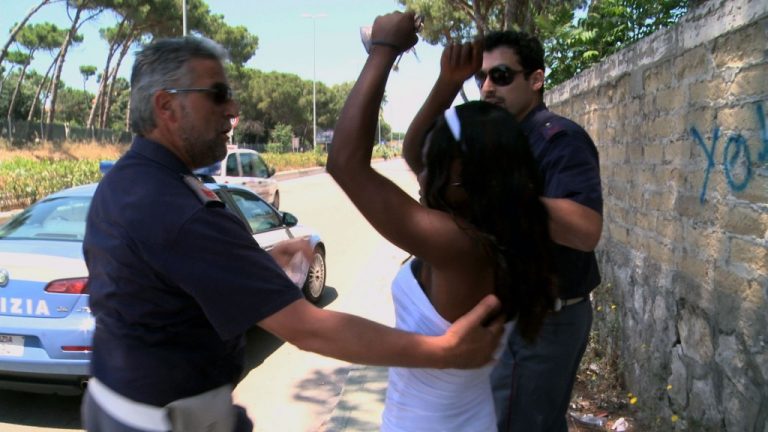
Italian and European authorities estimate that as many as 16,000 Nigerian women have entered Italy the past two years to work as street prostitutes.

This is part of ‘Mafia’s Death Triangle Nigerian, Ghanian Migrants Just Try to Survive’ —  a report by VOA detailing how Father Carlo Ladicicco, a 65-year-old retired Catholic priest is fighting the cause of African migrants — Ghanian and Nigerian — in one of Italy’s most infamous municipalities, Castel Volturno.

According to Ladicicco who uses his pension to subsidise his pastoral outreach to some of the poorest and most exploited African migrants in Italy, recent Ghanian and Nigerian migrants settle in Castel Volturno once they’re allowed to leave reception camps in Sicily or Bari because previous generations of migrants from their countries ended up here — some more than 20 years ago.

Many of the older generation of migrants, he says, “still live in Italy without legal documents — and their children, even when born here, remain in a legal limbo”.

According to him, one of the key drivers of African migration is the goal to make money to improve the lives of families back home.

“Other migrants wanted to flee the confines of a life proscribed by traditional rules and limited by crushing poverty. But poverty is what they find in Italy, too,” he says.

“Yes, they’re shocked at how hard life is here for them,” says Father Carlo of the migrants in the town — the men mainly are from Ghana.

“The men tell me they didn’t realise how difficult it would be to get work, find somewhere to live and to get documents. They thought Europe would be easy. But when they call home they lie and say everything is fine — they don’t admit things are falling apart because they’re ashamed.”

The report says some houses deserted by despairing owners in the town are now occupied by migrants who are described as the latest generation to buy into the illusion of a promised land.

“Among their number are hundreds of Nigerian women trafficked into Italy by Nigerian crime syndicates”.

Father Ladicicco says there are scant work opportunities for men, except poorly-paid, back-breaking labour as virtually enslaved agricultural workers for mafia-linked recruiters and landowners.

“I am an emergency resource,” he says of his mission, complaining about the neglect of the town by authorities in Rome. “I am here to help migrants connect to charities, to help them get a lawyer or doctor.”

Two years ago, he explains, you would see a migrant prostitute every 200 to 300 metres on the highways outside town.

“Now there’s a woman every 50 meters,” he sighs. “We are all trying to normalize an absolutely abnormal situation.”

Campus journalists seek collaboration with ICIR on investigative reporting

ICIR2
L-R: Dayo Aiyetan, Executive Director, ICIR; Ibrahim Alawode, President, National Union of Campus Journalists; ‘Fisayo Soyombo, Editor, ICIR; Tajudeen Suleiman, Director of Projects ICIR

More than 4,000 journalists who are registered members of the National Union of Campus Journalists (NUCJ) have requested for collaboration with the International Centre for Investigative Reporting (ICIR) to improve the quality of journalism at Nigerian campuses.

Paying a courtesy visit to the ICIR in Abuja on Wednesday, Ibrahim Alawode, National President of the association, commended the media organisation for its efforts in raising the standard of journalism in the country.

He lamented the poor quality of journalism being practiced in higher institutions, saying his members require suitable training and mentoring to build capacity in investigative reporting and ethical practices.

“What we want from you is training and mentoring to improve the kind of journalism we do on our campuses. Many of our members engage in unethical practices and do not have skill in investigative reporting,” Alawode said.

“In the past, our members have been used by politicians in very unethical ways and we feel that if you can help to build capacity for them it would improve the quality of the journalism we currently practice.”

In his response, Dayo Aiyetan, Executive Director of ICIR, expressed delight at the request and offered to collaborate with NUCJ on training and mentorship.

He also spoke on ICIR’s collaboration with media houses to build the capacity of journalists for critical reporting

“We realise that many newsrooms in the country are in bad shape and most journalists lack capacity to do critical investigative reporting that could hold government accountable and promote transparency in government,” Aiyetan said.

“This is why we are working with journalists and newsrooms to build their capacities and support them to produce investigative contents that promote accountability, transparency and good governance.”

Aiyetan added that ICIR had offered a platform on its website for campus journalists to report critical issues that expose corruption and promote good governance on the campuses.

ICIR is an independent, non-profit news agency that seeks to promote transparency and accountability through robust and objective investigative reporting.

The wealthy will be the biggest losers if Nigeria sinks, says Oshiomhole

Oshiomhole warns ruling class, if the Nigerian vessel sinks, you will suffer more loss

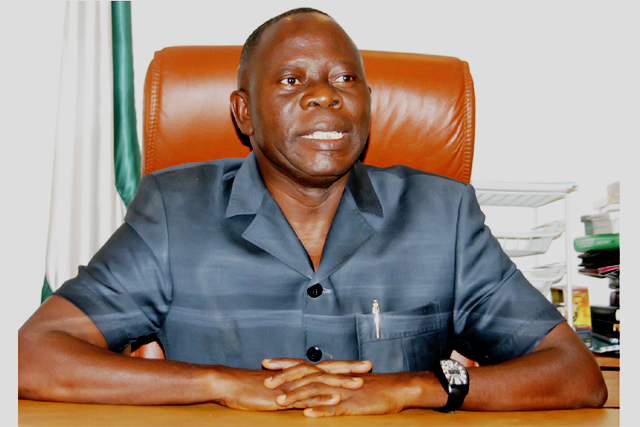
Adams Oshiomhole, the former Governor of Edo State, says the political elite will be the worst hit if Nigeria crumbles.

He has therefore warned them against pretending that all is well with the country and consistently ignoring the numerous calls for restructuring.

Oshiomhole gave the warning on Thursday in Lagos State at a lecture on fiscal federalism and Nigeria’s stability organised by the Department of State Services (DSS).

Quoting Fidel Castro, former President of Cuba, Oshiomhole likened Nigeria to a ship that is on sail but with various passengers who are occupying cabins of varying degrees of comfort.

“Obviously, this vessel is carrying too much injustice to remain afloat and it pursues such an irrational and senseless route that it cannot call on a safe port,” he said.

“This vessel seems destined to crash on an iceberg; if that happens, we will all sink with the vessel.

“The reason that people are invoking all kinds of sentiments, vocabularies, diversions and all that is the fact that, it seems to me that it is becoming increasingly clear to many that the Nigerian ship, if we do not reorder the way it is and redistribute the passengers such that everybody will have some minimum comfort within the vessel, when the vessel sink, the wealthier you are, the more your losses.”

Oshiomhole however added that Nigerians must bear in mind that, though the present system of government needs to be re-discussed, “there is no ideal federalism and therefore you can’t speak to true federalism”.

“Every federal system has its own peculiarities and those peculiarities flow from history and from the particular unique environment that the particular country finds itself,” he said.

“So if you chose to copy America, it is your choice. There is no political theory that says America’s model is universally accepted.

“My own position is, you are never going to have neither a perfect federal system, nor will you have a perfect constitution…  because I’ve heard people blame the constitution, that it is responsible for our problems. And you are not going to have perfect structural arrangement such that if all other things remain the way they are, Nigeria will be delivered.”

Other speakers at the lecture include Ken Nnamani, former Senate President and Lawal Daura, Director General of the DSS.