Home Blog Page 2733

INEC tells court Melaye suppressed ‘material facts’ to halt recall


The Independent National Electoral Commission (INEC) on Thursday asked the Federal High Court in Abuja to set aside the restraining order that truncated the recall of Dino Melaye, the Senator representing Kogi West at the National Assembly.

The commission told the court that Melaye misrepresented and suppressed material facts, which misled the judge to grant the order of interim injunction.

The restraining order was issued on July 6 by Justice John Tsoho, who subsequently adjourned the matter till September 29.

However, in a motion on notice brought before Justice Nnamdi Dimgba, INEC prayed the court to set aside the order for maintenance of status quo in the case.

In the motion, filed by one Sulayman Ibrahim, the electoral body claimed that the order for the status quo had hindered it from proceeding with the recall process of Melaye.

In a 16-paragraph-affidavit in support of the motion on notice, INEC claimed that the order made by Justice Tsoho was against the time-bound duty of the commission as enshrined under Section 69 of the 1999 Constitution.

The electoral body averred that since the ex-parte order was served on it on July 10, it has hindered it from taking any further action in respect of the recall petition.

It specifically claimed that it has 90 days, starting from June 21, to conduct a referendum in line with the approved timetable and schedule of activities.

INEC further claimed that the recall process was time-bound and that the 90-day period for the exercise would lapse on September 18.

In another motion, the electoral umpire asked the court for an order for accelerated hearing of substantive suit, and that all order processes relating to the recall petition should be heard during the court vacation.

Justice Dimgba adjourned the hearing of the two motions till July 27 to enable Senator Melaye’s lawyers to respond to the suits.

Seven banks were ‘hiding’ $793.2m from TSA — now they’ve been ordered to remit it


The Federal High Court in Lagos has granted an interim order for seven commercial banks to remit a total of $793,200,000, which they allegedly hid in violation of the Constitution and the Treasury Single Account (TSA) policy of the Federal Government.

In giving the order, Chuka Obiozor, the Presiding Justice, ordered the banks to remit the money to the designated CBN Asset Recovery Dollars Account.

The affected banks include Skye Bank Plc, First Bank Plc, Keystone Bank Plc, Diamond Bank Plc, Sterling Bank Plc and Fidelity Bank Plc.

The interim order was given after the court listened to an ex-parte application filed by Yemi Akinseye-George, a Professor and counsel to the Attorney General of the Federation.

While arguing the application, Akinseye-George said it would best serve the interest of justice for the court to order the banks to remit the funds to the Federal Government to prevent the funds from being diverted, misapplied, stolen or misappropriated.

He also stressed that the withheld funds were urgently required by the Federal Government for executing the 2017 budget.

After listening to him, Justice Obiozor granted the interim orders.

He also directed that the order should be published in a national daily.

President returns home after foreign medical trip — but it’s not Buhari


The international media is awash with reports of an African President who has returned to his home after a foreign medical trip abroad, but it is not President Muhammadu Buhari as many Nigerians must have been anticipating.

Buhari has been receiving medical treatment in the UK since early May, with Yemi Osinbajo, Acting President, recently saying the President would be back in the country “very shortly, much sooner than you would expect”.

According to NAN, it is José Eduardo dos Santos, President of Angola, who spent 17 days in Spain where he normally travels for medical treatment and holiday.

Dos Santos, 74, arrived in Luanda late Wednesday, accompanied by, Ana Paula dos Santos, the First Lady.

They were received at the Luanda military air base by Manuel Domingos Vicente, the Vice-President, and other top government officials.

The veteran leader has visited the European state several times since 2013.

He left Angola on July 3 for Barcelona, with his office saying in a statement that the visit was private.

Back in May, he spent 28 days in Spain without an official explanation, prompting claims from both the social and traditional media that he had died.

But Georges Chikoti, Foreign Affairs Minister, told journalists in Luanda on May 29: “He is in Spain and when he gets fine he will be back home,”

It was the first time a top government official confirmed that dos Santos usually went to Spain for medical treatment.

“President dos Santos normally seeks medical treatment in Spain and this is normal for him to be there,” Chikoti added..

“It is all right but you know it happens with everyone. Sometimes you don’t fill fine but he is fine.”

Dos Santos has been in power since in 1979 and is Africa’s second longest-serving president after Obiang’ Nguema of Equatorial Guinea.

The southern Africa state goes to the polls on August 23, with the long-serving leader set to retire.

The ruling party, MPLA, has nominated Defence Minister João Lourenço as its flag bearer for the contest.


Osinbajo seeks national assembly’s nod to reallocate N135bn in 2017 budget


Acting President Yemi Osinbajo has submitted a proposal to the National assembly for the approval of N135.6 billion to augment the 2017 budget.

Osinbanjo said the money is to cover major projects in the Ministry of Power, Works and Housing.

A similar request was also presented to the National Assembly in 2016 when President Muhammadu Buhari requested for the approval of additional N180 billion to beef up the 2016 budget.

The House of Representatives approved the President’s request at N208 billion following recommendations from its committee on appropriation, while the Senate, on its part, approved a higher sum of N213 billion, also relying on the report of its appropriation committee.

Osinbajo’s virement application could be a way of making up for the reductions in the 2017 budget of the Ministry of Power, Works and Housing as alleged by Babatunde Fashola, who oversees the ministry.

Fashola had complained that funds for key projects under his ministry were unilaterally slashed by the Senate without seeking necessary clarifications.

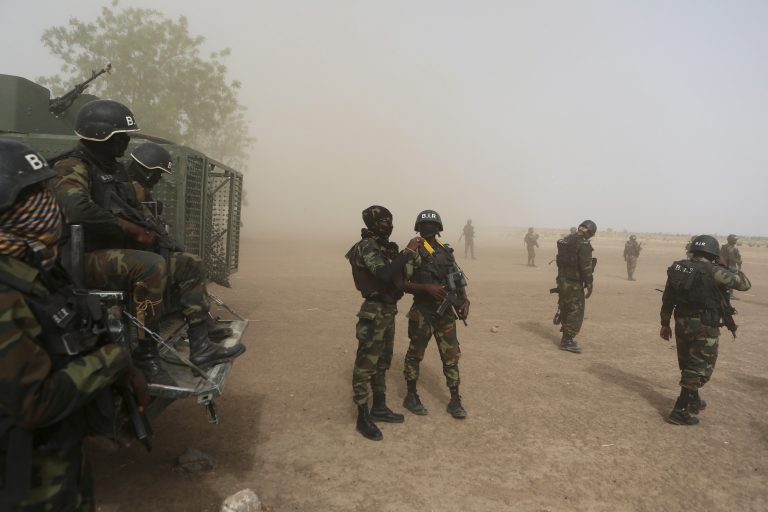
Cameroon torturing innocent civilians with the help of US soldiers, says Amnesty International


A new report by Amnesty International says hundreds of people in Cameroon accused of supporting Boko Haram terrorists are being brutally tortured by security forces.

It also said the dehumanizing actions were being carried out in cahoots with US personnel.

Using dozens of testimonies, corroborated with satellite imagery, photographic and video evidence, the report ‘Cameroon’s Secret Torture Chambers: Human Rights Violations and War Crimes in the Fight against Boko Haram’, documents 101 cases of incommunicado detention and torture between 2013 and 2017, at over 20 different sites.

Speaking on the report, which was released on Thursday, Alioune Tine, Amnesty International’s Regional Director for West and Central Africa, said: “We have repeatedly and unequivocally condemned the atrocities and war crimes committed by Boko Haram in Cameroon. But, nothing could justify the callous and widespread practice of torture committed by the security forces against ordinary Cameroonians, who are often arrested without any evidence and forced to endure unimaginable pain.

“These horrific violations amount to war crimes. Given the weight of the evidence we have uncovered, the authorities must initiate independent investigations into these practices of incommunicado detention and torture, including potential individual and command responsibility.”

Amnesty International said it wrote to the Cameroonian authorities in April 2017 to share the report’s findings, but lamented that no response was provided and all subsequent requests for meetings were refused.

It estimates that Boko Haram has killed over 1,500 civilians in Cameroon since 2014, and abducted many others.

According to the report, victims described at least 24 torture methods they were subjected to.

The report says in one common stress position, described by detainees as “the goat”, their limbs were tied together behind their back before they were beaten. In another technique, described by detainees as ‘the swing’, victims were suspended in the air with their limbs tied behind their back and beaten.

The overwhelming majority of victims were tortured in two unofficial detention sites; the headquarters of the Rapid Intervention Batallion (BIR) in Salak, near the northern city of Maroua, and a facility in the capital, Yaoundé run by the General Directorate of External Research (DGRE), Cameroon’s intelligence services, situated close to the country’s Parliament.

Using architectural modelling, descriptions from former detainees, videos, satellite images and photos, a team of specialists at Forensic Architecture have created a 3D reconstruction of the site in Salak and a school in Fotokol converted into a military base.

In Salak, there are two main cells measuring approximately 9 by 5 metres, each containing up to 70 people. Detainees were usually tortured in an interrogation room they called “the DGRE Room”, which is located near the office of a senior officer. The officer was described by victims as providing orders to interrogators, and by one victim as being able to “decide the life and death of each detainee”.

Samou (not his real name), who was arrested in March 2016, told Amnesty International about his interrogation in Salak a few days after his arrest:

“They asked me to tell them if I knew members of Boko Haram. That’s when the guard tied my hands and feet behind my back and started to beat me with an electric cable, while throwing water on me at the same time. They beat me half to death.”

Mohamed (not his real name) spent six months in incommunicado detention and was interrogated and tortured several times in Salak. He told Amnesty International: “The soldiers asked us to confess. They told us that if we did not confess, they would bring us to Yaoundé to kill us. We replied that we preferred to be killed rather than to confess something that we didn’t know about. They beat us like this for four days.”

The report also highlights the presence of US and French military personnel at the BIR base in Salak, and calls for these governments to investigate the extent to which their personnel stationed at Salak, or regularly visiting, may have been aware that illegal detention and torture was taking place on site.

Amnesty International delegates have directly observed French soldiers during one visit there, while more than a dozen former detainees held there between 2015 and 2016 said they saw and heard white, English-speaking men at the base, including some in military uniform. This has been confirmed by photographic and video evidence showing uniformed US personnel, some of whom are stationed there.

“Given the frequent and possibly prolonged presence of their military personnel, the US government and other international partners should investigate the degree to which their personnel were aware of illegal detention and torture at the Salak base, and whether they took any measures to report it to their hierarchy and the Cameroonian authorities,” said Alioune Tine.

Amnesty International wrote to the US and French Embassies in Cameroon on 23 June 2017, requesting further information about what their personnel knew and what was reported. The US Embassy responded on 11 July and their letter can be found in the report. No response was received from the French Embassy.

Amnesty International identified a school in the northern town of Fotokol used as a military base by the BIR since May 2014. Researchers interviewed six men held and tortured there between December 2015 and March 2016, and analysed a video showing uniformed BIR soldiers torturing detainees. In one scene, several soldiers are dragging a man for approximately 50 metres and beating other blindfolded men with sharp wooden sticks.

The school reopened for classes in late 2016, but as of June 2017 it was still being partially used by the BIR, and at least nine detainees were still there. Using the school as a military base while children are also using it violates Cameroon’s obligations under international humanitarian law to protect civilians in armed conflict, by putting children at risk.

While torture was usually carried out by low and mid-ranking BIR officers and DGRE agents, higher-ranking DGRE officers were also identified by multiple victims as being involved in interrogations. The scale and frequency of the violations, as well as the locations of rooms used, makes it very likely that other senior officers at sites like Salak would have known what was happening. They appear to have taken no measures to prevent or punish these violations.

In Salak, more than 50 victims identified the same room where they were most commonly tortured. Satellite imagery shows this room is in the same building as offices used by senior BIR officers. Cells, where up to 70 people were detained at a time, and where torture took place, are also just 110 metres away from the offices of senior BIR officers.

“The senior officers who were in charge of these detention facilities, must be investigated for their suspected command responsibility in allegations of incommunicado detention, torture, death in custody and enforced disappearances,” said Alioune Tine.

Amnesty International says its evidence suggests that these military bases and other sites are still holding dozens of detainees being subjected to horrific acts of torture.

Looters will no longer be arrested… 11 things to know about the ‘amnesty bill for treasury looters’

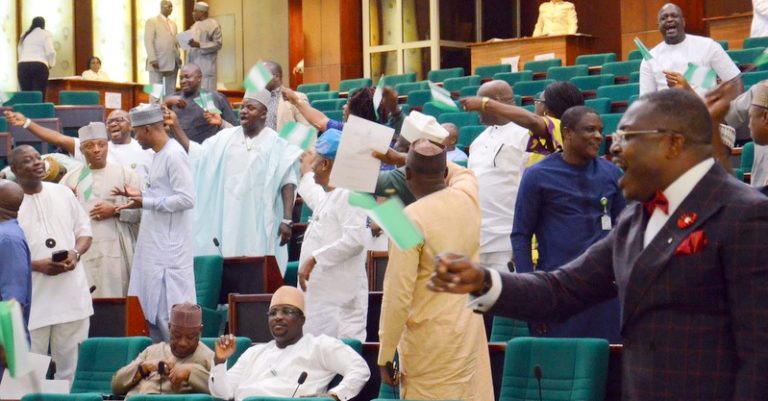
Linus Okorie, member House of Representatives representing Ohaukwu/Ebonyi Federal Constituency of Ebonyi State, was little-known in the media but a bill he proposed on the floor of the green chamber has thrust him into limelight.

He sponsored a bill on amnesty for treasury looters, which many Nigerians, including civil society groups, are currently waging war against. And there is pressure on Yakubu Dogara, Speaker of the House of Representatives, to halt legislative actions on the bill.

In the court of public opinion, the bill is seen as an attempt to shield Nigerians who stole public funds from probe and prosecution, provided such money is brought back and invested in the economy.

This, critics say, would encourage more looting and remove deterrence to political and economic criminality. The bill may be a good news for treasury looters, but Nigerians are saying it is “immoral and scandalous”.

So, what’s with the amnesty bill for treasury looters that Nigerians are so annoyed? Here are 11 things you probably didn’t know about the controversial bill:

THE TITLE

Although it is known as ‘Bill for Amnesty for Treasury Looters, it is actually titled ‘A Bill For An Act To Establish A Scheme To Harness Untaxed Money for Investment Purposes And To Assure Any Declarant Regarding Inquiries And Proceedings Under Nigerian Laws And For Other Matters Connected Therewith’.

GENESIS

The bill was read in the Green Chamber for the first time on June 14, 2017, and it scaled through the second reading in July.

SPONSOR

The sponsor of the bill is Linus Okorie, Peoples Democratic Party (PDP), Ebonyi State

EXPLANATION

According to Okorie, the bill “seeks to allow all Nigerians and residents who have any money or assets outside the system or have acquired such money or assets illegally (looted or any variant of the cliché) to come forward, within a set time-frame, to declare same, pay tax/surcharge and compulsorily invest the funds in any sector of the Nigerian economy; and be granted full amnesty from inquiry/prosecution”.

SHELF LIFE

It is expected to operate for three years from the date of commencement, with the establishment of the Voluntary Taxable income Recovery and Amnesty scheme.

PROPOSITION

The bill, dubbed ‘Economic Amnesty,’ provides in Section 4, a 30 percent tax and additional surcharge of 25 percent of such tax. While the proposed tax would be remitted to the federation account for distribution to all tiers of government, the surcharge is to be remitted directly to specific agencies towards agricultural and infrastructural development of the nation.

It proposes that 25 per cent of the money will be paid as tax, to be shared by the three tiers of government. Thirty percent of the money will be invested in agriculture, while the rest will be invested in any choice sector of the economy.

It provides in Section 3 (1) that “…any person may make, on or after the date of commencement of this Scheme but before a date to be notified by the Central Bank of Nigeria in an Official Gazette, a declaration in respect of any income chargeable under the income-tax law for any assessment prior to the enactment of this Act.”

Section 3 (2) states that: “Where the income chargeable to tax is declared in the form of investment in any asset, the fair market value of such asset as on the date of commencement of this Scheme shall be deemed to be the undisclosed income for the purposes of sub-section (1).”

COMPULSORY INVESTMENT OF ‘STOLEN’ FUNDS

In Section 5, the bill proposes that “the amount declared from the undisclosed income shall (after payment of the tax, surcharge in respect of the declaration) be invested in Nigeria by the declarant in any sector of the Nigerian economy.”

The proposed law also exempts all declarations made from further assessment/taxation by any tax authority within Nigeria, outside the tax and surcharge provided therein.

In the bill, the Federal Government has powers to make consequential “orders not inconsistent with the Scheme to remove any difficulties” that may arise in the course of implementation.

THE BENEFITING GOVT AGENCIES

The agencies are the National Agricultural Research Development Fund and the Nigerian Infrastructure Fund.

CBN IS THE MANAGER

The Central Bank of Nigeria (CBN) is to manage the scheme, while the declaration would be made to the Chairman of the Federal Inland Revenue Service (FIRS).

AMNESTY FOR LOOTERS

In return, the bill proposes a total and comprehensive amnesty for all declarants from all otherwise repercussions under Nigerian laws and further provides that all such declarations shall be inadmissible in evidence against the declarant except in ‘matters of national security.

Matters of national security are those facts and issues to be determined by a court of competent jurisdiction before effect is given to the exception, the bill says.

Outside the exception on grounds of national security, no declarant shall be required to state the source or sources of the assets or income declared.

‘WORKABLE’ SOLUTION TO CAPITAL FLIGHT

The lawmaker said the scheme would be a workable solution for reversing capital flight that has bedevilled the Nigerian economy, and initiate a reverse flow through resultant repatriation.


Buhari’s illness delaying APC convention, Yari confesses


Abdulaziz Yari, the Governor of Zamfara State and Chairman of the All Progressives Congress (APC) Governors’ forum, says the illness of President Muhammadu Buhari is preventing the party’s elective convention from holding.

Yari said this while talking with journalists on the inability of the APC National Working Committee to hold a national convention to fill some vacant positions in the party’s national executive.

“We have been on this matter of convention but you know that as a party, the ruling party, the President is the leader of this party,” Yari said.

“One, before getting to the convention, there is some kind of process. The national working committee must agree on the time and at the same time we have to adopt the report submitted by the national working committee to the larger NEC members, which the President must be in attendance as a leader of the party and you know the situation of our president.

“We have been fixing time but because of his illness we are unable to hold the meeting… we have to put a kind of process in place, so that we can at least a mid-term convention, it is not an elective convention.

“This congress that is going to commence on July 29 is to come for this convention to fill some vacancies taken in the executive sides, those that died or went for other appointment.”

Yari said that the APC had agreed that the Acting President could also act in the place of the President in this case.

He said: “The Acting President should understand that that he is acting in capacity of the President of the country as well as the vice-president.

“Tomorrow he is going to perform the function of Vice-President as chairman of NEC and the entire issue of security, economy, administration lies on him.

“The committee is in place as we are talking today, we restate that we are going to create room for other issues and the issue of convention.”

Yari, however, stressed that the decision to go ahead with the convention without the President does not have anything to do with the seeming of the opposition Peoples Democratic Party, PDP.

“This has nothing to do with PDP. PDP is a party on its own right and APC is a ruling party. This convention has no connection with the PDP convention,” he maintained.

New logo, new website… 9Mobile officially begins life afresh


The telecommunications company formerly known as Etisalat Nigeria has officially unveiled its new brand name, 9mobile, with a new logo and website.

The company’s new website is www.9mobile.com.ng.

At a news conference in Lagos on Wednesday, Boye Olusanya, Chief Executive Officer of the company, said the new logo is in conformity with the new name.

He said 9mobile will continue to sustain its outstanding service delivery for which it was renowned since its inception nine years ago.

“In our nine years of operations, we have remained at the forefront of innovation and taken pride in consistently delivering superior experiences to our subscribers,” Olusanya said.

“We continue to establish meaningful partnerships with our customers and partners by providing platforms that support their goals and aspirations.”

According to him, the new number-themed logo reflects the network’s futuristic slant.

“The colour green, both its light and dark variants, reflects vibrancy, dynamism, life and youth, as well as the brand’s ‘Nigerianness,’” he explained.

“With the launch of our new brand, our commitment to providing our subscribers with best-in-class telecommunications services continues.

“We live in a digitalised world and 9mobile is positioned to deliver more platforms, products and services, using the power of technology.”

The Etisalat group terminated its agreement with the Nigerian market following the inability to renegotiate a loan deal made with a coalition of financial institutions in the country.

The loan is worth $1.7 billion or about N542 billion.

Since relinquishing its original brand name, 9Mobile has been wooing its customers — with 15 minutes of free airtime that can be retained for up to seven days.

UPDATED: Allison-Madueke temporarily forfeits $37.5m Banana Island estate to govt


The Lagos State division of the Federal High Court has ordered the temporary forfeiture of a $37.5 million estate in Banana Island, Lagos, belonging to Diezani Allison-Madueke, former Minister of Petroleum Resources.

The order follows an application by the Economic and Financial Crimes Commission (EFCC), which alleged that the property was secured with funds siphoned from the treasury of the federal government.

Justice Chuka Obiozor also ordered the interim forfeiture of the sums of $2,740,197.96 and N84,537,840.70, believed to be part of the rent collected on the property. The funds were allegedly lodged in a Zenith Bank account number 1013612486.

Court papers presented by the EFCC described the luxury property as comprising 24 apartments, 18 flats and six penthouses.

Anselem Ozioko, counsel to the EFCC, told the judge that the commission “reasonably suspected that the property was acquired with proceeds of alleged unlawful activities of Diezani”.

According to Ozioko, the $37.5 million payment for the purchase of the property was moved in cash from Allison-Madueke’s house in Abuja and paid into the seller’s First Bank account.

“Nothing could be more suspicious than someone keeping such huge amounts in her apartment. Why was she doing that? To avoid attention,” Ozioko told the presiding Judge.

“We are convinced beyond reasonable doubts because, as of the time this happened, Mrs. Diezani Alison-Madueke was still in public service as the Minister of Petroleum Resources.”

The EFCC also listed one Afamefuna Nwokedi, a legal practitioner, and a firm, Rusimpex Limited, as respondents in the application.

In his ruling, Justice Obiozor ordered the EFCC to publish the order in a national newspaper. He adjourned the case until August 7 before which anyone interested in the property could come forward with evidence why it should not be permanently forfeited to the federal government.

Kanu: Biafra not just for Ndigbo… it’s a fight for the survival of Christians


Nnamdi Kanu, leader of the Indigenous People of Biafra (IPOB), says the agitation for Biafra is not just for the Igbo but also a fight for the survival of Christians in Nigeria.

Speaking on Wednesday when he visited Nri community in Anambra State, Kanu said there is an agenda to Islamize Nigeria but as long as he is alive, no part of Igboland will be part of it.

“The Islamisation plot is real but they won’t succeed in my life time. No, never; not when I am alive. It is impossible. Impossible,” he said

He also said the struggle for Biafra, which he is championing, is the fight for the survival of Christians in Nigeria against the entrenched threats of radical Islamic fundamentalists and their political collaborators within and outside the country.

“The struggle for Biafra, which I proudly lead, is not a secessionist aspiration of NdiIgbo only as some erroneously think,” he said.

“Biafra is not just a living agitation but a fight for the survival of Christians in Nigeria against the entrenched threats of radical Islamic fundamentalists and their political collaborators within and outside Nigeria”. Kanu said

Kanu’s warning came on the heel of allegation by David Oyedepo, the General Overseer of Living Faith Church, that “Islamists are bent on islamising Nigeria.”

The Nigerian Christian Elders Forum (NCEF) also recently accused Northerners of plotting to turn Nigerian into a “caliphate.”

NCEF disclosed that some Buhari government’s policies are “directly or indirectly promoting the “theocratic agenda North has for Nigeria.”


READ ALSO: