THE Registrar of the Joint Admissions and Matriculation Board (JAMB), Ishaq Oloyede, a professor, on Wednesday, May 14, broke down in tears as he apologised to parents and candidates for errors that he said led to the failure of nearly 400,000 candidates in the 2025 Unified Tertiary Matriculation Examination (UTME).
During a press conference in Abuja, Oloyede expressed regret for the trauma and frustration the errors caused affected candidates and their families.
He acknowledged that what should have been a moment of joy for many had turned into disappointments due to ‘one or two errors’ made during the examination process.
“I apologise for the trauma caused the candidates,” Oloyede was quoted to have said.
“What should have been a moment of joy has changed due to one or two errors,” Oloyede added.
He admitted that the mass failure resulted from a systemic error that affected the grading process.
He also disclosed that the Board had identified 65 centres in Lagos and 92 centres in the Owerri zone (comprising the five states of the South East) where the glitches occurred, affecting 379,997 candidates in total.
“206,610 in 65 centres were affected in Lagos and 92 centres in Owerri zone, comprising 173,387 candidates in the five states of the South East were affected,” he said.
The ICIR reported that the mass failure sparked nationwide protests after it was revealed that 78.5 per cent of candidates scored below 200, a common benchmark for gaining admission into competitive programmes at Nigerian federal universities.
According to JAMB, of the 1,955,069 registered candidates, 1,534,654 scored below 200, while the results of 39,834 candidates were withheld for various reasons.
Recall that, on Monday, May 12, JAMB said it had launched an investigation into numerous complaints regarding the recently released 2025 UTME results.
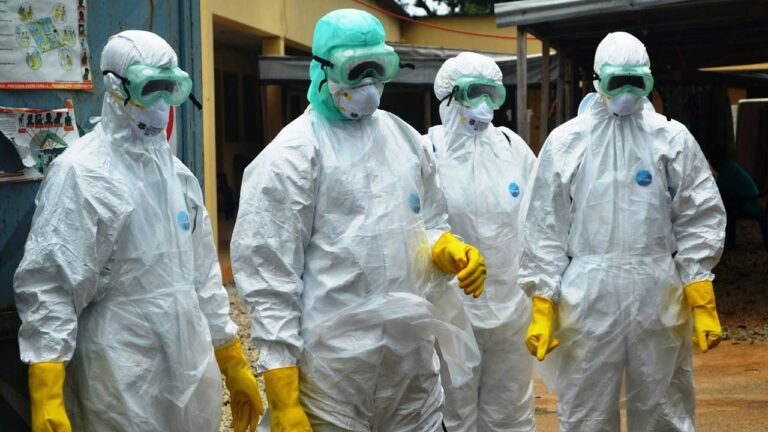
DATA on Lassa fever from the Nigeria Centre for Disease Control (NCDC) on Wednesday, May 14, showed that the country recorded 717 confirmed cases and 138 deaths between the first week of January and May 4, 2025.
The outbreak spread across 18 states and 93 Local Government Areas (LGAs)
The NCDC described Lassa fever as an acute viral haemorrhagic fever caused by the Lassa virus, mostly through the type of rodents known as the multimammate rat or the African rat.
The disease can be spread through direct contact with urine, faeces, saliva, or the blood of infected rats or contaminated objects, faeces, saliva, or the blood of infected rats.
Person-to-person transmission can also occur through direct contact with an infected person’s blood, urine, faeces, vomitus, and other body fluids.
The NCDC’s latest situation report indicates that as of epidemiological week 18, Ondo, Bauchi, and Taraba states are the most affected, accounting for 71 per cent of all confirmed cases. Ondo, with 215 confirmed cases, was responsible for 30 per cent of confirmed cases, Bauchi, with 180 confirmed cases, accounted for 25 per cent, and Taraba, with 116 confirmed cases, presented 16 per cent of confirmed cases.
The report also shows that the case fatality rate (CFR) for the outbreak is 19.3 per cent, which is higher than the 18.0 per cent CFR recorded during the same period in 2024. This means that there was a high fatality rate so far in 2025 when compared to 2024.
While the number of suspected and confirmed cases has decreased compared to the same period in 2024, the high CFR remains a concern.
According to the report, the most affected age group is 21-30 years.
In the current reporting week (week 18), 10 new confirmed cases were reported in Ondo, Edo, Bauchi and Benue States.
This according to the report, was a decrease from the 11 cases reported in the previous week(week 17).
The report also indicated three new confirmed deaths due to Lassa fever in week 18.
The NCDC said it was coordinating the response to the outbreak through its Incident Management System, working with various partners and stakeholders.
The report highlighted that challenges such as late presentation of cases, poor health-seeking behaviour, poor environmental sanitation, and low awareness in high-burden communities persisted.
THE Joint Admissions and Matriculation Board (JAMB) will commence the review of the 2025 Unified Tertiary Matriculation Examination (UTME) results tomorrow, Thursday, May 15.
In a letter addressed to the Chief Executive Officer of Educare, Alex Onyia, who will participate in the review, JAMB stated that the exercise was part of efforts to address public concerns about the recently released results.
The ICIR reports that Onyia has been at the forefront demanding for accountability and transparency of results from the JAMB following the mass failure recorded in this year’s examination.
He had also called for a proper review of the results, adding that some students reported glitches while writing the exams, while others said the results didn’t reflect their efforts.
Reacting to this and other public outcry, JAMB stated that it had invited representatives from various educational and professional bodies to participate in the review process.
The invitees members include the All Nigeria Confederation of Principals of Secondary Schools (ANCOPSS), the National Association of Proprietors of Private Schools, Chief External Examiners, the Computer Professionals Association of Nigeria (CPN), vice chancellors from various universities, rectors of polytechnics, provosts of colleges of education, and other relevant stakeholders.
The JAMB expressed its commitment to transparency in the review process.
Recall that, on Monday, May 12, JAMB said it had launched an investigation into numerous complaints regarding the recently released 2025 UTME results.
This followed candidates’ poor performance and protests that greeted the release of the results, as 78.5 per cent of the candidates scored below 200, a benchmark commonly used for admission into competitive programmes in Nigerian federal universities.
According to JAMB, of the 1,955,069 registered candidates, 1,534,654 scored below 200, while the results of 39,834 candidates were withheld for various reasons.
Onyia, law firm seek results sheet
In a letter dated May 12, 2025, Onyia and a Law firm, John Nwobodo & Associates, expressed concerns over what they described as the “worst failure rate” in JAMB’s history, with nearly 80 per cent of candidates scoring below 200.
They demanded full disclosure of examination questions and corresponding answers. They also disputed the results, alleging that they do not reflect the actual performance of their candidates.
They suggested that a software glitch might have caused a mismatch between questions and answers during grading.
They further argued that JAMB’s system, which only displays aggregate scores without corresponding answers, lacked transparency and leaves room for doubt and mistrust. Onyia and the firm demanded a comprehensive review of the grading process to ensure that the correct answers matched the correct questions.
STAKEHOLDERS from civil society, government, and the media have demanded a reassessment of how integrity is rewarded within the Nigeria public sector.
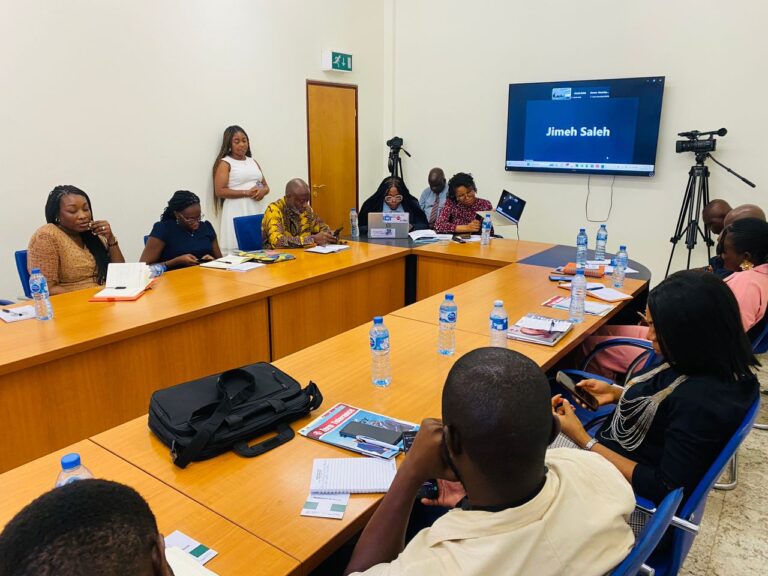
At a multi-stakeholder engagement hosted by Accountability Lab Nigeria, partners of the organisation, including the Economic and Financial Crimes Commission, (EFCC), Independent Corrupt Practices and Other Related Offences Commission (ICPC), National Orientation Agency (NOA), Step- Up Nigeria, PRIMORG among others, argued that while symbolic awards are commendable, they are no longer enough to sustain ethical behaviour among public servants facing serious personal and professional risks.
At the centre of the conversation held at the Shehu Musa Yar’adua centre Abuja on May 13, 2025, was the Integrity Icon campaign, an annual initiative supported by MacArthur Foundation, that identifies and celebrates government officials who have demonstrated integrity virtue.
The campaign, which began in 2017, has recognised not fewer than 38 public servants across various sectors, 17 of which are male and 21 females.
Rigorous selection processes were deployed involving nominations, background checks, interviews, and storytelling through short films.
Symbolic recognition, real-life consequences
Speaking at the event, Nneka Henrya, key organiser of the campaign, acknowledged that the award is deliberately non-monetary to preserve its authenticity.
“From conception, we decided it should be non-monetary, so that people are not living their lives for the sake of the award,” she said, adding, “We want to celebrate those who are doing what is right without expecting anything in return.”
However, this was challenged by some participants who shared stories of awardees facing backlash or neglect after being recognised.
Ademola Bakari, spokesperson of the Independent Corrupt Practices and Other Related Offences Commission (ICPC), told the story of a customs officer who rejected a $1 million bribe and was later abandoned by his agency.
“After refusing the bribe, he was redeployed with no accommodation. He slept in his office. People mocked him, saying, ‘If you had taken that money, you’d have built houses,’ That’s the reality,” Bakari said.
He added: “We cannot afford to drop the ball. Reward has to be there. If it’s not tangible, people will jeer at those doing the right thing.”
Session of participants at Rethinking Reward organised by Accountability Lab
What did you get?
Friday Odeh, Country Director of Accountability Lab Nigeria, echoed concerns about unmet expectations.
“We’ve had awardees return home, and their families ask them, ‘What did they give you? A house? A car?’ Some icons were even mocked,” he said.
Odeh noted that these perceptions create a disincentive for future nominees, especially in a society where “people are used to paying or being paid for recognition.”
Sharing an anecdote from a past edition of the campaign, Odeh said: “There was a lady who wanted to pay for her boyfriend to receive the Integrity Icon award.” It just shows how skewed the understanding of recognition has become.”
A call for institutional support
Another major concern raised was the lack of institutional backing for recognised icons. According to Odeh, some public servants have been dropped from the programme after their supervisors refused to approve filming or recognition.
“We’ve lost at least three icons because their employers didn’t approve. In some cases, they said, ‘We have our own internal process for recognising staff, and we weren’t consulted,” he explained.
This was supported by contributions from Austin Agbonsuremi of the Progressive Impact Organisation for Community Development, PRIMORG, who emphasised that the absence of institutional buy-in undermines the long-term impact of the campaign.
“Recognition shouldn’t end at the ceremony. We need continuous engagement radio programs, TV features, and follow-up stories. Reward is not just cash; it’s sustained visibility,” he said.
Balancing ethics with incentives
During a panel session, Chido Onumah, journalist and author, raised questions about the value of rewarding integrity in a corrupt system.
“Can you really award integrity? Isn’t it something people should just do? But then again, we live in a system where doing your job honestly makes you a unicorn,” Onumah said.
He supported the idea of creative, non-monetary incentives—such as housing support, HR recognition, or mentorship platforms—that affirm the icon’s value without cheapening the award.
Jaye Gaskia, an activist and civil society leader, pointed out that the public should also have a role in vetting nominees.
“Why not let the public flag nominees too, like Churches calling for objections during weddings? Agencies like ICPC may not have all the info,” he said.
Beyond awards: Stories of impact
Despite these challenges, the campaign has recorded success stories. One awardee, Deputy Commissioner of Police (DCP) Francis Erhabo, was recognised for his exemplary service during the #EndSARS protests.
“Youth in his community protected his house, saying, ‘We’ve never seen a police officer like you,” Odeh said, adding, “He mentored 10 to 15 junior officers who said they wanted to be like him.”
Another icon, a NYSC official, transformed the deployment process by introducing online postings to reduce manipulation. A third, a university HOD, refused to allow an influential student to graduate without completing required coursework.
“These small acts add up. That’s the diffusion of integrity we want to see,” Odeh said.
While the Integrity Icon campaign has contributed significantly to reshaping public narratives around honesty in governance, speakers agreed that it must evolve meet today’s complex realities.
“There’s no big-bang solution to corruption. But if we continue to support the good people and reward them properly, we’ll move the needle,” Bakari of the ICPC summed.
AS President Bola Ahmed Tinubu clocks two years in office, his administration has been marked by suspension and outright sacking of key government officials.
In his first 100 days, the president suspended Central Bank of Nigeria (CBN) Governor, Godwin Emefiele, and the Chairman of the Economic and Financial Crimes Commission (EFCC), Abdulrasheed Bawa two, key figures at the heart of Nigeria’s financial and anti-corruption sectors.
This analysis reviews the sackings and suspensions that characterised Tinubu’s administration in the last two years.
Abdulrasheed Bawa
On June 15, 2023, President Bola Ahmed Tinubu suspended Abdulrasheed Bawa from his position as Chairman of the Economic and Financial Crimes Commission (EFCC). The ICIR reports that the announcement was made via a statement issued by the office of the Secretary to the Government of the Federation (SGF), noting that the suspension was indefinite.
According to the statement, Bawa’s suspension followed weighty allegations of abuse of office levelled against him, and that the decision was taken to enable a proper and unhindered investigation into his conduct while in office.
Following his suspension, Bawa was invited by the State Security Service (SSS) and subsequently detained for four months. During this period, he was denied access to his family and legal counsel, an action that sparked widespread criticism from lawyers and civil society organisations (CSOs) in the country.
Many decried the prolonged detention without trial as a violation of his fundamental human rights and called for greater adherence to due process. In October 2023, Bawa was officially replaced with Ola Olukoyede, marking a significant leadership change at the anti-graft agency.
Godwin Emefiele
In June 2023, President Bola Tinubu suspended the Governor of the Central Bank of Nigeria (CBN), Godwin Emefiele, citing ongoing investigations and planned financial sector reforms. He was directed to hand over to the Deputy Governor (Operations directorate) Folashodun Shonubi in an acting capacity.
By October, Tinubu formally sacked Emefiele along with all CBN deputy governors. He then nominated Olayemi Cardoso, a former Lagos Commissioner for Economic Planning and Budget, as the new CBN governor. Cardoso was later confirmed by the Senate for a five-year term.
Intelligence Chiefs
On June 19, 2023, President Bola Tinubu sacked eight key security and intelligence chiefs in a sweeping shake-up of the nation’s defence architecture. Those affected included the National Security Adviser, Babagana Monguno; Chief of Defence Staff, Lucky Irabor; Chief of Army Staff, Farouk Yahaya; Chief of Air Staff, Isiaka Amao; Chief of Naval Staff, Awwal Gambo; Acting Inspector General of Police, Alkali Usman; Comptroller-General of the Nigeria Customs Service, Hameed Ali; and Chief of Defence Intelligence, Samuel Adebayo. The ICIRreports that the president immediately named their replacements and also appointed new heads for strategic military formations, including the State House. These changes were accompanied by the announcement of additional special advisers.
Heads of aviation agencies
On December 13, 2023, President Bola Tinubu approved the sack and replacement of several chief executive officers of agencies under the Federal Ministry of Aviation and Aerospace Development. The ICIRreports that the decision, announced by the then Presidential spokesperson Ajuri Ngelale, was aimed at aligning Nigeria’s civil aviation sector with international standards and enhancing consumer protection.
Those affected included the Managing Director of the Federal Airports Authority of Nigeria (FAAN), Kabir Yusuf Mohammed; Director-General of the Nigerian Safety Investigation Bureau (NSIB), Akinola Olateru; and heads of NAMA, NiMET, and NCAT.
Additionally, the Director-General of the Nigeria Civil Aviation Authority (NCAA), Musa Nuhu, was suspended to allow for an EFCC investigation into allegations of misconduct within the agency.
FCCPC, BPE CEOs
On January 8, 2024, President Bola Tinubu sacked Babatunde Irukera, CEO of the Federal Competition and Consumer Protection Commission (FCCPC), and Alexander Ayoola Okoh, Director-General of the Bureau of Public Enterprises (BPE). The presidency stated the move was part of efforts to restructure and reposition key federal agencies.
Earlier that same day, Tinubu suspended the Minister of Humanitarian Affairs and Poverty Alleviation, Betta Edu, following allegations of fund diversion into a private account. She was officially dismissed in October 2024.
Ahmad Salihjo
President Bola Tinubu approved the indefinite suspension of the Managing Director/CEO of the Rural Electrification Agency (REA), Ahmad Salihijo on March 7, 2024, along with three executive directors Olaniyi Alaba Netufo (Corporate Services), Barka Sajou (Technical Services), and Sa’adatu Balgore (Rural Electrification Fund).
According to a statement by the president’s media team, the suspensions followed revelations from a probe into the agency’s financial activities. The officials were being investigated over the alleged mismanagement of over ₦1.2 billion, part of which has already been recovered by anti-graft agencies.
Solomon Arase
On June 10, 2024, Tinubu removed Solomon Arase as Chairman of the Police Service Commission (PSC), less than two years into his four-year tenure as stipulated by the Commission’s Act. He was immediately replaced by Hashimu Argungu.
The dismissal came just three days after The ICIRsubmitted a petition to the presidency, accusing Arase of using the police to harass its staff following the publication of an investigative report that exposed alleged misconduct during his time as IGP.
The ICIR had called for Arase’s suspension and investigation over alleged abuse of office and corruption.
Mamman Ahmadu
On June 15, 2024, Tinubu directed Mamman Ahmadu to resign from his position as Director-General/Chief Executive Officer of the Bureau of Public Procurement (BPP). According to a statement by the president’s media team, the directive was part of broader efforts to restructure the public procurement system.
NPA, Printing and Minting MDs
On June 11, 2024, Tinubu ordered the immediate removal of the Managing Director of the Nigerian Security Printing and Minting Plc (NSPM), Ahmed Halilu brother to former First Lady Aisha Buhari alongside four top executives of the company. Those affected included Ado Danjuma (Executive Director, Corporate Services), Chris Orewa (Executive Director, Operations – Lagos), Tunji Kazeem (Executive Director, Security Documents), and Victoria Irabor (Company Secretary).
The following day, the President also relieved Mohammed Bello-Koko of his position as Managing Director of the Nigerian Ports Authority (NPA), appointing Abubakar Dantsoho as his replacement. No official reason was provided for the dismissal.
Jalal Arabi
In August 2024, the President dismissed the chairman of the National Hajj Commission, Jalal Arabi, less than a year after appointing him in October 2023. Though no official reason was provided, the removal came amid an ongoing investigation by the Economic and Financial Crimes Commission (EFCC) over the alleged mismanagement and unlawful withdrawal of N90 billion earmarked for the 2024 Hajj subsidy.
The ICIR reports that Arabi was detained by the EFCC on August 16 in connection with the allegations. Following his dismissal, the President appointed a new head, Abdullahi Usman, for the commission.
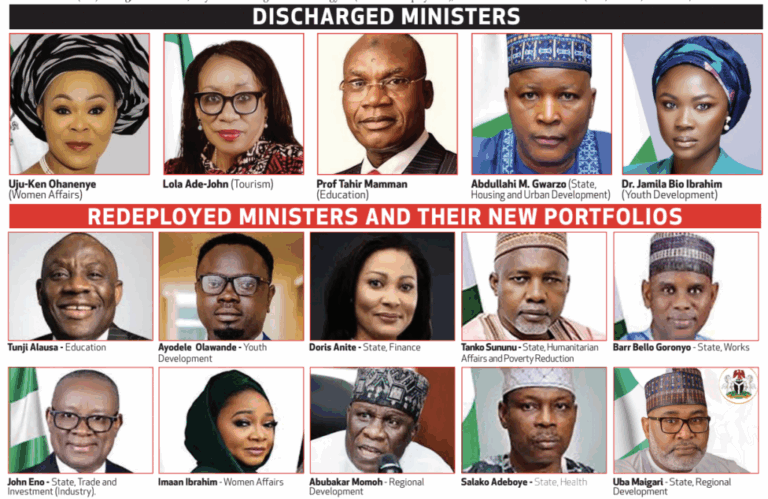
SINCE assuming office in May 2023, President Bola Tinubu has initiated substantial cabinet reshuffles and made significant appointments aimed at enhancing efficiency amidst economic challenges and public scrutiny. The reshuffling notably involved the dismissal of five ministers and the appointment of seven new ones. The following is an overview of the principal changes
Ministers removed
Uju Kennedy-Ohanenye, Minister of Women Affairs, was succeeded by Imaan Sulaiman-Ibrahim
Jamila Bio Ibrahim, Minister of Youth Development, was succeeded by Ayodele Olawande.
Abdullahi Muhammad Gwarzo, Minister of State for Housing and Urban Development, was succeeded by Yusuf Abdullahi Ata.
Tahir Mamman, Minister of Education, was replaced by Morufu Olatunji Alausa.
Lola Ade-John, Minister of Tourism, was removed with the ministry merged into that of Arts, Culture, Tourism and Creative Economy, now led by Hannatu Musawa.
New ministerial appointments
Nentawe Yilwatda, Minister of Humanitarian Affairs and Poverty Reduction.
Muhammadu Maigari Dingyadi, Minister of Labour and Employment.
Bianca Odinaka Odumegwu-Ojukwu, Minister of State for Foreign Affairs.
Yusuf Abdullahi Ata, Minister of State, Housing and Urban Development.
Idi Mukhtar Maiha, Minister of Livestock Development
Jumoke Oduwole, Minister of Industry, Trade and Investment.
Suwaiba Said Ahmad, Minister of State, Education.
Reassignments
Several ministers were redeployed to different portfolios, including: Doris Uzoka-Anite, from Industry, Trade and Investment to Ministry of State for Finance.
John Owan Enoh was redeployed from Sports to the ministry of State, Trade and Investment.
Yusuf Tanko Sununu, from Ministry of State, Education to that of Humanitarian Affairs and Poverty Reduction (although later reports indicate Nentawe Yilwatda assumed this role).
Morufu Olatunji Alausa, was moved from Ministry of State, Health to that of Education.
Bello Muhammad Goronyo, was redeployed from Ministry of State, Water Resources to that of State, Works, while Abubakar Momoh, was moved from Ministry of Niger Delta Development to that of Regional Development (renamed from Niger Delta Development)
Uba Maigari Ahmadu, was moved from Ministry of State, Steel Development to become Minister of State, Regional Development.
Imaan Sulaiman-Ibrahim, was redeployed from Ministry of State, Police Affairs to that of Women Affairs.
Ayodele Olawande, was moved from Ministry of State for Youth Development to Ministry for Youth Development.
Salako Iziaq Adekunle Adeboye, was redeployed from Ministry of State, Environment to that of State, Social Health.
The Ministry of Sports was dissolved, with its functions merged into the expanded Ministry of Arts, Culture, Tourism and Creative Economy.
Appointments of CEOs and board chairpersons
In addition to ministerial changes, President Tinubu has undertaken extensive appointments and reshufflement of chief executive officers, board chairpersons and directors-general across numerous federal agencies and parastatals, with the objective of strengthening governance and operational efficiency.
January 2025:Appointment of board chairpersons for 42 federal organisations, including a new managing director for the Nigerian Railway Corporation and a director-general for the National Board for Technology Incubation. The President emphasised that board chairpersons serve in non-executive capacities and should refrain from interfering with management.
April 2025: The Nigerian National Petroleum Company (NNPC) board was significantly reconstituted, with the former chairman and Group CEO removed. Engineer Bashir Bayo Ojulari was appointed Group CEO, while Ahmadu Musa Kida assumed the role of non-executive chairman. The new board comprises representatives from Nigeria’s geopolitical zones, aiming to enhance operational efficiency, investor confidence, and sectoral growth.
October 2023: Appointment of 14 new CEOs for agencies under the Federal Ministry of Industry, Trade and Investment, including leadership for the Industrial Training Fund, Corporate Affairs Commission, and Standards Organisation of Nigeria. These appointments align with the administration’s economic revival agenda focused on trade and industrial development.
October 2023: Appointment of eight new CEOs within the Ministry of Information and National Orientation, including Lanre Issa-Onilu as Director-General/CEO of the National Orientation Agency (NOA).
October 2023: Appointment of two new CEOs in the health sector: Muyi Aina as Executive Secretary/CEO of the National Primary Health Care Development Agency and Kelechi Ohiri as Director-General/CEO of the National Health Insurance Authority, both recognised for their international public health expertise.
January 2024:President Tinubu removed Babatunde Irukera as CEO of the FCCPC. Adamu Abdullahi served as acting CEO until June 2024, when Tunji Bello, a former Lagos State Commissioner and experienced public servant, was appointed and confirmed by the Senate as the new Executive Vice Chairman/CEO. Bello officially assumed office in July 2024, charged with advancing the commission’s mandate to regulate competition and protect consumer rights nationwide.
THE Federal High Court (FHC) Abuja has fixed June 27 to deliver judgment on the suit filed by the suspended Kogi Central lawmaker, Natasha Akpoti-Uduaghan, against the Nigerian Senate.
Akpoti-Uduaghan is challenging her suspension and had filed a case against Senate President Godswill Akpabio and the Senate.
She had argued in her prayers to the court that she was not accorded a fair hearing before the Senate suspended her with effect from March 6.
The Senate had placed a six-month suspension on Akpoti-Uduaghan over alleged misconduct, depriving her of her privileges as a federal lawmaker.
She was, among others, barred from accessing the National Assembly premises, her salary and those of her legislative aides were withheld, and she was ordered not to represent the country in any official capacity during the period of the suspension.
At the hearing on Tuesday, May 13, the Justice of the Abuja FHC, Binta Nyako, adjourned the case to June 27 for ruling.
The adjournment became necessary after the suit came up for hearing of all pending motions, including those relating to alleged contempt of court and the substantive suit.
Akpoti-Uduaghan had filed the suit against the clerk of the National Assembly, the Senate, its President, Godswill Akpabio, and Senator Neda Imasuen, the chairman of the Senate Committee on Ethics, Privileges and Code of Conduct.
Tuesday’s proceeding was reported to be marked by arguments over the proper processes to be adopted.
Nyako, however, advised that such an application, which is in the form of housekeeping, ought to have been made earlier.
After listening to all the parties, she said she would first consider the contempt issues and preliminary objections.
“If they succeed, the matter stops there; if not, we proceed,” she was quoted as saying, before adjourning the case to June 27 for judgment.
Background
The ICIRreported that the crisis began on February 20 when Akpoti-Uduaghan protested a reassignment of her seat in the Senate without prior notice.
She resisted the change, calling it an attempt to silence her, while Senate Chief Whip Tahir Monguno justified the move, citing Senate rules and party affiliations.
Her protest led to a heated exchange with Akpabio, who ordered the sergeant-at-arms to send her out of the chamber.
This led to the Senate’s unanimously referring her to the Ethics Committee for disciplinary review, which later recommended her suspension.
Amid the dispute, in an interview on Arise Television, she accused Akpabio of making repeated sexual advances toward her, which she said she rejected.
She alleged that her refusal was the reason behind their frequent clashes at plenary sessions.
According to her, some of Akpabio’s love proposals were made with her on the phone and face-to-face in her husband’s presence. She further alleged that she had all the evidence for her claims.
NIGERIAN striker Taiwo Awoniyi has been placed in an induced coma after undergoing emergency surgery for a serious abdominal injury he sustained during a football match on Sunday, May 11.
According to a report from Mail Sport, the injury was severe and life-threatening, but the initial surgery has been deemed successful.
Doctors, however, were expected to complete the operation today, Wednesday, May 14.
Awoniyi, who plays for Nottingham Forest, suffered the injury on Sunday during a 2-2 draw against Leicester City. The incident occurred when the 27-year-old crashed into a post while attempting to score.
However, following several minutes of treatment, he returned to action even with an apparent discomfort.
In a statement on Tuesday, Nottingham Forest confirmed that Awoniyi had undergone urgent surgery after the severity of the injury was established on Monday, May 12.
“The Club can confirm Taiwo Awoniyi has undergone urgent surgery following an abdominal injury sustained during Sunday’s match against Leicester City.
“Everyone at Nottingham Forest sends their best wishes to Taiwo. The club will provide further updates when appropriate,” it wrote.
The club, in a separate statement on Tuesday, further stressed that Awoniyi was recovering well from the surgery.
This was as it attacked its medical staff and Sky Sports’ GaryNeville.
The ICIR reports that Nottingham Forest’s owner, Evangelos Marinakis, was seen on the pitch in what appeared to have been confronting manager Nuno Espírito Santo after the 2-2 draw.
The incident has stirred controversy among many football lovers and pundits, including Sky Sports’ Gary Neville, who described the situation as ‘scandalous.’
He also said, “Nuno should go and negotiate his exit tonight with him! The Forest fans, players and manager do not deserve that.”
However, Nottingham Forest, in a statement confirming the recovery of Awoniyi, said the owner went to the pitch regarding how Awoniyi’s injury was managed.
The club further faulted its medical team for giving a green light to the coach to allow Awoniyi to continue playing when he was apparently in discomfort.
Since Forest had already exhausted their final substitution by replacing Elliot Anderson with Jota Silva, Awoniyi could not be substituted with another player. Despite his efforts to continue playing, he struggled to move as Forest pushed for a late goal to strengthen their Champions League qualification chances.
“In moments like that, he demonstrates his leadership, not just through words, but through action and presence. In the final ten minutes of the game, when he saw our player clearly in discomfort, struggling through visible pain, it became increasingly difficult for him to stay on the sidelines.
“His deep frustration at seeing our player lying on the ground in severe pain – something no one with genuine care could ignore – triggered him to go onto the pitch. It was instinctive, human, and a reflection of just how much this team and its people mean to him. He would do the same again if such an unfortunate event were ever to recur,” the statement read.
A FEMALE broadcast journalist with the Ogun State Television (OGTV), Bukola Agbakaizu, is dead.
She reportedly collapsed while preparing for her afternoon shift on Tuesday, May 13.
She was rushed to the Federal Medical Centre, Idi-Aba, Abeokuta, where she was later pronounced dead.
An ex-officio member of the Nigeria Union of Journalists (NUJ), she is aged 52 and survived by two children, an elderly mother, friends, and colleagues.
In a condolence message signed by the chairperson of the Ogun State chapter of the Nigeria Association of Women Journalists (NAWOJ), Sekinat Salam, the group described her death as a “rude shock” and a painful loss to the media community in the state.
“Her death came at a time when her experience and exemplary leadership were most needed,” the statement read.
“She was a consummate professional, dedicated to journalism, and a compassionate individual whose presence will be sorely missed. Ogun NAWOJ will forever remember her for her love, dedication, and unrelenting passion for journalism,” it added.
Also confirming the death in a statement released Tuesday night, the secretary of the Nigeria Union of Journalists (NUJ), Ogun State Council, Bunmi Adigun, described her passing as tragic.
“Agbakaizu, a dedicated staff member of Ogun State Television, tragically collapsed while preparing for the afternoon shift, and despite efforts to revive her, she was pronounced dead upon arrival at the Federal Medical Centre,” Adigun wrote.
He added, “A versatile journalist and a passionate comrade, Bukola served as a former vice chairman of OGTV Chapel and was an invaluable member of the Wale Olanrewaju-led Executive. Her vibrant spirit and commitment to journalism will be sorely missed, leaving an irreplaceable void in our community.”
THE Nigerian National Petroleum Company Limited (NNPC) has only been remitting 50 per cent of the gains generated from the removal of petrol subsidies to the Nigerian government account, according to the World Bank in its latest report.
The report, ‘Nigeria Development Update’, released Monday, May 12, revealed that the NNPCL started transferring the revenue gains to the federation account in January this year.
“Since then, it has been remitting only 50 per cent of these gains, using the rest to offset past arrears,” the global financial institution stated.
The ICIR can report that Nigerian President Bola Tinubu, during his inaugural speech on May 29, 2023, announced the removal of costly petrol subsidies.
He desires to save the subsidy proceeds for developmental purposes. However, what many Nigerians are seeing is not the case, but they are worried about the opacity in the management of the subsidy gains.
Seemingly concerned about the opacity in the state-owned oil firm, the Nigerian government recently indicated plans to dust up the NNPCL financial records and address some misappropriation, stressing that the company needed to come to the table with more dollar revenue.
This decision came after the President had, on April 2, sacked the NNPCL Group Chief Executive Officer, Mele Kyari, along with the board members.
He invoked Section 59(2) of the Petroleum Industry Act (PIA) 2021 and said the decision was necessary to enhance operational efficiency, restore investor confidence, boost local content, and advance gas commercialisation and diversification.
Similarly, the International Monetary Fund (IMF) had last month called for transparency in the management of the Nigerian oil sector, most notably, the proceeds of the subsidy removal.
It is hoped to see a little more transparency in the oil sector to ensure that fuel subsidy removal can result in more flow of resources into government coffers.
Continuing in its report on Wednesday, the World Bank noted that for Nigeria to consolidate on gains of economic reforms, it is essential to ensure that the full revenue gains from the removal of the PMS subsidy—estimated at 2.6 per cent of gross domestic product (GDP) in 2024—are transferred to the Federation account.
Despite the subsidy being fully removed in October 2024, NNPCL started transferring the revenue gains to the Federation only in January 2025. Since then, it has been remitting only 50 per cent of these gains, using the rest to offset past arrears.
“Resolving any remaining net arrears and channelling the full benefits of subsidy reform to the Federation is critical for sound fiscal management,” the Bretton Woods financial institution stated.
It is advised that close monitoring of the 2025 budget implementation is essential, as it has overly ambitious revenue assumptions and may lead to a larger-than-anticipated fiscal deficit.
“The budget aims to boost capital spending, and this must be done sustainably, within the broader objective of fiscal consolidation to complement monetary policy and achieve an overall policy mix that maintains fiscal discipline and brings down inflation,” the World Bank said.
It believes that sustained efforts at enhancing expenditure efficiency and transparency are crucial to maximising development outcomes.
“This responsibility lies not only with the Federal Government but especially with states, which now receive more revenue (N13.8 trillion in 2024) than the Federal Government (N12.3 trillion),” the World Bank added.