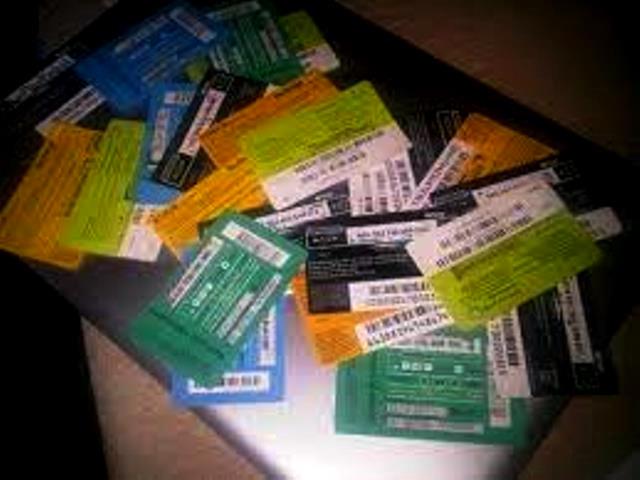
Residents of Sokoto state within the last one week have been grappling with sudden increase in the prices of recharge cards of all telecommunication network service providers.
An additional ten naira had been added to all N100 and N200 denominations and twenty naira to N400 and N500 denominations of all networks recharge cards within the state.
Customers who could not stomach the price increase, have been trooping to the state offices of the service providers situated within the metropolis for direct purchase over the counter at the face value price, a situation that is rendering the retailers redundant and reducing their income.
When contacted, heads of the telecommunication service providers in the state, claimed ignorance of the price increase, and maintained that the increase in price did not emanate from their offices.
Mohammed Lawal Tanko, Etisalat Experience Centre Manager, MTN’s Nura Bello, and Glo mobile’s Victor Ezemobi, told our correspondent, separately that, they never sell beyond the agreed price to the sole dealer in the state and promised individually, to find out why and where the increase in price emanated from.
Only Etisalat dealer specialist in charge of Sokoto, Zamfara and Kebbi, Yusuf Yusuf acknowledged that retailers in rural areas that traveled long distances to purchase recharge cards normally top-up the price on the face value to recoup their transport fare.
While also denying any knowledge of price increase within the metropolis, Yusuf said, “this is a feedback and we will go back to trace where the price increase comes from.”
However, a source at the office of Abubakar Mohammed Binji, the sole dealer to all the networks service providers in the state, who declined to have his name in print, hinted that the price increase might be due to increase in prices of paper and ink, the two major components in the production of recharge cards.
“I know that there is control between the service providers and the dealer, what happens between the dealer, sub-dealer and down the line to the retailer and consumer is what I cannot vouch for. Maybe, this is where there is disconnect.
“The price increase may also be due to market forces. There is price increase in every product and services and the retailers who sell recharge cards too, also patronize the same market. I think, this could be likely cause of the increase, “the source added.
Further investigation also revealed that shylock dealers from neighboring states who extend their market to Sokoto State might be behind the price increase to either sabotage the sole dealer in the state or to recover the additional expenses in extending their market to Sokoto.
Market survey indicates that the N100 recharge cards that get to the retailers in time past within the range of N95 and N96.5, now get to them between N97 and N98 as our correspondent reliably gathered that service providers sell to the dealer at N94.
Contrary to optimism expressed by Jimoh Ibrahim, the Supreme Court has struck out his appeals challenging the ruling of the Court of Appeal which affirmed Eyitayo Jegede as the authentic Governorship Candidate of the Peoples Democratic Party, PDP, in the forthcoming Ondo election.
A five-man panel of Supreme Court judges led by the Chief Justice of Nigeria, Walter Onnoghen, delivered the judgement on Thursday.
The apex court held that all the issues raised by Biyi Poroye, factional chairman of the PDP in Ondo State, had been overtaken by the judgement of the Appeal Court on Wednesday.
The Appeal Court had set aside a ruling delivered by Justice Okon Abang of the federal high court, Abuja, ordering INEC to recognize Ibrahim as the authentic candidate of the PDP in the Ondo Elections.
Abang also held that INEC should deal with Ali Modu-Sheriff as the National chairman of the opposition party.
The Supreme Court ruling has ended optimism expressed by Ibrahim that he would be re-instated as governorship candidate of the PDP.
It is left to be seen whether this ruling by the Supreme Court puts to bed the protracted leadership tussle that has threatened to destroying the PDP; a party which until the last general election in 2015, had been in power since 1999.
Two former governors are currently laying claim to the leadership of the party: Ali Modu-Sheriff, former governor of Borno State, and Ahmed Makarfi, former governor of Kaduna State.
Meanwhile, analysts say the Ondo governorship election will be contested mainly between political parties namely, the PDP, the All Progressives Congress, APC, and the Alliance for Democracy, AD.
The APC, though an opposition in Ondo State, is the ruling party in Nigeria and has chosen Rotimi Akeredolu as its flag bearer in a controversial primary election.
Candidate of the AD, Olusola Oke, had contested in the APC primary election, but dumped the party shortly after, citing irregularities that marred the process.
The 1999 Constitution that we are operating today, though partially amended, provides for the establishment of some institutions to set the ground rules and promote accountability. These include the Offices of the Accountant-General of the Federation and the Auditor-General of the Federation. We also have the Revenue Mobilisation and Fiscal Commission, the Public Complaints Commission, the Code of Conduct Bureau, the Bureau for Public Procurement, the Office of the Ombudsman and several others. With all of these being put in place to ensure checks and balances within the system, little could be achieved. What is starkly and shamefully lacking is compliance.
Let me comment on recent issues concerning corruption and accountability. Three weeks before the first three judges were arrested for corruption, I was talking to a fairly senior retired public officer who put things this way, “The Judiciary is gone, the National Assembly is gone, the military is sunk and the civil service was gone before them; God save Nigeria”. I said a loud Amen. Three weeks later, the process of saving the Judiciary began. And if what I have gathered is anything to go by, there may be not less than two score of judicial officers that may have questions to answer. That will be salutary for the Judiciary and for the Nation.
While one would not feel unconcerned for the method used, one should also ask if there was an alternative. The National Judicial Council, NJC, would not do anything as it was all in-breeding. As now contained in our Constitution, the President of Nigeria cannot influence or make any appointment to the Judiciary at the Court of Appeal or Supreme Court level. He can only transmit the decision of the NJC to the Senate even where Senate confirmation is required. The Constitution which was heavily influenced by the Judiciary ensured that. And yet a drastic disease requires a drastic treatment. When justice is only for sale and can only be purchased by the highest bidder, impunity and anarchy would be the order of the day and no one would be safe.
A drastic action was needed to save the situation, albeit one would have preferred an alternative that would serve the same purpose, if there was one. In the absence of that alternative, we must all thank God for giving the President the wisdom, courage and audacity for giving the security agencies the leeway to act. And where a mistake was made in the action taken, correction must take place with an apology, if necessary. There is virtually no corrupt Judge without being aided by a member of the bar. The Nigerian Bar Association, NBA, has the responsibility to clean up its own house and help with the cleaning of the Judiciary. It is heartening though that some members of the NBA have recently called for judicial reform. Such reform must be deep, comprehensive and entail constitutional amendments as appointment and disciplines of Judges are concerned. May God continue to imbue the Executive with the necessary wisdom and courage to clean the dirty stable of the Judiciary and the Bar for the progress and the image of our Nation. It must also be said that the good eggs within the Judiciary must be proud of themselves and we must not only be proud of them but also protect them and their integrity.
If the Judiciary is being cleaned, what of the National Assembly which stinks much worse than the Judiciary? Budget padding must not go unpunished. It is a reality, which is a regular and systemic practice. Nobody should pull wool over the eyes of Nigerians.
Ganging up to intimidate and threaten the life of whistle blower is deplorable and undemocratic. What of the so-called constituency projects which is a veritable source of corruption? These constituency projects are spread over the budget for members of the National Assembly for which they are the initiators and the contractors directly or by proxy and money would be fully drawn with the project only partially executed or not executed at all. The National Assembly cabal of today is worse than any cabal that anybody may find anywhere in our national governance system at any time. Members of the National Assembly pay themselves allowances for staff and offices they do not have or maintain. Once you are a member, you are co-opted and your mouth is stuffed with rottenness and corruption that you cannot opt out as you go home with not less than N15 million a month for a Senator and N10 million a month for a member of the House of Representatives. The National Assembly is a den of corruption by a gang of unarmed robbers.
Like the Judiciary, the National Assembly cannot clean itself. Look at how re-current budget of the National Assembly with the so-called constituency projects has ballooned since the inception of this democratic dispensation. What were their budgets in the 2000, 2005, 2010 and 2015? The revelation was both alarming and scandalous. Once, when I was President, I asked outside auditors, both normal and forensic, to audit the account of the National Assembly, they frustrated it on the basis of separation of power. They claimed they had oversight responsibility for their corruption and misdemeanour and nothing can be done. It is like asking a thief to watch over himself. There must be full disclosure of all relevant fiscal information in a timely and systematic manner at all levels.
Budget transparency is a precondition for public participation in budget processes. The combination of budget transparency and public participation in budget processes has the potential to combat corruption, foster public accountability of government agencies and contribute to judicious use of public funds. The National Assembly budget process is not only carried out in opaque and corruptive manner but also in grossly unconstitutional manner. Hence, our lawmakers are lawbreakers. They are the accused, the prosecutor, the defenders and the judge in their own case. Most of them conduct themselves and believe that they are not answerable to anybody. They are blatant in their misbehaviour, cavalier in their misconduct and arrogant in the misuse of parliamentary immunity as a shield against reprisals for their irresponsible acts of malfeasance and/or outright banditry.
We should not continue to live with the impunity and corruption of the National Assembly. Yes, I believe that something can and should be done. The President should ride on the crest of the popularity of what is happening in the Judiciary to set up a highly technical team of incorruptible investigators to look into the so-called constituency projects of the past and the present and bring culprits to book. The President has overall responsibility and accountability for any fund appropriated under his watch. There would be many of such projects and the National Assembly would try to frustrate such necessary investigation. But the project sites are known and magnitude of funds voted for them are known. The investigation will reveal the true situation.
Nigerians will be shocked with what such enquiries would unearth. Measures to be taken should include stopping spurious constituency projects with immediate effect. And if our lawmakers-turned-lawbreakers manage to smuggle any so-called constituency projects into the budget, money should not be released for such scandalous projects. They would, as they tried with me, threaten impeachment. But a clean Judiciary and a cheated Nation should stand with the President. There should be no going back.
By our Constitution, the Revenue Mobilisation, Fiscal and Allocation Commission should be responsible for fixing the remunerations of the Executive and the Legislative arms of the government. Any salary, allowance or perquisite not recommended by the Commission should not be budgeted for; but crooks and crocked that most of the members of the National Assembly are, they will try to find other ways which must be blocked. In the past, they even instructed the Clerk of the National Assembly not to reveal to the Executive details of their remuneration. May God give the President the wisdom, courage and audacity to be able to do with the National Assembly what is being done with the Judiciary. Mr. President must be assured that he will earn the accolade and support of most Nigerians and indeed most friends of Nigeria within and outside Nigeria.
Another means by which the National Assembly embarks on corruption spree is their so-called oversight responsibility. They instigate and collude with Ministries, Departments, Parastatals and Agencies to add to their budget outside what was submitted by the President with the purpose of sharing the addition or they threaten such units to reduce what was submitted by the President unless there is a promise of kickback. They can also set up a spurious committee to investigate a project while they call on the contractor to pay them or the executive officer in charge of the project to cough up money, otherwise they would write a bad report.
The National Assembly stinks and stinks to high heavens. It needs to be purged. With appropriate measures, the budget of the National Assembly can be brought down to less than 50% of what it is today. God will help Nigeria, but we must begin by helping ourselves.
How I wish that the military has not descended into what it has descended to in the last seven or eight years! It is sickening! When the military is corrupt, it affects its fighting ability in many ways. Poor, used and inappropriate equipment and materials are purchased by the military for the military at the expense of the lives of fighting troops in the warfront. In some cases, nothing at all is purchased. How callous, for a General, an Air Marshall or a Naval Admiral to be so cruel and unpatriotic as to buy such inappropriate weapons, equipment, ammunition and materials for men facing the rigour and ruthlessness of an enemy force like the Boko Haram!
It is more damnable for nothing to be bought and yet the money disappeared into their private personal pockets. I can only say to these officers that I am not proud of them, rather I am ashamed of them. Whether they are alive or dead, their family members should also be ashamed of them. And what is more, the blood of those men who died because of their nefarious and sordid acts and actions would be on their hands. I know what it could be to be poorly equipped or starved of essential weapons, ammunition, equipment and materials to fight a war. Surely, God will deal with such offenders and capital sinners, but, in addition, those who have responsibility for dealing with them here on this side of the veil should not fight shy otherwise they become accomplices.
Finally on the military, the procurement system has to be streamlined and taken back to what it used to be. The military is not a buyer of its own weapons, equipment, ammunition and materials. It is only a recommender and a tester of the weapons and equipment that could perform the role and function assigned to it. The procurement is normally by a Committee which includes defence, finance, legislature, foreign affairs and the military only as observer or adviser to ensure quality and standard. With ridiculous statements and claims that insult the intelligence of Nigerians by immediate past leaders in government and their collaborators and accomplices either outside government or still within the corridor of power, all reports must be made public for Nigerians to know the truth and be able to make up their minds about the past and the future. With some shocking revelations and magnitude of stolen money so far reported, it will be absurd and insensitive to extreme for anybody in charge to claim innocence or show no remorse, especially when the Central Bank was prepared and staffed to bankroll the Presidential campaign of 2015. Such action and reaction is height of insults to this Nation and its citizens. That cannot be the right way to go.
It is heart-warming and certainly encouraging that the President has taken the bull by the horn by taking the first right step. He has ordered thorough investigation. But the next step is the immediate and appropriate actions on the reports no matter who is involved, and this requires greater wisdom, courage and cold decision. May God grant the President all the attributes he will need to clean the augean stable of the military. If not done as it should, it will undermine the fight against corruption and the President will not escape the charge of weakness or leniency towards his former constituency, the military.
Apart from the recovery which is most important, selective and symbolic prosecution should be made to serve as permanent deterrence. Otherwise, it will be a game of denial or litigations in future by shameless culprits. As the old saying goes, “Charity begins at home”. The President’s action against offenders in the military should strengthen his hands against offenders in other constituencies, i.e. judicial, political, executive, police, para-military, educational institutions, diplomatic, civil service and parastatals.
The anti-corruption war in the past has landed some Governors in jail while some still have their cases pending in courts. Justice delayed is justice denied. To my surprise, I found out that most State Governments prefer not to always take advantage of funds made available as counterpart fund by Federal Government or what they have access to on the basis of rendering previous accounts. The simple reason is that they do not want to account to the Federal Government for such funds because it will open them up to outside party scrutiny because they don’t want to be transparent and be held accountable. This situation has led to money being available but not being utilised by States in such areas as basic education, UBEC, where the Federal Government provides counterpart funding. UBEC is one example, there are others. Incumbent Governors should be reminded that there will be accountability and judgement after the government house. EFCC and ICPC must buckle up.
If corruption is continued to be fought courageously and relentlessly, there will be substantial recovery from within and from without coupled with plugging the holes of wastes in Ministries, Departments, Educational Institutions and parastatals and we will need less borrowing if we would need borrowing at all, to get us out of recession than we might have thought. Of course, we must be ready to bite the bullet of spending less on luxuries and the unneeded and what we can do without and earning more on production, services and trading. I believe that going for a huge loan under any guise is inadvisable and it will amount to going the line of soft option, which will come to haunt us in future.
We immediately need loans to stabilise our foreign reserve and embark on some infrastructure development but surely not $30 billion over a period of less than three years. That was about the magnitude of cumulative debt of Nigeria which we worked and wiped out ten years ago. Before that debt relief, we were spending almost $3 billion to service our debt annually and the quantum of the debt was not going down. Rather, if we defaulted, we paid penalty which was added on.
The projects listed for borrowing are all necessary in the medium- and long-run for our economy but we have to prioritise. Railway is a necessary service but it is not profit-making anywhere in the world today. We need steady and continuous but manageable funding on the railway project. Mambilla hydro is the same; necessary but it cannot pay itself, especially with the global energy sector of shale revolution, hydrogen fuel and increasingly cheap renewable energy such as solar. OPEC itself has projected that the price of oil will be hovering in the region of $50 per barrel for the next fifteen years or so.
The argument of concessional mixed with commercial does not hold water. When the concessional and the non-concessional borrowings are put together, interests alone will be in the region of 3% to 4%. The bunching of debt service will be a problem to confront other administrations in future. Soft option alone is not the answer, a mixture of soft and hard options is the way to go. Telling us that those projects will pay themselves cannot be the whole truth. We were told there was rainy day when we lavished our reserve and excess crude on frivolities. When we now have the rains beating us, there is no umbrella over our heads.
Again, now we are being told the projects will pay themselves when we know damn well they will not. If we borrow some thirty billion dollars in less than three years, we would have mortgaged the future of Nigeria for well over thirty years to come. There may also be the problem of absorptive capacity which will surely lead to waste. A careful scrutiny of the projects with priotisation and avoidance of waste and taking into account avoiding bunching of debt service in future especially when no one can accurately forecast the global and national economy, will indicate less than thirty per cent of the foreign loan being requested as prudent.
We must not be unmindful of internal borrowing either. It impacts somewhat differently on the economy but it must not be allowed to crowd out the ability of the private sector to borrow to grow the real economy which is to lead us out of the recession.
We must be hard and harsh on those who stay outside, whether they are Nigerians or expatriates, and piece inside our economic house through smuggling, dumping and cheating on duty payment and lying on custom classification. We must make our neighbours realise that encouragement of acts to undermine our economy by allowing their countries to be used a smuggling route and dumping grounds for entries of unwanted commodities into Nigeria will be treated as an act of hostility. We must be ready to close our borders with such neighbours to protect our economy. We must also empower customs to close the shops and factories of cheaters and immigration to deport hostile expatriates within our midst. The act of underpinning and destroying our economy should be regarded as an act of hostility and treated as such.
If we do not fix the economy to relieve the pain and anguish of many Nigerians, the gain in fighting insurgency and corruption will pale into insignificance.
No administration can nor should be comfortable with excruciating pain of debilitating and crushing economy. Businesses are closing, jobs are being lost and people are suffering. I know that President Buhari has always expressed concern for the plight of the common people but that concern must be translated to workable and result-oriented socio-economic policy and programme that will turn the economy round at the shortest time possible. We cannot continue to do the same thing and expect things to change. That will be a miracle which normally doesn’t happen in normal national economies. We have people inside and outside who can be brought together to help device the right economic policy and programme to get us out of the pit before we fall over the precipice into a dark cave. Economy requires a great element of trust to get it out of the doldrums let alone out of negativity. That trust and confidence has to be created.
Coming back to the issue of corruption, there is always need for institution reform to go along with recovery to make gains from fight against corruption last. Such reforms may have to be strengthened by legislation like the military procurement I mentioned earlier. But where the guard is the thief like we have seen in recent times, it makes things difficult, if not impossible.
All in all, everybody must be held accountable. There should be no sacred cow or witch-hunting or untenable excuses to let the camel through the needle eye. Those who must be made accountable must be made accountable with stick and carrot. However, I remain optimistic even though the grounds for optimism keep shrinking. Or, how do you explain having to go into any debate at all whether or not a judge found corrupt should be properly and lawfully dealt with or not? Worse still, how do you explain the situation where people are shamelessly protesting in favour of a person being arraigned in court for corruption offences? Whether those protesters are put to it or they put themselves to it, it is the greatest disservice to the Nation. It is shamefully disgraceful for both the culprit and the protesters. And it is an indication of how much our values have been debased. We cannot be a strong, great and respected nation in the world without political stability and cohesion, strong economy, robust and enduring values.
The Media should be more discerning, sensitive and responsible in reporting and commenting on corruption issues. We should realise that the entrenched interests, internally and externally, in corruption, will not go away. We need to discover and find permanent solution, otherwise some will bend, others will lie low while some others will be dormant; but all of them will spring up later and move on with vengeance as if nothing had happened. That has been our experience in the past. We must put an end to that. Part of sustenance of fight against corruption will be moral rearmament and resurgence of core values of integrity, honesty, fairness, justice, hard work and sense of shame, not impunity and indignity.
We must think and act out of the box to put the monster of corruption and impunity behind us permanently. For some unclear reasons, the government at the centre has not been able (I hope not lack of willingness) to present to the Nation the true position of our economy and our finances. For instance, how much did we receive from major revenue earning and collecting points – petroleum and gas, FIRS, maritime, aviation, VAT, etc. And how much should we have received. If there was any discrepancy, why, how and how much? How was the receipt distributed and how was the Federal allocation spent? Such a clear picture will let Nigerians and their friends know where we are.
It will help people to understand exactly the position of government with true economic and financial situation, and what more pains and sacrifices we have to take and make to get us out of recession. Nigerians must know the truth to work our way out of recession. Easy options will not get us there. Blanket cover or cover-up is no accountability. I was shocked to know that the ECOWAS’ money collected out of 0.5 per cent import surcharge for ECOWAS was spent by Nigeria in the last five years or so. How was that for responsibility and accountability and particularly leadership within ECOWAS?
The blanket adverse comments or castigation of all democratic administrations from 1999 by the present administration is uncharitable, fussy and uninstructive. Politics apart, I strongly believe that there is a distinction between the three previous administrations that it would be unfair to lump them all together. I understand President Buhari’s frustration on the state of the economy inherited by him. It was the same reason and situation that brought about cry for change, otherwise there would be no need for change if it was all nice and rosy.
Now that we have had change because the actors and the situation needed to be changed, let us move forward to have progress through a comprehensive economic policy and programme that is intellectually, strategically and philosophically based. I am sure that such a comprehensive policy and programme will not support borrowing US$30 billion in less than three years. It will give us the short-, medium- and long-term picture.
Adhocry is not the answer but cold, hard headed planning that evinces confidence and trust is the answer. Economy neither obeys orders nor does it work according to wishes. It must be worked upon with all factors considered and most stakeholders involved. The investors, domestic and foreign, are no fools and they know what is going on with the management of the economy including the foreign exchange and they are not amused. The Central Bank must be restored to its independence and integrity. We must be careful and watchful of the danger of shortermism. Short-term may be the enemy of medium- and long-term. We must also make allowance for the lessons that most of us in democratic dispensation have learned and which the present administration seems to be just learning. It is easier to win an election than to right the wrongs of a badly fouled situation. When you are outside, what you see and know are nothing compared with the reality.
And yet once you are on seat, you have to clear the mess and put the nation on the path of rectitude, development and progress leaving no group or section out of your plan, programme and policy and efforts. The longer it takes, the more intractable the problem may become.
There is one aspect of accountability in governance in Nigeria that I consider paramount and which is often overlooked. That is accountability for our unity, cohesion, peace and security. All other issues can be fairly well attended to, addressed and dealt with if our unity, cohesion, peace and security are unassailable. It is normally the responsibility of government to mobilise the citizenry for all hands on deck to ensure good governance and accountability. All men and women of goodwill in Nigeria must be part of the exercise.
The fundamentals to achieving such a situation are justice, fairness, equity, popular participation and equal opportunity. In the last seven to eight years, we have slipped back on these fundamentals. The result is that our country is today more factionised than we were ten years ago. For the purpose of nation-building, it is not a satisfactory situation to be in especially when we need all hands on deck to work and walk our way out of recession. For those at the helm of governance, accountability, for unity, cohesion, peace and security as basis for development, growth and progress is not any less important than accountability for management of resources. It must be seen as the symbol of any political administration and what the welfare and well-being of the people hang on. Accountability in governance is the litmus test of any administration. It is the accountability of institutions which is the hallmark of democracy that promotes both political and economic good governance. Open government must be seen and made to work as partnership in which all have a stake and an interest.
Consistent with the law and policy, government must take appropriate action to disclose information rapidly and timely in form that members of the public can easily access and utilise. With the latest in digital technology, information about government operations and decisions should be readily available online. The public should be solicited for feedback to identify information of greatest and most vital use to the public. When I was President of Nigeria, I adopted regular public discussion on radio and television with questions and answers as one means of achieving this objective. The value of openness in government engagement with citizen to improve services, manage public resources, promote innovation and create safer and more secure communities must be upheld.
There must be ‘disciplined nationalism’ to manage resources, internal or foreign, for maximisation of growth and for the benefit of all. A torrent of money in the hands of weak, corrupt and incompetent government is a disastrous waste for a nation. Nigeria has experienced that in the not-too-distant past.
Apart from the reforms necessary in all arms of government, for the immediate and the future, we must embark on very close x-ray of all people seeking elective offices at any level and all political, judicial and legislative appointees.
The x-raying must be open and transparent and the burden of proof must be that of the person seeking elective office and/or any of the public appointments mentioned.
In the past, we have not done enough background checks and enquiries about the past of people seeking elective offices or being appointed to public offices. The same is the case of people being awarded national honours and awards to the extent that national honour and award have been cheapened and debased. I know an officer who was removed from the Army for embezzling N300,000 of troops’ salary and was given national honour under the last administration.
I dare say also that a situation where a person supposed to be screened by the National Assembly for public appointment is told to give a bow without any screening because he or she had been a member of that Assembly amounts to dereliction of duty on the part of the national body. If people know that their total past will be x-rayed and the burden of proof will be theirs, they will be guarded, careful and more circumspect. Public office is public trust of integrity, honesty, incorruptibility and total good conduct and good behaviour. Therefore, anybody with a question mark should be considered ineligible for elective office or for appointment into public office.
Before I conclude, let me commend all the foot soldiers in the war against corruption – the different panels of enquiries, the ICPC but particularly the EFCC which is now showing that it is a bull dog that can bite. It has, of course, continued to get rid of bad eggs within its rank. We must appeal to the Judiciary not to frustrate the efforts of these soldiers through flimsy technicality and interminable adjournments. Corruption is corruption and it cannot be explained as the proceeds of sale of rice and gari by a judge nor can millions of dollars be explained as medical fee or gifts without identified sources by a public officer or spouse of such a public officer.
The foot soldiers in anti-corruption war must be encouraged to soldier on through commendation and appreciation of their efforts. In the final analysis, we must ensure that by law, review of our Constitution, convention, advocacy and awareness-raising, we stamp out brazenness, impunity and utter irresponsibility in governance and ensure accountability in any arm, ministry, department, parastatal or unit of government.
Let me conclude on a note of optimism with caution. Nigeria has shown great resilience and capacity to bounce back from the edge of the precipice in the past and our people, boldly and courageously, went out to seek greener pasture with remarkable success. Events in the world are showing that the opportunities are diminishing. If we do not get it right in good governance and accountability, the fuze of anger of the citizenry particularly the youth may be getting shorter.
Correction must be made while there is still time. If that correction is timely made, Nigeria has the quantity and quality of resources particularly human resources to make it a great nation to be counted among the comity of nations within two generations as the undisputed leader of Africa and the black race in all ramifications.
May God continue to give us what we need in governance at every level and accountability for now and in future.
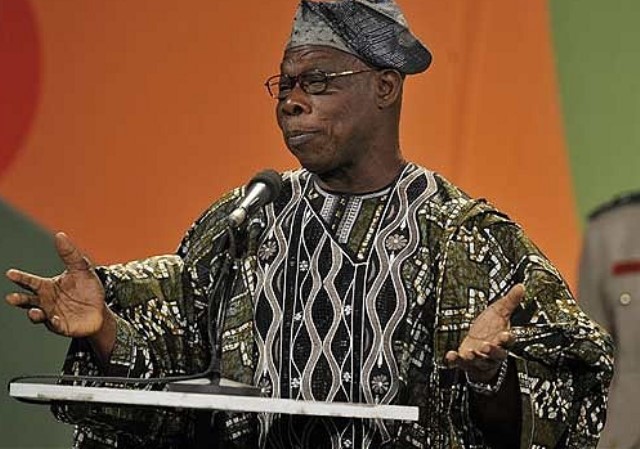
This is an abridged version of the lecture delivered by former President Olusegun Obasanjo at the Akintola Williams Annual Lecture on Wednesday, 23 November, 2016
Ongoing talks between the Federal Government and the Academic Staff Union of Universities, ASUU, was stalled on Wednesday owing to ASUU’s demand for N284 billion in earned allowances.
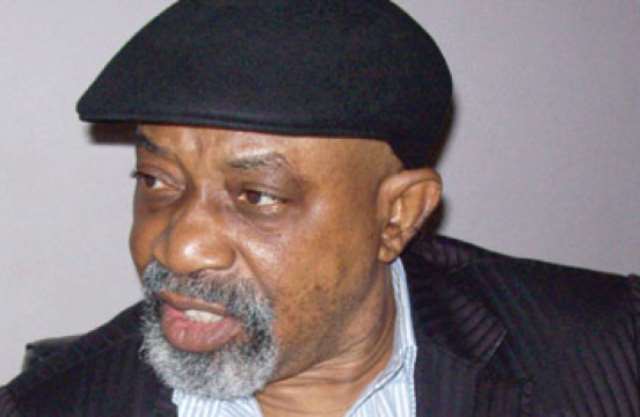
Minister of Labour and Employment, Chris Ngige, while speaking to journalists after the weekly Federal Executive Council, FEC, meeting at the presidential villa, said that government and the lecturers’ union had agreed on seven out of the eight issues in contention.
However, the issue of earned allowances posed a major challenge as the minister insisted that the money was way too much for the government to cough out especially given the fact that the economy is in recession.
The minister noted that government had conceded to the union the right to exclude endowment funds that accrued to universities from the Treasury Single Account, TSA.
He added however that though endowment funds would be exempted from the TSA, it does not mean that Universities’ councils would not have right to audit such an account.
On the issue of the earned allowances, Ngige said: “The earned allowance is the only one that is not sorted out now because everybody knows and agrees that we are in a recession.
“If we are in a recession and you are asking us to pay you N284bn, nobody will pay it because the money is not there.
“So, they (ASUU) agreed and the National Assembly also agreed, but the government offered them some amount pending when we finish auditing of the first tranche of money that has been given to them in that same area of earned allowances.
“That tranche of money that they collected is being audited, but the auditing process is very slow because some people for some strange reasons are not allowing auditing to take place. So, a time frame has been fixed of six months within which the auditing will be done.
“Within those six months, government has offered something that they will be paying on a monthly basis and ASUU has also made a counter proposal to government so both parties have gone back to their principals.
“ASUU has a principal which is the national executive body and government has come back to look at our finances viz-a-viz with the National Assembly which will appropriate that particular fund because for 2016, there is nothing in the budget for it. It will be done and appropriated as and when due,” the Minister said.
ASUU is expected to return to the negotiating table with its counter proposal after calling off its one-week warning strike on Wednesday.
The Union is protesting government’s lack of commitment to the agreements and Memorandum of Understanding signed between the two parties in 2009 and 2015 respectively.
The Independent National Electoral Commission, INEC, has announced the reinstatement of Eyitayo Jegede, SAN, as the authentic candidate of the Peoples Democratic Party, PDP, in the forthcoming governorship election in the state.
This follows the judgement delivered on Wednesday by the Appeal Court panel led by Justice Ibrahim Salauwa.
The Panel set aside the judgement of Justice Okon Abang of the federal high court, Abuja, which ordered INEC to deal with Ali Modu-Sheriff as the authentic PDP National Chairman, as well as to recognize Jimoh Ibrahim as the PDP governorship candidate in Ondo State.
Justice Salauwa also dismissed all the objections filed by Biyi Poroye, the Ondo State chairman of the Modu-Sheriff-led faction of the PDP.
In a statement signed by INEC Secretary, Augusta Ogakwu, late Wednesday, the commission stated that it was reinstating Jegede “in compliance with the judgement delivered today, Wednesday, 23rd November 2016, by the Court of Appeal, Abuja Division.”
The Statement urged the people of Ondo State to come out on Saturday, November 26, to exercise their franchise in a peaceful manner.
“All the political parties and their candidates participating in the election are also enjoined to play by the rules and cooperate with the commission to ensure smooth conduct of the election,” Ogakwu stated.
Meanwhile, ousted Ondo PDP governorship candidate, Jimoh Ibrahim has filed an appeal at the Supreme Court, saying that he is confident that the apex court will reinstate him.
He said: “I have read the decision of the Court of Appeal delivered today. We have nothing to lose as the Supreme Court seats on the same case tomorrow (today, Thursday).
“We shall get justice at the Supreme Court and if PDP wins Saturday’s election we shall have our four years’ mandate to rule Ondo State”.
He also advised his supporters not to “abuse anyone or fight over this one day ruling”, which he claimed was paid for from the state treasury.
The Nigerian military authorities have explained the incident that led to the death of Muhammad Abu-Ali, a lieutenant colonel, and two other senior officers who were killed in Boko Haram ambushes.
Abu-Ali has been described by his colleagues as one of the finest officers of the Nigerian Army participating in the clearance operations in the North East.
Leo Irabor, a Major General and the Theatre Commander of ‘Operation Lafiya Dole’ – the operations to clear the Boko Haram terrorists from the North East – made this known while addressing a press conference in Maiduguri on Wednesday.
Explaining how Ali died, the army commander said: “Own troops deployed in Mallam Fatori, in the forward location along the Nigeria – Niger on 4 Nov. 2016 at about 2100hrs came under BHT attack.
“The insurgents who had been earlier dislodged by the troops regrouped to reclaim the location but were ruthlessly repelled after a fierce battle that lasted for about 2 hours.
“In the fierce battle, the troops killed 14 insurgents and captured one General Purpose Machine gun, one PKM, 7 AK47 rifles, 57 rounds of 7.62 mm, one hand grenade, 2 Nokia phones and chemical substances for making Improvised Explosive Device.
“Sadly, however, an Officer, Lt. Col. M Abu-Ali and 6 soldiers lost their lives in the combat while 4 other soldiers sustained injuries (one unfortunately died later).
“The rest of the wounded are responding to treatment in own medical facility.”
Irabor also narrated how two other officers lost their lives after clearing an ambush laid for them by the boko haram terrorists on November 15.
He said that the troops were “on patrol to MUBI (when they) encountered an IED explosion along Bitta – Pirang road and thereafter were ambushed by BHT.”
“Troops successfully cleared the ambush after a fight and unfortunately the Commanding Officer, Lt. Col. B.U. Umar lost his life on the spot.
“Subsequently, Lt. Muktar also died in the hospital where 8 others soldiers who are wounded in action were receiving treatment. The wounded soldiers have been responding to treatment.”
Irabor also stated that a total of 5,235 persons who were hitherto held captive by the insurgents, have been rescued by troops of operation Lafiya Dole between October and November this year.
He added that the Operation had witnessed some command changes, bringing in officers whose pedigree “speak to their readiness to key into the philosophy for greater effectiveness.”
Irabor narrated how the troops, between October 28 and November 1, conducted clearance operations on insurgents along Golgore, Doska, Ajigin and environs, killing a total of 37 boko haram fighters and recovering a gun truck, several motorcycles and bicycles, military camouflages and large quantity of drugs.
He added that 2 officers and five soldiers were wounded during the encounters, while a member of the civilian vigilante group was killed.
Irabor also disclosed that the troops have commenced an operation to rescue the abducted Chibok School Girls who were kidnapped in 2014.
He said: “Operation RESCUE FINALE commenced on 2 Nov 16. It is the continuation of Operation CRACK DOWN and is aimed at rescuing all the CHIBOK School Girls and other hostages held in SAMBISA Forest.
“Preliminary bombardment of selected targets by own Artillery and Air Component is in progress.
“The subsidiary operations allied to Operation RESCUE FINALE, are ongoing and would be touched subsequently,” he said.
Irabor further stated that the troops had intercepted one Kadiri Umate, who is suspected of providing the terrorists with medical supplies. He was arrested with “35 packs of 500ml Glucose Intravenous Infusion (drip), assorted pain killer drugs, clothes, slippers, insecticide, salt, kola nuts and a bicycle.”
Abdullahi Abur, Another suspected food supplier to the insurgents was arrested on November 4. He allegedly purchases logistics from Benisheik and covertly delivering same to terrorists in Talala and Ajigin general areas of Damboa LGA of Borno State.
The Army Commander informed that the Maritime component of Operation Lafiya Dole had been inducted and they will be deployed at “Naval Outpost BAGA and will later operate around the fringes of Nigerian side of LAKE CHAD.”
Irabo also explained that the recent bombings in Maiduguri “are only indicative of a weakened and defeated BHT” and is “destined to fail totally.”
The army chief urged the general public “to be more alert and security conscious with their environment, especially when a strange face comes around.”
He reiterated that the army “shall continue to work to ensure the safety of lives of every citizen.”
He called on the terrorists to take advantage of the window provided by the military to surrender their weapons, as “failure to do so would be hugely regretted.”
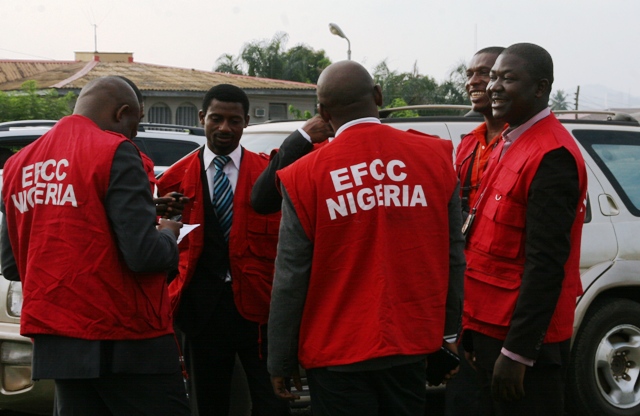
The Economic and Financial Crimes Commission, EFCC, has arraigned Nicholas Ashinze, a former special assistant to the embattled former National Security Adviser, NSA, Sambo Dasuki, before Justice Gabriel Kolawole of the Federal High Court, Abuja on a 13-count charge of corruption and money laundering to the tune of N36.8 billion.
Ashinze was arraigned alongside an Austrian, Wolfgang Reinl, Edidiong Idiong and Sagir Mohammed, as well as five other companies allegedly involved in diverting the huge sum from the office of the former NSA.
One of the charges read that Ashinze, then a serving officer of the Nigerian Army, and the Austrian, Reinl, “on or about 22nd April, 2014 at Abuja, in the Judicial Division of the Federal High Court did transfer the sum of Five Hundred and Fifty Million Naira (550,000,000.00) to Edidiong Idiong, being a lawyer practicing in the name of Law Partners & Associates, knowing that the said sum forms part of the proceeds of an unlawful act.
According to the EFCC, the offense was “contrary to Section 15 (2) (b) of the Money Laundering (Prohibition) Act 2011 (as amended) and punishable under Section 15 (3) and (4) of the same Money Laundering (Prohibition), Act 2011 (as amended).”
The defendants pleaded not guilty to all the charges preferred against them.
Following their plea, counsel to EFCC, I. O Uket told the court that the prosecution team was ready for the trial to commence immediately, adding that the witnesses were present in court.
“If the court is ready, we are also ready to produce our first witness as we have our witnesses in court”, he said.
However, counsels to the accused persons urged the court to admit their clients on bail, but the defence counsel opposed the bail applications, insisting that the accused persons had lost their administrative bail the moment their matter was charged to court and their counsels filed applications for their bail.
He said: “We are aware that the defendants are enjoying administrative bail. Their counsels understand that any administrative bail granted ends as soon as the matter is brought to court and bail applications are filed.
“Such bail cannot be extended since the charges have now been preferred to the defendants. We therefore urge the court to deny the bail application”, he submitted.
Justice Kolawole in his ruling held that the charges are all bailable adding that, “since each of the defendants has been on one administrative bail or the other, my sixth judicial sense informs me that I adopt the terms and conditions of the bail granted to the defendants by the EFCC and my learned brothers in the FCT High Courts.”
The judge added that the case would be granted accelerated hearing and urged the prosecution to pick five days in the New Year for trial.
Consequently, the case was adjourned to January 23, February 1 &14, March 7 & 21, 2017.
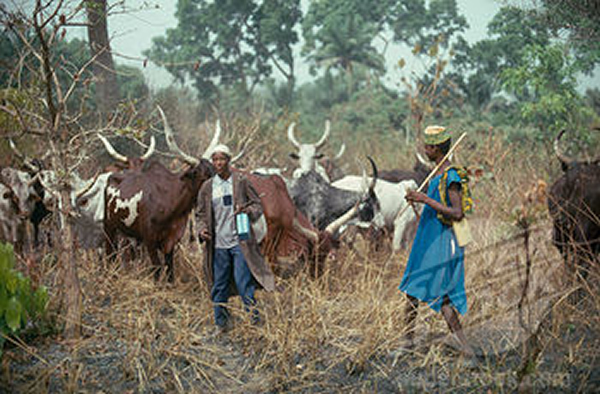
Farmers in Bayelsa State have called on security agencies to be proactive in their actions in order to prevent a looming crisis with herdsmen who they claim have continued to destroy their farmlands.
Bubraye Dakolo, the traditional ruler of Ekpetiama Kingdom, in Yenagoa Local Government Area of the state, made the call on Wednesday, saying that the situation was getting out of hand.
Ekpetiama Kingdom is made up of seven towns situated along the banks of the River Nun and several streams flowing into the River Niger and the Atlantic Ocean.
The towns include Gbarantoru, Tombia, Agudama, Akaibiri, Boumondi, Gbene and Ikibiri.
Residents of the communities usually engage in dry season farming, planting crops such as cassava, water yam, potato and plantain.
However, the locals have complained recently of the threats posed to their farming activities by herdsmen.
Dakolo called on the state government as well as security agencies to look into the plight of his people and address the situation before it degenerates.
He said: “What is happening now is a recipe for disaster. It is very difficult to watch your crops which are doing well being eaten up by cows.
“Imagine your one hectare of land you have managed to till at a great cost in terms of money, sweat and energy is now being devoured by some animals.
“So, you go and plant water yams, cassava and plantain, by the time you realize it, they have been devoured. It could spark some clash someday between farmers and herdsmen.”
One of the farmers in Tombia community, Ibomo Odigi, narrated her sad experience to newsmen, saying that the situation had taken a negative toll on food production.
“These herds of cattle they brought here, they have destroyed all our water yam (and) cassava,” she said.
“Some of the herdsmen are even armed with guns.
“They (government) said everybody should go to farm and that is what we have done but these cattle have eaten everything.
“One woman is lying critically ill at the Niger Delta University Teaching Hospital with high blood Pressure after her crops were destroyed,” Odigi lamented.
Preye Kala-Okpoya, a farmer from Agudama community, said that the herdsmen invaded her farm last month and destroyed everything.
“Last year, the same thing happened in my farm and when I went to look at it, I saw their guns hidden there,” she said.
An environmental activist, Alagoa Morris, called for timely intervention by relevant authorities in order to avoid breakdown of law and order.
He said: “These incidents might escalate into violence if nothing is done and we don’t want violence.
“The herdsmen are not in total control of their cattle which veer off to eat crops and plants in farmlands rather that feed on grasses.
“The relationship between the farmers and herdsmen is getting to the level where it is no longer healthy.
“We think the government should come in to ensure that anything that would lead to bloodshed is averted. It should be live and let live.”
File: Governor Seriake Dickson of Bayelsa State and Governor Olusegun Mimiko of Ondo State congratulating Eyitayo Jegede after he won the governorship primary organised by the Ahmed Makarfi-led faction of the PDP
The court of appeal has ordered the Independent National Electoral Commission, INEC, to reinstate Eyitayo Jegede as the candidate of the Peoples Democratic Party, PDP, in the Ondo State governorship election holding on Saturday, November, 26.
The three-man panel of appeal court judges led by Ibrahim Salauwa, struck out all the objections filed by the defendant Biyi Poroye and the Ali Modu-Sheriff faction of the PDP.
Delivering the judgement on Wednesday, Justice Salauwa explained that Poroye and the Modu-Sheriff-led PDP faction had tried to blackmail the panel to no avail.
The appeal court panel unanimously struck out all the objections against Jegede’s appeal, describing them as lacking in substance.
It also set aside the ruling of Justice Okon Abang of the Federal High Court, Abuja, which ordered INEC to substitute Jegede’s name with that of Ibrahim.
“Having resolved each of the seven issues in favor of Jegede, what else should the court do? So the appeal is most meritorious and it is thereby allowed.
“Justice Abang’s judgment is set aside and N50, 000 cost awarded for appellant and the other respondents,” Justice Salauwa ruled.
A lingering leadership tussle in the PDP between Modu-Sheriff and Ahmed Makarfi had led to the former Borno State governor filing a suit before Justice Okon Abang of the federal high court, Abuja.
Delivering judgement on the case, Justice Abang held that Modu-Sheriff was the authentic chairman of the PDP, directing INEC to deal with Ibrahim as the authentic candidate of the PDP in the Ondo governorship election.
Before then, INEC had already recognized Jegede as the PDP candidate, having monitored the primary election from which he emerged the Party’s flag-bearer. But in obedience to the court ruling, Jegede’s name was removed and Ibrahim was added to the list of candidates that was eventually published by INEC.
Jegede, a Senior Advocate of Nigeria, SAN, then approached Justice Abang seeking permission to appeal the judgement, but the application was rejected as the high court judge held that Jegede had no locus standi to appeal the judgement as he was not part of the primary from which Ibrahim emerged.
The Makarfi-led PDP faction, then headed for the appeal court to set aside the ruling of the federal high court, however, Biyi Poroye, chairman of the Modu-Sheriff PDP faction in Ondo state, accused the appeal court panel of bias, claiming that chairman of the appeal is an associate of the incumbent Ondo State governor, Olusegun Mimiko; the panel consequently withdrew from the case.
President of the court of Appeal, Zainab Bulkachuwa, then constituted a fresh three-man panel to hear the appeals, but again, Poroye protested the formation of the panel.
When the panel led by Justice Salauwa insisted on hearing the panel, Poroye’s counsel, Ben Nwofor, filed an injunction at the Supreme Court against the appeal court Panel.
This development led the Salauwa panel to adjourn judgement on the case indefinitely pending the determination of the injunction filed at the apex court.
On Tuesday, the Supreme Court struck out Poroye’s injuction and awarded the sum of N250,000 to Jegede. The apex court also ordered Nwofor to pay the sum of N1 million each to the three members of the appeal court panel, for trying to bring the appellate court to disrepute.
Acting Chief Justice of Nigeria, Walter Onnoghen, who delivered the ruling also directed the appeal court to as a matter of urgency deliver judgement on the cases before it as the election date was close.
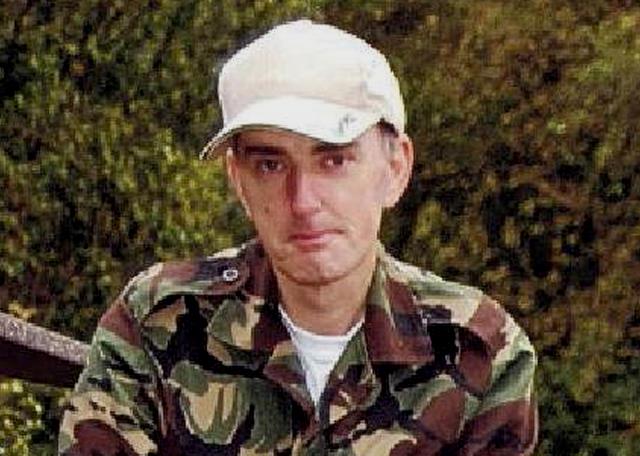
A court in the United Kingdom has found 53-year-old Thomas Mair guilty of the murder of a member of the UK parliament, Jo Cox.
The unemployed gardener was sentenced to life imprisonment.
Mair had shot and stabbed Cox, a mother of two, to death in Birstall, West Yorkshire, on 16 June, a week before the EU referendum vote.
He had refused to enter a plea and chose not to give any evidence during the trial. When the sentence was read, the accused person showed no reaction.
“It is evident from your internet searches that your inspiration is not love of country, it is an admiration for Nazis and similar anti-democratic white supremacist creeds,” the judge said as he read the sentence.
In a statement read out in court, husband of the slain lawmaker, Brendan Cox said that he was not there for “retribution” and felt “nothing but pity for” Mair.
Jo Cox’s parents, Jean and Gordon Leadbeater, and her sister, Kim, were also in court for the verdicts.
The accused person, dressed in a dark suit and blue tie, remained impassive as the verdicts were read out, after one hour of deliberations.
He was also found guilty of having a firearm with intent to cause grievous bodily harm to 78-year-old Bernard Kenny, who tried to help Cox, and having an offensive weapon, namely a dagger.
Cox, who was 41 years old at the time of her murder, was the first sitting MP to be killed since 1990, when Ian Gow was the last in a string of politicians to die at the hands of Northern Irish terror groups.
Eyewitnesses told journalists that they heard her attacker shout “put Britain first” at least twice before shooting her and then proceeding to stab her several times.