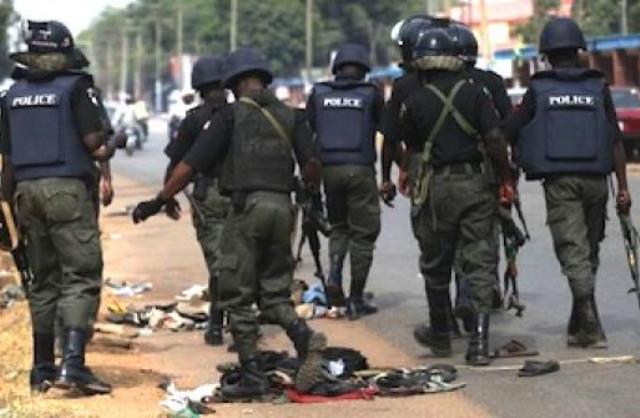
The Police has consistently prevented the BBOG group from entering the presidential villa
Inspector-General of Police, IGP, Ibrahim Idris has issued a stern warning to members of the ‘BringBackOurGirls’, BBOG, campaign group to carry out their protest within the ambit of the law and refrain from deliberative provocation of law enforcement officers.
The campaigners have been protesting every 72 hours in the FCT, demanding to have an audience with President Muhammadu Buhari.
On Tuesday, however, a pro-Buhari group clashed with the Chibok girls campaigners, alleging that the campaign was being sponsored by supposed enemies of the Buhari administration.
IGP Idris, whose appointment was recently ratified by the Nigerian Police Council, pointed out that the BBOG protests posed a threat to public peace and order.
He explained that if the aim of protests is to draw attention to a particular issue, then the group had achieved their objective.
The IGP made the remarks in Abuja while receiving the National President of the National Council of Women Societies, NCWS, Gloria Shoda and other executive members of the association.
He said: “The police management is aware of the agitation and the plight of parents of the abducted Chibok schoolgirls and other civil groups. As parents ourselves, we sympathize with them in these trying moments.
“Evidently, the government has invested huge resources in ensuring that the girls are rescued and re-united with their various families.
“However, the activities of the “BringBackOurGirls” group in Abuja, the nation’s capital recently, is becoming worrisome and a threat to public peace and order.
“Bring Back Our Girls protagonists must understand that in the exercise of their rights, they must not trample on other peoples’ rights through “over-dramatization of emotions, self-serving propaganda and disrespect of public (office) holders.
“The police will not sit on the fence and watch such a scenario unfold. The rights of law-abiding citizens must be protected within the context of the law and we believe that enough is enough.
“I watched them on television saying they were enforcing their rights. Every citizen of this country has rights and we believe that where your right ends, the rights of others begin and we should try to conduct ourselves in such a way that everybody in the process of enforcing right, do not encroach on the rights of others.
“I believe that blocking the highway or stopping traffic and over dramatization of emotion, trying to confront and provoke policemen, I don’t think that is part of enforcement of rights because even the policemen have rights and they are doing it lawfully.
“The essence of procession is to bring the attention of the society or the government to your plight and I think the demonstration has been going on for too long. We believe and advice that it is time for them to maintain some level of control so that people of Abuja can live in peace and tranquility.
“We however ask that they tread with caution and that their grievances be channeled within the ambit of the law,” Idris added.
He drew the group’s attention to the movement of other persons as enshrined in Chapter 4 Section 41 of the 1999 constitution as amended.
“Pressure groups should not resort to arm-twisting of government in order to achieve their aim,” he added.
The Independent National Electoral Commission, INEC, has said it will go ahead with Saturday’s governorship election in Edo State as planned.
This was disclosed by the commission’s Director of Publicity and Voters’ Education, Oluwole Ozzi, on Thursday.
“We are going ahead with the election,” Oluwole said in a short text message.
The commission had earlier said it was carrying out wide consultations after it was advised by the police and the Department of State Services, DSS, to postpone the election.
The security agencies said that the advice was based on credible intelligence at their disposal, that insurgents were planning to attack communities and soft targets with high population during the forthcoming Sallah celebrations between September 12 and 13.
According to them, Edo State is one of the states that have been earmarked for these planned attacks.
In a joint statement, the police and the DSS reminded the public that similar threats were earlier issued during the Labour Day and Democracy Day celebrations as well as the Eid-el-Fitr holidays in July, 2016.
Earlier on Monday, some candidates of the West African Examination Council, WAEC, writing the General Certificate Examination, GCE, in Edo State demanded for a shift in the date of the governorship election as it clashed with the date of their exams.
Some of them staged a protest at the Government House in Benin City, the capital of Edo State, with placards stating their demand.
Assistant Controller of Prisons, Othman Musa, revealed that the cost of feeding a prisoner is N1,200 on a daily basis.
He made the disclosure during an interview with the News Agency of Nigeria, NAN on Thursday in Abuja.
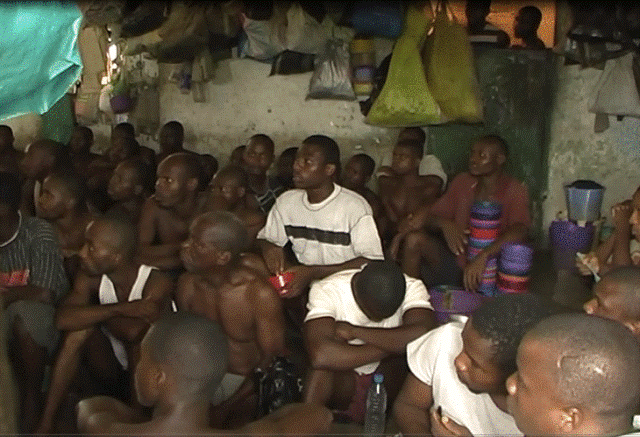
The prison boss also blamed the cases of awaiting trials, overcrowding and jailbreaks in the country’s prisons on the frequent adjournment of cases by the law courts.
Musa added that prison structures in the country are old and dilapidated.
He said: “Most of our facilities are virtually as old as Nigeria because most of them are over 100 years old and the same structures, housing large number of inmates.
“These are buildings constructed during the pre-colonial period and they house as much as 40 inmates, more than thrice its capacity.
“So you find out that at any given time, there is congestion, which is not unconnected with the frequent adjournment of court cases. “We have more awaiting trials than the convicted inmates.
“So where you are supposed to have 10 people in a room, you are now having 20 or 25 people,” he said.
Musa added that the welfare of the inmates was poor but that efforts were on to improve on the condition.
He said, “As at now, I can say the feeding is okay. You know you cannot feed a person three times daily on N1,000 and expect that food to be okay.
“But with the present increase in feeding fee, there is much improvement in the quality of the meals.
“Their feeding is N400 now per meal three times per day (which is equal to N1,200 daily).”
The prison boss urged members of the public to always show love and care to prisoners.
“Those incarcerated are our brothers, sisters and relations, but we hardly go and visit them, when they are in prison or out of prison,” he said
“The moment you stigmatise an ex-convict, he has no alternative than to go back to their old friends and then, back to prisons.
“But if you show them love and care after imprisonment, introduce him to religious activities, bring them closer to you and give advice, we may perhaps change them,” he suggested.
The arrest and detention of a 38-year-old blogger, Iroegbu Emenike, by the State Security Service, SSS, in Uyo, Akwa Ibom State on Tuesday has been condemned by the Coalition of Online Publishers in Akwa Ibom, COOPA.
The group described his arrest as “worrisome” and a breach of his fundamental human rights guaranteed by the Nigerian Constitution.
A statement signed by Ifreke Nseowo and Nelson Nse Abasi, Chancellor and Secretary General respectively read: “According to the wife of the blogger, Mrs. Ekaette Emenike Iroegbu, the blogger was arrested by three (3) SSS operatives who invaded their Uyo residence in a Gestapo style in a black jeep. The operatives took away the two phones of Mrs. Emenike; the bloggers own phones and laptop, etc. After ransacking their apartment, they whisked the blogger away without disclosing the reason for his arrest and their destination.
“We the Coalition of Online Publishers in Akwa Ibom (COOPA) hereby call on the SSS and other security agencies to resist being used as a tool by political office holders to clampdown on Nigerians for exercising their constitutional liberties. This means that democracy is being threatened in Nigeria by the rising display of intolerance to free speech.
“Those who believe that their reputation have been lowered in the eyes of right thinking members of the society should explore the legal option by seeking redress in a court of law instead of taking laws into their hands.
“This incessant arrests must stop, looking at similar cases in the West and in the North, now gradually becoming a norm across the nation.
“We believe that his immediate release will strengthen our democracy, and uphold the people’s trust in the government of the day.”
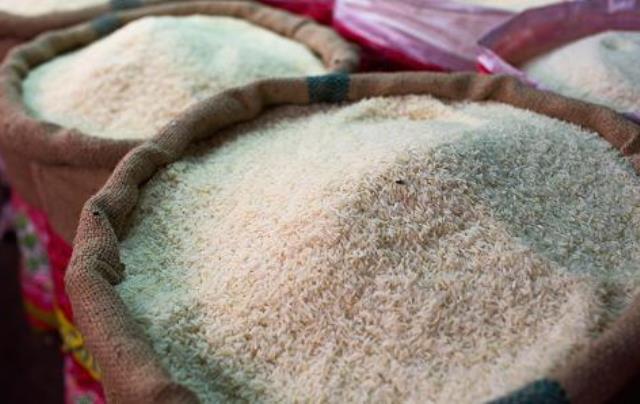
The Federal Government has described attempts by unscrupulous individuals on social media linking the government and Dangote group with a plan to ‘flood’ the country with genetically modified rice, as extremely uncharitable.
A statement signed by Femi Adesina, Special Adviser to the president on Media and released on Wednesday clarified that the federal government in 2014 signed a $1billion Memorandum of Understanding, MoU, for investment in integrated rice project with Dangote Industries Ltd.
Further to this agreement, Dangote Industries Limited this year cultivated over 8,000 hectares in Hadejia, Jigawa state, creating over 10,000 direct and indirect jobs for farmers who are the major beneficiaries of the scheme.
In consolidation of the rice project of the FG, President Muhammadu Buhari administration is also in partnership with the African Development Bank, ADB, and other reputable companies to tap into the vast potentials in the private sector and broaden the economic base of the country.
“The Presidency said the gains of the diversification drive especially in the agriculture sector are already yielding dividends as shown by the recent statistics in the sector as published by the National Bureau of Statistics.
“These engagements will continue until the present administration has laid a solid foundation for the economic development of the nation.
“It is therefore ridiculous that a government that is wholly devoted to the generation of employment for Nigerians especially through Agriculture will turn around to get involved in an activity that will reverse the gains of the same partnership.
“President Muhammadu Buhari has said it repeatedly that, ‘’we have the capacity to feed ourselves in Nigeria and even export from what we produce in the country.”
He has also said that through the provision of N200 billion by the CBN for small holder farmers and processors involved in local production of rice and other grains, rice importation will hopefully stop in the next three years.
“It is unfortunate that while the Buhari administration is working assiduously with well-meaning Nigerians to bring the country out of the current economic situation it has found itself, a few self-serving individuals are bent on distracting the administration from the avowed focus to reflate the fortunes of the country through the diversification of the economy which, very soon, Nigerians will begin to see and experience the results.
“The Federal Government warns purveyors of such malicious information and those thinking of embarking on the same route to have a rethink and retrace their steps.
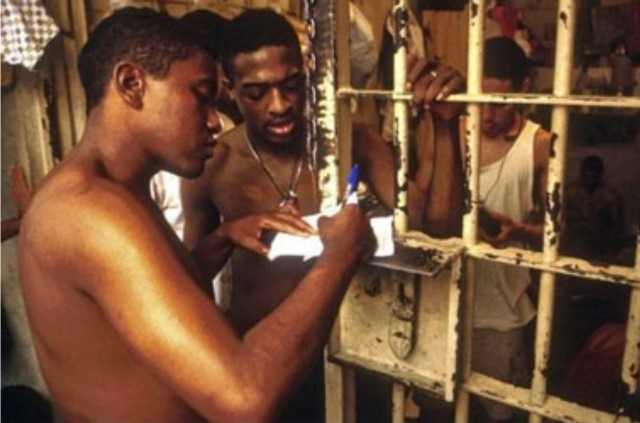
More than 80 percent of prison inmates in the country are awaiting trials, a report has indicated.
The report just released by the Centre for Crisis Communication, CCC, to mark its one year of dedicated service to the nation notes that the unwholesome criminal justice system in the country is largely responsible for this state of things.
The Executive Secretary of the Centre, Yusuf Anas, a retired Air Commodore, who made the report available to the media further said the remaining 20 percent represents convicted prisoners stressing that apart from the convicted offenders, the prisons also provide abode for those who are still awaiting trials for various crimes and offences ranging from pick-pocketing to terrorism.
It noted that the prisons are indeed very sensitive and important security institution which must be accorded its place of priority and strategic importance in the overall interest of the society.
The Centre expressed dismay over reported cases of security breaches that led to attempted and actual prisons breaks across the country adding that an assessment of a number of Nigerian Prisons revealed a dire situation across the various prison facilities in the country.
It observed that apart from the obsolete and debilitating state of most of the prisons, there is an apparent shortage of the holding facilities resulting in congestion, which is largely due to the huge number of awaiting trial inmates.
It called on the authorities to carry out reforms to make prisons across the country more habitable, noting that the staggering ratio of actual convicts to the awaiting trial inmates is indicative of a systemic failure in our criminal justice system.
The centre said it does not support the current agitation for the breakup of the country as this would mean a setback of years of unity and progress enjoyed by Nigerians.
It also deplored the situation in Internally Displaced Persons, IDPs, camps across the country and called for unhindered access for humanitarian activities for both government and international donor agencies. It nevertheless commended the National Emergency Management Agency, NEMA, for its relentless intervention on the plights of IDPs.
It also commended government’s efforts at tackling Boko Haram and other insurgencies in the country.
The Ahmed Makarfi-led faction Peoples Democratic Party, PDP, has described the call for the postponement of the Edo State governorship election as shocking, bizzare, confusing and a plot to scuttle the country’s nascent democracy.
This was contained in a statement signed by the party’s national publicity secretary, Prince Dayo Adeyeye.
“Our attention has been drawn to the shocking breaking news of the advice by the DSS and the Police to the Independent National Electoral Commission, INEC, to postpone the Saturday, September 10, 2016 Gubernatorial Election in Edo State on excuse of insurgency alert,” the statement read.
It continued: “We are taken aback on this advice coming a day after the President and Commander-in-Chief of the Armed Forces of the Federal Republic of Nigeria, Muhammadu Buhari was present at the Mega Rally of its Party, the APC in Benin City which was concluded without any hitch.
“It is on record that INEC recently conducted a ‘hitch free’ Senatorial By-Election in Borno State which is a high-point of insurgency in the Country but the Security Agencies saw no reason to call-off the Election.
“It is therefore lamentable to hear from these same security agencies that the Election cannot be held in a State where in less than 24 hours, the President and all the APC leaders and members had an uninterrupted Rally.”
The PDP called on President, Muhammadu Buhari to “caution the security agencies and direct them to provide full security and also to desist from doing anything that will jeopardize this forthcoming Gubernatorial Election in Edo State.”
“We are equally counting on INEC not to succumb to this false alarm by acting independently and holding election as scheduled,” the statement added.
It went further: “We hope that this advice from the security agencies is not in concert with the APC of having seen the indices of losing the Edo State Gubernatorial Election to the PDP”.
“Finally, the Party leadership led by Senator Ahmed Mohammed Makarfi, CON, call on our members, teeming supporters, other Edo voters and the international community to remain law-abiding while staying alert on this calculated attempt at scuttling our hard earned democracy.
The Nigerian Police Force and the Department of State Security, DSS, have uncovered plans by terrorists to attack some cities in the country during the coming sallah celebrations.
At a joint press conference on Wednesday, the security agencies also advised the Independent National Electoral Commission, INEC, to consider postponing the governorship election in Edo State scheduled for this Saturday as Edo is believed to be one of the places targeted by terrorists.
According to the two security agencies, the advice is based on credible intelligence at its disposal which suggests that insurgents are planning to attack vulnerable communities and soft targets, with high population during the forthcoming Sallah celebrations between 12th and 13th September.
Edo State is reportedly amongst the states listed for these planned attacks.
In a joint statement, the agencies said similar threats were issued during the May 1, Labour Day and Democracy Day, May 29, celebrations as well as the Eid-el-Fitr holidays in July, 2016; but “The security agencies were able to decisively disrupt and thwart the insurgents’ plan.”
The statement read in part: “In the same vein, while election is important, the security agencies cannot allow the peace of the country to be disrupted, and we will continue to remain vigilant and ensure consolidation of the successes gained in the current counter-insurgency fight.
“It is in regard of these that we are appealing to INEC which has the legal duty to regulate elections in the country to consider the need for possible postponement of the date of the election in Edo State, in order to enable security agencies deal decisively with the envisaged terrorist threats.
“While the Police/DSS remain mindful of the inconveniences this request may cause the various political stakeholders, it is our strong resolve that security agencies need not be distracted from ensuring a peaceful and secured Nigeria now and always.
“Members of the public are hereby assured that the security agencies will continue to remain focused and committed and are being enjoined to remain vigilant.
“The attention of the security agencies should be drawn to any observed unusual movements or actions by groups or individuals in their neighborhoods,” the statement concluded.
Sallah celebration is expected to hold on Monday, September 12.
A group of students had also protested against holding the election on Saturday, a day they said students would be writing the GCE.
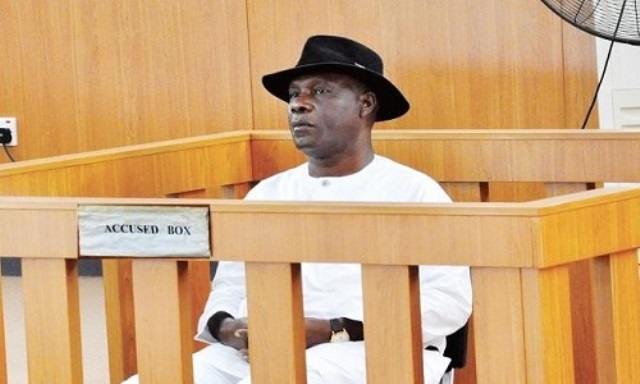
The Abuja High Court on Wednesday granted former Niger Delta minister, Godsday Orubebe, a N10 million bail, which is half of the amount placed on his co-accused, for allegedly diverting N2.3 billion.
Oludare Alaba and Ephraim Zeri were granted bail in the sum of N20 million each.
According to the bail conditions, Orubebe is expected to provide a surety in like sum, who must also provide evidence of tax payment in the last three years and own a land property in the Federal Capital Territory.
For the other accused, they were ordered to provide a surety each in like sum, who must be an assistant director in the civil service and also own a land in the FCT.
Before adjourning the case to November 10, Justice Olukayode Adeniyi ruled that Orubebe would remain in the custody of the Independent Corrupt Practices and Other Related Offences Commission, ICPC, until he meets the bail conditions.
The case against the former minister, a six-count corruption charge for diverting money meant for the payment of compensation of people affected by the dualisation of Section IV of the East-West Road, suffered two postponement before now.
The case was first postponed on August 18 when the prosecution sought permission to serve the accused with the charge. The judge then adjourned the case to August 30.
But when the case was called on that day, the former minister was absent due to illness, leading to the adjournment to September 7.
Also charged alongside the three is Gitto Costruzioni Generali Nigeria Limited, the company that owns the account into which the money meant for beneficiaries was paid.
In spite of budgetary provisions of over N3 billion in the last five years, Nigerian soldiers still have to buy the uniforms they wear.
Army boots for sale at the Central Market, Kaduna
By Samuel Malik
Nigerian soldiers have to pay for essential items of kit out of their own money, an investigation has revealed.
Over the last five years, the Nigerian government has budgeted a total of N3.456 billion for equipping its soldiers.
However, many soldiers, including those involved in the fight against Boko Haram insurgency in the North east, say that they have been forced to spend their own money on buying uniforms, boots and other items of equipment.
The scale of the problem became apparent during an investigation lasting several weeks that involved visits to army barracks across the country.
In Kaduna, Abuja and Lagos, the reporter witnessed first-hand how soldiers bought uniforms and boots both in the black market and in shops owned by the army.
Many soldiers said they had been issued uniforms only once in three years and so had had to buy their own uniforms on several occasions throughout their service.
Very few soldiers said they were ever given footwear.
“You have to buy boots with your money,” said one soldier who asked to remain anonymous for fear of punishment.
Serving in Maiduguri since 2013, he said he and his comrades had received extra uniforms as on one occasion they had been forced to retreat “with only the uniforms we had on”.
“We were issued one each early last year when we advanced to recapture Monguno. Also, the army gave us uniforms this year,” he said.
The Nigerian army has in recent years dismissed about 5,000 soldiers for various offences including refusing to fight Boko Haram militants. In turn, many of the soldiers accused the army of sending them to fight the insurgents without adequate equipment.
As many as 3,000 of these soldiers were later reinstated.
Meanwhile, a look at the army’s budget over the last five years shows that an average of N622 million was budgeted yearly for the provision of uniforms and kits.
A detailed breakdown of the allocations for uniforms and kits between 2012 and 2016 showed that N3.456 was appropriated for the purpose. In 2012, N370 million was allocated; 2013 in N742 million; N487 million each in 2014 and 2015; and in 2016, the army budgeted N1 billion.
Ways and Means
A retired sergeant, who spent 35 years in the army and worked with Ordinance, the division of the army responsible for everything from weapons and ammunition to uniforms and kits, said that the sale of military kits was uncommon in the past.
“What we had was ordinance store where kits and other equipment were kept, not sold. However, there was officers’ shop, where only officers went to buy some of their accoutrements but not boots and uniforms, which they were expected to be issued by the army.”
The retired soldier explained to the www.icirnigeria.org on condition of anonymity what made up a soldier’s kit.
“When a soldier leaves the depot after enlisting into the army, he is supposed to be given uniforms, belts, singlet, cap, boots, socks, blanket, sport wears, first aid kit – iodine, plaster, cotton wool, shoe powder, bandage,” he said.
The first aid kit, the sergeant explained, was supposed to be issued to soldiers on active duty.
However, in recent times, they had become luxury items only sold in army stores. Even the thousands of soldiers deployed in the northeast to confront Boko Haram were not given these kits.
Rather than depend on the army, soldiers buy their kit either from tailors, their colleagues, army stores or on the open market.
Tailors come to the rescue
Getting uniforms from the tailors who put together military outfits – usually in markets near the barracks – is easy. These tailors are either civilians or retired soldiers.
In Kaduna, this reporter witnessed a transaction in a tailor’s shop. A soldier who needed a camouflage uniform had called ahead and was informed that one was available. Once in the shop, the haggling started.
“But you know that camouflage is expensive. In some places it sold for N15,000 but mine is not that quality and also because it is not sewn, I will give it to you for N12,000,” the tailor said.
Eventually, the two men agreed on the sum of N11,000.
After leaving the tailor’s shop, the soldier met a colleague who said that he was about to sell a uniform that was of much higher quality.
“The one I have is number one [grade]. You know this one you have is not even number two. It is inferior to the one I am putting on, which is not number one,” he said.
“This uniform here is the same type issued to officers,” he continued, explaining how he had managed to obtain an outfit only meant for a superior rank.
“You know I’m in Jaji [where the army has its School of Infantry and its Command and Staff College), the home of officers,” he answered. Jaji has a reputation for being a hub for acquiring military accoutrements.
Official Roots
Although soldiers are rarely issued uniforms and other items, they are readily available in army shops.
Everything from uniforms, boots, and raincoats to camp beds, bags, first aid kits and ceremonial swords can be bought at ordinance shops or the Nigerian Army Post Exchange (NAPEX).
Soldier’s uniform on sale in an Army shop
There is no bargaining in these shops and each soldier has to show his ID card, with all purchases recorded. The price has to be paid outright, although when a soldier buys from a tailor or his colleagues, he can pay in instalments.
At the Mogadishu Cantonment, also known as Abacha Barracks in Abuja, camouflage is available for N15,000 at the ordinance shop operated by Lodoni Company Nigeria Limited.
The price of boots ranges from N10,000 to N15,000.
At the Ikeja Army Cantonment in Lagos, soldiers can buy kits from the NAPEX store inside the barracks, although some prefer to buy from their colleagues because they can bargain over prices.
Boots are harder to obtain than uniforms. Some of those fortunate enough to be issued with boots invariably received the incorrect size and had to look for colleagues to exchange with, or sell them and add their own money to buy suitable footwear.
Soldiers on peacekeeping missions tend to buy them when abroad.
Boots of a decent quality cost N9,000 at the Central Market in Kaduna. One trader said that he shipped them in from Togo.
The Soldier As A Uniform Merchant
All army divisions get their military kits from the Central Ordinance Depot in Yaba, CODY, Lagos State, a huge, tightly-secured storage facility headed by a Quartermaster General, who can be as high in rank as a Major General.
All visitors have to sign in and out while civilians have very limited access.
A battalion passes an order for kit to its brigade headquarters, which in turn forwards it to the division headquarters. The division checks its store to see if the requested items are available.
“Whatever is available is given, while the ones that are unavailable would be marked down for whenever they become available,” the retired sergeant explained.
Back at the battalion, goods are taken to a store under the care of the quartermaster, who in turn has store men working for him.
Nothing leaves the store without the knowledge of these men. From CODY down to the battalion level, store men are the conduits for contraband kit.
This is in spite of the frequent auditing.
“Auditors come to all ordinance stores three to four times a year. Before they come, the ordinance personnel are notified one week ahead to prepare their books, so the commanding officer arranges with his store man to make sure that their book is up to date,” the sergeant said.
He added that this advance notice was long enough time for the store man to arrange his books because “all the auditors do is to look at the inventories for items that come in and go out to see what is supplied, what is given out to soldiers and what is remaining”.
However, not all uniforms sold in the black market are obtained illegally. The sergeant said that ordinance personnel usually got double their share of everything issued by the army, even though they rarely went out on active duty.
“Are we not the ones in charge of the store?” he asked. “Ordinance personnel get uniforms at least once in 12 months.”
Domestic staff working with senior military officers, most of who do not need the uniforms they receive, also sell theirs for extra money.
Many soldiers explained that at one time or the other they had been issued with substandard uniforms by the army. “There are fake and original uniforms. The moment you insert the original in water, you see the Nigerian coat of arms. I had to buy an original when the army issued me a fake one,” a soldier involved in the fight against Boko Haram in Maiduguri said.
“Any soldier you see looking good, they must have spent about N30,000 of their money,” he continued. “The army wants us to look good, yet it is not giving us the kits to do so.”