The Movement for the Emancipation of the Niger Delta, MEND, has said that Edwin Clark, an elder statesman, does not have the moral authority to negotiate with the federal government on behalf of the people of the Niger Delta.
MEND was responding to Saturday’s statement by the so called Niger Delta Avengers, NDA, militant group, that it would consider negotiating with the federal government only if Clark would be part of the negotiations.
The NDA had said in the statement that “We are going to support any collective/negotiation team emerging from the Chief (Dr.) Papa Edwin Kiagbodo Clark Niger Delta elders and genuine stakeholders conference to engage with the federal government of Nigeria, representatives from the home countries of all multinational Oil Corporations and neutral international mediators that will be focused on achieving the short, medium and long term frameworks and objectives to de-escalating conflicts in the Niger Delta.”
But in reaction to the development, the spokesman of MEND, Jomo Gbomo released a statement on Sunday, urging the federal government not to take neither the NDA nor Clark serious.
The statement said that “throughout the six years that his (Clark’s) ‘son’ former President Goodluck Jonathan was in power, the elder statesman kept mute and actively participated in the economic dismemberment of the Federal Republic of Nigeria.”
It also reminded Nigerians that “Chief Edwin Clark was recently named by the Reformed Niger Delta Avengers (RNDA) as a major supporter of the NDA.”
“Chief Edwin Clark lacks the moral authority to lead a discussion on the so-called “re-structuring” of the Nigerian Federation, at this critical point in the country’s history,
“Consequently, MEND reiterates its full support for the ongoing military presence in the Niger Delta region, even as we prepare to tour the region to drum support for the current administration in an exercise code-named “OPERATION MOSES”.
“MEND shall continue to insist that, so long as these elders and stakeholders do not categorically and publicly denounce the NDA, the Federal Government should also continue to ignore them,” the statement concluded.
President Muhammdu Buhari at his swearing in on May 29, 2016
By Godwin Onyeacholem
In the light of almost two decades of horrendous governance under the PDP administration, the call for change by a large section of Nigerians was expectedly overwhelmingly loud.
Thus, this piece is a response to Garba Shehu, Senior Special Assistant to the President on Media and Publicity, who indeed holds the copyright to the first leg of the title of this piece which I have slightly modified – as can be seen in his latest defence of President Muhammadu Buhari’s APC administration.
After 15 tortuous months in the life of the current administration, a period largely mediated by growing criticisms in the midst of persistent agony of diminished expectations, Shehu, a man you can never accuse of being inattentive, came to what was meant to be a rescue with a well-publicised apologia titled, “Is this the Change we voted for? Yes, It Is.”
And in a spirited effort to convey his message, Shehu provided the question as well as the answer. Given his current station in the presidency, it is hard to fault his emphatic submission. But with due respect to him, however, I hold a different view: Although Nigerians believed in Buhari and indeed voted massively for change, I’m minded to point out that what has been served so far in real terms doesn’t seem like the change Nigerians voted for Buhari to deliver.
Yet, there are a couple of areas one would be inclined to agree with Shehu, especially concerning what this administration has done regarding security and corruption.
Sometime in November 2010, my friend and colleague from our Tell magazine days in the early 90s, Segun Adeleke, and I, interviewed Buhari, then a presidential candidate of the Congress for Progressive Change, CPC, in one of the suites at Transcorp Hotel, Abuja.
The interview titled, “Soon There Won’t Be Enough Money to Steal”, was a cover story for GIRAFFE (Vol. 1 No. 2 November 2010), a monthly magazine which we briefly published. Then, it was clear as now, that Buhari’s priority areas would be security, corruption and indiscipline.
Hear what he said when asked which direction he would be taking Nigeria if elected as president in 2011 elections: “There are two fronts. One is security. This country is terribly insecure. No serious investor can bring his money here to build factory, provide employment and goods and services when there is no power, when there are no roads, no water. Look at what the country has been earning for the past 10-11 years and look at the state of infrastructure in this country. Corruption is responsible for that. The whole world knows it. We have said it. We will still have zero tolerance for corruption and indiscipline.”
Although the country still faces security challenges in the widespread menace of herdsmen, kidnapping for ransom, rising ethnic agitations and renewed bombings down south, no honest assessor will deny that Buhari has diligently confronted this problem especially by limiting the threats hitherto posed by the Boko Haram insurgents operating from the north-east region.
One grey area though remains the issue of the Chibok girls who have been in the custody of Boko Haram for more than two years. You would expect that by now, one way or the other, we ought to have arrived at a closure on this matter. But on the whole, this administration has done far better than its predecessors when it comes to security.
The same single-mindedness has been applied in tackling corruption, even if there are still reservations. All those who looted funds meant to buy weapons for the military are being identified and called to give account. In many cases, such funds are being returned while there are also court cases to bring culprits to justice.
However, in the life of his administration, you would expect that Buhari would make the famous byword of his inaugural broadcast (I belong to everybody, and I belong to nobody) really stick. But there have been occasions tempting enough for one to assume that our president is exclusively for a class of people.
In a government vigorously waving the banner of change, you would expect Buhari not to close his eyes, for instance, to the fact that his ministers have yet to follow the path he and the Vice-President had taken by publicly declaring their assets.
After all, strictly interpreted, change means that you want to do things differently from past administrations.
You would expect him to instantly address the first major embarrassment to his government when one of his foremost cabinet members stuck out his feet at a public function for one of his aides to polish his shoes in full glare of the public. It would not happen in countries where the leadership places premium on the dignity of the human person.
You would expect him to have halted the secret, largely nepotistic employments in some government institutions like the Central Bank of Nigeria and Federal Inland Revenue Service and demand a process that gives all Nigerians access to vacant positions in such places.
In fact in a government of genuine change, all those responsible for those sham employments should themselves by now be out of jobs.
Also, there are reports in the public domain that some highly-placed officials of the presidency, under our President’s very nose, are neck-deep in shady deals running into billions of naira, acting as agents of some crooked business persons.
By now, you expect Buhari to have used those reports to first suspend the officers so mentioned, and then launch an independent investigation into their activities. Any vindication of the media reports would mean automatic sack and possibly prosecution. No cover-up under any guise.
There are a legion other issues that are of serious concern to a great majority of Nigerians, and that should worry this administration. The pattern of appointments Buhari has made so far is one of them. And truly, a dispassionate assessment of these appointments would justify the questions Nigerians are posing.
Take one for example: Why would a man who is already chief of staff to the President also be appointed a board member of a major government organization? Has the president by this appointment not short-changed another person in a different section of the country who ought to have been appointed to this position?
Yes, Buhari comes across as credible with an admirably high integrity quotient; the only former Head of State who as at 2011 never owned a property outside Nigeria. But this virtue, against the backdrop of our multi-ethnic and multi-cultural society, has not been enriched enough by a healthy dose of balancing, fairness, compassion and common touch.
This government claims to be one of change; therefore, this president should be one who occasionally pays instantaneous visits to areas of crisis and disasters of alarming proportions wherever they occur in this country.
Again an example: Rather than leave it to the vice-president’s wife, nothing stops Buhari from taking a trip to Kubwa to see the family of the slain woman preacher, and once again use the opportunity to re-affirm the freedom of religious practice as enshrined in the constitution and the hunting down by all means of perpetrators of such heinous crimes.
Those are the periods strong messages are necessary. It is the kind of thing a President Obama would easily do.
By the way, the country is still waiting for the President on his promise before the election to reduce drastically the number of aircraft on the presidential fleet. He had said then that some of them would be sold off to cut cost. That has yet to happen, more than one year after he assumed office.
All of this, and much more that can’t be cited here, fuel a contrary standpoint to Shehu’s in the answer he gave to his question. To him I say, with all sense of modesty: No sir, this is substantially not the change we voted for.
Godwin Onyeacholem is a journalist. He can be reached at gonyeacholem@gmail.com
Turkish President Recep Tayyip Erdogan has said that the suicide bombing which killed 51 people in the city of Gaziantep on Saturday, was carried out by a 12 to 14-year-old child.
Erdogan said the so-called Islamic State, IS, was behind the attack, which targeted a Kurdish wedding party as the guests danced in the street.
Gaziantep, near the Syrian border, is known to have several IS cells.
He added that the bomb wounded 69 people, 17 of them seriously.
Reports say the city, which has a population of about 1.5 million people, was already on edge because of events in Syria, where IS has been battling Syrian Kurdish forces.
Turkey has been hit by a series of bombs both by IS and Kurdish militants in the past year.
The last IS attack on Istanbul airport in June killed more than 40 people.
The jihadists have recently lost ground in northern Syria, including a former stronghold, Manbij. Syrian rebel soldiers are preparing to advance further into the IS-held province of Jarablus.
In a written statement published by local media in Turkish, President Erdogan argued there was “no difference” between IS, the Kurdish militants of the PKK, and followers of US-based cleric Fethullah Gulen, whom he blames for the coup attempt last month.
“Our country and our nation have again only one message to those who attack us – you will not succeed!” he said.
Niger State Governor Abubakar Bello and Inspector-General of Police, Ibrahim Idris
Niger State Governor, Abubakar Bello has said that the state would partner with the Nigeria Police on improved security.
Bello stated this when he paid a courtesy visit to the Inspector General of Police, Ibrahim Idris, at the Force Headquarters, Abuja.
“In line with the cardinal priority of our administration and the determination to ensure peace and security, Niger State Government will partner with the Nigerian Police on how best to improve on the security situation in the state,” he told the IG.
The governor who expressed confidence in the police added that he was delighted with the resolve by the Inspector General to ensure improved security in the Niger state.
“We had a very fruitful discussion with the IGP with regards to how security can be improved within the state. I am glad that the response I got from him shows that effort is being made by the Nigerian Police to improve on the situation in Niger State”.
In his remarks, the Inspector General, Ibrahim Idris, said the Nigerian Police and Niger State Government are planning a lot of collaborations to deal with the security challenges in the state.
The IG who acknowledged that there were security challenges in recent times in Niger State, said the police and the government have decided to come together to see how best this challenges would be addressed.
“As you are aware, of recent, we have been having few security challenges in the state. We have decided to partner together to see how this challenges would be effectively addressed,
“We have planned a lot of strategies to see how best to improve security situation in Niger State”.
He then called on the people of Niger State to support the police to serve them better.
Boko Haram insurgents on Saturday morning attacked a village, Kuburubu, in Damboa local government area of Borno State, killing six persons and abducting about 13 others.
A member of the youth vigilante group, Civilian JTF who spoke anonymously told our correspondent on phone that attackers rode on four motorcycles to the village at about 5 am when everyone was still at sleep.
He said before everyone could be fully awake they entered some homes killing six people and kidnapping 13 others, leaving many wounded.
He said: “The hoodlums were in Kuburubu village today (Saturday), riding four motorbikes; they were eight in number and armed with guns.
“They attacked the village at about 5 am when everyone was still sleeping; they killed six persons and abducted about 13 others which they led into the bush.”
According to him, those abducted include seven women, five teenage boys and a teenage girl.
“The insurgents looted all the food items, and carted away livestock including goats, camels, and their chickens.”
He said after the looting spree they set the village ablaze.
Kuburubu is a boundary village between Chibok and Damboa local government of Borno state, Northeast Nigeria; about 80 kilometres away from Maiduguri.
The leadership of the Benikrukru Community in Gbaramatu Kingdom, Warri South-West Local Government Area of Delta has insisted that Chevron Nigeria Limited,CNL, must halt its operation at Abiteye oil field.
This was contained in a press statement signed by the Community chairman and secretary, Victor Eseimieghan and Boan Ojogun respectively and made available to newsmen on Saturday in Warri.
The community leaders were reacting to Friday publication in a national daily in which the oil company was asked to disregard the order to stop operation.
“Our attention has been drawn to a publication by the Chairman and Secretary of the Egbema Gbaramatu Communities Development Foundation (EGCDF), Mr. Michael Johnny and Jude Ukori respectively.
“The publication called on Chevron to disregard the ultimatum issued by Benikrukru Community because the body does not enjoy the support of the community and that security agents should be on alert.
“The leadership of the Benikrukru Community wish to insist and state that we stand by the ultimatum issued to CNL to shut down Abiteye field if the grievances of the community are not addressed,” they said.
The leaders also said that Benikrukru community just like every other communities where Chevron has its operational base was not answerable to the EGCDF adding the community’s demand was beyond the body.
Some of their demands included: compliance with local content, dispute over land ownership, unresolved spill issues, employment and others.
They, however, warned Chevron against divide and rule strategy and urged the company to attend to their demands speedily.
Deji Haastrup, Chevron’s General Manager, Policy, Government and Public Affairs had in a statement issued on the crisis assured that the differences will be amicably resolved.
The United Nations is not satisfied with the volume of humanitarian assistance given to Internally Displaced Persons at the Bama camp, in Borno State, Northeast Nigeria.
UN Regional Humanitarian coordinator for the Sahel, Toby Lanzer made this known when he led a team of UN delegation and officials of the Borno State government to celebrate the 2016 world humanitarian day.
Bama gained global attention when reports broke that people living in the IDP camps were dying in their numbers as a result of malnutrition.
He said: “I am happy with what the United Nations and her partners have done to help the people of Bama. But I think we still have quite a road to travel.”
“I am still not satisfied entirely and I will be calling for more assistance whether in demand for education, whether is to make sure that all of your sisters and wives can give birth in a clean and safe environment; to make sure that people have roof over their heads on food in their stomachs or have access to their affairs so that they can help themselves”.
“This is the aspiration of the United Nations and her partners… may they be able to share in this endeavour and to support you”, he said
Commander of the 241 Battalion, Adamu Laka, said the IDPs have been provided with water and hygiene facilities as well as UN built schools for children.
He said he is worried that the population of the IDPs was growing but he fears that moving them may not be backed with resources for installation of water and hygiene facilities.
Lanza was conducted round the expansive camp to supervise the ongoing construction of tent homes being built by the UNHCR. 500 tent pavilions are being put in place for 500 families.
During the visit, thousands of children were seen learning in schools built by UNICEF.
Speaking on the essence of the World Humanitarian Day, Lanza said: “It is on this day in 2003 that the UN office in Baghdad, Iraq was attacked by a suicide bomber.
“We lost 20 of our colleagues in one strike. And I know that you here across the northeast of Nigeria particularly in areas such as Bama have identified with incidents of that nature because of the horrors Boko Haram inflicted on the communities in Borno State.
“So my hierarchy and I decided that for me this year, there will be no better place to celebrate the world humanitarian day than Bama. So I am here with you and I am happy in sharing this moment with you.
Relief materials were distributed to the women and children in the camp as part of the N2 billion humanitarian aid donated by the Dangote foundation.
Officials also seized the occasion to administer polio Vaccines to kids under the age of five.
The Controller-General of Prisons, Ja’afaru Ahmed has confirmed that no prisoner escaped during the attempted jailbreak in the early hours of Thursday 18th August, 2016.
He made this disclosure while addressing the press during a courtesy visit to the Governor of Ebonyi State, David Umahi on Friday 19th August, 2016.
The Controller General, who had earlier inspected Abakaliki prison, stated that trouble started when prison officials were about to carry out routine cell-search in the morning but the inmates in a particular cell resisted the exercise.
“They suddenly became riotous, broke other cells and released the inmates. They eventually broke into the workshop to arm themselves with dangerous weapons and severely attacked some staff trapped in the yard while others made for the main gate and pulled it down.”
He said the prisons Armed Squad and men from other security agencies on guard outside the perimeter fence were firing warning shots to deter the rampaging inmates but a number of them rushed out to escape.
The bold attempt was resisted by the combined team of armed personnel who prevented what would have turned into a catastrophic security situation had the inmates succeeded in escaping.
He said at the end of the fracas, six prisoners died and 10 others were injured. “Six prison officers were severely injured.
However, both staff and inmates are responding to treatment with some already discharged from the hospital,”
The Controller General has set up a 3-man panel to carry out a detailed investigation into the incident in order to establish both the immediate and remote causes of the riot.
He commended the officers and men of Abakaliki Prisons for successfully foiling the attempted jailbreak and also thanked officers of other security agencies that promptly responded in resisting the jailbreak noting that such synergy was essential in maintaining peace and good order in the society.
He also thanked the Governor for his assistance and timely visit to the prison.
Routine cell-search is a tradition in the prison usually carried out as a proactive security measure to ensure that prisoners do not keep dangerous items that could aid escape or compromise the safety of their fellow prisoners or staff.
It is the near abandonment of this practice that has largely been responsible for the recent escape of prisoners in Kuje, Koton Karfe and Nsukka prisons.
The CGP promised to continue to support field officers in the onerous task of securing prisoners in safe and humane condition. He also assures that reformation and rehabilitation of inmates will be pursued with the required vigour in order to stem the vicious circle of repeat offences among ex-convicts.
Abakaliki prison was built in 1946 with an installed capacity of 387 inmates but as at Thursday 18th August 2016, the prison had a population of 920 prisoners out of which 811 are awaiting trial. Only 109 of the inmates are convicts.
This website learnt that the leader of the prison riot had spent about 9 years awaiting trial.
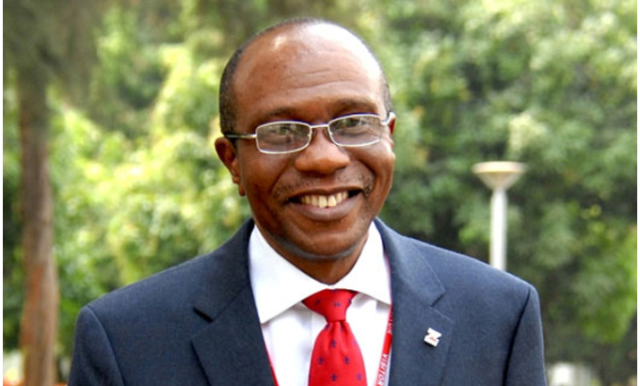
CBN Governor and new AACB President, Godwin Emefiele
The Governor of the Central Bank of Nigeria, CBN, Godwin Emefiele, has been elected as the President of the Association of African Central Banks, AACB.
The Election was held during the 39th ordinary meeting of the Assembly of Governors of the AACB in Abuja, Nigeria’s capital.
Emefiele succeeds Lucas Nchama who is now the Governor of the Bank Of Central African States.
The Governor of Central Bank of Burundi was elected Chairman of the East African sub-region while the Governor of the Central Bank of the Kingdom of Swaziland was elected Chairman of the Southern African sub-region.
Others elected are the Governor of the Bank of Ghana as Chairman of the West African sub-region and Governor of the Central Bank of Mauritania as Chairman of the North African sub-region.
Emefiele’s tenure will run from 2016 to 2017.
In a communiqué at the end of the meeting, the new AACB President noted that the nomination for the Vice Chairman of the AACB, which was zoned to the South African Sub-region, would be made known in due course.
The association adopted “Prospects for monetary integration in Africa: Lessons learned from the experience of monetary and financial integration of Europe,” as the theme for the 2017 symposium.
It also stressed the necessity for African countries to diversify their economies and improve exports, while limiting imports.
The assembly of African CBN governors emphasised the urgent need for coordination between monetary and fiscal policy across all African countries.
The Assembly further urged African countries to strengthen efforts at implementing structural reforms in order to diversify their respective economies, improve the business environment and promote intra-regional trade as a way of strengthening their resilience amidst external shocks.
The meeting was attended by 27 member Central Banks and the African Union Commission, AUC.
Participants at a civil society media round-table have called for the enactment of a law that specifically shields whistle-blowers from punishment.
The meeting with the theme: Whistle-blower Protection: In The Absence Of Relevant Laws In Nigeria, was conveyed by the Institute of War and Peace Reporting, IWPR, and brought participants from ministry of Justice, civil society organisations and the media.
“The Media/Civil society round table is a knowledge sharing platform under the Accountable Governance for Security and Justice project intended to strengthen the relationship between media and civil society organisations working in the areas of security and corruption.
“The importance of information in the fight against corruption, and in security cannot be over emphasized but the usual stance of security agencies refusing to disclose information under the guise of “classified” information hampers this fight especially in the light of the recent happenings. Equally, the fear of possible repercussion for exposing both corruption and corrupt officials prevents most Nigerians from coming forward with such information,” Ann Iyonu, Programme Officer, IWPR, said.
As Nigeria tries to shake off the toga of corruption, especially in light of revelations coming from the presidential arms probe panel, the consensus was that someone might have raised the alarm had there been legal guarantees that they would not be victimised or prosecuted.
“Whistle-blowers must feel protected to be able to blow the whistle on corrupt people and the only way this can be done is for there to be adequate laws in this regard,” Aisha Aliyu from Wole Olanikpekun and Co law firm said.
Gowon Joseph, from the Attorney General’s office, said lack of adequate protection could explain why most Whistle-blowers prefer to expose wrongdoings anonymously whether internally or to the media.
Anonymously exposing corruption, though with good intentions, has serious limitations.
“Anonymous whistle blowing by public officers internally or externally by leaking information to those in more senior positions or to the media makes the wrongdoing difficult to investigate, as there could be no one to clarify on the matters raised,” Joseph noted.
It was revealed, however, that there are sections of different laws that offer one form of protection or the other for someone who decides to report a case of corruption. These, members agreed, are not enough, as they do not protect one from dismissal, demotion or some internal disciplinary proceedings. This also explains why the immediate past National Assembly tried to pass the Whistleblower Protection Bill, which was to be known as the Protective Disclosure Act, alongside 45 other bills in 10 minutes before its tenure ended.
Former president, Goodluck Jonathan, did not assent to the bills, meaning whistle-blowers are still largely exposed to reprisals from their bosses or colleagues should they decide to spill the beans.
Even the much celebrated Freedom of Information Act 2011, the legal experts said, is limited in its protection of whistle-blowers.
“The Freedom of Information Act to some extent protects whistleblowers in the public sector by removing legal obstacles that affect disclosure of information. However, this protection is not enough. The Act still leaves the public officer vulnerable to dismissals, suspensions or demotions as a result of making a disclosure. It would be necessary to have a comprehensive whistleblower law that protects whistleblowers from dismissals or suspensions. The Freedom of Information Act does not extend protection to private sector organizations.
“There are limitations as to what can be accessed in the operation of Freedom of Information Act. Only Sections 1 and 3 grant access to information, but as many as ten sections (Sections 7, 11, 12, 14, 15, 16, 17, 18, 19 and 26) are meant to deny the public access to information,” Joseph explained.
As a way forward, the consensus was that in order to get more people to expose corruption, Nigeria should urgently work towards having a law that either protects whistle-blowers from prosecution or, better still, as witnesses.
Nkemdilim Ilo, a procurement expert with the Public and Private Development Center, PPDC, said as part of whatever law is enacted in this regard, there should be some incentives to further encourage people to report wrongdoings in their places of work. Others did not think Nigerians need incetivising to expose ills in their places of work.
Defending her position, Ilo said this can be temporary until the patriotism in Nigerians blossoms, at which point the necessary amendments can be made to the laws.
“Take the US, for instance, the average American is first loyal and patriotic to the country before the state they come from but here in Nigeria, it’s not so,” she pointed out.
Aliyu said once Nigerians are certain that if they report an issue, it will be dealt with, that is incentive enough to prod others to do same.
Mustapha Hussain, a staff of the Independent Corrupt Practices and other related offences Commission, ICPC, said all government agencies should be mandated to have witness protection guidelines as a way of boosting staff confidence.
He explained that his Commission, as a way of protecting informants, ensures that if a petition is brought against someone, the person does not know who the petitioner is.
At the end of the workshop, the onus was placed on the media to push a campaign for the passage of relevant laws that will protect and encourage whistle-blowers.
“It is our hope that this particular round-table meeting identified practicable ways media and civil society can collaborate to address issues of corruption, especially in the security sector and create awareness on the need to protect whistle-blowers,” Iyonu said.