Home Blog Page 3189

No Evidence Of Rape Or Child Trafficking In IDP Camps – Committee

0

By Musdapha Ilo, Maiduguri

The committee set up by National Emergency Agency, NEMA, to probe allegations of rape and child trafficking in displaced people camps yesterday said there was no conclusive evidence to suggest the atrocities took place in Maiduguri, Borno State.

This website had published detailed reports of rape and child trafficking perpetrated by camp officials.

The report, which investigated abuses in Gombe, Adamawa and Borno states, jolted the management of NEMA and the federal government into setting up two separate investigative panels to probe the allegations.

However, chairman of the committee set up by NEMA, Bilikis Mohammed Abdullahi, a deputy director in the Directorate of State Service, DSS, disclosed to stakeholders that in the two camps visited in Maiduguri, the committee could not reach definite conclusion whether there had been cases of rapes in the camps.

Bilkis, however, revealed that the committee, made up of persons from the Nigerian Police, Nigerian Red Cross, the media, Human Rights Commission, Ministry of Justice and National Emergency Management Agency (NEMA), discovered that two girls might have been raped but said this was still an allegation that needed to be investigated further, with one of the girls left to medical personnel to verify the claim.

According to her, the www.icirnigeria.org report should not be construed as an indictment on Borno State government but rather an indictment on all concerned with management of the camps, including security agents.

If the atrocities were actually committed “under our watch”, Bilkis said, “(we should) come together to put a stop to it,’ adding that more camps would be visited.

Also speaking, Borno State Emergency Management Agency boss, Grema Terab, said while it was shocking that such could have taken place in the state, there was need for proper investigation to be carried out because it would be difficult for rape to take place, as security was tight around the camps.

“It was a surprise to me to hear that there were rape in our camps. We will do our investigations and take appropriate actions,’ Terab said.
 

PDP Accused Of Planning To Postpone Election In North East

0

By Musdapha Ilo, Maiduguri

The Yobe State chapter of the All Progressives Congress, APC, has accused the Peoples Democratic Party, PDP, of planning another delay to the forthcoming general election, this time in the troubled north eastern states of Borno, Yobe, Adamawa, and Gombe.

According to a statement issued by Yobe State APC secretary, Abubakar Bakabe, the new plan is to enable the ruling party rig the elections in the four states to make up for its perceived poor performance in the general elections.

“We are concerned with the phony plan by the PDP for a shift in the conduct of the general elections in Adamawa, Borno, Yobe and Gombe states from the rescheduled March 28 and April 11 to pave way for the PDP to rig the election and augment their poor performances in other states through the use of security forces to be massively deployed to the states,’ the party said.

It stated further: “We are also concerned with the hidden agenda contained in the heinous plan to intimidate, disenfranchise, and rig the election reminiscent of what happened in the Ekiti states governorship election last year, through massive deployment of security forces to create an environment for rigging.”

The APC said the PDP is a sinking party that is “afraid of facing Nigerians at the polls due to its failure in the last 15 years of leadership,’ and hence, “the ill-conceived plan for a serial rape of democracy in Nigeria.”

It also asked the ruling party to abort the postponement plan while also calling on security agents not to undermine the country’s democracy by allowing themselves to be used by politicians to scuttle the electoral process in Nigeria.


IGP Warns Policemen Against Going On Strike

0

The Inspector General of Police, IGP, Suleiman Abba, has warned policemen not to embark on strike over unpaid salaries.

Following recent media reports that about 15, 000 policemen had threatened to either go on strike or disrupt the forthcoming elections over non-payment of promotion salary arrears since December 2013, the police leadership has warned of dire consequences should any of its personnel breach its rules.

In a statement signed by the police spokesperson, Emmanuel Ojukwu, the IGP said the Force is committed to the welfare of its personnel but it will not tolerate indiscipline.

“At the outset, it is pertinent to state that the leadership of the Nigeria Police Force is mindful of its responsibility towards the welfare of the workforce.

“As is expected, every promotion attracts some financial benefits, and which have been deeply considered in the course of processing and approving the promotions. For the avoidance of doubt the Nigeria Police Force is working assiduously with relevant government departments and agencies to effect the payment of the promotion arrears. Meanwhile, all promoted officers have since January 2015 been enjoying the salaries attendant on their new ranks,” the statement read.

It further expressed the IGP’s disappointment at officers airing their grievances in the media, instead of going through the approved means of seeking redress.


READ ALSO:


“The IGP is miffed that officers have to recourse to unapproved channels to air their perceived grievances. The IGP therefore warns such officers of the dire consequences of breaching extant rules and regulations,” Ojukwu stated in the release.

He said further that “Nigeria Police Force is founded on the bedrock of discipline and loyalty” adding that regulations of the Force have provided enough windows for aggrieved officers to air their grievances.


Dangote, Adenuga, Others Named As Operators Of Secret Foreign Accounts

Some of Nigeria’s wealthiest industrialists, former government officials and their relatives, are amongst thousands of individuals around the world who operated highly secretive foreign accounts with the Swiss branch of banking giant, HSB​C, PREMIUM TIMES has reported.

The individuals concealed their identities for years using codes perhaps to shake off tax authorities from the accounts, some of which held illicit assets from criminals, traffickers, arms dealers and other outlaws, secret files published last week by a consortium of journalists around the world have shown.

The trove, released by the French Daily, Le Monde and the International Consortium of Investigative Journalists, in partnership with PREMIUM TIMES, and a host of other major media organisations around the world, showed how HSBC profited doing business with people who stole from their countries and some of the world’s most notorious con artists, including people who made a fortune fuelling wars in Africa.

PREMIUM TIMES is the only Nigerian publication involved in the investigation, which lasted several months.

The bank helped questionable characters conceal their wealth despite knowing their sources, and devised ways to hide the identities of the owners of the secret accounts from governments around the world.

At least 100,000 secret bank account operators who owned about $100 billion were exposed in the leaks, unsettling investigators in several countries.

A Roll-call of Nigerian Clients

French authorities have so far linked 201 individual and corporate HSBC clients with Nigeria – either nationals or having business interests in the oil-rich West African country. However the sorting procedure might be faulty and some of those listed may end up having nothing to do with Nigeria.

Top on the list of Nigerians whose names appeared on the file is Africa’s richest industrialist, Aliko Dangote.

Another Nigerian businessman and owner of mobile telecom company, Globacom, Mike Adenuga, also appears on the files.

Vikky Preye Mark, estranged wife of Nigeria’s Senate President, David Mark, was also listed.

Many of the accounts date back to the 1990s and up to 2005/2006, when the data were stolen by a former staff of HSBC, Hervé Falcian.

According to details pieced together by the ICIJ, HSBC fashioned a series of layers of privacy schemes to ensure the worst of criminals and characters were protected.

The methods used were simple but had complex implications.

First, the account owner opens an account in his or her name, and the bank, in connivance with the customer, replaces the account holder’s name with a number code that is then given to the client.

At times, the clients are encouraged to incorporate offshore shell companies in notorious tax havens, which then indirectly hold the accounts on behalf of the real beneficial owners.

The bank repeatedly reassured clients it would not disclose details of the accounts to national authorities, even if evidence suggested that the accounts were undeclared to tax authorities in the client’s home country.

The code meant the client would no longer be tied to the account with his name, but in all transactions with the bank, he or she will be identified with the number.

But correspondences from the bank would be sent to the holder’s personal address. There was also an option for customers to ask the bank to withhold their mails. That practice was later discontinued.

The account holders were given the option of being contacted directly, or through proxies.

To access the account, there were options too. A client could do so from his home, whereby he will need to declare the account to tax authorities; or travel there in person, or do so through a courier who flies to Switzerland to collect cash from time to time.

Ultimately, the bank ensured the account details were kept secret and separate from the personal details of the holder.

That entire process allowed the bank’s clients hide from tax authorities and governments around the world, while criminals could hide stolen wealth.

Not all holders of the HSBC private accounts are however criminals, but there are concerns regarding why they chose a banking platform with emphasis on secrecy and concealed identities.

Very little of Dangote’s transactions with the bank were made available.

As head of a conglomerate operating in 16 African countries, including Nigeria, Dangote made his fortune producing salt, sugar, flour, cement and noodles. He has also expanded to real estate and oil.

Dangote is the president of the Nigerian Stock Exchange.

In November 2014, Forbes magazine ranked him the richest man in Africa and the 23rd in the world with an estimated fortune of $21.6 billion.

The mogul became an HSBC private account client in July 2003. The account appeared in the name of Development Projects Corporation, its registration address in Tortola the British Virgin Islands, a notorious tax haven, where individuals and corporations usually incorporate shell companies to hide assets. Dangote’s account was in operation till August 2004.

It is not clear to what use he put the account and perhaps because he closed it long before the data were stolen, bank records did not indicate any balance on the account.

Globacom’s owner, Adenuga, had an account in his name tied to Sunbow Express Limited, a company based in Panama and for which HSBC described him as beneficial owner. The leaked file gave the company’s postal address as 86 West Green Road, GB-London N15 and c/o Arosemena Noriega-Contreras, Calle Elvira Mendez Street, 10 ED. DEL Barco Do Brasil P-Panama City, Panama.

Adenuga’s own address was given in bank documents as 37 York Terrace East GB-London NW1.

The businessman, who is among Africa’s richest personalities, opened the account on February 2, 1997 and it had a balance of $115, 405.00 as of 2006/2007 when the data were stolen.

Adenuga did not respond to ICIJ’s repeated requests for comment.

Mark also operated an account with the bank but with details made largely secret. Although she was known within the bank as the beneficial owner of the account, she was largely identified with a secret code – 14312MP.

Mark opened the account on December 18, 1989 and closed it July 12, 1991. About that time, her husband, then a top ranking army officer, had served as military administrator of Niger State and federal minister of communications, a period during which he is believed to have made a fortune.

He has been a senator since 1999 and President of the Nigerian Senate since 2007. Court papers during a messy divorce with his wife suggested that some of his children schooled in Switzerland, but it is not clear whether it was during that period that Mark operated the HSBC account.

The court papers also showed that the Marks operated foreign accounts elsewhere. About six million pounds in four accounts – three at the Northern Bank, Isle of Man, and one at the Allied Irish Bank, Jersey – were frozen in October 2000 as a result of the ancillary relief sought by Victoria Mark in the couple’s divorce case. Mr. Mark’s operation of those accounts while a senator is a violation of Nigerian law which bars public officials from operating foreign accounts while in office.

Nigeria’s former defence minister, Theophilus Danjuma, was also linked to HSBC account 15731CD, which was opened in 1993 and closed in 2001. The documents did not provide details regarding the balances in the account and the use to which Danjuma put it.

Danjuma has emerged one of Nigeria’s richest former public office holders through ownership of one of Nigeria’s most lucrative oil blocs and a lucrative shipping firm.

Another notable name on the leaked file is Adamu Wakili, Nigeria’s former Ambassador to the United States. Wakili was linked to account 17404B01, opened in 1991 and closed two years later. Wakili served as Minister of Agriculture and Rural Development as well as that of Environment,

The list also has Aminu Jibril, former Senator, minister and ambassador. Jibril’s account has no details beyond his address, listed as Yola, former Gongola State.

Deribe Alhaji Mai, who also operates one of Nigeria’s richest oil blocs, was listed in the leaks. His details were not provided.

Peter Igbinedion Osawaru, was also named in the leaked file as the Director at Okada Air with an account code of 15418MP, opened in 1991 and closed in 1995.

Ibrahim Dasuki, a former Sultan of Sokoto who was deposed in 1996, was linked to account 15372HTNL, opened in 1991 and closed in 1993. The account coincided with when he was Sultan.

Another prominent Nigerian listed on the file as an HSBC client is Inuwa Wushishi, a retired General, former chief of army staff between 1981 and 1983 and former Board Chairman of UAC of Nigeria. Wushishi, 75, and his wife, Aishatu, were identified as beneficial owners of an account with code 6808AW. The couples opened the account on December 18, 1989 and closed it July 12, 1991. It remains unclear to what use they put the account.

HSBC Apologises

Headquartered in London, HSBC has offices in 74 nations and territories on six continents.

The leaked account records show some clients making trips to Geneva to withdraw large wads of cash, sometimes in used notes. The files also document huge sums of money controlled by dealers in diamonds who are known to have operated in war zones and sold gemstones to finance insurgencies that caused untold deaths.

On Sunday, HSBC published a full-page advert containing an apology in several newspapers, over claims that its Swiss private bank helped clients evade tax.

The advert reproduced an open letter signed by chief executive Stuart Gulliver, which said recent coverage by the media had been “a painful experience”.

Mr. Gulliver, whose letter was addressed to the bank’s customers and staff, said in his letter that he wanted to reassure customers that its Swiss private bank had been “completely overhauled”.

“We have absolutely no appetite to do business with clients who are evading their taxes or who fail to meet our financial crime compliance standards,” he was quoted by the BBC as saying.

“The media focus has been on historical events that show the standards to which we operate today were not universally in place in our Swiss operations eight years ago.

“We must show we understand that the societies we serve expect more from us. We therefore offer our sincerest apologies.”

Mr. Gulliver also said that the recent media coverage about its clients and past misdeeds must be put “into context”.

“A former employee of the Swiss private bank stole data more than eight years ago.

“Major UK media outlets have focused on approximately 140 names included in the stolen data.

“Many of the people mentioned have been named simply because they are well-known individuals. The vast majority of these 140 people are no longer clients.

“The media has been mentioning a number of 100,000 clients. At its peak, the Swiss private bank had about 30,000 accounts.

“We have absolutely no appetite to do business with clients who are evading their taxes or who fail to meet our financial crime compliance standards.”

*This report was first published by PREMIUM TIMES. We have the newspaper’s permission to publish it here.

 

3,200 Nigerians Flee To Chad By Boat To Escape Insurgency

0

Sixty five year -year-old Amadou Harouna, has just had his life shattered and his future thrown into uncertainty. He has been uprooted from the land he has always known as home, a victim of Boko Haram insurgency in North east Nigeria.

In January, the peace of the community in which he lived, Baga Dorom, in Borno State was shattered when Boko Haram insurgents stormed the town killing people and burning houses.

Harouna fled with the town and found himself joining others on a tortuous 10 – hour boat ride across Lake Chad to Baga Sola, a small fishing village in Chad, Nigeria’s neighbour to the North east.

In Baga Sola, Harouna found some solace in a camp set up by the World Food Programme, WFP, which has been supporting refugees fleeing escalating violence in North east Nigeria. He is in the camp with two of his children but he does not know what has happened to his wife, Zaina, and his two other children, 6 – year old Hassia and Jiddah, aged 9.

“I don’t even know if they are alive,” he answered when asked about their whereabouts.

Harouna is not alone in his misery. He is only one of 3,200 refugees receiving care from the WFP after escaping the horrors of invasion by insurgents in North East Nigeria. His companions are mostly women and children- many are members of families that have been torn apart by the ravages of savage attacks by the terrorists.

Most of the refugees left family members behind in their bid to escape the carnage; they have no news of their loved ones either. Their experiences have left their bodies weak with malnutrition, their minds traumatized with pain and shock, and their faces etched with fatigue.

After being register and settling them down for a while, the refugees then commenced another journey, this time by truck to the Dar Es Salaam refugee site, about 15 km from Baga Sola.

Before departing, the refugees gathered for food distribution under the scorching sun. After the aid workers from the WFP gave high-energy biscuits to the refugees, Anas- Harouna’s young son managed a weak smile. For the aid workers, this is a positive development as they say boy’s smile was his first since he stepped off the boat with his father.

Another refugee, Hagira, was in need of urgent medical attention. A victim of the violence too, she had lost an arm while fleeing for her life. The aid workers took her to a nearby hospital for treatment.

For the refugees, feeding is a big deal as their ravaged bodies need all the nutrition they can get. Food is rationed out and long queues are a common sight.

According to the aid workers on the sites, it is rare to see a whole family amidst the newly arrived refugees and those with intact families acknowledge it as a blessing.

The WFP has reported that between the 4th of January and the 13th of February, up to 3,200 refugees have arrived at Baga Sola, from Nigeria, all suddenly estranged from their homes

With the escalating spate of violent attacks in the region, the WFP aid workers are primed for any eventualities regarding the influx of refugees to the site in Baga Sola and other places, always hoping for the best but expecting the worst.


Jega Defends Use of Card Readers Before Senate

0

By Adedayo Ogunleye, Abuja

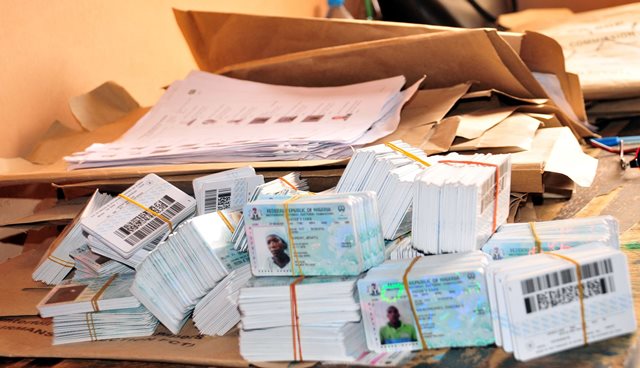
The chairman of the Independent National Electoral Commission, Attahiru Jega, appeared before the Senate Wednesday to shed light on the electoral body’s level of preparedness for the 2015 election and to defend its intention to use card readers to authenticate the Permanent Card Readers, PVCs, in the coming polls.

Speaking on the level of preparedness, Jega confirmed that the commission had achieved 75.88% of the PVC distribution exercise and expressed confidence that even more PVCs would be distributed within the stipulated timeframe for collection.

He however wondered why the people had to be persuaded to come forward to collect their PVCs, stating that “people should be able to sacrifice a day out of 4 years for our democracy” for PVC collection.

The INEC Chairman also explained why the commission rescheduled the elections originally slated for February 14 and 21 to March 28 and April 11, sauing that the decision was reached after wide reaching consultations had been made over the issue.

“In the series of consultations that we had with stakeholders, the questions constantly posed to them for consideration are; in view of the latest developments, should INEC proceed with the conduct of the general elections as scheduled in spite of the strong advice and, if so, what alternative security arrangements are available to be put in place,” he stated.

According to him, INEC took the advice of the security chiefs and adjusted the schedules of the general elections within the framework of the constitutional provisions.

Jega defended INEC’s use of card readers and PVC’s for the 2015 elections saying this is in accordance with the constitution.

Stating that INEC is empowered by Section 16 subsection 4 to use card readers for the election, the INEC Chairman clarified that the machines are not to be used for voting itself but for accreditation and also added that they would help eliminate electoral fraud.

“We have worked together with all registered political parties and agreed on what to do if the card reader fails or if there is a voter without a finger.

“In the highly and likely event that a card reader fails, we have enough spares to deploy before the end of accreditation by 1:00pm and then adjust the time to gain for lost time where or if a card reader have failed.

“If we cannot replace before the end of accreditation, then the election in that particular voting point will be postponed to the following day when a new card reader would be provided for the election,” he explained.

The INEC chairman also affirmed that the commission had discussed these measures with all registered political parties and had agreed that it was feasible.

“We have agreed to do this because if you say if a card reader fails then revert to manual, we are worried that everywhere it will revert to manual because there are many people who do not want the card readers to be used,” Jeja observed.


Military Kills Over 300 Boko Haram Insurgents

0

By Adedayo Ogunleye, Abuja

Boko Haram insurgents responsible for the terrorist activities in the North east have come under heavy bombardment from the Nigerian troops recording heavy casualties, the military has reported.

According to a press release from the Defence Headquarters signed by the Director, Defence Information, Chris Olukolade, a Major General , over 300 terrorists have been killed in the past 48 hours while several were captured in operations involving air strikes and land troops against the insurgent group in the communities where they have hitherto holed up.

The Nigerian troops also recovered weapons, ammunition, and equipment from the insurgents in the course of the counter-terrorism campaign.

Olukolade said that five different types of armoured fighting vehicles, an anti-aircraft gun, about 50 cases of packed bombs and eight different types of machine guns, five Rocket Propelled Grenade, RPGs, 49 boxes of various types and calibres of ammunition were destroyed in the battle to rid the region of the insurgents.

According to the Defence Headquarters, six Hilux vehicles including those mounted with anti-aircraft guns, as well as 300 motorcycles were also destroyed.

Arttilery gun

Two Nigerian soldiers are reported to have been killed during the military campaign while 10 others were wounded.

The on-going counter terrorism campaign involves the use of cordon and search operations by military patrols to secure recovered territories such as Monguno, Gabchari, Abba Jabari, Zuntur, Gajigana, Gajiram, Damakar, Kumaliwa, Bosso Wanti, Jeram and Kabrisungul while aerial strikes are being combined with land operations to flush out the terrorists from the territories they still occupy.

Troops 2

In related development, the National Information Centre, Mike Omeri, has called for renewed vigilance in communities, towns, and cities yet untouched by the activities of the Boko Haram sect, stating that with the crushing blows dealt to the sect recently by the military, members of the sect might seek to infiltrate the neighbouring towns masquerading as small-scale business owners or artisans.

Speaking at the weekly press conference conducted by the Centre, Omeri, who is also the Director-General of the National Orientation Agency, NOA,  stated that there had been cases where some members of the sect who had sought refuge in the various Internally Displaced Persons, IDP, camps across the region had been apprehended by vigilant security operatives.

He cautioned the people to watch out for strange faces and report suspicious activities or persons to the security agencies.

He said further that the military onslaught against members of Boko Haram terrorist group in the North east had forced members of the group to take up menial jobs, and that this was only to ward off security operatives.

The spokesman expressed delight at the recapture of more towns in the North east by Nigerian troops supported by the regional Multi National Force.


We Have Distributed Over 75% of PVCs – INEC

0

Apparently living up to its promise to ensure that majority of registered voters are not disenfranchised due to an inability to collect their Permanent Voters Card, PVCs, the Independent National Electoral Commission, INEC, has released figures showing that over 75% of the cards have been distributed.

According to the data released by INEC, as at February 17, it had distributed 52.2 million PVCs out of the 68.8 million PVCs produced for registered voters, leaving about 16.6 million PVCs yet uncollected.

The figures released confirm over 90 per cent PVC collection in Zamfara, Nasarawa, Katsina, Jigawa, Kaduna and Gombe states. Tates – Adamawa, Akwa Ibom, Bauchi, Kebbi, Sokoto and Taraba have a collection rate of over 80 per cent.

However in states like Rivers, Kano, Yobe, Osun, Plateau, Niger, Kwara, Enugu, Cross Rivers, Benue, Anambra Abia and Borno, the collection rate stands at over 70 per cent.

Ogun State has the worst record of PVC collection in the country with a dismal 46.86 per cent.

Bayelsa, Borno, Eboyin, Edo, Ekiti, Imo, Kogi, Lagos and Oyo have PVC collection rate of over 60 per cent.

It would be recalled that an alarm had been raised in many quarters that many registered voters may end up being disenfranchised in the coming polls due to their inability to collect their PVCs.

The National Security Adviser, Sambo Dasuki, first raised the fear over the disenfranchisement of millions of voters at an event in Chatham House, in the United Kingdom where he suggested that it might be prudent to reschedule the elections to allow many eligible voters to collect their cards.

Dasuki’s comments had sparked a national debate on the pros and cons of postponing the election, also eliciting comments from the international community on the appropriateness of rescheduling the elections.

INEC announced the postponement of the election for six weeks on February 7 giving as the reason a warning by the security forces that they would not be able to guarantee security of the people during the polls.

See table below for details of INEC PVC distribution in all the states as at January 17.


Total No of Registered Voters 68,833,476
Total No of PVCs Distributed 52,275,367
% of PVCs Distributed 75.94


S/N States Number of Registered Voters Number of Cards Collected by Voters Remarks %
1 ABIA     1,396,162 1,115,634 79.91
2 ADAMAWA 1,559,012 1,328,136 85.19
3 AKWA-IBOM 1,680,759 1,468,708 87.38
4 ANAMBRA 1,963,173 1,499,317 76.37
5 BAUCHI 2,054,125 1,745,441 84.97
6 BAYELSA 610,373 404,119 66.21
7 BENUE 2,015,452 1,548,074 76.81
8 BORNO 1,934,079 1,320,667 68.28
9 CROSS RIVER 1,175,623 879,249 74.79
10 DELTA 2,275,264 1,728,524 75.97
11 EBONYI 1,074,273 714,351 66.50
12 EDO 1,779,738 1,145,782 64.38
13 EKITI 732,021 503,431 68.77
14 ENUGU 1,429,221 1,065,210 74.53
15 FCT 881,472 541,359 61.42
16 GOMBE 1,120,023 1,064,577 95.05
17 IMO 1,803,030 1,252,030 69.44
18 JIGAWA 1,831,276 1,706,814 93.20
19 KADUNA 3,407,222 3,133,813 91.98
20 KANO 4,975,701 3,487,155 70.08
21 KATSINA 2,827,943 2,620,829 92.68
22 KEBBI 1,470,648 1,316,656 89.53
23 KOGI 1,350,883 914,164 67.67
24 KWARA 1,142,267 843,792 73.87
25 LAGOS 5,905,852 3,685,322 62.40
26 NASARAWA 1,242,667 1,196,583 96.29
27 NIGER 2,014,317 1,413015 70.15
28 OGUN 1,829,534 747,556 40.86
29 ONDO 1,524,655 1,071,010 70.25
30 OSUN 1,407,107 1,012,678 71.97
31 OYO 2,415,566 1,569,390 64.97
32 PLATEAU 2,001,825 1,406,528 70.26
33 RIVERS 2,537,590 1,923,139 75.79
34 SOKOTO 1,611,929 1,380,840 85.66
35 TARABA 1,340,652 1,196,583 89.25
36 YOBE 1,099,970 824,401 74.95
37 ZAMFARA 1,495,717 1,458,519 97.51
TOTAL 68,833,476 52,233,396 75,88


Ibrahim Shekau Vows To Disrupt 2015 Elections

0

Less than a week after the Boko Haram show of strength in Gombe, the Gombe State capital, where leaflets discouraging residents from participating in the upcoming general elections were distributed, the leader of the group, Abubakar Shekau has released a new video vowing to disrupt the polls now scheduled for March 28 and April 11.

The video, which was released on YouTube, had Shekau addressing the camera, dressed in black and with an automatic weapon to his right.

Speaking in Hausa language, the Boko Haram leader stated that the election “will not be held even if we are dead. Even if we are not alive Allah will never allow you to do it.”

Shekau also claimed responsibility for the terrorist attack that occurred in Gombe, which the military says it repelled.

Reports indicate that Boko Haram insurgents drove in a convoy of Hilux trucks, throwing anti-election leaflets around the city on Saturday.

More than any other video released by the sect, this latest one not only indicates that the terrorist group has ramped up its media tactics but is also increasingly learning a lot from the propaganda and media strategy of another terrorist group, the Islamic State, ISIS.


READ ALSO:


Apart from showing video clips depicting scenes such as distribution of leaflets to propagate its position and child soldiers in operation, another media propaganda strategy that Boko Haram insurgents have borrowed from ISIS is the use of Twitter.

Boko Haram in mid – January created its Twitter account with the handle @Alurwa_Alwuthqa and had gotten more than 4,000 followers in two weeks before it was closed down by Twitter


NEMA Official Works Against Govt Probe Of Rape In IDP Camps

1

By Samuel Malik, Abuja

An official of the National Emergency Management Agency, NEMA, has pre – empted the outcome of two separate investigative panels set up to probe allegations of rape and child trafficking in Internally Displaced Persons, IDP, camps by denying the allegations even before the probe panels began their investigations.

Following a report by the www.icirnigeria.org about rape and child trafficking in internally displaced persons camps in the North east, NEMA and the federal government set up two probe panels to investigative the weighty allegations in the report.

Titled Grim Tales Of Rape, Child Trafficking In Displaced Persons Camps, the report published on January 29 revealed that girls at different IDP camps were being raped while children aged between 5 and 15 were being trafficked and sold for as low as N10,000

The government had shown good faith by deciding to investigate the grave allegations in the report. First, on February 10, the management of NEMA announced the setting up of a panel to investigate the allegations

The agency’s spokesperson, Sani Datti , said following a stakeholders’ meeting headed by the director general of NEMA, Sani Sidi, the previous day, the agency had decided to set up a panel to verify the allegations.

The panel was made up of the DSS, police, Nigerian Red Cross, Office of National Security Adviser, NSA, National Human Rights Commission, NHRC, National Agency for the Prohibition of Traffic in Persons, NAPTIP, Journalists Against Disaster, JAD and NEMA.

It was mandated to verify the allegations contained in the report ; interact with all stakeholders; carry out town hall meetings in all the camps mentioned in the allegation, interact with University of Maiduguri Teaching Hospital and the NEMA North east zonal office, state relief agencies, SSS , Red Cross, Army and Police, and had two weeks to submit its report.

The ministry of Justice also issued a statement signed by the minster, Mohammed Adoke, on February 13, saying it had constituted a committee to look into the allegations.

The statement issued and signed by the minister said that “an Inter-Ministerial Committee comprising of relevant agencies and security personnel has been set up to among other things; investigate the matter with a view to holding accountable all those found culpable in these nefarious acts and recommend appropriate measures to forestall future occurrence.”

However, in a move that might cast doubt on government’s sincerity in independently investigating the allegations and stopping the ugly occurrences in the camps, on the same day that the minister announced the setting up of a probe panel, the North east coordinator of NEMA, Sa’ad Bello, who is also in charge of displaced persons camps in Adamawa State, denied that rape and child trafficking had taken place in any of the camps in the region.

Bello, made the denial two days before the NEMA probe team was scheduled to commence its investigation in the North east and before the membership of the federal government’s probe panel became clear, effectively pre – empting the inquiry and prejudicing its outcome.

“Those of us here in Adamawa have not had any case of child abuse nor child trafficking. However, we will not speak for other camps, but in Adamawa there is no reported case of child abuse,’ Bello said confidently

He was also reported to have said the denial became necessary as the www.icirnigeria.org made general allegations without specifying which states in the North east perpetrated the heinous crimes.

Bello said it was unfair for the media to make a blanket statement rather than being specific as to the camps and states in the North east in which the alleged crimes were perpetrated.

Further justifying his position, the official said it was virtually impossible for rape and child trafficking to thrive in the IDP camps as minors are usually under the firm watch of parents or guardians while security agents also monitor movement in and out of the camps.

But, apparently, Bello did not even read the report before making his hasty public disclamation.

Contrary to his claims, the report by the www.icirnigeria.org provided details of the camps in which the crimes were committed and the states in which they are located. It even provided names of specific officials.

The report specifically mentioned camps in Gombe, Maiduguri and Yola in Gombe, Borno and Adamawa states respectively.

For example, in the report, one camp in Yola, which is under his watch, was pointed out as a fertile ground for child trafficking. Our reporter actually posed as an interested buyer and spoke to an official who was identified in the story as Raila, believed to be a NEMA official as she was putting on the agency’s reflective vest, who agreed to sell a child for N50,000

In Gombe, where NEMA staff were arrested in the past for diverting relief materials meant for displaced persons, the report detailed the experience of a girl who was repeatedly raped by an official who took her home on the pretext of taking her to help his wife.

The 16-year-old girl was taken home by the official whose name is given as Ibrahim in the report, under the pretext that she would help his wife with household chores; only for her discover that he had no wife.

Ibrahim would rape her every night and lock her up during the day. This continued for long until the girl escaped. By the time our reporter spoke to her, she was three months pregnant.

Also, contrary to the NEMA official’s claim that children in the camps are usually under the watch of parents and officials and that security men monitor movements in and out of the camps, anybody who has visited any of the camps knows that there is unrestricted movement of IDPs.

Bello apparently made his denial to save his neck and divert attention from the investigation as he was aware that a probe had been ordered into the accusations.

He told journalists at the press briefing which he called that the NEMA headquarters had set up a committee to unravel the truth behind the allegation and expressed the hope that justice would be done.

However, his action appears to have been made to influence the investigative panel to reach a verdict of no crime committed even before they commenced their inquiry.