Home Blog Page 3193

NLC Election Disrupted In Abuja

0

The International Conference Centre, ICC, venue of the 11th National Delegates Conference of the Nigeria Labour Congress, NLC, was thrown into chaos Thursday as certain aggrieved parties seized and destroyed ballot boxes designated for voting in the election of new leaders for the union, the News Agency of Nigeria, NAN, is reporting.

According to NAN, the ensuing violence saw many delegates fleeing for safety.

While details of how the peaceful convention was disrupted are still unfolding, it is believed that the delegates had been split and tension created when voting for the President of the Union began.

Three candidates including the General Secretary of the National Union of Electricity Employees, NUEE, Joe Ajaero; the National President of the Nigerian Union of Petroleum and Natural Gas Workers, NUPENG, Igwe Achese; and National President of the Medical and Health Workers Union of Nigeria, MHWUN,  Ayuba Wabba, are vying for the post of President, with a view to succeeding Waheed Omar whose tenure has elapsed.


READ ALSO:


It took the efforts of the police to forestall damage to the facility, as uniformed men intervened, sending out all delegates from the ICC venue of the conference.

NAN reports that the labour leaders are presently reconvening at the NLC headquarters in the Central Business District of Abuja for a meeting which is expected to resolve the impasse.


Chadian Troops Kill Scores Of Boko Haram Insurgents In Borno

0

The recently launched offensive by the multi-national task force against Boko Haram insurgents in the North east appears to be paying off as scores of Boko Haram members have been reportedly killed by the Chadian troops stationed at Gamboru town in Ngala local government area of Borno state.

Reports obtained from residents of Gamboru who fled to Maiduguri for refuge, revealed that the Chadian troops in Gamboru killed scores of Boko Haram insurgents in the town, arrested some while several Hilux vehicles and armoured personnel carriers were also recovered.

According to the residents, the insurgents had attempted an invasion of the Chadian troops’ base at Gamboru in the early hours of Wednesday morning. However they encountered a prepared and alert army who resisted the attack, killing many insurgents in the process.

In another success story, a joint operation between Nigerian troops and members of the youth vigilante commonly called Civilian JTF resulted in the arrest of 40 Boko Haram members who disguised as herdsmen near Ngom village of Mafa local government area of Borno state, in a bid to covertly gain entrance into Maiduguri.

According to one Ibrahim Garba, a member of the civilian JTF, the insurgents attempted to enter Maiduguri disguised but they were intercepted by youth vigilantes with the backing of Nigerian troops.

But elsewhere in the troubled region, gunmen suspected to be insurgents invaded Gajiganna market in Magumeri local government area of Borno state, killing seven persons.

Speaking to journalists in Maiduguri about the incident, a driver who gave his name as Muhammadu Isa stated that the gunmen arrived the market around 8:30 am on Tuesday when business was just starting for the day, opening fire indiscriminately on sellers and buyers, and killing seven persons.

“The terrorists carted away food stuffs such as beans, millet and other household materials, after killing and injuring several people. They left the market unchallenged,” the driver said.

According to Isa, a driver from Maiduguri was caught in the gunfire and was killed. However, he expressed surprise that trading at the market did not stop after the attack, stating that business went on as usual while volunteers took away the bodies of the dead.


If I Lose, I Will Handover To A New Government – Jonathan

0

By Samuel Malik, Abuja

President Goodluck Jonathan has assured Nigerians that should he lose in the forthcoming presidential election, he will relinquish power to a new government.

The President said this on Wednesday night during a presidential media chat, adding that the country is more important than any individual.

“If the elections are conducted and I lose, of course we will inaugurate a new government. There is no way you will say if I lose I will not hand over. It is quite unfortunate that there is a lot of wrong information that is floating in the system, especially in the social media, even in the normal media – television, radio and even the print media,” the President said.

The President tried to absolve himself from the postponement of the polls, saying that he was not even consulted by the electoral body.

“I was not consulted and I don’t want to be consulted” he said, even as he argued that INEC too was not completely prepared for the polls as it had not distributed Permanent Voter Cards to many Nigerians.

“In Lagos for example only 38 per cent of voters have their PVCs, so if you hold elections there 62 per cent will not be able to vote,” he said.

Commenting on the botched ceasefire with Boko Haram insurgents, the President admitted that there was contact but discussion did not go beyond the preliminary stage because in addition to the fact they were faceless, the cellular nature of the insurgents made negotiation more difficult.

“I set up a committee headed by the current minster of special duty (Kabiru Taminu Turaki) and I said that ‘yes if we have any window for discussion, let us discuss’ because the interest of the country is paramount,” he said

Explaining further, he said: “What happened then was that we had a window from the Chadian system. It was not as if we just woke up to discuss with Boko Haram and actually some people came for those conversation with my people but it’s like the Boko Haram, they are factionalised in a way just like when you talk about the Niger Delta militants, there’s no one umbrella body.”

President Jonathan also defended his administration policy of dialoguing with terrorists contrary to the no – negotiation – with – terrorists stance of Western countries, reasoning that any strategy that would end the insurgency and save lives was worth being explored.

“Sometimes the West will say we should not negotiate with terrorists. Yes, we don’t have to negotiate with terrorists but then if there is any way we can solve this problem, it’s better because whoever dies, whether it is a Boko Haram, civilian or security personnel, is a Nigerian and I feel the pains. I get security information on hourly basis, so anything that will end this is something that I am interesting (in),” Jonathan stated.

President Jonathan also addressed fears already expressed about the possibility of the Nigerian military not succeeding in defeating the Boko Haram insurgents, reasoning that what the government aims to achieve is to reclaim some lost territory to allow displaced persons return home and partake in the elections.

President Jonathan said that he would still travel to the troubled North east zone before the election as he still had a presidential campaign to hold in Yobe State and Abuja.

“We are ye to go to Yobe and we are yet to do the Abuja rally. We were to go to Yobe on a Saturday but we had to do the Council of State meeting, and these issues (postponement of elections) came up so we said let us hold on because, depending on the security issues, if elections are adjusted, let us do the remaining ones (rallies) closer to the election,” President Jonathan said.

He added, “I think the APC too, because the last I had a conversation with General Buhari during the Council of State meeting, he said they were also yet to do Yobe and Borno.”


Jega Dismisses Rumours Of Terminal Leave

0

The Chairman of the Independent National Electoral Commission, INEC, Attahiru Jega, has debunked rumours of an impending terminal leave starting on March 1.

Following the announcement of the re-scheduling of the general elections, reports have been rife about plots to oust the INEC boss by a sack or by terminal leave in line with civil service regulations.

However, the INEC chairman’s chief press secretary, Kayode Idowu, debunked the reports saying his boss was busy preparing for the conduct of the elections.

Speaking in an interview on a TV programme in Lagos on Tuesday, Idowu stated that Jega’s appointment was not guided by civil service rules and would that he would serve until the end of his tenure on June 30.

“Jega is busy preparing for the elections and you are asking about terminal leave. Does anyone planning to conduct elections go on terminal leave? There is nothing like that,” the INEC chairman’s spokesman stated.

He reaffirmed Jega’s statement that the postponement of the elections would enable INEC address any remaining challenges thereby ensuring the successful conduct of the elections now scheduled for March 28 and April 11.

Also dismissing recent reports that Jega had resigned his appointment due to pressure from the Presidency, Idowu said, “No that is not true, he has not resigned. He didn’t resign. It is a mere rumour.”

Jega, a professor of Political Science, was Vice Chancellor of Bayero University, Kano, and former President of the Academic Staff Union of Universities, ASUU.

He assumed office as the INEC Chairman on 8 June 2010, his predecessor being Maurice Iwu, who went on terminal leave on April 28, 2010.

Civil service regulations stipulate that officers are to give a three- month notice of their retirement from service terminating on the effective date of their retirement. Analysts have interpreted this to mean that Jega might be forced to proceed on terminal leave before the elections.

However the minority leader of the House of Representatives, Femi Gbajabiamila, has stated that Jega could not be asked to go on a terminal leave because he was not a civil servant.

Speaking on the issue, Gbajabiamila said that the INEC chairman “is not a civil servant subject to civil service rules the same way I, as a member of the House of Representatives, am not a civil servant.”

“There is a difference between a civil servant and a public servant or officer. Jega falls under the latter,” the minority leader of the House of Representatives said.


150 Illegal Aliens Deported from Zamfara State

0

About 150 illegal aliens who migrated into Nigeria from neighbouring countries this year have been deported, the Nigeria Immigration Service, NISM, in Zamfara State has announced.

Addressing journalists Tuesday during a press conference in Guasau, the state NIS comptroller Shehuri Sadiq, said the illegal immigrants were arrested during operation​s in certain parts of the state which included Filin Jirgi, Samaru, Bungudu, Gada biyu, Mada, Mado town, Gusau, and Damba.

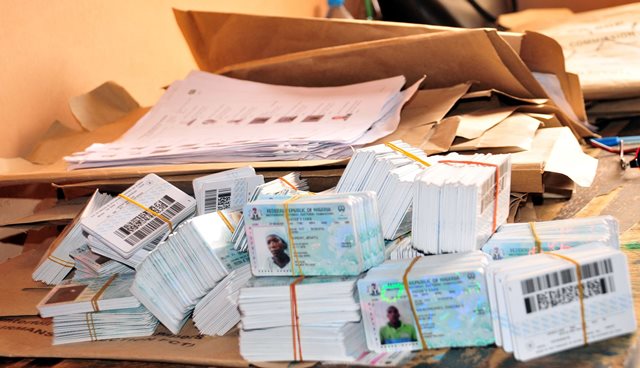
The comptroller stated that although some of the immigrants were found in possession of Nigerian national identity cards and voter cards which was a contravention of the nation’s laws, the exercise should not be interpreted as intended to spite any nation but a fulfilment of the NIS’s duties.

This development appears to give credibility to the words of the Comptroller of the Nigeria Immigration Services, Adamawa State Command, Ubi Nkanu, who had stated on January 9, that the Service was working assiduously to ensure that no foreigners participated in​​ the next general elections.

Nkanu, who assured Nigerians that the NIS was working with sister security organizations to ensure that the Nigerian borders were adequately manned to ensure that foreigners do not illegally come into the country, especially during elections, also stated that the major challenge the agency faces is the insurgency in Adamawa State.


READ ALSO:


Noting that no meaningful development could be achieved in a situation of war, Nkanu assured journalists in a news briefing that “despite the challenge, my organization is doing its best to ensure that foreigners do not infiltrate the country.”

The comptroller also said that so far no staff of the Service in Adamawa State had died in the insurgency, adding that the NIS had effectively taken control of the state’s borders, while promising an improvement in its performance in 2015.


Obasanjo Criticises Jonathan’s Handling Of War Against Insurgents

0

By Dayo Aiyetan

Former President Olusegun Obasanjo has expressed disappointment about the federal government’s prosecution of the Boko Haram insurgency ravaging the north-eastern part of the country.

Speaking exclusively to our reporter shortly before the launch of his autobiography, My Watch, in Nairobi, the Kenyan capital, on Tuesday, Obasanjo said President Goodluck Jonathan has left too many things undone in the fight against the insurgents.

Recalling that he took a great risk to intervene and meet with some Boko Haram leaders in order to understand the group’s grievances against the Nigerian state, Obasanjo said at the end of his intervention, he submitted a report to the presidency, but that nothing was done about his recommendations.

“I took a very great risk, very great risk three and a half years ago to find out what is all this about. And I reported in detail to those to whom I should report. They didn’t do what they should have done,” Obasanjo stated.

In an earlier interview with Jeff Koinange (at which the www.icirnigeria.org reporter listened in) at the Nairobi Serena Hotel, venue of the book launch, Obasanjo had also criticised the administration’s handling of the kidnap of the Chibok girls.

The former president said he would have gotten the girls back within 10 hours, as he would have had quickly sought and obtained enough intelligence about the abduction.

“I would have gotten enough intelligence reports on the matter. Within 10 hours, I would have been on top of them (the insurgents),” he said.

Inferring that the whole matter was badly handled, Obasanjo noted that the insurgents had only gone to Chibok in Borno State looking for food and that the kidnap of the girls was an afterthought for which they had not prepared.

“Boko Haram came to Chibok for food not the girls. From 11.30 pm or thereabout, when they came, until 5.00 am, they did not know what to do with the girls. They did not even bring adequate vehicles” he claimed, adding that intelligence obtained from the community ought to have led to the rescue of the girls within hours.

The former President declined commenting on the postponement of the general elections in Nigeria by six weeks, saying that he had been out of the country and would like to return and be properly briefed about the events that led to the decision before making his views known.

He, however, denied deliberately staying away from last Thursday’s Council of State meeting where a decision on the postponement of the elections was to be taken.

Obasanjo stated that he had been invited to the annual Munich Security Conference to deliver a paper on the security situation on the African continent and that he was attending the event when the Council of State meeting was held. He said that he was still in Munich when he heard of the postponement of the election.

“For now, I don’t want to talk about an issue that I do not know the detail. For instance, the statement made by Jega (Attahiru Jega, chairman of the Independent National Electoral Commission, INEC) i need to know that. What were the statements made by the key political parties, I need to know that. Also, how did the service chiefs and security chiefs come to their own position. Is that their job and is that how they should do it? What is the role of the commander in chief? All those I need to know,” he stated

Speaking further about the war against insurgency, Obasanjo said the Nigerian military is currently bedevilled by many problems that require urgent fixing.

He observed that morale appears to be low among soldiers and wondered if troops are being properly trained and equipped for the task of fighting the insurgents. He also observed that corruption in the military hierarchy might be a problem, recalling a recent television interview with a soldier who claimed that he had to buy some of his own gear.

“There is a lot wrong with the military today. First if our soldiers are to fight well, they must be in high morale. They must be well trained. And if they are battling with insurgents or terrorists, then they will require special training. But is that the case?” he queried.

Speaking further, he said: “So let us deal with the problems … recruitment, training and equipment. Are our soldiers adequately equipped to fight insurgents? You saw the soldier on TV who said that they have to buy their own uniform. The boys know what is going on in terms of corruption. You can imagine what that does to their morale.”

The former President, however, expressed optimism that Nigeria will eventually overcome the Boko Haram insurgency, reasoning that “if Nigeria could deal with the Civil War, which ravaged the country from 1967 to 1970, then we will deal with this insurgency too.”

Doing an assessment of the Goodluck Jonathan – led administration, Obasanjo, who said he is still a member of the Peoples Democratic Party, PDP, expressed disappointment that the administration has failed to continue with some of his own programmes, accusing it of even reversing some of them.

“My successor campaigned on the platform of continuity, but has acted on the basis of discontinuity,” he observed, adding that the late President Umaru Yar A’dua and Jonathan after him did not build on some of the gains made by his administration in areas such as power and the fight against corruption.

On his criticisms of the Jonathan administration, which he also helped to midwife, Obasanjo said that there is nothing personal about his comments.

“I want you to make Nigeria good, great even. You can do it. But you are not doing it enough. I have not been critical. I have just been offering critical advice. There are just things that he should have done that he has not done,” he stated.

The former President also attempted to defend himself against accusations that he attempted to perpetuate himself in office like other sit – tight African leaders through an unconstitutional third term agenda.

Obasanjo stated that he neither wanted a third term nor sponsored a campaign for it, but added smugly that if he wanted one, he would have gotten it. Obasanjo stated this twice – in his interview with Koinange, the former CNN Africa correspondent, who now hosts a one hour talk show on KTV, and in his remarks during the public presentation of his book the same day.

Obasanjo told the audience at the book presentation, which included notable Kenyan politicians, including key opposition figure Raila Odinga, that there was no time that he desired to rule Nigeria beyond two terms and that he had promised his friends in the international community that he would not serve beyond the eight years allowed by the Nigerian constitution.

But not many Nigerians, particularly politicians involved in the resistance of what is now known as Obasanjo’s third term bid, would agree with the ex-President’s narrative.

Many close associates in the ruling PDP, including Anthony Anenih, former chairman of the party’s Board of Trustees; Ahmadu Ali, former National Chairman; and Ibrahim Mantu, former Deputy Senate President, were believed to have sponsored and funded a well – oiled campaign to help Obasanjo get a third term.

In fact, a process to amend the constitution to allow him serve more than the prescribed two terms began, but was defeated at the National Assembly.


UN Backs Nigeria in the Fight Against Boko Haram

0

 The United Nations Secretary General, Ban Ki Moon, has expressed full backing for on-going efforts by the President Goodluck Jonathan-led administration to combat insurgency in the nation.

Speaking through former chairman of the Economic Community for West African States, ECOWAS, and special representative of UN Secretary General for Nigeria and West Africa, Ibn Chambers, who interacted with journalists after a meeting with President Jonathan at the Presidential Villa Tuesday, Moon also endorsed the use of the Lake Chad Basin as the operational base for the multinational task force assembled to counter Boko Haram activities in the region.

The UN boss gave a commitment that Nigeria could count on the international body for support through its peacekeeping department. According to Moon, this would ensure a truly joint operational force with a clear command and control, while fostering unity of purpose among the multinational troops involved in the fight against insurgency.

“In this you can count on the strong support of the United Nations. The Secretary General wishes to assure that in the area of humanitarian support with the displaced persons in Nigeria, we will continue to work with Nigerian authorities,” he said.

Chambers stated that the Secretary General had separate telephone conversations with both President Jonathan and the All Progressive Congress, APC, candidate, Muhammadu Buhari when it was clear that the elections may be postponed after all.

The special envoy acknowledged that the reasons proffered for postponing the elections were valid and expressed satisfaction that the decision was peaceably accepted by all stakeholders.

“We have seen that the postponement has been accepted by all the political parties and stakeholders. The reasons given are known now. It is evident that in some areas, PVC collection has been relatively very low” he added.

According to the envoy, the postponement will give many Nigerians an opportunity to collect their PVCs and be able to observe their civic duty.


Funding Bulge Fails To Stem Malaria Scourge In Nigeria

By Ayodele Olofintuade

In a fact sheet released in 2010 by the US Department of State, malaria was listed as one of the top causes of death in Nigeria. The fact sheet stated that it accounted for over 300,000 deaths annually, more fatalities than are caused by HIV/AIDS, which kills about 215,000 Nigerians annually. In 2010, an estimated 11 per cent of maternal mortality nationwide occurred as a result of malaria.

Over 97% of the Nigerian population lives in areas where malaria is a risk. In the South West, North Central and North West regions, malaria has close to 50% prevalence in children aged from six months to five years, with the South east having the least prevalence of 27.6%. The prevention and treatment of malaria is further inhibited by a national per capita poverty rate in excess 60 per cent (according to the World Bank).

As a result, a huge amount of funding has been pumped into the country in recent years by various foreign donors, for interventions aimed at both the prevention and the treatment of malaria. For example, between 2006 and 2009 the World Bank committed a total of $180 million into a Malaria Booster Programme for seven states in Nigeria – Gombe, Kano, Jigawa, Adamawa, Anambra, Rivers and Akwa Ibom.

Although the money was given primarily to the states, part it was to go into some activities on the national level.

The sums of money invested can be even higher. In 2008, the Global Fund to Fight AIDS, Tuberculosis and Malaria (GFATM), a financial institution which gives out grants to various experts to conduct programmes, pledged over US $640 million to Nigeria to be disbursed over five years for the treatment of malaria, particularly in women and children. Between 2008 and 2014, US$500 million was released.

The National Malaria Control Programme, NMCP, is an agency domiciled in the Federal Ministry of Health, Abuja, which receives direct funding from both GFATM and the World Bank (the latter for the Nigeria Malaria Control Booster Project and the Integrated Vector Management, IVM,). It is charged with coordinating and developing policies, strategies and guidelines that would ensure the delivery of high impact malaria interventions. Which means the NMCP is in charge of coordinating the activities of all non-governmental agencies involved in health programs operating in Nigeria.

SuNMAP, Support to Nigeria Malaria Programme is a project being executed in support of NMCP, funded by the United Kingdom’s Department for International Development, DFID. SuNMAP aims to “harmonize efforts of donors and funding agencies around agreed national policies and plans for malaria control”.

The partners for this project include GRID Consulting, Health Partners International and Malaria Consortium and all these bodies are providing malaria intervention in Nigeria.

There are yet more international organizations active in combating malaria in Nigeria. The global Roll Back Malaria, RBM, partnership was launched in 1998 by the World Health Organisation, WHO, UNICEF, the United Nations Development Programme, UNDP, and the World Bank.

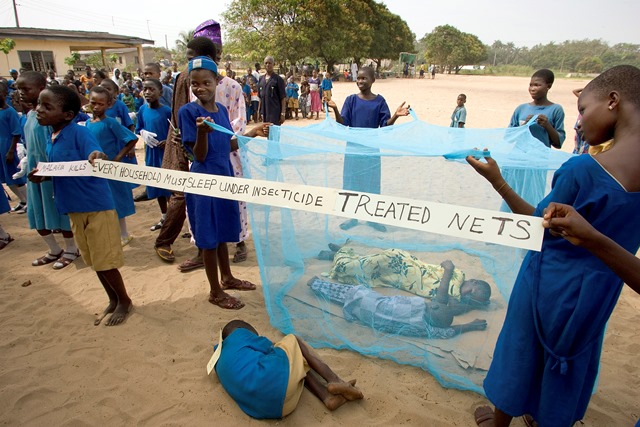
There are 100 countries where malaria is endemic, including Nigeria, Ghana, Sudan and South Africa. RBM presents itself as an effort to provide a coordinated response to malaria worldwide.  In Nigeria, RBM provides insecticide treated nets, ITNs, indoor residual spraying, IRS, and training for health providers, and it has been funded by GFATM

Also, WHO, UNDP and UNICEF also have malaria intervention programs they are directly overseeing in Nigeria. For example, WHO has offices in Nigeria where it oversees the distribution of ITNs, training of health workers and provision of free malaria tests.

Then, in May 2009, the Global Health Initiative, GHI, an effort to reduce the burden of disease and promote healthy communities and families around the world was instituted by the president of the United States, Barack Obama.

The core of this initiative is the President’s Malaria Initiative, PMI. By 2010, Nigeria became the seventeenth country to benefit from the PMI because of its high mortality rate from malaria.

Through the United States Agency for International Development, USAID, PMI gave a grant to FHI 360, a United States based non-governmental organization, NGO. FHI 360 has a project in the country named the Malaria Action Program for States, MAPS, being executed in partnership with Health Partners International, GRID Consulting Nigeria and Malaria Consortium. MAPS is a five-year, $79.9million project that is funded by USAID. Its mandate is not so different from those of other NGOs committed to reduce the incidence of malaria in Nigeria.

The organization aims to “… increase the quality, access, and uptake of malaria control interventions in Nigeria by helping implement and scale-up proven malaria control methods, while strengthening program management capacity at the national, state, and local government levels in seven states in Nigeria”. These seven states are Benue, Cross River, Ebonyi, Oyo, Akwa Ibom, Kebbi, and Kogi.

Therefore, not only does Nigeria have multiple donors giving money to different malaria programs within its borders, but these multiple partnerships with their multiple organizations execute programs that often differ only in minute ways.

Where are the statistics?

With such a multiplicity of organizations and funding streams involved in the fight against malaria in Nigeria, it should be easy to find statistics in the public domain that show the impact of these interventions on mortality rates. Every single NGO named above has a monitoring and evaluation department that is supposed not only to keep track of how the funds are being spent, but also to measure the impact of the interventions.

However, since the 2010 Department of State Fact Sheet that was referenced at the beginning of this story, there seems to have been no comprehensive measurement of how all these interventions have affected the number of Nigerians who die from malaria each year.

To give an example of this information gap, in 2012 the Nigerian office of the Centre for Disease Control and Prevention, CDC, released a factsheet for Nigeria.Althoughthe document gave a full breakdown of the impact of their interventions regarding HIV/ AIDS, it did not do the same for the interventions against malaria.

During the course of this investigation,  this reporter noted that RBM, GTFAM and most other international organizations involved in the fight against malaria worldwide, had details of almost every country they worked with, their interventions, the impact of these interventions and other relevant information, on their website. But one thing these organizations had in common was a paucity of statistics on the status of their interventions in Nigeria.

Funding impact and  conspiracy of silence

In order to find out why there has been such a lack of information about how the foreign-backed interventions have impacted the mortality rate by malaria in Nigeria, the reporter tried to get in touch with officials working in Nigeria at the NGOs behind the anti-malaria interventions.

She first attempted to contact Halima Mwenesi, the Senior Project Director of MAPS. She tried to call her many times over the course of two days to ask for statistics regarding the effectiveness of the MAPS program in reducing the incidence of malaria in the states, but could not get through. I sent an email to her address domiciled at the US NGO FHI 360, but still did not receive a reply.

Our reporter then sent a mail to Abba Umar, listed as Chief of Party for MAPS on the FHI 360 website. He sent me a reply saying that he was no longer with the organization, but gave me the email address for Oluwole Adeusi, the man who replaced him in that position.

Understandably, Umar claimed that Adeusi was in a better position to answer my questions. But an email to Adeusi, again went unanswered.

Undeterred, the reporter contacted the media director at FHI 360, Natasha Abel. However, Abel was unable to answer any questions regarding the success of the MAPS intervention and suggested contacting MAPS directly.

Feeling like she had reached a dead end, the reporter decided to approach Malaria Consortium, one of the working partners MAPS listed on its website. She was passed through to Kolawole Maxwell, the director for the Malaria Consortium in Nigeria.

An email was immediately dispatched to him but again he was unable to answer relevant questions and redirected the reporter to Adeusi, who in turn still did not reply to any of the emails sent to him.

After requesting help from contacts who work in various NGOs, our reporter located Maxwell’s direct telephone number but was unable to set up a meeting with him in Abuja. Eventually, she managed to speak to him on the phone.

He was asked whether any data was available regarding the effect that MAPS had had upon mortality rates in Nigeria the data and what tools were being used to measure the impact of the interventions.

In a conversation that lasted for close to 45 minutes, Maxwell was not able to provide any concrete answers to questions about where the reporter could access data on the impact of the interventions in Nigeria.

Even after pointed out that the Malaria Consortium seems to be involved in a large number of malaria partnerships, Maxwell was unable to provide answers to any of the reporter’s questions.

At the end of the conversation he simply directed the reporter back to the National Malaria Control Programme. None of the emails sent to various NMCP employees elicited a response and the phone numbers listed on the NMCP website were not working – the network provider either said that the numbers were incorrect or that they were not available.

It was time for a change of strategy. Our reporter thus moved on in the search for some statistics that would justify the hugely expensive interventions against malaria in Nigeria, and succeeded in getting through to Uwem Inyang, the Program Manager Malaria at USAID Nigeria.

He said that USAID has monitoring tools and data about how the funds are being disbursed but that he was unable to answer questions about the impact that their interventions have had.

The reporter was then able to set up an interview with the group within USAID in charge of overseeing malaria funding in Nigeria. At the meeting were the USAID Nigeria Health Office Director, the CDC Resident Malaria Adviser and the Malaria Program Manager. The meeting lasted for 15 minutes, during which time the team talked about why they were in Nigeria (poverty alleviation), where they received the funding to carry out their work (the President’s Malaria Initiative, PMI) and how their interventions worked in the Sudan.

However, they too were unable to give me any links to available data on the impact on mortality rates of their interventions in Nigeria.So, at the end of that meeting, in what was becoming a predictable pattern, she was redirected to the Nigerian Malaria Control Programme.

How the malaria interventions are failing ordinary Nigerians

Although it was impossible to find anyone who was willing and able to provide any statistics regarding the effect of many interventions against malaria on mortality rates in Nigeria, from the information that is available on the standards of preventative care against malaria, it is clear that not all is well.

In February 2013, the monitoring and evaluation branch of the NMCP released its third quarter report on its supervisory/data verification visits to primary health care units across 29 states and the FCT.

The NMCP visited a sample 116 primary health care units (out of a total of 13,000 facilities) across the nation. A total of 71 of these units (61%) reported stock outs (they had no anti-malarial drugs), while 20 more (17%) more reported that their stocks were actually missing.

The most shocking part of the report was that, of the total staff at the 116 health care centres visited, less than 45% had received training on malaria control interventions. As if that was not bad enough, 89% of the facilities visited had no data records. And of the 11% that had records, 50% of the data was not valid (Report of Third Quarter supervisory/data verification visits to twenty nine states and FCT).

The reporter decided to visit south western Nigeria to see the situation on the ground. In the quest for statistics online about the impact of malaria interventions in Nigeria, she came across a lot of statistics in particular about the distribution of insecticide-treated bed nets (ITNs) and how they are supposed to reduce the incidence of malaria amongst the populace.

Instead of answering questions about how the ITNs has bettered their fight against malaria, she found out, from the straw poll she conducted among people attending health centres in three different states in the south-west, that although about 80% of the respondents had heard about ITNs being given out in different parts of their states, less than 10% of them had received the nets.

Busari is a 63years old printer, who runs Molak Printers and a community leader at Oke-Itunu, Ibadan, Oyo State, who was directly involved in the distribution of the impregnated nets in the state. When asked how he came about distributing the nets, he claimed that the nets were given out to him by Ibadan North local government.

He accused people of selling the nets, after they had collected them. He also said that the people that helped him in the distribution of the nets were eventually trained by one NGO that approached him after they had completed the distribution. He was unable to give the name of the NGO or the nature of the training.

Our reporter also discovered that treatment for malaria is not free here. Mulikat Akinlolu, a 35-year old street trader, brought her 10-month old daughter to the primary health care unit at Ibadan North local government of Oyo State because she had malaria. Asked about the treatment and drugs given to the child, she said a test was carried out and she was given prescriptions that she would have to take to a pharmacy. She expressed surprise that the treatment was not free.

When the nurse on duty at the local government authority was questioned about this, she refused to give me any answers, stating that she is a government worker and is therefore not allowed to speak with journalists.

Given the state of primary health care units in the country, and the lack of impact felt by Nigerian citizens from the foreign interventions on malaria, perhaps one should not be so surprised that statistics regarding these interventions have proved so hard to come by But, as the reporter found out in the course of this investigation, the more questions you ask, the more questions you come away with.

This report was produced with support from Partners for Democratic Change and the Institute for War & Peace Reporting. It is part of the Access Nigeria/Sierra Leone program funded by the United States Department’s Bureau of International Narcotics and Law Enforcement.

NEMA Launches Probe into Allegations Of Rape, Trafficking In IDP Camps

5

The National Emergency Management Agency, NEMA, has launched an investigation into allegations of rape and child trafficking being perpetrated by government officials in Internally Displaced Persons, IDP, camps in the North East.

The investigation is the aftermath of the publication of a report by the www.icirnigeria.org titled Grim Tales Of Rape, Child Trafficking In Displaced Persons Camps which chronicles cases of rape of young girls and the selling of babies in the camps meant for persons displaced by Boko Haram insurgency in the North east.

In a press statement issued on Tuesday by its information officer, Sani Datti, NEMA said that following the publication of the story, which was republished by Premium Times and other online medium, “the Director General of NEMA, Muhammad Sani Sidi, on Monday in Abuja met with stakeholders including representatives of Department of State Services, Nigeria Police Force, National Human Rights Commission, Nigerian Security and Civil Defence Corps, the Nigerian Red Cross Society, Gombe State Emergency Management Agency (SEMA), Adamawa State and a representative of the publisher.”

Subsequently, an investigating panel has been set up comprising the DSS, police, Nigerian Red Cross, Office of National Security Adviser, NSA, National Human Rights Commission, NHRC, National Agency for the Prohibition of Traffic in Persons, NAPTIP, Journalists Against Disaster, JAD and NEMA.

Other members of the probe panel are the Nigerian Security and Civil Defence Corps, NSCDC, International Organisation for Migration, IOM, and the emergency management agencies of Borno, Gombe and Adamawa states.

The panel’s mandate are to verify allegations in the International Centre for Investigative Reporting, report; interact with all stakeholders; carry out town hall meetings in all the camps mentioned in the allegation, interact with University of Maiduguri Teaching Hospital and the NEMA North east zonal office, state relief agencies, SSS , Red Cross, Army and Police.

The investigating panel is also mandated to “determine if there is any culpability of Government Agencies” and to do “any other things which in the opinion of the committee will facilitate the accomplishment of its assignment.”

It has two weeks to conclude its investigations and submit a report


2015 Polls: APC Accuses PDP Of Buying PVCs for N10,000

0

The All Progressives Congress, APC, has accused the ruling Peoples Democratic Party, PDP, of resorting to illegally acquiring Permanent Voters Cards, PVCs, for N10,000.to disenfranchise voters in opposition strongholds..

The party in a statement issued Tuesday in Lagos by its national publicity secretary, Lai Mohammed, alleged that a company, Agro-Allied Communities Service Nigeria Limited, was behind the scheme.

According to the APC, the company purports to engage in provision of 50,000 Naira loan for the empowerment of women but curiously requires that applicants must provide PVCs as collateral before the loan could be accessed.

The party alleged that the company which claims to be a private concern was in fact a front for the ruling party established for the purpose of acquiring PVCs from registered voters in areas perceived to be opposition strongholds.

Stating that the alleged development is a pointer to the hidden reason for postponing the polls, which is to gain time to perfect strategies for rigging, the party called attention to what it called the “desperation by some people to hold on to power at all cost, even when it is clear that Nigerians have widely rejected them due to non-performance, massive corruption and profligacy under their watch” and warned those involved to desist from the illegal act.

”Our members have alerted us to the fact that PDP agents have been operating in all villages between Kobape and Orile-Imo along the Sagamu-Abeokuta Expressway in Ogun State, giving 10,000 Naira to each poor villager and collecting their PVCs,” it stated adding that “PDP agents are also promising each villager a monthly stipend of 10,000 Naira if and when their party assumes office in the state.”

”Indications are that this objectionable PVC mop-up is being replicated in all opposition strongholds by the frenzied PDP, hence we at the APC have decided to alert the nation to the reprehensible act,” the party said.

The opposition party stated also that several officers of the Nigerian Immigration Service, NIS, have been observed dispossessing registered voters in the northern regions of the nation of their PVCs under the pretext of arresting illegal aliens with voter cards.

According to the APC, after the spurious arrests, the unsuspecting villagers’ cards seized, in a bid to disenfranchise them.

The party cautioned its members and supporters, and Nigerians in general, not to commercialize their PVCs no matter the inducements, affirming that the voter card is the only instrument available for effecting a peaceful change of leadership and ensuring that they access the gains of democracy

”This act of desperation is totally unacceptable and must stop forthwith. Every voter should be allowed to exercise his or her franchise in accordance with his/her conscience, without intimidation or inducement,” the party said.