Home Blog Page 337

Lagos to shut Marina-CMS Bridge for 2 months

0

THE Lagos State Government said it would shut the Independence/Mekwen Bridge (inbound Marina/CMS route) for two months to allow emergency repairs.

The state commissioner for transportation, Oluwaseun Osiyemi, announced the plan in a statement on Sunday, March 15.

The emergency repair of the bridge is scheduled from Wednesday, March 19 to Monday, May 26.

He said during the repair work, the section of the road from the National Open University of Nigeria (NOUN) through Bonny Camp Bridge and down to Independence Bridge would be closed to vehicular movement.

“Similarly, the Bonny Camp Underpass Bridge service lane inbound Independence Bridge will not be available for motorists.

“However, the service lane from Ahmadu Bello Way to Ozumba Mbadiwe will be open to traffic,” Osiyemi stated.

According to him, motorists heading to Victoria Island from Ahmadu Bello Way are advised to use Ozumba Mbadiwe Avenue inbound Akin Adesola Street, and proceed to Falomo Roundabout, then link Obafemi Awolowo Road to access Ring Road to continue their journeys.

Also, motorists from Ahmadu Bello Way heading to 3rd Mainland Bridge should go through Ozumba Mbadiwe Avenue inbound Akin Adesola Street, then link Alfred Rewane Road to Osborne Road, and connect to Ring Road to reach their destinations.

“Motorists heading to Inner Marina and CMS from Ahmadu Bello Way will be diverted to Ozumba Mbadiwe Avenue inbound Akin Adesola Street to connect Falomo Roundabout, then link Obafemi Awolowo Road to access J.K. Randle Road/King George V Road to reach their desired destinations,” Osiyemi said.

The commissioner also advised motorists heading to Ahmadu Bello Way from Inner Marina/CMS to have through-traffic access.

Osiyemi reassured Lagosians that the Lagos State Traffic Management Authority (LASTMA) would manage traffic flow along the aforementioned routes for the duration of the project.

The ICIR reports that Lagos, Nigeria’s commercial city, is notorious for traffic congestion, with commuters spending significant time in gridlock.

The city has a high Traffic Index and is ranked among the most congested cities in the world.

In July 2024, a Numbeo Traffic Index put Lagos state as the worst ranking in the world based on traffic congestion.

Lawyer defends corps member allegedly threatened for criticising Tinubu

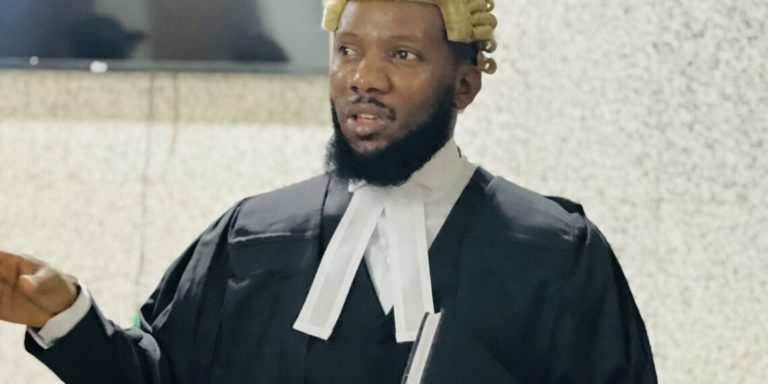
Human rights lawyer Inebehe Effiong has dismissed claims that the corps member, Ushie Rita Uguamaye, who criticised President Bola Tinubu’s government had no right to do so because she was on national service.  

Responding to online arguments against the corps member on Sunday, March 16, Effiong described such arguments as baseless and stated that members of the National Youth Service Corps (NYSC) were not civil or public servants and not bound by civil service rules.  

The ICIR reported that following the alarm raised by a serving corps member in Lagos State over alleged threats to her life by NYSC officials after she criticised Tinubu’s government, many Nigerians on social media backed her while others disagreed with her action.

Some netizens argued that the NYSC Act and its Bye-Laws prohibited corps members from expressing dissenting views against the government and participating in partisan politics.

They cited part of the Bye-Laws (revised 2011), which states that corps members must “Not address the press on any policy issue without the prior written consent of the State Coordinator. Any member who addresses the press on any policy issue without the written consent of the State Coordinator shall be tried by the Camp Court and, if found guilty, be liable to extension of service for thirty (30) days on half pay,”

They also cited a sub-section of Section 4 of the law, which says “Not to take part in partisan politics. Any member who takes part in partisan politics is liable to extension of service for a period not less than three (3) months without pay.”

Some also posited that corps members were Federal Government employees and should not criticise the government openly.

However, Effiong pointed out that Section 2 of the NYSC Act defined national service as a mandatory one-year duty for eligible Nigerians, distinguishing it from federal or civil service employment. 

He further explained that corps members were not recruited or employed by the NYSC, and would not be issued employment letters after their service year. Instead, upon completion of their service, they receive a ‘certificate of national service’.

Effiong also dismissed the notion that corps members are government employees because they receive stipends, emphasising that salaries, as defined under Nigerian labour laws, are a legal consideration for employment, while NYSC allowances are merely support payments, not wages.

“The Certificate that is issued to corps members on completion of their national service as prescribed in Section 11 of the NYSC Act is called Certificate of National Service, not certificate of employment. Corps members are not issued employment letters by the federal or state governments.

“Third, every employee under the law (including the Labour Act, Employees Compensation Act, etc.) is entitled to be paid salary. That is the legal consideration for the services rendered. Corps members are not paid salaries by the government (federal and state). They are only paid paltry sums as allowances. Some states do not even pay allowances to corps members,” he added.

Reacting to the argument that corps members are subject to civil service rules, Effiong further stated that there is no provision in the NYSC Act that limits their freedom of speech or political expression. 

According to him, the term ’employer’ as used in the NYSC Act is used loosely in relation to the place of primary assignment where the corps member serves. 

Referring to Section 13 of the Act and Section 4 of the Revised Bye Laws (2011), he explained that criticising the government did not constitute an offence under the scheme’s regulations.

Effiong added that having reviewed the corps member’s viral video, her statements were not partisan but a reflection of the economic hardship affecting many Nigerians. 

He affirmed that her frustration over inflation and the cost of living fell within her constitutional right to free speech, as enshrined in Section 39 of the 1999 Constitution.

“Criticizing the president or the government is not an offence under the NYSC Act (See Section 13). It is also not an offence under the NYSC Bye Laws (See Section 4 of the Revised Bye Laws, 2011).

“…I have watched all the videos of this lady that are being debated. There is nothing slightly partisan in her comments. 

“She merely expressed her justified frustrations with the state of affairs in the country, particularly the impact of the scourging inflation on her and other Nigerians. That is within her constitutional right to freedom of expression as guaranteed by Section 39 of the Constitution of the Federal Republic of Nigeria, 1999 (as amended),” he added.

He further assured that he was in contact with the corps member and would take necessary steps to protect her rights if required. 

NYSC allegedly threatens corps member after criticising Tinubu

A NATIONAL Youth Service Corps (NYSC) member in Lagos State has raised concerns about her safety after allegedly receiving threats following a viral video in which she criticised President Bola Tinubu’s administration over rising inflation and hardship faced by Nigerians.

In the widely circulated video posted on her Instagram page, Ushie Rita Uguamaye, @iamraye__, voiced her frustration over the worsening cost of living in Nigeria, claiming she couldn’t afford basic needs with the N33,000 she got monthly as an allowance from the NYSC.

While questioning what Tinubu government was doing to ease the suffering faced by Nigerians, she dubbed Tinubu as a ‘terrible’ president.

“If a lot of Nigerians come out and start speaking about what they are going through, maybe changes will be made in the government. I just want to say to our president, I don’t know if there is any other president that is as terrible as you, but you are such a terrible president,” she said.

She lamented how prices of goods and services continued to soar, recalling that a crate of eggs, which she once bought for N800, now costs N6,500. 

She also highlighted the financial burden of electricity and security bills, the high cost of transportation, and the deteriorating living conditions in the country.

“So, I am coming from a supermarket where I went to get foodstuff, and everything has gone up again. It’s just like every single week, prices keep increasing. I want to know, what is the government doing about this increase? Is there going to be a particular time when prices will stop going up? Why am I going to get a crate of eggs and I’m told it costs N6,500? It doesn’t make any sense that eggs would cost that much. I literally remember when eggs cost N800. I am so overwhelmed because this is the first time I’ve stayed out of my family house.

“After I left the supermarket, I got home, and the security and NEPA (electricity ) bills have skyrocketed, doubling in price. It is insane. I can’t keep up with these bills. Every single penny I make, I am using it to pay bills. The crazy thing is, you want to go out with your friend, and Uber is N25,000. Why are things so expensive?,” the young lady said.

The ICIR reports that since assuming office in May 2023, President Tinubu has embarked on a series of economic reforms aimed at stabilising the nation’s economy. 

These measures, which include the removal of subsidy from petrol, exchange rate unification, and increased reliance on food importation to lower consumer prices, have been highly criticised as inflation, food prices and cost of living remained high.

Despite signing the new minimum wage of N70,000 into law in June 2024, which is expected to be reflected in the allowances of serving corps members, the Tinubu government has yet to begin its implementation for the NYSC.

Corps members across the country has continued to live on N33,000 they receive monthly as allowance from the Federal Government, except for lucky ones who get additional allowances in the states where they serve and their places of primary assignment.

The threat

Following the video’s widespread circulation, the corps member in a new video posted on her Instagram @iamraye__, claimed she had received threats, allegedly from NYSC officials. 

Backing up her claim, she posted another video where she appeared to be receiving a phone call from an official.

In the recording, a voice could be heard sternly instructing her to bring down the video where she criticised the president.

The official could be heard saying, “Are you normal? Keep quiet and bring down the video you posted.”

She also shared screenshots of messages she claimed to have received, where she was warned to delete the video.

She insisted that she would not delete the video, arguing that doing so would only make her more vulnerable to attack.

“Deleting this content is of no use because they already know me. However, deleting it means whatever they do to me nobody would know.

“If they decide to give me a hefty punishment, nobody will know because I used my own hands to cover it by deleting what I started.” 

She also accused NYSC officials of trying to track her down, questioning why she was being treated like a criminal for merely expressing her frustration in her fatherland.

She insisted she had only exercised her right to freedom of speech and had not made any malicious claims against the government.

“Dear NYSC, if you say a corper has faulted you, wouldn’t treat them like this and scare them! You are scaring me for my dear life. Please leave me alone. You told me to report to the office on Monday. Okay!

“What else? Why are you looking for me? I just exercised my right to use the “freedom of speech. This is the right of every citizen. Except they tell me being an NYSC corper removes me from being a citizen,” she added.

Meanwhile, efforts to reach the NYSC proved abortive, as calls to the Service’s Director of Press and Public Relations Eddy Megwa, were not going through, and SMS and WhatsApp messages sent to his phone line were not responded to as of press time.

June 12: No need to prosecute Babangida, says Abiola’s son

1

JAMIU Abiola, son of the late Moshood Abiola, has dismissed calls for the prosecution of former military ruler, Ibrahim Babangida, for annulling the June 12, 1993, presidential election, which Abiola won, and his complicity in the businessman’s subsequent death.

He argued that a probe at this stage would be unnecessary, as many of the key figures involved in the annulment are no longer alive.

In an interview with Sunday PUNCH, Jamiu stated that revisiting issues regarding the election and his father’s mysterious death in detention while demanding to be declared president-elect would serve no purpose.

“There is no need for prosecution or probe. So many years have passed and most of the good and bad actors in the June 12 tragedy have passed away,” Jamiu said.

According to him, the most appropriate time for a probe would have been during Olusegun Obasanjo’s second term (2003-2007), when he said Nigeria’s democracy was more stable, and many of those involved in the election results cancellation were still alive to give firsthand testimonies. 

Jamiu’s remarks came in the wake of IBB’s public admission, for the first time that Abiola won the election. 

The former military ruler, who had for decades been evasive about the details of the annulment, made the revelation in his newly launched autobiography, A Journey in Service.

In the book, reviewed by former Vice President Yemi Osinbajo, Babangida acknowledged that Abiola met all constitutional requirements to be declared winner. 

He detailed how the late politician had won a nationwide mandate, securing the required one-third of votes across at least 28 states, including Abuja.

The ICIR reports that Babangida’s revelation aligned with what many Nigerians had long believed – that the June 12, 1993 presidential poll was Nigeria’s freest and fairest election.

For decades, Babangida has faced criticisms for annulling the poll. His military government, which ruled from 1985 to 1993, never officially declared a winner before cancelling the process, citing national security concerns. 

However, in his book, he admitted that Abiola had fulfilled all legal requirements to assume office.

Upon closer examination of the original collated figures from the 110 polling booths nationwide, it was clear that he satisfied the two main constitutional requirements for winning the presidential elections, namely majority votes and geographical spread,” he said.

Despite Babangida’s admission, Jamiu Abiola insisted that seeking justice through prosecution was no longer a priority

Instead, he argued that the best way to honour his father’s legacy is for Nigerians to embrace the spirit of national unity that defined the June 12 election.

“The best way to compensate our family is for the Abiola family to see all Nigerians adopting the attitude they adopted on the day of June 12, 1993, which in a nutshell is to reject tribalism and religious differences when electing leaders and to see themselves as members of the same family regardless of their states of origin,” he explained.

Jamiu urged Nigerians to focus on building a united nation, rather than being consumed by the bitterness of the past

“By so doing, they will be heeding the call of President Bola Tinubu to shun ethnicity and transforming Nigeria from a country to a nation.

“I will not ask for more than that because to do so would bring down the high standing of Moshood and Kudirat Abiola following their unique sacrifice. They gave up their lives and will be rewarded with more than 500 million years in a place better than any castle in this world,” he added.

SEC sanctions Mainland Trust, Centurion Registrars over market infractions 

THE Nigerian Securities and Exchange Commission (SEC) said it had sanctioned Mainland Trust Limited and Centurion Registrars Limited over non-compliance with regulatory guidelines.

The sanctions take immediate effect, SEC, the apex regulator of the Nigerian capital market, said in separate statements on Friday, March 14.

In the notices signed by its management to inform the investing public, the commission stressed that it acted in line with the provisions guiding the operations of the Nigerian capital market.

Mainland Trust registration cancellation

According to SEC, the decision to revoke Mainland Trust’s registration as a capital market operator was informed by the company’s failure to comply with regulatory directives and the non-resolution of several complaints against it.

“This was made pursuant to the powers of the commission under Section 38(4) of the Investments and Securities Act, 2007 and Rule 34(1)(e) of the SEC Consolidated Rules and Regulations 2013.

“All clients of Mainland Trust Limited are by this notice advised to contact the Central Securities Clearing Systems Plc (CSCS) for appropriate guidance on the transfer of their stocks to another stockbroker of their choice,” SEC stated.

It urged all other regulatory bodies, including the Nigerian Exchange Group (NGX), Institute of Capital Market Registrars (ICMR), Chartered Institute of Stockbrokers (CIS), Central Securities Clearing System (CSCS), and all Capital Market Trade associations to discontinue capital market-related dealings with the company.

Centurion Registrars suspension

According to the apex capital market regulator, Centurion Registrars Limited, its directors and sponsored individuals were suspended from capital market activities.

The decision was informed by the company’s failure to comply with regulatory directives and the non-resolution of several complaints against it.

“This suspension order is made pursuant to the powers of the Commission under Section 38(4) & (5) of the Investments and Securities Act, 2007 and Rule 34(1)(e) of the SEC Consolidated Rules and Regulations 2013.

“All clients of Centurion Registrars Limited are advised to contact Africa Prudential Plc for appropriate guidance on the transfer of their portfolios to another registrar of their choice,” SEC also stated.

It directed all the regulatory bodies in the Nigerian capital market to discontinue capital market-related dealings with the company and its principal officers.

The ICIR reports that stakeholders had called on the new board and management under the leadership of the director-general (DG), Emomotimi Agama, to ensure effective regulation of the capital market.

This organisation reported that SEC was expected to utilise various modern regulatory techniques and ensure strict enforcement of market rules in its operations, and punish any infraction.

Trump to impose travel ban on 41 countries

0

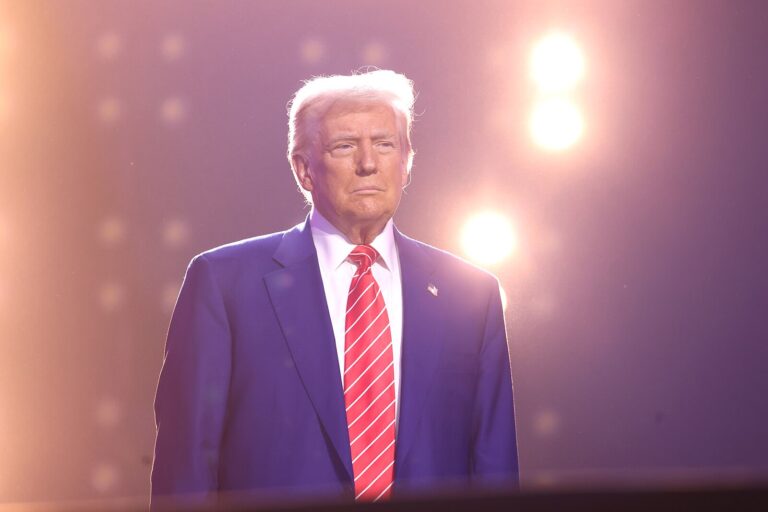
THE United States (US) President Donald Trump’s administration is considering issuing a travel ban for the citizens of dozens of countries, Reuters reported on Saturday, March 15.

It quoted sources familiar with the matter to have confirmed an internal memo seen by the organisation.

It said the memo listed 41 countries divided into three separate groups.

“The first group of 10 countries, including Afghanistan, Iran, Syria, Cuba and North Korea among others, would be set for a full visa suspension.

“In the second group, five countries — Eritrea, Haiti, Laos, Myanmar and South Sudan – would face partial suspensions that would impact tourist and student visas as well as other immigrant visas, with some exceptions,” it stated.

The third group, comprising 26 countries, including Belarus, Pakistan, and Turkmenistan, would be considered for a partial suspension of US visa issuance if their governments “do not make efforts to address deficiencies within 60 days.”

The report said a US official warned there could be changes on the list, hinting that the plan has yet to be approved by the administration, including US Secretary of State Marco Rubio.

During his first term in office, Trump placed a travel ban on seven countries, a policy that went through several alterations before it was upheld by the Supreme Court in 2018.

The ICIR reported that on January 21, 2021, the immediate past President Joe Biden reversed the Trump immigration policies, which banned immigrants from Nigeria and 11 other countries from entering the US

Returning to power on January 20, Trump issued executive orders, including requiring intensified security vetting of any foreigners seeking admission to the US to detect national security threats.

The ICIR also reported that upon returning to office on his inauguration day, Trump signed 42 executive orders, reversing several policies of his predecessor.

According to the Reuters report, Trump was said to have directed several cabinet members to submit a list of countries from which travel should be partly or fully suspended by March 21.

The directive is part of an immigration crackdown that he launched at the start of his second term.

Below is the full list of the countries as reported by Reuters.

Full visa suspension:

  1. Afghanistan
  2. Cuba
  3. Iran
  4. Libya
  5. North Korea
  6. Somalia
  7. Sudan
  8. Syria
  9. Venezuela
  10. Yemen

Partial visa suspension (tourist, student and some other visas affected):

  1. Eritrea
  2. Haiti
  3. Laos
  4. Myanmar
  5. South Sudan

Countries recommended for a partial suspension if they do not address deficiencies:

  1. Angola
  2. Antigua and Barbuda
  3. Belarus
  4. Benin
  5. Bhutan
  6. Burkina Faso
  7. Cabo Verde
  8. Cambodia
  9. Cameroon
  10. Chad
  11. Democratic Republic of the Congo
  12. Dominica
  13. Equatorial Guinea
  14. Gambia
  15. Liberia
  16. Malawi
  17. Mauritania
  18. Pakistan
  19. Republic of the Congo
  20. Saint Kitts and Nevis
  21. Saint Lucia
  22. Sao Tome and Principe
  23. Sierra Leone
  24. East Timor
  25. Turkmenistan
  26. Vanuatu

Double standard: Remi Tinubu contradictory stance on sexual harassment exposed

FIRST Lady, Oluremi Tinubu’s recent remarks defending the Senate handling of sexual harassment allegations against Senate President, Godswill Akpabio, have continued to spark concerns, particularly in the light of her previous experience with a similar case.

Despite previously accusing the Senate of failing to act when she allegedly faced threats of rape and violence from Dino Melaye, a former senator who represented Kogi West, the Nigerian president’s wife has now reacted differently when Senator Akpoti-Uduaghan, made similar allegation against Senator Akpabio.

Reacting to the allegation ahead of International Women’s Day, On March 6, Tinubu backed the Senate’s handling of the sexual allegation, insisting that the lawmakers were “doing what is needful.”

Instead of calling for a proper investigation like she did in her case with Melaye, the First Lady, a former senator who represented Lagos Central between 2011 and 2023, said the chamber was a “mature chamber.”

“I know with what is going on in the Senate, you may say, why am I not taking a position? I believe that the Senate is doing what is needful because that’s what it is. It is an inside place and it’s a matured chamber, and it should be treated with respect. It’s an honour for you to be in that place alone.

“I was there for 12 years, even in my younger days, and I’m still trying to look young, but people compliment you all the time, only that, women raise yourself, don’t be in a position that men will be talking to you anyhow,” she was quoted to have said in a statement by her media aide, Busola Kukoyi.

Her comments came after the Senate suspended Senator Akpoti-Uduaghan for six months over what it described as a violation of its rules, following her protest on the seat relocation in the chamber and her subsequent public accusation that Akpabio sexually harassed her.

Natasha’s case

The crisis began on February 20, when Akpoti-Uduaghan protested a reassignment of her seat in the Senate chamber without prior notice.  She resisted the change, calling it an attempt to silence her, while Senate Chief Whip, Tahir Monguno, justified the move, citing Senate rules and party affiliations.

Her protest led to a heated exchange with Akpabio, who ordered the sergeant-at-arms to send her out of the chamber.

This led to the Senate referring her to the Ethics Committee for disciplinary review, which later recommended her suspension.

Amid the dispute, in an interview on Arise Television, the Kogi Central senator accused Akpabio of making repeated sexual advances at her, which she said she rejected. 

She alleged that her refusal was the reason behind their frequent clashes at plenary sessions.

According to her, some of Akpabio’s  proposals were made with her on the phone and face-to-face in her husband’s presence. She further alleged that she had all the evidence for her claims.

Although the lawmaker, on Wednesday, March 5, submitted an official petition regarding the sexual harassment and abuse of office by Akpabio, the Ethics Committee threw out the petition, citing key procedural oversights that allegedly undermined the petition’s legitimacy.

Akpoti-Uduaghan, however, resubmitted the petition shortly before her suspension, but there have been no updates on its status. Following a vote of confidence passed on Akpabio by the Senate on Thursday, March 13 – the first day the Senate sat after Akpoti-Uduaghan’s suspension – many Nigerians are already doubting if her petition against Akpabio could be fairly investigated.

In 2016, Senator Tinubu petitioned the Senate and the All Progressives Congress (APC), insisting that Melaye’s threats against her should not be ignored. She also wrote to the Inspector General of Police at the time, Ibrahim Idris, for “adequate security” over the incident.

According to a Premium Times report, the two senators, both members of the ruling APC, had a heated altercation during a closed-door Senate session in 2016.

In separate letters addressed to the then  Senate President, Bukola Saraki, and then APC national chairman, John Odigie-Oyegun, Tinubu condemned the Senate’s inaction, arguing that ignoring such “threatening misconduct” by Melaye would set a dangerous precedent and undermine the institution’s integrity. 

At the time, she also insisted that her party, the APC, had a duty to investigate and hold its members accountable, warning that failure to do so would harm the party’s public image.

While giving her account of the incident, she explained that she was recognised to speak by the Senate President following Melaye’s remarks, in which he allegedly criticised some colleagues for their perceived involvement in a judicial case against the Senate leadership.

She stated that although she remained silent and did not interrupt Melaye’s speech, Melaye attempted to suppress her right to  by shouting at her and cutting her off. 

“In a burst of apparent rage, Senator Melaye charged at me in what can only be seen as an effort to attack me. The attack was only prevented by some respectful senators who moved to impede his path or otherwise block him from approaching closer towards me. I thank those senators for their personal courage and sense of decorum.

“Senator Melaye hurled foul and vulgar language at me. What he said should never be heard in any public institution let alone the floor of the Senate.

“Denigrating me as a woman, Senator Melaye threatened to beat me on the floor of the Senate just because I dared to express my opinion different from his.

“I am a ranking senator and a woman. But Senator Melaye took neither into consideration as he issued threats of rape and assaults, while boasting he would face no consequence even if he fulfilled these criminal threats,” Tinubu narrated. 

She was also reported to have said that during the session, Melaye used “blatantly sexist and misogynistic language” that she deemed offensive not only to women across Nigeria but also to anyone who believes gender discrimination should have no place in the country’s future.

But addressing a press conference after the accusation, Melaye confirmed that he had an altercation with her after she called him a ‘dog,’ but dismissed  using an “insolent, abusive, degrading and mannerless language against any senator.”

Although The ICIR could not confirm if the incident led to any disciplinary actions against either Melaye or Tinubu, it was reported that Saraki (the Senate President at the time) met with the two lawmakers  to sheathe their swords in the spirit of reconciliation.

Sokoto varsity dismisses 3 staff over ‘serious’ misconducts

0

THE management of Usmanu Danfodiyo University (UDUS), Sokoto, has dismissed three staff members over what they described as ‘serious’ misconduct.

Their dismissal borders on allegations of result alteration, sexual harassment, and abscondment from duty.

The university’s Governing Council approved the dismissal during its 171st regular meeting on March 12, as part of its commitment to a “zero tolerance” policy for misconduct, according to a statement signed by the institution’s Director of Information and Public Relations, Ismail Mohammed Yauri, on Friday, March 14.

However, the university did not disclose the identity of the affected staff members, a decision that raises concerns about transparency, particularly in cases involving sexual harassment.

“The Governing Council of UDUS at it 171st regular meeting, under the chairmanship of Prof. Attahiru Muhammadu Jega, OFR, has approved the dismissal of three members of staff for various offences, including alteration of results, sexual harassment and abscondment from duty. The university has zero tolerance for acts of gross misconduct.

“The affected persons have already been served notice of the dismissal,” the statement read.

The ICIR reports that sexual harassment remains a deeply rooted issue in Nigeria’s higher education system, with numerous reports exposing cases of lecturers and other staff preying on students. 

Research shows that many female students in Nigerian tertiary institutions face sexual advances from lecturers, often with threats of academic failure if they refuse. 

A recent report National Campus Climate Baseline Survey on Sexual Harassment in Nigerian Tertiary Institutions,’ launched by Alliances for Africa, the Committee of Gender Directors in Nigerian universities, and top government officials, including Minister of Women Affairs, Imaan Sulaiman-Ibrahim, noted that at least 63 per cent of female students in Nigerian 12 universities experience sexual harassment at the hands of staff and fellow students.

The survey, conducted across 12 Nigerian universities, had 3,528 respondents. This comprised 2,222 students – 67 per cent female, 32 per cent male, and 1,285 staff members, with 55 per cent being academic staff and 45 per cent non-academic staff. Additionally, 21 respondents did not identify as either students or staff.

The issue gained improved national attention in 2019 when the BBC’s Sex for Grades investigation exposed lecturers in the University of Lagos and the University of Ghana demanding sexual favours from students in exchange for academic benefits. 

The revelations and spike in reported cases prompted the Nigerian Senate to introduce the Sexual Harassment Prevention Bill, which sought to criminalize such misconduct in universities. 

But despite its passage, the bill awaits presidential assent to make it law.

More recently in April, 2024, a video of a lecturer suspected to be a professor at the University of Nigeria Nsukka (UNN), Enugu State, went viral after he attempted to sexually harass a female student.

Similarly, Oga Lecturer reported that at least 43 lecturers were accused or indicted for sexual harassment between 2018 and 2023.

Tinubu wants state governors to return mission schools to owners

0

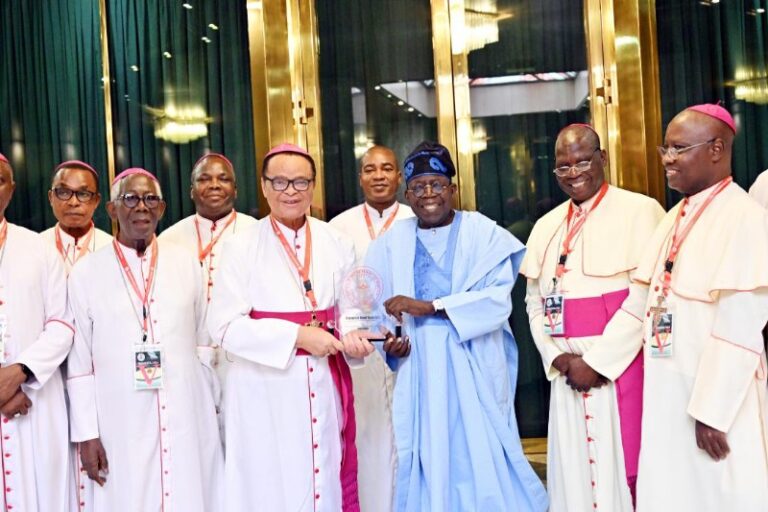
PRESIDENT Bola Tinubu has said state governors could emulate him and return all the mission schools to religious organisations that built them.

The president said this when he met with a delegation of the Catholic Bishop’s Conference of Nigeria (CBCN) on Friday, March 14.

According to a statement released Friday night by his Special Adviser on Information and
Strategy, Bayo Onanuga, the president stated that schools were subnational entities, not owned by the Federal Government.

“I’ve been a good example as the governor of Lagos state. I returned all the mission schools,” Tinubu said.

The ICIR reports that religious leaders have been lamenting over the takeover of mission schools by the Nigerian government.

The clamour to return the schools taken from them over four decades ago has yet to yield the desired result.

Clerics have been blaming the government for the poor standard of education in the country, believing that the standards began to fall when the government took over schools from the original owners.

However, at the meeting with the Catholic Bishops on Friday, Tinubu commended the Catholic body for its commitment to education and healthcare in the country.

He told his guests that he set up the Nigerian Education Loan Fund (NELFUND) to ensure that no student dropped out of school due to a lack of funds for tuition fees.

He promised to look at ways to help students of private institutions that NELFUND does not cover.

The president reiterated that he was concerned about the hardships Nigerians go through due to the economic and security situations in the country, assuring the clerics that his reform programmes would yield the target results and ameliorate the pains.

“Yes, removing the fuel subsidy was hard, tough for me, but it’s a hard choice that Nigeria must face. We are not going to bankrupt our country.

“We were spending the investment of the future of our children yet unborn. We were spending their rights, and poverty has no religious basis. There’s no religious colouration, no identity. It affects all, and we must fight it together,” Tinubu stated.

He argued further that the security agencies were already curtailing the nation’s insecurity, stressing that adherents of all religions felt the impact of the efforts.

“This insecurity, everyone is affected, Christians, Muslims alike. I have no religious bias; I won’t be a bigot. My wife is a pastor of Redeemed Christian Church. But we have to think of our country. This country must develop and must stand beyond religious bigotry. And I’m here open to you, ready to listen.

“We’ve been together for some time. We have an open-door policy. I will not shut my door,” the president added.

The CBCN president and Archbishop of Owerri, Lucius Iwejuru Ugorji, who led the delegation of 20 bishops from across the country, noted that the removal of fuel subsidies had affected people in the country while commending the government reform initiatives and efforts of the security agencies to curtail insecurity in the nation.

He, however, urged the government to put in more  efforts to “rekindle hope and inspire confidence in the hearts of our people.”

The clerics called for a well-defined vision of religion as a force for moral integrity and patriotic unity without necessarily impinging on citizens’ fundamental rights.

They urged the government to hands-off sponsorship of pilgrimages to curtail waste and corruption.

“The government should allow religious groups to take full responsibility for organising pilgrimages. In their current structure, the national and state pilgrims’ boards serve neither their adherents nor the broader interest of the nation. You’re undoubtedly aware of the instances of corruption that have led to the removal of some board executives to ensure greater efficiency and accountability.

“We would propose that public funds be redirected towards pressing national needs,” the CBCN president said.

Among other state officials at the meeting were the Minister of Information and National Orientation, Idris Mohammed and National Security Adviser, Mallam Nuhu Ribadu.

Again, Dangote slashes PMS price as marketers give reasons for price drop

0

MAJOR Oil Marketers have confirmed that market forces and a healthier competitive environment have a huge influence in determining the price of Premium Motor Spirit (PMS) further down as Dangote Petroleum Refinery has again slashed the price of fuel.

The ICIR reports that Dangote Petrochemical Refinery on Friday, March 14 reduced its ex-depot premium motor spirit price to N815 per litre.

The latest drop comes after fuel landing cost dropped to N784.83 per litre, below Dangote Refinery’s N825 ex-depot prices.

This is not the first time the company slashed price, as The ICIR reported in February that the firm reduced its ex-depot (gantry) price of petrol to N825 per litre.

The ex-depot price is at which the marketers buy the product at the refinery depots before putting their mark-up price for sales at filling station retail outlets.

Dangote Petrochemical did not officially announce this development, however, the spokesperson of the Independent Petroleum Marketers Association of Nigeria (IPMAN), Chinedu Ukadike confirmed the development to The ICIR.

“It is true. There is speculation that the price of importers’ products is now lower. That’s the reason for the price war.

“It is the beauty of deregulation. Dangote has millions of litres and would not want any external force to take its market share. So, it would have forced price reduction,” Ukadike added.

Africa’s richest man Aliko Dangote has established himself as the dominant player in Nigeria’s petroleum downstream sector while influencing the price fixing across the nation.

This has led to some eyebrows being raised about his market dominant influence as witnessed a few weeks back with his price war battle with the Nigeria National Petroleum Company Limited (NNPCL).

Informed energy analysts have urged the federal government to ensure healthier competition and avoidance of possible ‘price gouging’ to enable healthier competition for all sector players.

“The overriding factor influencing gasoline price crop is a direct consequence of competition enabled by deregulation or liberalisation of the downstream sector. The only way to ensure that prices remain at the lowest level is to ensure very robust competition in the industry. Prices are being forced down because imports are still being allowed to determine actual landing costs of gasoline,” former Chairman of the Major Oil Marketers Association of Nigeria (MOMAN) Adetunji Oyebanji told The ICIR.

The ICIR reported recent concerns of Petroleum Products Retail Outlets Owners Association of Nigeria (PETROAN) alert of a possible monopoly in the sector which may not give opportunities for marketers at the lower rung of the ladder.

PETROAN, specifically met with the Minister of State for Petroleum Resources, Heineken Lokpobiri to discuss issues affecting the country’s petroleum downstream sector, including price stability.

In his remarks, PETROAN’s president, Billy Gillis-Harry, called for a permanent percentage allocation of petroleum products to its members to ensure efficient distribution to Nigerians.

Gillis-Harry urged the minister to endorse the PETROAN Quantity Assurance Quality Control Price Intelligence and Monitoring System to support existing technology in tracking and safeguarding loaded petroleum products from the depot to their final destination.

He emphasised the need for the government to support multiple sources of petroleum product supply to encourage healthy competition.