Home Blog Page 338

Appeal Court halts Sanusi’s reinstatement as Emir of Kano

0

THE Court of Appeal in Abuja has halted the reinstatement of Muhammadu Sanusi as the Emir of Kano.

The court held that since an appeal was already before the Supreme Court, it was essential to maintain the status quo.

The appellate court led by Okon Abang, in a ruling on Friday, March 14, unanimously stopped the implementation of the January 10 judgment, which blocked the nullification of Sanusi’s appointment by a Kano St High Court, and held that it was done without jurisdiction.

However, ruling on the fresh applications with numbers CA/KN/27M/2025 and CA/KN/28M/2025, the appellate court maintained that the applications seeking to halt the enforcement of the earlier judgment pending the appeal before the Supreme Court were competent and meritorious.

Abang also stated that the issue before the court needed to be preserved because the applicant (Bayero) had served as emir for five years before his removal, adding that he earned the right to protection.

On January 10, Kolawole, in lifting the order against Sanusi’s appointment, maintained that the matter, being a chieftaincy dispute, ought to have been determined by the High Court of Kano State rather than the Federal High Court, which he described as “a grave error.”

The Federal High Court had, on Thursday, June 20, 2024, reinstated deposed Ado Bayero as the emir, consequently annulling the state government’s reinstatement of Sanusi as the emir.

The court abrogated the Kano State Emirate Law 2024, which dissolved the five Emirates in the state.

It also dismissed the state government’s Emirates Council Law, which the state had used to sack Sanusi and install Bayero as emir.

The judge, Abdullahi Muhammad Liman, in his ruling, ordered all parties involved in the case to maintain the status quo.

A kingmaker in the defunct Kano Emirate, Aminu Babba Danagundi, also known as the Sarkin Dawaki Babba, through his attorney, Chikaosolu Ojukwu, a senior advocate, had sued the Governor Abba Yusuf-led government to contest the new law’s validity and requested that the court void it.

But in a judgment read by Kolawole on Friday, January 10, a three-member panel of the Court of Appeal, Kano, held that the order nullifying the steps taken by the Kano State Government pursuant to the 2024 Emirates Council Law was made by Liman without jurisdiction.

The appellate court ruled that the fundamental rights enforcement suit filed by an aggrieved kingmaker – Aminu Babba Dan Agundi – on which basis Liman issued the June 20 order was not only invalid but the court lacked the jurisdiction to hear the matter.

Abang, delivering the judgment in the new case on Friday, March 14, stated that the court must maintain the status quo before the Federal High Court’s decision on June 13, 2024.

The ruling restrained the Kano State Government and other respondents from implementing the January 10 judgment and ordered that the situation remained as it was until the Supreme Court’s final decision.

The judgement stops the reinstatement of Sanusi as the 16th Emir of Kano until the Supreme Court rules on the appeal.



Shareholders vote against PZ Cussons $34.26m debt-to-equity swap

0

SHAREHOLDER of PZ Cussons Nigeria Plc have voted against the company’s proposal to convert $34.26 million of its debt into equity.

The decision was made during the company’s Extraordinary General Meeting (EGM) held on Thursday, March 13, in Abuja.

A debt-to-equity swap allows a company to reduce its debt burden by converting outstanding loans into shares. In a statement issued on February 16, PZ Cussons Nigeria announced plans to convert a portion ($34.26 million) of its $40.26 million loan into equity, pending regulatory approval.

The proposal involved converting $34.26 million of the debt at a rate of N23.60 per share, creating 2,194,716,637 new ordinary shares valued at 50 kobo each for its parent company, PZ Cussons Holdings, UK. This would have increased the parent company’s shareholding from 73.27 per cent to 82.79 per cent and raised its share capital by N1,097,358,318.50.

However, minority shareholders opposed the plan, arguing it was not in their best interest. Exercising their rights at the EGM, those with the highest stake voted against the debt-to-equity conversion, blocking the company’s restructuring efforts.

“The rule doesn’t allow the major investors to vote. Hence minority shareholders voted against it with their proxies led by CardinalStone, AMCON (Asset Management Corporation of Nigeria), and others,” a shareholder who pleaded anonymity told The ICIR.

In the result sheet signed by PZ Cusson’s registrar, First Registrars and Investor Services Limited, seen by the reporter, 12 minority shareholders with 76.8 per cent holdings outrightly voted against the PZ Cusson debt-to-equity swap.

The sheet shows the outcome of the vote cast by minority shareholders over the PZ Cussons debt-to-equity swap at the company's EGM on Thursday, March 13.
The sheet shows the outcome of the votes cast by minority shareholders over the PZ Cussons debt-to-equity swap during the company’s EGM on Thursday, March 13.

The 12 shareholders hold 258,066,509 units of the company’s total shares.

Their vote was against 663 shareholders with 77,952,420 units of shares, representing 23.2 per cent holdings that voted for PZ Cussons to convert the $34.26 million debt to equity.

The shareholder that spoke with The ICIR explained that the 12 minority shareholders were able to knock out the proposed plan because of the percentage of their holdings as against the holdings of the 663 minority shareholders that supported the plan.

The voting was the case of “the principle of minority has a say; the majority have the way.

“It is an outright rejection of debt-to-equity conversion by PZ Cussons. The minority shareholders have spoken,” the shareholder said.

According to the source, shareholders’ comments and position before the resolution were an outright rejection of the offer of N23.60 for debt-to-equity conversion by PZ Cussons UK, the major shareholder.

The minority shareholders proposed that the value be reviewed upward to N37.10k, being the highest price traded on PZ Cusson’s stock as of Wednesday, March 12.

They also noted the implication of the majority shareholder offer of N23.60 would see the latter raise its holdings to 82.79 per cent from 73.27 per cent.

“This will see PZ Cussons contravene the floating rule of the exchange, which allows for a free float of 20 per cent for listed firms on the Nigerian stock market.

“Hence at 82.79 per cent, it will likely be in breach of the free float rule, hence the need to review downward,” the shareholder said.

Although the board of PZ Cussons after consideration of the minority shareholders’ proposal, decided to offer N37.10k, reduce the debt to equity conversion from $34.6 million to $31.6 million, leaving a balance of $9 million rather than the initial $6 million, however, the results of the voting technically knocked out the debt-equity conversion plan, the shareholder said.

The source believes that the vote went against PZ Cusson’s plans because there was no proper engagement with the minority shareholders by the company before the EGM.

“You even saw a court injunction by aggressive shareholders stopping the EGM,” the source added.

The ICIR reported earlier that leaders of some shareholder’s associations had kicked against the PZ Cussons’ plan to convert $34.26m debt to equity.

At its Facts Behind the Figures Presentation on Wednesday, February 12 at the Nigerian Exchange Limited (NGX) house in Lagos, the organisation reported exclusively that the minority shareholders have called on the company’s management to be more accountable and return to profitability as it considers plans to remain listed on the Nigerian stock exchange.

The ICIR had also reported that the company walked into debt when in June 2022, PZ Cussons Holdings Limited (PZCH) loaned $40.26 million to PZ Cussons Nigeria Plc (PZCN) to help cover raw material and operational costs, which were difficult to manage due to currency shortages.

The devaluation of the naira experienced between 2023 and 2024 negatively impacted PZCN’s financial results and led to a rise in its foreign currency-denominated loans.

After its decision, the board agreed to convert a portion of the $34.26 million outstanding loan into equity as the most effective strategy to reduce the company’s debt and strengthen its balance sheet.

Had the conversion been successful, a remaining shareholders loan balance of $6 million would still have been payable to the parent company.

Again, Rivers Assembly ignores Fubara, adjourns plenary indefinitely

1

THE Rivers State House of Assembly has adjourned sitting indefinitely amid its rift with the state government led by Siminalayi Fubara.

The House’s decision to adjourn legislative duties indefinitely was taken during plenary, presided over by the Speaker, Martin Amaewhule, in Port Harcourt on Friday, March 14.

The action came hours after Fubara wrote to the Speaker, informing him of his plan to re-present the 2025 appropriation bill for consideration and approval.

Fubara, in the letter, recalled his failed attempt to re-present the budget on March 12.

He stated that despite sending a soft copy notice and trying to submit a hard copy through the clerk, he and his team were denied entry into the Assembly premises and locked out.

The governor’s attempt to re-present the budget complies with a recent Supreme Court judgment on political impasse in the state.

He reminded the speaker that the House had earlier given him a 48-hour ultimatum to re-present the budget, even before he received the Supreme Court ruling.

He reaffirmed his commitment to governance and urged all arms of government to work within legal and constitutional frameworks for the benefit of the state.

The ICIR reported that drama unfolded on Wednesday, March 12, at the Rivers State House of Assembly Quarters when Fubara arrived to re-present the 2025 budget, only to find the entrance gate locked.

Security personnel had secured the gates as the governor’s convoy arrived, claiming that a lack of official communication between the governor and the Assembly was responsible for their action.

However, Fubara claimed he informed the Speaker of his intention to visit the Assembly through a formal letter.

He also said his efforts to speak with the speaker on the phone for days had proved abortive.

The ICIR reports that with the latest adjournment, the Rivers Assembly has ignored Fubara three times since the  Supreme Court’s ruling.

On Sunday, March 9, this organisation reported that the governor invited the Assembly members to a meeting at his office to enable him to address several issues, including payment of the lawmakers’ salaries and allowances since he stopped recognising them after their defection from the Peoples’ Democratic Party (PDP) to the All Progressives Congress (APC). The Assembly ignored the invitation.

They also shunned his planned re-presentation of the 2025 budget on Wednesday, March 12.

Recall that the power struggle between the governor and the Amaewhule-led Assembly reached its peak after the Supreme Court’s judgment, which ordered the Central Bank of Nigeria and the Attorney General of the Federation to suspend Rivers State’s statutory allocation.

The governor’s attempt to extend an olive branch by inviting the Assembly members for a peace talk was rebuffed. He also failed to meet the 48-hour ultimatum to re-present the budget.

This development has further deepened the conflict between the two arms of government.

The ICIR reported that the Supreme Court, in a judgment, affirmed the leadership of the Amaewhule-led Assembly, dismissing Fubara’s appeal challenging the leadership. The court also ordered the governor to pay N2 million to the lawmakers.

The judgment invalidated the previous budget presentation by Fubara to a splinter faction of the Assembly. 

The court deemed Fubara’s presentation of an appropriation bill before a small faction of the Assembly as absurd.

It also annulled the recent local government election conducted in the state by Fubara.

After the apex court ruling, Fubara invited the Amaewhule-led House of Assembly for a dialogue, which the Assembly failed to honour.

What led to the Supreme Court Ruling?

Fubara and his predecessor, Nyesom Wike, currently the Minister of the Federal Capital Territory (FCT), have been at loggerheads over who controls the PDP structure in the state, with President Bola Tinubu’s efforts to resolve the stalemate yielding no result. 

Fubara has vehemently resisted Wike’s insistence on controlling the party in the state, with both leaders, who were allies before the 2023 governorship election, turning into arch-rivals months after Fubara assumed power.

At the onset of the crisis, 27 members of the state House of Assembly who were loyal to the former governor decamped to the APC, the party in which Wike serves as minister in Abuja.

In addition to declaring the defectors’ seats vacant, Fubara sacked all 23 local government chairmen elected under Wike and declared that their tenure had expired.

He went on to conduct a new poll, which the Supreme Court annulled.

Consequently, all appointments he made were confirmed by only the four lawmakers loyal to him.

The appointees include commissioners, board chairmen, chief executive of state agencies, heads of the state electoral commission, among others.

He also presented over a trillion naira budget to the splinter group of lawmakers, which the Supreme Court described as unconstitutional.

Electricity Act: NERC transfers electricity market oversight to Plateau state

IN line with the Electricity Act 2023, as amended, the Nigerian Electricity Regulatory Commission (NERC) has transferred its regulatory oversight of the electricity market in Plateau State to the Plateau State Electricity Regulatory Commission (PSERC).

NERC announced this in a statement issued on Friday, March 14.

It said, “in compliance with the amended Constitution of the Federal Republic of Nigeria (CFRN) and the Electricity Act 2023 (Amended), the Nigerian Electricity Regulatory Commission (NERC) has issued an order to transfer regulatory oversight of the electricity market in Plateau State from the Commission to the Plateau State Electricity Regulatory Commission (PSERC).

“Recall that with the EA 2023, the Commission retains the role as a central regulator with regulatory oversight of inter-state/international generation, transmission, supply, trading and system operations.”

The electricity sector regulator noted that the Act also mandates any state intending to establish and regulate an intrastate electricity market to formally notify NERC of its processes and request the transfer of regulatory authority over electricity operations to the state regulator.

“Based on this, the Government of Plateau State complied with the conditions precedent in the laws, duly notified NERC, and requested for the transfer of regulatory oversight of the intrastate electricity market in Plateau State,” NERC stated.

According to the electricity regulator, its transfer order directs Jos Electricity Distribution Plc (JED) to incorporate a subsidiary, JED SubCo, to assume responsibility for the intrastate supply and distribution of electricity in Plateau State.

It added that JED must complete the incorporation of JED SubCo within 60 days from March 12, 2025. Additionally, the sub-company must apply for and obtain a licence for the intrastate supply and distribution of electricity from PSERC, among other directives.

NERC further directed that all transfers outlined in this order must be completed by September 12, 2025.

With this order, Plateau State has joined Lagos, Imo, Ogun, Ondo, Ekiti, Enugu, Niger, Edo, and Oyo in regulating its electricity market.

In an exclusive interview, the Executive Director of PowerUp Nigeria and power sector governance expert, Adetayo Adegbemle, told The ICIR that the new Electricity Act would enable states to develop independent power markets.

In an exclusive interview, the executive director of PowerUp Nigeria and a power sector governance expert, Adetayo Adegbemle, told The ICIR that the new Electricity Act would enable states to develop independent power markets.

Adegbemle has noted that the amendment would open up the power sector for investments, both at the state and national levels.

However, he believes that not all states will be able to establish their own electricity markets. Those with the capacity to do so will benefit, and this should ease the burden on the national grid.

The ICIR reported on March 17, 2023, that former President Muhammad Buhari signed the amendment Electricity Act into law, allowing all states in the country to license, generate, transmit and distribute electricity.

African Liberty Writing Fellowship opens applications

THE African Liberty Writing Fellowship 2025 is training young African writers to shape public policy discussions on governance, free markets, and individual liberty.

The year-long programme offers mentorship from seasoned editors and provides fellows with opportunities to publish in leading media outlets across Africa. 

The fellowship also includes a five-week online training, followed by a year-long writing fellowship.

The fellowship targets students and early-career professionals passionate about advancing liberty. 

Interested applicants can apply here before April 30.

Putin sets conditions for Trump’s ceasefire plan for Russia-Ukraine war

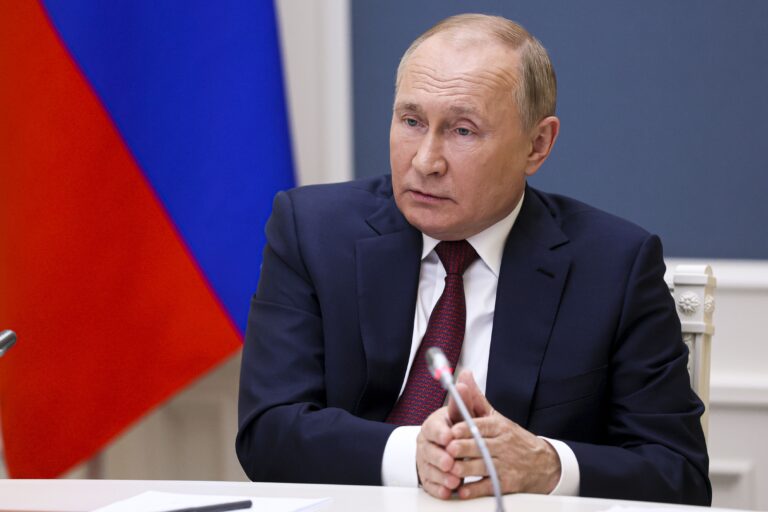
PRESIDENT Vladimir Putin has said that fighting could not be stopped until several key conditions were addressed, despite Russia’s support for a United States (US) proposal for a ceasefire in Ukraine.

Putin’s support for the planned ceasefire proposal came after President Donald Trump’s special envoy, Steve Witkoff, held talks on Thursday, March 13, with Russians in Moscow on the US ceasefire deal, which Kyiv has already agreed to.

Putin said that any agreement must tackle what Moscow considered the root causes of the conflict, a key condition that indicates a ceasefire could take longer than Trump desires.

“We agree with the proposals to cease hostilities,” Putin told reporters at the Kremlin. “The idea itself is correct, and we certainly support it. But we proceed from the fact that this cessation should be such that it would lead to long-term peace and would eliminate the original causes of this crisis.”

The Russian leader has said that he wanted Ukraine to abandon its North Atlantic Treaty Organization (NATO) ambitions. He also demanded that Russia have full control over the four Ukrainian regions it controlled in Ukraine, and for Ukraine’s military size to be restricted.

He has also emphasised his desire for Western sanctions to be eased and for a presidential election to be held in Ukraine, though Kyiv argued that holding elections under martial law was premature.

Putin outlined ceasefire-related issues that he said required clarification and expressed gratitude to Trump for his efforts to end the conflict.

Trump, who said he was willing to talk to Putin by phone, called Putin’s latest position on the war “very promising” and said he hoped Moscow would “do the right thing.”

However, Zelenskiy said he thought Putin was preparing to reject the ceasefire proposal but was afraid to tell Trump.

“That’s why in Moscow they are imposing upon the idea of a ceasefire these conditions – so that nothing happens at all, or so that it cannot happen for as long as possible,” Zelenskiy said in a video address Thursday night.


Gordon Fisher/JHR Fellowship calls for entries

THE Gordon N. Fisher/Journalists for Human Rights (JHR) Journalism Fellowship is providing mid-career journalists from developing countries with advanced training to strengthen human rights reporting and promote media excellence.

The fellowship would offer selected participants the opportunity to engage in academic seminars, hands-on media training, and mentorship from experienced journalists and human rights advocates in Massey College, University of Toronto. 

The programme aims to enhance investigative reporting skills, foster cross-cultural collaboration, and equip journalists to amplify underreported human rights issues.

The fellowship would extend for a year, allowing participants to immerse themselves in learning and return to their home countries with enhanced skills to drive impactful journalism.

Applications are currently open for the next cohort, with a competitive selection process that evaluates candidates based on their journalistic achievements and dedication to human rights advocacy.

Interested applicants can apply here before the deadline on March 31, 2025.

Again, Fubara writes Rivers Assembly, to re-present 2025 budget March 19

0

RIVERS State Governor Siminalayi Fubara has again written to the state House of Assembly, proposing Wednesday, March 19, as the new date for re-presenting the 2025 budget.

Fubara, in a letter to the Speaker of the Assembly, Martin Amaewhule, recalled his failed attempt to re-present the budget on March 12.

He stated that despite sending a soft copy notice and trying to submit a hard copy through the clerk, he and his team were denied entry into the Assembly premises and locked out.

Fubara’s attempt to re-present the budget complies with a recent Supreme Court judgment on political impasse in the state.

Fubara reminded the Speaker that the House had earlier given him a 48-hour ultimatum to re-present the budget, even before he received the Supreme Court ruling.

He reaffirmed his commitment to governance and urged all arms of government to work within legal and constitutional frameworks for the benefit of the state.

Fubara expressed hope that the Assembly would consider his request.

The ICIR reported that drama unfolded on Wednesday, March 12, at the Rivers State House of Assembly Quarters when Fubara arrived to re-present the 2025 budget, only to find the entrance gate locked.

Security personnel had secured the gates as the governor’s convoy arrived, citing the lack of official communication between the governor and the Assembly as the reason for their action.

However, Fubara claimed he informed the Speaker, Martins Amaewhule, of his intention to visit the Assembly through a formal letter.

He also said his efforts to speak with the speaker on the phone for days had proved abortive.

Recall that the power struggle between the governor and the Amaewhule-led Assembly reached its peak after the Supreme Court’s judgment, which ordered the Central Bank of Nigeria and the Attorney General of the Federation to suspend Rivers State’s statutory allocation.

The governor’s attempt to extend an olive branch by inviting the Assembly members for a peace talk was rebuffed. He also failed to meet the 48-hour ultimatum to re-present the budget.

This development has further deepened the rift between the two arms of government.

The ICIR reported that the Supreme Court, in a judgment, affirmed the leadership of the Amaewhule-led Assembly, dismissing Fubara’s appeal challenging the leadership. The court also ordered the governor to pay N2 million to the lawmakers.

The judgment invalidated the previous budget presentation by Fubara to a splinter faction of the Assembly. 

The court deemed Fubara’s presentation of an appropriation bill before a small faction of the Assembly as absurd.

It also annulled the recent local government election conducted in the state by Fubara.

After the apex court ruling, Fubara invited the Amaewhule-led House of Assembly for a dialogue which the Assembly failed to honour.

What led to the Supreme Court Ruling?

Fubara and his predecessor, Nyesom Wike, currently the Minister of the Federal Capital Territory (FCT), have been at loggerheads over who controls the PDP structure in the state, with President Bola Tinubu’s efforts to resolve the stalemate yielding no result. 

Fubara has vehemently resisted Wike’s insistence on controlling the party in the state, with both leaders, who were allies before the 2023 governorship election, turning into arch-rivals months after Fubara assumed power.

At the onset of the crisis, 27 members of the state House of Assembly who were loyal to the former governor decamped to the All Progressives Congress, the party in which Wike serves as minister in Abuja.

In addition to declaring the defectors’ seats vacant, Fubara sacked all 23 local government chairmen elected under Wike and declared that their tenure had expired.

He went on to conduct a new poll, which the Supreme Court annulled.

He had ignored the 27 lawmakers who defected to the APC and refused to recognise them as lawmakers.

Consequently, all appointments he made were confirmed by only the four lawmakers loyal to him.

The appointees include commissioners, board chairmen, chief executive of state agencies, heads of the state electoral commission, among others.

He also presented over a trillion naira budget to the splinter group of lawmakers, which the Supreme Court described as unconstitutional.

Chimamanda Ngozi Adichie’s new book Dream Count explores love in all its complicated messiness

By Daria TUNCA, Université de Liège

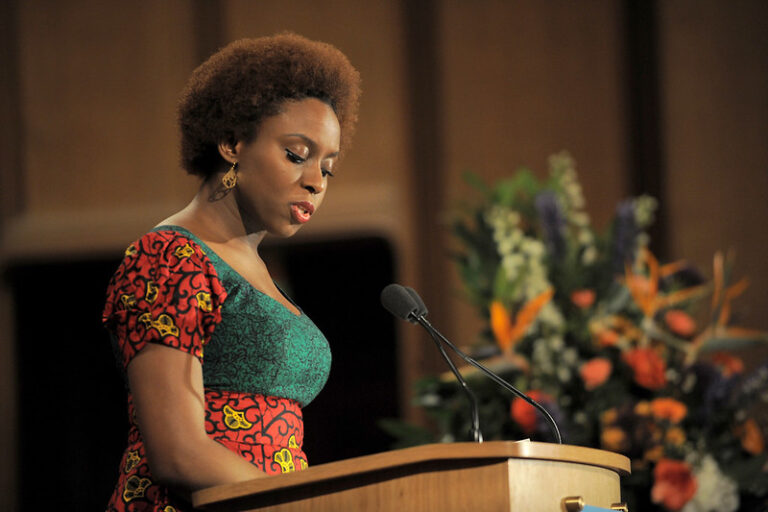
AWARD-winning Nigerian novelist Chimamanda Ngozi Adichie’s new novel Dream Count has landed. It’s been over a decade since Adichie published her previous novel, Americanah, following on global successes for Half of a Yellow Sun and Purple Hibiscus.

Adichie’s work is widely studied by academics, not least African literature scholar Daria Tunca. She told us what Dream Count is about and whether it’s worth reading.


What’s the story about?

Dream Count tells the intersecting stories of four African women. The novel recounts the characters’ hopes, dreams and struggles, interweaving flashbacks from their childhood and earlier adulthood with episodes set in the narrative present, during the COVID-19 pandemic.

The first woman is Chiamaka, a US-based travel writer from a wealthy Nigerian family. She spends much of her adult life looking for the ideal romantic partner.

Chiamaka’s narrative is followed by the story of her friend Zikora, a Nigerian lawyer who also lives in the US. She gives birth to a baby boy after her boyfriend has left her.

The third section is devoted to Kadiatou, Chiamaka’s Guinean housekeeper. Kadiatou is sexually assaulted by a powerful guest in the hotel where she works as a cleaner – a story inspired by the real-life case of Nafissatou Diallo and Dominique Strauss-Kahn.

The book ends with the story of Chiamaka’s cousin Omelogor, a banker in Nigeria’s capital city, Abuja. In addition to her banking job, Omelogor maintains a website giving life advice to men, and she spends a short time in a US university conducting research on pornography.

The novel presents an engaging, occasionally humorous, and deeply moving portrait of these women as they negotiate social expectations, especially when it comes to marriage and motherhood.

How does it add to Adichie’s literary output?

Adichie’s fiction has always given pride of place to the experiences of Nigerian women.

Some of her most memorable characters have included the teenage Kambili in Purple Hibiscus (2003), who is caught between conservative and progressive views of Catholicism. Another is the blogger Ifemelu in Americanah (2013), who spends years in the US without ever forgetting her first love, Obinze, whom she left behind in Nigeria.

Dream Count tackles some aspects of the female experience far more explicitly than Adichie’s previous work. For example, the book discusses physical issues related to women’s bodies (from fibroids to the pain of childbirth). It extensively explores misogyny, which is perpetuated in different forms by both men and women.

Above all, Dream Count is about human connections. Much of the novel depicts romantic relationships, friendships between women, and mother-daughter interactions.

Despite life’s challenges, the novel suggests, our loved ones are sometimes more attuned to our emotions than we might be ourselves.

Dream Count also broadens Adichie’s artistic range – for example, the novel features drug-taking scenes in Abuja, which constitute largely uncharted territory in the author’s work.

Was it worth the 12-year wait?

Emphatically, yes.

Dream Count rewards the attentive reader who is willing to let the book slowly add layers of nuance. The novel recounts the women’s lives one by one, revisits narrative episodes from different perspectives, and gradually pieces together the puzzle of the characters’ emotional journeys.

While Dream Count features Adichie’s trademark humour and biting satire, it mostly stands out for its unfiltered portrayal of women who are in turn passionate, vulnerable, infuriating, resilient, and dignified.

There’s a growing body of African work about love and relationships. Why is this important?

Quite simply, it is important because love matters; well-crafted love stories help us grow.

In the African literary context, books like this are all the more important as they show that, in the past few years, African writers have assertively pushed back against the “single story” – the stereotypical portrayal of the continent as plagued by poverty and violence – that Adichie so eloquently condemned in her 2009 TED talk.

Indeed, many western publishers have favoured work by African authors that fits racist prejudices about the continent. Writers have been pressured to produce “poverty porn” that presents a clichéd image of Africa as riddled by war, disease and corruption.

In recent years, creative African fiction published globally has offered more nuanced perspectives and tackled broader themes – starting with love.

However, Dream Count makes the point that western literary gatekeepers have not entirely relented. In the novel, Chiamaka pitches her idea for a travelogue about restaurants and nightclubs to a white editor, only to be asked to write a book about rape in the Congo instead. The twist is that this episode occurs in a commercially published African novel whose central theme is … love, explored in all its complicated messiness.

Let this be a reason for cautious optimism.The Conversation

Daria Tunca, Professor of English Literature, Université de Liège

This article is republished from The Conversation under a Creative Commons license. Read the original article.

Proposed Fly Nigeria Act ready for submission to National Assembly – Keyamo

0

THE Minister of Aviation and Aerospace Development, Festus Keyamo, has announced that the Federal Government is set to introduce the proposed Fly Nigeria Act to the National Assembly.

Keyamo disclosed this at the 2025 Ministerial Press Briefing on Thursday, March 13, in Abuja.

The policy aims to boost the country’s aviation industry by mandating government officials to prioritise local airlines for official trips.

“We are in the process of pushing the Fly Nigeria Act to the National Assembly. There is a Fly America Act, and I believe there is also a Fly India Act. Most major countries have their own ‘Fly Act’ to promote their national airlines,” Keyamo stated.

The minister noted that the proposed legislation would require that all government-funded official trips be taken using Nigerian airlines.

“Only when a local airline does not operate on a particular route can an international airline be used,” he explained.

The ICIR reports that the minister unveiled the Act on Friday, December 13, 2024, to empower local airlines and ensure fair competition.

The Act is primarily focused on ensuring Nigerian flag carriers are given priority for all government-funded travel, whether domestic, regional, or international, and priority extended to connecting flights as well.

At the ministerial press briefing, Keyamo maintained that the Fly Nigeria Act is not just an aviation policy but also a strategic move to strengthen Nigeria’s economy.

“This will be enacted as a law. We are unsure how nationalism will influence its reception, but it is a key policy push from us,” the minister explained.

He maintained that the initiative aligns with the federal government’s vision of a $1 trillion economy.

“The Fly Nigeria Act is almost ready in draft form. It aims to further boost business within the country, contributing to the $1 trillion economy that the President envisions.

“Once the Fly Nigeria Act is finalised, we will present it to the Federal Executive Council for approval. After that, we will take it to the National Assembly to ensure that local airlines are given priority on international routes before international airlines,” he said.

Keyamo reiterated that the Fly Nigeria Act is expected to drive increased patronage for local airlines, stimulate growth in the aviation sector, and ultimately retain more revenue within Nigeria. He added that the process for its formal adoption was already in motion.

The ICIR also reports that the federal government has changed the name of the Ministry of Aviation to the Ministry of Aviation and Aerospace Development.

The new name was approved by the Federal Executive Council (FEC) at a meeting presided over by President Muhammadu Buhari on Wednesday, May 17, 2023.