Home Blog Page 381

UN seeks $910m humanitarian support for Nigeria amid cost of living crisis

0

THE United Nations (UN) has set plans to secure $910 million this week to help tackle a humanitarian crisis in northeastern Nigeria.

Reuters revealed this in a report on Wednesday, January 22, hinting that the plan is contained in UN documents sighted by the organisation.

It said documents showed that 7.8 million people need help in the three northeastern states of Adamawa, Borno and Yobe and that the UN aims to help 3.6 million of them.

Nigeria has been in the grip of an Islamist insurgency since 2009 and was hit by flooding last year.

The country is also grappling with a cost of living crisis that has seen inflation accelerate to its highest level in nearly three decades, propelled by skyrocketing food prices.

The latest Consumer Price Index (CPI) report from the National Bureau of Statistics (NBS) shows that the country’s headline inflation hit a near 30-year high of 34.8 per cent in December 2024.

Food inflation, which constitutes more than 50 per cent of Nigeria’s inflation basket, eased to 39.84 per cent in the review month.

The economic policies initiated by President Bola Tinubu-led administration, including fuel subsidy removal and foreign exchange unification, have worsened economic troubles for both households and businesses.

Although the President says his reforms will put the country’s economy on a stronger path to growth, however, the policies are yet to yield the desired results.

The $910 million aid will be the most expensive humanitarian crisis in West and Central Africa, ahead of Chad, Mali, Burkina Faso, and Niger, the documents reportedly showed.

Last year, the UN raised alarm over the devastating flooding impact in Borno State, pointing out that it had exacerbated an already critical food and nutrition crisis in the state’s Internally Displaced Person camps, The ICIR reported.

It had previously said Nigeria’s northeast risks becoming a forgotten crisis as the humanitarian focus has shifted to crises elsewhere such as Ukraine, Gaza and Sudan.

A joint report by the government and UN in November last year stated that Nigeria faces one of its worst hunger crises with more than 30 million people expected to be food-insecure this year.
CBN approves release of FX code to promote market participation

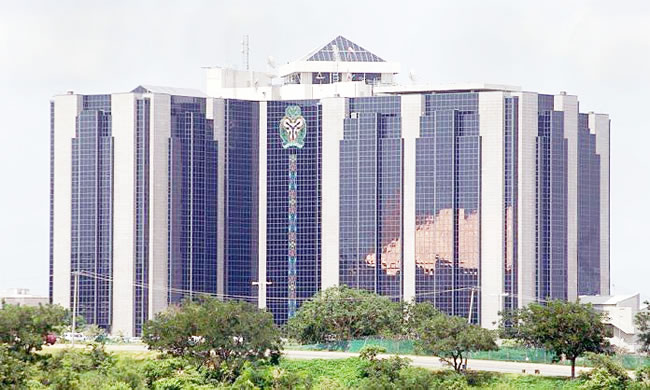
THE Central Bank of Nigeria (CBN) said it has approved the release of the Nigerian Foreign Exchange (FX) Code.

It announced the approval in a statement issued on Wednesday, January 22, adding that the code would formally be launched in Abuja next week.

It said the FX Code would help promote ethical conduct in the Nigerian foreign exchange market.

“The Central Bank of Nigeria has approved the release of the Nigerian Foreign Exchange (FX) Code as a guideline to the banking industry to promote the ethical conduct of authorised dealers in the Nigerian Foreign Exchange Market.

“The Bank will formally launch the Code at the CBN Head Office Auditorium, Abuja, on Tuesday, January 28, 2025,” CBN started.

The Code will offer clearer directives on the expectations for market participants and ensure that the market operates fairly and transparently.

The CBN step is necessary as the Nigerian FX market has been experiencing volatility in recent years, with issues such as currency devaluation and irregularities in FX transactions affecting both investors and businesses.

The ICIR can report that in October last year, the apex bank introduced the Electronic Foreign Exchange Matching System (EFEMS) and set a minimum trade value of $100,000 for interbank foreign exchange trading via the platform.

The system is designed to streamline interbank FX trading, reduce counterparty risks, and ensure adherence to CBN regulations.

Among other guidelines, participation in the EFEMS is limited to authorised dealer banks licensed by the CBN, while other institutions wishing to join the platform must first obtain prior approval, The ICIR reported.

Ekweremadu’s wife freed from UK prison, returns to Nigeria

0

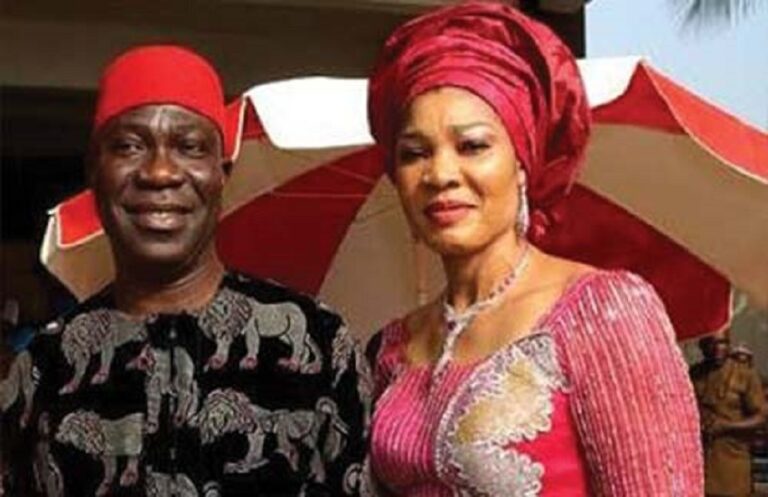
BEATRICE Ekweremadu, wife of former Deputy Senate President,  Ike Ekweremadu, has been freed from the United Kingdom (UK) prison and returned to Nigeria.

Vanguard Newspaper reported on Wednesday, January 22, that a source confirmed that she was back home.

Ekweremadu and his wife were accused of trying to harvest the kidney of a young Nigerian boy to give to their sick daughter. 

Ekweremadu ended up with a 10-year prison sentence, while his wife got four years and six months. A family doctor Obinna Obeta found guilty of participating in the plan got a 10-year prison term.

They were the first to be convicted under the UK Modern Slavery Act for an organ harvesting conspiracy.

The trial judge held that the defendants had intended harm to the donor that would have resulted in him spending the rest of his life with only one kidney.

He added that the risks were not properly explained to the victim and there had been no consentin any meaningful sense.”.

During the trial, it was alleged that the 21-year-old street trader was to be rewarded for donating the organ to Sonia Ekweremadu in an £80,000 private procedure at London’s Royal Free Hospital.

The prosecution claimed the donor was offered up to £7,000 along with the promise of a better life in the UK, but the donor did not understand until his first appointment with a consultant at the hospital that he was there for a kidney transplant.

It was also claimed that the man was falsely presented as Sonia Ekweremadu’s cousin in a failed attempt to persuade medics to carry out the procedure.

While it is lawful to donate a kidney in the UK, it becomes criminal if money or another material advantage is rewarded.

A few days after the ruling, the Nigerian Senate joined the House of Representatives, ECOWAS Parliament, and former Nigerian President Olusegun Obasanjo to appeal to the court for leniency in giving out a sentence against the couple.

The Senate pointed out that the lawmaker was ignorant of the law as it applied in the country when he sought a kidney donor for his ailing daughter, adding that all the defendants were first-time offenders.

The Chairman of Nigerians in Diaspora Commission (NIDCOM), Abike Dabiri-Erewa, also pleaded with the UK government for leniency.

22 states unite to block Trump’s birthright citizenship order in court

0

ABOUT 22 states in the United States (US) and civil rights groups have headed to court to challenge President Donald Trump’s bid to cancel birthright citizenship for children of illegal immigrants.

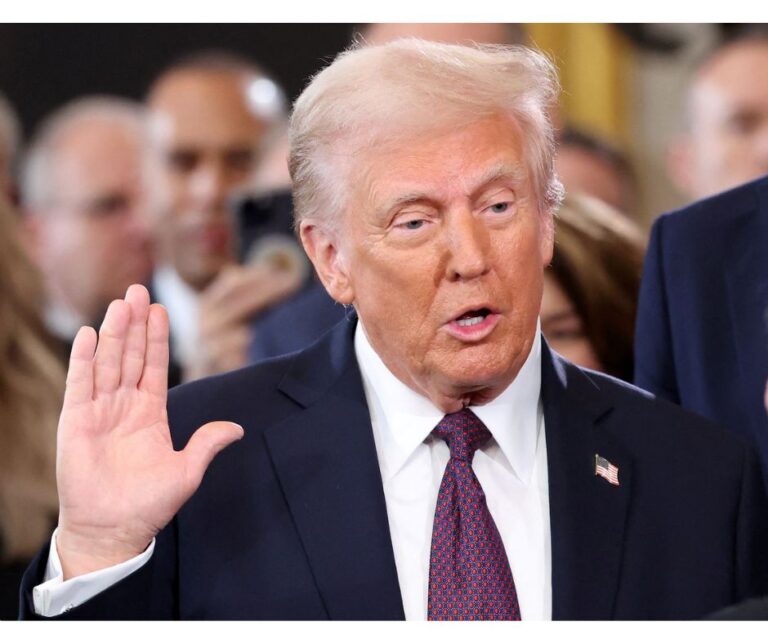
Trump, a Republican sworn in on Monday, January 20, ordered U.S. agencies to refuse to recognise the citizenship of children born in the US by illegal immigrants.

Twenty-two Democratic-led states, along with the District of Columbia and the city of San Francisco, on Tuesday filed lawsuits in federal courts in Boston and Seattle claiming Trump violated the U.S. Constitution.

Similarly, the American Civil Liberties Union and some immigrant organisations have filed two similar court cases.

This is the first major legal battle of Trump’s administration, and it’s all about challenging a key part of his immigration crackdown.

The lawsuits say Trump’s order is unfair and goes against the rights of certain people, particularly those born in the US to parents who are not citizens or are in the country temporarily.

According to Massachusetts Attorney General, Andrea Joy Campbell’s office, if Trump’s order is allowed to stand, it would be a historic first – denying citizenship to thousands of kids born in the US yearly.

“President Trump does not have the authority to take away constitutional rights,she said in a statement.

Reports say more lawsuits are expected to be filed by Democratic states and advocacy groups against Trump’s policies, with some cases already underway.

In addition to the executive order on birthright citizenship, Trump also signed 41 other executive orders on Monday, January 20, reversing several policies of his predecessor, Joe Biden.

Some of the orders include pulling the US out of the World Health Organisation (WHO), the  Paris Climate Agreement, ending birthright citizenship for children of illegal immigrants, and recognising only two genders – male and female.

The list includes defending women from gender ideology extremism, reinstating the ban on transgender military service, and renaming the Gulf of Mexico to the Gulf of America, among others.

CAPPA seeks N300m budget for tobacco control, warns of public health crisis

0

THE Corporate Accountability and Public Participation Africa (CAPPA) has called on the National Assembly to increase the budgetary allocation for tobacco control from N10 million to N300 million in the proposed 2025 national budget.

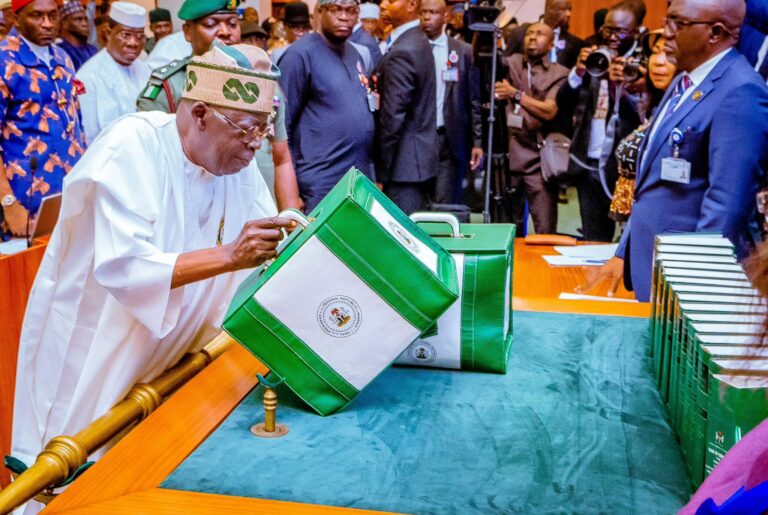
The group made the appeal in a statement on Tuesday, January 21, adding that it had written separate petitions to Senate President Godswill Akpabio and Speaker of the House of Representatives, Tajudeen Abbas, as lawmakers review the N49.7 trillion appropriation bill presented by President Bola Tinubu in December 2024.

The CAPPA’s executive director, Akinbode Oluwafemi, stressed the urgent need for increased funding to address the “devastating impact” of tobacco use in Nigeria. 

According to him, tobacco consumption remains a leading preventable cause of death globally, with Nigeria recording over 26,800 tobacco-related deaths annually. 

He highlighted the broader health implications of tobacco use, including non-communicable diseases such as cancer, heart disease, and chronic respiratory illnesses, which he said placed a significant burden on the nation’s healthcare system.  

Oluwafemi also decried the financial and environmental toll of tobacco use, noting that billions of naira are lost annually in healthcare expenses and reduced productivity. 

He added that tobacco cultivation contributed to deforestation and soil degradation, while cigarette waste polluted the environment.  

“Tobacco use remains the leading preventable cause of death worldwide, and Nigeria is no exception. Annually, tobacco-related illnesses claim 26,800 Nigerian lives and inflict debilitating conditions and non-communicable diseases like cancer, heart disease, and chronic respiratory diseases on thousands more.

“The economic toll is immense, costing billions in healthcare expenses and lost productivity. Additionally, tobacco cultivation exacerbates deforestation and soil degradation, while cigarette waste pollutes the environment,” Oluwafemi said.

The CAPPA director expressed concern about the rise of unregulated tobacco and nicotine products targeting younger demographics. He accused tobacco companies of exploiting weak regulatory systems to aggressively market their products on social media and through corporate social responsibility initiatives, undermining public health efforts.  

While acknowledging the increase in tobacco control funding from N4.7 million in 2023 to N10 million in 2024, CAPPA described the current allocation as grossly inadequate to regulate tobacco use. 

Oluwafemi explained that critical activities such as public sensitisation campaigns, enforcement of tobacco control laws, and support for farmers transitioning from tobacco to sustainable crops required significant financial investment.  

He pointed out that the National Tobacco Control Committee (NATOCC), coordinating tobacco control efforts, faced operational challenges due to insufficient funding. 

CAPPA also called for the full operationalisation of the National Tobacco Control Fund (TCF), established under the National Tobacco Control Act (NTCA) 2015, noting that the fund, designed to support public health campaigns, and enforcement activities, among others, had yet to be fully implemented.  

The group appealed to lawmakers to act decisively to strengthen Nigeria’s tobacco control framework and mitigate the devastating impacts of tobacco use on citizens and the economy. 

Full list: 42 executive orders signed by Trump on inauguration day

UNITED States (US) President Donald Trump signed executive orders on his inauguration day on Monday, January 20, reversing several policies of his predecessor, Joe Biden.

Some of the orders include pulling out the US from the World Health Organisation (WHO), the  Paris Climate Agreement, ending birthright citizenship for children of illegal immigrants, and recognising only two genders – male and female.

The list includes defending women from gender ideology extremism, reinstating the ban on transgender military service, renaming the Gulf of Mexico to the Gulf of America, among others.

Trump_Executive_Order_Pg_1
Trump_Executive_Order_Pg_2

Here is the list of the 42 executive orders, memoranda, and proclamations signed by the president:

  1. Declaring a national emergency at the Southern Border

2. Designating Mexican drug cartels as foreign terrorist organisations

3. Reinstating the ‘remain in Mexico’ policy

4. Ending birthright citizenship for children of illegal immigrants

5. Defending women from gender ideology extremism

6. Eliminating diversity, equity, and inclusion (DEI) programmes in federal agencies

7. Withdrawing from the Paris Climate Agreement

8. Declaring a national energy emergency

9. Reversing electric vehicle mandates

10. Implementing ‘Schedule F’ for federal employees

11. Relocating U.S. Space Command headquarters to Alabama

12. Pardoning individuals convicted in relation to January 6 events

13. Halting federal funding for abortion services

14. Suspending security clearances for officials linked to Hunter Biden scandal

15. Establishing a federal bitcoin reserve

16. Releasing classified documents on JFK, RFK, and MLK assassinations

17. Reversing AI regulation policies

18. Imposing tariffs on imports from China, Mexico, and Canada

19. Reinstating the ban on transgender military service

20. Prohibiting transgender women from participating in women’s sports

21. Halting government offshore wind leases

22. Renaming the Gulf of Mexico to the Gulf of America

23. Reverting Mount Denali to Mount McKinley

24. Freezing federal workforce hiring

25. Easing regulations on oil and gas production

26. Pausing Congress TikTok ban to seek a U.S. buyer

27. Reversing Biden-era immigration policies

28. Pulling out of the World Health organization

29. Eliminating federal funding for DEI Programmes

30. Establishing the Department of Government Efficiency (DOGE)

31. Reinstating the ‘Muslim ban’

32. Ending birthright citizenship

33. Reforming the criminal justice system

34. Banning critical race theory in federal agencies

35. Demanding increased NATO contributions

36. Confronting China on trade practices

37. Ending the war in Ukraine

38. Supporting law enforcement

39. Promoting school choice

40. Restricting refugee admissions

41. Increasing federal focus on fentanyl trafficking

42. Launching a national infrastructure plan

NNPCL retail outlets raise petrol pump price to N990

0

What to know about the rebasing of Nigeria’s economy

THE National Bureau of Statistics (NBS), said Nigeria’s quest to rebase its gross domestic product (GDP) is to reflect the actual size of economic growth recorded more than 10 years ago.

Rebasing of the economy, the statistics office said on Monday, January 20, is to be unveiled by this month’s end.

According to NBS, rebasing is a process of updating an old base year with a recent one to reflect changes in the prices of goods and services produced within the economy. The agency explained that constant price estimates are recalculated using the new base year’s prices.

The statistics office cited the need to capture changes in certain sectors of the economy and to reflect current consumption patterns, while also reflecting, the economic dynamics witnessed in the past few years.

Commenting further on the reason for the rebasing, the statistics office said some sectors of economy have experienced significant growth since the last GDP rebasing in 2014 and now require proper representation of their contribution to the economy in the latest reabasing exercise.

On the key sectors that have reflected growth which were not captured in the last rebasing exercise, the NBS listed marine economy, arts, culture and tourism, information and communication technology and e-commerce activities.

“Rebasing is a very vital exercise that ensures our economic indicators are accurate, reflecting the updated structure of our economy,” the statistician general and CEO of the NBS, Adeyemi Adeniran, said.

“It’s done to absorb the new ministries that the new government just created, upgrade the Consumer Price Index (CPI) basket and change the methodology of CPI and gross domestic product (GDP),” he added.

He stressed that another reason for CPI Rebasing is to bring the price reference period (Base Year) closer to the current period in other to have a relative price that shows current prices movement. In this regard, the Bureau is using 2024 as the base year for the CPI Rebasing.

Economic watchers said the rebasing is a strategy to woo upbeat investors into the Nigerian economy and furnish them with the right economic indicators.

Chairman of the Presidential Committee on Fiscal Policy and Tax Reforms, Taiwo Oyedele emphasised the significant benefits of the rebasing, including improved investor perception, adjustments to the tax-to-GDP ratio, and a more accurate measurement of per capita income.

“Rebasing the economy signals to investors that Nigeria is serious about reforms and provides a clearer picture of the country’s economic trajectory,” Oyedele said.

He highlighted the Consumer Price Index (CPI) rebasing as another critical component, which would offer a more precise understanding of inflation and its drivers.

A senior Investment Research Analyst, Felicia Awolope, who commented further on the rebasing said, “the rebasing will push up investors appetite in Nigeria’s equities market which recorded huge returns for investors in 2024. It will give investors clear indicators of the Nigerian economy.

“The actual size of the Nigerian economy will give investors the economic picture of where to invest and opportunities in the overall economy. It’s important investors are furnished with accurate data on the economy,” she said.

The ICIR reports that the rebasing in 2014 positioned Nigeria as Africa’s largest economy, however, findings have revealed drop to the fourth position by Nigeria, raising further worries about the actual size of Nigeria’s current economy.

It would be noted that following President Bola Tinubu reforms after he took office in 2023 by implementing the scrapping of the decades-old petrol subsidy and devaluing the naira currency in an effort to jump-start growth.

Tinubu’s reforms have worsened already high inflation and escalated a cost of living crisis in Africa’s most populous nation with most Nigerian households spending larger percentage of their earnings on feeding.

The statistics office further said consumption pattern in Nigeria have changed significantly since the last inflation rebasing in 2009. It plans to use 2024 as the new base year for inflation.

Tinubu meets Fubara, Wike, Ogoni leaders behind closed doors in Abuja

0

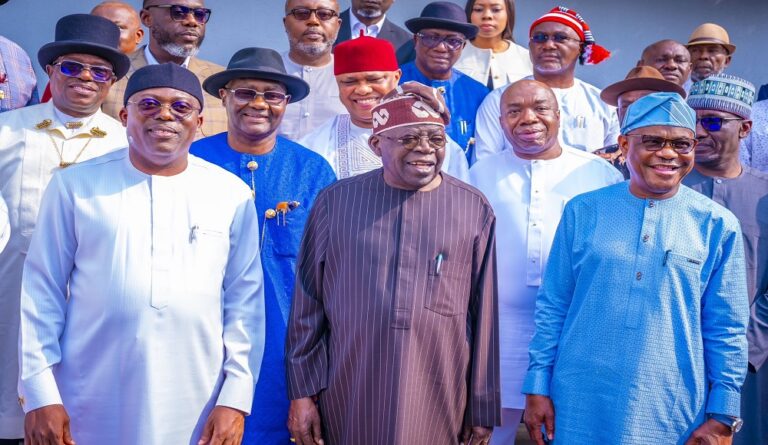
PRESIDENT Bola Tinubu on Tuesday, January 21, met with Rivers State Governor Siminalayi Fubara and the leadership of Ogoniland at the Presidential Villa in Abuja.  

Also present at the meeting, held behind closed doors, was the minister of the Federal Capital Territory, Nyesome Wike, King Festus Babari Bagia Gberesaako XIII, the Gberemene Gokana Kingdom, national security adviser (NSA), Mallam Nuhu Ribadu, the chief of staff to the President, Femi Gbajabiamila, and group chief executive officer, Nigeria National Petroleum Company Limited, Mele Kyari, among others top government functionaries.

Briefing journalists after the meeting, minister of regional development, Abubakar Momoh, said the meeting focussed on how to achieve peace in the oil-rich region.

“It is essentially about how there can be peace in Ogoniland, working with all the stakeholders,” Momoh said.

Media reports earlier suggested the meeting was part of the ongoing efforts geared towards preparing the ground for the resumption of oil exploration in Ogoniland.

The Federal Government had expressed concern over the stoppage of oil exploration by the International Oil Companies (IOCs) in Ogoniland for many years.

This is coming on the heels of a recent call by a group, the Concerned Civil Society Organisations for restraint on the planned resumption of the exploration.

The group cited environmental degradation, social injustices, and a lack of meaningful community engagement as the reasons for the call for caution.

The group, representing various stakeholders across the Niger Delta, issued its statement after a meeting in Port Harcourt. 

The statement was endorsed by several organisations, including Environmental Rights Action, Health of Mother Earth Foundation (HOMEF), Corporate Accountability and Public Participation Africa (CAPPA), Ogoni Solidarity Forum-Nigeria, and others.

According to the group, the call for a restraint follows an invitation by the National Security Adviser, Nuhu Ribadu, for select Ogoni leaders to attend a private meeting in Abuja to discuss the resumption of oil extraction..

The group listed a series of demands aimed at ensuring justice, environmental restoration, and sustainable development in Ogoniland and the broader Niger Delta.

They asked for the allocation of $1 trillion for the cleanup of the land and compensation for lost livelihood.

They also urged the Federal Government to recognise Ken Saro-Wiwa, an Ogoni environmental activist executed in 1995, as a hero of the environment, similar to the national honour conferred on MKO Abiola for his role in democracy.

The meeting came amid the Ogoniland clean-up launched by former President Muhammadu Buhari. The initiative has since been stalled. 

The Abuja meeting also coincided with the prolonged rivalry between Fubara and Wike, who were once political allies.

Fubara and his predecessor, Wike, have been at loggerheads over who controls the PDP structure in the state since 2023, with President Tinubu’s efforts to resolve the stalemate yielding no result.

Fubara has vehemently resisted Wike’s insistence on controlling the PDP’s structure in Rivers State. In addition to declaring the seats of 27 House of Assembly members loyal to the minister vacant, Fubara sacked all 23 local government chairmen elected under Wike and declared that their tenure had expired.

He followed his action with the conduct of a local government election on October 5, affirming his authority on the state’s politics.

The ICIR reported how Fubara won the election for the African Peoples Party (APP) even though he has yet to dump the PDP.

The political camps of Fubara and Wike will, on February 10, battle in five separate cases instituted against each other at the Supreme Court.

Tinubu names proposed federal polytechnic after self

0

PRESIDENT Bola Tinubu has approved the establishment of a Federal Polytechnic in Abuja.

The institution will be cited at Gwarimpa Estate, one of the largest estates in the Federal Capital Territory (FCT).

Daily Trust reported that the institution would be named after the president.

The polytechnic adds to the list of public higher institutions of learning in the city, including the University of Abuja (UniAbuja), College of Education, Zuba, and the University of Science and Technology.

The school aims to enhance technological and vocational training in conformity with Nigeria’s education policy.

In a letter dated January 16, 2025, addressed to the FCT minister, Nyesom Wike, the minister of education, Tunji Alausa, conveyed the federal government’s approval, requesting the FCT minister to propose temporary and permanent locations within Gwarinpa for the institution. 

According to the report, a technical team from the Federal Ministry of Education and the National Board for Technical Education (NBTE) would inspect the sites before giving final approval.

Reacting to the development in a statement, the chairman of the Abuja Municipal Area Council (AMAC), Christopher Zakka Maikalangu, lauded the president for the development. 

The statement, released by his media aide, Kingsley Madaki, described the polytechnic’s establishment as a “dream come true” for the FCT. 

He also commended Wike for his efforts in making the institution a reality.

This latest development is coming a few weeks after the Federal government approved the renaming of the University of Abuja after former Head of State, Yakubu Gowon, a retired general.

The announcement was made on Monday, December 16, by the minister of information and national orientation, Mohammed Idris, while State House correspondents after the council’s meeting at the Aso Rock Villa, Abuja.

Established in January 1988 under Decree No. 110 of 1992 (as amended), the University of Abuja, widely known as UniAbuja, functions as a dual-mode institution, providing both conventional and distance learning programmes.

Gowon, who served as Nigeria’s Head of State from 1966 to 1975, is widely remembered for introducing the National Youth Service Corps (NYSC) in 1973, a programme aimed at fostering national integration after the nearly three-year civil war he led.

However, there was much opposition to the renaming from different groups, including the students and Alumni of the university.

The group asked the government to reverse the decision,  noting that the ‘name change was seen as an affront to our collective identity and history.’