
Home Blog Page 4

Anambra to employ 200 community health extension workers, 50 midwives

0

By Alfred Ajayi 

ANAMBRA State Government is set to employ about 200 Community Health Extension Workers (CHEWs) and at least 50 midwives to strengthen primary healthcare delivery across the state. 

Executive Secretary of the (Anambra) State Primary Healthcare Development Agency (ASPHCDA), Chizoba Ezeasor, a doctor, disclosed this on Wednesday, November 11, during a capacity-building programme on maternal and child health system strengthening for Ward Development Committees (WDCs) and Officers-in-Charge (OICs) of primary healthcare centres.

 The workshop was organised by the Justice, Development and Peace Caritas (JDPC), Nnewi, under the Strengthening Public Accountability for Results and Knowledge (SPARK II) project, supported by International Budget Partnership (IBP). 

 Ezeasor said the recruitment was being planned by the state government to address manpower gaps in primary healthcare facilities, stressing that the exercise would prioritise qualified and committed health professionals who reside in the communities where they would be deployed. 

 She explained that employing health workers from their respective communities would promote accessibility, strengthen accountability and ensure that personnel remained available to attend to residents’ healthcare needs.  

 The ASPHCDA boss, however, cautioned against political and personal considerations in the recruitment process, insisting that the government needed competent personnel who would genuinely serve. 

 She also called for greater accountability among existing health workers, noting that some Officers-in-Charge of primary healthcare facilities were not consistently available at their duty posts. 

 According to her, the success of the state’s healthcare system should not be measured only by the number of facilities constructed, equipment procured, personnel employed or services provided, but also by the experiences of patients accessing those services. 

 Ezeasor challenged healthcare providers to ensure that pregnant women received prompt attention, adequate information, privacy, dignity and respectful treatment throughout antenatal care, childbirth and postnatal services. 

 She acknowledged the state government’s investment in healthcare, including free antenatal care and delivery services in public health facilities, but maintained that making services free was only one aspect of the responsibility. 

 She said the quality, accessibility, safety and timeliness of services must also be guaranteed. 

 The Executive Secretary described community feedback as an important instrument for identifying shortcomings in healthcare delivery, understanding patients’ experiences and ensuring that identified problems resulted in corrective action. 

 She assured the implementing partners that ASPHCDA would collaborate with them to integrate the feedback mechanism into its existing monitoring, supervision and accountability structures. 

 Giving an overview of the capacity-strengthening exercise, the Executive Director of SIDEC, Ugochi Ehiaruhuike, explained that the project was designed to replace informal and poorly documented complaints about primary healthcare services with a structured community feedback and accountability mechanism. 

 She said the exercise would equip at least 50 WDC members and 24 PHC OICs with the skills to collect, document, analyse and respond to community experiences, particularly those relating to antenatal care, delivery and postnatal services. 

 According to her, the initiative seeks to establish a functional feedback channel connecting community members, WDCs, PHC officers, local government health authorities and ASPHCDA. 

 She identified high drug costs, inadequate sanitation, poor facility maintenance and unsatisfactory patient experiences as some of the service-delivery concerns the mechanism was designed to identify and address. 
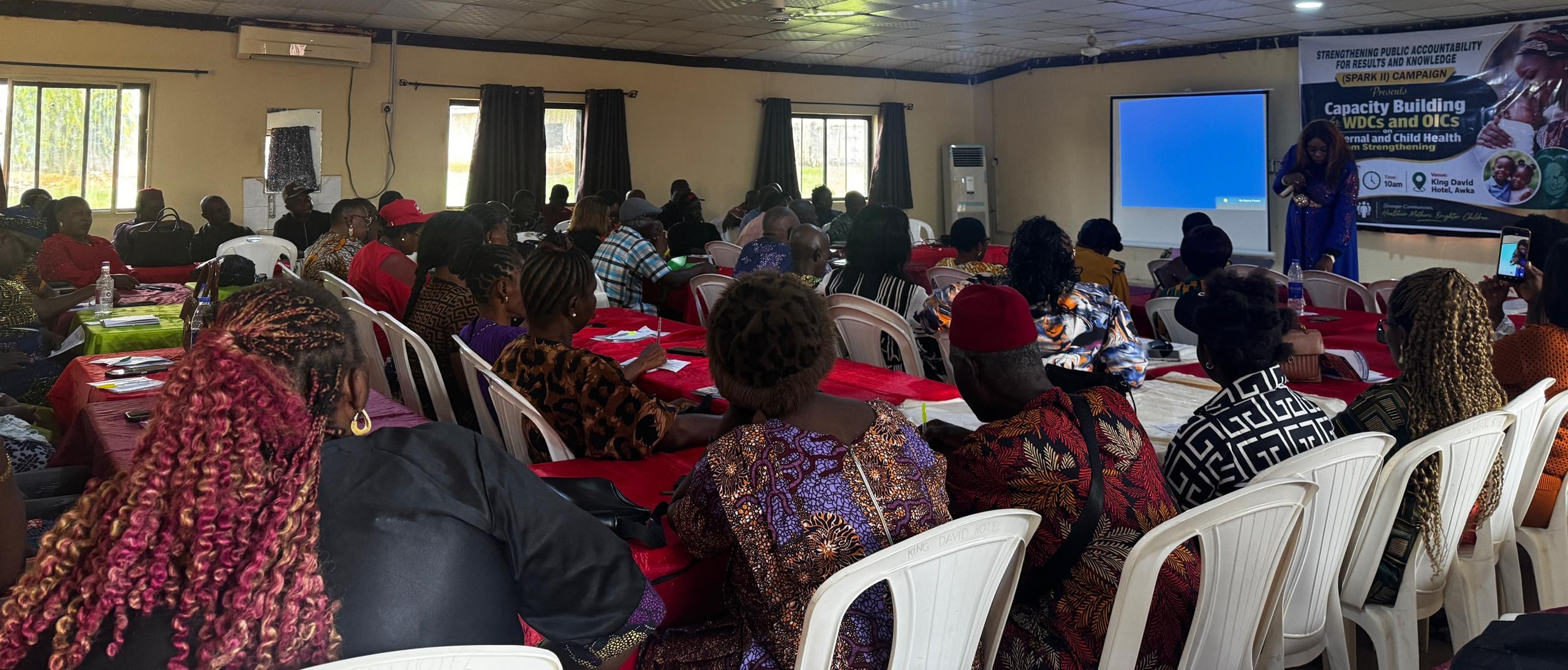
A cross section of participants at the capacity-building programme for Ward Development Committees (WDCs) and Officers-in-Charge (OICs) of primary healthcare centres in Anambra State on Wednesday, November 11.

Ehiaruhuike said standardised feedback forms, documentation guides, response guides and action-tracking tools would enable community representatives to present complaints systematically, while healthcare officers would be expected to review concerns, take appropriate action and report progress. 

 She added that the project would also encourage WDCs and PHC officers to develop practical business plans based on identified service gaps and available resources. 

 Earlier in a welcome address, the Director of JDPC Nnewi, Benedict Okoro, a reverend father, said the initiative was designed to improve knowledge and strengthen the capacity of community structures and healthcare providers to deliver better maternal and child healthcare. 

 He acknowledged that Anambra had recorded progress in reducing maternal mortality but stressed that more efforts were required to protect mothers and children. 

 The Executive Director, Civil Rights Concern, (CRC), Okay Onyeka, described maternal healthcare as a shared responsibility, expressing concern over preventable maternal and child deaths. 

 He said the ultimate objective should be to ensure that no woman loses her life while giving birth, urging stakeholders to sustain their commitment to improving healthcare services. 

 In a goodwill message, the member representing Aguata II Constituency in the Anambra State House of Assembly and Chairman, House Committee on Health, Tony Muobike, described maternal and child healthcare as central to family and community wellbeing. 

 Muobike said primary healthcare remained the foundation of healthcare delivery. He urged community representatives and health workers to sustain their contributions to improving services.

 He noted that maternal and child healthcare extended beyond hospitals and primary healthcare centres, as practices within households could also influence pregnancy outcomes and the safety of childbirth. 

 The lawmaker, who commended the state government’s investment in free antenatal care and delivery services, said the legislature would continue to work with the executive through oversight to improve healthcare delivery. 

 He, however, expressed concern over reports of absenteeism among some PHC officers. “Some OICs will open their facilities and go away to their private businesses. Others delegate their duties to volunteers,” he stated. 

 He called for greater discipline and accountability, assuring that the Assembly would support efforts to address practices undermining the government’s healthcare objectives. 

In a presentation on developing PHC and WDC business plans, quarterly feedback collection and response plans, the SPARK II Programme Manager at JDPC Nnewi, Onyekachi Ololo, stressed the importance of collaboration between WDCs and PHC OICs in developing facility business plans, describing it as necessary for effective planning and service improvement. 

 The manager observed that some WDCs had become inactive despite continuing in their positions, recommending that those unwilling or unable to perform their responsibilities should be replaced with committed members. 

 The training featured sessions on patient feedback tools, respectful and patient-centred care, documentation of maternal health experiences, data quality, feedback analysis, identification of systemic challenges in primary healthcare delivery as well as practical exercises involving simulated patient interviews and focus group discussions. 

 The initiative is expected to establish a quarterly feedback and reporting mechanism through which identified concerns will be documented, referred to relevant authorities, addressed and monitored, with unresolved matters escalated to local government health authorities and ASPHCDA. 

 Ultimately, the organisers said SPARK II seeks to strengthen community participation and institutional accountability while ensuring that patients’ experiences inform decisions and improvements in maternal and child healthcare delivery across the state. 


Media groups condemn remand of FIJ journalist over 2023 SDG projects investigation

0

A COALITION of 17 media and civil society organisations has condemned the remand of investigative journalist Daniel Ojukwu at the Kuje Correctional Centre in Abuja, describing his prosecution as an attack on press freedom and democratic accountability.

Ojukwu, a journalist with the Foundation for Investigative Journalism (FIJ), was arraigned on a 12-count charge over reports published in 2023 and 2024, questioning expenditure by the Office of the Senior Special Assistant to the President on Sustainable Development Goals (OSSAP-SDGs).

The charges arose from investigative reports published by FIJ in 2023 and January 2024, which questioned payments of ₦147.1 million and ₦47.5 million for classroom construction projects and the reported failure of solar panels installed at some of the projects shortly after their completion.

The Federal High Court ordered his remand until December 1, 2026, when his bail application is scheduled to be heard.

In a joint statement issued on Thursday, November 12, the organisations expressed concern over the court’s decision, noting that Ojukwu had pleaded not guilty to all the charges and that his lawyer informed the court that he had complied with the conditions of his earlier administrative bail.

The statement was signed by 17 organisations, including BudgIT, the Centre for Journalism Innovation and Development (CJID), Enough is Enough Nigeria, Media Rights Agenda, International Press Centre, Socio-Economic Rights and Accountability Project (SERAP), Accountability Lab Nigeria and WikkiTimes.

The coalition said the court’s refusal to allow him to remain on the existing bail pending the hearing of his application raised serious concerns about the use of criminal prosecution against journalists carrying out legitimate investigative work.

They described these as legitimate matters of public interest that required transparency and explanations from public officials responsible for managing public resources.

They argued that inaccurate or defamatory reports should be addressed through lawful avenues of redress rather than intimidation, detention or criminal prosecution.

The media groups and civil society organisations also recalled that Ojukwu was arrested and detained for 10 days in May 2024 over the same reporting before his release following public outcry.

the coalition further warned that his renewed prosecution could create a climate of fear among investigative journalists and discourage scrutiny of public institutions.

Citing Sections 22 and 39 of the 1999 Constitution, the organisations said the media had a responsibility to hold the government accountable, while freedom of expression remained constitutionally protected.

They also referenced Article 9 of the African Charter on Human and Peoples’ Rights and Article 19 of the International Covenant on Civil and Political Rights.

The coalition called for Ojukwu’s immediate release and bail pending the determination of the charges. They also demanded an end to the use of the Cybercrimes Act and criminal defamation provisions to suppress independent journalism and public-interest reporting.

The groups further urged the government to address the questions raised by FIJ’s investigations through the disclosure of relevant records, independent scrutiny and appropriate accountability mechanisms.

Tinubu gives Flamingos players ₦100m savings bonds each after World Cup victory

0

PRESIDENT Bola Tinubu has rewarded members of Nigeria’s Under-17 women’s national football team, the Flamingos, with Federal Government Savings Bonds worth ₦100 million each following their historic victory at the FIFA U-17 Women’s World Cup.

The team’s coach also received a savings certificate worth ₦100 million, while each member of the technical crew was given ₦50 million in cash.

The First Lady, Oluremi Tinubu, announced the rewards on Wednesday, November 11, when she received the players and their officials on behalf of the president at a reception held at the State House in Abuja.

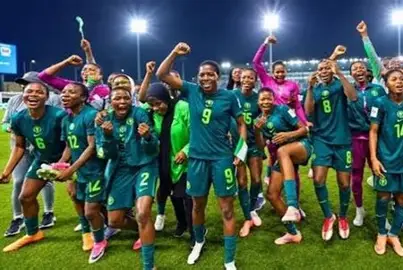
The Flamingos made history by becoming the first African team to win the FIFA U-17 Women’s World Cup after defeating Japan 2:1 in the final in Rabat, Morocco.

Why government chose savings bonds

Reacting to the development at the State House, the Chairman of the National Sports Commission, Shehu Dikko, said the decision to reward the players with savings bonds rather than direct cash payments was intended to protect their long-term financial interests, as most of them are still teenagers.

Dikko explained that the bonds would run for five years and attract annual interest of between 12 and 14 per cent, providing the players with regular returns to support their education, training and other needs.

“There is no need to flood them with money that can distort their career,” he said.

He added that the arrangement would allow the players to access their investments when they become adults and make independent financial decisions.

Dikko said the rewards would provide financial support for the players while they continue their education and sporting careers.

Senate earlier donated ₦100m

The presidential reward comes a day after the Senate announced a ₦100 million donation to the Flamingos in recognition of their historic achievement.

Senate President Godswill Akpabio announced the donation on Tuesday during plenary while presiding over a motion moved by Abdul Ningi, senator representing Bauchi Central, to congratulate the team.

The motion was adopted by the Senate, which also urged the Federal Government to adequately reward the players and called on the Nigeria Football Federation to sustain the team and develop the young footballers for future competitions.

The Senate said the victory was particularly significant because the Flamingos defeated established football nations, including Brazil and Japan, to win the competition.

Tinubu’s previous rewards for national teams

The ICIR reports that this is not the first time Tinubu has rewarded Nigerian athletes, as the president had rewarded national teams with money and national honours following their successes in international competitions.

In August 2025, the president conferred the national honour of Member of the Order of the Niger (OON) on the 12 members of the country’s senior women’s basketball team, D’Tigress, following their victory at the FIBA Women’s AfroBasket tournament in Côte d’Ivoire.

Each player received $100,000 and a plot of land, while members of the coaching crew received $50,000 each.

The Super Falcons also received national honours, $100,000 each and plots of land following their victory at the 2025 Women’s Africa Cup of Nations in Morocco.

Tinubu seeks Reps’ approval for ₦10.8trn external borrowing

PRESIDENT Bola Tinubu has asked the House of Representatives to approve the implementation of an external borrowing plan worth about ₦10.8 trillion under the 2026 Appropriation Act.

The request seeks legislative approval for the Federal Government to raise the funds to finance projects captured in the 2026 budget.

Tinubu said the proposed borrowing would support infrastructure development and strengthen the macroeconomic gains recorded by his administration.

The request comes amid growing concerns over Nigeria’s rising debt profile and the government’s continued reliance on foreign loans despite increased revenue following the removal of petrol subsidy.

In October, the president sought the Senate’s approval to raise $7.7 billion, equivalent to approximately ₦10.79 trillion, to finance part of the 2026 budget deficit.

In a letter dated October 26, 2026, which Senate President Godswill Akpabio read during plenary on November 4, Tinubu said the 2026 Appropriation Act provided for ₦29.2 trillion in new borrowing to finance a budget deficit estimated at ₦31.4 trillion.

Under the borrowing plan, the Federal Government intended to raise ₦18.4 trillion from domestic sources and ₦10.79 trillion externally.

Tinubu proposed raising the external component through a combination of concessional and commercial loans from multilateral and bilateral institutions, bridge financing facilities and Eurobond issuance.

The Senate referred the request to its Committee on Local and Foreign Debt for consideration.

The request to the House of Representatives comes shortly after Tinubu also sought legislative approval for a supplementary external borrowing plan involving $20.52 billion and €1.05 billion to finance infrastructure and development projects across the country.

The president had defended his administration’s borrowing plans, arguing that Nigeria needs long-term investments in infrastructure to achieve its ambition of becoming a $1 trillion economy by 2030.

In a statement titled From Reforms to Delivery: Our Infrastructure Investment and Growth Strategy, Tinubu said the focus should be on the projects the loans would finance and the economic value they would create.

He listed the Lagos-Calabar Coastal Highway, Sokoto-Badagry Superhighway, Trans-Sahara Superhighway, electricity grid improvements and upgrades to major commercial ports in Lagos among the projects the government plans to fund.

He said the projects would connect economic regions, reduce transportation costs, support agricultural and industrial activities and attract private investment.

Tinubu also cited improvements in some economic indicators, including economic growth of 4.43 per cent in the second quarter of 2026 and a decline in headline inflation to 14.63 per cent in September from 20.98 per cent in the corresponding period of 2025.

He said Nigeria’s gross external reserves stood at $55.1 billion as of October 9, 2026, while the country’s tax-to-GDP ratio had increased to 12.5 per cent from seven per cent.

However, the president acknowledged the need to manage the country’s debt obligations, noting that public debt stood at 35.75 per cent of GDP in the second quarter of 2026, while debt servicing consumed about 65 per cent of government revenue in the first half of the year.

According to the Debt Management Office, Nigeria’s total public debt stood at ₦166.79 trillion as of June 30, 2026, comprising ₦91.59 trillion in domestic debt and ₦75.20 trillion in external obligations.

The figure represented an increase of ₦7.44 trillion from ₦159.35 trillion recorded at the end of March 2026.

The Federal Government accounted for ₦152.77 trillion of the total debt, while state governments and the Federal Capital Territory accounted for the remaining ₦14.01 trillion.


Pan-African Re/Insurance Journalism Awards 2027 open for entries

BUSINESS, financial and media journalists across Africa are invited to submit their work for the 12th edition of the Pan-African Re/Insurance Journalism Awards, organised by Continental Reinsurance.

The annual awards recognise outstanding journalism that improves public understanding of insurance and reinsurance and highlights their contributions to economic resilience, financial inclusion and sustainable development across Africa.

The awards are open to journalists from English, French and Arabic-speaking African countries, working in print, broadcast, online and social media platforms.

The 2027 awards feature six categories: Best Re/Insurance Broadcast Entry (English); Best Re/Insurance Print Entry (English); and Best Re/Insurance Online Entry (English)

Others are Best Re/Insurance Social Media Entry (English); Best Re/Insurance Entry – Broadcast, Print, Online and Social Media (French); and Best Re/Insurance Entry – Broadcast, Print, Online and Social Media (Arabic)

Entries must be published or broadcast between February 1, 2026, and January 31, 2027.

Journalists are encouraged to submit stories covering insurance, risk management, financial inclusion, climate resilience, health insurance, regulatory developments, digital transformation and emerging trends shaping Africa’s insurance industry.

Winners will also receive certificates and trophies in recognition of their contributions to insurance and reinsurance journalism.

Award recipients will be invited to the awards ceremony in April 2027. Continental Reinsurance will cover their travel and hotel accommodation, subject to applicable restrictions.

Interested journalists should submit their entries through the official Continental Reinsurance awards portal.

Application deadline is January 31, 2027. Interested applicants can apply here.

Iran designates Argentine Navy, Air Force terrorist organisations

0

IRAN’S Foreign Ministry announced on Wednesday that the country has designated the Argentine Navy and Air Force as terrorist organisations.

The move came in response to the Argentine government’s decision in late March to designate Iran’s Islamic Revolution Guard Corps (IRGC) as a terrorist entity, the ministry said in a statement.

The ministry described Argentina’s decision as ‘hostile’ and being in contradiction with the fundamental principles of international law.

It said Iran’s move was based on the principle of reciprocity and a domestic law on reciprocal action against the United States designation of the IRGC as a terrorist organisation.

The law calls for equivalent countermeasures against countries that comply with or support Washington’s actions against Tehran, the statement said.

The ministry held the Argentine government responsible for all consequences arising from the decision, stressing that the IRGC was an integral part of Iran’s armed forces.

The office of Argentine President Javier Milei announced on March 31 that Argentina had designated the IRGC as a terrorist organisation.

The decision followed calls by US President Donald Trump’s administration. The measure had been adopted in response to the IRGC’s support for Hezbollah, a Lebanese armed group, which Buenos Aires blames for a deadly bombing attack on the AMIA Jewish community in the capital city.

The attack killed 85 people and injured over 300 others.

Earlier this month, the Iranian Foreign Ministry announced that Tehran had designated Britain’s Royal Navy, Royal Air Force and Secret Intelligence Service as “terrorist and hostile” entities over the British government’s anti-Iran actions. (Xinhua/NAN)

GIJN opens applications for 2027 Global Shining Light awards

THE Global Investigative Journalism Network (GIJN) has opened submissions for the 2027 Global Shining Light Awards, which recognise outstanding investigative journalism produced under threat, duress or in difficult conditions in developing or transitioning countries.

The awards celebrate journalists, investigative teams and media organisations whose work exposes wrongdoing, corruption and issues that significantly affect the public interest, often despite threats, intimidation and other forms of pressure.

The 2027 awards feature two categories namely Small and Medium Outlets: Media organisations with 20 or fewer staff members, including freelancers; and Large Outlets: Media organisations with more than 20 staff members.

Top winners in the two categories will receive, US$2,500 cash prize, an honorary plaque, and a fully sponsored trip to the 2027 Global Investigative Journalism Conference (GIJC27) in Rotterdam, the Netherlands, where they will receive their awards before international journalism colleagues.

Interested journalists and media organisations should submit their investigative work through the official online application portal.

Applicants are encouraged to provide online links to their published work. Where public links are unavailable, documents may be uploaded to Google Drive or Dropbox, with the links shared as part of the application process.

Application Deadline is February 28, 2027. Interested applicants can apply here.

Rights groups demand release of FIJ journalist Daniel Ojukwu from Kuje Prison

0
AMNESTY International, the Socio-Economic Rights and Accountability Project (SERAP) and Human Rights Activists have demanded the immediate release of investigative journalist Daniel Ojukwu, who was remanded at the Kuje Correctional Centre in Abuja for 21 days following his arraignment on alleged cyberstalking and criminal defamation charges.

The organisations condemned the continued prosecution and detention of Ojukwu, a reporter with the Foundation for Investigative Journalism (FIJ), describing it as a threat to press freedom and the right to freedom of expression in Nigeria.

The ICIR reported that Ojukwu was remanded on Tuesday, November 10, 2026, by Joyce Abdulmalik, a judge of the Federal High Court, Abuja, after he pleaded not guilty to 12 counts of alleged cyberstalking and criminal defamation.

The charges arose from investigative reports published by FIJ in 2023 and January 2024, which questioned payments of ₦147.1 million and ₦47.5 million for classroom construction projects and the reported failure of solar panels installed at some of the projects shortly after their completion.

The court adjourned the hearing of his pending bail application until December 1, 2026, leaving the journalist in custody for 21 days.

In a statement, Amnesty International said Nigerian authorities must immediately and unconditionally release Ojukwu, warning that his detention raised concerns about the use of judicial processes to intimidate journalists and undermine media freedom.

The human rights organisation said Ojukwu had faced legal proceedings since December 2024 following his reporting on alleged corruption and diversion of public funds involving government officials.

It also recalled that police officers abducted him in May 2024 in connection with the report.

Amnesty International said the continued prosecution and detention of the journalist appeared to reflect a broader pattern of using the criminal justice system to punish reporters for exposing alleged corruption and holding public officials accountable.

It also called on the authorities to end all forms of harassment and intimidation against FIJ founder Fisayo Soyombo and allow him to carry out legitimate journalistic activities without fear of reprisals.

Similarly, SERAP urged President Bola Tinubu and the Attorney-General of the Federation, Lateef Fagbemi, to ensure Ojukwu’s release and end the prosecution of journalists over reports concerning alleged misuse of public funds by the Office of the Senior Special Assistant to the President on Sustainable Development Goals (OSSAP-SDGs) during the tenure of late President Muhammadu Buhari.

According to SERAP, the reports raised legitimate questions about public expenditure and should have prompted government officials to provide explanations and disclose relevant records rather than subject journalists to criminal prosecution.

The organisation also noted that Ojukwu had previously been detained for 10 days in May 2024 over reporting concerning the same public official and alleged expenditure of public funds.

It cited Sections 22 and 39 of the 1999 Constitution, Article 9 of the African Charter on Human and Peoples’ Rights and Article 19 of the International Covenant on Civil and Political Rights as legal protections for freedom of expression and media freedom.

The organisation also referenced a 2022 judgment of the ECOWAS Court of Justice, which declared Section 24 of the Cybercrimes Act 2015 arbitrary, vague and repressive and ordered the Nigerian government to amend it in line with its human rights obligations.

Meanwhile, human rights lawyer Festus Ogun described Ojukwu’s remand as unconstitutional and an abuse of judicial process, arguing that criminal charges arising from investigative reporting should not be used to punish journalists for carrying out their professional duties.

Former presidential candidate and activist Omoyele Sowore also criticised the court’s decision to remand Ojukwu for 21 days before hearing his bail application.

In a post on X, Sowore said the practice of delaying bail proceedings and remanding defendants in prison amounted to punishment before conviction.

He accused some Federal High Court judges of using procedural delays to prolong the detention of journalists, activists and other defendants facing cyberstalking charges.

Human rights lawyer Chidi Odinkalu also criticised the decision, questioning the remand of a journalist over reports concerning alleged public fund expenditure.

Nigerian-born Emehelu makes history as New Jersey’s Lieutenant Governor

0

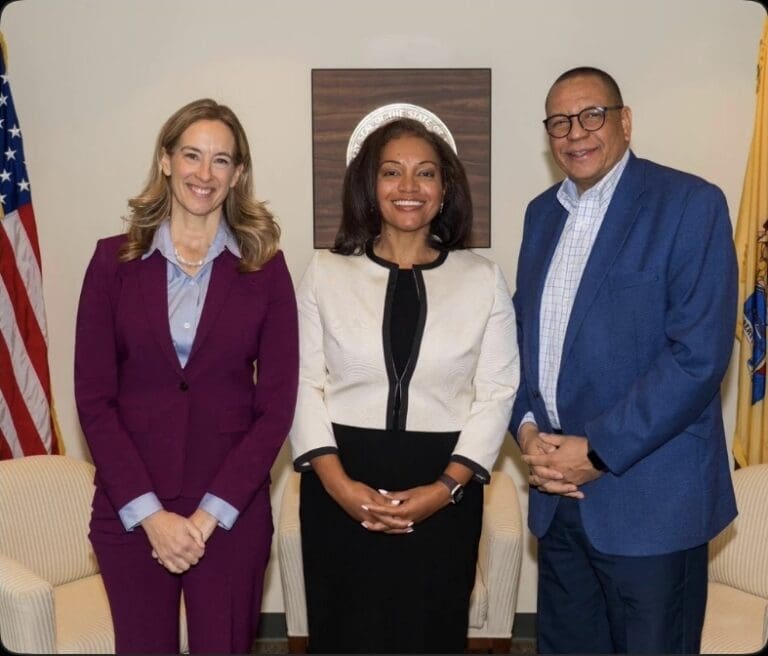
NIGERIAN-BORN American lawyer, Shirley U. Emehelu, has made history as the first immigrant to become Lieutenant Governor of New Jersey, United States.

Emehelu, who emigrated from Nigeria as a child, was appointed by Governor Mikie Sherrill on Monday, becoming the fifth Lieutenant Governor of the state.

The appointment also makes history as New Jersey’s two highest executive offices are occupied by women simultaneously for the first time.

The appointment represents a milestone for Nigerian Americans, whose participation in US public life now includes one of the highest executive positions in American state government.

Emehelu also assumed the position of Secretary of State, consolidating responsibilities in government administration, electoral oversight and public service.

She was sworn in at the New Jersey Statehouse in Trenton by Chief Justice Stuart Rabner, with her husband and children participating in the ceremony.

Announcing the appointment, Sherrill described Emehelu as an experienced public servant whose career demonstrated integrity, accountability and a commitment to protecting residents.

“Shirley embodies those values,” the governor declared, referring to her administration’s emphasis on accountability and public service.

Sherrill said Emehelu’s record in prosecuting financial crimes, protecting consumers, defending civil rights and combating government waste informed her selection.

The governor explained that Emehelu had also demonstrated effective leadership while overseeing the administration of New Jersey’s recent elections as Acting Secretary of State.

Accepting the appointment, Emehelu expressed appreciation for the confidence reposed in her and reaffirmed her commitment to serving the state’s diverse population.

“I’ve spent my career upholding the law, protecting families, and rooting out fraud, abuse, and corruption,” she said.

Emehelu also acknowledged the significance of her Nigerian heritage and the opportunities her appointment represented for immigrant and minority communities.

“As a Black woman and Nigerian American, I’m proud of what this appointment represents for our state, and especially for the communities that share my heritage,” she said.

She expressed hope that the occasion would encourage younger generations to pursue public service and contribute meaningfully to their communities.

“I hope we can inspire the next generation to find their own ways to serve and make a little history of their own too,” she said.

The lieutenant governor pledged to support Sherrill’s administration in addressing living costs, expanding economic opportunities and ensuring more responsive government.

Reflecting on her years in public service, Emehelu identified the protection of ordinary citizens as the central motivation behind her professional career.

“The throughline across my federal and state service has been defending the people who are counting on government to do right by them,” she said.

Emehelu previously served as New Jersey’s Acting State Comptroller, overseeing efforts to combat fraud, financial mismanagement and waste involving public resources.

Between 2022 and 2024, she was the state’s Executive Assistant Attorney General, the third-ranking official in the Attorney General’s Office, overseeing major civil litigation and enforcement matters.

She also served for nine years as a federal prosecutor in the US Attorney’s Office for the District of New Jersey, handling complex financial fraud cases.

During her federal service, she became Chief of Asset Recovery and Anti-Money Laundering, overseeing programmes involving forfeited assets, money laundering and restitution for victims.

A graduate of Yale University and Yale Law School, Emehelu also worked in private legal practice and served as a judicial clerk in the U.S. District Court for the Eastern District of Virginia.

Her appointment followed the September resignation of former lieutenant governor Dale Caldwell after allegations of misconduct and violations of state ethics rules, which he disputed.

Emehelu is married to Ikenna Emehelu and they have two children, Nnamdi and Amara. (NAN)

Court remands FIJ journalist Daniel Ojukwu in Kuje Prison over reports on Buhari’s aide

0

A FEDERAL High Court in Abuja has remanded Daniel Ojukwu, a correspondent with the Foundation for Investigative Journalism (FIJ), in Kuje Prison over investigative reports he published about Adejoke Orelope-Adefulire, a former Senior Special Assistant to the late President Muhammadu Buhari on Sustainable Development Goals (SDGs).

Joyce Abdulmalik, a justice of the court ordered Ojukwu’s remand at the Kuje Correctional and Custodial Centre on Tuesday, November 10, after he pleaded not guilty to a 12-count charge bordering on alleged cyberstalking and criminal defamation.

The court adjourned the case until December 1, 2026, for the hearing of his bail application, meaning the journalist will remain in detention pending the proceedings.

The case, filed by the Inspector-General of Police, also lists Fisayo Soyombo, FIJ’s founder, as the second defendant.

The ICIR gathered that during Tuesday’s proceedings, the prosecution applied for a bench warrant against Soyombo, claiming he was at large. 

However, the judge rejected the application, ruling that the court could not issue a bench warrant against a defendant who had never been brought before it.

The 12-count charge, dated September 19, 2024, accused Ojukwu and Soyombo of conspiring to commit cyberstalking and criminal defamation against Orelope-Adefulire through five investigative reports published on FIJ’s website between November 2023 and January 2024.

One of the reports cited in the charge was published on November 7, 2023, with the headline, “Special Report: 2 Weeks Before End of Buhari’s Tenure, Special Assistant, Adefulire Paid a Restaurant N147.1m to Build Classrooms in Lagos. A Lot Was Amiss.”

The investigation examined an alleged N147,127,467.58 payment by the Office of the Senior Special Assistant to the President on SDGs, then headed by Orelope-Adefulire, to Enseno Global Ventures Limited for a skill acquisition centre and classrooms at Ajeromi Primary School in Lagos.

During a visit to the school in October 2023, FIJ reportedly found the facility dilapidated and understaffed, with no visible evidence of the reported construction. A mosque also stood on the site where the school was expected to be.

Corporate Affairs Commission records cited in the investigation showed that Enseno Global Ventures was registered in 2019 as an inactive company without tax filings. Its registered address reportedly operated as a restaurant, whose owner denied knowledge of the contract.

The prosecution, however, alleged that the publications put the former presidential aide’s life in danger, exposed him to violence or bodily harm.

The prosecution further alleged that the publications constituted cyberstalking and criminal defamation under the Cybercrimes (Prohibition, Prevention, etc.) Act 2015, as amended in 2024, and the Criminal Code Act.

The investigative journalist pleaded not guilty to all 12 counts when they were read to him.

Following his plea, the prosecution requested that he be remanded in custody.

His defence counsel informed the court that a bail application had been filed on his behalf and urged the judge to allow him to continue enjoying the administrative bail previously granted by the police.

The lawyers argued that Ojukwu had not breached any of the conditions attached to his administrative bail.

However, the judge declined the request, noting that the charge had been served on the journalist long before his lawyers filed the bail application on Monday, November 9.

The court subsequently ordered his remand and fixed December 1 for the hearing of the bail application.

Police previously detained journalist for 10 days

Ojukwu’s remand comes more than two years after police officers abducted and detained him for 10 days over the same reports. On May 1, 2024, officers of the Intelligence Response Team (IRT) abducted him at Isheri-Olofin, Lagos, following days of surveillance.

He was initially taken to the State Criminal Investigation Department in Panti, Lagos, before being transferred to Abuja four days later.

In Abuja, he was detained at the Force Criminal Investigation Department in Area 10, Abuja, over allegations of defaming Orelope-Adefulire.

He regained his freedom on May 10, 2024, following public outcry and pressure from human rights advocates. The police subsequently withheld his international passport, citing concerns that he might flee the country. 

He was also required to appear before the Nigeria Police Force National Cybercrime Centre several times over the case.