Home Blog Page 5

Senate rewards Flamingos with ₦100m for historic World Cup victory

0

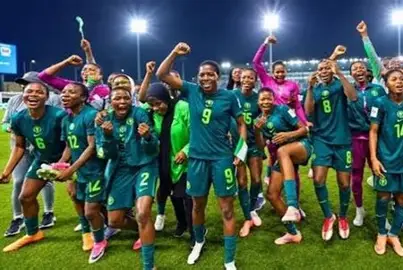
THE Senate has announced a donation of N100 million to Nigeria’s Under-17 women’s national football team, the Flamingos, following their historic victory at the FIFA U-17 Women’s World Cup in Rabat, Morocco.

The Senate President, Godswill Akpabio, announced the donation during plenary on Tuesday while presiding over a motion moved by one of the lawmakers, Abdul Ningi (ADC- Bauchi Central) on the need to congratulate the victorious girls on their achievement.

Ningi described the victory as historic, noting that the young players had achieved what several other Nigerian national teams had struggled to accomplish.

He said the team’s triumph was particularly remarkable, given the limited expectations that surrounded the players before the competition.

The senator expressed concern that the achievement had not received adequate publicity and national recognition, adding that the players deserved to be celebrated for bringing honour to Nigeria and Africa.

He also expressed concern that the team did not receive sufficient official recognition upon its arrival in the country.

Seconding the motion, Adams Oshiomhole (APC-Edo North) commended the team for defeating Japan in the final, describing the victory as evidence of the potential and determination of Nigerian youths.

Oshiomhole urged Nigerians to appreciate the country’s achievements rather than constantly focusing on its challenges.

He also appealed to the Senate leadership to make a donation to the team to support the players’ educational needs alongside their sporting careers.

The senate thereafter adopted Ningi’s prayers congratulating President Bola Tinubu for his support for sports development, Nigerians on the historic victory, and the leadership of the National Sports Commission, particularly its Chairman, Shehu Dikko.

It also urged the federal government to provide adequate compensation and rewards for the players in recognition of their achievement.

Akpabio, in his remarks, said the victory was a significant achievement for Nigeria and Africa, particularly as the Flamingos defeated football powerhouses, including Brazil and Japan.

He urged the federal government to adequately reward the players and called on the Nigeria Football Federation (NFF) to sustain the team and continue developing the players for future competitions.

The Senate president also appealed to wealthy and sports-loving Nigerians to support the players and encourage other young people to participate in sports.

He noted that the N100 million donation by the National Assembly was intended to recognise the players’ achievement and encourage them to continue bringing honour to the country.

“I want to commend the Flamingos, the Under-17 youth team of Nigeria, for defeating major countries such as Brazil and Japan to win the Under-17 World Cup for Africa for the first time and for Nigeria.

“We also urged, and we pray that the federal government will recognise these children accordingly and give them adequate rewards.

“The Nigerian Football Federation, under its leadership, should see the need to keep these children together and develop them further,” Akpabio said.

He congratulated the players, the Senate Committee on Sports and all Nigerians on the historic victory. (NAN)
Kogi extends lead in Nigerian jailbreaks as police confirm escape of two inmates

0

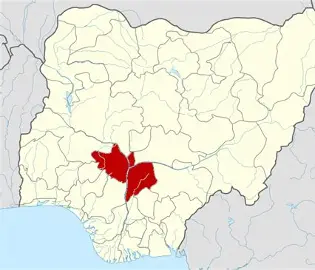
 ​‌‍‍‌‍⁠‍⁠⁠‍‍​‍‍‌​⁠⁠THE Police Command in Kogi has confirmed the escape of two convicted inmates from the Medium Custodial Centre in Okene.

The command’s Public Relations Officer (PPRO), Afusat Saliu, an assistant superintendent of police, confirmed the incident in a statement on Tuesday in Lokoja.

Saliu said the escape occurred on Sunday at about 10; 30 a.m.

She said the command received a report of the incident from the correctional centre and had commenced action to ensure prompt rearrest of the escapees.

According to her, the command is collaborating with the Nigerian Correctional Service (NCoS) and other relevant security agencies to trace and apprehend the fleeing inmates.

The PPRO however cautioned members of the public against unconfirmed reports on the incident.

“For the avoidance of doubt, this is the first and only official statement I have made regarding this incident. Any information or publication attributed to me beyond this statement should be disregarded unless officially confirmed by the command,” she said.

The ICIR reports that Kogi State has more jailbreak incidents than any of the other 35 states and the Federal Capital Territory (FCT) since 2016.

The latest incident marks the fifth jailbreak recorded in the state since 2016. (NAN)

Orji Kalu admits selling arms to anyone with money, says he traded weapons across countries

0

THE senator representing Abia North Senatorial District, Orji Uzor Kalu, has admitted that he previously traded in heavy weapons internationally, selling to individuals and countries willing to pay without considering how the weapons would be used.

Kalu, made the disclosure during an interview on Arise Television on Monday, November 9, while discussing his business dealings and relationships with former African leaders.

The former Abia State governor said in the affirmative that he was an arm dealer who sold guns to people but eventually abandoned the business after his parents intervened.

Asked whether he considered the possibility that the weapons could be used to kill people, Kalu said his priority was making money.

“No, no, no, no, no, no. I was selling guns to make money, whether they blow up [people], it’s not my business,” he said.

“My mother and my father came and said I must stop, and I stopped,” he added.

The interviewer subsequently asked whether he supplied weapons to the African National Congress (ANC) during its struggle against apartheid in South Africa.

Kalu denied that his business was restricted to the organisation, saying he sold weapons to anyone who could afford them.

“No, I was selling to anybody who wants to buy. If you have the money, you want to buy in D.R.C, I sell to you, you want to buy in Namibia, you want to buy…” he said.

He declined to disclose where he obtained the weapons, describing the information as his private business.

When asked whether he also sold weapons to Libya under its late leader, Muammar Gaddafi, Kalu reiterated that he sold to anyone with the money to purchase them.

“To anybody that had money to buy,” he said.

He also described Gaddafi as a good man.

Kalu clarified that his business involved heavy weapons traded between countries rather than small arms.

“No, these are heavy arms that were sold country to country,” he said.

Countries mentioned in international arms restrictions

The ICIR reports that Kalu’s reference to South Africa is significant because the country was under an international arms embargo during the apartheid era. On November 4, 1977, the United Nations Security Council adopted Resolution 418, imposing a mandatory arms embargo on South Africa in response to the apartheid government’s repression and violence.

The resolution prohibited UN member states from supplying the country with weapons, ammunition, military vehicles and related equipment. 

The embargo remained in force until May 1994, following the country’s transition to democratic rule and the election of Nelson Mandela as president.

The Democratic Republic of the Congo has also been subject to United Nations arms restrictions since 2003. The UN Security Council initially imposed an embargo on arms supplies to foreign and Congolese armed groups operating in parts of eastern DRC. 

In 2005, it extended the restrictions to recipients across the country, with exemptions for government forces. In 2008, the Council lifted the restrictions on arms supplies to the Congolese government but retained the embargo on non-governmental armed groups and individuals operating in the country. 

Libya, meanwhile, became subject to a UN arms embargo in February 2011 following the violent crackdown on protests against Gaddafi’s government.

The restrictions prohibit the supply, sale and transfer of arms and related military equipment to Libya, subject to specified exemptions and approval procedures.

These measures demonstrate the international concerns surrounding the diversion of weapons into conflicts and their use by armed groups and governments accused of human rights violations.

However, Kalu did not establish that he supplied weapons to any of the countries during the periods when the respective embargoes applied. 

FCT councillors to get ₦620m from Wike if they deliver wards for Tinubu, other candidates

0

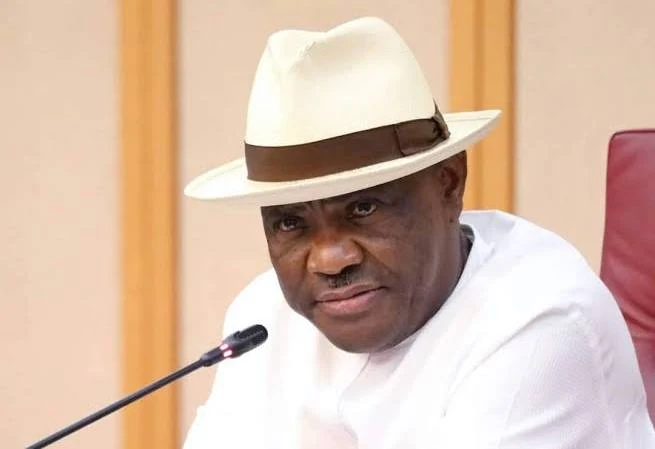
The Minister of the Federal Capital Territory (FCT), Nyesom Wike, has promised to give councillors in the Territory’s six area councils ₦10 million each if they deliver their respective wards to President Bola Tinubu and other members of the All Progressives Congress (APC) in the 2027 elections.

Wike made the pledge on Monday, November 9, at his Rainbow Coalition stakeholders’ meeting attended by traditional rulers, political stakeholders and residents in Kwali Area Council.

“Any councillor that delivers his ward will get N10 million reward. Therefore, go and meet your leaders, go and meet your youth groups, go and consult with associations. Let’s deliver our ward to Mr President,” he urged.

The ICIR reports that the promise will amount to ₦620 million if all 62 councillors in the FCT secure victory for the president and other APC candidates in the nation’s capital.

Wike, a member of the Peoples’ Democratic Party (PDP), was appointed minister by Tinubu in 2023 and has remained in the party since then.

In the build-up to the 2027 polls, the former Rivers State governor formed the Rainbow Coalition, a platform through which members of different political parties, including the ruling All Progressives Congress (APC) and the PDP, will support Tinubu’s re-election for a second and final term and vote for candidates of their choice in other elections.

The ICIR reports that although Wike is a chieftain of the PDP, he wields considerable influence among APC public officeholders in the FCT.

The FCT has six area councils namely Abaji, Abuja Municipal Area Council (AMAC), Bwari, Gwagwalada, Kuje and Kwali, with 62 electoral wards and councillorship positions. AMAC has 12 wards, while each of the other five area councils has 10.

The pledge comes as political mobilisation gathers momentum ahead of the January 16, 2027, presidential and National Assembly election, with Wike openly committing his political structure to Tinubu’s re-election.

However, the arrangement raises concerns about electoral inducement and the use of financial incentives to influence political activities ahead of the 2027 polls.

Under Section 125 of the Electoral Act 2026, a person commits electoral bribery by corruptly offering or promising money, gifts or other benefits to procure the return of a candidate to an elective office or influence a voter’s decision.

The law also criminalises the payment of money intended to be used for electoral bribery.

The minister did not disclose who would finance the ₦620 million potential payout, or how the money would be disbursed.

Wike’s proposed ₦620 million reward also comes days after he procured brand-new Sport Utility Vehicles (SUVs) for traditional rulers in the FCT. The proposed gift also comes against the backdrop of statutory limits on campaign expenditure ahead of the 2027 elections.

Section 92(2) of the Electoral Act 2026 caps the election expenses of a presidential candidate at ₦10 billion. The law also limits governorship candidates to ₦3 billion, senatorial candidates to ₦500 million and House of Representatives candidates to ₦250 million.

Wike defends SUVs for traditional rulers

The promise followed Wike’s defence of his administration’s decision to procure brand-new SUVs for first-class traditional rulers in the FCT.

The vehicles have attracted criticism from political commentators, who questioned the spending amid competing development needs, particularly in a nation’s capital where hospitals are ill-equipped or non-functional, schools are dilapidated, and several communities lack access to potable water, among other challenges.

However, Wike dismissed allegations that the vehicles amounted to political inducement or bribery, arguing that traditional rulers deserved dignity and respect.

He said the Tinubu administration would continue to provide support to traditional rulers despite the criticism.

“You want a first-class traditional ruler to be walking on the road with a stick in hand, taking public buses so they can get hit by a car one day? But you expect chief press secretaries to governors, chairmen, and president to ride SUVs?

“Instead of using their platforms to support good things, critics turn it upside down. We will provide for our traditional rulers, and nothing will come out of their complaints,” he said.

Wike endorses Tinubu, other APC candidates

At the meeting, Wike declared support for Tinubu’s re-election and endorsed Philip Aduda, a former senator, for the FCT Senate seat and Danladi Chiya for the Abuja South Federal Constituency.

He expressed confidence that the APC would secure victory in Kwali, Gwagwalada and Abaji Area Councils.

“I don’t need to preach to you any longer. The one you are seeing is what you follow, not the one that will give you unfulfilled promises. I will go to sleep tonight because I know Kwali, Gwagwalada, and Abaji are 100 per cent for APC,” he said.

Wike also criticised opposition politicians over their reactions to judicial decisions, particularly the judgment that voided the ticket of the African Democratic Congress (ADC) presidential candidate, Atiku Abubakar.

He accused opposition figures of praising the judiciary when its decisions favour them but questioning its independence when rulings go against them.

“When ADC had a matter in court and won at the Supreme Court, they said, ‘The court is the last hope,’ ‘The court has saved democracy,’ and ‘We know our judiciary will not fail us.’

“But when they lost a court case, it became ‘The President is using the court to fight the opposition.’ When it is good for you, the judiciary is clear. When it is bad, you claim they are using it to destroy democracy. What kind of system are we operating?” he asked.

NFF officials blocked me from greeting victorious Flamingos at airport – Obi

0

THE Nigeria Democratic Congress (NDC) presidential candidate for 2027 poll, Peter Obi, has accused officials of the Nigeria Football Federation (NFF) of preventing him from greeting the victorious Nigeria’s Under-17 women’s team at an airport.

Although he did not disclose the particular airport where he was denied the opportunity to greet the players, The ICIR reports that the Flamingos returned to Nigeria in the early hours of Monday, November 9, through the Nnamdi Azikiwe International Airport, Abuja. The team arrived two days after winning the FIFA U-17 Women’s World Cup in Morocco.

He alleged that the officials refused to let him approach the players, saying they feared losing their jobs if they did so. 

Obi disclosed this in a statement on Monday, November 9, describing the incident as another example of what he called the growing culture of toxic politics in Nigeria.

He said he arrived at the airport around 7 a.m. to board a flight to Enugu when he saw the national Under-17 girls’ team preparing to leave the airport after arriving.

“With genuine joy and enthusiasm, I asked my protocol officer, Jackie Wayas, to find out whether I could greet and welcome the team. I was informed that officials of the Nigerian Football Federation (NFF) had refused and had requested that I not approach them because, if I did, they would all lose their jobs,” Obi wrote.

The former Anambra State governor said it was not the first time he had experienced such treatment at a sporting event.

He recalled that on March 25, 2025, he travelled to Uyo, Akwa Ibom State, for a World Cup qualifying match, where the governor welcomed him at the VIP stand.

However, Obi alleged that after the match, government officials prevented him from greeting the players, again claiming that those involved feared losing their jobs if they allowed him to do so.

“Regrettably, this is not the first time I have been subjected to such treatment. On March 25, 2025, I was in Uyo for the World Cup qualifier. The governor warmly received me and welcomed me at the VIP stand. Following the match, other government officials went to greet the players, but I was again prevented from doing so. I was told by the officials that they would lose their jobs if I proceeded,” he said.

He expressed concern over what he described as increasing political hostility and discrimination, arguing that political differences should not prevent public figures from interacting with national teams.

“It is deeply troubling to witness the extent of toxic politics into which our nation has descended since 2025. Each year appears to bring further deterioration,” he said.

Obi called for a Nigeria where unity, mutual respect and shared humanity take precedence over political affiliations.

The Flamingos began their FIFA U-17 Women’s World Cup campaign in Morocco with a 2-1 defeat to Poland. However, the girls recovered from the setback, winning their subsequent matches to progress to the final.

They defeated Brazil 3-1 in the semi-finals to book a place in their first-ever final of the competition. They defeated Japan 2-1 to lift the trophy.

The victory made the Flamingos the first African team to win the FIFA U-17 Women’s World Cup, marking a historic achievement for Nigerian and African women’s football.

Offa robbery: Saraki reacts as Kwara govt drops 18 of 20 counts

0

FORMER Senate President Bukola Saraki has accused the Kwara State Government of abusing its prosecutorial powers after it amended the criminal charges against him and former Governor Abdulfatah Ahmed over the 2018 Offa bank robbery, dropping 18 of the original 20 counts.

Saraki’s reaction followed an alleged admission by Saheed Popoola, a former All Progressives Congress (APC) chieftain and the Peoples Democratic Party (PDP) senatorial candidate for Kwara South, that he participated in the political campaign linking the former Senate president to the robbery to settle political scores.

Popoola made the disclosure on Sunday, November 8, during Saraki’s visit to the palace of the Olofa of Offa, Oba Mufutau Gbadamosi Esuwoye II, as part of his political engagements in Kwara South.

He said some APC members deliberately revived and politicised the robbery allegations to undermine Saraki’s political influence in the state.

“I was a leading member of the APC then that started the politicisation and revival of the issue of Offa robbery just to get to Saraki. But after we finished and won, it was me that was being persecuted,” Popoola said.

He added that political actors used songs and slogans to associate Saraki with the incident during the Otoge Movement, which contributed to the defeat of Saraki’s political structure in the 2019 elections.

Popoola said he regretted participating in the campaign, which he described as driven by political interests and misinformation rather than facts surrounding the robbery.

In a similar development, a statement reported by Punch Newspaper on Monday, November 9, Saraki, through his media office, said the Kwara State Government had dropped 18 of the original 20 counts, including allegations relating to armed robbery, culpable homicide and illegal possession of firearms.

He described the withdrawal of 18 charges as evidence that the allegations against him and Ahmed lacked credible grounds.

The remaining charges reportedly concern conspiring to belong to a gang of thieves, membership of the alleged gang and offences relating to the concealment or disappearance of a vehicle allegedly used for unlawful activities.

Saraki’s media office accused Governor AbdulRahman AbdulRazaq’s administration of abusing its prosecutorial powers and using the case to damage the reputations of his predecessors ahead of the 2027 general elections.

It also alleged that the state government spent nearly N100 million on newspaper advertisements earlier in the year to publicise its allegations against the former governors.

The statement said Saraki’s lawyers would challenge the remaining charges in court.

Backstory

The Offa bank robbery occurred on April 5, 2018, when armed men launched coordinated attacks on commercial banks and security personnel in the community.

The attackers targeted branches of First Bank, Guaranty Trust Bank, Ecobank, Zenith Bank and Union Bank, as well as Ibolo Microfinance Bank.

At least 33 people, including 12 police officers and a pregnant woman, were killed in the attacks, making the incident one of the deadliest armed robbery operations in the country.

The robbery triggered a major police investigation and the arrest of several suspects.

In May 2018, the police arrested five principal suspects: Ayoade Akinnibosun, Ibikunle Ogunleye, Adeola Abraham, Salahudeen Azeez and Niyi Ogundiran.

During the investigation, some of the suspects reportedly implicated Saraki and Ahmed, prompting the police to invite the two former governors for questioning in June 2018.

They were asked to report to the Force Intelligence Response Team office in Guzape, Abuja, over allegations reportedly made by members of the gang.

One of the suspects, Akinnibosun, identified as the gang leader, reportedly told investigators that members of the gang were political thugs working for Saraki. He also alleged that he received money and vehicles through Yusuf Abdulwahab, a former Chief of Staff to Ahmed.

However, Akinnibosun reportedly said during the parade of suspects that Saraki was unaware of the gang’s involvement in the robbery.

In March 2019, Akinnibosun reportedly told a court that Abba Kyari, the then Deputy Commissioner of Police, pressured him and other suspects to implicate Saraki. He alleged that they were threatened into making confessional statements.

Saraki consistently denied any connection with the robbery, describing the allegations as an attempt to implicate him.

The criminal investigation led to the prosecution of the five principal suspects.

In September 2024, a Kwara State High Court convicted the defendants of offences including armed robbery, culpable homicide and illegal possession of firearms and sentenced them to death.

The Court of Appeal subsequently upheld their convictions and sentences in January 2026.

Osun workers embark on strike over withheld LG’s allocations

0

GOVERNMENT offices in Osun, were on Monday shut as workers embark on a three-day strike as directed by the state chapter of the Nigeria Labour Congress (NLC) on Sunday.

The News Agency of Nigeria (NAN) reports that the gates to the Osun Government Secretariat and the state House of Assembly in Osogbo, were under lock with no worker or business activities ongoing in the premises.

Similarly, the Olorunda Local Government Secretariat and Osogbo Local Government Secretariat gates were also locked.

Students of public schools in Osogbo were also asked to return home as teachers in public schools equally joined the strike.

The NLC Chairman in the state, Christopher Arapasopo and Secretary, Victor Amusan, in a statement on Sunday, directed all affiliate members of the congress to embark on a three-day sympathy strike with the Nigeria Union of Local Government Employees (NULGE).

The NLC leadership explained that the strike followed the expiration of the seven-day ultimatum issued to the Federal and Osun governments over the continued withholding of the state local government statutory allocations.

The NLC said that the issues raised concerning the local government allocations had remained unresolved.

It said that after exhausting all reasonable avenues, and in accordance with the resolutions reached at the emergency meeting of the State Executive Council (SEC) held on October 28, all affiliate members of NLC were directed to embark on strike.

The ICIR reports that the Federal Government withheld Osun’s local government allocations earlier in 2025, citing a dispute over council elections. 

NiMet forecasts dust haze, thunderstorms, cautions asthma patients, others with respiratory illnesses

0

THE Nigerian Meteorological Agency (NiMet) has forecast dust haze and thunderstorms across parts of Nigeria from Monday to Wednesday.

In its weather outlook released on Sunday in Abuja, NiMet predicted slight dust haze over seven north-western states on Monday. The affected states are Jigawa, Kano, Katsina, Kaduna, Zamfara, Kebbi and Sokoto.

The agency forecast sunny conditions across the North-East throughout the three-day period. It also predicted sunny skies, patches of clouds and possible thunderstorms accompanied by light rain over parts of the North-Central region.

The affected areas include Kogi, Kwara, Benue, the Federal Capital Territory and Nasarawa. Across the South, NiMet forecast cloudy skies with sunshine intervals and possible morning thunderstorms accompanied by light rain over coastal states.

It said scattered thunderstorms and light rain could occur later over parts of Abia, Imo, Anambra, Enugu, Ebonyi, Ogun, Ondo and Lagos. Other affected states include Oyo, Osun, Edo, Delta, Bayelsa, Rivers, Cross River and Akwa Ibom.

For Tuesday, NiMet anticipated sunny and hazy conditions across the North, with isolated thunderstorms and light rain possible over southern Taraba. The agency also forecast sunny and hazy skies with patches of clouds across the North-Central region.

It said morning thunderstorms were possible over Benue, while most parts of the region could experience thunderstorms and light rain later.

Across the South, cloudy skies with sunshine intervals are expected, alongside possible morning thunderstorms and light rain. NiMet identified parts of Anambra, Ebonyi, Abia, Cross River, Akwa Ibom, Rivers and Bayelsa as areas likely to experience morning rainfall.

The agency further forecast thunderstorms accompanied by light rain across most parts of the southern region later on Wednesday. It predicted sunny and hazy conditions across the North throughout the day.

Sunny skies with patches of clouds are also expected across the North-Central region, with isolated afternoon thunderstorms and light rain possible over parts of Kwara.

NiMet said the South would experience cloudy skies with sunshine intervals during the morning, followed by thunderstorms and moderate rainfall later.

The agency advised residents to take precautions against suspended dust particles, particularly people with asthma and other respiratory conditions.

“People with asthmatic health conditions and other respiratory issues should be cautious of the present weather condition,” it said. NiMet warned that strong winds could precede thunderstorms, urging residents to secure loose objects against being blown away.

It also advised the public to disconnect electrical appliances from sockets and avoid standing under tall trees during storms. The agency said the precautions would help prevent injuries from falling branches and other storm-related hazards.

The organisation advised airline operators to obtain airport-specific weather reports and flight documentation to support effective operational planning.

It urged residents to remain informed by regularly checking weather updates on its website. (NAN)

Five years of the Petroleum Industry Act

0

By Chidi Anselm Odinkalu

When he ran for the office of president on the platform of the Peoples’ Democratic Party (PDP) in Nigeria’s 2019 general elections, Nigeria’s former Vice-President, Atiku Abubakar, famously promised to privatise Nigeria’s hydrocarbon and energy assets. Taking aim at the Nigeria National Petroleum Company (NNPC), he argued that “privatising NNPC would be to our advantage. We are not going to lose anything, but we will rather gain a lot.”

The ruling All Progressives Congress (APC) at the time mocked the idea, accusing him of harbouring an undisguised desire to dispose of the nation’s crown jewels to himself and his friends. Two and a half years later, in August 2021, President Muhammadu Buhari assented to the Petroleum Industry Act (PIA), substantially implementing the idea of de-regulating the hydrocarbons sector in the country and enacting a vision for transitioning Nigeria’s petroleum industry onto a globally competitive footing.

Five years after the adoption of the Act, this vision confronts a rapidly evolving global context in a domestic election season.

Comprising 319 sections and eight schedules, the PIA is one of the most complex pieces of legislation on the books in Nigeria. Most professionals, not to speak of less-informed citizens, will not read or access it.

Essentially, the Act unbundles the NNPC as a state-owned enterprise separating into distinct entities its regulatory functions from its operations, and providing for the protection of the interests of host communities together with a framework for managing investments in renewables and in energy transition.

The PIA creates two new regulatory institutions. One is the Nigeria Upstream Regulatory Commission (NUPRC). The other is the Nigeria Midstream and Downstream Petroleum Regulatory Authority (NMDPRA).

Separately, the Act requires the NNPC to be unbundled into a Limited Liability Company under the Companies and Allied Matters Act. The authorized shareholders of the new NNPC Limited are the Ministry of Finance Incorporated (MOFI) and the Ministry of Petroleum Incorporated (MOPI).

Additionally, the Act mandates the new NNPC to prepare the country for energy transition by investing in renewables, act as downstream supplier of last resort “for security reasons”, and “engage in activities that ensure national energy security.”

Relaunched in July 2022 as NNPC Limited, the business model of the new commercial entity created by the PIA is neither fully private nor a traditional state-owned enterprise. The beneficial interest in the company is in the Nigerian State and the political presence of the president, who also is the Minister of Petroleum, is never too far from it. So, the Act empowers the president to appoint its management and Board of Directors. However, it also makes provision for the possibility of competitive investment in the company at a future time when the Board may be re-constituted to take account of the interests of other shareholders.

In undertaking all these, the Act requires the new NNPC and its subsidiaries to “carry out petroleum operations on a commercial basis, comparable to private companies in Nigeria carrying out similar activities” and to do so “in a profitable and efficient manner without recourse to government funds” so as to “encourage and facilitate both local and foreign investment in the petroleum industry.” In other words, the new NNPC Limited under the PIA should be able to compete with its peers both in Nigeria and beyond.

In pursuit of these goals, the new NNPC Group  now includes 21 subsidiaries covering a vast stream of interests, including upstream and exploration; downstream and trading; gas and power; engineering and shipping; as well as services and investment.

To adapt to the rapidly evolving global energy ecosystem, the company has to simultaneously retain indigenous talent while being open to attracting internationals where necessary. The PIA is not the only law applicable in this context. The 1999 Constitution, for instance, requires government to “harness the resources of the nation and promote national prosperity and an efficient, a dynamic, and self- reliant economy.” The Nigerian Oil and Gas Industry Content Development Act of 2010 equally mandates the promotion of Nigerian human capital in the sector.

One of the subsidiaries of the NNPC illustrates how the company tried to reconcile these obligations. The NNPC Exploration and Production Limited (NEPL) is the flagship upstream subsidiary in the NNPC Group. In existence since 1988, the NEPL holds the NNPC’s interests in operating and exploration licenses. In November 2023, the transitional management of the NNPC Group under Mele Kyari recruited internationally to fill the position of the Chief Executive of the NEPL. He leads a management team that includes nine Nigerians. By the end of 2025, the company had reportedly achieved about 75% growth in average daily production from 203,000 barrels per day in 2023 to 355,000 barrels.

This performance ordinarily means more revenue for the country and could provide tentative evidence of the potential yield in pursuit of value optimisation by the newly commercialised NNPC Group.

However, that conclusion must await further evidence of improved protocols in oilfield practice, sustainable investment in energy diversification, and greater transparency on compliance with the Environmental Guidelines and Standards for the Petroleum Industry in Nigeria (EGASPIN). This extends to the remediation of legacy deficits in oilfield practice preceding the transition to the un-bundled NNPC. Better attention is also required to the needs of host communities. The jury is still out on this package.

In an election season dominated by issues in the triangle of electoral integrity, insecurity, and affordability, it is easy to lose sight of structural issues that underpin either directly or indirectly the performance of the country on all three. Yet, there is a particular salience to the PIA in Nigeria’s current election season for at least three reasons.

First, when the country originally created the NNPC in 1977, it was on the cusp of a generational energy crisis and economic bust that accompanied the Arab-Israeli war in 1973. Muhammadu Buhari, then an army colonel, was the Petroleum Minister. Nigeria’s management of petroleum earnings over the half century of the existence of the NNPC since then has been notoriously beset by tales of what the London’s Guardian newspaper memorably described not too long ago as a “wealth of sorrow.” There was, therefore, an almost poetic symmetry to the fact that Buhari was back in the same position 44 years later to end the monopoly and re-structure it under the PIA. The competing candidates and political parties in January 2027 need to set out how they will optimize this framework.

Second, petroleum is the country’s most strategic natural resource and the main driver of economic activity. It accounts for about 90% of Nigeria’s foreign exchange earnings, over 60% of budget revenue, and up to 5.5% of the Gross Domestic Product (GDP). On-going events in the Middle East suggest that the obituary of dirty energy may be premature at this time. However, energy transition is a fact, and the country needs to know how the parties propose to prepare the country and host communities for that eventuality.

Third, the PIA represents arguably the single most constructive achievement of President Buhari’s eight years in office as Nigeria’s fifth elected president. Irrespective of who secures the mandate to lead the country after the elections in the New Year, the objective of achieving national energy security established in section 64(k) of the PIA remains a pressing priority and the country deserves to know how the competing parties propose to pursue and achieve that.

It is fitting that the fifth anniversary of the Act coincides with an election season defined by cost of living, including cost of petroleum products as well as the perennial question of realizing a just statutory settlement for host communities. Nigeria’s fate is inextricably tied to the success or failure of the promise of the PIA. The vision of the Act is clear: maximizing public benefits through sustainable hydrocarbons governance of an internationally competitive industry. It permeates all the major disputes at issue ahead of 2027.

A lawyer and a teacher, Odinkalu can be reached at chidi.odinkalu@tufts.edu

Netanyahu faces possible exit as Israel’s president picks Eisenkot to form government

0

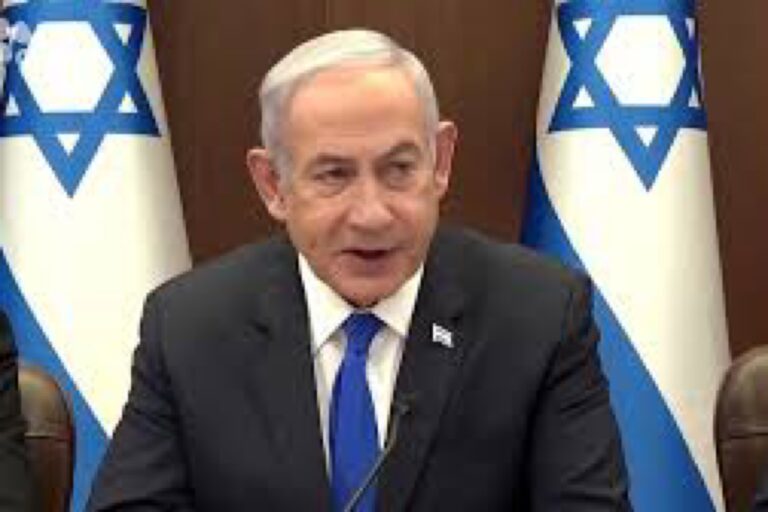
ISRAELI Prime Minister Benjamin Netanyahu faces the possibility of losing power after President Isaac Herzog says he will task opposition leader Gadi Eisenkot to form the country’s next government following the October 27 parliamentary elections.

Herzog announced his decision on Saturday, November 7, after consultations with political parties represented in the country’s parliament, the Knesset.

Eisenkot, leader of the Yashar party and a former chief of the Israel Defence Forces (IDF), emerged with the support of lawmakers representing 67 seats, compared with 46 lawmakers who recommended Netanyahu for the mandate.

The seven lawmakers from the United Torah Judaism party did not recommend either candidate.

Herzog’s decision followed days of consultations with political leaders to determine who had the best opportunity to secure the parliamentary support needed to form a government.

According to the President’s Office, Herzog informed both Eisenkot and Netanyahu of his decision on Saturday evening.

Eisenkot is expected to receive the formal mandate at the President’s Residence in Jerusalem at 5pm on Sunday, November 8. He will then have 28 days to assemble a governing coalition, with the possibility of a 14-day extension, according to reports.

No party secures parliamentary majority

The October 27 elections produced no clear winner, leaving Israel facing another round of coalition negotiations.

Final results showed that Netanyahu’s Likud party won 27 seats in the 120-member Knesset, while Eisenkot’s Yashar party secured 21 seats.

Netanyahu’s bloc secured 53 seats, while parties opposed to his government won 48 seats. Two Arab-led parties secured the remaining 19 seats.

A party or coalition needs at least 61 seats to command a majority in the Knesset and form a government.

The support of the Arab-led parties helped Eisenkot secure the highest number of recommendations during Herzog’s consultations, although their participation in a governing coalition remains politically contentious, according to reports from Israel.

Some parties in Eisenkot’s camp have opposed forming a government with Arab parties, creating uncertainty over how he will secure the required parliamentary majority.

Netanyahu could remain in office if talks fail

Eisenkot’s selection does not automatically remove Netanyahu from office, but it gives the opposition leader the first opportunity to negotiate with other political parties and form a new government.

If Eisenkot fails to secure the necessary support within the 28-day period or any extension granted by the president, the process could lead to another candidate being given the mandate or further political consultations.

Netanyahu would remain prime minister in a caretaker capacity until a new government is formed.

The negotiations could involve discussions with parties outside Eisenkot’s immediate political bloc, including potential partners whose support would be necessary to reach the 61-seat threshold.

Netanyahu, one of Israel’s longest-serving prime ministers, has held the office in separate periods since 1996, including his current tenure, which began in December 2022.