Home Blog Page 6

Foreigners in Nigeria’s retail market: What the law says

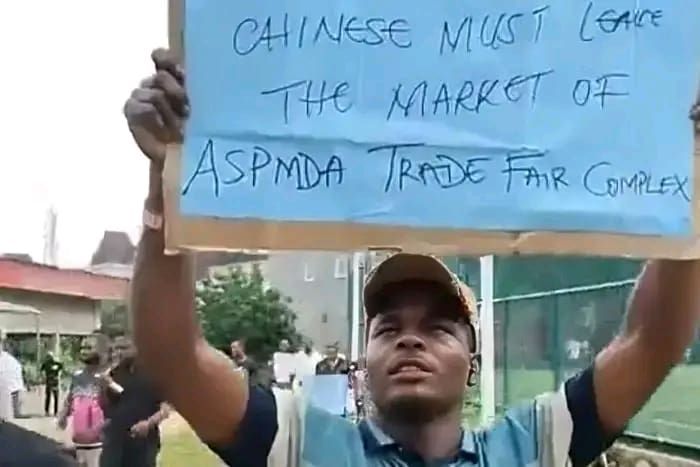
On September 15, 2026, traders at the Lagos Trade Fair Complex staged a protest, alleging that Chinese merchants were selling goods at retail prices, a development they said threatens local businesses’ survival. This report by The ICIR examines the legal and regulatory framework governing foreign participation in Nigeria’s retail market. It analyses what the law says about fair competition and the protection of local businesses from foreign merchants.


Videos of the protest circulated on social media, showing protesters marching through the market with placards, accusing foreign merchants of importing manufactured goods, occupying stalls, and selling directly to consumers at wholesale or below-market prices.

The Lagos State Police Command intervened during the protest, prompting questions about the laws regulating foreign nationals’ participation in Nigeria’s retail market. The Lagos International Trade Fair Complex Management Board also moved to address the dispute, urging traders to avoid taking the law into their hands.

The protest drew mixed reactions on social media, with one X user noting that the Nigerian government favours foreign traders over its own citizens.

A Chinese-owned store in Abuja, used for illustrative purposes, where items are sold for ₦1,800 each

What Nigerian law currently allows

The 1972 Nigerian Enterprises Promotion Decree, also known as the Indigenisation Decree, explicitly identified retail trade as a sector to be taken over from foreign traders. Therefore, reserving retail trade for Nigerian citizens.

However, the Nigerian Investment Promotion Commission (NIPC) Act, 1995, abrogated this. The NIPC Act does not specifically prohibit foreign nationals or foreign-owned businesses from engaging in retail trade. In fact, Section 17 allows non-Nigerians to invest in and participate in the operation of any enterprise in the country, subject only to the restrictions set out in Section 18, the “negative list.”

Section 31 of the Act explains the negative list as sectors of investment prohibited to both foreign and Nigerian investors, namely:

(a) production of arms, ammunition, etc.;

(b) production of and dealing in narcotic drugs and psychotropic substances;

(c) production of military and paramilitary wear and accoutrements, including those of the Police and the Customs, Immigration and Prison Services; and

(d) such other items as the Federal Executive Council may, from time to time, determine.

This means that the Act permits foreigners to own up to 100% equity in any business in Nigeria, provided they comply with applicable laws and regulatory requirements. Section 19(2) of the Act also makes clear that foreign participation does not exempt an enterprise from obtaining the licences, permits and other approvals required to establish or operate a business.
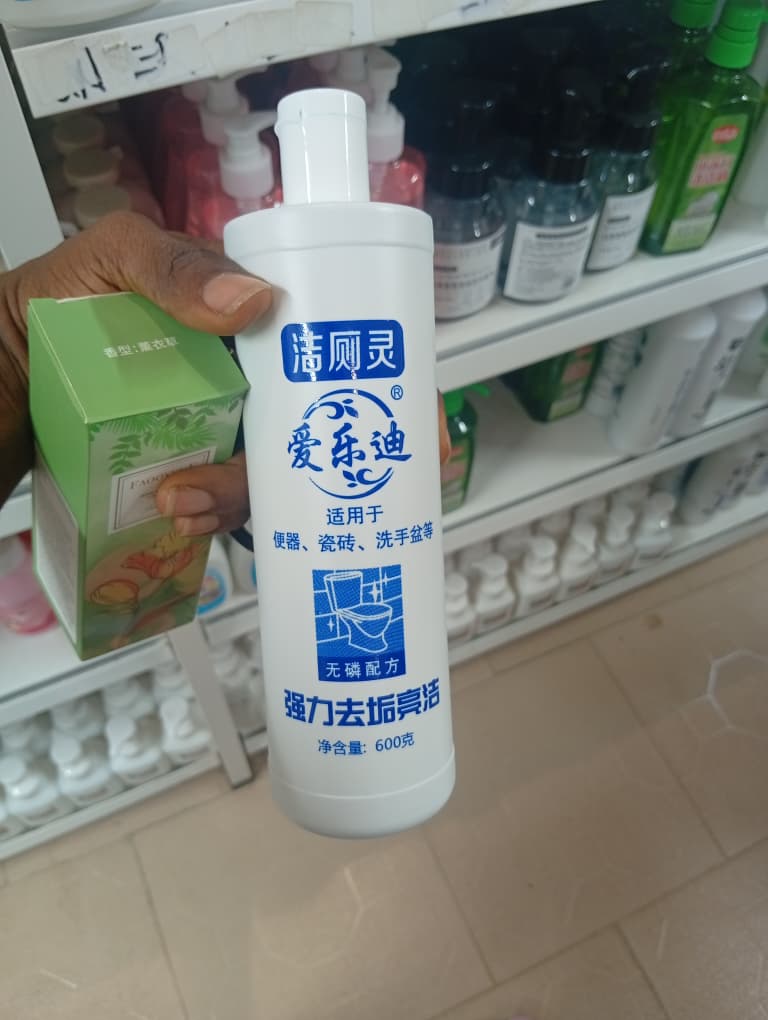
One of the items sold in a Chinese-owned store in Abuja is a toilet and bathroom cleaner, a product also manufactured locally in Nigeria. Picture used for illustrative purposes.

Similarly, the Federal Competition and Consumer Protection Act (FCCPA) 2018 regulates anti-competitive behaviour and abuse of market dominance but does not reserve retail trade exclusively for Nigerian citizens.

Under Sections 70 and 72, the Act prohibits the abuse of a dominant position in a market. However, selling goods at lower prices does not, by itself, establish a violation of the law.

What expatriate permits require

Eze Onyekpere, a lawyer and director of the Nigerian Centre for Social Justice, argued that the NIPC Act should not be considered in isolation from immigration and expatriate employment regulations.

He explained that although foreign investment is permitted, foreign nationals who intend to work in Nigeria must also obtain the appropriate authorisation. According to him, expatriate quotas and work permits are intended for foreigners bringing specialised skills that are not readily available in the country, rather than those seeking to compete with Nigerians in businesses where local expertise is already abundant.

“Even if you want to set up a retail shop, the general spirit of the law does not encourage foreigners to do so. Running a retail shop is work, and you need an expatriate quota or permit to work in Nigeria,” Onyekpere said.

He argued that the Ministry of Interior and other relevant authorities should examine the permits issued to foreign nationals to determine whether their activities correspond with the purpose for which they were authorised to work.

For instance, he said a foreign national who obtained permission to work as an engineer or in the information technology sector could be violating the terms of the permit if found operating a cosmetics shop in an open market.

“If you follow up on expatriate quotas and work permits, you can ask: where is the permit the Federal Government gave you to come into Nigeria, and what does it entitle you to do? Some of them may have claimed to be engineers with qualifications and specialised skills that Nigeria does not have. But if you were permitted to come here for construction or IT work and are found selling cosmetics in a market, you are violating the terms of your permit,” he said.

Other African countries regulate foreign retail trade

On September 2, less than two weeks before the Lagos Trade Fair protest, Kenyan President William Ruto ordered the closure of small retail shops and informal trading operations run by foreigners across the country.

“All those foreign traders and hawkers doing small businesses should close down,” he said, adding that “From next week, those small businesses must be left for local citizens.”

Ruto asserted that Kenya remained open to foreign investment, but argued that foreign investors should create jobs and expand production rather than compete with Kenyans in small businesses. He directed the Ministry of Investments, Trade and Industry to begin enforcement action against foreigners engaged in local trading and hawking on 7 September.

The president stated that foreign direct investment should target large-scale projects like manufacturing and infrastructure, rather than taking over neighbourhood retail markets meant for local citizens. He stressed that the directive was based on the need to protect local Kenyan traders and ensure that businesses reserved for citizens are not affected by unfair competition.

Furthermore, in July 2025, the Tanzanian government published Government Notice No. 487A, barring non-citizens from 15 economic sectors under the Business Licensing (Prohibition of Business Activities for Non-Citizens) Order 2025.

The order explicitly stops foreigners from getting or renewing licenses for retail sales, mobile money transfers, phone repairs, salon operations, and small-scale mining.

According to the order, foreigners who violate the directive face fines of at least 10 million Tanzanian shillings, imprisonment for a term not exceeding six months, and the revocation of their visa and residence permits. It also stated that Tanzanians who assist non-citizens in these restricted sectors face fines up to 5 million shillings or three months in prison.

Ghana also restricts foreign participation in certain small-scale commercial activities under the Ghana Investment Promotion Authority Act, 2026 (Act 1173), which repealed the Ghana Investment Promotion Centre Act, 2013 (Act 865).

Section 32 of the new Act reserves activities such as petty trading, hawking, selling goods or providing services in markets, and selling goods from stalls exclusively for Ghanaian citizens and wholly Ghanaian-owned enterprises. Other restricted activities include operating beauty salons and barbering shops, taxi services with fewer than 25 vehicles, and retailing finished pharmaceutical products.

The Act also sets conditions for foreign nationals who wish to engage in other trading activities. Under Section 31, a non-citizen must invest at least $500,000 in the trading enterprise and ensure that at least 75 per cent of its employees are skilled Ghanaians. However, these requirements do not permit foreign participation in activities specifically reserved for Ghanaians under Section 32.

Economic implications for local traders and consumers

Ikemesit Effiong, an economic expert and Managing Partner at SBM Intelligence, said foreign merchants selling directly to consumers could put pressure on local traders by reducing the profit margins that sustain traditional distribution networks.

He explained that foreign merchants’ access to capital and global supply chains could allow them to undercut local retailers, affecting wholesalers, sub-wholesalers and market associations that employ millions of people.

“The immediate effect is margin compression for local traders. Foreign merchants, with better access to capital and global supply chains, can undercut traditional retailers, squeezing the margins that sustain local distribution networks. Over time, this could hollow out the indigenous retail value chain, including wholesalers, sub-wholesalers and market associations that employ millions of people,” Effiong said.

However, he noted that consumers could benefit from lower prices and a wider variety of goods in the short term.

On the possible effects of restricting foreigners from small-scale retail trade, Effiong said the policy could increase consumer prices, reduce competition and affect the availability of some goods.

“You’d likely see three effects. First, consumer prices could rise in the short term, because local traders may not have the same sourcing efficiencies or economies of scale. Second, market competition would initially thin out, particularly in niche segments where foreign merchants have filled gaps local traders haven’t. Third, availability of goods could suffer at the margin, especially imported products where foreign merchants have direct supply relationships,” he explained.

Citing Ghana and Kenya, he said restrictions in both countries had produced mixed results, with local retail capacity growing in some sectors while consumers paid more in others.

On attracting foreign investment without displacing local traders, Effiong recommended that Nigeria distinguish between different functions in the retail market.

“The key thing is to segment the market by function, not just size. Foreigners should be supply chain partners, not last-mile competitors,” he said.

He suggested tying investment incentives to local sourcing and distribution partnerships, alongside requirements for technology transfer and skills development. He also recommended using development finance to strengthen local traders’ access to credit and modern retail skills.

“The model is to make foreigners partners in the supply chain rather than competitors at the last mile. You condition incentives on local sourcing and local distribution partnerships, require technology transfer and skills development, and use development finance to build local retail capacity,” he concluded.

What should local traders do?

Onyekpere advised Nigerian traders who have concerns about foreign participation in their markets to seek the assistance of legal experts to prepare petitions and submit them to relevant government authorities, including the ministries responsible for trade, foreign affairs, and industry and investment.

He urged traders to pursue lawful channels rather than resort to violence or take the law into their own hands.

“I don’t expect them to take the law into their own hands, as happened in South Africa or Ghana,” he concluded.


Ebola: DRC records 10,668 cases, 5,198 deaths – WHO

0

THE Democratic Republic of the Congo (DRC) has recorded 10,668 confirmed cases and 5,198 deaths from Bundibugyo virus disease, with transmission continuing across eight provinces, the World Health Organization (WHO) says.

The WHO said in a statement on Saturday, that the figure recorded was as of November 3, representing a case fatality ratio of 48.7 per cent.

It said the outbreak had spread geographically, with active transmission ongoing in 51 of the 67 affected health zones across eight provinces.

According to WHO, although some areas have recorded a slight decline in cases, sustained and high-level transmission continues across DRC.

The organisation said 512 deaths were reported since October 21, comprising 335 deaths in communities and 177 in treatment centres.

It expressed concern over the high number of community deaths, particularly among young children, attributing the trend to challenges in early detection and timely access to appropriate healthcare.

“No new cases had been reported in Kenya and Nigeria since its previous Disease Outbreak News published on Oct23.

“However, there is the need for sustained regional preparedness, including cross-border surveillance, monitoring at points of entry, early case detection and coordinated response measures,” it said.

The organisation also disclosed that Switzerland and the United Kingdom had medically evacuated confirmed cases involving their citizens, although no new country had reported cases since the previous update.

WHO advised against imposing travel or trade restrictions on countries experiencing or responding to the outbreak, based on currently available information.(NAN)

Police detain ASP over girl’s death in Lagos shooting

0

THE Police Command in Lagos State has detained an Assistant Superintendent of Police (ASP) over the fatal shooting of a young girl and injury of another in Nosamu area of Ajegunle, Lagos.

The Police Public Relations Officer (PPRO), Abimbola Adebisi, a superintendent of police, confirmed this in a statement on Saturday.

Adebisi said the incident occurred on Thursday between 9.30 p.m. and 10.00 p.m., when the ASP allegedly discharged his firearm during a police operation.

She identified the deceased as Omole Taiwo, adding that another girl sustained injuries in the incident.

The PPRO said preliminary findings showed that the officer was deployed to the area following a distress call over a violent clash between two rival groups over toll collection.

“The ASP was deployed to the area following violent clash between Nosamu Boys and Alayabiagba Boys, over toll collection.

“The rival groups were armed with cutlasses and other dangerous weapons. During the operation, the officer discharged his firearm, and the bullet struck the two girls,” she said.

Adebisi said both victims were initially rushed to Ajeromi General Hospital, while one was later transferred to the Lagos State University Teaching Hospital, Ikeja, where she eventually died.

She said that the other victim was receiving medical attention and was in stable condition.

According to her, the officer has been disarmed and detained, while the case has been transferred to the State Criminal Investigation Department for a thorough and impartial investigation.

The image maker said the investigation would establish the circumstances surrounding the incident and determine appropriate legal and disciplinary actions.

The PPRO said that the Commissioner of Police (CP) in the state, Fatai Tijani, had personally visited the bereaved family to express his condolences.

Tijani assured the family that the incident will be thoroughly investigated, justice will be done, and no personnel found culpable will be shielded from accountability.

“The CP reaffirmed the command’s commitment to protecting lives and conducting the investigation with professionalism, transparency and accountability,” she said.

Adebisi urged the public with useful information to assist the investigation to report to the nearest police station or the command’s Public Relations Department.

She said the command extended its condolences to the family of the deceased. (NAN)

Delta to spend ₦2bn on pilgrimage despite residents’ economic challenges

DELTA State Government has committed more than N2 billion to sponsor successful Christian pilgrims to Israel and Jordan for the 2026 pilgrimage programme.

The State Commissioner for Bureau of Special Duties, Erijo Etacherure, disclosed this in Asaba on Friday, November 6. He said the Nigeria Christian Pilgrim Commission (NCPC) would begin screening intending pilgrims on November 11.

Etacherure spoke while briefing the State Head of Media for the pilgrimage, Latimore Oghenesivbe, a doctorate holder. He said the screening exercise would take place at the Christian Association of Nigeria (CAN) Secretariat, Asaba.

According to him, applicants who collected registration forms must complete and submit them by November 9. He directed applicants to submit their forms to the Executive Secretary, Delta State Christian Pilgrims Welfare Board. “Applicants who fail to meet the deadline would not be attended to at the screening venue. All intending pilgrims should present valid ECOWAS international passports for the exercise,” he said.

Etacherure explained that the NCPC would determine applicants’ eligibility, adding that its decisions would be final. He warned that previous beneficiaries of any state-government-sponsored pilgrimage to Israel or Jordan were ineligible. “Any individual who had previously participated in any state-government-sponsored pilgrimage to Israel or Jordan is not eligible to apply.

“Such application will be automatically disqualified,” he said. The commissioner said successful applicants would receive full sponsorship, alongside additional financial assistance while in the Holy Land.

He explained that the additional support would enable pilgrims to purchase religious materials and modest gifts for their loved ones. Etacherure said the initiative reflected Governor Sheriff Oborevwori’s commitment to promoting citizens’ spiritual wellbeing.

He described Christian pilgrimage as an opportunity for spiritual renewal, personal reflection and deeper understanding of biblical history. He said pilgrims would also pray for Nigeria, Delta State and their respective families during the religious journey.

“Visiting biblical sites will enable pilgrims experience important locations associated with the life and ministry of Jesus Christ. This will deepen their knowledge of scripture and strengthen their faith,” he said.

Etacherure said the benefits would extend beyond individual spiritual enrichment to families, churches and communities. He expressed confidence that beneficiaries would return with stronger moral convictions and greater appreciation for peace, compassion and tolerance.

According to him, these values could promote responsible citizenship, social harmony and peaceful coexistence across the state. The commissioner said investment in spiritual tourism formed part of the government’s broader human development strategy.

He maintained that infrastructure development and economic growth should complement efforts to strengthen society’s moral and spiritual foundations.

Etacherure also assured intending pilgrims that comprehensive welfare arrangements had been concluded for the exercise. He said the Delta medical team would collaborate with the NCPC medical team to provide healthcare throughout the pilgrimage.

“The medical teams will provide healthcare services and attend to the medical needs of pilgrims throughout the pilgrimage,” he said. He urged residents to pray for peace, unity and sustainable development in the state and the country.

Etacherure stressed that collective responsibility, moral discipline and commitment to the common good remained essential to societal progress.

The ICIR reports that the approval for the pilgrimage comes amid socioeconomic challenges facing the state. For instance, the Debt Management Office (DMO) put Delta State’s total debt stood at ₦369.30 billion as of June 30, 2026.

In September 2025,  the Guardian Newspaper reported the African Network for Environment and Economic Justice (ANEEJ) claiming 1.5 million people in the state lived in multi-dimensional poverty.

Several media reports, including investigations by the Guardian and other Nigerian media organisations, have documented significant challenges facing Delta State’s education, road, healthcare and electricity iinfrastructure.

Note: This report has been updated to reflect the socioeconomic challenges facing Delta State.


Some Nigerian Supreme Court justices under US visa ban, retiring Abba-Aji reveals

0

SOME justices of Nigeria’s Supreme Court are still facing travel restrictions imposed by the United States over a controversial judgment delivered by the apex court, a retiring Justice, Uwani Musa Abba-Aji, has disclosed.

Abba-Aji reportedly made the disclosure on Friday, November 6, during a valedictory session held in her honour at the Supreme Court in Abuja, saying the restrictions followed a judgment delivered by a seven-member panel of the court which she described as widely misinterpreted.

She did not identify the judgment or disclose when the US imposed the restrictions. 

However, her revelation comes amid previous allegations that the US denied visas to justices who delivered the January 2020 judgment that removed Emeka Ihedioha as Imo State governor and declared Hope Uzodimma winner of the 2019 governorship election.

Former Cross River State Governor, Donald Duke, made the allegation in February 2023, claiming that the seven justices involved in the judgment were denied US visas when they applied to attend a judicial conference in the country.

The panel comprised Abba-Aji, the then Chief Justice of Nigeria (CJN), Ibrahim Tanko Muhammad, the current CJN, Kudirat Kekere-Ekun, as well as Nwali Sylvester Ngwuta, Olukayode Ariwoola, Amiru Sanusi and Amina Adamu Augie.

According to Duke, the justices’ aides who applied alongside them were granted visas, while the judicial officers were denied.

Although Abba-Aji did not expressly identify the Imo judgment as the one that led to the restrictions, she said the consequences of the decision had remained with members of the panel.

“My time on the Supreme Court bench was filled with challenges, some of which have served as additional opportunities to stand firm on the side of justice, regardless of the consequences.

“One of such challenging judgments was widely misinterpreted and led to a travel ban to the United States of America being imposed on all members of the panel, a ban which still holds today,” she said.

The controversial Imo judgement

The January 14, 2020, judgment generated controversy after the Supreme Court overturned the decisions of the Imo State Governorship Election Petition Tribunal and the Court of Appeal, which had upheld Ihedioha’s victory.

Before the judgment, the Independent National Electoral Commission (INEC) had declared Ihedioha of the Peoples Democratic Party (PDP) winner with 273,404 votes, while Uzodimma of the All Progressives Congress (APC) scored 96,458 votes.

However, the Supreme Court, in a unanimous decision by a seven-member panel, held that results from 388 polling units had been unlawfully excluded from the final collation of the election.

The court ordered that the votes Uzodimma claimed to have secured in the affected polling units be added to the results declared by INEC.

Following the recalculation, the court declared Uzodimma winner and directed INEC to withdraw Ihedioha’s certificate of return and issue a fresh one to him.

The decision attracted criticism from opposition figures and civil society groups, some of whom questioned the court’s reliance on the disputed results from the 388 polling units.

Meanwhile, Abba-Aji, who is retiring from the Supreme Court on November 7 after attaining the mandatory retirement age of 70, described the visa restrictions as one of the sacrifices she made in the course of her judicial service.

“Such inconveniences were a small price to pay to preserve the chastity of justice,” she added.

The retiring justice also recalled that in 2016, while attending a programme in Washington DC, she received a call asking her to report to the Economic and Financial Crimes Commission (EFCC) over a petition against her in Lagos State.

She said the petition made her a regular visitor to the commission, where she answered questions about corruption allegations she maintained she knew nothing about.

According to her, the EFCC eventually cleared her of all the allegations after its investigation.

She described the experience as difficult, saying the allegations generated public criticism but the conservative nature of the judiciary prevented her from publicly defending herself.

Ondo aircraft tragedy: NAF recovers cockpit voice recorder

0

THE Nigerian Air Force (NAF) has recovered the Cockpit Voice Recorder (CVR) from the ATR-42 aircraft that crashed in Igbokoda, Ondo State, as recovery operations and investigations into the accident continue.

In a statement released on Friday by the NAF Director of Public Relations and Information, Ehimen Ejodame, an air commodore, the military also disclosed that part of the aircraft’s Flight Data Recorder (FDR), commonly referred to as the black box, had been recovered.

“The Nigerian Air Force (NAF) has recorded further progress in the recovery and investigation of the ATR-42 aircraft accident in Igbokoda, Ondo State, with the recovery of the Cockpit Voice Recorder (CVR), confirmed intact by technical teams from the NAF and Nigerian Safety Investigation Bureau (NSIB). Part of the Flight Data Recorder (FDR), commonly referred to as the black box, was also retrieved, while efforts to locate and recover its remaining portion continue,” he said.

NAF said that the operation involves hydrographic surveys, satellite-based search-and-rescue imagery, mud excavation and the pumping out of excess water to facilitate access to areas of interest.

The ICIR reported that the NAF confirmed that all 25 personnel aboard its ATR 42-500 aircraft, NAF 931, were killed in the October 5, 2026, crash in Igbokoda. The victims comprised five crew members and 20 passengers

The crash has renewed attention on the safety of Nigeria’s military aviation operations and the financial implications of losing aircraft that are often worth millions of dollars.

President Bola Tinubu and the NAF had earlier ordered comprehensive investigations into the circumstances surrounding the tragedy.

The ICIR reported that National Assembly called for a comprehensive audit of the serviceability and airworthiness of NAF aircrafts and investigation into funds allocated for their maintenance.

The Senate and House of Representatives raise concerns over recurring military aircraft a=ccidents, the safety of ageing fleets and the need to strengthen maintenance systems, operational safety protocols, and legislative oversight.

The lawmakers warned that a thorough probe was necessary to establish the causes of the crash, identify possible lapses and prevent similar tragedies in the future.

NAF in its latest statement said that efforts were ongoing to locate and retrieve the remaining portion of the flight data recorder, noting that additional aircraft wreckage, engine components and human remains had also been recovered from the crash site, while operations continued in the difficult swamp terrain.

It added that the Directorate of Identification and Classification (DIC) was handling procedures for the proper identification of recovered human remains.

“The recovery process also involves careful attention to the proper handling of human remains, with the Directorate of Identification and Classification (DIC) undertaking the necessary procedures for proper identification. The NAF has sustained engagements with the families of the victims, recognising their need for information and support,” he explained.

It appealed for patience and understanding, noting that the recovery and investigation processes required time, careful coordination and professional attention.

The organisation said the investigation was being conducted with due diligence to ensure that its findings were comprehensive and evidence-based, adding that the ultimate objective was to determine the circumstances surrounding the accident and identify lessons that could strengthen flight safety and safeguard military personnel and citizens.

The ICIR reported that the days after the crash, rescue teams struggled to locate the aircraft’s main wreckage, which was believed to have sunk deep into the swamp and initial recovery efforts yielded human remains, clothing and fragments of the aircraft, while the main body remained submerged.

Two days after the tragedy, on October 7, the Nigerian Navy deployed specialised sonar-scanning equipment to map the underwater crash site and help locate the submerged aircraft. The operation subsequently involved hydrographic surveys, satellite-based search imagery, mud excavation and the deployment of swamp buggies to create access routes to the wreckage.

By October 14, the NAF announced the recovery of additional aircraft components, with specialist divers continuing underwater searches to retrieve materials needed for the investigation.

The recovery operation was further intensified through the deployment of pumping machines to remove water around the submerged wreckage. By October 19, the NAF said continuous pumping had significantly reduced the water level, while engineers reinforced the embankment with sandbags to prevent collapse and facilitate access to the remaining wreckage.

66 NSCDC officers face dismissal, compulsory retirement, demotion over misconduct – CG

THE Nigeria Security and Civil Defence Corps (NSCDC) says 66 personnel drawn from its formations nationwide have been sanctioned for various offences.

NSCDC Commandant General, Ahmed Audi, disclosed this during an interview with the News Agency of Nigeria (NAN) on Friday in Abuja.

Audi said that the offences ranged from dismissal, compulsory retirement, demotion and warnings.

He said that the disciplinary actions followed the approval of the Civil Defence, Correction, Fire and Immigration Services Board (CDCFIB) after investigations into allegations of misconduct against the affected personnel.

The CG revealed that the sanctions were imposed based on the nature and severity of the offences committed.

He said some of the offences were involvement in arms dealing, adding that officers found culpable of particularly serious offences would face prosecution.

“Some of them are to face prosecution while some had been dismissed after facing prosecution.

“They will be prosecuted because of the veracity of the offence, level and kind of offence they have committed,” he said.

The NSCDC boss said that all the affected personnel had undergone the established disciplinary procedures, including orderly room trials and relevant staff disciplinary committees, before the board approved the sanctions.

According to Audi, the affected officers were drawn from State Commands, Zonal Commands, Area Commands, the National Headquarters and other formations across the country.

He stressed that the NSCDC would not tolerate indiscipline or actions capable of undermining its professional standards.

The CG further said the exercise was intended to reinforce discipline within the corps and serve as a deterrent to other personnel who might violate its rules and regulations.

“The culture of any military or paramilitary organisation stands or is built on discipline,” he said.

The ICIR reported that the NSCDC recently suspended an officer for allegedly firing shots into the air during a confrontation with traders at Kubwa Market, Abuja.

A statement by the NSCDC Public Relations Officer (PRO), Babawale Afolabi, on Thursday, October 29, in Abuja, said the officer was arrested by the FCT Police Command after acting unprofessionally.

He quoted the NSCDC CG as directing an Orderly Room Trial to determine the personnel’s level of culpability in the alleged offence.

Audi ​‌‍‍‌‍⁠‍⁠⁠‍‌‍​​‌‍‍​‌​emphasised the corps zero tolerance for misuse of firearms or any form of professional misconduct.

The ICIR further reports that it remains unclear if the 66 people being sanctioned are part of those who faced probe and were recommended to be sacked for their involvement in the killing of dozens of miners in Niger State.

The deaths occurred under the watch of the suspended Niger State NSCDC Commandant, Suberu Siyaka Aniviye.

Aniyiye was suspended by the Federal Government and was ordered to face probe in Abuja.

The miners, comprising minors and other young people, were confirmed dead hours after operatives of the command locked them up following their arrest at mining sites around the M.I. Wushishi/Lukoto axis of Minna between September 15 and 16, 2026.

Aniyiye had claimed in a statement he personally signed that the miners died from suspected disease outbreak.

However, the committee which probed the incident said the NSCDC officers suffocated the miners to death.

The committee recommended ₦1.4 billion in compensation for the late miners’ families and 44 survivors.

The committee’s chairman and former Deputy Director-General of the State Security Services, Jonathan Kure, disclosed the findings on Tuesday, October 27, while presenting the panel’s report to the Minister of Interior, Olubunmi Tunji-Ojo, in Abuja.

Kure said the deaths were avoidable, adding that the victims, including 14 minors, were detained under inhuman conditions.

Explaining that asphyxiation (or suffocation) occurs when the body is deprived of sufficient oxygen, potentially causing unconsciousness, organ damage and death, the panel recommended the summary dismissal of the suspended Niger State NSCDC Commandant and other officers directly involved in the detention of the suspects and the circumstances leading to their deaths.

It also recommended institutional reforms within the corps to strengthen leadership, improve professionalism and prevent a recurrence of similar incidents.
Meanwhile, the NSCDC CG disclosed on Friday, November 6, that about 17,000 NSCDC personnel had recently been promoted, describing the exercise as a morale booster for deserving officers and men.
Audi explained that approximately 22,000 personnel sat for the promotion examination, while about 17,000 qualified for promotion based on their performance and available vacancies approved by the Federal Government.
According to him, the promotion results were ready and would be displayed on the corps’ notice boards to enable personnel to verify their outcomes.
He commended President Bola Tinubu for providing the necessary support and enabling environment for the promotion exercise and other institutional reforms within the corps.


US Republican who accused USAID of funding Boko Haram loses re-election

0

A REPUBLICAN congressman Scott Perry who sparked controversy in Nigeria after alleging that the United States Agency for International Development (USAID) funded Boko Haram and other terrorist groups has lost his re-election bid in Pennsylvania, United States.

Perry, who represented Pennsylvania’s 10th Congressional District in the US House of Representatives, was defeated by Democratic challenger Janelle Stelson, a former television news anchor, in the November 3, 2026, midterm elections.

According to results reported by the Associated Press and compiled by Ballotpedia, Stelson secured 56.5 per cent of the votes, or 150,213, against Perry’s 43.5 per cent, representing 115,537 votes.

The Associated Press called the race for Stelson on Tuesday night, giving Democrats a Republican-held seat in a district that President Donald Trump won by five percentage points in the 2024 presidential election.

Perry’s defeat came nearly two years after he narrowly defeated Stelson in their first contest in November 2024. He secured 50.5 per cent of the votes against her 49.3 per cent, a margin of just over one percentage point.

Trump alliance, election denial

Perry’s close association with Trump became a major issue in the campaign, with Stelson portraying the Republican lawmaker as an ally of a president whose popularity had weakened in the district.

According to The Philadelphia Inquirer, a poll conducted by the newspaper, The New York Times and Siena College in October found that 56 per cent of voters in the district disapproved of Trump’s performance, while 43 per cent approved.

Stelson also reportedly highlighted Perry’s role in efforts to challenge the outcome of the 2020 presidential election, when Trump lost to Joe Biden, 

The US House Select Committee investigating the January 6, 2021 attack on the Capitol documented Perry’s involvement in efforts to install then-Justice Department official Jeffrey Clark as acting attorney general. 

According to the committee’s final report, Perry worked with Clark, Trump and former White House Chief of Staff Mark Meadows to get Clark elevated so he could reverse the Justice Department’s findings on election fraud and help overturn the election result. 

The committee’s report also documented Perry’s communications with former White House Chief of Staff Mark Meadows as Trump and his allies sought to remain in power after the election.

During the 2026 campaign, Stelson repeatedly described Perry as an election denier. The Inquirer reported that some voters cited his role in the post-election efforts as a reason for opposing him.

One voter, David Koppenhoffer, told the newspaper that Perry had tried to overturn the government and later sought a presidential pardon.

Cost of living and healthcare concerns

Beyond Perry’s political record, several voters were reportedly concerned about the economy and cost of living in the current administration.

Voters in the district identified the economy and cost of living as major issues, with concerns about the prices of groceries, fuel and other everyday necessities shaping the campaign.

Stelson criticised Perry’s support for Trump’s policies, including his vote for the president’s One Big Beautiful Bill Act, which reduced funding for Medicaid and food assistance while providing tax breaks.

Meghan Getz, an elementary school teacher who voted for Stelson, told the Inquirer that she preferred the Democrat’s positions on Medicaid and food assistance.

Other voters, however, supported Perry’s alignment with Trump, particularly his position on tariffs and efforts to revive American manufacturing.

USAID allegation that stirred controversy in Nigeria

The congressman attracted international attention in February 2025 when he alleged that USAID, the American government’s foreign assistance agency, had funded Boko Haram, the Islamic State and other terrorist organisations.

He made the allegation during the inaugural hearing of the US Congress Subcommittee on Delivering on Government Efficiency (DOGE) on February 13, 2025.

During a presentation titled, ‘The War on Waste: Stamping Out the Scourge of Improper Payments and Fraud’, Perry questioned how American taxpayers’ money was being spent by USAID.

He alleged that the agency’s funding, including cash shipments to Islamic schools, had supported terrorist organisations and training camps.

In the video that went viral, Perry queried, “Who gets some of that money? Does that name ring a bell to anybody in the room? Because your money, your money, $697 million annually, plus the shipments of cash funds in Madrasas, ISIS, Al-Qaeda, Boko Haram, ISIS Khorasan, and terrorist training camps. That’s what it’s funding.” 

However, Perry did not present evidence linking USAID to Boko Haram or the other terrorist organisations.

Perry also claimed that USAID spent $136 million to build 120 schools in Pakistan, but there was no evidence that the schools were ever constructed. 

The allegation prompted reactions in Nigeria, including calls by senators representing parts of the country affected by insurgency for security chiefs to explain whether the claims had any basis.

The US Ambassador to Nigeria at the time, Richard Mills, subsequently rejected the allegation, saying there was no evidence that USAID funding had been diverted to Boko Haram or any other terrorist organisation.

Mills said the US had strict procedures to prevent its assistance from reaching terrorist groups and would investigate any evidence of diversion in collaboration with Nigerian authorities.

Perry was also asked by Nigerian human rights lawyer Emmanuel Ogebe to provide evidence or retract the allegation.

In a response dated March 26, 2025, reported by Premium Times, Perry did not address the specific claim that USAID funded Boko Haram. Instead, he defended efforts by the Department of Government Efficiency to investigate alleged waste and irregularities in US government spending.

Atiku, ADC reject court judgment nullifying Mark-led leadership, threaten appeal

0

FORMER Vice-President Atiku Abubakar and the African Democratic Congress (ADC) have rejected the Federal High Court judgment nullifying the party’s leadership under former Senate President David Mark and invalidating decisions taken by its caretaker committee, including Abubakar’s nomination as its presidential candidate for the 2027 general election.

Abubakar described the judgment as a calculated attempt to weaken the opposition party and frustrate his presidential ambition, while the ADC accused the ruling All Progressives Congress (APC) of using judicial controversies to undermine political competition.

In separate statements issued on Thursday, November 5, the former vice-president and the party questioned the timing and legal basis of the judgment delivered by Peter Lifu, a justice of the Federal High Court in Abuja.

Abubakar, through his Director of Strategic Communication, Phrank Shaibu, said the ruling came barely a day after thousands of supporters attended the ADC presidential campaign rally in Sokoto State.

He alleged that the judgment was part of a strategy to weaken his support in northern Nigeria and frustrate a campaign whose message, according to him, was gaining acceptance across the country.

“The timing of this judgment is no coincidence. It is part of a strategy to weaken my support in the North and frustrate a campaign whose message is resonating across the country,” he said.

Abubakar, however, maintained that his presidential ambition was not limited to northern Nigeria, arguing that the economic hardship confronting Nigerians cut across regional boundaries.

He also questioned why another suit was allowed to challenge the Mark-led leadership after a Federal High Court had earlier upheld it in a separate case.

Abubakar cited the July 2, 2026, judgment of Musa Liman, a judge of the court, in Suit No. FHC/ABJ/CS/1637/2025, in which the court dismissed a suit filed by House of Representatives member Leke Abejide challenging the emergence of Mark and the party’s National Secretary, Rauf Aregbesola.

He argued that the latest judgment amounted to an attempt to circumvent the earlier decision and said the party would challenge it at the Court of Appeal.

Similarly, the ADC, through its National Publicity Secretary, Bolaji Abdullahi, described Justice Lifu’s judgment as legally indefensible and accused the APC of attempting to cripple the opposition ahead of the 2027 elections.

The party alleged that the timing of the judgment, coming barely 24 hours after its Sokoto rally, suggested that the ruling had been deliberately accelerated because of the crowd that attended the event.

“We have reasons to believe that the judgment had long been written on this case. The Sokoto rally was simply a trigger that stampeded its delivery,” Abdullahi said.

The party also questioned the implications of the judgment for other ADC candidates seeking elective offices at the local, state and federal levels.

It argued that the decision was not limited to Abubakar and Mark but could affect the participation of thousands of its candidates in the forthcoming elections.

The ADC further faulted the judgment on the grounds that Liman had previously upheld the Mark-led leadership in Abejide’s suit.

According to the party, a court cannot sit on appeal over, review or nullify the decision of another court of coordinate jurisdiction.

However, the ADC said it was awaiting a certified true copy of Justice Lifu’s judgment to establish its precise terms, scope and consequential orders.

The party vowed to pursue all available legal avenues to challenge the ruling and urged its members to remain calm and law-abiding.

Abdullahi also accused the APC of attempting to eliminate political competition through what he described as judicial manoeuvres, warning that such actions could threaten the country’s peace and democratic stability.

“We warn the APC: do not play with fires you cannot control. The peace and stability of Nigeria are bigger than the ambition of any president or political party,” he said.

Abubakar also urged his supporters not to allow the judgment to derail the party’s campaign, saying its mobilisation activities would continue across the country.

He said the campaign train had moved to Kebbi State and maintained that the party would continue promoting its Affordable Life campaign, which he said was aimed at addressing the rising cost of living.

ICIR investigation makes finalists for 2026 AMDF Journalist of the Year Award

0

AN investigation by the International Centre for Investigative Reporting (ICIR) into suspected water contamination and rising cases of chronic kidney disease in communities in Yobe State has earned its reporter, Nanji Nandang, a place among the finalists for the 2026 Africa Media Development Foundation (AMDF) Journalist of the Year Award.

The nomination, announced on Friday in a press statement issued by AMDF Executive Director, Sekyen Dadik, said Nandang is shortlisted alongside Hammad Abdulrasheed of Ripples Nigeria and Janefrances Chibundu of TheCable, both Nigerian journalists.

Dadik said the finalists emerged from a rigorous assessment of submissions received from nine African countries: Benin, Egypt, The Gambia, Ghana, Kenya, Malawi, Nigeria, Tanzania and Zimbabwe.

“The winners and runners-up in the Journalist of the Year categories, alongside the presentation of the Lifetime Achievement Award, will be announced and presented at the 10th Africa Conference on Development Journalism, scheduled for 2nd–4th December 2026,” she said.

She added that veteran journalist and media executive, Dapo Olorunyomi, will receive the 2026 AMDF Lifetime Achievement Award in recognition of his contributions to development journalism, public discourse and ethical reporting in Africa.

The Chairman of the Selection Committee, Joseph Edegbo, said entries were assessed based on development relevance, investigative depth, originality, research and evidence, public-interest value, storytelling and actual or potential impact.

He said the committee examined the substance of the submitted journalistic works rather than relying solely on applicants’ descriptions of their investigations.

In other categories, Chima Azubuike and Daniel Ayantoye of PUNCH Newspaper, Nigeria, and Sisay Sahlu Nigatu of The Reporter, Ethiopia, were shortlisted in the Print category.

Juliet Buna of Crest FM, Nigeria, was the sole finalist in the Radio category, while Nana Boakye Dankwah Yiadom of Joy News, Ghana, was the only journalist recommended in the Television category.

The ICIR investigation, titled ‘Contamination: FG multi-billion-naira water project dormant as chronic kidney disease ravages Yobe communities’, documented the experiences of residents of Gashua, Bade, Jakusko and neighbouring communities, where families have continued to lose loved ones to kidney-related illnesses.

Through interviews with patients, relatives of victims, medical experts, water officials and laboratory analysts, the report examined concerns over possible links between contaminated drinking water and the prevalence of chronic kidney disease in the affected communities.

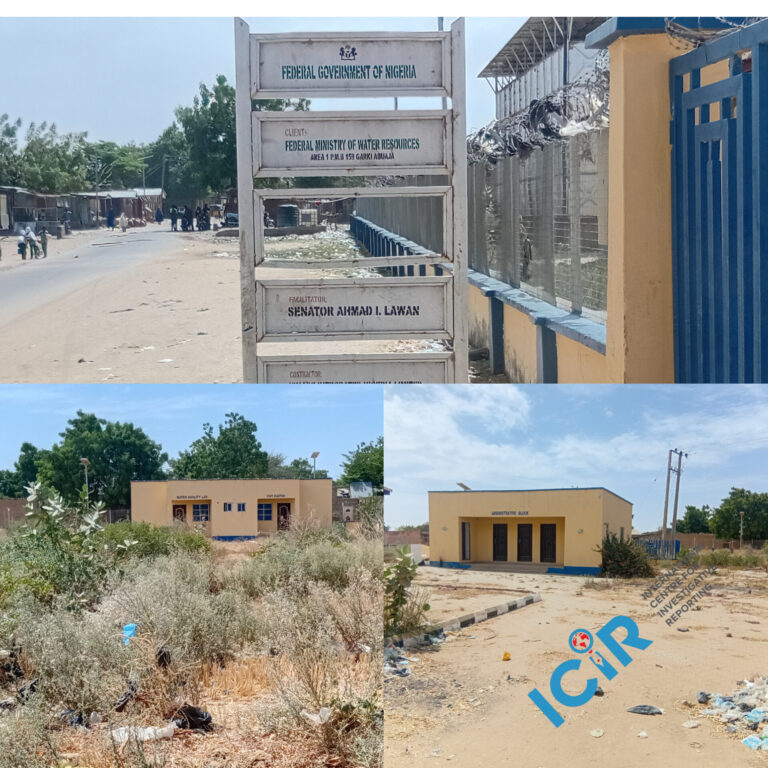
One of the investigation’s major findings was that the N5.7 billion Gashua Water Supply Scheme, commissioned by the Federal Government in May 2025, was found under lock, with no visible signs of activity, despite being designed to address longstanding water shortages and provide treated water to more than one million residents.

The project was inaugurated by the Minister of Water Resources and Sanitation, Joseph Utsev, in May 2025, as a major intervention to improve access to potable water in Gashua and surrounding communities.

The ICIR’s findings raised questions about the functionality of the facility after commissioning, particularly as residents continued to depend on alternative water sources amid concerns over possible contamination.