THE Edo State House of Assembly on Tuesday imposed a two-month suspension on the chairmen and vice chairmen of all 18 Local Government Ares (LGAs) in the state.
The decision followed a petition submitted by Governor Monday Okpebholo, accusing the council heads of refusing to submit their financial records to the state government, according to PM News.
The governor described their actions as insubordination and gross misconduct, urging lawmakers to address the matter.
During deliberations, Isibor Adeh, representing Esan North East 1, moved the motion for suspension, which was seconded by Donald Okogbe, representing Akoko-Edo 2.
The House Speaker, Blessing Agbebaku, directed the clerk, Yahaya Omogbai, to do a head count of the members who supported or opposed the suspension of the council chairmen and their deputies.
Out of the 23 lawmakers present, 14 voted in favour of the suspension, six opposed it, and three abstained.
Following the decision, the House directed leaders of the legislative arms in the affected councils to assume interim leadership.
This development came after Governor Okpebholo, on December 3, directed all 18 council chairmen to submit their account statements of their respective LGAs from September 4, 2023, to date.
According to the governor’s spokesperson, Fred Itua, the LGA leaders were instructed to forward the records to the assets verification committee through the office of the Secretary to the State Government (SSG) within 48 hours.
THE Nigerian National Petroleum Company Limited (NNPCL) said its $1 billion loan backed by crude oil helped the Dangote Refinery to come on stream.
The NNPCL chief corporate communications officer, Olufemi Soneye, stated this at the Energy Relations Stakeholders Engagement in Abuja on Monday, December 16, according to a Punch report.
“A strategic decision to secure a $1 billion loan backed by NNPC’s crude was instrumental in supporting the Dangote Refinery during liquidity challenges, paving the way for the establishment of Nigeria’s first private refinery.
“This initiative underscores NNPC’s dedication to fostering public-private partnerships that drive national development,” he was quoted to have said.
Soneye, however, did not give details of the $1 billion the NNPCL secured on behalf of Dangote Refinery, nor the terms of the agreement and modalities for payment.
He further hinted that the state-owned oil company facilitated a $3.3 billion Gazelle loan as a critical intervention to help stabilise the federation’s foreign exchange crisis.
The ICIR recalls that in January this year, the NNPCL revealed having a syndicated $3.3 billion crude oil prepayment facility in partnership with the African Export-Import Bank (Afreximbank).
This organisation reported that there were unanswered questions about the NNPCL $3.3 billion crude-for-cash loan from Afreximbank.
The NNPCL had sought to stabilise the Nigerian currency with the facility but drew experts’ concerns about some pitfalls.
Despite the crude-for-cash arrangement, the naira continued to depreciate against the dollar, falling from about N960 per dollar in January to N1,500 in December.
The bank said the deal was the largest crude-backed facility in Nigeria and one of the largest syndicated debts raised in Africa.
At the time, the chief executive officer of Financial Derivatives Company Limited, Bismarck Rewane, expressed worry about such arrangements by the NNPCL, adding that the naira had been under pressure despite the arrangements.
“In all due respect, that will not solve the problem of the naira. The naira is still under pressure and is trading at about N1,350/$ this morning, the lowest point it has gone to in many years,” he said.
Also, the co-founder of Dairy Hills, Kelvin Emmanuel, expressed concerns over the high risk of resource-backed loans.
“I am not a fan of resource-backed loans, and this forward sales agreement that is akin to the financialisation of future oil and gas assets is an anomaly in statecraft that the National Assembly should fight with all rigour.
“There is no genius in it; it is a lazy approach to getting dollars to improve your balance of payment position,” he said.
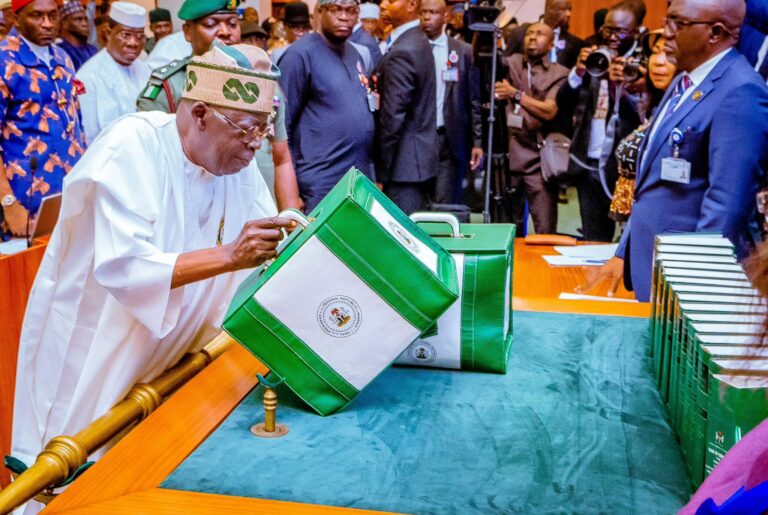
PRESIDENT Bola Tinubu has shifted the 2025 budget presentation to the National Assembly to Wednesday, December 18.
The Minister of State for Agriculture, Sabi Abdullahi, reportedly told Senate press corps journalists on Monday, December 16.
Abdullahi hinted that the executive needed to do a work or two on the budget.
“The budget presentation has been postponed from Tuesday to Wednesday
“The executive just needs to make one or two adjustments to the budget,” he was quoted to have said.
Earlier, the Minister of Information and National Orientation, Mohammed Idris, had told state house correspondents that the National Assembly was considering shifting Tinubu’s budget presentation to Wednesday.
He had hinted at a likely postponement of the budget presentation to Wednesday, adding that only the National Assembly could decide when the President could present the budget to the legislators.
The ICIRreported that the president had earlier scheduled Tuesday, December 17, to lay the budget before the joint sitting of the upper and lower chambers.
The 47.9 trillion 2025 budget was to be laid before a joint session of the national assembly on Wednesday, Senate President Godswill Akpabio announced on Thursday, December 12, at the plenary.
He said, “The President has made his intention known to the National Assembly to present the 2025 budget to the joint session of the National Assembly on the 17th of December, 2024.”
The Federal Government had adopted the Medium-Term Expenditure Framework and Fiscal Strategy Paper for 2025–2027, with a proposed budget size of N47.9 trillion for the 2025 fiscal year.
Key parameters set in the document include an oil price benchmark of $75 per barrel, oil production of 2.06 million barrels per day, an exchange rate of N1,400 to $1, and a gross domestic product growth of 4.6 per cent.
It also includes a borrowing plan of N13.8 trillion for the proposed year.
However, it does appear that the 2025 budget, which will be Tinubu’s second appropriation bill to the national assembly, may miss the January-December budget cycle.
He presented the 2024 budget to the national assembly on November 29, 2023, and requested the chambers to pass it before December 31, 2023.
On January 1, he signed the N28.7 trillion 2024 appropriation bill into law to keep up with the January-December budget cycle.
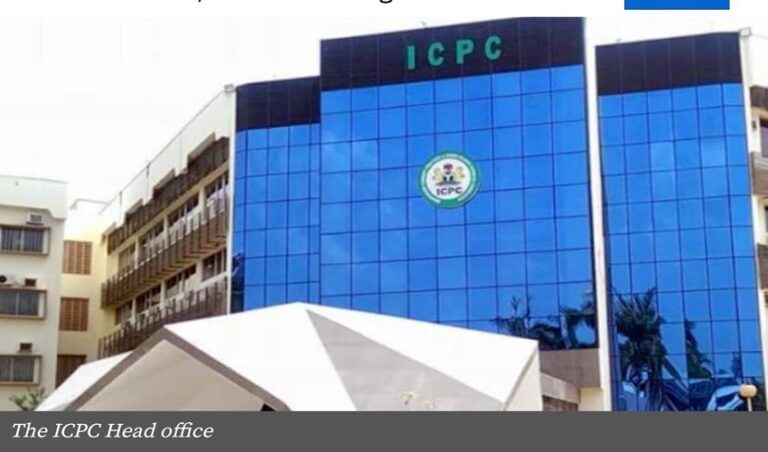
THE Abuja Federal High Court has reduced to 72 hours the period that the Independent Corrupt Practices and Other Related Offences Commission (ICPC) can freeze suspicious bank accounts.
The court said that allowing the commission to freeze accounts for up to one year, as provided by the ICPC Act, is “totally unreasonable and usurps the powers of the court”.
The court also held that while it had the power to freeze suspected bank accounts under Section 45(1) of the ICPC Act, it ruled that such orders were only valid for 72 working hours, after which they would lapse until extended by a court of law where the investigation had not been completed.
The presiding judge, James Omotosho, stated that although the rights of citizens to movable property and the privacy of their bank accounts were not absolute, allowing the ICPC to freeze an account for up to one year could lead to abuse of powers by the commission as “power corrupts and absolute power corrupts absolutely”.
The judgment arose in a suit filed by Abuja-based lawyer, Mr. Ezenwa Anumnu, on February 21, 2024, on behalf of the Lawyers Network Against Corruption (LNAC),
The network, while seeking court intervention, stated that the ICPC and its chairman had unilaterally directed that the bank accounts of citizens be frozen without court orders or recourse to the courts.
It also noted that the commission and its chairman had ordered banks and financial institutions to withhold the monies and properties of Nigerians found guilty of committing any criminal offence indefinitely without any court order.
The group stressed that these directives had resulted in untold hardship and caused injustice to innocent Nigerians.
In the suit, the network sought a “declaration that having regard to section 36(1) and (2) of the 1999 Constitution, as amended, the ICPC is not empowered to make an order restraining dealings on money or property of a person that is in the custody of a bank or other financial institution;
The group also asked the court for a declaration that Section 45(1) of the ICPC Act, 2020 is inconsistent with Section 36(1) and (2) of the 1999 Constitution and is, therefore, invalid, null and void.
The lawyers further sought “an order of perpetual injunction restraining the ICPC and its chairman, either by themselves, their agents and their privies from making any order restraining dealings on money or property of a person that is in the custody of the bank or other financial institution.”
Meanwhile, in his judgment, Omotosho noted every Nigerian citizen has a fundamental right to own movable and immovable property in Nigeria pursuant to Section 44(1) of the Constitution.
According to him, the idea behind section 44(2)(k) of the Constitution is to give enforcement agencies the powers to seize properties which are suspected instruments or proceeds of crime, and that this helps them to carry out thorough investigations on such properties and prepare cases for prosecution.
The judge, however, wondered if Section 45(1) of the ICPC Act, which empowers the ICPC to simply order banks to freeze bank accounts under investigation, is consistent with the provisions of the Constitution.
While citing Section 36 of the Constitution, which guarantees each person the right to a fair hearing, he also explained that the provision “entails that before decisions are made concerning a person, he must be afforded the opportunity to be heard”.
Omotosho said although the ICPC Act is quite clear on the powers of the ICPC chairman to direct banks to freeze bank accounts, the courts op ined that only courts of law could make sure orders.
He also stressed that allowing the ICPC chairman to “give directives to banks to freeze accounts without a court order is capable of working injustice to the owners of such accounts.”
“This power is liable to being abused as the freezing may last longer than is necessary and throughout the period of such freeze, the owners of the accounts will be left in limbo which may cripple their personal or commercial interests.”
The judge also noted that the drafters of the Money Laundering Act had also granted powers to freeze accounts to the Economic and Financial Crimes Commission (EFCC), which has similar duties as the ICPC, but pointed out that it could only be for a period of 72 hours.
He ruled that the intention of the drafters was to ensure that withdrawals could not be made on a suspected account for at least 72 hours, pointing out that “without this power, a person with a suspected account can easily transfer or use up the funds in the account before the commission approaches a court.”
THIS is the second of a two-part report that looks at the suffering arising from gas flaring and climate change issues in some Niger Delta communities, while oil companies fail to pay penalties that would have rehabilitated some of the impacted areas.
Remediation funds fail to arrive Delta despite N235.84bn flare penalties
Isuo Dennis, a resident of Uzere community in Isoko South LGA of Delta State, woke up around 2.00 am, on a rainy night of September 2022 to urinate. However, he was greeted by sounds of panic from his neighbour’s room. As he stepped down from the bed, his legs were submerged in a pool of water. While rushing out of his room, Dennis saw his neighbours battling with the flood water in their rooms and it dawned on him that the community had been flooded.
Flood in Uzere in 2022.
Dennis told TheMail Newspaper that he lost property worth millions of naira and was displaced for over a month. His experience reflects the tragedy of flood victims from the oil producing communities of Uzere, Araya, Aviara, some parts of Igbide and other communities in Isoko South LGA of Delta State.
Utagba Ogbe in Ndokwa West LGA, was not spared by the flood. Linda Iyoriobhe, a female youth leader in the community said many properties worth millions were destroyed during the 2022 flooding. She said beyond the flood, the heat from gas flaring by companies operating in the area has become a major nuisance to the community.
“To sleep at night is difficult because of the heat from the gas flare. Even the rainy season does not abate the heat,” she said.
Linda Iyoriobhe
Yet, Isoko South, blessed with two oil assets OML 30 and 28 operated respectively by Heritage Energy and NEPL had N13.16bn gas flare penalties payable to it by the oil firms, according to the gas flare tracker which should have been used for environmental remediation and relief.
Gas flare site in Uzere.Gas flare site in Uzere.
Ndokwa West hosts several oil companies -Midwestern Oil and Gas, Energia Oil and Gas, Chorus Energy, Pillar Oil on OML 56 asset and Nigerian Agip on OML 61. According to the gas flare tracker, these two assets, should have paid penalties of N70.62bn between 2021 and 2023,
For the 15 oil and gas assets captured by gas flare tracker within Delta State, between 2021 and 2023, a total of N235.84bn in flare penalties should have been utilised for environmental remediation and relief projects.
N76.98bn penalties payable for Other Niger Delta Host Communities
There are several oil and gas communities across other states of the Niger Delta which have not been spared the brunt of gas flaring. For instance, analysis of data from the gas flare tracker shows that in the last three years, OML 16,15, 124 and in 2023 OML 53, operating in Imo State incurred penalties of N3.83bn
The companies include Heritage Energy, Energia Limited and Midwestern Oil, Agip, Neconde Energy, Seplat Energy and Shell. Others are Chevron, Elcrest E and P Nig, Sogenal, NNPC E and P Ltd and ND Western Ltd.
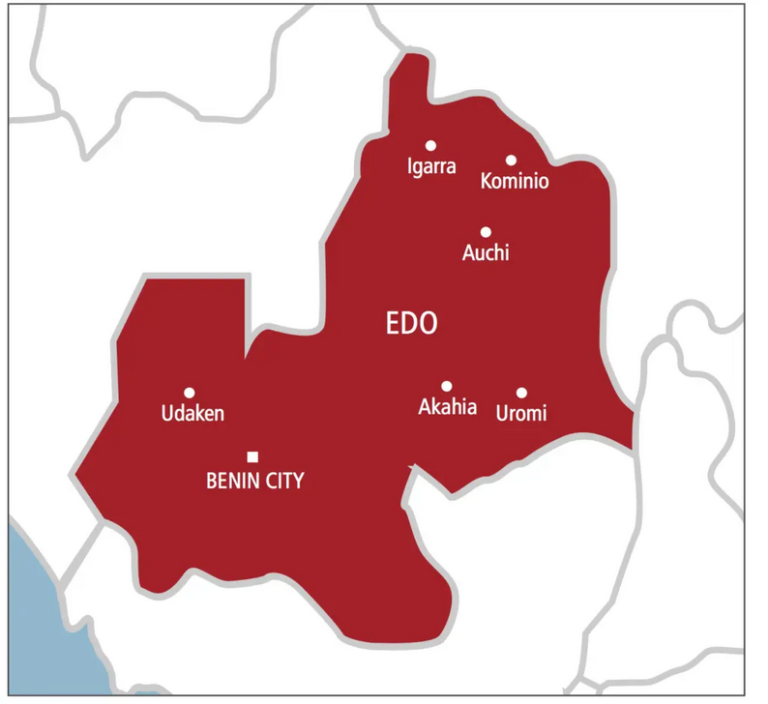
For OML 4, 5, 111, 98, 96 and OPL 205, operating in Edo State, the gas flare tracker shows penalties of N37.75bn payable by Seplat, Shell, NEPL, Panocean Oil, Dubri and Summit Oil.
OML 108 and 95 assets operated by Express Petroleum and Chevron, in Ondo State and Omadino community in Delta, has a penalty of N10.05bn payable for the same period.
In Ogun State, Alfred James Petroleum and Crownwel have gas penalties of N2.14bn on OPL 306 and 302.
However, there are assets captured by the gas flare tracker without specified host communities and which the TheMail Newspaper could not independently obtain. They include OML 79 and OML39 operated by Shell and OML126 operated by Addax. The three years analysis of data by gas flare tracker shows that the penalties payable is put at N23.21bn.
N149.13bn penalties payable from deep water assets
Analysis of the data from the gas flare tracker shows that N149.13bn in penalties is payable for gas flared within the deep-water assets between 2021 and 2023. The assets captured by the tracker are seven operated by South Atlantic Petroleum Limited, Famfa Oil Limited, Shell, Agip, Allied Energy, Esso E&P.
Who then are the host communities that should benefit from the multibillion penalties for environmental remediation and relief?
In defining host communities for deep water assets, Section 6 (2a) of the Nigeria Upstream Petroleum Host Communities Development Regulation (2022) provides that a “host community shall be a littoral community to a deep-water area of operation located along the Gulf of Guinea of the Nigerian shoreline up to about 500 metres inland, provided that such a community is gazetted by the National Boundary Commission.”
After the gazette by the National Boundary Commission, the law empowers NUPRC to assign such communities to an asset. Section 6 (2d) of the Regulation provides: “Littoral communities to deep-water area of operations shall be categorised by their respective state coastlines and shall be assigned to a settlor by the Commission.”
However, a Freedom of Information Act (FOIA) request to NUPRC in October asking to know these communities assigned to deep water assets did not elicit any response.
N454.55bn billion gas flare penalties unaccounted for
Analysis of data from the National Oil Spill Detection and Response Agency (NOSDRA) gas flare tracker shows that penalties payable for gas flared across all the onshore, shallow water and deep-water assets captured by the tracker amounted to N764.05bn. The breakdown shows that N203.21bn was payable for 2021, the sum of N188.05bn for 2022 and N372.79bn for 2023.
However, according to the 2023 Annual Report of the Nigerian Upstream Petroleum Regulatory Commission (NUPRC), the total gas flare penalties it received from oil and gas companies in the three years under review was N309,513,735,748, not N764.05bn as stated by the tracker. It revealed that it received N98.548bn in 2021; N70.422bn in 2022 and N140.542bn in 2023. This is only 40.5 percent of what the commission should have received, according to data by gas flare tracker.
The shortfall, based on analysis of government documents is linked to failure of oil and gas companies to pay the actual amount on penalties, as well as failure of NUPRC to enforce the actual payment of penalties of gas flared.
Comparison of the amount from NOSDRA’s gas flare tracker on what oil and gas companies are expected to pay, with data published by the 2021 NEITI Oil and Gas Report on what was actually received is revealing.
The data shows widespread discrepancies. For instance, in 2021, the gas flare tracker shows that penalties accrued to Mobil Producing for its four oil and gas shallow water assets, OML 67,68, 70 and 104 is summed at $99.3m (N39.69bn by 399.68 exchange rate). Was exchange rate 399.68 in 2021 (This is the average CBN Exchange rate that NEITI report 2021 and 2022- 2023 published was used in NNPC related transaction and other designated cases. Kindly check page 7 of the 2021 report and page 16 of the 2022 report)
Yet, the 2021 NEITI Oil and Gas report states clearly that the company paid $21,180,000 (N8.46bn by 399.68 exchange rate). This leaves an unremitted amount of N31.23bn.
In April 2024, TheMail newspaper wrote a FOIA request to select oil and gas companies, including Mobil Producing, Frontier oil limited, Universal Energy, Moni Pulo, Addax Petroleum, Amni International, Total Energies, Oriental Energy as well as Network Exploration. The FOIA letters requested details of the volume of gas flared by each of the companies between 2021 and 2023, the penalties payable and the actual amounts paid. None of the companies responded as at early December.
NUPRC fails to use N309.5bn remediation, relief funds for intended purpose
Despite the sum of N309.5 billion NUPRC reportedly received in the last three years as gas flare penalties, findings show that the commission had failed, in line with Section 103(3) of the PIA, to issue a guideline on the execution of environmental remediation projects, three years after the Act came into force.
TheMail, in its findings could not identify a single environmental remediation/relief project in the oil and gas host communities it visited in Akwa Ibom, Rivers, Delta and Bayelsa states, attributed to the utilisation of the gas flare penalties. Stakeholders across the host communities cited in this report were asked if NUPRC had carried out any environmental remediation project or provided relief. None responded in the affirmative.
NUPRC, National Assembly in spiral of silence over findings
The NUPRC has failed to respond to the findings of this investigation. In March 2024 and early October 2024, this newspaper had through FOIA requests to the chief executive of the Commission, Gbenga Komolafe, asked for details of gas flaring penalties received by the Commission in the last three years.
The request had specifically asked for the identity of each asset flaring gas, the operator(s) of the asset, the volume flared each year, penalties payable, actual penalty received and the host communities of the assets which gas is being flared.
The FOIA letter also requested to know the environmental remediation and relief projects embarked upon by the commission from the gas flare penalties in each of the host communities. The request further asked to know the title of the environmental remediation projects, the location, cost of project, duration of the project, and contractor for each project. Although both requests were acknowledged, the commission failed to respond.
Again, TheMail Newspaper visited the Abuja Office of NUPRC on October 23, 2024, to seek further clarifications on the findings. The newspaper was, however, not allowed entrance to the office over claims that there was no prior appointment.
On November 18, this newspaper made a phone call to the Head, Public Affairs and Communication of NUPRC, Olaide Shonola, shared the findings with the commission and sought clarification. Shonola requested the questions be communicated through Whatsapp, which the newspaper obliged. No response came.
When she was again reached on November 20 for an update, Shonola said the NUPRC was working on giving the newspaper a response. Yet, the clarification was not given at the time of filing this report.
Also, when contacted on November 18 for clarifications on the oversight role of the National Assembly over the issues uncovered in this report, the Chairman, House of Representatives Committee on Host Communities, Dumnamene Dekor said his committee was considering the questions and would respond. Yet, this response never came as at the time of filing this report.
This Investigation is supported by the John D. and Catherine T. MacArthur Foundation and the International Centre for Investigative Reporting.
HIKES in electricity tariffs have brought a new threat to the Nigerian tertiary education system; a sector almost totally crippled by poor funding, brain drains and insecurity. The new tariffs, which in some cases are up to a 300 per cent increase to what institutions used to pay, now cast another dark pall on the nation’s campuses. NPO Reports, for months, tracked the situation on campuses to see how the development is impacting students, lecturers and other stakeholders.
Saka Azeez is the general manager of Arafim Hostels, located inside the University of Ilorin, North-Central, Nigeria.
Arafim is one of the few private hostels that went into partnerships with the institution some years ago when the university called in private investors to solve accommodation challenges as the few school hostels could no longer cater to the students.
At the time Arafim and other investors went into the business, the Memorandum of Understanding stipulated that the institution would provide the enabling environment to construct hostels and run them.
Part of the agreements was that the university would provide access roads, electricity, security and water in the hostels.
At no time did it occur to Azeez and other private hostels investors that a time would come for them to bear the burdens of providing electricity for students.
Since May this year, owners of the private hostels have had to carry additional burdens of providing electricity; a development they claim has hampered their businesses and disrupted their investment returns, expectations and plans.
The vice chancellor of the University of Ilorin, a professor, Wahab Olasunkanmi Egbewole (SAN), had raised the alarms over the institution’s monthly electricity bill jumping from N70 million to N230 million.
In June, Egbewole was so bordered about the situation that he had to initiate an email to university staff and students to be fully aware of the very dire situation which the power supply had foisted on them.
When the university approached its electricity service provider, the Ibadan Electricity Distribution Company (IBEDC), it was told that the jump was the result of the tariff hikes. And that was why the institution called for a reassessment of its electricity consumption.
The situation at the University of Ilorin illustrates the latest, perhaps, the strongest threat to learning at the nation’s tertiary institutions.
At the end of June, the University of Benin was disconnected over debt owed the electricity service provider. The institution’s vice chancellor, a professor, Lilian Salami, had complained UNIBEN’s bill jumped from N80million to N280million within one month after the hike by the Nigerian Electricity Regulatory Commission (NERC). Salami is also the chairman of the Committee of Vice Chancellors of Nigerian Universities.
It was therefore not a surprise when angry students of UNIBEN went on rampage; first disrupting academic activities and later taking their protests to the Benin-Ore highway to halt vehicular movements.
According to the student union leaders, the action was to call authorities’ attention to the almost permanent state of darkness on their campus.
They claimed that they have only one hour of power supply on the campus everyday, a situation they alleged had greatly affected academic and social lives.
Adamant in their protests, the Senate, on July 4, shut down the university, ordering students to vacate their hostels.
The fears of what happened at the University of Benin instantly gripped other institutions which already felt that their students might be influenced by the protests in Benin.
NPO Reports’ visit to the Yaba College of Technology revealed a very riotous situation. Each department has its own generator which runs during the day with the attendant noise pollutions. A senior lecturer who however did not want her name listed painted a very discomforting scenario where teaching staff are unable to charge their devices like laptops and telephone handsets. Laboratories with teaching equipment also suffer from this as many of them operate with electricity.
The director of Communication of the Yaba College of Technology, Kunle Adams, described the tariffs as “terrorising and inhibiting.” In his response to NPO Reports’ inquiries.
According to the College’s spokesman, Yaba Tech was paying N12m monthly but was increased by 50 per cent to become N18m monthly.
“The college was moved from Band B to Band A unnoticed and immediately disconnected us when new rate wasn’t paid.
“The tariff is terrorising and inhibiting the delivery of the college’s mandate as an institution of learning. The college now is in darkness with 70 per cent of the campus in darkness for the past five months. The college has been running on solar, inverter, heavy and small generators that are consuming our IGR (internally generated revenues) which is now at zero level.”
Adams explained that the power supply is on schedule; rationed in a way that inevitably inhibits the conducive atmosphere needed for learning, conduct of research and smooth administration of the college, according to its spokesman.
“The productivity, efficiency of staff across board and dehumanising experience are some of the fallouts of this pending experience,” Adams said
At the University of Lagos, things boiled over with the Eko Electricity Distribution Company in August. The Vice chancellor, a professor, Folasade Ogunsola, was confronted with a new bill of about N300m after the university was moved from Band B to Band A, according to her “unsolicited.”
The university said it could not pay more than N180m after which its supply was disconnected.
Since then, lecture theatres, hostels, laboratories, library, and other facilities have had to cope with rationed supply. NPO Reports that this has made academic and social lives more uncomfortable.
“It is an existential threat to the Nigerian education system. Universities in particular are enterprises, but they are not meant to be absolute commercial enterprises. They are essential for development. Universities cannot run without power. Universities have the social contract with the country. We are supposed to produce evidence-based knowledge for development. And these cannot be done without power,” the vice chancellor said at a summit held on her campus in October over the power supply crisis in tertiary institutions which the NPO Reports attended virtually.
Other hostels owners at the University of Ilorin, who spoke with the NPO Reports, confirmed that the institution’s Vice Chancellor pleaded with them to provide electricity for the students in their respective hostels to avert possible protests and violence.
The general manager of Arafim Hostels painted the gloomy financial implication of providing electricity to students.
“We found out that the minimum, if you want to provide three hours power supply to the students, you will spend N30,000 a day.
“That’s an average hostel. When you multiply that by nine months, that means in thirty days we’re already talking of one million; meaning N18million is what an average hostel will pay, depending on the population.
“At the end of the day, we now see that we are required to pay N30,000 per student
if we are to give them just five hours, not six or ten hours. That means if we have to do 10 hours, we have to pay N60,000,” Saka told the NPO Reports.
It was learnt that the Ibadan Electricity Distribution Company (IBEDC) had asked UNILORIN to pay at least N150 million which it did and after which the institution was still disconnected.
He said when the IBEDC disconnected the institution, the management had to fall back to the hostel owners to help the students as they must not be in darkness 24 hours.
“As we are buying cards, we are buying diesel. It has never happened like that before,” said Saka who added that turning on generators for three hours everyday is financially unbearable for hostel owners. Sadly, he said the cost of running generators is higher than the cost if power supply were to be regular.
Further inquiries revealed to the NPO Reports that the institution was placed on Band A, which by stipulation, is expected to make power available minimum of 20 hours of a day.
But the hostel manager confirmed that at no time did the university enjoy power supply up to 10 hours since the commencement of the new tariffs.
He is amazed that the university authorities had not taken this up with IBEDC to resolve the issue of hours with no supplies instead of just paying for services not rendered.
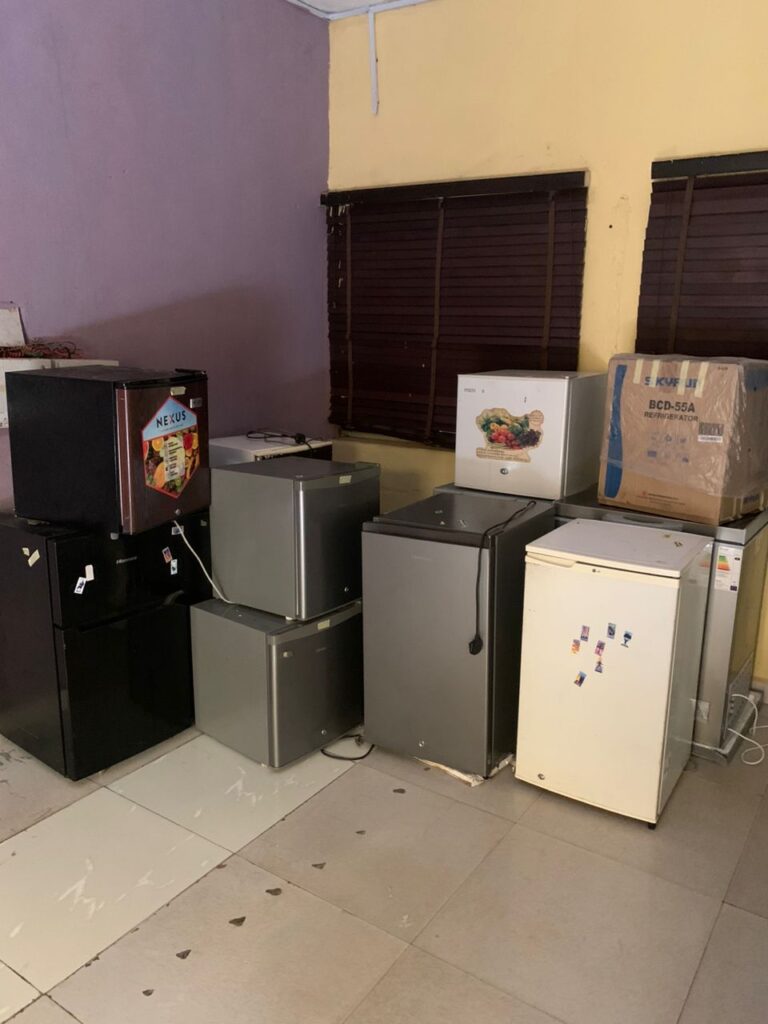
At the end of June, hostels facility managers began to confiscate students’ appliances believed to be consuming power beyond lighting up the rooms and allowing them to charge their phone sets, laptops and power banks.
Some of the appliances seized from students as part of measures to control power consumptions in hostels
Azeez confirmed this when asked by the NPO Reports’ correspondent saying, “When they are coming into the hostels, we now search the bags. We have removed so many appliances which we don’t allow again. Initially, students brought in their refrigerators, blenders, and others. But now, anything that you bring that will be more than 250 watts, we don’t allow again. No more electric cookers, no more refrigerators, no more air conditioners. Some even came with their split ACs!”
The director of Information, University of Ilorin, Kunle Akogun, confirmed how cost of electricity first jumped from “a little over N70 million monthly before the increase” to N237, 760, 205.”
Akogun said the institution did not allow the situation to have any serious effects on the university’s operations. But NPO Reports found out with the number of hours that hostels are without power supplies, academic and social lives are badly affected.
This was also despite the decision of hostel facility managers to stop students from using appliances like small refrigerators and others.
But he confirmed that the institution “immediately took some energy-saving measures to cut wastages. Measures like switching off electricity when not in use; diversion of electricity power to classrooms, lecture theatres, laboratories, libraries, etc, during studies peak period; and conservation of energy in the hostels until evening time.”
OAU students yet to feel the pains, but there are fears
A visit to the Obafemi Awolowo University, OAU, Ile-Ife, Osun State showed that the situation has not become as precarious as is the case on many other campuses. This is not to say that all is well, however.
NPO Reports’ correspondent who visited was told by some students that power supply has not been enough. But others claimed that electricity is the least of their worry for now.
However, chairman, Academic Staff Union of Universities (ASUU) OAU chapter, Anthony Odiwe, described as “discomforting” the hike in electricity tariff.
He said this has inflicted hardship on the academic communities across the country judging by what colleagues experience in their various institutions.
The ASUU leader said the federal government must review some of its policies, especially those that directly impact on the masses.
According to Odiwe, “As at today, the school is making electricity available but sincerely, to the best of information I have at my disposal, it’s been extremely difficult, and that is because we find out that the cost of electricity, they’ve been buying has gone astronomical.
“What they are paying now is like 3 times what they used to pay. Those that pay between the range of N20,000 and N25,000 now pay over N75,000, even with that, they still must regulate the way they consume electricity and financially, it is draining.”
He said that is the part of the issues ASUU is taking up, adding that with the salary they are earning now (which was the same salary they negotiated in 2009) there is no way anyone can justify what electricity alone takes away from them in 2004 compared with the cost of electricity in 2009.
Odiwe added, “The government should review some of these policies especially those that impact on the masses and the generality of Nigerians.”
The national president, Congress of University Academics, (CONUA), Niyi Sunmonu, while expressing dismay over the electricity tariff, proffered solutions.
He urged the Federal Government to designate special status to the tertiary institutions, adding that institutions should look towards power generation on their own as a more sustainable strategy.
Sunmonu said, “Students of the University of Benin went on a protest as a result of high cost of electricity which the university could no longer bear. In fact, I read that the cost skyrocketed to almost N300 million.
“Note that universities are not income-generating institutions. So, the university had to be closed indefinitely.
“Coming to OAU, how the Vice Chancellor of the University has been able to do it, I don’t know, because for now, it appears that the power is relatively stable here. But I am certain that the university won’t be able to afford the payment per month for too long before something gives.”
Worried that this is a nationwide challenge with its attendant disruptions to academic activities, Sunmonu has two solutions in mind.
He said the academic union which he leads, CONUA, has suggested a few ideas that can solve this challenge.
“First, government should designate special status to tertiary institutions in the country. Everything is not about making money. The nation can eventually make money by the quality of graduates trained that will eventually add value to them when they graduate.
“Second, this situation should make our tertiary institutions (in the medium- and short-term solution) look inward to generate their own power. Tertiary institutions are research centres, and we have Departments of Physics, Electrical and Electronics and others that could work on power generation as part of their research works.
“Of course, this cannot be done in isolation but in partnership between the government and our universities.”
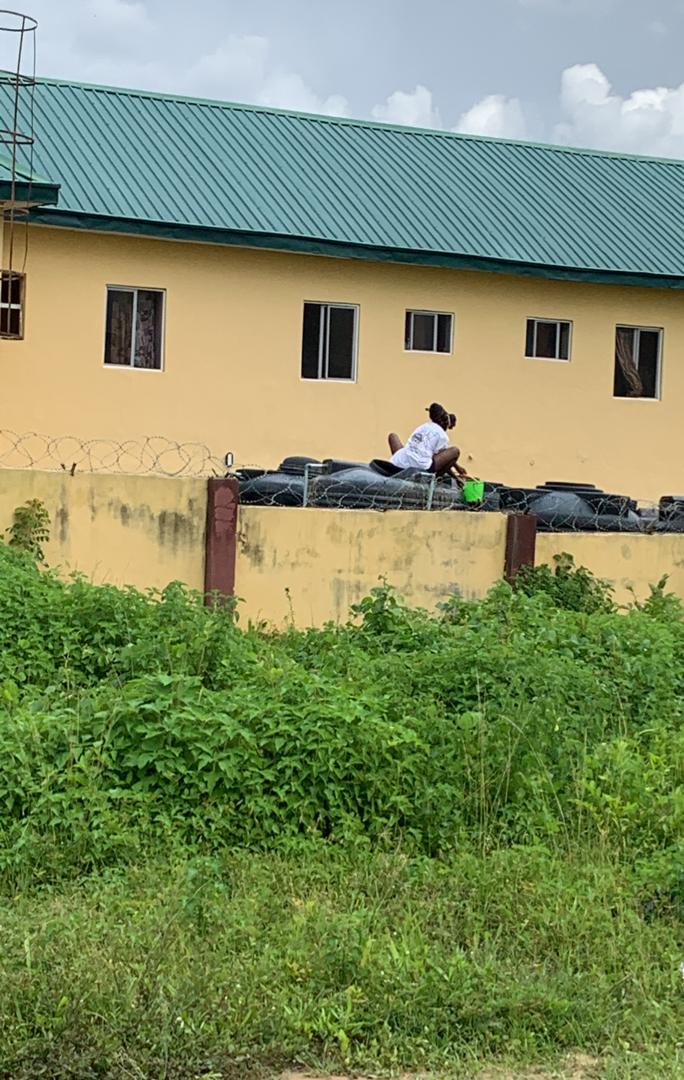
Some students fetching water outside the hostels with no light to pump water in the hostels.
Already, the institution has started to enforce some rules indicating that it is not business as usual because of the growing cost of supply.
Those who live in official quarters now have been forced to use pre-paid metres. Those concerned now have moderated their consumption, NPO Reports was told at the OAU campus.
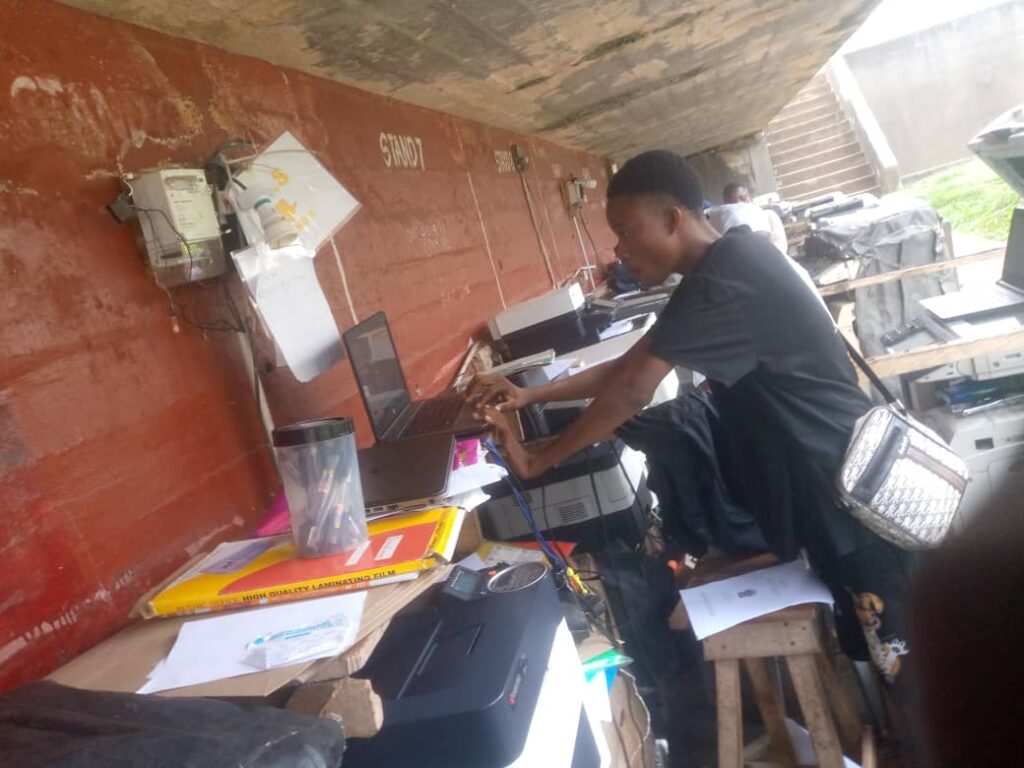
A business owner within university, Oderinde Adeola, told the NPO Reports that the cost of purchasing electricity has skyrocketed in the last three months and has affected cost of doing business.
Adeola said, “For instance, we used to recharge N5,000 before and it would last us for about two to three months. But now, N15,000 only sustains us for three weeks.
One of the business centres on the OAU campus with lamentations over the high cost of powering business centre machines
“The school is really trying it’s best in providing electricity. Those of us on campus don’t really use our generators compared to the people off-campus.”
The Public Relations Officer of the University, Mr. Abiodun Olanrewaju, told the NPO Reports of the management’s commitment to prioritizing students’ welfare, adding that the school strives to provide amenities even amidst growing concerns over power tariffs.
“Don’t forget that students who stay in hostels and those who are coming to the campus always read at night. The Vice Chancellor, Professor Simeon Bamire, has said we have a duty to provide necessary amenities, which include adequate electricity and water supply so as not to affect their learning and reading while on campus.
“For members of staff who stay on campus, each house is now metered, and each occupant of these houses normally purchases the amount they want, depending on their level of consumption.
“For now, I can say we are coping, but that doesn’t mean we won’t welcome any reduction in the tariff.”
A 200 Level student, the University of Ibadan, Bridget Lawson (not her real name) explained what it takes now to walk from hostels to classes at night.
In most of the tertiary institutions visited, water supply into hostels and other facilities have been affected.
Students walk long distances to fetch water for their daily needs.
“These eat badly into the time we have for our academic works,’ lamented Khadijat Ibrahim, a final year student of the University of Ilorin.
At the Ikorodu campus of the Lagos State University of Science and Technology (formerly Lagos State Polytechnic), NPO Reports correspondent discovered that every faculty has its own power generator.
A part of the campus is said to enjoy Band A while another part is said to belong to Band B because of its proximity to a local community which is under the Band B arrangement.
With light off most of the time, NPO Reports was told that it is a cacophony once there is no light. Its situation is no different from what other campuses are facing over the increased tariffs.
Currently, the Lagos State University College of Medicine operates on four hours of electricity supply daily. The College authorities directed supply of electricity from 5am to 7am in the morning and from 7pm to 9pm in the evening.
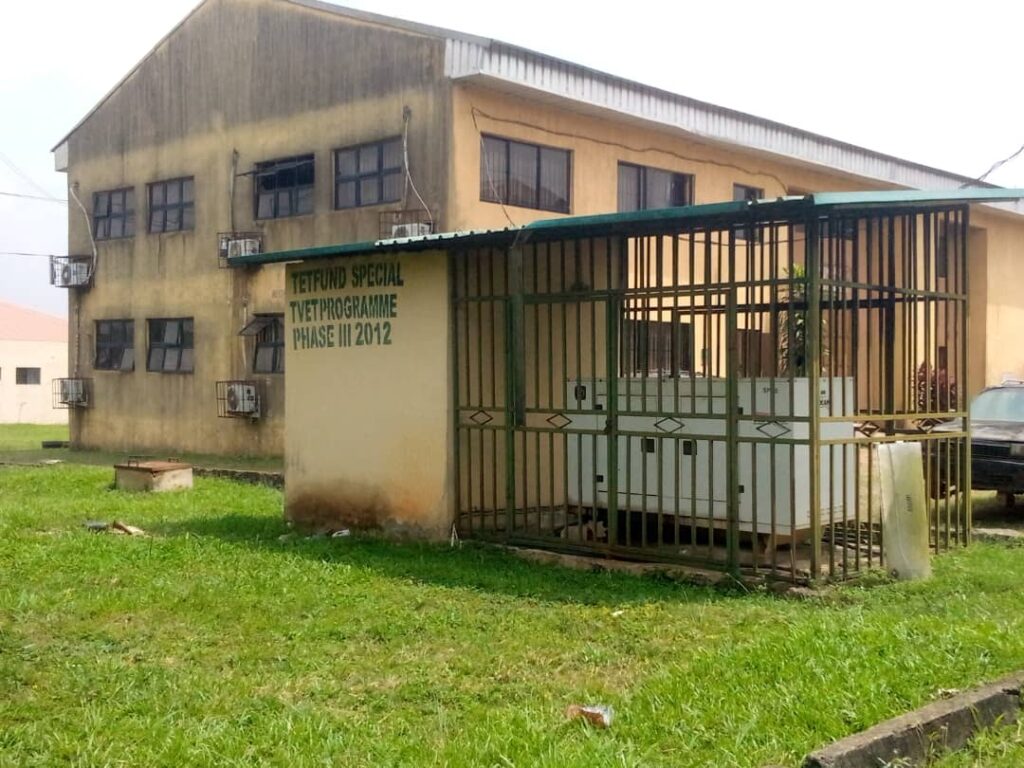
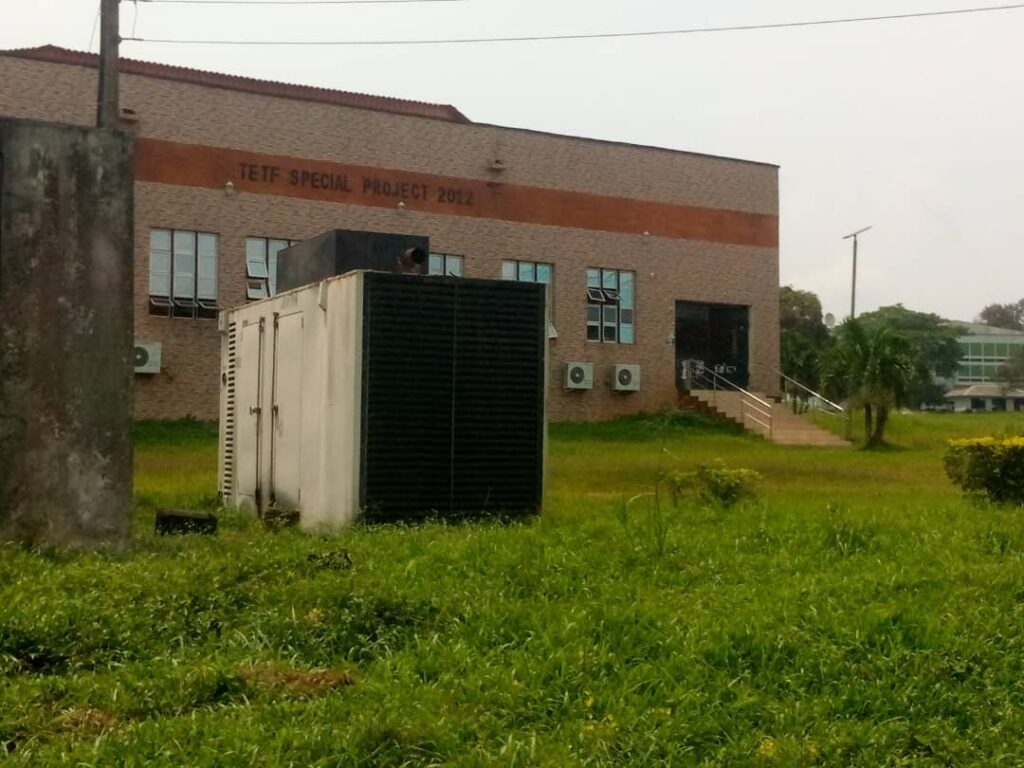
The worsening power situation on the nation’s campuses has attracted the attention of the Tertiary Education Trust Fund (TETFUND). Its Executive Secretary, Arch Sonny Echono, hinted the NPO Reports in August of a plan underway to invest in power generations on campuses as part of an overall strategy to take them off the supply instability and price hikes.
On Thursday November 14, the Minister of Power, Bayo Adelabu inspected the Advanced Solar Micro grid project, being built at the University of Abuja. NPO Reports learnt that the project is about 95 percent completed.
Adelabu said the university solar project would be replicated in other universities, tertiary institutions and Teaching Hospitals across the country and it will shield those institutions from the high cost of electricity.
“We want to replicate what we have here in other institutions. We believe that this will be sustainable. We need the support and co-operation of the beneficiary institutions for it to work and provide the needed service to the students and the university community at large,” the minister told the vice chancellor, Aisha Sani Maikudi.
Despite this promise, the UNIABUJA pilot campus solar projects appears more of a long term solution.
With about 270 universities in Nigeria (federal, state government and privately owned), a pilot electricity project in one of them looks far from providing immediate solution.
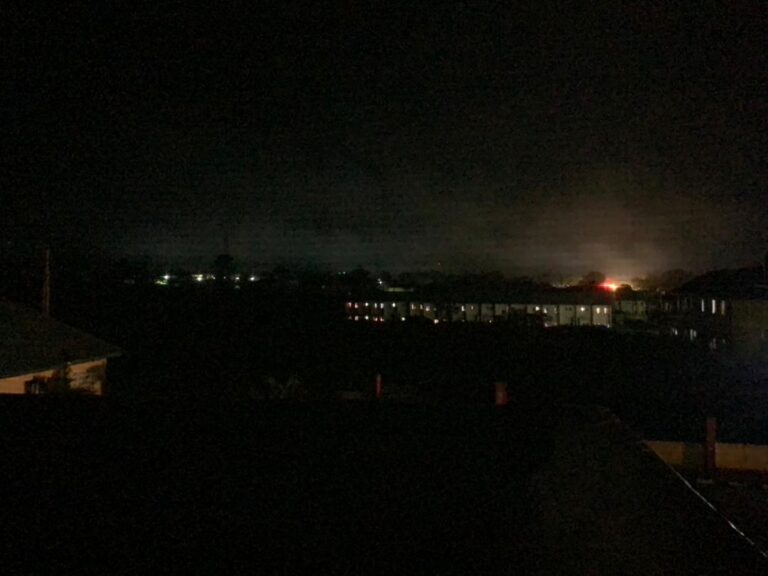
One of the complications thrown up by the worsening power situation on campuses is insecurity. NPO Reports observed that the cuts in power supply have led to many parts of campuses to remain unlit at nights.
Walkways, lawns, hostel areas and lecture theatres are mostly in darkness at night. Areas of campuses that used to be well lit oftentimes now are in darkness. This heightens anxieties over insecurity on campuses.
President of CONUA Sunmonu lamented the impacts of reduced power supply and outright instability on some campuses reduced productivity in teaching and research works.
“Devices run down easily. Offices are unable to use air conditioners or fans when there is heat and the classrooms and offices become generally uncomfortable for both lecturers and students. These cause so many complications the cost of which is huge and hard to calculate,” Sunmonu said
In November, Education Writers Association of Nigeria (EWAN) called stakeholders to the University of Lagos where speakers brought up the various challenges posed by prevalent darkness on campuses. The accounts presented by the vice chancellor of UNILAG and the Rector, Yaba College of Technology Ibraheem Adedotun Abdul, and others were pathetic.
The UNILAG boss argued the Federal Government must reconsider its approach which compels tertiary institutions to pay what commercial entities pay.
She said, “The present model cannot work. Most universities are badly funded.
“It is not sustainable. Most universities across the nation are falling into debts because the IGR that we do generate is meant for something else but now probably being eaten in totality by power.”
With a new session just opened, the crisis of electricity supplies continues on most campuses. Those that are yet to cry out appear to be on the edge. The hike crisis appears the very latest headache for which the tertiary institutions are yet to find pain relievers.
*The report republished from NPO reports was anchored under the C-MEDIA Project of the Wole Soyinka Centre for Investigative Journalism.
NIGERIAN forward Ademola Lookman has been crowned African Best Player, after his outstanding season with Atalanta in Italy’s Serie A, coupled with his impact on the Nigerian national team.
With this recognition, Lookman now joins the ranks of iconic Nigerian players like Nwankwo Kanu, Victor Ikpeba, Rashidi Yekini, and Emmanuel Amuneke, who had won the prestigious award.
He has also joined Victor Osimhen and Asisat Oshoala, who were named African Best Players in the male and female categories, respectively in 2023. Asisat’s success last year made her a six-time winner of African football’s most prestigious and coveted award
The announcement was made during the 2024 Confederation of African Football (CAF) Awards held in Marrakech, Morocco, where Lookman’s incredible performances at both club and country levels earned him the prestigious title.
Known for his dribbling ability, pace, creativity, and goal-scoring prowess, Lookman emerged as the winner in a category dominated by some of Africa’s most elite football talents.
He won it ahead of Simon Adingra (Ivory Coast/Brighton); Serhou Guirassy (Guinea/Stuttgart); Achraf Hakimi (Morocco/PSG); and Ronwen Williams (South Africa/Mamelodi Sundowns).
The ICIR reports that this victory followed a series of remarkable achievements for Nigeria at the CAF Awards, winning it back to back, with the Super Falcons also being recognised as the Best National Team of the Year and Chinaza Nnadozie, who won the inaugural African Goalkeeper of the Year award.
In the same vein, the Super Falcons won the Women’s National Team of the Year. This means that the Nigeria women’s team has won the award back to back. They edged South Africa and Morroco to win the prize.
This was as the 𝐂ô𝐭𝐞 𝐝’𝐈𝐯𝐨𝐢𝐫𝐞 emerged as the Men’s National Team of the Year award following their triumph in the 2024 Africa Nations Cup.
The Nigerian Chiamaka Nnadozie also won Women’s Goalkeeper of the Year after her stellar year with the Super Eagles and Paris FC. This also means that the Nnadozie has won the award back to back.
Other awardees:
Barba Banda won the Women’s Player of the Year after a season of stellar performances.
Lamine Camara emerged as the Men’s Young Player of the Year for the second year in a row. He plays for Senegal and AS Monaco
The Egyptian Doha El Madani also clinched the Women’s Young Player of the Year award.
Al Ahly FC won the Men’s Club of the Year.
Ronwen Williams won Men’s Interclub Player of the Year and the Men’s Goalkeeper of the Year awards.
Sanaa Mssoudy is the Women’s Interclub Player of the Year.
Lamia Boumehdi of TP Mazembe won Women’s Coach of the Year.
Emerse Fae also emerged as the Men’s Coach of the Year.
Both Osimhen and Lookman made the CAF FIFPRO Men’s Best XI.
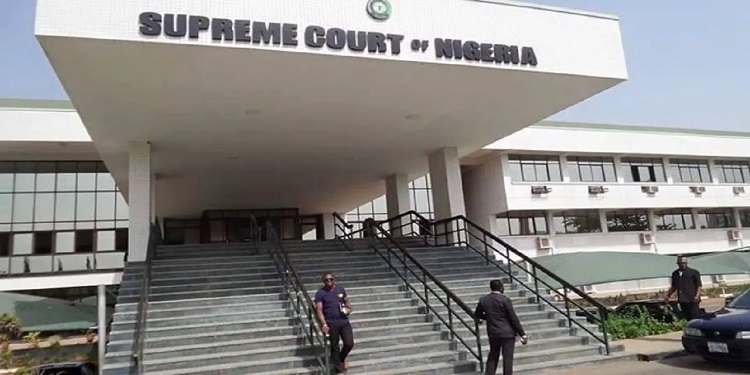
THE Supreme Court has dismissed a lawsuit filed by a former presidential candidate of the Hope Democratic Party (HDP), Ambrose Owuru, seeking to sack President Bola Tinubu from office.
The court also awarded a fine of N5 million penalty against the litigant. In addition to the fine, the apex court ordered its registry to reject any further frivolous originating summons from Owuru.
Owuru did not participate in the 2023 presidential election which Tinubu won. He was the HDP’s candidate in the 2019 election against former President Muhammadu Buhari and others.
During the court proceedings on Monday, December 16, Owuru, who claimed to have practised law since 1984, attempted to present his case while wearing his legal attire.
However, he was instructed to leave the bar and remove his wig and gown before being allowed to proceed. After complying, he was questioned about why he had returned to court despite having his previous suits dismissed three times.
His attempt to persuade the Supreme Court to hear his case was unsuccessful, and his explanations were deemed unconvincing.
The court, through its judge, Uwani Musa Aba-Aji, threatened to refer him to the Legal Practitioners Disciplinary Committee (LPDC) due to his ‘stubbornness’.
The judge found Owuru’s conduct to be unbefitting of a lawyer with over 40 years of experience, as he claimed.
Ultimately, the court dismissed his suit and ordered him to pay Tinubu ₦5 million. The court lambasted him for wasting its time with frivolous lawsuits and abusing court processes.
Tinubu’s counsel, Bode Olanipekun, a senior advocate, pointed out to the court that Owuru’s previous cases had been dismissed due to lack of merit.
He also stated that the new suit was unclear and poorly presented, making it difficult to understand its direction.
Furthermore, Olanipekun expressed that apologising on Owuru’s behalf was challenging due to his unprofessional conduct, which he said had become unbearable to the legal profession.
Owuru’s suit was based on two main grounds: the alleged non-qualification of Tinubu to hold office as Nigeria’s president and the alleged usurpation of the office in contravention of the law.
He also accused Tinubu of forfeiting $460,000 to the US over an alleged drug trafficking-related offence and claimed that Tinubu was an active agent of the CIA, which he believed disqualified Tinubu from holding the office of President.
The ICIR reported that the Court of Appeal had earlier fined Owuru N40 million for filing a baseless suit against Tinubu, the Independent National Electoral Commission (INEC), and other defendants.
The three-member panel of the appeal court, led by Jamil Tukur, in May 2023 determined that by initiating a frivolous and vexatious lawsuit to irritate the respondents, Owuru had engaged in a blatant abuse of the legal system.
THE Federal Government has renamed the University of Abuja after former Head of State, Yakubu Gowon, a retired general.
The announcement was made on Monday, December 16, by the minister of information and national orientation, Mohammed Idris, while State House correspondents after the council’s meeting at the Aso Rock Villa, Abuja.
Established in January 1988 under Decree No. 110 of 1992 (as amended), the University of Abuja, widely known as UniAbuja, functions as a dual-mode institution, providing both conventional and distance learning programmes.
Currently, the university comprises nine faculties, the College of Health Sciences, a School of Remedial Studies, a Centre for Distance Learning, an Institute of Education, and a School of Postgraduate Studies, among others.
Gowon, who served as Nigeria’s Head of State from 1966 to 1975, is widely remembered for introducing the National Youth Service Corps (NYSC) in 1973, a programme aimed at fostering national integration after the nearly three-year civil war he led.
Meanwhile, the information minister also disclosed that President Bola Tinubu has approved free transportation nationwide ahead of the Christmas celebration.
According to him, the Federal Government will commence nationwide free train services from December 20 to January 5, 2025.
UNITED Nations Educational, Scientific and Cultural Organization (UNESCO) is receiving nominations for the 2025 edition of the UNESCO/Guillermo Cano World Press Freedom Prize.
Member states, international and regional professionals and non-governmental organisations working in the field of journalism and freedom of expression may nominate up to three candidates for the prize.
The recipient will be recognised during a World Press Freedom Day ceremony on May 3, 2025.
Journalists, organisations or institutions that promote press freedom worldwide can be nominated for a US$25,000 award.
Nominations must be submitted in English or French and include a brief biography or history of the nominees.
The deadline for the submission of nomination is February 15, 2025. Interested applicants can apply here.


![Gas flaring: Niger Delta communities suffer as oil giants fail to pay penalties [part 2]](https://www.icirnigeria.org/wp-content/uploads/2024/12/2-2-768x337.jpg "Gas flaring: Niger Delta communities suffer as oil giants fail to pay penalties [part 2]")


 On Thursday November 14, the Minister of Power, Bayo Adelabu inspected the Advanced Solar Micro grid project, being built at the University of Abuja. NPO Reports learnt that the project is about 95 percent completed.