EBONYI State Governor, Francis Nwifuru, has issued a 72-hour ultimatum to the state workers involved in the ongoing industrial strike over the new minimum wage.
Nwifuru said this on Monday, December 2, in Abakiliki, the state capital, while responding to the one-week strike declared by the chairman of the Nigeria Labour Congress (NLC) in the state, Oguguo Egwu.
While announcing the strike on Sunday, Egwu said it was in line with the NLC’s national leadership directive of November 8 for states that haven’t implemented the new wage.
Nwifuru, who frowned at the development, said the National Assembly didn’t pass a bill for a salary increment but a minimum wage for workers. He added that the bill did not state the maximum payable to workers.
He warned that the state would not fold its hands and allow personal interest to override public interest.
He expressed surprise that the workers proceeded on strike after he started paying the new minimum wage in October.
He also stated that he did not owe any worker in the state any salary, pension, or gratuity.
“And if you do not go to work and choose to stay at home in the name of strike, I will replace you within 72 hours. So I’m giving you 72 hours to return to duty, orI will sack you.
“I have directed that attendance registers be open at every ministry and government office, and we are going to monitor attendance,” Nwifuru vowed.
He added that he expected every worker who came to work to sign and would pay those who came to work using the register.
He stated that he wouldn’t negotiate on the issue, explaining that the state NLC leader, Egwu, wasn’t his employee.
Additionally, it was reported that some workers in the state, including those from primary and secondary schools, refused to participate in the strike.
Workers in Ebonyi are not the only ones participating in strike declared by the national body of the NLC over some state government’s failure to implement the new minimum wage.
The ICIR reported that the Federal Capital Territory (FCT) Council of the NLC ordered workers across the city’s six area councils to embark on an indefinite strike from December 1, 2024.
The directive was issued by the FCT NLC chairman, Knabanyi Adalo, in a statement released on Saturday, November 30.
The strike was in response to the refusal of area council chairpersons to implement the N70,000 national minimum wage and settle other outstanding entitlements.
Labour unions had threatened to embark on a strike starting November 30, citing the failure of the FCT Administration to engage with union representatives or address wage concerns since the FCT minister, Nyesom Wike’s, inauguration in August 2023.
Following the threat, the minister approved the minimum wage payment for the FCTA workers.
In a statement issued by Anthony Odeh, the acting head of the FCTA civil service, Wike not onlyapproved the wage increase,he also authorised the payment of three months’ arrears, effective November 2024.
However, Adalo, who announced the strike for the area councils, said the strike aligned with a communique issued by the NLC national body.
The NLC FCT council cited unresolved issues, including unpaid arrears owed to primary school teachers and other entitlements.
According to him, the area council chairpersons had refused to respond to the demand for implementation of the minimum wage in their respective area councils.
Recall that President Bola Tinubu on Monday, July 29, signed the National Minimum Wage Act 2024 Amendment Bill into law, approving a minimum wage for civil servants from N30,000 to N70,000.
THE Presidency has dismissed claims that the Tax Reform Bills before the National Assembly will scrap key federal agencies, including the National Agency for Science and Engineering Infrastructure (NASENI), the Tertiary Education Trust Fund (TETFUND), and the National Information Technology Development Agency (NITDA).
In a statement issued on Monday, December 2, by the special adviser to the president on information and strategy, Bayo Onanuga, the government described the allegations as “deliberate misinformation” intended to mislead Nigerians and stir sectional tensions.
The presidency said contrary to speculations, the bills aimed to streamline Nigeria’s tax system by consolidating some taxes that currently overburden businesses, rather than scrapping or undermining any agency.
It noted that the reforms propose a phased replacement of earmarked taxes with a single tax to be distributed among the affected agencies until 2030, ensuring their operations continue uninterrupted.
“The tax reform bills will not make Lagos or Rivers more affluent and other parts of the country, as recklessly canvassed, poorer. The bills will not destroy the economy of any section of the country. Instead, they aim to enhance the quality of life for Nigerians, especially the disadvantaged, who are trying to make a living.
“Contrary to the lies being peddled, the bills do not suggest that NASENI, TETFUND, and NITDA will cease to exist in 2029 after the passage of the bills.
Government agencies, such as NASENI, TETFUND, and NITDA, are funded through budgetary provisions with company income tax and other taxes paid by the same businesses that are being overburdened with the special taxes.
“President Bola Tinubu’s administration argued that multiple taxes have hindered economic growth, driven investors away, and made Nigeria less competitive globally. The reforms, it stated, aim to correct decades of inefficiencies and align,” the statement read.
The ICIR reported that the bills, submitted by the President to the National Assembly on October 3, have sparked intense debate in the National Assembly, with many Nigerian lawmakers and governors, particularly from the North voicing fears that they could exacerbate the economic disparities between resource-rich and less-endowed states.
The four proposed laws—the Nigeria Tax Bill 2024, the Tax Administration Bill, the Nigeria Revenue Service Establishment Bill, and the Joint Revenue Board Establishment Bill—aim to overhaul the country’s fiscal framework, simplify tax collection, and reduce disputes.
While proponents argue that the reforms will strengthen Nigeria’s fiscal institutions and align with the administration’s broader development goals, critics, including some northern governors and lawmakers, caution against provisions they believe could unfairly favour resource-rich states over others.
However, the presidency argued that multiple taxes have hindered economic growth, driven investors away, and made Nigeria less competitive globally, stating that the bills aim to correct decades of inefficiencies and align Nigeria with international best practices.
Onanuga urged public commentators and political actors to engage constructively with the bills rather than incite divisions or spread unfounded claims.
He also encouraged Nigerians to participate in the upcoming public hearings by the National Assembly to share their views on the proposed reforms.
BUSINESS activities in the Nigerian private sector contracted again in November, stoked by the increasing inflationary pressure.
This indicates a five-month consecutive decline in business activities as the Nigerian headline inflation rose to 33.88 per cent in October from 32.70 per cent in September.
In its monthly Purchasing Managers’ Index (PMI) report released on Monday, December 2, Stanbic IBTC Bank indicated that the rates of inflation further hampering private business operations.
The report showed that private sector businesses remained at the contractionary level of 49.6 points in November, from 46.9 points in October, pointing to a marginal decline in business activities.
When the PMI reading is above 50.0 points, it signals an improvement in business conditions, but below 50.0 readings show a deterioration in business activity.
The Central Bank of Nigeria has been unable to tame inflation in the last year despite its orthodox approach.
The ICIR can report that the PMI started to deteriorate below the 50.0 no-change mark in July after inflation struck private sector business activities to negative territory.
In July, the PMI declined to 49.2 points from 50.1 in June. It remained contracted in August at 49.9 points, 49.8 points in September, and further down to 46.9 points in October.
According to the latest Stanbic IBTC report, the decline in PMI for the fifth consecutive month in November signalled a further deterioration in business conditions in the private sector.
It indicates that companies reported customers were often deterred by high prices as the inflationary environment and muted demand conditions meant that business activity continued to fall.
While sector data pointed to increases in output in agriculture and manufacturing but decreases in wholesale and retail and services, purchase costs rose rapidly again in November amid naira weakness and higher prices for fuel and raw materials as the pace of inflation remained elevated.
In response to increasing input costs, output prices rose further at a substantial pace midway through the final quarter of the year, the report showed.
The muted demand environment and high prices for inputs led companies to reduce both their purchasing activity and stocks of inputs in November.
The overall view was that business confidence continued to wane in November and hit a fresh record low as firms continued to hope for improvement.
“The Nigerian private sector activities deteriorated further in November, albeit at a less pronounced rate relative to October.
“This less pronounced deterioration was primarily due to the return to growth of new orders in November, after having decreased solidly in October,” the head of equity research West Africa at Stanbic IBTC Bank, Muyiwa Oni, said.
He stressed that higher energy prices, increases in the cost of raw materials, and lingering currency weakness continue to lead to intensification of price pressures in November.
“Thus, input prices increased at a substantial rate again during November, with the pace of inflation only slightly lower than that seen in October and remaining one of the sharpest on record,” Oni added.
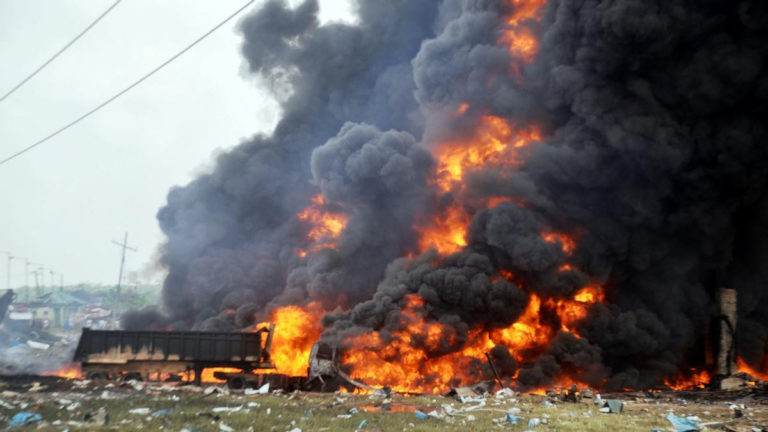
An early morning inferno consumed a market at Trademore Estate, along Airport Road, Abuja, on Monday, December 2.
A similar incident was recorded in Ibadan, Oyo State, where 17 shops were consumed.
While the origin of the fire at the Abuja estate remains unknown, a resident who witnessed the incident told reporters that he was alerted to the fire around 4 am.
According to him, the possibility of an electrical fault cannot be ruled out.
He added that two hours after the fire started, officers of the Federal Fire Service and their counterparts sister organisations arrived and quenched the fire.
The ICIR reports that the inferno in Ibadan consumed 17 shops at Moniya Market, Akinyele Local Government Area of the Oyo State capital.
The blaze, which began around 12:30 am, is suspected to have been triggered by a power surge.
Eyewitnesses reported that the fire resulted in substantial losses, with valuable goods and cash destroyed.
Many of those affected appealed to the government for urgent assistance to help them recover from the disaster.
Fire disaster is not new in Abuja. In December 2021, a fire gutted Next Cash and Carry, a popular shopping mall located in Jahi.
Workers and shoppers were thrown into a state of confusion as no one knew the cause of the fire, which started at about 10:00 am.
Earlier in July, another popular mall in Abuja, Ebeano Supermarket, was razed in a fire incident that destroyed goods worth billions of naira.
Also on May 10, 2023, a fire gutted a fuel station at the Nigerian Air Force (NAF) Base along Airport Road in the FCT. Two cars were burnt in the outbreak.
Fire hazards have been a concern in Nigeria. The risks are heightened by the use of highly flammable materials in homes and the absence of fire prevention measures.
Experts believe there is a need for improved fire safety, especially in urban and informal settlements where combustible materials are widespread. The aim is to improve fire safety, especially in people’s homes.
In this report, Rhoda Afriyie Mensah, a fire protection engineer specialising in the flammability of materials, gives fire safety tips at home: the risks and how to avoid them.
THE Nigeria Police Force (NPF) has faulted the recent report by Amnesty International (AI), which alleged police culpability in the deaths and arrests of protesters and the use of excessive force during the #EndBadGovernance protests in August this year.
The NPF, in a statement released on Monday, December 2, described the allegations as unfounded, misleading, and inconsistent with incident reports submitted to the office of the inspector-general of police (IGP) by affected commands.
The police reiterated that throughout the protests, it operated in compliance with established rules of engagement, including providing security for peaceful protesters.
The statement added that the IGP, Kayode Egbetokun, had issued clear directives to all commissioners of police on managing the protests, emphasising that officers should not deploy arms to manage protests.
“Instead, arms were only to be used when protests escalated into riots involving loss of lives and property damage. Even then, engagement with armed protesters was limited strictly to specialised armed units to restore order.
“The Nigeria Police Force recorded several unpalatable incidents during the protests, which were accurately documented and publicly shared.
“For example, in Borno State, four individuals tragically lost their lives, and 34 others sustained severe injuries following an attack by suspected Boko Haram/ISWAP operatives who infiltrated the protest and detonated an improvised explosive device (IED),” the NPF stated.
The police said in a similar, “isolated incident,” an unregistered vehicle rammed into protesters, resulting in fatalities.
“These events, which accounted for the total of seven recorded deaths during the protests, were not caused by police actions,” the Force added.
The Police argued that it employed strategic measures, including the lawful use of tear gas, to prevent further escalation and ensure public safety.
Furthermore, the police claimed that the use of tear gas is a globally accepted practice for dispersing unruly crowds and was applied judiciously without recourse to live ammunition.
They denied the use of live ammunition and causing the death of any protester.
However, the Force stated that the IGP had directed a comprehensive investigation into the claims of AI and commissioners of police in the affected states had been mandated to submit further detailed reports on the incidents within one week.
The AI in a report released on Thursday said at least 24 protesters were killed and over 1,200 others, including minors, were detained during the #Endbadgovernance protest.
Months after the protests, AI in the statement accused the police authorities of using “excessive force” against demonstrators during the protest.
The organisation said the police used extreme force against protesters leading to fatalities in states namely Borno, Kaduna, Kano, Katsina, Jigawa and Niger.
In another statement, the NPF said the IGP, reaffirmed the capacity and expertise of the police in tackling cybercrimes and protecting cyberspace in Nigeria and beyond.
The IGP made this known while commending the police operatives attached to Zone 7 command and the National Cyber Crime Centre (NPF-NCCC) Abuja for bursting a group of foreign nationals involved in a series of cybercrimes including internet fraud and marketing scams.
The suspects were arrested on November 3, 2024, in Jahi, a suburb of the Federal Capital Territory (FCT).
During the investigation, operatives of the NPF-NCCC recovered an array of critical digital evidence, believed to be instrumental in the syndicate’s cybercrime operations.
DESPITE the guidelines set by the National Primary Healthcare Development Agency (NPHCDA) to ensure quality and accessible healthcare in Nigeria, primary healthcare (PHC) facilities across Kiyawa, Dutse, and Kafin Hausa Local Government Areas (LGAs) in Jigawa State fall short on critical requirements.
This report spotlights troubling lapses in PHCs in the LGAs. It reveals how these deficiencies impact the health and well-being of the communities relying on them.
By Khadija Ishaq BAWAS
The low community awareness about the services rendered at the Madobi Primary Health Centre (PHC) in Dutse local government area is one which has made some community members shun the facility.
During an interaction with some residents, it was evident that they were apprehensive of the facility. Some of them revealed that the selection process for beneficiaries in the Basic Health Care Provision Fund (BHCPF) lacks transparency.
The BHCPF is an initiative by the federal government aimed at achieving Universal Health Coverage (UHC) by providing accessible and affordable healthcare to all citizens, especially the poor and vulnerable. Established under the National Health Act of 2014, the BHCPF allocates at least 1 per cent of the federal government’s consolidated revenue fund (CRF) annually to strengthen primary healthcare (PHC) services across the country.
The BHCPF is designed to address the critical gaps in Nigeria’s healthcare system, such as poor funding, inadequate infrastructure, a lack of essential medicines and skilled personnel at the PHC level. The fund prioritises free healthcare for pregnant women, children under five, the elderly, and persons with disabilities. It also empowers state and local governments to co-finance healthcare delivery, ensuring a shared responsibility in sustaining the system.
Scattered files inside the Madobi health post
Fatima Jibril, a 45-year-old mother of nine, explained that her daughter was able to benefit from the BHCPF only because she was privileged with a connection at the PHC.
“If it weren’t for that, I don’t think we would have been enrolled by now,” she said. While the programme helped address her daughter’s healthcare needs, Fatima pointed out a major issue – many people in her community still do not know about the BHCPF.
Furthermore, even those who are aware of the programme often face challenges enrolling, revealing a significant gap in both awareness and access.
Despite these advantages her family enjoys, Fatima notes occasional gaps in medication availability.
“Sometimes, they tell us to come back the next day when there is lack of drugs and when you come back, they still don’t have the drugs,” she said.
“Asides that, we also worry about the safety of the centre, especially as it has no fence. At night, anyone can enter. It’s not safe, especially with young girls visiting the PHC,” she added.
Unlike Fatima, Suleiman Saidu and his family are not enrolled in the BHCPF. During his visit with his pregnant wife, he expressed frustration about the additional costs he incurs for her treatment. He expressed sadness regarding the poor knowledge about the BHCPF, despite being a community member, questioning the selection process of beneficiaries.
“I have been buying drugs at clinics and pharmacies which are expensive. I’ve only recently learned that there’s a programme here through our conversation. But even now, I’m not sure how to enrol or who to talk to because I don’t even know where to start from.
“If the selection process is much, more transparent and the community is fully aware of this programme and the services this PHC renders, it will encourage more people to visit this facility. Aside our poor knowledge of the BHCPF, we don’t feel safe here, especially at night. There’s no fence or security personnel. This is why I came here with my wife so she can feel protected.
“It’s worrying to see the staff leaving because they can’t stay here overnight. If the staff are leaving because of the lack of security, how about we the community members; what if there’s an emergency? We could be left without help when we need it most,” Saidu lamented.
Ummi Shehu, a midwife at the PHC, is the only one available for night shifts due to the proximity of her home to the facility. She described several challenges, particularly the low patient turnout, which reflects limited awareness about the facility in the community. She also noted a shortage of equipment, which allows them to handle only one delivery at a time, forcing them to improvise with regular beds when two patients go into labour simultaneously.
“At the moment, we have one delivery bed with limited disinfectant supplies and when two patients go into labour at the same time, we have to use a normal bed for one of them and use a make-shift bed for the other,” she said.
A staff member at the Madobi PHC in Dutse LGA, who pleaded anonymity, voiced his frustration about the current state of the centre, pointed out a persistent gap in community awareness of the BHCPF.
“A lot of people who come here still don’t know about the free services available to children under five and pregnant women. They assume they need to pay for everything, so they avoid coming here until it’s serious.
While the centre claims to carry out awareness campaigns about the PHC and the services it renders, this reporter’s interaction with community members proved it is either ineffective or untrue.
On security, Suleiman said: “We are in the open without fencing. We’ve faced security issues for over two years now. Drugs have gone missing, and we’re always at risk of break-ins. Without an accommodation for midwives to stay, we only rely on the one midwife who lives nearby for night duty,” he said, highlighting the shortage of on-site staff after hours.
“If we don’t improve security, we’re risking the safety of our patients and the equipment. And without more awareness, we’ll keep seeing people who struggle to afford care when there is a fund that can help them out.
Abdullahi Ibrahim, the Ward Development Committee (WDC) chairman for the PHC, did notspeak on the selection process of beneficiaries but rather emphasised that the WDC plays a vital role as the bridge between the community and the facility. He avoided the questions but spoke on other issues asides the selection process, saying: “We hold meetings every Monday, where we table whatever issues or matters arising.”
Dilapidated Katanga Primary Healthcare Centre
Addressing challenges, Abdullahi noted, “There’s an issue with the distribution of mosquito nets during antenatal care. Also, the lack of accommodation for midwives is a major concern.” He explained that, while the facility is meant to be operational 24 hours a day, the lack of housing for midwives means that only one midwife is available at night.
The other midwives must return to town each evening, leaving the facility with limited staff to handle emergencies.
“Sometimes at midnight, a women go into labour, but there’s only one midwife to attend to her since the others have all gone back to town,” he added.
According to the NPHCDA minimum standards for PHCs Madobi PHC is supposed to have at least two security personnel.
On awareness, the minimum standards states that such centre should engage in community mobilisation for health as well as routine home visits and community outreach. These services ought to be conducted in the health centre and in the communities, as stipulated.
Sanitation challenges, a persistent Issue
The Katanga Primary Health Center (PHC) in Kiyawa LGA, unlike other smaller facilities, is a vital resource for the community due to its relatively larger size and capacity. However, while bustling with patients and families seeking care, a visit to the facility reveals serious issues ranging from poor sanitation to inadequate staffing, which mar the healthcare experience for the community.
The condition of the sanitation infrastructure has become a critical concern for community members. Hadiza Adamu, a mother attending to her sick child, expressed frustration about the non-functional restroom at the PHC.
“There is no proper toilet here,” she lamented, adding: “Everyone just does their business around the back. The odour can get terrible sometimes.”
The situation forced many to seek privacy in the bushes nearby, raising not only concerns of discomfort but also health risks. Another community member, Hauwa Adamu, voiced also her disappointment: “It’s been a while that we’ve had to manage without a working toilet. We shouldn’t have to go into the bush when there’s supposed to be a toilet for us here.”
The officer in charge of the facility, Muhammad Lawal Abdulkarim, provided insights into the sanitation issue, explaining that the facility “uses a WC toilet, but due to a broken pump and water scarcity, we had to lock the toilets in the female wards.”
“Without water, people would use it without flushing, and the smell becomes unbearable,” he explained. He spoke about recent repairs to the water pipe funded by the BHCPF but added that a permanent solution remains uncertain.
Financial strain on patients
In addition to inadequate sanitation, the high cost of care at the PHC adds to the burden on local families. Muhammed Tukur, a resident who brought his young child for treatment, shared his struggle with expenses.
“I had to spend N4,000 for three days just to get blood taken for my child. For some of us, N4,000 is not easy to come by, especially when we have to travel long distances to get here.
“Despite the availability of some free medications for eligible patients through BHCPF, costs still weigh heavily on families, particularly those who are economically disadvantaged,” he said.
Dilapidated and abandoned structures in the PHC
Challenges in maternity and staffing
Staffing challenges in maternity care at Katanga PHC further underscore the limitations of the facility. Currently, the centre has two midwives. Both are on the verge of leaving – one due to retirement and the other because of an upcoming marriage.
“Before January, we might be left with none,” Abdulkarim warned. While two new replacements have been recruited through the BHCPF, they have yet to begin work, creating potential gaps in maternal health services.
Also, the need for a separate maternity hall has become pressing. Abdulkarim notes that the current maternity area within the main building lacks the privacy required for childbirth, which impacts the dignity and comfort of women in labour.
“The lack of a maternity room has made some men prevent their wives from birthing their babies here because there is no adequate privacy.”
Reliance on inadequate power sources
The lack of a reliable power source also poses a significant hurdle to effective healthcare delivery at Katanga PHC. Currently, the facility relies on a small generator that produces noise that is disruptive to both patients and staff. Abdulkarim lamented the absence of solar power, which would provide a quieter and more consistent power solution.
“We need steady electricity, especially for the laboratory and blood bank. If we had solar, we wouldn’t have to deal with the noise, which can be uncomfortable for patients, especially the children,” he explained.
The generator presents its own set of challenges. Years ago, its cable was stolen, leaving the facility to manage with a smaller, inefficient unit.
Facility infrastructure and resources
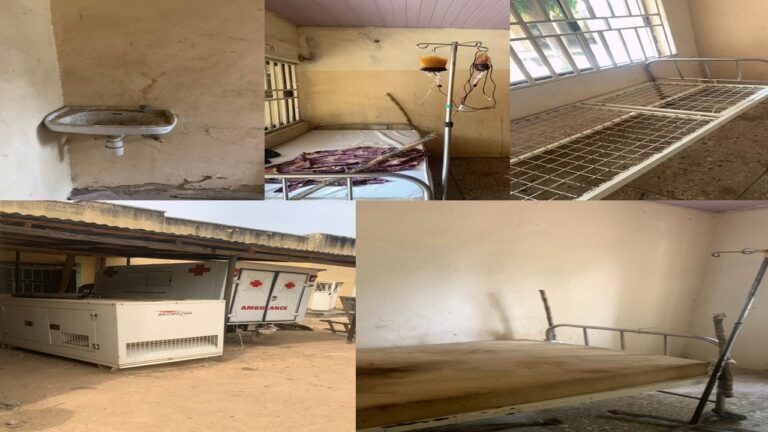
Beyond these operational issues, the PHC’s infrastructure is also showing signs of severe neglect. The roof over the main building is caving in, posing a potential safety hazard to both patients and staffers. Abdulkarim highlighted the need for renovations, explaining: “We need more beds and mattresses, and the roof over the facility is caving in. Renovation is badly needed here.”
The limited resources extend to the overall maintenance of the facility. An unused ambulance parked at the front, along with an out-of-service generator, serves as a stark reminder of the facility’s limitations in providing the necessary care for a growing population.
NPHCDA’s standard stipulates that, “Walls and roof must be in good condition with functional doors and netted windows. Functional separate male and female toilet facilities with water supply within the premises. There must be clean water source from a motorized borehole, be connected to the national grid and other regular alternative power source as well as a sanitary waste collection point.”
On staff accommodation, the centre is expected to have 2 units of 1-bedroom flats. Despite having accommodation for the midwife, it remains locked and unused. Again, this health centre falls short of this requirement.
Speaking on improving healthcare in Jigawa’s rural communities, Musa Bello, a health expert with the African Health Budget Network (AHBN) emphasised the need for better allocation and use of the BHCPF to enhance Primary Healthcare Centres (PHCs).
“Direct funding enables PHCs to improve service quality and maintain infrastructure,” he said, adding that recent allocation reforms now favour centres with higher utilisation. However, he noted that delayed disbursements hinder effective operations and suggested better fund management for smoother service delivery.
Neglected and inconsistent healthcare at Kafin Gana health post
If PHCs are faring badly, health posts, which usually service smaller population of people in remote and far to reach places, have an even worse deal. For example, the Kafin Gana health post in Birnin Kudu LGA is meant to serve as a critical lifeline for healthcare delivery in the community where it is located. But its state of neglect and unreliable staffing hinder its effectiveness, frustrating residents and compromising their access to timely medical care.
Located conveniently by the roadside, the centre facility consists of two blocks connected by a veranda. Despite its central location, the facility appears unwelcoming and unstaffed during supposed working hours. Bird droppings and a general sense of neglect characterise its atmosphere, creating a sense of abandonment and posing health risks to visitors.
When this reporter visited at 10 am on Thursday, October 24, the facility was empty with no staff in sight. For residents who depend on this facility, the lack of proper care and resources left them with no choice but to look elsewhere.
Abba Hudu, a resident and father of two, expressed frustrations with the non-availability of the facility’s staffers, a recurring issue where they often arrive late in the afternoon.
Katanga Primary Healthcare Centre in bad shape
“When I brought my sick child in the morning, there was no one to attend to us. I felt very bitter after waiting for hours.
“I had to visit a chemist, which is more expensive. A local farmer like me who is struggling to survive. Many families face hardship due to their inconsistency. Pregnant women too find themselves having to travel to Kantoga, about 3 kilometres away, incurring extra transportation costs which adds financial strain on them.
Another resident, Mariam Aminu, acknowledged that staff generally arrive punctually on days designated for immunizations or antenatal care, but said on other days, patients were left waiting indefinitely.
“It is only on immunisation days that they arrive on time but on otter days, you will just be frustrated if you come here in the morning or past 3.00 pm in the afternoon.
“It is so sad because they come late, yet they close very early. Just like some of my friends, I also seek medical attention from local chemists.
The facility’s guard and caretaker, who gave his name simply as Abdulhamidu, lamented the negative impact of staff absenteeism.
“When the staff are not here, there’s no one to administer drugs or treat patients,” he explained, noting that families often leave out of frustration, to nearby Kantoga or local chemists for treatment. “
The lack of consistent and timely care has overtime diminished the community’s trust in the facility, with many opting not to rely on it at all,” he said.
In terms of infrastructure, the facility is also inadequate for the community’s needs. Yakubu Usman, a father of four, pointed out the need for maintenance and expansion, lamenting that the building was too small for the population it serves.
“Many people have come here and left because the staff are not around. They are supposed to come on time,” he added, calling for increased staff and stricter attendance policies.
Administrative and financial shortfalls
On the administrative front, Naziru Umar, who is in charge at the facility, spoke about the financial challenges that limit the PHC’s capabilities. While the facility does not receive support from the BHCPF, it relies on a drug revolving fund (DRF) from the local government.
“This arrangement forces many patients to pay out of pocket for medications, which can be financially burdensome for families. Although a nonprofit, Global Fund, provides malaria testing kits and treatment drugs, other essential resources remain scarce,” he said.
According to Umar, the staff roster includes four main staff and two casual workers. But these numbers are misleading; as some staff members travel long distances, resulting in unpredictable attendance and contributing to the absenteeism that frustrates the community. This inconsistency leaves the facility often understaffed, if not entirely empty, during critical hours.
Despite this, at the time of the interview, he was the only staff member present.
Leadership gap between health post and community leadership
The ward head, Musa Dansinke, revealed a significant communication gap between the health post and local leadership. Dansinke denied knowledge of the persistent staffing issues, because, according to him, community members had not reported their grievances directly to him.
“If there are concerns, people should report them to me, but so far, I haven’t received any complaints,” he said.
This disconnect reflected a lack of leadership engagement with the community’s healthcare concerns but also highlights a missed opportunity for advocacy and possible interventions.
The NPHCDA guidelines (for health posts?) state that the hours of operation is between 9.00 a.m. – 4.00 p.m.
According to the NPHCDA, “It is expected that 40% of health workers time will be spent in the health post and 60 in the community (According to the Ward Minimum Health Care Package).
“Health facilities can open at the convenience of the community with the provision that the health post will be open for at least 8 hours every day,” the guidelines provide.
But with the complains of the community members, it shows that the Kafin Gana health post falls short of this.
Counting the cost
Between 2021 and 2024, Jigawa State received substantial funding through the BHCPF. In 2021, Jigawa received ₦554 million under the National Health Insurance Scheme (NHIS) component of the BHCPF. This funding covered health services across 287 political wards in the state.
In 2022 the state was among the ones with the highest allocations, receiving ₦1.64 billion for its primary healthcare facilities. Through the National Health Insurance Scheme (NHIS), it received ₦730.1 million, the highest amount allocated to any state that year.
In 2024, N12.911 billion through the BHCPF for the third quarter of 2024 was distributed, of which Jigawa is a beneficiary, although the figure for Jigawa isn’t prominently detailed as this reporter could not get such information during the second visit to PHCs Jigawa.
Despite these huge investments, recent statistics from the National Demographic and Health Survey (NDHS) show that Jigawa State experiences a maternal mortality ratio of 714 deaths per 100,000 live births. This alarming figure underscores the significant challenges in maternal healthcare in the state, reflecting inadequate access to quality prenatal and delivery services, as well as limited emergency obstetric care.
Madobi Primary Healthcare Centre in ruins
Flaws in Jigawa’s PHCs administration
Bello, the health expert at AHBN, addressed persistent stock-outs, advocating efficient utilisation of the drug revolving fund (DRF) model, which he called, “the most efficient strategy”, to ensure steady drug supplies.
“With DRF, facilities can use initial funds to buy drugs, sell them at subsidized rates, and reinvest the returns. This self-sustaining cycle reduces dependency on limited budgetary allocations,” he explained.
Bello also urged for greater transparency in selecting BHCPF beneficiaries, citing local practices in Kano as a model. “In Kano, they involve community representatives, traditional leaders, and civil society groups in the selection process,” he noted. This approach, he added, ensures that vulnerable families who need free healthcare most are identified.
To improve infrastructure, Bello suggested budget allocations for sanitation, fencing, and power.
“In their annual budget, they can put some of the money in the capital project that can be used to renovate primary’s capacity. It’s either fencing or general renovation or electricity or water supply. These are all in process of that can be in the capital, budget of the annual budgetary allocation for the primary care facilities in the their agency, either primary care management board or primary care development agency.
He also highlighted donor-funded projects, such as the World Bank’s IMPACT program, which focus on improving healthcare infrastructure.
The Jigawa State Primary Healthcare Management Board and its director bear significant responsibility for the dire state of primary healthcare facilities in the state, as highlighted by this investigation.
The inability to uphold the National Primary Healthcare Development Agency’s (NPHCDA) minimum standards has left critical gaps in infrastructure, staffing, security and other areas. Furthermore, the board’s failure to address pressing issues, such as shortages in medical supplies and absence of midwives at night, compromises the accessibility and quality of care, particularly for vulnerable populations like pregnant women and children.
The negligence extends beyond infrastructure and awareness. Instances like the abandonment of the Kafin Gana health post during working hours and the poor sanitation at Katanga PHC in Kiyawa LGA underscore a systemic failure in oversight and accountability. Despite the financial allocations facilities remain underfunded and ill-equipped to meet the healthcare needs of their communities.
Contacted, Shehu Sambo, the director, Jigawa State Primary Healthcare Management Board (JSPHCMB), said he could not speak on the matter and directed this reporter to the commissioner of health in the state.
“You have to go to the ministry with a letter of introduction first and then speak with the commissioner on this issue,” Sambo said.
The commissioner of health, Jigawa State, was contacted via WhatsApp after having trouble connecting through his phone line. In his response,Abdullahi Muhammad acknowledged the importance of such insights in improving the state’s healthcare services.
The commissioner assured that the ministry would carefully review the observations and take the necessary steps to address the challenges identified in Jigawa’s healthcare facilities.
Kamed tv sighted a broadcast published on the Jigawa State government’s website in October 2024 by Hamisu Mohammed Gumel, the chief press secretary to the governor of Jigawa State, Mallam Umar Namadi, in which he highlighted the recent launch of the J-Basic Healthcare program, the state’s adaptation of the Basic Health Care Provision Fund (BHCPF).
Governor Namadi stated, “Our goal is to ensure that every Jigawa resident can receive the care they need without facing financial hardship.”
He also noted other ongoing efforts, such as revitalising primary health centres, constructing new general hospitals, and offering free dialysis services for renal patients.
However, despite these initiatives, there remains a need for improvements in certain PHCs, such as those in Katanga, Modobi, and Kiyawa, where issues with staffing, infrastructure, and BHCPF access persist.
This investigation was supported by the John D. and Catherine T. MacArthur Foundation and the International Centre for Investigative Reporting (ICIR).
THE Central Bank of Nigeria (CBN) has reportedly offered a N50 billion payoff to about 1,000 of its employees expected to have their employment terminated before the end of the year.
A report by Daily Trust said reliable sources at the CBN’s headquarters revealed the planned retirement of the staff.
In April this year, The ICIRreported on the apprehension that ensued over the long list of disengagement at the apex bank.
The CBN’s board under the leadership of the bank’s governor Olayemi Cardoso had pruned down its workforce, cutting across 29 departments as the organisation claimed it was restructuring to shift away from the development finance role.
About 117 staff were involved in the disengagement at the time and in the last 10 months, CBN has continued to disengage its workforce, including 17 directors, who served under the immediate past governor, Godwin Emefiele.
Daily Trust reported that a circular sighted by its correspondent showed that the application for an early exit package (EPP) was open to all cadres of staff and would close by Saturday, December 7.
It stated that those yet to be confirmed or have served less than one year were exempted as of the date of publication with the effective date of exit set for December 31, 2024.
The ICIR made attempts to have the CBN’s acting director of corporate communication, Hakama Sidi Ali, comment on the issue. However, she did not pick up calls made to her phone line.
According to the news platform, the officials, who pleaded anonymity, told its correspondent that at least 860 staff from the various departments had already applied for the EPP.
An EEP is a voluntary programme offering eligible employees an incentive to exit the CBN early, “while providing employees seeking other career options a great opportunity for early exit,” it stated.
It said that financial incentives for senior supervisors to deputy managers shall be for the remaining period in service, up to a maximum of 60 months of the current grade’s gross annual emoluments.
It also explained that financial incentives for managers shall be for the remaining period in service, up to a maximum of 36 months of the current grade’s gross annual emoluments.
“Financial incentives for all other cadres of staff shall be for the remaining period in service, up to a maximum of 18 months of current grade gross annual emoluments,” it further stated.
A member of staff of CBN said the staff being targeted were employees recruited within the nine years of Emefiele’s leadership.
“For instance, I’ve worked for four years in the bank; the package they’re giving me is between N92 million to N97 million.
“Some others have worked up to a manager level and are only entitled to N64.5 million. So, the more time you have to go, the more money they pay you because you know, for them, you don’t have gratuity”, the staff was quoted to have said.
The anxiety faced by the staff has resulted in some of the workers dragging the apex bank to court, The ICIR can report.
In August, about 100 of the sacked workers had sought redress from the National Industrial Court (NIC).
The plaintiffs urged the court to prevail on the bank, describing its decision as abrupt and unjust. They demanded payment for their outstanding salaries, allowances, and other entitlements.
A senior advocate and lead counsel for some of the affected staff, Ola Olanipekun, presented the court documents to journalists in Jos, Plateau State according to reports.
AMID controversies surrounding its reopening, the Old Port Harcourt Refinery manager, Ibrahim Onoja, has said the facility is now fully operational.
His claim came in the wake of allegations that have continued to trail the resuscitation of the 60,000 barrels per day refinery.
With recent revelations of flaws in the refinery’s operations, the Nigerian National Petroleum Company Limited (NNPCL) management has faced a deluge of questions arising from the operations of the newly rehabilitated Port Harcourt Refinery Company (PHRC).
Questions dogging the refinery’s operation include the veracity of petroleum products loading at the refinery as claimed by the NNPCL when it conducted stakeholders around the facility when the refinery resumed operations on Tuesday, November 26.
Last week, the NNPCL said the facility was working at 90 per cent capacity, and not 70 per cent as earlier stated by The Petroleum Products Retail Outlets Owners Association of Nigeria (PETROAN).
In a statement titled “Halt the rumours: Port Harcourt Old Refinery is up and running, producing by-products of crude oil”, and signed by its spokesperson, Joseph Obele, on Thursday, November 28, PETROAN noted that as part of its oversight function, it had direct access to the plant on the authorisation of management.
The statement further read, “It is more important to state here that the functional plant at operation is the old refinery with the capacity of 60,000 barrels per day, while the new Port Harcourt Refinery with the capacity of 200,000 barrels per day is still under rehabilitation which is due to commence production soon as announced by the management of NNPCL. Both refineries are within the same complex at Alesa, Eleme, in Rivers State.
However, in a statement signed by the NNPCL’s spokesperson, Olufemi Soneye, on Friday, November 29, the organisation said the old refinery was functioning at 90 per cent capacity.
“There are a number of other wild claims made by the man, one of which was that the refinery was producing 1.4 million barrels per day. The nameplate capacity of the refinery is 60,000 barrels of oil per day. It is currently producing at 90 per cent throughput which translates to straight-run gasoline (Naptha) blended into 1.4million litres of PMS, aside from other products like diesel and kerosene.”
The company was also addressing an allegation by one of the community persons, Timothy Mgbere, that the refinery was not worth celebrating, as it was merely blending and had pushed out old stock.
Reacting, the managing director of the Port Harcourt Refinery (Onoja) described as false the rumours making the rounds that the facility is not yet functional.
During a tour of the facility with journalists on Sunday, December 1, he said the refinery was fully operational and running smoothly.
He wondered why Timothy would spread such ‘falsehood’ and urged Nigerians to ignore the claims.
On his part, Dibia Isaiah, who identified himself as the chief security officer of Alesa Kingdom, described Mgbere as an enemy and impostor whose plan is to run down the facility.
According to him, Timothy Mgbere is not the secretary of the Alesa community as claimed, adding that he is not known to them.
Dibia, who also said he is a loader, said the Refinery had been operational since it was reopened and that he had been loading products ever since.
“I am a loader and also the chief security officer of Alesa Kingdom. I have loaded four trucks. Tomorrow I will also load. People are coming up with fake information to run down the managing director and the Refinery.
“I want Nigerians to forget the rumour that Port Harcourt Refinery is not producing. They are producing at full capacity. We are happy with them, Nigerians are happy, Eleme and Alesa people are also happy,” he said.
The terminal manager of the refinery, Molokwu Chike Jewel, blamed truck drivers for the slow pace of activities at the Company.
He revealed that truck drivers refused to come to the company to load products, as they have been pleading with them to do so.
“Products are available, we have been begging tanker drivers to come in since yesterday because today is a weekend. That is why there is not a total turn-up.
“It is not our problem, it is the tanker driver’s problem. We have been begging them since yesterday to come around and take the product but they did not turn up. It’s just this morning, after pleading with them they came,” he stated.
He also said that the refinery could load about 100 trucks in less than five hours, adding that products were available with its loading arms operational.
“Our loading arms are functional but because of the capacity we are using, we have a huge capacity to deliver. We are using three at the moment because it is efficient. The three, each one has the capacity of loading three trucks in 15 minutes.”
A tanker driver, James Onyema, also confirmed that the refinery is operational and that he is happy with the development.
During the tour of the facility, production, and truck-loading among others were confirmed to be ongoing.
Recall that the NNPCL said the Port Harcourt Refinery had commenced production and truckloading of petroleum products.
The refinery comprises two units, with the old plant having a refining capacity of 60,000 barrels per day, and the new plant 150,000.
SWISS cement maker, Holcim Group, has revealed plans to sell off its stake in Lafarge Africa Plc in Nigeria to China’s Huaxin Cement in a deal valued at $1 billion.
The building materials giant announced this in two separate statements made available to the investing public on Sunday, December 1.
A link to one of the statements posted on the Nigerian Exchange Group website appeared to have been removed.
The transaction, expected to close in 2025 pending regulatory approval, would see Holcim selling off 83.81 per cent of its stake in Lafarge Africa.
“The sale aligns with Holcim’s strategy to streamline its portfolio and focus on high-growth regions, including the upcoming spin-off of its North American business, which remains on track for a US listing in the first half of 2025.
“The transaction is expected to close in 2025, subject to regulatory approval,” it stated.
According to Holcim, the divestment from Lafarge Africa in Nigeria aligns with its plans to spin off and list its North American business in the United States next year.
The company said it aimed to capitalise on strong demand in the North American market, driven by a housing shortage and regulatory pressures for sustainable construction materials.
It explained that the deal forms part of the company’s broader strategy to streamline its portfolio by shedding non-core assets.
The details of the deal also align with Holcim’s focus on optimising operations and expanding in markets where demand for its products, such as roofing and energy-efficient building materials, is growing rapidly.
“Caricement’s sole shareholder, Holderfin B.V, part of the Holcim Group, has reached agreement with Hainan Huaxin Pan-Africa Investment Co. Limited and Huaxin (Hong Kong) International Holdings Limited, part of Huaxin Cement, pursuant to which they will acquire respectively full ownership of Caricement and a second entity, Davis Peak Holdings Limited, which will hold the shares held currently by AICL.
“Upon completion, the Huaxin Cement entities will hold a combined 83.81 per cent shareholding in Lafarge Africa Plc. This transaction is subject to regulatory approvals and is expected to close in 2025,” one of the statements headlined ‘Holcim Group has signed an agreement with Huaxin Cement to sell its shareholding in Lafarge Africa Plc’ read.
Following the completion of the transaction, Lafarge Africa will remain listed on the Nigerian stock market and, subject to regulatory approvals, Huaxin Cement intends to launch a mandatory takeover offer in compliance with applicable laws and regulations.
Lafarge Africa is one of the three giant cement companies operating in Nigeria.
PRESIDENT Bola Tinubu has stated that fuel subsidy removal by his administration was aimed at saving the country from collapse and not causing hardship for Nigerians.
He said this at the 34th and 35th combined convocation of the Federal University of Technology Akure, Ondo State, on Saturday, November 30.
The President said the policy he announced during his inauguration on May 29, 2023, had been delivering positive outcomes for the nation.
Represented by the vice chancellor of the University of Ilorin, Wahab Egbewole, a professor, Tinubu acknowledged the hardships faced by Nigerians.
However, he assured that his administration remained confident of greater gains from ending the fuel subsidy for the nation.
“As you are all aware, we took the baton of authority at a time when our economy was nose-diving as a result of heavy debts from fuel and dollar subsidies. The subsidies were meant to support the poor and make life better for all Nigerians.
“We are all aware of the fact that the poor and average Nigerians were the sufferers of what was supposed to give them succour and improved standard of living. Unfortunately, the good life we thought we were living was a fake one that was capable of leading the country to a total collapse unless drastic efforts were urgently taken,” he said.
Tinubu explained that the decision to remove the fuel subsidy and unify exchange rates was driven by the need to secure the future of Nigeria’s children and prevent the country from collapsing while acknowledging the challenges these tough decisions posed for the citizens.
He emphasised the effectiveness of the policy, noting that the country’s macro-economy was steadily improving and surpassing expectations. He added that the micro-economy, which directly impacts citizens, was gradually showing positive progress.
He highlighted a shift from a consumption-based to a production-driven economy across various sectors.
The President expressed confidence that every household would enjoy a better quality of life and a more hopeful future.
“It is in the light of the foregoing that I am glad to inform you that the results of the policies are already yielding the expected results.”
He urged the graduating students to work collectively towards restoring the nation’s lost glory and values while criticising the migration of youths to other countries in search of better opportunities, stating that such actions were not the solution to Nigeria’s challenges.