Home Blog Page 416

Only 7.6m women use modern contraceptive methods in Nigeria, says FP2030 director

0

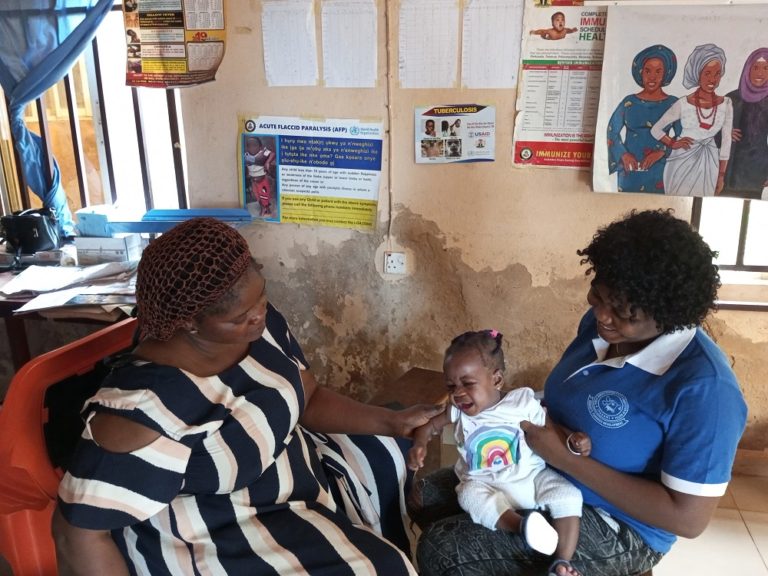
STAKEHOLDERS have raised concerns over the low uptake of modern contraceptives among Nigerian women, with data revealing that only 7.6 million out of the estimated 51 million women aged 15-49 are currently using modern contraceptive methods.   

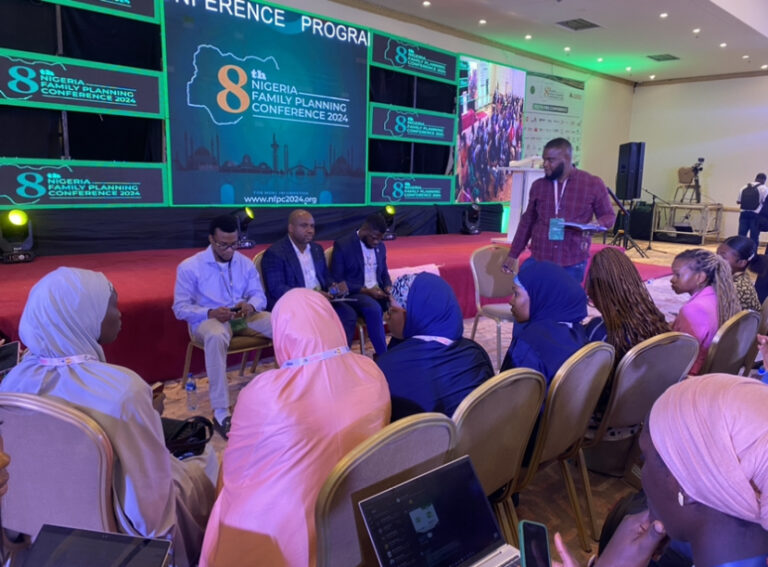
The data, presented by Jason Bremmer, Director of Data and Measurements at FP2030, during the 8th Nigerian Youth Family Planning Pre-Conference in Abuja on Tuesday, December 3, highlighted Nigeria’s ongoing challenges in addressing sexual and reproductive health.

Bremmer, who cited figures from the Nigeria Demographic and Health Survey (NDHS) and FP2030 Measurement Report 2024, disclosed that Nigeria accounted for 19 per cent of the global unmet need for modern contraception, with 24 per cent of Nigerian women having no access to the family planning services they required. 

He noted that the country’s modern contraceptive prevalence rate (mCPR) among married women remained at 12 per cent – far below the government’s Family Planning Blueprint target of 27 per cent by 2030.

He stated that while modern contraceptive prevalence rates (mCPR) were rising among women aged 15–49, disparity remained in contraceptive methods used by married women versus unmarried adolescents.

The conference, themed “Enhancing Investments in the Next Generation: Ensuring Right-Based Reproductive Health Services for Adolescents and Young Persons,” brought together youth advocates, government officials, and development partners to discuss solutions to the barriers young people face in accessing family planning services. 

Participants, who spoke at different panels, identified stigma, societal pressures, and limited availability of youth-friendly health services as significant challenges. 

They highlighted the need for inclusive policies that consider the needs of adolescents and young people, particularly those in rural areas.  

The panellists also emphasised the role of technology in expanding access to family planning services, advocating for telemedicine, mobile apps, and digital campaigns to increase awareness and accessibility, particularly for underserved populations.  

Speaking at the event, Margaret Bolaji, chair of the Youth Sub-Committee, encouraged young people to take ownership of their reproductive health rights and leverage social media to amplify their voices. 

She stressed that youth-led initiatives are crucial in advocating for change and ensuring reproductive health services are tailored to people’s needs.

On the government intervention, a representative of the Federal Ministry of Health Family Planning Department, John Ovuaye, reaffirmed the government’s commitment to improving access to family planning through budgetary allocations and inclusive health services. 

He noted that addressing early marriage and inadequate SRH education required coordinated efforts involving communities, policymakers, and young people.  

Ovuaye disclosed that the Federal Government had made provision in the 2025 national budget for FP commodities and services. 

Participants at the event called for young people’s inclusion in shaping policies to address barriers to family planning access.


NBA condemns Farotimi’s arrest by police, demands immediate release

0

THE Nigerian Bar Association (NBA) has condemned the arrest of Lagos-based lawyer, Dele Farotimi, by the Nigeria Police Force (NPF) over libel allegations.

The NBA made its decision on the arrest known through its president, Afam Osigwe, on Tuesday night, in Abuja.

It also demanded the immediate release of the lawyer.

The NBA strongly condemned the alleged invasion of Farotimi’s law firm and the harassment of lawyers and staff within the premises by the police.

The NBA described the police actions as a troubling breach of the rule of law and the sanctity of the legal profession.

It emphasised that while the police had the authority to investigate crimes, they must do so within the confines of the law and only for recognised offences under Nigerian law.

The group pointed out that the alleged offence of libel, for which Farotimi was arrested, is not recognised as a criminal offence in Lagos State, citing the Criminal Law of Lagos State 2011 and a Supreme Court ruling.

The NBA expressed concern over the reported invasion, highlighting the confiscation of phones from lawyers and staff as a severe disregard for the sanctity of legal practice and constitutional rights.

It called for an investigation into the invasion and harassment and emphasised the need for law enforcement agencies to prioritise legality, fairness, and human rights.

“This progressive legislative move aligns with global best practices, which treat defamation as a civil wrong rather than a criminal offence,” it said.

The police reportedly arrested Farotimi on Tuesday, December 3.

His arrest was exposed by the 2023 African Action Congress (AAC) presidential candidate, Omoyele Sowore, in a post on his X handle.

Sowore demanded Farotimi’s immediate release, stressing that the police should not be exploited to settle personal scores.

Farotimi, a human rights lawyer, was detained by Ekiti State Police Command operatives in Lagos allegedly for defamation.

His arrest has sparked outrage, with notable figures like the presidential candidate of the Labour Party in the 2023 election, Peter Obi, describing it as a gross misuse of police powers and an assault on democracy and justice.

When contacted by The ICIR on Tuesday, the Police Zone 2 Command’s spokesperson, Ummar Ayuba, denied Farotimi’s arrest.

However, Ekiti State Commissioner of Police, Adeniran Akinwale, confirmed the arrest to PUNCH Online, citing defamation of character and cyberstalking as offences he allegedly committed.


$2.2bn Eurobond auction: Nigeria to repay $4.31bn at maturity

THE latest $2.2 billion Eurobond borrowing will not only heighten Nigeria’s public debt profile but will make the government repay approximately $4.31 billion at maturity.

Nigeria’s public debt stock officially stands at N134.3 trillion ($91.3 billion) as of the end of the second quarter.

In a statement on Monday, December 2, the Debt Management Office (DMO) revealed that the Federal Government raised a $2.2 billion debt from the Eurobonds auction to finance its 2024 fiscal deficit and support its budgetary needs.

The auction involved the issuance of two bonds with varying tenors as the Nigerian government returned to the international capital markets to raise the debt.

According to DMO, the allotments were $700 million for a six-year and five-month bond priced at 9.625 per cent and $1.5 billion for a 10-year bond priced at 10.375 per cent.

The latest borrowing underscores revenue shortfalls and mounting public spending amid the country’s debt profit.

An analysis by The ICIR on the repayment term shows that the Federal Government will be paying a $155.625 million coupon rate (interest) for the 10-year bond and $67,375 million for the six-year and five-month bond yearly.

At the maturity of the 10-year bond, the Federal Government would have paid interests of about $1.56 billion for the 10-year bond and $544.615 million for the six-year and five-month bond.

With a face value of $2.2 billion and interest of about $2.11 billion, the Federal Government is indebted to repay $4.31 billion for the December 2024 Eurobond issuance.

Financial analysts believe that amid the government’s borrowing spree, there are concerns about the efficient use of the borrowed funds by the government.

Commenting on the $2.2 billion Eurobond issuance, a development economist, Kalu Aja, said the yield curve on Nigeria’s bond was inverted, which is never good for its economy.

“Nigeria should be cutting spending not borrowing at expensive rates to fund a budget that was predicated on an unrealistic revenue from crude oil sales,” he added.

The ICIR had reported that a larger chunk of the 2024 budget was funded by borrowing despite the Federal Government’s claim of $20 billion in subsidy savings.

Even though the dual purpose of the latest Eurobond is to fund the budget and rev up the foreign exchange reserves, however, the efficient management of the funds calls for concern, the head of Financial Institutions Rating at Agusto&Co, Ayokunle Olubunmi, told The ICIR.

“Can the Federal Government use the proceeds on something that will give us a significant benefit that, when we compare the benefits vis-a-vis the interest to be paid on the fund, will show that the government is being profitable with the fund?

“Another question to ask is what exactly will the proceeds be used for,” Olubunmi queried.

This is why some analysts prefer Sukuk bond issuance as the borrowing is dedicated to a particular project, he stressed.

“By so doing, all the funds will be used for a specific project.

“It is a way of being more efficient in terms of the use of resources and being accountable,” Olubunmi explained.

But the situation most of the time has been that the government borrowed funds for frivolous purposes.

On The domestic front, the government is crowding out the private sector by borrowing heavily from the domestic markets, which is not good for its economy.

While this could be one of the reasons the government attracts Eurobonds and the World Bank borrowings, however, it can monetise its assets to raise funds, Olubunmi pointed out.

“If you look all over the country, you will see that there are assets that are sub-performing, that are not optimal, that are not being used efficiently,” Olubunmi said.

The government could concession or sell off any of its available assets to raise funds to support the budget as it is another area through which the government can raise funds.

According to the DMO’s revelation, the $2.2 billion Eurobond offer attracted a wide range of investors from multiple jurisdictions including the United Kingdom, North America, Europe, Asia, Middle East and participation from Nigerian investors.

“The Federal Republic of Nigeria successfully priced US$2.2 billion in Eurobonds maturing in 2031 (6.5-year) and 2034 (10-year) in the international capital markets on 2 December 2024, with US$700 million and US$1.5 billion placed in the 2031 and 2034 maturities, respectively.

“The 6.5-year and the 10- year. The notes were priced at a coupon and re-offer yield of 9.625 per cent and 10.375 per cent, respectively,” it said.

The transaction attracted a peak order book of more than $9.0 billion, it added.

Senate confirms Oluyede as Chief of Army Staff

0

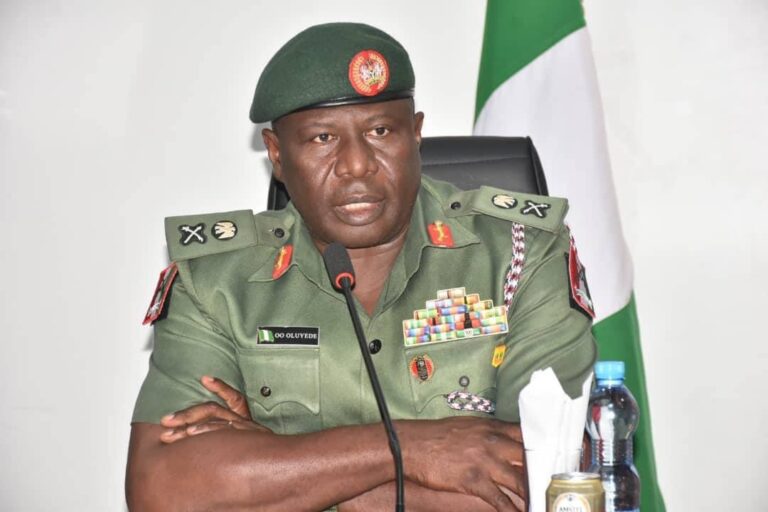
THE Senate has confirmed the nomination of Olufemi Oluyede, a lieutenant general, as the Chief of Army Staff (COAS).

The Senate confirmed Oluyede’s appointments following the consideration of reports by the chairman of the Senate Committee on Army, Abdulaziz Musa (Katsina Central).

The committee’s recommendations were unanimously adopted by the upper chamber, paving the way for the new appointment.

The House of Representatives had earlier confirmed Oluyede as the substantive COAS on Thursday, November 29.

The confirmation followed his screening by the House Joint Committee on Defence and Army the previous day.

The committee’s report was presented during Thursday’s plenary by its chairman, Babajimi Benson, who urged the House to approve his appointment.

The House of Representatives unanimously confirmed him as the substantive Army chief, following a voice vote.

Oluyede’s extensive military background, including experience in critical war zones and expertise in negotiation and strategic security, was highlighted in the report.

During his screening, Oluyede committed to leveraging his experience to tackle Nigeria’s security challenges, specifically in combating terrorism, insurgency, and banditry.

The screening also assessed his plans for military funding, soldier welfare, equipment upgrades, recruitment, training, accountability, and media relations.

The ICIR reported on October 30 that President Bola Tinubu appointed Oluyede, then a major general, to act in place of his ailing predecessor, Taoreed Lagbaja, who eventually died. 

On Tuesday, November 5, Tinubu promoted Oluyede,to the rank of lieutenant general amid growing speculations over the COAS Taoreed Lagbaja’s health. Lagbaja died on November 5 at the age of 56.

Tinubu announced the death of Lagbaja on Wednesday, November 6, and he was laid to rest in Abuja on Friday, November 11.

The President wrote to the Senate on Friday, November 23, seeking confirmation of Oluyede as the substantive COAS.

In the letter, Tinubu sought Oluyede’s confirmation in accordance with the provision of section 218(2) of the 1999 constitution as amended and section 18(1) of the Armed Forces Act.

Before he was appointed acting COAS, Oluyede served as the 56th commander of the Nigerian Army’s elite Infantry Corps in Jaji, Kaduna.

With a military career spanning over three decades, Oluyede was commissioned as a second lieutenant in 1992, although his commission was backdated to 1987. He rose through the ranks, becoming a major general in September 2020.

Oluyede’s extensive command experience includes roles such as platoon commander, company commander, staff officer, and commandant of the Amphibious Training School. He has also participated in several notable operations.

Senate to investigate NNPCL’s N8.48trn subsidy funds, approves N9.2trn for MTEF borrowing

0

THE Senate  On Tuesday, December 3, approved the 2025-2027 medium-term expenditure framework (MTEF) and the fiscal strategy paper (FSP).

The Senate also tasked its committees on finance and petroleum as well as gas to investigate allegations of withheld funds by the NNPC, including NGN 8.48 trillion in petrol subsidies, and $2 billion (NGN 3.6 trillion) in unpaid taxes.

The MTEF is a projection of a three-year spending plan of the federal government. The nation’s budget is predicated on this framework and backed by relevant laws from the Fiscal Responsibility Act (FRA) 2007.

The upper legislative chamber approved the expenditure framework with a total spending of ₦47.9 trillion and a new borrowing plan of ₦9.22 trillion which includes both domestic and foreign borrowings.

The approval followed the consideration of a report presented by the chairman of the Senate Committee on Finance, Sani Musa, during the plenary on Tuesday.

The lawmakers approved the framework with an exchange rate of ₦1,400 to a dollar and adopted the oil prices of $75, $76.2, and $75.3 per barrel for 2025, 2026, and 2027 respectively.

The framework also has daily oil production fixed at 2.06 million, 2.10 million, and 2.35 million barrels for the three years.

Debt service was valued at ₦15.38 trillion, pensions, gratuities, and retirees’ benefits at ₦1.443 trillion, and the fiscal deficit at ₦13.08 trillion.

The GDP growth rates were projected at 4.6 per cent, 4.4 per cent, and 5.5 per cent for 2025, 2026, and 2027 respectively.

“Capital expenditure is projected at ₦16.48 trillion, which is exclusive of transfers; statutory transfers stand at ₦4.26 trillion; the sinking fund is projected at ₦430.27 billion, while total recurrent (non-debt) expenditure is projected at ₦14.21 trillion,” the report reads.

Also, the passage followed the presentation of a report of the Joint Committees on Finance and National Planning & Economic Affairs presented by Senator Musa, Mohammed Sani (Niger East).

The allegation of withheld funds by the NNPCL  was highlighted by reports from the Nigeria Extractive Industries Transparency Initiative (NEITI) and the Revenue Mobilisation, Allocation, and Fiscal Responsibility Commission.

The development comes following the Office of the Auditor-General of the Federation, saying it received the necessary and complete documents required to verify the N2.7 trillion fuel subsidy claim by the NNPCL against the government.

The ICIR reported that the House of Representatives had also passed the medium-term expenditure framework (MTEF) and fiscal strategy paper (FSP) for 2025-2027.


READ ALSO:


The approval followed the adoption of the Joint Committee on Finance and National Planning’s recommendations during plenary on Wednesday, November 27.

The ICIR reports that the MTEF also outlines Nigeria’s fiscal policy objectives and macroeconomic projections for the next three years and provides a framework for annual budget preparations.

The  FRA also states that MTEF shall form the anchor and the basis for the preparation of the annual budget so that policy, planning and project activities can be linked for the effectiveness of public expenditure.

Court grants Rivers doctors N2 million bail in manslaughter case

0

A RIVERS State High Court sitting in Port Harcourt on Tuesday, November 3, granted bail to two medical doctors facing manslaughter charges over the death of a 24-year-old patient, Rebekah Tamunotorukubu-Sekidika. 

The accused, Jude Okpani, a gynaecologist, and Isiah-Tunde Akinlade, an anaesthetist, were released on bail of N1 million each, according to Punch.

They were arraigned by the Rivers State Government on a two-count charge of manslaughter and negligence. 

The charges, brought under Section 325 of the 1999 Criminal Code of Rivers State, accuse the doctors of negligence leading to the fatal incident.

The prosecution alleged that the doctors failed to administer the proper dose of local spinal anaesthesia during the procedure, which reportedly caused a uterine rupture that resulted in the patient’s death.

Both defendants pleaded not guilty to the charges. 

During the hearing, the counsel to the defendants, C.T. Walter, applied for bail, which was not opposed by the prosecution counsel.

However, the prosecution counsel Christiana Tombari Bodo, requested stringent conditions, citing the sensitivity of the case.

Jumbo Stephens, a justice presiding over the case, granted bail of N1 million each to the accused, with two sureties required. 

According to the judge, the sureties must be the chairman and secretary of the Rivers State chapter of the Nigerian Medical Association (NMA).

Additional conditions include the submission of two passport photographs, verified addresses, and photocopies of a valid driver’s licence, international passport, or voter’s card.

For the accused persons, the judge said, “The 1st and 2nd defendants, who have just been admitted to bail, are also to deposit two copies of their passport photographs with the registrar of this court. These are the bail conditions.”

The court adjourned the case to January 20 and 27, 2025, for a hearing.

The trial of the Rivers doctors came against the backdrop of the recent acquittal of Lagos-based doctor Femi Olaleye by the Court of Appeal. 

Olaleye, a medical practitioner, was convicted and sentenced to life imprisonment in October 2023 allegedly for raping his wife’s niece, a 15-year-old girl, between March 2020 and November 2021.

The Lagos State Sexual Offences and Domestic Violence Court had found Olaleye guilty, based on the evidence provided by the prosecution. 

The presiding judge, Rahman Oshodi, on Tuesday, October 24, held that the prosecution proved its case beyond reasonable doubt by providing evidence before the court that supported the victim’s testimonies.

However, the appellate court in the state overturned his conviction on November 29, 2024, citing errors in the lower court’s judgment. 

The appeal court thereafter discharged and acquitted the doctor.

Edo: Okpebholo swears in judges rejected by Obaseki

0

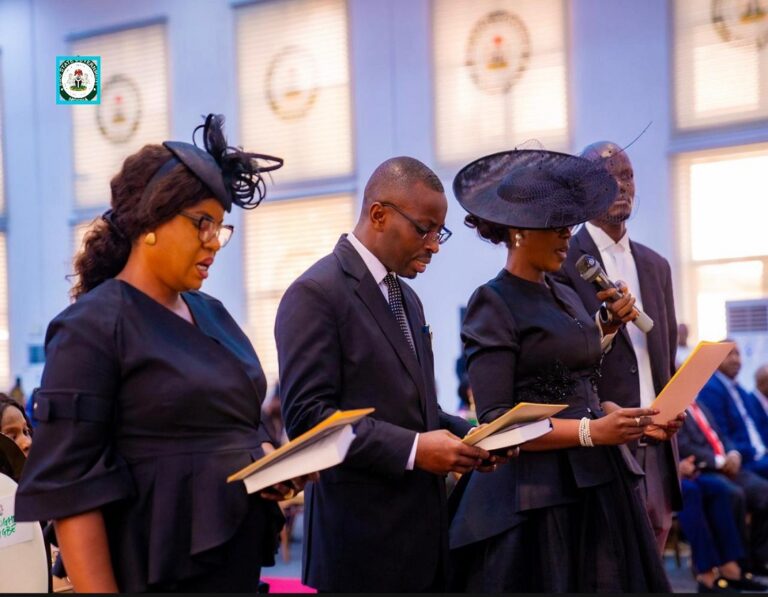
EDO State Governor Monday Okpebholo has sworn in three judges rejected by his predecessor, Godwin Obaseki.

The judges are Ojo Maureen Osa, Okundamiya Godwin Jeff, and Edoghogho Eboigbe.

While swearing in the judges, Okpebholo said he fulfilled his promise to address the issue, stating that everyone deserved equal opportunities, regardless of personal connections or godfathers.

The governor emphasised the importance of upholding justice, ensuring fair dispute resolution, and protecting citizens’ rights.

The governor said he acknowledged the critical role of the judiciary under the doctrine of separation of powers. He promised to strengthen the judiciary.

“The National Judicial Council in June 2023 had recommended eight persons for appointment as judges of the Edo State High Court.

“Eleven months after that recommendation, only five of them were sworn in by the immediate-past administration, leaving out three, even when they had all been cleared and recommended by the same NJC,Okpebholo stated.

The Governor said he promised to investigate the case during his inaugural address and fulfilled his promise to address the ‘injustice’.

He stated that the three judges would to take their rightful places alongside their colleagues on the bench of the Edo State High Court, serving as beacons of hope.

He emphasised that in his opinion, no one should face discrimination, marginalisation, or hatred due to personal reasons or a lack of connections.

The Governor also expressed his expectation that the judges would uphold high standards of conduct, ensure fair dispute resolution, protect citizens’ rights, and hold wrongdoers accountable.

One of the judges, Osa, expressed gratitude to the governor on behalf of others, thanking him for the opportunity to serve the state.

She commended the governor for making their swearing-in possible, especially within just three weeks of taking the oath of office.

Osa also wished the governor a successful tenure, marked by advancements in justice for all.

Meanwhile, the governor has also approved the reinstatement of lecturers of the state-owned Ambrose Alli University (AAU), Ekpoma, sacked by the Obaseki’s administration.

The approval was contained in a statement issued on Monday, December 2, by the secretary to the state government, Umar Musa Ikhilor.

The affected lecturers were said to have been unlawfully disengaged from the service of the university by the defunct Special Intervention Team (S.I.T.) in March 2023.

They were allegedly relieved of their appointments following the agitation by the university staff for the payment of their outstanding salaries and other entitlements owed them by the Obaseki administration.

Okpebholo, however, announced the reinstatement of the affected lecturers “in line with his belief in the principles of natural justice, equity and good conscience.”

He said he would not fail to correct any seeming injustice against any person in the state, in demonstration of his commitment and adherence to the rule of law in governance at all times.

Okpebholo, a serving senator, was sworn in as the governor of Edo State on Tuesday, November 12, following his victory in the governorship election held in the state in September. 

The Independent National Electoral Commission (INEC) declared Okpebholo, the All Progressives Congress (APC) candidate, the election winner.

He polled 291,667 votes to defeat his closest rival and the People’s Democratic Party (PDP) candidate, Asue Ighodalo, who won 247,274 votes.

The Labour Party (LP) candidate, Olumide Akpata, garnered 22,763 in the election to occupy a distant third position.

Groups expand PHC data collection to 10 states, call for volunteers

ORODATA Science, a civic-tech organisation, and Africa Data Hub have announced the second phase of their data collection initiative targeting Nigeria’s primary healthcare centres. 

The organisations said in a statement on Monday, December 2, that the project, which aims to assess the state of PHCs and improve healthcare access, will cover 10 additional states.

The states include Ogun, Edo, Kwara, Bayelsa, Ebonyi, Abia, Kano, Kaduna, Gombe, and the Federal Capital Territory.

According to the statement, this expansion will bring the total number of surveyed healthcare centres to over 1,500, following earlier data collection efforts in Anambra, Benue, Cross River, Osun, Sokoto, and Taraba states.

Speaking on the project, the programme officer at Orodata Science, Uche Oti, described healthcare as a fundamental human right, adding that the initiative would empower policymakers with data-driven insights to strengthen Nigeria’s healthcare system.

The new phase would evaluate service quality, identify gaps in resources and infrastructure, and provide policymakers with critical insights to enhance Nigeria’s healthcare delivery system.

“This expanded project aims to: evaluate the availability and quality of primary healthcare centres (PHCs) services, assess the condition of facilities and infrastructure, identify resource constraints and gaps in service delivery, and provide essential insights for policymakers and healthcare stakeholders to improve healthcare services.”

The data will be made available to the public via CheckMyPHC.org, a platform designed to provide real-time information on the state of PHCs across the country.

“The data collected will drive the development of comprehensive reports, interactive visualisations, and support advocacy initiatives aimed at strengthening health systems. Additionally, this information will be made publicly available through CheckMyPHC.org, a newly launched platform designed to empower Nigerians with real-time data on the status of PHCs in their communities,” the statement added.

Meanwhile, Orodata Science is calling for volunteers from the 10 newly added states to join its data collection network.

It noted that interested applicants, who will receive expert training and hands-on field experience, are encouraged to apply.

Interested volunteers can apply here.

The deadline for application is December 13, 2024.

EFCC shields owner of over 753 duplexes, other buildings confiscated by Abuja court

1

The Economic and Financial Crimes Commission (EFCC) on Monday, December 2, announced the recovery of what it described as the “largest ever” seized assets but withheld the name of the person linked to the property.

The commission got the approval for the final forfeiture of the estate, located in Abuja, in a ruling by Jude Onwuegbuzie, a judge of the Federal High Court in Abuja.

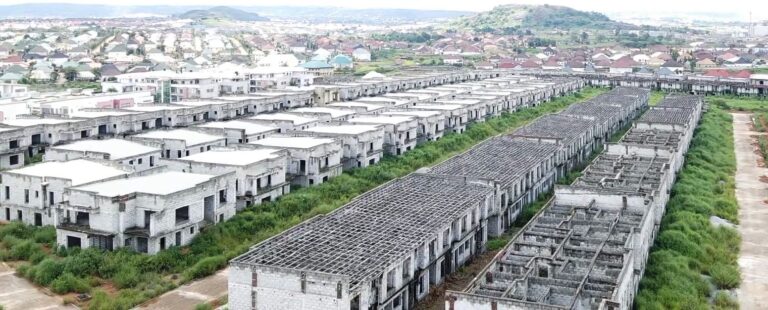
The judge ordered the final forfeiture of a massive 150,500 square meter estate to the Federal Government. This estate, located in the Lokogoma district, comprises 753 duplexes and other apartments.

According to the statement signed by the anti-graft agency spokesperson, Dele Oyewale, the property, linked to a former government official, was seized by the EFCC under the Advance Fee Fraud and Other Fraud Related Offences Act.

The court ruled that the respondent failed to provide sufficient justification for retaining the property, which was suspected to have been acquired through unlawful means.

However, Oyewale failed to mention the name of the ex-government official in question, as the statement only refers to the investigating individual as “former top brass of the government”.

Recall that EFCC secured an interim forfeiture order before the same Judge on the 1st of November, 2024.

This forfeiture represents the largest single asset recovery by the EFCC since its establishment in 2003.

The commission’s executive chairman, Ola Olukoyede, emphasised the crucial role of asset recovery in the fight against corruption.

By depriving criminals of the proceeds of their crimes, the EFCC aims to deter future illicit activities and strengthen the nation’s financial integrity, he stated.

Responding to the members of the House of Representatives Committee on Anti-corruption asking questions on the commission’s activities recently, he said, “If you understand the intricacies involved in financial crimes investigation and prosecution, you will discover that to recover one billion naira is war.

“So, I told my people that the moment we start investigation, we must also start asset tracing because asset recovery is pivotal in the anti-corruption fight; and one of the potent instruments that you can deploy as an anti-corruption agency for an effective fight is asset tracing and recovery.

“If you allow the corrupt or those that you are investigating to have access to the proceeds of their crime, they will fight you with it. So one of the ways to weaken them is to deprive them of the proceeds of their crime. So, our modus operandi has changed simultaneously. The moment we begin an investigation, we begin asset tracing. That was what helped us to make our recoveries.”

Ebonyi governor threatens striking workers to resume work or get sacked

0

EBONYI State Governor, Francis Nwifuru, has issued a 72-hour ultimatum to the state workers involved in the ongoing industrial strike over the new minimum wage.

Nwifuru said this on Monday, December 2, in Abakiliki, the state capital, while responding to the one-week strike declared by the chairman of the Nigeria Labour Congress (NLC) in the state, Oguguo Egwu.

While announcing the strike on Sunday, Egwu said it was in line with the NLC’s national leadership directive of November 8 for states that haven’t implemented the new wage.

Nwifuru, who frowned at the development, said the National Assembly didn’t pass a bill for a salary increment but a minimum wage for workers. He added that the bill did not state the maximum payable to workers.

He warned that the state would not fold its hands and allow personal interest to override public interest.

He expressed surprise that the workers proceeded on strike after he started paying the new minimum wage in October.

He also stated that he did not owe any worker in the state any salary, pension, or gratuity.

“And if you do not go to work and choose to stay at home in the name of strike, I will replace you within 72 hours. So I’m giving you 72 hours to return to duty, or I will sack you.

“I have directed that attendance registers be open at every ministry and government office, and we are going to monitor attendance,Nwifuru vowed.

He added that he expected every worker who came to work to sign and would pay those who came to work using the register.

He stated that he wouldn’t negotiate on the issue, explaining that the state NLC leader, Egwu, wasn’t his employee.

Additionally, it was reported that some workers in the state, including those from primary and secondary schools, refused to participate in the strike.

Workers in Ebonyi are not the only ones participating in strike declared by the national body of the NLC over some state government’s failure to implement the new minimum wage.

The ICIR reported that the Federal Capital Territory (FCT) Council of the NLC ordered workers across the city’s six area councils to embark on an indefinite strike from December 1, 2024.

The directive was issued by the FCT NLC chairman, Knabanyi Adalo, in a statement released on Saturday, November 30.

The strike was in response to the refusal of area council chairpersons to implement the N70,000 national minimum wage and settle other outstanding entitlements.

Labour unions had threatened to embark on a strike starting November 30, citing the failure of the FCT Administration to engage with union representatives or address wage concerns since the FCT minister, Nyesom Wike’s, inauguration in August 2023. 

Following the threat, the minister approved the minimum wage payment for the FCTA workers.

In a statement issued by Anthony Odeh, the acting head of the FCTA civil service, Wike not only approved the wage increase, he also authorised the payment of three months’ arrears, effective November 2024. 

However, Adalo, who announced the strike for the area councils, said the strike aligned with a communique issued by the NLC national body.

The NLC FCT council cited unresolved issues, including unpaid arrears owed to primary school teachers and other entitlements. 

According to him, the area council chairpersons had refused to respond to the demand for implementation of the minimum wage in their respective area councils.

Recall that President Bola Tinubu on Monday, July 29, signed the National Minimum Wage Act 2024 Amendment Bill into law, approving a minimum wage for civil servants from N30,000 to N70,000.