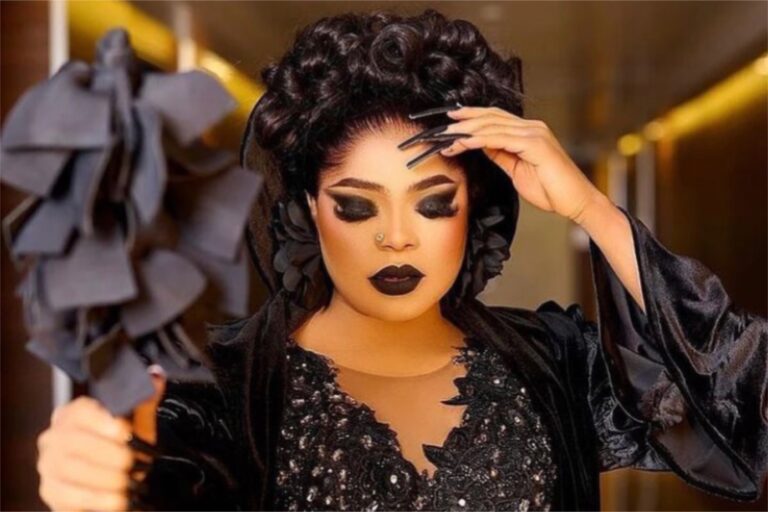
NIGERIAN crossdresser, Okuneye Idris, also known as Bobrisky, has been transferred to the Force Criminal Investigation Department (FCID) Annex in Alagbon, Lagos State, where he spent Monday night in a cell.
According to Punch, the police are waiting for more instructions on his case.
They said he was brought to the FCID after being apprehended by the Nigeria Immigration Service (NIS) personnel while attempting to flee the country through the Seme border.
“He is in detention at the FCID, Alagbon. He was arrested on Sunday, detained overnight, and taken to the FCID, Alagbon, around 10 pm on Monday. He is still at the FCID,” a source told the newspaper.
The ICIR reported that the NIS confirmed Bobrisky’s arrest on Monday, October 21.
This development followed his increasing public scrutiny over recent controversies surrounding his six-month jail term at the Nigerian Correctional Service.
In a statement released on Monday, the NIS revealed that Bobrisky was arrested while attempting to flee Nigeria and was undergoing interrogation.
The statement emphasised that the social media influencer would be handed over to the appropriate authorities for further investigation.
Allegations by an activist, Martins Otse, known as VeryDarkMan, had surfaced online alleging that while serving his sentence for abusing the naira, Bobrisky had bribed some prison officials and others to enable him to stay outside the prison.
He was said to have bribed senior prison officers to give him undeserved privileges as a convict.
The allegations prompted the minister of interior, Olubunmi Tunji-Ojo, to set up an investigative panel chaired by the ministry’s permanent secretary, Magdalena Ajani.
The panel stated that Bobrisky had access to special privileges during his incarceration, including a private cell, frequent visits, and access to electronic devices.
Reading the panel’s phase one report on Monday, the executive director and founder of Prisoners’ Rehabilitation and Welfare Action (PRAWA), Uju Agomoh, a member of the panel, said the panel found no evidence that Bobrisky slept outside the prison walls.
Agomoh stated that Okuneye enjoyed special privileges such as a single cell, frequent visits, access to a humidifier, fridge, television, a phone and many visits from his family members and friends.
However, she pointed out that moving Bobrisky from a medium facility to a maximum security facility as a first offender violated Section 164A and Section 164B of the Nigerian Correctional Service Act of 2019.
THE Lagos State Police Command has arrested a 42-year-old school teacher, Gbolahan Osinusi, for allegedly abusing a female student sexually.
Osinusi was said to have been having sexual intercourse with the student for five years, from when she was 12 years old, and forcing her to carry out a series of abortions after impregnating her.
Also, the nurse who allegedly carried out the abortion, identified as Mariam Fatolu, is now on the run. Meanwhile, the police have started a manhunt for her.
Confirming the teacher’s arrest, the Lagos State Police spokesperson, Benjamin Hundeyin, noted that the defilement case was transferred from the FESTAC police station to the gender unit of the command in Ikeja on September 30, 2024.
He said the complainant accused the teacher, who is also the girl’s guardian at a school in Ketu-Epe area of the state, of sexually abusing her since she was 12.
According to the complaint, the teacher continued with the act until December 2023 when the girl turned 17.
“The complainant further claimed that Gbolahan forced the girl to swear an oath not to tell anyone, or else she would die.
“He also took the girl to a nurse by the name Mariam Fatolu for abortion drugs to be administered to her whenever she got pregnant,” Hundeyin stated.
Hundeyin added that the suspect had already been charged in court.
A report by The ICIR shows that in Nigeria, six out of every 10 children suffer from one or more forms of physical, sexual or emotional violence before clocking 18.
More than 70 per cent of children experience this violence repeatedly, according to the United Nations Children’s Fund (UNICEF).
The ICIR reports that in 2019, the Nigerian government launched its first National Sex Offenders Register to name and shame rapists and other forms of violence against persons offenders across the country.
Some other states, including Delta, Ogun, Ekiti, Bayelsa, Edo, Akwa Ibom, Bauchi, Adamawa, Abia, and Kaduna, also keep a register of sex offenders.
Meanwhile, the Lagos State Domestic and Sexual Violence Agency (DSVA) has been publishing the names and pictures of sex offenders who have been convicted for their offences.
THE Nigeria Immigration Service (NIS) has confirmed the interception of popular crossdresser, Idris Okuneye, known as Bobrisky, at the Seme border while attempting to flee Nigeria.
This development followed his increasing public scrutiny over recent controversies surrounding his six-month jail term at the Nigerian Correctional Service.
In a statement released on Monday, October 21, the NIS revealed that Bobrisky was arrested while attempting to flee Nigeria and was undergoing interrogation.
The statement emphasised that the social media influencer would be handed over to the appropriate authorities for further investigation.
Allegations by an activist, Martins Otse, known as VeryDarkMan, had surfaced online alleging that while serving his sentence for abusing the naira, Bobrisky had bribed some prison officials and others to enable him to stay outside the prison.
He was said to have paid millions of naira to some senior prison officers.
The allegations prompted the minister of interior, Olubunmi Tunji-Ojo, to set up an investigative panel chaired by the permanent secretary of the Ministry of Interior, Magdalena Ajani.
The minister ordered a comprehensive investigation into the alleged corruption and other violations against the Nigerian Correctional Service.
While confirming some of the allegations, the panel stated that Bobrisky had access to special privileges during his incarceration, including a private cell, frequent visits, and access to electronic devices.
Reading the panel’s phase one report on Monday, October 21, the executive director and founder of Prisoners’ Rehabilitation and Welfare Action (PRAWA), Uju Agomoh, a member of the panel, said the panel found no evidence that Bobrisky slept outside the prison walls.
“The panel did not find any evidence thus far that suggested that Mr Okuneye slept outside the custodial centre during the period of his imprisonment, which was from 12th April 2024 to 5th August 2024, which is a six-month correctional sentence with the usual remission applicable”, she said.
Agomoh stated that Okuneye enjoyed special privileges such as a single cell, frequent visits, access to a humidifier, fridge, television, a phone and many visits from his family members and friends.
“The panel believes that the peculiar case of the inmates and the inmates’ physical look and behaviour pose a threat, and the lack of laid-down rules for the treatment of such a case may have necessitated such privileges to be granted to Okunenye Idris,” she added.
However, Agomoh pointed out that Bobrisky being moved from a medium facility to a maximum security facility as a first offender violated Section 164A and Section 164B of the Nigerian Correctional Service Act of 2019.
A PANEL set up by the minister of interior, Olubunmi Tunji-Ojo, to investigate the allegations against crossdresser, Idris Okuneye, popularly known as Bobrisky, has said the convict enjoyed some privileges in prison.
Reading the panel’s phase one report on Monday, October 21, the executive director and founder of Prisoners’ Rehabilitation and Welfare Action (PRAWA), Uju Agomoh, a member of the panel, said the panel found no evidence that Bobrisky slept outside the prison walls.
“The panel did not find any evidence thus far that suggested that Mr Okuneye slept outside the custodial centre during the period of his imprisonment, which was from 12th April 2024 to 5th August 2024, which is a six-month correctional sentence with the usual remission applicable”, he said.
The ICIR reported how a self-acclaimed activist, Martins Otse, known as VeryDarkMan, shared a video on social media stating that Bobrisky paid millions of naira to some senior prison officers to enable him to stay outside the prison after he was jailed for six months for spraying naira notes.
Following the allegations, The ICIR also reported that the minister set up an investigative panel chaired by the permanent secretary of the Interior Ministry, Magdalena Ajani, ordering a comprehensive investigation into the alleged corruption and other violations against the Nigerian Correctional Service.
While reading the report, Agomoh stated that Okuneye enjoyed special privileges such as a single cell, frequent visits, access to a humidifier, fridge, television, a phone and many visits from his family members and friends.
“The panel also found that Mr. Okuneye Idris enjoyed several privileges while in custody, both at the Medium Security and the Maximum Security Custodial Centres, which include, especially the following: furnished single cells, humidifier, lots of visits by his family members and friends as he desired, self-feeding, designated inmates to run errands for him, access to fridge and television, and possibly access to his phone.
“It is necessary to further investigate if the above privileges provided for Okuneye Idris were financially motivated and based on corrupt practices by correctional officers.
“The panel believes that the peculiar case of the inmates and the inmates’ physical look and behaviour pose a threat, and the lack of laid-down rules for the treatment of such a case may have necessitated such privileges to be granted to Okunenye Idris,” he said.
However, Agomoh pointed out that Bobrisky being moved from a medium facility to a maximum security facility as a first offender violated Section 164A and Section 164B of the Nigerian Correctional Service Act of 2019.
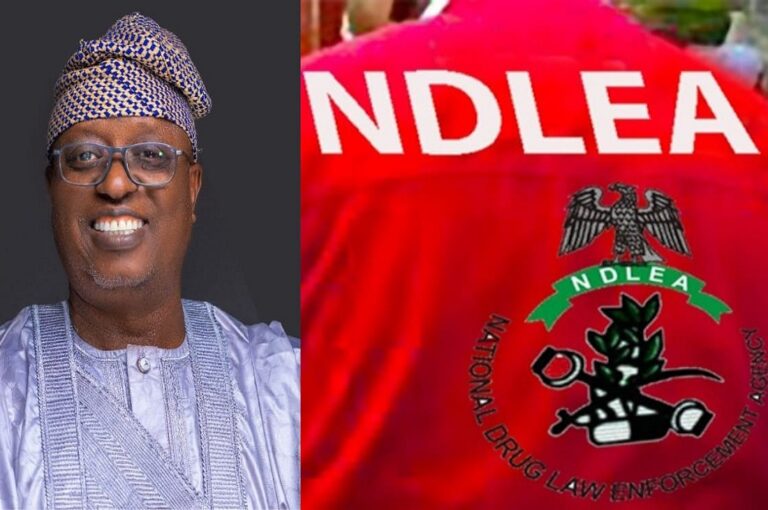
THE National Drug Law Enforcement Agency (NDLEA) has claimed that the senator representing Kwara South Senatorial District, Oyelola Ashiru, attacked the agency after it discovered drugs in his home a few months ago.
The NDLEA stated this during a press conference held at its national headquarters in Abuja on Monday, October 21.
The anti-drug agency said the recent attack on its image by Ashiru was borne out of malice and vendetta rather than based on any selfless motive or national interest.
Reacting to reports credited to Ashiru, where he said the NDLEA is corrupt and compromised, among others, the agency, through its spokesperson, Femi Babafemi, said it traced the senator’s claims back to encounters between him and the agency.
Babafemi claimed that two of Ashiru’s aides, Ibrahim Mohammed and Muhammad Yahaya, were arrested during a recent raid on his residence in GRA Ilorin, Kwara State capital, during which narcotics and other illegal substances were found.
“Based on credible intelligence and surveillance that confirmed that the senator’s house was being used as a drug joint for drug dealers and users, the house was raided by our operatives at 1:30 pm on February 4, 2024, during which the two aides were arrested, while a third suspect escaped arrest.
“In another encounter with the senator, the agency also received intelligence that some of his boys, popularly known as ‘Omo Senator’ operating from his home town, Offa, were equally dealing in illicit drugs. A raid was subsequently carried out on their joint in Offa, where one of them, Oluwatosin Odepidan, was arrested, and illicit drugs such as methamphetamine and cannabis were recovered from him on June 11, 2023.
“The bid to get the agency to drop the case against Odepidan, including a visit to the Kwara State command headquarters of the agency in Ilorin by the personal assistant to the senator, one Omoluabi, was rebuffed as Odepidan was promptly charged to court and prosecuted. Though the culprit jumped court bail in 2023, he was re-arrested in 2024 after the court issued a bench warrant for his arrest. He was eventually convicted and sentenced in June 2024,” the NDLEA said.
Babafemi stated that Ashiru’s remarks about the NDLEA were uncomplimentary, unfounded, and defamatory.
Speaking during the discussion of a “Bill for an Act to Establish the National Institute for Drug Awareness and Rehabilitation,” Ashiru claimed that the NDLEA had failed, and supported setting up the new agency.
He said that the high rate of drug trafficking in the nation was because of NDLEA’s failure.
“The National Drug Law Enforcement Agency is corrupt and compromised; hence, I support the creation of the National Institute for Drug Awareness and Rehabilitation,” Ashiru stated.
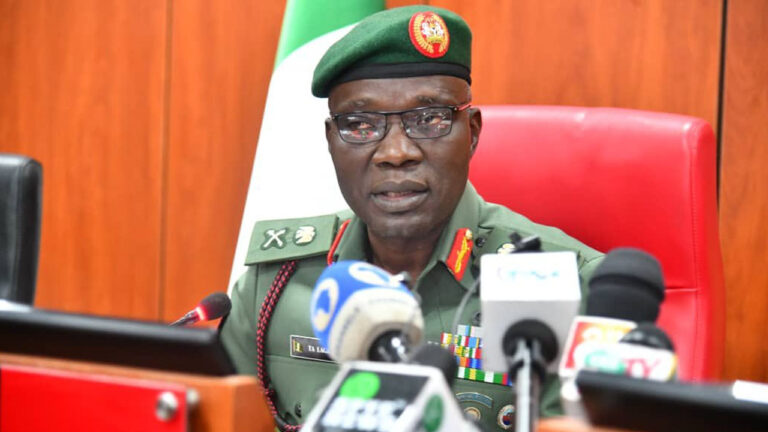
THE Defence Headquarters (DHQ) said the Armed Forces of Nigeria have no provision for an acting chief of Army staff.
Consequently, the DHQ said it did not appoint any officer to stand in for the chief of Army staff (COAS) Taoreed Lagbaja, who has been away from the country for some time.
These were contained in a statement released by the DHQ on its official X handle on Monday, October 21, and signed by the director of defence information, Tukur Gusau, a brigadier general.
The statement followed rumours that an acting COAS had been appointed to stand in for Lagbaja, whose absence forced many Nigerians to suspect he was ill.
The suspicion climaxed on Sunday when a former presidential aide and social media commentator, Jackson Ude, announced on X that the COAS was dead.
Responding, the Army said the rumours were untrue.
In the statement released on Monday, the DHQ said Lagbaja was on “a well-deserved rest as part of his 2024 annual leave.”
It added that the Armed Forces of Nigeria were professionally managed and all the service chiefs performed their duties as stipulated in the Nigerian Constitution.
“Major General Abdulsalam Bagudu Ibrahim, the Chief of Policy and Plans, is providing routine briefs to the COAS in accordance with standard military procedures.
“The DHQ urges individuals spreading unfounded rumours to desist from doing so immediately. The COAS is hale and hearty and will soon resume normal duties at the end of his leave,” the DHQ stated.
It urged media organisations to verify information with the appropriate authorities before releasing “fake news” to the public.
It added that the chief of defence staff (CDS) spoke with Lagbaja, earlier on Monday.
The DHQ warned those advocating for a military takeover, “as seen in a viral video, to be aware that such actions are treasonable under the Constitution.
“The military remains focused on achieving its statutory responsibilities of protecting the nation’s integrity,” the DHQ stated.
It said relevant security agencies had been mandated to take necessary action against any individual or group advocating for unconstitutional change in the country.
DESPITE constitutionally guaranteed freedom of worship, adherents of Isese traditional religion endure persecution, marginalisation, and violence in Kwara State. In this report, the first installment in the Series “The Others“, The ICIR speaks with several adherents on surviving amidst the rising religious intolerance.
When an Osun priestess, Ajesekemi Omolara also known as Yeye Olokun planned to celebrate the Isese festival in June 2023, she never thought it would attract huge attention that could eventually lead to death threats.
Omolara, a devotee of the Isese—Yoruba traditional religion—faced the wrath of many Ilorin indigenes over plans to celebrate the Osun-Osogbo Festival, which usually takes place in August and lasts almost two weeks at the Osun sacred grove and its environs. The grove is part of the UNESCO World Heritage Site.
“The Osun-Osogbo Festival itself is a two-week-long programme. The traditional cleansing of Osogbo is called ‘Iwopopo’, which is followed after three days by the lighting of the 500-year-old sixteen-point lamp called ‘Ina Olojumerindinlogun’. Then comes the ‘Iboriade’, an assemblage of the crowns of the past rulers, the Ataojas of Osogbo, for blessings.”
“The festival culminates in a procession to the shrine in the sacred grove where a large crowd builds up. Drumming, dancing, musical performing, wearing of elaborate costumes, speaking of the Yoruba language, recitation of praise poetry, and so on add pomp and colour to the proceedings.
“This event is led by the sitting Ataoja of Osogbo along with a ritualised performer called the Arugba and a committee of priestesses, who reenact the very first meeting between Oluwatimilehin and Yeye Osun. Arugba is played by a young woman of a kingly lineage and offers the sacrifice to the deity,” the National Commissions for Museums and Monument explains the festival on it’s website.
Annually, adherents gather in Osun State to celebrate the festival and sacrifice to the Osun River Goddess. Those who can’t make the journey celebrate it wherever they are, Omolara was one of such. She had planned to celebrate the 2023 festival in her home in Ilorin.
Omolara, an Isese adherent who faced the wrath of many ilorin indigene over her 2023 festival.
Last year’s festival was her third in Ilorin, while she had celebrated discreetly in the past, what she described as a mild issue between her and some Isese worshippers brought undue attention.
“One member publicised my planned festival out of spite, and it went viral,” she says, adding that some clerics had gotten wind of the activities of her festival through a flier posted on social media.
One morning in June 2023, a group of Muslim clerics stormed her home in Okemadi, in Ilorin, protesting her decision. it was not long after she left home for the police station to answer questions regarding the festival that the clerics arrived at her gate. But her absence would not deter the group from visiting her house again.
Now, her voice trembles with anger and fear as she says that the clerics repeatedly visited her home, leaving her family panicked, in disarray, and exposed to threats.
Before the July visitation, Omolara had been invited by the police to her planned celeberation. This, she says, was another act to shift her event or change the venue to another state, as police couldn’t vouch for her protection.
While the group might have missed her at home, in a series of videos sighted by The ICIR, Omolara was threatened and labeled all sorts of names to protest her plan to organise Isese festival, in a city believed to be dominated by Muslims.
Omolara, an Isese adherent who faced the wrath of many Ilorin indigenes over her 2023 festival
“What those clerics did was as soon as they got to my gate, they started harassing me. One of them said, we won’t kill her but what her eyes would see will be beyond expectation.That’s a threatening statement to me.
“They came three times but did not meet me each time. There was a day they invited me to the police station where some people came and started shouting,” she added.
Religious intolerance is a widespread challenge in Nigeria. The Brussels-based research institute, the Union of International Association (UIA), describes religious intolerance as “the acts denying the right of people of another religious faith to practice and express their beliefs freely.”
In recent times in Ilorin, religious violence has been almost a yearly ritual with its attendant loss of properties and lives.
While some attributed the main cause of the menace to attempts to establish an Islamic state, others believed that the root causes lie in intolerance and a lack of cooperation among leaders of different faiths.
Although the city is considered to be a Muslim dominated one, there are adherents of other faiths, especially Christianity, dwelling in the state capital.
With their rights enshrined in the Nigerian constitution, investigations show that the reverse is the case for traditional worshippers in part of the state, particularly in Ilorin, as many of those who spoke to The ICIR say they have either been subjected to physical, emotional, or psychological abuse by some residents.
Like many of them, Omolara is still burdened with several unanswered questions a year on. Each time she tries to speak about the rage, discrimination, threats she faced, she wonders if she would again be labelled and threatened with accusations of blasphemy.
When The ICIR sat with her to document her account of religious extremism in the state, she appeared to have put the past behind her, she still however seemed to grapple with lingering concerns.
The festivals that were almost marred
Omolara’s trouble began when an internal dispute within the Isese community in Ilorin led to the publicising of her festival plans. She explained that she never wanted public attention to avoid backlash.
Her plans were intended to be private and hidden, but her invitation card made it to the social media, particularly on Facebook, which consequently generated outrage and backlash.
“I have always been discreet because I understand the sensitivities of practicing Isese in an Islamic state. But last year, my festival became a public issue, and it led to threats and harassment.”
Nigeria guarantees freedom of religion under Section 38 of the 1999 Constitution. “Every person shall be entitled to freedom of thought, conscience, and religion.” This includes the right to change their religion or belief and to manifest that belief in worship, teaching, practice, and observance.
The Constitution also prohibits any form of discrimination based on religion. Section 40 guarantees the rights to assemble and associate freely. “Every person shall be entitled to assemble freely and associate with other persons.”
As such Omolara should not have to be covert in practising her religion.
Due to the threat and the growing tension around her, she would later change the festival venue to Lagos, where she invited prominent people in the country, including Saheed Osupa, a popular Fuji musician, for a performance.
“At the end of the day, I did it despite all the noise, in my backyard with nobody knowing. I did not do the party here because I did not want to instigate violence since I have seen it that religious intolerance for Muslims is high and to avoid being sacrificed. I believe that I have my children with me to protect.”
This incident is not unique to Omolara. A number of traditional worhsippers during the chaos that happened in 2023 were threatened to either move their festivals out of the city or suspend it.
Omoodoagba, alongside other traditional worshippers in Ilorin, Kwara state
Omodoagba, a member of the Isese in Afon, a community in Kwara State, explains how some Islamic clerics in the community waged war against his religious circle, Olokun losa, during their plan to celebrate the Osun-Osogbo Festival.
Afon is about 32 kilometres from Ilorin, and it is the headquarters of Asa Local Government Area, one of the five LGAs under the Ilorin emirate.
According to Omodoagba, the incident that happened in April 2023 dragged on for about a month, with them moving from one police station to another before they could later celebrate their festival.
“The Alfa is from the community and it was out of spite. He said we were closer to the Mosque, but that was not true. The Mosque is quite far from where we were celebrating the Isese.
“And anybody who purchases land and builds a house on it has the right to do anything legally he wants in his house. So he brought the police and we also employed the services of a lawyer. Those in Lagos, Ogun, Oyo, and even Kwara helped us during the issue.”
Meanwhile, not many of them were so lucky to reschedule their suspended celebration. Findings show that some of the traditional adherents abandoned their celebrations due to the widespread condemnation and harassment.
Facing persecution
The threats Omolara and others spoke of are not unfounded. In 2023, The ICIR gathered a series of attacks Omolara and a number of Isese worshippers faced in the city.
Omolara in her traditional attire. Photo: Omolara/Facebook pag
“They called me a devil worshipper,” she says, the pain evident in her eyes. “They said I was bringing evil to the community. But all I have ever done is help those in need, to even build a mosque in the community I live in.”
The persecution of people outside the mainstream religions has long been a significant problem in Nigeria. It continues to be a stumbling block in achieving the goals outlined in the United Nation’s Declaration on the Elimination of All Forms of Intolerance and Discrimination Based on Religion or Belief.
Persecution can be violent. Traditional worshippers in Nigeria experience physical violence, attacks on gatherings, forced gathering closures, and even death.
But the attacks can also be more subtle and pressure-filled. Adherents, sometimes, face false accusations of inciting violence, hate speech, and social ostracisation – this is particularly damaging for worshippers in Muslim or Christian-dominated areas.
Yeye Olomitutu narrates the plights she faces at the hands of some city residents. Photo; The ICIR
For Olomitutu Yeye Taye, the persecution and harassment she faces are quite limited in her community, but the social ostracism subjected to any time she’s on their usual adornment does not look like it will subside soon. “Government didn’t disturb us; it’s people who are challenging and making it hard for us,” she explains.
From her early days, Taye says she was meant to walk a path paved by her forebears. But as she grew older, she tried to distance herself from her roots and embraced Islam.
Like Omolara she also found herself in Islam gatherings not until a few years ago when she claimed to have received a spiritual call.
Even as she tried to fight it, the pull of the calling was too strong for her to resist. Her return to traditional worship was consequently met with resistance and hostility.
“They used to call me names,” she recalls, “whispering ‘Auzubillah’ as they passed me by as if I were something to be feared.”
The ICIR, in a recent study of data collected by the Armed Conflict Location and Event Data Project (ACLED), revealed Nigeria witnessed at least 52 incidents of religious attacks, accounting for 315 deaths in a decade.
ACLED is a data source that collects all kinds of crisis information with dates, locations, actors, and fatalities and makes it freely available to the public. But the findings in this study focused solely on incidents of blasphemy and religious crisis leading to killings due to intolerance between the two major religions.
Attacks on Christians and Muslim communities by the Boko Haram, IPOB, Herdsmen, and other militia groups were excluded.
Tracking attacks on traditional adherents on social media Kwara
Yeye Olomitutu attending to her deities
Some of the traditional worshippers in Kwara State who spoke with The ICIR reported a trend of derogatory comments, hate speech, and cyber bullying on social media platforms, particularly on Facebook and X.
Using open-source intelligence, and media reports, The ICIR, discovered a trend of posts on Facebook and X propagated by persons who were believed to be Muslims and from the city, that threatened the affairs and freedom of the Isese adherents.
These messages often contain religious slurs and warnings to stop their practices or face dire consequences. One such instance was a video post (archive here) made by One Alfa Aribidesi, when an Islamic scholar in the city, Alfa Okutagidi, visited the Yemoja River in Okolowo Ilorin, Kwara State, to send the traditional adherent away from the river.
The popular Okolowo River is known to house Isese adherents who gathered and worship their gods. However, in 2023, there were several instances of attack on their gatherings and assemblies by residents of the state.
Another instance involved a video showing a group of young men disrupting a traditional gathering in the city. The post, which gained traction, was accompanied by comments that further encouraged the disruption of Isese practices, with some users calling for more aggressive actions to “cleanse” the area of what they referred to as “idolatry.”
In a series of other posts, The ICIR observed the trend of asking Isese worshippers to move to Osun, Oyo, or Ogun States if there was a need for them to mark their festival.
For instance, in a post on Facebook where an account under the name “Kwara voices” shared a post (archive here) claiming “know the city with their culture, Osogbo is known with Isese, Ilorin is well known for Islam, please don’t bring what is not our own here.
Using police, judiciary to crack down on traditional worshippers
While most of the Isese adherents spoken with indicated that the government was not overtly involved in the chaos, their response suggested that there have been indirect pressures exerted through the use of law enforcement and judicial systems by the populace.
According to Omolara, the police in the state were leveraged to make her move her celeberation to Lagos.
This was despite having planned the event, including renting a hall for the festival’s attendees.
“I went through emotional and physical trauma. The first time they came, I was in the police station based on their invitation. There, I was forced to say I am not doing that festival again in Ilorin. I signed it in front of the police commissioner, crying, because they first tongue lashed and abused me, including the police commissioner,” she says.
According to her, they collected her husband’s and her phones and abused her very well.
“I did not go with any lawyer, because I believe I did not do anything wrong. The people who stood for me and wrote the petition did it out of their love for Isese. I just handled the matter with my wisdom and diplomacy.
“They harassed me that time. I also went to the SSS office in Ilorin but thank God the SSS director is a very good man who spoke to me like his daughter. He also advised that I should let it slide and postpone it, stating that my security was important,” she recounts.
Following the hostility meted out on Omolara in the mid-year of 2023 and the subsequent ‘ban’ on any procession or celebration by the devotees, the wave of religious intolerance spread to other traditional adherents and apologists in the state.
The incidents led to the shutdown of a few proposed festivals in the city, with at least two arrests of traditional adherents in the capital city.
File photo of Adegbola Abdulazeez, popularly known as Talọlọrun. Photo: Punch
During tension in 2023, Adegbola Abdulazeez, popularly known as Talọlọrun, was arrested on August 16 in Ibadan and taken to a police station in Ilorin, where he was remanded.
Talọlọrun spent three months in custody after he stood trial for alleged defamation in four different cases in three different courts in the state.
He was in detention since August 16, 2023, when he was arraigned before a magistrate, Mohammed Ibrahim on a five-count charge of criminal conspiracy, inciting public disturbance, disturbance of public peace, criminal defamation of character, and intentional insult before the Chief Magistrate Court.
Meanwhile, his arrest and detention led to a backlash as the city’s religious leader, Emir, Sulu Gambari, received severe criticism and condemnation including a long scathing attack from Nobel Laureate, Wole Soyinka.
‘We are facing political marginalisation’
Meanwhile, according to an Oloye, Awoyemi Abimbola, leader of traditional worshipers in Erinle, the problem traditional adherents face in Kwara State is beyond religious tension. He explains that religion faces social and political marginalisation.
An Oloye, Awoyemi Abimbola, leader of traditional worshipers in Erinle, narrating his ordeal.
Dressed in his traditional attire, Abimbola relaxes on his plastic seat, leaning slightly forward, with one hand resting on his lap while the other is raised slightly, gesturing his frustration. He has witnessed his religion being marginalised for years, and he feels there is a clear pattern of political neglect. While noting that the city’s history is steeped in both Islamic and traditional practices, he says in recent years, traditional worshippers have found themselves increasingly sidelined.
“The constitution of this country does not stop anyone from practicing whichever religion they choose. But we don’t expect other religions to cause distractions or blockages for others during their festivals,” Abimbola, who is also the Aare Isese of the association of African traditional religion medicine tradition of Nigeria, adds.
“We want the government, whichever position they hold in Kwara, to see us as humans and appoint us to some positions, whether political or otherwise,” Abimbola says, adding, “If they pick 8 Muslims and 2 Christians, are the remaining people nothing? We all own the government of Kwara State.”
Attacks on traditional worshippers get tacit support from Ilorin Emir
Following the attack on Omolara the spokesperson for the Emir of Ilorin, Abdulazeez Arowona states in a report that the Emir did not specifically instruct any group to confront Isese worshippers. He however, says the Emir has publicly expressed his opposition to traditional religious practices.
“The Emir has made it public that he’s not in support, and he’s warned them to stay away from Kwara or Ilorin Emirate. So, any group that shares the same view and opinion with His Royal Highness can also come out and then do such, which the group [those who attacked Omolara] you just mentioned now has done,” he says.
“There wasn’t any time when they prominently performed events of such. No event of such has ever been associated or held in Ilorin, or within Ilorin Emirate. Our culture is Islamic-based, so we don’t promote idolatry at all,” Arowana states in the report by Punch.
Traditional worshippers neglected in budgetting
The ICIR checks on the Kwara State budgetary allocations show that while the state allocated a significant amount to Islam and Christianity, the state failed to allocate any amount to Isese adherents in the 2023 and 2024 budgets.
For instance, in the 2023 budget, the state government allocated over N8 billion for projects and initiatives related to Islam and Christianity. These funds were allocated to various activities, including development projects on pilgrimages, the renovation and maintenance of religious pilgrimages, and the welfare boards of Muslims and Christians.
There was a similar trend in the 2024 budget, as the state government earmarked N30 billion for the two religions’ activities without capturing Isese adherent.
Religious freedom under the Nigerian Constitution
The interplay between the freedom of religion as enshrined in the Constitution as a natural right and the realities on the ground often do not correspond. The ICIR reports that in Nigeria, the freedom of religion is enshrined in the Constitution as a natural right, just as the freedom of expression. It is similar to Article 18 of the Universal Declaration of Human Rights (UDHR) and Article 91 of the African Charter on Human and Peoples Rights which Nigeria is a signatory.
Chapter 4, Section 38 of the Constitution also promotes rights to freedom of thought, conscience, and religion.
“Every person shall be entitled to freedom of thought, conscience, and religion, including the freedom to change his religious belief, and freedom (either alone or in community with others, and in public or in private) to manifest and propagate his religion or belief in worship, teaching, practice, and observance.”
The same Constitution, in Chapter 1, Part II, Section 10, prohibits adopting a particular religion by state or federal governments.
However, there are concerns about the enactment of Shariah Law through the adoption of Islam in 12 northern states. While state governments have the right to enact laws to govern their activities, legal experts argue that the Constitution remains supreme.
A Human Rights lawyer, and the founder of IRIS Attorneys LP, Ridwan Oke, noted that the Shariah Law is restricted to only personal laws in Nigeria, adding that calling a criminal law of a state, a ‘shariah law’ is improper and unconstitutional.
Citing sections of the CFRN 1999, he says the right to freedom of religion is guaranteed and Isese adherents must be allowed to mark their festivals within the law.
“Rights to freedom of religion is guaranteed under section 38(1) of the CFRN 1999 as amended. It is an inalienable right. Isese adherents must be allowed to mark their festivals within the law and without encroaching on the rights of other citizens. The government, especially the Kwara State and Government and Police must ensure that these rights are respected and such festivals are held in such a way that other citizens are not prevented from going about their activities nor their cultural values eroded. The government must strike a balance,” he adds.
Kwara government ignores ICIR’s findings
The Kwara State government has failed to respond to The ICIR’s inquiries about its findings and the measures the state is taking to address the concerns about religious freedoms.
The ICIR contacted the chief press secretary, Rafiu Ajakaye, via call, WhatsApp, and SMS on Friday, August 23, seeking a reaction. Despite a pledge to respond, he has yet to reply.
Several reminders were subsequently sent to him, but he did not respond.
A similar outcome occurred when The ICIR reached out to the governor’s senior special assistant (SSA) on communications, Ibraheem Abdullateef, regarding the findings.
THE Nigerian Army has dismissed the rumoured death of the chief of army staff (COAS), Taoreed Lagbaja.
The rumour, which has gone viral, originated from a tweet by Jackson Ude, a former presidential aide and social media commentator.
Reacting to the tweet in a post on X, the Army spokesperson, Onyema Nwachukwu, a brigadier general, urged Nigerians to ignore the post.
He said Lagbaja was on official leave, and proper procedures were put in place for Abdulsalami Ibrahim, a major general and the chief of policy and plans of the Army, to act in his place.
Nwachukwu argued that Lagbaja’s absence was not disrupting the Army’s operations.
“There have even been insinuations that there is a leadership vacuum, with officers confused about what to do. Nothing could be further from the truth.
“To be very clear, the Nigerian Army is a highly structured establishment with well-laid-out procedures and processes for dealing with different circumstances. Before proceeding on leave, necessary protocols were put in place for the chief of policy and pans (Army), major general Abdulsalami Bagudu Ibrahim, to act on behalf of the COAS while he was away.
“This is not peculiar to the NA, as there have been instances where unforeseen human frailty kept service chiefs away for about three months, and their chiefs of policy and plans held sway in their absence. Claims of a leadership vacuum in the NA at present are therefore mere speculation, as all routine and scheduled activities of the service are on course.” he said.
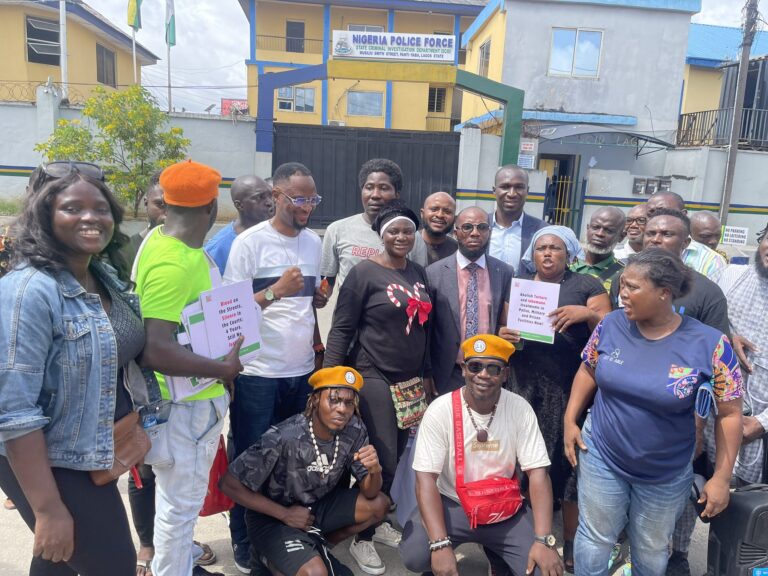
OFFICERS of the Lagos State Police Command arrested 22 #EndSARS memorial protesters on Sunday, October 20.
The police also dispersed scores of protesters who gathered for the memorial.
The demonstration sought to honour victims of the 2020 protests against police brutality.
However, the atmosphere became tense when police operatives emerged at the scene, firing teargas canisters. They eventually whisked away 22 of the protesters.
The demonstrators, mainly youth, assembled around 8:30 a.m., holding banners and placards while demanding the full implementation of the reports from the judicial panels of inquiry set up after the 2020 protests.
However, human rights lawyer, Inibehe Effiong confirmed that the 22 protesters have been released.
“We have secured the release of all the 22 activists who were arrested this morning at the Lekki Toll Gate while commemorating the fourth anniversary of the Lekki massacre.
“We had a discussion with the commissioner of police who came over to the State CID in respect of the matter. The items seized from the protesters were also returned to them.”
Responding to the arrest, Amnesty International condemned the police’s action, particularly the use of tear gas and the arrests.
In a post on X, the organisation said, “Amnesty International condemns the Nigeria police for the violent attack on people who assembled at Lekki Toll Gate to honour peaceful protesters killed during the #EndSARS protests against police brutality in October 2020. The reckless use of tear gas and arrests are unacceptable.”
Speaking with The ICIR, one of the protesters, Hassan Soweto, confirmed that he and 21 others were arrested and held at a police station, including five suspected killers.
Speaking about their treatment, he said, “We are all seriously brutalised. One of us, a man, was sexually molested. Another woman was also sexually harassed in the process of arresting her.”
He said many of those arrested had their clothes torn, while others had been left bruised and bleeding.
Soweto recounted how one protester suffered severe head injuries during the arrest.
“Somebody has blood coming out of the vehicle. His head was smashed against maybe a wall or a bed, but I don’t know,” he said, adding that the officers’ actions were unprovoked.
“I have my clothes torn in different places. My glasses have been damaged because it was knocked down from my eyes by a police officer,” Soweto further explained.
He accused senior police officers, including the commissioner of police (CP), of being at the scene where they were assaulted but failed to intervene. “The CP was there, right there when we were being molested,” Soweto said. “I have told him very clearly that this attempt to distance himself is not acceptable to us.”
Soweto singled out a police officer, Hunan D. James, as one of those responsible for the brutality. He said the officer tore his clothes.
“One police officer here, Hunan D. James, grabbed my black native dress and tore it. I am almost naked as I am right now,” he said, adding that another protester was stripped naked and had to use a rope to tie his trousers.
Despite the brutality, Soweto vowed to continue the protests.
He asserted that the protesters fight for justice would continue. “We shall not forget them. The crimes committed against us will never be forgotten,” Soweto stated, adding that “one day, they will sit at the court of people’s justice, where the real justice will be delivered.”
THE Federal Government has proposed a five per cent excise duty on telecommunications services, gaming, and betting activities.
However, it exempted baby products and locally manufactured sanitary towels from tax as part of a new bill seeking to overhaul Nigeria’s tax framework.
The bill, titled “A Bill for an Act to Repeal Certain Acts on Taxation and Consolidate the Legal Frameworks Relating to Taxation and Enact the Nigeria Tax Act to Provide for the Taxation of Income, Transactions, and Instruments, and Related Matters,” is dated October 4, 2024.
An analysis of the proposed legislation conducted on Friday, October 18, revealed that it aimed to implement excise duties on services including telecommunications, gaming, gambling, lotteries, and betting in Nigeria.
A section of the bill read, “The amount of an excisable transaction is the amount chargeable for the service by the service provider, both in money or money’s worth.
“Services, including telecommunications, gaming, gambling, betting, and lotteries however described, provided in Nigeria shall be charged with duties of excise at the rates specified under the tenth schedule to this Act in a manner as may be prescribed by the service.”
According to the breakdown of the excise duty structure outlined in the bill, telecommunications services, including postpaid and prepaid services regulated by the Nigerian Communications Commission, will be subject to a five per cent duty. The same rate will apply to gaming, gambling, betting, and lottery services.
Notably, the Federal Government stated that it would not impose taxes on baby products and locally manufactured sanitary pads.
“The following supplies are exempt from the value added tax imposed under chapter six of this Act -oil and gas exports; crude petroleum oil and feed gas; goods purchased for use in humanitarian donor-funded projects provided that the humanitarian donor shall first pay the VAT and request a refund from the service.
Baby products: locally manufactured sanitary towels, pads or tampons; military hardware, arms, ammunitions and locally manufactured uniforms supplied to armed forces, para-military and other security agencies of a Nigerian government.” The bill read in part
The bill also established guidelines for currency transactions, indicating that any variance between the current Central Bank of Nigeria exchange rate and the actual transaction rate would incur an excise duty.
The new tax framework is part of the government’s plan to increase non-oil revenue amid fiscal challenges.
Given the rapid expansion in the telecoms and betting sectors, authorities are seeking to broaden the revenue base.
Furthermore, the bill aims to ensure that currency exchanges conform to the official CBN rates, with any surplus charged as excise duty under a self-assessment model.
The ICIRreported that stakeholders had observed a lack of clarity in the VAT reforms proposal, resulting in a lack of information that Nigerians could engage with, since no policy document could be referenced for public engagement.