POPE Leo XIV has begun his first African tour, a 10 to 11-day visit aimed at promoting peace, interfaith dialogue and development across the continent.
The visit, which began on Monday, April 13, embarked on a mission focused on promoting peace and interfaith dialogue in four countries, namely Algeria, Cameroon, Angola and Equatorial Guinea. The itinerary covers about 18,000 kilometres and includes visits to 11 cities.
The Vatican says the broader purpose of the tour is to encourage dialogue in conflict-prone regions, highlight the rapid growth of Catholicism in Africa, and address challenges such as corruption, inequality and the misuse of natural resources in countries, including Angola and Equatorial Guinea.
The trip is taking place amid comments from the United States President Donald Trump, who criticised the Pope’s stance on the Iran conflict. Despite this, the Vatican has maintained that the visit is humanitarian and spiritual.
Italy’s Prime Minister Giorgia Meloni expressed support for the mission, saying it could promote peace and support Christian communities.
The ICIR reports that although Nigeria is not included in the itinerary, the Pope has continued to engage with the country’s situation. In Vatican remarks, he listed Nigeria among places where Christians face “severe threats and extreme cruelty,” referring to violence in Benue, Plateau states and other parts of the Middle Belt.
The Pope also has a personal link to Nigeria, having worked at the Apostolic Nunciature in Lagos in the 1980s. Nigeria has not hosted a papal visit since Pope John Paul II visited in 1998.
The Vatican maintains that the tour is focused on peacebuilding and strengthening faith communities across Africa.
THE Nigerian Meteorological Agency (NiMet) developed early warning systems and agro-meteorological advisories, but Sokoto rice farmers say they never received forecast warnings, losing billions in investments to extreme climate shocks. This highlights the disconnect between climate services and at-risk communities, as the communication gap persists.
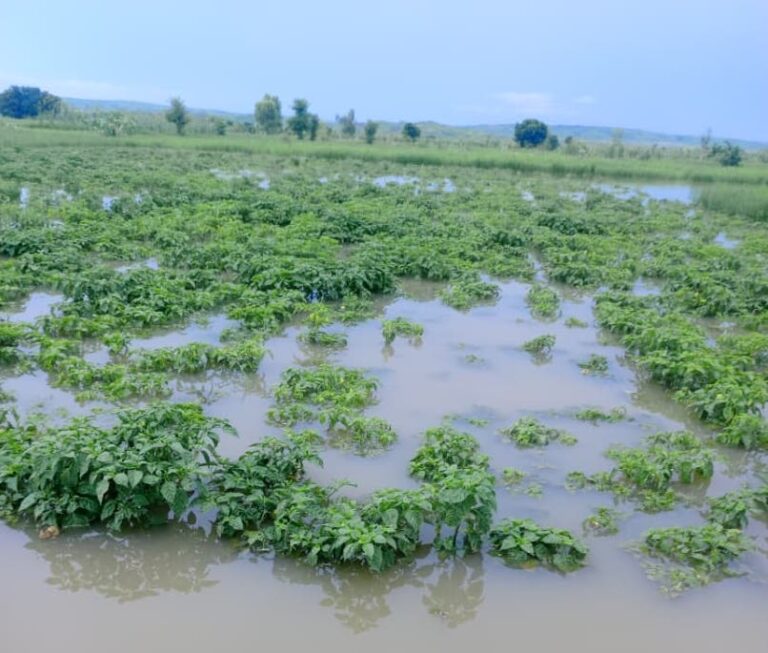
It was December 2025. Ibrahim Jingilma, 70, rested his old, rusted hoe on his shoulder as he walked home from his rice field after an early morning of weeding. He had been clearing dried rice straw, preparing the land for another planting season. Grief lingered, following him back from the farm. Months earlier, floods had swept through their fields in Shinaka, Goronyo Local Government Area of Sokoto State in northwest Nigeria. During the chaos, his son was killed after drinking from a contaminated stream while participating in a dredging effort.
Jingilma’s loss is not unique. His story reflects the fate of at least 249 other farmers in Shinaka whose investments were washed away by flooding. The year was marked by delayed rains and prolonged dry spells that weakened crops, making them vulnerable to the floods.
Many large- and small-scale rice producers have been plunged into poverty. Their planting calendars have repeatedly failed, creating a pattern of loss that has eroded their resources over time, from gradual depletion to complete ruin.
Rice farmers describe an ideal seasonal calendar: in the 1990s, rice planted in March matured within four months and was harvested by July — before heavy rains intensified. “If you planted rice in March, you’d harvest by July. You’d avoid the floods,” he explained. “But planting in June or July means harvesting in September or October — when the floods come.”
These traditional planting cycles, long relied upon by farmers, are becoming unreliable due to delayed rainfall and prolonged dry spells, causing significant yield losses.
Jingilma and other farmers in his community hadn’t heard of NiMet or received climate advisories, despite being members of rice farmers’ associations.
They recognise the National Emergency Management Agency (NEMA), which visited after the floods to document victims and promise support. However, the promised assistance has been slow to materialize, leaving many waiting for relief.
Jingilma, a rice farmer from Shinaka, leaned against a tree as he recounted the devastating losses he suffered in his community. Photo Credit: Abdullahi Muritala
In 2025, Jingilma invested ₦5 million (~$3,600) in six hectares of rice fields — three owned by him, three by his children. He financed much of this with loans. In September 2025, floods destroyed the crops, repeating the previous year’s disaster. The loss was life-threatening, transforming Jingilma from farm owner and employer to labourer on others’ farms, struggling to survive and repay debts.
Labour in vain
Data shows that Nigeria’s rice output declined to 5.23 million metric tons in the 2024/2025 season — the lowest level recorded in four years. Even in previous years, domestic production has consistently fallen short of national consumption demands, despite the vast scale of farming activities across the country.
A recent PeacePro report estimates farmers lost ₦5 trillion ($4 billion) over two farming seasons due to missed or inaccurate meteorological forecasts from NiMet. In 2025, NiMet received ₦9.82 billion for operations, including climate info dissemination. However, in 2026, it struggled to defend its budget before the National Assembly, with committee members recommending capital budget cuts.
Despite billions allocated for climate services, and farmers unaware of the agency’s existence, the disconnect raises deeper questions about accountability within Nigeria’s early warning architecture.
Forecasts exist, but don’t reach farmers
Ibrahim Abubakar, Chair of the Rice Innovation Centre established by AfricaRice and Chairman of the Gada/Goronyo Farmers Management and Delivery Centre, describes the challenges facing farmers in Sokoto as multi-layered. While acknowledging broader systemic problems, he noted that NiMet has never directly engaged with farmers in his network.
Abubakar highlighted structural challenges with the Goronyo Dam, managed by the Rima Basin Development Authority. The dam (947 million cubic metres capacity) supplies irrigation channels across Sokoto, Kebbi, and Zamfara states. While it serves as a critical irrigation source (with farmers paying fees), it has a history of emergency discharges that flood farmlands. In 2025, over 600 hectares of rice fields were flooded in Goronyo due to water releases. Officials discharge water when inflow exceeds safe capacity to prevent structural damage.
“Whenever management learns that the water reaches a certain level, they don’t have any other option than to release it,” Abubakar said.
Compounding structural issues are concerns about NiMet’s inconsistent weather forecasting. Abubakar suggests NiMet should engage directly with farmers’ leaders to prevent losses. “NiMet should establish synergy with farmers’ leaders for direct contact,” he said. Farmers cooperate when properly engaged, but insecurity has weakened local coordination. Farmer associations now struggle to convene, with some members not meeting for months
Shared fate in Gada
In Gada communities neighbouring Goronyo, farmers face similar hardship. In villages such as Ballagu and Tsitse, residents have been devastated by a combination of climate extremes and insecurity.
In 2025, Shuaibu Muhammad, 52, was not only a victim of flooding; he was also a survivor of bandit captivity. In 2024 alone, he had fallen into the hands of armed groups twice. Muhammad was weeding his farm along the Tsitse community, where he had planted rice, garlic, onions, and pepper, when armed men attacked the area. He did not receive early warning of the invasion. He was abducted directly from his farm.
Dried rice straw lies scattered across an abandoned field after floodwaters swept through the area. Photo Credit: Abdullahi Muritala
Muhammad spent two months in captivity before his release was secured after his family paid a ₦5 million ransom. The money was raised through the sale of family inheritance and community contributions. During his captivity, everything he had planted was lost. By the time he returned, the crops had withered due to lack of irrigation.
Within a week of his release, his elder sister was also abducted, forcing him to raise yet another ransom. Despite the trauma and financial devastation, Muhammad cannot abandon farming. It remains the primary source of livelihood for most families in Sokoto.
In 2025, disaster struck again. Floodwaters swept through his fields, destroying crops cultivated at an estimated cost of ₦500,000. He echoed the concerns raised by other farmers, stating that they had not received any advisories from NiMet. Although a lawmaker who visited the community mentioned the likelihood of delayed rains that year, the forecast did not accurately capture the severity or duration of the delay.
While Muhammad many farmers from his community struggle to rebuild and prepare for another planting season, they remain trapped in uncertainty — unsure how climate change will unfold and whether their next harvest will yield anything at all.
We do not take information directly to farmers-NiMet
Responding to concerns about the climate information gap, the Nigerian Meteorological Agency (NiMet) acknowledged that it does not communicate directly with farmers. James Adamu, Assistant General Manager of Agricultural Meteorology and Technical Assistant to the CEO of NiMet, said the agency operates through established government channels.
“NiMet works with the extension agents in the state. Every year we give our information to the state ministry of agriculture and the state Agricultural development project in Sokoto. They are saddled with the responsibility of taking this information to the farmers.”
According to him, dissemination through extension services remains “the best way” to reach rural communities, as Nigeria is too vast for the agency to cover every farming settlement. “NiMet is not designed to go to every nook and cranny; we rely on the extension system.”
In Sokoto specifically, NiMet says it has gone beyond routine advisory releases. James pointed to a series of radio programmes conducted in the state to raise awareness about climate prediction and early warning systems. He also highlighted a partnership project with the United Nations Development Programme (UNDP), which established automatic weather stations and climate peace hubs in selected local government areas, including Ilela and Wamakko.
Cracked earth surrounds struggling rice stalks in Shinaka after a heavy flood. Photo credit: Abdullahi Muritala
“We have a climate peace hub where we share information,” he explained, adding, “Last year we were there like three times. This year we’ll be there again to share information on early warning.” A third location initially selected in Kebbe LGA had to be reconsidered due to insecurity,” he added.
On the question of monitoring whether farmers actually receive and use the advisories, James maintained that feedback is expected from extension services. “You don’t expect NiMet to start going to every community. It is the role of extension. That is what they are paid to do.”
Acknowledging the limitations of the current structure, NiMet says it is designing a more direct communication system using mobile technology. The agency is in consultation with partners to launch an SMS-based dissemination platform that would deliver climate advisories straight to farmers’ phones.
“We are trying to design a project whereby farmers will be getting SMS in their location,” James said, adding, “For us to do that, we need the database of farmers in the states. NiMet will not go around looking for farmers. The state has to provide the database.”
While critics argue that the absence of direct outreach has contributed to farmers’ vulnerability, NiMet insists it has fulfilled its mandate within the framework of Nigeria’s early warning system. “We make sure we release forecasts on time and make them public. The media also has a role. Extension has a role. It is not just NiMet, James said.”
The agency’s position underscores a broader institutional tension. While climate information is being generated and formally released, the pathway between forecast and farm remains uneven — leaving many farmers exposed to the very risks the advisories are meant to reduce.
All efforts to reach the “extension” Sokoto Ministry of Agriculture proved abortive, a WhatsApp text sent to the commissioner was not responded to as of the time of this publication.
Expert calls for urgent climate-smart reforms
Deputy Director at the Centre for Biotechnology and Plant Tissue Culture, S.B. Haliru, describes the situation as a serious structural gap.
“The issue of information gap is very, very critical. It has to be addressed,” he said.
According to him, while climate change itself may be beyond human control, the scale of farmers’ losses is not inevitable. Sokoto, located in Nigeria’s semi-arid belt, now experiences increasingly unpredictable rainfall, delayed onset of rains, and flash flooding. Without timely and localized climate advisories, farmers rely on traditional planting calendars, only to watch their crops fail.
S.B. Haliru, Deputy Director at the Centre for Biotechnology and Plant Tissue Culture.
The consequences have been devastating. Farmers recounted losing hundreds of millions in a single season due to flooding. Haliru notes that such cases reflect how climate extremes, combined with limited access to actionable information, are steadily eroding farmers’ investments.
“Whatever the farmer is doing, the last target — all the resources spent — is for him to get yield, and most importantly, high yield,” he explained. If there is total loss, then everything is gone.”
Drawing from international examples, Haliru points to climate-smart agricultural practices as part of the solution. In parts of Asia where flash floods are frequent, plant breeders have developed submergence-tolerant rice varieties capable of surviving days underwater.
“They develop submergence-tolerant rice varieties for farmers,” he said, adding, “After the flood, these varieties will sprout again and still give farmers yield.”
He argues that Nigeria’s research institutions have the mandate to improve crop varieties but must intensify efforts to make climate-resilient seeds accessible to farmers.
In regions like Sokoto where rainfall is unpredictable, Haliru recommends early maturing crop varieties to reduce risk. “The rainfall is very much unpredictable, so the only option is to cultivate early-maturing varieties. At least you can get something out of it,” he said. While acknowledging that some climate events are unavoidable, he emphasized mitigation: “Some of these issues are natural — something we do not have control over. The only way is to try as much as possible to mitigate the problem.”
Beyond climate shocks, farmers are also battling mounting economic pressures. The removal of petroleum subsidies has increased the cost of fertilizer and transportation, pushing up production costs. At the same time, the influx of imported rice from neighbouring countries has driven down the price of locally produced rice.
“The farmers buy inputs at a very high price, and when they harvest, what they get in return is less simply because of importation,” Dr. Haliru said. He warned that if the imbalance persists, farmers may withdraw from production altogether. If they produce and they are at a loss, some may decide to stop production. And we are going to be in trouble in the next couple of years.”
To bridge the information gap, Haliru advocates stronger collaboration between NiMet and state-level agricultural development projects. Climate advisories, he says, must be translated into local languages and delivered directly to farming communities. “There is no way NiMet can do this alone in isolation. They have to collaborate,” he stressed.
However, insecurity remains another obstacle to effective outreach. Some climate awareness programs have reportedly been disrupted due to security concerns in parts of the state.
Haliru insists that resolving insecurity requires political will at all levels of government. “There must be political will to end the insecurity issue. Otherwise, we will continue to face this problem,” he said.
Sabon Birni caught between insecurity and climate shocks
In Sabon Birni LGA of Sokoto State, the crisis presents a double burden. While much of Sokoto East continues to grapple with insecurity — with some communities reportedly paying levies to bandits before accessing their farmlands or risk being abducted — the region remains one of the hardest hit in recent years.
Farmers here must contend not only with the growing threats of climate change but also with the constant fear of kidnapping while working on their fields. In 2022 alone, no fewer than 42 communities were reported to have paid ₦70 million to the Bello Turji gang as protection money after many villages were attacked and sacked.
“There was a time we were on our way to the farm. When we reached the bridge, we were told that bandits were coming,” he recalled. “I insisted I had to go to the farm. As I crossed the bridge, I just heard gunshots and turned back. I had never run like that day — just to escape with my life.”
Sabon Birni farmers gathered on their farmland after floodwaters submerged their crops. Photo Credit: Farmers.
The attack forced Tafida to stay away from his farm for a period while he assessed the security situation before returning. He explained that a group of farmers later had to travel back to their fields accompanied by local vigilantes for protection. By the time they were able to resume access, an unexpected flood had already washed away the rice farm.
Tafida said he invested ₦300,000 in cultivating the rice, all of which was lost to the flooding. Although the temporary pause in visiting the farm may have contributed to the extent of the damage, he noted that the rainfall occurred earlier than expected based on the forecast he had heard on the radio.
In previous seasons, he harvested up to 30 bags of rice alongside guinea corn. This year, he harvested nothing.
“Like many other farmers, he said he had never received a forecast directly from NiMet. The only weather information he accessed came through a radio programme, and the last time he relied on it, the prediction proved inaccurate.”
For farmers like Tafida, survival now depends on navigating two unpredictable forces: the rising waters that wash away their crops and the armed groups that threaten their lives. In Sabon Birni, climate risk and insecurity do not operate separately — they collide, compounding losses and narrowing the choices available to those who depend on the land.
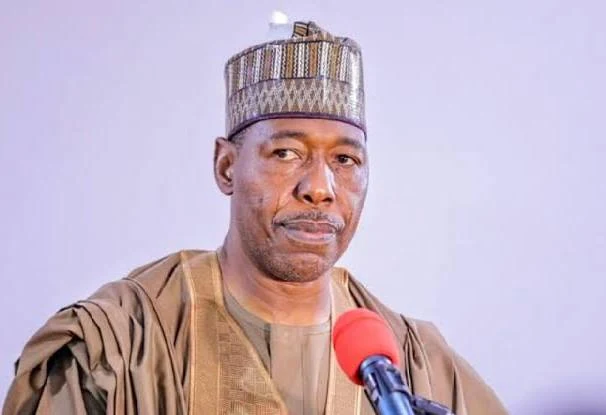
GOVERNOR Babagana Umar Zulum of Borno State has revealed that the state government shut down Jilli market five years ago for allegedly being a hub for insurgents and their logistics suppliers.
This statement comes after an airstrike at the market claimed over 50 lives on Saturday, April 11.
In a statement issued Sunday, April 12, by his Special Adviser on Media, Dauda Iliya, Zulum warned residents against aiding or harbouring Boko Haram insurgents.
“I have been properly briefed on the airstrike carried out by the Air Component of Operation Hadin Kai on Jilli market, a border town between Borno and Yobe states. Let me state categorically that the Borno State Government closed Jilli and Gazabure markets five years ago.”
“I am in close consultation with the Government of Yobe State and the military hierarchy on the matter,” he said.
Zulum explained that Borno State maintains close coordination with the military and security agencies before resettling communities or reopening markets, especially in insurgency-affected areas
He reiterated his administration’s commitment to safeguarding citizens and collaborating with security agencies to restore peace and stability.
The governor urged residents to remain vigilant and provide credible information to aid military operations.
An earlier report by The ICIR revealed that a military airstrike on Saturday night left dozens of people dead in Jilli axis, Borno State.
The strike, which targeted a village market, occurred as Nigerian military jets were reportedly pursuing Islamist militants in the northeast.
The incident took place in a border community between Yobe and Borno states, a region that remains the epicentre of a long-running insurgency.
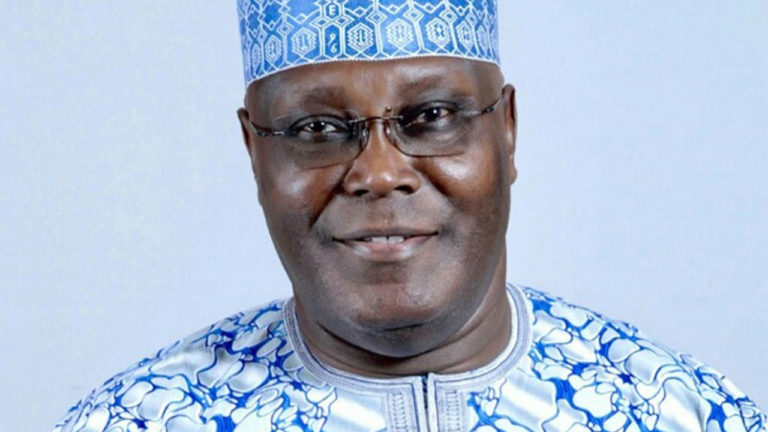
Eyewitnesses revealed that there were several civilian casualties affected by the military airstrike, which has attracted criticism, with former Vice President Atiku Abubakar condemning the collateral effects of the airstrike on innocent civilians.
FORMER Vice President Atiku Abubakar has on Sunday, January 12, condemned the recent military airstrike in Jilli axis of Borno State, raising concerns over civilian casualties during counter-insurgency operations.
While targeting insurgents, innocent Nigerians were once again reduced to collateral damage, he said, questioning how long citizens would remain unsafe both from terrorists and from operations meant to protect them.
“Just a few days ago, the United States deployed over 150 aircraft and spent an estimated $300 million to rescue just one pilot in Iran, even destroying equipment worth over $100 million each to protect a single life. That is the value they place on one citizen. Here at home, we must ask: what is the value of Nigerian lives? This demands urgent review, accountability, and decisive action to prevent a recurrence,” he added.
The former vice president extended condolences to the families of victims and affected communities, urging the government to uphold its responsibility to protect citizens.
A military airstrike on Saturday night has left dozens of people dead in Jilli axis, Borno State. The strike, which targeted a village market, occurred as Nigerian military jets were reportedly pursuing Islamist militants in the northeast.
The incident took place in a border community between Yobe and Borno states, a region that remains the epicentre of a long-running insurgency.
While local sources and residents report a high civilian toll at a village market, the Nigerian military has maintained that the operation was a precision strike targeting a high-level terrorist logistics hub.
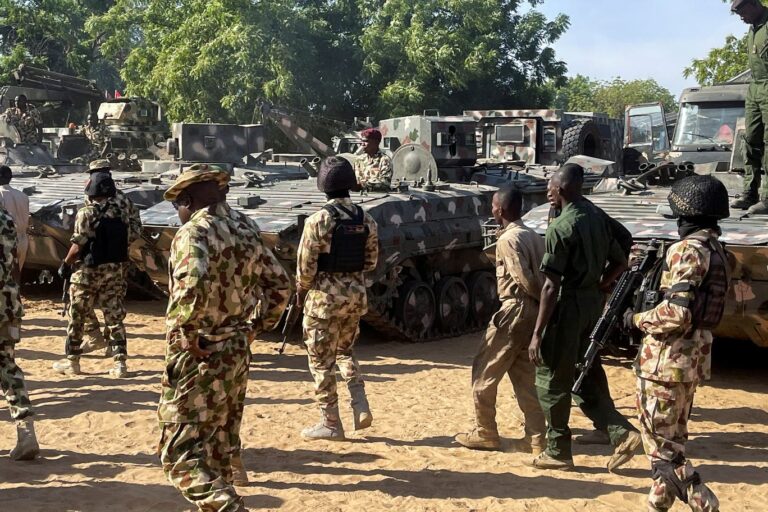
In an official statement released by the Nigerian Army regarding Operation HADIN KAI, the Air Component of Joint Task Force (North East) confirmed it conducted a precision strike on April 11, 2026.
According to the military, the target was an abandoned village near Jilli in Gubio Local Government Area, which had been identified as a major movement corridor for Islamic State West Africa Province (ISWAP) terrorists.
A military airstrike on Saturday night has left dozens of people dead in Jilli axis, Borno State. The strike, which targeted a village market, occurred as Nigerian military jets were reportedly pursuing Islamist militants in the northeast.
The incident took place in a border community between Yobe and Borno states, a region that remains the epicentre of a long-running insurgency.
While local sources and residents report a high civilian toll at a village market, the Nigerian military has maintained that the operation was a precision strike targeting a high-level terrorist logistics hub.
In an official statement released by the Nigerian Army regarding Operation HADIN KAI, the Air Component of Joint Task Force (North East) confirmed it conducted a precision strike on April 11, 2026.
According to the military, the target was an abandoned village near Jilli in Gubio Local Government Area, which had been identified as a major movement corridor for Islamic State West Africa Province (ISWAP) terrorists.
The military stated that the operation followed intensified intelligence, surveillance, and reconnaissance (ISR) missions triggered by recent attacks on troops in the Bindul, Ngamdu, and Benisheik axes.
“Target fidelity was confirmed through multiple credible Human Intelligence sources, supported by persistent aerial surveillance. Upon final validation, the Air Component executed a series of precision strikes on the objectives,” the military said.
However, eyewitness accounts said the casualties were primarily civilians who were at the market when the bombardment began.
Lawan Zanna Nur Geidam, the councillor and the traditional head of Fuchimeram ward in Yobe’s Geidam district, provided a grim account of the aftermath. In a telephone interview with Reuters, he confirmed the scale of the carnage.
“It’s a very devastating incident at Jilli Market. As I’m speaking to you, over 200 people have lost their lives from the air strike at the market,” Geidam stated.
Residents confirmed the incident and the terror that hit the market square. Ahmed Ali, a 43-year-old vendor who sells medical consumables at the market, recounted his narrow escape from his hospital bed.
“I became so scared and attempted to run away, but a friend dragged me, and we all lay on the ground,”
Following the airstrike, the military reported the arrest of a suspected terrorist logistics courier, identified as “Turja Bulu,” in Ngamdu Town on April 12.
According to the statement, Bulu confessed to participating in recent attacks and revealed he had been dispatched from the Jilli axis to provide food items to other terrorist groups hibernating in the Magumeri-Gubio area.
However, the military’s official communication made no mention of a market being hit or civilian casualties.
The Yobe State Emergency Management Agency (SEMA) has since activated its emergency response protocols following preliminary reports of the casualties.
THE Oyo State Police Command has apprehended a 23-year-old man, Sodiq Kayode Akorede, after he was found in possession of a severed head of a six-year-old girl in Ibadan.
The incident, which occurred on Saturday, April 11, in Adigun village, Olorunda Ogunsola area of the Ona-Ara Local Government Area, shocked residents across the state.
In a statement released on Sunday, April 12, made available to the public, the command’s spokesperson, Ayanlade Olayinka, detailed the events leading to the arrest.
He stated that the command acted on information suggesting that a young girl had been unlawfully killed and her head severed in Adigun Village on Saturday, April 11.
He said the severed head was allegedly found in the possession of one Sodiq Akorede at the Olorunda Ogunsola area.
“In connection with the above, the command received information that a young girl had been unlawfully killed, with her head severed and reportedly found in the possession of one Sodiq Kayode Akorede ‘M’ at the aforementioned location.
“Upon receipt of this information, the Commissioner of Police, Oyo State Command, CP Abimbola Ayodeji Olugbenga, promptly directed that operatives be mobilised to the scene, the suspect be rescued, and the exhibit secured,” the statement said.
Following the directive from the Commissioner of Police, Oyo State Command, Abimbola Ayodeji Olugbenga, police officers moved in to secure the evidence and prevent a lynching by an angry mob.
“Consequently, in compliance with this directive, police officers swiftly mobilised to the scene and, despite stiff resistance from an irate mob, acted with professionalism, restraint, and in accordance with the law to successfully rescue and arrest the suspect, as well as secure the exhibit found in his possession.
“Following the arrest, preliminary investigation revealed that the suspect, one Sodiq Kayode Akorede ‘M’, aged 23, allegedly unlawfully killed a six-year-old girl, later identified as Mutiyatu Sunday ‘F’, and severed her head, which was recovered from him,” it stated further.
It added that, “Upon interrogation, the suspect confessed to the commission of the crime. He was thereafter conveyed to a medical facility for necessary treatment following injuries sustained from the mob attack. He will be transferred to the State Criminal Investigation Department (CID) for discreet investigation and prosecution.”
Olugbenga warned the public against the dangers of jungle justice, noting that such actions often compromise the integrity of criminal investigations.
He concluded by reassuring the public and residents that justice will be served and also urged them to remain law-abiding and report suspicious activities to security agencies.
THE Presidential Fiscal Policy and Tax Reforms Committee has dismissed reports alleging that the Minister of State for Finance, Taiwo Oyedele, admitted errors in Nigeria’s new tax laws.
In a statement posted on Sunday, April 12, via Oyedele’s X handle, the committee described the reports as misleading, saying they misrepresented the minister’s remarks.
It clarified that claims suggesting Oyedele called on Nigerians to await the outcome of a legislative probe were false, noting that the legislative process had already been concluded and certified copies of the laws published by the National Assembly since early January 2026.
The committee warned that such narratives could distort public understanding of the reforms.
It explained that the minister, while speaking at a fireside chat during the Nigerian Bar Association (NBA) Section on Legal Practice conference in Lagos, highlighted early gains recorded since the implementation of the tax laws.
According to the committee, these gains include a significant increase in the number of informal businesses seeking registration with the Corporate Affairs Commission (CAC), as well as a rise in registered taxpayers from about 10 million to over 100 million nationwide.
The committee attributed the development to provisions in the new laws, including tax exemptions for small companies and low-income earners, as well as reliefs on essential goods and services.
It added that the reforms were designed to ease the tax burden through measures such as exemptions on food, education, healthcare, transportation and rent, alongside the introduction of a Tax Ombud to protect taxpayers’ rights.
The committee also noted that Oyedele acknowledged that no law is perfect and stressed the need for continuous stakeholder engagement to address any gaps through future amendments under the Finance Act process.
It urged the public to disregard what it described as sensational reports and rely on official sources for accurate information on the reforms.
The new tax laws, signed in 2025 and implemented in January 2026, aim to simplify Nigeria’s tax system, expand the revenue base, reduce multiple taxation, and ease the burden on low-income earners and small businesses.
However, concerns emerged late last year when some lawmakers, including Abdussamad Dasuki, raised issues over alleged discrepancies between the harmonised bills passed by the National Assembly and the gazetted versions.
Professional services firm KPMG had also flagged potential inconsistencies, gaps and omissions in the laws.
Oyedele, who chaired the Presidential Fiscal Policy and Tax Reforms Committee, has previously dismissed similar claims, maintaining that implementation is ongoing while necessary refinements are being made.
Some media platforms had reported that Oyedele admitted to errors in Nigeria’s tax reform laws, assuring that measures are underway to correct the identified issues.
Oyedele addressed concerns about reported discrepancies in the new laws during a fireside chat at the 2026 annual conference of the Nigerian Bar Association (NBA) section on legal practice.
“Our administration will be committed to permanently securing the safety, freedom and prosperity of all Nigerians. We shall adopt a proactive and intelligence driven security approach to sufficiently address the nation’s security threats.”
NIGER State in Nigeria’s north-central zone also goes by the moniker of “Power State”. Nigeria’s founding Head of State, Nnamdi Azikiwe, was born in the territory of the state as was Emeka Odumegwu-Ojukwu, leader of the defunct Biafra. The state has also produced two former military heads of state and a Chief Justice of Nigeria, but these are not the reasons its moniker.
Niger State is the “power state” because it is host to several sensitive and strategic national energy assets in located in Jebba, Kainji, and Shiroro, on the lower course of the River Niger. In addition, the state also hosts a collection of sensitive security installations. In the recent past, however, the state has become the place where the power of the Nigerian state goes to advertise its incapacities.
Shiroro illustrates this problem. At about 5,171 km², Shiroro Local Government Area (LGA) of Niger State is approximately the size of Imo State in south-east Nigeria. In May 2025, Humangle reported that insurgents allied with Boko Haram have “formed a parallel government physically stationed on the fringes of the Allawa Forest in Shiroro.” In the past half decade, Shiroro has been the site of the most intense slaughter of uniformed assets of Nigeria’s armed and security services.
On the night of June 29-30 2022, for instance, a motorbike gang of over 300 armed terrorists descended on Ajata-Aboki village in the Gurmana Ward of Shiroro. Their destination was an artisanal mine in the village. At the site, they reportedly abducted at least four Chinese and several other workers.
While the attack was ongoing, a company of soldiers stationed in nearby Erena responded to a distress call about the attack. On their way, they encountered an ambush from the insurgents who killed scores, including least 30 soldiers and six civilian volunteers. President Buhari called this tragedy “a direct assault on Nigeria, vowing that the attackers would not go unpunished.”
In fact, they did.
All this unfolded under the a federal government run by the All Progressives Congress (APC) headed by the predecessor of the current incumbent. As presidential candidate of the party, Bola Tinubu promised to solve insecurity.
Published under the title “Renewed Hope: Action Plan for a New Nigeria”, his manifesto for the 2023 presidential election began: “The fundamental responsibility of government is to protect the lives and property of its citizens. We will mobilise the totality of our national security, military and law enforcement assets to protect all Nigerians from danger and from the fear of danger.”
He did not mean it. For the people of Shiroro, as with many communities in North-central Nigeria, the only thing worse than the growing intensification of atrocity and danger is the even more intense indifference of the Tinubu administration to their plight.
In April 2024, one officer of the Nigerian Army (a Captain), six soldiers under his command and a volunteer hunter were killed in separate attacks on Roro, Karaga, and Rumace communities in Bassa Ward of Shiroro.
Around 11 September 2024, the casualty count in an encounter between the security services and insurgent terrorists in Bassa included at least two officers of the State Security Service (SSS).
In November 2024, insurgents in Shiroro killed four officers of the Nigeria Security and Civil Defence Corps (NSCDC), and disappeared another.
In the wake of these incidents, Shiroro, a source of power to many communities in Northern Nigeria, has “become a slaughterhouse”, where terrorists operate at will and mass atrocities stalk every community.
In June 2024, “witnesses in the town of Bassa said Boko Haram fighters attacked in broad daylight on June 6, shot the victims at close range and beheaded 10 of them.”
As the world prepared for Christmas on 24 December 2025, the terrorists picked upon Karibo community in Shiroro, killing about 15.
The latest attacks on Lanta and Bagna in Shiroro began on Easter Monday. It left at least 63 killed, mostly “operatives of the State Security Services (SSS), vigilantes, and local hunters.” No abductions were reported.
Shiroro is by no means an outlier in its vicinity. Rather, it mirrors the experience of an increasing number of communities in northern Nigeria where the Nigerian State has become complicit in its own retrenchment under the watch of a president who promised different.
The period since the Easter weekend has witnessed intense and brutal slaughter across the landscape of northern Nigeria, including in Benue, Borno, Kaduna, Katsina, Kebbi, Kwara, Niger, Plateau and Zamfara States.
Rather than worry about the protection of Nigerians exposed to this pattern of murderous insecurity, Defence Minister, Chris Musa, a recently retired General of the Nigerian Army and an even more recent recruit into the ranks of the ruling party, flamboyantly busied himself with the defence and security of the party political convention of the ruling APC.
Far from making a priority of fulfilling his campaign promise to improve the protection and security of communities across the country, President Bola Tinubu appears more invested in the creature comforts of himself and his most loyal acolytes. In response to the widening field of slaughter in northern Nigeria, the government increasingly defaults to propaganda and falsehood.
On Easter Sunday, for instance, armed terrorists two places of worship in Ariko Community in Awon Ward, Kachia Local Government Area, of Kaduna State. In separate attacks on the First ECWA Church and Saint Augustine’s Catholic Church in the village, they killed at least five worshippers and abducted another 38 into the surrounding foliage.
In response, the Army promptly issued a statement claiming that it had “rescued” 31 of the abductees. Nothing of the sort happened. The following day, the community leadership issued a public statement firmly refuting this claim.
This was not a first. On 18 January 2026, after terrorists abducted 177 worshippers from three churches in Kurmin Wali, Kajuru Local Government Area of Kaduna State, the Nigeria Police Force and the Chairman of the Local Government publicly denied the abductions. They only reluctantly walked back their denials after public pressure. Those who called attention to this pattern of institutional mendacity have suffered persecution and intimidation.
As the insecurity has intensified, the response of the Bola Tinubu administration has evolved from complicit indifference and now verges on criminal cynicism. North-central and north-west Nigeria, the sites of this intensification of insecurity, happen also to be the most fertile sites of votes in Nigeria.
While the communities in these parts of the country get emptied into mass graves or internal displacement camps, and the uniformed security agents sent to defend them pay with their lives in impermissible numbers, the politicians are busy recruiting political defections or fomenting political disaffection.
The only thing that counts these days is not the security and wellbeing of the voters but the promise of assured return for the ruling party in the invention of a contingent electoral landslide in January 2026. In the nature of these things in Nigeria, even as most of their members now inhabit mass graves or IDP camps in far flung places, these empty communities will, nevertheless, report a fulsome turnout of ghosts in the presidential election in 2027 in favour of the ruling party.
Shiroro is a testing ground.
Hunters for happy endings are likely to create a squatter camp around this concluding paragraph, looking for recommendations or suggestions. I have none. A government that encourages lies against its own citizens in mass graves or under the thrall of atrocity abduction does not need recommendations to reverse its commitment to renewed dystopia. To the citizens and communities caught in this, however, we owe acknowledgement and solidarity. This is the beginning.
THE Federal Government has released a list of 48 individuals and groups allegedly linked to terrorism financing in Nigeria.
The list was published on Saturday. April 11, by the Nigeria Sanctions Committee (NIGSAC), detailing persons and entities suspected of involvement in terrorism-related activities across the country.
Those named in the document include individuals reportedly connected to proscribed groups such as the Indigenous People of Biafra (IPOB), Ansaru, and the Islamic State West Africa Province (ISWAP).
The list includes Abdulsamat Ohida, Mohammed Sani, Abdurrahaman Abdurrahaman, Fatima Ishaq, Tukur Mamu, Yusuf Ghazali, Muhammad Sani, Abubakar Muhammad, Sallamudeen Hassan, Adamu Ishak, Hassana Isah, Abdulkareem Musa, Umar Abdullahi, Abdurrahaman Ado, Bashir Yusuf, and Ibrahim Alhassan.
Others are Muhammad Isah, Salihu Adamu, Surajo Mohammad, Fannami Bukar, Muhammed Musa, Sahabi Ismail, Mohammed Buba, Jama’atu Wal-Jihad, Ansarul Sudan (Ansaru), Islamic State West Africa Province (ISWAP), Indigenous People of Biafra (IPOB), Yan Group, Yan Group NLBDG, Adamu Hassan, Hassan Mohammed.
Also listed are Usman Abubakar, Kubara Salawu, Rabiu Suleiman, Simon Njoku, Godstime Iyare, Francis Mmadubuchi, John Onwumere, Chikwuka Eze, Edwin Chukwuedo, Chiwendu Owoh, Ginika Orji, Awo Uchechukwu, Mercy Ali, Ohagwu Juliana, Eze Okpoto, Nwaobi Chimezie, and Ogumu Kewe.
The Federal Government’s move follows ongoing efforts to curb terrorism financing and disrupt networks that provide financial and logistical support to extremist groups operating in Nigeria.
Authorities have, in recent years, intensified surveillance and enforcement actions targeting individuals and entities suspected of aiding insurgent activities, particularly in the North-East and other conflict-prone regions.
IN a new fiscal policy move, the Minister of Finance and Coordinating Minister of the Economy, Wale Edun, has approved the implementation of 2026 policy measures, including downward tariff adjustments on about 30 items.
Part of the policy is a list of 127 tariff lines with reduced import duty rates, seeking to “promote and stimulate growth in critical sectors of the economy.”
The minister conveyed the Fiscal Policy Measures (FPM) via a circular dated April 1, 2026.
Informed sources at the Federal Ministry of Finance also confirmed to The ICIR that the new policy measure sought to provide fiscal policy relief for the import-dependent Nigeria economy over the effect of the US-Israel-Iran conflict.
They also said that the measure was part of a policy initiative geared towards improving trade facilitation and trade in goods, since the Nigerian Customs Service (NCS) had been occasionally accused of an arbitrary increase in customs duty, leading to cargoes staying longer at Nigerian ports.
For instance, the import adjustment tax (IAT) on items such as crude palm oil has been pegged at a total effective rate of 28.75 per cent, a decline from previous high-tariff regimes.
Also, fully built units of passenger motor vehicles, four-wheel drive motor vehicles, and station wagons now attract a total effective tariff of 40 per cent, indicating a slash as against the 70 per cent contained in the 2015 fiscal policy measures
According to the circular, a 90-day grace period was granted for importers who had opened Form ‘M’ before April 1 to enable them to clear their goods at prevailing rates.
But a new excise duty regime and the green tax surcharge are set to take effect from July 1, 2026.
Some of the items from the gazette include Anti-malarial medicaments (20 per cent), rice (in bulk or packing of 5kg, which now attracts a 47.5 per cent reduction, as against 70 per cent.
Also, broken rice drops to 30 per cent from 70 per cent, wheat or meslin flour stands at 70 per cent.
Other affected items are crude palm oil (now 28.75 per cent from 35 per cent), margarine (excluding liquid)– 40 per cent
Raw cane sugar (Beet sugar) drops to 57.5 per cent from 70 per cent. Raw cane sugar (Other) is now 55 per cent (reduced from 70 per cent).
There is also Cane/Beet sugar (Powder/Granule) dropping from 70 per cent to 57.5 per cent.
Refined salt (for human consumption) equally dropped from 70 per cent to 55 per cent; envelopes 40 per cent (reduced from 50 per cent), and diaries/notebooks came down from 40 per 30 per cent.
The ICIR reports that the fiscal document outlines significant tariff reductions on various products, including:
– Wheat or Meslin flour: 70 per cent
– Crude palm oil: reduced from 35 per cent to 28.75 per cent
– Margarine (excluding liquid): 40 per cent
– Raw cane sugar (Beet sugar): reduced from 70 per cent to 57.5 per cent
– Raw cane sugar (Other): reduced from 70 per cent to 55 per cent
– Cane/Beet sugar (Powder/Granule): reduced from 70 per cent to 57.5 per cent
– Refined salt (for human consumption): reduced from 70 per cent to 55 per cent
– Envelopes: reduced from 50 per cent to 40 per cent
– Diaries/Notebooks: reduced from 40 per cent to 30 per cent
– Unglazed ceramic tiles: reduced from 40 per cent to 35 per cent
– Glazed ceramic tiles: reduced from 55% to 46.25 per cent
– Ceramic cubes (7cm): reduced from 40 per cent to 35 per cent
– Zinc-coated steel sheets: reduced from 45 per cent to 35 per cent