JIGAWA State has recorded about 700 per cent increase in its immunisation rate between 2016 to 2021, according to the state director of Primary Health Care (PHC), Shehu Sambo.
Sambo, while speaking during a two-day media dialogue and field trip on ‘Strengthening PHC systems: the United Nations Children’s Fund PHC Memorandum of Understanding in Jigawa State,’ on Wednesday, September 3, noted that the immunisation uptake increased from seven per cent in 2016 to 49 per cent in 2021.
The ICIR reported that misinformation, illiteracy, and lack of proper sensitisation were some of the reasons many people were reluctant to take vaccines in some parts of the country.
The reluctance towards getting vaccinated might have originated from 1996 when some children were reported dead barely one month after receiving Trovafloxacin/Alatrofloxacin and Ceftriaxone, the standard vaccine for meningitis in Kano State.
Speaking on the improvement, Sambo attributed the surge in immunisation rates to several measures implemented by the state government, in partnership with GAVI and UNICEF.
He also noted that one of the strategies adopted in increasing the immunisation uptake is strengthening the task force on PHC through strong leadership and governance.
He stressed that the state intensified outreach to rural and remote areas, and the deployment of mobile vaccination teams, adding that a robust public awareness campaigns have been crucial in encouraging parents to vaccinate their children.
“If you look at the Multiple Indicator Cluster Survey that was conducted in 2016, we had a Penta 3 coverage of seven per cent only. So, you can see that as of then, only seven per cent of our children were reached with the Penta 3 vaccine.
“We were working tirelessly, bringing a lot of innovations. We brought in state outreach on immunisation, and health ambassador innovation, among others, including accessing funds from GAVI; when the survey came in 2021, we got a 700 per cent increase from the previous one, and with that, we moved from seven per cent to 49 per cent.
“We thought we would reach 70 or 80 per cent but a 700 per cent increase is unheard of in Jigawa. We never had double-digit immunisation coverage, not until we had all the funding coming from the state,” he said.
He explained that the Primary Healthcare Centre strengthening programme was funded by Gavi and implemented by UNICEF.
According to him, the programme was a result of the Memorandum of Understanding (MoU) signed in 2022 between the Jigawa State Government, the federal ministry of health, the Nigeria Governors Forum (,NGF) GAVI, and UNICEF to improve routine immunization and primary healthcare systems and reduce loss of life, particularly among women and children.
N2bn spent on strengthening of PHC last year
On his part, the chief of health at UNICEF Nigeria, Eduardo Celades, a medical doctor, disclosed that the organisation has invested a significant amount of about N2bn on strengthening of PHC in Jigawa state in 2023.
Celades stated, “We have been investing a lot in Jigawa, significant amounts of resources, about N2bn for last year, to support the efforts of the government in strengthening PHC. We are seeing the results. This year, 20,000 additional people are getting health insurance in Jigawa.
“We are seeing how the immunisation coverage has increased, and we are trying to improve the data. We are seeing how the percentage of women accessing SBA has increased from 20 per cent to almost 50 per cent.”
THE Nigeria Correctional Service (NCoS) has revealed that 3,590 prisoners across the custodial centres in Nigeria are on death row.
The Public Relations Officer (PRO) of NCoS Abubakar Umar, disclosed this on Wednesday, September 4 while speaking to the News Agency of Nigeria (NAN) in Abuja.
Umar, who confirmed to The ICIR that he granted an interview said that as of Tuesday, September 3, the number of inmates in centres across the country was 84,741, comprising 82,821 males and 1,920 females.
The NCoS spokesperson revealed that the correctional facilities hold 57,750 Awaiting Trial Inmates (ATIs), with 56,303 males and 1,447 females.
Additionally, he said, there are 21,900 convicted inmates (21,519 males and 381 females) and 1,501 lifers (1,478 males and 23 females).
“The total number of inmates on death row (IDR) is made up of 3,517 males and 73 females, making a total of 3,590,” Umar said.
He noted that the majority of inmates in custody are awaiting trial persons (ATPs), presenting a significant challenge due to their overwhelming numbers.
However, he assured that the service is working to address the issue and expedite judicial processing for ATPs.
He applauded the support of the minister of interior, Olubunmi Tunji-Ojo, who he claimed successfully reduced the inmate population by releasing 4,063 individuals who were given the option to pay fines and/or compensation.
Umar stated that the service’s collaborative efforts with other agencies have yielded significant success, resulting in improved security and favourable outcomes within and around correctional facilities.
He noted that the partnership between NCoS and NOUN has produced tangible outcomes, with numerous inmates pursuing various academic programs, including advanced degrees, while serving their sentences.
The ICIR reported in December 2023 that about3,413 inmates were on death row in Nigeria.
The NCoS spokesperson, said this while addressing journalists on Friday, December 23, in Abuja.
According to Umar, as of Monday, December 18, 2023, the total number of inmates in correctional centres across the country was 77,849, comprising 76,081 males and 1,768 females.
This implies that the number of inmates increased by 87 in September 2024 from 3,413 reported in December 2023.
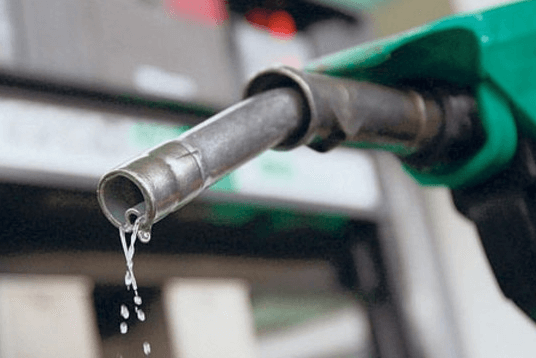
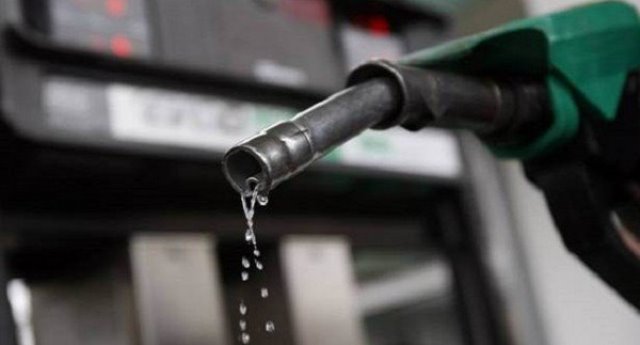
FOLLOWING the adjustment of the pump price of fuel by the NNPCL and oil marketers, the cost of transportation has jumped by over 50 per cent or more across various locations, The ICIR observed.
On Tuesday, September 3, the NNPCL adjusted its pump price to N855+.
Visits by The ICIR to filling stations in Lagos and Ogun States indicated that other major oil marketers like the Mobile filling station, adjusted to N868, the Enyo filling station to N897, and the Petrocam filling station to N1,100.
The NNPCL’s hike in pump price has raised a lot of concerns for Nigerians as it has started impacting negatively on the cost of living.
Petrol queue at Mobil filling station at Alausa, oppositè Lagos secretariat on Tuesday, September 3, 2024 The ICIR.
Following the official adjustment of pump price, The ICIR further observed that transporters immediately hiked the fares as commuters were seen stranded at various bus stops.
It was observed that commuters boarding buses from a bus stop at the Lagos State University Teaching Hospital (LASUTH) to Isaac Jones in Ikeja GRA, were charged N400 from N300, on Tuesday, September 3.
From the Lagos State secretariat to Ikeja under the bridge, transportation fares have jumped from N200 to N300, even as commuters waited tirelessly for vehicles to arrive.
The same costs are paid when commuting from the Computer Village in Ikeja to the Secretariat.
From the secretariat to Oshodi, which previously costs about N500, the conductors were demanding N1,000 per passenger.
From Mowe to the Lagos State secretariat, transporters were charging N800, which formerly costs N600, as of the early hours of Tuesday.
Also, by the evening of Tuesday, transport fare, which hitherto cost N500 from the park and N400 from along the road from Ojudu Berger to Mowe, was hiked to N1,000 at the park.
At Ojodu Berger bus stop along Ojodu-Ogba Road, when The ICIR visited the two NNPCL filling stations, a transporter waiting to buy petrol, Matthew Isede, told our reporter that it is the commuters that would mostly suffer the brunt of the petrol price increase.
“From Ikeja to Isaac Jones yesterday (Monday, September 2), passengers were begging to pay N300. How many people can you pity,” he lamented.
Empty filling stations
Despite its hike in pump price, as of Tuesday, All the NNPCL filling stations visited were not selling petrol.
At Ojodu Berger bus stop along Ojodu-Ogba Road, the two NNPCL filling stations were not selling petrol.
While one was under lock and key, the other had vehicles that queued to buy petrol. However, it was gathered that the station was expecting to have petrol delivered to it, as drivers waited in anguish.
At Agogbala, along the Lagos-Ibadan expressway, the two NNPCL fillings directly opposite each other were under lock and key.
“Bus drivers immediately increased the fare by 100 per cent from N300 to N700. T tohis is called cost-push inflation. Nigerians will always survive even if a liter of fuel is sold for N5,000 per liter,” @Chief_Ajiji, lamented on X handle.
Another X user, @NwachukwuNCJ tweeted, “Transport fare has quickly moved from N250 to N400, most fuel stations are closed. The ones still selling have so much crowd, with lots of people looking to buy in anticipation of further hike and scarcity.”
NLC demands reversal
Meanwhile, the Nigeria Labour Congress (NLC) has demanded the immediate reversal of the latest increase in the pump price of petrol across the country.
The NLC President, Joe Ajaero, in a statement, accused the federal government of betraying the labour movement.
He said, “We demand the immediate reversal of the latest increase in the pump price of PMS across the country, the release of all those incarcerated or being prosecuted on the assumption of having participated in the recent protests.
“End to policies that engender hunger and insecurity, Halt to government’s culture of terror, fear and lying. We are guided by our belief in our country and the need to secure and sustain its sovereignty, integrity and welfare of the people.”
THE Nigeria Labour Congress (NLC) says it feels betrayed by the federal government over the “clandestine increases” in the pump price of petrol.
The labour union in a statement by its President Joe Ajaero, on Tuesday evening, revealed that organised labour agreed to a N70,000 minimum wage in July based on the government’s assurance that fuel prices would remain unchanged.
The union said it accepted the amount despite recognising the wage was inadequate.
“We recall vividly when President Tinubu gave us the devil’s alternative to choose from: either N250,000 as minimum wage (subject to the rise of the pump price between N1,500 and N2,000) or N70,000 (at old PMS rates); we opted for the latter because we could not bring ourselves to accept further punishment on Nigerians.
“But here we are, barely one month after and with the government yet to commence payment of the new national minimum wage, confronted by a reality we cannot explain,” Ajaero stated.
The union urged the government to reverse the pump price of petrol across the country and retract the 250 per cent tariff hike in electricity.
According to the NLC president, the labour congress will meet to make appropriate decisions in reaction to the stance of the federal government.
He reiterated that the NLC stand resolute with the people and will neither be distracted nor intimidated by the government or its security agencies.
He insisted that the government cannot criminalise protests or basic rights in the domain of the citizenry.
“Accordingly, we demand the immediate reversal of the latest increase in the pump of PMS across the country, the release of all those incarcerated or being prosecuted on the assumption of having participated in the recent protests; halt the indiscriminate arrest and detention of citizens on trumped-up charges; reversal of the 250 per cent tariff hike in electricity; put a stop to the hijack of the duties of the ministry of labour and employment; end policies that engender hunger and insecurity; and halt government’s culture of terror, fear, and lying.”
The ICIR reported on Thursday, August 29 that the minister of state for petroleum resources, Heineken Lokpobiri, said the Nigerian National Petroleum Company Limited(NNPCL) must sell petrol above the landing cost – currently at N1,117 per litre – to curb the smuggling of the products to neighbouring countries.
According to Lokpobiri, unless the NNPC L imports and sells petrol above the landing cost, smugglers would continue to move petroleum products to neighbouring countries.
Lokpobiri said that fuel smuggling from Nigeria to neighbouring countries was an issue that could not be entirely eradicated.
Meanwhile, on Tuesday, September 3, there were unconfirmed reports that NNPC- L had increased the price of petrol across its retail outlets.
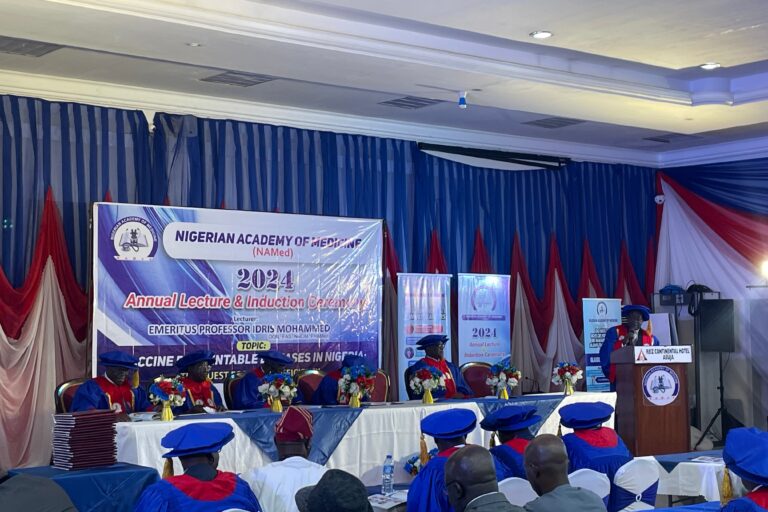
THE Nigerian Academy of Medicine (NAMed) has sought for the local production of vaccines in order to tackle the rising spread of epidemics in Nigeria.
This was stated at the 2024 annual lecture and induction ceremony of the academy held in Abuja on Tuesday, September 3.
The secretary of the academy and member, board of trustees, Oluwole Atoyebi, said the country, especially the northern parts have been hit with different epidemics most of which are vaccine preventable.
“We have this episodic epidemic meningococcal meningitis in Nigeria especially in the northern part and this is a vaccine preventable disease.
“We should plan and drive our policy towards self-sufficiency to be able to produce vaccines locally and for our own people,” he said.
Atoyebi noted that the choice of topic for the year was based on the rise of several disease outbreaks in the country. He stressed the need to improve preparedness and start local production of vaccines.
“The choice of topic this year is based on the fact that we have been having epidemics and we as an academy. We are worried about our level of preparedness for epidemics coming now and again.
“In particular, the vaccine preventable diseases, how do we get ready for it; if we continue to depend on foreign institutions to produce vaccines, we will never get it off,” he said.
A report by The ICIR stated that in 2023 alone, the Nigeria Centre for Disease Control (NCDC) reported recurrent outbreaks of some diseases, including cholera, Lassa fever, diphtheria, and dengue.t
In the report, an expert who gave his recommendations to what the government can do said the recurring outbreaks of these conditions have necessitated a comprehensive and proactive approach from tiers of government in the country.
On August 14, the World Health Organisation (WHO) declared Mpox as a global public health emergency, for the second time in two years after there was an outbreak of the viral infection in the Democratic Republic of Congo which had spread to neighbouring countries.
Within the first two weeks of the outbreak, the infection had spread to 16 countries in the continent, with the Democratic Republic of Congo, Nigeria, and South Africa recording the highest number of infections.
Meanwhile, the United States had donated 10,000 doses of Jynneos vaccine to Nigeria as part of efforts to combat the spread of Mpox in the country.
Jynneos, approved by the U.S. Food and Drug Administration (FDA), is used to prevent smallpox and Mpox in adults aged 18 and older who are at risk of infection.
Also speaking at the event, the president of the academy, Samuel Onyebulam, noted that the major need of challenge in producing a vaccine is funding.
“From all the information before us and the evidences released by the lecturer, on the major problems, is funding. Government does not have enough funds to drive the research.
“In my address, I repeatedly said the academy has the mission of sourcing funds for research because all over the world, medical profession advances through research. If we don’t have funds for research, we cannot improve healthcare,” he added.
The lecture, tagged, “vaccine Preventable Diseases in Nigeria: The Quest for Self Sufficiency” saw the induction of 20 academics in to different specialties of the academy including, basic medical, basic clinical, dental, public health, medical sciences, surgical sciences and medical education specialties.
FOR many years, Dauda Abdulkadir lived with his family in Guyaba, Bauchi State, and he often dealt with rats feeding from their food. Despite several precautions to reduce these pests in their home, they were unaware of the danger of consuming food contaminated by rats.
In 2023, Dauda’s wife fell ill with a fever, vomiting, and diarrhoea. He had attempted to treat her with a drug from a local makeshift shop, but this only made things worse. On getting admitted into Abubakar Tafawa Balewa University Teaching Hospital (ATBUTH), his wife was diagnosed with Lassa fever disease, The ICIRreported.
Meanwhile, the lack of access to clean water in another community in the Federal Capital Territory (FCT), Abuja, housing more than 500 people, put residents at risk of water-borne diseases like Cholera, due to unhealthy practices of open defecation.
The ICIR learnt that residents in the Shishipe community, in the Katampe area of FCT, drink from an impure stream on the outskirts of the village.
Within the last eight years, Nigeria has recorded a rising number of cases from the spread of the two diseases, Lassa fever and Cholera, in various states. The spread of both outbreaks has led to the death of 5,768 people within the last eight years.
This report provides an in-depth analysis of the 2024 state health budget, comparing it to the approved budget to assess its adequacy in combating emerging epidemics throughout the year.
The epidemics: Lassa fever, Cholera
Lassa fever is a deadly viral hemorrhagic illness that lowers the platelet count in the blood and its ability to clot, causing internal bleeding. The disease was first identified in Nigeria in Borno State in 1969 and is endemic in Nigeria.
Upon its re-emergence in December 2016 to becoming a major epidemic in Nigeria, The ICIR findings from multiple documents uploaded by the Nigeria Centre for Disease Control (NCDC) and Prevention showed that Lassa fever has killed more than 1,300 people in eight years.
Year
Suspected Cases
Confirmed Cases
Death
States
LGAs
2024
7,122
933
163
28
125
2023
9,155
1,270
227
28
124
2022
8,207
1,067
189
27
112
2021
4,654
511
102
17
67
2020
6,732
1181
244
27
131
2019
5,057
833
174
23
86
2018
3,498
633
171
23
93
2017
1,022
127
92
19
–
Total
45,447
6,555
1,362
–
–
Table showing the spread rate of Lassa Fever in Nigeria in eight years. Source: NCDC. Note that 2024 data ends on July 7, 2024.
Between 2017 and July 2024, more than 45,000 suspected cases were recorded of which 6,555 cases were confirmed positive in no fewer than 24 states and 105 local government areas.
On the other hand, Cholera, an endemic disease, is still one of the major diseases that affect Nigerians, particularly in the rural region of the country. Findings by The ICIR showed that between 2021 and July 2024, more than 141,000 suspected cases have been reported.
Furthermore, 4,406 deaths have been recorded within the four years in no fewer than 32 states and 255 local government areas on average.
Year
Suspected Cases
Deaths
States
LGAs
2024
2,809
82
33
148
2023
3,683
128
31
166
2022
23,763
592
33
271
2021
111,062
3,604
34
435
Total
141,317
4,406
–
–
Table showing the spread rate of Cholera in Nigeria in four years. Source: NCDC. Note that 2024 data ends on July 7 2024.
2024 epidemic data
Between January and July 7, 2024, Lassa fever had spread to at least 28 states and 125 local governments. The number of suspected cases of Lassa fever hit 7,122 with 933 of those cases confirmed positive. The disease killed 163 people within seven months.
Similarly, Cholera disease has been reported in 33 states and 148 local government areas. No fewer than 2,800 people had suspected symptoms with 82 deaths recorded within the first 27 weeks of the year.
Breaking down the numbers, the data reveals that approximately 53 people in Nigeria were impacted by one or both diseases every day, with a daily fatality rate of one person, throughout the observed timeframe.
Inside state’s health allocation
A comprehensive review of approved budgets by the legislative assemblies in all 36 states reveals a total expenditure of N16.15 trillion. Of this amount, The ICIR gathered that N1.33 trillion was cumulatively allocated to the health sector.
Collectively, this represents eight per cent of the total approved budget.
Meanwhile, in 2001, member states of the African Union (AU) convened in Abuja and pledged to allocate 15 per cent of their annual budgets towards healthcare. This commitment is aimed at addressing the significant funding gaps in the health sector to improve the alarming epidemic prevalence across the country.
Using the 15 per cent pledge as a benchmark, an analysis by The ICIR showed that only four states across the 36 states met the health benchmark in their 2024 budget. These states are Abia, Bauchi, Kano and Yobe states.
Meanwhile, aside from the above four states, the data also showed that more than 10 states budgeted between 10 to 14 per cent of the budget to the health sector. These states are Borno, Edo, Jigawa, Kogi, Kwara, Nassarawa, Ogun, Oyo, Sokoto and Taraba.
The ICIR further observed that states like Lagos, Bayelsa, Ebonyi, Ondo and Benue which have the highest prevalence of epidemic cases recorded in 2024 failed to allocate up to 10 per cent of their budget to the health sector.
The poor allocations indicate that some states’ negligence to adequate healthcare might be putting several residents at risk of epidemic outbreaks in the country. The ICIR reported some of these issues in states like Anambra, Niger, Benue, Kaduna, Abuja, Nasarawa, Oyo, Ogun and others.
On the federal level, The ICIR has reported how each citizen has been allocated N524 only for healthcare after a review of the 2024 budget for the health sector.
The chief executive officer of TalkHealth9ja, Laz Eze, told The ICIR that while poor funding has become a recurrent challenge to the health sector, there is no value commensurate with the allocations made to the sector over the years.
He added that human capacity to manage epidemics in most states has been very poor and whether more funding is channelled to the sector, the lack of capacity may detar improvement.
He said, “Adequate budgeting for health is important. With the budget, we ensure we budget in accordance with priority needs. It is not just about the total budget put to health but what is the details? Both should go hand in hand, that is adequate budging and efficient or effective utilisation to get value for money. Many times we do an incremental budget without it being informed by appraisal of an existing budget .”
Mpox, the new epidemic
On August 14, the World Health Organization declared monkeypox (Mpox) a global public health emergency, which was the second time the declaration was made in two years. The declaration came just after an outbreak of the infection was reported in the Democratic Republic of Congo.
Following this declaration, the ECOWAS Regional Centre for Surveillance and Disease Control said that Nigeria, Côte d’Ivoire, Liberia, and Ghana are the most affected countries in West Africa.
The ICIR tracked the development of the outbreak within the country and findings showed that in 2024, as of August 25th, 868 suspected cases have been reported with 48 of these cases confirmed in 35 local government areas.
Week
Suspected Cases
Confirmed Cases
Death
States
LGAs Reporting cases
2024 Cumulative
868
48
0
20 + FCT
35
2023 Cumulative
1182
98
2
25 +FCT
65
Mpox data was gathered from the NCDC website as of August 25 2024.
The Nigerian Centre For Disease Control (NCDC) said that children between ages zero to five are mostly affected by the mpox disease outbreak in the country. However, The ICIR reported that the United States donated 10,000 doses of the Jynneos vaccine to Nigeria as part of efforts to combat the spread of mpox in the country.
Recently, the National Assembly and major stakeholders in Nigeria’s health system demanded better healthcare delivery for all Nigerians by all tiers of government in the country stressing that that indices about Nigeria’s health development were abysmally poor.
THIS investigative report sheds light on irregularities and corrupt practices in the implementation of the multi-million-naira solar streetlight projects aimed at enhancing security in the local communities of Bayo, Kwaya Kusar, and Shani in Borno State. It unravels the names of influential politicians who ignored the discrepancies in the contracts to the detriment of their constituents.
In Jaragol Village in Bayo Local Government Area of Borno State, Ibrahim Adamu stood watching his neighbours start their day at about 11 a.m. The cattle farmer had a mask of confusion on his face as he had suffered a major loss just days before Eid al-Adha, when his ram was stolen by thieves. For Ibrahim, who supports his wife and four children with the profits from his small business, the loss was devastating.
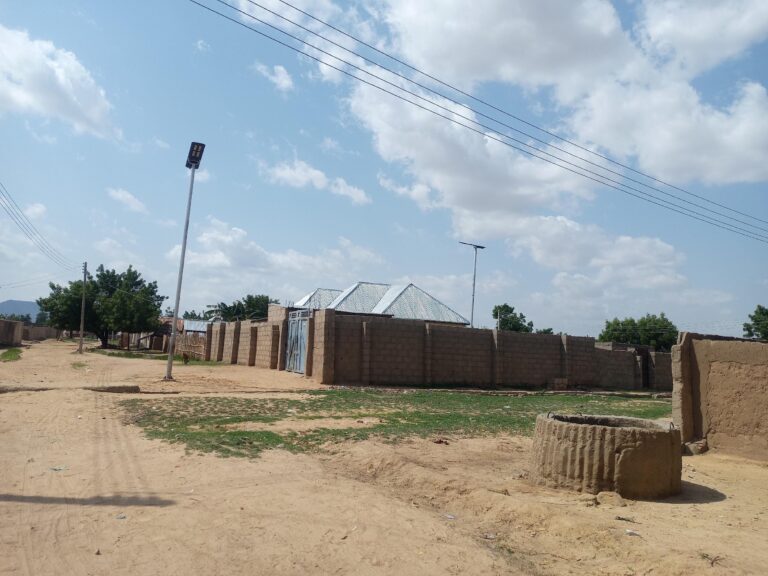
Adamu thinks the theft would not have occurred if their community had received the solar streetlight project designed to improve security. He stated that the solar streetlights in neighbouring communities discourage thieves, who cannot use the cover of darkness to operate.
This challenge, according to him, is not peculiar to Jaragol alone, as many other communities in Biu, Bayo, Kwaya Kusar and Shani Federal Constituencies face similar security issues due to inadequate illumination infrastructure.
In 2020, Aliyu Mukhtar Betara, a House of Representative member representing Biu/Bayo/Kwaya Kusar and Shani Federal Constituency, facilitated a project to install 1,052 solar streetlights in some communities, including Gamadadi, Jaragol, Jaradali, Telli (wards in Bayo LGA), Wandali, Wawa, Gussi, Bula, Wada (wards in Kwaya Kusar LGA), Bargu, Gora and Walama (wards in Shani).
The project, worth over N762 million (N762, 301, 082.14) was awarded to contractors in 2020 and 2021, and money released, as captured in the Open Treasury Portal, but investigations reveal several irregularities in its execution.
The investigation also revealed that some influential politicians were bribed with a few streetlights by the contractors to ensure their silence. The contract agreements with the Federal Ministry of Housing and Urban Development outlined that the scope of work involved the installation of several components, including 300W Polycrystalline Solar Panels, 115AH, 12V Lithium Battery, 12V, 60W high Bright LED Lamp, 12V/24V, 20/20A Charge Controller Phocos Germany, and 8.0M Galvanised poles.
Dunkulu Global Venture installs 230 streetlights instead of 277
In Bayo LGA, a report from the Open Treasury Portal revealed that Dunkulu Global Venture received a payment of over N198 million (N198,691,614.35) to supply and install 277 solar streetlights in several wards, including Telli, Gamadadi, Jaradali, and Jaragol. However, upon inspection, it was discovered that only 230 streetlights were installed, and the remaining 47 could not be accounted for. The breakdown of the installation is: 10 in Gamadadi, 100 in Telli, 50 in Jaragol, and 70 in Jaradali, which is less than the contracted number of 277.
Project signboard of Dunkulu Global Venture in Gamadadi.
The representative of the Gamadadi District Head, and a former councillor of the ward , Aliyu Jauro Abubakar, expressed disappointment with the implementation of the contract, stating that the community was not consulted before the project was carried out. He went on to say that although they noticed some installations, they discovered that only ten solar streetlights were installed in Gamadadi central, which was insufficient to meet the needs of the community.
On his part, a former councillor of Telli, Jibrin Hassan Telli, said out of the 100 Solar Streetlights brought to the communities in the Biu/Bayo/Kwaya Kusar and Shani Federal Constituencies, seven were found to be faulty. He added that despite repeated calls to the contractor, no repairs were made.
Meanwhile, the district head of Jaradali, Lawan Saidu Maina Hamma, and a few leaders of some of the communities, acknowledged that they, like Jaradali, received only 70 streetlights, which was insufficient to cover all areas in need. The leaders acknowledged the intervention but expressed a need for further improvement in security infrastructure.
Usman Junga who representative the district head of Jaragol said fifty solar streetlights were installed within Jaragol and its surrounding areas.
Dunkulu Global Venture contract award letter.
Dunkulu Global Venture violated the Public Procurement Act 2007 by failing to install all 277 solar streetlights as agreed upon in the contract. But when contacted, Bashir Musa, the contact person for the company, was unavailable and this reporter later found out that he was deceased.
A woman who identified herself as his wife picked up the call and broke the news of Bashir’s demise.
She said, “Yes, the phone belongs to Bashir, but he died about two months ago. I am his wife,” the woman said.
Further investigations revealed that the company is owned by Kabiru Kamba Mohammad.
Dunkulu Global Venture paid despite incomplete project file
The project file of Dunkulu Global Venture at the federal Ministry of Housing and Urban Development lacked evidence of how the project was executed and did not meet the required documentation standards for payment processing. This reporter saw the project file. The contract agreement as contained in the project said the contractor can only be paid if he submitted duly signed initial photograph of an empty site and duly signed progress photograph showing implementation. Unfortunately, upon inspection the project file of Dunkulu Global Venture was not having such requirements. Yet, he was paid. Additionally, the company failed to account for the 47 uninstalled solar streetlights and other discrepancies.
Certifying project completion.
Facile Concept Service, another company owned by Kabiru Kamba accused of improper project execution
It is also unclear whether another project involving 221 solar streetlights, awarded to Facile Concept Service Limited for the same Bayo local government, were completely executed.
A check on the Corporate Affairs Commission (CAC) website indicates that Facile Concept Service Limited was registered on October 24, 2018, and it is currently active. The company is owned by Kabiru Kamba Mohammed, the same person who owns Dunkulu Global Venture.
NGCheck an open source company registry lists the directors of the company as Kabiru Kamba Mohammed, and Hadiza Kamba Kabiru.
Information on Facile Concept Service.
The contractor was paid N158,879,575.09 (One hundred and fifty-eight million, eight hundred and seventy-nine thousand, five hundred and seventy-five naira and nine kobo), according to the 2022 records on the Open Treasury Portal.
The former councillor of Briyel, Sulaiman Suzi, who currently serves as one of the aides of a law maker Aliyu Betara claimed to have supervised the installation on behalf of his boss.
Sulaiman Suzi retrieved from his Facebook page.
Suzi also claimed that the contractor had fulfilled his part by bringing all 221 solar streetlights to Bayo and that they were installed within Briyel and other wards.
However, it remains unclear how these streetlights were distributed and installed. According to residents, some of these streetlights never worked.
“There are many of them that are not working. In fact, I have never seen them working,” Buhari Dauda, a resident of Briyel, said.
Streetlights diverted to lawmaker, politicians residence
It appears from this reporter’s findings, that the solar streetlights provided by Dunkulu Global Venture and Facile Concept Service Limited, were not distributed fairly among the communities in need. Instead, politicians and traditional rulers allegedly took bribes and installed the solar streetlights in their private homes, leaving some areas without adequate lighting.
The investigation was prompted by complaints from targeted beneficiaries who felt that the solar streetlights were not reaching their streets as intended. Some of the solar streetlights were also reportedly installed incorrectly in certain areas. The project file for the intervention was not available at the Federal Ministry of Housing and Urban Development, and the contractor’s mobile number was unreachable.
Maigari Abare
This reporter obtained information that apart from the District Head of Jaragol and other traditional rulers, Maigari Abare, a state House of Assembly member representing Bayo Constituency, was implicated in the bribery scandal. He was accused of accepting a solar streetlight as bribe, which was installed at his private home in Briyel, headquarters of Bayo. Sources also revealed that Suzi was also allegedly bribed with a streetlight.
However, when contacted, Abare denied requesting for the solar streetlight and claimed that it was brought to his house without his knowledge or consent. He said “Sulaiman Suzi brought it to my home. Please, you can go and remove it. I can buy ten of them. If not that Suzi insisted that I should install it, I wouldn’t have done that.”
On his part Suzi said,”It was the contractor who saw my effort and installed one in my house.”
Ibrahim Garba
Investigating further, this reporter also traced some of the streetlights to the residence of a former chairman of the APC in Bayo, Ibrahim Garba Palala. He had one of the solar streetlights installed close to his gate and another one installed behind his fence.
When contacted, Garba did not deny the allegations, but he claimed that “It was the contractor that gave me six solar streetlights. When he came to Bayo, he kept his properties inside my filling station.”
Picture showing public Streetlight installed at the residence of Ibrahim Garba in Briyel.
RKK Inspire Service Limited did not execute streetlight project in Shani, other beneficiary communities
In Shani, 277 solar streetlights were installed on paper. Interestingly, records of the Open Treasury Portal shows that RKK Inspire Service Limited was paid over N202 million (N202,364,946.35) on February 8, 2022, to supply and install 277 solar streetlights in Gora, Bargu, and Walama wards of Shani.
However, when this reporter visited communities marked for the project on July 1, 2024, there was nothing on ground to show that the contractor even mobilised to site, as the only streetlights that were sighted were installed by the Energy Commission of Nigeria (ECN).
This was further confirmed by aggrieved members of the community who alleged marginalisation and being cut off from the ‘national cake’.
“These ones with the inscription ECN were brought last year, and they are still functional. But we only have six of them in the whole of this area. One was installed before the mosque, one in a Sangaya school, two along the way to the graveyard, and one in each of the two mosques we have here” Sani Ibrahim, a resident of Anguwan Sugasuga, an area of about 200 houses in Bargu noted.
Streetlight with ECN inscription in Bargu
Also, Alhassan Audu, a farmer and resident of the Lamado area of Gora, said, “All the solar streetlights in Gora have the inscription of the ECN, not RKK Inspire Service Limited. Except for a few that have been in Gora for over ten years; the old model that has a physical battery tied to the pole, and now none of them is even working. Also, you should not be deceived by the few decorating our major roads; there are not enough inside the community. We still need them to cover the community.”
A Streetlight with ECN inscription in Gora
RKK Inspire Service Limited denies project
When contacted about the findings, Yinka Oluyemi Olusegun, the contractor, denied his company’s involvement in the project execution. He stated, “Yes, we own RKK Inspire Service Ltd, but I am unaware of any projects that were awarded to our company in Gora and Bargu.”
Olusegun challenged this reporter to provide available government documents indicating that his company had received the contract.
Screenshot of communication between this reporter and Yinka on WhatsApp
When this reporter forwarded a downloadable document from the Open Treasury Portal via WhatsApp to the contractor and followed up a few days later with a call. At this time, Olusegun stated that he remembered the project but still could not provide details of its implementation.
He connected this reporter with Abdulrauf Babagana, whom he claimed was the company’s contact person during the project, to provide more information about its implementation.
The 277 solar streetlights were intended to be installed in Gora, Walama, and Bargu, all independent areas located away from the headquarters of Shani Local Government.
Project diverted to another location – RKK Inspire Service Limited
However, Babagana confirmed that the project had been diverted to the headquarters of the local government. Both Babagana and the project file claimed that the project was implemented within the headquarters of the local government, not the actual locations.
The project file listed the locations of the project implementation in the headquarters of the local government as follows: “Installation of 277 solar streetlights in Shani Local Government: UBA Lamot to Lamot Settlement 32, Lamot settlement to ward of life church 55, Auditor general street 20, Word of life to Ali Sarkin Kida house 22, Nguru Lawan Gasi Street 25, Late Zubairu Maina Street 19, Emir Palace to Nasarawa 64, Langama street 20, DSS street 20.”
This not only confirmed the diversion of the project but also violated the Public Procurement Law 2007.
Project locations for RKK Inspire Services.
Acute Options Limited installs only 130 out of 277 streetlights
In Kwaya Kusar Communities, records from the Open Treasury Portal also captured that Acute Options Limited was paid N202,364,946.35k on February 8, 2022, to install 277 solar streetlights in Wandali, Wawa, and Wada Gussi Bula, wards of Kwaya Kusar.
However, from our checks, only community leaders in Wandali and Wawa acknowledged receiving the intervention.
Fielding questions from this reporter on the issues of diversions raised, Bako Malisa Wandali, a former councillor of Wandali, said, “Yes, I am aware that the Federal Ministry of Works and Housing (now Ministry of Housing and Urban Development) installed 40 pieces of solar streetlights in key areas of Wandali.
The traditional head of Wawa ward, Lawan Mustapha, confidently stated, “Here in Wawa and neighbouring villages, the ministry installed over 90 solar streetlights, just short of 100.
Acute Options Limited.
Upon further investigation, it was found that Acute Options Limited installed only 130 solar streetlights (40 in Wandali and 90 in Wawa) out of the total 277. Regrettably, the remaining 147 streetlights, meant for installation in Gussi-Bula ward, were not carried out as planned.
Members and leaders of Gussi-Bula Ward confirmed that the Federal Ministry of Works and Housing (now Ministry of Housing and Urban Development) only installed ten solar streetlights long ago in 2001.
Lawan Musa Mohammed, the district head of Gussi, asserted, “I can show you some of them. We were informed that it was facilitated by one of our sons who worked with the ministry and is now retired. In 2022, the ministry did not supply any solar streetlights in Gussi. Even if they did, it was not to my knowledge.”
Former councillor of Gussi, Inusa Yakubu, who underscored the non-execution of the contract by Acute Options Limited in Gussi emphasised that, “In 2022, those associated with the Multichoice Global Venture were also brought in.
He said, “Those you saw with the barge of Multichoice Global Venture were also brought in 2022. They brought 70 of them.”
Nevertheless, when contacted, Kiloso Rasheed, owner of Acute Options Ltd, asserted that he had, indeed, execute the project in Gussi.
Picture of Kiloso Rasheed as shown by Truecaller
“What are you investigating? My solar may be there. Go to the community; you will see a black solar streetlight. I was the only one whose solar had the black head”, Rasheed said over the phone, but he refused to respond to whether he had placed his company badge on the poles of the solar streetlights as other contractors did to affirm project execution.
Upon inspection of project files at the Federal Ministry of Housing and Urban Development, there was no clear evidence of project execution, except for certificates of project completion and handover endorsed by the ministry. There are no initially endorsed photographs to demonstrate the empty site, and no progress photographs were duly endorsed to show execution, as required by the contract agreement.
This constitutes a clear violation of Sections 16, 17, 18, 19, 20, and 57 of the Public Procurement Act 2007. These sections mandate procuring entities (MDAs) to plan, organise, and supervise project implementation, and charge all parties in the procurement process to act fairly, accountably, and transparently.
Streetlight projects facilitaing lawmaker, Batera reacts
Despite being the facilitator of the projects aimed at benefiting his constituents, Betara, the member House of Representative representing Biu/Bayo/Kwaya Kusar/ Shani Federal Constituency, was not also clear about the project’s implementation. When this reporter outlined the discrepancies in the project’s implementation, the lawmaker refused to take responsibility for the projects he sponsored but simply asked the reporter to investigate the contractors involved.
Through a WhatsApp call, he said: “Trace the organisation (company) that was given the contract and follow up with them. Ask them why they didn’t implement it. If they did not implement it, you can check the agency. From my own side, all my projects were executed. Apart from government projects, I also bought and installed over six thousand (6,000) solar (streetlights) with my own money. I am not like other members; I do not do contracts. In fact, I do not know many contractors who carried out projects in my constituency. If you want more information, you can go to my constituency office in Biu.”
Solar streetlight projects now conduit for siphoning public funds – CSOs
In his reaction, the founder of Spotlight for Accountability and Transparency, Muazu Modu, said unless critical issues are addressed, the solar streetlight project will no longer serve its purpose in communities.
“Installation of solar streetlight project is now a means of diverting public funds,” he contended.
He explained that most of the time, this is done by conspiring with supervising MDAs to confuse the locations of the project.
“There is an International Public Sector Accounting Standard code that every community is supposed to have.
“In Nigeria, this code stopped at the local government level. A project will merely be sited in a local government, without specifying the exact location within the local government. This lack of specificity makes it incredibly challenging to track the project. Unless we have designated codes for every community and unit, our budget implementation will undeniably continue to suffer,” stressed Modu, firmly urging the government to thoroughly investigate the diversion of the projects.”
Supervising agency unable to account for missing streetlights, other discrepancies
After a thorough review of the project file, this reporter immediately requested an interview with the Borno State Controller of the Federal Ministry of Housing and Urban Development.
In response, Amos Emil, the acting Controller of the Federal Ministry of Housing and Urban Development in Borno State, said that he had recently assumed office. He recommended obtaining further information about the projects from Abubakar Sadiq Garba, who previously held the position before retiring and supervised all these projects.
Emil said, “If you need more information on these projects, you should consult our Engr. Abubakar Sadiq Garba who occupied this office but has retired. He supervised all these projects. I do not know anything more than what is in the project files.”
According to project records, Abubakar Sadiq Garba, also known as A.S. Garba, was the individual responsible for signing the handing-over certificates on behalf of the ministry. The contractor’s office emphatically suggested contacting Abubakar Sadiq Garba for information, as he effectively oversaw the execution of all the contracts.
When contacted, Garba did not deny supervising the said projects.
“We supervised the implementation of the projects. However, there were issues. There were cases where politicians changed the location of projects. Since 2023, the ministry has taken a stand against these irregularities,” Garba stated.
He, However, disputed the findings that not all solar streetlights were supplied and installed in Shani communities.
“For Bargu, Gora, and Walama, the projects were also carried out, but the locations were changed because at that time, the ministry allowed politicians who facilitated the projects to change the project locations. This resulted in many project locations being changed,” Garba explained.
During the project execution in Gussi, a community of Kwaya Kusar, Garba emphasised that the solar equipment was supplied but not installed.
He stated that the equipment was kept at the residence of the Gussi district head due to a mistake with materials supplied by the contractor and insecurity in the area, which prevented the installation.
Garba vehemently denied the allegation that the ministry allowed contractors and politicians to divert the intervention to private homes. He also noted that there were attempts by some individuals to have solar streetlights installed inside their private homes but claimed that the ministry refused such requests.
“At that time, I can remember we struggled with many people who wanted us to install solar streetlights inside their private homes, but we refused,” he added.
Garba’s statements seemed like a fairytale, as proper procedures were not followed in the award and execution of contracts. According to Sections 18 to 24 of the Public Procurement Act 2007, which outline public procurement organisation, methods, and implementation, open competitive bidding should be the primary method of public procurement.
The Act mandates that a Procurement Planning Committee should be set up by the procuring entity to conduct a needs assessment and evaluation. Following this, bids should be advertised in two national daily newspapers, and then evaluated. The winning bid should be the lowest evaluated responsive bid that meets the work specifications and standards.
However, when inspecting the project files, no evidence was found to indicate that these procedures were followed. There was no documentation of advertised bids or records of bidders.
The contract agreements for all the projects were left with multiple blank spaces where the contractor was supposed to sign.
The contract agreements for all the projects were left with multiple blank spaces where the contractor was supposed to sign. Despite this, the handing over certificate and the certificate of completion were endorsed by the ministry.
This happened even though the contract award letter, such as the one for Dunkulu Global Venture, clearly stated that the “practical completion certificate shall be processed further only if accompanied by all the duly certified site photographs.”
According to Section 58 of the Public Procurement Act 2007, any individual or entity found to have violated the provisions of the Act through fraudulent activity can face severe penalties, including imprisonment for not less than five years, without the option of a fine.
*This investigation is supported by the John D. and Catherine T. MacArthur Foundation and the International Centre for Investigative Reporting under the Open Contract Reporting Project (OCRP).
THE Nigeria Police Force (NPF) has named a journalist, David Hundeyin, as an accomplice in an alleged criminal conspiracy involving seditious activities and the leakage of classified documents against a whistleblower Isaac Bristol.
The force also fingered one Michael Temidayo Alade in connection with these crimes.
In a statement on Tuesday, September 3, the force spokesperson, Olumuyiwa Adejobi, said the investigation began following a complaint from the office of the Secretary to the Government of the Federation (OSGF).
The police claimed Bristol has for years operated @PIDOMNigeria, an X account, to leak classified documents, which they said violates the Official Secret Act (OSA).
Adejobi said the complaint alleged that an anonymous blogger, using the X handle @pidomnigeria, published and distributed a sensitive document labeled “restricted” that pertained to national security.
The ICIR Tuesday, reported that a federal high court sitting in Abuja sent Bristol to Kuje prison.
The Nigeria police arraigned PIDOM over money laundering, cybercrime, and unlawfully obtaining, retaining, and disseminating classified official secret documents.
After entering a not-guilty plea to the nine-count charge, the presiding judge, Nwite subsequently adjourned the case to September 23, 2024, for the bail application ruling and ordered his remand at the Kuje correctional centre.
Recall that PIDOM was arrested on August 5, 2024, in his hotel room in Port-Harcourt, Rivers State.
According to a report by Foundation for Investigative Journalism, Bristol was kept in chains and starved for at least six days in a detention facility in Rivers before being relocated to the FCID.
But Bristol wouldn’t be charged to court until 26 days after his abduction.
Meanwhile, the NPF, in a statement, claimed investigation identified Michael Temidayo Alade, and David Hundeyin as key suspects in the case.
“A discreet investigation was initiated to identify those responsible for the leakage, which led to the identification of Bristol Isaac Tamunobifiri, Michael Temidayo Alade, and David Hundeyin, as suspects in connection with the alleged crimes.
“The principal suspect, Bristol Isaac Tamunobifiri was apprehended at a hotel in Port Harcourt on Saturday, August 5, 2024, by NPF-NCCC detectives, and in an attempt to resist arrest, the suspect locked himself in a hotel room, smashed his phone, and flushed it down the toilet in an effort to destroy evidence.
“He also refused to surrender his phone’s password, claiming he had forgotten it, thereby concealing information.
“Subsequent investigations, after his arrest, revealed several suspicious activities between the principal suspect and his accomplices. Investigations also revealed that the suspect was responsible for leaking a sensitive restricted document generated from the office of the President to the Secretary of the Government of the Federation,” the statement read.
The police noted that subsequent investigations, after Bristol’s arrest, revealed several suspicious activities between the principal suspect and his accomplices.
Hundeyin has been at the forefront to protest against the arrest and the prosecution of Bristol.
In one of his his posts, sharing the charges filed against Bristol, Hundeyin wrote, “I cannot stress how unprecedented this is, even for the Wild West that is Nigeria.
“A government that claims to be “democratically elected” is seeking the death penalty to punish people for exercising constitutionally guaranteed freedom of expression, association, and movement.”
The ICIR reports that attacks and harassment of journalists and other citizens by security operatives especially the police using the NPF-NCCC have remained a great concern in Nigeria.
The ICIR reported in December 2023 how security agents abused their power and flouted the Nigerian Constitution by harassing 39 journalists in the line of duty, nationwide.
Four reporters with The ICIR were harassed by state actors in the line of duty that year.
MAJOR oil marketers nationwide officially met in Abuja on Wednesday, September 3, with the Nigerian Midstream and Downstream Petroleum Regulatory Authority (NMDPRA) over premium motor spirit (PMS) price increment.
The ICIR findings have confirmed price increments of 38.6 per cent from N617 per litre to N855 benchmark by the Nigerian National Petroleum Company Limited (NNPCL) across different parts of the country.
In Abuja and Lagos, most NNPCL filling stations sell N855 per litre.
The ICIR reports that some major filling station outlets have started adjusting their pricing with the latest price movement by the national oil company.
Findings from our correspondent showed that the Eterna filling Station in Kubwa (A satellite town in the Federal Capital Territory-FCT) is currently selling at N940 per litre while the Ammasco filling Station in the same Kubwa sells at N945.
The price increment possibly followed the official market entrance by the the chief executive officer of Dangote Refinery Group, Aliko Dangote who had signalled that his petroleum product is expected to hit the market in the next 48 hours.
Energy analysts argued that the national oil company’s inability to sustain below market-reflective price for Nigerians could be a major reason for the price hike as it currently suffers financial distress.
“Dangote may have had an understanding with the NNPCL on possible price adjustment since he’s hitting the market in 48 hours. This is fundamental economics of the law of demand and supply. The government has already promised to sell crude to him in Naira and now he’s in the market, the government has to enforce the right pricing “said the National Publicity Secretary of the Independent Petroleum Marketers Association of Nigeria, Chinedu Ukadike, told The ICIR.
Speaking exclusively to The ICIR, the chairman of Petroleum Products Retail Outlets Owners Association of Nigeria (PETROAN), Billy Gillis-Harry, said, “Yes, we are meeting with the oil regulators and getting some price movement signals but it’s not official yet.”
Confirming the development further, the former Chairman of the Major Oil Marketers Association of Nigeria, Adetunji Oyebanji said, “We are currently meeting with the Nigerian Midstream Downstream Regulatory Authority, NMDRA.
“The government sells to us now at N765. If you add transportation and other logistics, you can see that the price is higher than what it used to be. We’ll be approaching Dangote and the NNPCL now since they are the major suppliers currently.
“Adetunji said the development would see marketers adjust prices to enable them to be in business,” he added.
Energy analysts believe Dangote would sell PMS at the official market price development which could see the price rise above what the national oil company– NNPCL currently sells.
“Dangote is not Father Christmas He’s a businessman and is going to sell at the official market price,” an energy analyst, Henry Ademola Adigun told The ICIR.
The ICIR has earlier reported that N1,000 per litre of PMS is imminent as the NNPCL had issued a notice of financial distress, citing concerns about unsustainable subsidy payments.
The landing cost, according to industry sources is N1,100 which shows that the government is still minimally intervening in the pricing, having pegged the price at a benchmark of N855 per litre.
“We still have a minimal percentage of pricing intervention by the government. The element of subsidy has been reviewed downward to a large extent. The oil sector is gradually being fully deregulated,” Adetunji added.
THE Federal High Court sitting in Abuja has sent a whistleblower Isaac Bristol, also known as PIDOM to Kuje prison over money laundering.
The Nigeria Police Force (NPF) arraigned Pidom over money laundering, cybercrime, and unlawfully obtaining, retaining, and disseminating classified official secret documents.
He was arranged before a justice, Emeka Nwite on Tuesday, August 3.
After entering a not-guilty plea to the nine-count charge, the judge, Nwite subsequently adjourned the case to September 23, 2024, for the bail application ruling and ordered his remand at the Kuje Correctional Centre.
Recall that PIDOM was arrested on August 5, 2024, in his hotel room in Port-Harcourt, Rivers State.
The police confirmed the arrest of PIDOM in a statement by the Force Public Relations Officer, Olumuyiwa Adejobi on August 24.
Adejobi stated that the Pidom was taken into custody due to accusations of “committing serious offences that undermine the integrity of government operations.”
The arrest of PIDOM has generated concerns among the Nigerian online community, leading to a viral campaign on X.com with users using hashtags such as#FreePIDOM , #PIDOM, and #WhereisPIDOM , among others.
Attacks and harassment of journalists and other citizens by security operatives especially the police using the NPF-NCCC have remained a great concern in Nigeria.
The ICIR reported in December 2023 how security agents abused their power and flouted the Nigerian Constitution by harassing 39 journalists in the line of duty, nationwide.
Four reporters with The ICIR were harassed by state actors in the line of duty that year.
Meanwhile, in 2024, the NPF-NCCC in Abuja invited and detained The ICIR’s executive director, Dayo Aiyetan, and reporter, Nurudeen Akewushola, over an investigation on sleazes in which its former Inspector-Generals were complicit.
The ICIR reported that a reporter, Daniel Ojukwu, wasabducted by officials of the Intelligence Response Team (IRT) of the Inspector-General of Police (IGP) Kayode Egbetokun on Wednesday, May 1, two days before World Press Freedom Day.
The Nigeria Police Force (NPF) moved Ojukwu to the Force Criminal Investigation Department (FCID) in Abuja, after spending four days in police custody in Lagos State.
On the orders of the IGP, Ojukwu was transferred by the IRT to the Nigeria Police Force National Cybercrime Centre (NPF-NCCC) in Abuja in the early hours of Sunday, May 5.