Home Blog Page 51

Wike Bus Terminal collapse: Eyewitnesses speak on damage, as engineer questions job quality

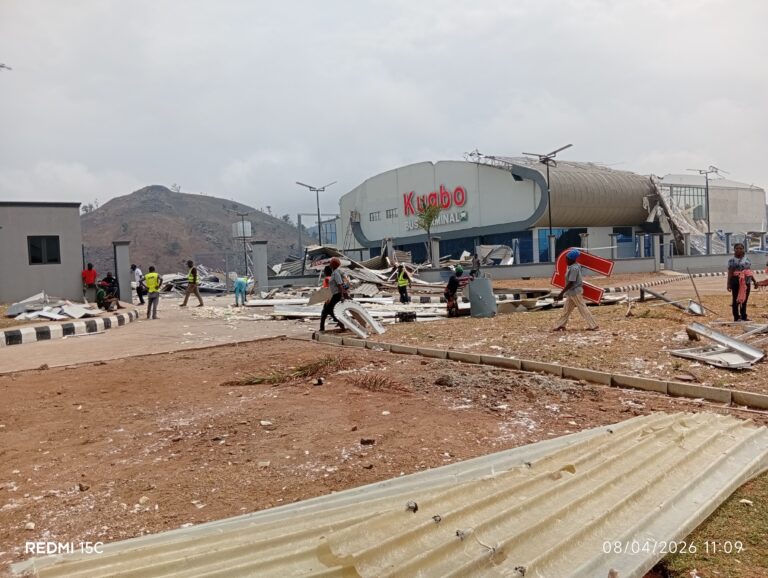
In this report The ICIR dives into the windstorm damage on the newly built Kugbo Bus Terminal in Nyanya, Abuja, which occurred in the late afternoon of Tuesday, April 7, 2026.

Blessing, a Point of Sale (POS) agent near the terminal, said a resident who tried to escape the strong wind got his arm slashed. She also noted that their business was disrupted when aluminium sheets and roofing materials were blown onto their wares during the windstorm.
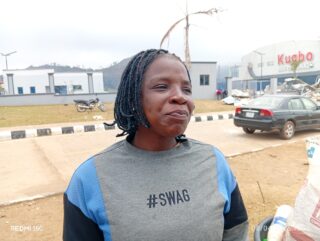
Blessing, the POS agent. credit: ICIR

“It was around 3:30 pm when we heard the breeze, as we started packing our chairs and canopy, that was when we saw the zinc and roofs flew to our stalls. No one died, but the man who stopped near us due to the breeze got his arm slashed and lots of blood gushed out from it.

“Even the vulcaniser’s machine fell inside the gutter because the zinc from the roof flew to his direction and damaged a car that was parked beside him.”

Thomas, the vulcaniser in front of the terminal. credit: ICIR

The vulcaniser, Thomas, corroborated her account as he narrated the ordeal to The ICIR.

“i was working when the breeze started. I started packing my machines because I thought it would be just rain, then suddenly we heard a noise, and by the time we knew what was going on, we saw the roof of the terminal flying around. Before I could finish packing, the zinc fell my machine into the gutter. A car that was parked beside me got damaged, and a man who was riding a bicycle got his arm slashed too.”

When asked if the damages affected their sales and business inflow, he said, “Market and sales aren’t constant, but my sales have reduced since yesterday.” he noted.

The ICIR reports that a statement released by Lere Olayinka, spokesperson for the Minister of the Federal Capital Territory, Nyesome Wike, stated that no casualties or property losses were recorded.

“From preliminary reports, no one was injured, and no vehicle was damaged,” the statement claimed.

However, eyewitnesses spoken to by The ICIR contradict the statement. Several traders at the terminal said that a vehicle was damaged, their businesses disrupted and someone’s arm was slashed when the windstorm tore the facility apart.

Backstory

On Tuesday, April 7, a windstorm, accompanied by rainfall, damaged a multi-billion bus terminal, a project by the Federal Capital Territory Development Agency under the Ministry of the Federal Capital Territory, Nyesom Wike, which was commissioned in June 2025.

Before this incident, residents and commuters had complained about delays in the take off of the terminal. The transportation difficulties and the increment in fuel price added to this.

This incident has left residents worried as they had believed that once operational, their movements will be seamless but are now left with uncertainty as they don’t know when the project will be utilised now that it’s damaged.

Prior to this rainstorm, a video by Premium Times circulated earlier this year showing leaks in the roof of the recently completed terminal. This raised concerns about the structure and quality of the building.

The ICIR also observed that the multi-billion-naira terminal, which was expected to be filled with buses and other facilities to aid transportation, was largely empty. There was no furniture, not even a plastic chair, despite the building having been commissioned since last year

Security operatives obstruct journalists and residents

Officials of the Federal Capital Development Authority, FCDA, harassed journalists for documenting and taking images of the scene.

Altercation between the FCDA officials and journalists. credit: ICIR

The situation escalated when officials attempted to confiscate equipment, including drones and cameras, from TVC and News Central correspondents.

A policewoman threatened to send Juliet, a food seller with a stall in front of the terminal, away for responding to The ICIR reporter’s question.
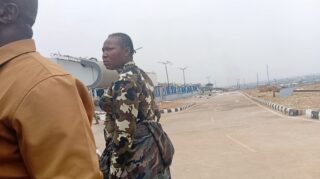
The policewoman. credit: ICIR

The officer’s name couldn’t be identified but her image was captured.

The incident raised further questions among residents as no houses in the area were affected except the bus terminal.
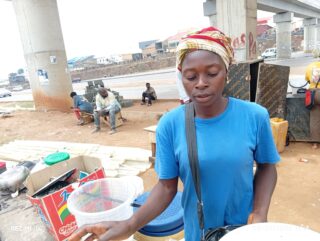
Juliet, who was stopped from answering The ICIR. credit: ICIR

One of Juliet’s customers stated: “My house that’s incomplete, nothing happened to it, but this one that the government constructed got ruined. How?”

His development raises concerns about the execution and quality of construction and whether the facility met required standards as other uncompleted buildings nearby were untouched.

Residents said it was a terrible incident, aside from the fact that they couldn’t move freely when the incident happened due to debris blocking the roads, they expressed concern about their safety.

Citizens call for Wike’s arrest

Meanwhile, citizens have asked for the arrest of the minister after the collapse of the Kugbo bus terminal in their reactions to the FCT Minister’s earlier directive on the arrest of collapsed building owner in Jikwoyi.

The ICIR reports that earlier on April 7, 2026, Wike ordered the arrest of the owner of a building that collapsed on Good Friday, April 3, in Jikwoyi area of the FCT and directed that the land be revoked.

According to the statement issued by his office, the building was under construction without approval, despite stop-work notices from the Development Control Department, which were ignored by the developer.

Wike emphasised the need for strict compliance with building regulations, stating that any structure without approval would be demolished, while defaulters would be arrested and prosecuted.

“I have always said this, go to the Development Control to get approval, let them know what you are building, the quality of materials, and they will supervise it from one stage to another… Anywhere you see a building going on without approval, report to the government and we shall prosecute those who refuse to get approvals”, he said.

However, the development raises questions about consistency in enforcement and accountability, especially in light of the damage to the government-constructed Kugbo Bus Terminal.

The incident has also raised concerns about the safety of the other two bus terminals awaiting commissioning by the Minister.

The questions are about whether similar standards of construction and oversight are being applied, especially as the three terminals together cost ₦51 billion and one of them got damaged after just a single windstorm.

Civil engineer weighs in

The ICIR reached out to a civil engineer, Oladapo Idowu, to comment on the damage at the Kugbo Bus Terminal.

“A standard, properly installed metal roof of a commercial building like the Kugbo Bus Terminal should be able to withstand winds of at least 90 to 140 mph, roughly 145 to 225 kilometres per hour, before sustaining major damage as observed. Ordinary rain or a breeze would not be able to rip off large sections of the roof,” she said.

On whether the damage could be due to poor construction materials, design flaws, or installation issues rather than just the weather, he explained, “Structurally, metal roofing systems, particularly the trusses, are designed to resist uplift, which is the suction force created when high-speed air passes over a roof. If a roof fails at lower speeds, it usually points to poor installation or poor material quality.

“This could include insufficient or low-quality fasteners, such as screws, welds, or clips; improper anchoring of the roof to the main structural frame; or poorly secured edges or ridges where the wind can get hold of the metal and rip it off,” he stressed.

On the measures authorities should take to ensure that other government-owned terminals are safe before commissioning, he said, “Authorities must implement strict safety and quality control measures for other government-owned terminals. Independent structural audits should be conducted by certified engineers to verify the structural integrity of newly constructed terminals, particularly the roof structures. Material testing and verification are also critical to ensure that steelwork and roofing meet approved quality standards and are not substandard.”

He concluded that environmental stress tests should be performed to ensure structural stability against weather conditions, especially in light of the Kugbo terminal being damaged by a windstorm shortly after rainfall.

Nigeria imports 70% of its medicines – why local manufacturing doesn’t meet demand

0

By  Efefiom Kofon, SOAS, University of London

NIGERIA imports at least 70 per cent of its medicines. This is striking for a country of over 230 million people and at least 120 active pharmaceutical manufacturers.

Domestic manufacturing is largely concentrated in lower-end medicines that require relatively simple production processes. The more complex and higher-value pharmaceutical products continue to be imported.

This pattern has persisted for decades. It reflects two things. First is the limited impact of policies aimed at reducing import dependence. The other is the entrenched interests across pharmaceutical companies. An incentive structure that favours imports over local production.

I recently completed my doctorate studies focusing on the political economy of pharmaceutical manufacturing in Nigeria, with comparisons to Uganda, Bangladesh and India. My research looked at how the industry had evolved and analysed how the distribution of organisational power and manufacturing capabilities has made it difficult for reforms to work.

I found that policy interventions have largely failed because weak institutions cannot influence manufacturers to expand their production capabilties.

The biggest obstacles stem from how power and benefits are distributed across political, bureaucratic and pharmaceutical actors.

Any policy that does not fully take this into account will likely be resisted.

Factors militating against Nigerian manufacturers

Nigerian manufacturers face:

  • a lack of protection and incentives to produce certain medicines
  • high levels of imports of finished medicines
  • pressure to import as well as manufacture
  • low manufacturing capabilities.

Weak incentive structure:

The first policy to specifically support domestic manufacturers of medicines was introduced in 2005, when the Nigerian government restricted the importation of 17 lower-end medicines. The prohibited medicines included paracetamol, aspirin and metronidazole (antibiotic) tablets.

The protectionist policy has not been expanded since then. So manufacturers have no incentive to invest in technological upgrading to make more complex medicines.

Importation of finished medicines:

At least 100 manufacturers also import medicines – including some that are produced locally. In some cases, manufacturers both produce and import the same medicine, marketing them under different brand names.

Two medicines illustrate this. The antibiotic ciprofloxacin (tablet form) is currently imported by at least 93 registered pharmaceutical companies, even though 21 domestic producers make it too.

A similar pattern is evident for artemether-lumefantrine, a widely used antimalarial medicine. Fewer than 30 pharmaceutical companies produce it locally. More than 200 import it – including some established manufacturers.

Manufacturers as producers and importers:

Many companies combine local manufacturing with importing finished medicines as a way of managing risk.

This creates commercially attractive, lower-risk revenue streams for manufacturers. They are likely to resist policy or reforms that would limit imports in favour of expanded local production.

Low manufacturing capacities:

Nigerian pharmaceutical companies have low manufacturing capacities. And the learning process involved in complex manufacturing is time consuming, costly and risky.

It is also difficult to compel a company to do something where governance is weak.

In the absence of adequate and sustained policy support, many manufacturers rely on political networks to protect their interests or challenge policies that threaten them.

An example is the modification of a regional tariff in 2016 because it threatened locally manufactured medicines. The regional trade policy had imposed zero duty on essential finished medicines and up to 20% on the raw materials used in medicine manufacturing. This was to increase the availability and affordability of essential medicines across the region. Nigerian manufacturers exerted pressure on government to reject it.

In the absence of credible policy support for upgrading into technologically sophisticated medicines, manufacturers continue to rely on imports. Similarly, they continue to influence policy decisions that could disrupt existing revenue streams.

Why the problem persists

When some pharmaceutical companies manufacture medicines locally while others import the same products, it weakens collective action. It’s harder to mobilise around shared policy demands.

The Pharmaceutical Manufacturers Group of Manufacturers Association of Nigeria, an influential trade association, illustrates this challenge. One of its objectives is to lobby for increased market protection for locally produced medicines. But member firms have differing commercial interests in locally manufactured and imported medicines. This often works against policy objectives.

It impedes how member firms form alliances to support or oppose policies. It also affects influence over them.

Nigeria’s reliance on imported medicines has less to do with the commonly cited capability constraints. It is the outcome of a policy vacuum that has made it more attractive to import products.

This dynamic is also evident in some other African countries, such as Ghana, Kenya, and Uganda. Manufacturers similarly import more complex medicines and produce simple medicines locally. There is limited support for domestic manufacturing of more complex medicines.

Moving forward

High levels of imports limit the rewards for expanding manufacturing capabilities and any credible path to competitiveness. The significant revenues generated from imports also weaken incentives to invest in learning how to produce more complex medicines.

Recognising this matters for policymakers and international development organisations.

The challenge is not simply increasing financial support or political commitment. It is designing policies that reconfigure current benefits. They need to make it worthwhile to invest in more complex pharmaceutical manufacturing.The Conversation

Efefiom Kofon, SOAS, University of London

This article is republished from The Conversation under a Creative Commons license. Read the original article.

Group condemns assault on colleague by Sierra Leone Police

A REGIONAL network of human rights and media lawyers, the West Africa Network of Activists and Media Defense Lawyers (WANAMDEL), has condemned the alleged assault on one of its members, Paul Kamara, by police officers in Freetown, Sierra Leone.

In a statement on April 7, WANAMDEL said the incident occurred on April 4 at the Adonkia Police Station, where Kamara, also a journalist, had gone to follow up on investigations into the death of his colleague, Augustine Sensie Bangura.

According to the group, Kamara was at the station’s Criminal Investigations Department and later joined sympathisers consoling the bereaved family when he witnessed a confrontation between a police officer and a civilian.

The statement said Kamara attempted to de-escalate the situation but was instead assaulted by the officers.

“He was physically assaulted, restrained, and pepper sprayed by another officer, despite identifying himself as a lawyer and journalist,” WANAMDEL said, describing the officers’ actions as a violation of professional standards and the rule of law.

The group also criticised the response Kamara received when he tried to file a complaint at the station.

It said officers at the Complaints Desk treated him with indifference and ridicule, only allowing him to lodge a formal complaint after intervention from concerned individuals who contacted the Local Unit Commander.

WANAMDEL called for an immediate, independent, and transparent investigation into the incident, as well as sanctions against all officers involved.

It also urged the Sierra Leone Police to take concrete steps to prevent similar occurrences and to uphold the rights and dignity of citizens.

The incident came amid growing concerns over press freedom violations across West Africa and the broader continent. Reports document increasing cases of harassment, arbitrary arrests, and assaults on journalists by security forces.

Recent reports by the Media Foundation for West Africa show that press freedom in the region remains precarious, with multiple cases of repression recorded in countries including Sierra Leone and Ghana. Similarly, the International Press Institute documented at least 149 threats to press freedom across 30 sub-Saharan African countries within a three-month period in 2025.

Data compiled by media monitoring groups also indicate that West Africa recorded over 100 press freedom violations in 2024 alone.

Global watchdog Reporters Without Borders has repeatedly warned of declining press freedom rankings in parts of Africa, linking the trend to political instability, weak institutions, and the growing role of security agencies in suppressing dissents.

In several cases, journalists covering elections, protests, and governance issues have been assaulted or arbitrarily detained.

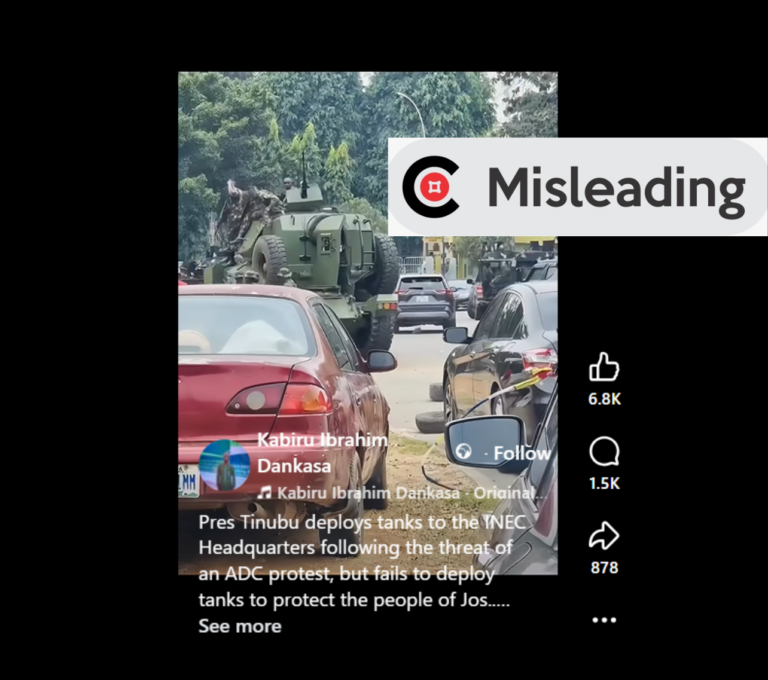
Viral video of armoured vehicle at INEC headquarters is AI-generated

A video circulating on social media claims to show a two-turret armoured vehicle and other military trucks moving toward the headquarters of the Independent National Electoral Commission (INEC) in Abuja.

The 10-second clip shows soldiers on an armoured vehicle driving past a signpost labelled “INEC Headquarters.”

A Facebook account, Kabiru Ibrahim Dankasa posted the video with a caption: 

“Pres Tinubu deploys tanks to the INEC Headquarters following the threat of an ADC protest, but fails to deploy tanks to protect the people of Jos.”

The post has generated over 6,800 likes and more than 800 likes.

An X user, @SadiqMaunde, shared the video with the caption:
“See what Tinubu deployed to INEC office!”

As of the time of review, the post had generated over 2,000 likes, 560 reposts, and more than 300 quote posts.

CLAIM

The video shows military deployment of armoured vehicles to INEC headquarters in Abuja.

screenshot of the viral post

THE FINDINGS

Findings by The FactCheckHub show that the claim is MISLEADING.

The video surfaced amid heightened political tension following INEC’s announcement that it would not recognise factions of the African Democratic Congress (ADC) led by David Mark and Rafiu Bala, citing a court of appeal order to maintain the status quo pending resolution of the leadership dispute.

The development triggered speculation about a possible protest by supporters of the Mark-led faction at INEC headquarters in Abuja. On Thursday, security operatives, including soldiers and armoured personnel carriers, were indeed deployed around the commission’s headquarters at Zambezi Crescent, Maitama.

Images of the security deployment were widely shared and reported by multiple media outlets.

However, checks by The FactCheckHub show that the circulating video is not authentic.

Analysis of the footage indicates that it was generated using artificial intelligence. The video appears to be based on an earlier image showing security deployment at the INEC headquarters but has been digitally altered.

Some tyres were seen moving on their own in the video while the signboard carrying Maitama Crescent looks suspended in the air without any hanger, a clear sign that the video is synthetic. 

We geolocated the INEC HQ’s address, and the result is inconsistent with what is in the video. For instance, the entrance shown in the video is blue-coloured, which does not match the actual INEC headquarters in Abuja.

Additionally, the signpost in the video reads “Maitama Crescent,” whereas the official address of the INEC headquarters is Zambezi Crescent, Maitama.

INEC Headquarters, source: Google Map

Further checks show no credible media reports confirming the movement of such a two-turret armoured vehicle toward the INEC office as depicted in the video.

VERDICT

The claim that the video shows armoured vehicles moving toward INEC headquarters in Abuja is MISLEADING. The video is AI-generated and does not depict a real event.

US tags Nigeria unsafe, exempts South-West

0

THE United States, through its Department of State, has warned its citizens against travelling to Nigeria over security concerns.

It also directed all its non-emergency employees and its employees’ families at its Abuja Embassy to quit over insecurity.

In a detailed travel advisory on Nigeria on April 8, 2026, the US urged its citizens to reconsider visiting the country due to rising concerns over crime, terrorism, civil unrest, kidnapping, and unreliable healthcare services.

It labelled all regions in the country as unsafe except the South-West.

The advisory placed Nigeria at Level 3, meaning travellers are advised to reconsider their plans because of serious dangers that exist across the country.

“Reconsider travel to Nigeria due to crime, terrorism, unrest, kidnapping, and inconsistent availability of health care services. Some areas have increased risk.” part of the advisory read.

The US pointed to widespread violent crime as a major concern. Armed robbery, assault, carjacking, and kidnapping for ransom are described as common across states in the North-West, North-West, North-Central, South-South, and South-East, with incidents occurring in both urban and rural areas, and affecting both foreigners and locals, sometimes along major roads or in residential neighborhoods.

The advsory also highlighted the persistent threat of terrorism that happens with little warning, particularly in parts of the country where extremist groups remain active. These groups are said to be capable of carrying out attacks in public spaces. The risk is heightened by the presence of armed gangs and criminal networks, especially in regions where government control is limited.

“Do not travel to Borno, Jigawa, Kogi, Kwara, Niger, Plateau, Taraba, Yobe, and northern Adamawa states due to terrorism, crime, and kidnapping. The security situation in these states is unstable and uncertain. This is because of widespread terrorist activity, violence between communities, and kidnapping,” the US warned.

In the southern part of the country, states such as Abia, Anambra, Bayelsa, Delta, Enugu, Imo, and Rivers were identified as high-risk due to crime, armed gangs, and civil unrest, although Port Harcourt was exempted within Rivers State.

Healthcare is another major issue raised by the US, with officials warning that medical services in Nigeria fall far below the standards Americans are used to.

According to the advisory, Nigerian hospitals often lack proper equipment and essential medicines, including treatments for common conditions such as diabetes or asthma. “Emergency services are limited, ambulance systems are unreliable, and blood supplies may not be safe or available. Patients are usually required to pay cash before receiving treatment, and most hospitals do not accept US health insurance.”

The ICIR reports that Nigeria faces a severe security crisis, with widespread attacks, kidnappings, and citizens displacement. Recent incidents include deadly violence in Plateau and Niger states, rural banditry and kidnappings in the Northern and Middle Belt regions, and attacks on students in Ekiti State.


Death toll from latest Israeli attack on Lebanon rises to 254, over 1,000 injured

0

DEATH toll from Wednesday’s Israeli attacks across Lebanon has risen to 254, with at least 1,165 people injured, according to Lebanon’s civil defence authorities, as strikes hit multiple densely populated areas across the country.

The casualties were recorded across several regions, with Beirut reporting 92 deaths and 742 injuries. In the southern suburbs of the capital, at least 61 people were killed and 200 injured, while Baalbek recorded 18 deaths and 28 injuries.

Hermel reported nine killed and six injured. In Nabatieh, 28 were killed and 59 injured, while Aley District had 17 killed and six injured.

Similarly, in Sidon, 12 died and 56 injured, and in Tyre, 17 were killed and 68 injured, according to the report.

Rescue operations continued in several affected areas as emergency teams worked through rubble and destroyed buildings, particularly in southern Lebanon and Beirut’s outskirts, where residential neighbourhoods were heavily impacted.

The Iranian Islamic Revolutionary Guard Corps (IRGC) condemned what it described as Israel’s “brutal massacre in Beirut,” warning of a “regretful response” if the attacks continue.

Iranian officials also indicated that further escalation could follow if hostilities are not halted.

The escalation came amid confusion over the scope of a reported two-week ceasefire agreement between the United States and Iran.

The United State President Donald Trump was reportedly quoted as saying Lebanon was “not included” in the deal, describing the ongoing war in Lebanon as a “separate skirmish” tied to Hezbollah.

“Because of Hezbollah, they were not included in the deal,” Trump told the public broadcaster PBS.

Iranian state-linked media, however, suggested that the exclusion of Lebanon from the truce could threaten regional stability.

Reports also claimed that Iranian authorities had considered suspending oil tanker movement through the Strait of Hormuz, though this has not been officially confirmed.

According to Al Jazeera Arabic, a senior official claimed that Tehran would “punish Israel” over the strikes in Lebanon, adding that Israel would only be deterred through force if attacks continued.

Israeli Prime Minister Benjamin Netanyahu has, however, maintained that operations in Lebanon would continue.

This has further raised concerns that the conflict could expand beyond existing regional ceasefire efforts.

The ICIR reported that the US and Iran agreed to a temporary ceasefire, pausing weeks of hostilities, but the truce is tied to a set of strict and contested conditions that could determine whether lasting peace is achieved.

The agreement, announced by Trump on Tuesday, April 6, provides for a two-week halt in military operations.

It followed more than a month of coordinated strikes involving the US and Israeli forces on Iranian targets, and rising tensions that threatened the Middle East.

According to Trump, Washington will suspend further attacks if Tehran ensures the immediate reopening of the Strait of Hormuz.

“Based on conversations with Prime Minister Shehbaz Sharif and Field Marshal Asim Munir, of Pakistan, and wherein they requested that I hold off the destructive force being sent tonight to Iran, and subject to the Islamic Republic of Iran agreeing to the complete, immediate, and safe opening of the Strait of Hormuz, I agree to suspend the bombing and attack of Iran for a period of two weeks,” Trump said in a statement.

Petrol prices set to fall as crude drops below $95 after US-Iran ceasefire

0

PETROL prices are expected to fall globally following Iran decision to reopen the Strait of Hormuz for two weeks as part of temporary ceasefire agreement with the United States.

The ICIR reports that Nigeria’s crude – Bonny Light – fell below $95 a barrel on Wednesday from over $130 hours before the announcement.

Petrol, currently selling at an average of N1,370 per litre in several parts of the country, is expected to experience a marginal drop should the ceasefire stand.

The conflict has adversely affected Nigeria’s petroleum pricing, but analysts expect a marginal drop in price from Dangote Refinery, which currently supplies a larger percentage of local consumption.

It would be noted that the price of oil had increased by more than half since the conflict between the US and Iran began over five weeks ago.

The iCIR reported that the US President Donald Trump suspended his planned bombing of Iran’s energy infrastructures on Tuesday, April 7, following the Islamic Republic’s promise to reopen the Strait of Hormuz, a waterway through which a fifth of global oil and gas passes.

Oilprice.com news showed declining crude prices, with West Texas Intermediate losing almost 20 per cent and Brent as much as 16 per cent as investors heaved a huge sigh of relief after more than five weeks of war that has weakened supplies.

Petroleumprice.ng also confirmed that following the ceasefire deal, market reaction was swift and dramatic, with US crude futures down around 15 per cent to $96.31 a barrel, while Brent ​futures also slid 13 per cent to $94.71 per barrel.

The euphoria also sent global equities rocketing on hopes that the crisis that has shocked the global economy for more than a month would come to an end.

In Asia, Japan’s Nikkei jumped about five per cent ​while South Korea’s KOSPI vaulted six per cent, triggering a brief halt in trading. That left the MSCI’s broadest index of Asia-Pacific shares outside Japan up four per cent.

Seoul jumped 6.9 per cent and Tokyo 5.4 per cent, while Taipei added more than four per cent and Mumbai 3.8 per cent.

Hong Kong advanced nearly three per cent, while Sydney, Shanghai, Bangkok, Manila, Jakarta, Singapore, and Wellington were also sharply higher.

Trump had threatened on Tuesday that if Hormuz was not reopened, “a whole civilisation will die tonight, never to be brought back again”. That came after he vowed to bomb bridges, power plants, and other civilian infrastructure in Iran.

Iran warned it would deprive the US and its allies of oil and gas “for years” if he did so.

However, as the world counted down to the cutoff, the US president took to social media to say: “Subject to the Islamic Republic of Iran agreeing to the COMPLETE, IMMEDIATE, and SAFE OPENING of the Strait of Hormuz, I agree to suspend the bombing and attack of Iran for a period of two weeks.”

He added that it “will be a double-sided CEASEFIRE!” and that “we have already met and exceeded all Military objectives, and are very far along with a definitive Agreement concerning Longterm PEACE with Iran, and PEACE in the Middle East”.

He later said on Truth Social that the United States would help with the traffic buildup in the Strait of Hormuz, adding, “There will be lots of positive action! Big money will be made. Iran can start the reconstruction process.”

Prime Minister Shehbaz Sharif of Pakistan, who has played a key mediator role, said the ceasefire would start immediately.

He said the United States “along with their allies” had agreed to a ceasefire everywhere, including Lebanon, implying that Israel had agreed to halt its invasion of its northern neighbour.

However, Tel Aviv said it supported the suspension of the bombing of Iran, but maintained the ceasefire did not include Lebanon.

Atiku, Obi, Kwankwaso, other ADC leaders protest in Abuja

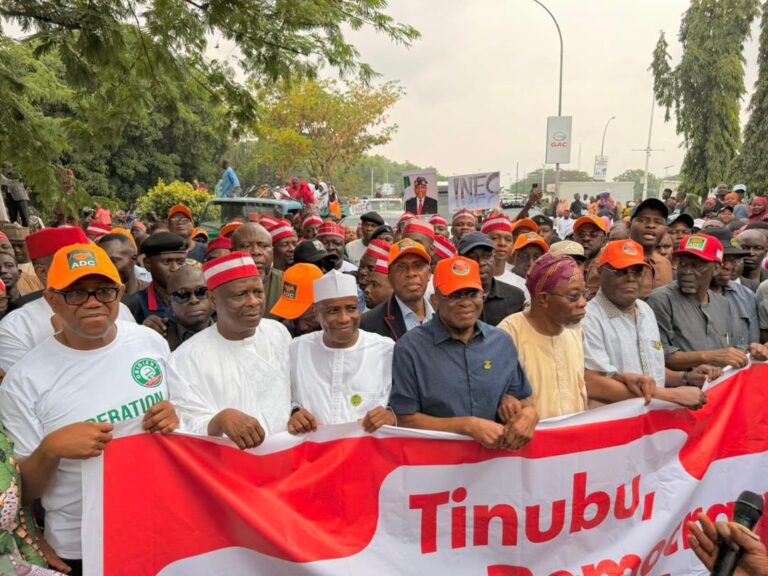
FORMER Vice President Atiku Abubakar, Labour Party’s 2023 presidential candidate Peter Obi, and former Kano State governor Rabiu Kwankwaso on Wednesday joined other opposition figures in Abuja to protest the derecognition of leadership of the African Democratic Congress (ADC) by the Independent National Electoral Commission (INEC)

The protesters, under the auspices of “Save Democracy in Nigeria”, staged peaceful protest against alleged bias by Nigeria’s electoral umpire.

The rally, which also featured former Senate President David Mark, former governors Rauf Aregbesola and Aminu Tambuwal, as well as other political actors, saw demonstrators holding banners with inscriptions such as “Tinubu, let our democracy breathe.”

Participants also gathered under what organisers tagged the “#OccupyINEC Protest,” converging around Maitama Roundabout in the Federal Capital Territory.

The procession included former Minister of Transportation Rotimi Amaechi, former Senator Dino Melaye, activist Aisha Yesufu, and several civil society figures.

In a post shared during the demonstration, Bolaji Abdullahi wrote: “Arise O Compatriots! We are outside!” signalling the commencement of the protest action.

Abubakar also issued a statement describing the action as a peaceful demonstration.

“Myself and other leaders of the ADC are peacefully protesting against the partisanship of the electoral umpire. Our patriotic stance is aimed at safeguarding our democracy and preventing the enthronement of a dictatorship,” he wrote.

Security presence was observed around key routes leading to Maitama, as protesters continued chanting and displaying placards calling for reforms within Nigeria’s electoral system and INEC)

The protest, which organisers said was aimed at “saving democracy,” was ongoing as of the time of filing this report.

Ahead of the protest, the ADC had announced that it would proceed with its planned congresses and national convention despite INEC’s stance. The party insisted that it had complied with all legal requirements, including issuing the mandatory 21-day notice for its internal activities.

Why protesters stormed INEC

On Wednesday, April 1, The ICIR reported INEC derecognising ADC leadership, including its chairman, Mark, and secretary, Aregbesola.

The commission took the decision after reviewing the judgment in Appeal No. CA/ABJ/145/2026, which arose from a leadership dispute within the party.

The commission explained that the decision meant it would no longer recognise Mark or his team as officials of the party pending the final determination of the case before another court – a Federal High Court in Abuja.

The dispute is between Mark and Nafiu Bala Gombe, who claimed he should lead the party as acting national chairman following the resignation of the previous leadership.

INEC’s decision means the ADC might not field candidates in the upcoming elections if the litigations are not concluded.

Consequently, Abubakar, Obi, Kwankwaso and other stalwarts of the party are accusing INEC of working to ensure the ruling All Progressives Congress (APC), which produced President Bola Tinubu, is the only major party that will participate in the polls.

Tinubu will be seeking re-election in 2027.

The ADC National Publicity Secretary, Bolaji Abdullahi, said during an interview on ARISE NEWS on Thursday, April 2, that the party had fulfilled all legal requirements, including notifying INEC ahead of its scheduled activities to enable it to participate in the 2027 polls.

“We have given INEC 21 days’ notice. They have accepted the notice. So, whether they come and continue with our congresses, we’ll continue with our convention,” Abdullahi said.

He further alleged that INEC had misinterpreted the Court of Appeal ruling and was being influenced to destabilise opposition parties ahead of the 2027 general elections, describing the situation as an attempt to undermine democracy.

INEC, however, has maintained that its position on the ADC leadership was guided by ongoing court proceedings and a directive to preserve the status quo pending judicial determination.

Redressing Nigeria’s healthcare and productivity deficits

0


By Adaobi OBIABUNMUO

It is no more news that Nigeria mostly consumes what it does not produce and mostly produces what it does not consume. As the country’s population outpaces the capacity of the economy to provide for everyone, it is important to reverse this trend. The question is how?

At the recent African Business Convention in Lagos on Tuesday, February 3 2026, Raymond Omachi, the Permanent Secretary of the Federal Ministry of Finance (who represented the Minister of Finance and Co-ordinating Minister of the Economy, Wale Edun), claimed the country was on the path to achieving sustainable growth of at least seven per-cent by 2027/28. He attributed this to structural reforms.

This may sound impressive but even a contingent, annual growth rate of seven per-cent of GDP will be inadequate to match or provide for Nigeria’s population growth rate of 3.2 per-cent. Nor can it be assumed that the benefits of this rate of growth, even if it were to materialise, will accrue in equity to everyone or everywhere in the country.

This fact calls attention to the need for the government to address the financing of essential public goods. Among these, healthcare provision ranks as the most critical. In 2023, the International Labour Organization (ILO) cautioned that health spending has long-run impact on economic growth and productivity.

To improve the health outcome for the population nearly 40 years ago, then Minister of Health, Professor Olikoye Ransome-Kuti, launched the first comprehensive National Health Policy in 1988. Then, less than 35% of Nigeria’s population had access to basic health services.

With its emphasis on Health for All, the World Health Organisation (WHO)’s Alma-Ata Declaration of 1978 identified primary health care as a basic human right and essential anchor for achieving Health for All. Nigeria anchored its National Health Policy on access to basic health as a right not charity. In Nigeria, this right is honoured in breach.

The Primary Health Centre (PHC) is the first level of contact of individuals, the family and community in any national health system. Under the stewardship of Professor Ransome-Kuti as Health Minister in 1992, the country established the National Primary Health Care Development Agency, NPHCDA.

Yet, the suffers a proliferation of non-existent or dilapidated PHC. According to the NPHCDA dashboard, there are 26,711 PHC facilities nation-wide. Katsina State has the highest with 1,724 while Bayelsa State has the least with 221.

Unfortunately, these exist mostly in name only. A 2023 report, for instance, reveals how the lives of residents are at risk from the dilapidated PHCs in Shongom LGA in Gombe State. This is not an isolated case. In 2024, the Guardian highlighted Oyo State, where PHCs gasp for breath. Nigerians die avoidably from pregnancy, violence, Malaria and other preventable diseases because of unavailability of functional PHCs.

According to the WHO, health standards are tools for the achievement of the highest quality of care possible. The WHO assesses national health systems in terms of six building blocks; service delivery, health workforce, health information systems, access to essential medicines, financing, and leadership/governance.

Nigeria scores abysmally in each of these elements. As we enter another election cycle, we must ask: how many politicians will truly prioritise the health of the people or disavow health tourism abroad for themselves and their families? Will healthcare feature at all in their manifestos?

Take service delivery, for instance. It is routine in Nigeria for patients to beg family and friends for medical bills or to resort to crowdfunding through social media. The indignity that comes from this is unspeakable. Quite often, death or disability results while the patients wait to mobilise charity.

Or consider health financing. The Abuja Declaration, adopted by the Heads of State and Government of the African Union in 2001, set a target of allocating at least 15% of annual budget to the health sector. WHO identifies Nigeria as one of 15 African countries “making insufficient progress” towards realizing this commitment.

In 2025, Nigeria’s federal government appropriated N2.48 trillion for health, about 5.18% of the budget. Unfortunately, the health ministry received only N36 million from the N218 billion capital allocation in the 2025 budget. In 2026, it is down to 5.15% with N3.5 trillion allocated to health sector from a N68.3 trillion budget.

In December 2023, the Tinubu administration launched the National Health Sector Renewal Investment Initiative and was able to secure $2.2B to renovate 17,000 PHCs, train 120,000 frontline health workers, and double national health insurance coverage within three years. In the second quarter of 2025, the President approved the establishment of 8,800 PHCs but, eleven months thereafter, there is no update on how much progress has been made. During the Ministerial Oversight Committee meeting, Health Minister, Prof. Ali Pate, disclosed that the government approved the disbursement of N32B to health facilities under the Basic Health Care Provision Fund and that the government was on its way to expanding the facilities by an additional 5,000.

Access to essential medicines is no different. The National Bureau of Statistics (NBS) in its 2023 National Health Facility Survey report revealed that only 34.3% of drugs are available in PHCs. This implies that 65.7% of essential medicines are not. With the high cost of medication attributed to the policy reforms by the government and the exit of some multinational pharmaceutical firms, the burden on citizens increased. To cushion the effects of inflation in the health sector, the President, in June 2024, signed an executive order suspending, tariffs, excise duties and Value Added Tax (VAT) on specified pharmaceutical machinery and raw materials. Almost two years after the executive order was signed, progress is unverifiable.

Nigeria’s health workforce and information systems are in disrepair. The problems include corruption, inadequate data for planning, and loss of professionals to trans-national migration. In April 2025, Prof. Ali Pate, disclosed that over 16,000 doctors left Nigeria in the last seven years. Nigeria’s government is unwilling and unable to invest in the retention of expensively trained healthcare professionals.

The state of labour unrest in the sector is a pointer to this fact. The National Association of Resident Doctors (NARD) has been in and out of labour disputes with the federal government, and the Joint Health Sector Unions (JOHESU) only suspended its 84 days strike on 6 February following a conciliation agreement with the federal government.

One of the reasons for the strikes is the failure of government to implement the adjusted Consolidated Health Salary Structure in line with the Consolidated Medical Salary Structure (ConMESS). While health professionals are starved of legitimate remuneration, politicians who should appropriate for their wellbeing profiteer from the patrimony.

Government has a clear and non-negotiable responsibility to improve health outcomes for its people and guarantee access to the safety, health, and overall well-being for all. It is clear that the improvement of Nigeria’s health sector is not a priority for government. With such demonstrable lack of interest in improving national productivity, the likelihood of meeting the national growth targets is low.

Government must ensure that existing health facilities meet stipulated minimum standards and are serviceable. Service conditions for healthcare professionals must be addressed, including adequate remuneration and paid leave. All loopholes in the system must be blocked, and public officials must be held accountable to the people they serve. Healthcare policy must return to political and policy salience. This alone can guarantee a population healthy enough to power economic growth.

Obiabunmuo is Programmes Manager at PRIMORG


US, Iran agree ceasefire deal, outline conditions

0

THE United States and Iran have agreed to a temporary ceasefire, pausing weeks of hostilities, but the truce is tied to a set of strict and contested conditions that could determine whether lasting peace is achieved.

The agreement, announced by the US President Donald Trump on Tuesday, April 6, provides for a two-week halt in military operations.

It followed more than a month of coordinated strikes involving the US and Israeli forces on Iranian targets, and rising tensions that threatened the Middle East.

According to Trump, Washington will suspend further attacks if Tehran ensures the immediate reopening of the Strait of Hormuz.

“Based on conversations with Prime Minister Shehbaz Sharif and Field Marshal Asim Munir, of Pakistan, and wherein they requested that I hold off the destructive force being sent tonight to Iran, and subject to the Islamic Republic of Iran agreeing to the complete, immediate, and safe opening of the Strait of Hormuz, I agree to suspend the bombing and attack of Iran for a period of two weeks,” Trump said in a statement.

The ICIR reports that the Strait of Hormuz is a critical global shipping route for oil and gas, majorly controlled by the Iranian government. It links the oil-rich Persian Gulf to global markets and a significant share of the world’s crude oil and liquefied natural gas passes through this narrow corridor daily, making it vital to global energy supply and prices.

Trump further said the decision to pause military action came after the US had “met and exceeded” its objectives and was close to a broader peace framework.

“This will be a double-sided ceasefire! The reason for doing so is that we have already met and exceeded all military objectives and are very far along with a definitive agreement concerning long-term peace with Iran, and peace in the Middle East.

“We received a 10-point proposal from Iran and believe it is a workable basis on which to negotiate. Almost all of the various points of past contention have been agreed to between the United States and Iran, but a two-week period will allow the agreement to be finalised and consummated.”

Iran, on its part, confirmed it would allow vessels to pass through the strategic waterway during the ceasefire period, with movements overseen by its military.

The breakthrough came after mediation efforts led by Shehbaz Sharif, who said the ceasefire took effect immediately and described it as a step toward long-term stability.

He has invited both sides to Islamabad for further negotiations aimed at reaching a permanent agreement.

“Both parties have displayed remarkable wisdom and understanding and have remained constructively engaged in furthering the cause of peace and stability. We earnestly hope, that the “Islamabad Talks” succeed in achieving sustainable peace and wish to share more good news in coming days,” he added.

Key conditions from both sides

Despite the ceasefire, both countries have outlined demands that highlight deep divisions.

Iran has proposed a 10-point framework as the basis for negotiations. The plan includes:

  • An end to military operations across Iran and its allied regions
  • Lifting US and international sanctions
  • Release of Iranian funds frozen abroad
  • Compensation for war-related damages
  • A commitment not to pursue nuclear weapons

Tehran has also insisted that any final agreement should be backed by a binding international resolution.

The US, however, is pushing its own broader set of conditions, reportedly including limits on Iran’s nuclear activities, restrictions on its military capabilities, and an end to support for regional armed groups.

Agreement does not include Lebanon – Netanyahu

Meanwhile, Israel’s Prime Minister Benjamin Netanyahu said Israel supports the temporary halt in strikes, provided Iran stops attacks and reopens the Strait of Hormuz.

However, he clarified that the ceasefire did not extend to military operations in Lebanon, where Israeli forces remained active against Hezbollah.

However, this contradicts earlier remarks by Pakistan president who said the truce would cover all fronts.

The ICIR reports that previous rounds of diplomacy between Washington and Tehran have collapsed amid renewed fighting.

Early signs among analysts suggested both sides still disagree on key terms particularly over sanctions, regional influence, and control of strategic routes.

War toll and how the conflict escalated

The latest crisis began after US-led strikes targeted senior Iranian military figures and strategic facilities, marking a sharp escalation that Tehran described as a direct act of war.

Both sides have since exchanged missile and air attacks, with casualties reported across Iran and parts of the wider Middle East.

Iranian authorities said scores of military personnel, including high-ranking officers, were killed in the strikes, alongside civilian casualties from subsequent bombardments.

Retaliatory attacks by Iran and allied groups have also led to deaths and injuries in Israel and other locations in the region, although exact figures remain contested.

The conflict has also spilled into neighbouring countries, particularly Lebanon, where fighting between Israeli forces and Iran-backed Hezbollah has killed more than a thousand people and displaced large populations.