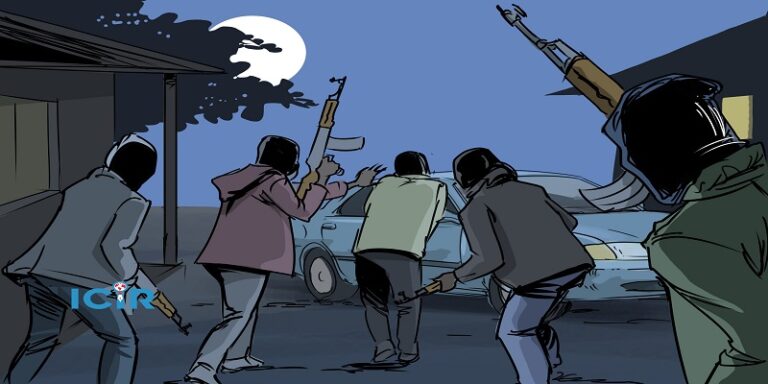
KIDNAPPERS of some students the University of Jos (UNIJOS), who were recently abducted, have ordered the victims to raise N50 million through social media campaigns.
According to a report by the Foundation of Investigative Journalism, FIJ, the kidnappers granted the students access to their phones to enable them interact with those who can help them raise the ransom.
The figure was also confirmed by The ICIR, in a post on X/Twitter via the account of one of the captives, Kingsley Aondona.
He also disclosed that the kidnappers have set a deadline for the students to raise the amount, threatening to start killing them today, Saturday, if their demands are not met.
“We were kidnapped on our way to Enugu for a convention. They are requesting N50 million for 20 of us medical students. Please, help us and we haven’t eaten for two days. They said they would start killing us tomorrow,” the handler tweeted.
The ICIR reported that the students who are from the University of Maiduguri and the University of Jos were travelling to Enugu for the annual meeting of the Federation of Catholic Medical and Dental Students (FECAMDS) when they were ambushed by gunmen around 5:30 p.m. in the Otukpo area of Benue State.
Confirming the incident to The ICIR in a chat on Friday, August 16, the spokesperson for the Benue State Police command, Catherine Anene, said an investigation had been launched into the incident.
The president of the Benue Medical Student Association, Samuel Oche, confirmed that he spoke with one of the kidnapped students on Friday.
“As of yesterday, we still had access to them. We tried to know if we could still contact them, and one of them confirmed to me on call that the kidnappers were asking for N50 million collectively,” Oche told FIJ on Saturday.
“Some of the abductees were chatting with us right from in there. These are some of the hints that we have that are supposed to enable security agencies to make use of to track these people and get them out for us rather than donating money,” he added.
Benue has been one of the epicentres of conflict and insecurity in Nigeria in recent years.
While armed herdsmen are on the rampage in one part of the state, local bandits are wreaking havoc in the other.
Students abductions drag
Abduction of students has become a source of concern in Nigeria, where the number of out-of-school children is very high.
In 2023, The ICIRreported that Nigeria had 19.7 million out-of-school children and was the country globally with the third highest number of children deprived of education according to the United Nations Educational Scientific and Cultural Organization (UNESCO) 2020 Model Estimates.
On Thursday, March 7, 137 students and their principal were reportedly abducted by terrorists from the LEA Primary School in Kuriga, a community within the Chikun Local Government Area of Kaduna State.
The incident generated public outcry, with several leaders, including President Bola Tinubu, calling for their immediate release.
Abduction of schoolchildren became common in Nigeria, especially in the North, where nearly 300 students were abducted by terrorists from a school in Chibok, Borno State, in 2014.
Findings by The ICIRshow that bandits and terrorist groups have disrupted the Nigerian education system, kidnapping over 1,000 students in the last decade.
Within the past three administrations, the abduction of school children has generated millions in ransom for kidnappers, leaving citizens with no hope of a possible end to the menace.
Among the tertiary institutions where students have been whisked away are: the Federal University Dutsin Ma, Katsina State, in 2023; Federal University, Gusau, in Zamfara State, in 2022, and the Federal College of Forestry Mechanisation, Afaka, in 2021.
THE Federal Government has warned that it will revoke the licenses of oil marketers found hoarding premium motor spirit (PMS) amid the ongoing scarcity in Abuja and several other states in the country.
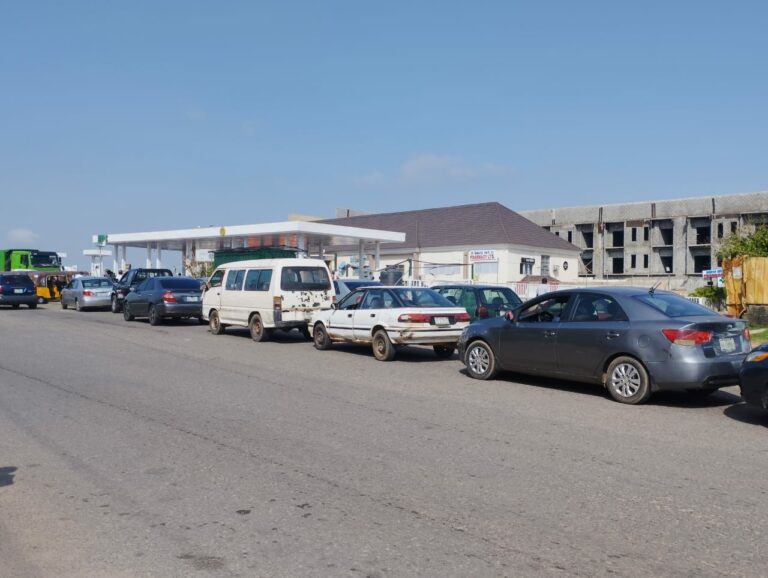
Several states, particularly in the north, have been experiencing prolonged petrol scarcity, leading many stations to shut down due to lack of supply.
The federal government, through the Nigerian Midstream and Downstream Petroleum Regulatory Authority (NMDPRA), has warned oil marketers that stations hoarding petrol for sale to black marketers in jerry cans will have their licenses revoked.
During an inspection tour in Abuja, the regulator released a video featuring Ogbugo Ukoha, NMDPRA’s Executive Director of Distribution Systems, Storage, and Retailing Infrastructure, delivering a warning to fuel marketers.
“You need to take this (warning) very seriously. If you need security reinforcements, speak to your management,” Ukoha stated.
Aside the video clip, the downstream regulator announced on its X handle that it has declared a crackdown on the illegal sale of petroleum products.
“NMDPRA embarks on a war against the illegal sale of petroleum products especially PMS in jerry cans. Filling stations are advised to desist from servicing illegal peddlers, failure to do so would result in the suspension of retail licenses,” the statement read.
Earlier this month, The ICIRreports that the Independent Petroleum Marketers Association of Nigeria (IPMAN) claimed the hunger protest was responsible for the resurgence of long fuel queues in major cities across the country.
Fuel queues started to build up in some filling stations in the Federal Capital Territory (FCT) on Friday, July 26. Motorists were seen engaging in panic buying, as most stations closed shops while others hiked their pump prices.
The Nigerian National Petroleum Company Limited (NNPCL) blamed it on a “hitch in the discharge operations of a couple of vessels,” The ICIRreported on July 27.
THE National Judicial Council (NJC) is set to investigate allegations of misconduct involving 27 judges nationwide.
To facilitate this, the council has established four committees tasked with conducting the investigation. This decision was among the key outcomes of the NJC’s meeting held in Abuja on Wednesday August 14, and Thursday, 15 .
The legal body, in a statement signed by its Director of Information, Soji Oye, on Friday, August 16, said the council also chose to dismiss petitions filed against the President of the Court of Appeal, Justice Monica Dongban-Mensem, the Chief Judge of the Federal High Court, Justice John Tsoho, and other judicial officers from both the Court of Appeal and High Courts.
However, the NJC issued a letter of advice to Justice O. M. Olagunju of the Oyo State High Court, urging caution and prudence in his actions as a judicial officer, even in difficult situations.
In its statement, the NJC explained that the letter of advice to Justice O. M. Olagunju was issued after the council reviewed its committee’s report.
The committee had been tasked with inviting the judge to defend his inappropriate language used in a letter to the Chief Justice of Nigeria, Justice Kayode Ariwoola, in which he challenged the council’s decision regarding its policy direction on the appointment of the President of the Customary Court of Appeal, Oyo State.
“Council, at the meeting, considered the report of its preliminary complaints assessment committee on 22 petitions written against 27 judicial officers of the federal and state high courts and decided to empanel four committees to investigate allegations in the petitions that were found meritorious.
“The remaining 18 petitions were discountenanced for lacking merit, abandoned, or being sub-judice,” part of the statement read.
The statement noted that the dismissed petitions were against Hon. Justice Monica B. Dongban-Mensem, CFR, President of the Court of Appeal; Hon. Justices E. O. Williams Dawodu, B. A. Georgewill, Yargata Timpar, S. D. Samchi, Aisha B. Aliyu, A. A. Aderibigbe, M. L. Shuaibu, H. A. O. Abiru, and Abdulazeez Waziri (all of the Court of Appeal).
Others include Hon. Justice J. T. Tsoho, OFR, Chief Judge of the Federal High Court; Hon. Justices Z. B. Abubakar, J. K. Omotosho, Sunday B. Onu, all of the Federal High Court; Justice Okon E. Abang during his tenure at the Federal High Court; Hon. Justice Kayode Agunloye of the FCT High Court; Hon. Justice Babagana Karumi of the High Court of Borno State; Hon. Justice Maimuna A. Abubakar of the High Court of Niger State; Hon. Justice A. A. Aderibigbe of Osun State High Court; and Hon. Justice Aisha B. Aliyu of Nasarawa State High Court.
It further noted that Petitions written against Justices Ayodele Oyeyemi Oyebisi, Amaobi L. Agara, Amina Garba, Bello M. Tukur, Omeka Elekwa and O. A. Adetujoye, who served at Asaba and Plateau National and State Assembly Election Tribunal Panels, were also discountenanced.
The council reviewed its performance evaluation report for judicial officers of superior courts and decided to issue letters of commendation, appreciation, no submission, and non-performance to 215 judges across the country.
Additionally, five judges were placed on a pre-sanction watch list for poor performance and will face potential sanctions if they do not show improvement.
The ICIR reports that the NJC had sanctioned judges in the country in the past, including three judges in 2021 who faced sack after issuing conflicting orders.
THE National Youth Service Corps (NYSC) has demobilised 54 persons who claimed to be graduates of the University of Calabar (UNICAL).
The decision follows a detailed verification process by the NYSC, which uncovered significant discrepancies in the academic records of the affected individuals.
According to a statement by the director of Information and Public Relations, Eddy Megwa, on Friday night, August 17, the move is to prevent the award of certificates of national service to unqualified persons.
The director general of the NYSC, Brigadier-General Yusha’u Ahmed in the statement, noted that the fake graduates would be prosecuted accordingly.
He further stated that out of the 54 individuals, 19 had registered online for mobilisation but have since been barred from participating in the service.
He added that the NYSC did not issue certificates of national service to four other culprits.
“The Vice-Chancellor of the University of Calabar came here to report that she observed some names appeared on the institution’s list and they ought not to have been there. She checked the list the school gave us and I told her that their certificates would be invalidated. I give kudos to her.
“Previously, a bread seller was mobilised on the graduation list from the same institution. There are bad eggs in many places that generate matriculation numbers and courses for their candidates”, the DG said.
The NYSC boss reiterated the scheme’s commitment to transparency in the conduct of the national service programme, assuring it would intensify its collaboration with heads of corp producing institutions and relevant stakeholders in the country to stop the menace.
Ahmed emphasised that any failure in the mobilisation process from any school falls on the integrity of the management of such an institution, stating: “Those who are responsible for imputing the data of graduates should be people of integrity.”
He called on all employers of labour in the country to verify the authenticity of certificates being presented for job placement from the NYSC.
The ICIR reports that this was not the first time the NYSC has demobilised or invalidated certificates of individuals due to irregularities of UNICAL graduates.
On Monday, August 12, the scheme invalidated the certificates of 101 graduates fraudulently mobilised by the same university during the 2021, 2022 and 2023 service years.
This action, according to a statement by Megwa, followed the discovery that 99 of the said graduates and two others on exemption were fraudulently mobilised despite being ineligible for the scheme.
“Management of the NYSC hereby restates its strong commitment to ensuring that unqualified locally and foreign-trained Nigerian youths, especially those purported to have graduated from unaccredited universities, are not recognised while only qualified persons are issued with certificates of national service.”
“Arising from the above, the certificates of national service of the under-listed persons have been invalidated forthwith by the NYSC management.”
GOVERNOR Mohammed Umaru Bago’s administration pledged to transform Niger state’s agricultural sector, promising subsidies and support to all farmers. But for people with disabilities who are into farming, these promises are far from reality. They continue to suffer exclusion from vital aids, stigmatisation and logistical barriers. Justina Asishana who spoke to farmers living with disabilities in Kontagora, Gbako, Lavun and Wushishi LGAs reports that these farmers are neglected and denied government support in a region heavily reliant on agriculture for survival.
On a small farm in Gubata community, Susannah Ndakogi, a farmer since her youth, tends to her groundnut and millet crops. Her life changed drastically a decade ago after an accident on the Mokwa-Bida Road led to the amputation of her left hand. With resilience, she continues farming but now relies heavily on hired help for tasks she once managed alone. The promise of a new focus on agriculture by governor Mohammed Umaru Bago’s administration had brought hope for her and others.
However, reality betrayed them as their dreams of equitable access to agricultural resources have continually revealed a systemic oversight that leaves farmers with disabilities behind.
“I really thought we would have a different experience this time but it seems as if it would still remain the same. Yes, we heard that there was a ceremony to flag off this distribution, but we did not hear or know when it got to our local government or the distributors who would be selling it”, she said.
Sussanah who cultivates groundnut, guinea corn, millet and melon on her one-hectare farm, can only plant what she and her family of four would eat without going to buy these produce in the market. Sometimes when the yield is good, she had little to sell in order to buy some essential she needs at home.
Susannah Ndakogi, a farmer with disability in Gbako.
“Since my accident, I cannot work like before. Before then, I could do everything on my farm; from weeding, clearing to planting and harvesting, but now it is different.
“I can only get people, show them what i need to be done and watch to ensure they are doing the work.”
Although she needs labourers, she often does not have the money to hire them and in other cases, when she plants, she does not get the expected yield because there are no agricultural inputs to boost the crops.
Cost of labour climbs
Sussanah said for the 2024 wet season farming, the labourers are charging between N30,000 to N35,000 unlike the past where she paid between N10,000 to N20,000 whenever she has the resources.
Her predicament is shared by many disabled farmers across Niger state who feel excluded from government agricultural support programmes.
A visually impaired farmer in Kontagora, Hafsatu Sani, has continued cultivating maize and guinea corn on her one-hectare farm with the help of her son, Ahmed despite never benefiting from state subsidies.
“I cannot do without farming which I have been into for the past 25 years. Before I became blind, I was farming and even when I lost my sight I continued farming.
“I have not benefited from any of the state government’s agricultural interventions, whether subsidised or free. Yes, I hear that they share these inputs.
“We hear that they will bring it to the local government area but when it comes, we do not know when and they just share it among themselves.”
Despite the Niger state government’s claims of providing substantial support to farmers through subsidised inputs which include fertiliser, herbicides, insecticides and seedlings and machinery which include power tillers, knapsacks, tractors, threshers, farmers with disabilities like Susannah and Hafsatu are left out.
In July 2023, Bago flagged off the 2023 wet season sales and distribution of subsidised fertilisers and other agricultural inputs to farmers across the state. 180,000 bags of fertilisers were expected to be sold at a 20 per cent subsidy.
Each bag of the commodity sold at N18,000 instead of N24,000 or N30,000 as it was sold then. In January 2024, the governor also held the second phase of the distribution of agricultural inputs and farm tools to farmers and civil servants who were interested in going into farming.
The previous governments claimed to have spent millions of naira on subsidised agricultural inputs and machinery but while considerations are given to abled people, these initiatives have hardly reached the most vulnerable farmers.
There is no special provision or consideration for farmers with disabilities in Niger state. This much was confirmed by the permanent secretary Ministry of Agriculture, Mathew Ahmed, who said there is no specific policy targeted at them.
However, he promised that the state government was planning to make provisions for them in its agricultural programmes and policies.
The neglected workforce
In Nigeria, where over 75 per cent of households engage in agriculture, people with disabilities (PWDs) are often overlooked. The World Health Organization (WHO) estimates that one billion people are living with disabilities in low-and middle-income countries, with 25 million Nigerians among and about 3.5 million experiencing significant difficulties in daily functioning.
Many of these individuals rely on agriculture for their livelihood – though there is no available data to state the livelihood of people living with disabilities doing farming in Nigeria. This is common in northern Nigeria where most of the households are involved in agriculture and related activities.
Dearth of data
The Niger state coordinator of the Small Holder Women Farmers Association of Nigeria (SWOFON), Grace Disa, said there is no available data of PWDs in agriculture in the state but stated that the ministry of agriculture has agreed to conduct a survey and compile data for farmers with PWDs to ensure they benefit from the state government’s programmes.
The executive director of the Quality Life for Persons with Special Needs Foundation, Abdulrahman Awal also confirmed that there is no available data for people with disabilities in the state in any sector including agriculture.
He said that when they need to get any person with disability or group, they go to the communities, make queries before they are directed to the people they need.
A report by LINKS, an organisation funded by the UK’s Foreign, Commonwealth and Development Office, highlights that many PWDs are involved in agriculture and agro-processing but face significant barriers.
More than 90 per cent of PWDs are not part of any agricultural cooperative, limiting their access to networks, information and opportunities, such as benefiting from subsidised farm inputs and machinery.
We beg to buy inputs for our farms
A leader of the People With Disability in Kontagora, Ibrahim Magaji, described how they often resort to begging to afford agricultural inputs and labour as most often, their children are not available to work on the farm.
“Most times, our children go out to work so that they will get some money and we need to get labourers who will work on our farms. This is why we have to get labourers and pay them. Before now, they charged between N10,000 to N15,000 but now, they are saying it is from N20,000 to N30,000. So when we beg; I use the money and pay them.
“Though we do not get much from the farm for financial purposes, what we harvest is usually enough for us to eat as a family for a long while. If you know the price of food in the market now, you will know that having food in our houses is very important for us for now.”
A rice farmer living with disablity in the Wushishi LGA, Murijanata Abdullahi, said that her challenge is having money to pay her labourers and buy inputs for her farming. This, she said, has made her resort to begging to bridge this gap.
“Sometimes, I beg to pay for what we do not have in the farm, especially machinery, seedlings and fertiliser. My children sometimes help but they cannot finish clearing and planting on the land which is why we need extra hands.”
Systemic exclusion and stigmatisation
Stigmatisation and systemic barriers prevent PWDs from accessing government support as the public still classifies them as beggars even when they are not.
Attempts to access subsidised agricultural inputs in some of the local governments are met with firm opposition as they are often put aside and end up not getting anything.
This development makes them weary of going to the distribution centres or locations to avoid harassment and humiliation.
Magaji, who farms maize and guinea corn, said that he often goes to the Agricultural Development Programme (ADP) office when he hears that they are sharing the agricultural input but people tend to see them as beggars and push them aside.
“The last distribution, I heard they brought it and I mobilised some of my executives so that we can go there and see what we can access for our members but when we got there, everyone started driving us away saying it was not a place for beggars.
When we told them that we were farmers and also came to benefit from it, they told us to stay in a corner. They never recognised us as farmers.
“They even mocked at us that those that are able do not get it despite their struggles, then what hope do we have of getting it. When we returned there the next day, they chased us away”, Magaji stated.
Similar sentiments are echoed by Mohammed Kutigi, the chairman of the Association of People with Disability in Lavun. He emphasised that they are rarely allowed to register to benefit from such inputs despite efforts they put in, adding that this has made them stop going to the grain distribution centres.
Chairman PWD in Lavun LGA, Mohammed Kutigi.
Larai Maidawa in Wushishi, Jonathan Nuhu in Gbako, and Dagaci Ladan in Lavun LGAs said they are not even aware of where and when the distribution takes place, not to talk about going there to get it.
Dagaci Ladan said, “In Doko here, we do not even know where they share it. Yes, often, we see them carrying it from somewhere but we do not get the information as to when and where the distribution takes place. It seems it is only those high-class people who get the information.”
“I have never benefited from government-subsidised inputs. I do not even hear about it, talk less of getting it”, Jonathan Nuhu, a farmer living with disability in Gbako lamented.
For Larai Maidawa, she knows when they announce the grains but would not go there because of fear. “I don’t know if I will be given or answered if i go there, so i do not even stop there at all,” she stated.
Rising costs and persistent challenges
The soaring costs of agricultural inputs like seedlings, fertilisers, herbicides, and insecticides have exacerbated the challenges faced by disabled farmers.
Labourers who charged between N10,000 to N15,000 in the past now charge between N20,000 to N40,000, depending on the size of the farm and the type of work that would be done.
Fertiliser which was between N25,000 to N30,000 per bag in January now costs between N43,000 to N50,000. A bag of seedlings which cost N30,000 earlier in the year is now sold between N35,000 to N50,000.
A rice and maize farmer of living with disability in Lavun, said he and other farmers usually hire a tractor from Jebba which normally takes N30,000 in the past years but for the tilling of the ground for farming this season, the owner of the tractor has told them that the rate is now N150,000. “We were told that the reason for the high price is due to the increase in fuel price which the tractor would use as transportation to Lavun to carry out the farming activity.”
Manure to the rescue
A rice farmer in Wushishi, Murijanata Abdullahi, has resorted to using manure instead of expensive fertilisers and depends on her children’s help to minimise labour costs. For seeds, she does not buy because she saves some of her harvested seeds for planting.
She said, “As of last year, I brought fertiliser N1,000 per mudu (a measure) but now, it is N1,500. I don’t buy much because of the money. Other times, I send my children to find a way to get manure which we use to augment.”
Calls for inclusive support
Farmers with disabilities who spoke said their needs to include fertiliser, new improved seeds, insecticides, herbicides, pumping machines, knapsacks for spraying and funds to pay for labourers.
These farmers are calling for direct and inclusive support from the government. They suggest that resources be allocated directly to their associations to ensure fair distribution.
The chairman of the persons with disability in Kontagora said that the needs of his members who are into farming are very similar, adding that if the government wants to help, they will need to meet them as groups so that they can benefit rather than giving it to middlemen who would not allow them access.
“As the chairman, I know all the people with disabilities and if the government can send in these inputs to the association, we will ensure that our members get them.
“The government should come to us as a group. We are real farmers and our disability is not a disadvantage. If these inputs are available for us, we will upgrade our farming. The government needs to reach out to us directly,” he said.
Kutigi also alluded to the same solution for them. “We hear of these distributions, but they do not come to us. If the government is sincere, they should give it to us as groups so that we will share it amongst ourselves.
“The abled people will not allow us to access these things. They should have our package differently so that we won’t go and struggle with others,” he stated.
We would make provision for them – Niger government
The permanent secretary ministry of Agriculture, Mathew Ahmed, acknowledged past oversights, saying that disabled farmers have not been beneficiaries of government-subsidised agricultural inputs or favoured by policies in the past because they were not recognised.
“The government had not been looking into how they should be assisted. The previous government probably still had this idea that people with disabilities would only want to beg”, he said.
Ahmed, however, expressed the current administration’s commitment to inclusive policies, adding that it is working to involve people living with disabilities, who are into agriculture and those who are not.
A person with hearing and speech impairment in Lavun LGA.
He said plans are underway to take their census and provide them with free and subsidised inputs through their association to enable them engage in large scale farming.
“The government is also looking at how to provide some of them with processing machines like rice mills so that some of them cant go into in processing.
“We are also making plans to provide them with simple friendly equipment that they can use both for farming and processing agricultural produce.”
Ahmed further acknowledged the difficulties faced by the people with disabilities who are into farming, saying that this administration intends to ensure everyone benefits from their programmes and policies.
The managing director of the Niger State Agricultural and Mechanisation Development Agency (NAMDA), Muhammad Ali Baba said that the agency, whose mandate it is to enhance the capacity of the small holder farmers in the councils, has a programme for rural farmers which is cluster-based.
According to him there would be no discrimination on who is able or with disability. He urged the farmers with disability to organise themselves into groups to benefit from government programs and interventions.
“We will not discriminate among anyone. If they are in groups or clusters, they will equitably get what we are sharing with them,” he said.
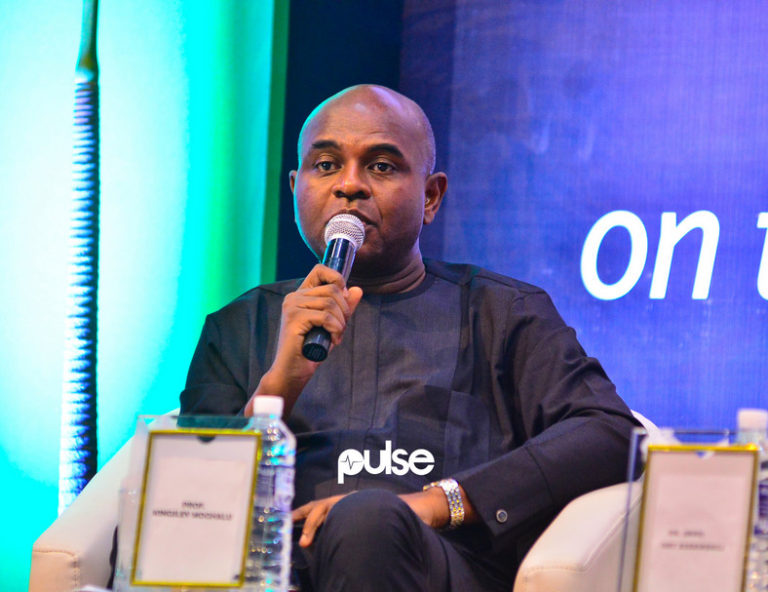
FORMER Deputy Governor of the Central Bank of Nigeria, Kingsley Moghalu, has criticised Africa’s focus on Gross Domestic Product (GDP) growth, describing it as a “misguided worship” that has hindered the continent’s development.
In a post on Saturday via his X handle, Moghalu, a former presidential candidate, argued that true development must start with an African-centric mindset, that places emphasis on education and skills for productivity.
He also called for a shift towards reliable power infrastructure, and the integration of scientific innovations into the marketplace.
He stressed the need for accessible capital to support Small and Medium Enterprises (SMEs) and Micro, Small and Medium Enterprises(MSME), through microfinance, without direct central bank funding.
“A misguided worship at the altar of GDP growth has stunted Africa’s development. The first business of African development is developing an endogenous mindset (worldview) of African development.
“Second, a strategy for overcoming poverty anchored on effective education and skills for productivity.
“Third, ensure the availability of electric power infrastructure, and fourth, channel scientific inventions and innovations into the marketplace through mass production.
Also, ensure access to what I call “pipeline capital” to the bottom of the pyramid – SMEs, MSMEs etc at affordable interest rates through microfinance banks (task for central banks, but NOT central banks themselves directly funding ),” Moghalu wrote.
His perspective came amid the recent fall of Nigeria’s Gross Domestic Product (GDP) dropping to 2.98 per cent in real terms.
The 2.98 per cent is lesser than 6 per cent annual growth promised by President Bola Tinubu at his inauguration on May 29, 2023.
According to the latest data by the National Bureau of Statistics (NBS), although the GDP is higher than the 2.31 per cent recorded in the first quarter of 2023, it is lower than the fourth quarter of 2023 growth of 3.46 per cent.
NBS said that the performance of the GDP in the first quarter of 2024 was driven mainly by the services sector, which recorded a growth of 4.32 per cent and contributed 58.04 per cent to the aggregate GDP.
Findings from the report showed that crop production, trade, and information and communication services contributed almost 50 per cent to the GDP than other sectors.
The ICIRreported the promise of the president, while giving his inaugural speech on May 29, to increase Nigeria’s GDP by six per cent annually.
Experts had toldThe ICIR that President Bola Tinubu was unlikely to achieve his target of increasing the country’s GDP rate to six per cent annually.
Regarding real GDP per capita, The ICIR calculation shows that each Nigerian contribution to the GDP growth is around N12.5 over the projected 228.54 million people. The decrease in the GDP might not be unconnected to the rising inflation rate which climbed to 33.69 per cent in April from 33.20 per cent in March 2024.
LABOUR Party’s presidential candidate in the 2023 general election, Peter Obi, has raised concerns over a recent comment by the Executive Secretary of the National Universities Commission’s (NUC), Chris Maiyaki, that producing more PhD holders could address the declining standards in Nigeria’s education system.
Obi in a post, on Friday, August 16, via his X handle, said Maiyaki solution overlooked several obstacles militating against the nation’s education system.
Maiyaki, on Tuesday, August 13, during the 2024 Registry Lecture at Babcock University, Ilishan, Ogun State, said there had been a decline in the nation’s university system over the past three decades.
The NUC boss also identified poor governance, academic corruption and inadequate funding as some of the critical issues affecting tertiary education in Nigeria.
According to him, Nigerian graduates were once celebrated both nationally and globally, but the current system is marred with social vices, manpower shortages, economic pressures and incessant strikes.
“Some of these are also attributed to poor governance systems and also sometimes the broken family system.We have fallen short in procuring state-of-the-art museum modern current journals, books, and laboratory equipment in some cases.
“We need more PhDs; we need to stabilise; the system has suffered a lot of instability due to a combination of factors. We need sustained constant funding and so many, things to be done,” he said.
Responding to his comments, Obi said while the NUC suggested an increase in PhD holders to address educational challenges, the process of obtaining a PhD in Nigeria had been fraught with obstacles.
He further expressed concerns over the existing disparities in the country’s educational and economic systems, highlighting that while a PhD holder earns around N1.8 million annually, it would take them over 85 years of saving everything they earn to afford the N160 million SUVs provided to lawmakers from public funds.
He noted that the wage gap weakened the zeal to acquire more education and undermined the value of advanced degrees.
“According to the Executive Secretary, the situation requires the production of more PhD holders to address these issues. However, the Executive Secretary’s solution overlooks several obstacles, such as the unnecessarily prolonged time it takes to obtain a PhD in Nigeria and the frustrating disparity between wages and the level of academic attainment in the country.
“Though deeply troubling, I wonder how he expects an increase in PhD holders when it takes a minimum of 10 years of dedicated study after secondary school to earn a PhD.
“If fortunate, one might be employed as a Lecturer Grade 2 with a monthly salary of around ₦150,000, often paid irregularly, totaling N1,800,000 annually. In stark contrast, our legislators, whose required educational qualification is merely a secondary school certificate, receive a monthly salary of ₦21 million, which is more than 10 years salary of a PhD holder.
“This disparity is the root of the problem. Additionally, legislators are provided with SUVs worth ₦160 million from the public purse. For a PhD holder to afford such a vehicle, it would take over 85 years of saving every kobo earned,” Obi wrote.
However, the former Anambra State governor called for reforms to shift from a consumption-driven to a production-oriented society, prioritising education and innovation.
By prioritising investment in education and innovation, the nation could create a system that celebrates knowledge, expertise, and dedication, rather than political positions and influence.
He such reforms were crucial for restoring Nigeria’s prestige in global education rankings and elevating the quality of its higher education system.
THE Minister of Aviation and Aerospace Development, Festus Keyamo, has appealed to aviation unions to shelve their proposed nationwide strike against the Federal government’s 50 per cent deduction from the internal revenues of agencies in the sector.
Keyamo’s statement was contained in a statement he shared on his X handle on Friday, August 16.
He said, “We appeal to all workers to remain calm and maintain industrial peace while the government is working assiduously towards amicably resolving the matter.”
Workers in the aviation sector have threatened to embark on a one-day strike to protest against the federal government’s decision on the deduction of 50 per cent of internal revenues from agencies in the sector.
The proposed strike action was slated for August 21, according to a memo reportedly signed by the leadership of five aviation unions.
The unions are the National Union of Air Transport Employees (NUATE), Air Transport Services Senior Staff Association of Nigeria (ATSSSAN), Association of Nigeria Aviation Professionals (ANAP), National Association of Aircraft Pilots and Engineers (NAAPE), and Amalgamated Union of Public Corporation Civil Service Technical and Recreation Services Employees (AUPCTRE).
According to the unions, the warning strike will serve as a protest to demand that the government put a stop to the 50 per cent deduction from the revenues generated by the Nigeria Civil Aviation Authority (NCAA) and Federal Airports Authority of Nigeria (FAAN).
The other agencies from which the federal government deducts 50 per cent of their internal revenues are the Nigeria College of Aviation Technology (NCAT), Nigerian Meteorological Agency (NIMET) and Nigerian Safety Investigation Bureau (NSIB).
Addressing the concern in his statement on Friday, Keyamo said the call to action by the workers’ unions to protest the federal government’s action had been noted.
“The concerns of the workers, especially regarding the negative impact these deductions have on investment, maintenance of critical infrastructure, and overall operations of the agencies, have been duly noted.
“We understand the significance of the issues raised and recognise the vital role that our aviation workforce plays in ensuring the safety, efficiency, and smooth operation of the industry,” he said.
Keyamo said President Bola Tinubu was concerned about the matter, adding that the Aviation Ministry would address the challenges in a manner that ensures the continued viability and sustainability of the sector.
“The Honourable Minister wishes to assure the workers’ unions and other stakeholders that His Excellency, President Bola Ahmed Tinubu is very concerned about the improvement of the aviation sector and will give their demands due consideration to find a lasting solution that balances both the fiscal needs of the government and the operational requirements of the aviation agencies,” he added.
The ICIR reports that NAMA has earlier in May called for a reversal of the 50 per cent deduction in its revenue.
The agency said it was facing significant financial constraints due to the deduction.
Its Managing Director, Farouk Umar, had said the 50 per cent revenue deduction was hindering the agency’s ability to maintain and upgrade critical infrastructure.
In an exclusive interview with The ICIR, a former secretary-general of NUATE and retired NAMA staff member, Olayinka Abioye, criticised the deduction from 40 per cent to 50 per cent and argued that it was not in any way justifiable.
His argument was that aviation is a service provider which should be “run effectively, efficiently, and expeditiously.”
GUNMEN have kidnapped over 20 medical and dental students in Benue State.
A house officer was also among those kidnapped.
The students who are from the University of Maiduguri and the University of Jos were travelling to Enugu for the annual meeting of the Federation of Catholic Medical and Dental Students (FECAMDS) before they were ambushed by gunmen around 5:30 p.m. in the Otukpo area of the state.
Confirming the incident to The ICIR in a chat on Friday, August 16, the spokesperson for the Benue State Police Command, Catherine Anene, said an investigation had been launched into the abduction.
“A report was received that about 20 medical students from Jos were on their way from Jos to Enugu for a conference and were kidnapped after Otukpo. An investigation is ongoing,” she stated.
Reacting to the development, an X user with the handle,@__Inyene wrote, “We are living in a country where nobody is shocked when people get kidnapped. Over 20+ medical and dental doctors/students were kidnapped, but the country is moving on. Just another day. Yet some ministers are talking about economics. Wicked people.”
Another X user @Medzonetv posted, “Please, let’s pray for the safe release of our colleagues from Jos and Maiduguri, who were kidnapped in Benue State yesterday. Twenty of our colleagues – 1 house officer and 19 students – were kidnapped. Please include them in your prayers and daily supplications when you pray today.”
An X account, @Nigerian_Doctor, that draws attention to medical problems in Nigeria also shared the information and appealed to security agencies to take immediate action to save the students and alleviate the suffering of their relatives.
Benue has been one of the epicentres of conflict and insecurity in Nigeria in recent years.
While armed herdsmen are on the rampage in one part of the state, local bandits are wreaking havoc in the other.
Just last week, gunmen reportedly killed many residents of the Ayati community in the Ukum Local Government Area (LGA) of the state.
According to reports, not less than 50 people were killed in the attack on Thursday, August 8.
Confirming the incident in a chat with The ICIR on Friday, August 9, a leader in the community, Shima Ayati, said that over 50 corpses were recovered from the village as of Friday morning.
He blamed the state local security unit, Benue Community Volunteer Guards, for leaving the residents unprotected after starting a fight with ‘herders’.
He added that some victims with serious injuries were taken to the hospital for medical attention.
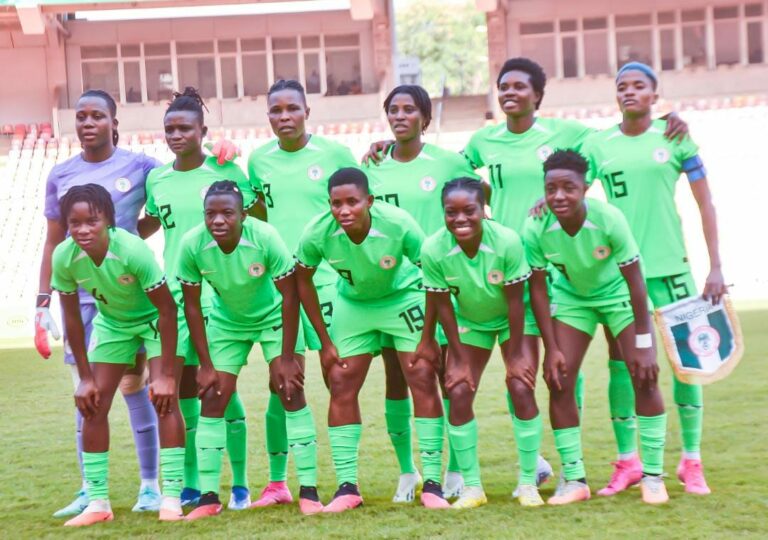
THE Nigerian senior female football team, Super Falcons, has retained its 36th position in latest Fédération Internationale de Football Association (FIFA) ranking.
According to the ranking released by FIFA on Friday, August 16, the team, while maintaining its spot in the world also retained its position as the African best team.
This comes despite the team’s poor performance at the just-concluded Women’s Summer Olympics football event in Paris, where it faced three consecutive defeats, failing to make it to the quarterfinals.
The Super Falcons lost their opening match 1-0 to Brazil, another 1-0 defeat to Spain and a 3-1 defeat to Japan in the final group game, ending their Olympic campaign at the bottom of Group C.
Closely behind the Super Falcons as the top-ranked African team is the Banyana Banyana of South Africa. Morocco, Zambia and Ghana also made Africa’s top five female teams.
Globally, South Africa is placed at the 50th position, Morocco 59th, Zambia occupies the 62nd and Ghana at the 66th.
Meanwhile, the top 10 female football teams in the world, according to the latest ranking by FIFA include, the United States of America, England, Spain, Germany, Sweden, Canada, Japan, Brazil, Korea DPR and France.