Home Blog Page 557

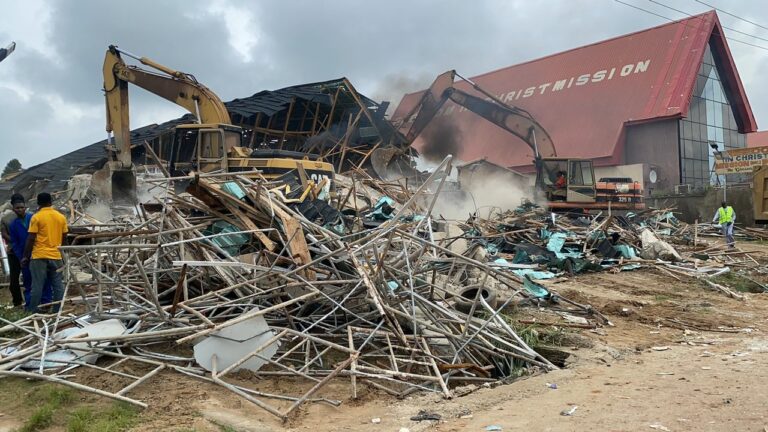
Two rescued in Abuja building collapse

0

TWO persons have reportedly been rescued from a collapsed building at the Gudu District in Abuja, the Federal Capital Territory (FCT).

The collapsed building is located at Close 10, Drive 5, Second Gate at the Prince and Princess Estate, Gudu in the nation’s capital.

This was disclosed in a statement by the Head of Public Affairs at the FCT Emergency Management Department (FEMD), Nkechi Isa, on Saturday, June 20.

Isa noted that Acting Director General of FEMD, Florence Wenegieme, confirmed that every person working on the building left the premises as soon as they noticed signs that the building was about to collapse.

Nevertheless, the debris from the fallen structure trapped two people inside the attached building within the premises.

“The team worked tirelessly to rescue the trapped occupants, eventually cutting through the window protectors to reach them,she noted.

“We are grateful that we were able to rescue the two persons alive,she said.

According to her, the trapped occupants were rescued by the FEMD search and rescue team, who cut through the window protectors.

Meanwhile, she appealed to builders and other stakeholders to always follow the building codes.

Additionally, she directed developers to constantly verify the integrity of old buildings before beginning restorations.

Isa emphasised the significance of hiring professionals and providing protective gear to ensure worker safety on building sites.

She pleaded with developers to guarantee insurance for the structure and the labourers on site.

The ICIR reported in August 2023 that two people died in a building collapse at Lagos Street in the Garki area of the FCT.

Thirty-five others were injured in the collapse and were taken to hospitals around the area.

The incident occurred at about 11.30 pm on Wednesday, August 23, according to Isah.

Minister of the FCT, Nyesom Wike, who visited the scene promised to foot the bills of those injured in the collapse.

Wike also noted that the area would be sealed and ordered the immediate arrest of the property owner.


Why foreign trade under Tinubu failed to address FX problems

AN analysis by The ICIR has shown that between April 2023 and March 2024, Nigeria under President Bola Tinubu pulled a total trade value of N85.69 trillion, with an import value of N37.03 trillion and an export value of M48.65 trillion.

Despite the surge of the foreign trade volume, it failed to impact on Nigeria’s currency market as Nigeria’s foreign exchange reveals scarcity of supply and periodic interventions by the apex bank, the analysis further revealed.

The data was gathered from the National Bureau of Statistics (NBS)’s Foreign Trade Statistics report from the second quarter (Q2) of 2023 to the first quarter (Q1) of 2024.

The trade balance, determined by the difference between the value of exports and imports stood at N11.62 trillion.

While Nigeria’s trade balance appears to be in surplus due to higher export values than imports, a closer examination reveals this increase could not address the country’s persistent foreign exchange challenges.

President Bola Tinubu while he read his inaugural speech on May 29, 2023, directly addressed foreign and local investors, assuring them that his administration would thoroughly examine the challenges hindering market growth and implement measures to create a profitable business environment.

He said, “I have a message for our investors, local and foreign: our government shall review all their complaints about multiple taxation and various anti-investment inhibitions. We shall ensure that investors and foreign businesses repatriate their hard-earned dividends and profits home.”

Contrary to expectations, Nigeria’s foreign trade has been plagued by instability over the past year, due to policy changes such as the removal of fuel subsidies, naira devaluation in the foreign exchange market, and the surge in demand for US dollars to conduct business, which has collectively created an uncertain and challenging trade environment.

Quartly breakdown Import Export Total trade
Q2 2023 N6.3 trillion N6.44 trillion N12.74 trillion
Q3 2023 N9.04 trillion N10.35 trillion N19.39 trillion
Q4 2023 N9.05 trillion N12.69 trillion N21.74 trillion
Q1 2024 N12.64 trillion N19.17 trillion N31.81 trillion
Total N37.03 trillion N48.65 trillion N85.68 trillion

Table showing the quarterly breakdown of foreign trade one year under President Tinubu 

The ICIR reported how businesses have exited the country such that taxes generated from the sector dipped in the fourth quarter of 2023 and the first quarter of 2024. 

Data from the report show that within the year under review, the foreign trade merchandise was majorly driven by crude oil and crude products. But the challenges of low oil production triggered by oil theft in the oil-rich Niger Delta and divestment of oil stakes by some international oil companies are posing risks for revenue generation. 

Furthermore, The ICIR observed that between June 2023 and March 2024, Nigeria only met the Organisation of the Petroleum Exporting Countries (OPEC) quota once, in January 2024.

In the 2024 budget, the federal government set the crude oil production benchmark, including condensate, at 1.7 million barrels per day (bpd) and based the crude oil benchmark at $77.97 per barrel and exchange rate at N800 to one dollar. However, The ICIR  learned that the country loses over N16 billion in revenue daily from crude oil as production drops.

Infographics on Tinubu's one year in office
Infographics on Tinubu’s one year in office

The ICIR  reported that scarcity of foreign exchange and the high cost of funds are the two biggest hiccups facing industries in the country.

Meanwhile, the top trade partners were countries in Europe and Asia with a total trade of N35.62 trillion and N30.35 trillion respectively. The ICIR  also observed that more trade was imported and exported between January and March 2024 than in any other quarter since the president assumed office. 

Region Import Export Total trade
Africa N1.13 trillion N5.28 trillion N6.41 trillion
America N4.62 trillion N8.38 trillion N13 trillion
Europe N13.97 trillion N21.64 trillion N35.62 trillion
Asia N17.20 trillion N13.16 trillion N30.35 trillion
Oceania N127. 50 billion N178.92 billion N306.41 billion

Table showing the breakdown of total trade by region

In December 2023, the Minister of Industry, Trade, and Investment Doris Uzoka-Anite, said that the revised and approved Nigeria Trade Policy document (2023-2027) serves as a comprehensive guide that will steer the country’s trade, industry, and investment sectors towards a prosperous future, fostering growth and development.

Expert opinion 

A development economist, Celestine Okeke told  urged the federal government to market the country with proper economic plan and policy consistency to reduce Nigeria’s import dependency and bolster its foreign trade statistics.

“There should be a wholistic economic plan by the government. There are lots of economic issues the government is getting wrong. A projected wholistic economic plan should be able to have other policies key into it. Currently, we don’t have that and it is creating lots of problems for the Tinubu’s administration,” Okeke said.

Cullman Center Fellowships at New York Public Library opens

THE New York Public Library’s Cullman Center is inviting applications to its fellowship.

The programme will select 15 fellows for a nine-month term at the Library, from September 2025 through May 2026.

Fellows will work on their own projects and engage in an ongoing exchange of ideas within the Center and in public forums throughout the Library.

The fellowship provides up to US$85,000, an office, a computer and full access to the Library’s resources to each fellow.

Journalists, writers and others working on a book project can apply for this fellowship in New York.

International candidates fluent in English and visual artists at work on a book project are also welcome to apply.

The deadline for the submission of application is September 27, 2024. Interested applicants can apply here.

Tinubu’s committee recommends hourly wage for Nigerian workers

0

THE Chairman of the Presidential Committee on Fiscal Policy and Tax Reforms, Taiwo Oyedele, has recommended an hourly minimum wage for Nigerian workers. 

He suggested reconsidering the minimum wage’s structure and putting hourly labour as the basis for calculation.

Oyedele said this on Friday, June 28 edition of Channels Television’s Politics Today.

The tax expert also said that provided it did not interfere with their official responsibilities, civil officials should be permitted to work in other occupations other than farming while employed by the government.

He said this is the best time to have a rethink about the minimum wage structure.  

“First and foremost, I do think it should be calculated per hour. And we need to relax some of the rules about civil service and what they can do. It should not just be limited to farming.

“You should be able to do more than one job provided that there’s no conflict and you can give the minimum hours to the government,” Oyedele said. 

In addition, Oyedele pointed out  that workers’ productivity needed to be a factor in determining the minimum wage.

He stated that even a N1 million minimum salary would soon become worthless and only be worth N30,000 in the absence of production and output.

He underlined the necessity of setting quantifiable productivity goals for employees since this would increase overall government revenue.

Oyedele also claimed Nigeria was facing a revenue problem and described the  nation as apoor country with the potential to be wealthy”.

He stated that the federal government and the states’ respective budgets were meagre when compared to those of other nations.

“By the way, the entire budget, that’s the federal government’s of about N29 trillion plus all the states in Nigeria about N15 trillion – if you add it all, it comes to about N44 trillion. That’s around $30 billion,he stated.

He said by using data, intelligence, and technology, the nation could close the tax gap so that people who have not been paying before begin to pay and the poor people should be legitimately exempted, particularly nano, and micro businesses and low-income earners.

The NLC and the Trade Union Congress (TUC) over the past months have consistently called for a rise in the minimum wage from N30,000.

Meanwhile, after much negotiation, labour settled for a N250,000 proposal while the federal government said it would pay N62,000. 

The ICIR reported on Saturday, June 29, that the NLC rejected the attempt by Nigerian governors to take over the lingering minimum wage negotiations.

The workers union rejected the governors suggestions that they should be permitted to determine their workers wage, arguing that it was not only oppressive but against the idea of the minimum wage.


Lawmakers, CSO raise alarm as Tinubu’s government runs four budgets concurrently

THE Federal Government’s plan to run four budgets simultaneously in 2024 has drawn criticisms from a wide range of Nigerians, including civil society groups and lawmakers, who have expressed concerns over the potential implications of this unconventional approach to budgeting.

These budgets include the capital component of the 2023 budget, the 2023 supplementary budget, the 2024 budget, and the 2024 supplementary budget, which is expected to be sent by President Bola Tinubu soon. 

The ICIR reported how the Senate approved the extension of the implementation of the capital component for the 2023 Appropriation Act and the 2023 Supplementary Appropriation Act to December 31, 2024.

The approval is the second extension of the 2023 budget from June 30th, 2024, earlier approved by the Senate in March 2024. 

Notably, the 2023 budget of N28.1 trillion was signed into law by former President Muahammadu Buhari in January 2023. The 2023 budget had a capital expenditure of N5.9 trillion.

Meanwhile, Tinubu signed the 2023 supplementary budget of N2.17 trillion in November 2023 and the 2024 budget of N28.7 trillion signed in January 2024.

The president is expected to present an estimate of N6.6 trillion supplement budget for 2024 in July, according to a report

The recent developments have sparked concerns among experts and lawmakers who questioned the country’s fiscal management as the Tinubu government operates four budgets in one year. 

BudgIT, a civic organization, condemned the plan by the federal government, describing the situation as worrisome and would amount to severe credibility issues. 

BudgIT’s Country Director, Gabriel Okeowo, said “The concurrent implementation of four budgets will lead to severe budget credibility issues, as revenues projected in 2024 alone would most likely be used in implementing four different budgets, negatively impacting service delivery in critical social sectors and the provision of essential public infrastructure.

He added that the government stop this budgeting system and return to a January to December budget calendar. 

“If allowed to be implemented, the practice would convert Nigeria’s annual budget into a biennial one, a practice neither provided for by the 1999 Constitution nor the Fiscal Responsibility Act of 2007.

“We also urge the federal government to identify and implement only the projects and programmes that align with Nigeria’s overarching development goals, reduce inequality, and improve the lives of citizens, the bulk of whom are multidimensionally poor,” he said.

Lawmakers react

Reacting to this development, the House of Representative Minority Leader, Kingsley Chinda, said it would be morally wrong for the country to run three to four budgets concurrently.

“We are aware of the importance of the implementation of capital projects and we know what capital projects can do in the lives of our people. However, the application for extension of the 2023 Appropriation Act is also coming with the request to extend the life of the 2023 supplementary budget. We are also expecting the 2024 supplementary budget.

“A situation where we may have four budgets running concurrently is a bit of a problem. I will suggest that the House leader (Ihonvbere) step this bill down. Meanwhile, the projects that were not completed in the 2023 budgets can be transferred to the 2024 supplementary budget,” he said.

Similarly, the former leader of the House, Alhassan Ado Doguwa, frowned at the situation. He said, “Whatever we are doing, we must be accountable to the people. Every member here is representing a community and when we are discussing matters of budget, we should call a spade a spade. I agree with the submission made by the minority leader.

“This has nothing to do with (being a member of) the (ruling) APC. It has never happened. When you have something unexpected like this, then we should expect that people will ask questions, whether overtly or covertly.

“Even if it is legal, it is unexpected; we have two budgets and a supplementary budget. It is legal but that moral aspect, for us as a House, I will appeal we allow this to go for now but the message has to be sent that the government should do the needful”, Doguwa said.

When filing this report, The ICIR observed that the Budget Implementation Report for the 2023 budget, from the first to the third quarter, was recently uploaded, on June 28, 2024.

The ICIR’s 2024 budget series uncovered several frivolities and misappropriations contained in the budget.

FG receives 103 Nigerians deported from Turkey over migration concerns

0

THE Federal Government (FG) has received about 103 Nigerians deported from Turkey on the grounds of migration-related problems, such as irregular migration and expired visas, among other issues.

The Federal Commissioner of the National Commission for Refugees Migrants and Internally Displaced Persons (NCFRMI), Tijani Ahmed revealed this during the deportees’ profiling in Abuja on Friday, June 28.

Ahmed who the Director of Migration Affairs represented in the commission, Catherine Udida, said the commission expected 110 deportees but received 103, all males.

The commissioner said some of the deportees had been in the deportation camp for some months.

He said the commission hoped to follow up on all the allegations compiled in their profiling.

“We will go through the profiling forms because some of them have said that their passports were seized.

“We are going to follow up with the Turkish authority because the passports are still the property of the Federal Republic of Nigeria,” he stated.

“We equally have a programme where we train them and thereafter reintegrate them into society,” he stated.

He maintained that regardless of a returnee’s status, the NCFRMI is the mandate agency in charge of them all.

Similarly, Bashir Garga, the North-Central Zonal Coordinator, of the National Emergency Management Agency (NEMA) gave the returnees assurances that all pertinent government departments would work together to support them.

According to the News Agency of Nigeria (NAN), one of the victims, Arinze Stone, claimed that he was imprisoned in the camp for around half a year after being apprehended by Turkish officials.

Stone claimed to have been involved in business in Turkey for several years.

He noted that the Turkish government has ceased issuing and renewing residency cards since the European Union began paying them for illegal immigration.

He also said that none of the approximately 2,500 euros in deportation fees that were due to be delivered to each victim had been paid.

Another victim, Moses Emeh, claimed to have a Turkish company that was officially established and had been in operation for more than eight years.

Emeh urged the federal government to organise a sensitisation programme for Nigerians still living in Turkey because according to him, the Turkish government is not sincere.

He described how he spent eleven months and three weeks in a dungeon after being imprisoned.

NAN reports that the returnees received stipends, beginning packs, and dignity kits to help them get to their destinations.


READ ALSO:


In 2023, a wave of deportations from numerous European nations included the deportation of 170 Nigerians in nine months from Germany, Sweden, Lithuania, and other countries.

According to Punch newspaper, the reports and data used in the compilation came from the websites of the national migration organisations in each country.

The newspaper said the data was representative of a broader picture of the policies and migratory trends implemented across European borders.

Georgian parliament moves to block LGBTQ

0

GEORGIA’s Parliament has given initial approval to some bills seeking to curb the spread of propaganda by members of the Lesbian, Gay, Bisexual, Transgender and Queer (LGBTQ) community.

According to a Reuters report the bills seek to ban propaganda of same-sex relationships and gender reassignment surgeries.

It was proposed by the Georgian Dream Party, the ruling party in the state.

The bills are required to pass two more readings before becoming law, although it was approved by a majority of the deputies in the parliament.

If passed, public displays of the LGBTQ flag could be outlawed, along with pride events and public gatherings promoting same-sex relationships.

It will also prohibit non-heterosexual persons from adopting children and stop gender markers from being changed on identity documents.

Broadcasters will also be banned from airing intimate scenes involving LGBTQ persons and related topics will be excluded from the education system.

The bill was first introduced in March and leader of the Georgian Dream Party’s parliamentary caucus, Mamuka Mdinaradze, who is also a significant player in favour of the bill, said it was necessary to protect family values and future generations from “pseudo-liberal values”.

“Now, if someone wants to force same-sex marriage on us, we will tell them that it is prohibited by our Constitution,” he was quoted as saying in March.

Opposition to queer rights exists across the world, including Nigeria, where members of the LGBTQ community are confronted with homophobia.

The ICIR reported that LGBTQ persons are often rejected, not just by society, but by family members.

Sometimes, queer persons are forced into conversion therapies organised by family or friends to “fix” them.

NNPCL Foundation shortlists 2,659 Corps members for business pitching

0

THE Nigerian National Petroleum Company Limited (NNPCL) has announced that 2,659 National Youth Service Corps (NYSC) members across Nigeria have been pre-qualified for the final phase of the NNPCL Foundation Business Pitching Exercise.

This announcement was disclosed in a statement issued on Friday, June 28, by the chief corporate communications officer of (NNPCL), Olufemi Soneye.

According to Soneye, the exercise engaged over 284,000 corps members as part of the NNPCL Foundation’s Financial Literacy Programme, who underwent rigorous training and assessments before the shortlist was made.

The final training for the eligible NYSC members is scheduled from July 2 to 10, 2024.

The managing director of NNPC Foundation, Emmanuella Arukwe, explained that the selection process will prioritise business ideas that demonstrate feasibility, sustainability, market relevance, competitive advantage, innovation, scalability, potential community impact, and the entrepreneurial drive of the corps members.

She stated that the criteria will serve as the benchmark for evaluating the proposals and identifying the most promising ventures.

She said, “We have identified these 2,659 individuals who are ready to present their business ideas to a distinguished panel of assessors,” Arukwe disclosed in a statement issued by the NNPCL.

NNPC Foundation shortlists 2,659 Corps members for business pitching

“By educating corps members on financial management and entrepreneurship, the program aims to empower them to become economically self-sufficient and to contribute positively to society,” she added.

She stressed that outstanding projects will receive startup packs, business advisory services, and opportunities to scale their ventures during the pitching exercise.

Arukwe informed that the Financial Literacy Programme is aligned with the NNPC Foundation’s mission of equipping young Nigerian graduates with the necessary skills for personal and professional development.

Food inflation pushes Nigerians’ healthy meal cost to N1,041 in May

NIGERIAN’s rising food inflation at 40.66 per cent as of May 2024, has increased the cost of average Nigerian spending to  N1,041 to eat a healthy diet, the latest data from the National Bureau of Statistics (NBS) have shown. 

The Cost of a Healthy Diet (CoHD) by the NBS is the least expensive combination of locally available items that meet globally consistent food-based dietary guidelines. 

It is used as a measure of physical and economic access to healthy diets. This is a lower bound (or floor) of the cost per adult per day excluding the cost of transportation and meal preparation.

The sustained rise in the cost of a healthy diet came at a time when Nigerians’ purchasing power was weakened as a result of Tinubu’s administration’s Naira’s devaluation resulting to weak purchasing power when transacting with the Nigerian currency.

The ICIR has monitored that, over time, between May 2023 and May 2024, the average cost of eating a healthy meal has risen consistently as indicators like inflation rate, food inflation, and cost of fuel, which affected the prices of transportation, increased monthly. 

Recall that Nigeria’s headline inflation rate increased to 33.95 per cent in May 2024. Also, the Food inflation rate in May 2024 was 40.66 per cent which is 15.84 per cent higher compared to the rate recorded in May 2023 (24.82 per cent).

On the Cost of Eating a Healthy Diet, findings showed that as of May 2023, when President Bola Tinubu assumed office, the cost of a healthy diet was N503. With this new data, the price increased by 107 per cent in one year. 

That is more than double the amount paid to eat a healthy meal one year after Tinubu’s assumption.

According to NBS data, the Cost of a Healthy Diet was 1 per cent higher than the amount recorded in the previous month (April 2024, was N1,035).

At the State level Ebonyi, Abia, and Anambra States recorded the highest cost with N1,225, N1,215, and N1,205 respectively. Kano accounted for the lowest costs with N898, followed by Jigawa with N899 while Yobe and Katsina accounted for N906.

At the Zonal level, the average CoHD was highest in the South East Zone at N1,189 per day, followed by the South-West Zone at N1,160 per day. The lowest average Cost of a Healthy diet was recorded in North West Zone with N919 per day.

Tinubunomics: lessons from Kenya’s controversial finance bill

LIKE the Kenyan citizens’ agitations against a proposed finance bill and calls for a better livelihood, Nigerians face harsh economic realities that have further impoverished the masses.

Nigeria came into a new administration about one year ago, precisely on May 29, 2023, under the leadership of President Bola Tinubu, however, the steps he had taken to reform the country’s economy have left many of the citizens in untold hardships.

President Tinubu’s reforms focused on floating the exchange rate and removal of fuel subsidies. These two policies spiked energy prices which triggered high inflation on food and basic household items.

The 60-year-old Republic of Kenya came into a new leadership under the stewardship of President William Ruto, who was sworn in on Tuesday, September 13, 2022, however, his administration currently faced a stalemate over his government’s determination to force a fiscal policy on the people.

In May, President Ruto introduced the 2024 finance bill to raise funds to offset some of the government’s budget deficit.

But this was greeted with a public outcry as Kenyans demanded that the bill be stepped down because of the economic hardships faced by the citizens.

On Tuesday, June 24, the country’s members of parliament ignored the public outcry and passed the controversial finance bill.

The reactions of the Kenyans quickly resulted in an uncontrollable protest that led to the death of at least 10 people and hundreds sustained various degrees of injuries.

Ruto, who has about 14 days to sign the bill into law, on Wednesday, June 26, decided not to approve the finance bill, however, this has not quenched the anger and frustration of the people who want the bill entirely scrapped.

On Thursday, June 27, protesters returned to the streets demanding that Ruto and other leaders step down from their positions as the dust the proposed tax hike raised has yet to quell.

The feud about the finance bill

President Ruto’s finance bill is targeted to raise $2.7 billion in additional taxes to reduce the country’s budget deficit and borrowings.

The bill originally proposed a 16 per cent sales tax on bread and a 25 per cent duty on cooking oil; an increase in tax on financial transactions; and a new annual tax on vehicle ownership amounting to 2.5 per cent of the vehicle value.

It also proposed increases in the cost of essential items such as sanitary pads and babies’ nappies and further introduced an Eco Levy targeted at digital products, among others.

If passed, the finance bill would impose unaffordable tax increases on vulnerable citizens and businesses already weighed down by the high cost of living.

Following public rejection, the government on June 18 made changes to the bill.

It removed the proposed 16 per cent VAT on bread, transportation of sugar, financial services, and foreign exchange transactions; the 2.5 per cent motor vehicle tax; and increases in mobile money transfer fees and excise duty on vegetable oil.

It also made changes that locally manufactured products, including sanitary towels, diapers, phones, computers, tyres and motorcycles will not attract the Eco Levy.

“The stability you see in the foreign exchange regime is a result of our deliberate policies to reduce imports of things that are produced locally,” President Ruto said.

The finance bill, also imposed excise duty on imported table eggs, onions and potatoes to protect local farmers, however, the changes made by the government could not assuage the anger of the Kenyans, resulting in a crisis.

Kenya’s economic reality

According to data from the Kenya National Bureau of Statistics (KNBS), the country’s annual inflation rate increased to 5.1 per cent in May 2024 from 5.0 per cent in April 2024 but declined compared to 8.0 per cent in May 2023.

The rise in the recent inflationary pressure was mainly driven by an 8.1 per cent increase in transport costs, 6.2 per cent in food and non-alcoholic beverages; and 4.4 per cent in housing, water, electricity, gas and other fuels.

The three divisions’ items make up over 57 per cent of the weights of the 13 broad categories in the country’s inflation measure.

Other economic indicators show that the East African country with about 51,525,602 population has a 5.6 per cent gross domestic product (GDP) growth rate and a 38.6 per cent poverty rate.

Kenya’s public debt stands at 68 per cent of its gross domestic product (GDP), higher than the 55 per cent of GDP recommended by the World Bank and the International Monetary Fund (IMF).

The country grapples with acute liquidity challenges amid uncertainty over its ability to access capital from financial markets as it has turned to the IMF – which has urged the government to meet revenue targets to access more funding.

Amid the economic challenges faced, Kenyan protesters had argued that the planned tax hikes would choke the country’s economy and raise the cost of living for the masses already struggling to make ends meet.

The government of President Ruto, elected in 2022 on a pledge to uplift the lives of the poor, had used the finance bill to introduce a housing tax and to raise the top personal income tax rate, sparking anger, street protests and court challenges, Reuters recalled.

But… what can Nigeria learn from the fallout

President Tinubu-led administration celebrated one year in office on May 29, 2024, amid the sufferings and hardships his drastic reforms have caused households and businesses.

For instance, Nigeria’s inflation has risen by about 51.49 per cent to 33.95 in May 2024, from 22.41 per cent in May 2023 and has consistently every month under Tinubu’s administration, The ICIR reported.

The aftermath of his May 29, 2023 declaration that fuel subsidy was gone sparked increases in the costs of transportation, foodstuffs and other commodities and further stoked the economy.

The ICIR chronicled all the data on Tinubu’s one year in office and did a series of reports on how his administration affected various sectors of the Nigerian economy.

The economic situation in Kenya reflects the realities Nigeria’s economy portrays – high inflation, unemployment, widespread poverty, low revenue, high public debt, declining investments, an increasing rate of emigration, and worsening standards of living.

Also, like the Kenyan proposed tax reform, the Nigerian government is on course to reform the country’s fiscal policy and tax system.

On July 6, 2023, President Bola Tinubu set up a presidential fiscal and tax committee and inaugurated the team on August 8, 2023, with the mandate to reform and harmonise the country’s fiscal policy and tax system.

The committee, chaired by Taiwo Oyedele, a tax expert, in a stakeholder’s forum with journalists in Lagos state, discussed some proposed changes to the National Fiscal Policy.

He said the committee had proposed a reduction in multiple taxes and made other changes in the draft copy of the ‘National Fiscal Policy Framework,’ the committee had submitted to the National Assembly.

But how the government at all levels handled the committee’s proposal, considering the plight and suffering of Nigerians in mind, could go a long way in imaging what it learnt from the Kenya tax crisis.

For instance, the committee has proposed a reduction to the government value-added tax (VAT) revenue to about 64 per cent.

“We know that realistically, nobody can approve that,” Oyedele said, noting that VAT has been one of the highest-yielding revenue for the government.

He explained, “Remember that 85 per cent of it [VAT] goes to states. So, how do you think that states will approve of this brilliant idea? So for this idea to work we must adjust the VAT upward.”

No matter how good an idea and policy are, “you have to get the buy-in of the people before going ahead to implement them,” said the head of Financial Institutions Rating at Agusto&Co, Ayokunle Olubunmi.

The Kenya finance bill when it was brought to civil society suffered rejection but the legislature went ahead and passed it without considering the feedback of the people, he noted.

“This was one of the things that triggered the protest,” Olubunmi told The ICIR.

Like Kenya’s situation, Nigeria faces revenue issues and huge debt which it wants to use reforms to offset.

He said, however, “The government needs to be careful how it uses reforms because if it loads the buck of those reforms together, the adverse impact will affect a lot of people in the economy.

“We can see how the fuel subsidy removal and exchange rate unification has impacted inflation and other economic indicators.”

According to Olubunmi, while it is good to get feedback from the masses, he stressed that educating the people goes a long way in driving the acceptance of any policy or programme “because if they do not understand it, they could go against it.”

He added, “What the government also needs to realise is that there is a limit to how they can push people, no matter how docile they think the people are.”

An oil sector governance expert, Henry Ademola Adigun told The ICIR that key policymaking attribute is do pre-evaluation of policies to look at the shocks it could create in the economy,find a possibe way out  before the pronouncement.

“We tend to overestimate those in authority as super humans that’s why they throw things at the people most often. Nigeria has similar issues with Kenya in terms of what happened when the President removed subsidies without proper incentives to absorb the shocks from the people.

“Also, the Naira devaluation worsened the whole issue and caused avoidable pains. In Kenya, there are lots of taxes on the people. I was there early in the year and interacted with the people who complained of all manner of taxations in the economy introduced by President Ruto,” he added.

Speaking further on Tinubu’s tax reforms, a  tax consultant and owner of an Audit firm, Emeka Okoroeze who spoke to The ICIR said the Presidential Fiscal Committee on Tax Reforms must get the buy-in of states and key stakeholders to be able to make breakthroughs in the tax reforms.

“The bulk of the problem is in the states. That is where you have unofficial state actors exploiting the systems. Most of the states have tax consultants as political proxies and that is a political and economic problem in the reforms. The tax reforms issue must be delicately handled. Taiwo Oyedele committee is doing lots of engagements now and it is important that they get the buy-in of major stakeholders to have a breakthrough,” he added.