Home Blog Page 59

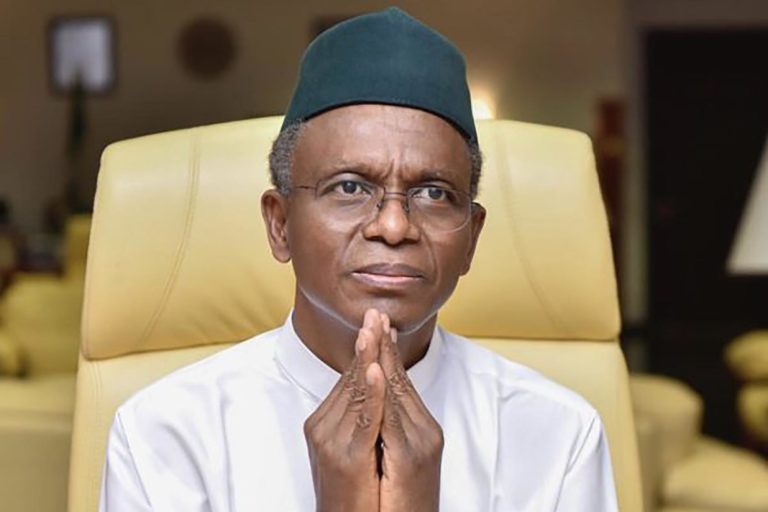
ICPC to arraign El-Rufai Tuesday over alleged fraud, money laundering

0

THE Independent Corrupt Practices and Other Related Offences Commission (ICPC) is set to arraign former Kaduna State governor, Nasir El-Rufai, over alleged corruption-related offences.

In a statement on Monday, March 23, the commission said the embattled former governor would be arraigned alongside one Joel Adoga at the Federal High Court in Kaduna on Tuesday, March 24, 2026. 

The suit marked FHC/KD/73/2026, includes charges ranging from conversion and possession of public property to money laundering.

The ICPC also disclosed that a separate case had been filed against El-Rufai and one Amadu Sule before a Kaduna State High Court, with charges including abuse of office, fraud, and intent to commit fraud for personal gain.

According to the commission, both cases were filed on March 18, 2026, while the date for arraignment at the State High Court would be communicated later. It added that the former governor had been duly served.

El-Rufai’s arrest, detention, mounting allegations

His arrest followed an earlier invitation by the Economic and Financial Crimes Commission (EFCC), where he reportedly presented himself on February 16 over alleged financial improprieties during his tenure between 2015 and 2023.

In 2024, the Kaduna State House of Assembly indicted him over the alleged diversion of N423 billion in public funds and recommended investigation by anti-corruption agencies.

El-Rufai, who was initially granted bail after spending two nights in EFCC custody, was subsequently re-arrested by security operatives. A Federal High Court in Abuja later declined to entertain his bail application, ruling that it was premature until he is formally arraigned.

The planned arraignment follows weeks of legal and political developments surrounding El-Rufai’s detention and investigation.

The ICPC had dismissed reports that it sought a fresh court order to extend his detention, clarifying that its court appearance on March 17 was in response to an application filed by El-Rufai challenging his remand.

According to the commission, a magistrate court had initially granted a 14-day remand order to enable investigation into allegations bordering on money laundering and abuse of office. Upon expiration, the court approved an additional 14-day extension on March 5.

El-Rufai’s attempt to set aside an earlier remand order was dismissed on March 9, while the hearing on his application challenging the extension was adjourned to March 31 to allow his legal team to respond to the commission’s filings.

The anti-graft agency maintained that the former governor remained in its custody under a valid court order and that due process had been followed.

Some Nigerians, including his allies in the African Democratic Congress (ADC), namely former vice president Atiku Abubakar and former Anambra State governor Peter Obi have urged the EFCC to charge him in court after describing his arrest and detention as politically-motivated.


Court jails former acting accountant-general Nwabuoku 72 years over N868m fraud

0

THE Federal High Court in Abuja has convicted and sentenced a former Acting Accountant-General of the Federation, Chukwunyere Anamekwe Nwabuoku, to 72 years in prison over N868.46 million he laundered.

A statement by the Economic and Financial Crimes Commission (EFCC), on Monday March 23, said the commission secured the conviction after prosecuting the convict on a nine-count amended charge bordering on the alleged diversion and laundering of funds traced to the Federal Ministry of Defence.

James Omotosho, while delivering the judgment, found Nwabuoku guilty after evaluating testimonies from prosecution witnesses and documentary evidence that detailed how funds moved through multiple company accounts before being withdrawn in cash and allegedly channeled to various uses linked to the defendant.

“The former Acting Accountant-General of the Federation, Chukwunyere Anamekwe Nwabuoku, who was prosecuted by the EFCC at the Federal High Court, Abuja, for money laundering involving N868.46 million has been convicted and sentenced to jail for 72years,” the EFCC.

The judge held that the commission had been able to prove the nine-count money laundering charge beyond reasonable doubt.

The judge further noted the testimony pf the ninth prosecution witness who said Nwabuoku voluntarily refunded over ₦200 million, being part of the diverted funds during the investigation. The claim was not challenged by the defence.

Nwabuoku was consequently convicted in all nine counts and sentenced to eight years imprisonment in each of the counts, making 72 years, with the counts expected to run concurrently.

Backstory

The ICIR reported that the EFCC prosecuted Nwabuoku on a nine-count amended charge, bordering on money laundering to the tune of N868, 465,000.

The trial revealed that the funds were transferred from the Ministry of Defence into accounts belonging to private companies, including Temeeo Synergy Concept Limited, Turge Global Investment Limited, Laptev Bridge Limited, and Arafura Transnational Afro Limited. 

Witnesses told the court that the accounts were created within a structure connected to defence transactions and that subsequent withdrawals were carried out in cash.

Investigators from the Independent Corrupt Practices and Other Related Offences Commission (ICPC) testified that intelligence received from the Ministry of Defence triggered an inquiry into suspicious transactions. 

According to them, their analysis of bank records and Corporate Affairs Commission (CAC) documents showed inflows from the ministry into the companies’ accounts, followed by rapid withdrawals and further transfers across other entities.

They further told the court that some individuals involved in handling the funds acted on instructions traced back to the defendant, while cash withdrawals were reportedly routed through intermediaries before being deposited into additional accounts linked to other companies.

In earlier proceedings, the ICPC investigator detailed how the team invited key persons connected to the transactions, including ministry officials and account handlers, who provided statements indicating that the transfers were carried out under directives from the defendant in his capacity as Director of Finance and Accounts at the Ministry of Defence.

The prosecution also tendered multiple exhibits, including responses from banks, CAC records, and correspondence from relevant government agencies. These documents were used to establish the movement of funds, the identities linked to the beneficiary companies, and the flow of transactions across accounts.

During the trial, evidence further indicated that portions of the funds were associated with asset acquisitions, including properties, which the prosecution argued were proceeds of unlawful activity. 

The court was also presented with prior statements in which Nwabuoku reportedly acknowledged that funds were transferred to private companies for what he described as ‘classified’ security purposes. 

However, the prosecution challenged the explanation, arguing that no verifiable documentation was provided to justify the transactions as legitimate security expenditures.

He was first arraigned on January 15, 2025.

Trump halts planned strikes on Iran amid rising tension in Strait of Hormuz

0

THE UNITED States and Iran have engaged in “very good and productive” discussions over the past two days, focusing on achieving a complete resolution of hostilities in the Middle East, President Donald Trump said on Monday, March 23.

In a social media post, Trump announced a five-day suspension of attacks by US military on Iranian power plants and energy infrastructure as part of efforts to allow continued dialogue with Tehran, following what he described as highly constructive engagement.

“I am pleased to report that the United States of America, and the country of Iran have had, over the last two days, very good and productive conversations regarding a complete and total resolution of our hostilities in the Middle East.

“Based on the ‘tenor and tone’ of these in-depth and constructive talks, President Donald J. Trump has instructed the Department of Defense to postpone any planned military strikes on Iranian power plants and energy infrastructure for a period of five days.”

Trump emphasised his administration’s commitment to pursuing diplomatic solutions while maintaining readiness for other measures if necessary.

The pause comes amid growing unease over Iran’s influence over the Strait of Hormuz, a strategic chokepoint responsible for transporting roughly one-fifth of the world’s oil and gas.

Previously, Trump had issued an ultimatum demanding that Iran reopen the waterway or face significant repercussions, including possible strikes on its energy sites.

While Iranian authorities have not officially commented on the alleged negotiations, they have cautioned that any assault on their energy infrastructure would provoke retaliatory measures targeting American interests in the region.

The ICIR reported that Trump threatened to target Iran’s major power plants if Tehran fails to fully reopen the Strait of Hormuz within 48 hours.

In a strongly worded social media post on Saturday, Trump said the US would ‘obliterate’ Iran’s energy infrastructure if the vital waterway critical to global oil and gas shipments was not reopened without threat.

“If Iran doesn’t FULLY OPEN, WITHOUT THREAT, the Strait of Hormuz, within 48 HOURS from ‌this exact point in time, the United States of America will hit and obliterate their various POWER PLANTS, STARTING WITH THE BIGGEST ONE FIRST!” Trump vowed.

The ICIR also reports that the Strait of Hormuz remains largely disrupted as the conflict excalates. The near shutdown has already shaken global markets, with European gas prices surging significantly in recent days, raising concerns of a broader global energy crisis.


MRA demands probe into journalist ‘attacked by police’ in Bauchi

0

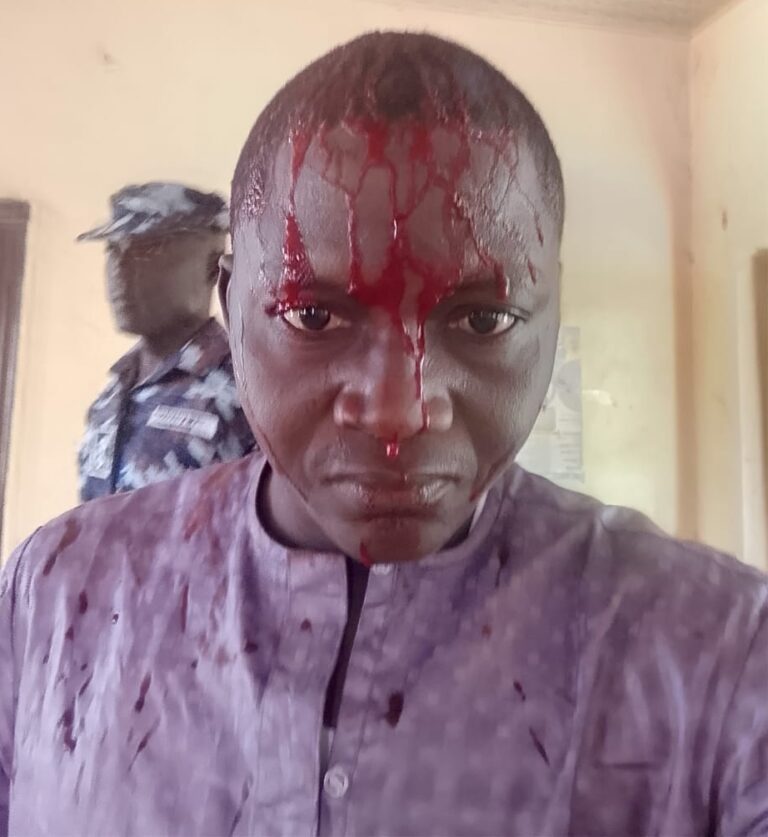
MEDIA Rights Agenda (MRA) has condemned the attack on an Albarka Radio journalist, Mohammed Adamu, allegedly by police officers in Bauchi State over the weekend.

The group said the attack was yet another unacceptable violation of media freedom and the safety of journalists in Nigeria.

According to reports, Adamu was covering the Eid Durbar celebration in Bununu, headquarters of Tafawa Balewa Local Government Area, when he was stopped by police officers led by the Divisional Police Officer, Jamilu Kabir, a Superintendent of Police.

He was heading toward the area designated for the media when he insisted on performing his professional duties, but several officers allegedly beat him with sticks, verbally abused him, and forced him to leave the venue. The assault left him with head injuries, with blood flowing profusely from his head.

Responding to the attack, the MRA, through its Programme Officer, John Gbadamosi, said: “We are deeply concerned about this incident itself, which also appears to form part of a disturbing pattern of harassment, intimidation, and physical attacks against journalists in Bauchi State and across Nigeria.

“Such actions by law enforcement officials not only violate the fundamental rights of journalists but also undermine the public’s right to receive information, which is essential for the functioning of a democratic society.”

The organisation further noted that under the Nigerian constitution, as well as regional and international human rights instruments, journalists have the right to gather and disseminate information without fear of harassment or violence. Security agencies, the MRA said, have a duty to protect journalists, not obstruct or brutalise them.

It called on the Inspector-General of Police, Mr. Olatunji Disu, to order a thorough, transparent, and speedy investigation into the incident, identify all officers involved, and ensure that those responsible are prosecuted and punished.

The MRA also urged the IGP to take urgent steps to prevent recurring attacks on journalists nationwide, through effective training, clear operational directives, and strict disciplinary measures whenever violations occur.

It further appealed to the Federal Government to demonstrate its commitment to protecting freedom of expression and media freedom by ensuring that security agencies respect journalists’ rights, particularly during public events where the presence of the media is essential for public accountability.

The MRA warned that continued failure to hold perpetrators accountable would foster impunity and create a climate of fear that threatens the survival of independent journalism in Nigeria.

The ICIR contacted the Bauchi State Police Command spokesperson, Habib Nafiu, to get his reaction to the allegations.

He said, “I am presently with the GM of Albarka Radio and other parties; investigating the matter.”

Applications open for UNCCD COP17 Media Reporting Fellowship

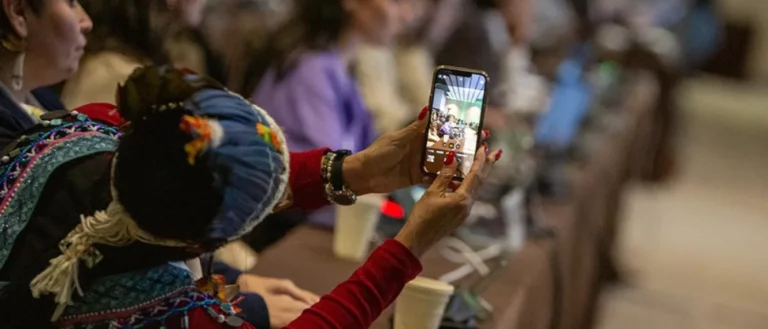
THE United Nations Convention to Combat Desertification and the International Drought Resilience Alliance (IDRA) has launched the UNCCD COP17 Land and Drought Media Reporting Fellowship.

It is, therefore, seeking applications to support journalists covering one of the defining, yet underreported stories of our time: the growing pressure on the world’s land and what it means for food and water security, economic stability and global resilience.

Six journalists will be selected to report from UNCCD COP17, which will convene in Ulaanbaatar, Mongolia, on August 17-28, 2026, to advance solutions for restoring land, strengthening drought resilience and safeguarding the ecosystems that sustain livelihoods around the world.

The fellowship aims to help bridge this gap by enabling journalists to report directly from the conference and the field, engage with leading experts and communities, and explore the solutions shaping a more resilient future.

Beyond covering negotiations, fellows will be encouraged to tell stories that highlight practical responses – from ecosystem restoration to drought preparedness – that are already making a difference.

COP17 will coincide with the International Year of Rangelands and Pastoralists 2026 and highlight their role in global food security, sustainable livelihoods, biodiversity conservation and climate action.

The fellowship is open to professional journalists (staff or freelance) with a strong track record of reporting on environment, climate, agriculture, development, food systems, business, or related issues.

The deadline for applications is April 15, 2026. Interested applicants can apply here.

Ozoro Festival: No official rape complaint so far – Police

THE Delta State Police Command has said no official complaint of rape had been lodged in connection with the Ozoro Alue-Do festival.

According to the police, investigations are focused on possible cases of sexual assault from attacks recorded during the festival.

The Police Public Relations Officer in the state, Bright Edafe, made the clarification during an interview on Channels Television’s The Morning Brief programme on Monday.

He said authorities had yet to receive any verified report from victims alleging rape.

It is important to state clearly that among the four girls that were interviewed yesterday, no one, not one of them, said they were raped. Up till this very moment, we have not had any official reports that anybody was raped,” he said.

He said statements obtained from some of the women involved did not support the rape allegations circulating on social media. 

He added that based on the available evidence, the police are treating the matter as a sexual assault case while investigations continue.

Edafe explained that the absence of formal complaints and corroborating evidence means the police could not classify the incident as rape at this stage. 

Instead, the ongoing inquiry is being guided strictly by witness accounts, forensic analysis, and video evidence from the scene. 

“It was not a rape festival. It was a festival organised by a chief priest to pray for barren women seeking the fruit of the womb. That was the intention.

“The law does not work on emotions; the law works on available evidence and statements of witnesses. For the fact that we have not had a witness who says, “I was raped”, and the evidence does not show that anybody was raped, sexual assault is what we would be investigating,” Edafe said.

The police spokesperson further confirmed that 16 suspects had been arrested so far, adding that initial arrests included the chief priest and four others, while additional suspects were picked up after authorities analysed video recordings from the event. 

The number of suspects apprehended rose to 16 later, all of whom have been transferred to the State Criminal Investigation Department for further investigation.

“Having done the initial arrest, the chief priest, who happens to be the head of the community, was initially arrested alongside four others. Then, having gone through video analysis, that is, the training footage, some additional individuals were identified and arrested, making it 11 more.

“This brings the total number of suspects currently in custody to 16, and they have been transferred to the State Command Headquarters to be duly investigated by the DC State CID,” Edafe said.

He pointed out that proper procedures were not followed in organising the festival, noting that key stakeholders, including the traditional ruler, school authorities, student representatives, and the police, were not informed beforehand. 

He argued that this lack of coordination contributed to the breakdown of order during the event.

The controversy surrounding the festival gained widespread attention after videos circulated online showing women being harassed by groups of men during the event. 

The footage sparked public outrage, with many social media users condemning the conduct witnessed in the clips.

In one of the clips, a male voice was heard claiming that any woman who stepped outside during the period risked being raped.

Another clip showed a lady being dragged on the ground, with men attempting to tear her clothes, while also manhandling her. She was later seen to be rescued by another person. However, several other ladies were chased down the streets by men numbering hundreds.

Gunmen storm Kwara church, abduct worshippers as security forces rescue three

0

SUSPECTED bandits have attacked an ECWA Church in Omugo community, Ifelodun Local Government Area of Kwara State, abducting several worshippers during a Sunday service.

According to Punch, Kwara State Commissioner for Communications, Bolanle Olukoju, confirmed the incident, commending the coordinated response of security forces, forest guards, and local vigilantes for repelling the attackers and rescuing some victims.

“We commend the immediate and coordinated response of the security forces, forest guards, and local vigilantes, which led to the rescue of three of the abducted victims and helped to repel the attackers,” she said.

Olukoju said authorities have intensified operations to track down the perpetrators and ensure the safe return of those still held.

“While commending the immediate response of the security forces and other stakeholders, we task them to ensure that the ongoing manhunt leads to the rescue of the remaining victims and the arrest of the perpetrators,” she said.

Olukoju condemned the attack on a place of worship, describing it as “cowardly and unacceptable,” while reaffirming the state’s commitment to safeguarding lives and property.

“The Kwara State Government strongly condemns the cowardly targeting of a place of worship under any guise, and we reaffirm that such acts of violence have no place in our communities,” she added.

She also urged residents to remain vigilant and collaborate with security agencies, noting that ongoing forest combing operations have begun to yield results in curbing criminal activities across affected areas.

“We call on community members to continue to work closely with security agencies, forest guards, and local vigilantes to bring an end to this menace and safeguard our communities.

“We also commend the appreciable progress made in the ongoing combing of the forests, which has significantly curtailed the activities of criminal elements across affected areas,” she said.

The attack, which occurred during a weekly service, triggered panic among congregants and residents as the assailants reportedly stormed the premises and whisked away multiple victims before security forces intervened.

According to the platform, a source within the Kwara South Joint Security Watch disclosed that at least seven people were abducted, though official figures are yet to be fully confirmed.

The incident comes amid rising tensions in Kwara South, following intelligence warnings of planned coordinated attacks targeting Ifelodun, Irepodun, and Isin local government areas.

The Coordinator of the Kwara South Joint Security Watch, Olaitan Oyin-Zubair, disclosed that security agencies, backed by military and aerial surveillance, were on high alert to prevent such attacks, urging residents to report suspicious movements.

“Yes, it is from the intelligence that we gathered that they are planning to strike, and we don’t want to take anything for granted,” the group’s Coordinator, Olaitan Oyin-Zubair, said.

Why we failed to intervene in Ozoro assault incident-NAPTIP

0

THE National Agency for the Prohibition of Trafficking in Persons (NAPTIP) has explained its inability to intervene in the alleged sexual assaults at a festival in Ozoro, Delta State, due to the absence of an operational office in the state.

The agency made this known on Saturday while responding to a query by a Facebook user, Chukwunenye Nweke, who questioned the agency’s failure to act on what he described as a long-standing cultural practice, under the agency’s reaction statement on the incident.

The ICIR reports that this clarification follows the circulation of a disturbing viral video showing groups of men allegedly harassing and assaulting young women during the Alue-Do Festival in Uruamudhu Community, one of the five traditional communities in Ozoro Kingdom.

“Did the festival start this month? NAPTIP Nigeria did not know about it before now? Well, since the evil and criminal act is tagged as tradition, I believe it has passed through many generations. What were you doing since then?” Nweke had asked NAPTIP.

In response, NAPTIP emphasised that tackling human trafficking and gender-based violence requires a coordinated, whole-of-society approach, noting that it cannot maintain a presence in every location at all times.

“As you know, we cannot be everywhere at all times. Currently, we do not have a command yet in the Delta State. Fighting this menace needs an approach from all of society. If you see something, say something. Going forward, we implore you to use your page and try to spread the information on the ills and dangers of Human Trafficking and Sexual and Gender-based violence,” it said.

The agency had strongly condemned the alleged assaults in its statement, describing the acts as violations of human rights and dignity and a form of gender-based violence.

“NAPTIP strongly condemns the barbaric sexual assaults and harassment against women and girls during a festival in Ozoro, Delta State. These criminal acts violate human rights and dignity, and it is another form of gender based violence. We commend the Nigeria Police Force in Delta State for their swift response and arrests of suspects, including the organiser and the community head,” the statement read.

The agency pledged to sustain its support for initiatives aimed at securing justice for victims and preventing a repeat of such incidents.

“NAPTIP shall continue to support all actions aimed at ensuring justice for the victims as well as preventing the recurrence of such crimes in the future,” it said.

The ICIR reported that the video surfaced on social media on Friday, March 20, showing several women crying and calling for help as groups of men harassed and attacked them in public.

In one of the clips, a male voice was heard claiming that any woman who stepped outside during her period risked being raped.

Another clip showed a lady being dragged on the ground, with men attempting to tear her clothes, while also manhandling her. She was later seen to be rescued by another person. However, several other ladies were chased down the street by men numbering hundreds.

The incidents have been linked by online sources to what has been described as a so-called ‘festival’ in Ozoro, where young women were allegedly targeted by men.

Reports also suggested that Ozoro, being the host part of Delta State University, circulated warnings within the community advising girls and women to remain indoors for their safety.

Tony Elumelu unveils 2026 entrepreneurship cohort

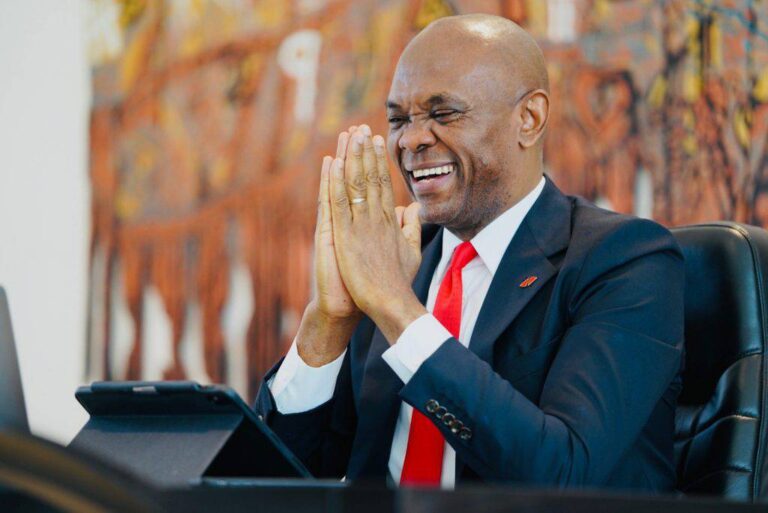
THE billionaire philanthropist and Chairman of Heirs Holdings, Tony Elumelu, has announced the selection of the 12th cohort of entrepreneurs for the Tony Elumelu Foundation (TEF) Entrepreneurship Programme.

The announcement, made on Sunday to coincide with his birthday, comes as the foundation expands its reach, selecting 3,200 entrepreneurs from all 54 African countries.

Reflecting on the initiative via his official X account, Elumelu spoke about the idea of engineered luck that underpins the programme

“Today, I turn a year older. And every year on this day, I reflect on something far bigger than me,” he said.

“For a long time, I believed luck was something that just happens to you. Then I realised, luck can be engineered. Opportunity can be democratised.”

He added that the foundation’s approach is focused on providing structured support to entrepreneurs across the continent.

The 2026 cohort was selected from more than 265,000 applicants, highlighting growing interest in entrepreneurship, particularly in sectors such as artificial intelligence, agriculture, and the green economy.

According to the foundation, selected entrepreneurs demonstrated resilience and persistence despite challenging business environments.

Each beneficiary will receive a $5,000 grant, with the total funding amounting to approximately $16 million. In addition to financial support, participants will have access to business training, mentorship, and a pan-African network of entrepreneurs and investors.

Elumelu, alongside his wife and co-founder, Awele Elumelu, said the initiative reflects a long-term commitment to empowering young Africans.

“… my wife and I will unveil the 2026 cohort of TonyElumeluFDN entrepreneurs. In a world full of uncertainty, I have chosen deliberately, every single year, to plant certainty in the lives of young African entrepreneurs,” he said.

He also reiterated that Africa’s greatest resource is not in its mineral resources but in its people, urging beneficiaries to contribute to the continent’s economic transformation.

The 2026 application cycle opened on January 1 and closed on March 1. The programme remains a key driver of Africapitalism, the philosophy that the African private sector must play a leading role in the continent’s economic development.

My Lord, Justice Kneel Down

0

By Chidi Anselm Odinkalu

“Minor judges have been known to abuse the contempt of court jurisdiction in an attempt to enhance their own dignity.”

David Pannick QC, Judges, 119 (1987)

Sardar Tejendrasingh lived in England but, by his own admission, was devoid of “respect for this country or its civilization or its courts.” In 1982, as plaintiff in a case for debt recovery at the Cambridge County Court, he chose to address the court sitting down. The court registrar, who took the view that this was contempt of the court, decided in August 1982 to pause proceedings in Mr. Tejendrasingh’s case until he was purged of this contempt. One year later, in September 1983, Alan Garfitt, the trial judge, informed Mr. Tejendrasingh of the court’s decision to indefinitely suspend hearing of his case unless and until he provided a written undertaking to stand while addressing the court.

Mr. Tejendrasingh appealed against this to the Court of Appeal which affirmed the decision of the trial judge. In its decision in November 1985, the Court of Appeal reasoned: “if a court orders somebody to stand when addressing it or giving evidence, that order is not different from any other order of the court. It is something which has to be obeyed.”

The nature of orders that courts can give or which suitors in court are obliged to obey in such situations has varied through the ages. In his book on The Lives of the Lord Chancellors and Keepers of the Great Seal of England, John Lord Campbell tells a story from the first quarter of the 17th century of a “Catholic gentleman nearly eighty years old” who was sentenced to “be fined £1000, lose his ears, stand on the pillory at Westminster and Lancaster, and suffer perpetual imprisonment, for merely presenting a respectful petition to the King, praying for inquiry into the conduct of one of the judges of assize, who had condemned to death a neighbour for entertaining a Jesuit.”

Others have been even less lucky. In 1631, Chief Justice Richardson of the Court of Common Bench was on his way out of court after pronouncing a sentence of death upon a suspect on trial for a felony when “the prisoner found himself able to express his dissent from the sentence pronounced upon him by hurling a brickbat at the Chief Justice’s head.” For his contempt, the prisoner, was reportedly “immediately hanged in the presence of the court.”

Recent events in Nigeria have extinguished any misapprehensions that these flashes of judicial savagery may have ended with the transition from the Medieval to the early modern period. In the past week, a judge of the Federal High Court, Mohammed Umar, reopened the question as to what kind of orders a judge may be at liberty to give in seeking to uphold his or her judicial authority or dignity.

The circumstance was the trial of publisher and politician, Omoyele Sowore, who is being prosecuted by the State Security Service on the charge of having called Nigeria’s president, Bola Ahmed Tinubu, a criminal. At the resumed trial on Monday, 16 March 2026, contretemps reportedly erupted between the judge and the defence counsel, Marshall Abubakar, over the scheduling of a date for the defence to argue its no-case submission at the end of the prosecution’s case. The defence apparently desired a longer adjournment than the court was willing to grant.

Ordinarily, this should not have been raucous. In the midst of the exchanges over the dates, however, the judge reportedly took exception to the inflection or tone of counsel and threatened to cite him for contempt. Almost immediately, it appears, the judge thought the better of it or lost his temper “and ordered the lawyer to step forward and kneel down as punishment for what he described as contempt of court.”

In response, Marshall Abubakar is reported to have informed the court that “kneeling before a judge was unknown to Nigerian law and could not be imposed as a lawful punishment.” At this point, other lawyers present in court, fearing the onset of a judicial meltdown, reportedly rose in collective de-escalation. They eventually managed to stay the hand of His Lordship from also asking the lawyer to raise his hands over his head, close his eyes, and expose his buttocks for licks from a judicial Sjambok.

The Nigerian Bar Association (NBA), through its president, Afam Osigwe, a Senior Advocate of Nigeria (SAN), took a serious view of the matter. In a statement issued the following day, the NBA president cautioned that “directing a legal practitioner or indeed any person whatsoever to kneel in court is not a recognised judicial sanction under our laws and does not align with the standards of judicial conduct expected on the Bench.”

At the heart of the objection by the NBA is the guarantee of the right to human dignity in section 34 of Nigeria’s constitution, reinforced by the prohibition of torture, cruel, inhuman or degrading treatment or punishment. The Uganda Law Society (ULS) also weighed in. Their reaction issued through its president, Isaac Ssemakadde, warned that “no judge possesses the legal power to order a legal practitioner to kneel. That directive was not discipline; it was humiliation.”

This episode raises important questions concerning both the limits of judicial power and standards of professional comportment for participants in the judicial and legal process.

For advocates of rule of law, judicial orders are to be obeyed at all times. So, should the lawyer (not) have obeyed the order to kneel down even if he could then have appealed against it subsequently?

The pivotal question here is when is an order judicial? The exercise of the power to punish for contempt of court or to preserve the authority of the judicial office is not at large. In exercising it, a judge is not precluded from the obligations to observe the basic rules of fair hearing or respect for constitutional guarantees.

In this case, the order to “kneel down” was a sentence issued without the opportunity of a hearing, formal conviction, or even a record. To be quite plain, there was nothing judicial about it. Even if the lawyer was minded to obey and then appeal later, the likelihood is that there would have been no record on the basis of which to appeal for, surely, the judge could not have written: “I hereby convict Mr. Abubakar and sentence him to kneel down.”

Whether or not the facts justified the judge in invoking the power of contempt is not in dispute at this time. For present purposes, that point is conceded. However, having done so, the court thereafter chose to sacrifice its power on the altar of abuse. In the circumstance, regrettably, Mr. Abubakar was well within his rights to be slow in complying with “kneel down”. Put differently, there was no order to obey.

It is not as if the judge was without options in the circumstance. He could have referred the lawyer to the Legal Practitioner’s Disciplinary Committee or, indeed, tried and convicted him for contempt before deciding what sentence to impose.

Even better he may be been better served if he had read Brian McKenna’s famous lecture at the University of Durham in February 1969.

In the lecture, McKenna, a judge, tells the story of the conclusion of one of his earliest trials as a judge following which “a temperamental Irish lady flung her handbag in my direction after I had sentenced her delinquent brother to a period of training.” In response, he writes, “I gave her the benefit of doubt; I assumed that her target was the Clerk of the Court sitting beneath the throne, no myself.”

Mr. Justice Kneel Down may one day discover virtue in judicial forbearance.

A lawyer and a teacher, Odinkalu can be reached at chidi.odinkalu@tufts.edu