SUSPECTED bandits have attacked an ECWA Church in Omugo community, Ifelodun Local Government Area of Kwara State, abducting several worshippers during a Sunday service.
According to Punch, Kwara State Commissioner for Communications, Bolanle Olukoju, confirmed the incident, commending the coordinated response of security forces, forest guards, and local vigilantes for repelling the attackers and rescuing some victims.
“We commend the immediate and coordinated response of the security forces, forest guards, and local vigilantes, which led to the rescue of three of the abducted victims and helped to repel the attackers,” she said.
Olukoju said authorities have intensified operations to track down the perpetrators and ensure the safe return of those still held.
“While commending the immediate response of the security forces and other stakeholders, we task them to ensure that the ongoing manhunt leads to the rescue of the remaining victims and the arrest of the perpetrators,” she said.
Olukoju condemned the attack on a place of worship, describing it as “cowardly and unacceptable,” while reaffirming the state’s commitment to safeguarding lives and property.
“The Kwara State Government strongly condemns the cowardly targeting of a place of worship under any guise, and we reaffirm that such acts of violence have no place in our communities,” she added.
She also urged residents to remain vigilant and collaborate with security agencies, noting that ongoing forest combing operations have begun to yield results in curbing criminal activities across affected areas.
“We call on community members to continue to work closely with security agencies, forest guards, and local vigilantes to bring an end to this menace and safeguard our communities.
“We also commend the appreciable progress made in the ongoing combing of the forests, which has significantly curtailed the activities of criminal elements across affected areas,” she said.
The attack, which occurred during a weekly service, triggered panic among congregants and residents as the assailants reportedly stormed the premises and whisked away multiple victims before security forces intervened.
According to the platform, a source within the Kwara South Joint Security Watch disclosed that at least seven people were abducted, though official figures are yet to be fully confirmed.
The incident comes amid rising tensions in Kwara South, following intelligence warnings of planned coordinated attacks targeting Ifelodun, Irepodun, and Isin local government areas.
The Coordinator of the Kwara South Joint Security Watch, Olaitan Oyin-Zubair, disclosed that security agencies, backed by military and aerial surveillance, were on high alert to prevent such attacks, urging residents to report suspicious movements.
“Yes, it is from the intelligence that we gathered that they are planning to strike, and we don’t want to take anything for granted,” the group’s Coordinator, Olaitan Oyin-Zubair, said.
THE National Agency for the Prohibition of Trafficking in Persons (NAPTIP) has explained its inability to intervene in the alleged sexual assaults at a festival in Ozoro, Delta State, due to the absence of an operational office in the state.
The agency made this known on Saturday while responding to a query by a Facebook user, Chukwunenye Nweke, who questioned the agency’s failure to act on what he described as a long-standing cultural practice, under the agency’s reaction statement on the incident.
The ICIR reports that this clarification follows the circulation of a disturbing viral video showing groups of men allegedly harassing and assaulting young women during the Alue-Do Festival in Uruamudhu Community, one of the five traditional communities in Ozoro Kingdom.
“Did the festival start this month? NAPTIP Nigeria did not know about it before now? Well, since the evil and criminal act is tagged as tradition, I believe it has passed through many generations. What were you doing since then?” Nweke had asked NAPTIP.
In response, NAPTIP emphasised that tackling human trafficking and gender-based violence requires a coordinated, whole-of-society approach, noting that it cannot maintain a presence in every location at all times.
“As you know, we cannot be everywhere at all times. Currently, we do not have a command yet in the Delta State. Fighting this menace needs an approach from all of society. If you see something, say something. Going forward, we implore you to use your page and try to spread the information on the ills and dangers of Human Trafficking and Sexual and Gender-based violence,” it said.
The agency had strongly condemned the alleged assaults in its statement, describing the acts as violations of human rights and dignity and a form of gender-based violence.
“NAPTIP strongly condemns the barbaric sexual assaults and harassment against women and girls during a festival in Ozoro, Delta State. These criminal acts violate human rights and dignity, and it is another form of gender based violence. We commend the Nigeria Police Force in Delta State for their swift response and arrests of suspects, including the organiser and the community head,” the statement read.
The agency pledged to sustain its support for initiatives aimed at securing justice for victims and preventing a repeat of such incidents.
“NAPTIP shall continue to support all actions aimed at ensuring justice for the victims as well as preventing the recurrence of such crimes in the future,” it said.
The ICIRreported that the video surfaced on social media on Friday, March 20, showing several women crying and calling for help as groups of men harassed and attacked them in public.
In one of the clips, a male voice was heard claiming that any woman who stepped outside during her period risked being raped.
Another clip showed a lady being dragged on the ground, with men attempting to tear her clothes, while also manhandling her. She was later seen to be rescued by another person. However, several other ladies were chased down the street by men numbering hundreds.
The incidents have been linked by online sources to what has been described as a so-called ‘festival’ in Ozoro, where young women were allegedly targeted by men.
Reports also suggested that Ozoro, being the host part of Delta State University, circulated warnings within the community advising girls and women to remain indoors for their safety.
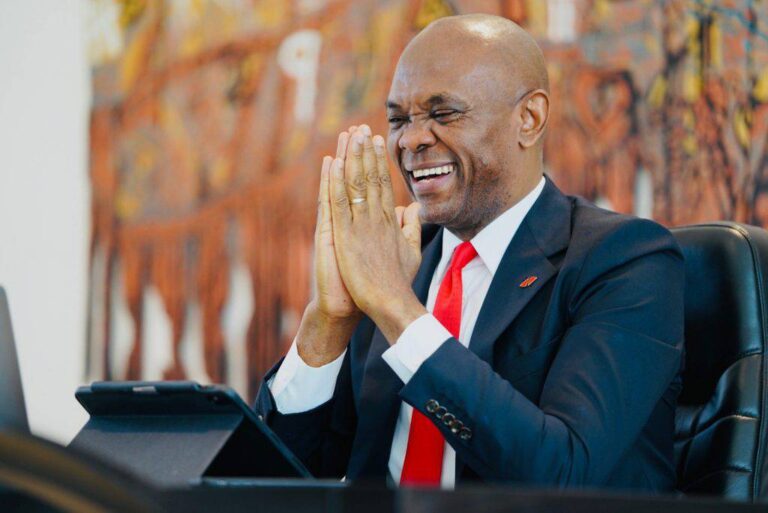
THE billionaire philanthropist and Chairman of Heirs Holdings, Tony Elumelu, has announced the selection of the 12th cohort of entrepreneurs for the Tony Elumelu Foundation (TEF) Entrepreneurship Programme.
The announcement, made on Sunday to coincide with his birthday, comes as the foundation expands its reach, selecting 3,200 entrepreneurs from all 54 African countries.
Reflecting on the initiative via his official X account, Elumelu spoke about the idea of engineered luck that underpins the programme
“Today, I turn a year older. And every year on this day, I reflect on something far bigger than me,” he said.
“For a long time, I believed luck was something that just happens to you. Then I realised, luck can be engineered. Opportunity can be democratised.”
He added that the foundation’s approach is focused on providing structured support to entrepreneurs across the continent.
The 2026 cohort was selected from more than 265,000 applicants, highlighting growing interest in entrepreneurship, particularly in sectors such as artificial intelligence, agriculture, and the green economy.
According to the foundation, selected entrepreneurs demonstrated resilience and persistence despite challenging business environments.
Each beneficiary will receive a $5,000 grant, with the total funding amounting to approximately $16 million. In addition to financial support, participants will have access to business training, mentorship, and a pan-African network of entrepreneurs and investors.
Elumelu, alongside his wife and co-founder, Awele Elumelu, said the initiative reflects a long-term commitment to empowering young Africans.
“… my wife and I will unveil the 2026 cohort of TonyElumeluFDN entrepreneurs. In a world full of uncertainty, I have chosen deliberately, every single year, to plant certainty in the lives of young African entrepreneurs,” he said.
He also reiterated that Africa’s greatest resource is not in its mineral resources but in its people, urging beneficiaries to contribute to the continent’s economic transformation.
The 2026 application cycle opened on January 1 and closed on March 1. The programme remains a key driver of Africapitalism, the philosophy that the African private sector must play a leading role in the continent’s economic development.
“Minor judges have been known to abuse the contempt of court jurisdiction in an attempt to enhance their own dignity.”
David Pannick QC, Judges, 119 (1987)
Sardar Tejendrasingh lived in England but, by his own admission, was devoid of “respect for this country or its civilization or its courts.” In 1982, as plaintiff in a case for debt recovery at the Cambridge County Court, he chose to address the court sitting down. The court registrar, who took the view that this was contempt of the court, decided in August 1982 to pause proceedings in Mr. Tejendrasingh’s case until he was purged of this contempt. One year later, in September 1983, Alan Garfitt, the trial judge, informed Mr. Tejendrasingh of the court’s decision to indefinitely suspend hearing of his case unless and until he provided a written undertaking to stand while addressing the court.
Mr. Tejendrasingh appealed against this to the Court of Appeal which affirmed the decision of the trial judge. In its decision in November 1985, the Court of Appeal reasoned: “if a court orders somebody to stand when addressing it or giving evidence, that order is not different from any other order of the court. It is something which has to be obeyed.”
The nature of orders that courts can give or which suitors in court are obliged to obey in such situations has varied through the ages. In his book on The Lives of the Lord Chancellors and Keepers of the Great Seal of England, John Lord Campbell tells a story from the first quarter of the 17th century of a “Catholic gentleman nearly eighty years old” who was sentenced to “be fined £1000, lose his ears, stand on the pillory at Westminster and Lancaster, and suffer perpetual imprisonment, for merely presenting a respectful petition to the King, praying for inquiry into the conduct of one of the judges of assize, who had condemned to death a neighbour for entertaining a Jesuit.”
Recent events in Nigeria have extinguished any misapprehensions that these flashes of judicial savagery may have ended with the transition from the Medieval to the early modern period. In the past week, a judge of the Federal High Court, Mohammed Umar, reopened the question as to what kind of orders a judge may be at liberty to give in seeking to uphold his or her judicial authority or dignity.
The circumstance was the trial of publisher and politician, Omoyele Sowore, who is being prosecuted by the State Security Service on the charge of having called Nigeria’s president, Bola Ahmed Tinubu, a criminal. At the resumed trial on Monday, 16 March 2026, contretemps reportedly erupted between the judge and the defence counsel, Marshall Abubakar, over the scheduling of a date for the defence to argue its no-case submission at the end of the prosecution’s case. The defence apparently desired a longer adjournment than the court was willing to grant.
Ordinarily, this should not have been raucous. In the midst of the exchanges over the dates, however, the judge reportedly took exception to the inflection or tone of counsel and threatened to cite him for contempt. Almost immediately, it appears, the judge thought the better of it or lost his temper “and ordered the lawyer to step forward and kneel down as punishment for what he described as contempt of court.”
In response, Marshall Abubakar is reported to have informed the court that “kneeling before a judge was unknown to Nigerian law and could not be imposed as a lawful punishment.” At this point, other lawyers present in court, fearing the onset of a judicial meltdown, reportedly rose in collective de-escalation. They eventually managed to stay the hand of His Lordship from also asking the lawyer to raise his hands over his head, close his eyes, and expose his buttocks for licks from a judicial Sjambok.
The Nigerian Bar Association (NBA), through its president, Afam Osigwe, a Senior Advocate of Nigeria (SAN), took a serious view of the matter. In a statement issued the following day, the NBA president cautioned that “directing a legal practitioner or indeed any person whatsoever to kneel in court is not a recognised judicial sanction under our laws and does not align with the standards of judicial conduct expected on the Bench.”
At the heart of the objection by the NBA is the guarantee of the right to human dignity in section 34 of Nigeria’s constitution, reinforced by the prohibition of torture, cruel, inhuman or degrading treatment or punishment. The Uganda Law Society (ULS) also weighed in. Their reaction issued through its president, Isaac Ssemakadde, warned that “no judge possesses the legal power to order a legal practitioner to kneel. That directive was not discipline; it was humiliation.”
This episode raises important questions concerning both the limits of judicial power and standards of professional comportment for participants in the judicial and legal process.
For advocates of rule of law, judicial orders are to be obeyed at all times. So, should the lawyer (not) have obeyed the order to kneel down even if he could then have appealed against it subsequently?
The pivotal question here is when is an order judicial? The exercise of the power to punish for contempt of court or to preserve the authority of the judicial office is not at large. In exercising it, a judge is not precluded from the obligations to observe the basic rules of fair hearing or respect for constitutional guarantees.
In this case, the order to “kneel down” was a sentence issued without the opportunity of a hearing, formal conviction, or even a record. To be quite plain, there was nothing judicial about it. Even if the lawyer was minded to obey and then appeal later, the likelihood is that there would have been no record on the basis of which to appeal for, surely, the judge could not have written: “I hereby convict Mr. Abubakar and sentence him to kneel down.”
Whether or not the facts justified the judge in invoking the power of contempt is not in dispute at this time. For present purposes, that point is conceded. However, having done so, the court thereafter chose to sacrifice its power on the altar of abuse. In the circumstance, regrettably, Mr. Abubakar was well within his rights to be slow in complying with “kneel down”. Put differently, there was no order to obey.
It is not as if the judge was without options in the circumstance. He could have referred the lawyer to the Legal Practitioner’s Disciplinary Committee or, indeed, tried and convicted him for contempt before deciding what sentence to impose.
Even better he may be been better served if he had read Brian McKenna’s famous lecture at the University of Durham in February 1969.
In the lecture, McKenna, a judge, tells the story of the conclusion of one of his earliest trials as a judge following which “a temperamental Irish lady flung her handbag in my direction after I had sentenced her delinquent brother to a period of training.” In response, he writes, “I gave her the benefit of doubt; I assumed that her target was the Clerk of the Court sitting beneath the throne, no myself.”
Mr. Justice Kneel Down may one day discover virtue in judicial forbearance.
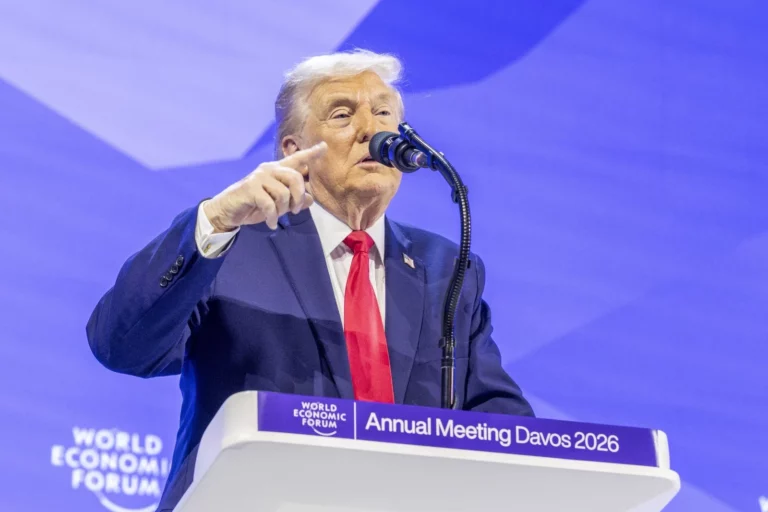
UNITED State President Donald Trump has threatened to target Iran’s major power plants if Tehran fails to fully reopen the Strait of Hormuz within 48 hours.
In a strongly worded social media post on Saturday, Trump said the US would “obliterate” Iran’s energy infrastructure if the vital waterway critical to global oil and gas shipments is not reopened without threat.
“If Iran doesn’t FULLY OPEN, WITHOUT THREAT, the Strait of Hormuz, within 48 HOURS from this exact point in time, the United States of America will hit and obliterate their various POWER PLANTS, STARTING WITH THE BIGGEST ONE FIRST!” Trump said on social media.
The ICIRreports that the Strait of Hormuz remains largely disrupted amid fears of Iranian attacks, choking a passage that handles roughly 20 per cent of global oil and liquefied natural gas flows. The near shutdown has already shaken global markets, with European gas prices surging significantly in recent days, raising concerns of a broader energy crisis.
In Nigeria, rising energy prices are fueling inflation concerns, as Dangote Petroleum Refinery has again raised the ex-depot price of Premium Motor Spirit (petrol) to N1,245 per litre, intensifying pressure on Nigeria’s downstream market.
The latest adjustment, effective from midnight on Saturday, marks the fourth upward review by the refinery in March alone, as PMS prices have risen rapidly from about N774 earlier in the month to N875, N995, N1,175, and now N1,245 per litre.
Trump’s ultimatum marks a sharp shift in tone, coming barely 24 hours after the US leader suggested a possible de-escalation of the conflict.
Meanwhile, Iran’s Khatam al-Anbiya Headquarters responded with a warning of its own, saying any US strike on its energy infrastructure would trigger attacks on American energy, IT, and desalination facilities across the region.
The standoff follows a chain of retaliatory strikes. After an Israeli attack on Iran’s key gas field, Tehran struck Qatar’s Ras Laffan Industrial City, a major global LNG hub, causing damage expected to take years to repair.
According to Israeli military chief Eyal Zamir, Iran had, for the first time, deployed long-range missiles capable of reaching European capitals such as Berlin, Paris, and Rome, signalling a potential widening of the potential reach of attacks beyond the Middle East, even as a separate Iranian strike left dozens injured near one of Israel’s nuclear facilities.
Zamir said that Iran has also reportedly launched two ballistic missiles with a range of 4,000 km (2,500 miles) toward the US-British military base at Diego Garcia in the Indian Ocean, underscoring the growing regional threat, noting that this is the first time Iran had used long-range missiles since the United States and Israel began attacking Iran on February 28.
According to Reuters, the conflict which is now in its fourth week, has claimed over 2,000 lives, with dozens more injured in recent strikes on southern Israel, including in Dimona and Arad areas near sensitive military installations.
Israeli Prime Minister Benjamin Netanyahu described the situation as “a very difficult evening,” vowing continued military action.
THE Nigerian Bar Association (NBA) has strongly condemned the reported sexual assault of women during a local festival in Ozoro, Delta State, describing the incident as a “national disgrace” and a grave violation of human rights.
In a joint statement signed on Saturday, March 21, by the NBA President Afam Osigwe and Chairperson of the NBA Women Forum, Huwaila Muhammad, said the incident reflects a “collapse of conscience” and exposes deep-rooted gender-based violence.
“A society reveals its true character in how it treats its women. Where women are chased, stripped, groped, violated, and publicly humiliated by mobs under the guise of celebration, what is on display is not culture. It is barbarity. It is a collapse of conscience. It is a stain on our shared humanity.
“The deeply disturbing reports emerging from a recent festival in Ozoro, Delta State, are not just troubling; they are horrifying. Women were allegedly accosted in broad daylight, forcefully stripped of their clothing, sexually assaulted, and subjected to degrading treatment by groups of young men while others watched, recorded, and, in some instances, cheered,” the statement read.
The condemnation follows the circulation of a disturbing viral video showing groups of men allegedly harassing and assaulting young women during the Alue-Do Festival in Uruamudhu Community, one of the five traditional communities in Ozoro Kingdom.
The ICIRreported that the Nigeria Police Force (NPF) and Nigerians have reacted with outrage as reports suggest that even visitors unfamiliar with the festival’s risks including students from nearby institutions may have been affected.
The NBA in its latest statement stressed that such acts constitute serious criminal offences, including sexual violence, assault, and violations of the constitutional rights to dignity, liberty, and personal security as enshrined in the 1999 Constitution (as amended).
“These acts amount to a grave violation of the fundamental rights to dignity of the human person, personal liberty, and security as guaranteed under the Constitution of the Federal Republic of Nigeria, 1999 (as amended), as well as other international human rights instruments. They also constitute serious criminal offences under our laws, including assault, sexual violence, and public indecency.
Rejecting any cultural justification, the association declared that no tradition can legitimise violence against women, urging authorities to take decisive action.
“No woman should ever have to endure such terror, such exposure, such violation of her dignity. This was not a festival. This was lawlessness. This was gender-based violence in its most primitive and shameful form.
The NBA also called on community leaders and festival organisers to ensure that cultural events uphold dignity and safety, rather than becoming platforms for abuse.
“It is criminality. We call on the Delta State Government and all relevant law enforcement agencies to act swiftly and decisively. The perpetrators must be identified, arrested, and prosecuted.
“Those who aided, enabled, or failed to intervene must also be held accountable. Justice must not be delayed, and it must not be selective. Silence, indifference, or excuses in the face of such brutality only embolden further abuse.
“We further call on community leaders, traditional institutions, and festival organisers to take urgent responsibility. Cultural celebrations must never become theatres of violence. They must reflect dignity, order, and respect for human life, not chaos and cruelty.
“The protection of women is not optional. It is a legal duty. It is a moral obligation. It is a test of who we are as a people. Nigeria must not become a place where women live in fear of being stripped of both their clothing and their dignity in public spaces. This must never happen again!,” the statement added.
Echoing similar concerns, the Delta State Government described the incident as “barbaric and unacceptable,” warning against the misuse of cultural gatherings to perpetrate criminal acts.
Commissioner for Works (Rural Roads) and Public Information, Charles Aniagwu, urged security agencies to act swiftly in apprehending those responsible.
“The Delta State Government strongly condemns the harassment of ladies and the reported cases of rape during the Ozoro Festival. Such barbaric acts are totally unacceptable and have no place in our society,” the Commissioner for Works (Rural Roads) and Public Information, Charles Aniagwu, said in a statement.
The State Government emphasised that protecting women is not only a moral responsibility but a legal obligation, warning that failure to act decisively could embolden further abuse.
“We are calling on the police and other security agencies to fish out the perpetrators of these heinous acts and bring them to justice. No individual or group should be allowed to hide under the guise of a festival to perpetrate criminal activities,” he added.
Recently, two rape allegations dominated Nigerian social media, triggering outrage and sympathy. However, both stories turned to be false. In this report, The ICIR examines false rape allegations, and how justice should respond without silencing genuine survivors.
A TikTok user, Abigail Nsuka, known as Mirabel, posted a tearful video alleging she had been raped and mutilated in her apartment in the early hours of Sunday, February 15. In subsequent posts, she claimed she was being threatened and intimidated to remain silent, sharing worrying screenshots to back it up.
Her videos went viral with users reposting them across TikTok, X, and other social media platforms. The videos tugged at the hearts of everyone who watched due to the pain etched in her voice which had thousands of people demanding justice for her while others began attempting to identify the alleged perpetrator just so he could be punished.
Mirabel
In the video, Mirabel tearfully recounted how the gory day started.
“I have insomnia. If I’m not drunk or high, I can’t sleep. On Saturday, I drank, and it wasn’t working. But I needed to be high enough so I could sleep,” she said.
She claimed she slept around 6am and woke up at about 9am to a knock on her door.
“I slept around 6am but around 9am, I heard a knock on my door. I thought it was my neighbour because it’ was Sunday morning and some of them would have gone to Church, so maybe the one knocking wanted to ask me for something.”
Within days, cracks began appearing in her narrative. Online commentators highlighted inconsistencies in the timelines and screenshots she shared, some of the messages allegedly sent by the rapist contained phrases that also appeared in her messages. Questions mounted about the authenticity of her story.
She didn’t just gain the sympathy; she also received financial supports from sympathisers according to videos posted online. Mirabel with the help of her friend shared her bank details for people to support.
Social media influencer known as VeryDarkMan, claimed he transferred N100,000 to her, while others voiced out. Her videos also pulled celebrities like the singer known as Simi to voice out about the pain women go through.
Under mounting public scrutiny from influencers and users, Mirabel later admitted to VeryDarkMan that the rape claim was fabricated. Recordings circulating online captured her acknowledging that she had created threatening messages herself and pleaded for insanity and hallucination.
“I used to masturbate, and I’m a lesbian. I often self-harm when I have panic attacks. It might be a hallucination,” she said.
It was during this point that she also confessed to have created a TikTok account separately from the one she uses, just to message herself to portray that a rapist has truly been messaging her.
The Ogun State Police Command confirmed it had opened an investigation. While the Public Relations Officer, Oluseyi Babaseyi noted on his social handle X that knowingly providing false information to law enforcement agents is a criminal offence.
The case shifted from a viral story of victimhood to a possible case of false reporting.
That’s not all, around the same time, a female student at Obafemi Awolowo University, Adewale Adeola Adeife, publicly accused Ojuko Adefesobi, known as David on X for rape.
The allegation circulated widely within campus networks and online communities. As often happens in digital spaces, reactions formed quickly. Opinions were drawn.
Adeola accused Adefesobi due to their different opinions regarding Mirabel’s case, and while Adeola was quick to tag Adefesobi as a rapist. According to Adefesobi, she also circulated his contact in group chats in a bad light just to garner attention.
Photo credit: X (Adeola)
Soon after, she issued a public apology video stating that the claim was false and it was a spur of the moment action.
“He is never a rapist. I’ve never caught him raping anybody. So, I am sorry, David, I’m sorry for calling you a rapist, and this is just to clear the air. He is not a rapist. David is not a rapist.”
Adefesobi, known as David subsequently filed a ₦15 million civil lawsuit, alleging defamation, reputational harm, and emotional distress. The Guardian reported that in court filings, his legal team, Anekwe & Associates, Barristers & Solicitors, also demanded a written apology and full retraction, to be published prominently on all platforms including all social media platforms and any other medium where the defamatory allegation was originally published. They argued that the allegation caused significant personal and reputational damage.
Unlike the TikTok case, this matter transitioned into civil litigation rather than immediate criminal prosecution.
These incidents have revived debate over how Nigeria’s justice system should respond when rape allegations are proven false, and whether such responses risk discouraging genuine survivors from reporting.
False rape accusations
The two recent Nigerian cases illustrate the speed at which allegations now travel and the slower pace at which truth is established. They also reveal the delicate balance between ensuring accountability for intentional falsehoods and protecting the rights of genuine survivors whose experiences already face scrutiny and doubt.
A false accusation of rape happens when a person states that they or another person have been raped when no rape occurred. It is the deliberate, fabricated reporting of sexual assault where no crime occurred.
Globally, research consistently indicates that false rape allegations represent a small minority of reported cases, often estimated between 2 and 10 percent. Meanwhile, sexual violence remains widespread and significantly underreported. According to the World Health Organization, approximately one in three women worldwide experience physical or sexual violence in their lifetime. In Nigeria, surveys from the National Bureau of Statistics have documented high levels of gender-based violence.
How should the justice system respond?
To understand the legal and social implications of such cases, The ICIR reached out to a human rights advocate, Kiyenpiya Mafuyai.
Asked whether Nigeria’s existing laws are enough to address false reporting, she said, “The existing laws are sufficient to address false reporting. Section 8 of Violence Against Persons Prohibition Act (VAPPA) addresses the issue directly within the context of gender – based violence. In addition the Penal Code law makes the giving of false evidence or perjury an offence. This could also be applied as false reporting and it is considered a serious offense against the administration of justice.
However, the challenge may arise in proving the offence beyond reasonable doubt. It would be necessary to prove that the person is legally bound to tell the truth, that the person made a false statement and that they actually knew or believed that the statement was false. Then there must be corroboration which is additional evidence or a witness to confirm the statement was false.”
On how should the justice system responds to false rape allegations without creating fear for survivors, she explained that women’s rights advocates have long insisted that rape reports must be taken seriously to counter stigma and underreporting.
“In order to encourage survivors of rape to speak up, in spite of the stigma, and report, women’s rights advocates have always insisted that when such reports are made, they should be taken seriously and pursued vigorously,” she said.
“Therefore when an individual subverts the system and makes a false accusation which is proven to be false the justice system strongly condemns it. This is because it undermines any progress that has been made in demanding that authorities treat every report of rape with the seriousness it deserves.” she stressed.
She pointed to Section 8 of the VAPP Act, which directly addresses false allegations within gender-based violence proceedings.
The section provides that any person who wilfully makes a false statement whether oral or documentary, in a judicial proceeding under the Act, or with the aim of initiating criminal proceedings against another person, commits an offence. Upon conviction, the offence is punishable by a fine of ₦200,000 or imprisonment for a term not exceeding 12 months.
She emphasised that accountability and survivor protection are not mutually exclusive.
“We can hold individuals accountable for intentional falsehoods by reporting it and following up to ensure that they are prosecuted under the laws provided,” she said.
She also cautioned against media sensationalism.
“Social media can be sensational and conduct media trials without following due process or upholding human rights standards such as fair hearing. Activists should discourage media trials rather than fanning the flames. They should follow due process, report to constituted authorities, and monitor cases while reporting only verified facts.”
She concluded that data must be collated and publicised to underscore that only an infinitesimal fraction of rape reports are false allegations.
A midnight fire has gutted the Plumbing Materials Section of the Head Bridge Market, near the Ogbo-Ogwu Medicine Market in Anambra State, destroying shops and goods worth millions of naira.
The market, situated along the busy Onitsha–Awka Expressway near the River Niger Bridge, went up in flames in the late hours of Friday, with the blaze spreading into the early hours of Saturday.
While no casualties were reported in the incident, and the cause of the fire is yet to be unknown, traders were left counting heavy losses as their wares were consumed by the inferno.
Eyewitnesses said the fire started around 11:55 p.m. and spread rapidly across sections of the market before it could be contained, making it difficult for traders to salvage their goods.
All efforts by some affected traders to recover their wares were abortive due to how intense the fire was.
Eyewitnesses quoted by Punch said that the fire burned for several minutes before the state fire service arrived at the scene.
“The fire started at almost 12 midnight, the security men at the market alerted officials and traders, but before they could rush to the market, the fire had burnt a substantial part of the Market”
“As we speak now, some of the affected shop owners are still packing some of their burnt items and examining the extent of damage. The exact cause of the fire could not be immediately determined, but a power surge is suspected”
Fire service officials later responded to the incident and brought the situation under control, preventing further spread.
Dangote Petroleum Refinery has again raised the ex-depot price of Premium Motor Spirit (petrol) to N1,245 per litre, intensifying pressure on Nigeria’s downstream market amid worsening global oil dynamics.
In a notice to marketers on Friday, March 20, the refinery attributed the latest adjustment to escalating geopolitical tensions affecting crude supply chains and international pricing benchmarks. The new gantry price reflects a N70 increase from the previous N1,175 per litre, while the coastal price was also revised upward to N1,606,518 per metric tonne.
“Please be informed that due to the current global geopolitical situation, which has further escalated, the PMS gantry and coastal prices have been reviewed and updated as outlined below,” the notice read.
The ICIR reports that the latest adjustment, effective from midnight on Saturday, marks the fourth upward review by the refinery in March alone, highlighting the speed at which global shocks are transmitting into domestic fuel costs.
PMS prices have risen rapidly from about N774 earlier in the month to N875, N995, N1,175, and now N1,245 per litre.
“The refinery raised its coastal price from N1,512,648 per metric tonne to N1,606,518 per metric tonne, while the gantry price increased from N1,175 per litre to N1,245 per litre. Please note that the revised price will apply to all unloaded gantry and coastal volumes and is effective from 12 am on the 21st of March 2026,” it stated.
The refinery added that marketers with existing supply agreements secured by bank guarantees would continue to lift products under previously approved terms, subject to specified conditions.
“For customers with a valid Bank Guarantee with DPRP, loading will continue with existing ATCs/PRN (if any), provided the BG credit balance covers the price change differential. The corresponding debit note will be passed in your trading account with DPRP. Payment evidence for the price change differential will be required by Monday, March 23, 2026,” the notice added.
The refinery insisted the adjustment was necessary to align with current market conditions, emphasising that external factors outside its control drove the pricing review.
The ICIR reports that the latest increase is likely to ripple through the retail market, with pump prices expected to rise as marketers pass on higher landing costs to consumers.
Analysts said the move reinforces Nigeria’s continued exposure to external fuel price shocks, despite expectations that the refinery would help stabilise supply and moderate volatility.
Amid tensions in major oil-producing regions in the Middle East, which are driving up crude and freight costs, the refinery maintained that the price review reflects prevailing global realities beyond its control.
THE Nigeria Police Force (NPF) and Nigerians have reacted with outrage following the circulation of disturbing videos showing assault and alleged gang rape of women in Ozoro, a community in Delta State.
The videos, which surfaced on social media on Friday, March 20, show several women crying and calling for help as groups of men harassed and attacked them in public.
In one of the clips, a male voice was heard claiming that any woman who stepped outside during the period risked being raped.
Another clip showed a lady being dragged on the ground, with men attempting to tear her clothes, while also manhandling her. She was later seen to be rescued by another person. However, several other ladies were chased down the street by men numbering hundreds.
The incidents have been linked by online sources to what has been described as a so-called ‘festival’ in Ozoro, where young women were allegedly targeted by men.
Reports also suggested that warnings had circulated within the community advising girls and women to remain indoors for their safety.
The ICIR reports that Ozoro hosts part of Delta State University.
Police condemn act, launch investigation
Reacting to the development on Friday, the Delta State Police Command described the incident as “alarming, disgusting and embarrassing,” stressing that no cultural practice could justify such acts.
The command’s spokesperson, Bright Edafe, said the state Commissioner of Police, Aina Adesola, had ordered an immediate investigation into the matter.
The police condemned the acts in strong terms, noting that “no custom or tradition is superior to the rights of citizens.”
The police further assured residents that those responsible would be identified, arrested, and prosecuted, while calling on witnesses to come forward with useful information to aid the investigation.
Public outrage trails incident
The videos have triggered widespread condemnation across social media, with many Nigerians expressing shock and anger over the attacks.
Travel content creator,Tayo Aina, described the incident as “the sickest” thing he had seen, questioning what kind of tradition could permit such acts. He called on the Delta State Government to intervene.
“This is the sickest shit I ever seen. What kind of disgusting tradition is this? Even animals can’t be doing this shit. Shame to all the men in this video. The government of Delta state needs to intervene and shut down whatever culture or tradition this is,” he wrote.
Another user, Tyson.nie, criticised the practice, noting that warnings for women to stay indoors instead of arresting perpetrators reflected a failure of local security structures.
Others described the acts as barbaric and inhumane, highlighting the trauma associated with sexual violence.
Also, popular social media influencer, Dickson said any practice that violated consent could not be considered tradition. He called for the arrest of all those involved, stressing that customs that contradict Nigerian law and basic principles of justice should not be tolerated.
“There is no such thing as a raping festival. That is not culture. Any sexual practice that removes the right of women to be willing participant, is not culture. That is simply gang rape and sexual assault.
“The police need to pack everybody involved if they are not also involved in this madness. Culture is not absolute. Man made culture. Therefore, man can undo it. Any culture that is repugnant to natural justice, equity and good conscience is not binding. Any culture that is incompatible with extant Nigerian law is not binding. Any culture that contravenes public policy is not binding,” he wrote.