Home Blog Page 61

PDP, ADC slam Tinubu as Nigeria ranks 4th on 2026 Global Terrorism Index

1

NIGERIA’S opposition parties, the Peoples Democratic Party (PDP) and the African Democratic Congress (ADC), have criticised the administration of President Bola Tinubu following the country’s ranking as the fourth most terrorism-impacted nation in the 2026 Global Terrorism Index.

The Global Terrorism Index 2026 (GTI 2026) is an annual data-driven report by the Institute for Economics & Peace that measures the impact of terrorism worldwide. 

GTI 2026 provides a global ranking of countries by the impact of terrorism, using a composite score based on incidents, fatalities, injuries, and hostages, weighted over five years to capture lasting psychological and social effects. 

The report placed Nigeria behind Pakistan, Burkina Faso and Niger, with a score of 7.792.

According to the index, terrorist incidents in Nigeria rose by 43 per cent, from 120 in 2024 to 171 in 2025, while deaths increased significantly, with civilians accounting for the majority of victims.

Data from the Global Terrorism Index also showed that insurgent groups such as ISWAP and Boko Haram remain major drivers of violence, with the North-East, particularly Borno, continuing to bear the brunt of attacks.

The report also notes rising sophistication in some jihadist operations, including increased use of drones and battlefield-style tactics, and warns that overlapping conflicts (for example around Iran and South Asia) and deteriorating economic conditions may reverse recent global gains.

PDP: Tinubu government dancing on blood

In a statement by its National Publicity Secretary, Ini Ememobong, on March 19, the PDP described the ranking as “painful but not surprising,” accusing the Tinubu-led government of failing in its primary duty to protect lives and property.

The party said Nigeria’s placement among the world’s most terrorised countries reflected the “daily lived reality” of citizens, alleging that insecurity had worsened under the current administration.

“The country has now become more insecure than at any time in this Fourth Republic,” the party said, adding that insecurity had evolved into a “trillion-naira economy.”

The PDP also criticised what it described as the government’s ‘reactive’ approach to security, urging the administration to adopt a “whole-of-society” strategy to address the crisis and ensure both immediate cessation of attacks and long-term stability.

“This global report aligns with the daily lived reality of Nigerians, who are now more insecure than they have ever been in this Fourth Republic. In fact, under President Tinubu’s watch, insecurity has not just become very lucrative, it has attained a trillion-naira economy status.

“We call on the president and the entire security hierarchy to stop performing reactive responses that have defined post-attack communications and rather adopt a whole-of-society approach towards solving insecurity. Furthermore, they should evolve programmes and policies capable of delivering negative peace (cessation of attacks and incidents) immediately and providing the basis for positive peace (voluntary and unforced harmonious co-existence),” the statement read.

ADC proposes security overhaul

Similarly, the ADC faulted the federal government’s handling of insecurity, citing figures from the Global Terrorism Index to argue that the situation had deteriorated under Tinubu’s watch.

A statement by the party’s spokesperson, Bolaji Abdullahi, said the figures released by the GTA showed how exposed ordinary Nigerians had become. He noted that Borno State accounted for 67 per cent of attacks and 72 per cent of deaths, while civilians made up 67 per cent of those killed.

Abdullahi also criticised the president’s overseas engagements amid ongoing attacks, contrasting his actions with global examples of leadership during crises.

“It is interesting to note that when American soldiers were killed in the recent Iran conflict, President Trump went to receive their bodies. But when 30 civilians were killed this week in Borno, President Tinubu flew to the United Kingdom for tea and biscuits.

“This is why the ADC will take three decisive steps to fix Nigeria’s broken security system and restore safety across the country,” he wrote.

To address the situation, the party outlined a three-point plan focused on improving coordination among security agencies, decentralising policing, and shifting from reactive to preventive strategies.

It proposed the creation of a national intelligence coordination system, a unified Joint Terrorism Task Force, and the deployment of early warning systems and rapid response units across all states.

Rising insecurity

In recent weeks, insurgents linked to Islamic State West Africa Province and Boko Haram have intensified attacks on military formations in Borno State, exposing the continued vulnerability of security forces in the country.

Reports indicate that terrorists overran military bases in the state during coordinated attacks in early March, killing dozens of soldiers and carting away weapons and vehicles. 

During these coordinated attacks, at least three commanding officers were reportedly killed alongside dozens of junior officers.

The onslaughts, The ICIR reports, were part of a wider surge in insurgent activity in the North-East that has reportedly left at least 65 soldiers dead within two weeks. Recall that the region has faced nearly two decades of attacks by the marauders. 
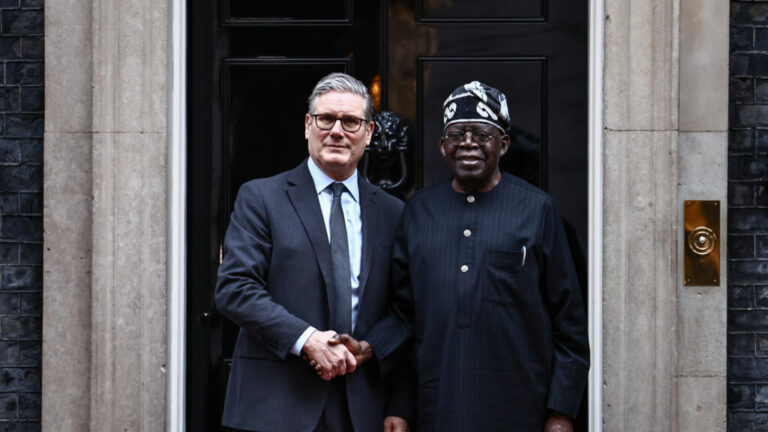
 

Tinubu govt signs UK deal to deport asylum seekers, criminals to Nigeria

0

PRESIDENT Bola Tinubu-led Federal Government has signed a new agreement with the United Kingdom (UK) to facilitate the return of thousands of failed asylum seekers and convicted criminals to Nigeria.

The agreement, signed by Minister of Interior, Olubunmi Tunji-Ojo and the UK’s Home Secretary, Shabana Mahmood, seeks to deepen cooperation on migration and criminal justice between both countries.

However, it remains unclear how such a decision would further impact a nation currently overwhelmed with protracted insecurity, occasioned by terrorism, banditry, gunrunning, kidnapping, armed robbery, internet fraud, among others.

The ICIR cannot also immediately confirm if the decision would involve accepting deported citizens of other countries into Nigeria by the Tinubu government, and if there will be pecuniary gains or other benefits attached to the plan.

With the agreement, “visa overstayers, foreign criminals and failed asylum seekers will be removed from British soil far more easily under a new agreement struck this week during the state visit of Nigeria’s President, Bola Tinubu,” a part of a statement released by the UK after the pact said.

The ICIR reported that Tinubu embarked on a state visit to the UK on Tuesday, accompanied by his wife, Oluremi Tinubu, and other top government functionaries for a high-level visit at the invitation of King Charles III and Queen Camilla.

The Nigerian leader was hosted at Windsor Castle, marking the first state visit by a Nigerian president to the United Kingdom in 37 years.

The visit, which ended today, saw some agreements signed between the two nations, including trade and defence to further deepen the relationship between Nigeria’s former colonial master and the Africa’s most populous country.

Reacting further to the agreement on deportation of asylum and criminals, the UK said its letters, an alternative identification document issued to individuals without a valid passport and used to support the return of people with no right to remain in the UK, would be recognised by the Nigerian government for the first time.

“The agreement, reached between the Home Secretary, Shabana Mahmood, and Nigeria’s Minister of Interior, Dr Olubunmi Tunji-Ojo, removes one of the major administrative hurdles to returning people, meaning the UK will no longer have to wait for emergency travel documents to be issued by Nigeria,” the UK said.

According to the country, the new deal adds to the sweeping reforms the Home Secretary has made to the UK immigration system to secure the UK’s borders and remove incentives attracting illegal migrants to Britain.

Data by the UK authorities show that are currently 961 Nigerian failed asylum seekers in the UK who have exhausted their rights of appeal. There are also 1,110 foreign national offenders from Nigeria, whom the Home Office is waiting to deport.

The ICIR reports that the UK struck a similar deal with Rwanda in 2022. It agreed to pay at least £370 million for relocating asylum seekers to the country. However, the decision failed to materialise.

Speaking further on Tuesday after the pact with Nigeria, the UK said, “The agreement marks a shared commitment to safe, fair and well‑managed migration. Annual returns to Nigeria have nearly doubled to 1,150. Returns and deportations of illegal migrants and foreign criminals from the UK have reached nearly 60,000 since the 2024 election.

“A further agreement to launch joint operations and share information has been reached to crack down on criminal gangs abusing visa routes, making sure all arrivals are genuine and ready to contribute.

“Following a series of high‑profile cases involving fake job sponsorships, sham marriages and forged financial or employment records, a new standardised document‑checking system will verify the authenticity of applications. Nigeria will also review its laws to tackle immigration crime, ensuring the toughest possible sentences are handed down to offenders.”

It said the partnership would build on work already disrupting high‑harm fraud networks, preventing millions in losses and protecting vulnerable people across the UK.

Minister for Border Security and Asylum Alex Norris said the agreement was another step in UK’s mission to restore order to the border by ensuring those who have no right to be in the country are swiftly removed.

He said “Nigeria is a key partner in our work to tackle illegal migration, as the UK’s largest African visa market and home to thousands of Nigerians who have built their lives here. We owe everyone across the system fairness.”

Similarly, the Nigerian Minister of Interior commended the pact, noting that his country would ensure its success.

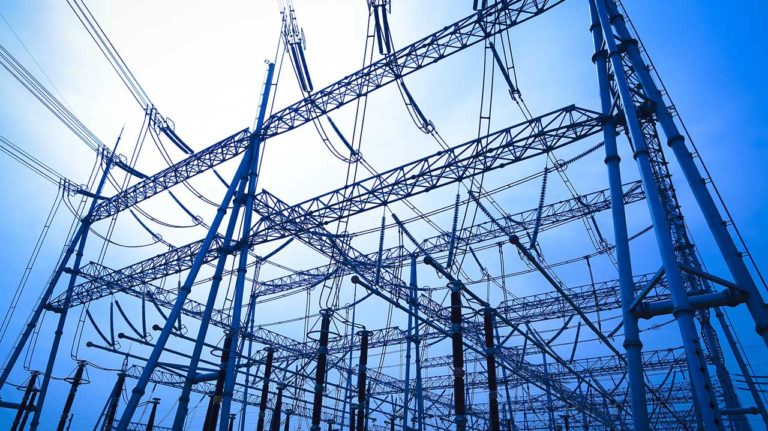
Benin, Togo bypass Nigerian government to buy power directly from GENCOs

AT a time when Nigeria’s electricity supply is arguably at its worst in decades, West African neighbours namely Benin, Togo and Burkina Faso are currently jostling for more electricity load offtake from Nigeria, The ICIR can authoritatively report.  

Benin and Togo already have bilateral agreements with Nigeria on electricity supply. They have also been able to scale up their power evacuation corridors, including transmission lines, sub-stations and switch-gear equipment for easier electricity off-take.

Conversely, Nigeria has been unable to optimally scale up its evacuation corridors, which currently limits offtake of power to such nations by the Nigerian government.

Therefore, these countries are considering buying power directly from power generation companies (GENCOS) in Nigeria to bypass the weakness of Nigerian power infrastructure that had been obstacles to direct supply of electricity to them. The ICIR reports that Burkina Faso has just approached the Nigerian government for power, but Benin and Togo have been regular customers.

Inside sources revealed that direct purchase from GENCOS could reduce costs. However, they must have the federal government’s consent to achieve this.

The ICIR reports that Nigeria’s current power supply oscillates between 3,000 and 4,000 megawatts despite power sector privatisation since 2013, with installed generation capacity of 14,000 megawatts.

Most Nigerian homes lack access to a constant electricity supply, with distribution companies resorting to load-shedding for homes and industrial clusters.

To worsen the crisis, Nigeria’s rising liquidity in the power sector and debts to power generation companies (GENCOS) of over trillion naira, with poor evacuation corridors, are a major cause of weak load evacuation to West African neighbours despite bilateral agreements.

“As of today, the contracting capacity for international customers, which constitutes Benin, Niger and Togo, is 606 megawatts. But they are given 306 megawatts on average, sometimes 320 megawatts, depending on line availability,” the executive director of market operations at Nigerian Independent System Operator (NISO), Edmund Eje, told The ICIR.

“They have asked why we are not able to evacuate to them, and we have explained that our infrastructure cannot evacuate optimally to their demands, which can overstretch our grid if there’s an overload,” Eje said.

The reason for poor evacuation, Eje said, is poor transmission infrastructure, stressing that, “an electricity overload will expose the national grid to incessant collapse.”

Findings by The ICIR showed that from Ikeja West to Sakete in the Benin Republic is 470 kilometres electricity line. While 30 per cent of the line belongs to the Benin Republic, 70 per cent of it is owned by Nigeria. The line, when fully completed, can evacuate 600 megawatts of power and on 330 (kilovolts)kV of transmission line to Benin.

However, the Nigerian evacuation corridors of 70 per cent are not fully built by the federal government, while the Benin Republic axis has been completed. With the non-completion, the evacuation of power to Sakete can only currently evacuate 100 megawatts of power to Benin, leaving those at the economic corridor in the axis stranded without constant power.

Eje confirmed that the weak evacuation corridors had prompted some of the West African neighbours to discuss with power generation companies for direct electricity load offtake through a power purchase agreement (PPA).

“In the past week, three generation companies came to my office to inform me that they want to sign a PPA with Togo. Burkina Faso also came to us and indicated interest in 400 megawatts of power,” Eje added.

The Executive Secretary of the Association of Gas Generation Companies of Nigeria (APGC), Joy Ogaji, told The ICIR that the debts in the sector were affecting investors’ confidence.

“Liquidity constraints continue to strain the generation companies. Gas supply limitations disrupt consistent power delivery, with end users struggling with unreliable electricity,” she said.

Analysts believe that the transmission expansion work by the Transmission Company of Nigeria (TCN), which involves upscaling of transmission infrastructure, could solve the evacuation corridor problems if the federal government intensify investments in transmission infrastructure, which still relies more on World Bank and African Development Bank funds for its works.

Recall that the Niger Delta Power Holding Company (NDPHC) disclosed on Sunday, March 15, that the Republic of Togo had expressed interest in increasing the volume of electricity from its company as part of efforts to meet growing power demand.

Débo-K’mba Barandao, who heads Togo’s utility company, said the country was witnessing an increasing electricity demand following the onboarding of new customers, including industrial and commercial users, as well as efforts by the Togolese government to expand electricity access nationwide.

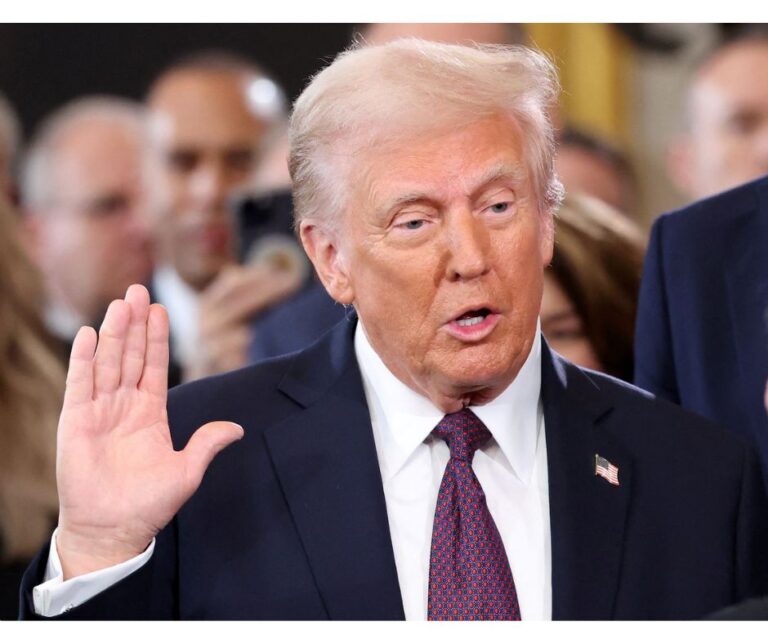
US weighs more troop deployment as Israel-Iran tensions escalate

UNITED States (US) President Donald Trump is weighing the deployment of thousands of additional troops to the Middle East as global energy lifelines came under renewed strain on Thursday, March 19.

Trump’s proposal follows the growing spillover of the US-backed Israel-Iran conflict into the Gulf, with fresh strikes hitting gas infrastructure in Qatar and missile threats directed at Saudi Arabia.

 Reuters reported that the development was revealed by officials familiar with the deliberations, as Washington scrambles to secure oil transit routes and prevent a total breakdown of global energy flows.

At the centre of the crisis is the South Pars gas field, the world’s largest natural gas reserve, struck by Israeli forces in what Trump described as a retaliatory move driven by “anger” over recent developments in the conflict, marking a dangerous expansion of targets from military to critical economic infrastructure.

Within hours, Iran responded with missile attacks that hit Qatar’s Ras Laffan Industrial City, a facility responsible for processing roughly a fifth of global liquefied natural gas supply. Qatari authorities reported extensive damage and fires at key installations, raising alarm across global markets already rattled by weeks of instability.

Missiles were also launched toward Riyadh, with Saudi air defences intercepting several ballistic threats. Additional drone and missile strikes targeted energy sites across the Gulf, including facilities in the United Arab Emirates, forcing shutdowns and heightening fears of a coordinated campaign against oil and gas infrastructure.

The widening conflict is now directly threatening the Strait of Hormuz, a narrow passage through which about a fifth of the world’s oil supply flows. Iran’s moves to disrupt the corridor have already driven up global energy prices and intensified concerns over inflation and supply shortages worldwide.

Trump insisted that Washington had no prior knowledge of Israel’s strike on South Pars, as he issued a stark warning to Tehran that any further attacks on Gulf states could trigger overwhelming US retaliation.

Meanwhile, foreign ministers from 12 Muslim-majority nations meeting in Riyadh condemned Iran’s strikes on civilian infrastructure, warning of potential military responses if attacks continue, as Saudi Foreign Minister Prince Faisal bin Farhan said the kingdom “reserves the right” to act.

Thousands have reportedly been killed in Iran since the conflict escalated, with casualties also recorded across Lebanon, Iraq, and Gulf states. In Lebanon, displacement is surging as hundreds of thousands have fled their homes.

Analysts noted that with key energy hubs burning, shipping lanes under threat, and diplomacy yielding little progress, the Gulf crisis is rapidly evolving from a regional conflict into a global economic emergency, one that could redefine both energy security and military alliances in the weeks ahead.

Nigerian mother, two children die in US crash ‘on way to church’

0

A NIGERIAN woman, Nihinlolawa Agoro, and two of her children have lost their lives in a tragic road accident in Texas, United States.

The crash occurred on Sunday, March 15, along US-90A between Harlem and Pitts roads.

According to the Fort Bend County Sheriff’s Office (FBCSO), the incident involved a sport utility vehicle (SUV) carrying five occupants and a truck travelling in the opposite direction.

Authorities said the truck crossed the median, lost control, and crashed head-on into the SUV.

The impact caused the truck to overturn before it caught fire.

Three occupants of the SUV were confirmed dead at the scene, including Agoro and two others. Two children in the vehicle, a four-year-old boy and a 14-year-old girl, were rescued and taken to hospital with serious injuries.

The 20-year-old driver of the truck was also hospitalised.

Investigators said they were still working to determine the cause of the crash, including whether alcohol played a role.

Officials believe the victims were on their way to church at the time of the accident, based on what they were wearing.

“Investigators are working with the district attorney’s office, and charges are expected to be filed, as alcohol is believed to be a factor,” said the FBCSO.

The ICIR’s check on the late woman’s Facebook page showed that she was a practicing lawyer in the US, and she had only two children, who died with her in the crash.


AIJC2026 calls for proposals

THE African Investigative Journalism Conference (AIJC)is accepting session & speaker proposals for this year’s edition, taking place at the Aga Khan University Graduate School of Media and Communications from November 10 – 12, 2026.

The AIJC returns in 2026, moving from Johannesburg for the first time in its history to Nairobi, Kenya. To ensure it presents the most interesting, urgent work and journalists on the continent, the AIJC invites you to suggest speakers, panels, themes or training that would elevate the conference this year.

Organiser says, “Do you have something that needs to be shared with your colleagues? Do you have a topic or some particular training that you think would enhance the conference? Do you have an idea for a discussion that belongs on the programme?

Help shape the conference by submitting proposals by 5 April 2026”.

The annual African Investigative Journalism Conference, an initiative of the Wits Centre for Journalism, is the largest gathering of African investigative journalists.

Now in its 22nd year (2026), the conference is usually held over three days late in the year (October/November), where journalists from Africa and elsewhere gather to network, share ideas and stories, celebrate excellent, groundbreaking work, and learn from one another through a series of lectures, workshops, masterclasses and seminars.

If you are interested in sending proposals, please use this link.

Defence minister, NSA Ribadu join Tinubu on UK trip hours after Borno explosions

1

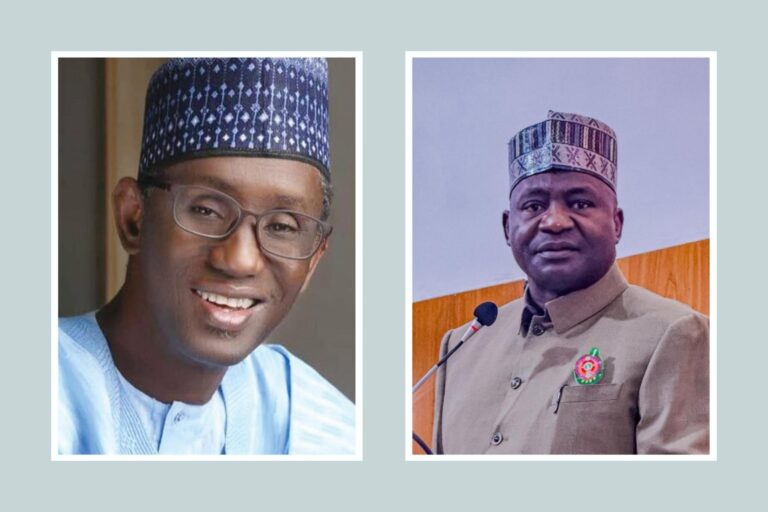
NIGERIA’S Minister of Defence, Christopher Musa, and National Security Adviser, Nuhu Ribadu, were among top security officials who travelled out of the country with President Bola Tinubu for a state visit to the United Kingdom on Tuesday, March 17.

They jetted out of the country despite the recent attacks on communities and military bases across several parts of Nigeria.

Tinubu departed Abuja, accompanied by the First Lady, Oluremi Tinubu, for the high-level visit at the invitation of King Charles III and Queen Camilla. 

The Nigerian leader was scheduled to be hosted at Windsor Castle, marking the first state visit by a Nigerian president to the United Kingdom in 37 years.

In a viral video, the Defence Minister was seen among many other delegates, including Lagos State Governor Babajide Sanwolu, Finance Minister Wale Edun, welcoming the president into the United Kingdom.

Musa and Ribadu were among the delegates listed to accompany Tinubu by the Presidency.

The presence of Ribadu, who coordinates Nigeria’s security and intelligence framework, and Musa, who oversees the country’s military operations, has drawn outrage given the worsening security situation at home, especially the triple attacks in Borno State, which killed 23 people and wounded 108 others. 

Purpose of visit

The Presidency said the visit was aimed at strengthening bilateral ties between Nigeria and the United Kingdom, with key discussions expected around trade, investment, defence cooperation, immigration, and cultural exchange.

During the visit, Tinubu is expected to hold talks with UK Prime Minister Keir Starmer at 10 Downing Street. The meeting is projected to culminate in the signing of several agreements, including a £746 million financing deal between UK Export Finance and Nigerian authorities to support the rehabilitation of the Lagos Port Complex and Tin Can Island Port.

Rising insecurity at home

The trip came at a time when Nigeria is facing renewed security challenges across multiple regions, especially the North-East. In the North-East, particularly in Borno State, insurgent groups have intensified attacks on both military formations and civilian communities.

Recent reports indicate that several military bases have come under coordinated assaults, leading to casualties among security personnel and the loss of ammunition. Civilian communities have also been targeted, with abductions and killings reported in different parts of the region.

Beyond the North-East, states in the North-West and North-Central have also continued to grapple with banditry, mass kidnappings, and communal violence. Incidents of attacks have also been recorded in parts of the South-West.

Growing concerns over leadership priorities

The absence of key security officials, including the national Security Adviser and defence minister, has triggered concerns among citizens, who questioned the timing of the trip and the priorities given to lives of ordinary Nigerians.

Nigerians argued that the presence of top security decision-makers is crucial at a time when the country is battling coordinated threats from insurgents and armed groups.

While Tinubu condemned recent attacks and directed security agencies to intensify operations, Nigerians argue that the continued escalation of violence shows deeper challenges within the country’s security architecture.

A Twitter X, Seun Awogbenle wrote “The Minister of Defence, Christopher Musa has no business in the UK at this time; he should be leading a delegation of the service chiefs to Maiduguri immediately. I have been remotely involved in the activities on the state visit and the key issues that have dominated the conversations are on trade, business and investment. Unlike the visit to Turkey, the UK is not offering Nigeria any material support in defence and intelligence. So, at best, he could have had someone else stand in for him on this trip. He has more serious demands on the home front.

“The minister of defence came in with the ovation from all Nigerians and to whom much is given, much is expected. Nigerians want to see tangible improvements in the security situation.”

Another user, Atikun Sokoto, expressed a similar concern, stating that “It’s a shame to see the Minister of Defence Christoper Musa among the shameless leaders who went to welcome President Bola Ahmed Tinubu in London after all these tragic incidents that happened in Maiduguri, other disclosed and undisclosed locations within Arewa. Such a shame from a man who many of us celebrate when his name was sent to Senate for screening as the one that will succeed Badaru after he was forced to retire.”

Senegal to appeal CAF’s ruling awarding AFCON title to Morocco

0

THE Senegalese Football Federation has vowed to challenge a controversial decision by the Confederation of African Football Appeals Board, which awarded a 3–0 forfeiture victory to Morocco in the final of the Africa Cup of Nations.

In a communiqué on Tuesday night, March 17, the Senegalese Football Federation confirmed it had received CAF’s March 17, 2026, ruling concerning the disputed final between Senegal and Morocco.

The ICIR reports that the Appeals Board of CAF ruled in favour of the Fédération Royale Marocaine de Football (FRMF), declaring their appeal admissible and setting aside an earlier decision by CAF’s Disciplinary Board. 

According to CAF, the initial ruling was annulled because the Appeal Board found that the conduct of the Senegal team fell within the scope of Articles 82 and 84 of the Regulations of the Africa Cup of Nations.

It subsequently ruled that the Senegalese team had infringed Article 82 and should forfeit the match under Article 84, awarding Morocco a 3–0 victory, effectively handing them the continental title.

“It is declared that the Fédération Sénégalaise de Football (FSF), through the conduct of its team, infringed Article 82 of the Regulations of the Africa Cup of Nations.

“In application of Article 84 of the Regulations of the Africa Cup of Nations, the Senegal team is declared to have forfeited the match, with the result recorded as 3–0 in favour of the Fédération Royale Marocaine de Football (FRMF),” CAF statement read.

Reacting to the development, the FSF denounced the decision as “unfair, unprecedented, and unacceptable,” noting that it brings disrepute to African football.

The body added that it would immediately initiate proceedings before the Court of Arbitration for Sport (CAS) in Switzerland to contest the ruling.

“In defence of its rights and the interests of Senegalese football, the Federation will initiate, as soon as possible, an appeal procedure before the Court of Arbitration for Sport (CAS) in Lausanne,” the statement added.

 Beyond the forfeiture ruling, CAF’s Appeals Board also delivered a series of related decisions arising from incidents during the final.

Moroccan international Ismaël Saibari was found guilty of misconduct under Articles 82 and 83(1) of the CAF Disciplinary Code. However, his sanctions were reduced, with a two-match suspension imposed, one of which was suspended, while an earlier $100,000 fine was overturned.

The Appeals Board also addressed other match incidents; partially upholding appeals related to ball boy conduct and a laser pointer incident. 

It reduced fines imposed on the Moroccan federation in those cases to $50,000 and $10,000 respectively. However, a separate $100,000 fine linked to interference around the VAR review area was upheld.

ICPC denies seeking fresh detention order for El-Rufai, says case adjourned to March 31

0

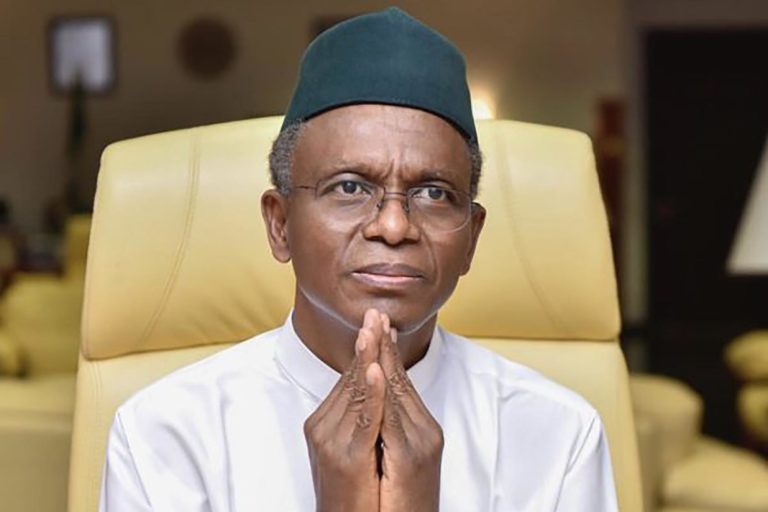
THE Independent Corrupt Practices and Other Related Offences Commission (ICPC) has dismissed reports that it returned to court to seek a fresh extension of the detention of former Kaduna State Governor Nasir El-Rufai.

In a statement Tuesday night by the ICPC’s Head, Media and Public Communication, John Odey,  the commission clarified that its appearance in court earlier that day was solely in response to an application filed by El-Rufai challenging his continued remand.

“This statement is necessary to correct inaccurate reports by some media outlets suggesting that the commission was in court today, 17th March 2026, seeking a fresh extension of his detention. The commission appeared in court today for the hearing of Mallam El-Rufai’s application, dated and filed on 6th March 2026, which seeks to overturn the court order renewing his remand issued on 5th March 2026,” Odey stated.

He explained that  a separate attempt by El-Rufai’s legal team to set aside the earlier remand order issued on February 19 was dismissed by the court on March 9, adding that magistrate granted the request and adjourned the matter to March 31, 2026.

The commission said El-Rufai remained in its custody under a valid court order and insisted that due process had been followed in handling his case.

“During today’s proceedings, counsel to Mr El-Rufai was served with our response to his application. The lawyer subsequently requested an adjournment to respond to the commission’s response. Consequently, the gagistrate adjourned the hearing of the application to 31st March 2026 to allow Mr El-Rufai’s team sufficient time to react to our response,” Odey said.

According to the ICPC, the initial 14-day remand was granted to investigate allegations bordering on money laundering and abuse of office. Upon its expiration, the court approved an additional 14-day extension on March 5.

“To keep the public informed, the commission provides the following timeline of the court authorised detention. The initial remand order was granted, allowing the commission to detain the suspect for 14 days to investigate allegations of money laundering and abuse of office. Upon the expiration of the initial order, the commission applied for a 14-day extension to complete its investigations, which the court acceded to on 5th March, 2026. Counsel to El-Rufai attempted to set aside the remand order issued on 19th February, 2026, but the application was dismissed on 9th March, 2026.

“Mallam El-Rufai remains in the lawful custody of the ICPC under the remand order dated 5th March, 2026. The commission is strictly following the court mandated timeline, including the requirement for a progress report. The ICPC conducts its duties with the highest professionalism and respect for the rule of law. The remand of Mr El-Rufai has been authorised by a court of law in accordance with the Administration of Criminal Justice Act (ACJA) 2015,” he added.

Odey further cautioned against what he described as “inaccurate reports” and reiterated ICPC’s policy against media trials.

“Furthermore, the ICPC remains firm in upholding its longstanding policy of avoiding media trials. We believe that legal disputes should be settled in the courtroom, not on newspaper pages and social media platforms. The commission’s leadership remains steadfast and undeterred in confronting any and all challenges in the course of the current investigation. We urge the public to avoid spreading unverified information and to rely on official updates from the commission,” he added.

The ICIR reported that ICPC confirmed that El‑Rufai was in its custody on February 18, following the former governor’s detention by the Economic and Financial Crimes Commission (EFCC), where he presented himself on February 16, after an invitation over alleged financial improprieties during his tenure as Kaduna State governor between 2015 and 2023. 

In 2024, the Kaduna State House of Assembly indicted him over alleged diversion of N423 billion in public funds and money laundering and urged anti-graft agencies to investigate him.

Report indicated that El-Rufai, who spent two nights in EFCC custody, was granted bail at about 8 p.m. on February 18 but was immediately re-arrested by armed operatives who reportedly laid in wait at the EFCC premises.

The accused has since applied for bail but a Federal High Court in Abuja on February 25 declined to entertain a bail application filed, ruling that the application was premature, insisting that the defendant must first be properly arraigned before the court could consider such an application.

The judge subsequently adjourned the matter to April 23, 2026, for arraignment.

FG declares public holidays for Eid-ul-Fitr

0

THE Federal Government has declared Thursday, March 19, and Friday, March 20, 2026, as public holidays to mark this year’s Eid-ul-Fitr celebration.

The declaration was made by the Minister of Interior, Olubunmi Tunji-Ojo, on behalf of the government, according to a statement issued on Tuesday, March 17, by the Permanent Secretary of the ministry, Magdalene Ajani.

Eid-el-Fitr, meaning ‘festival of breaking the fast,’ is one of the most important feasts in Islam.

The festival marks the end of Ramadan, a sacred month of fasting, prayer, and spiritual reflection observed by Muslims worldwide.

During Ramadan, Muslims fast from dawn to sunset, abstaining from food, drink, and other physical needs as an act of devotion to Allah.

Eid-el-Fitr is a time of joy and gratitude, beginning with a special congregational prayer at mosques and open prayer grounds.

It is also marked by feasting, gift-giving, and charitable acts, particularly the giving of Zakat al-Fitr, a mandatory charity given to the less privileged before the Eid prayer.

Congratulating Muslim faithful on the successful completion of Ramadan, Tunji-Ojo urged them to sustain the virtues of love, generosity, peace, tolerance, and sacrifice imbibed during the period.

He also called on Nigerians to use the festive season to pray for the peace, unity, and continued development of the country.

The minister further encouraged citizens to celebrate responsibly and extend acts of kindness to the less privileged, in line with the spirit of the season.

He reiterated the Federal Government’s commitment to promoting national unity and peaceful coexistence among all Nigerians.