
Home Blog Page 627

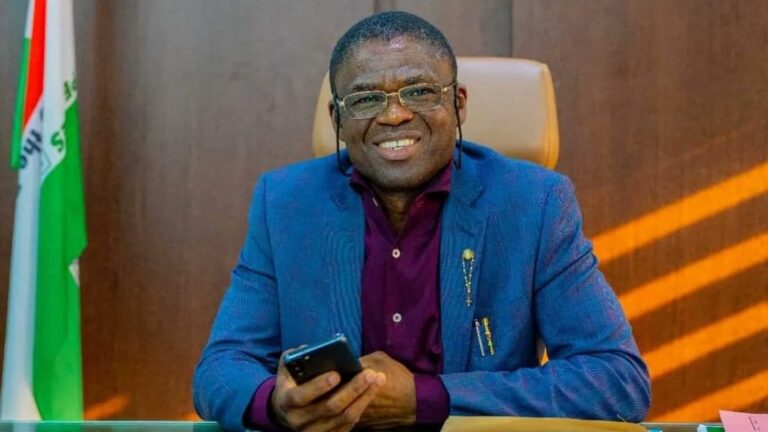
Edo: Obaseki picks Godwins as new deputy governor

THE Edo State governor Godwin Obaseki has picked Omobayo Godwins as his deputy.

Godwins’ nomination as Edo State deputy governor comes just hours after the former deputy governor Philip Shaibu was impeached.

According to a video posted by Channels TV on X, arrangements are being made for Omobayo’s inauguration, which is scheduled for Monday, March 8, at the Edo State Government House in Benin City.


Read Also:

Godwins, born on July 19, 1986, hails from Akoko Edo Local Government Area of the state.

He holds an MSc in Public Administration and a B.Eng in Electrical and Electronics Engineering from the University of Benin (UNIBEN), 

He is a member of the Council for the Regulation of Engineering in Nigeria (COREN) and the Nigerian Society of Engineers (NSE).

Prior to his recent assignment, he worked for Dresser Wayne West Africa Limited as a Senior Maintenance Engineer, where he gained experience in the South-South operations, offering excellent services and expanding the company’s clientele.

The ICIR reported that the Edo State House of Assembly impeached the state’s embattled deputy governor, Shaibu, early Monday, April 8.

The impeachment followed the adoption of the report of the seven-man investigative panel set up by the state’s Chief Judge, Daniel Okungbowa, to probe allegations of misconduct against him.

The Assembly commenced its session at 9:41 a.m. and conducted a voting process, with the majority voting for the deputy governor’s impeachment.

Of the 20 members present, 18 voted in favour of the impeachment, while one opposed it, cementing the resolution to impeach Shaibu.

Recall that Shaibu filed a suit at the Federal High Court to stop his impeachment, but the Abuja High Court refused to grant an ex-parte motion.

In the motion marked FHC/ABJ/CS/321/2024, the state government, governor, House of Assembly, House of Assembly Speaker, Clerk, Chief Judge, the Inspector General of Police and the Director General of the Department of State, Services were listed as first to eight defendants.

In the suit, Shaibu sought an order of the court restraining the third to fifth defendants from commencing any process by issuing a notice of allegation, holding proceedings, or setting up any panel of investigation for his removal pending the hearing of a motion on notice.

He also sought an interim injunction restraining the defendants, whether themselves or their agents, from interfering with the res/subject matter of the originating summons filed in the suit by taking any adverse action against him.

However, in the ruling dated March 13, the trial judge, James Omotosho, declined the deputy governor’s prayers.

The ICIR reports that Shuaibu has had a prolonged battle with the state Obaseki. His (Shuaibu) interest in succeeding his principal worsened the feud.

Lagos court remands Emefiele in EFCC custody

0

A HIGH Court in Lagos State has ordered the remand of the former governor of the Central Bank of Nigeria (CBN), Godwin Emefiele, in the custody of the Economic and Financial Crimes Commission (EFCC) over alleged abuse of office and the allocation of $4.5 billion, N2.8 billion.

While giving the order on Monday, April 8, the court adjourned till Thursday, April 11, to give its ruling on the bail application on the fresh 26 counts against Emefiele.

The judge, Rahman Oshodi, also ordered the remand of Emefiele’s co-defendant, Henry Omoile, at the Kirikiri Prison pending the court’s ruling on his bail on April 11.


Read Also:

The court ruled that both accused should be detained after hearing the bail requests submitted by the defendants’ attorney, Abdul Hakeem Labi-Lawal. 

In a request for Emefiele’s bail, the lawyer appealed to the judge to either grant Emefiele the most lenient bail conditions or bail on self-recognition until the case is heard and decided. 

Additionally, the attorney requested that the court offer the second defendant the most generous bail conditions.

Responding, the counsel for the EFCC, Rotimi Oyedepo, a senior advocate, did not object to the bail request. 

Oyedepo requested that the court use its discretion while granting bail.

The charge was marked ID/23787c/2024 and dated April 3, 2024.

The EFCC alleged that the former CBN governor committed abuse of office between 2022 and 2023 in Lagos.

The EFCC also claimed that Emefiele took an arbitrary decision in Lagos between 2020 and 2021 by allocating foreign exchange of $291,945,785.59 without calling for bids, which the prosecutor said was an abuse of his office as the CBN governor.

He was also said to have arbitrarily taken another decision in Lagos in 2021 by allocating foreign exchange worth $1,769,254,793.16, which the EFCC said made him violate and abuse his position as the CBN governor.

Emefiele’s co-defendant, Omoile, was accused of accepting gifts of $110,000 for Emefiele from one Raja Punjab through another, Monday Osazuwa, on November 17, 2020, in Lagos while serving as an agent in exchange for the CBN.

The allegation stated that the offences violated Section 73 of the Lagos State Criminal Law 2011.

On 30 July 2023, President Bola Tinubu designated the Financial Reporting Council of Nigeria’s Chief Executive Officer, Jim Obazee, as a special investigator to probe the CBN’s operations.

Obazee alleged in his report that Emefiele unlawfully deposited billions of naira in foreign currencies into as many as 593 bank accounts in the United States, the United Kingdom, and China.

Emefiele countered the report and described it as a premeditated attempt to malign him and damage his reputation.

In November 2023, Emefiele was sent to Kuje Correctional Centre over an alleged N1.6 billion procurement fraud.

He was arraigned on a six-count charge at a Federal Capital Territory (FCT) High Court, Abuja, on Friday, November 17.

The ICIR reported on March 7 that a forensic analyst confirmed before a Federal Capital Territory (FCT) High Court in Abuja that the documents used by Emefiele to request the payment of $ 6.2 million to foreign election observers were forged.

The analyst, Bamaiyi Meriga, made the disclosure while he appeared as a witness to the EFCC at Emefiele’s trial on Thursday, March 7.

Meriga, who appeared before Hamza Adamu, a judge, told the court that following forensic analysis of the discussed documents, he discovered clear evidence of forgery of signature and seal of execution different from the original version.

Edo Assembly impeaches deputy governor, Philip Shaibu

0

THE Edo State House of Assembly impeached the state’s embattled deputy governor, Philip Shaibu, in the early hours of Monday, April 8.

The impeachment followed the adoption of the report of the seven-man investigative panel set up by the state’s Chief Judge, Daniel Okungbowa, to probe allegations of misconduct against him.

The Assembly commenced its session at 9:41 a.m. and conducted a voting process, with the majority voting for the deputy governor’s impeachment.

Read Also:


IGP ordered me to leave Edo State on the eve of governorship election – Wike

Edo deputy governor, Shaibu, locked out of office

Alleged impeachment of deputy governor: Court orders Obaseki, DSS, to maintain status quo


Of the 20 members present, 18 voted in favour of the impeachment, while one opposed it, cementing the resolution to impeach Shaibu.

Based on the investigation conducted by a seven-person panel headed by Stephen Omonua, a retired judge appointed by the state’s Chief Judge, Shaibu was deemed responsible for the offence of revealing official secrets.

Recall that Shaibu filed a suit at the Federal High Court seeking to stop his impeachment, but the Abuja High Court refused to grant an ex-parte motion.

In the motion marked FHC/ABJ/CS/321/2024, the state government, governor, House of Assembly, House of Assembly Speaker, Clerk, Chief Judge, the Inspector General of Police and the Director General of the Department of State, Services were listed as first to eight defendants.

In the suit, Shaibu sought an order of the court restraining the third to fifth defendants from commencing any process by issuing a notice of allegation, holding proceedings, or setting up any panel of investigation for his removal pending the hearing of a motion on notice.

He also sought an interim injunction restraining the defendants, whether themselves or their agents, from interfering with the res/subject matter of the originating summons filed in the suit by taking any adverse action about any attempt or process targeted at his removal from office as the deputy governor pending the hearing of the motion on notice.

However, in the ruling dated March 13, the trial judge, James Omotosho, declined the deputy governor’s prayers.

Meanwhile, during Tuesday’s proceedings, the judge scheduled Wednesday for the hearing of another ex-parte motion brought by the plaintiff, requesting substituted service on the defendants due to difficulties in serving them.

The ICIR reports that Shuaibu has had a prolonged battle with the state Governor, Godwin Obaseki. His (Shuaib) interest in succeeding his principal worsened the feud.

Media groups, CSOs demand probe of military over editor’s abduction

0

MEDIA and civil society organisations (CSOs) in Nigeria have given the Federal Government a 14-day ultimatum to probe the abduction and torture of journalist and Editor of FirstNews, Segun Olatunji.

This was contained in a joint statement by the organisations on Monday, April 8, demanding compensation for the journalist following his abduction, detention and torture, which lasted nearly two weeks.

“In accordance with Section 35(6) of the 1999 Constitution, as amended, the Federal Government should pay Mr. Olatunji substantial compensation and issue a public apology to him for the unlawful and unconstitutional violation of his rights as well as the inhuman and degrading treatment to which he was subjected.

“The Federal Government should make an unequivocal public commitment to respect and defend the rights and freedoms of journalists and other media practitioners to carry out their professional duties in a safe and conducive environment in accordance with Sections 22 and 39 of the 1999 Constitution, as amended, and advise all law enforcement, security, intelligence, military and other agencies accordingly,” part of the statement read.

The statement was jointly signed by the Nigerian Guild of Editors (NGE), International Press Institute, Nigeria Chapter (IPI Nigeria), Newspapers Proprietors Association of Nigeria (NPAN) / President, Nigerian Press Organisations (NPO), Broadcasting Organisations of Nigeria, Media Rights Agenda (MRA), and the Guild of Corporate Online Publishers.

Others are the Nigeria Union of Journalists (NUJ), International Press Centre (IPC) and Socio-Economic Rights & Accountability Project (SERAP).

The ultimatum will elapse by Monday, April 22, after which the groups have threatened to utilise every available option to ensure the demands are met.

Olatunji was abducted from his home in Lagos by armed men in military uniform on Friday, March 15, and his whereabouts were kept secret for over a week.

His detention was linked to a report “Revealed: Defence Chief running office like family business – Public Interest Lawyers,” which was published by his organisation.

On Wednesday, March 27, IPI Nigeria, in a statement, called on President Bola Tinubu to direct the military hierarchy to immediately release the journalist or charge him to court if he was being accused of any offence.

Olatunji was released the following morning by officials of the Defence Intelligence Agency (DIA), who handed him over to members of the media community by the roadside in Abuja, after which journalists called for the punishment of those involved in his abduction.

The ICIR reported that Olatunji expressed fear for his life while addressing his colleagues.

FCCPC to NERC: Mandate DisCos to meter all Band A customers in 60 days

0

THE Federal Competition and Consumer Protection Commission (FCCPC) has advised the Nigerian Electricity Regulatory Commission (NERC) to mandate distribution companies (DisCos) to meter all unmetered Band A customers within 60 days.

It said doing so would ensure accurate billing and protect consumers from arbitrary estimations.

It also requested that NERC vigorously enforce the cap on estimated bills and ensure compliance with the required daily supply for respective tariff bands (A to E), thereby promoting fairness in billing practices.

The FCCPC also backed NERC’s recent Order to DisCos to automatically downgrade any Band A feeder that does not enjoy the minimum requirement of a 20-hour-per-day power supply for seven consecutive days.

The organisation stated these in reaction to NERC’s recent electricity tariff for Band A customers, who are expected to enjoy a power supply for a minimum of 20 hours per day as they now pay the new rate of N225/kWh, up from N68/KWh they previous paid.

The agency also warned the distribution companies (DisCos) against overbilling customers who were not categorised as Band A.

It applauded NERC for punishing the Abuja Electricity Distribution Company(AEDC) for overbilling customers not categorised in Band A shortly after announcing the new tariff.


Read also :


The ICIR reports that the penalty includes a mandate for AEDC to reimburse all customers in Bands B, C, D, and E billed above the allowed tariff bands and to pay a fine of ₦200 million.           

The punishments were contained in a statement released by the Executive Vice Chairman of FCCPC, Adamu Abdullahi, on Sunday, April 7.

Abdullahi, who described the move as a crucial step towards upholding consumer rights and ensuring fairness within Nigeria’s electricity industry, tasked NERC to ensure billing and power supply transparency to balance the increased tariff for Band A customers.

“NERC’s decision to penalise AEDC reinforces FCCPC’s strong advocacy for protecting consumers from unfair market practices, as mandated by the Federal Competition and Consumer Protection Act (FCCPA) 2018. Notably, this action was taken within 48 hours of the introduction of a new tariff regime for Band A customers.

“While NERC approved the tariff realignment and service delivery commitments for Band A electricity customers to ensure the sustainability and viability of Distribution Companies (DisCos) and the entire electricity sector, we acknowledge the legitimate concerns raised by consumers. Many consumers have expressed fear that the likelihood of arbitrary estimated billing for unmetered Band A customers could lead to consumer abuse and dissatisfaction.”

He said DisCos’ repeated failure to meet the minimum power supply hours for respective tariff bands and their failure to compensate consumers for service downtime over time had worsened consumer grievances.

The FCCPC said it would closely monitor the implementation of the directive by all parties, in line with extant laws and an existing Memorandum of Understanding (MoU) with NERC.

It urged NERC to diligently enforce the proposed measures and collaborate with stakeholders to address consumer concerns to foster a sustainable and consumer-friendly electricity market.

Electricity subsidy doesn’t exist, IMF, FG deceiving Nigerians – Falana

Human rights lawyer and the chair of the Alliance on Surviving COVID-19 and Beyond (ASCAB) Femi Falana, has said electricity subsidies no longer exist.

He accused the Federal Government and the International Monetary Fund (IMF) of deceiving Nigerians about subsidy payments.

Falana, a senior advocate, also said the Federal Government, through the Nigerian Electricity Regulatory Commission (NERC), planned to extend electricity tariff hikes beyond Band A consumers to other Nigerians categorised under other bands.

The lawyer, in a statement he signed and sent to The ICIR, said the recent tariff increase for Band A consumers by the government could not be justified under the Electricity Act 2023.


Read Also:


He threatened to approach the courts to seek redress for Nigerians.

The activist argued that the Federal Government had already removed the electricity subsidy in 2022 and so the government, by the new tariff hike, was making Nigerians pay for the inefficiency and profligacy of those managing the electricity sector.

Falana recalled that on March 23, 2021, the Federal Government announced its plans to end electricity subsidies by the end of that year. He quoted the special adviser to former President Muhammadu Buhari on Infrastructure, Ahmed Zakari, who said, ” We plan to eliminate subsidies, you will have poor people pay more. But we argue that the only reason the power prices in Nigeria are high is because we don’t generate enough. If you generate 10W of power, the tariff will be half its cost. So keeping the prices very low is not the approach, but delivering adequate power.”

Falana also quoted the statement by the former Minister of Finance, Budget and National Planning, Zainab Ahmed, who further confirmed electricity subsidy removal on March 12, 2022, at a virtual meeting of the African Ministers Conference and the International Monetary Fund (IMF).

“We are cleaning up our subsidies. We had a setback; we were to remove the fuel subsidy by July this year, but there was a lot of pushback from the polity. We have elections coming, and because of the hardship that companies and citizens went through during the COVID-19 pandemic, we just felt that the time was not right, so we pulled back on that.

“But we have been able to quietly implement subsidy removal in the electricity sector, and as we speak, we don’t have subsidies in the electricity sector. We did that incrementally over time by carefully adjusting the prices at some levels while holding the lower levels down,” Zainab Ahmed had said.

He further quoted the IMF’s Mission Chief for Nigeria, Axel Schimmelpfenning, who warned that the continuation of fuel and electricity subsidies would cost Nigeria N2.33 trillion or three per cent of its gross domestic product (GDP) in 2024.

Schimmelpfenning said this when he visited Lagos and Abuja on March 12, 2024.

Falana disagreed with the IMF and insisted that the Buhari administration had already confirmed electricity subsidies no longer exist.

Notably, NERC had, on April 3, 2024, raised the electricity tariff for customers enjoying 20 hours of power supply daily. Customers in this category are under the Band A classification.

The increase will see the customers paying N225 kilowatt per hour from the current N66, a development that has been heavily criticised by many Nigerians, considering the suddenness of the tariff hike and the current hardship in the country.

The Minister of Power, Adebayo Adelabu, subsequently said the new electricity tariff hike would only affect 1.5 million of the about 12 million consumers.

However, Falana declared the electricity subsidy non-existent and alleged that the government is trying to raise funds for cash-strapped electricity distribution companies (DisCos).

He said, “Under that law, there are certain steps to take, and we are going to embark on those steps tomorrow (today) which is to raise serious objections concerning the impunity that has characterized the recent increase.

“At the appropriate time if there is no response, we will have to go to court because the government had warned, the minister had warned that the increase this time around will only fetch the government or the discos N1.6trillion whereas the destination is N3trillion.

“So, the poor people that he (the minister) is talking about, the other bands, very soon, the government is going to extend the increases to them so that the N1.4trn the minister is talking about will be recovered.”

Falana who further spoke on the electricity subsidy in a monitored interview at Channels Television on  Politics Today late on Sunday, April 7  said, “The government is increasing tariff to assist the cash-strapped discos majority of which have now been taken over by the banks and AMCON, and the banks and AMCON have no competence to run electricity companies.”

Falana blamed the government for being insensitive to the plight of Nigerians who are still grappling with the economic impact of petrol subsidy removal and the collapse of the foreign exchange windows – the two policies of President Bola Tinubu’s administration that have resulted in an unprecedentedly high cost of living.

Total solar eclipse to occur in US, Canada, other places April 8

A TOTAL solar eclipse is set to occur on Monday, April 8, crossing North America and passing over Mexico, the United States, and Canada.

The total solar eclipse is rare and is often described as once in a lifetime opportunity for those who witnessed it. It takes place when the Moon moves in the middle of Earth and the Sun. The Moon blocks the light of the Sun, either fully or partially, which casts a huge shadow on some parts of the world.


Read Also:


It will only take place in parts of the United States, Mexico, and Canada. However, the Moon will cover some parts of the Sun in a partial eclipse in parts of some Caribbean countries, Colombia, Venezuela, Spain, the United Kingdom, Ireland, Portugal, and Iceland. Unfortunately, there will be no eclipse visible to anyone in Nigeria or anywhere else in Asia.

A report by The ICIR debunked the claim in a viral video on WhatsApp that there will be total darkness for three days following the expected solar eclipse from April 4.

The finding in the report shows that the claim is false and the solar eclipse is expected to only take place on April 8, 2024, for a few minutes and will not subject the whole world to total darkness.

During a solar eclipse, the Moon passes between the Earth and the sun. The Moon blocks the Sun’s direct rays by casting a shadow on the Earth’s surface. The degree of obstruction is determined by the respective positions and sizes of the three celestial bodies, resulting in partial, annular, and complete solar eclipses.

Unlike other eclipses, where there can be between two and five solar eclipses every year, a total solar eclipse is rare and will only take place in certain areas because the entire path of the umbral shadow during a solar eclipse only covers less than one per cent of the globe.

Ogun judiciary workers begin indefinite strike Monday

0

THE Judiciary Staff Union of Nigeria (JUSUN) in Ogun State says it will embark on an indefinite strike from Monday, April 8.

The strike comes after a 14-day ultimatum the union gave to the Ogun state government over non-payment of the workers’ 40 per cent peculiar allowance.

In a statement on Sunday, April 7, the union said, “The leadership of the union had forwarded necessary documents requested by a representative of the Ogun Government since Friday, March 8, to Gov. Dapo Abiodun.


Read Also:


“The document was also copied to the Secretary to the State Government, Head of Service, and Attorney-General of the state, including the approval by the National Salaries and Wages Commission to the NJC for payment of the peculiar allowance.”

According to the statement, the judiciary workers are entitled to the allowance.

“After due consultation with relevant stakeholders, including the JUSUN national leadership, we decided to give an additional 14 days to the state government starting from March 18 to April 1 to allow it enough time to do the needful.

“Every member of JUSUN in Ogun is directed to stay at their various homes beginning from Monday. Please, don’t bother to come to the office until further notice from the leadership of the union,” it added.

The ICIR reports that the union had also embarked on a five-day warning strike to protest the non-payment of the peculiar allowance to the state judiciary workers.

FG declares Tuesday, Wednesday as public holiday to celebrate Eid-ul-Fitri

0

THE Federal Government (FG) has declared Tuesday and Wednesday, April 9 and 10 respectively as public holidays to mark the 2024 Eid-el-Fitr celebration.

The Minister of Interior, Olubunmi Tunji-Ojo, disclosed this in a statement on Sunday, April 7 by the ministry’s permanent secretary, Aishetu Ndayako.

The minister congratulated all Muslims for the successful completion of the fasting in the holy month of Ramadan.


Read Also:

Tunji-Ojo called on them to imbibe and practise the virtues that entail kindness, love, tolerance, peace, good neighbourliness, and compassion, as exemplified by the Holy Prophet Muhammad (Peace be upon Him).

The statement read, “The Federal Government of Nigeria has declared Tuesday, 9th and Wednesday, 10th April, 2024 as public holidays to mark Eid-el-Fitr celebration.

The Minister of Interior, Dr. Olubunmi Tunji-Ojo, congratulates all Muslim Ummah for the successful completion of the fasting in the holy month of Ramadan.

“Tunji-Ojo calls on Muslim Ummmah to imbibe and practise the virtues that entails kindness, love, tolerance, peace, good neighbourliness, compassion as exemplified by the Holy Prophet Muhammad (Peace be upon Him).

“He urged Nigerians to continue in the spirit of unity in order to improve and achieve peace and oneness in the country.

“The minister wishes all Muslim Ummah a happy Eid-el-Fitr celebration and prays that the peace, blessings, and favour of Allah be with everyone and our great nation.”

FG dollar bond issuance to stabilise Nigeria’s reserve, FX market – Economists

THE Federal Government’s planned issuance of dollar bond is expected to shore up Nigeria’s foreign reserve(FX) and stabilise the foreign exchange market, industry analysts and economists have said.

Nigeria’s foreign exchange reserve is currently above  $33 billion, but there are high hopes that the dollar bond issuance could lead to its appreciation with diaspora and domiciliary accounts on target.

Further findings by The ICIR also revealed that Nigeria’s foreign exchange (FX) reserve has experienced a sharp decline of about $1.02 billion within 18 days, as the Central Bank of Nigeria (CBN) continues its aggressive defence of the naira (naira subsidy).


Read Also:


As of April 4, 2024, the FX reserves stood at $33.43 billion, down from $34.45 billion on March 18, 2024, according to the latest data from the CBN.

Nigeria is currently subsidising the dollar rates to tame its wild surge against the naira which is created lots of currency problems for the economy.

President Bola Tinubu-led administration has made fuel and of recent electricity subsidy removal a key component of its administration. This has come with a price as inflation surges to 31.7 per cent.

Industry analysts say, the subsidy comes at the expense of Nigeria’s foreign reserves, which guarantees such subsidy, amid weak exports and capital importation by states.

“It is a sovereign financial instruments. It will inspire a lot of confidence. A dollar bond issuance is another way of raising our foreign exchange inflows and it’s even better than the hot money from the equity markets because it’s tenured and not so vulnerable. You can take a bond for a year and they’re tenured,” former Director-General of the Lagos Chamber of Commerce and Industry (LCCI) and and Economist, Muda Yusuf told The ICIR.

Commenting further on the dollar bond issuance, an Economist  and the Vice President of Binary Stream Limited, Ifeoma Abidoye, said the dollar issuance will stabilise the exchange rate since it has a sovereign guarantee and risk free  from the Nigerian government.

“It is a good toast for investors and would create new asset class for Nigeria’s local and foreign investors,”Ifeoma said.

Already, the federal government has confirmed it has plans to start issuing domestic foreign currency-denominated bonds from the second quarter (Q2) of 2024.

Reuters reports quoted Nigeria’s minister of finance and coordinating minister of the economy, Wale Edun as having confirmed this development during a meeting with business leaders in Lagos.

Edun said in October last year, President Bola Tinubu had signed executive orders to allow domestic issuance of instruments in foreign currency and also allow all cash outside the banking system to be brought into the banks.

He said the federal government would seek to sell forex bonds to Nigerians at home and abroad who, “because of lack of faith in the currency, have decided to try to hold and save in dollars”.

“All the funds in the diaspora, we are targeting them. There are all these funds that you have brought into your (local foreign currency) accounts, we are targeting them,” the minister said.

Edun also said the government had not “issued the bonds earlier because it sought to first build confidence in its fiscal policy and gain the trust of citizens who are sceptical of government policies”.

“When they say what keeps you awake at night, I will say paying the debt service (cost),” said Edun.

‘I think for me, it’s better than borrowing in foreign currency.

Yusuf also told The ICIR that the dollar bond issuance is better than the government borrowing and also better than the stock market’s hot money which is susceptible to volatility.

“I’m fully in support of the dollar issuance and its better than borrowing and servicing debt,”he added.

On January 1, President Bola Tinubu signed the N28.7 trillion budget for the 2024 fiscal year, with a deficit of N9.8 trillion — which will be financed by borrowings from local and international investors and multilateral lenders.

On March 13, a report showed that Nigeria hired investment banks including Citibank NA, JPMorgan Chase & Co., and Goldman Sachs, to seek advice on its first eurobond issue since 2022.

However, two days later, the Debt Management Office (DMO) said it had not received approval for the appointment of transaction advisers and eurobond issuance.