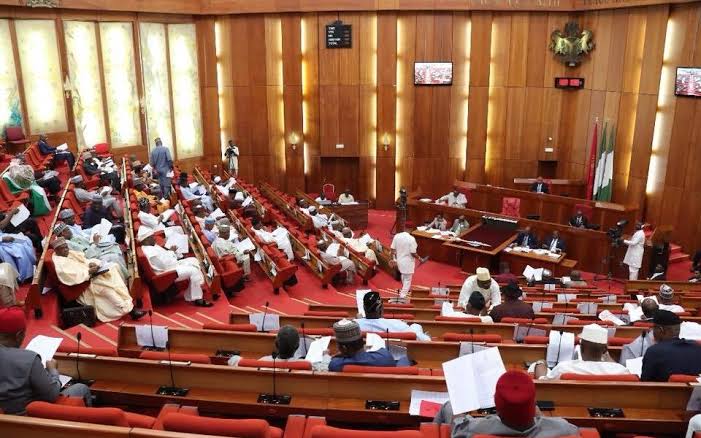
THE Senate has extended the implementation period for the capital component of the 2023 budget till June 30, 2024.
The Senate had extended the budget’s life span from 31st December 2023 to March 31, 2024.
The latest extension followed a request by President Bola Tinubu, through a letter read by the Senate President, Godswill Akpabio, on Wednesday, March 20.
Tinubu, in the letter, said the extension was necessary to ensure that the provisions of the budget were fully implemented.
The Senate Leader Bamidele Opeyemi, while presenting the Bill for an Act to re-enact the 2023 appropriation Act to extend the period of implementation to June and a bill for an Act to amend the 2023 Appropriation Act to extend its implementation period to 30th June 2024, said the release of the capital component of the budget to the MDAs was unlikely to be utilised before March 31, 2023, if it was not extended.
“I therefore urged the Senate to amend the 2023 budget implementation to June 30,” Bamidele said.
On Tuesday, March 19, the Senate passed a bill extending the implementation period of the N1.3 trillion 2023 supplementary budget from March 31 to June 30, 2024.
“The Bill for an Act to Amend the 2023 Supplementary Appropriation Act, to extend the implementation year from 31st March 2024 to 30th June 2024, and for related matters,” was sponsored by the Senate leader Opeyemi Bamidele and received expeditious consideration as it passed the second and third reading during plenary on Tuesday.
Bamidele observed that the budget could not be expended due to the late release of funds and sought an extension to the expiration clause of the Act.
He argued that an extension was critical to avoid compounding the problem of abandoned projects and allow its full utilisation to reflate the economy.
THE Central Bank of Nigeria (CBN) said it had cleared all valid foreign exchange(FX) backlogs.
The Bank disclosed this through its Acting Director of Corporate Communications, Hakama Sidi Ali, in Abuja on Wednesday, March 20.
Ali said the action fulfilled “a key pledge of the CBN Governor, Olayemi Cardoso, to process an inherited backlog of US$7 billion in claims.”
She noted that the CBN recently concluded the payment of $1.5 billion to settle obligations to bank customers, effectively settling the residual balance of the FX backlog.
She also disclosed that independent auditors from Deloitte Consulting ‘meticulously’ assessed these transactions, ensuring that only legitimate claims were honoured.
“Any invalid transactions were promptly referred to the relevant authorities for further scrutiny,” the CBN spokesperson added.
The ICIRreported that Cardoso had confirmed clearing the FX backlog for the aviation sector when international airlines threatened to halt their operations in Nigeria.
“We made clear the FX backlog a priority to restore credibility and confidence in the Nigerian economy.
“We needed to go through an independent and credible process that would determine the authenticity of those obligations, and, at this point, I can tell you that we have now cleared all genuine, verifiable transactions. This encumbrance to market confidence in the country’s ability to meet its obligations is now totally behind us,” Cardoso recently said.
Notably, clearance of the foreign exchange transactions backlog is part of the overall strategy detailed in last month’s Monetary Policy Committee meeting to stabilise the exchange rate and thereby curb imported inflation, spurring confidence in the banking system and the economy.
Cardoso used the MPC meeting and a subsequent conference call with foreign portfolio investors to set targets for sustained increases in Nigeria’s foreign currency reserves and improved liquidity in the foreign exchange market.
On the heels of this clearance, CBN reported a significant increase in external reserves, rising by $993 million to $34.11 billion as of March 7, 2024, the highest level in eight months.
The CBN confirmed further that the month-on-month increase was driven by a marked advance in remittance payments by Nigerians overseas and higher purchases of local assets, including government debt securities by foreign investors.
THE Association of Bureaux De Change Operators of Nigeria (ABCON) said it was concerned about the naming of six Bureaux De Change (BDC) among 15 terrorism financiers.
The Federal government had uncovered and identified 15 entities, including nine individuals and six BDC operators and firms, for alleged involvement in terrorism financing, the Punch reported.
It said details of the development were contained in a document revealed by the Nigerian Financial Intelligence Unit (NFIU).
“The Honourable Attorney General of the Federation, with the approval of the President, has thereupon designated the following individuals and entities to be listed on the Nigeria Sanctions List,” it quoted.
According to Punch report, the six BDCs and firms are:
West and East Africa General Trading Company Limited
Settings Bureau De Change Limited
G. Side General Enterprises
Desert Exchange Ventures Limited
Eagle Square General Trading Company Limited
Alfa Exchange BDC
The nine individuals under sanctions are:
Tukur Mamu
Yusuf Ghazali
Muhammad Sani
Abubakar Muhammad
Sallamudeen Hassan
Adamu Ishak
Hassana-Oyiza Isah
Abdulkareem Musa
Umar Abdullahi
Reacting, the National Treasurer of ABCON, Gbadamosi Moh-Murtala, said terrorism financing had been a known issue but that it was worrisome that anyone on the street exchanging dollars is regarded as a BDC operator.
“In Nigeria, we have licensed Bureaux De Change by the Central Bank. Someone trading in currency on the street calls himself “Bureaux De Change.”
“Notwithstanding, you see some bad people in any sector or organisation. That is not to say that some of our members are not involved, but they are minimal.”
He said for the Federal government to have named them means it had evidence at its disposal.
Stressing that the majority of the people engaged in terrorism financing were not licensed BDCs, he said the bad elements usually used different accounts to carry out illegal operations.
“That is why I can’t say what the Federal Government is saying is wrong; they are right.
“It is a thing every one of us knows; the Federal Government knows, even foreigners. It is not a secret thing.”
Moh-Murtala argued that the banks were the ones pushing the funds. He decried why the government and security agencies were appearing silent on the activities of the commercial banks in terrorism financing.
“It is not a thing we can deny; it is a reality. Those doing it among us are not more than five per cent,” he said.
He also noted that the people involved in the activities were people who had funds, adding that those funding them were outside the BDC business.
“Most of the time, when caught, the security agencies use them as witnesses, not as the real financiers.
“What they get from the millions they transfer for them is minimal. They don’t even know they are cheating them,” Moh-Murtala said.
THE Delta State Commissioner of Police, Abaniwonda Olufemi, has said the police had been unable to access the troubled Okuamain the Bomadi Local Government Area of the state, where 15 soldiers were confirmed killed by suspected youths on Thursday, March 14.
In an interview with Arise TV on Wednesday, March 20, Olufemi stated that he would need clearance before deploying officers to the area.
He said the police had been supportive in the ongoing investigation to fish out the killers.
This was as the Senate president Godswill Akpabio expressed doubt that the soldiers’ killers were from the Niger Delta region.
Akpabio stated this during a debate on the killings at the plenary session on Tuesday, March 20, emphasising that no community would resort to killing such a large number of its nation’s soldiers.
The ICIR reported how 15 military personnel, consisting of two majors, one captain, and 12 soldiers, were murdered allegedly by some youths in the Okuama community.
The incident occurred on Thursday, March 14, when the deceased were responding to a crisis between Okuama and Okoloba communities in Delta State.
Reacting to the situation, the state police commissioner said the atmosphere had been calm, adding that most of the area was deserted.
He said the Okuama and Okoloba communities had had perennial disputes over fishing rights.
“We have not been able to move into this community. Of course, it is our responsibility as the primary line of defence in internal security. But when you have another sister agency conducting an operation, the reasonable thing to do is to wait for them to finish.
“We have not been able to get into Okuama because of the volatile nature of what is going on around that environment.
“I might not be able to accurately respond to these questions [if buildings are torched or more civilian casualties have occurred], but what is important to note is that these things are ongoing. We must seek to be collaborative.
“For us to get to Okoloba or Okuama, we must get clearance.”
Olufemi further stressed that the clearance would be obtained from either a military theatre commander or the operation commander, noting that he had to be sure that the military’s presence would not hurt the officers he would send in.
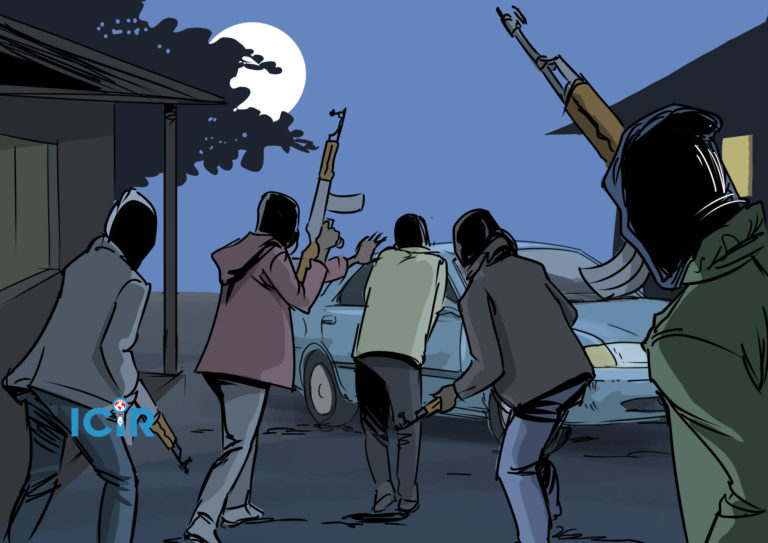
THE attacks on schools and the abduction of students across Nigeria have become a recurring problem. Since the infamous abduction of over 200 schoolgirls in Borno state’s Chibok village by Boko Haram, more Nigerian students especially young ones have become victims of abduction by terrorists.
Experts said the situation may fuel low attendance, demoralise teachers in Nigerian schools and increase the alarming number of out-of-school children, which is already 20 million.
This year, the terrorists have launched attacks on various schools and kidnapped students in Ekiti, Sokoto and Kaduna state in three consecutive months.
The incidents began this year with the abduction of six pupils and three teachers of a private school in Emure, headquarters of Emure Local Government Area of Ekiti state.
On February 7, at least 287 students and a principal, Abubakar Isah, were abducted when bandits invaded the Local Education Authority (LEA) Primary and Junior Secondary School, Kuriga, in Chikun Local Government Area of Kaduna State.
On Saturday, March 9, the terrorists abducted 15 Tsangaya students at the Gidan Bakuso area of Gada Local Government Area of the State.
Experts said the lack of adequate security measures, combined with broader insecurity across the nation, exposes schools to attacks by terrorists.
“Insecurity remains a big issue for the Nigerian government but the lack of proper security apparatus and framework for schools means they remain the first target for terrorists. This means that school-aged children in Nigerian schools around unsafe areas will remain at the mercy of kidnappers who are sure of no resistance,” said Oriyomi Ogunwale, a team lead at Eduplana.
He said this ugly trend not only endangers students but also affects their mental well-being and academic performance, while also impacting teachers’ job satisfaction and sense of safety.
“For students generally, there’s a certain fear they might not return home whenever they leave for school. This reduces school attendance, enrollment and academic completion. This is also a contributor to the increasing number of out-of-school children in Nigeria.”
Reports have shown that Oriyomi’s concerns are valid. In 2022, the National Commission for Nomadic Education (NCNE) linked the increase in the figure of out-of-school children from 10.5 million in 2021 to 18.5 million in 2022 to the general insecurity in the country.
The commission said banditry, kidnapping, insurgency and early marriage in the northwestern part of the country as chief setbacks to the efforts by government and development partners to reduce the alarming trend.
Similarly, former Minister of Education, Adamu Adamu while serving as minister also blamed the rising number of out-of-school children on the nation’s security challenges.
According to UNICEF, attacks on schools could Increase school dropout due to increased actual and potential violence, with a direct impact particularly on the girls, poor teacher concentration and capacity to cope, especially female teachers.
It also added that the situation could cause life-long emotional distress which may affect the well-being of children especially the girls(health issues, unwanted pregnancy, stigma).
Oriyomi added that the development could also demoralise teachers who hold the responsibility of keeping the children safe as they have to deliver their tasks with fear of imminent attacks by terrorists.
“For Students, short-term effects can include absenteeism, unseriousness, inability to complete class activities which can lead to poor academic performance and class repetition which may lead to dropping out,” he added.
“For teachers, insecurity leads to fear for life which can lead to absenteeism or irregular school resumption. This can lead to lack of job satisfaction and ultimate relocation or change of job.”
On his part, Oluwatosin Ishowo, a teacher and Educationist opined that the failure of the government to improve the security architecture schools in Nigeria exposes them to attack by terrorists.
“Most Nigerian schools are not fenced and lack sufficient security architecture. Most schools are still in open fields like they were under colonialism. The major thing about security is not chasing after criminals, but foiling their operations before they happen via intelligence gathering.
Oluwatosin said the horror being faced by the teachers is beyond imagination. “Only them can tell,” he said. “We can only imagine and still not be close to the reality of the horrors they witness in the hands of total strangers. As a teacher, you become parents to those students as well and get restless that faces you teach five times a week are no longer there, not because of holiday, but because of an unfortunate disaster such as mass kidnappings.”
The way forward
Abductions of students from schools in Nigeria are common and have become a source of concern.
In the last decade, terrorists have launched attacks on various Nigerian schools and kidnapped over 1,000 students according to data gathered by The ICIR.
Infographics: Mass school kidnappings in Nigeria
Within the past three administrations, the abduction of school children has generated millions in ransom for kidnappers, as fresh attacks prove no end in sight to the menace.
From former President Goodluck Johnathan to Muhammadu Buhari and, now, President Bola Tinubu, more than 1,000 students have been kidnapped between 2014 and March 2024. The ICIR had reported how Buhari’s administration recorded 300 per cent more schoolchildren abductions than Jonathan’s.
Nigeria currently has 20 million children out of school – most of them in the north, and most of them girls – and the school attacks and kidnappings have only made the situation worse.
Experts said Nigerian authorities need to effectively endorse the Safe Schools Declaration, an international commitment to protect schools and universities from being attacked or used for military purposes during armed conflict.
“If the Federal Government decides to provide proper intervention for the school safety declaration, they should work with local communities, use surveillance technology to monitor schools and ensure active partnership with the security agencies, school kidnappings will reduce,” Oriyomi said.
Oluwatosin emphasized the need to modernise security in Nigerian schools and stressed the need for intelligence gathering to thwart abduction attempts.
“Government and others must be intentional about their responsibility. Security is one of the reasons why people pledge allegiance to the government, and when they fail at that, it gets shaken and automatically leads to lack of trust. I mean, people are now advocating to bear arms for self-protection. As of 2015, could anyone have imagined such advocacy would happen in Nigeria? Definitely no!”
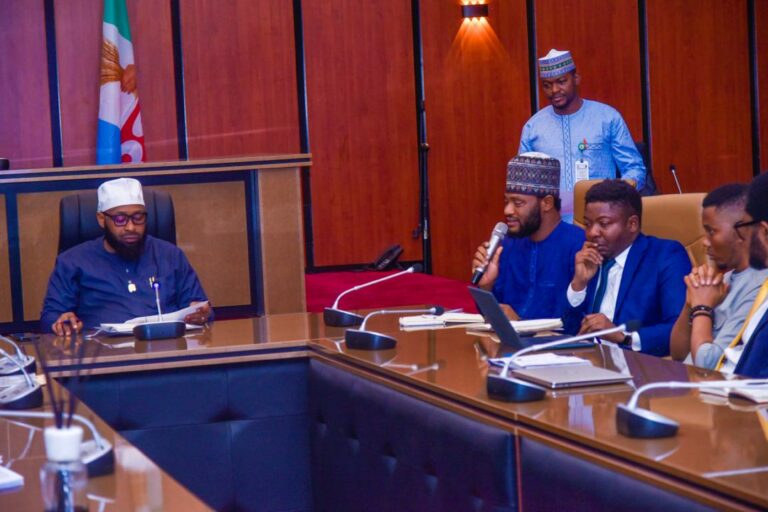
PRESIDENT Bola Tinubu has transmitted a letter to the Senate to approve a new bill seeking to provide new salaries and allowances for judicial officers in Nigeria.
The Senate President, Godswill Akpabio, read the president’s request during the plenary on Wednesday, March 20.
The proposed law seeks to prescribe salaries, allowances, and other fringe benefits for judicial officers.
In November 2022, former president Muhammadu Buhari directed the Revenue Mobilization Allocation and Fiscal Commission (RMAFC) to take measures for the immediate implementation of an enhanced salary and welfare package for judicial officers.
Buhari’s directive followed the National Industrial Court order in Abuja on the Revenue Mobilisation Allocation and Fiscal Commission (RMAFC) to increase the salaries and allowances of judges in the country.
In the judgement delivered by Osatohanmwen Obaseki-Osagie, the court noted that judges’ and justices’ salaries have stagnated for over 14 years.
Obaseki-Osagie also ordered that the Chief Justice of Nigeria (CJN) be paid N10 million monthly, while Supreme Court Justices would receive N9 million monthly.
Meanwhile, Tinubu, in the letter, said when approved, the bill titled “Judicial office holders, salaries and allowances, etc, bill 2024,” would generate a new legal framework for the remuneration of judicial officers to improve their welfare.
He also said the bill would promote the welfare capacity and independence of the Nigerian judiciary system.
“The judicial office holders, salaries and allowances, etc, bill 2024 seeks to prescribe salaries, allowances, and benefits for judicial officers to end the prolonged stagnation in their remuneration and to reflect contemporary social economic realities.
“The bill which establishes a new legal framework for the remuneration of judicial officers will also ensure significant improvement in the welfare capacity and independence of the judiciary,” Tinubu said in the letter.
He, therefore, urged the lawmakers to consider and approve the bill expeditiously.
THE Federal High Court in Abuja has reserved a ruling on the motion to release mobile phones belonging to the suspended Dean of Law at the University of Calabar (UNICAL), Cyril Ndifon.
According to a statement by the Independent Corrupt Practices and Other Related Offences Commission (ICPC) on Wednesday, March 20, Ndifon and his lawyer Sunny Anyanwu, who is a co-defendant, had prayed the court to release their phones to “a purported National Computer Forensic Laboratory.”
The motion was filed on March 8, 2024, by counsel to the defendants, Joe Agi, a senior advocate.
However, the prosecution opposed the motion, stating that the laboratory was non-existent. The trial was, therefore, adjourned to April 15, 2024, for a ruling on the motion.
Ndifon and Anyanwu are being prosecuted by the ICPC before High Court Justice James Omotosho over allegations of sexual misconduct and an attempt to perverse the cause of justice.
While Ndifon was accused of sexual harassment during a protest by female Law students of UNICAL on August 15, 2023, Anyanwu called and threatened the star witness in the case.
Both men had earlier been remanded in prison and granted bail in February.
Following the protest by the Law students, the university suspended Ndifon, and a panel was set up to investigate the allegations against him.
Although Ndifon denied the allegations and described them as lies, it was the second time he was suspended for similar reasons. The first time was in 2015 when a final-year student accused him of raping her in his office.
On March 7, 2024, the court ruled that evidence presented by the prosecution revealed that the lecturer demanded nude photos of the second prosecution witness.
The presiding judge, James Omotosho, stated that Ndifon needed to explain the intent behind such a request.
THE Abuja Electricity Distribution Company (AEDC) and the Niger State government have commenced a partnership initiative targeting a steady power supply for residents of the state.
The initiative is codenamed “Light Up Niger 2024”.
The state Governor, Mohammed Umaru Bago, confirmed the partnership while receiving the AEDC delegation led by its chief operations officer, Chijioke Okwuokenye, at the Government House, Minna, on Tuesday, March 19.
He said the state was ready to host four hydro dams that would contribute significantly to electricity in Nigeria.
He further observed that power supply was key to development, especially as the state was growing into an industrial and food processing zone.
The governor said the “Light Up Niger” project would also proffer solutions to the metering challenge in the state.
Commenting further on the project, the governor said the Electricity Act had been domesticated in the state, while the Niger State Electricity Regulatory Commission had been created.
He further stated that the necessary paperwork for the Regulatory Commission would soon be completed so that the state could start generating and distributing its power.
In his remarks, the chief operating officer of AEDC, Chijioke Okwuokenye, explained that the “Light Up Niger” project would improve the state and ensure stable electricity when it kicked off.
He lauded the support of the Bago-led administration through the supply of transformers to communities, adding that the private sector needed such support for survival.
He also assured that his company was willing to continue to partner with the state government for the desired result.
Recently the state government described as unacceptable the continuous erratic and epileptic power supply in the state. The situation improved immediately and has led to the “Light Up Niger” initiative.
THE Nigerian Senate passed the Student Loan (Access to Higher Education) Act (Repeal and Re-Enactment Bill) on Wednesday, March 20.
The resolution came after the chairman of the Senate’s committee on tertiary institutions and TETFUND, Muntari Dandutse, presented a report on the bill on Wednesday.
The bill was first signed into law by President Bola Tinubu in June 2023 to enable students in need to access interest-free loans to pursue their education in any tertiary institution in the country.
However, its implementation was postponed for a period. During the postponement, Executive Secretary of the Nigerian Education Loan Fund (NELFund), Akintunde Sawyer, said he could not give a specific date for the commencement of the programme.
However, Tinubu wrote to the Senate on March 14, seeking a repeal of the Students Loans Act 2023 and a re-enactment of the Students Loan Bill 2024.
In the letter, he also sought the Senate’s expeditious consideration of the process.
“Pursuant to Section 58 (2) of the Constitution of the Federal Republic of Nigeria, 1999 (as amended), I forward, herewith, the Student Loan (Access to Higher Education) (Repeal and Re-enactment) Bill, 2024 for the kind consideration of the House,” the President’s letter reads.
“The Student Loan (Access to Higher Education) (Repeal and Re-enactment) Bill, 2024 seeks to enhance the implementation of the Higher Education Student Loan Scheme by addressing challenges related to the management structure of the Nigerian Education Loan Fund (NELF), applicant eligibility requirements, loan purpose, funding sources, and disbursement and repayment procedures,” Tinubu noted in the letter.
Although the bill is touted to ease access to tertiary education for Nigerian students, it attracted criticism from some Nigerians, including members of the Academic Staff Union of Universities (ASUU), who described the bill as an attempt by the government to abandon funding of education in public universities.
THE Nigerian Air Force (NAF) said its operatives had killed the most notorious bandits leader in Zamfara State, Kachallah Damina, with scores of his fighters.
The NAF said in a statement that its airstrikes were responsible for killing Damina.
Damina, based in the Gusau Local Government Area of Zamfara State, was notorious for his reign of terror, organising hundreds of fighters for abductions, livestock rustling, and assaults on military installations.
According to the military, the air raid was conducted in response to information about several bandits attempting to attack Corner Village in the Bungudu Local Government Area on March 10.
The statement claims that Damina, who was already suffering from injuries sustained during battles with Operation Hadarin Dajia forces in Dansadau, was killed with other bandits riding motorcycles.
A security expert, Zagazola Makama, confirmed on his X handle that Damina and scores of his fighters have been killed.
“The Nigerian Air Force has successfully eliminated the most notorious bandit leader in Zamfara State, Kachallah Damina, including scores of his fighters.
“More than 50 bandits were neutralised with several motorcycles destroyed. This attack was the biggest and one of the most devastating against the bandit groups,” he tweeted.
In an investigation published by The ICIR on March 1, residentsof Mutunji, a community in the Dansadau district of Maru Local Government Area (LGA) of Zamfara state, said they lived in constant fear that Damina could swoop on them and abduct them, just like he did to their relations he whisked into the forest but never returned home.
In late 2022, Nigerian security forces allegedly killed Damina’s men in the community in a reprisal attack that followed the bandits’ onslaught on the military base in the village, during which the bandits killed 12 soldiers and burnt four operational vehicles.
Because of Damina’s activities, Mutunji has become a shadow of itself. Its schools and clinics have been shut down. Businesses and farming activities that once kept the community alive have collapsed.
In recent months, it has lost dozens of its residents to bandits led by Damina, who has claimed responsibility for the abduction of 48 people from Mutunji and the killing of 17 of them.
A youth leader of the community, Umar Khalid Mutunji, said bandits loyal to the terrorist stormed the village at about 7:30 p.m. on Friday, November 24 2023 and descended on worshippers in a mosque and other people at a night market (Yar Kasuwa) where they abducted 178 people, including children and adults.
In the message he sent to the village, Damina suggested that since the community could not pay the levy he placed on them, each family having someone in captivity should pay ransom for the release of their relatives, or else he would kill them.
Findings by The ICIR showed that over 1,500 children in the village are out of school as the two public primary schools in the community have been shut down for two years.
Mutunji shares its border with Niger State in the south. In its western part is Bena town in the Danko-Wasagu Local Government Area in Kebbi State, all blessed with vast and fertile arable land.