Home Blog Page 643

Nurses sue Nigerian government over new verification guidelines

0

SOME nurses in Nigeria have sued the Federal Government over the new certificate verification guidelines recently introduced by the government.  

The defendants include the Minister of Health, Muhammad Ali Pate, the Attorney General of the Federation (AGF), Lateef Fagbemi, and the Nursing and Midwifery Council of Nigeria (NMCN).

On February 7, 2024, the NMCN published a circular updating the procedures for certificate verification for midwives and nurses.


Read Also:


According to the council, applicants seeking verification of certificates from foreign nursing boards and councils must have two years of post-qualification experience from the date of the permanent practising licence issuance.

The revised regulations came into effect on March 1, 2024.

In the suit marked NICN/ABJ/ 76/2024 before the National Industrial Court in Abuja, the plaintiffs – Kelvin Ossai, Catherine Olatunji-Kuyoro, Desmond Aigbe, Tamunoibi Berry, Olumide Olurankinse, Osemwengie Osagie, Idowu Olabode and Abiola Olaniyan – are pleading with the court to prevent the defendants or their representatives from enforcing the NMCN circular.

At the mention of the suit on Wednesday, March 20, the plaintiffs’ lawyer, Ode Evans, informed the court that he had just received the first and second defendants’ preliminary objections.

He pleaded with the judge to adjourn the case so he could respond to their requests.

The judge, Osatohanmwen Obaseki-Osaghae, adjourned the case till May 20 for a hearing.

Obaseki-Osaghae ordered that the AGF and the Federal Ministry of Health, not represented by counsel in court, be notified of the hearing.

Addressing reporters outside the court, the plaintiffs’ lawyer, Ode, said the nurses were in court because they were uncomfortable with the new verification guidelines.

“Now, the matter today was coming up for the first time, and when matters come up for the first time, it is for mention. 

“The essence of the mention is to give a background to the court on whether parties have been served. We told the court we wanted to look at those applications because we had been served in court. So the court adjourned this matter to May 20 to enable us to react to those issues raised,” he stated.

According to Ode, the nurses are seeking the complete removal of the guidelines because they feel it violates their rights. 

Also speaking at the court premises, a representative of the nurses, Fawole Israel, described the policy as flawed and an infringement of the fundamental human rights of nurses.

“We are asking the court to, by default, return the verification process to the status quo so that nurses in Nigeria can seek opportunities, especially to expand the scope of practice”, Israel stated.

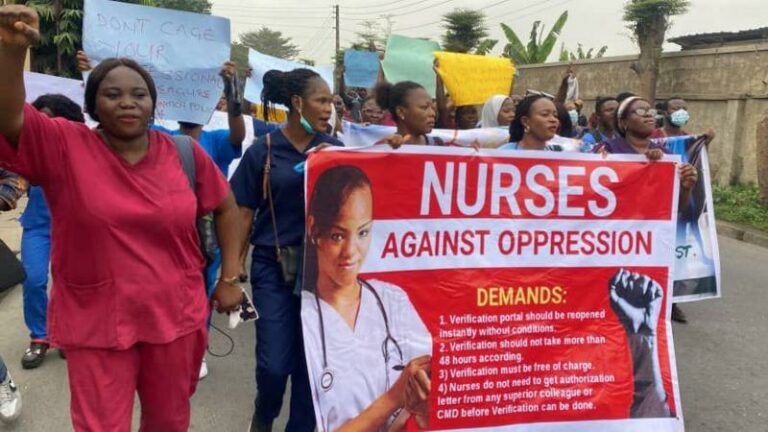
The ICIR reported on February 12 that nurses protested in Abuja and Lagos against the new guidelines.

The Abuja protest took place at the headquarters of the NMCN in Abuja.

In a video shared on social media, the nurses and midwives were seen chanting and carrying placards with inscriptions frowning at the policy.

Ondo 2024: 16 parties to participate in off-cycle election – INEC

0

CHAIRMAN of the Independent National Electoral Commission (INEC) Mahmood Yakubu has said 16 political parties would participate in the forthcoming off-cycle governorship election in Ondo state.

He disclosed this during a meeting with members of Civil Society Organisations (CSOs) in Abuja on Wednesday, March 20.

“Turning to Ondo State, political parties will commence their primaries for the governorship election in the next two weeks. Sixteen political parties have indicated interest in participating in the election.

“I urge civil society organisations (CSOs) to engage with political parties and observe their primaries just as you engage with INEC and deploy observers to the main election conducted by the commission. By doing so, you will strengthen your advocacy for inclusivity for groups such as women, youths, and persons with disability (PwDs) under-represented in national and state-level elective offices,” he said.

Yakubu urged the CSOs to always submit reports on their observations of previous elections, as certain reforms by the electoral body are a result of recommendations by CSOs.

He warned that there would no longer be accreditation for CSOs that fail to submit reports on the observation process.

“While many of you have submitted your reports, some accredited observers are yet to do so for the general election, supplementary elections, off-cycle elections, bye-elections and re-run elections.

“May I, therefore, seize this opportunity to remind those who are yet to submit their observation reports that it is mandatory to do so, being one of the conditions for eligibility to observe future elections. Going forward, the Commission will operate strictly on the policy of “no observation report, no accreditation,” Yakubu said.

Ondo State is set to hold governorship elections by November 2024.

While party primaries have yet to be held, the incumbent governor, Lucky Aiyedatiwa, declared his interest in contesting the elections and continuing as governor, a position he has occupied for about three months.

Aiyedatiwa became governor in December 2022 after his predecessor, Rotimi Akeredolu, died of a protracted illness.

He is a member of the All Progressives Congress (APC).

With Adaora at Zenith, women now lead 11 of Nigeria’s 24 banks

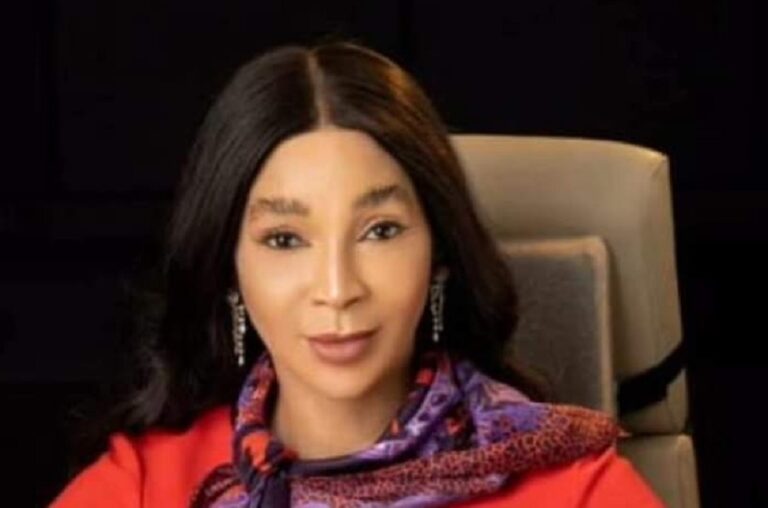
ZENITH Bank Plc has announced the appointment of Adaora Umeoji as its Group Managing Director/Chief Executive (GMD/CEO), effective June 1, 2024.

Umeoji’s appointment reflects the growing influence of the female gender in Nigeria’s banking sector.

With the appointment, she will be the 11th female chief executive officer heading Nigeria’s 24 deposit money banks if the Central Bank of Nigeria (CBN) ratifies her appointment.

In percentage, 45 per cent of Nigeria’s 24 deposit money banks will be headed by women if her appointment scales through at the CBN.

They are Bolaji Agbede, Access Holdings; Miriam Olusanya, GT Bank; Yemisi Edun, FCMB; Halima Buba, SunTrust Bank; Ireti Samuel-Ogbu, Citibank Nigeria; Nneka Onyeali-Ikpe, Fidelity Bank; Tomi Somefun, Unity Bank; Kafilat Araoye, Lotus Bank; Bukola Smith, FSDH Merchant Bank; and Yetunde Oni, Union Bank.


Read Also:


In a notice to the investing public on Tuesday, March 19, Zenith Bank stated, “We write to inform you all of the appointment, by the Board of Directors, of Dr. Adaora Umeoji, CON, as Group Managing Director/Chief Executive of Zenith Bank Plc with effect from June 1, 2024 subject to the approval of the Central bank of Nigeria (CBN). She takes over from Dr. Ebenezer Onyeagwu, whose tenure expires on May 31, 2024.

“The appointment is consistent with the bank’s executive transition tradition, succession plan, and strategy of grooming leaders from within.”

Umeoji will take over from Ebenezer Onyeagwu, who has served in that capacity for a five-year term, expiring May 31, 2024.

She will be the first female GMD/CEO the bank has had since its inception in 1990, when Jim Ovia founded it.

Before her appointment, Umeoji had been the bank’s Deputy Managing Director since October 28, 2016, and has close to 30 years of cognate banking experience, of which 26 years have been with Zenith Bank.


Court dismisses suit seeking to stop voting, exams on Saturdays

0

THE Federal High Court in Abuja has dismissed a suit to stop the Independent National Electoral Commission (INEC) and educational institutions from conducting elections and exams on Saturdays in Nigeria.

A member of the Seventh-day Adventist Church, Ugochukwu Uchenwa, filed the suit.


Read Also:

He asked the court to rule that scheduling examinations and elections for Saturdays was unlawful.

One of the reliefs the plaintiff sought was an order “restraining the 5th to 8th respondents from scheduling and conducting compulsory public examinations on Saturdays, without making an option for the members of the Seventh-day Adventist Church to write their exams on days other than Saturdays.”

The plaintiff also requested that the defendants grant him and other churchgoers permission to vote or take exams on any other day of the week, including Sundays.

He asked the court to issue an injunction prohibiting INEC from continuing to infringe on the rights of Seventh-day Adventist Church members by scheduling elections on Saturdays.

Alternatively, if the INEC cannot hold the polls or conduct exams on a day other than Saturdays, Uchenwa wanted “an order for the INEC to mark out a different day for his church members to participate in their own election.”

Included as defendants in the lawsuit are President Bola Tinubu, the Attorney General of the Federation, INEC, and the Minister of Internal Affairs.

The list also contained the National Business and Technical Examination Board (NABTEB), the National Examination Council (NECO), the West African Examination Council (WAEC), and the Joint Admission and Matriculation Examinations (JAMB), among others.

The judge, James Omotosho, ruled that the lawsuit was frivolous and that the plaintiff had not shown sufficient justification for any of the reliefs he requested from the court.

Omotosho stated that the plaintiff could not provide the court with a plausible basis for action in the case.

He had set March 20 for ruling on the case two months ago after hearing arguments from both sides.

At the sitting in January, the plaintiff’s lawyer, Benjamin Amaefule, told the court that his client was only seeking to enforce his fundamental right to freedom of education and participation in elections.

Responding on behalf of the President and the AGF, Maimuna Shiru told the court that her clients had filed a 17-paragraph statement opposing the claims.

After confirming they had received proper notice of the hearing, Omotosho listened to the case and set a judgment date of March 20.

FUOYE links student death to SSANU, NASU strike

0

THE management of the Federal University, Oye Ekiti (FUOYE), has linked the death of a student who was asthmatic in the school to the ongoing industrial action by the Senior Staff Association of Nigeria Universities (SSANU) and the Non-Academic Staff Union of Educational and Associated Institutions (NASU).

The university vice-chancellor, Abayomi Fasina, represented by the Deputy Vice-Chancellor (Administration) Tajudeen Opoola,  alongside other top officials of the university, disclosed this at a press conference in Oye Ekiti on Tuesday, March 19.

The management explained that the student with asthma passed away due to the inability to promptly receive medical attention, as the university was inaccessible after it was allegedly locked down by the unions.

“We lost a student who had asthma this morning because he could not be taken to our clinic. The facility is under lock and key. It is true that students are on holiday, but not all of them live on campus. It would have been easier for the student to be rushed to our clinic for urgent treatment, but even our university gate was locked.

“Just this morning, I was at the Ekiti State University (EKSU), and the administrative block was open. People are going about their normal duties. You may go there to confirm. I am using EKSU as an example because it is the closest as far as this environment is concerned. In EKSU today, the clinic is functioning. A total or comprehensive strike is not going on there,” the vice chancellor said.

The ICIR on Monday, March 18, reported that SSANU and the NASU began a seven-day warning strike over their withheld salaries.

The unions’ Joint Action Committee (JAC) declared the strike, according to a memo dated Friday, March 15, which directed members to withdraw their services across the nation’s public universities.

Meanwhile, Fasina accused the FUOYE SSANU chairman, Oluwaseun Faleye, of providing inaccurate information about the university to the union’s national leadership, prompting the national leadership to instruct the union branches in Ondo, Osun, and Kwara states to proceed to the university and shut it down on Monday, March 18.

“But the same leadership of EKSU SSANU went on air yesterday to incite the public, and even led some hoodlums to invade and occupy our institution based on a false narrative they were fed with by the chairman, SSANU, FUOYE chapter.

“Our own chairman was the one who gave false information to the national president. Since he gave the impression that he had been beaten and harassed, the national president allegedly directed the leadership of their unions in Ondo, Osun and Kwara to proceed to FUOYE to rescue the chairman and occupy and enforce the total shutdown,” he said.


Read Also:


He warned that the management would not fold its arms and allow the breakdown of law and order under the guise of strike action, adding that the law would deal with the situation appropriately.

However, reacting to the allegations in a statement on Tuesday, March 19, the chairman of SSANU, FUOYE chapter, Oluwaseun Faleye, said the union duly notified the university of the seven-day warning strike.

He also accused the vice chancellor, Sunday Fasina, a professor, of intimidating the union’s leadership.

According to him, the management sent a written letter soliciting concessions to exempt the health centre and other facilities, but Faleye added that the requests were declined, citing a warning from the national leadership of the union against granting such concessions.

“Following the decline of the management’s requests, we got information that the vice chancellor made moves to use security operatives to intimidate our members.

“Between Wednesday and Friday last week, the DSS Director and the Commissioner of Police invited us, and we felt that those moves were acts of intimidation just because we were going to fully comply with a national strike. We felt we were not safe.

“Interestingly, on getting to the school gate, we met armed civil defence officers, and I was assaulted. So, we want to put it on record that it is the management that is using the security agencies to intimidate us for complying with a national directive on industrial action,” Fasina claimed.

Okuama: Soldiers’ killers not from Niger Delta – Akpabio

0

SENATE President Godswill Akpabio has expressed doubt that the killers of soldiers on a peace mission in Okuama community, Bomadi Local Government Area of Delta, are from the Niger Delta region.

He has also vowed that the Senate would constitute a committee to ascertain whether the killers were mercenaries.

Akpabio stated these during a debate on the killings at the plenary session on Tuesday, March 20.

He emphasised that no community would resort to killing such a large number of its nation’s soldiers.

The ICIR  reported how 15 military personnel, consisting of two majors, one captain, and 12 soldiers were murdered allegedly by some youths in the Okuoma community.

The incident occurred on Thursday, March 14, when the deceased were responding to a crisis between Okuama and Okoloba communities in Delta State.

The attack has, however, generated public outrage as many Nigerians are demanding that the perpetrators be brought to justice.

They are also appealing to the military against launching an attack on the entire community, as the community has been burnt down and its residents fleeing.

Reports as of Tuesday, March 19 indicated that 20 suspected had been arrested over the killings.

Addressing other senators during the plenary session on Tuesday, Akpabio announced that a panel would be set up to ensure those responsible for the killings were brought to justice.

“I don’t want to conclude that these people are from Niger Delta, because we respect men and women in uniform. That is why I am saying that your additional prayer should be to carry out a thorough investigation to know whether they were mercenaries outside Nigeria, who came in to commit this crime because I don’t think these people are from Niger Delta.

“We are not at war. Even in the field of war, to lose such a number of personnel, no community will go to the extent of doing that kind of thing; I don’t think they are from Niger Delta. So I think the first point should be that we should establish the culprits who committed this crime,” said Akpabio, a former governor of Akwa-Ibom State, one of the oil-rich Niger Delta states. 

The Senate President’s statement came after Senators Abdullaziz Yar’adua of Katsina and Ede Dafinone of Delta State moved a motion to investigate the attacks.

While moving the motion, Yar’adua, urged the Federal Government to recruit more policemen to take charge of internal security, while the military should be allowed to perform the key function of protecting the country from external aggression.

On his part, the Deputy Senate President, Barau Jibrin, described the killing of the soldiers as despicable and inhuman, stressing that no stone should be left unturned to bring the perpetrators to book.

“What happened is despicable. It is inhuman and it is something that cannot be accepted. We need to commiserate with the Nigerian Armed Forces and indeed the entire nation, to condole the immediate families of the fallen heroes and the Nigerian military for what happened.

“These were men that were trained by the Nigerian government and huge resources spent on them to defend the territorial integrity of this country and keep us safe as a nation. Now, they were killed for no reason; not at a time of conflict, not at the war front, they were just murdered in the worst fashion that you can think about,” Jibrin said.

Paris 2024: D’Tigress to face Canada, France, Australia in group stage 

0

NIGERIA’S national women’s basketball team, D’Tigress, will begin their quest for Olympics honour as they play against Canada, Australia and host France in the group stage of the women’s basketball event of the Paris 2024 Olympic Games.

The D’Tigress who has qualified three times, in 2004, 2020 and 2024, were pitted against the three countries in Group B.

The draw ceremony held on Tuesday, March 19, was hosted by two basketball legends; three-time Women’s National Basketball Association (WNBA) champion, Penny Taylor, and former National Basketball Association (NBA) superstar, Carmelo Anthony, at the Patrick Baumann House of Basketball.

Read Also:

D’Tigress grab 2024 Olympic ticket over Senegal 

D’Tigress win 4th Afrobasket title consecutively 

Basketball: D’Tigers scramble for spot in World Cup qualifiers as FG reverses ban

The D’Tigress ended their first two campaigns in 2004 and 2020 in the group stage without progressing into the next round.

During the team’s maiden appearance at the Olympics in 2004, hosted in Greece, it failed to progress to advance to the next round after winning only one match out of five matches.

Likewise, in the 2020 event hosted in Japan, D’Tigress were unable to reach the next round after losing all three matches in the group.

Other groups in Paris 2024

Group A has Serbia, China, Puerto Rico and Spain while the defending champion USA has been pitched against Germany, Japan and Belgium in Group C.

Format for qualification to the next round

The first stage of the competition is played in a round-robin format, with each team playing all other teams in its group.

The teams placed first and second in each group and the two best third-placed teams in the group phase qualify for the final phase while the remaining four teams take no further part in the competition.

For the final phase, a draw will take place following the conclusion of the group phase to determine the pairings of the quarter-finals.

Teams from the same group in the group phase cannot be drawn against each other in the quarter-finals. The four winners of the quarter-finals will qualify for the semi-finals

Winners of the quarter-finals played by the teams from Pot D cannot play each other in the semi-final games.

The four teams eliminated in the quarter-finals shall take no further part in the competition. The classification of teams from 5th to 8th place shall be established according to the FIBA Official Basketball Rules.

The women’s Olympic event begins July 28 in Lille, France, at Pierre Mauroy Stadium and concludes with the gold-medal and bronze-medal games on August 11 in Paris at Bercy Arena.


Nollywood producer, Andy Best, passes away

TRAGEDY has struck the Nollywood industry once more in 2024 as a veteran movie producer, Ikechukwu Nnadi, also known as Andy Best, passed away at a private facility in Owerri, Imo State, on Tuesday, March 19.

The news of his death was confirmed in an Instagram post by the convener of the Best of Nollywood Awards (BON) Seun Oloketuyi.

“Andy Best Top Nollywood producer and Marketer is dead. He died in an Owerri hospital today,” he said in his post.

Read Also:

Nollywood actor, Mr Ibu, dies at 62

Again, Nollywood mourns as Sisi Quadri passes on

Ailing Nollywood stars who sought public support in recent time

Andy Best hailed from Umunkwo, Isiala Mbano Local Government Area, Imo State.

He was a famous Nollywood producer and marketer with decades of experience in the industry.

He was the chief executive officer of Andy Best Production. He produced several movies including, Lion of Africa, White Poison, My Father’s Cup, among others.

Andy Best died nearly three weeks after the death of veteran actor, John Okafor, also known as Mr Ibu, who according to Emeka Rollas, president of the Action Guild of Nigeria (AGN), died as a result of cardiac arrest.

Months after inauguration, NASS fails to update website with over 150 lawmakers’ names

NINE months after the inauguration of Nigeria’s 10th National Assembly (NASS), more than 150 lawmakers’ names are still missing on the NASS’ website, findings by The ICIR have shown. 

The 10th NASS, comprising 109 Senate and 360 House of Representatives members, was inaugurated on June 13, 2023. 

The inauguration followed Godwill Akpabio and Ibrahim Jibrin’s emergence as the Senate President and Deputy Senate President respectively, while Abbas Tajudeen and Benjamin Kalu were elected as the Speaker and Deputy Speaker of the House of Representatives.


Read Also:


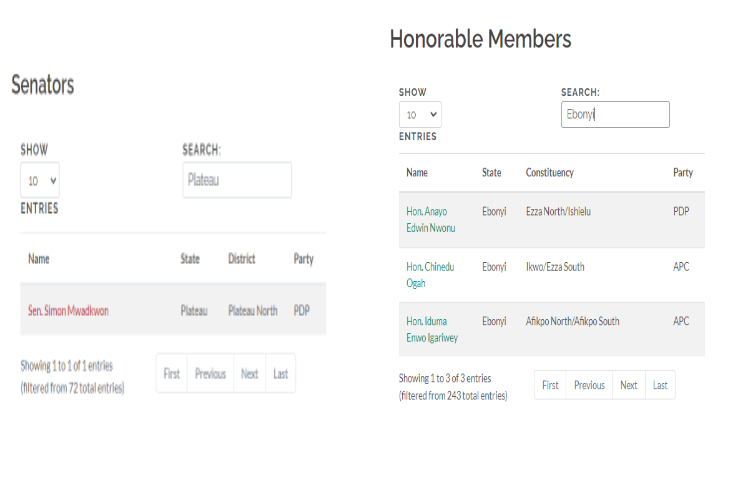
Filtering the data on the NASS website, The ICIR could not find the names of 40 senators and 134 Reps on the website. 

Although, after the inauguration, some of the lawmakers were sacked by the court. As of the time of filing this report, all court proceedings over any lawmaker’s election have been resolved. 

For instance, none of the three senators in Plateau State has their names on the NASS website.

The ICIR finding shows that the name on the website has been sacked by the court.

Another example is Ebonyi state with six House of Representative members, where only three names could be found on the website.

Snapshot of NASS website

Additional findings also showed that four senators who have been sacked by the court still have their images on the website. These senators are Darlington Nwokeocha (Abia Central), Ishaku Abbo (Adamawa North), Ohere Abubakar (Kogi Central) and Mwaskwon Davou (Plateau North).

Aside from this, lawmakers’ names in the Senate like Edo and Ebonyi were not captured on the website. Also, some names of lawmakers in the House of Representatives were repeated twice. 

The implication of this would mean that the Nigerian public might not be able to interact with the proceedings of the assembly, especially bills proposed by the lawmakers who are missing from the website. 

In the 2024 budget, N344.85 billion was earmarked for the National Assembly. Although there is no breakdown of the budget, the expenditure takes care of the personnel and overhead costs of the Assembly.

The budget on Overhead takes care of bills and other utilities, including payment to IT officials or programmers to manage the website.

Find the sheet for the analysis here and a snapshot to all states on the NASS website here).

FG, States, LGs shared N10.143 trillion in 2023 – NEITI

THE three tiers of government in Nigeria – Federal, States and Local Government Areas (LGAs) – shared N10.143 trillion from the Federation Account as statutory revenue allocations in 2023.

The data were contained in the latest report by the Nigeria Extractive Industries Transparency Initiative (NEITI) on the Federation Account revenue allocations for the year 2023.

The Executive Secretary of NEITI, Orji Ogbonnaya Orji, who announced the release of the report on Tuesday, March 19, in Abuja, said the agency embarked on the Federation Allocation Account Committee (FAAC) Quarterly review to enhance public understanding of Federation Account allocations and disbursements as published by the government.


Read Also:


He said, “The ultimate objective of this disclosure is to strengthen knowledge, awareness and promote public accountability of all institutions in public finance management”.

A breakdown of the revenue receipts showed that the Federal Government received N3.99 trillion, representing 39.37 per cent of the total allocation.

The 36 states got N3.585 trillion, representing 35.34 per cent, while the 774 LGAs shared 2.56 trillion equivalent to 25.28 per cent.

Further analysis of the N10.143 trillion disbursements in 2023 showed an increase of N1.934 trillion or 23.56per cent when compared with the disbursement of N8.209 trillion shared in the corresponding year 2022.

The review attributed the increase to improved revenue remittances to the Federation Account due to the removal of the petrol subsidy and the floating of the exchange rate by the President Bola Tinubu-led government.

The report highlighted that though the total revenues distributed from the Federation Account recorded an overall increase of 23.56 per cent in 2023, the increase that accrued to each tier of government varied, largely due to the type of revenue streams contributing to the inflows into the Federation Account.

Accordingly, NEITI Quarterly Review of 2023 FAAC allocations disclosed that the Federal, State, and LGAs cumulatively received N1.934 trillion more than the amount shared in 2022.

The first quarter of 2023 increased by N579.71 billion (33.19 per cent) when compared to the first quarter of 2022. The second quarter increased by 10.32 per cent, the third quarter by 27.49 per cent and the fourth quarter had an increase of 23.42 per cent respectively.

The Federal Government’s share increased by N574.21 billion (16.79 cent) from the N3.42 trillion it received in 2022 to N3.99 trillion in 2023. The state governments’ share rose to N3.59 trillion in 2023 compared to the N2.76 trillion they got in 2022, showing an increase of 29.99 per cent.

Similarly, the LGAs’ share of federation allocation was N2.57 trillion in 2023 compared to N2.032 trillion in 2023 which amounts to 26.22 per cent leap.

In the same period in 2023, states and LGAs recorded increases in their allocations of 29.99 per cent and 26.22 per cent respectively. The increase in allocation to the Federal Government, however, was 16.79 per cent.

State-by-state share of the allocations showed that Delta State received the largest share of N402.26 billion (gross).

The figure is inclusive of the state’s share of oil and gas derivation revenue. Delta was followed by Rivers State which got N398.53 billion. Akwa-Ibom State took the third largest allocation of N293.58 billion.

Nasarawa State received the least amount of N73.32 billion while Ebonyi and Ekiti states received N73.91 billion and N74.04 billion respectively.

The review observed that the first five states that topped the allocation during the period under review are amongst the major oil-producing states in the country.

On the share of 13 per cent derivation revenue, nine states received the 13 per cent allocated to mineral-producing states from the proceeds from mineral revenue. The derivation revenue remains a significant portion of revenue for states like Delta, Akwa Ibom, Anambra, and Rivers states.