Home Blog Page 655

Stakeholders suggest how media can help Nigeria defeat insecurity, other challenges

0

STAKEHOLDERS, including scholars, researchers, and security experts have suggested how media in Nigeria could support the nation’s Armed Forces and government to defeat insecurity and myriads of crises facing the nation.

They gave the suggestions at the maiden International Conference of the Department of Mass Communication, Faculty of Social Sciences, Ahmadu Bello University, Zaria, which was held on the school premises between Monday, February 26 and Tuesday, February 27.

The conference, with the theme, “Communication, Media, Insecurity and Development: Issues, Challenges and Way Forward,” provided participants with the opportunity to discuss how media democratisation, which has given birth to new media and related technologies, shapes communication and social interactions and impacts security and development in Nigeria.


Read Also:

Stakeholders proffer solutions to journalism challenges at AIM conference

Insecurity: Nigerians shun Police ‘Rescue Me’ app

Nigerian media organisations asked to invest in accountability journalism


Participants extensively discussed the implications of information, misinformation and fake news on national security, cohesion, peace and development.

Besides, the effects of objective and subjective reportage of national security, media ownership influence, and the growing population of content creators and social media influencers on the nation’s security and development were assessed at the conference.

Several sessions were devoted to how artificial intelligence (AI) impacts academics and the media, including the need for users to abide by the rules guiding its use.

Hundreds of papers were presented at the conference, many of which dwelt on the future of the media, academics and AI.

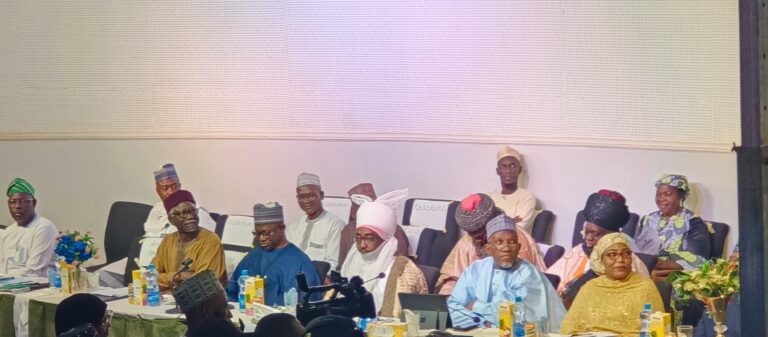
A cross-section of participants at the maiden International Conference of the Department of Mass Communication, Ahmadu Bello University, Zaria, Kaduna State, which was held on the school premises between Monday, February 26 and Tuesday, February 27, 2024.

The conference was sponsored by the MacArthur Foundation, The International Centre for Investigative Reporting (ICIR), Centre for Collaborative Investigative Journalism (CCIJ), Centre for Journalism Innovation and Development (CJID), RiseNetworks, Dataphyte and WAMAC, and the Nigeria Television Authority (NTA) among others.

Conference apt, will help address pertinent national security issues – HOD

Welcoming the participants, the Head of the Department of Mass Communication at the ABU, Adama Adamu, a doctorate holder, said the department was established in 1992, commenced with the 1993 session and had graduated thousands of students who had contributed positively to Nigeria’s growth and development.

Adamu noted that for close to two decades, Nigeria had been grappling with security challenges such as Boko Haram insurgency, armed banditry, kidnapping, and secessionist hostilities, worsened by the proliferation of misinformation and fake news.

She explained that the conference was apt and offered participants the opportunity to look deeply into the challenges to come up with recommendations that could help address them.

“In an era marked by unprecedented advancement and global interconnectedness, the role of communication and media in shaping perceptions, influencing policies and fostering socio-economic development cannot be overstated. As scholars, researchers, practitioners, and policymakers, we have a unique opportunity to have meaningful discussions, share insights and propose innovative solutions to some of the most pressing challenges facing us in society.

“It is also imperative for us to harness the power of communication and media for the greater good, to amplify marginalized voices to hold power to account and to foster a culture of peace and inclusivity,” she stated.

Conference strategic, VC says

The university’s vice-chancellor, Kabiru Bala, a professor, said the conference was timely given how insecurity had become a major stumbling block to Nigeria’s development.

He said the conference availed media and communication scholars to brainstorm on how best to tame the “wild and dangerous fire of insecurity.”

The conference was strategic in view of the roles media play in national security and the socio-economic development of Nigeria, noted the VC.

He challenged the participants to brainstorm on how the media could further contribute to national security and development.

‘Media reportage seriously affects military operations’ – COAS

In his keynote lecture, the Chief of Army Staff (COAS), Taoheed Abiodun Lagbaja, a Lieutenant-General, spoke on the Nigerian Army’s engagement with the public and media towards promoting peaceful co-existence and providing a secure environment for national development.

The Chief of Army Staff, Taoheed Abiodun Lagbaja, represented by Moyosore Akin Ojo, a Brigadier-General and Commander, 41 Engineering Brigade of the Nigerian Army, delivered his presentation at the conference.

Represented by Moyosore Akin Ojo, a Brigadier-General and Commander 41 Engineering Brigade of the Nigerian Army, Lagbaja said the Armed Forces of Nigeria had a clear understanding of the impacts that media narratives have on military operations.

According to him, the necessity for the twin concept of security and development for any nation, particularly developing ones like Nigeria was aptly captured by the former secretary of the United States, Robert MacNamara, who posited that in a modernised society, development is security and security is development; and one could not be achieved without the other.

“A nation’s developmental efforts are tied to security in the polity, which is greatly influenced by the citizens’ perceptions, majorly from media communication or reportage of events. Such reportage seriously affects military operations, making this conference very apt…

“In complex contemporary landscape, challenges will always emerge at the interception of the media, communication, security and development. The media is seen as a double-edged sword, wielding its power through communication to either bolster national security efforts by responsible reporting or inadvertently undermine national security and cohesion through sensationalism and misinformation, both with direct and dire effects on development,” he said.

He averred that communication played important roles in informing and shaping contemporary society by being a cornerstone for societal development, political discussion and cultural exchange.

Lagbaja submitted that advancements in technology, particularly the internet and social media revolutionised the way information is disseminated and consumed, and social media platforms such as Facebook, X, and Instagram among others had become primary sources of news for a significant portion of the global population.

He said citizen journalism and blogging had emerged as powerful mediums challenging traditional journalism, thereby democratising the flow of information. But the democratisation, he stated, engendered the spread of misinformation.

He explained that while the democratisation of sources of information helped to respond to challenges faster, it also made it difficult to easily combat fake news.

“The Army continues to work closely with local and international media organisations while holding periodic meetings with them and addressing issues jointly and building closer ties. This is because the Armed Forces as a whole recognise that an informed society is crucial to building confidence and understanding.

“Furthermore, through the Directorate of Army Public Relations and the Directorate of Defence Information, accurate and timely information is disseminated to the public to promote transparency and dispel misinformation.

The COAS said the Army conducted its operational activities within the legal framework as defined by Sections 217 and 218 of the 1999 Constitution of Nigeria.

The legal framework provides the foundation for the Nigerian Army’s involvement in various internal and external security operations, which the institution has been performing creditably, said Lagbaja.

“The Nigeria Army would require public and media support, particularly in the aspect of responsible journalism in conveying the complexities of the various security operations being conducted. The media is important in the populace understanding the challenges faced by the Armed Forces, thereby influencing their support which is critical for governance and sustenance of troops morale.

“Our internal security operations are intelligence-driven, requiring the support of the citizenry.”

He said the adversaries must be denied the same support given to the Armed Forces by the public.

He listed some of the challenges the military faced with the media to include poor understanding of national security and national interests by a section of the media and citizens; clash of interests which he said made some media disseminate sensational stories that are detrimental to the nation’s security; and politicisation of national security by some media houses.

Besides, foreign media pursue their home country’s agenda by publishing damaging reports against Nigeria, he noted.

Nevertheless, he said the Armed Forces would continue to do their jobs with tact and respect for citizens’ rights and would continue to ensure peace reigns in the nation.

To overcome the challenges, he called for the Introduction of security education in schools and other institutions, training journalists on security reporting, balanced reporting by media houses, and periodic meetings and seminars by stakeholders.

How newspaper published fake news claiming my brother died fighting war – Zazzau Emir

In his address, the Emir of Zazzau, Ahmed Nuhu Bamalli, a former ambassador and former Managing Director of Nigerian Security Printing and Minting Company, NSPMC Plc, shared his experience of how a newspaper published a report about his brother, a soldier, who allegedly died in Sierra-Leone while helping to restore peace in the country.

He rushed to the military hospital in Yaba, Lagos State, with his cousin to see how he could claim the remains of his ‘late’ brother.

He said he eventually realised that his brother was alive and the newspaper only published a fake news.

“My brother is a major general today in the Army. Then, I think he was a lieutenant or second lieutenant. “This is one of the problems that we have in our communities.”

While urging the faculty to ensure the conference continues in subsequent years, he said, “I have to thank the dean of the faculty for assembling this. This is the first time in many years that I came to ABU to see the hall filled to capacity.”

Media has a role in national integration – Pate

The lead paper presenter, Umaru Pate, who is the vice-chancellor of the Federal University, Kashere, Gombe State, said in his paper titled, “Communication and Insecurity in Nigeria, Issues and Challenges in the Era of Artificial Intelligence, that money would not go into any society with conflict, adding that conflict retards development.

Vice-chancellor of the Federal University, Kashere, Gombe State, delivering his paper titled, “Communication and Insecurity in Nigeria, Issues and Challenges in the Era of Artificial Intelligence at the conference.

Pate recalled that Nigeria had experienced insecurity for more than two decades, which had impacted its fabrics deeply.

He listed challenges confronting Nigeria to include insurgency, terrorism, violent crimes, communal conflicts, widespread corruption, extensive acts of lawlessness and worsening poverty, all of which he said contributed to insecurity.

He also said kidnapping, armed robbery, assassination, high-profile financial corruption, drug and human trafficking, cattle rustling, sea robbery and piracy, militancy, cultism and cult-related violence, pipeline vandalism, illegal oil bunkering, illegal refining of petroleum, herders-farmers clashes among others were causes of internal conflict in Nigeria.

“All of these things are now compounded by media convergence,” he said.

Pate argued that Nigeria is a multicultural and heterogeneous society where the practice of communication reflects the diversity of cultures.

“For many years running, the global perception of peace about the country has been dropping on the world peace index. Not that Nigeria wants it but we have been recording such things at the global level.”

He said communication and insecurity are linked to each other and it would not be possible for security to be violated without involving one form of communication or the other.

He also cautioned that the assessment of communication and insecurity should not be limited to media contents only, but extended to perceptions of interpersonal communication in the context of intercultural settings, especially as facilitated by digital devices.

“Today, you could see how our communication has been into bullets. People’s discussions on social media turn into some kind of war. In the past, nobody ever thought that Nigeria could experience the kind of violence it is experiencing today to the point that some people could even openly, confidently talk about secession and you see it reflected in our media organisations. If not anything, we should have boundaries we should not cross.

“The problem we are likely having in Nigeria today is that the majority of our young people are not connected to the conventional media. The last statistic I saw from the United Nations Population Fund was that Nigeria had about 227.85 million people as of the end of last year. Over 60 per cent were young people,” he stressed.


European Ambassadors blame soaring global food prices on ‘illegal’ Russian invasion of Ukraine

0

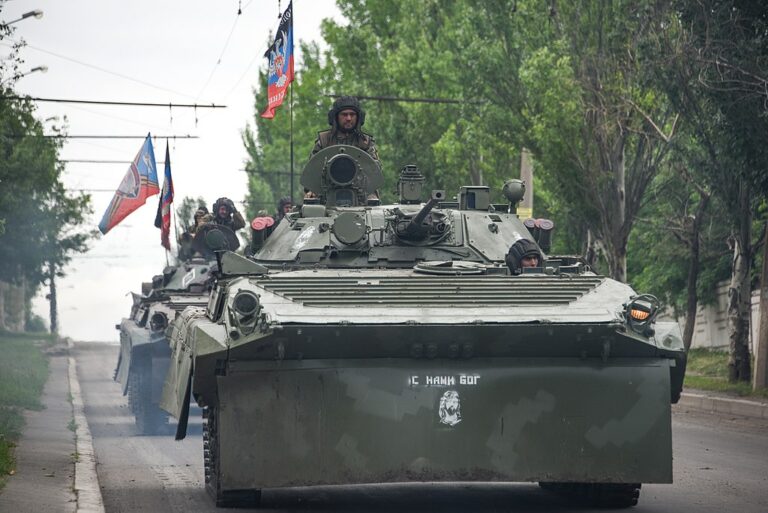
RUSSIA’S invasion of Ukraine has severely affected the latter’s production and export of grains, rattling global markets of food and energy, said the European Ambassadors.  

The ambassadors, representing nine European nations, emphasised the continuous disruption stemming from Russia’s aggression and its impact on the stability of the global economy in a statement commemorating the second anniversary of Russia’s full-scale invasion of Ukraine.

The statement jointly released by Austria, Belgium, Bulgaria, the Czech Republic, Denmark, Germany, the Netherlands, Romania, and Sweden noted that European countries, along with Ukraine, were working together to keep global food prices stable by protecting the production and export of grain to countries, particularly those on the African continent.


Read Also:

Russia-Ukraine war: ICC issues arrest warrant for Putin

Russia-Ukraine conflict: Africa to feel impact on food security – EU commissioner

Russia-Ukraine conflict: Biden, Blinken, Adeyemo among top US officials sanctioned by Putin


The ICIR reported that the Ukraine-Russian war, which started on Thursday, February 24, saw over 3.2 million refugees flee the country in the first few weeks of the war and over 14 million displaced about eight months later.

The attacks by Russian forces were reported in major cities across Ukraine, including Berdyansk, Chernihiv, Kharkiv, Odesa, Sumy, and the capital Kyiv. 

For a while now, the conflict has reached a stalemate. However, as reported by CNN, on February 19, Ukraine faced a significant setback when it was compelled to retreat from the strategic town of Avdiivka after enduring months of intense battles. This withdrawal marked Ukraine’s worst defeat since the fall of Bakhmut in May.

Early this month, the Office of the United Nations High Commissioner for Human Rights (OHCHR) confirmed 10,582 deaths of civilians and 19, 875 injured in Ukraine during the war, according to analysis by Statista.

Reacting to what it described as a “serious violation of international law” by Russia, the European ambassadors said it had been two years of Ukraine defending its citizens, schools, hospitals, waters, industries and independence with “tooth and nail.”

“Two years of too many lives lost and too much pain endured. We are aware that there are more conflicts happening in the world and that people are suffering in various places. We support a just international order where people anywhere can benefit from peace, stability and prosperity, in Europe, Africa or elsewhere. With geographical distance, there is the risk of information being lost. So today, while we stand together on a day we wish we didn’t need to commemorate, we would like to share more information on questions we often get,” they wrote.

On why Nigeria should care about Russia’s war against Ukraine, the ambassadors stressed that countries had agreed on rules of engagement for the benefit of their citizens, with the United Nations (UN) Charter providing a clear framework aimed at preserving peace. 

The framework, according to the statement, includes respect for the sovereignty of a country, whether a neighbouring country or a country further away. 

“Russia’s war against Ukraine goes against international agreements and the United Nations Charter. The illegal Russian invasion of Ukraine creates a dangerous precedent for the rest of the world. Sovereignty and territorial integrity are the cornerstones of international order. Russia’s undermining of Ukrainian sovereignty undermines the international institutions we have built together.

“Russia’s unprovoked invasion of Ukraine has also disrupted global food and energy markets. Ukraine is among the world’s most important grain producers. The illegal Russian invasion has severely affected Ukraine’s production and export of grains, leading to higher prices worldwide. European countries and Ukraine are working together to keep global food prices stable by protecting the production and export of grain to countries, particularly on the African continent, for instance through ‘Solidarity Lanes’ and the Black Sea Corridor,”

They also clarified the claim that European countries were prolonging the war in Ukraine by sending weapons, noting that these countries support Ukraine by providing weapons to uphold its right to self-defence.

According to the statement, Russia attacked Ukraine without justification, violating international law and the UN Charter, adding that Russia has breached almost 400 international treaties since its ‘illegal’ invasion of Ukraine’s Crimea peninsula in 2014.

“Russia can end the war at any time and withdraw from Ukraine. For Ukraine, however, an end to its defence would mean the loss of its territory and the oppression of its population. Not supporting Ukraine would mean accepting Ukraine to fall under Russian submission.”

While stating that Ukrainian President Volodymyr Zelenskyy had put an offer for sustainable peace on the table with his 10-Point Peace Plan, Russia refused to negotiate.

“People sometimes claim that Europe or NATO provoked the Russian attack. We are not at war with Russia, nor do we seek confrontation. Before the illegal invasion, European countries like ours and Russia enjoyed certain levels of cooperation, including through trade. NATO also did not look for confrontation with Russia. NATO is a defensive alliance. Countries can request membership of NATO and NATO respects every nation’s right to choose its own path.

“Russia breached the Budapest Memorandum (1994) where it agreed to respect the independence, sovereignty and borders of Ukraine, by its 2014 invasion of Ukraine’s Crimea peninsula. Since then, Russia has continued to breach international law. The illegal invasion of Ukraine on 24 February 2022 marked a further escalation of Russia’s war of aggression against Ukraine.”

On why the nine European countries do support other countries with weapons as they do with Ukraine, they said they had always been committed to contributing to safety and stability globally. 

SIM-NIN linkage: NCC rules out extension of February 28 deadline

0

THE Nigerian Communications Commission (NCC) has said there would not be an extension of the February 28 deadline for the linkage of Subscriber Identity Module (SIM) cards to National Identification Numbers (NIN).

Reports suggest that about 12 million lines may be affected by the directive after the deadline expiration.

According to the NCC, SIM-NIN linkage is the process of attaching one’s NIN to a phone number to validate the person who registered the SIM card.

Reuben Mouka, the NCC’s Director of Public Affairs, told the Punch Newspaper on Wednesday, February 28, that the Commission issued a public notice stating there would not be an extension to the linkage.


Read Also:

In a notice dated December 20, 2023, the NCC directed telecommunication companies (telcos) to block SIMs that had yet to be connected to the NINs of their owners by February 28, 2024. 

Besides, the NCC requested that by March 29, 2024, Global Satellite Mobile (GSM) Communications companies ban individuals whose NINs have been submitted but not confirmed.

The Chairman of the Association of Licensed Telecommunications Operators of Nigeria (ALTON), Gbenga Adebayo, informed the newspaper that telecom providers would abide by the NCC’s order.

He added that roughly 12 million of the 224 million active lines were at risk of deactivation.

The ICIR reported that the Federal Government in April 2022 directed telecommunications operators to immediately bar outgoing calls from SIM cards not yet linked with the NIN.

The then Minister of Communication and Digital Economy, Isa Pantami, announced the directive, which was to come into effect on April 4.

The Federal Government had earlier mandated that telecommunications subscribers link their SIMs with their NINs in December 2020.

Meanwhile, the Federal High Court in Lagos on Thursday, February 22, restrained telecom operators from deactivating or barring any line or SIM whose user did not link to the NIN.

Ruling on a restraining order application brought by rights activist Olukoya Ogungbeje on February 22, the judge, Ambrose Lewis-Allagoa, prohibited telecom carriers from executing such an action.

Ogungbeje had filed a lawsuit against MTN Nigeria Communications Plc and Airtel Networks Nigeria Limited, the Federal Government, the Attorney General of the Federation, the Minister of Justice, and others.

He asked the court for an injunction pending appeal denying all the respondents jointly or severally, whether by themselves, their agents, outlets, agencies, privies, officials, servants, men, parastatals, units, organs, or anybody or person however so called, from taking any step or action capable of enforcing the judgment in any way and from further outright barring, deactivating and or restricting any SIM cards or his phone Lines, or of any Nigerian citizen, slated for February 28, 2024, pending the hearing and determination of his appeal at the Court of Appeal, against the court’s judgment delivered on May 8, 2023, by Lewis-Allagoa.

On Wednesday, February 28, it was observed that MTN subscribers experienced glitches on the network. Most subscribers were unable to make calls or use the internet.

Responding to the crisis via X, MTN Nigeria confirmed the glitches on its network and blamed it on multiple fibre cuts.

“Dear Customer, you have been experiencing challenges connecting to the network due to a major service outage caused by multiple fibre cuts, affecting voice and data services.

We apologise for the inconvenience and ask for your patience and understanding as the team works to restore full service as soon as possible.”

The company assured customers that its engineers were working to fix the issues.


Welcome to Rivers state where N55 billion transport tax goes into private pockets

By Odinaka ANUDU

IN the southern Nigerian state of Rivers, road tax is collected by non-state actors. And these individuals pocket nearly everything.

This investigation reveals for the first time that Rivers State generates a minimum of N55.234 billion ($34.20 million) from 62,418 commercial vehicles, 24,432 tricycles and 10, 892 motorcycles in road taxes every year.

Incidentally, only 0.41 per cent of the money goes into the government coffers, according to this data-driven investigation. A large chunk of the tax goes into the accounts of a transport union and its members, while part of it is appropriated by community touts.


Read Also:


A small percentage of the tax is kept by a private company owned by three persons from the same family.

Road tax in the state is paid by drivers of commercial buses, and tricycles, also known as “Keke Marwa.” Some of it is paid by motorcyclists, also known in local parlance as “Okada.”

In 2022, Rivers, Nigeria’s second richest state, reported N223.93 million in road tax, but this amount is only a drop in the pan as much of what is realised is diverted to private accounts.

The numbers, the methodology

No relevant government or non-governmental institution contacted by the reporter prior to this investigation agreed to be in possession of data on the number of vehicles, tricycles and motorcycles in Rivers State.

The reporter therefore went undercover to unravel these numbers.

Posing as a researcher, the reporter spoke with 24 officials of the National Union of Road Transport Workers (NURTW) in nine local governments of the state for the purpose of estimating the numbers.

The local governments are: Port Harcourt, Obio-Akpor, Ahaoda East, Eleme, Ikwerre, Oyigbo, Gokana, Khana and Tai.

In Obio-Akpor, the reporter covered areas such as Rumokoro-Rumuodara- Eliozu-New Road- Artillery -Woji axes and their surroundings.

In Ikwerre, the reporter crisscrossed Omagwa, Isiokpo, Igwuruta and Ubima.

In Port Harcourt Local Government, the reporter went round Diobu, D-Line, Agip, and Amadi Ama.

In Eleme axis, Eleme Junction, Akpajo Bus Stop and Trailer Park were covered.

In Gokana, Bere, Mogho, Kpor and Bodo were visited.

In Khana Local Government Area, Bori Park, Deken and Baghayagbe were covered.

In Tai, Nonwa, Borobara, Korokoro and Gio were covered.

Also, Elele and Ahoada town in Ahaoda East were visited.

In Oyigbo axis, Oyigbo, and Asa were covered.

Based on the different estimates by the NURTW officials, the total number of vehicles in Rivers State sums up to 62, 418.

The same method was used for tricycles, with the heaviest number of tricycles (5, 254) seen around Rumokoro Local Government Area. The number of tricycles was 2,570 at Eleme axis, 3,352 at Elele-Ahaoda axis, and 2,856 at Oyigbo area.

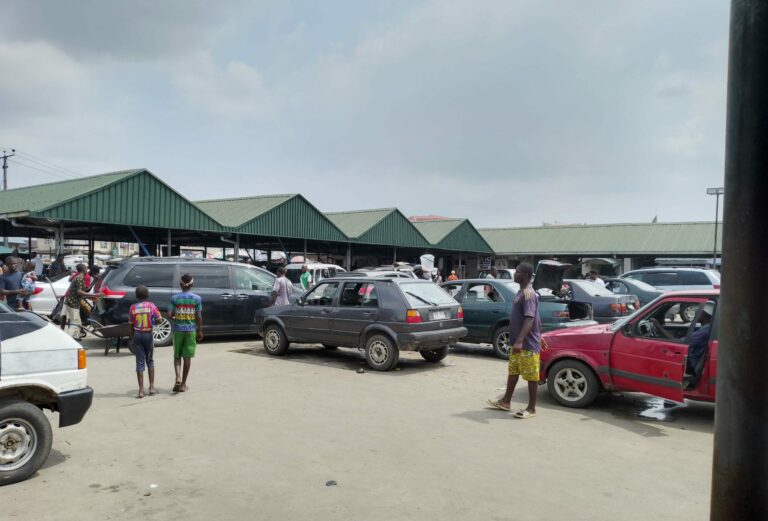
Scene at Rumokoro, where agberos ounce on commercial vehicles to collect transport tax

Only Ikwerre Local Government Area was omitted in this category, as tricycles were recently banned in the council.

It was found that the total number of tricycles in Rivers State was 24,432.

Similarly, bikes are not allowed in city centres in Rivers State. With the same methodology used in places where they are allowed such as Ikwerre, Ahaoada, among others, the total number of bikes was found to be 10,892.

Money in the bag

What does this mean in naira and kobo? To be sure of this, the reporter went directly to vehicle drivers, tricyclists and motorcyclists to find out what they pay as road tax each day. Twenty-seven commercial vehicle drivers, tricyclists and motorcyclists were interviewed in the nine local government areas for this story.

Based on the findings, the average amount spent by commercial vehicles in Rivers State is N1,800 daily, summing up to N41.121 billion a year when multiplied by 62,418 vehicles.

Based on the number of commercial vehicles in Rivers State (62,418) and what is being collected from them yearly (N100 daily x 366), the Rivers State Internal Revenue Service (RIRS) should be able to get N2.284 billion from commercial vehicles annually. However, this is not the case as the RIRS reported N223.93 million only in road tax in 2022.

Similarly, tricycles pay an average of N1,400, amounting to N12.519 billion annually when multiplied by 24,432 tricycles.

Tricyclists at Oyigbo

Based on the number of tricycles in the state (24,432) and what is collected annually (N100 x 366), the RIRS should easily get N894.211 million annually from tricycles. However, this amount is far less than what Rivers State government declared as tax collected from tricycles, commercial vehicles and motorcycles in 2022 (N223.93 million).

For the 10, 892 commercial motorcycles, each of them averagely pays N400 daily, amounting to N1.594 billion annually. Based on the number of motorcycles in the state (10,892) and what is collected annually (N100 x 366), the RIRS should easily receive N389.647 million as revenue from motorcycles in places where they are allowed. But this is not the case as the state said it received N223.93 million as tax from motorcycles, commercial vehicles and tricycles in 2022.


Item Number Annual Revenue
Vehicles 62,418 N41.121bn
Tricycles 24,432 N12.519bn
Bikes 10,892 N1.594 bn
Total 75,167 N55.234bn

Source: ICIR, Economy Post

“We make a lot of money each day. Sometimes, I go home with over N10,000 from my ‘pit’,” said one of the NURTW members at Choba.

The word “pit” signifies an area that has been allocated to a revenue tout for the purpose of collecting transport tax.

Who takes Rivers state tax?

The first group that takes a large chunk of Rivers State’s road tax is the National Union of Road Transport Workers (NURTW), which is notorious for under-reporting transport tax collections across Nigeria.

They collect the tax as cash from commercial drivers and cyclists but report only a fraction of it.

The reporter caught many of them in camera collecting the public tax in cash without issuing receipts. In Rivers State transport receipts are issued by different institutions such as RIRS, NURTW, and local governments.

It was discovered that drivers who refuse to pay are beaten or have their vehicles, tricycles or motorcycles confiscated.

The reporter found that communities in Greater Port Harcourt such as Obio-Akpor, Port Harcourt, Eleme and Oyigbo collect the road tax in one way or the other through villagers and touts.

“Rivers State has deliberately failed to embrace technology by asking that the road tax be paid electronically through numerous online platforms available today or via the bank,” said a United Kingdom-based economist, Dr Ikechukwu Obiefuna.

“Collecting tax in cash breeds corruption and wastages,” he noted.

Apart from what is paid each day by a motorist, NURTW and touts also charge new entrants registration fees ranging from N7,000 to N20,000.

The reporter posed as a new entrant into the commercial motorcycle business at Bori. Chairman of the NURTW in charge of tricycles and motorcycles, Christian Nubor, asked him to pay N8,000 per motorcycle for registration.

De-Jonny West Africa, millionaire tax collector

A company known as De-Jonny West Africa Limited collects N100 from every tricyclist around Obio-Akpor Local Government and issues a receipt for that. With 5,254 tricycles at Rumuodara, the company may be making N192.296 million annually.

With a beneficial ownership analysis at the Corporate Affairs Commission (CAC), which is Nigeria’s companies’ registrar, the reporter found persons with significant control of the firm to include: Onukem Ovundah, Onukem Temple, and Onukem Enyinda – three individuals from the same family.

Enyinda Onukem was the traditional prime minister of Okporo, one of the communities in Obio-Akpor Local Government Area. Checks showed that he was expelled by Okporo Supreme Traditional Rulers, Chiefs and the Elders Council in 2016, though the suspension was later lifted.   He wielded enormous influence in Rivers State, such that the former governor of Rivers State, Nyesom Wike, sent his Chief of Staff, Engr Emeka Woke, to condole with him when he lost his wife, Ms Joy Adi Enyinda Onukem, in 2016.

However, our reporter was told that Enyinda Onukem is no longer alive.

Onukem Temple was the zonal leader of Rivers State Task Force on Street Trading, Illegal Motor Parks and Markets. He was in charge of Oil Mill/Artillery Zone of Port Harcourt but was suspended on October 28, 2019, for “acts of sabotage and compromise.”

New Road in Port Harcourt

The Tide News Online quoted the Coordinator of the Task Force, Bright Amaewhule, as saying, “I got information on the Zonal leader of the Oil Mill/Artillery Zone, one Temple Onukem that he has collected money from the traders to allow them trade on the pedestrian (walk way) and the Aba Road axis of Elelenwo and Rumuokurusi.

“That was now affecting vehicular and human movements. I called him severally, he never picked my calls. I had to mobilise my own special team to that place.”

Temple, Enyinda and Ovundah are also owners of De-Jonny Blue Hotels at Rumuodara, Rivers State.

However, our reporter was told that Temple Onukem has also died.

“This is extortion. He has no power to collect such tax except if the state government gave him that as a contract. Anything other than that is extortion,” said a human rights lawyer,  Sam Oyigbo.

Onukem family refused to speak

With the deaths of Enyinda and Temple Onukem, the eldest brother, Kingsley Onukem, is currently managing De-Jonny West Africa. Unwilling to speak about the issue when contacted by phone, our reporter visited Kingsley Onukem’s home at Rumuodara twice.

The first visit was fruitless because he was not available to speak. On the second visit, our reporter, who was told to wait for Kingsley Onukem in the sitting room, was later informed that he had left home.

State government keeps mute

Special Assistant to Rivers State Governor on Media , Boniface Onyedi, did not speak on the issue as he said it did not fall within his remit.

Similarly, Commissioner for Information, Joe Johnson, was asked to provide an explanation as to whether the government authorised De-Jonny West Africa to collect the road tax on its behalf and how much the company was remitting to the state coffers.

He referred the reporter to the transport commissioner.

When the reporter called Commissioner for Transport, Dr Jacobson Mbina, he did not pick several calls put to him on different occasions.

He also did not reply to text messages sent to him regarding De-Jonny and how transport taxes are collected in the state.

One of our reporters visited the Rivers State Internal Revenue Service (RIRS) to get answers as to how much the NURTW pays into the state coffers and how the money is shared, but its Chairman, Chibeoso Aholu, did not speak to her.  One of his assistants said he would not be able to provide answers to the questions.

Transport costs rising

Drivers told the reporter that one of the reasons for the rise in transport costs in the state is the charges imposed by touts.

At Rumokoro Motor Park, a driver moving to Ahaoda charges N1,500 per passenger but also pays N1,500 to the NURTW.

No matter where the vehicle is headed to, the driver must pay NURTW what is collected in fare from one passenger.

The popular Rumokoro Park, with 400 vehicles moving out daily

“I am moving with eight passengers. I am going to buy fuel at almost N700 per litre, pay N100 at each of about 10 checkpoints and still pay ‘agberos’ at the park,” the driver said.

“If my vehicle stops for a passenger to set down, I will also pay agberos. Tell me why transport fares will not be high,” he lamented.

At Trailer Park, a passenger, who identified herself simply as Agnes Wokoma, said she used to spend N300 from Eleme to Gokana but had to pay N600 now.

“It is not only caused by the rising cost of fuel but also the increasing number of harassments faced by drivers along the road. Police and touts are raising our transport fares,” said Ms Wokoma.

Rivers State IGR vs debt

In terms of internally generated revenue (IGR), Rivers is Nigeria’s second richest state after Lagos.

Rivers State earned N169.600 billion as internally generated revenue (IGR) in 2019, N117.190 billion in 2020 and N123.348 billion in 2021, according to the National Bureau of Statistics (NBS). It generated N172.823 billion in 2022 as its IGR.

However, its road tax in 2022 was only N223.93 million, which is just a scratch on the surface.

If Rivers State branch of the NURTW were to be a state, it would be the 10th richest state in terms of IGR, richer than 26 other states, including Kwara (N35.76bn), Akwa Ibom (N34.81bn), Anambra (N33.97bn), Ondo (N32.64bn), and Enugu (N28.69bn).

In terms of debt, Rivers State’s domestic debt stood at N225.505 billion as at June 30, 2023, according to the Debt Management Office (DMO).

Only domestic debts of Lagos, Delta, and Ogun were higher.

Rivers State’s external debt stood at  $83.955 million as at June 30, 2023, higher than most, except 13 states.

Rivers is one of the 28 states that failed to attract foreign investments in the first half of 2023, according to the NBS.

Rivers State unemployment rate stood at 41.59 percent in 2020, according to the NBS. Rivers State has a population of 5.49 million people, according to the World Population Review and the National Population Commission.

With 41.59 percent of the population unemployed, it means that 3.12 million Rivers State residents are out of job.

Other states with very high unemployment rates are Adamawa (54.89 percent ) and Cross River (53.65 percent), according to the NBS.

Nyesom Wike, now Minister of the Federal Capital territory, FCT, which is politically regarded as Nigeria’s 37th state, was governor of the state at this time.

What can N40.362bn can do for Rivers?

With N360,000 minimum wage for one year per person, the N40.362 billion road tax can pay the minimum wages of 112, 116 Rivers State unemployed citizens for one year.

If the state government decides to build standard secondary schools with 200 million each, it could set up 202 schools across the state.

We are remitting into govt coffers, says NURTW

The NURTW has, however, said that it was remitting duly to the state government treasury.

A board member of NURTW and Secretary of Park Maintenance Committee in Rivers State set up by the state government, Ejims Alikwo, said the union was not stealing government revenues.

“We pay every week to the government,” he said.

“We do not remit everything because part of the money is used for the payment of the union members’ salaries,” he said.

When pressed on how much the union collects and the sharing formula between the state government and the NURTW, Alikwo said he did not have all the details.

He claimed that the union not only oversaw the welfare of drivers but also ensured that passengers’ lives were not endangered by drunken drivers.

The way forward

Tax experts want a change in tax administration in Rivers State, calling for the digitization of the processes to achieve transparency.

Associate Researcher at African Centre for Tax and Governance, Timothy Usman, said automation was the only way the state could reverse the situation.

“When a local government in Dakar, Senegal, wanted to collect a tax from cyclists, the officials sat down with them on what they wanted the money to be used for.

“We can replicate that here. But more importantly, automation of the process is the way to go. People need to pay the road tax on smart payment platforms that are available.

“However, there is a need for a political buy-in for automation to work,” he said.

A tax expert and accountant, Olalekan Saidi, said education and enlightenment were critical in changing the situation.

“Before you automate the system, people must understand the flow- – who should collect what. Also, somebody should be monitoring to ensure that it works,” he noted.

An economist, Ms Janet Obiorah, said people in Rivers State government were merely using a public tax to compensate their political thugs.

“If you think that the Rivers State government does not know that its revenue is being diverted by touts, you are mistaken,” she said.

“This is a way to empower those that will be used as thugs during elections. We have not forgotten what happened during the 2023 general elections. Also, it is a way to compensate those who supported them during elections. It is the usual practice across the states, not just Rivers,” she added.

NPFL: Plateau Utd record 5-1 away win against Heartlands FC

0

NIGERIA Professional Football League (NPFL) side Plateau United trashed relegation-bound side Heartlands FC, 5-1 in the league’s matchday 22 fixture to secure an away win at the Akwa City stadium.

The visiting team displayed their hunger in the race to get to the top of the log, leaving the host to sink further to the bottom of the log.

The match saw an early lead through Olawale Doyeni in the 14th minute and a double six minutes later through Edward Agbor to end the first half.

The second half witnessed more harvest of goals as Emmanuel Nenrot’s brace in the 47th and 88th minutes coupled with Harrison Ebah’s goal in the additional minutes after regular time moved the team from the fifth to the second position with 38 points.

They are currently a point behind the league’s leader Lobi stars who lost 0-2 against Sunshine Stars FC of Akure, thanks to Vincent Temitope who scored a brace.

Also, the race of the top four intensified in the match between Enugu Rangers versus Remo Stars as the former pipped the latter, 1-0 to stay in the third position, making the visiting team remain at the fourth position.

In Lagos, Sporting Lagos stunned Akwa United who were leading 1-0 from the 51st minute till the 83rd minute when the host restored parity and pulled a surprising comeback at the death of the second half to secure a maximum of three points.

It was a duel in the Northern derby between two rivals Katsina United versus Kano Pillar. The match lived up to expectations, showcasing the dexterity of both teams to get the victory.

The match witnessed a basket of goals as Katsina United won against Kano Pillars, 3-2.

In Bayelsa, the state-owned team continued in its impressive form as it compounded the woes of Doma United, winning 2-0.

Doma United have lost their last four matches while Bayelsa United won their last four matches.

The matchday 22 fixtures continue tomorrow Thursday, February 29 as Enyimba will play host to Gombe United, Shooting Stars will lock horns with Bendel Insurance, and Abia Warriors will face Kwara United.


Police arrest corps member killers in Benue

0

THE Benue State Police Command has arrested and paraded three suspected armed robbers who killed a National Youth Service Corps member, Irene Chioma Emmanuel.

The command also paraded 12 other suspects for various crimes ranging from kidnapping, robbery, and gun manufacturing.

According to Benue State Commissioner of Police (CP), Emmanuel Adesina, who briefed reporters on Wednesday, February 28, while parading the suspects, the corps member was slain while attempting to shield her laptop from being forcefully taken away by the suspects.


 Read Also:

The CP said the suspects admitted to taking part in the robbery and murder of the corps member, whom they killed while attempting to steal her laptop.

Adesina added that three other suspected bandits killed and buried one Aornen Kpor, a member of the Benue State Volunteer Guard, in a shallow grave after kidnapping him.

He explained that on January 24, reports surfaced of armed bandits who were thought to be led by one Chen and another named Iorpuu Ayangeer who blocked the Tse-Kperse, Naindo-Zaki-Biam road.

“They abducted one Aornen Kpor of Benue State Volunteer Guard, who was travelling the route to an unknown destination.

“During the investigation, one Vanen Mnyim and Adera Terseer both of Ngenev, Ukum Local Government Area, were arrested in connection with the case.

“These suspects confessed to the crime and led the police team to a bush at Adogo village, where the victim was killed and buried in a shallow grave. The corpse has been exhumed and deposited at the hospital for autopsy and proper burial while an investigation is ongoing,” the CP stated.

Precious Ebuka Chukwu, Tyav Wuese, and Tyav Terkuma, blacksmiths in Adikpo, Kwande LGA, who specialise in gun production, were among the other suspects that the command paraded.

The CP urged the state’s residents to constantly provide the police with useful information that could result in the arrest of criminals. He said all the accused would soon face charges.

Confirming the suspects’ arrest to The ICIR in a chat on Wednesday, the command’s spokesperson, Anene Sewuese Catherine, said Emmanuel’s killers had been apprehended.

“The CP disclosed this today. The suspects are in our custody. They will be charged to court soon,” she stated.

The ICIR reported on Thursday, February 22, that the Benue State government, in an attempt to reduce insecurity, issued a two-week quit notice to herders engaging in open grazing in the state.

The state government also ordered all armed herders to leave the state through a resolution by its Security Council.


Nigeria records 477 confirmed Lassa fever cases in 7 weeks

0

DATA from the Nigeria Centre for Disease Control (NCDC) on Wednesday, February 28, showed that the country recorded 477 confirmed cases of Lassa fever out of the cumulative 2,629 suspected cases reported between January 1 and February 18, 2024.

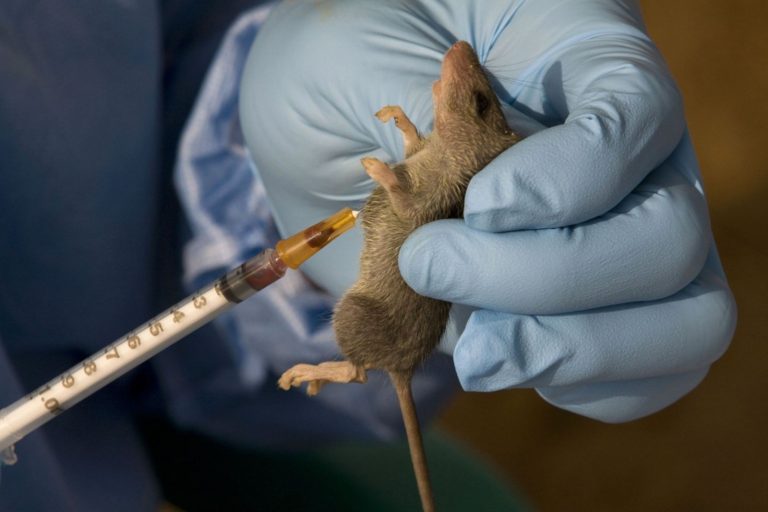
The NCDC described Lassa fever as an acute viral haemorrhagic fever caused by the Lassa virus,  mostly through the type of rodents known as the multimammate rat or the African rat.

The disease can be spread through direct contact with urine, faeces, saliva, or the blood of infected rats or contaminated objects, faeces, saliva, or the blood of infected rats.

Person-to-person transmission can also occur through direct contact with an infected person’s blood, urine, faeces, vomitus, and other body fluids.

The NCDC data also confirmed the country lost 85 people to the infection during the seven weeks in review, with a case fatality rate (CFR) of 17.8 per cent, which is marginally lower than the CFR for the same period in 2023 (18.1 per cent).


Read Also:

Nigeria lost 200 lives to Lassa fever in 2023 – NCDC

Lassa fever: 4,338 suspected cases, 148 deaths recorded in 3 months — Report

NCDC warns of high risk of Lassa fever transmission


According to the report, 24 states have recorded at least one confirmed case across 89 Local Government Areas in 2024.

Out of the total confirmed cases of Lassa fever, 64 per cent were reported from three states – Ondo, Edo and Bauchi, while 36 per cent were reported from 17 states.

Of the 64 per cent confirmed cases, Edo reported the highest number with 119 (25 per cent), followed by Ondo with 108 (23 per cent), and Bauchi with 76 (16 per cent).

Latest report shows a decrease in confirmed cases

Meanwhile, the report revealed that in week seven,  66 cases were confirmed out of the 507 suspected cases reported across 12 states.

The number of new confirmed cases decreased from 83 in week six to 66 in week seven. 

It further stressed that 13 deaths were reported, with a case fatality rate of 19.7 per cent.

The states where the cases were reported were Edo, Ondo, Kogi, Ebonyi, Bauchi, Cross River, Taraba, Enugu, Imo, Delta, Niger, and Yobe States.

Nigeria lost over 200 lives to Lassa fever in 2023

A report by the Centre in 2023 said the nation might have recorded the highest number of Lassa fever cases, with 9,155 suspected cases, confirmed cases, and 227 deaths across 28 states that year.

The confirmed cases reported in 2023 indicate a 9.7 per cent increase from those reported in 2022.

The deaths reported in 2023 were with a case fatality rate (CFR) of 17.9 per cent, which was higher than the CFR for the same period in 2022 (17.7 per cent).

Edo, Ondo, Bauchi, Taraba and Benue led the chart of states with the highest recorded confirmed cases of Lassa fever.

The ICIR reported that the NCDC, in December 2023, raised an alarm over the continuous surge in the number of reported cases. 

This surge was attributed to various factors, including community awareness, environmental degradation resulting from climate change, and other detrimental human activities in the environment.

The NCDC explained that the time between infection and the manifestation of symptoms of the disease is three to 21 days, noting that early diagnosis and treatment of the disease greatly increase the chances of patient survival.

It also noted that people of all age groups who come in contact with the urine, faeces, saliva, or blood of infected rats, those who handle or process rodents for consumption, and hospital staff, among others, were at great risk of contracting the disease.

The symptoms of the disease, according to the Centre, include headache, general body weakness, cough, nausea, vomiting, diarrhoea, muscle pains, chest pain, sore throat, and, in severe cases, bleeding from ears, eyes, nose, mouth, and other body openings.

Blackout in Abuja as vandals destroy TCN towers

0

SEVERAL parts of Abuja are experiencing a blackout as the Transmission Company of Nigeria (TCN) on Wednesday, February 28, confirmed the vandalisation of its transmission towers by vandals.

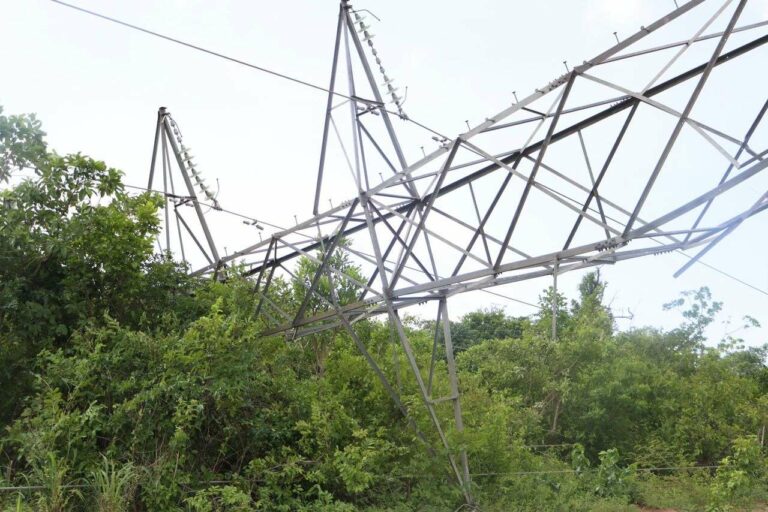
The transmission company said Tower 70 along its 330kV Gwagwalada-Katampe Transmission line was seriously vandalised.

The incident, the company said, occurred on the 26th of February, at about 11.32 pm.


Read Also:


The TCN’s general manager, public affairs, Ndidi Mbah, disclosed this in a statement.

“At the said time, the Gwagwalada – Katampe Transmission line tripped at Gwagwalada Transmission Substation and trial reclosure by TCN Operators failed, necessitating a physical patrol of the line. The TCN lines and patrol team discovered that the four tower footings of Tower 70 were vandalised, destroying the tower legs and causing the tower to stand on the ground, supported by conductors.”

The incident has reduced bulk power supply flexibility and the volume of power into Abuja by 250MW(megawatts)

Meanwhile, TCN said it had mobilised its officials to the site of the incident and the workers had commenced an emergency repair of the damaged tower and its associated equipment.

“We reiterate the need for vigilance in the fight against vandalism of power equipment. We must report suspicious movements around all power equipment to security operatives or the nearest TCN offices nationwide.

In a related development, the Abuja Electricity Distribution Company (AEDC) has also attributed the power outage being experienced in some parts of  Abuja to a fault affecting the 33kV Nigerian National Integrated Power Project-NIPP feeder and repairs on the transmission station at AT4.

The management of AEDC made this known in a statement posted via its official X handle on Tuesday night.

“The Management of Abuja Electricity Distribution Plc. (AEDC) wishes to notify its esteemed customers in (Abuja) that the power outage being experienced is due to a fault affecting the 33kV NIPP feeder and repairs on the transmission station at AT4 are ongoing,” the company said.

The AEDC said the locations affected are Dantata Estate, FO1, Chikakore, Byazhin, Byazhin Across, Gbazango, Guida community, the Military Pension Board area, and its environs.


Senate seeks six-year single term for CBN governor

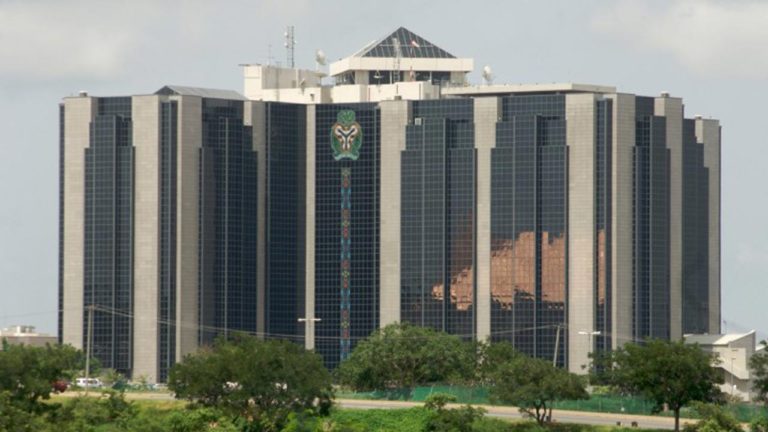
THE Senate on Tuesday, February 27, commenced the process of amending the Central Bank of Nigeria (CBN) Act 2007, which will among others, make the tenure of the apex bank governor a six-year single term as against renewable five years prescribed in the Act.

It also proposed N1 trillion recapitalisation for commercial banks which presently stands at N100 billion.

The Senate, through its Committee on Banking, Insurance, and Other Financial Institutions, also at the plenary screened nominees for the board of directors of the apex bank today.


Read Also:


The proposal for a six-year single term for the CBN governor, its deputy governors, and members of its board of directors was contained in a bill seeking amendment of the CBN Act 2007, sponsored by Adetokunbo Abiru ( APC Lagos East ) in his capacity as the chairman, Senate Committee on Banking.

Abiru, in his lead debate on the bill co-sponsored by 41 other members of the Senate, said a six-year single term for CBN governor, deputy governors, and board of directors was to reduce political influence on them.

“This is the practice adopted by many independent banks such as the US Federal Reserve and the European Central Bank where their chief executive officers serve only one non-renewable term.

” Empirical evidence shows that a single term for the members of the executive and board members of Central Banks helps to reduce political influence on monetary policy decisions,’ he said.

On commercial banks recapitalisation, Abiru in the bill said the proposal sought to provide that the paid-up capital of the banks shall be N1 trillion and might be increased from time to time by such amount as the government might approve.

The bill also seeks the creation of a coordinating committee for monetary and fiscal policies since the extant Act made no provision for such.

He said: “The current Act made no provision for coordination of monetary and fiscal policies which is the reason that monetary policies of the Bank often diverge from fiscal policies to the detriment of the economy.

” To this end, the bill introduces the coordination of the monetary, fiscal, and trade policies – a coordinating committee for monetary and fiscal policies.

“The functions of the committee shall include: setting internally consistent targets of monetary and fiscal policies that are conducive to controlling inflation and promoting financial conditions for sustainable economic growth, applying caps to any fiscal deficit at a level that can be financed without having recourse to direct monetary financing from the Bank, ” he added.

The bill also sought to regulate the issuance of ways and means by the CBN to the Federal Government.

Specifically, as proposed in the bill, while the current CBN Act, empowers the CBN to grant temporary advances to the Federal Government to finance unexpected shortfalls in budget revenue without a stated time frame, the proposed law wants the advance not to exceed ten per cent of the previous three years actual revenues of the Federal Government and it is to be paid back at the end of the financial year in which it was granted.

“To firm up this provision and prevent a repeat of the recent experience in which the Bank’s ways and means have fueled inflation and significantly distorted economic management, the bill proposes the following: any such direct advance to the government should not exceed 10 per cent of average government actual revenues during the preceding three years,” reads part of the bill.

The bill also seeks to minimise default risk, any sum which becomes outstanding at the end of the expiration of the credit period should be held against and recovered from the proportion of the federation allocation receipts.

Members of the board of CBN directors screened on Tuesday were Robert Agbede,  Ado Yakubu Wanka, and Muslimat Olanike Aliyu.

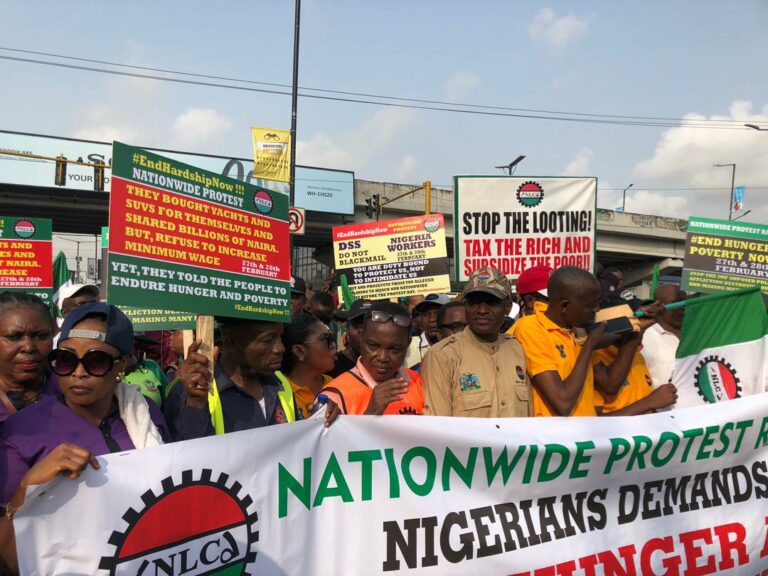
NLC suspends nationwide protest, issues fresh two-week ultimatum

0

THE Nigeria Labour Congress (NLC) has suspended the two-day nationwide protest it started on Tuesday, February 27.

The NLC said the second day of the protest, scheduled for Wednesday, February 28, would be used for press conferences across the states.

The group also issued a new 14-day ultimatum to the Federal Government, which expires on March 13, and said all demands made from October 2, 2023, be fully implemented.


Read Also:

The ICIR reported that the NLC and its affiliates commenced a national protest on Tuesday over the country’s high cost of living and hunger.

However, the group’s leadership, in a press release on Tuesday signed by its president, Joe Ajaero, and general secretary, Ismail Bello, said the government had received a message from the protest.

“The NEC-in-session, therefore, reviewed the execution of the first day of the nationwide protest to assess its effectiveness and take a decision on the further necessary action to guide Congress in its effort at engaging government to protect the people and Nigerian workers from the increasing scourge of hardship.

“To this end, NEC commended Nigerians, all NLC affiliates, state councils, workers and civil society allies across the nation for trooping out in large numbers to peacefully demonstrate their outrage on the hardship imposed by the government and its twin altars – the IMF and the World Bank,” the statement read in part.

The NLC, however, said the nationwide action would continue on Wednesday, February 28, with simultaneous press conferences in all its state councils in the 36 states and its headquarters in Abuja.

The ICIR reported on Tuesday, February 27, that the labour leader, Ajaero, said the nationwide protest was not about the pending minimum wage but ravaging hunger across the nation.

Ajaero stated this at the commencement of the protest on Tuesday in Abuja.

He said the workers had advised the government what to do as a short-term solution to the hardship. 

He said there had been hunger in the country before the present administration took over, but it was not as bad as citizens experienced it under the President Bola Tinubu-led government.

He accused the Federal Government of playing politics with issues affecting the vast majority of citizens and diverting money meant for alleviating poverty into private accounts.

He claimed that no state government had paid wage awards. He also blamed food scarcity in the country on insecurity.

He said Nigeria could not attain sufficiency in food supply when farmers could not go to farms due to bandit attacks, stressing that it was the government’s duty to provide security.