THE Federal Government has challenged state governments in Nigeria to understudy the success story of the Geometric Power Limited model in Aba, Abia State, and replicate it in their respective states.
The Minister of Power, Adebayo Adelabu, said this in Abuja on Friday, March 1, at the 7th edition of the Nigerian International Energy Summit.
Adelabu said with the new Electricity Act, no state in Nigeria had any reason not to close power supply gaps in its underserved areas.
According to the minister, the new Electricity Act supports independent power projects in states as the people of Aba in Abia State are celebrating uninterrupted power supply following the installation of 188 megawatts power generating plant by the Geometric Power Plant.
“We have the enabling Act to do this and I believe that we’ll use Abia State as a point of contact, to appeal to all state governments to start playing their role and fulfilling their electoral promises to their people during their campaign that they would provide power.
”The Electricity Act of 2023 has allowed this, the President, the government has done what they’re supposed to do, they have moved the power sector from the executive legislative list to the concurrent list so that every level of government can play in it, even the private sector can play in it. So what are we waiting for,” he said.
He also disclosed the Federal Government’s plans to establish smaller electricity Distribution Companies (DisCos) in underserved communities across the country to strengthen supply.
The minister who expressed concerns about the distribution companies as the weakest link in the nation’s power network, said the government planned to intervene by providing certain infrastructures to the underserved areas.
According to the minister, his ministry has provisions in the budget to intervene in the provision of transformers and electric poles for communities in areas that are not so attractive to the DisCos.
“We are also saying that there will be licensing of smaller DisCos for small communities, where the existing DisCos are not making an impact. We may not have to revoke their licence but their catchment areas can be redistributed when the particular DisCo is not performing.
“So we are in talks to the DisCos to up their game, because whatever we do in generation and transmission, if it does not get to the last mile in connection, Nigerians will not see us doing anything. The discos are the major touch point for us, and I’m promising that in my time, there is going to be a transformation,” he said.
Adelabu also urged the DisCos to increase investment in the sector, noting that the sector required huge investments for effective service delivery.
THE presidency has expressed concerns that despite the interventions from the government on subsidies, over 100 million Nigerians still do not have access to consistent and affordable electricity.
The Special Adviser to the President on Energy, Olu Verheijen, who disclosed this development said the President Bola Tinubu-led administration was working to address foundational issues in the power sector to bridge the power access gap in the country.
Verheijen disclosed this in her opening remarks at the 7th Nigeria International Energy Summit (NIES) on Friday, March 1, 2024, in Abuja.
Represented by the Team Lead-Power, Office of the Special Assistant on Energy to the President, Eriye Onagorowa, she said the lack of access directly impacted citizens’ ability to achieve meaningful income growth, as a lack of reliable electricity limits productivity and restricts economic expansion.
She noted that the link between electricity consumption and economic development was well established across different African countries with different income strata, with South Africa leading the pack while Nigeria remained at the bottom.
Verheijen said, “South Africa is leading the pack with about 23,392-kilowatt hours annually, which comes to about 1,949-kilowatt hours monthly. (The country is) “closely followed by Egypt, 9,639-kilowatt hours annually, which comes to about 800-kilowatt hours per month.
“Morocco, 7,237-kilowatt hours annually, comes to about 600 kilowatt hours monthly. Nigeria last and certainly the least, 2,548-kilowatt hour annually, translates to about 212 kilowatts per month”, she added.
She noted that the economic impact of energy poverty on economic development could not be overstated, adding that businesses that operate in environments like Nigeria continued to struggle with high operational costs and lower productivity, making them less competitive both globally and locally.
This, she argued, was affecting job creation and limiting income growth opportunities, stressing that for households, the lack of access to clean and reliable energy sources had profound implications for education and health, which she said were critical determinants of economic mobility.
According to her, Nigeria’s macroeconomic difficulties and unreliable power supply have severely impacted the productivity of the commercial and industrial sectors.
“Over the years, this has resulted in low productive use of electricity. This situation has led to a scenario where a disproportionate amount of the available power is consumed by the residential sector, which accounts for more than 70 per cent of final electricity consumption.
“Furthermore, over 70 per cent of Nigerians live below the middle-income international line of poverty, which is set at about $3.20 per day, rendering them unable to afford electricity access.
“The implication of this is a largely poor residential customer base, resulting in limited revenue for utilities. This in turn exacerbates the issue of reliability and affordability, as utilities find themselves unable to reinvest in expanding and enhancing the electricity infrastructure”, she noted.
To address these challenges and unlock the economic potential of Nigeria’s energy sector, she maintained that it was crucial to shift focus towards growing the productive use of electricity, particularly in the nation’s commercial and industrial sectors.
She said the sectors had a higher capacity to pay cost-reflective tariffs and were crucial for powering productivity and competitiveness.
She explained further that by enhancing access to reliable electricity for this sector, the nation would stimulate job creation and increase economic and income growth.
“This strategic focus not only aims to lift people out of poverty, but also strengthen the financial viability of the energy sector”, she stressed.
NIGERIA’S stock market recorded a negative performance in the past week as investors lost N1.83 trillion during the five-day trading session in reaction to the latest Central Bank of Nigeria (CBN) decision on monetary policy tightening to curb inflation.
After its two-day monetary policy committee (MPC) meeting on Tuesday, February 27, the CBN raised the benchmark interest rate by 400 basis points to 22.75 per cent and cash reserve ratio (CRR) to 45 per cent.
The rate hike, which some analysts said was the right call, and others described as an overkill in taming inflation, which surged to 29.90 per cent in January this year, largely influenced investors’ sentiments in the last trading week.
As a result, the All-Share Index (ASI) and market capitalisation declined by 3.27 per cent to close the week at 98,751.98 points and N54.04 trillion, respectively.
On Monday, February 26, the ASI, which opened at 102,088.30 points, dropped to 101,995.53 points, while the market capitalisation declined from N55.86 trillion to N54.04 trillion to start the week’s trading in the red.
The negative performance continued on Tuesday and Wednesday as investors reacted to the outcome of the CBN rate hike, which led to sell-offs across mid and large-capitalised stocks in the banking, insurance, and consumer goods sectors, contributing to the downward trend.
The equities market rebounded on Thursday to record the only positive performance in the week.
But on Friday, March 1, the stock market shed 1.23 per cent, the ASI to 98,751.98 points, and the market capitalisation to N54.04 trillion, respectively.
Analysts said the N1.83 trillion, mainly due to the CBN rate hike, indicated that investors were rebalancing their portfolios and shifting to take positions in the fixed-income market.
“Seeing market corrections after a bearish trend over weeks is not surprising. Investors are now trying to take a position in fixed assets owing to effective implementation of fiscal policies as contained in the budget and government desire to engage the private sector in most of the privatisation process,” the National President of New Dimension Shareholders, Patrick Ajudua, told The ICIR.
According to him, the rate hike in the CRR to 45 per cent will constrain quoted companies from declaring favourable dividends to shareholders.
“Shareholders are not pleased with the hike in monetary policy rate, which we all anticipate owing to an increasing rate of inflation and increase in CRR, which often limit the ability of the bank to function effectively and give a generous dividend to shareholders.
“So for us, we will not be anticipating any increase in banks’ previous year dividend declaration due to increase in CRR, inflation and anticipated capitalisation process,” Ajudua said.
Hoping that investors could find comfort from the financial institutions, he cast doubt on companies in the manufacturing and industrial sectors, pointing out that the naira devaluation had strained the financial performances.
“As investors, we hope for better banking and other financial sectors results.
“We have less hope from the industrial and manufacturing sector owing to the catalytic effect of the devaluation of the naira, which has seen most of them reporting losses in their unaudited statement with the attendant consequence of foreign exchange losses eroding off the shareholders’ fund,” he added.
An operator in the capital market, David Adonri, corroborated Ajudua’s view that the CBN rate hike contributed to the downward slope of the equities market in the just concluded week.
He said, “Apparently, the market was already primed towards reacting to further tightening the monetary policy. So, equities, especially banking stocks, started declining a few days before and after the policy was adjusted.
“The woeful performance of some listed companies at year-end and meagre dividend yield for others whose results have been released elicited negative backlash from investors, causing equities to close on a negative note at the end of the week.”
David, the executive vice chairman of Highcap Securities Limited, explained that once a price-sensitive event hits the market, equities react until the appropriate correction occurs.
“Since Thursday, the banking sector has been recovering, which may serve as an impetus for normalising market conditions,” he added.
Anticipating how the equities market would trade in the coming week, analysts at Cowry Asset Management stated in their weekly market report that a gradual return of positive investor sentiment was likely and that companies’ corporate earnings would drive it.
“However, the high-interest environment resulting from the recent policy rate hike by the CBN to 22.75 per cent and rising yields in the fixed-income market will likely influence investor behaviour.
“Regardless, investors are expected to continue rebalancing their portfolios as they carefully assess Nigeria’s macroeconomic data,” the analysts added.
Meanwhile, a total turnover of 1.882 billion shares worth N34.15 billion in 48,464 deals was traded at the floor of the Nigeria Exchange Limited (NGX) in the review week, compared to a total of 1.377 billion shares, valued at N31.584 billion in 42,040 deals in the previous week.
The financial services industry (measured by volume) led the activity chart with 1.275 billion shares valued at N20.427 billion traded in 24,801 deals and contributed 67.78 per cent and 59.82 per cent to the total equity turnover volume and value, respectively.
Transnational Corporation, United Bank for Africa, and Access Holdings accounted for 563.139 million shares traded, worth N10.155 billion in 9,270 deals and contributing 29.93 per cent and 29.74 per cent to the total equity turnover volume and value, respectively.
THE Central Bank of Nigeria (CBN) said it had revoked the licenses of 4,173 Bureau de Change (BDC) operators.
The apex bank disclosed this in a statement issued and signed by its Acting Director of Corporate Communications, Hakama Sidi-Ali, on Friday, March 1.
Part of the statement reads, “The Central Bank of Nigeria (CBN) in exercise of the powers conferred on it under the Bank and Other Financial Institutions Act (BOFIA) 2020, Act No. 5, and the Revised Operational Guidelines for Bureaux De Change 2015 (the Guidelines), has revoked the licenses of 4,173 Bureaux De Change Operators.”
According to the CBN, the affected institutions ran afoul of one or all of its regulatory provisions.
The offences included failure to observe license renewal within the stipulated period in line with the guidelines and rendition of returns.
Another infraction was the failure to comply with guidelines, directives and circulars of the CBN, particularly Anti-Money Laundering (AML), Countering the Financing of Terrorism (CFT), and Counter-Proliferation Financing (CPF) regulations.
The ICIR reports that the CBN is revising the regulatory and supervisory guidelines for Bureau de Change operations in Nigeria. Compliance with the new requirements will be mandatory for all stakeholders in the sector when the revised guidelines take effect.
“Members of the public are hereby advised to take note and be guided accordingly,” the CBN said.
The list of the affected BDC operators can be viewed here.
The ICIR further reports that the apex had, on Friday, February 23, issued a revised regulatory guideline for the BDCs operators.
According to the exposure draft, the apex bank proposed new regulations to increase the minimum capital requirements to N2 billion for Tier-1 BDC operators and N500 million for Tier 2.
“The Guidelines revise the permissible activities, licensing requirements, corporate governance and Anti-Money Laundering/Combating the Financing of Terrorism (AML/CT) provisions for BDCs. It also sets out new record-keeping and reporting requirements, among others,” CBN stated in the revised guidelines.
Reacting to the new guideline, the president of the Association of Bureau De Change Operators of Nigeria (ABCON, Aminu Gwadabe, instructed its members to abide by extant laws establishing their operation, warning them against regulatory violation and engaging in street trading.
The revised guideline came amid the Economic and Financial Crimes Commission (EFCC) raid against illegal BDC operators.
He said, “In line with our obligations, ABCON supports the drive of authorities to streamline any illegal economic behaviours.”
THE Joint Action Committee (JAC) of the Senior Staff Association of Nigerian Universities (SSANU) and the Non-Academic Staff Union of Educational and Associated Institutions (NASU) have threatened to embark on strike over unpaid salaries.
A joint statement signed by the president of SSANU, Muhammed Ibrahim, and the general secretary of NASU, Peters Adeyemi, on Friday, March 1, raised concerns about the Federal Government’s decision to release four months of withheld salaries to members of the Academic Staff Union of Universities (ASUU) while neglecting to release the withheld salaries of non-academic staff.
The committee said the reactions from the members of the two unions indicated that they would no longer guarantee and be able to sustain industrial peace in public universities.
The ICIR reports that the administration of former President Muhammadu Buhari withheld ASUU members’ salaries when it invoked a ‘no work, no pay’ policy during an industrial action by the lecturers that lasted eight months, from February 14 to October 14, 2022.
The lecturers subsequently suspended the strike following a court order initiated by the Nigerian government at the time.
Similarly, SSANU and NASU embarked on strike for five months between April and July 2022, to compel the Nigerian government to meet its demands as ASUU.
The Buhari government also invoked the ‘no work, no pay’ policy on the striking non-teaching university workers as their ASUU counterparts.
However, in October 2023, President Bola Tinubu pledged to pay four of ASUU’s withheld eight months’ salaries, with the union confirming the commencement of the payment in February.
Protesting the Tinubu’s government decision to pay only ASUU and remaining silent on the fate of its members whose salaries were also withheld by the government, SSANU and NASU wrote to the Chief of Staff to the President, Femi Gbajabiamila, and the Minister of Education, Tahir Mamman, on February 13, 2024, urging the President to also approve the release of their members’ withheld salaries.
They warned that if the government goes ahead with the exclusion policy, the two unions should not be held liable for any disruption in the universities’ academic calendar.
Meanwhile, in a letter released today, the Joint Action Committee expressed shock over how the government has failed to respond to the letters.
The committee, while highlighting that pressure from members of the union had intensified, noted that it had done everything possible within its powers to prevail on its members to maintain industrial peace.
Part of the letter read: “While we appreciate the Federal Government for paying our academic counterpart, we also deem it necessary that our members are also paid. The various feelers we are getting from our members in the universities and inter-university centres indicate that we can no longer guarantee and be able to sustain industrial peace in the university sector.
“We, therefore, use this opportunity once again to call on the Federal Government to do the needful within the next seven days as the Joint Action Committee of NASU and SSANU should not be held responsible should the wheel of administration and corporate governance be grounded to a halt in the university sector, as we have exercised enough patience.
“If nothing is done by the Federal Government to positively address this situation and respond to our previous letters to them, the members of the two unions may be forced to meet soon to take all lawful and stringent decisions on the matter.”
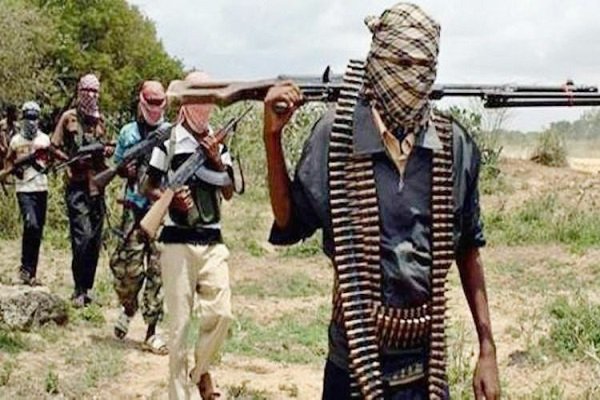
RESIDENTS of Mutunji, a community in the Dansadau district of Maru Local Government Area (LGA) of Zamfara state, live in constant fear that a dreaded terrorist leader, Damina, could swoop on them and abduct them, just like he did their relations he whisked into the forest but never returned home.
Damina is demanding N150 million from the villagers for the abducted persons.
In late 2022, Nigerian security forces allegedly killed Damina’s men in the community in a reprisal attack that followed the bandits’ onslaught on the military base in the village, during which the bandits killed 12 soldiers and burnt four operational vehicles.
The bandit leader vowed to make the people pay the money in cash or with their lives. He has begun to carry out his threat by killing and abducting scores of the community residents in the first round of five attacks he threatened to unleash on them.
Because of Damina’s activities, Mutunji has now become a shadow of itself. Its schools and clinics have been shut down. Businesses and farming activities that once kept the community alive have collapsed.
In recent months, it has lost dozens of its residents to bandits led by Damina, who has claimed responsibility for the abduction of 48 people from Mutunji and the killing of 17 of them.
List of 10 persons killed among the kidnapped villagers
A youth leader of the community, Umar Khalid Mutunji, said bandits loyal to the terrorist stormed the village at about 7:30 p.m. on Friday, November 24 2023 and descended on worshippers in a mosque and other people at a night market (Yar Kasuwa) where they abducted 178 people, including children and adults. They killed one person on the spot.
Umar noted that after whisking the people he took from the community away, Damina screened and released all females and minors among them and took away 48 male adults.He killed two of the men just a few kilometres from the village, leaving 46 males with him.
After about a week, Damina sent one person out of the 46 men with a letter bearing his phone number (withheld), and other details. He warned the people of Mutunji and the nearby village of Malele to be ready for attacks since they refused to pay him the protection levy he demanded. He also accused the villagers of inviting the military to kill his men.
The youth leader noted that out of the 45 persons in captivity, the man who brought the letter confirmed that ten had died of hunger and 35 others were facing serious threats from the bandits.
Those who died were Abdulrashid Adamu, Usama Ahmad Duku, Sahabi Isah, Yasir Zubairu, Murtala Tela, Sanusi Mai-Dungu, Muazu Dila, Gabas Maihanchi, Bakin su Kwabe, and Dan Bai mai-Kiwo.
In the message he sent to the village, Damina suggested that since the community could not pay the levy, each family having someone in captivity should pay ransom for the release of their relatives, or else he would kill them.
A resident of the village who pleaded anonymity said on Sunday, December 10, 2023, that a military aircraft bombarded bandits who gathered at nearby Chabi village for a meeting with Damina and killed scores of them. The resident said as a result of thunderous sounds from the strike, Damisa’s abductees attempted to escape but failed.
“He killed seven of them while two sustained serious injuries and managed to escape to Dangulbi health facility where they were treated and evacuated by the Nigerian Army operating in the area,” the source said.
List of Kidnapped victims before killing of 17 person among them.
He said another abductee, Magaji Musa, and one young person, Abubakar Aliyu, escaped and received treatment at health facilities in Dansadau and Dangulbi, leaving the number of those in captivity at 24.
He said the Mutunji community needed support for protection and livelihood.
There is nothing to indicate government presence in the area, he stated.
He recalled that in late 2022, bandits attacked the military base in the village, killed 12 soldiers and burnt four operational vehicles.
“The dreaded Damina sent a message to the military informing them of his planned attack on them by 5:00 p.m., which the military took for granted. The bandits didn’t add even a minute on the 5 p.m. when they launched the attack.
“In a reprisal attack, the military jet that targeted the bandits at a neighbouring village Malele pursued them, and they ran into our community – Mutunji. Still, the jet threw a bomb that killed the bandits, including 71 innocent people in the village, while others sustained various degrees of injuries, including a young boy whose two legs were amputated.
“Since then, we haven’t had any security operative in the community, and no government official has ever since visited us. We are just on our own,” he lamented.
Umar Bashir (Not real name), one of the persons who escaped from the bandits’ camp narrated his ordeal to The ICIR. He said they spent the first two days in captivity without food or water. “Some of us were too weak. Others were behaving abnormally because of the trauma they had gone through. There were yet others who could not cope with the crisis and died. It was a terrible experience,” he narrated.
On his part, another person who escaped from Damina’s camp, who also cannot be named, revealed that the bandits arrived at Mutunji in large numbers, rode on motorcycles and besieged the community.
They claimed they wanted to discuss an issue with the community leaders. Before they arrived, Damina had directed that his men abduct anyone they saw in the village.
“We were over one hundred within the community at the time. There were gunshots behind us as they moved us into the forest. The gunshots were from the community vigilantes to scare the bandits.
“That helped some of us to escape before reaching the enclave where they kept us. All children, women and other aged persons were allowed to return home, but three men who attempted to run were killed,” he said.
He quoted Damina as saying he would not cry alone but would make the community cry. The bandit warlord queried how soldiers would kill his men, and he would be left to mourn alone. He also reiterated his decision to make the community pay the N150 million levy he imposed on its people.
The ICIR gathered that the majority of the villagers are now armed with firearms for what they described as self-defence, and male adults embark on night patrol of the entire community because Damina has vowed to attack the people five times, out of which he has shown up just once.
Apart from a lack of government presence, including any form of security such as the Police or Army in the community, education has stopped in the village.
Findings by The ICIR showed that over 1,500 children in the village are out of school as the two public primary schools in the community have been shut down for two years.
Malam Nura, a resident, said Muntunji Primary School was given to the military as its officers’ base before they were attacked, leading to the total closure of the school.
The second school – Alkasin Primary School – was closed following the incessant banditry attacks.
Nura added that even a junior secondary school in the nearby Malele community had also been closed for two years due to frequent bandits’ attacks in the area.
“Parents worry that their children are now at home playing. Therefore, we solicit the government’s intervention for the children’s future,” Nura appealed.
Mutunji shares its border with Niger State in the south. In its western part is the Bena town in Danko-Wasagu Local Government Area in Kebbi State, all blessed with vast and fertile arable land.
The people produce tonnes of grains, including guinea corn, maize, soya beans, beans, and perishable foods such as tomatoes, watermelon, and sugarcane.
The ICIR gathered that prominent people in Zamfara State have farmlands in the Dansadau area, with an average farmer harvesting between 1,000 and 20,000 bags of grains.
The Mutunji community youth leader said in a regular farming season, he usually harvested 1,000 bags of grains, and he said he knew many farmers in the area who got over 15,000 bags of grains, including sorghum, maize, beans and soya beans.
However, he lamented that the terrorists’ activities in the area had denied farmers the opportunity to visit their farms. The situation has crippled farming activities in the area and threatened food security in the state.
“A farmer in this community used to harvest 10,000 bags of grains, but because of this terrorism, he harvested below 20 bags this year. I used to get about 1,000 bags. This year, I didn’t get even one bag because of all the encounters with the bandits.
“They destroyed all our farm produce. Farmers invested much money in their farms but couldn’t harvest anything as they (bandits) reared their cattle on our farm, and no one could challenge them.”
The ICIR observed that no health facility functions in Mutunji village. The only option for residents is a chemist shop run by a health worker in the community.
The nearest health facility is the Dansadau General Hospital, which patients from Mutunji village patronise amidst fear of possible attack on a bad road.
The bandits closed the government clinic in Mutunji some years ago. Children and pregnant women die as a result of lack of access to a health facility.
“Children no longer have access to vaccination because people who should vaccinate them no longer come because of insecurity,” Abubakar Sani, a resident of Mutunji said.
Due to the frequent bandit attacks, the ICIR observed that commuters spend days travelling between Gusua, the Zamfara State capital and Dansadau town. The distance between the two towns is 117 kilometres.
Many commuters access Dansadau town by waiting for the Emir’s convoy with soldiers or pleading to join a military convoy going to the area to give them protection.
The District Head of Mutunji, Alhaji Umar Adamu, in an exclusive interview with the ICIR lamented the hardship of his district due to the activities of bandits in the area, saying he was forced to relocate from the area to because of the bandits.
“As I explained to you, the Mutunji area is indeed a blissful area, we are blessed with many villages under Mutunji district. For example, we have over 37 villages, and we have about 28 Jumu’at Mosques in Mutunji district.
“However, as I am speaking to you, we are in a very difficult situation, we have been in this bad situation since when the bandits attacked our security personnel (Military). The economy of our area deteriorated and eventually collapsed, no farming, no schools, no cattle rearing, no health facilities, no religious schools, and no business activities.
” Wallahi, I am assuring you that not all the traditional leaders are living in their communities around the area; to the extent that even me I was forced to vacate the area, because wether I like it or not, I must serve the bandits as long as I remain in the area. But I know it is uncalled for to serve them, that was what forced me to relocate from the area.
He confirmed that the people nor resort to self and carry firearms to protect their communities.
“As I am talking to you, the situation (insecurity) forced so many communities to bear firearms. However, bearing the firearms is the only solution but at the same time a dangerous step. The peace of any community is respecting law and order and there should be presence of government not ordinary citizen punishing another citizen. There is no justice and there is no order for ordinary citizen to take charge against another because it will be a power based on superiority of arms and this is regrettable as it indicates a sorry state of the nation,” the District Head lamented to the ICIR team.
He therefore appealed to the government to as a matter of urgency provide security personnel to the area to protect the people and maintain law and order.
“We have a vast arable land, our area (Dansadau axis) is the heartbeat of Zamfara State as we produce grains massively for food security and economic development and anyone in Zamfara knows this is a fact.
“I am hereby urging our leaders to ensure they discharge their responsibilities effectively in terms of maintaining law and order in communities for peace to rain among citizens and to enable us to worship God properly,” he appealed.
Alh Adamu noted that no single village in Mutunji community was having an active primary, secondary school, noting that even Qur’anic schools that used to admit students from even neighboring states are now shut down.
“I can also count over ten (10) Jumu’at Mosques under my watch in Mutunji district that are completely shut down,” he lamented.
He listed the mosques shut down due to the persistent banditry activities in the area to include Jesa Jumuat Mosque, Jesa-ta-biyu, Kasambo jumuat Mosque, Fankashi Mosque, Guro Mosque, Dogon Ruwa Mosque, Danfasa Mosque Tungar Baushi Mosque; Babban Kwari Mosque.
The ICIR observed that the bandits use the vast forests in the state as their hideouts (camps and enclaves). Because majority of them pastoralists, they know the terrains in the forest better that the security operatives, making it difficult to track them.
It was also observed that all the 14 local government areas of the state are facing serious challenges of the banditry with villagers in rural, hard-to-reach areas suffering more than others in urban areas.
The bandits also block roads at will to kidnap commuters and travelers for ransom as they bear sophisticated weapons, even better than that of the security operatives.
Major and popular bandits warlords in Zamfara state include Kachalla Bello AKA Turji, operating around Shinkafi LGA axis, northern parts of Maradun LGA in Zamfara state and Isah Sabon Birni, Goronyo in Sokoto State and some parts of Niger Republic at the border; Kachalla Halilu Sububu who security reports described as the major supplier of arms, operating around Sububu Forest, Villages of Faru, Janbako, Gora, Kwanar Nono, and others in Maradun and Bakura LGAs along Kwanar Boko to Colony road; Dan-Sadiya, who terrorises the people of Kaura Namoda, Bungudu and Birnin Magaji LGAs.
Others are Gwaska Dankarami. who is operates in Zurmi and Birnin Magaji LGAs in Zamfara state, Jibia in Katsina State, and some parts of Niger Republic; Alhaji Nashama, Alhaji Nashawari, Shehu Bagiwaye and other bandit kingpins have their camps and operate in the eastern parts of Birnin Magaji, Kaura Namoda LGAs and other parts of Bungudu east and other local government areas in western parts of Katsina State.
Another bandit warlord is the popular Ado Aleiro and his siblings who operate alongside Dan-Isihu, Tulele, Riskuwa, Kachalla Balli and other parts of Tsafe and Gusau LGAs in Zamfara and some parts of Niger State through popular ‘Munhaye’ Forest to Kuyambana Forest linking Zamfara, Niger and Kebbi States.
The lingering banditry in the state has forced many residents to become internally displaced persons (IDPs) in their own domains. As there are no official IDP camps in the state, such displaced persons only squat with relatives or in uncomplicated buildings. Many communities in Mutunji District have been completely deserted. These include Randa, Tasa, Kwana, Mahuta, Unguwar Duka, Unguwar Kawo, Sawade, Tudun Raha, Guru, Hayin guru, Tungar Baushi, Baban Kwari, Gazamba, Jesa 1, Jesa 2, Fankashi, Bakin Dutsi, Babbar Gara and Yar Tsaba. All these communities are completely deserted without any human activity taking place there.
However, residents of other major towns and villages like Malele, Ruwan Tofa, Mai Awaki, Maigoge and Farar Doka in Mutunji District of Dansadau Emirate in Maru LGA who decided to remain in their homes now bearing firearms for self-defense, hence increasing the proliferation of firearms among the civilians in Zamfara State.
The security situation in Mutunji District exemplifies the reign of bandits in many parts of Nigeria, particularly in the north. Bandits are ravaging communities in several states including Sokoto, Zamfara, Kebbi, Katsina and Kaduna. Bandit activities have also been reported in Niger State in North Central Nigeria.
This situation, a security consultant for Zamfara and Katsina state governments who also is the chairman Security Committee of the Arewa Consultative Forum ACF) Detective Auwalu Bala Durumin-Iya, described as another threat to the security of the state and the country as a whole.
According to him, the proliferation of firearms refers to the widespread distribution and availability of guns, often beyond the control of regulatory authorities. This phenomenon has significant implications for society, affecting various aspects of public safety, security, and stability.
He said arms proliferation has Impact on crime and violence: “The easy availability of firearms increases the likelihood of their use in criminal activities, such as homicides, armed robberies, and gang-related violence. Areas with high rates of gun proliferation often experience elevated levels of violent crime and insecurity.
He also identified the impact on conflict and instability. “In regions affected by armed conflict or political instability, the proliferation of firearms exacerbates violence and prolongs conflicts. Illicit arms trafficking fuels insurgencies, civil wars, and terrorism, contributing to humanitarian crises and displacement of populations,” he stated.
Durumin-Iya said that arms proliferation can also have humanitarian consequences, noting that “the presence of firearms contributes to human rights abuses, including extrajudicial killings, forced displacement, and gender-based violence. Civilians, particularly women and children, are disproportionately affected by the negative consequences of gun proliferation.”
According to him, there could also be an economic impact.
“The proliferation of firearms can have detrimental effects on economic development by impeding growth, deterring investment, and disrupting livelihoods. In communities plagued by gun violence, access to education, healthcare, and employment opportunities may be compromised,” he reasoned.
“Furthermore, it has challenges for governance. The widespread availability of firearms undermines efforts to maintain law and order, weaken governance structures, and erode public trust in institutions. Weak regulation of firearms can lead to corruption, illicit trafficking, and the empowerment of criminal networks.
“Additionally, it attracts international security concerns, the expert stated.
“Illicit arms trafficking contributes to transnational crimes and poses challenges to international security. Firearms flow across borders, fueling conflicts, destabilizing regions, and undermining efforts to promote peace and security at the global level,” he explained.
Durumin-Iya noted that addressing the proliferation of firearms requires comprehensive strategies that address both supply and demand factors. This includes strengthening arms control measures, enhancing law enforcement capacity, promoting disarmament initiatives, addressing root causes of conflict and violence, and promoting responsible gun ownership. Collaborative efforts involving governments, civil society organizations, and international actors are essential, he said, to mitigate the negative impacts of gun proliferation and promote peace, security, and stability.
Meanwhile, the Zamfara State government has established a Community Protection Guards (CPG) who were recruited to guard their various communities to complement the efforts of conventional security operatives and they are armed with modern ‘Pump Action Guns’, provided with operational vans, motorcycles helmets, bullet proof vest and other security equipment with a view to assisting the ongoing inspection against the marauding bandits in the state.
All efforts made by the ICIR team to get the Commissioner of Police Zamfara State Command, Muhammad Shehu Dalijan and the Zamfara State Commissioner for security and Home Affairs, Bala Muhammad Mairiga , to speak to our reporters prove abortive. Several attempts were made to speak to each of them at separate times, but they were not available to answer questions.
JOSE Peseiro on Thursday, March 1, announced his departure as the head coach of the Super Eagles after handling the team for 22 months.
The ICIR reports that his initial contract with the Nigeria Football Federation (NFF) as the coach of the Super Eagles was renewed in September 2023, five months to the 2023 Africa Cup of Nations, (AFCON) in Cote d’Ivoire.
The renewed contract, which came with the clause that he must lead the team to the Semi-finals of the last AFCON, ended on Thursday, February 29.
Despite fulfilling the clause and winning the Silver medal at the 2023 AFCON, there have been speculations of the coach moving to Algeria or other African countries needing his services.
But in his tweets posted today, March 1, shared via his ‘X’ @josepeseiro account, he announced his departure, describing his stints as the head coach as a sacrifice.
“Yesterday, we concluded our contract with the NFF. It was a pride and honour to coach the Super Eagles. It has been 22 months of immense dedication, sacrifice, emotion, and enormous enthusiasm. We feel a sense of fulfilment,” he wrote.
He appreciated the former NFF president, Amaju Pinnick, the current president, Ibrahim Gusau, and other staff of the federation.
“We would like to express our gratitude to Sir Amaju Pinnick (the president who signed us), President Ibrahim Gusau, General Secretary Mohammed Sanusi, Secretary Dayo Enebi, the NFF, all the staff, and especially all the players, with whom leading has been a great pleasure.
“Guys, we are thankful; it has been a privilege to be part of this family. We will miss you, but we will always be there for you, no matter where you are. A big hug to all of you.🇳🇬,” he posted.
Peseiro’s departure will leave the Super Eagles without a coach ahead of the 2026 World Cup qualifiers matches and friendly against Argentina on March 26.
THE Kano State Police Command has arrested 132 suspects for alleged armed robbery and kidnapping within two months in the state.
The command also arrested illicit drug dealers within the period in the North-West state.
The Commissioner of Police in the state, Hussaini Gumel, disclosed this to the News Agency of Nigeria (NAN) in Kano on Friday, March 1.
According to Gumel, during the period, the command also apprehended suspected fraudsters, motor vehicles, motorcycle and tricycle thieves, and suspected human traffickers.
He listed those arrested as 65 suspected thugs (Yandaba), 22 suspected thieves, 25 suspected drug dealers, 11 kidnap suspects, and nine suspected illegal forex hawkers.
The CP disclosed that at that time, the command recovered goods and items and saved the lives of two victims of human trafficking and four kidnapping victims.
Items recovered from the suspects, according to the CP, include two AK-47 rifles, one locally-made pump-action rifle, and four live cartridges.
He added that since January 1, there had been a noticeable decrease in major crimes across the state, including armed robbery, kidnapping, cattle rustling, auto theft, drug dealing, and thuggery.
“The trend has been significantly surmounted as further efforts are ongoing to recover more and to unite the children with their biological parents,” the CP said of human trafficking and children allegedly saved from traffickers by the police in the state.
He claimed that by seizing and recovering some vehicles, the command was able to destroy and dismantle transnational networks of auto thieves, adding that the chain of illicit drug dealings has also been dismantled.
According to him, this significantly decreased banditry, abduction, and associated crimes by clearing their camps and hideouts, which allowed them to infiltrate the soft target areas.
He added that the seasonal farmer/herder conflicts that were common in the local government areas of Makoda, Sumaila, and Tudun Wada had been reduced by ongoing community policing activities.
The ICIR reported that Nigeria’s Federal Government and state governors agreed on creating state police to tackle insecurity in the country.
This was part of the outcome of a meeting between President Bola Tinubu and state governors at the Presidential Villa in Abuja on Thursday, February 15.
The ICIR reports that there have been calls for state police in response to the country’s growing security concerns.
Kidnapping and banditry are two security issues Nigeria has struggled with in recent years after over a decade of fighting terrorism.
A report by The ICIR examined cases of kidnapping, ransom payment and the cost of being kidnapped in Nigeria.
HEAD coach of Nigeria’s senior men’s football team, Super Eagles, Jose Peseiro has identified fake news and pressure from family as the bane of the players’ mental and emotional wellbeing.
Peseiro who won a silver medal with the Super Eagles at the recent 2023 Africa Cup of Nations (AFCON) held in Cote d’Ivoire revealed this in an interview.
Asked how he manages the players when faced with criticism, he said: “Yes, by talking to them and telling them not to pay too much attention to it.
“There is often fake news coming from our country and I don’t know why. And to this is added the pressure that their own family puts on them. It is our role, with all my staff, to put them at ease and encourage them not to give importance to what is being said.”
He, however, admitted that praises heaped on the players could also distract them, noting that mental trainers and coaching crew played their role in balancing the players’ status.
“And it’s not just criticism that can be dangerous. When people praise you and congratulate you, you can also lose your ground. You are in the clouds and you think you are too beautiful and that is also the best way to fall.
“You have to find the right balance and it’s not easy in football, especially for young players who have never set foot in Africa. Mental trainers are also there for that. And we, the coaches, protect them from that, by saying ‘only listen to us.’ And my staff helped me a lot.”
Relishing the players’ performance at the 2023 AFCON final against Cote d’Ivoire, he blamed the loss in the final on the players’ lack of experience.
“I’m sure if another final was played a week later, we would have won it. Because many players have never had the experience of an AFCON final. 14 of our players have never played in an AFCON final phase.
“While the Ivorians had experienced players. We tried to play down the event, trying to forget the pressure and the responsibilities that weighed on our shoulders, but it wasn’t enough,” he said.
RESEARCH has identified absenteeism, informal payments, procurement and employment corruption as some of the leading sleazes at the grassroots level of Nigeria’s healthcare.
The findings were from research by lecturers and researchers from the College of Medicine, University of Nigeria, Enugu Campus (UNEC), Nsukka and Bayero University, Kano.
The research revealed the negative impacts of corruption on healthcare services, particularly at community levels.
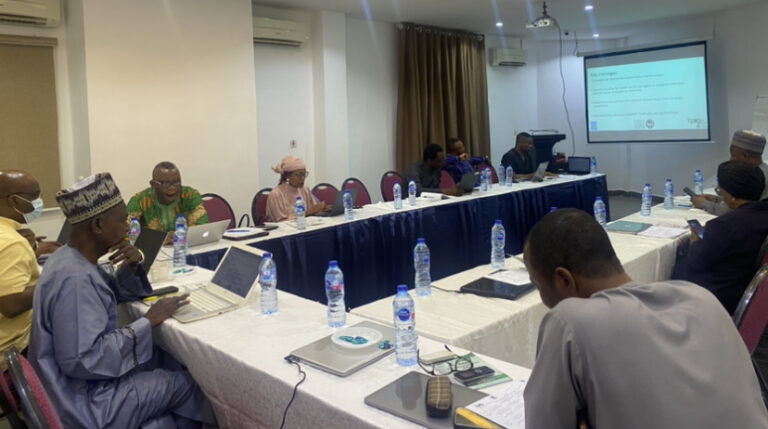
Presenting the snapshot of the research findings since 2017 at a two-day meeting in Abuja on Wednesday, February 28 and Thursday, February 29, one of the researchers, Aloysius Odii, a lecturer at UNEC, stated that different kinds of absenteeism among healthcare workers emerged as a significant problem to effective healthcare delivery.
Odii said the group used in-depth interventions, surveys, discrete choice experiments, observation and experimental research in the work, which focused on Enugu and Kano States.
He noted the instances of staff members frequently absent from their duties and leaving duty posts before the scheduled time without legitimate reasons.
Odii stated that political backing, inefficient system structures, gender roles and social norms were common causes of absenteeism at work.
He explained that the Health Policy Research Group (HPRG) has done a lot of research on corruption in the health sector since 2017, adding that their task had been to provide evidence to make people understand the seriousness of the issue.
In his remark, the Coordinator of the research group, Obinna Onwuyekwe, a professor at the University of Nigeria Nsukka (UNN), said the meeting was to formalise the Health Anticorruption Project Advisory Committee (HAPAC), which would help to drive the fight against corruption in the nation’s health sector.
Speaking on the possible solutions to some of the highlighted problems, he stressed that HAPAC would look at feasible solutions that could be implemented at the grassroots level.
Also, speaking on the development, a professor of Medicine at UNEC, Chinyere Mbachu, said the meeting was important to design interventions based on evidence gathered, that would address corruption at the primary health centres.
“We have our work focused in Enugu and Kano. But we know that whatever is happening in those states is also happening in the rest of the country, and it becomes very important that we constitute a committee of influential people, experienced people in the health sector who can advise on what we are doing as a research group, as well as also offer advise on anti-corruption policies in the health sector.
She also emphasised the importance of addressing corruption at the grassroots, noting that community healthcare touched people’s lives directly.
Meanwhile, several other health stakeholders presented at the meeting recommended possible solutions to the issue of corruption in the health sector.
While highlighting the importance of briefing health users on relevant information, the group called for improved sensitisation of the public on free services and urged the government to provide funds across primary healthcare centres and introduce automated payment systems to curb funds diversion into private pockets.