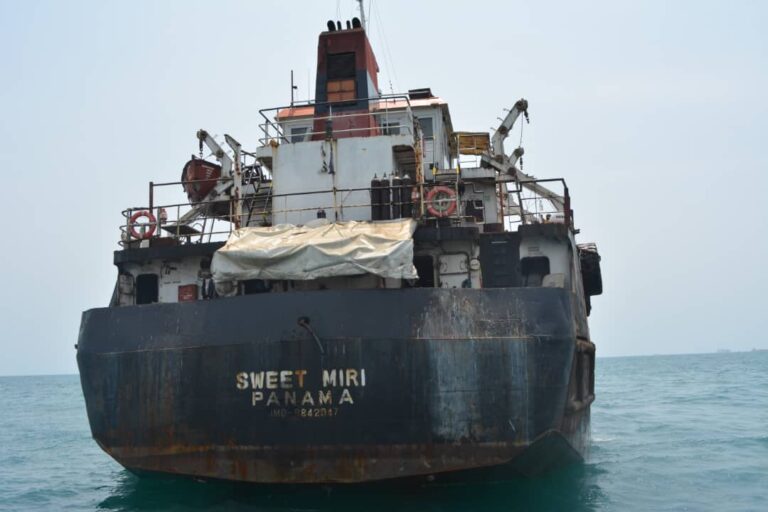
THE patrol team of the Nigerian Navy Ship Beecroft Operation Delta Sanity has arrested a Ghana-owned Motor Tanker (MT) Sweet Miri vessel off the coast of Nigerian waters for suspected oil theft.
The Navy said the motor tanker was filled with about two million litres of products suspected to be crude oil and had no naval approval onboard.
A statement by the Base Information Officer, Nigerian Navy Ship BEECROFT, Hussein Ibrahim, quoted the Flag Officer Commanding, Western Naval Command, Mustapha Hassan, to have said that the vessel was observed to have turned off its Automatic Identification System on February 25, which is an infraction within the nation’s maritime domain.
According to the statement, the vessel was arrested 174 nautical miles off the coast of Nigeria, approximately 320 kilometres, heading to Benin Republic.
It also noted that the motor tanker, SWEET MIRI vessel had 13 crew: one Ghanaian and 12 Nigerians, onboard at the time of arrest.
The statement added that the deactivated Automatic Identification System prompted the deployment of Ship ABA to investigate the vessel, which was later discovered to be carrying products suspected to be crude oil.
According to the statement, the intercepted MT vessel had been a vessel of interest to the Nigerian Navy before its arrest.
“The FOC further disclosed that in line with the directive of Chief of the Naval Staff (CNS), Vice Admiral EI Ogalla, the ship is opened for other agencies to come and take samples and carry out their own independent investigations to find out the culpability of the vessel. Also speaking, the FOC said that the vessel was owned by a Ghanian and registered in Ghana by a Ghanian company.
“In the same vein, while giving update on the earlier arrested Motor Tanker VINNALARIS, the FOC said that the CNS had instructed that the investigations of all arrested vessels should be conducted beyond the level of crew. In this regard, the FOC has extended the investigation to uncover the kingpins. He finally appreciated the efforts of DSS for assisting the Nigerian Navy in conducting investigations when matters of crude oil theft are brought to them,” the statement added.
VETERAN Nollywood actor, John Okafor, popularly known as Mr Ibu, has passed away at the age of 62.
He died on Saturday, March 2 in a hospital in Lagos State.
The news of his death comes less than 24 hours after the demise of another veteran actor, Quadri Oyabamiji, widely known as Sisi Quadri.
In 2023, The ICIRreported that the family of late Mr Ibu had taken to social media to solicit support from the public after which they revealed he had seven successful surgeries, including the amputation of one of his legs.
Confirming the death of the actor, the president of Action Guild of Nigeria (AGN), Emeka Rollas, revealed that the actor had suffered cardiac arrest for years.
“Sad day for Actors Guild of Nigeria. Mr Ibu suffered cardiac arrest according to his manager, Mr Don Single Nwuzor, for 24 years. I announce with deep sense of grief that Mt Ibu didn’t make it. May his soul rest In peace”, he said.
Mr Ibu was well-known and admired in Nigeria for his comic parts in films. His long career extended several decades, and he appeared in countless films, being one of Nollywood’s most famous faces.
As tributes flow in, many Nigerians have taken to social media to reminisce his legacy, noting his contributions to the film industry and his active roles in promoting comedy through movies.
Mourning his demise, an Instagram user, @chyddo in his post said, “This man gave us so much to live for, laugh for and feel for. The fun, the childhood memories; he gave us everything and more…For all the happiness he brought, his name will always be remembered”
Another user, @poshest_hope said, “It’s just unimaginable how fickle life is. One moment, a bubbling spark, the next, the silence of nothing. Thank you Mr Ibu for spreading happiness and bring a part of our childhood memories. RIP legend”.
AN image of a Liverpool striker, Mohamed Salah, with a young Liverpool fan has circulated on X alongside a claim that Salah beat up the fan and took the photo with him thereafter.
The photo was posted by Troll Football on X (formerly Twitter) on February 23, 2024.
In the photo, the fan in question was seen with blood flowing down from his nostrils.
The post has garnered over 18.7 million views, with more than 175,000 likes and over 2,300 comments and has been reposted over 8,000 times as of February 28, 2024.
When one of the commenters asked if it was true, the claimant said it was and also claimed that he was the cameraman who took the photo.
Also, another X user asked why Salah beat the fan and Troll Football replied that, “The boy said Mane is better than him.”
To establish the accuracy of the post, this researcher from the UDUS Fact-check Club, Dauda Musbau, opts to verify the claim.
CLAIM
Image shows Salah with a fan he beats up.
THE FINDINGS
Checks show that the claim is MISLEADING!
When the image was subjected to a Reverse Image search, the results show that the image has been on the internet since 2019.
The young Liverpool fan in the photo was identified as Louis Fowler.
UK’s The Standard newspaper reported on August 11, 2019, that the eleven-year-old Louis Fowler ran into a lamp-post and knocked himself unconscious while trying to keep up with Salah’s car as he left Liverpool Football Club’s Melwood training ground.
It added that Salah turned his Bentley round and came back to check if the boy was okay.
“Tearful young Louis posed for a picture with Salah with a bloodied nose which was later re-set at Alder Hey Children’s Hospital where he shared his story with staff and patients,” the report stated.
It was also reported in 2019 by multiple credible media platforms including The Telegraph and Mail Online. It was also seen here on a Facebook page.
THE VERDICT
The claim that Salah beats up a fan is MISLEADING; media reports show that Liverpool star Mo Salah stopped to help a young fan who broke his nose while excitedly running after his car.
THE Minister of Power, Adebayo Adelabu, has summoned the chief executives of Abuja Electricity Distribution Company (AEDC) and Ibadan Electricity Distribution Company (IBEDC) over the worsening power supply in their regions.
Adelabu, in a statement made available by his media aide, Bolaji Tunji, also summoned the Managing Director of the Transmission Company of Nigeria (TCN), Sule Ahmed Abdulazeez, over the deteriorating power situation.
The ICIR reports that there has been an abysmal power supply situation nationwide since the beginning of this year.
Several parts of Abuja have been experiencing a blackout as the TCN on Wednesday, February 28, confirmed the vandalisation of its transmission towers by vandals.
The transmission company said Tower 70 along its 330kV Gwagwalada-Katampe Transmission line was ‘seriously vandalised.’
The incident, the company said, occurred on the 26th of February at about 11.32 pm.
The situation was similar in several parts of the country, with many Nigerians protesting against the epileptic and complete outage of power supply.
Expressing concern over the situation, Adelabu, via a letter signed by the Director of Distribution Services at the Federal Ministry of Power, B.U Mustapha, mandated the chief executives of the Discos and TCN to be present at a meeting set for next week.
According to the statement, Adelabu said the management of other non-performing discos would also be queried over non-performance as reports continue to filter in on the situation in their regions.
“These two discos have been summoned due to the worsening power supply situation in their regions despite improved supply from TCN,” the power minister stated.
Adelabu said that despite the gas shortage, the ministry had been urging power-generating companies to enhance their performance, and generation had been ramped up to over 4,000 megawatts in recent days.
“So, we expect power supply to have improved across the country, unlike what we are experiencing in some regions, currently. Findings revealed that some distribution companies were deliberately not taking up power supply from TCN while some power lines were also damaged by vandals in Abuja, Benin, Port Harcourt and Ibadan regions.
Going forward, the minister said the focus would be on all the DisCos to compel them to perform while “wilful non-performance by any DisCo could suffice as a reason for severe punishment or outright license revocation, the statement stated.
The minister has also directed TCN to commence repair works on the damaged transmission towers and power lines immediately to improve supply in the affected regions.
In a related development, the Abuja Electricity Distribution Company (AEDC) has also attributed the power outage being experienced in some parts of Abuja to a fault affecting the 33kV Nigerian National Integrated Power Project-NIPP feeder and repairs on the transmission station at AT4.
The management of AEDC made this known in a statement posted via its official X handle on Tuesday night.
“The Management of Abuja Electricity Distribution Plc. (AEDC) wishes to notify its esteemed customers in (Abuja) that the power outage being experienced is due to a fault affecting the 33kV NIPP feeder and repairs on the transmission station at AT4 are ongoing,” the company said.
Nigerians groan over poor supply
A resident of Lugbe, Abuja, Kabir Muhammad, bemoaned the poor supply of electricity in the past few weeks, stating that the electricity distribution has gone from bad to worse.
He noted that until yesterday night, he had not set his eyes on electricity for almost a week.
“They did not give us light for almost a week and that has a significant impact on my livelihood because of the extreme heat.”
Also, Mikail Kayode, who resides in the Bwari area of FCT, criticised the administration of President Bola Tinubu for its failure to address basic needs in Nigeria, particularly electricity supply.
According to him, there has been an epileptic power supply in his area, with many effects on businesses.
He emphasised the challenges businesses face due to the erratic power supply, citing disruptions in operations, increased costs from alternative power sources, and reduced productivity as notable among the challenges.
THE Club of Rome has opened applications for its 2024 Communications Fellowship programme for journalists interested in sustainability issues.
The fellowship is a full-time six-month mentoring programme aimed at increasing the diversity of voices covering sustainability issues and supporting early-career communications professionals who are from underrepresented communities and regions.
Journalists worldwide can apply.
Successful fellows will gain experience in communicating complex systems thinking for non-specialist audiences through a variety of platforms including the website, multimedia and social media.
They will be integrated into The Club of Rome communications team, working remotely from their home environment, and thereafter embark on a trip to meet members of The Club of Rome team.
Fellows will be given a stipend to cover living costs which includes work-related travel costs.
The fellowship will run from July 1, 2024, to January 31, 2025. The deadline is April 5.
THE National Association Of Persons With Physical Disabilities (NAPWPD), FCT chapter, has demanded for full domestication of disability laws and accessibility standard codes in Nigeria.
The chairman of NAPWPD, Chris Agbo, made the appeal during a media conference held in Abuja on Friday, March 1, to mark the occasion.
Agbo, while highlighting the significance of International Wheelchair Day, emphasised its importance to millions of people globally, as wheelchairs greatly support people who need them to function effectively in society.
He noted that wheelchairs would make a significant difference in people’s ability to function but stressed that not everyone who needed one could obtain it.
Agbo noted that thousands of people in Nigeria needed wheelchairs.
“The primary focus of the day is on promoting accessibility and inclusivity, highlighting the importance of making the world a more accessible place for all. The day serves as a platform to celebrate the remarkable contributions of wheelchairs in empowering individuals and improving their quality of life.
“It also acknowledges the pressing global need for wheelchairs, with millions of people worldwide requiring them but facing barriers to acquisition.
“We want the full domestication of disability laws where it does not exist; this will go a long way to safeguard the rights of wheelchair users. Also, we want the development of minimum accessibility standard code for the implementation of the law regarding access to the environment,” Agbo said.
Agbo also said it would help if all public places and buildings were remodelled to follow accessibility rules and universal design for PWDs.
While also stating that the government should set aside money for making these changes to existing buildings, he said the government should ensure adherence to building code/minimum accessibility standards for PWDs.
He stated that it’s important that state building control departments don’t approve buildings that don’t meet the universal standard.
“Government and indeed the society should make necessary adjustments of the environmental conditions to allow for inclusion and participation of persons with disabilities in the community,” he added.
The call to action came as some states’ associations of persons with disabilities urged their state governments to adopt and implement disability laws to address the numerous challenges they face.
They voiced their concerns about the authorities’ failure to find solutions to the challenges faced by the disability community over the years in Nigeria.
FlOODING is a devastating term most farmers in Kano State are familiar with as it has plagued the state for years now, with unprecedented heavy rainfalls and floods wreaking havoc on communities and farmlands.
In 2022, flooding nationwide destroyed N700 billion worth of investment in the agricultural sector, according to the National Agricultural Extension and Research Liaison Services (NAERLS).
In Kano, flooding washed away 14,496 farms in five Local Government Areas (LGAs) with everything planted in the soil. The recurrence of the flood has been linked to the spillway of Tiga Dam, according to the then Executive Secretary of Kano State Emergency Management Agency (SEMA), Aliyu Jiji.
Jiji said that in 2022, spillage of the Tiga dam destroyed another 16,644 farmlands in some local governments, including Kura.
Although farmers tried using flood resistant enhanced crops, it is of no use to those in Kunshama, in Daneji ward of Kura LGA in Kano State.
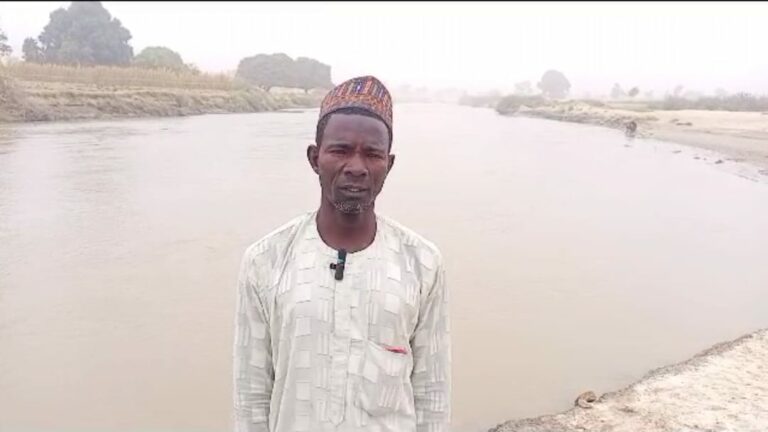
Farmers say the powerful waves caused each time the Kura River overflows its banks after the opening of the Tiga Dam have been devastating. And it occurs twice a year, whether it is the rainy and dry season.
Malam Bala working on some part of his farm completely washed by flood
Opened in 1974, the 178 square kilometers (69 sq mi) dam with a maximum capacity of nearly 2,000,000 cubic meters (71,000,000 cu ft) has been a major source of water to irrigation farmers.
Bala Dare Kunshama, farmer
However, what was created as a blessing, to Kunshama farmers, is a curse.
The people of Kunshama farming community State are beginning to panic as water from the Kura River washes away millions of naira worth of produce from their farmlands.
Kura LGA is believed to be one of the largest farming communities in the state and this includes both irrigation and wet season farming.
Lawan Muhammed Kunsharma, a rice farmer, said he lost over N3.1 million after the Kura River washed away half his rice seedlings weeks ago, adding that he has been enduring such losses for the past five to six years because there has been no help from anywhere.
Gazing over his devastated farm, he said “as you can see this is my farm, if not for the fact that the water has washed over here, you could have seen that I have plowed the land and planted rice”.
Muhammad said he used to harvest between 200-300 bags of rice per farming season. But now, he barely harvests 20 bags.
“That is for the rice, but before the rice we used to plant onions, beans, and green beans”, he said bitterly.
The reporter could feel the anguish and pain in his voice as he spoke.
“We wish the Abba Kabir Yusuf – led Kano government would urgently help us, ” he cried out.
Hadejia Jamaare
Lawan Ishaq Kunshama, another farmer in the area, said the flood is the biggest problem faced by the people in Kunshama.
While acknowledging efforts by the local councilor and council chairman, he lamented that “the matter is beyond them.”
The water passes through Kunshama from Tiga Dam to Wudil.
“You see over there? That is what is left of the structures we tried to erect to prevent the water from running into our farm.”
The farmer pointed to a low slab put at the edges of the river with the intent of keeping the waters away from flowing into the farms.
He said they have been trying for four years, but the slabs collapse every time.
Ishaq added that when the water breaks into the farmlands, they must board canoes to rush and salvage rice seedlings to minimize losses that usually run into millions.
“For some of us that usually harvest about 100 bags of rice, when the water breaks in, we barely get 20 bags,” he lamented.
Ishaq also cried out to the government to come to their aid to prevent losses to the farmers and even the government in the form of revenue. (Farmers from rural areas pay produce tax when they take their produce to the markets.)
Bala Dare Kunshama, is another big irrigation farmer affected by the Kura River overflow. He owns six acres of farmland, most of which has been washed off after overflowing water from Kura River flooded his farm.
Looking mournful and dejected, Dare said he suffered unimaginably heavy losses due to the flood.
He stands at the edge of his farm looking from side to side and then gapes deeply into the water that has become his nightmare, a thousand thoughts coursing through his mind.
“This water broke into my farm, all our capital has finished, the water has killed all our efforts and now we have nothing,” he bit down his frustration while narrating his loss.
Unlike Muhammad, Dare said he tried planting tomatoes and onions this irrigation season, but the water has washed away most of it, which he said is worth more than N2.5 million.
Like Muhammed and Ishaq, he and other farmers in the agrarian community of Kunshama have been suffering losses for about six years now. Every year, the devious cycle repeats itself and the farmers are helpless.
Kunshama said he can no longer feed himself and his family and that most people in the community are in tears, but they do not know what to do.
“This is not something we can deal with by ourselves, we need the state government’s help,” he said.
Village head echoes cry for help
The Village Head of Kushama, Alhaji Garba Aliyu, through a representative, Malam Murtala Shehu, bemoaned the huge flooding challenge faced by the farmers within his domain.
“We need help, my people need help,” he stated.
According to him, his people “are at the brink of losing everything to the water.”
There’s no one else to ask, fully knowing they have done all they could, but the water would not stop.
He and the farmers wished for the Kano State government to prioritize their problem and find a lasting solution soonest.
The farmers are hoping the government could repair the controls of the drain outlet and block the way that serves as a diversion for the water into their farms.
Flooding too challenging for local government – Chairman
The immediate past Kura Local Government Chairman whose tenure ended on Sunday, February 11, 2024, Mustapha Abdullahi Rabi’u, lamented that Dukawa ward has been left to suffer from the floods for years.
“They came to me with the complaint, I was personally there to see the level of destruction it causes,” he said over the phone.
He said the water travels from Tiga, goes through Madobi, spins forward through Gadar Ɗan kifi in Chiromawa, then falls at the bridge separating Kura and Dawakin Kudu before it makes it way to Kunshama.
According to him, he had paid money even from his personal pocket to workers to build a drainage along the waterway to prevent further spillage into farms “but the water is too powerful, especially during the rainy season.”
The area needs two things, he stated.
“First, the drainage systems there need constant clearing, and second the route of the water to Challawa needs to be cleared as well.”
Acknowledging that the very persistent problem is quite challenging, Rabi’u promised to ensure the next local government leadership is made aware of the problem to find lasting solutions to the problem.
80% of Kura/Garun Malam farmers face seasonal losses– Farmers Association
The All Farmers Association of Nigeria (AFAN) in Kano, through its Secretary, Abdullahi Ali Mai Biredi, affirmed that the flood has been causing losses to residents of Kura and Garun Malam local governments.
He said about 80% of the farmers in that area are affected by seasonal floods, and occasionally by the overflowing of the Kura River.
He said, “if this continues, it will be a threat to food security.”
“Everyone knows how important that area is in rice farming. If this problem persists , I believe it will not only affect food security in Kano but Nigeria as a whole,” he asserted.
Though he admitted that the challenge was brought to their attention late, he noted the need for urgent intervention by the government in addressing the matter in the interest of the nation.
Expert blames poor repair of drainage outlet for the flood
Professor Abba Garba Gaya, a lecturer at the Faculty of Agriculture Aliko Dangote University of Science and Technical, Wudil, is an expert that knows about the flooding caused by the Kura River.
He told this reporter that the flooding is caused by a fault in a drain outlet used to control the flow of the water after its release from Tiga dam, close to Kunshama.
“It (drain outlet) developed a fault, so the water is retained in the area making it look like a swamp, and it subsequently overflows into farms,” he said.
He noted that the water that flows from Tiga usually prevents farming activities, especially during the rainy season.
He noted that “farmers are important to the society” adding that “the government has to do something about this problem that has been in existence for about 5 to 6 years.”
He said they are aware of the efforts by the Hadejia Jama’are River Basin Development Authority made about a year ago, but it has proven not to be enough.
He believes the work done was shoddy and not properly implemented.
Professor Gaya called on the Hadejia Jama’are River Basin Development Authority, Kano State and the federal governments to look into ways of dealing with the problem before it worsens.
Hadejia Jama’are River Basin Development Authority blames residents for the floods
The Hadejia Jama’are River Basin Development Authority says it is aware of the problem.
When contacted, the authority’s spokesman, Salisu Baba Hamzat, said the area is the last part of their irrigation scheme.
“Our scheme went as far as Ɗanga, that is where it was terminated. But the people living around the area tampered with the scheme because it is at the tail end and water does not reach there before a recent repair we had.”
Hamzat added that the people took advantage of the work being done to vandalize it for personal gains, by removing the cements at the sides of the canals and slabs to use in their homes.
He accused the residents of using the large slabs for personal use, including bathing on them in their bathrooms.
“They caused this problem,” he concluded.
He said the vandalization of the canals made them almost disappear, thus aiding the water to overflow since it can no longer be contained.
The destroyed canals, he said, were created to take unused water by farms in its irrigation scheme back to the main river, and back to Tamburawa River to Ringim, Hadejia and Lake Chad.
He then advised residents of Kunshama to officially write to HJRBA and request the audience to discuss ways to permanently solve the problem.
Kano government reacts
The Director Public Enlightenment, Kano State Ministry of Environment and Climate Change, Isma’il Garba Gwammaja, said the ministry is not aware of the problem.
“I advise that they should write officially to the Ministry of Environment and Climate Change, as soon as they do that, our assessment team would be there to assess the cause of the water.”
He said the assessment team would also check if the area was a water passage route or if something else went wrong, including if the water ways was blocked.
Gwammaja added that aside from being called by this reporter, his ministry is not aware of the problem. But he said action would be taken swiftly as soon as the community officially notifies the ministry.
“Our assessment team would give the relevant advice, and then decide how best to handle the situation,” he assured.
“This investigation is supported by the International Centre for Investigative Reporting, under its Promoting Democratic Governance in Nigeria Project.”
SOME Nollywood actors have taken to social media to mourn the demise of their colleague, Tolani Quadri Oyebamiji, also known as Sisi Quadri.
Sisi Quadri passed away on Friday, March 1 at the age of 44.
The news of his death was confirmed by the President of the Theatre Arts and Movie Practitioners Association of Nigeria (TAMPAM), Bolaji Amusan, who shared the late actor’s photo on his Instagram page, captioned, “Hmm, may God grant him eternal rest”.
Similarly, other actors and actresses took to their social media pages to mourn the actor’s demise.
Jigan Banaoja shared the sad news saying, “It’s sad to say goodbye! Quadri! May the Lord grant you peace ✌️ R.I.P @iamsisiquadir.”
A Nollywood actress, Abiola Bayo, also shared a message on her Instagram saying, “You will be greatly missed, Sisi Quadri. May your soul rest in perfect peace.”
Although the cause of his death has not been disclosed, the actor reportedly passed away as a result of an illness.
Sisi Quadri rose to fame in 2004 after his role in ‘Seniyan Seranko’ and also the 2020 film, ‘Ebundola’. He also starred in Kunle Afolayan’s Netwlfil original, ‘Anikulapo: The Return of Spectre,’ scheduled for release on the day he died – March 1.
Already in 2024, the Yoruba film industry has recorded the death of two notable actors. In January, the veteran actor, Adedeji Aderemi, popularly known as Olofa Ina, died at the age of 73 while in February, actor and playwright, Jimi Solanke, passed on at the age of 81.
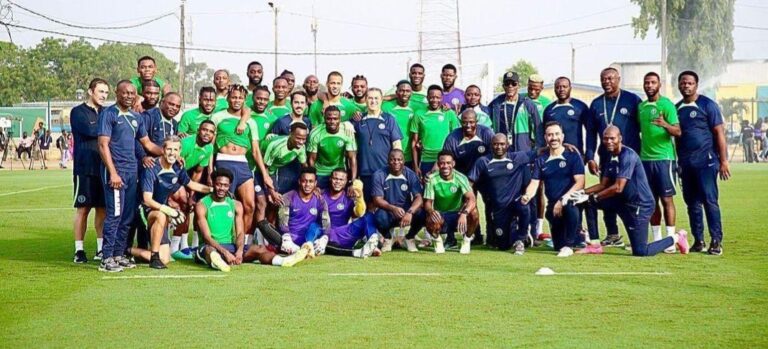
The ICIRreported how Peseiro’s initial contract dated May 2022 till May 2023 was characterised by a chain of poor results.
In his first 12 months as the gaffer, the Super Eagles won four and lost six of its ten matches. Among the six lost, five were friendly.
The ten matches started from his first assignment against Mexico in a friendly match in Texas, dated May 29, 2022, till June 18, 2023, when Nigeria defeated Sierra Leone, 3-2 out.
In addition to the matches since June 18, 2023, The ICIR analysis shows that 13 other matches were played during the coach’s renewed contract since September 2023.
Out of the 13 matches, the Super Eagles won seven, drew four and lost two.
The coach’s spell with the team was faced with criticism given poor results from his team from the 2023 Africa Cup of Nations (AFCON) played in Cote d’Ivoire between January 13 and February 11 this year.
The team won five of its seven matches at the AFCON, drawing its first game against Equatorial Guinea and losing the final against the host nation, making it the runners-up at the tournament.
Reacting to Peseiro’s performance with the team, a sports journalist, Rotimi Arabi, lauded the coach’s football philosophy during the AFCON.
“He has done so well against all expectations, we never gave him a chance prior to the AFCON but at the end of the day, he did so well,” he said.
He advised the leadership of the NFF to learn from Senegal and Cote D’Ivoire who gave room for their local coaches to manage their countries’ national teams.
“My own view is to make do with our local coaches, let’s try our local coaches. Let’s follow the foot of what Senegal has done. We have Emmanuel Amuneke and Findi George. Going for another foreign coach will generate a lot of debate,” he said.
Peseiro’s record as Super Eagles coach
May 29, 2022: Mexico 2 vs Nigeria 1
June 3, 2022: Ecuador 1 vs Nigeria 0
June 9, 2022: Nigeria 2 vs Sierra Leone 1
June 13, 2022: Sao Tome and Principe 0 vs Nigeria 10
Sept 27, 2022: Algeria 2 vs Nigeria 1
Nov 10, 2022: Costa Rica 2 vs Nigeria 0
Nov 17, 2022: Portugal 4 vs Nigeria 0
Mar 24, 2023: Nigeria 0 vs Guinea-Bissau 1
Mar 27, 2023: Guinea-Bissau 0 vs Nigeria 1
June 18, 2023: Sierra Leone 2 vs Nigeria 3
Sept 10, 2023: Sao Tome and Principe 0 vs Nigeria 6
Oct 13, 2023: Saudi Arabia 2 vs Nigeria 2
Oct 16, 2023: Mozambique 2 vs Nigeria 3
Nov 16, 2023: Nigeria 1 vs Lesotho 1
Nov 19, 2023: Zimbabwe 1 vs Nigeria 1
Jan 8, 2024: Guinea 2 vs Nigeria 0
Jan 14, 2024: Nigeria 1 vs Equatorial Guinea 1
Jan. 18, 2024: Ivory Coast 0 vs Nigeria 1
Jan. 22, 2024: Guinea-Bissau 0 vs Nigeria 1
Jan. 27, 2024: Cameroon 0 vs Nigeria 2.
Feb. 2, 2024: Nigeria 1 vs Angola 0
Feb 7, 2024: Nigeria 1 vs South Africa (4-3) penalties
MANY Nigerians are worried about where the country’s economy is headed, especially now that most vulnerable people are suffering from acute hunger and hardship.
Jamiu Hammed, 38, falls in the category of Nigerians whose living conditions have been worsened by President Bola Tinubu’s economic reforms.
A father of two, Jamiu said he could no longer cater to his family’s needs and was considering leaving his barbing salon business for factory work where he could be sure of earning about N2,000 daily, not minding the rigour that comes with the job.
Jamiu opened his barber shop in 2010 after serving his master for three years at Ketu-Alapere, in Lagos State.
But since Tinubu removed fuel subsidy on the day he assumed power on May 29, 2023, he has struggled to keep the business, despite having his shop in a choice location at Mowe-Ofada Road, Mowe, Ogun State.
“When I started barbing here, people liked my style, and I had many customers who patronised me. In the morning, I might not see anybody, but at night, I could see up to 20 people and more during the weekend to barb their hair.”
Before the fuel subsidy removal that led to a hike in the pump price, Jamiu was charging N500 per adult haircut and could make N10,000 daily. He made more money on weekends and spent a little less than N1,500 to buy fuel daily.
But since the hike in the pump price of the product, he has had few people come to cut their hair and hardly has any money to take home after a whole day’s work, despite raising his charges.
“Now, we manage to see seven people cut their hair during weekends,” he said. Every day, I will buy fuel of N3,500, about five litres, plus the money I will pay for transport to get the fuel.”
Jamiu said things would have been worse for his family but for his wife’s support.
“I don’t even know what to say about Nigeria’s situation. It tires me! I am thinking of leaving my shop. I may go to private companies to find work. I hear they could pay at least N2,000 daily.”
Jamiu’s challenge does not stop at having a few customers, his landlord has increased the rent for his shop to N150,000, much higher than what he used to pay.
“I can’t pay it. I have a wife, and I have children. I can’t cope,” he whined.
Jamiu’s predicament speaks to the challenges many Nigerians currently face. Such frustrations metamorphosed into the recent protests in some states across the country, including the one organised by the Nigeria Labour Congress (NLC) on Monday, February 26.
Food stuff prices and other goods and services are snowballing daily.
While Nigerians face the economic crisis, market analysts in New York City “already sanctioned Nigeria as being in recession,” a development economist, Kazeem Bello, told The ICIR.
Bello, the chief executive officer of Afrique Capital and Equity Funds Limited in New York, said almost 40 per cent of the countries would witness recession again in 2024, and “unfortunately, the market believes Nigeria is already in recession.”
Indicators of an economy headed to a recession
Bello said many critical economic indicators pointed in the direction that Nigeria was already in recession.
1. Declining growth rate and Gross Domestic Product (GDP)
Some relatively fragile economies like Nigeria might slide into recession in 2024, Bello said the interpretation of the global market showed.
“The trajectory may have commenced in many parts of the developing world where the cost of living is spiking; inflation remains stubborn to tackle, global disposable income declining, challenging most countries with poor PPP (purchasing power parities) index, and generally apathy due to unemployment.
“Economists believe that when an economy is shot by three consecutive quarters of declines in GDP and declining growth rates, that economy may have been hit by recession altogether,” Bello said.
He argued that the above factors had resulted in the downward review of Nigeria’s growth rate three times since the start of the year, which speaks to uncertainty pervading the direction of policy decisions and implementation by the government.
2. Inflation menace
When an economy witnesses a continuous and untamable stretch in a massive divergence in the deposit rate or treasury bill rates and inflation, especially an inflation rate that may have emerged and stubbornly challenging to tame in over 12 months, the monetary and fiscal authorities must take this indicator seriously, Bello said.
Nigeria has been battling inflation trends for over 12 months. The situation is fast worsening and heating the commodity markets, exerting unusual pressure on the price level and disrupting the market permutation.
He said the trend was unacceptable and could severely damage the structural composition of the commodity market and the pricing mechanisms.
“Inflation resides right on the doorsteps of every ordinary citizen as it rears its ugly face. It is easily traceable and identified on the street daily. Unlike other economic indices or reports, inflation is what it is.
“But ordinary Nigerians might not understand if the country is headed to recession, but the economists do,” he stated, urging the government to reduce fiscal spending to help tame inflation.
“We must understand that in Nigeria, what fueled and created the degenerating inflation is primarily the government’s fiscal responsibilities and that of the immediate past CBN leadership that turned the Apex bank to a commercial and father Xmas Bank.”
3. Price level destruction
Some analysts believe that what has been witnessed in Nigeria in the last six months regarding changes in the prices of commodities is known only in places where there is war tension, acute shortage of consumer goods, and foods due to blockages or war, Bello said.
He added, “Even though there are security challenges in Nigeria, there is no war in Nigeria. This explains the narrative above that the misinterpretation of the recent government policies coupled with the inflation trends may have combined to create tension in the price level market, resulting in market disruption we may be witnessing in Nigeria.”
Bello pointed out that the price level market in Nigeria had been subjugated to the vagaries of the foreign exchange market rate forces and noted that during the last two recessions in Nigeria, the economy never witnessed such violent disruption in the price level market.
“Again, like inflation, price level disruption is tough to tackle. The regime of price control may result in massive bureaucracies, inefficiencies, and corruption; hence, we must not even consider using that as a solution,” he urged.
In June, the naira was about N640 at the official rate, and following deregulation, it peaked at over N1,700 at the official market, with the composite black market near N2,000. Similarly, the pump of fuel price averages N340 per litre and is about N700 per litre due to subsidy removal.
“This is a serious disruption that can impact any market anywhere on the planet,” he said.
4. Socio-economic perspective
To average Nigeria, even if they do not understand the word “recession”, they know they are way in trouble with their finances due to biting increases in poverty, Bello said. “An average of 120 Nigerians slide into the poverty zone every minute, 7,200 every hour, 172,000 every day, and approximately two million every month.”
He further said the decline in per capita income, declining disposable income, disruptive purchasing power parity, and worsening consumer apathy added to the challenges.
“The worst of all, however, is the PPP index, which in October 2023 was 3.2x of the global average of 5.5x but is now trending at 1.8x index in Nigeria. That is a world record for any country. Even in known troubled and war-ravaged areas worldwide, that index is never bad,” he said.
He noted the negative growth in the manufacturing sector, saying that if it continues into the next two quarters, it could result in economic failure, way more significant than economic recession.
Other indicators
According to Bello, disproportionate monetary policy dynamics, ineffective money control (liquidity) mechanisms, derailed forex market operations and generally, the lack of a coherent financial landscape, debt burden quagmire and a shortage of creative mechanisms to address continuous declines in government revenues constitute some significant bottlenecks that emerge in an economy with a recession landfall.
He went on, “The forex market needs an immediate fix in Nigeria before the entire system explodes and denigrates into what the world witnessed in Venezuela. Egypt and China have passed this line of deregulating the FX market and quickly reversed it.”
These are all signals that the Nigerian economy may have been hit by the recession, as the current productivity level in the industrial sectors is showing a negative index, Bello said. “Again, all these problems will result in slow growth that could precipitate a recession.”
World Bank projection
In its Global Economic Prospects report in January, the World Bank said risks of a global recession in 2024 had receded, but the fallouts of the COVID-19 pandemic, wars in Ukraine and the Middle East, and persistently high inflation left the growth outlook for 2024 “sluggish”, with the global economy facing its “weakest half-decade performance in 30 years.”
Countries in recession
Meanwhile, Japan and the United Kingdom, members of the G7 economies, had slipped into recession at the end of 2023 as their consumer spending slowed.
On Thursday, February 15, Japan and the United Kingdom reported experiencing two consecutive negative quarters of GDP, while Finland said on December 19, 2023, its economy was in recession.
Ireland also slid into recession when figures from the country’s Central Statistics Office on December 1, 2023, confirmed that the economy was in recession.
Countries that may enter a recession
More countries will likely enter into recession this year, including Bahrain, Canada, Denmark, Ecuador, Estonia, Iceland, Luxembourg, Moldova, New Zealand, Peru, and South Africa.
Nigeria last entered an economic recession in 2020, which many analysts regarded as the worst in over three decades. The ICIRreported the country has had eight recessions since its independence.