Home Blog Page 652

Alleged ₦4bn fraud: Abuja court lacks jurisdiction to try me – Obiano

0

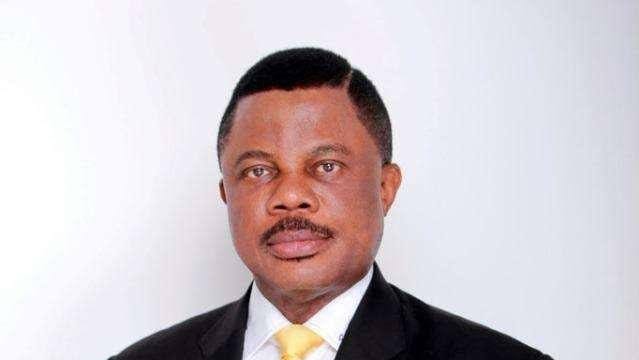
THE former governor of Anambra State, Willie Obiano, has said that the Abuja Division of the Federal High Court lacked jurisdiction to try him over the charge bordering on alleged N4 billion fraud preffered against him by the Economic and Financial Crimes Commission (EFCC).

Obiano, in a motion filed through his lawyers, led by Onyechi Ikpeazu, a senior advocate,on Monday, March 4, challenged the competence of the court to entertain the nine-count money laundering charge.

The former governor argued that an Abuja court should not try him for a crime allegedly committed in Anambra State.


Read Also:

He also requested that the court drop the accusation against him due to lack of jurisdiction.

But the EFCC’s attorney, Sylvanus Tahir, a senior advocate, asked for more time to respond to the application, which he claimed the defendant had just served him.

Furthermore, the EFCC lawyer pointed out that the Supreme Court had ruled on a few ocassions that a matter involving potential money laundering from any state could be brought before the Federal High Court.

The judge, Inyang Ekwo, postponed the hearing till March 7 in order to consider the motion.

The ICIR reported on Wednesday, January 24that the Federal High Court in Abuja granted bail to Obiano, who is standing trial over an alleged ₦4 billion fraud.

Obiano entered a not-guilty plea when a court official read the charge to him.

Following his plea, the prosecuting attorney, Tahir,  requested that the defendant be kept in detention until the start of the trial.

The defence lawyer, Ikpeazu, attempted to move his client’s bail application. However, the prosecutor responded that he had just received the application and needed more time to respond.

The judge, Ekwo, asked Tahir if the defendant had ever been given bail.

Tahir responded that the prosecution office, the EFCC, gave Obiano conditional administrative bail.

In his ruling, Ekwo granted Obiano bail under the guidelines the EFCC had previously set.

He directed the EFCC to deliver all documentation about the bail requirements to the court within seven days.

Ekwo ordered Obiano not to travel outside his jurisdiction without the court’s permission and to deposit his travel documents with the court, following which the court would notify the Immigration Service about the restriction on his movement outside the jurisdiction.

Ekwo adjourned till March 4 for the commencement of trial.

Obiano was arrested by the EFCC hours after handing over to his successor, Chukwuma Soludo, on Thursday, March 17, 2022, at the Murtala Muhammed International Airport, Lagos, on his way to the United States.

He was subsequently transferred to the commission’s headquarters, where he was quizzed for days over alleged mismanagement of N5 billion Sure-P funds, N37 billion security votes withdrawn in cash and inflation of contracts.

On Wednesday, March 23, the EFCC released him on administrative bail.

Unable to meet some of the conditions, Obiano was held by the EFCC while his friends and associates tried to secure his release.

Obiano finally met the conditions and was released to his family members.

UniAbuja charges Law, Arts, other non-science students N5,000 for lab coat

1

Despite increasing its tuition fee by about 100 per cent in 2023, the University of Abuja’s management has levied an extra N5,000 on Law, Arts, Social and Management Sciences students for the 2023/2024 session.

The development came as a shock to many, given the already financial strain caused by the recent increase in tuition fees and the worsening economic crisis in the country.


Read Also: 


Breakdown of law students tuition fee before the introduction of laboratory coat fee
Breakdown of Law students’ tuition fee before the introduction of laboratory coat fee

The ICIR gathered that the university raised the school fee to include the fee for laboratory coat after some students already paid the initial amount, thus mandating them to make an additional N5,000 payment to the school.

Students who spoke with The ICIR decried the additional payment and demanded that the management explain why students who would not be using laboratories during their stay in the school would pay for the laboratory coat.

Breakdown of law students tuition fee after the introduction of laboratory coat fee
Breakdown of Law students’ tuition fee after the introduction of laboratory coat fee

This was despite the reactions that trailed the university management’s increment of the students’ fees in 2023.

The ICIR gathered that sequel to the introduction of the laboratory coat fee, the university’s returning students in the Arts and related faculties pay between N82,000 to N115,500 while their medical counterparts pay N225,000.

The fees also differ from the acceptance fee of N30,000 and other departmental and Students’ Union Government (SUG) fees.

For instance, a Law students in the 400 level paid N66,500 in 2022, but they have been paying N115,000 since the increment was implemented in 2023. With the addition of the laboratory fee, Law students will now be paying N120,500 this session.

Also, returning students of English and Sociology paid N48,000 before the tuition hike in 2023, but with the increase in school fees and the addition of laboratory coat fees, they will be paying N87,000 and N94,000, respectively.

The increase in fees was not a welcome development for certain students, but they could not voice their concerns due to the warning message issued by the vice-chancellor, Abdul-Rasheed Na’Allah.

Na’Allah had warned that any student planning to disrupt the peace in the school because of the fee hike would face severe consequences of their action.

According to him, any student caught engaging in violent activities on campus would face the penalty, including expulsion.

The threat eventually led to the expulsion of Cyprian Igwe, an undergraduate Sociology department student, who urged his colleagues to dialogue on the school’s hike of its fees.

The student, along with one Oladeru Samson Olamilelkan, the Students’ Union’s director of Sports, was “banned from all the university campuses pending the determination of the case” for allegedly calling for a protest.

Students groan over increment

Some students who spoke with The ICIR under anonymity for fear of reprisal from the management called for the reversal of the new development, citing the current hardship.

The students expressed strong opposition to the decision, noting that it had placed an unfair financial burden on their parents, with some also raising concerns about the management’s lack of fair hearing from the students.

They argued that such a financial burden would affect students from poor and middle-income households.

Management, SU keep mum

Meanwhile, The ICIR reached out to the university’s director of information, Habeeb Yakoob who did not pick up his call and return messages sent to his line on the matter as of the time filing this report.

Similarly, Students’ Union president Emito Emmanuel Ayandayo’s line was not reachable when The ICIR contacted her line while messages sent to her Whatsapp were not answered.

Concerns over appointment of ‘capitalists’ in Tinubu’s Economic Advisory Committee

THERE are concerns over President Bola Tinubu’s appointment of notable Nigerian ‘capitalists’ into his economic advisory team, as experts argued that the job could create a conflict of interests for the appointees.

Experts said their loyalty would be more to their businesses than advising the government on the common good.

Investopedia describes capitalism as an economic system in which private individuals or businesses own capital goods. At the same time, business owners (capitalists) employ workers (labour) who receive only wages; labour doesn’t own the means of production but instead uses them on behalf of the owners of capital.

President Tinubu, on February 25, inaugurated the Economic Advisory Committee to support his government with ideas on how to address myriads of problems confronting the economy.

Specifically, the committee was set up to support the government in tackling economic challenges facing the nation. The President charged the committee to come up with a policy framework that would help the economy to rebound.


Read Also:


This move by the government elicited reactions from industry analysts and other Nigerians.

While some described the decision as an afterthought given the current hardships bedevilling the country, some said it was a welcome development despite concerns over capitalists that made up the team.

“You cannot advise the government from outside the government. Let me ask again, what will Dangote do differently? This is someone who uses government waivers for his benefits. What sorts of advice can he give to the government?,” a resource governance expert, Henry Ademola Adigun queried.

He challenged the governors in the team, asking what they had done differently in their respective states.

Governors Charles Soludo and Dapo Abiodun of Anambra and Ogun states are on the team.

Speaking on the current problems confronting the economy, Adigun linked it to a result of bad policies.

“You don’t have bad habits over the years and all of a sudden expect that the problems would end overnight,” he said.

He added “We were subsidising petrol, the dollar, electricity, and everything we couldn’t afford. The problem is not a subsidy, the problem is subsidising what you could not afford.”

“You have an economy where the former government violated the ways and means laws. What President Tinubu is doing is what he can only do at the moment.”

Commenting on Tinubu’s economic team from a different perspective, Ken Ife, a professor of Economics, described the committee as an excellent move by the Tinubu administration.

“It’s a positive signal to the markets. You have the captains of industry and the organised private sector, the key sector champions, finance, and banking. It’s a partnership framework which includes all the local players,” he said.

Meanwhile, Nigeria is currently being confronted with currency problems and double-digit inflation of almost 30 per cent.

This has forced food prices to be almost out of the reach of the average Nigerian, a major concern that has caused labour protests in several states across the federation.

Activist slams N10bn suit on Airtel, MTN, others over NIN-SIM linkage

0

A RIGHTS activist, Olukoya Ogungbeje, has filed a suit against some telecommunications companies in Nigeria.

In the suit filed before a Federal High Court in Lagos, Ogungbeje is contesting the recent barring of citizens’ phone lines by MTN, Glo, Airtel, and 9mobile.

He sued the telecom providers for N10 billion, claiming they illegally restricted Nigerians’ access to their phone lines.


Read Also:

The chief executive officer (CEO) of Nigerian Communications Commission (NCC), Aminu Mada, NCC and MTN Nigeria Communications Plc were joined as responders to his lawsuit.

The other responders are Airtel Networks Nigeria Ltd, Emerging Markets Telecommunication Services Ltd. (EMTS 9 Mobile) and Globacom Ltd.

According to the News Agency of Nigeria (NAN), The applicant claimed in his affidavit that the respondents threatened to block or deactivate Nigerians’ mobile phones whose numbers were not linked to their National Identity Number (NIN).

He claimed that in response to this threat, he approached the court and, on February 22, secured an order prohibiting the defendants from blocking or deactivating Nigerians’ phone lines while the litigation was being decided.

The applicant further claimed that the respondents ignored the court and blocked many Nigerians’ cellphone lines, including his on February 28 in violation of the court order.

Consequently, Ogungbeje requested a declaration that the respondents’ actions, including blocking and deactivating phone lines from February 28 to date, violate an existing court order.

He also sought an order suspending the directive limiting Nigerians’ access to their phone lines, and an order requiring the respondents to unblock and unlock the affected phone lines immediately.

 Similarly, the applicant sought a permanent injunction prohibiting the respondents from taking any further action against the affected citizens.

A date for hearing his new lawsuit has yet to be fixed. 

The ICIR reported on Thursday, February 29, that the NCC said there would not be an extension of the February 28 deadline for linking SIM cards to NIN.

Reports suggested that about 12 million lines might be affected by the directive after the deadline expired.

According to the NCC, SIM-NIN linkage is the process of attaching one’s NIN to a phone number to validate the person who registered the SIM card.

In a notice dated December 20, 2023, the NCC directed telecommunication companies (telcos) to block SIMs that had yet to be connected to the NINs of their owners by February 28, 2024. 

Besides, the NCC requested that by March 29, 2024, Global Satellite Mobile (GSM) Communications companies ban individuals whose NINs have been submitted but not confirmed.

The ICIR reported that the Federal Government in April 2022 directed telecommunications operators to immediately bar outgoing calls from SIM cards not yet linked with the NIN.

The Federal Government had earlier mandated that telecommunications subscribers link their SIMs with their NINs in December 2020.

Meanwhile, the Federal High Court in Lagos on Thursday, February 22, restrained telecom operators from deactivating or barring any line or SIM whose user did not link to the NIN.

Ruling on a restraining order application brought by Ogungbeje on February 22, the judge, Ambrose Lewis-Allagoa, prohibited telecom carriers from executing such an action.

Police arrest 15 suspects over warehouse looting in Abuja

0

THE Federal Capital Territory (FCT) Police Command has arrested 15 suspects in connection with the vandalism and looting of a warehouse belonging to the Federal Capital Development Authority (FCDA) in Abuja.

The police public relations officer in the FCT, SP Josephine Adeh, made this known in a statement on Sunday, February 3, in Abuja, noting that two security guards employed by the warehouse management were among the suspects arrested. 

On Sunday, March 3, The ICIR reported how some residents invaded the government-owned warehouse and stole foodstuffs, including bags of maize, around the Tasha community in the FCT.

One of the residents, Jaafar Aminu, who spoke with the Daily Trust, said the looting continued without interruption until 9 am.

He said both residents and people from nearby Jiwa and Karmo communities gathered at the location to join in the looting.

Meanwhile, reacting to the incident, the police spokesperson said the police were informed about the attack on the Agric. Department Strategic food store on March 3.

She further noted that 26 bags of maize, five motorcycles and some vandalised aluminium roofing sheets were recovered from the suspects.

The attack has resulted in the vandalism and looting of the warehouse. The command wishes to state that normalcy has since been restored to the area and the situation is under control,” she said.

The ICIR reported that although the National Emergency Management Agency (NEMA) spokesperson, Manzo Ezekiel, debunked the allegations that the warehouse belonged to the agency, the Agricultural and Rural Development Secretariat of the Federal Capital Territory Administration (FCTA) later confirmed that it owned the warehouse.


READ ALSO:


Many  Nigerians, including the Nigeria Labour Congress (NLC), over the last few weeks have been protesting the worsening economic conditions in the country. 

The protests, driven by growing frustrations over the high cost of living, have drawn widespread reactions to the challenges faced by poor and ordinary citizens across the nation.

FG’s expatriate employment levy policy will hurt investors – CPPE

THE Centre for the Promotion of Private Enterprise (CPPE) has expressed worry over the Federal Government’s introduction of a new Expatriate Employment Levy (EEL) scheme, saying it would hurt ‘genuine’ investors.

The chief executive officer of CPPE, Muda Yusuf, said this in a statement on March 3.

President Bola Tinubu had on Tuesday, February 27, launched the EEL handbook, a government-mandated contribution imposed on employers who employ expatriate workers in Nigeria.


Read Also:


The policy requires that such employers pay $15,000 for directors and $10,000 for other categories of expatriates annually, which translates to N22.5 million and N15 million, respectively, at the current exchange rate of N1,500 to a US dollar.

According to the policy, expatriate workers employed for at least 183 days within a year shall be liable to pay the EEL annually.

The government’s new EEL policy with the dual purpose of promoting the localisation of skills and economic growth, though laudable, raises serious concerns about the unintended consequences of the policy, the CPPE boss said.

He recalled that extant legislations and regulations existed with similar objectives.

“There is the expatriate quota, which empowers the Nigeria Immigration Service to approve companies for expatriate staff engagement only when there is no local capacity. Companies currently pay $2,000 per expatriate annually. This is equivalent to about N3 million at the current exchange rate.

“There is the National Content Act for the oil industry, which offers tremendous opportunities for indigenous investors to offer services to oil and gas companies,” he noted.

Yusuf also argued that the existence of presidential Executive Orders Three and Five mandated ministries, departments, and agencies (MDAs) to give indigenous contractors and service providers the first right of refusal for procurement purposes.

Decrying the failure of the regulations, Yusuf said, “The problem is not lack of policies, but the institutional structure to deliver results.”

Implications for investment

Yusuf said the timeline for compliance with the new policy should be longer, pointing out it gave barely four weeks for companies to comply.

He said such a significant policy shift should have given companies a minimum of six months.

“It is only fair and just to do so. This would be very disruptive for their businesses, plans and projections. Some companies affected are major investors that have invested billions of dollars and have been in Nigeria for decades.”

He believes Nigeria needs more direct investors than portfolio investors at this time.

“But ironically, foreign and domestic direct investors would be more negatively impacted than portfolio investors.

“The economy needs more investors in the real economy – oil and gas, manufacturing, infrastructure, mining, ICT, Healthcare – all of which require varying skills and competencies. The truth is that major FDIs (foreign direct investments) will typically come with some critical staff to oversee their investments,” Yusuf said.

He noted it was imperative to give some consideration to the class of investors, given the scale of their investments, which run into billions of dollars.

Yusuf said the challenge of the influx of foreigners, especially the unskilled ones, had been more pronounced in some sectors than others.

He highlighted the vulnerable sectors, including construction, distributive trade, hospitality and logistics.

He said the policy should be targeted at those vulnerable sectors and expressed fear that the policy might trigger reciprocal actions from other countries, which might affect Nigerians in the diaspora.

According to the renowned economist, over 17 million Nigerians reside in various countries worldwide, doing exceptionally well in the fields of education, medicine, health, sports, media & entertainment, leadership & politics, finance, science & ICT, transportation, tourism, industry and agribusiness.

Nigeria has the largest diaspora population in Africa and the highest diaspora remittances, generally over $20 billion.

He believes the policy could significantly hinder Africa’s continental economic integration vision.

The CPPE boss appealed to the government to review the policy and undertake broader consultation to fine-tune it to ensure Nigeria does not hurt its genuine investors.

Also, the Nigeria Employers’ Consultative Association (NECA) had raised concerns over the new policy, warning that it would discourage investment if implemented, frustrate ongoing fiscal and monetary reforms, and discourage FDI, among many other unintended negative consequences.

Anti-democratic policies in ECOWAS could trigger coups, experts warn

0

DIPLOMATIC experts have advised the Economic Community of West African States (ECOWAS) leadership to guard against anti-democratic policies to avoid a possible repeat of the recent coup d’etat in Niger, Burkina Faso, and Niger Republic.

Some of them who spoke to The ICIR said the Economic Community of West African States (ECOWAS) should have learnt some lessons and gone beyond ‘sanction lifting’ and ensured regional leadership prioritised welfarist government for the people.

Notably, ECOWAS leadership has commenced lifting sanctions issued earlier to Niger, Burkina Faso and Mali – a move hailed by many diplomatic observers and described as gearing towards the reintegration of the regional membership blocs.


Read Also:


The three countries were sanctioned by ECOWAS for enforcing a military regime and severing diplomatic ties with France, their colonial masters.

They officially took a sovereign decision on Sunday, January 28, to pull out their nations from ECOWAS.

“The key lesson is to make our democracies more democratic and ensure that the dividends of democracies are delivered to the people. This will enable people not to seek alternatives as witnessed in Niger, Burkina Faso, and Mali,” a diplomatic analyst and social critic, Majeed Dahiru, told The ICIR.

He further said that any policy that impoverished the people and pushed them to their fringe of existence should be revised and replaced with welfare policies. This way, people won’t seek alternatives to democratic leadership, he noted.

Dahiru also advised that Nigeria would as a result of this latest development open diplomatic channels between the Republic of Niger which had been a long and trusted ally of Nigeria.

“Niger has been Nigeria’s trusted ally in economy, security, and welfare. As a result, Nigeria must ensure it restores the relationship that has been severely strained.

“We need to reactivate our diplomatic machinery with them and engage with the regime in Niger and assure them of cooperation of relationship with them.”

Speaking with The ICIR, Muhktar Imam, a professor of Political and International Relationships and Director of Strategic Partnership at Al-Muhibbah University, Abuja, said it was saddening that 75 years after independence in some parts of Africa, the continent still witnessed a resurgence of military incursion into its political space.

However, he expressed concerns that democracy was witnessing a reversal of gains it had made on the continent with many people complaining and agitating over how democratically elected officials run offices.

He described the steps taken so far by ECOWAS as good diplomatic bargaining.

“Diplomatic bargaining here is key which ensures some sort of ground shifting, which was witnessed with lifting sanctions. This would help in deepening multilateralism, especially now we’re advocating for a place at the UN Security Council,” he added.

Economic benefits

He pointed out that the ECOWAS economy and the region would strengthen regional trade integration and the kinds of conflicts being witnessed should strengthen bonds when effectively handled.

“Lifting the sanction, opening up the borders, will help in salvage the economic hardships,” he stressed.

Strengthening security

In terms of security, Imam said the Sahel was very crucial to the world and to the region extending to the West and North Africa, Asia, the Middle East, and some parts of Europe.

On the global scale, he listed the benefits to include, “the international joint task force and deepening cooperation in the region to ameliorate the insecurity as terrorism has become transnational.”


NPFL’s top 4 race heats up with Lobi Stars, Plateau United, Enugu Rangers, Remo Stars’ wins

0

THE battle to secure a spot in the top four of the Nigeria Professional Football League (NPFL) continues to remain intense after Lobi Stars, Plateau United, Enugu Rangers and Remo Stars won at the league’s matchday 23 fixtures.

The matchday 23 fixtures began on Saturday, March 2, with the match between Remo Stars versus Bayelsa United played at Remo Stars Stadium in Ikenne, Ogun State.

The match ended 1-0 in favour of the host who broke the deadlock through Olamilekan Alade in the 72-minute to stay at the fourth position with 39 points.


Read Also:

NPFL: Plateau Utd record 5-1 away win against Heartlands FC

NPFL fails to implement rule on 50% divestment of state-run clubs

NPFL: Heartland FC end 11 matches winless run, pip Bendel Insurance, 1-0


Results of matches played on Sunday, March 3, showed the Lobi Stars bounced back to winning ways after they defeated Katsina United 2-0 to maintain their position as the league’s table topper with 42 points.

Lobi Stars suffered a 0-2 defeat to Sunshine Stars in the matchday 22 fixture, leaving the title race open for Plateau United who closed the gap to a point.

Maintaining their winning streak, Plateau United continued with an impressive performance after they triumphed over Bendel Insurance, 2-0 to further demonstrate their hunger to claim the title after eight years of drought.

It could be recalled that Plateau United won an away win after trashing relegation-bound side Heartlands FC, 5-1 in the league’s matchday 22 fixture.

Another surprising away win in the matchday 23 fixtures was the match between Niger Tornadoes versus Enugu Rangers.

The match saw Enugu Rangers take an early lead through Chidiebere Nwobodo and Godwin Obaje in the 22nd and 25th minutes respectively.

The goals scored in the 30th minute into the first time gave the visitors an away win to keep themselves in the third position with 40 points.

However, the battle to move out of the relegation zone saw bottom-placed Heartland FC force 1-1 a draw against Sunshine Stars.

The draw kept Heartlands FC at the bottom of the league’s log with 19 points.

The matchday 23 fixtures continue today, Monday 4 and end on Tuesday, March 5.

Today’s encounters will see Akwa City play host to Enyimba International while Kano Pillars will lock horns against Abia Warriors.

Also, Sporting Lagos will slug it out against Doma United.

On Tuesday, March 5, Gombe United will face Shooting Stars.


Residents invade Abuja warehouse, cart away foodstuffs

0

SOME residents of the Federal Capital Territory (FCT) on Sunday, March 3, raided a government’s warehouse and looted foodstuffs.

According to a Daily Trust report, residents looted bags of maize and grain at the warehouse located around Tasha community in the FCT.

One of the residents, Jaafar Aminu, who spoke with the newspaper said the looting continued without interruption until 9 am.

He said both residents and people from nearby Jiwa and Karmo communities gathered at the location with the intention of joining in the looting.

Although some reports suggested that the looted warehouse belongs to the National Emergency Management Agency of Nigeria (NEMA), the agency’s spokesperson, Manzo Ezekiel, in a text said the NEMA’s warehouse was intact.

“NEMA’s warehouse is intact. The looted facility does not belong to NEMA,” he wrote.

The spokesperson for the FCT Police command, Josephine Adeh, confirmed the incident in a text message to Daily Trust.

“The situation is now under control,” she stated.

Meanwhile, The ICIR’s efforts to confirm the details of the incident proved abortive as the police spokesperson failed to respond to calls and text messages from the organisation.

The ICIR reported that Nigerians, alongside the Nigeria Labour Congress (NLC), had been protesting the worsening economic conditions in the country. 

The protests, driven by growing frustrations over high cost of living, have drawn widespread reactions to the challenges faced by poor and ordinary citizens across the nation.

SERAP sues Tinubu over ‘failure to probe missing $3.4bn IMF loan’

0

THE Socio-Economic Rights and Accountability Project (SERAP) has sued President Bola Tinubu over his ‘failure’ to probe the ‘missing’ $3.4 billion loan obtained by Nigeria from the International Monetary Fund (IMF) to finance the budget and respond to COVID-19 was missing, diverted or unaccounted for.

A statement by SERAP on Sunday, March 3, noted that in suit number FHC/ABJ/CS/269/2024 filed last Friday at the Federal High Court, Abuja, the organisation asked the court to compel Tinubu to probe the allegedly missing fund.

SERAP had charged Tinubu on February 4 to probe the fund, noting that the allegations were contained in the recently published 2020 Nigeria’s annual audited report by the Auditor-General of the Federation.

Meanwhile, in a statement on Sunday, SERAP announced that it had sought a mandamus order to ensure Tinubu retrieve the fund.

The SERAP argued that: “Investigating these grave allegations, bringing suspected perpetrators to justice and recovering any missing IMF loan would contribute to addressing the country’s economic crisis and debt burden.”

It contended that the Auditor-General’s findings indicated a serious breach of public trust, contravening the Nigerian Constitution of 1999 (as amended), national anti-corruption statutes, and the nation’s commitments under the UN Convention against Corruption.


Read Also: 

SERAP charges Tinubu to probe missing $3.4bn IMF loan

SERAP issues NNPCL 7 days to account for missing revenues

SERAP urges World Bank to suspend loans to Nigerian states


According to SERAP, “Servicing IMF loan that is allegedly missing, diverted or unaccounted for is double jeopardy for Nigerians—they can neither see nor benefit from the projects for which the loan was approved; yet, they are made to pay back both the loan and accrued interests.”

The SERAP also emphasised that without the President being compelled to thoroughly investigate these ‘damning’ revelations, those suspected of wrongdoing would persist in escaping accountability for their actions and benefitting from their illicit gains.

It also noted that there was a valid public interest in securing justice and accountability on the allegations, adding that providing the requested remedies would put an end to the impunity enjoyed by wrongdoers and ensure justice for corruption victims.

The suit filed on behalf of SERAP by its lawyers Kolawole Oluwadare and Andrew Nwankwo, read in part: “The Auditor-General has recommended that the money should be fully recovered and remitted to the public treasury and for the evidence of remittance to be forwarded to the Public Accounts Committee of the National Assembly.

“The Auditor-General has also recommended that anyone suspected to be involved should be sanctioned and handed over to the EFCC and ICPC for investigation and prosecution, as provided for in paragraph 3112 of the Financial Regulations.”

“According to SERAP’s information, Nigeria has signed an agreement to spread the repayment of the IMF loan/interests from 2023 to 2027. The first instalment, due in 2023, is worth $497.17 million. The second instalment, due in 2024, will be worth $1.76 billion. The third instalment, due in 2025, will be worth $865.27 million.”