Home Blog Page 710

Cash scarcity threatens economy, as ATM, PoS transaction disruptions continue

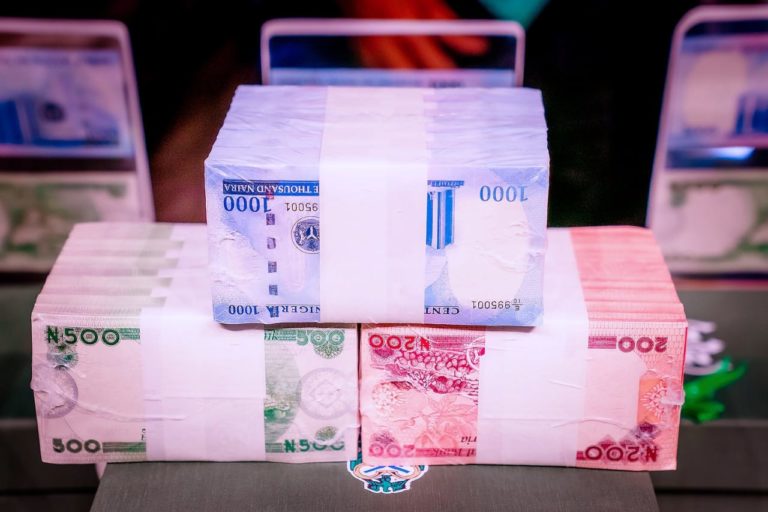
THE Nigerian economy is currently being threatened by cash scarcity and high cost of charges by Point of Sales (PoS) merchants as commercial banks continue to ration cash dispensing to consumers.

Despite the Central Bank of Nigeria (CBN) claim of N3.4 trillion in circulation, Nigerians still face lots of difficulties in accessing cash for business transactions.

Most Automated Teller Machines (ATM) dispensing spots in Abuja Federal Capital Territory (FCT) are currently not dispensing, forcing most businesses to rely on PoS merchants for their transactions.

Already, charges for transactions are going up, as most PoS operators devise means of ‘buying’ money at higher costs (charges) to transact with customers.

PoS merchants in Kubwa-FCT

“Most of us have to negotiate with pump attendants at filling stations to buy their cash at a high cost, otherwise we won’t be in business again. Some also negotiate with wholesale and retail businesses to buy cash from them. We also have to put our own mark-up charges to be able to sustain our business, “a PoS attendant, Memunat Yusuf, told our correspondent.

She added that commercial banks’ N20,000 daily rationing of money to PoS operators is not sufficient.

While expressing similar concerns, another PoS merchant, Emmanuel Oganihu, told The ICIR that cash scarcity is currently threatening their business since banks don’t give licensed operators the requested amount.

“I have to devise means of sourcing my own cash for transactions. Sometimes, we go around markets negotiating with businesses, and they impose high charges for such. For N100,000, we pay N2000,” he said.

Rise in withdrawal charges to spike inflation

For N10,000 withdrawal formerly charged N200 by point of sales (PoS)merchants, the current charge is N500. For N20,000, the charge is N800, but it varies depending on your negotiation skills.

With an almost 100 per cent rise in transaction charges, there are concerns that Nigeria could witness further worsening of its current double-digit inflation of 28.02 per cent with the rising cost of goods currently squeezing Nigerians’ spending at the yuletide.

Knowledgeable economists believe the effect of cash scarcity would likely influence further inflation surge when the next inflation figures are released as charges (cost for transactions) impact the prices of goods.

“If you look at inflation figures for November, you’ll notice a double-digit figure of 28.02 per cent, which is not healthy for the economy. This development will impact the next inflation figure for December. This will squeeze rural economies further where there is – driven scarcity,” a development economist, Celestine Okeke, told The ICIR.

A development economist Celestine Okeke believes rural inflation could worsen because of this

Another development economist, Kingsley Obiakor, told our correspondent that the CBN needs to ensure cash flow this season to forestall further inflation spread.

“More worrisome is that this development will spike further rural inflation, which will compound rural poverty,” he said.

Data from the National Bureau of Statistics (NBS) showed that the rural inflation rate in November 2023 was 26.43 per cent on a year-on-year basis, showing 5.55 per cent points higher compared to the 20.88 per cent recorded in November 2022, while on a month-on-month basis, the rural inflation rate in November was 1.99per cent, up by 0.31per cent points compared to October which was 1.67 per cent.

Festive season’s Intra-state travellers and concerns about transfer charges

Intra-state travel is currently witnessing a hit as most travellers, with ATMs not dispensing with cash, have to do transfers at higher costs.

An official of the National Union of Road Transport Workers (NURTW), Chibueze Okonkwo, told The ICIR that the cash scarcity is causing problems for their transport business.

Cashless travellers risk travelling with network cash transfer glitch

“We have to pay our drivers mostly cash to enable them to buy fuel. If we send a transfer to them, sometimes network delays would affect their fuel purchase and delay their movements. Even security officials on the way don’t accept transfers,” he said.

ATMs empty, despite festive period

Checks by The ICIR around some ATMs in Abuja revealed no dispensation in many locations, while some people cluster around the stands looking infuriated and frustrated.

“I have been here since the morning after my first service and could not find any of the ATM in dispensing. I don’t have any money to part with the PoS guys since I have already planned my spending,” a customer, Mohammed Yusuf, seeking for cash withdrawal, told our correspondent.

ATM not dispensing at GT Bank in Kubwa-FCT
FCMB in Kubwa dispensing only N5000 per person with queues

CBN blames currency hoarders

Despite the CBN’s claim of N3.4 trillion in circulation, Nigerians still have difficulties accessing cash for their businesses.

Apex banks blame currency hoarders for the current cash scarcity; however, The ICIR reports that Naira rationing by commercial banks is taking its toll on currency circulation as PoS merchants seek unconventional means to sustain their business.

“I still believe that some Nigerians are exercising caution and are hoarding the Naira for fear of a repeat of what happened earlier in the year before the general elections. Banks are also controlling their cash dispensing,”a businessman, Onyekachi Okeke, told The ICIR.

He suggested to the government to dispense more cash, especially during this Yuletide celebration, to lessen the negative impact of this on the economy.

“Let the government manage inflation with proper cash flow. If people keep paying higher charges for transactions, traders will pass it on to business, and it will keep affecting our double-digit inflation,” he said.
32 states propose N14.04 trillion as budget for 2024

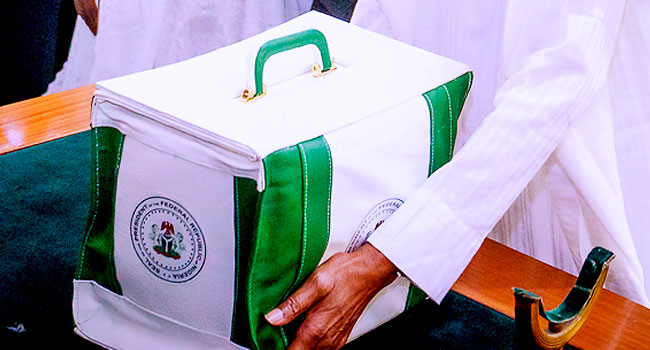
BARLY two weeks to the end of 2023, 32 State Governors in Nigeria have presented their proposed budget for 2024 totaling N14.04 trillion.

While there is no constitutional provision for the time frame a governor or president must submit a fiscal budget, it is believed that if the budget preparation, presentation and authorisation are done before the proposed fiscal year, it creates ample time for implementation. 

The ICIR analysis, at the time of compiling the data, showed that states like Zamfara, Ondo, Niger and Kastina are yet to present their proposed 2024 budget to their respective state assembly. 

While there are no clear reasons for this, the crises rocking the executive administration in Ondo state might have stalled the presentation of the 2024 budget.

Findings also showed that of the 32 states that have presented the budget, only two states, Kebbi and Rivers states, have approved the 2024 budget. 

In Kebbi State, Governor Nasir Idris, approved the N250.1 billion budget for 2024 saying that education, infrastructure, and health sectors will be given much priority. 

Also, in Rivers State, Siminalayi Fubara, signed the state’s N800 billion 2024 budget into law just 24 hours after he presented it to five House of Assembly members in the state.

However, there are concerns that most budgets presented would run majorly on deficit. This is because some state generates very low Internally Generated Revenue (IGR) and depend majorly on either federal government allocation (FAAC) or multilateral loans for financial institutions like the World Bank, IMF, AfDB and others. 

The ICIR has reported how the 36 States and the Federal Capital Territory raised their external debts to N3.35 trillion and domestic debt to N5.82 trillion at the end of the second quarter of 2023.

The data collected from media reports showed that Lagos state presented the highest budget with N2.25 trillion. It was followed by Akwa Ibom with N845.63 billion and Rivers with N800 billion proposed for 2024. 

States with the least budget are Ekiti State with N159.57 billion, Nasarawa State with N199.9 billion and Ebonyi State with N202.13 billion.

Breakdown of the data

In the Northwest region, the state governors of Sokoto, Kebbi, and Kano presented N270.1 billion, N250.1 billion, and N350 billion respectively as their 2024 budget. Also, Jigawa and Kaduna presented N298.14 billion and N458 billion, respectively. 

Similarly, in the South-South region, Cross River, Akwa Ibom and Delta states presented N250 billion, N845.63 billion and N725 billion, respectively, while Bayelsa State presented N480.99 billion, Edo State presented N325.3 billion and Rivers State presented N800 billion.

In the North Central, Benue, Kogi, Plateau, Nassarawa and Kwara states proposed N225.7 billion, N258.28 billion, N295.4 billion, N199.9 billion and N296.4 billion separately

For the Southeast region, the governors of Abia, Enugu and Ebonyi states proposed N567.2 billion, N521.5 billion, and N202.13 billion. While Anambra and Imo presented N410 billion and N592.2 billion apiece

In the SouthWest region governors in Ekiti, Ogun, Osun and Oyo presented N159.57 billion, N703.03 billion, N273.9 billion and N434.2 billion respectively. Lagos State had a whooping N2.246 trillion as proposed budget in 2024.

While in the NorthEast, Adamawa, Bauchi and Borno had N225.8 billion, N300.2 billion and N340.6 billion apiece. Also, Gombe, Taraba and Yobe have N207.8 billion, N311.3 billion, and N217 billion respectively as their 2024 proposed budget. 

The ICIR has reported how five states got the highest federal allocations yet topped the debt chart in 2022. 

I was not eligible to vote during 2023 CAF award, Amuneke clears air over voting for Salah 

0

FORMER Super Eagles winger and 1994 AFCON winner, Emmanuel Amuneke has said he was not eligible to vote during the 2023 CAF Player of the Year Award held in Marrakech, Morocco.

Amuneke stated this following the reports that he voted for Mohamed Salah of Egypt ahead of Nigeria’s Victor Osimhen in the 2023 CAF Player of the Year Award.

The former Golden Eaglets coach was seen in a video shared by CAF where he mentioned the name of one of the finalists, Egyptian forward Mohamed Salah, while responding to a question before the award ceremony.

The video gained widespread attention on social media, sparking echoes of disappointment and lack of patriotism by some supporters seething over the outcome.

In the wake of the trending video, Amuneke, in a monitored response on Channels Television station on Sunday, December 17, cleared the air, saying he was not eligible to vote because he is currently not a national coach of any African country or club side.

“The question we need to ask ourselves is whether Emmanuel Amuneke is eligible to vote, there is no way I am able to vote. I am not a national team coach, nor was I engaged in any club. So I never had the opportunity to vote for Osimhen.

“Even when the voting was going on, I was not even aware who voted and who did not vote,” he said.


READ ALSO:


Responding to the video, he said the discourse was not related to who will emerge as the Africa best player of the year, adding that he responded to the question in context of the discourse.

“The video you people saw circulating. It was a discussion on the bus when we were going to play a game and it was not a discussion about who will become the African Footballer of the Year. It was a discussion about two Arab guys, an Egyptian and a Moroccan and when I was approached, he asked Hakimi or… and I said Salah.

“So it was not about who will be the African Footballer of the year,” he added.

NSIB indicts Flints Aero in plane crash involving Minister

0

THE Nigerian Safety Investigation Bureau (NSIB) has indicted Flints Aero in a preliminary report released on the plane crash that occurred on November 3, involving Nigeria’s Minister of Power Adebayo Adelabu.

According to a statement that the Head of Public Affairs, NSIB Tunji Oketunbi signed, the preliminary report disclosed that Flints Aero violated its Air Operator Certificate (AOC) by conducting a commercial trip.

“Flints Aero Services Limited was issued with a Permit for Non-Commercial Flight. The PNCF issued to Flint Aero Services Limited stipulates that the aircraft shall not be used to carriage passenger(s), cargo or mail for hire or reward,” it read.

According to the report, this contravened Section 18.2.4.3 of the 2015 Nigerian Civil Aviation Regulations.

The Bureau recommended that the Nigerian Civil Aviation Authority ensure that Flints Aero Services operates within limits approved by its permit and the regulations.

It also recommended that the Nigerian Airspace Management Agency (NAMA) ensure strict adherence to airport operational hours and not permit extensions beyond the set limits.

The NSIB had announced that it would commence investigations into the crash of an aircraft conveying the Minister.

The crash occurred at the Samuel Ladoke Akintola Airport in Ibadan, Oyo state.

The aircraft had taken off from the Nnamdi Azikiwe International Airport in Abuja on Friday and crash-landed while descending at the Ibadan Airport on November 3.

Although there was some damage to the aircraft, all 10 passengers on board disembarked without injury.

Fire guts TCN substation in Lagos

0

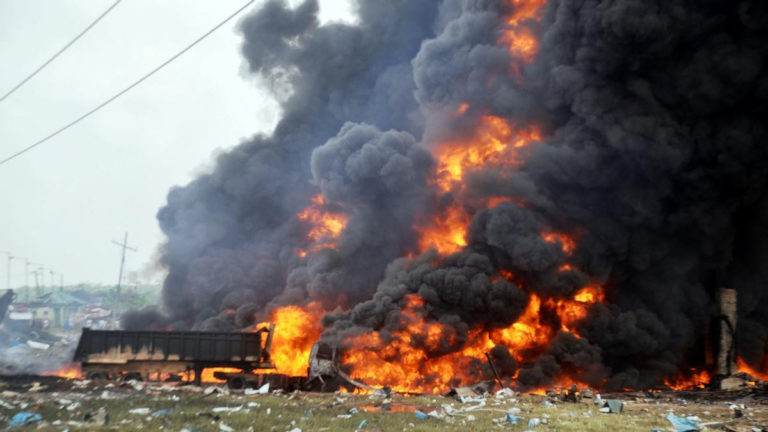
A midnight fire engulfed a substation of the Transmission Company of Nigeria (TCN) in Maryland, Lagos state.

The incident occurred on Saturday, December 16, according to a statement by the Director of Lagos State Fire and Rescue Service Margaret Adeseye.

Adeseye released the statement shortly after the fire was extinguished, stating that no life was lost in the process.

“The fire that erupted at the Transmission Company of Nigeria power substation at Maryland Junction, Maryland, at about 20:06 hours has been put out by the gallantry crew of the Ilupeju Fire Crew of the Lagos State Fire and Rescue Service.

“No casualties were recorded as an investigation into the cause of the fire and the enumeration of valuables affected is ongoing,” Adeseye noted.

About three weeks ago, one person died in a fire that occurred in the Adealu area of Dopemu-Agege, Lagos.

The fire affected the upper floor of a storey building with four flats.

The victim had been a male occupant of the building and was already suspected to be dead at the time emergency responders arrived at the scene.

Also in Agege, four people were injured during a gas explosion that occurred in June.

The incident occurred when a shop where gas cylinders were being stored caught fire after a leak led to the explosion of one of the cylinders.

Although no life was lost, the injured persons sustained second-degree burns as a result.

Despite pledging improved funding, Tinubu allocates less than 7% of budget to education

0

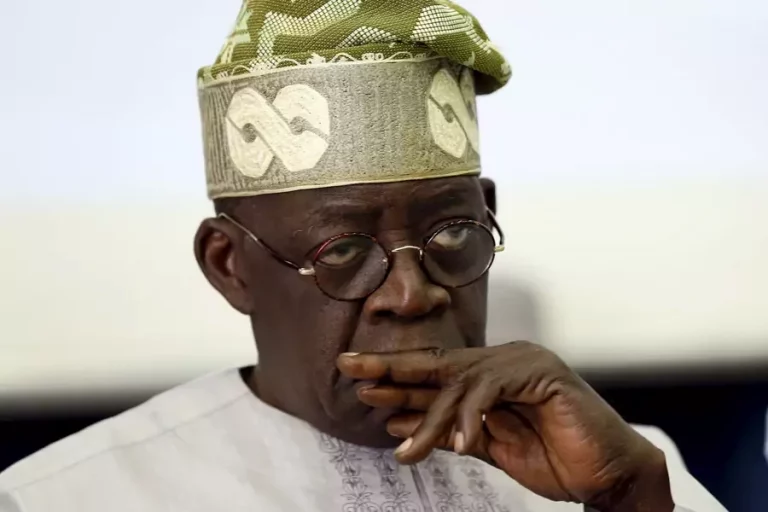
NIGERIA’S education funding will again fail to meet UNESCO’s standard given President Bola Tinubu’s allocation of only 5.98 per cent of the 2024 proposed budget of N24.08 trillion to the sector.

The 2024 budget proposed an aggregate expenditure of N27.5 trillion for the Federal Government in 2024, of which the NET budget is N24.08trn. NET is the remaining fund after all deductions like taxes and VAT have been removed.

This is despite the president’s several promises during his campaign and post-election addresses to reform the education sector by augmenting funding.

The United Nations Educational, Scientific and Cultural Organisation (UNESCO) sets a benchmark of at least 15 to 20 per cent of the national budget for education. The Nigerian government has failed to meet the benchmark year after year.

The ICIR reports that Tinubu’s appropriation for the sector in 2024 is more than former President Muhammadu Buhari’s allocation to the sector in 2023. Buhari earmarked N4.95 billion of the total budget of N21.83 trillion for the sector that year. 

A review of the 2024 budget proposal presented to the National Assembly by Tinubu revealed that out of the N24.08 trillion proposed NET budget for next year, N1.4 trillion, amounting to 5.98 per cent, was allocated to education.

Out of the allocation to the Education Ministry, N330 billion (N330,358,596,001) was budgeted for capital projects, constituting 22.96 per cent, and the overhead budget stands at 5.01 per cent, totalling N72.1 billion (N72,124,230,514).

Meanwhile, the allocation for the personnel is slightly over a trillion (1,036,484,193,887), translating to 72.03 per cent of the budgeted amount to the ministry.

This also means that the largest bulk of the money goes to paying salaries, with just about a quarter of the allocation for capital projects.

Capital expenditures are spent on physical projects, namely building new offices, equipping them, and making other fixed assets procurements.  

In a series of reports, The ICIR documented how some schools are dilapidated and some education-related projects abandoned. 

Although this year’s allocation to the education sector has shown that Tinubu took a step forward compared to what his predecessor allocated in the 2023 budget, it is still far below the 15 to 20 per cent benchmark by UNESCO.

The poor trend continues…

Between 2025 and now, the Federal Government has continued to ignore concerned stakeholders’ clamours and agitation over poor budget allocation to the education sector by its failure to allocate a significant amount of the annual budget to the sector.

A review of the budgetary allocations for education between 2016 and 2023 indicates that the Buhari’s administration never assigned up to 10 per cent of the total budget to the education sector. 

Sadly, the allocation declined from 7.93 per cent in 2016 to 4.95 per cent in 2023.

The ICIR reported that in 2015, before Buhari was sworn in, a total of N483 billion (N483,183,784,654), translating to 10.8 per cent of the budget, was for education.

It, however, decreased to 7.93 per cent in Buhari’s first budget in 2016. In 2017,  6.12 per cent was earmarked for the education sector, showing a decrease from the percentage allocated in the previous year.

For what looked like good news, the allocation for education slightly rose to 7.14 per cent in 2018, with a total of N651 billion designated for the sector. However, it decreased to 7.11 per cent in 2019, as the Federal government allocated N634 billion to the sector.

The situation was no different in 2020 as Buhari again earmarked N607 billion, about 5.74 per cent. In 2021, the allocation decreased slightly to 5.29 as the government approved N771.46 billion.

In 2022, the Federal Government budgeted N900 billion of its total allocation to education, which was about 5.26 per cent of the amount, while in 2023, the administration earmarked 4.95 per cent of the total budget to the sector. 

Tertiary education underfunded – NUC

Earlier this year, the National Universities Commission (NUC) disclosed that tertiary education in Nigeria is grossly underfunded, noting that it is affecting the quality of research and teaching in the sector.

According to the NUC executive secretary, Abubakar Rasheed, the brain drain across universities was caused by the complex learning and teaching environment.

“The universities are producing graduates who lack skills for employment and creative ability. There is a need for universities to generate income to complement government efforts. The sector cannot be funded alone by the government.


“Brain drain in our university system is caused by a non-conducive learning and teaching environment and some other issues that need to be corrected,” he said.

Military confirms killing terrorist leader Kachala, 38 other commanders

0

THE Defence Headquarters (DHQ) has confirmed the death of a notorious bandit terrorising northern parts of Nigeria, Ali Alheri, also known as Kachalla Kawaje.

The bandits warlord, who masterminded the kidnapping of female students of Federal University Gusau (FUGUS), Zamfara state, and some construction workers earlier this year, was killed alongside over 38 other terrorist commanders in the Niger State airstrikes. on December 11.

A statement by the the DHQ  Director, Defence Media Operations, Edward Buba, on Friday, December 16, stated that air assets conducted aggressive air flights on confirmed locations active with the movement of terrorist commanders and their foot soldiers during the operation.

According to him, the strikes carried out resulted in the death of over 38 terrorist commanders and their foot soldiers, while 159 of them were arrested.

He also noted that the troop, on December 6, neutralised one Machika, a top terrorist bomb expert and the younger brother of a notorious terrorist (Dogo Gide).

“Other prominent terrorist leaders neutralised include Haro and Dan Muhammadu, both of whom are specialists in kidnapping and assault operations, respectively. A renowned terrorist leader responsible for the abduction of the students of Federal University Gusau, Zamfara State, Ali Alhaji Alheri, popularly called Kachalla Ali Kawaje, was neutralised in Munya LGA of Niger State along with many of his foot soldiers.

“The military is fast closing in on others and they will equally suffer the same fate. The armed forces are hunting down prominent terrorist leadership and engaging them wherever they are hiding.”

It could be recalled that The ICIR reported how Kachalla Kawaje was killed in Niger state during the air strike by the Joint task force Operation Hadarin Daji (OPHD).

The ICIR also reported that the NAF air strike had on December 6 hit the camps of Ali Kachalla and Dogo Gide during which several notorious bandits Kingpins were killed.

Some of the kingpins killed by NAF were Dogo Gide’s younger brother and IED producer trained by Ansaru Machika, a top commander in Gide’s group, Haro, and a kidnap and assault specialist, Dan Muhammadu.

The terrorists, alongside several others, were reportedly killed while on an attack mission in Niger state.

The neutralised bandits were known to be hibernating in Kamuku National Park in Birnin Gwari Local Government Area of Kaduna state; Kuyambana Game Reserve in Maru Local government area of Zamfara state and Kainji lake National Park in Mashegu, Magama and Borgu Local Government areas of Niger state.

Nigeria borrowed $2.9 billion from World Bank in 2022-Report

A recent International Debt Report released for 2023 has shown that Nigeria was the highest recipient of fresh loans in 2022, receiving $2.9 billion from the World Bank.

This was followed by Tanzania, which got $2.7 billion in the same year.

The report, which is an annual publication that features the external debt statistics for over 100 low and medium-income countries, revealed that $443.5 billion was spent by developing countries on debt servicing in four decades (40 years), of which Nigeria is among.

The World Bank said, “Debt-service payments—which include principal and interest—increased by 5 per cent over the previous year for all developing countries. The 75 countries eligible to borrow from the World Bank’s International Development Association (IDA)—which supports the poorest countries—paid $88.9 billion in debt-servicing costs in 2022.

“Over the past decade, interest payments by these countries have quadrupled, to an all-time high of $23.6 billion in 2022. The report finds that debt-servicing costs for the 24 poorest countries are expected to balloon in 2023 and 2024—by as much as 39 per cent.”

Further findings by The ICIR show that as of June 30 2023, Nigeria owes the World Bank $14.5 billion, according to data ovation from the Debt Management Office website. 

The ICIR has also reported how each Nigerian currently owes N396,376.19 in terms of debt per capita due to the public debt which increased by 75.27 per cent to N87.38 trillion at the end of the second quarter of 2023.

As of the second quarter of 2023,  the total external debts by the federal government stood at N29.9 trillion.

Recall that during the budget presentation, the Senate President, Godswill Akpabio, urged Presiden Bola Tinubu to work towards reducing Nigeria’s debt profile.

However, this came after the National Assembly, under Akpabio’s leadership, approved Tinubu’s request to borrow $800 million from the World Bank to help cushion the effects of the removal of fuel subsidy in Nigeria in July.

The Washington-based global lender said that the Surging interest rates have intensified debt vulnerabilities in all developing countries. 

“In the past three years alone, there have been 18 sovereign defaults in 10 developing countries—greater than the number recorded in all of the previous two decades. Today, about 60 per cent of low-income countries are at high risk of debt distress or already in it”, it noted. 

The ICIR has reported how Nigeria secured three loans totalling $1.95 billion from the World Bank three months after Tinubu assumed office on May 29, 2022. 

Passenger accuses Immigration officer of taking N5,000 bribe at Lagos Airport

0

A PASSENGER at the Murtala Mohammed International Airport (MMIA) Chinedu Obikili has accused an officer of the Nigeria Immigration Service (NIS) of extortion.

Obikili disclosed that he was forced to part with N5,000 on November 7 at the airport while embarking on an international trip.

He said he paid the bribe into a First Bank account with the name Awonusi Tubosun Junior.

Transaction receipt provided by Obikili.

The ICIR could not confirm if the accused is the account holder, as the passenger did not give his name.


Read Also:

However, the demand for the N5,000 bribe came after the officer allegedly asked Obikili to provide proof of having at least $1,000 before embarking on the trip.

According to Obikili, efforts to convince the officer that he was not a first-time traveller yielded no results as the officer remained adamant.

“I explained that I was not a first-time traveller and simply renewed my old passport. He asked if I had the old one, and I showed him an electronic copy with my previous visas and immigration stamps. I also explained that I had friends at my destination and I had cash in my checked-in luggage for safety, but I was not comfortable carrying around large amounts of cash with me,” he told The ICIR.

The officer, however, went on to demand a bribe of N5,000, which he said was the only condition upon which Obikili would be allowed to make the trip.

“He insisted that I would not be allowed to travel unless I paid him some money. I also mentioned that I did not have cash with me, and he asked that I do a transfer to his personal account. I carried out a transfer of N5,000 to him and was allowed to travel,” Obikili stated.

The ICIR’s efforts to contact the NIS’ public relations officer, Tony Akuneme, on Friday over the allegation were unsuccessful as his phone was switched off.

Several Nigerians have raised concerns over harassment by airport officers, including Immigration, Nigerian Customs Service, the Federal Airport Authority of Nigeria.

On Thursday, December 14, the NIS disclosed that it was investigating allegations of extortion of a United States-based professor, Moyo Okediji, by its officers.

Okediji made a post via Facebook alleging that he was made to part with about $540 after some Immigration officers demanded a bribe while arriving Nigeria from Ghana through the Seme border.

“They asked for my Nigeria passport. I told them it had expired and I was in Nigeria to renew it. They said it was an offence for me to enter the country with an expired passport. I apologised. But they wanted none of that. They said I had to ‘settle’ them. They had my wallet containing the money I brought to spend in Nigeria.

“They saw two twenty-dollar notes and said I needed to give them these notes, otherwise, they would seize all the money in the wallet and take me to their office to make a statement. I had heard stories of visitors to the country ending up dead when the Police invited them to their offices to clear some issues. So, I eagerly gave them the forty dollars. They gave me back my things. But when I counted my money later, $500 was missing,” he said.

On Tuesday, December 12, the NCS announced that it had commenced investigations into the conduct of a female officer, who had been caught in a viral video demanding a bribe of N5,000 from a traveller.

The NCS’ National Public Relations Officer (PRO), Abdullahi Maiwada, confirmed this in a statement. He described the officer’s conduct as inappropriate.

“The recording reveals an inappropriate request for N5,000 in exchange for expeditious processing of customs procedures. We wish to confirm that the officer implicated is indeed a member of the Nigeria Customs Service, properly assigned to the Murtala Mohammed International Airport Area Command,” Maiwada said.

WHO declares noma as neglected tropical disease

0

THE World Health Organization (WHO) has declared noma, an ailment of the mouth and face, a neglected tropical disease (NTD).

According to a statement by the organisation on Friday, December 15, the decision was recommended during the 17th meeting of the strategic and technical advisory group for neglected tropical diseases as part of its dedication towards addressing one of the world’s most unrecognised health challenges.

“Cases of noma are mostly found in sub-Saharan Africa, although cases have also been reported in the Americas and Asia.

“Evidence indicates that noma is caused by bacteria found in the mouth. There are multiple risk factors associated with this disease, including poor oral hygiene, malnutrition, weakened immune systems, infections, and extreme poverty. Noma isn’t contagious but tends to strike when the body’s defences are down,” WHO disclosed.

More than one billion people are affected by noma globally, according to data from the WHO. NTDs, including noma, are often related to environmental conditions.

Noma is a common disease which often occurs in children. It is mostly associated with malnutrition and has a survival rate of approximately 15 per cent, according to research.

Although the mortality rate from noma is high, WHO disclosed that early detection and treatment could aid healing without long-term consequences.

“Children who survive the gangrenous stage of the disease are likely to suffer severe facial disfigurement, have difficulty eating and speaking, face social stigma and isolation, and need reconstructive surgery,” the statement read.

At the 75th World Health Assembly held in 2022, Nigeria sought the inclusion of noma into the WHO’s NTD list, which comprised 20 conditions at the time.

Former Minister of Health Osagie Enahire said  at the World Health Assembly that year that  the inclusion of the ailment to the NTDs list would facilitate “global support to the request for its elimination, starting with preventive and curative measures for afflicted persons.”