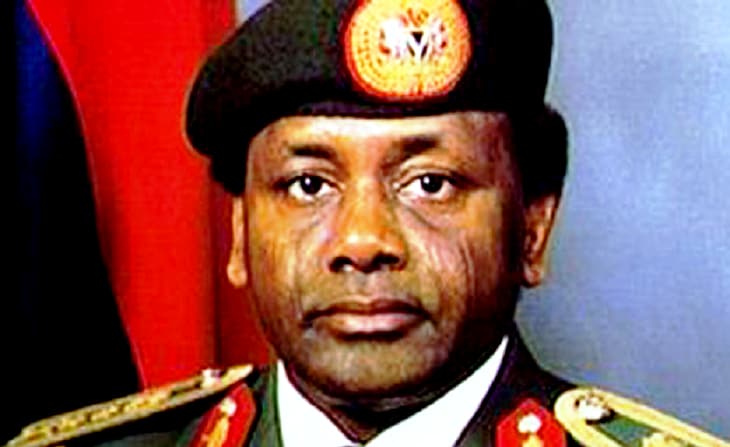
THE French government is set to repatriate another $150 million from the looted funds linked to the former Nigerian military President, Sani Abacha, back to Nigeria.
This was as disclosed in a statement issued by the Special Adviser to the President on Media and Publicity, Ajuri Ngelale, on Friday, November 3.
President Bola Tinubu while receiving the Minister of Europe and Foreign Affairs of France, Catherine Colonna, acknowledged the strengthening of bilateral relations between Nigeria and France.
“Thank you for the good news on the return of Abacha loot. We appreciate your effective cooperation concerning the return of Nigeria’s money. It will be judiciously applied in attaining our development objectives,” Tinubu was quoted as saying.
Highlighting the importance of strengthening collaboration in political and economic aspects, the President expressed appreciation for the increasing cooperation between the two nations in areas of common concern, including climate change, economic integration, education, and culture.
Tinubu also recognized the recent signing of a €100 million agreement between Nigeria and France to bolster the i-DICE program- a Federal Government initiative aimed at boosting investment in Information and Communications Technology (ICT) and Creative Arts Industries.
The agreement, according to the statement, was signed by the Minister of Communications, Innovation, and Digital Technology, ‘Bosun Tijani, and the French Minister of Europe and Foreign Affairs at an earlier event at Tafawa Balewa House, the headquarters of the Federal Ministry of Foreign Affairs.
Tinubu stated that Nigeria will continue rallying international partners to actively seek a peaceful resolution to the situation in Niger Republic.
In her remarks, the French minister conveyed the goodwill of President Emmanuel Macron and expressed France’s readiness to expand mutually beneficial collaboration with Nigeria across multiple sectors.
Colonna said the repatriation of the stolen funds followed the completion of legal processes, saying “it was a long process, but we are glad that it was concluded”.
“It was a long process, but we are glad that it was concluded. Sometimes, justice may be slow, but this is a very good achievement,” she added.
Money allegedly stolen from the national treasury by the late Abacha, now known as the ‘Abacha Loot’, have been repatriated from most countries in Europe and the Americas since his death in 1998.
So far, trillions of Naira of the Abacha loot have been repatriated, with many more believed to still be in the vaults of Western and Asian banks.
The ICIR, over the years, has reported how the federal government has recovered multibillion naira from Abach loot, among which was a of how about $723 million in Abacha loot was returned to Nigeria from Switzerland.
The ICIR has reported over the years on the recovery of multibillion naira from Abacha’s loot, including the return of about $723 million in Abacha loot from Switzerland to Nigeria.
However, a Federal High Court sitting in Abuja, on July 3, ordered the Nigerian government to disclose how the $5 billion Abacha loot was spent.
The court directed the administration of President Bola Tinubu to “disclose the exact amount of money stolen by General Sani Abacha from Nigeria, and the total amount of Abacha loot recovered and all agreements signed on same by the governments of former presidents Obasanjo, Yar’Adua, Jonathan and Buhari”.
Omotosho ordered that the Federal Government through the Ministry of Finance should provide SERAP with the full spending details of about $5 billion Abacha loot within seven days of the judgment. The government was also ordered to disclose details of the projects executed with the money recovered.
THE Nigerian National Petroleum Company Limited (NNPCL) is now the sole importer of Premium Motor Spirit (PMS), in the country, The ICIR findings have shown.
This development, analysts say, is not good for a deregulated market, as licensed marketers struggle to import and fairly compete with NNPCL.
Already, some marketers have closed shops, many of whom cannot access foreign exchange dollars at the official rate. The NNPCL easily accesses the dollars.
To worsen the concern, the national oil company – NNPCL – has also failed to effect market-reflective pricing, which tactically freezes out other market competition in the deregulated market.
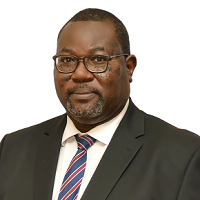
“NNPCL is the sole importer of premium motor spirit. If they are not changing the price to suit current market realities, it is a challenge for us the marketers,”a former Chairman of Major Marketers Association of Nigeria, Adetunji Oyebanji told TheICIR.
Former president of the Major Oil Marketers Association of Nigeria
Oyebanji, while responding to the arbitrage of market-price influence by some marketers, attributed it to the high transportation and logistics costs from depots in Lagos to other parts of the country.
“The freight charge is going up because of the high cost of diesel. For instance, you can get N800,000 as transport costs from Lagos to Abuja for a truckload of fuel. However, it is N1.2 million worth of diesel that would suffice. This is one of the reasons marketers increase fuel prices to recover costs,” Adetunji said.
Further checks by The ICIR showed diesel sells for N1,270 per litre in Kano State and above that outside the metropolis.
This implies a 26 per cent increase in the product’s price in less than one week. It had sold for N1,030 on October 23.
As of Thursday, many filling stations in Lagos adjusted their price to N1,250 and N1,270.
These market realities also affected the price of transportation logistics for PMS, marketers say.
The ICIR calls to officials at the NNPCL were not responded to.
Marketers re-strategise to compete
For some marketers, NNPCL’s huge influence in PMS market pricing could remove them from business if the scarcity of foreign exchange persists.
The National President of Petroleum Retail Owners Association of Nigeria (PETROAN), Billy Gillis-Harry, told The ICIR that marketers were being frozen out with NNPCL as the sole importer of fuel.
“It’s not a fair ground for us to compete for now. Ask many people who are licensed and see whether they’re importing. What we’re doing currently is sourcing for partners abroad who could give us dollars to import, and we, in turn, pay back in naira. This development would ensure we stay in business,” Gillis-Harry said.
Marketers in Abuja sell above NNPC price ceiling
Checks around the Federal Capital Territory (FCT) showed PMS prices selling at N640 in most filling stations, at least N23 more than the NNPC’s selling for between N613 and N617.
The total filling station in Kubwa, an outskirt of the FCT,sells at N629/per litre.
The total filling station in Kubwa, an outskirt of the FCT, sells at N629/per litre.
Also, Evergreen Petrol Station in Kubwa sells at N660, with mild queues at the filling station as of Wednesday, November 1.
At Total Filling Station in Kubwa, the price is N629 per litre.
Meanwhile, further checks in some states in the South-East showed petrol sells above N640 per litre.
A member of the National Union of Road Transport Workers in Enugu, Chijioke Iwuji, who confirmed the development, told The ICIR that most petrol retail outlets sold above N640 in Enugu, Owerri, Awka and Umuahia on Friday, November 3.
The NNPCL filling Station in Arab Road Kubwa sells at N613/per litre
The NNPCL filling Station in Arab Road Kubwa sells at N613/per litre and has a few motorists.
The pump attendant complained of a drop in sales.
Petrol pump price remains below N600 in Lagos
The pump price of petrol has remained below N600 across filling stations in Lagos State.
Nigeria’s commercial hub, Lagos, has yet to experience a pump price hike above the NNPCL price ceiling at N617.
A survey conducted by The ICIR reporter in Lagos showed that NNPC filling stations have the lowest adjusted pump price at N568.
In the various locations surveyed, there were no fuel queues except at NNPC in Ejigbo.
At Awolowo Road, Ikoyi, the NNPC filling station sells petrol at N568 per litre while Mobil at the exact location sells at N593.
Conoil at Tollgate, Ketu empty of marketers
NIPCO filling station at Ago Palace Way, Okota, sells petrol at N599 pump. In contrast, the Petrocam filling station at the hotel bus stop, Igando Road, a community in the Alimosho local government area, sells at N595.
NIPCO at Fadeyi sells fuel at N599, while NNPCL at the exact location sells fuel at N568.
At the Barracks Bus Stop, Surulere, a Conoil filling station, sells at N593, while an MRS filling station at Alaka Surulere sells at N590.
In Onipan, the Total filling station sells at N590 while the Mobil filling station before Anthony Village, when coming from Yaba, sells at N593.
Northwest Petroleum filling station at Gbagada sells at N595, and Eterna Petrol filling station, the exact location, sells at the same pump price.
The NNPCL filling station in Ejigbo, already alluded to, sells at N568 like its sister stations; however, there were light queues.
“Commuters want to buy at a cheaper rate,” a private car driver, Anthony Emenime, who plies that location, told The ICIR.
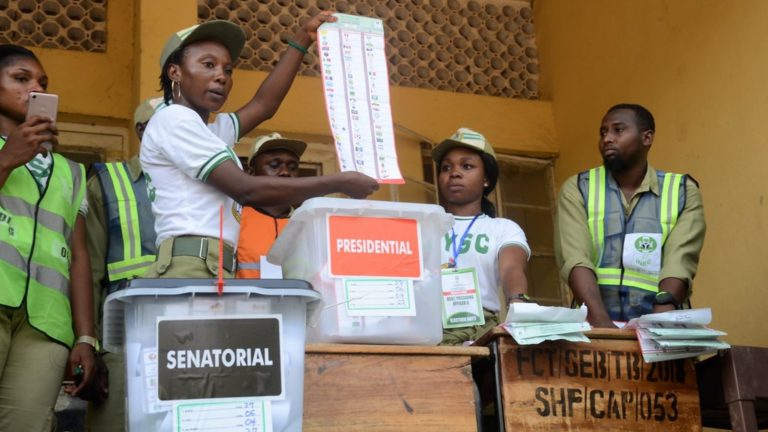
KOGI, Bayelsa and Imo state residents will elect a new governor next Saturday, November 11, as the Independent National Electoral Commission (INEC) conducts the states’ off-cycle governorship poll.
The states are three of eight states in Nigeria with off-season governorship polls. Others are Ekiti, Anambra, Ondo, Edo and Osun.
The former INEC’s Information and Voter Education Committee Chairman, Festus Okoye, announced the election date in October 2022.
While the current governor of Imo State’s term expires on January 14, 2024, Okoye said the governors of Kogi and Bayelsa States had respective terms that expire on January 26, 2024, and February 13 of the same year.
Tinubu seeks transparent elections
President Bola Tinubu, on Thursday, November 2, pleaded with all candidates participating in the elections and the electorate to ensure free and fair exercise.
The President made the call while handing over his party’s – All Progressives Congress (APC) – flags to standard-bearers in Abuja on Thursday, November 2.
He gave the flags to Hope Uzodinma of Imo State, who is running for a second term, Timipre Sylva of Bayelsa state, and Ahmed Usman Ododo of Kogi state.
President Bola Tinubu
“All I am pleading for is for free and fair elections. I believe we will do well,” Tinubu said in a statement issued by his Special Adviser on Media and Publicity, Ajuri Ngelale.
The President expressed optimism regarding the party’s chances of winning the elections, citing the candidates’ qualifications, diligence and the combined efforts of party officials.
Violence may mar elections – Study
The elections in Imo, Bayelsa and Kogi states are likely to witness violence, a study by Kimpact Development Initiative (KDI) has shown.
Findings of pre-election environment risk assessment carried out by KDI in the three states showed that the states saw violence in previous governorship polls, and the factors that triggered such crises remained.
Elections in Imo and Kogi are more susceptible to violence than in Bayelsa, according to the findings.
In Imo, the activities of secessionists – TheIndigenous People of Biafra (IPOB), the Eastern Security Network – and other armed non-state actors are a threat to the poll.
In Kogi, political thugs and other armed criminals capable of re-enacting the attackat Ochadamu ward, where the Women Leader of Wada Aro Campaign Council, Acheju Abuh, was burnt alive in her home by suspected thugs in 2019, are still on the ground.
There are many roads linking Kogi state. Kogi borders ten states, and there are issues of herders-farmers crisis.
It will be easy for people to come into the state to perpetrate crime during the election, said KDI’s Team Lead, Bukola Idowu, while presenting the findings in Abuja on Friday, October 27.
Similarly, in Bayelsa, political thugs with good knowledge of the state waterways could unleash mayhem.
However, the organisation noted that despite its findings, there were opportunities to explore to ensure the peaceful conduct of the election.
Police promise adequate security
The Police said they had intensified security towards the peaceful conduct of election in the three states.
In an exclusive chat with The ICIR on Friday, November 3, the spokesperson of the Nigeria Police Force (NPF), Olumuyiwa Adejobi, said the newly confirmed Inspector General of Police (IGP) Kayode Egbetokun had ordered the release of additional equipment and personnel to the three states for support.
Police PRO, Olumuyiwa Adejobi
Adejobi said the Police prepared and shared the operation order containing the deployment, administrative and operational instructions for election security in the affected states.
“Many senior officers would be sent to take charge of the key areas up to the local government areas in the state for adequate supervision.
“We have catered for the protection of all electoral officers, observers, media, and materials, and INEC offices and facilities.
“We are paying the election allowances for all our officers detailed for the special duties,” Adejobi stated.
He said the Police would engage the stakeholders regularly to preach and embrace peace before, during and after the elections.
He added that the force had trained all the personnel that would be involved in the Standard Operating Procedure (SOP) for election security management.
Military gives assurance of security
The Chief of Defence Staff (CDS), Christopher Gwabim Musa, has assured of the readiness of the armed forces to enforce the presidential directive to deal decisively with perpetrators of electoral violence.
The CDS gave the warning during his operational visit to troops in Kogi State.
Additionally, he issued a warning, saying, “The armed forces have zero tolerance for electoral violence and will ensure total compliance with the presidential directive to deal decisively with violators,” urging voters to shun violence during elections and embrace peace and tolerance.
He warned security personnel not to involve themselves in any act unfavourable to the smooth conduct of the election.
Musa instructed the state’s senior military commanders and security chiefs to establish a conducive atmosphere enabling voters to discharge their civic duty and vote for the candidates of their choice.
He said security personnel would be monitored to ensure they carried out their responsibilities as required and cautioned against compromising the poll.
Voters collect 5.1m PVCs in Bayelsa, Imo, Kogi
The INEC said over five million Permanent Voters’ Cards (PVCs) had been collected in Bayelsa, Imo and Kogi ahead of the November 11 governorship elections in the states.
The commission, in a statement by its National Commissioner and Chairman, Information and Voter Education Committee, Sam Olumekun in Abuja, on Monday, October 30, said the uncollected number of PVCs in the three states was 239,746.
The statistics for the three states revealed that in Bayelsa, out of 1.1 million (1,056,862) registered voters, 1,017,613 had obtained their PVCs, while 39,249 remain uncollected.
In Imo State, there were 2.4 million (2,419,922) registered voters, with 2,318,919 having received their PVCs, while 101,003 PVCs remained uncollected.
Chairman of INEC, Yakubu Mahmood
According to the statement, out of 1,932,654 registered voters in Kogi state, 1,833,160 have collected their PVCs, leaving 99,494 with the commission.
He, however, added that the detailed information on the PVCs had been uploaded to the commission’s website, www.inecnigeria.org.
Top candidates
Bayelsa StateIn Bayelsa, South-South, 16 candidates will be slugging it out to win the top seat of the oil-rich state. The major three candidates include the incumbent Governor Douye Diri of the Peoples Democratic Party (PDP), former governor and the immediate Minister of State for Petroleum, Timipre Sylva of the All Progressives Congress (APC), and Udengmobofa Eradiri of the Labour Party (LP).
The ICIR reported on Tuesday, October 10, that a Federal High Court in Abuja disqualified Sylva from participating in the exercise on Monday, October 9. The court argued that he had taken oath as an elected governor twice.
However, the Court of Appeal sitting in Abuja on Tuesday, October 30, reversed the lower court’s ruling and declared Sylva as the valid candidate of the APC for the election.
Kogi State
According to the candidates’ list published by INEC,the governorship elections in Kogi state will be keenly contested by 18 candidates.
Among the leading candidates jostling for the number one seat in the state are Murtala Yakubu Ajaka of the Social Democratic Party (SDP), Dino Melaye of the PDP, Ododo Usman Ahmed, APC and Leke Abejide of African Democratic Congress (ADC).
Imo State
The major candidates are the incumbent governor, Hope Uzodinma of the APC, Athan Nneji Achonu, LP and Samuel Anyanwu of the PDP.
The ICIR, in this report, looks at the chances of top candidates in the three states.
Insecurity has been a significant challenge in the South-East region, and it has led to the deaths of more than 1,700 people between January 2021 and June 2023.
Deaths occur from protests, armed clashes, abductions, mob violence, activities of secessionist groups, riots, electoral violence, and other causes.
Update: The number of off-cycle states election was updated.
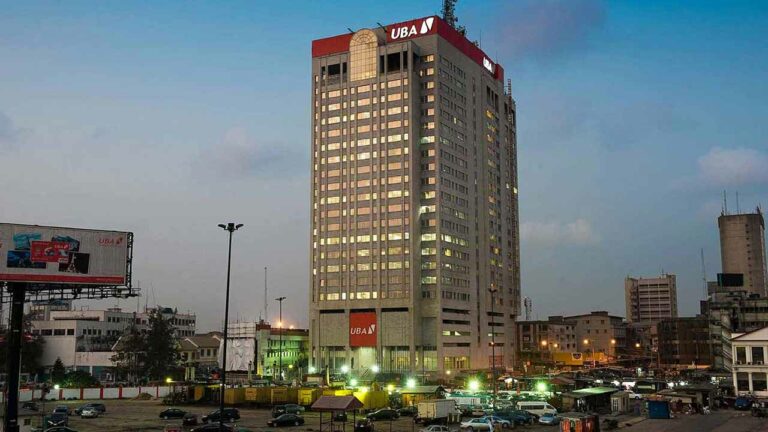
THE Elumelus and six other directors of United Bank for Africa (UBA) have, in fresh dealings, acquired 50,712,619 units of the bank’s shares worth approximately N1.075 billion.
The bank disclosed this in 16 notifications released to the investing public on Friday, November 3.
According to the notifications, relatives of the chairman of the board of directors of UBA, Tony Elumelu, and six of the company’s directors were involved in the transactions.
Ten out of the 16 dealings totalling 1.15 million units of the bank’s shares valued at N24.19 million were bought by the relative of the UBA board chairman.
Their names are Ogochukwu Elumelu, Onyekachukwu Elumelu, Onyinye Elumelu, Toby Elumelu, Nneka Elumelu, and Awele Viven Elumelu.
Also, in the new dealings, the six other directors acquired 49.57 million units of shares valued at N1.051 billion.
The directors are Alex Alozie (executive director), Oliver Alawuba (group managing director), Muyiwa Akinyemi (deputy managing director), Taiwo Sonola (head, global investor services), Michael Ilobah (group head business assurance), and Adeleke Adeyemi (group treasurer).
Some analysts believe the UBA chairman is using his relatives as proxies to boost his stake in the bank’s shareholding structure now that the Central Bank of Nigeria (CBN) has an aversion against investors acquiring a large volume of shares in one fell swoop.
The apex bank had, in a recent direction, tweaked its corporate governance rule after Oba Otudeko staged a comeback to FBN Holdings.
Otudeko had sparked a fresh battle for control of FBN Holdings when, in July this year, he acquired about 4.77 billion units of FBN Holdings’ shares valued at N87.8 billion.
Following the intrigue that ensued over Otudeko’s huge volume purchase, CBN had to come up with new corporate governance guidelines that took effect from August 1, 2023.
“In exercise of powers conferred by the Central Bank of Nigeria (CBN) Act 2007 and the Banks and Other Financial Institutions Act 2020, the Central Bank of Nigeria (CBN) hereby issues the Corporate Governance Guidelines for Commercial, Merchant, Non-Interest, and Payment Services Banks in Nigeria; and the Corporate Governance Guidelines for Financial Holding Companies in Nigeria.
“CBN’s prior approval and No Objection shall be sought and obtained before any acquisition of shares of a bank (including through the capital market) that would result in equity holding of five per cent (five per cent) and above by any investor,” the apex bank’s directive read.
Meanwhile, as of June this year, Elumelu had a 7.38 per cent stake in UBA’s shareholding structure. The ICIR analysis of the bank’s interim consolidated and separate financial statements for June 30, 2023, shows.
A breakdown of his shareholding reveals that Elumelu has an aggregate of 2.53 billion units of shares made up of 194.67 million units of direct shares and 2.33 billion units of indirect shares.
The indirect shares were acquired through HH Capital Limited (287.61 million units), Heirs Holdings Limited (1.81 billion units), and Heirs Alliance Limited (231.09 million units).
Even though it is legally proper for Elumelu to buy more of UBA’s shares through proxies, does that make it morally right? A stock market analyst, who requested anonymity, told The ICIR, “Legally, those transactions certified the position of SEC [Securities and Exchange Commission] rule and regulations as far as trading in the capital market are concerned. Morally, it goes to water down the holdings of minority investors.
“On the business side, the core investors are deepening their portfolios, buying more shares, and increasing liquidity to the detriment of other investors,” the analyst added.
ISRAELI military spokesperson Daniel Hagari said his country had surrounded Gaza main city, nearly a week after expanding ground operations in the area.
Hagari disclosed this at a press briefing on Thursday, November 2.
“Israeli soldiers have completed the encirclement of the city of Gaza, the centre of the Hamas terror organisation,” he said.
This comes shortly after the United States (U.S.) announced that its Secretary of State, Anthony Blinken, would visit Israel on Friday, November 3, for a meeting with Israeli Prime Minister Benjamin Netanyahu.
According to the U.S. State Department Spokesperson Matthew Miller, Blinken’s visit is aimed at reiterating support for Israel and discussing the need for precautions to minimise civilian casualties.
The U.S. President Joe Biden earlier hinted at the need for a humanitarian pause in the Israel-Gaza war on Wednesday, November 1, which the White House later explained to mean temporary stops in fighting to allow the aid and release of hostages and not a full ceasefire as suggested by the United Nations.
However, during the press briefing on Thursday, Hagari rejected calls for a ceasefire, saying the option is “currently not on the table at all.”
The current fighting between Israel and Gaza began on October 7, when terror organisation Hamas carried out a surprise attack on Southern Israel during a major Jewish holiday, leaving about 250 dead and 1,500 injured. The group also took several others hostage.
The attack was described as Operation Al-Aqsa Flood by the head of the Qassam Brigades, Hamas’ military wing, Mohammed Deif.
He said the attack was a reaction to Israel’s 16-year blockade of Gaza, raids inside West Bank cities over the past year, violence at Al Aqsa, increasing attacks by settlers on Palestinians and the growth of settlements.
Following the attacks, Netanyahu said the Israeli military would use all of its strength to destroy Hamas’ capabilities.
Israel had retaliated in a bloody bombardment of Hamas, and at least 9,000 Palestinians have been killed as a result. The country also stopped all fuel, electricity, food and essential supplies into Gaza as part of its war strategies.
Israel also cut off telecommunications and internet services despite warnings by humanitarian agencies that such moves would severely disrupt their activities.
The assault on Gaza has come under further criticism, especially since Israeli forces carried out repeated airstrikes on the Jabalia refugee camp in Gaza, leaving more than 195 civilians dead, according to Hamas.
The UN Human Rights Office described the attacks on refugees as “disproportionate” and a move likely to “amount to war crimes”.
However, Israel has ignored the criticisms and calls for a ceasefire.
Kidnappers have released the last student of Bethel High School in Kaduna, Kaduna State, whom they kept fortwo years.
The victim, Treasure Ayuba, was released on the night of Thursday, November 2.
Gunmen stormed the school on July 5 and kidnapped 121 students.
Ayuba was the last victim to be freed, with others released before him.
Ayuba’s release was verified by the Nigeria Baptist Convention (NBC) Thursday evening.
In a statement, NBC President Israel Akanji acknowledged his release.
“Treasure Ayuba, the last boy who was still with the bandits who kidnapped the 121 students of Bethel Baptist High School, Kaduna, on July 5, 2021, has just returned home today, November 2, 2023.
“Thanks be to our unfailing God. Thank you also very much for your prayers and numerous support,” he stated.
The kidnappers released the last batches of students on December 28, 2021, and January 1, 2022.
The ICIR reportedhow an unspecified number of students of Bethel Baptist High School in Chikun Local Government Area of Kaduna State were abducted when terrorists attacked the school on May July 5, 2021.
The gunmen opened fire when they invaded the school before whisking the students away.
The ICIR reported that bandits released 28 out of all the abducted victims on Sunday, July 25.
Kaduna State Chapter Chairman of CAN Hayab told journalists that the 28 students regained freedom on Sunday, July 25.
Also, in October 2021, Kaduna state Police Command confirmed the release of an additional five students of Bethel Baptist Secondary School.
The attack was among the many incidents carried out by bandits in the state.
Similarly, they took away dozens of students from the Federal College of Forestry Mechanisation in March of the same year.
On July 7 of the same year, bandits kidnapped 30 students from Greenfield University in the state.
These, among others, are a series of attacks on schools in the state and Nigeria.
The ICIRreported in January 2022 how parents withdrew their children from schools in the state and its neighbour, Niger, because of rising attacks on schools.
THE Nigerian Professional Football League (NPFL) matches are set to broadcast live again after seven years.
The leadership of the Nigeria Football Federation (NFF) sealed the deal with Startimes – a cable television – on Thursday, November 2.
The new arrangement follows a failed broadcast deal between the then Shehu Dikko-led League Management Company (LMC) and Super Sports, another cable television, in 2017.
The failed deal lasted for two years instead of five.
A new five-year deal was signed in Abuja on Thursday by NFF and Startimes.
It is worth N1.06 billion in its first year, the current 2023/24 season, while the following seasons attract increments.
The 2024/25 season will see the deal rise to N1.1 billion. It will be N1.150 billion in the 2025/26 season. The deal grows to N1.2bn in the 2026/27 season while it jumps further to N1.25 billion in the 2027/28 season.
The agreement takes effect this weekend as some NPFL matches will be broadcast on Saturday, November 18.
Expressing his administration’s commitment to return the football league to TV, the NFF president, Ibrahim Musa Gusau, who led the NFF board members, pledged to make sure that the Nigerian league is beamed across the globe and expose Nigerian players to the world.
“It was a promise we made when we came on board to beam football games on our screen, and today, we are telling Nigerians that we have achieved that. We started with live streaming, which will still go on.
“It was our intention to start this before the league kicked off, but we wanted to do a thorough job as we wanted to do things the right way. Today, we are here, and tomorrow, we may not be here. With that, we want to leave a lasting legacy for those that will come after us,” he said.
The NPFL board chairman, Gbenga Elegbeleye, lauded the effort to return the league to TV.
“Today is a major step to bring football to the homes of Nigerians. It has been months of painstaking efforts to ensure we bring our football to the TV. We look forward to exciting times in our league. Good times are back in the NPFL,” he said.
The Chief Executive Officer, CEO StarTimes, Joshua Wang, promised the company would provide high-quality games to Nigerians.
“We have been in Nigeria for several years, and we know Nigerians are passionate about football. We give equal opportunities to everyone, and this has led to partnerships with several football federations, such as Rwanda, Tanzania and Ghana. We are glad to have secured exclusive rights for five years, and we remain committed to developing football in Nigeria,” he said.
THE Federal House of Representatives has scrapped the N5.095controversial budgetary allocation for a presidential yacht following public outcry against the line item in the 2023 supplementary budget.
They also raised the proposed student loan sum to N10 billion against the earlier N5.5 billion.
The Chairman of the House Appropriations Committee, Abubakar Bichi Abubakar, made this known on Thursday, November 2, while addressing newsmen.
He said the decision became necessary following the low budgetary allocation for students.
The committee also increased the budgetary allocation of the Ministry of Defence from N476 billion to N546bn to boost the fight against insecurity.
Abubakar also disclosed that the minimum wage for workers was considered and approved for onward transmission to the executive while promising proper legislative oversight to ensure 100 per cent implementation.
Also, N100 billion was retained for the Federal Capital Territory (FCT), as requested by the Minister, Nyesom Wike.
The ICIRreported that N5.09 billion was initially allocated for a presidential yacht in the Federal Government’s N2.1 trillion supplementary budget, which stakeholders criticised.
The yacht is listed under the Nigerian Navy’s proposed capital expenditure of N42.3 billion.
Meanwhile, the Senior Special Assistant to the President on Media and Publicity, Tope Ajayi, on Thursday, November 2, debunked reports that Tinubu requested a presidential yacht.
Ajayi clarified this through a statement titled, “On Presidential Yacht And Other Matters,” in response to reports about the allocation of N5 billion naira for a presidential yacht in the N2.17 trillion supplementary budget submitted to the National Assembly.
According to Ajayi, the Navy requested the yacht for operational purposes, not Tinubu.
THE Central Bank of Nigeria (CBN) said it had started the clearing of the foreign exchange (FX) backlog of commercial banks and airline operators.
The bank’s Director of Corporate Communications, Isa AbdulMumin, confirmed the development to The ICIR on Thursday, November 2.
AbdulMumin, however, did not respond to further questions put across to him.
The ICIR had asked AbdulMumin what percentage of the FX backlog was cleared, whether the fund was from the inflow the Minister of Finance and Coordinating Minister of the Economy, Wale Edun, announced, and if not, he should state the source.
Edun had, at the Nigeria Economic Summit (NES) on Monday, October 23, said the Nigerian government was expecting $10 billion in foreign currency inflows in the coming weeks to ease liquidity in the FX market without disclosing the source of the fund.
“There is a line of sight on $10 billion worth of inflow of foreign exchange in a relatively near future, in weeks rather than months,” Edun said, adding that President Bola Tinubu had on Thursday, October 19, signed two executive orders to support the currency market.
The executive orders allow domestic issuance of instruments in foreign currency and all cash outside the banking system to be brought into the banks.
Meanwhile, Nigeria had faced an estimated FX backlog of $10 billion to settle the demands of foreign investors seeking to repatriate funds and airlines seeking to send money from ticket sales abroad.
This has worsened the shortfalls in the FX market, widening the gap between the official and black market rates and forcing many businesses and individuals to turn to the black market.
According to a BusinessDay report, the apex bank delivered over 75 per cent to 80 per cent of outstanding matured FX forwards in banks, and only international banks have been settled, which include Citi Bank, Standard Chartered, and Stanbic IBTC, adding that the backlog in 14 banks was cleared.
Tinubu had also, at the NES event, said his administration would honour every legitimate contract concerning the nation’s foreign exchange obligations.
The apex bank had breached many of its foreign currency forward contracts before now, the executive vice chairman of Highcap Securities Limited, David Adonri, noted.
“I am aware that CBN entered into several foreign currencies forward contracts with many counterparties to deliver hard currencies at maturity of the contracts. Many of those obligations were not settled at due dates,” he said.
Another expert who lauded the development said CBN and the Federal government should let Nigerians know where it sourced the funds.
The expert, who did not want his name mentioned, hoped the authorities were not borrowing the fund without announcing it.
According to the expert, the primary sources of funds to intervene in the market are the foreign reserves and the excess crude oil reserves, which CBN has significantly depleted.
“There were no details from the Minister of Finance. What we know for certain is that there is no Father Xmas out there to give Nigeria such an amount. Hence, the only source is by borrowing,” the expert stated, adding that the National Assembly should have approved such a fund.
CBN denies scarcity of currency notes in banks
The CBN has denied that cash is scarce at banks, automated teller machines (ATMs), points of sale (POS) and among bureaux de change (BDCs) in some major cities nationwide., following an alleged report.
In a statement by AbdulMumin on Thursday, the apex bank, however, explained that the seeming cash scarcity in some locations was mainly due to high volume withdrawals from the CBN branches by Deposit Money Banks (DMBs)..
“While we note the concerns of Nigerians on the availability of cash for financial transactions, we wish to assure the public that there is sufficient stock of currency notes for economic activities in the country. The branches of the CBN across the country are also working to ensure the seamless circulation of cash in their respective states of operation.
“Members of the public are, therefore, advised to guard against panic withdrawals as there is sufficient stock to facilitate economic activities. Nigerians are also advised to embrace alternative modes of payment, which would reduce pressure on using physical cash,” AbdulMumin said.
NIGERIA’S power sector post-privatisation has failed to light up Nigeria despite over N7 trillion intervention to uplift the sector.
This was disclosed by the Electricity Consumer Protection Forum (ECPA), National Coordinator, Ademola Samuel Ilori.
Ilori told The ICIR on the sidelines of the just concluded Nigeria Electricity Supply Industry (NESI) Market Participants and Stakeholder Roundtable (NMPSR), held on Wednesday, November 1, in Abuja, that consumers were not benefiting optimally from the privatisation.
“The government is still sinking money into the privatised power sector. This is not a good development. Already, N3.3 trillion was put into the sector under President Buhari without appreciable progress. We’re not far from 4,000MW despite these trillions. Consumers are not also getting the best of service.
“Banks are gradually taking over the bank’s acquisition due to illiquidity and huge debts by distribution companies (discos). We need to go back to the drawing board and review the licensing of the discos,” he said.
The power sector was privatised on November 1 2013. However, it still relies on intervention support from the World Bank, the Federal Government and the Central Bank of Nigeria (CBN) to survive.
After privatisation, the sector was projected to grow its on-grid power to 40,000 MW in 2020. But as of 2023, on-grid power is slightly above 4,000MW, raising concerns about the efficiency of the privatisation.
Also, the Special Adviser on Energy and Infrastructure, Office of the Vice President, Sodiq Wanka, said ten years on, the objectives of the nation’s power privatisation had not been met as, according to him, about 90 million Nigerians still live in darkness due to a lack of access to grid electricity.
He noted that the key objectives of the privatisation were to improve the efficiency of the power sector, unlock private sector investments, and unleash the nation’s potential through an energized economy.
“I believe it is fair to say that the objectives of sector privatisation have, by and large, not been met. Over 90 million Nigerians lack access to electricity.
He further said the national grid only served about 15 per cent of the country’s demand. This, he said, left households and factories to rely on expensive self-generation, which supplies a staggering 40 per cent of the country’s demand.
“What is worse, is that the total amount of electricity that can be wheeled through the national grid has remained relatively flat in the last 10 years.
“The grid capacity has increased from just over 3,000MW to typically just over 4,000MW today. Versus a 40,000MW target by 2020 that the Federal Government had set for the pre-privatisation”, he said.
He also said that liquidity problems in the sector could be averted if cost-reflective tariffs were enforced while different stakeholders honour their commitments to terms of contracts entered into with the Nigerian Electricity Regulatory Commission (NERC) .
“As of the second quarter of 2023, for every kWh of electricity sent to the grid, only 60 per cent of it is paid for. But as we know, even the tariff paid for that unit of electricity is far from being cost-reflective, especially in light of the recent devaluation of the naira.
“The sector has suffered from chronic underinvestment, especially in transmission and distribution. Many of the successor utilities of the Power Holding Company of Nigeria (PHCN), have failed to meet their performance improvement targets due to technical and financial capacity issues,” he added.