THE Ian Parry is inviting applications for its Photojournalism Grant.
The Grant aims to help young documentary photographers undertake a chosen project and raise their international profile.
This year’s contest features two prizes: the Tom Stoddart Award for Excellence and the Ian Parry Photojournalism Grant. Each winner will receive GBP10,000 (US$12,527), Canon photo equipment, and more.
Entrants must submit a portfolio and proposal of a project they would undertake if they won the grants.
Photographers under the age of 24 and those enrolled as full-time photography students can apply for grant awards.
There is no entry fee. The deadline for the submission of the application is August 8, 2023. Interested applicants can apply here.
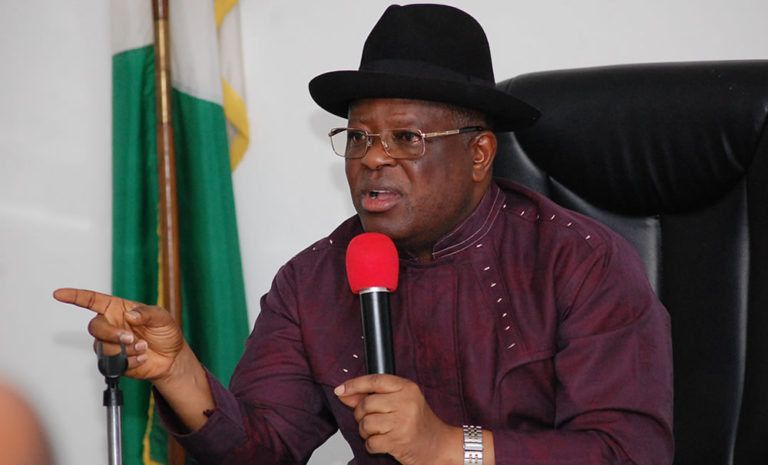
EBONYI State governor Dave Umahi has suggested a maximum tenure of three terms of four years each for federal lawmakers.
Umahi proposed that their should an age limit for aspiring legislators.
Speaking on Channels TV on Wednesday, May 17, the governor denied the allegation that former governors have turned the Senate to a retirement office since the return Nigeria to civil rule in 1999.
Umahi stressed that the high influx of former governors into Senate was because of the need for requisite experience to ensure robust lawmaking.
“The National Assembly is not a retirement home for governors. It’s a place that they want to put the experiences they acquired over the years in the governance of their states to move the nation forward.”
Umahi noted that the experience gathered by the governors who successfully won seats to the Senate would be banked on while enacting policies, laws and regulations.
“When governors have sat in the saddle for eight years, what type of experience do they not have? Mind you, as a governor you interface with the state house of assembly and by so doing, you understand what goes on there. There is no governor that does not have experience or that does not know what to do in the Senate. What experience do they not have?
“I hear people say the Senate is a retirement home, but that is not correct. It is a place for those former governors to put in the experiences they have garnered over the years.”
The governor argued that the lawmakers are not puppets despite the absence of healthy rivalry between the executive and the legislature.
“When people talk about rubber stamp, what they want is that the legislature should fight with the executive. But that should not be the case. Fighting will not help the nation. We have a common goal to reset the nation; that should make everybody think the same way – the progress of the country. We have to be engaging.”
Reacting to the issue of zoning of the leadership of the National Assembly and the fate of the South-East geo-political zone, Umahi noted that the late entrance of the zone in the leadership contest could have informed the perception.
He added that the All Progressives Congress (APC) is making progress on the incoming legislative zoning formula, adding that the national leadership of the party is having a robust engagement with concerned stakeholders.
Meanwhile, The ICIR earlier reported that the National Working Committee (NWC) of the All Progressives Congress (APC) zoned the leadership positions of the 10th Assembly.
The NWC committee nominated Godswill Akpabio, Akwa Ibom, South-South, as the Senate President and Abass Tajudeen, Kaduna, North-West, as the Speaker of the House of Representatives.
This was disclosed by the National Publicity Secretary of the APC, Felix Morka, on Monday, May 8.
In the same vein, the NWC nominated Barau Jibrin from Kano, North-West, as Deputy Senate President and Ben Kalu, Abia, South-East, as Deputy Speaker.
The endorsement of the zoning formula for the 10th National Assembly followed a meeting held by the NWC to discuss the results of discussions and meetings with Bola Tinubu, the President-elect, and other stakeholders.
THERE was drama at the Presidential Election Petition Tribunal on Wednesday, May 17, as Labour Party (LP) factions clashed during the pre-hearing of the appeal filed by the party’s presidential candidate Peter Obi against President-elect Bola Tinubu.
The faction led by suspended national chairman, Julius Abure, produced Obi as presidential candidate and there are speculations that the camp headed by acting national chairman Lamidi Apapa plans to withdraw the party’s petition before the Tribunal.
The clash which occured on Wednesday was between the acting national chairman, Apapa, and Akin Osuntokun, the director general of the party’s presidential campaign committee.
Apapa had sought to sit in the seat designated for Abure, the suspended national chairman, but the move was rejected by members of Abure’s faction, led by Osuntokun.
When the petition was summoned, Apapa and the party’s National Women’s Leader, Dudu Manugu, attempted to appear on behalf of the Labour Party.
However, the Tribunal rejected their requests.
A party’s appearance won’t be noted if it is represented by two people, according to Justice Haruna Tsamani.
Obi and Abure, the suspended LP national chairman, were also in court.
The LP has been entangled in a power struggle between the Abure and Apapa camps.
On May 11, a video showed Apapa issuing a directive to all the lawyers representing the party at the Tribunal to see him within 48 hours.
In the video, which emerged shortly after an Abuja Federal High Court sitting, Apapa also said he is now in charge of the Labour Party.
When the heating eventually resumed on Wednesday, May 17, counsel for the Labour Party, Livy Uzoukwu, a Senior Advocate of Nigeria (SAN), told the court that a meeting that was scheduled to decide on the documents to be offered for the hearing had not produced any results because the Independent National Electoral Commission (INEC) had only provided 30 per cent of the materials that were required from them.
He went on to argue that this violates the promise made by INEC chairman Mahmoud Yakubu to make all necessary documents available.
Uzoukwu continued by saying that the party has yet to get documents pertaining to Rivers State, where the resident electoral commissioner allegedly stated that no form EC8A were available for distribution but has failed to do so in writing despite requests.
Abubakar Mahmoud, SAN, the lawyer for INEC, responded that he was surprised by the Labour Party’s claims because they had skipped the originally arranged meeting and left the rescheduled one.
The documentation for Rivers and Sokoto states were produced, according to Mahmoud, but the Labour Party refused to pay N1.5 million for Sokoto State and did not supply Form EC8A for Rivers State.
He stated that the party had received some documents but would not collect them until it was complete.
He reassured the court that they were making every effort to support the court in an open manner.
The ICIRreported that on Wednesday, May 10, the Tribunal adjourned Obi’s petition till May 17, following a request by Obi’s lawyer, Livy Uzoukwu.
Uzoukwu had informed the court of an agreement by lawyers to parties in the petition to file and exchange necessary documents for a smooth hearing of the substantive petition.
The defence lawyers, including Abubakar Mahmoud, Wole Olanipekun, and Lateef Fagbemi, who represented the Independent National Electoral Commission (INEC), Tinubu and the APC, respectively, confirmed Ozoukwu’s submissions before the court.
INEC had declared Tinubu as the winner of the February 25 presidential election.
According to INEC, Tinubu secured 8,794,726 votes, the Peoples Democratic Party (PDP) candidate, Atiku Abubakar, had 6,984,520, while the Labour Party (PDP) presidential candidate, Peter Obi, polled 6,101,533.
The PDP and LP candidates rejected the result and approached the Tribunal with separate petitions to challenge Tinubu’s victory.
They alleged that Tinubu was not qualified to contest the election and that he failed to secure the majority of lawful votes cast at the poll.
They are also contesting that Tinubu’s running mate, Kashim Shettima, had a double nomination contrary to the Electoral Act.
The court, which had its inaugural sitting on Monday, May 8, had dismissed the petition filed by the Action Alliance (AA) after the party withdrew it.
The ICIR had also reported that the Action Peoples Party (APP) also withdrew its case at the Tribunal.
Following the knockout of Nigeria’s Golden Eaglets from the ongoing 2023 UN-17 African Cup of Nations (AFCON) after a 2-1 quarter-finals loss to Burkina Faso last Thursday, The ICIR x-rays the performance of the boys while they were in Algeria.
The Golden Eaglets exit at the quarter-finals stage denied Nigeria the ticket to the FIFA UN-17 World Cup, which will come up in November. According to the Confederation of African Football (CAF) the body that oversees football in Africa, the last four teams in the AFCON tournament will represent the continent in the World Cup.
The team, led by coach Nduka Ugbade, who captained the Eaglets side that won the maiden edition of the FIFA U-16 World Cup in 1985, progressed from Group B as second on the log with 6 points.
The Nigerian team began the tournament with a slim 1-0 victory against Zambia, lost their second group match by a lone goal to Morocco and came from behind to win South Africa 3-2 in the last group game.
An analysis of the number of goals scored shows that the Golden Eaglets had 6 goals to their account and conceded 5 goals in total.
Some football enthusiasts who spoke to The ICIR assessed the performance of the Nigerian UN-17 team in Algeria.
In a chat with The ICIR, an Ibadan-based sports journalist, Sunday Agunbiade, blamed the defeat on the coaching crew, saying that the team lacked the tactical abilities to win a match convincingly.
“The coaching crew should be held responsible for the failure at this AFCON because we have better guys littering across the length and breadth of this country. If I was one of the coaches, I think I could have resigned and found something else to do.
“The tournament proper was short of the expectations of sports-loving Nigerians, considering the fact the coaching crew led by Coach Ugabde made a lot of promises that they were going to lift the trophy and saying that winning WAFU Zone B meant a lot to them and they are going to consolidate it but alas, they really messed up.
“The performance was horrible, the ball distribution was not there, the passes, no cohesion at all. We cannot really figure out any pattern, football transition, the kind of style used if they are going to get anything out of that tournament.
“We could not even identify any striker as big as Nigeria is, so it means that the coaching crew were extremely biased in their selection. I don’t know what informed their decisions with those guys taken to AFCON,” he said.
Asked what should be done to address the problem, Agunbiade said: “The way forward for Nigerian football starts from the Nigeria Football Federation (NFF). I expected the NFF to have taken a very proactive step by disengaging all the coaching crew across the board from Super Eagles down to UN-13, then let them all apply again and the coaches should be selected based on their antecedents, grading, experience and cognitive working experience with a track record.
“The success of Nigeria’s football boils down to the level of intelligence and ingenuity of coaches.
“And another thing is an enabling environment should be provided by the government in organising primary and secondary school inter-house sports, inter-secondary school competitions and with all that, even after that, if there are not good coaches to turn them into golden fishes, nothing will be achieved.”
Also speaking with The ICIR, Isaac Afolabi, a football fan based in Ondo, said it was disappointing that the Nigerian team failed to qualify for the World Cup.
“Personally I’m not among those who mounted pressure or have so many expectations on the Golden Eaglets particularly in winning the UN-17 AFCON title in Algeria.
“What I wished for them is to get one of the slots or tickets for the FIFA UN-17 World Cup which I believe will help them to grow, understand each other, expose them and also showcase our lads to the world as the most successful team in that cadre. It is so sad they crashed out,” he said.
On his part, Festus Alme urged Nigeria’s football administrators to focus on developing the sport in schools.
“I want to urge NFF to do more in the area of reviving school sports, secondary schools cup, principal cup and send genuine scouts who will not give room for imposition to identify players for the next tournament,” he told The ICIR.
Another football fan, Isreal Ibok told The ICIR that the boys were not clinical in front of the goal. However, he noted that they did their best.
“They tried. Though they had a problem in scoring goals.”
Hassan Abdulrahman said the team was a collection of talented players which failed to get the needed results.
“No doubt, the team is full of talented young players and has a tactically sound coach but not utilising their chances cost them the World Cup ticket,” he said.
Several attempts were made to reach the team’s media officer, Francis Achi, but the response from his network provider said “the number is switched off”.
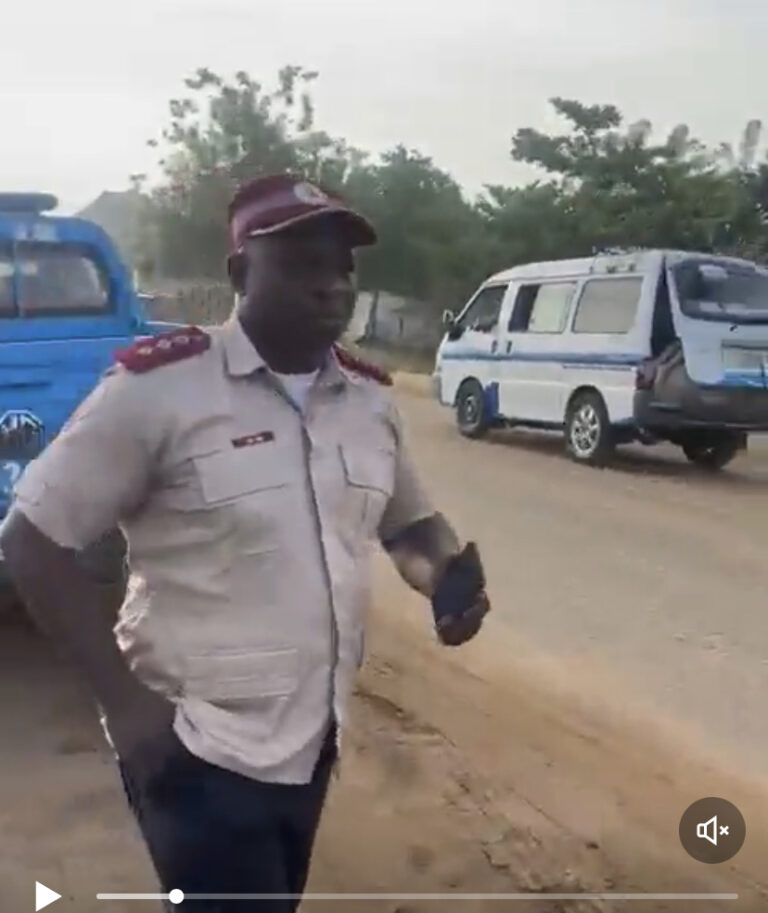
THE Federal Road Safety Corps (FRSC) has directed the immediate recall of the patrol team that was captured in a viral video assaulting a civilian within Egbeda Unit Command in Ogun State.
FRSC spokesman Bisi Kazeem said Corps Marshall Dauda Biu recalled the team on the premise that the officers behaved in a ‘manner, tantamount to incivility’ against a member of the public.
One of the patrol team officers, with the name tag M.J Oni was captured on video hitting a motorist who was recording the road safety men for allegedly damaging his car’s windscreen.
The victim, in the video was heard saying, “This is the man that broke the windscreen.” He was also heard shouting: “You slapped me.”
The video which went viral on Tuesday, May 16, led to angry reactions from Nigerians on social media, particularly on Twitter.
Many users who reacted under the tweet accused the FRSC of always abusing and harassing citizens, and demanded that the officer in the viral video be punished and prosecuted for his action.
Meanwhile, reacting to the viral video on Wednesday, May 17, the Assistant Corps Marshal and Corps Public Education Officer, Bisi Kazeem said the patrol team behaved in a manner that is contrary to standard operating procedures.
He said the Corps Marshal has directed the commencement of investigation into the incident.
“The provocative act as captured on camera is a complete contravention of the Federal Road Safety Corps’ standard operating procedures for officers on patrol operations.
“In that regard, the Corps Marshal has directed the Corps Intelligence Office as well as the Corps Provost Office to commence with immediate effect, a full and comprehensive investigation into the entire circumstances that propelled the officer into the uncivil act and make necessary recommendations for swift administrative action.”
According to him, the FRSC is an International Organization for Standardization (ISO) certified organisation that does not condone indiscipline or compromise standards when it comes to rendering service to the public.
He assured that all necessary disciplinary actions recommended will be administered appropriately.
UNITED States (US) Secretary of State Antony Blinken has held a phone conversation with President-elect Bola Tinubu ahead of the inauguration of Nigeria’s next administration on May 29.
According to the spokesperson for the US State Department Matthew Miller, Blinken during the phone conversation on Tuesday, May 16, assured of the US government’s commitment to further strengthen bilateral relationship between the two nations under the incoming administration.
This was disclosed in a press statement on the US Department of State’s website, titled ‘Secretary Blinken’s Call with Nigerian President-elect Tinubu’.
Highlighting the foundation of the US-Nigeria partnership, Blinken underscored the shared interests and robust people-to-people ties that bind the two countries.
The statement reads, “Secretary of State Antony Blinken spoke this morning with Nigerian President-elect Bola Tinubu, to emphasize his continued commitment to further strengthening the U.S.-Nigeria relationship with the incoming administration.
“The Secretary noted that the U.S.-Nigeria partnership is built on shared interests and strong people-to-people ties and that those links should continue to strengthen under President-elect Tinubu’s tenure.
“Secretary Blinken and President-elect Tinubu discussed the importance of inclusive leadership that represents all Nigerians, continued comprehensive security cooperation, and reforms to support economic growth.”
Tinubu, whose victory in the February 25 presidential election is being challenged in court by opponents including Atiku Abubakar of the Peoples Democratic Party (PDP) and Peter Obi of the Labour Party (LP), is scheduled for inauguration on May 29, when incumbent president Muhammadu Buhari will vacate office.
Tinubu is currently outside Nigeria, having embarked on a foreign trip to Europe on May 10.
His media team described the trip as a working visit.
THE Federal Government has warned the National Association of Resident Doctors (NARD) against its planned strike action, saying there would be no payment for doctors absent from work during the period.
The warning was issued in a statement signed by the Director, Press and Public Relations of the Federal Ministry of Labour and Employment Olajide Oshundun, on Tuesday, May 16.
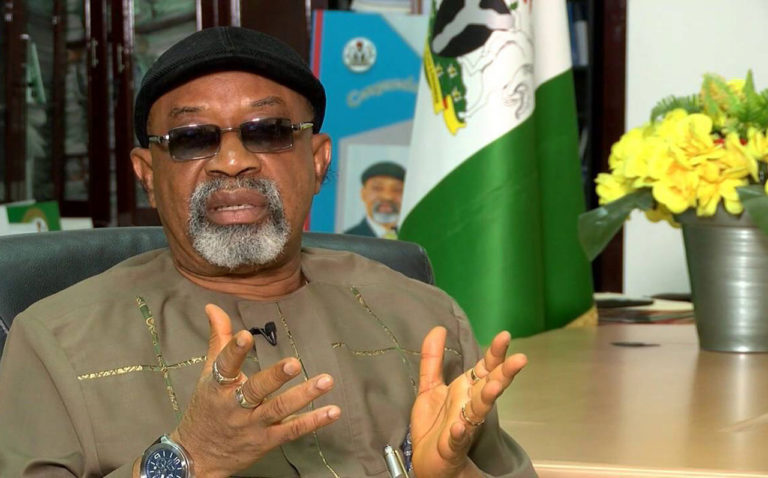
According to the statement, Minister of Labour and Employment Chris Ngige urged the doctors to dialogue with the Ministry of Health rather than embark on the strike action, which he described as unknown to law.
“I will advise them to attend the meeting with the Minister of Health tomorrow. I will also advise them very strongly not to go on five-day warning strike. There is nothing like warning strike. A strike is a strike. If they want to take that risk, the options are there. It is their decision.
“They have the right to strike. You cannot deny them that right. But their employer has another right under Section 43 of the Trade Dispute Act to withhold their pay for those five days. So, if the NARD has strike funds to pay their members for those five days, no problem,” Ngige said.
He also said the Ministry of Health would employ ad hoc staff to replace the striking doctors adding that the Federal Government cannot compel states to domesticate the Medical Residency Training Fund (MRTF), one of the doctors’ demands.
According to the minister, contrary to claims by the doctors, the Federal Government had paid the minimum wage adjustment arrears.
He however said a 200 per cent pay rise demanded by the doctors was not feasible at the moment.
The statement pointed out that the Nigeria Medical Association (NMA) had already commenced negotiations with the Federal Ministry of Health, National Salaries, Incomes and Wages Commission and the Presidential Committee on Salaries on a pay rise for doctors.
The ICIR reported that NARD, on Monday, May 15, declared a five-day warning strike, which would take effect on Wednesday, May 17, over what the medical doctors described as the refusal of the Federal Government to meet their demands.
Some of the demands include payment of the 2023 Medical Residency Training Fund (MRTF), payment of arrears on the consequential minimum wage adjustment, and increase in the Consolidated Medical Salary Scale (CONMESS) structure by 200 per cent.
The doctors also called for the immediate suspension of a bill seeking to amend the Medical and Dental Council of Nigeria (MDCN) Act.
The bill, which has passed second reading, was sponsored by a member of the House of Representatives, Johnson Ganiyu, and aims to withhold full licensing of doctors and dentists for at least five years to restrict emigration. The proposed legislation has generated a lot of criticism from doctors.
NIGERIA’S power sector under President Muhammadu Buhari inability to embrace holistic market reforms and regulatory compliance has contributed to the sector’s failure to operate as a privatised market devoid of government subsidies.
In the past eight years, adherence to specific rules on market reforms (payment of right tariff cost and honouring of power purchase agreements for market players) by the government has been weak, which has seen investors showing less interest in a sector that is at the heart of the Nigerian economy.
The government’s efforts at initiating a few sector-strengthening reforms have been dashed by policy inconsistency. This development made the government pay huge subsidy in billions monthly for a sector that has the capacity to attract private capital through equity investments.
Several times, the gas generation companies threatened force majeur as a result of owed debts and poor compliance with market rules.
The chief executive officer of the Association of Power Generation Companies (APGC), Joy Ogaji, told The ICIR that market rules were constantly being violated, which put the sector at a higher risk of illiquidity, and dissuaded investors.
Ogaji: violation of market rules discouraging investors
As a result of policy inconsistency and weak regulatory compliance, the sector has had to rely on multilateral funding agencies like the World Bank and the African Development Bank (AfDB) to keep the sector moving.
More background and key issues
Nigeria’s power sector was unbundled and privatised in 2013 with a view to creating a competitive market that would improve management and efficiency, attract private investment, increase generation, and provide a reliable and cost-efficient power supply.
However, the quest to deliver a cost-efficient power supply to Nigerians remains a pipe dream due to poor leadership and weak regulatory intervention. The situation has been no better under President Buhari, as the sector continues to falter on inefficiency.
For instance, many public institutions (ministries, departments and agencies of government) have forever been defaulting in paying for their power usage, with debts surging in billions, even as government pays subsidies for liquidity shortfall.
The ICIR had reported about debts in billions owed by some Federal government agencies, which some industry watchers say are some of the factors fuelling illiquidity and dissuading investor interest in the sector.
Accordingly, getting appropriate pricing for consumed power has been delayed for long, with the government only introducing service-reflective tariff in March 2020 to improve revenue collection and service for the consumers.
The ICIR had last month reported how the 11 distribution companies (Discos) relied on unmetered customers to earn profit through estimated billing, with the Federal government’s mass metering that it started in 2020 not quite a wide success.
Data from the National Bureau of Statistics (NBS) revealed that the estimated number of electricity customers stood at 5.91 million in the third quarter of 2022, higher by 1.09 per cent on the 5.85 million figure recorded in the second quarter of the year.
Although the NBS report stated that on a year-on-year basis, estimated customers declined by 6.38 per cent in the third quarter of 2022 from the 6.32 million recorded in the third quarter of 2021, revenue collected by the DisCos during the period stood at N202.62 billion in the third quarter of 2022 from N188.41 billion in the second quarter, indicating a rise of 7.54 per cent.
Another key problem in the power sector under President Buhari’s administration is operational deficiencies and non-alignment of various power sector value chains consisting of generation, transmission and distribution, with each constantly trading blames.
NERC chairman, Sanusi Garba
The sector, despite privatisation, remains weak due largely to underpayment of power costs by consumers, which makes subsidy in the power sector thrive.
Not complying with market rules has led to financial distress in the sector, prompting the take-over of some DisCos.
For instance, a government team led by the Bureau for Public Enterprise (BPE) and the Nigerian Electricity Regulatory Commission (NERC) had, on July 5, 2022, initiated steps to restructure the boards of the five DisCos, allegedly to save them from insolvency.
The affected companies are the Kano Electricity Distribution Company (KEDCO), Ibadan Electricity Distribution Company (IBEDC), Benin Electricity Distribution Company (BEDC), Kaduna Electric, and Port Harcourt Electricity Distribution Company (PHED).
Some industry stakeholders said the blame does not lie with the government and DisCos alone, but also with many consumers who they accused have not been playing by the rules in payment for power.
“Many Nigerians bypass power lines to access power without payment. This is hugely affecting cost recovery. There is also low electricity pricing because people are yet to pay the appropriate price for power. Most often, we get directives from the Nigerian Electricity Regulatory Commission (NERC) not to effect the appropriate price, which contradicts the Electricity Power Sector Reform Act of 2005 on the multi-year tariff order (MYTO). It also affects cost recovery efficiency,” the president of the Association of Nigerian Electricity Distributors (ANED), Sunday Oduntan, told The ICIR.
President Buhari’s interventions to lift the sector
The Buhari administration has continued closing various gaps in the power sector value chains, including paying almost N30 billion monthly subsidy to forestall possible shutdown.
The presidential adviser on Power and Infrastructure, Ahmed Zakari, said the President was keen and focused on using numerous avenues to close infrastructural gaps in the power sector. According to Zakari, more than $5 billion had been committed to upscale power infrastructure in the country.
”Through support from the World Bank, we now have $1.6 billion devoted to the transmission expansion programme. We signed another $500 million for the development of the distribution sector. The Central Bank of Nigeria (CBN) has also put out emergency funds for the distribution sector, as well as for the transmission sector in various phases to the tune of $500 million.
”We also have the SIEMENS presidential power initiative that we’ve signed the engineering agreement. We also signed the performance improvement plans of the Discos to enable us hold them accountable as they receive these support funds. This performance agreement will enable them to align their projects with funds that are available,” he said.
The adviser expressed optimism that the national mass metering programme would improve the revenue and sustainability of the sector in addressing the liquidity concerns in the sector.
“With this enhanced metering on the service-based tariff, we can see the Nigerian electricity supply industry generating over N100 billion in the near-to-mid-term. This is very impressive. The hypothesis that we have is that if you enhance payment discipline through the metering population, revenue will go up. We have proven that,” he said.
Interventions in off-grid power offers hope
The Federal government, through the Rural Electrification Agency (REA), has under President Buhari commenced provision of access to electricity to about 85 million Nigerians not connected to the grid through various off-grid electricity solutions. The plan extends to connecting targeted markets across the country and to several industrial clusters in order to expand access to electricity. It also targeted several higher institutions in the country for constant power through solar-powered electricity solutions.
The REA drove these initiatives through its energising education, market and industry programmes via solar-powered off-grid connections.
To support the economic recovery in response to the COVID-19 pandemic, the government also launched an initiative as part of the Economic Sustainability Plan (ESP) to achieve the roll-out of five million new solar-based connections in communities that are not grid-connected.
According to the Federal government, this programme is expected to generate an additional N7 billion increase in tax revenues per annum, and $10 million in annual import substitution.
The Solar Connection Intervention Facility is expected to complement the Federal government’s effort at providing affordable electricity to underserved rural communities through the provision of long-term low-interest credit facilities to the Nigeria Electrification Project (NEP) pre-qualified home solar value chain players that include manufacturers and assemblers of solar components and off-grid energy retailers in the country.
The 5-million-Solar Power-Naija connection scheme is a Federal government initiative which objectives are to: expand energy access to 25 million individuals (five million new connections) through the provision of solar home systems (SHS) or connection to a mini-grid; increase local content in the off-grid solar value chain; and facilitate the growth of the local manufacturing industry.
The ICIR found out that some of these initiatives are still ongoing, as some industry watchers confirmed that the Nigeria off-grid market acceleration programme is creating opportunities for underserved rural communities across the country.
FG’s mass metering interventions show signs of failures
Zakari had also told the media that the National Mass Metering Programme was introduced to replace the Meter Asset Provider Programme to close a metering gap of over six million.
“Arbitrary billing is one of the key challenges of the sector, and we mandated that we transition to the national mass metering programme that is fully-funded, and the estimated six million meter gap would be eliminated by the end of the life of this administration. We’re currently in the zero phase now, for which the Central Bank has provided over N35 billion.
Power distribution company officials installing meters in a residential area.
“The phase zero targeted 1 million meters. We’ve mopped up all the available meters produced locally, which is about 600,000 meters. The next phase brings in about 4 million meters. Four hundred thousand meters have been installed, and we track the geolocation, names of every citizens and household that had been metered. Before the end of the life of this administration, we will eliminate the metering gap,” Zakari enthused.
He pointed out that arbitrary billing and energy theft were issues the government was also addressing, “which is why we are tracking metering and ensuring regulations to stop certain untoward practices.”
Concerns with the mass metering
Findings by The ICIR showed that many indigenous meter manufacturers lack the capacity to close the metering gap on the back of weak production, importation and logistic concerns.
Indigenous meter manufacturers have not been able to produce up to 20 per cent of the needed meters, according to findings, putting unmetered Nigerians under the pressure of waiting endlessly.
Oduntan believes efforts must be stepped up in metering power consumers
Currently, Nigeria cannot manufacture all the components of the meter locally. There is still a reliance on importation logistics for some of the components. Getting cargo across the ports comes with some difficulties. The issue of foreign exchange, pandemic, and Customs logistics cannot be perfected in months in terms of metering millions of Nigerians,” Oduntan told The ICIR.
Illustrative picture on Nigeria’s current metering status for power consumers.
Oduntan stressed that over 500,000 meters had been provided through the Meter Asset Provider Policy of the NERC but admitted that a lot of work needed to be done to close the metering gap of over six million households.
Unbundling of TCN
Zakari noted that the Electricity Power Sector Reform Act 2005 allows that at the maturing stage of the privatised market, there was the need to separate the management of the grid, which would be a new independent systems operator, from the transmission services.
He said, “The Act requires you to unbundle first before privatisation, or commercialise. We’re currently doing both and determining how best to unbundle into the new parts. The National Council on Privatisation (NCP) and the Ministry of Power are currently evaluating that. The second step is to go back to the NCP, with approaches to unbundling and privatisation.
Zakari maintains Federal government is supporting the sector, despite gaps
Zakari noted that the CBN had sustained interventions to the Transmission Company of Nigeria (TCN) through the Transmission Expansion Programme to plug the gap in transmission infrastructure in the country and provide supervisory control and data acquisition (SCADA) that helps to control grid collapse by enforcing efficient communication in the various power value chains.
“The issue of unbundling of the TCN is NERC’S responsibility as prescribed by the Act. We are currently losing a lot without unbundling the TCN. The day you open up the TCN for proper unbundling, you would solve the problem of dilapidated infrastructure as people would build their own independent transmission backbone. Investors would come in and build their own transmission infrastructure,” said a power sector governance expert, Chuks Nwani.
“This is not good for the system. As you can see, the distribution companies trade blames with the TCN once there is a grid collapse issue. We must deliver the unbundling as quickly as possible for the advancement of the power sector,” Nwani emphasised.
Nigeria’s expectations still unmet
Nigerians have been waiting to harvest the fruits of the power sector privatisation embarked upon in 2013. However, the exercise has not delivered efficiency, and calls for its review have heightened.
For instance, the MYTO, as prescribed by the Electricity Power Sector Reform Act of 2005, states that the tariff ought to be reviewed every six months to factor in various variables like exchange rate and inflation concerns.
This has not been consistently adhered to as adjustments in tariff clauses had met stiff opposition from various labour unions in the country and, recently, from legislators, leaving the government with huge payment gaps to bridge the shortfalls through subsidy to the power sector.
Against this backdrop on non-adherence to the Electricity Power Sector Reform Act of 2005, and lack of implementation of the MYTO, government’s financial support and interventions to the power sector have been about N2.7 trillion in the past few years.
Despite these interventions, the current administration still struggles to keep the lights on.
A former Minister of Power, Mamman Sale, disclosed that it takes about N50 billion monthly to sustain the subsidy. The power sector has not been able to stand on its own because of the numerous challenges.
World Bank ranks Nigeria’s power sector low, despite providing funding support
Nigeria has been enjoying lots of support from the World Bank and the African Development Bank to support efforts to improve power supply.
The World Bank once approved $1.5 billion to support the government in improving its electricity sector. The sum was intended to boost electricity access by improving the performance of the DisCos through a large-scale metering programme desired by Nigerians for a long time.
The CBN, the disbursement agent for the fund, had confirmed the disbursement of N35.9 billion on mass metering so far.
World Bank still ranks Nigeria low on power, despite loan support
According to the World Bank, 85 million Nigerians do not have access to grid electricity. This represents 43 per cent of the country’s population, which makes Nigeria the country with the largest energy access deficit in the world. The lack of reliable power is a significant constraint for citizens and businesses, resulting in annual economic losses estimated at $26.2 billion (N10.1 trillion), which is equivalent to about 2 per cent of the gross domestic product.
According to the 2020 World Bank Doing Business report, Nigeria ranked 171 out of 190 countries in getting electricity access.
“Improving access and reliability of power is key to reducing poverty and unlocking economic growth in the aftermath of the global COVID-19 pandemic,” the World Bank Country Director, Shubham Chaudhuri, said at a recent press conference.
“The operation will help improve the financial viability of the DisCos and increase revenues for the whole Nigerian power sector,” Chaudhuri added.
In its latest online meeting with the media people, the bank indicated that over 78 per cent of electricity consumers in Nigeria received less than 12 hours of electricity supply daily.
According to the global financial institution, while 93 per cent of metered power users paid their bills regularly, 78 per cent of the electricity consumers in Nigeria received less than 12 hours of supply daily. The bank said it harvested the results after a thorough survey.
Experts’ positions
PriceWaterhouse Cooper’s Associate Director in charge of Energy, Utilities, and Resources, Habeeb Jaiyeola, noted that fund injection into the sector and mass metering arrangement remained the right way to go.
Jaiyeola argued that the sector would have collapsed without the government’s timely intervention.
He said, “It is necessary for the government to continue to keep the industry balanced. Because as of now, even though we have privatised the sector, the government will have to intervene so that the industry does not collapse.
“We expect more sensitisation for Nigerians to understand the issues. Nigerians are still not seeing power as a service that needs to be fully paid for. We have issues with cash collection; we have to keep improving on the collection by the DisCos, who are constrained by security and other issues. Part of what is causing the poor collection is the absence of full metering.”
Public policy expert, Princewill Okorie, told The ICIR that NERC must intensify efforts to improve its plans and focus on consumer enumeration reports with the DisCos to guide the mass metering programme properly.
Okorie expressed concern that Discos appeared comfortable with estimated billing, raising issues on their less emphatic drive on the mass metering programme.
THE Nigerian Electricity Regulatory Commission (NERC) has notified the Kaduna Electricity Distribution Company (KAEDCO) of its intention to cancel its licence after 60 days over a N51 billion debt.
In a published notice tagged NERC/LC/023 dated May 15, 2023, and signed by its Commissioner, Legal, Licencing and Compliance, Dafe Akpeneye, the commission informed, “Take note that KAEDCO is hereby given 60 days from the date of this notice to show cause why the electricity distribution licence should not be cancelled in accordance with section 74 of EPSRA.”
Data from NERC’s performance review for 2022 showed KAEDCO only paid 13.85 per cent of its minimum payment obligation to the Nigerian Bulk Electricity Trading Plc (NBET) and the Market Operator (MO) with a N4.33 billion average monthly underpayment, reaching about N51.96 billion.
It also under-collected its revenues to the tune of N88.75 billion as market shortfall, capital investment allowance (N25.33 billion) and allowed operating expenses (N11.46 billion) during the period.
NERC highlighted several regulatory interventions for the DisCo, noting that after KAEDC failed to provide a credible plan for the financial sustainability of the utility, it issued a notice of imminent regulatory intervention dated March 23, 2023, to the core investors – Africa Export-Import Bank, Fidelity Bank Plc and Bureau of Public Enterprises (BPE) – with 14 days to present their plan
KAEDC’s investors in April sought more time from NERC without commitment to pay for energy remittance defaults. NERC then met with the investors on April 14, 2023, to discuss their final plan proposals and how to reduce their debts by N1 billion in one year, and a N2 billion stabilisation loan to cut the DisCo’s N4.3 billion shortfall by N250 million immediately, among others.
The KAEDC then submitted the proposed plan by April 17, but NERC said it reviewed the plan and considered it as failing to meet the obligations.
It subsequently moved to cancel the DisCo’s licence
In a related development, the Transmission Company of Nigeria (TCN) said it would deepen market discipline and enforce market compliance, resulting in the disconnection of several defaulters from the national grid.
The TCN arm of the Market Operator (MO) expressed concerns over defaults in payment of the non-cost reflective tariff by Market Participants, stating that this had resulted in funding deficit and liquidity problems for the company.
According to the General Manager, Market Operator of TCN, Edmund Eje, there would be a revenue shortfall if distribution companies and the privatised electricity market did not enforce market compliance rules by ensuring payment of cost-reflective tariffs.
Eje added that the TCN, as a regulator, needed to enforce rules of market discipline in order to sustain itself post-privatisation without relying on government subsidies.
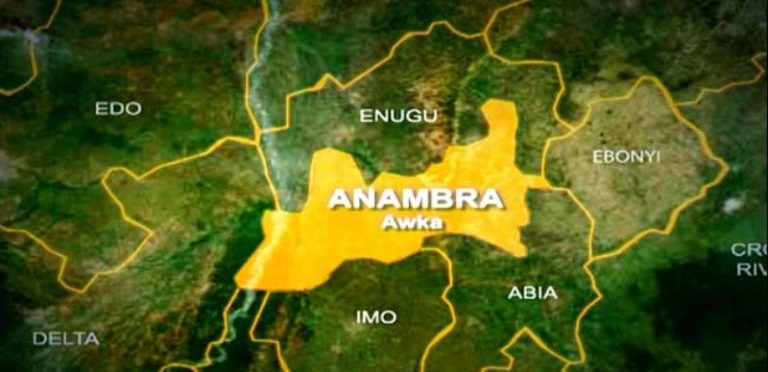
FOUR persons were killed when unknown gunmen attacked a convoy of vehicles conveying officials of the United States (US) Embassy in Nigeria on Tuesday, May 16.
The incident reportedly occurred late on Tuesday night in the Amiyi/Eke Ochuche axis of Ogbaru Local Government Area of Anambra State.
According to reports, the diplomatic delegation, said to be on a humanitarian mission, came under fire as they were passing through the area.
As of the time of filing this report, details of the attack remain unknown but sources confirm that four staff of the embassy were killed in the attack.
Spokesperson of the Anambra Police Command, Tochukwu Ikenga, confirmed the incident to Daily Trust but did not go into details.
“Following the information of the shooting incident within the Ogbaru community, the Commissioner of Police, CP Echeng Echeng, has deployed a police team led by the deputy commissioner of police in charge of operations to arrest the situation.
“Meanwhile, the details of the incident are still sketchy, I will get back to you as soon as I can, please,” Ikenga to Daily Trust Newspaper.
Meanwhile, the Spokesperson for US National Security Council (NSC), John Kirby, also confirmed the incident to reporters in the White House.
In a press briefing, Kirby disclosed that casualty was recorded in the attack, but added that no US citizen was affected.
“I just got informed about that here before coming here to talk to you. It does look like US convoy vehicle was attacked.
“What I can tell you is that no US citizens were involved, and therefore, there was no US citizen hurt. But we are aware of some casualties, perhaps even some killed.
“But I don’t want to get too far ahead of where we are right now,” Kirby stated.
He added that State Department will look into the issue.
The incident occurred in a region of Nigeria struggling with separatist terrorism and violent crimes. The identity of the attackers is unclear.
The US Mission in Nigeria affirmed the attack and stated that its staff was working with Nigerian security officers to identify the cause.
“We confirm there was an incident on May 16 in Anambra State. US Mission Nigeria personnel are working with Nigerian security services to investigate.
“The security of our personnel is always paramount, and we take extensive precautions when organising trips to the field. We have no further comment at this time,” a US Mission in Nigeria spokesperson told Daily Trust.
Recently, there has been much violence in Anambra and other South Eastern states.
Security operatives have blamed the attacks on the outlawed Indigenous Peoples of Biafra (IPOB) and it’s military wing, Eastern Security Network (ESN), but the group has constantly denied it.
The ICIRreported that a hundred and eighty-seven people died due to insecurity within five months in the South-East region of Nigeria.
The data obtained from the Council on Foreign Relations’ Nigeria Security Tracker (NST) – a website that tracks violent incidents related to political, economic, and social grievances directed at the state or other affiliated groups – covers January to May 24, 2022.