Home Blog Page 922

Again, EFCC warns against fake recruitment portal

0

THE Economic and Financial Crimes Commission (EFCC) has urged members of the public to be wary of a fraudulent recruitment portal.

The EFCC, in a statement titled “Beware of Fake recruitment portal”, said the attention of the agency had again been drawn to a spurious recruitment portal.

This warning was contained in a statement issued by the spokesperson of the EFCC, Wilson Uwajaren, on May 16. The statement said the fake recruitment is being carried out through a fake website: www.efcc.gov.ng/efcc/,careers.

The anti-graft aency added that the fake site has notified “all eligible applicants” of a scheduled employment drive starting from May 23, 2023.

A sample of the message sent out by the fake recruiters. Courtesy EFCC


“The Commission has no such recruitment portal, and neither is there any employment schedule at the moment.

“Members of the Public are enjoined to ignore the recruitment portal. 

“Promoters of such employment scam are warned to desist from their fraudulent schemes or risk arrest and prosecution by the Commission,” the statement said.

The EFCC attached a copy of the message that the fake recruiters sent.

Earlier in April, the EFCC denied social media reports that it was hiring for the 2023–2024 application session.

Refuting the reports, the Commission said it was yet to begin the application process. 

Similarly, The ICIR reported that in April, the Sector Commander of the Federal Road Safety Corps (FRSC) in Taraba, Selina Williams issued a similar alert over a fake LinkedIn account being used to defraud members of the public through an employment scam.

We’ve developed drugs for sickle cell, hypertension – FG

0

THE Minister of Science and Technology, Olorunnimbe Mamora, says the ministry has developed diagnostic processes, treatment and drugs for common diseases like sickle cell and hypertension through its agencies.

Sickle cell disease is a blood disorder in which the haemoglobin is damaged and can’t carry oxygen to the tissues while Hypertension is when the pressure in the blood vessels is too high (140/90 mmHg or higher).

Mamora disclosed this on Tuesday, May 17, at the Presidential Villa, Abuja, while featuring in the State House briefing organised by the Presidential Communications Team.

The minister said his ministry had also made significant achievements in food processing and equipment fabrication to boost food production.

“Nigeria has a very large population of sickle cell disease patients and carriers; to that effect, I can tell that we have developed products from plants that combat or are anti-sickening in nature and therefore reduce the number of attacks that usually result from sickle cell anaemia.”

According to him, the anti-hypertensive drugs and Lovastatin, which reduce cholesterol, were also developed.

“I can say that through our molecular diagnostic laboratories, we have been able to develop a mode of identifying or making a diagnosis because the first step in the management of a patient is to make the right diagnosis; if you don’t make the right diagnosis, you cannot treat what you don’t know.’’

The sickle cell crisis, according to American Family Physician Journal,  is pain that can begin suddenly and last several hours to several days.

Nigeria has been identified as the global epicenter for individuals living with sickle cell disease, according to the Pan African Medical Journal.

“About 50 million people are living with SCD globally and Nigeria is the epicentre zone with about 4-6 million people living with the disease (1 in every 4 Nigerians has a sickle cell trait). Annually, about 300,000 newly diagnosed SCD children are born worldwide. Sub-Saharan Africa contributes about 75% of the number. Nigeria accounts for 100,000-150,000 newborns living with SCD annually (33% of the global burden of SCD).”

The journal added that the prevalence of SCD within the states in Nigeria ranges from 1-3 per cent, noting that Hb-SS is the predominant ´haemoglobin variant found in Nigeria while Hb-SC occurs sporadically, especially in the south-western Nigeria.

“SCD poses significant challenges to the global population health. It contributes significantly to the morbidity and mortality of pediatric and adult population. About 50%-90% of children born with SCD in low- and low-middle-income countries of sub-Saharan Africa die before their fifth birthday.

“It accounts for 20% of neonatal mortality and 5% of mortality of under-5 children in the African continent. It is contributory to several obstetric complications and high maternal mortality rates of women of child-bearing age living with SCD in the region.

“The economic burden of SCD could be quite enormous to the family of sufferers and the nation [16-18]. Although SCD is a genetic disease, socio-demographic characteristics of the host person plays significant role in predicting the direction of the disease trajectory.”

Also, a study published on thelancet.com, reveals that Nigeria holds the highest birth prevalence of sickle cell disease worldwide, with an estimated 150,000 babies born annually with sickle cell anaemia, which is the most prevalent form of the disease.

This figure means that Nigeria takes almost half of the share of more than 300,000 babies with severe haemoglobin disorders that are born globally each year.

According to data from The World Health Organization (WHO), more than 300,000 babies with severe haemoglobin disorders are born globally each year, but 75 per cent is said to be found in Sub-Saharan Africa.

WHO stated that approximately five per cent of the world’s population carries trait genes for haemoglobin disorders, mainly sickle-cell disease and thalassaemia.

The ICIR, in 2019, reported that despite the high burden of the disease in the country, there is no legislation, no national coverage of the genotype screening, and no active policy to aid in controlling and managing the disease.

The report narrated how people living with the disease were being stigmatized in the society.

The conditions of the people living with sickle cells anemia worsened during the Covid-19 lockdown as most Nigerians couldn’t access health centers.

Similarly, Hypertension, also known as high or raised blood pressure, affects millions of Nigerians. Blood pressure is created by the force of blood pushing against the walls of blood vessels (arteries) as it is pumped by the heart.

Studies have indicated that hypertension raises the likelihood of knee arthritis, a condition that leaves the patients with a throbbing pain on the knees’ joints.

Hypertension is a disease that affects about 1.13 billion people worldwide, according to WHO statistics in 2018. 

WHO stressed that Africa has the highest percentage of cases of hypertension.

According to the data, approximately 23.9 percent of Nigeria’s population, aged 18 years and above, are affected by hypertension. This translates to over 38 million individuals in the country, representing a ratio of nearly one in every four Nigerians.

Buhari arrives from London, not expected to travel again before leaving office

0

NIGERIAN President Muhammadu Buhari returned to the country on Tuesday, May 16, after spending about two weeks in London.

It is expected that Buhari will not embark on another foreign trip before he vacates office on May 29.

The President left Nigeria on May 3 for the United Kingdom (UK) to attend the coronation ceremony of King Charles III and the Queen Consort Camilla in London. The event held in London on May 6.


Read Also:

Special Adviser, Media and Publicity to the President Femi Adesina disclosed in a statement that Buhari would be attending a Commonwealth Summit in London ahead of the coronation.

After the event, Special Assistant on Digital Communications to the President Bashir Ahmed announced in a Twitter post that Buhari would be seeing a dentist before returning to Nigeria.

“The Specialist requires to see the President in another five days for a procedure already commenced,” Ahmed tweeted.

Buhari had, while campaigning before the 2015 presidential election, promised to tackle corruption and waste, stating that the nation’s commonwealth would not be spent treating public officials overseas.

However, barely a year after assuming office, he left for London to treat an ear infection.

Between June 6, 2016 and August 19, 2017, he had made three medical trips tp London, spending in all, 168 days, according to a report by The ICR.

This exceed that number of days spent by late Nigerian President Umar Mua Yar’Adua, who spent 109 days on medical trips before his death.

In December 2022, The ICIR reported that Buhari made a total of 16 trips outside the country, two of which were for medical reasons.

At the time, presidential spokesperson Adesina defended Buhari’s foreign medical trips, claiming that he “has used the same medical team for about 40 years”

Adesina also said it was advisable that Buhari sticks with the team familiar with his medical history.

The ICIR also reported that the Buhari administration had budgeted at least N33.3 billion for the State House’s medical facility over the last eight years, despite his frequent foreign medical trips.

Short film festival seeks entries

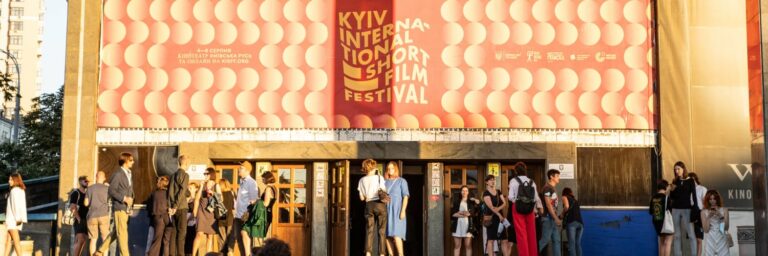
THE Kyiv International Short Film Festival is seeking entries for its award.

The program is slated for September 13, 2023, to September 17, 2023, in Kyiv, Ukraine.

The festival features international and Ukrainian competitions and accepts short films (up to 35 minutes) finished not earlier than January 1, 2021.
The awards include Grand Prix (for participants in the international competition), the best director, the audience award, and special mentions.

The submission fee ranges from EUR6 to EUR15, depending on the film length and deadline.

Filmmakers and film students from around the world can participate in this festival.

The early bird deadline is May 31, 2023. The regular deadline is July 23, 2023. The late deadline is August 23, 2023. Unterested applicants can apply here.

Sir Harry Evans global fellowship in investigative journalism calls for entries

Reuters and Durham University are accepting applications for the Sir Harry Evans Global Fellowship in Investigative Journalism.

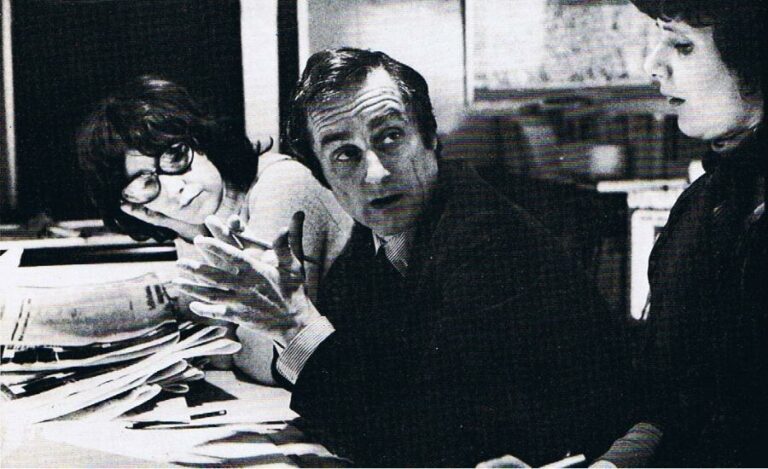
The fellowship honors celebrated British-born journalist, editor, and author Sir Harry Evans, one of the pioneers of modern investigative journalism.

The annual fellowship will provide the opportunity for an exceptional early-career journalist to receive a nine-month fellowship at Durham University.

During the fellowship, the journalist will undertake an investigative project from inside a Reuters newsroom in London, New York, or Toronto.

The fellow will also be mentored by top Reuters editors in the field while being overseen by Durham University and have access to university academics and research resources.


READ ALSO:


Early-career journalists around the world are eligible for an investigative journalism fellowship.

The submission of the application deadline is July 10, 2023. Interested applicants can apply here.

National Assembly endorses independent candidacy for elections in Nigeria

0

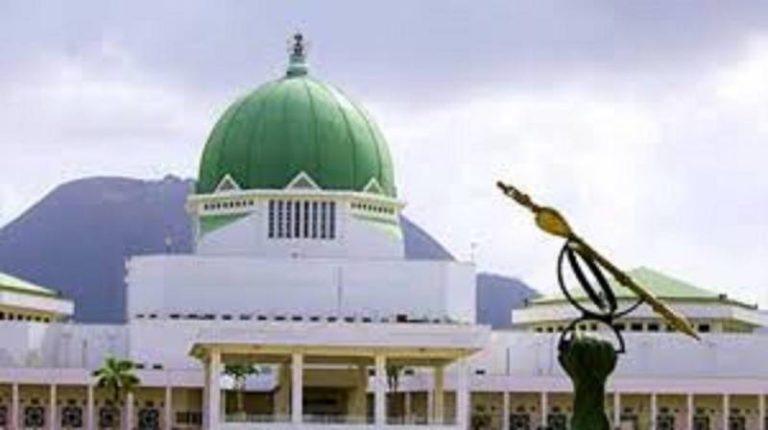
THE Senate, on Tuesday, May 16, approved the participation of independent candidates in presidential, governorship, national and state assemblies and local government councils elections in Nigeria.

As a result of the development, the Senate instructed the Clerk of the National Assembly to submit Constitutional Amendment Bill No. 58 for President Muhammadu Buhari’s consideration in accordance with the Authentication Act.

The Bill seeks to alter parts of the Constitution to allow for the participation of independent candidates in Nigerian elections.

At plenary on Tuesday, the Deputy Senate President Ovie Omo-Agege informed the upper legislative chamber  that the Gombe State House of Assembly had passed Constitution Alteration Bill Nos. 46 and 58 and sent its resolution to the National Assembly.

Omo-Agege, who is the chairman of the Senate Ad hoc Committee on Constitution Review, said this satisfies the requirements of Section 9(2) of the Constitution for passage.

After passing the motion, the Senate instructed the Clerk of the National Assembly to send the Constitutional Amendment Bill No. 58, which provides for independent candidacy, to the President for assent into law.

The bill to permit independent candidature in Nigerian elections was approved for a second reading by the House of Representatives in May 2020.

The “Bill for an Act to Alter the Federal Republic of Nigeria 1999 Constitution” was sponsored by Chief Whip Mohammed Monguno.

Independent candidates will be able to run for any electoral office across the nation without using a political party platform if the Senate and two-thirds (24) of the 36 state Houses of Assembly approve the idea.

The National Assembly had earlier sent 16 of the 35 bills to amend the constitution to the President for approval and they were signed into law, while 19 were rejected.

By making provisions for independent candidates, the Senate is attempting to change the current electoral legislation, which mandates that candidates for elections must be sponsored by political parties.

The independent candidacy bill was considered in the 8th Assembly.

The requirements for independent candidature state that for any Nigerian national to run for President as an independent candidate, he or she must obtain the verified signatures of 20 per cent or more of the state’s registered voters, provided that no registered voter may sign for more than one independent candidate running for the same office.

A minimum of 20% of the state’s registered voters from each local government area must provide verifiable signatures for the independent candidate for the office of governor.

Additionally, the measure mandates that anyone running for National Assembly must collect the verified signatures of 20 per cent or more of the registered voters from each local government area in the candidate’s chosen senatorial district or federal constituency.

The proposed legislation gives the Independent National Electoral Commission (INEC) the authority to specify whether independent candidates must pay administrative costs for particular elections.

Journalists rally for release of detained media tycoon Jimmy Lai

MORE than 100 journalists, including editors, across the world, have united to demand the immediate release of Jimmy Lai, a prominent British media mogul currently detained in Hong Kong on charges related to national security.

Leading figures in the global media community have joined the call on Hong Kong authorities to drop the charges against Lai and other journalists in the country by signing an open letter.

Lai, 75 years old and founder and publisher of Apple Daily, a progressive newspaper, has long been an outspoken critic of the Chinese Communist Party and a staunch advocate for media pluralism and press freedom in Hong Kong.

His arrest in 2020 amid the Chinese government’s imposition of a comprehensive national security law marked a significant escalation in the ongoing tensions between the authorities and pro-democracy activists.

Lai’s case stands out as one of the most high-profile instances of arrest since the law’s implementation.

Initially charged with violating the national security law in August 2020, Lai has since faced additional legal challenges. He has been convicted on separate charges of fraud and organising illegal protests, allegations that his supporters argue are politically motivated.

The signatories of the open letter, coordinated by Reporters Without Borders (RSF), have expressed unwavering support for Lai’s fight for media pluralism and press freedom in Hong Kong.

The letter, signed by publishers and editors from various news media organisations worldwide, emphasises Lai’s lifelong dedication to these values and acknowledges his courage in continuing to publish despite the severe crackdown by Hong Kong authorities.

The collective call seeks to draw attention to Lai’s case and highlight the broader struggle for press freedom in the region.

The state of press freedom in Hong Kong has significantly deteriorated in recent years. According to RSF’s 2023 World Press Freedom Index, Hong Kong currently ranks 140th out of 180 countries, a substantial decline from its 58th position a decade ago.

In March, Lai’s international lawyer, Caoilfhionn Gallagher KC, criticised the tactics employed by Hong Kong authorities, describing them as “lawfare” aimed at suppressing opposition.

Gallagher specifically highlighted the fraud conviction as a means to tarnish Lai’s reputation.

On May 11, Hong Kong enacted a law prohibiting foreign lawyers from participating in national security cases, which further hampers Lai’s legal defense and access to representation by counsel such as UK barrister Tim Owen.

Lai’s supporters have also criticised the UK government for what they perceive as insufficient efforts to advocate for his release.

Sebastian Lai, Jimmy Lai’s son, recently criticised the UK government for its perceived weakness in demanding his father’s freedom.

In response, a spokesperson for the UK Foreign Office affirmed that they have consistently raised concerns with Chinese and Hong Kong authorities, including the foreign secretary, in addressing Lai’s case at the UN Human Rights Council in February.

The spokesperson reiterated the UK government’s strong objection to the imposition of the national security law, highlighting its deliberate targeting of pro-democracy figures, including Jimmy Lai.

Jimmy Lai’s case holds significant importance, as it encapsulates the larger struggle between pro-democracy advocates and the Chinese government’s efforts to tighten control in Hong Kong.

It underscores the challenges faced by journalists and media organisations in the region and underscores the fundamental role of press freedom in upholding democratic principles.

US visa ban confirms rigging of 2023 elections — PDP campaign chief

THE spokesperson of the defunct Peoples Democratic Party (PDP) Presidential Campaign Council (PCC) Daniel Bwala has described the visa ban imposed on some Nigerian politicians by the United States (US) as an indication that the 2023 presidential elections was manipulated.

US Secretary of State Antony Blinken, had on Monday, May 15, announced that the US has imposed visa ban on some Nigerians who undermined the democratic process during the general elections.

Speaking on Arise TV on Tuesday, May 16, Bwala stated that the action taken by the US authorities confirmed allegations that the elections were rigged.

“The US visa ban for perpetrators of election malfeasance re-emphasises the fact that the 2023 elections were flawed.”

Although those affected by the visa ban were not named, Bwala said majority of them are public office holders.

“The majority of these select individuals are government functionaries like governors, ministers, heads of parastatals and individuals acting on behalf of the government.”

The ICIR reported that the US Secretary of State Blinken announced the visa ban in a statement on the US State Department website.

“Today, I am announcing that we have taken steps to impose visa restrictions on specific individuals in Nigeria for undermining the democratic process during Nigeria’s 2023 elections cycle,” Blinken said in the statement.

He explained that the visa ban is for certain individuals who had disrupted the 2023 general elections.

The statement noted that the individuals, under the US Immigration and Nationality Act, will be subject to restrictions on visas to the United States under a policy covering those believed to be responsible for, or complicit in, undermining democracy.

Blinken noted that individuals who were involved in intimidation and threatening of voters were banned.

He also added that those involved in the manipulation of election results, and other activities that undermined Nigeria’s democratic processes, were also affected.

Seun Kuti remanded for 48 hrs as police defends handcuffs

AFROBEAT musician Seun Kuti was on Tuesday, May 16, remanded in police custody after he was arraigned for assaulting a police officer in Lagos state.

He is to remain in custody for 48 hours, according to the order issued by a Magistrate Court sitting in Yaba, Lagos.

The son of legendary Afrobeat musician, Fela Kuti, was arrested on Monday, May 15, after a video clip, which went viral on the social media, showed him slapping the policeman on the Third Mainland Bridge in Lagos.

The 12 seconds video clip sparked outrage on social media, with many Nigerians calling for Kuti’s arrest and prosecution.

Kuti turned himself in to the police on Monday and was arraigned in court on Tuesday, May 16.

He was charged with assault on a police officer, an offense that carries a maximum sentence of two years in prison.

The prosecution asked the court to remand Kuti in custody for 21 days pending legal advice from the Directorate of Public Prosecutions.

However, Kuti’s lawyer, Femi Falana, a senior advocate of Nigeria, argued that his client should be granted bail.

The magistrate, Adeola Olatunbosun, after listening to both parties requested five minutes of recess to deliberate on the matter on her own.

When the court reconvened, the magistrate announced her ruling, stating that she would not rely solely on the police investigation to take her decision.

She emphasised that the court would not be swayed by public opinion but would instead ensure justice was served.

The magistrate also ordered the duplication of the case file to be sent to the Directorate of Public Prosecutions within 72 hours.

The court further specified that the musician would be granted bail after the 48-hour remand period, requiring a bail amount of N1 million and two responsible sureties.

The sureties must provide a verifiable three-year tax payment receipt, and one of them must possess a landed property within the court’s jurisdiction.

“Court has decided to override any public opinion and pass the judgment of the court,” the magistrate said.

“Following the remand application presented before the court, I am advising that the case file be duplicated and sent to the Directorate of public prosecutions within 72 hours.

“The defendant is hereby remanded for 48 hours in police custody to allow the police to conclude their investigation.

“After 48 hours, the defendant will be granted bail in the sum of N1m with two responsible sureties, a three years tax payment receipt that is verifiable; one of the sureties must have a landed property within the court jurisdiction.”

She adjourned the case till May 23, 2023, for further hearing.

Why we handcuffed Seun Kuti… Police

Meanwhile, the Lagos State Police Command had defended it’s decision to handcuff the musician even though he voluntarily turned himself in.

Many Nigerians, who reacted to the development on Twitter, criticised the police for the action, which they felt was unjustified.

One of Kuti’s lawyers, Adeyinka Olumide-Fusika, a Senior Advocate of Nigeria (SAN), on Monday decried how the musician was treated after his arrest by the police.

Olumide-Fusika, who accompanied Kuti to the state police headquarters, said the handcuffing and media parade of the suspect was illegal.

The senior lawyer contended that Kuti remained innocent until proven guilty by a law court.

“Mr. Seun Kuti reported himself in the office of the Commissioner of Police at the Police Command, Ikeja, at 8 a.m. today, Monday, May 15, 2023,” he said.

“I accompanied him to the Ikeja police station together with another lawyer, Mr Femi Akinyemi, from Falana and Falana Chambers.

“However, there was no interrogation as it was decided he would be moved to the Force Criminal Investigation Unit at Panti, Yaba. Before his movement, Mr. Seun Kuti, was handcuffed and his photograph taken in the open by the Lagos PPRO, Mr. Benjamin Hundeyin, who coordinated the parade and apparently shared the photograph of his parade in the media.”

Reacting to the lawyer’s statement, Lagos State state police spokesperson, Ben Hundeyin in a tweet on Twitter, gave reasons for the decision to handcuff the Afrobeat singer.

Hundeyin, who reportedly coordinated the Kuti’s parade at the Lagos police headquarters on Monday, suggested that the musician has the propensity to get violent and evade justice.

Defending the handcuffs, Hundeyin said: “Because the law empowers us to handcuff any suspect who has shown propensity for violence and propensity for evading justice.”

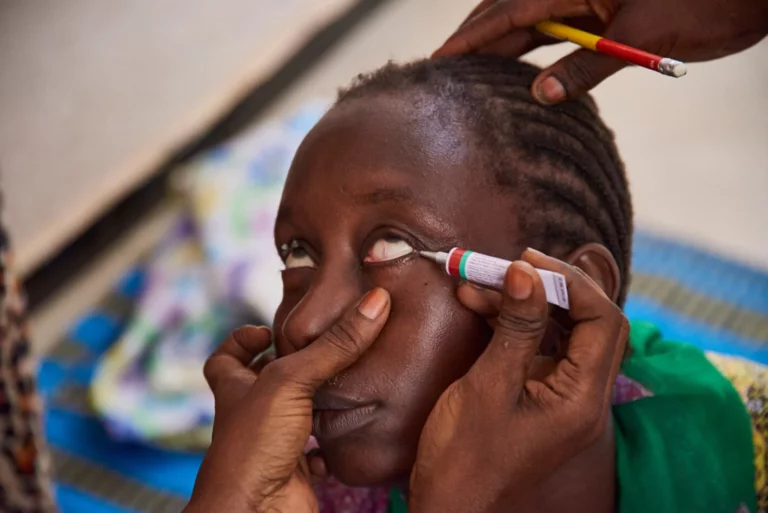
Benin, Mali eliminate trachoma, but Nigeria remains burdened with disease

0

BENIN and Mali have eliminated trachoma, one of the 20 neglected tropical diseases (NTDs).

The two countries joined 15 other countries validated by the WHO for eliminating the condition as a public health challenge. The countries are Cambodia, China, the Gambia, Ghana, the Islamic Republic of Iran, the Lao People’s Democratic Republic, and Malawi.

Mexico, Morocco, Myanmar, Nepal, Oman, Saudi Arabia, Togo and Vanuatu are others.

Besides, Benin and Mali are now the fifth and sixth countries in WHO’s African Region to get rid of trachoma. 

“WHO congratulates the health authorities of Benin and Mali and their network of global and local partners for these milestones”, said Tedros Adhanom Ghebreyesus, a doctor and WHO Director-General, in reaction to the feat.

He added, “Following Benin’s and Mali’s success, trachoma remains endemic in 23 countries in WHO’s African Region, bringing us a step closer towards the elimination target for trachoma set in the road map for neglected tropical diseases 2021–2030.”

African countries that previously received WHO validation for trachoma elimination are Ghana (June 2018), Gambia (April 2021), Togo (May 2022) and Malawi (September 2022).

However, Nigeria is among 23 countries in WHO’s African Region and 41 countries globally where the condition remains endemic.

There is no available data on the country’s trachoma cases, but different reports, including this and this, claim at least the country has over two million people visually impaired.

The ICIR also reports Nigeria is among the 15 countries most burdened with NTDs globally.

Trachoma is the leading infectious cause of blindness worldwide. The disease is caused by infection with the bacterium Chlamydia trachomatis. Infection is transmitted from person to person through contaminated fingers, fomites and flies that have come into contact with discharge from the eyes or nose of an infected person.

Environmental risk factors for trachoma transmission include poor hygiene, overcrowded households, inadequate access to water or use of proper sanitation facilities, noted WHO.

According to the health agency, an estimated 125 million people live in areas requiring interventions against the disease. Trachoma is found mainly in the poorest and most rural areas of Africa, Central and South America, Asia, the Western Pacific and the Middle East. The WHO African Region is disproportionately affected by trachoma, with 105 million people living in at-risk areas, representing 84 per cent of the global trachoma burden.

How Benin, Mali defeated the disease 

The WHO noted that Benin and Mali implemented its recommended SAFE strategy to eliminate trachoma with its support and partners. 

The SAFE strategy consists of surgery to treat late trachoma complications; antibiotics to clear the infection; facial cleanliness; and environmental improvement, particularly improving access to water and sanitation to reduce transmission. Through the International Trachoma Initiative, the antibiotic azithromycin is donated by Pfizer to elimination programmes implementing the SAFE strategy.

According to the WHO, Benin has integrated trachoma elimination interventions with those implemented against other neglected tropical diseases (NTDs) under the National Programme for Communicable Diseases. 

Trachoma is the third NTD to be eliminated in Benin, after dracunculiasis (in 2009) and gambiense human African trypanosomiasis (in 2021), the agency stated. 

Similarly, Mali has conducted trachoma impact and surveillance surveys and rolled out interventions to achieve elimination targets, despite security challenges in the country’s northern regions and sociopolitical upheavals in recent years. 

Trachoma is the first NTD to be eliminated in Mali.