Home Blog Page 923

Road crashes claim over 40,000 lives annually — FRSC

0

ABOUT 40,000 people die annually from road crashes in Nigeria, according to the Federal Road Safety Corps (FRSC).

The FRSC said road crashes are the leading cause of death and disability in the country.

The Corps Marshal of FRSC, Dauda Biu, disclosed this on Monday, May 15, at an event held to mark the 7th United Nations Global Road Safety Week in Abuja.

He added that about 1.3 million people are killed, while 50 million sustain injuries, in road crashes across the world each year.

According to him, there is no greater threat to people aged 5-29 years than road traffic crashes, as one in every four deaths occurs among pedestrians and cyclists.

“In Nigeria, over 40,000 persons die annually as a result of this avoidable scourge,” the Corps Marshall noted.

Biu explained that the United Nations developed a global plan for the Decade of Action for Road Safety 2021-2030 as part of its efforts to reduce road traffic deaths and injuries by 50 per cent in 2030.

According to him, the 2023 edition of the event with the theme, ‘Sustainable Transport’, is slated for Monday to Sunday.

The FRSC is partnering with the World Health Organisation (WHO), Federal Ministry of Health (FMH) and United Nations Decade of Action on Road Safety and Injury Prevention (UNDARSIP) to mark the event with various activities.

Biu further noted that taking action to ensure safe roads, vehicles and behaviours and improve emergency care is paramount, adding that road networks must be designed with the most-at-risk in mind.

“The key messages of this year’s event centre on the need for governments and their partners to rethink mobility.

“Ensuring safety must be at the core of efforts to re-imagine mobility, and thus road networks must be designed with the most-at-risk in mind.”

The FRSC boss further called on governments at all levels and partners to rethink mobility with a mindset to provide access to safe and affordable mobility systems for all.

He stressed the need for the government to make available accessible, resilient, low cost and sustainable mobility systems to create livable cities that would fulfil the needs of all.

Biu explained that the mobility system will ensure safety at all costs and also ensure that they feel safe walking and cycling, adding that this would further promote good health, sustainable cities and an equitable society.

He, however, appealed that the road network must be designed in consideration of vulnerable road users.

The ICIR on April 15 reported that 1,349 people were killed in road accidents between January 1 and April 12, 2023.

The Commission, in the report, said that 2,463 crashes occurred during the period, involving 3,965 vehicles conveying 16,102 people out of which 1,349 people were killed, while 7,744 got injured.

Absence of an effective road safety policy and strategy for the country and problems among relevant agencies compounded the road crash pandemic in Nigeria over the years, according to the report.

The ICIR reported that some major accidents had occurred in 2023.

In January 2023, a tragic motor accident occurred in the Illela Local Government Area of Sokoto, resulting in the loss of 18 lives and leaving 40 others injured. The accident occurred when a truck transporting passengers collided with a herd of cattle.

On Sunday, January 28, not less than 11 persons were burnt to death in an auto crash involving a commercial passenger bus and a truck in Ondo State.

According to the FRSC, the incident happened on Soka Bridge along the Benin-Ore expressway in the Odigbo Local Government Area of the state.

Also, two separate road accidents took place in Kebbi State, with the first occurring on March 26 in the Liba neighborhood near Gonan Rogo and the second on March 27 in the Bunza region. 

According to the Kebbi State Command of the Federal Road Safety Corps (FRSC), 35 lives were lost in these tragic collisions while 40 people were rescued and several passengers suffered deadly injuries.

In a bid to address the menace posed by the high number of road crashes in the country, the FRSC said it had started preparations to prosecute drivers involved in accidents that resulted in the loss of lives.

In line with the plan, the FRSC said it will prosecute drivers involved in the Liba and Bunza fatal crashes in Kebbi State earlier in the year.

The FRSC also revealed that it was collaborating with the Nigerian Bar Association (NBA) to ensure compensation for road crash victims and prosecution of drivers and their employers whose activities on the road resulted in injury for road users.

The Commission described the partnership as a concerted effort to ensure that victims of road crashes are duly compensated through established legal processes.

Meanwhile, a security expert who spoke to The ICIR blamed some of the accidents on reckless driving and the poor state of Nigeria’s roads.

A security analyst with SBM Intelligence, a security outfit, Emeka Okoro, said although Nigeria’s road traffic fatality rate has reduced in recent years, it is still relatively high when compared to the reported WHO estimates.

According to him, driving on Nigeria’s roads can be risky.

“Indeed, apart from many of the highways littered with craters, driving at right is comparable to walking through a dark alley because of the lack of street lights. 

“The absence of proper road safety and poor management of roads remain the basis of road accidents which regularly occur at some flashpoints, such as sharp bends, potholes, and at bad sections of the highways.

“At such points, over-speeding drivers usually find it difficult to control their vehicles, resulting in fatal traffic accidents, especially at night. This, for me, is the fundamental reason for the high rate of deaths reported by the FRSC.”
Buhari’s 8 years: Analysing Lai Mohammed’s multiple claims as Information minister

0

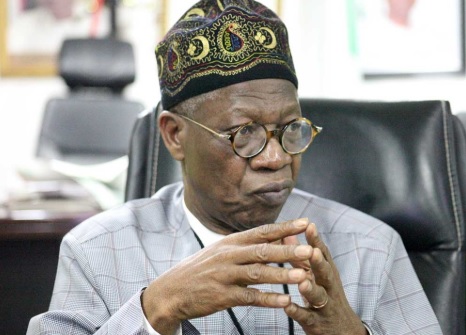
AS President Muhammadu Buhari’s administration comes to an end on May 29, a prominent member of his cabinet and minister of Information and Culture, Lai Mohammed, has maintained a visible appearance in both the online and traditional media space, making multiple claims about the administration.

Being the mouthpiece of the government, Mohammed is charged with the responsibility of disseminating vital information the Federal government thinks will enhance democratic governance and boost the image of the Buhari administration.

Since Mohammed’s assumption of office in 2015, he has made numerous claims directly, while numerous others have been attributed to his office.

In this report, The ICIR examines some of the claims Lai Mohammed made in his capacity as a minister in the Buhari administration.


READ ALSO:


2017: Buhari not sick – Lai Mohammed

In February 2017, the Minister of Information and Culture, Lai Mohammed, in February 2017, urged Nigerians to disregard negative messages shared online about the president’s health, as he said Buhari was hale and hearty.

Muhammed said this while briefing journalists at the end of the weekly Federal Executive Council (FEC) meeting, describing the news as naysayers resorting to fake news and disinformation to distort government’s activities.

However, after a 49-day vacation, President Buhari himself countered Mohammed’s disclaimer, admitting he had “never been this sick” and could not recall the last time he had a blood transfusion.

‘’I have rested as much as humanly possible; I have received I think the best of treatment I could receive. I couldn’t recall being so sick since I was a young man, including the military with its ups and downs. I found out that technology is going so fast,’’ he said.

2019: Boko Haram successfully defeated – Lai Mohammed

Mohammed in 2019, said the military had successfully defeated the Boko Haram insurgents.

During the launch of a national campaign to rally support of the citizens behind the troops fighting insurgency in the northeast, the minister said its military had successfully defeated Boko Haram insurgents.

Data from the Armed Conflict Location & Event Data Project (ACLED) showed that during the President Olusegun Obasanjo administration, 11,141 Nigerians were killed in incidents related to insecurity, while the combined tenures of both the late President Musa Yar’Adua and former President Goodluck Jonathan recorded 32,694 deaths. Buhari’s administration has registered 41,903 insecurity-caused deaths since he assumed office in 2015.

Also, in January 2022, when members of the Senate Committee on Army visited Borno State governor, Babagana Zulum, the governor disclosed that two local government areas – Abadam and Guzamala – were under the control of Boko Haram.

A check done by The ICIR showed that despite claims of defeat by Buhari’s administration, Nigerians witnessed attacks from the insurgents in the last eight years as banditry, kidnapping, and other forms of crime and violence engulfed the country.

2020: Social media bill does not exist – Lai Mohammed

Again, in January 2020, Lai Mohammed, during an interview with a German broadcaster, Tim Sebastian, denied the existence of a social media bill.

The minister had said in a response to Sebastian’s question if he was in support of the Social Media bill that was before the house that he was not aware of the bill.

He had said, ‘’Who is the author of that bill, I am not even aware of it. There’s no such bill before the House. I can say that categorically and authoritatively that there’s no such bill before the House.’’

The bill titled, ‘Protection from Internet Falsehood and Manipulations Bill, 2019’, also referred to as the ‘Social Media Bill’ seeks to give the Nigerian government regulatory control over conversations on social media platforms. Penalties for breaking the social media law (if it becomes one) include a fine of up to N300,000 or three years imprisonment for individuals, and N10 million for corporate organizations.

Findings show that the bill was before the National Assembly and had passed the second reading, and was sponsored by Mohammed Musa, the senator representing Niger East.

Also, in November 2019, the Minister of Information and Culture had at a session with the Guild of Corporate Online Publishers in Abuja, said there was no going back on the plan by the Nigerian government to regulate social media in Nigeria to deter and punish hate speech, and that the government would not be discouraged from the plan by criticisms.

Ahead of the bill’s introduction, the Federal government had, through Lai Mohammed, vowed to crack down on fake news and hate speeches in the country’s social media space.

2021: No life was lost at Lekki Toll Gate (EndSARS Protest)

After the EndSARS of October 2020, which saw primarily Nigerian youths take to the street to protest what they described as police brutality, Lai Mohammed consistently denied protesters were not killed at the Lekki tollgate on October 20, 2020.

According to him, Catherine Udeh, popularly known as DJ Switch, who streamed the incident live on the social media platform ‘’Instagram’’, would soon be exposed for spreading falsehood.

Lai Mohammed
Lai Mohammed’s multiple claims in 8 years (Buhari’s tenure)

He described the event of October 20, 2020, as a ‘’massacre without bodies’’, saying not a single body or a single family had come out to claim a family member was killed at the Lekki toll gate.

However, findings contained in a report submitted by the Lagos State Judicial Panel on EndSars indicted the Nigerian Army of the killings at Lekki Toll Gate on October 20, 2020. The report listed 48 names as casualties of the Lekki incident.

According to Amnesty International (AI), at least 12 protesters were killed at two locations in Lagos, which was the hotbed of the protest.

”Opening fire on peaceful protesters is a blatant violation of people’s rights to life, dignity, freedom of expression, and peaceful assembly. Soldiers clearly had one intention to kill without consequences,” the AI Country Director said.

The human rights watchdog group also accused Nigerian authorities of covering up the incident instead of ensuring justice for those killed.

Also, a special report by a multinational news channel, Cable News Network (CNN), said soldiers shot at protesters, killing many. The investigation uncovered the bullets used as a 2015 brand from Serbia.

2021: There is greater freedom of the press in Nigeria than anywhere else in the world – Lai Mohammed.

In 2021, while speaking at the 41st United Nations Educational and Cultural Organization (UNESCO) General Conference in Paris, Mohammed claimed Nigeria had a vibrant, pluralistic, and free press.

‘’For 10 years, I was a spokesperson for the opposition, and there was never a time I was incarcerated. At the moment, we have an extremely tolerant government to the extent that it is the government that is at the mercy of the media in Nigeria,’’ he added.

A verification of this claim showed that in early 2021, Nigeria was ranked 120 out of 180 countries in the 2021 World Press Freedom Index compiled by Reporters Without Borders (RSF).

An analysis by the RSF showed that Nigeria fell under the countries classified as having very bad or problematic environments for press freedom and was unsafe for journalists.

The index data reflected a dramatic deterioration in people’s access to information and an increase in obstacles to news coverage.

Also, Nigeria was ranked as one of West Africa’s most dangerous and difficult countries for journalists, who are often monitored, attacked, and arbitrarily arrested.

Journalists who had suffered arrest and incarceration include Agba Jalingo, publisher of Cross River Watch, who was detained on August 22, 2019, by the Cross River State government for raising concerns about the governor, Benedict Ayade’s diversion of N500 million meant for the formation of the Cross River State Microfinance Bank.

Jalingo was arrested in August 2019 at his residence in Lagos, where he was blindfolded, tortured, and transported in a vehicle to Cross River state, but regained freedom six months after he was arrested.

A freelance reporter and editor with the privately owned Grace FM, Frederick Olatunde Odimayo, in 2021, was also beaten into a coma in Kogi state for reporting on the drug trade in the state.

A journalist Pelumi Onifade, who was covering the EndSARS protests in October 2020, was also killed in the course of duty. Onifade was the journalist who recorded the viral video of Olusegun Bolarinwa, who shot into a crowd of protesters.

Lai Mohammed has, indeed, in the last eight years, come under public scrutiny for making several false claims.

The Human Rights Writers Association of Nigeria (HURIWA), in 2022, counselled the minister to stop spewing half-truths and propaganda.

Recently, elder statesman, Edwin Clark, called for sanctions against the Minister for allegedly spreading fake news about the Labour Party candidate, Peter Obi.

In 2017, during a courtesy visit to the headquarters of Daar Communications Plc, Lai Mohammed said the phenomenon of fake news, if left unchecked, posed a worse threat to the nation than insurgency and militancy and could tear the fabric of the society.

While we await the baton change on May 29, President Buhari’s term ends with Boko Haram not ‘technically defeated’.

Eight years in government: Buhari’s failed promises on gender inclusivity

As part of his campaign promises, Nigerian President Muhammadu Buhari vowed to implement policies that would ensure gender equality and inclusion in governance. However, eight years later, the country still records low female representation in both elective and appointive positions, including in Buhari’s own cabinet.

In February 2015, Nigerian President Muhammadu Buhari, then presidential candidate of the All Progressives Congress (APC), stood before Nigerian women in Lagos state and promised that gender issues would be mainstreamed into governance under his administration.

Buhari also stated that the National Gender Policy (NGP) of 2006, which he described as a road map for promoting rights and equality of females, would be implemented under his administration to hasten the mainstreaming of women.

The NGP was established in 2006 to enhance gender equality in political, economic and social areas of decision-making.

Gender equality is one of the Sustainable Development Goals (SDGs) set by the United Nations for its member countries, of which Nigeria is a part.

To enhance women’s representation in governance, the policy recommends that women fill up 35 per cent of appointive positions in the country for more inclusion.

“So far, there has been no political will to implement the very critical framework,” Buhari said while urging Nigerian women to vote out the then ruling party on March 19, 2015.

“We shall commit ourselves to affirmative actions, to level the playing field for women and provide them with opportunities to be part of decision-making and governance at all levels. My administration will have zero tolerance for violence against women and girls,” he said in a promise that was greeted with applause from the women who were present at the occasion.

Ten days after that event, Nigeria went to the polls, and Buhari emerged the winner of the elections.

The elections that ushered in Buhari’s government produced only 29 female lawmakers out of 469 members: seven women in the Senate and 22 in the House of Representatives.

Following his election, it took the new president about six months to appoint his cabinet members. He attributed this to a careful selection process and preached patience while at it.

Nigerian women were hopeful that the long-awaited list of cabinet members would reflect the 35 per cent affirmative action contained in the NGP, which Buhari promised to implement.

The president’s wife, Aisha Buhari, also assured Nigerian women that he would respect the 35 per cent affirmative action in his appointments

However, when Buhari released his list of 36 cabinet members in 2015, there were only six women, about 16 per cent.

The president came under severe criticism by women who threatened to vote him out of power during the next elections over his failure to keep his own promise on gender inclusion.

But despite the uproar, his actions generated, Buhari, again, reneged on his promise to implement the NGP after the 2019 elections, which gave him a second term.

Out of 43 people appointed to his cabinet, there were only seven women, another 16 per cent representation, and the number of females in the National Assembly also dropped from 29 to 18 in 2019.

Nigeria’s poor global performance

Gender inequality remains a global challenge, although adequate female representation is critical to good governance, especially in countries like Nigeria, where women comprise half the population.

Some countries across the world are making efforts to bridge the gap. However, at the current rate, gender inequality in the highest levels of government will persist for the next 130 years, according to the United Nations (UN).

Globally, Rwanda and Namibia, both African countries, stand out for being at the forefront of upholding gender inclusivity in governance and other areas, while Nigeria continues to lag.

Rwanda and Namibia, another African country, are among the top 10 countries to have narrowed the gender gap globally.

Nearly two-thirds of Rwanda’s parliamentary seats and 52 per cent of cabinet positions are held by women. In Namibia, females occupy about 44 per cent of seats in the parliament, a feat achieved in both countries through quota systems.

In 2021, Nigeria ranked 139 out of 153 countries, according to the 2021 Global Gender Gap Report, falling behind several other African countries like Rwanda, Namibia, and South Africa.

In 2022, only 146 countries were ranked in the Global Gender Gap Report, seven countries less than the previous year.

Although Nigeria moved up by 16 places in 2022, ranking 123rd out of the 146 countries rated, progress is still very slow.

Despite his many promises on the inclusion of women, five bills seeking to promote gender equality were rejected by the National Assembly under Buhari’s watch in 2022.

On Tuesday, March 1, 2022, 68 bills were presented before the National Assembly during a constitution amendment vote, and five of them sought to promote gender inclusion in governance and society.

These included a bill to provide special seats for women in the National Assembly, another to implement affirmative action for women in political party administration, and a bill that sought to grant citizenship to foreign-born husbands of a Nigerian woman, which already obtains for men.

The other bills sought to allocate 35 per cent of political positions based on appointment to women and create additional 111 seats in National and State Assemblies, and the inclusion of, at least 10 per cent affirmative action for women in ministerial appointments.

All five bills were rejected, leading to days of protests by Nigerian women across the country.

Some of the bills were recalled following the protests, and in the same month, Nigeria’s Federal Executive Council (FEC) announced that the NGP had been reviewed and approved.

Buhari signed a presidential charge included in the document, where he, again, pledged his commitment to gender equality.

“I commit to ensuring that the provisions of this NGP are embraced by governments across sectors and at all levels to provide the much-needed social reforms that will guarantee our social contract. Only then would we be fulfilling our promises of change to every Nigerian,” Buhari noted.

He also acknowledged that no sustainable development could exist without gender parity and inclusivity.

But Nigeria has continued to perform poorly and is not even a part of the top 100 countries bridging the existing gender gap globally.

I have fulfilled my campaign promises to Nigerian women –Buhari

Notwithstanding the declining female representation in governance, Buhari, while being represented at the seventh convocation ceremony of the Federal University, Oye-Ekiti, Ekiti state by the Minister of State for Education, Goodluck Opiah, in February 2023, claimed to have fulfilled all his campaign promises to Nigerians.

Five days after, Buhari also said that he had delivered on his promise to Nigerian women and girls.

“This is what we promised to all Nigerians – including our women and girls when our party, the All Progressives Congress, was elected in 2015. I am proud to say that our government has delivered over the past eight years,” Buhari said.

However, following the recently concluded 2023 general assembly elections, the number of female senators in Nigeria plunged from seven in the 9th Assembly to three senators-elect, as announced by the Independent National Electoral Commission (INEC).

The chances of Nigeria attaining UN SDG 5, which aims at achieving gender equality by 2030, also look unlikely.

Set to leave office in a matter of days, Buhari’s promise to champion gender inclusivity remains unfulfilled over the course of his eight-year administration, and Nigerian women are left to continue struggling for inclusion in making decisions that affect their daily lives.

DisCos can disconnect debtor consumers after 12 days – NERC

THE Nigerian Electricity Regulatory Commission (NERC) has directed electricity distribution companies (DisCos) to disconnect consumers who have not paid their electricity bills for, at least, 12 days.

The NERC gave the directive in its latest regulation tagged, ‘Customer Protection Regulations, 2023.’

According to the regulation, a DisCo may disconnect supply to a customer’s premises when the client fails to pay the amount billed by the payment date specified on the bill or violates other terms and conditions agreed upon with the firm.

The electricity regulator also outlined the conditions that must be fulfilled before DisCos can exercise their right to disconnect customers for failure to pay their bills as and when due.

It further said that the payment deadline must be clearly stated on the bill.

The commission said, “The payment date must be, at least, 10 days from the date of the delivery of the bill to the customer. Bills may be delivered physically to the customer’s premises or by some other electronic means, including text messages or electronic mail, as agreed with the customer.

“The period between the payment date and date of scheduled disconnection for nonpayment is not less than two working days after the payment date.”

The regulatory agency also emphasised that the bill correcting a previous inaccurate bill shall have a payment date which is, at least, 10 working days from the date of delivery of the corrected bill to the customer.

NERC said the DisCos must also verify from its records that payment had not been made by the customer.

It further noted that a DisCo may disconnect a customer’s electricity supply without notice when the customer is connected to the DisCo’s network in an unauthorised manner.

Instances given as “unauthorised manner” include “where the customer’s connection is considered to be dangerous to the integrity of the network and/or affects the quality of supply to other customers, and where the DisCo is not granted access to read a meter that is located within the customer’s premises.”

NERC also said a DisCo may deny a customer’s request for supply of electricity over refusal to provide an acceptable means of identification or to pay the security deposit requested by the company.

“Whenever a customer requests a distribution company to disconnect electricity supply to his premises, the distribution company shall disconnect the supply after confirming that the customer’s request will not impact on other customers in the premises that require continued supply.

“The distribution company shall ensure that it is able to monitor consumption to the premises of the customer that has requested a disconnection that was not effected due to the impact on other customers in the premises, to assess the customer’s consumption,” it said.

Nigeria’s power sector has been facing challenges of liquidity, a concern that industry analysts say can only be corrected with enforcement of maximum remittances by  power distribution companies.

The sector enjoys subsidy from government, which is being facilitated by World Bank loans, but industry watchers insist the development is not sustainable.

To a development economist, Celestine Okeke, electricity distribution companies must priortise metering of consumers to avoid concerns of arbitrary billing complaints.

“DisCos should meter consumers and ensure the issue of estimated billing is stopped. Why we normally have the issue of electricity debtors is because many Nigerians are on estimated bill and are kicking against arbitrary billing,” Okeke said.


Nigeria’s headline inflation rises to 22.22% in April – NBS

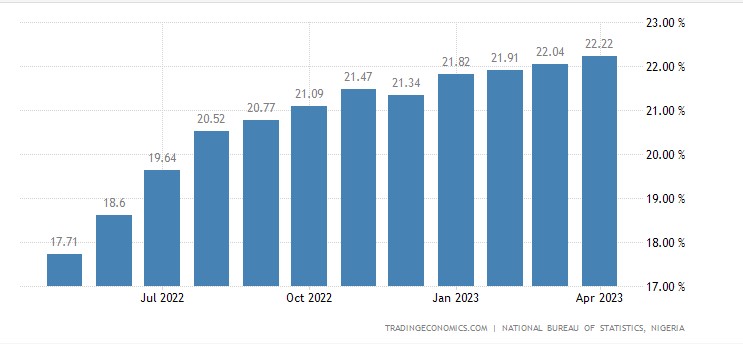
THE National Bureau of Statistics (NBS) has said Nigeria’s headline inflation rose to 22.22 per cent in April from 22.04 per cent in March.

The statistics office disclosed this in its Consumer Price Index (CPI) for April 2023, released on Monday, May 15.

NBS uses CPI to measure the overall change in consumer prices based on a representative basket of goods and services over time.

According to the report, the April inflation rate showed an increase of 0.18 per cent points compared to the previous month’s headline inflation rate.

It showed that on a year-on-year (YoY) basis, the headline inflation rate was 5.40 per cent points higher than the 16.82 per cent rate recorded in the corresponding month of April 2022, while on a month-on-month (MoM) basis, it was 0.05 per cent points higher than the 1.86 per cent rate recorded in March 2023.

The items that contributed to the increase in the headline index on a YoY basis were food and non-alcoholic beverages, which contributed 11.51 per cent; housing, water, electricity, gas and other fuel, 3.72 per cent; clothing and footwear, 1.70 per cent; transport 1.45 per cent; and furnishings and household equipment and maintenance, 1.12 per cent.

Nigeria inflation figures
The trend in Nigeria’s inflation figures is from May 2022 to April 2023. Source: Trading Economics

Others were education, 0.88 per cent; health, 0.67 per cent; miscellaneous goods and services, 0.37 per cent; restaurant and hotels, 0.27 per cent; alcoholic beverages, tobacco and kola, 0.24 per cent; recreation and culture, 0.15 per cent; and communication, 0.15 per cent.

In the review month, the food inflation rate rose to 24.61 per cent on a YoY basis, which was 6.24 per cent points higher than the 18.37 per cent rate recorded in April 2022.

“The rise in food inflation on a year-on-year basis was caused by increases in prices of oil and fat, bread and cereals, fish, potatoes, yam and other tubers, fruits, meat, vegetable, and spirits,” NBS stated.

On a month-on-month (MoM) basis, the food inflation rate in April stood at 2.13 per cent, representing 0.06 per cent points higher than the 2.07 per cent rate recorded in March 2023.

The surge in inflation has been attributed to persistent food shortages.

Food prices in Nigeria have been rising due to the naira’s depreciation against the dollar and the continued ripple effects of the Russia-Ukraine war.

Core inflation, which excludes the prices of unstable agricultural produce, stood at 20.14 per cent in April, up by 5.96 per cent compared to the 14.18 per cent recorded in April 2022.

The highest increases were recorded in gas prices, passenger transport by air, liquid fuel, vehicle spare parts, powers, lubricants for personal transport equipment, medical services, and passenger transport by road, among other items of the basket.

Inflation has been on the up in Africa’s biggest economy for 10 straight months before an exception in December’s figure of 21.34 per cent, and the monetary policy committee of the Central Bank of Nigeria (CBN) has increasingly raised its monetary policy rate (MPR) tool to rein in inflation.

From April 2022, the committee has raised MPR from 11.50 per cent to 18 per cent in its last meeting in March.

The executive vice chairman of Highcap Securities Limited, David Adonri, told The ICIR that “monetary policy tools are failing, and the CBN has been hiking interest rates to battle inflation, which keeps rising. Meaning that the monetary policy tool has failed.”

The managing director of Cowry Asset Management, Johnson Chukwu, said, “The effects of foreign exchange depreciation are hard felt too, as an import-dependent country. So, whenever the domestic currency falls relative to the dollar, this inevitably raises the prices of imported things, which does not help the food inflation situation.

“In our northern region, where most of the country’s farmlands are located, terrorism and insurgency have largely restricted farming, deepening the food shortage.”

Chukwu stressed at an event held on April 5 that households in a low-income country such as Nigeria were particularly exposed to changes in the price of staple cereals, with diets concentrated on just one type of grain.

NARD declares warning strike as doctors down tools for 159 days since 2013

0

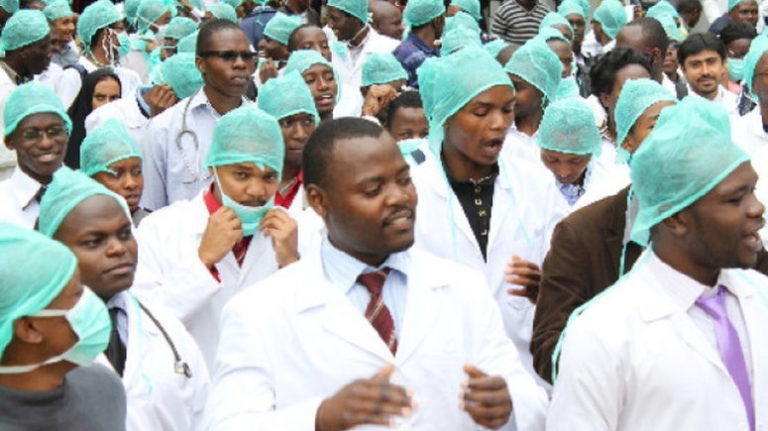
THE National Association of Resident Doctors (NARD) has declared a five-day warning strike, effective Wednesday, May 17.

The group declared the strike after its National Executive Council (NEC) meeting on Monday, May 15, over alleged refusal by the federal and some state governments to meet their demands.

NARD’s president, Orji Innocent, headed the meeting, which was held physically and virtually. 

On Thursday, May 11, The ICIR reported that the the association was set to embark on a fresh industrial action.

The report followed a previous publication where the doctors gave the government a two-week strike notice.

Some of NARD’s demands include the 2023 Medical Residency Training Fund (MRTF) payment, alleged refusal by the government to pay the salary arrears of 2014/2015 and 2016 to its members, and the arrears of the consequential adjustment of the minimum wage.

They also demanded an immediate increment in the CONMESS salary structure to 200 per cent of the current gross salary for doctors and called for immediate suspension of the bill seeking to stop doctors from migrating abroad.

The doctors equally warned state governments yet to implement the appropriate CONMESS structure, domesticate the Medical Residency Training Act, or improve the hazard allowance paid to their colleagues and other health workers, to do so without delay.

Besides, NARD sought immediate massive recruitment of health professionals to replace workers leaving, immediate infrastructural lift in health facilities, and an increase in budgetary allocations to the health sector.

The ICIR reports that with the current five-day strike, NARD would have gone on nationwide strikes for a total of 159 days since 2013.

The ICIR in December 2021, reported that incessant strikes by the association and other health workers working in Federal Government-run hospitals resulted in the loss of about 300 working days between 2013 and 2021.

NARD ordered 61 per cent of the strikes. 

The association was responsible for 11 of the 19 industrial actions recorded within the period.

The association went on strike for 154 days out of the total 252 days recorded by the government as of that year.

The ICIR obtained the data on strikes in the sector from a response to a Freedom of Information Act request it sent to the Federal Ministry of Labour and Employment, headed by Chris Ngige, in August 2021.

The request followed incessant industrial actions by employees in the nation’s public hospitals.

Seun Kuti: Handcuffing, media parade by police illegal — Lawyer

0

A LAWYER that accompanied Afrobeat singer Seun Kuti to the Lagos State Police Command headquarters, Adeyinka Olumide-Fusika, has decried how the musician was treated after his arrest by the Nigeria Police Force for assaulting on one of its operatives.

Kuti, a son of Afrobeat legend Fela Anikulapo Kuti, was handcuffed and photographed after he presented himself to the police on Monday, May 15.

He was declared wanted by the police after a video showed him slapping a policeman on the Third Mainland Bridge in Lagos, on Saturday, May 13.

Olumide-Fusika, a Senior Advocate of Nigeria (SAN), who accompanied Kuti to the Lagos police headquarters, said the handcuffing and media parade of the suspect was illegal.

The senior lawyer stressed that Kuti retained innocent until proven guilty by a law court.

“Mr. Seun Kuti reported himself in the office of the Commissioner of Police at the Police Command, Ikeja, at 8 a.m. today, Monday, May 15, 2023.

“I accompanied him to the Ikeja police station together with another lawyer, Mr Femi Akinyemi, from Falana and Falana chambers.

“However, there was no interrogation as it was decided he would be moved to the Force Criminal Investigation Unit at Panti, Yaba. Before his movement, Mr. Seun Kuti, was handcuffed and his photograph taken in the open by the Lagos PPRO, Mr. Benjamin Hundeyin who coordinated the parade and apparently shared the photograph of his parade in the media,” the lawyer said.

He said the decision of the police to subject Kuti to the media parade violates Section 9 of the Lagos State Administration of Criminal Justice Law, which prohibited any form of a parade of criminal suspects in the state.

According to him, the Police is supposed to enforce the law, but they prefer to disrespect and break it.

“A Police institution that has no respect for the law it exists to enforce is not a good example to alleged lawbreakers.

“The decision of the police to handcuff Mr Kuti is equally illegal as it constitutes a violation of Section 5 of the Administration of Criminal Justice Law, ” Olumide-Fusika submitted.

He claimed that after handcuffing Kuti, the police drove him in a convoy of heavily armed personnel from Ikeja to Panti, where he is currently held.

Olumide-Fusika noted that Kuti’s lawyers are waiting for the next move by the police.

Meanwhile, the PUNCH reported that the Lagos Police Command Public Relations Officer, Benjamin Hundeyin, during a phone interview on Monday, said Kuti apologised to the assaulted policeman and gave him the sum of ₦‎12,000 for to repair his vehicle.

The Punch also added that a source said Kuti was the one that bashed the officer’s vehicle.

The policeman then approached him to call his attention to the incident.

However, as seen in the trending video, the musician alighted from his car and slapped the policeman and the fficer subsequently reported the incident at the Police Command in Ikeja.

Kuti is currently being held at the State Criminal Investigation Department (SCID), popularly known as Panti, in Yaba, Lagos State, following a visit to the FCID over the alleged assault.

The musician was accompanied by a lawyer representing Falana and Falana Chambers, the law firm of human rights activist Femi Falana (SAN).


In the video, which went viral, he was seen pushing and slapping the policeman.

“You dey craze! You dey mad!” he was heard saying as he slapped the policeman.

The musician later claimed that the policeman attempted to kill him and his family, hence the reason for his action.

“He tried to kill me and my family. I have proof, but I no dey chase clout. He has apologised, and I have agreed not to press charges. Make una mind una business make the poor guy no lose im job,” Kuti said via a post on his Instagram story.

A statement released by the Public relations officer, Force Headquarters, Abuja, Olumuyiwa Adejobi, late Saturday said the Inspector-General of Police, IGP Usman Alkali Baba, has ordered the Commissioner of Police, Lagos State Command to arrest Kuti.

The IG equally ordered a speedy and full investigation into the remote and immediate cause(s) of the assault and prosecution of the suspect accordingly.

However, following the IG’s order for his arrest, Kuti was said to have reported himself to the police at the Lagos Command.

In response to the development, Falana, SAN, claimed that the musician had requested his legal counsel and that Kuti has supporting documentation for his claim.

According to section 356 of the Nigerian Criminal Code Act, if found guilty of assaulting the unnamed police officer, Kuti could face a three-year prison sentence.

USC health journalism centre offers fellowship, grants

THE University of Southern California’s Center for Health Journalism is accepting applications for the 2023 Data Journalism Fellowship.

The program, which offers training on data acquisition, cleaning, analysis, and visualisation, is led by some of the nation’s most skilled data reporters and journalism practitioners.

The data fellows will participate in a four-day in-person training and receive US$2,000 grants to work on their projects. Applicants must have at least three years of experience and basic Excel knowledge.

The training is slated for October 16, 2023, to October 19, 2023.
For five months, after the training, data fellows will complete ambitious explanatory or investigative projects built around data.

Journalists can apply for this program.

The deadline for the submission of the application is July 17, 2023. Interested applicants can apply here.

2023 elections: US imposes visa ban on Nigerians who undermined democracy

THE United States (US) has imposed visa ban on individuals that undermined the just concluded general elections in Nigeria. 

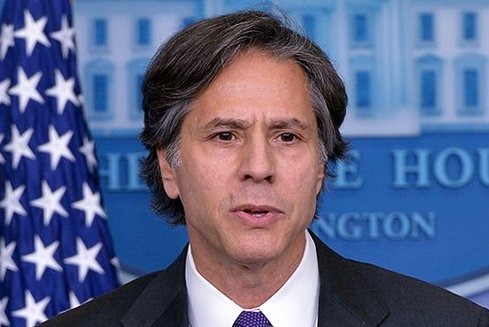
The US Secretary of State, Antony Blinken, made this known in a statement on Monday, May 15.

The statement did not disclose details of those affected by the visa ban.

However, Blinken said the ban was imposed on specific individuals in Nigeria for undermining the democratic process during the country’s 2023 elections cycle.

He noted that the visa ban was not directed at the Nigerian people or the government as a whole.

“Under Section 212(a)(3)C) of the Immigration and Nationality Act, these individuals will be subject to restrictions on visas to the United States under a policy covering those believed to be responsible for, or complicit in, undermining democracy,” he said.

“These individuals have been involved in intimidation of voters through threats and physical violence, the manipulation of vote results, and other activity that undermines Nigeria’s democratic process.

“The statement indicated that these individuals have been involved in intimidation of voters through threats and physical violence, manipulation of vote results, and other activities that undermine Nigeria’s democratic process.”

Blinken said that the decision to impose visa restrictions reflects the continued commitment of the US to support Nigeria’s aspirations to strengthen democracy and the rule of law.

Violence marred the 2033 general elections and some Nigerians, including Lagos bus transport manager, Musiliu Akinsanya, popularly known as MC Oluomo, were caught on video threatening potential voters.

The majority leader of the House of Representatives, Alhassan Doguwa, has been charged for murder after the police in Kano arrested him, alongside others, for alleged criminal conspiracy, and culpable homicide during the election.

He allegedly shot some persons dead and ordered the burning of a New Nigeria Peoples Party (NNPP) office during the election.

Nigeria held federal and state elections on 25 February and 18 March, respectively. The process was fraught with a number of irregularities, including pockets of violence in different parts of the country, according several reports by election monitoring bodies like the European Union Election Observation Mission (EU OM).

The presidential election, held on 25 February, produced Bola Tinubu as president-elect.

He will be sworn in on 29 May, although his two main opponents are challenging his election in court.

Yahaya Bello: EFCC moves to halt execution of ruling on 14 properties, N400m

0

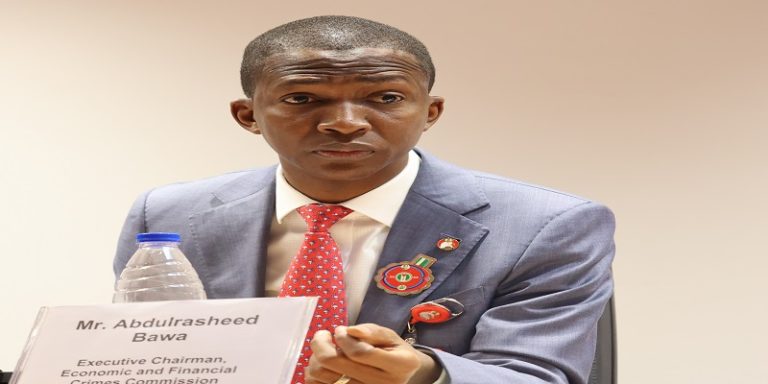
THE Economic and Financial Crimes Commission (EFCC) on Monday, May 15, filed a motion to halt the execution of a court ruling which stopped the forfeiture of 14 properties and the sum of N400 million linked to Kogi State governor, Yahaya Bello.

The ICIR reported that Justice Nicholas Oweibo of a Lagos Federal High Court, on April 26, struck out a suit by the EFCC seeking the final forfeiture of the properties and sum on the grounds of provisions of Section 308(1) of the 1999 Constitution.

Striking out the suit, the judge declared: “Given Section 308 of the Constitution, which provides immunity to a sitting governor from any civil/ criminal prosecution, the court lacks jurisdiction to entertain the matter.”

At a sitting on Monday, counsel for the EFCC, Rotimi Oyedepo, SAN, informed the court of an application dated April 27, 2023, seeking a stay of execution of the ruling pending the outcome of the appeal on the case.

Responding, counsel to the respondent, Akoh Ocheni, filed an application seeking to strike out the application for stay of execution by the EFCC.

Justice Oweibo adjourned the matter till further notice.

In his motion against the final forfeiture application, Bello based argued that the listed property was not obtained via the commission of an illegal act because it was acquired before he was elected governor of Kogi State and could not have been proceeds of public funds.

He added that the EFCC cannot file any civil or criminal charges against him because of Section 308 of the Constitution.

The governor also argued that the EFCC’s lawsuit was filed illegally on the grounds that the anti-graft agency was blatantly disobeying a state high court ruling prohibiting it from looking into any accounts of the Kogi State Government until the Motion on Notice was decided.

He claimed that the Commission made false statements to obtain the interim forfeiture order.

Bello added that because the disputed properties were purchased before he was elected governor of Kogi State, the Proceeds of Crime Act could not be applied retroactively.

He claimed that the Supreme Court was hearing arguments over the legality of the Proceeds of Crime Act 2022.

Regarding jurisdiction, he said the individual concerned is based in Lokoja, and the properties named are in Abuja, Kogi, and the United Arab Emirates (UAE).

He added that the suit should have been filed in either Abuja or Kogi State. Therefore, he requested that the lawsuit be dismissed for lack of jurisdiction.

The ICIR reported in December 2022 that the EFCC arraigned Ali Bello, identified as a nephew of Yahaya Bello, governor of Kogi State, before a Federal High Court in Abuja, alongside one Dauda Suleiman, on a 10-count charge of alleged misappropriation and money laundering before Justice James Omotosho.

The Commission stated that the pair, along with one Abdulsalami Hudu, a cashier at the Kogi State House of Assembly who is now at large, took N10.2 billion for personal use out of the state’s coffers.

However, the accused entered a “not guilty” plea to the accusations.