Home Blog Page 938

Police set Alaba market shanties on fire — Spokesman

THE Lagos State Police Command has taken responsibility for the fire outbreak at the Alaba International Market.

The ICIR had earlier reported that fire razed parts of the market on Friday, May 5.

The director of the Lagos State Fire and Rescue Services Margaret Adeseye, who confirmed the incident to newsmen, said the fire impacted makeshift stalls within the market, commonly referred to as shanties.

Adeseye said efforts by firefighters to contain the inferno were resisted by some irate youths around the market.

She also disclosed that shops in the market were not affected by the fire outbreak.

However, in a series of tweets hours later, the state police spokesperson, Benjamin Hundeyin, said it was police officers from the Ojo division that the shanties on fire.

While dismissing earlier reports on the incident, Hundeyin said the officers recovered some weapons from suspected criminals at the shanties.

“This is a false narrative! Acting on credible information, police officers from Ojo division raided shanties around the market, arrested suspected criminals, and recovered some weapons,” he said.

“The shanties were thereafter set on fire. Alaba Int’l Market is NOT on fire!”

Lagos, a densely populated city, has experienced many fire outbreaks that resulted in loss of lives and property.

In 2019, a fire outbreak occurred at the popular Balogun market on Lagos Island, which is known for huge volumes of sale of textile and fashion items. The inferno destroyed many shops and goods worth millions of naira.

Similarly, in 2020, a fire outbreak was recorded at the popular Abule-Egba pipeline area of Lagos, which led to the loss of lives and property.

In March, fire gutted a spare parts market in the Ajegunle area of Lagos state, destroying items worth millions on naira.

The cause of these fire incidents has often been attributed to factors like power surge, poor safety measures, inadequate fire-fighting equipment, and poor infrastructure.

Last month, a fire incident was reported at Queens College, in the Onike area of the state.

No casualty was recorded in the incident as men of the state fire service quickly put out the fire.

Suspended Adamawa REC ordered to report at Police Hqtrs every weekday

THE suspended Adamawa State Resident Electoral Commissioner (REC), Hudu Yunusa Ari, has been granted administrative bail by the Police.

This was disclosed in a statement on Friday, May 5, by the Nigeria Police Force (NPF) spokesperson, Olumuyiwa Adejobi.

“The Nigeria Police Force hereby confirms that Barr. Hudu Yunusa-Ari, the Suspended Adamawa State Resident Electoral Commissioner (REC), who has been in custody for interrogations by the Police in the course of investigations into allegations of impropriety during the supplementary gubernatorial pools in the state, has been granted administrative bail by the Police while investigations subsist.

“He is expected to report at the Police Headquarters every weekday while investigations are ongoing on the matter,” Adejobi stated.

Ari was suspended by the Independent National Electoral Commission (INEC) for “illegally” declaring a winner in the Adamawa State governorship election.

INEC later wrote to the IG of Police, Usman Baba, for Ari’s immediate arrest and prosecution.

The decision to write the IGP was taken at a meeting of INEC’s top hierarchy in Abuja on April 18.

In a statement released after the meeting, the Commission said it would brief President Muhammadu Buhari on the REC’s conduct.

The Police arrested Ari on May 2 after INEC said it was unaware of the suspended REC’s whereabouts.

Adejobi stated that the Police Election Planning, Monitoring, and Evaluation Team arrested Ari in Abuja.

Meanwhile, The ICIR reported that the suspended Resident Electoral Commissioner (REC) said he acted according to the provision of the law during the Adamawa April 15 supplementary election.

Ari made this pronouncement in a letter addressed to the IGP, the chairman of INEC and the director-general of the Department of State Services (DSS).

He explained that his role in the controversial declaration of the governorship election was to avert the impending danger posed by delay in announcing the results.

Ari declared Aishatu Dahiru Binani of the All Progressives Congress (APC) winner of the election while the collation of results was still going on.

According to Electoral Act, 2022, the Returning Officer, rather than the REC, has the power to declare the winner of an election.

Incumbent governor and Peoples Democratic Party (PDP) candidate Adamu Fintiri was leading in the supplementary votes counted in 10 out of the 20 local government areas when the REC announced Binani as the winner.

The ICIR reported that the INEC headquarters in Abuja summoned Ari minutes after he declared Binani, the winner.

The Commission also invited its other staff involved in the declaration to Abuja and consequently suspended the collation of results of the supplementary poll.

PDP candidate, Fintiri, was eventually declared winner of the election.


Akpabio has been endorsed as Senate President — Ganduje

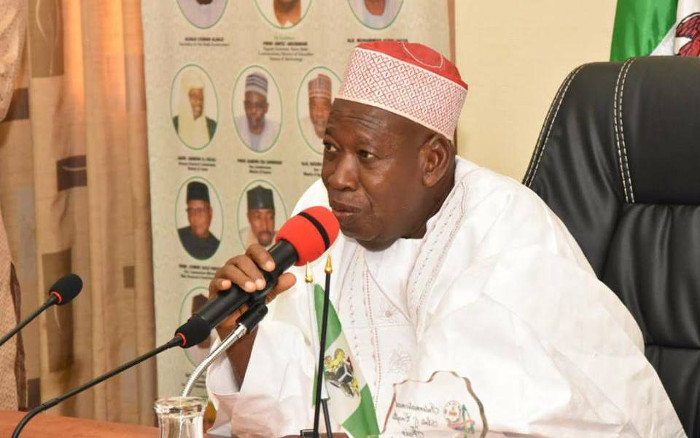
THE Governor of Kano State, Abdullahi Ganduje, says the former Minister of Niger Delta Affairs, Godswill Akpabio, has been endorsed as the next Senate President of Nigeria.

Ganduje disclosed this during a courtesy visit to the Cross Rivers governor, Ben Ayade, in Calabar.

According to him, the Senate Presidency has been zoned to the South-South geopolitical zone.

Ganduje did not explain if it was a decision of the All Progressives Congress (APC) leadership but he described the decision to nominate Akpabio as a done deal.

“The Senate President of the Federal Republic of Nigeria will come from the South-South and it is no other person than the former governor of Akwa Ibom.

“The uncommon governor, the uncommon minister who is going to be the uncommon Senate President. So we have resolved that.

“I am giving you assurance, we are waiting for the D-Day that he will be the Senate President of Nigeria,” Ganduje said.

Governors of the All Progressives Congress (APC) had earlier recommended that the position of Senate President should be zoned to either South-East or South-South regions.

The governors, under the umbrella of Progressive Governors Forum (PGF), recommended that the regions be considered in the zoning formula for the choice of the presiding and principal officers of the 10th National Assembly.

They recommended the zones for the consideration of the President-Elect, Bola Tinubu.

They also recommended that the position of Speaker of the House of Representatives should be zoned to either the North-West or the North-Central regions.

The governors also proposed that the position of Majority Leader, Deputy Majority Leader and Chief Whip should be used as compensation for those that may be asked to step down from running from the four presiding officers’ positions.

Nigeria’s 10th National Assembly will be inaugurated in the first week of June. Different interest groups nationwide are already lobbying for the positions of Senate President and Speaker of the House of Representatives.

Shortly after the inauguration, members of the Senate will elect new presiding officers.

Based on the results declared by the Independent National Electoral Commission (INEC), the ruling All Progressives Congress (APC) retained the majority of the Senate and House of Representatives seats, with 57 and 162 members, respectively.

WHO raises global COVID-19 deaths to 20 million

NO FEWER than 20 million people have died of COVID-19 worldwide, the World Health Organization (WHO) has said.

The Director-General of the agency, Tedros Ghebreyesus, a doctor, said on Friday, May 5, that the tolls logged by countries and presented to the agency were much lower than the WHO’s estimates.

“COVID-19 has turned our world upside down. Almost seven million deaths have been reported to WHO. But we know the toll is several times higher, at least 20 million,” Ghebreyesus said in a video by the AFP.

On May 2, The ICIR reported the WHO as saying global health systems had started improving three years after the pandemic surfaced.

The ICIR reports that COVID-19 cases as of 16:00hours (GMT) on Friday, May 5, stood at nearly 700 million (687,600,968), according to Worldometer, a platform collating global data on the disease.

Worldometer and WHO puts the number of deaths from the pandemic at May 5 as nearly seven million. However, the figures vary, with WHO having 6,921,614 and the latter having 6,869,839.

Nigeria recorded 266,675 confirmed cases of the disease and lost 3,155 data from Worldometer, and WHO shows. 

WHO said in a report on Tuesday, May 2, that services such as sexual, reproductive, maternal, newborn, child and adolescent health, nutrition, and immunisation, as well as treatment of infectious diseases, neglected tropical diseases, and non-communicable diseases, among others, had recorded improvements in hospitals.

Most countries also apply what they learned during the COVID-19 pandemic, including institutionalising innovative service disruption mitigation strategies into their routine health service delivery, according to WHO.

Nigeria is among nations whose health systems benefitted from the pandemic because of huge investments in health infrastructures largely by the private sector and an increase in the national budget for health.

In a series of reports, The ICIR verified the procurement of multi-billion naira equipment in federal hospitals in 2022 and reported how they boosted service delivery.

Globally, between 2020 and mid-2022, the virus battered economies, resulting in near hyperinflation in countries.

An unprecedented pandemic in a century, COVID-19 denied many people their livelihoods, disrupted health systems, and severed millions of people’s access to basic healthcare.

The world appears to have contained the pandemic with the help of vaccines and other pharmaceutical and non-pharmaceutical interventions.

Sudan crisis: Second batch of Nigerians arrive Abuja

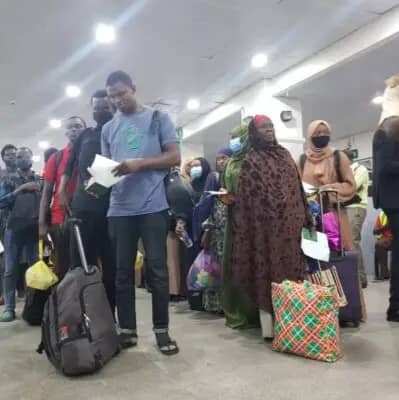
THE second batch of Nigerians fleeing the crisis in Sudan arrived at the Nnamdi Azikiwe Airport, Abuja, on Friday, May 5.

A total of 130 Nigerians returned with the second batch from Port Sudan, and according to NIDCOM Head of Media, Public Relations and Protocol Unit Abdur-Rahman Balogun, the returnees were mostly women.

They were welcomed by the Permanent Secretary of the Federal Ministry of Humanitarian Affairs, Disaster Management and Social Development (FMHADMSD) Nasir Sani-Gwarzo, Director-General of the National Emergency Management Agency (NEMA) Mustapha Ahmed, among other government officials.

The ICIR reported that Nigerians in Port Sudan had begun boarding the TARCO Aviation airlines on Friday morning. More Nigerians are expected back into the country from Aswan, according to Balogun.

“Today, Friday May 5, 2023, we are expecting arrivals from Aswan (Azman and Max Air) and Taco Aviation from Port Sudan.,” Balogun said earlier.

The first batch of evacuees returned late on Wednesday, May 3 and received  N100,000 cash each for transportation to their various homes.

There were 376 Nigerians who landed at the Nnamdi Azikiwe Airport in Abuja on Wednesday.

The evacuation had taken longer than expected due to the inability of the Nigerian government to airlift citizens directly out of Sudan, as the warring parties failed to heed calls for a ceasefire.

As a result, the government contracted bus operators in Sudan, and on Wednesday, April 26, the Nigerians embarked on the journey from Khartoum, the Sudan capital, to Egypt by road.

Others, including the latest set of returnees, were evacuated via the Port Sudan route, as the Egyptian authorities denied Nigerians entry into their territory.

Nigeria needs 70,000 more midwives to tackle maternal, child deaths – UNFPA

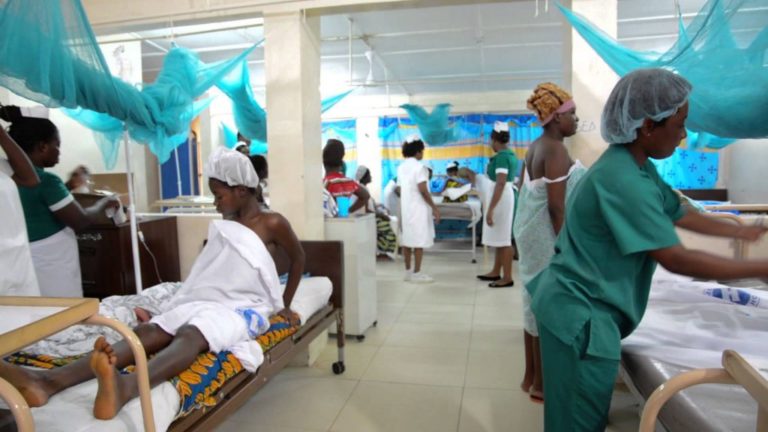
THE United Nations Population Fund (UNFPA) has advised Nigeria to recruit additional 70,000 midwives to help reduce maternal and child mortality in the country.

The agency said shortage of midwives and increasing brain drain had been linked to an ‘outrageous’ maternal mortality ratio of 512 per 100,000 live births in the country. 

It said the shortage had been more acute in Northern Nigeria, “where essential maternal and reproductive health care needs are unmet”.

In a statement to commemorate the 2023 International Day of the Midwife, UNFPA Executive Director Natalia Kanem, a doctor, said in addition to hiring more midwives, health authorities should allow them to be more involved in health care services.

The organisation explained that evidence showed that competent midwives could provide 90 per cent of essential sexual and reproductive health care. 

It argued that midwives accounted for only 10 per cent of the health workforce because they were underutilised and in short supply.

“Many health systems continue to marginalise this mostly female workforce and treat midwives poorly in terms of pay, working conditions and opportunities to cultivate skills. This, along with a global shortage of 900,000 midwives, reflects an assumption that they are not essential healthcare workers. Nothing could be further from the truth.”

UNFPA said midwives are important in a world where a woman dies every two minutes due to pregnancy or childbirth.

According to the agency, having skilled midwives is one of the most important ways to avert preventable maternal and newborn deaths. 

It said more mothers and babies survived and thrived in countries that invested in a capable midwifery workforce. 

“Midwives provide essential information on sexual and reproductive health, including family planning, and help people navigate often-sensitive issues in a variety of contexts, including in humanitarian settings. Midwives are often the only healthcare workers serving people in hard-to-reach places.

“The consequences of not having enough skilled midwives are alarming. Decades of progress in preventing maternal deaths have ground to a halt. Every single year, 287,000 women globally lose their lives giving birth; 2.4 million newborns die, and an additional 2.2 million are stillborn.”

By closing the number of midwives deficit, UNFPA said nations would prevent two-thirds of maternal and newborn deaths and save over 4.3 million lives annually by 2035.

The agency said it had helped countries educate and train 350,000 midwives in line with international standards to help improve the quality of care they provide. 

A check by The ICIR showed that the Nursing and Midwifery Council of Nigeria (NMCN) licensed over 250,000 midwives and nurses in Nigeria.

The ICIR also reports that many nurses in Nigeria trained as midwives and vice versa.  

In 2022, The ICIR investigated and published a series of reports from 12 states on the state of primary health centres (PHCs) where midwives and nurses mostly work. 

The reports tally with UNFPA’s concerns in the story. Some of the reports are herehere and here.

The present, future belong to your generation, AfDB’s Adesina tells young graduands

AFRICAN Development Bank Group President Akinwunmi Adesina (AfDB) has called on young university graduates to sieze the moment and be instruments of change in a world beset by increasing socio-economic challenges.

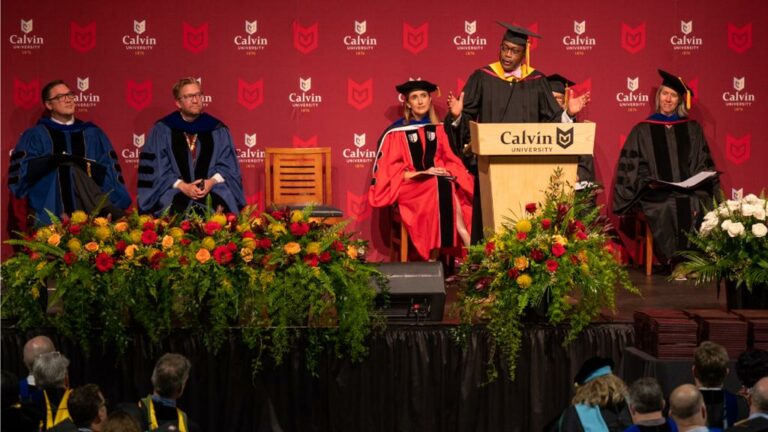
Delivering the keynote speech at America’s Calvin University Commencement ceremony, Adesina told the audience, including 700 graduates, “The world faces many simultaneous challenges, promising a future of exciting and infinite possibilities, in which you have a role to play,”

Foremost among these challenges are climate change, food insecurity and a lack of universal access to affordable healthcare, he added.


READ ALSO:
AfDB’s Adesina seeks bold reforms, projects 4% GDP growth for Africa

AfDB’s Adesina seeks bonds commitment from Africans in diaspora

AfDB confirms $1bn support to Nigeria’s 20,500 MSMEs

AfDB gives SEC $460,000 for capital market surveillance project


Adesina shared with the graduates the difficult times and conditions he went through as a university student at America’s Purdue University.

During that period, Adesina said, he ran out of the small stipend he had and often had to walk many kilometres, enduring the winter cold, to and from lectures.

“One day a bus driver came to my aid by topping up my transport fare. I also drew the sympathy of my professors, who rallied to pay for  tuition and upkeep.

“Many years later, I won the World Food Prize, the Nobel Prize for Agriculture,” he recalled.

He then enthused, “How could my professors have known at the time that they were helping someone who would later become a World Food Prize laureate?

“How would they have known they were helping someone who would later become president of the African Development Bank Group? In front of me today I see builders and shapers of hope.

“You have been well prepared to go into the world to be the change makers. You have received a world-class education. You have been exposed to great ideas, and you’ve worked alongside faculty and students from all around the world.”

In his remarks, Calvin University’s president Wiebe Boer extolled Adesina’s qualities as “a man of great accomplishments.”

Calling Adesina his mentor, Boer said, “Everywhere he goes, no matter how high, no matter how powerful, no matter how big the checkbook, he never forgets those less fortunate.”

Nain Miranda Duarte, the president of Calvin University’s Student Senate, recounted the economic difficulties his family endured and how he had benefited from people’s generosity from his early days in the slums of Nicaragua to be a graduate from a top American university.

Duarte said the combined income of his parents then was only $50 a month, which amounted to only $1.67 a day for a family of seven.

“Together, we stand here today because of those who decided to be God’s hands and feet and who actively exemplified the power of generosity. Class of 2023, it is my turn, it is your turn, to be that anonymous donor that allows others to finish their high school education. It is our turn to make impossible dreams a reality,” Duarte said.

Adesina was first elected president of the AfDB Group in 2015 as the institution’s eighth head.

Under his leadership, the bank achieved its highest capital increase in 2019. Last year, the African Development Bank Group and donor countries agreed to an $8.9 billion replenishment of the African Development Fund (ADF), which provides concessional loans and grants to low income African countries.

Mob stops firefighters from containing inferno at Alaba market

1

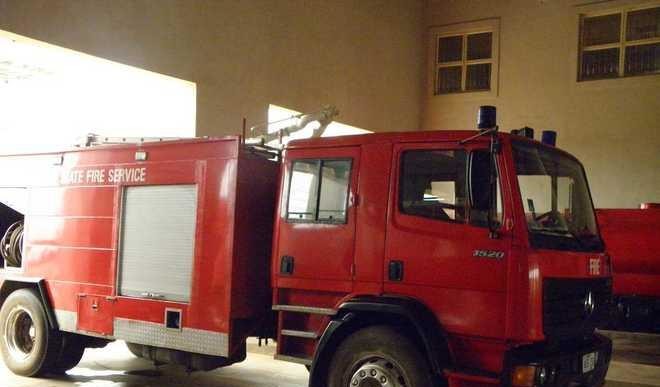
THE Lagos State Fire and Rescue Service has confirmed a fire outbreak at the popular Alaba International Market, situated in the Ojo area of the state.

The director of the service, Margaret Adeseye, who confirmed the incident to newsmen on Friday, May 5, said the fire impacted makeshift stalls within the market, commonly referred to as shanties.

Adeseye said efforts by firefighters to contain the inferno were resisted by some irate youths around the market.

According to her, “The fire crew from Ojo, Sari-Iganmu and Ajegunle are being turned back by angry mobs from performing their statutory duty but are presently on standby.”

She added that the agency is collaborating with security agents to address the situation.

Adeyeye also disclosed that shops in the market were not affected by the fire outbreak.

“It is instructive to confirm that shanties and not shops are on fire, please,” she added.

Lagos, a densely populated city, has experienced many fire outbreaks that resulted in loss of lives and property.

In 2019, a fire outbreak occurred at the popular Balogun market on Lagos Island, which is known for huge volumes of sale of textile and fashion items. The inferno destroyed many shops and goods worth millions of naira.

Similarly, in 2020, a fire outbreak was recorded at the popular Abule-Egba pipeline area of Lagos, which led to the loss of lives and property.

In March, fire gutted a spare parts market in the Ajegunle area of Lagos state, destroying items worth millions on naira.

The cause of these fire incidents has often been attributed to factors like power surge, poor safety measures, inadequate fire-fighting equipment, and poor infrastructure.

Last month, a fire incident was reported at Queens College, in the Onike area of the state.

No casualty was recorded in the incident as men of the state fire service quickly put out the fire.

Organ trafficking: UK court jails Ekweremadu, wife, doctor

EMBATTLED Nigerian senator Ike Ekweremadu and his wife, Beatrice, who were found guilty of organ trafficking in March have been jailed in what becomes a landmark judgment for the United Kingdom (UK).

At a sentencing hearing on Friday, May 5, Ekweremadu was jailed for nine years and eight months. His wife Beatrice was sentenced to four years and six months imprisonment, while the family doctor Obinna Obeta received a 10-year prison term.

This is the first time anyone would be convicted under the UK Modern Slavery Act for an organ harvesting conspiracy.


READ ALSO:
Senate joins Reps, others in seeking clemency for Ekweremadu

ECOWAS urges UK court to consider Ekweremadu’s contributions to society

Ekweremadu: Reps appeal to UK court for leniency

Organ trafficking: Obasanjo writes UK court, seeks mercy for Ekweremadu, wife

Ekweremadu: Nigerians hail Obasanjo for writing UK court


“In each of your cases the offence you committed is so serious that neither a fine nor a community sentence can be justified,” Justice Johnson told the defendants.

The judge held that the defendants had intended harm to the donor that would have resulted in him spending the rest of his life with only one kidney and without the requisite funding for the required aftercare.

He added that the risks had not been properly explained to the victim and there had been no consent “in any meaningful sense”.

On Tuesday, May 2, the Nigerian Senate joined the House of Representatives, ECOWAS Parliament and a Former Nigerian President Olusegun Obasanjo, to appeal to the court for leniency in meting out sentence against the couple.

The Senate pointed  out that the lawmaker was ignorant of the law as they applied in the country when he sought a kidney donor for his ailing daughter, adding that all the defendants were first-time offenders.

“We are now using this particular intervention to seek clemency in the sentencing. The conviction has already been done but we are seeking clemency because this is the first time our colleague is getting involved in this kind of thing,” the Senate’s letter to the Court read in part.

The Chairman of Nigerians in Diaspora Commission (NIDCOM), Abike Dabiri-Erewa, also pleaded with the UK government for a lenient judgment.

However, during trial, it was alleged that the 21-year-old street trader was to be rewarded for donating the organ to Sonia Ekweremadu, in an £80,000 private procedure at London’s Royal Free Hospital.

The prosecution claimed the donor was offered up to £7,000 along with the promise of a better life in the UK, but the donor did not understand until his first appointment with a consultant at the hospital that he was there for a kidney transplant.

It was also claimed that the man was falsely presented as Sonia Ekweremadu’s cousin in a failed attempt to persuade medics to carry out the procedure at the Royal Free Hospital.

While it is lawful to donate a kidney in the UK, it becomes criminal if money or another material advantage is rewarded.

It is not yet clear if the defendants, or the Nigerian government, would appeal the judgment.

ICFJ selects two Nigerian media outlets for new cohort

TWO Nigerian media organisations have been selected to join the second cohort of the business hub of the International Center for Journalists (ICFJ), Elevate.

The second cohort of the business hub will support 20 small and medium-sized independent news organisations that provide vital reporting to their communities on issues such as human rights, gender, local news and politics. 

The two media organisations from Nigeria – Informant 247 and Sobi FM -would join other participants to identify the biggest business obstacles in the way of growth and will innovate to overcome them.

A statement released by the ICFJ on Friday, May 5, said the news organisations, which were selected from 17 countries, will supercharge their efforts this year to build stronger, more resilient media outlets through the Elevate program.

According to ICFJ, “Participants hail from across the world, including Afghanistan, South Sudan, Ukraine, Venezuela and other countries where journalists face numerous difficulties in addition to funding challenges”.

The hub also provides intensive training, mentorship and funding, equipping news leaders with skills and knowledge around four key areas: business strategy, operations and finance, technology and new media, and communications and marketing. 

The ICFJ President Sharon Moshavi said financial stability is one of the biggest threats to independent media, adding that the organisation is focused on building more resilient news operations. 

“A lack of financial stability presents a threat to independent media wherever they operate, and that’s why ICFJ is focused on building more resilient news operations,” Moshavi said.

“The new Elevate cohort is a fantastic group, often working in difficult circumstances, to serve their communities with much-needed, accurate reporting. We’re proud to help them deliver meaningful journalism longterm,” he said.

The statement added: “The Elevate cohort will start with a “knowledge sprint” that includes master classes and coaching sessions with professors from Babson College Executive Education, the no. 1 institution for entrepreneurship according to several rankings. This four-month phase will also include expert-led workshops, town halls and collective mentorship. Participants will come out of the knowledge sprint with fully revamped business plans, comprehensive finance strategies, marketing roadmaps and new technology strategies to help their organisations thrive.

“Afterward, a braintrust of business experts – executives from the corporate world, technologists and top-notch trainers – will provide tailored mentorship to participants selected to advance. The final participants will be eligible to apply for up to USD$10,000 in grant funding to implement innovative business solutions.

“In March, the Elevate team hosted four pre-Elevate webinars to introduce participants to the basics of media business sustainability. Led by Elevate’s expert mentors, pre-Elevate reached over 600 participants.”

The ICIR was among 18 media organisations selected to participate in the first cohort of the International Center for Journalists Business Hub, Elevate.

The media organisations were selected from different regions of the world, with focus on various types of journalism.

According to ICFJ, an independent evaluation of the 18 news organisations that went through Elevate in 2022 found that, in just eight months, they had achieved overall average growth of 13 per cent in revenue and 18 per cent in monthly users.