Home Blog Page 940

Mob stops firefighters from containing inferno at Alaba market

1

THE Lagos State Fire and Rescue Service has confirmed a fire outbreak at the popular Alaba International Market, situated in the Ojo area of the state.

The director of the service, Margaret Adeseye, who confirmed the incident to newsmen on Friday, May 5, said the fire impacted makeshift stalls within the market, commonly referred to as shanties.

Adeseye said efforts by firefighters to contain the inferno were resisted by some irate youths around the market.

According to her, “The fire crew from Ojo, Sari-Iganmu and Ajegunle are being turned back by angry mobs from performing their statutory duty but are presently on standby.”

She added that the agency is collaborating with security agents to address the situation.

Adeyeye also disclosed that shops in the market were not affected by the fire outbreak.

“It is instructive to confirm that shanties and not shops are on fire, please,” she added.

Lagos, a densely populated city, has experienced many fire outbreaks that resulted in loss of lives and property.

In 2019, a fire outbreak occurred at the popular Balogun market on Lagos Island, which is known for huge volumes of sale of textile and fashion items. The inferno destroyed many shops and goods worth millions of naira.

Similarly, in 2020, a fire outbreak was recorded at the popular Abule-Egba pipeline area of Lagos, which led to the loss of lives and property.

In March, fire gutted a spare parts market in the Ajegunle area of Lagos state, destroying items worth millions on naira.

The cause of these fire incidents has often been attributed to factors like power surge, poor safety measures, inadequate fire-fighting equipment, and poor infrastructure.

Last month, a fire incident was reported at Queens College, in the Onike area of the state.

No casualty was recorded in the incident as men of the state fire service quickly put out the fire.

Organ trafficking: UK court jails Ekweremadu, wife, doctor

EMBATTLED Nigerian senator Ike Ekweremadu and his wife, Beatrice, who were found guilty of organ trafficking in March have been jailed in what becomes a landmark judgment for the United Kingdom (UK).

At a sentencing hearing on Friday, May 5, Ekweremadu was jailed for nine years and eight months. His wife Beatrice was sentenced to four years and six months imprisonment, while the family doctor Obinna Obeta received a 10-year prison term.

This is the first time anyone would be convicted under the UK Modern Slavery Act for an organ harvesting conspiracy.


READ ALSO:
Senate joins Reps, others in seeking clemency for Ekweremadu

ECOWAS urges UK court to consider Ekweremadu’s contributions to society

Ekweremadu: Reps appeal to UK court for leniency

Organ trafficking: Obasanjo writes UK court, seeks mercy for Ekweremadu, wife

Ekweremadu: Nigerians hail Obasanjo for writing UK court


“In each of your cases the offence you committed is so serious that neither a fine nor a community sentence can be justified,” Justice Johnson told the defendants.

The judge held that the defendants had intended harm to the donor that would have resulted in him spending the rest of his life with only one kidney and without the requisite funding for the required aftercare.

He added that the risks had not been properly explained to the victim and there had been no consent “in any meaningful sense”.

On Tuesday, May 2, the Nigerian Senate joined the House of Representatives, ECOWAS Parliament and a Former Nigerian President Olusegun Obasanjo, to appeal to the court for leniency in meting out sentence against the couple.

The Senate pointed  out that the lawmaker was ignorant of the law as they applied in the country when he sought a kidney donor for his ailing daughter, adding that all the defendants were first-time offenders.

“We are now using this particular intervention to seek clemency in the sentencing. The conviction has already been done but we are seeking clemency because this is the first time our colleague is getting involved in this kind of thing,” the Senate’s letter to the Court read in part.

The Chairman of Nigerians in Diaspora Commission (NIDCOM), Abike Dabiri-Erewa, also pleaded with the UK government for a lenient judgment.

However, during trial, it was alleged that the 21-year-old street trader was to be rewarded for donating the organ to Sonia Ekweremadu, in an £80,000 private procedure at London’s Royal Free Hospital.

The prosecution claimed the donor was offered up to £7,000 along with the promise of a better life in the UK, but the donor did not understand until his first appointment with a consultant at the hospital that he was there for a kidney transplant.

It was also claimed that the man was falsely presented as Sonia Ekweremadu’s cousin in a failed attempt to persuade medics to carry out the procedure at the Royal Free Hospital.

While it is lawful to donate a kidney in the UK, it becomes criminal if money or another material advantage is rewarded.

It is not yet clear if the defendants, or the Nigerian government, would appeal the judgment.

ICFJ selects two Nigerian media outlets for new cohort

TWO Nigerian media organisations have been selected to join the second cohort of the business hub of the International Center for Journalists (ICFJ), Elevate.

The second cohort of the business hub will support 20 small and medium-sized independent news organisations that provide vital reporting to their communities on issues such as human rights, gender, local news and politics. 

The two media organisations from Nigeria – Informant 247 and Sobi FM -would join other participants to identify the biggest business obstacles in the way of growth and will innovate to overcome them.

A statement released by the ICFJ on Friday, May 5, said the news organisations, which were selected from 17 countries, will supercharge their efforts this year to build stronger, more resilient media outlets through the Elevate program.

According to ICFJ, “Participants hail from across the world, including Afghanistan, South Sudan, Ukraine, Venezuela and other countries where journalists face numerous difficulties in addition to funding challenges”.

The hub also provides intensive training, mentorship and funding, equipping news leaders with skills and knowledge around four key areas: business strategy, operations and finance, technology and new media, and communications and marketing. 

The ICFJ President Sharon Moshavi said financial stability is one of the biggest threats to independent media, adding that the organisation is focused on building more resilient news operations. 

“A lack of financial stability presents a threat to independent media wherever they operate, and that’s why ICFJ is focused on building more resilient news operations,” Moshavi said.

“The new Elevate cohort is a fantastic group, often working in difficult circumstances, to serve their communities with much-needed, accurate reporting. We’re proud to help them deliver meaningful journalism longterm,” he said.

The statement added: “The Elevate cohort will start with a “knowledge sprint” that includes master classes and coaching sessions with professors from Babson College Executive Education, the no. 1 institution for entrepreneurship according to several rankings. This four-month phase will also include expert-led workshops, town halls and collective mentorship. Participants will come out of the knowledge sprint with fully revamped business plans, comprehensive finance strategies, marketing roadmaps and new technology strategies to help their organisations thrive.

“Afterward, a braintrust of business experts – executives from the corporate world, technologists and top-notch trainers – will provide tailored mentorship to participants selected to advance. The final participants will be eligible to apply for up to USD$10,000 in grant funding to implement innovative business solutions.

“In March, the Elevate team hosted four pre-Elevate webinars to introduce participants to the basics of media business sustainability. Led by Elevate’s expert mentors, pre-Elevate reached over 600 participants.”

The ICIR was among 18 media organisations selected to participate in the first cohort of the International Center for Journalists Business Hub, Elevate.

The media organisations were selected from different regions of the world, with focus on various types of journalism.

According to ICFJ, an independent evaluation of the 18 news organisations that went through Elevate in 2022 found that, in just eight months, they had achieved overall average growth of 13 per cent in revenue and 18 per cent in monthly users.

Sudan crisis: UN refugee agency urges govts to open borders for displaced persons

THE United Nations refugee agency, United Nations High Commission for Refugees (UNHCR), has called on governments to allow civilians fleeing the violence in Sudan into their territories.

According to Reuters, Director of International Protection, UNHCR Elizabeth Tan made the appeal during a press briefing in Geneva, Switzerland, on Friday, May 5.

“We’re advising governments not to return people to Sudan because of the conflict that’s going on there. This applies to Sudanese nationals, to foreign nationals, including refugees who are being hosted in Sudan, stateless persons, as well as those who do not have a passport or any other form of identification,” Tan said.

Following the conflict between rival security forces in Sudan, about 100,000 people have fled towards neighbouring states, according to the United Nations (UN).

About 10,000 Nigerian students were in Sudan at the beginning of the violence.

Efforts to airlift Nigerians out of Sudan directly had been futile as the warring parties failed to heed calls for a ceasefire.

The Nigerian government had to contract buses to evacuate the students out of Sudan to neighbouring countries. The first batch of the Nigerians began their exit from Sudan by road on Wednesday, April 26.

However, countries like Ethiopia denied the fleeing Nigerians access to their country. Egypt had also refused to open its borders to the first batch of fleeing students.

Chairman of the Nigerians in Diaspora Commission Abike Dabiri-Erewa said on April 28 that about 7000 persons, including Nigerians, were stranded at the Egyptian border for at least four days due to the refusal of relevant authorities to grant them entry.

According to NIDCOM, the Egyptian authorities had demanded visa fees from the fleeing students upon their arrival at the border.

After several interventions and the signing of a Memorandum of Understanding (MoU) with stringent conditions attached, the Egyptian borders were open to Nigerians, and the first batch of evacuees took off from Egypt, landing in Nigeria on Wednesday, May 3.

Match-fixing: Wikki Tourists FC players under investigation

0

THE management of Wikki Tourists Football Club (FC) of Bauchi has commenced investigations into allegations that some of the team’s players were involved in a match-fixing and betting scandal.

Wikki Tourists competes in the Nigeria Professional Football League (NPFL).

The club’s chairman, Balarabe Douglas, told journalists on Thursday, May 3, in Bauchi that some of the players have been charged with “match-fixing and betting for selfish reasons”.

According to him, the development had angered the club’s leadership as well as the team’s fans and all of the residents of Bauchi State.

“We commenced an investigation into allegations of manipulating the outcome of matches for betting purposes by some of our players in breach of the Wikki Tourists’ conduct and regulations.

“The management can confirm that the wide investigation is now at an advanced stage, and it is anticipated that it will be completed shortly, at which point any potential charges will be considered.

“The players involved have frustrated the efforts of the team and the management in all the matches of the 2022/2023 Nigeria Professional Football League (NPFL),” the club chairman said.

Douglas urged Wikki Tourists fans and residents of Bauchi State to maintain the peace, promising that the club will soon return to its glorious days.

“The management firmly opposes game manipulation, gambling, and other acts that violate sports integrity and ethics, and will hand out punishments based on the final investigation,” he added.

Douglas thanked the NPFL Interim Management Committee (IMC) for giving the club back the three points and three goals that were earlier deducted as punishment for misbehaviour by their fans during a Week 13 match with Bayelsa United FC at Abubakar Tafawa Balewa Stadium, Bauchi, on April 9.

The match was alleged to have been characterised by irregularities and the management of Wikki Tourists FC was accused of not providing adequate security. The club’s fans were charged for throwing objects in the field and assaulting match officials.

The IMC, in its penalties after a review of the match imposed three points, goals deduction on Wikki Tourists, a N2.5 million fine and ordered the stadium closed to all NPFL matches.

However, the club appealed the penalty.

A footballer, Fatau Dauda, had alleged that he left Enyimba FC in 2019 due to rampant match-fixing in the NPFL.

The Ghanaian star joined Enyimba in 2016 but left three years after. He made the match-fixing allegation while speaking with Angel TV, according to a report by Ghana Soccer Net.

“There’s one particular reason why I finally decided to leave Enyimba FC. It’s all because of betting,” said Dauda

“Betting can destroy football. You know Nigeria is a big country. Sometimes, we can be on the road for two days traveling for an away game.


READ ALSO:


“We will go and lose a game but when we come on the bus, you’ll see some players happy. You’ll see some players pressing their phones, and checking the score lines of other league games. I later got to find out from one of our guys that some of the players on the team were betting on our matches.

“They were fixing the games. It was shocking. It was the reason I decided to leave because I can’t be part of this and it was a waste of time playing in games when some people have already planned the outcome.”

The IMC, which manages the NPFL, is yet to react to the match-fixing allegations.

CIBN charges young professionals on banking trends amid ‘japa’ worries

THE Chartered Institute of Bankers of Nigeria (CIBN) has advised young bankers to get prepared for the current and future trends in the financial sector, as worries over the ‘japa’ syndrome unsettle many banks.

The CIBN president and chairman of council, Ken Opara, gave the advice at the graduation ceremony of the 2023 edition (second stream) of the institute’s mentorship programme, according to a statement the institute on Thursday, May 4.

The ICIR had reported of the wave of resignation witnessed in the banking sector which attracted the attention of stakeholders in the sector.

At the CIBN 15th Annual Banking and Finance Conference, the Chairman, Conference Consultative Committee, Abubakar Suleiman, had described the wave of resignation in the banking sector as an opportunity, rather than a crisis.

A Yoruba locution, ‘japa’ is used to refer to a situation where Nigerians leave for other countries for greener pastures.

The brain drain development was not restricted to only the banking sector; it is a problem affecting talents across all sectors.

Opara, asserting that the industry was rising to the ‘japa’ challenge, spoke of CIBN’s intention to introduce a human resource centre to help in skills acquisition and transfer in the banking industry.

The institute’s mentorship programme this year was anchored on the theme, ‘Staying Ahead of the Curve in a Competitive Environment: Prerequisite for Career and Personal Advancement.’

Introduced in 2012 and re-launched in 2020, the programme aims at providing a platform for young bankers to be groomed and nurtured by senior and experienced professionals in the banking industry.

The programme is also aimed at delivering CIBN’s mandate of building capacity for the Nigerian banking industry.

‘’Staying ahead of the curve can simply be put as being aware of and prepared for current and future trends. It is about being proactive instead of reactive.

“In today’s fast-paced business landscape, where technological advancements, market disruptions, and unpredictable events are increasingly becoming the order of the day, staying ahead of the curve for relevance has become more critical than ever before, not only for organisations but for employees as well,” Opara said.

He stressed that staying ahead, in reality, requires impartation by experienced and successful individuals to influence the thinking pattern, professional character and relational attitude of the young ones.

Enhancing learning and career development for young bankers, reducing the incidence of professional misconduct among practitioners, enhancing bonding and building of new long-term professional relationships, assisting in acquiring competencies and professional experience and strengthening the talent pipeline into senior leadership roles in the banking industry, were the touch points in Opara’s statement.

He admonished young bankers that prioritising their all-around development was essential for long-term personal and career success.

He added, “By setting aside dedicated time, using technology to your advantage, and attending knowledge-sharing events, you can ensure that you are investing in your growth and development.”

Sudan crisis: Second batch of Nigerians commence boarding

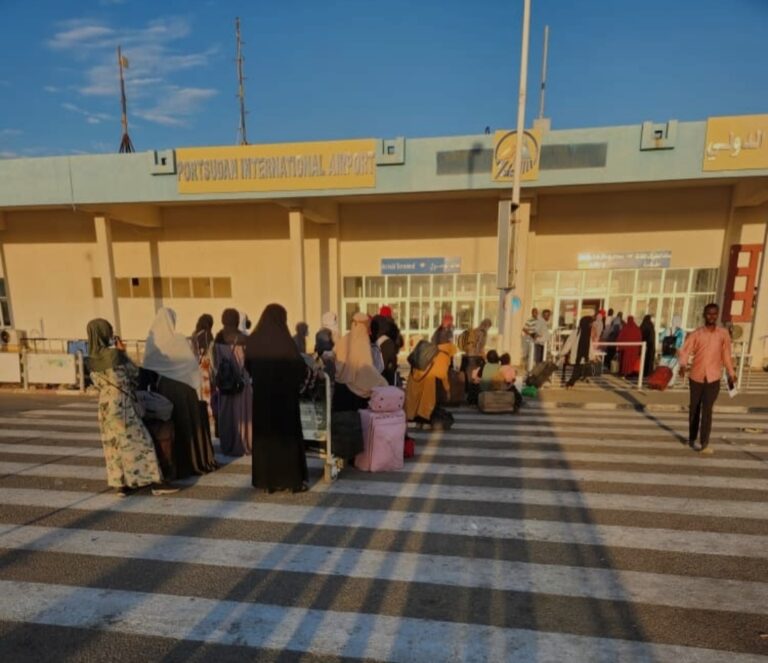
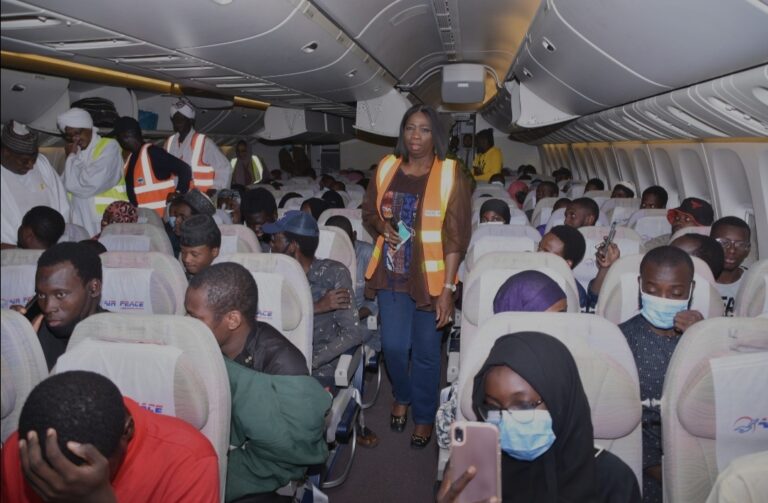
THE second batch of Nigerians being evacuated from Sudan have commenced boarding at the Port Sudan International Airport.

Head of Media Media, Public Relations and Protocols Unit, Nigerians in Diaspora Commission (NIDCOM) Adur-Rahman Balogun disclosed this on Friday, May 5.

“Today, Friday May 5, 2023, we are expecting arrivals from Aswan (Azman and Max Air) and Taco Aviation from Port Sudan.


READ ALSO:
Sudan crisis: Second batch of Nigerians commence boarding

NIDCOM highlights challenges evacuating Nigerians from Sudan

Sudan: Why Ethiopia, Egypt refused Nigerians access — NIDCOM

First batch of Nigerian evacuees from Sudan expected to arrive Abuja today


“Boarding has commenced in Port Sudan. Insha Allah. More details later,” Balogun noted.

Earlier, Balogun told The ICIR during a Twitter space held on Thursday May 4, that the students were expected back in Nigeria on Friday.

The first batch of Nigerians fleeing the crisis in Sudan arrived Abuja late on Wednesday, May 3, and received N100,000 cash, each, for transportation to their various homes.

They were also provided with dignity kits, N25,000 recharge cards and 1.5 GB data from MTN.

A total of 376 students landed at the Nnamdi Azikiwe Airport in Abuja on Wednesday.

The evacuation had taken longer than expected, due to the inability of the Nigerian government to airlift citizens directly out of Sudan, as the warring parties failed to heed calls for a ceasefire.

As a result, the government contracted bus operators in Sudan, and on Wednesday, April 26, the Nigerians embarked on the journey from Khartoum, the Sudan capital, to Egypt by road.

The students arrived at the Egyptian border on Thursday, April 27, hoping to proceed to the Aswan airport, from where they would be airlifted to Nigeria.

However, they were denied access to the country for several days by the Egyptian authorities, who demanded visa processing fees before the borders could be opened. They remained at the border for at least four days.

The Egyptian authorities eventually opened up the border with stringent conditions attached.

However, the hassles encountered at the border led Nigerian authorities to consider Port Sudan as an alternative route.

NIDCOM highlights challenges evacuating Nigerians from Sudan

0

THE Nigerians in Diaspora Commission (NIDCOM) has highlighted some of the challenges and hurdles encountered in the evacuation of Nigerians stranded in Sudan.

NIDCOM Head of Media, Public Relations and Protocol Unit Abdulrahman Balogun highlighted the challenges while speaking during a Twitter Space titled ‘Sudan Crisis: Evacuation of Nigerians’, organised by The ICIR on Thursday, May 4.

He explained that the Federal Government would have used the Sudanese airport to evacuate the over 5,000 Nigerian students in Sudan if the situation was conducive.

“Some foreseen and unforeseen circumstances arose during the course of evacuation. For instance, Ethiopia is a very close border to Sudan and also closer to Khartoum where we have sizeable number of Nigerians and the emergency agency already planned to start the evacuation from Ethiopia but Ethiopia closed its border against Nigeria and all entities. 

“It was when this was turned down that the Federal Government had to hire 40 buses to the tune of $1.2 million to convey Nigerians to a neighboring Egyptian border which is about 14 hours journey with the hope that the Egyptian authorities will allow Nigeria to equally use their facility to be able to evacuate.

“The Sudanese airport is not really conducive for evacuation purposes because crossfires and bombs are going off here and there and in fact we heard that a particular airline was bombed while trying to evacuate because they mistook it for the enemy’s airline. So the Nigerian government can’t take that risk.”

The NIDCOM spokesperson explained that, on arrival at the Egyptian border, the Nigerians were stranded due to challenges faced in securing the facility for their evacuation.

He added that the Federal Government had to sign an MOU before the Nigerians gained access to Egypt.

“We also met a block at the Egyptian border. At that time about eight to nine vehicles conveying 50 passengers in each of them had already been dispatched towards the Egyptian border so there’s nowhere to put them and they had to be stranded at the border for almost four to five days before there was a high level diplomatic touch here and there.”

He said that the agreement signed by the two countries, Nigeria and Egypt, for the evacuation, implies that “if you’re bringing 300 people into the country, then the plane too must have a capacity to take 300″.

According to Balogun, the cumbersome procedure of securing clearance for the Nigerians and the buses was another problem faced during the evacuation.

He added that Nigeria not having its own airline contributed to the delay in evacuation.

“All the other countries that you’re comparing to Nigeria have their own airlines and Nigeria don’t have a airline, until maybe before May 29 as the Honourable Minister of Aviation has assured and is still assuring Nigerians that before the handover date Air Nigeria will fly.”

The ICIR reported that the first batch of Nigerians fleeing the crisis in Sudan arrived Abuja late on Wednesday, May 3, and received N100,000 cash, each, for transportation to their various homes.

The batch comprised a total of 376 persons.

Minister of Humanitarian Affairs, Sadiya Farouq, received the evacuees at the Nnamdi Azikiwe International Airport, Abuja, in the early hours of Thursday, May 4.

Sudan: Why Ethiopia, Egypt refused Nigerians access — NIDCOM

NIGERIANS fleeing Sudan were initially denied access into Egypt, and Ethiopia, due to fears that they might refuse to leave, the Nigerians in Diaspora Commission (NIDCOM) explained on Thursday, May 4.

NIDCOM spokesman, Abdur-Rahman Balogun, who disclosed this during a Twitter Space organised by The ICIR, said the two countries feared that many of the Nigerians might flee into the city, rather than go directly to the airport, where they would be evacuated back to Nigeria.

The Twitter Space focused on the evacuation of Nigerians stranded in Sudan.

Nigeria has the highest number of foreigners in Sudan, according to the NiDCOM spokesman.

“There are about 5,000 Nigerian students in Sudan and a total of about two to three million Nigerians. No country has that number of citizens in the country.”

Last week, The ICIR reported that stranded Nigerians fleeing Sudan had arrived the Egyptian border. However, the Egyptian authorities refused to allow them to cross into their territory, leaving them stranded for days.

Egypt eventually gave stringent conditions for the Nigerians to cross its border.

Some of the conditions, according to Balogun, were: “Details and schedule of the aircraft; capacity of the aircraft; a strong pledge that once our citizens depart the border, they will be conveyed directly to the designated airport; a comprehensive list of the evacuees, with passport numbers and valid travel documents.”

Balogun said the Egyptian and Ethiopian authorities were being cautious. The country’s government did not want Nigerians fleeing the war to settle in their country as undocumented immigrants.

The NIDCOM PRO said, regardless of the war situation, “the countries were deeply afraid of Nigerians entering into the country and not going out”.

He said the authorities “worried that some Nigerians might hide and never come out”.

“Do you know of any country having as high 5,000 citizens in Sudan? The highest I have seen for any country is about 75 citizens and there are about 3-4 million Nigerians spread across Sudan.

“Before they let Nigerians in, the Federal Government had to sign a Memorandum of Understanding (MOU) which ensured that the number of Nigerians brought into the country will be the same number of people that will leave the country.”

“They don’t want anyone to escape into the city,” he added. “The MOU was even broken when the evacuees were at the airport and that caused another challenge.”

Nigerians were transported to Egypt and Ethiopia border because of the risk of evacuating from the Sudan airport in Khartoum.

The Ministry of Foreign Affairs had disclosed that flight operations in Sudan were difficult and unsafe due to the tension in the country.

As disclosed by the ministry, citizens are to be first evacuated by road to the Egyptian or Ethiopian border before they are flown to Nigeria.

N855m fraud: EFCC asks court to nullify pardon granted convicted Indian, others

THE Economic and Financial Crimes Commission (EFCC) has asked the Court of Appeal sitting in Lagos to nullify the pardon granted to an Indian businessman, Ashok Israni and three others by the Lagos State Government.

During the hearing of the appeal filed by Israni and two Keystone Bank officials, Anayo Nwosu and Olajide Oshodi, EFCC lawyer Rotimi Jacobs (SAN) told the panel, which includes Justice Joseph Ikyegh, Justice Ebiowei Tobi, and Justice B. I. Gafai. that pardon cannot be granted to prisoners whose rights of appeal had not yet been exhausted.


READ ALSO:
EFCC to journalists: Use investigative tools to expose corrupt practices

Money laundering: EFCC beams searchlight on real estate investors

Asset forfeiture: Court strikes out EFCC’s suit against Yahaya Bello

EFCC charges non-profit organisations on terrorism financing


On December 9, 2019, Israni, Nwosu, and Oshodi were found guilty on an amended 15-count indictment involving conspiracy and receiving N855 million under false pretences by Justice Kudirat Jose of the Lagos State High Court.

For stealing, the judge gave each of them a five-year prison term.

The court found the bank and Israni’s NULEC Industries Limited guilty.

Additionally, the firms were told to pay the Federal Government a fine of N20 million for counts 1, 10, and 13, and the convicted individuals were instructed to return N395 million to the fraud victim.

The convicts appealed the verdict separately and pleaded with the appellate court to approve their pleas.

The appellants were allegedly released by the Kirikiri Centre of the Nigerian Correctional Services (NCoS) four months later while the appeals were still pending, according to the EFCC. This was allegedly done at the direction of the Lagos State Government.

Jacobs asked the court to deem the pardon “illegal” during the appeal hearing, claiming that the COVID-19 pandemic prevented judicial proceedings from taking place despite the appellants’ appeals having been filed and admitted since February 13, 2020.

The EFCC further asserted that after his release, Nwosu allegedly started posting things on social media claiming that he had been wrongfully imprisoned, found guilty, and treated poorly due to the whims and caprices of the Nominal Complainant.

Jacobs requested that the court reject the appeal and uphold the lower court’s decision.

Earlier, Wole Olanipekun and Biodun Owonikoko, both SANs and lawyers to the appellants, adopted their briefs of argument and asked the court to grant the appeal, overturn the lower court’s decision, and exonerate all of the appellants of all allegations brought against them.

Justice Ikyegh reserved the appeal for ruling after hearing the parties arguments.