Home Blog Page 941

Doctors conduct first-ever brain surgery on baby in womb

DOCTORS have successfully conducted surgery for a baby in the womb to correct a malformation in its brain.

A team of ten doctors at the Boston Children’s Hospital and Massachusetts General Hospital conducted the procedure recently.

Daily Mail reported that the child was diagnosed with the Vein of Galen Malfunction, which is a condition that occurs when the circulatory system does not properly form in the pregnancy’s first trimester.

According to Boston Children’s Hospital, a Vein of Galen Malformation (VOGM) is a rare blood vessel abnormality inside the brain. 

“In VOGM, misshapen arteries in the brain connect directly with veins instead of connecting with capillaries, which help slow blood flow. This causes a rush of high-pressure blood into the veins.”

The hospital notes that the extra pressure in the veins can cause many problems, including the rush of blood toward the heart and lungs, which forces the heart to work overtime to get blood to the rest of the body. This can lead to congestive heart failure in some infants.

Blood pressure in the arteries from the heart to the lungs can also rise, causing a serious condition called pulmonary hypertension.

Known as a rare disease, experts differ on its incidence, with some saying it occurs in one in a million children. It affects both genders.

The probability of survival is usually very low for affected children, with most having about a 30 per cent chance of dying before clocking 11.

Doctors who performed surgery on the child cut into its mum’s womb when the foetus was 34 weeks, and opened up her uterus, then the child’s skull, before making the corrections.

The surgery involved planting a piece of fat near the artery which would restrict blood flow.

Though the procedure was successful, the doctors induced the mother two days after because the surgery affected the tissue surrounding the child. The delivery was done with limited complications.

“Using an MRI, doctors identified an overly wide falcine sinus — a curved vein in the brain that drains the artery. This tells surgeons there was a 99 per cent chance that the malformation would occur…Then, using ultrasound to pinpoint the correct spot, they cut into her uterine wall,” Daily Mail reported.


READ ALSO:


Both mother and child are now in their home doing fine two weeks after the surgery, according to the surgery report published Wednesday in the American Heart Association’s journal Stroke

The UK’s Food and Drug Administration (FDA) will be working with researchers to check the surgery’s safety and the possibility of expanding it for similar conditions.

One of the doctors at Boston Childen Hospital, Darren Orbach, a surgeon, described the procedure as having the potential to mark a paradigm shift in managing the Vein of Galen Malformation.

He said, “We were thrilled to see that the aggressive decline usually seen after birth simply did not appear. ‘We are pleased to report that at six weeks, the infant is progressing remarkably well, on no medications, eating normally, gaining weight and is back home. There are no signs of any negative effects on the brain.”

Swipha recalls drug from market, keeps mum on reason

0

SWISS Pharma Nigeria Limited (Swipha), a major pharmaceutical company based in Lagos, has recalled all batches of Polyfort Suspension from the market due to a ‘negative trend.’

Polyfort Suspension is an antacid drug used for the treatment of heartburn and symptoms associated with dyspepsia and indigestion.

The company, in a statement signed by Superintendent Pharmacist/BDD Abbas Sambo, on Wednesday, May 3, announced that distribution of the drug has been stopped while all the products available in pharmacy shops are to be returned.


READ ALSO:
Why we banned Indomie’s ‘Special Chicken Flavour’ noodles — NAFDAC

Sugar-Sweetened Beverages: How NAFDAC’s weak regulations pose threats to consumers

NAFDAC destroys fake drugs worth N326m in Nasarawa

Nigeria ranks 1st in use of bleaching creams in Africa, NAFDAC declares health emergency


The development, according to the pharmaceutical company, is on account of the result of ongoing stability studies on batches LS222072, L.S222073, and LS222074 showing a negative trend.

Swipha did not provide specific details on the adverse effects the drug could have on the public.

Parts of the statement read: “Kindly be informed that we are initiating an immediate recall for all batches of Polyfort Suspension in stock.

“This is on account of the result of on-going stability studies on batches LS222072, L.S222073, and LS222074 showing a negative trend. We are currently carrying out further investigation on other batches, however, as we are mandated to inform you within 24 – 48 hours, we are unable to wait for the outcome of this investigation hence the decision to recall all batches of Polyfort in your custody.

“Further sales of Polyfort Suspension in your custody should be stopped, and inventory segregated immediately.”

The statement added: “Also contact customers to whom you sold Polyfort Suspension to return them back to you. All Polyfort stock (your stock and that of your customer) should be handed over to the Swipha Medical or Sales Representatives assigned to you.”

The company also said it will refund the marketers upon retrieval of the drugs.

“We expect that all the packs of the concerned product are made ready for retrieval by the 5′ of May 2023 and a corresponding credit note will be issued (covering your stock and that of your customer). The field force will inform you of developments as they evolve.”

The ICIR contacted the company on Wednesday, May 3, to find out the adverse effects of the recalled drug on users. A woman who simply identified herself as Ifedola picked the call and acknowledged that the drug has been recalled from the market, noting that the specific reasons behind the development was withheld to prevent panic among members of the public.

Upon further inquiry, she redirected the call to the company product manager, who declined to speak to The ICIR reporter.

The ICIR was asked to call back on Thursday, May 4. However, when this platform attempted to do so, the designated company phone contact was switched off.

The ICIR also reached out to the National Agency for Food and Drug Administration (NAFDAC) on Wednesday, May 3, to inquire if the organisation was aware of the development and also ask about the likely reasons why the drug is being recalled. NAFDAC has not responded at the time this report was filed.

How unchecked movement into Nigeria can affect census

THE scores of uncontrolled borders in Nigeria are hindering efforts to curb insecurity within the country, where more than 35,000 people have died due to terrorism.

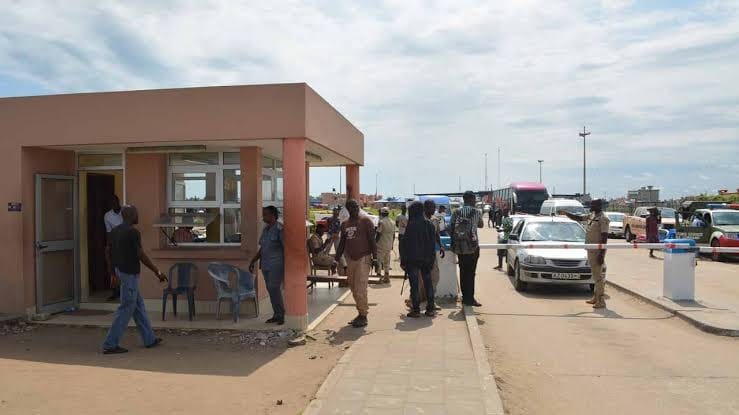
Out of about 1500 borders across the country, only 86 are legal and under government supervision, while more than 1400 others are ‘illegal’ and poorly protected.

The National Immigration Service (NIS) blames this on poor funding and inadequate manpower, and according to the military, this is hindering its efforts to curb violent extremism in the country. 

Security analysts predict that the uncontrolled movement of people through the porous borders may adversely affect the forthcoming population census, an exercise earlier slated for May 23 but rescheduled to an undisclosed date.

The Head of Agent-X Security Agency, a security startup in Nigeria, Timothy Avele, believes poor border management can affect the census.

“Illegal migration can affect the outcome of the 2023 population census,” the Avele said.

Avele is concerned that the commission might be unable to identify the people’s nationality, which could result in inaccurate figures.

“The National Population Commission can end up with the wrong population figures. They currently do not have an effective method of identifying real Nigerians and non-Nigerians,” he said.

He said it is essential for the government to have an accurate figure on the citizens and the total population of people living in the country.


Why data accuracy is important 

Presently, there is no data detailing Nigeria’s exact population, as the last census was conducted in 2006, about 17 years ago.

The United Nations recommends that a census is conducted once in 10 years. This means Nigeria was due for a population census in 2016.

According to the 2006 census figures, Nigeria’s population was 140 million. The data released by the NPC at that time put the northern population at 75 million and the southern states at 65 million.

Then in 2016, the National Bureau of Statistics (NBS) put the country’s estimated population at 193 million.

Nigeria’s population was about 216 million in 2022, according to the United Nations, and the figure is projected to rise to 223.8 million by mid-2023 and to 401 million by the end of 2050.

“Nigeria needs accurate data on its people,” Avele said. “It needs a new population census that will help it understand its people,” he explained further.

He pointed out the importance of clear and precise estimates of the distribution and characteristics of citizens and migrants. 

He said, “Data accuracy is the foundation of any nation’s security and economic prosperity. Without accurate data, it is difficult to plan effectively.”

The census, according to him, is a chance for the country to get a non-contestable figure that will help the government plan for its citizens while noting that access into the country through unmanned entry points should be considered a major threat to the process.

Can digitalisation of the process help? 


To improve the census process, the federal government released N2.8 billion to the NPC to procure software and mobile devices that will be used to carry out the exercise digitally. The forthcoming census will be the first in almost two decades.

It will also be the first digital census.

The Director-General (DG) of the National Orientation Agency (NOA), Garba Abari, says the digitalisation of the process will ensure credibility and efficiency, contrary to what was obtainable in the previous census.

According to him, this census will provide specificity and correctness to data obtained. 

But a Senior Security Analyst with SBM Intelligence, Mcharry Confidence, thinks otherwise.

According to him, a digital census would not prevent the infiltration of migrants.

The digital equipment can only ensure that the counting of houses and structures within the enclave of Nigeria’s territory is captured digitally.

These tools, he says, cannot differentiate between a Nigerian and an undocumented migrant; hence, the credibility of the census still depends on the security of land borders.

Mcharry said the government must prioritise border security and ensure there is no unchecked movement along the borders while the census is ongoing.

“Anything outside border security will incredibly affect the accuracy of the figures. We saw this in the 2006 population census, where it was reported that a lot of foreigners were registering for the census,” he said.

He also noted that identity tags can be used to identify citizens, “Tags like certificates of origin from the LGA, and birth certificates can be useful. However, they can also be falsified.”

There are several reports on the arrests of undocumented migrants with false documents by security operatives.

In 2019, security operatives arrested over 1,400 illegal migrants at the border areas.

And in 2022, they arrested 516 non-Nigerians with PVCs in Zaria LGA, Kaduna state.

The migrants had 1,000 pvcs and numerous local government indigene forms. The nationals were from Togo, Chad, and Senegal, Cameroon.

However, data on the number of illegal migrants in the country or the rate of unchecked movement at border areas are unavailable.


No problem with illegal migrants — NPC

The National Population Commission has prepared questionnaires that require people to disclose their country of origin during the census, says the NPC Director of Public Affairs, Isiaka Yahaya.

He said getting people to provide information on their nationality would be easy, “We do not envisage any problem with illegal migrants or porous borders. Why would they lie to us?” he asked. 

Yahaya said the commission had concluded arrangements to get details on the people’s country of origin and the length of time they have spent within Nigeria ahead of the exercise.

“We have questionnaires, and we will use that to get the details that is needed. People will fill out the questionnaires during the census, and we intend to rely on the information they provide,” he said.

He noted that the 2023 census is not focused on getting the figure of Nigerians in the country but on the total population of people living in the country.

However, he noted that the commission would still “provide data on the population of Nigerians and foreigners in the country from the figures obtained from the census.”

“We don’t care about the nationality of the people; as long as they are on the landscape of this country, they will be counted. When government have to make a decision, what will determine that decision is the total population of people living in that particular area, not just the citizens.

“The census is not about Nigeria, but we can get figures for Nigerians in the country from our total population. We can even provide information on local government areas,” he said.

But the SBM analyst, Mcharry, insists that poor border management can significantly affect the credibility of the exercise. 

It is essential for the government to get accurate figures,” he says. “And it is going to depend on how they control the movement of people during the census,” Mcharry noted.

Sudan: First batch of Nigerians arrive Abuja, get N100,000 for transport to families

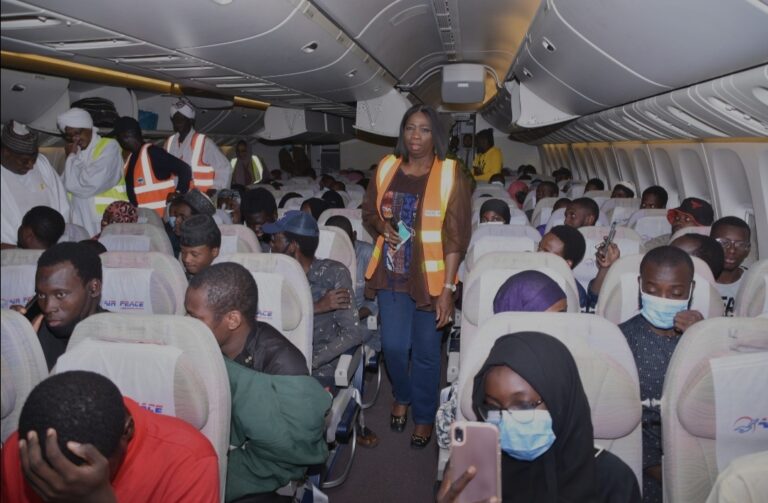
THE first batch of Nigerians fleeing the crisis in Sudan arrived Abuja late on Wednesday, May 3, and received N100,000 cash, each, for transportation to their various homes.

The batch comprised a total of 376 persons.

Minister of Humanitarian Affairs, Sadiya Farouq, received the evacuees at the Nnamdi Azikiwe International Airport, Abuja, in the early hours of Thursday, May 4.


READ ALSO:

Evacuating Nigerians from Sudan, the story so far…

Sudan crisis: Second batch of Nigerians commence boarding

NIDCOM highlights challenges evacuating Nigerians from Sudan

Sudan: Why Ethiopia, Egypt refused Nigerians access — NIDCOM


Besides the N100,000 cash, the minister disclosed that the returnees also got other gift items.

“No life was lost which is the most important thing. All the efforts put in place were not in vain. I thank every member of the committee that has put all efforts to ensure that these people are brought back safely and with dignity. We thank the transport companies for their support.

“There is N100,000 that would transport them back to their families which is supported by the Dangote Foundation by giving them the transportation fare as well as the dignity kits and also 25,000 recharge cards from MTN and 1.5 GB data courtesy of MTN,” she said.

Farouq added that these were part of efforts being put in place to ensure that the returnees settle in comfortably.

Two aircrafts arrived the airport from Egypt around 11:35 pm on Wednesday, bringing in a total of 376 Nigerians.

According to Farouq, the Air Peace aircraft conveyed 282 persons while that of the Nigeria Air Force evacuated 94.

The evacuation process began on Wednesday, April 26, when stranded Nigerians embarked on the journey from Khartoum, the Sudan capital, to Egypt by road.

Efforts to airlift the Nigerians directly from Khartoum had been frustrated by the crisis, as the warring parties failed to heed early calls for a ceasefire.

The students arrived at the Egyptian border on Thursday, April 27, hoping to proceed to the Aswan airport, from where they would be airlifted to Nigeria.

However, they were denied access to the country for several days by the Egyptian authorities, who demanded visa processing fees before the borders could be opened.

Egypt eventually opened its border to the stranded citizens with stringent conditions attached, following the intervention of Nigerian President, Muhammadu Buhari.

Indomie: More Nigerian children, others to expect cancer – Institute

THE National Institute for Cancer Research and Treatment (NICRAT) has predicted that cancer cases will rise in Nigeria in the coming years.

In a statement signed by its Director General and Chief Executive Officer, Usman Aliyu, a professor, on Wednesday, May 3, the organisation said the discovery of cancer-causing chemical in one of the indomie brands – special chicken flavour – should be a great concern to Nigerians.


Read Also:

Why we banned Indomie’s ‘Special Chicken Flavour’ noodles — NAFDAC

Cancer: NAFDAC begins tests on Indomie noodles

Swipha recalls drug from market, keeps mum on reason

Manufacturer debunks cancer-causing substance claims in indomie products


The NICRAT said in 2020 alone, cancer killed 78,000 Nigerians (34,200 males and 44,699 females). 

The NICRAT, created by an Act in 2017, is an agency with the mandate to prevent, conduct research and treat cancers in Nigeria.

It said it was deeply worried that if some brands of Indomie noodles contain ethylene oxide, then  Nigerians should expect an escalation of various forms of cancers in the months or years ahead, depending on how long people have consumed the brand. 

According to the organisation, Nigerians should also expect an increase in cancer cases among children because indomie noodles are a popular food among most Nigerian children. 

Indomie brands are a major staple food in Nigeria

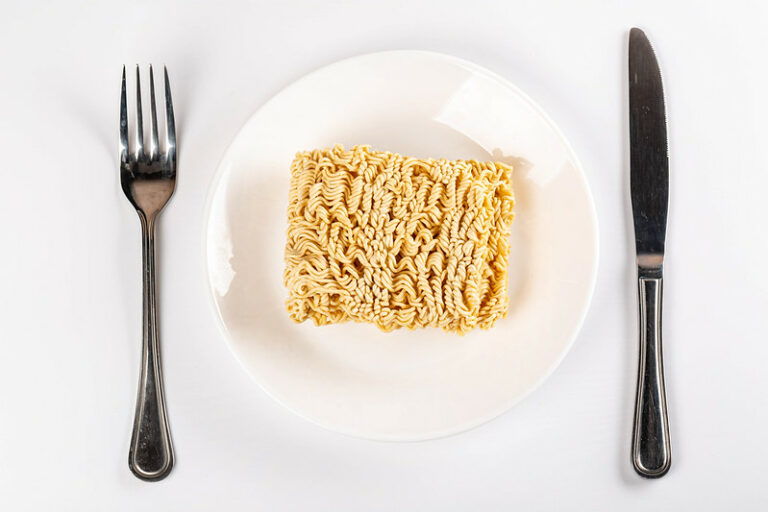
The ICIR reports that indomie is a staple food in many homes in Nigeria, cherished by children and adults. Because of its popularity, many people in the country identify all noodle products as indomie.

The product became popular in Nigeria in the ’90s, though it was first produced in Indonesian, the current headquarters of its manufacturer, in 1972.

Indofood is one of the largest instant noodles manufacturers worldwide. The products are in over 100 countries, including Australia, New Zealand, the USA, Canada, Asia, Africa, Europe and the Middle East.

The product comes in many varieties, from classic soup flavours such as chicken, vegetable, and curry to its most popular flavour indomie mi goreng. 

Its manufacturer claims it produces 19 billion packs annually.

Manufacturers says indomie safe, but countries are skeptical

The ICIR reported how INDOFOOD, the producer of indomie products, debunked Taiwan and Malaysia’s claim that indomie chicken flavour contained Ethylene Oxide, a carcinogenic (cancer-causing) chemical and the product was unsafe for consumption.

The two countries consequently recalled the product.

Nigeria’s National Agency for Food and Drug Administration and Control (NAFDAC) said it launched major investigation into the product varieties on Tuesday, May 2. But the result is not yet available.

Our findings on chemical – NICRAT

In its Wednesday statement, NICRAT explained that its review of Ethylene Oxide showed that the compound has grave consequences for human health, especially when consumed. 

“Our in-depth review of Ethylene Oxide indicated that it is a highly reactive chemical that is used as a raw material to make other compounds such as glycol ethers and polyglycol ethers, as well as a range of emulsifiers, detergents, and solvents.  

“Ethylene oxide is also widely used as a fumigant for cleaning culinary goods, including spices. It is also frequently used to disinfect medical equipment, particularly those that might be harmed by heat sterilisation. 

“Our review, therefore, revealed that there is sufficient evidence in experimental animals for the carcinogenicity of ethylene oxide, and there is strong evidence that the carcinogenicity of ethylene oxide, a direct-acting alkylating agent, operates by a genotoxic mechanism.”

The organisation commended NAFDAC for conducting a comprehensive investigation to ascertain the magnitude of the chemical.

It appealed to Nigerians to adhere to NAFDAC’s instructions on the product. The Institute also promised to collaborate with NAFDAC in ensuring the safety and protection of Nigerians from cancer-causing agents. 

It also assured Nigerians of its commitment to taking cancer prevention, research and treatment to the next level by ensuring that Nigerians are safe from all forms of cancer. 

The ICIR reported how the Indonesian government, where the indomie manufacturer is headquartered, admitted the product contained the chemical but said it was safe for consumption.

2023 fiscal policy measures will hurt Nigeria’s economy, says CPPE

THE Centre for the Promotion of Private Enterprise (CPPE) has said that the additional excise duty the Federal government introduced into the 2023 Fiscal Policy Measures (FPM) would “significantly hurt Nigeria’s economy.”

The CPPE chairman/chief executive, Muda Yusuf, said in a statement he issued on Tuesday, May 2 that the construction and transportation sectors, for instance, would be vulnerable to fiscal policy induced downside risks.

“Some of the measures could exacerbate inflationary pressures which are detrimental to economic growth and manufacturing, construction and transportation sectors. It is double whammy for economic players to contend with a regime of high import duty and prohibitive tax rates amid a depreciating currency,” Yusuf said.

The ICIR had reported that the Federal government introduced a new FPM for 2023 in a circular dated April 20, 2023 and titled ‘Approval for the Implementation of the 2023 Fiscal Policy Measures and Tariff Amendments.’

The policy, which introduced additional excise duty ranging from 20 per cent to 100 per cent on alcoholic beverages, tobacco, wines and spirits, became effective from May 1, subject to a 90-day grace period for importers who had opened Form M before the commencement day.

“Fiscal policy measures must seek to ensure a good balance between objectives of revenue generation, boosting domestic production, enhancing the welfare of citizens, promoting economic growth, deepening economic inclusion, facilitating job creation and recognising societal ethos, beliefs and values,” he said.

He noted some of the specific reviews of the new fiscal policies to include excise duty on beverages, drinks and wines.

A duty of N10 per litre was placed on non-alcoholic beverages, fruit juice, and energy drink; 20 per cent ad valorem on beer and stout (N75/litre); 30 per cent on wine production (N75/litre); and 30 per cent on spirit and other alcoholic beverages (N150/litre).

Ad valorem tax is based on the value of the product, which makes the impact even more injurious to industrialists.

To sustain the current investments in the sectors highlighted will be a herculean task, Yusuf, a former director-general of Lagos Chamber of Commerce and Industry (LCCI), maintained.

He said, “These policy measures failed to reckon with the multifarious challenges which industry operators are currently grappling with.

“These include weak and declining consumer purchasing power; naira exchange rate depreciation; high energy cost; multiple taxes and levies.”

Some implications on the sector as well as the economy will be drop in sales, negative effects on tax revenue; and loss of direct and indirect jobs, Yusuf highlighted.

He also expressed worries over the 40 per cent rise placed on import duty on vehicles.

“It is, therefore, insensitive of policy makers to impose a whopping 40 per cent import duty on vehicles in an economy where there is no mass transit system and where vehicle ownership has become a necessity, especially for the middle class,” he said.

UN-17 AFCON: Nigerians lament Golden Eaglets’ loss to Morocco

A WIN over the Young Atlas Lions of Morocco would have secured Nigeria’s place in the knockout stages of the 2023 TotalEnergies U-17 Africa Cup of Nations holding in Algeria.

However, the Nduka Ugbade-led Golden Eaglets of Nigeria lost one nil to Morocco in a match day two encounter played at the Stade Mohamed-Hamlaoui on Wednesday evening.

Both teams came into the game with a mission to qualify for the quarterfinals having won their first group games against Zambia and South Africa, respectively.

As early as the second minute, Morocco went in front courtesy of a deflected shot played by Abdel Hamid Maali. The Tanger B youngster shot across goal but the ball struck the body of Nigeria’s Tochukwu Ogboji before going past the goalkeeper.

Nigeria had numerous opportunities to draw level and even win the game but they failed to take their chances and ended up losing the encounter.

Match Statistics

Nigeria: 27 shots, 4 on target, 64% possession and 407 passes.

Morocco: 3 shots, 1 on target, 36% possession, 242 passes.

Reactions

Nigerians have taken to the social media to express disappointment in the Golden Eaglets.


Despite losing this encounter, Nigeria still stand a chance of advancing to the next round. The five time FIFA UN-17 World Cup champions will need to avoid defeat in their final game either by winning or drawing.

A win is the only sure ticket to advancing as at now, as they have 0 goal difference. Morocco have six points from two games and have secured one of the two tickets available in group B.


Nigeria will play the final group game against the South African national team on Saturday, May 6, at Stade Mohamed-Hamlaoui (8PM Nigerian Time).

Sokoto Gov-elect sets up panel to probe loans secured by Tambuwal’s govt

SOKOTO State Governor-elect, Ahmed Aliyu, has formed a committee to investigate the administration of the outgoing governor, Aminu Tambuwal.

The committee was inaugurated by Chairman of the All Progressives Congress (APC) Transition Committee, Abubakar Sani, on Wednesday, May 3.

Named the ‘Finance and Debt Verification Committee’, the committee will probe loans secured by Tambuwal’s government since its inception.

The 20 member-committee will be chaired by the deputy governor-elect, Mohammed Idris Gobir.

It is tasked with identifying all loans secured by Tambuwal’s government and ascertaining whether they were used for the purpose they were intended for.

It will also provide detailed information on all loans collected and their purpose and volume.

This comes after some current serving members of the state assembly alleged that the outgoing government secured N86 billion loans for the state.

Ahead of the inauguration of new administrations at the federal and state levels on May 29, some incoming governors have been making moves to influence current developments in their states.

Last month, Kano State governor-elect, Abba Yusuf, issued a public advisory to all subsisting and prospective lenders to the current Kano State Government.

Yusuf warned that from March 18 to May 29, no lender, domestic or international, should grant any loan facility to the incumbent Kano State Government without the consent of the incoming administration.

He threatened that any such loan facility approved and issued to the Kano State Government between the date of election and the date of swearing-in without the explicit knowledge and consent of the incoming administration will not be honoured by him.

Assembly pledges support for police in fight against crime in Ekiti

THE Ekiti State House of Assembly has pledged to support the state police command in fighting crime, maintenance of law, order, and ensuring the security of lives and property in the state.

The House Speaker, Olubunmi Adelugba, made the pledge when she hosted the Command’s Commissioner, Dare Ogundare, at the Assembly complex on Wednesday, May 3.

While describing Ogundare as a competent police officer with vast experience, she charged the officers of the command to perform their duties with a sense of responsibility and respect the human rights of the people they are charged to protect.

“The police and the Ekiti State House of Assembly will always collaborate because we enjoy a very cordial relationship and I believe that this will continue during your tenure as the Commissioner of Police,” she said.

Meanwhile the police boss has announced the arrest of a notorious kidnapper identified as ‘Danger’ in the state.

The commissioner of police stated that the suspect was traced to Kogi State before he was arrested. He added that several other criminal suspects were also apprehended, but did not provide the full name of the suspect.

“Since my assumption of office, we have arrested a lot of criminals terrorising the people and have prosecuted many of them,” he said.

“Today, we have gone to Kogi to arrest a notorious kidnapper, Danger, and he is now in our custody.”

He also revealed his security strategy, which involves ensuring that all entry and exit routes in Ekiti are well policed, directing more reinforcement and adequate deployment to flashpoints.

He called on members of the public to report any officer who violates the rules of engagement to the police and volunteer information to help in checking criminal elements in society.

Ekiti State has been experiencing incidents of kidnapping in recent times.

The state governor, Biodun Oyebanji, had expressed concerns over the development in April and called on local governments and development councils in the state to collaborate with the state government and security agencies to fight the menace.

Senate joins Reps, others in seeking clemency for Ekweremadu

THE Nigerian Senate has asked a United Kingdom (UK) court for leniency in sentencing former Deputy Senate President, Ike Ekweremadu, and his wife, Beatrice. 

The Senate, at plenary on Wednesday, May 3, appealed to the court to spare Ekweremadu, noting that the lawmaker was ignorant of the law while seeking a kidney donor for his ailing daughter.

Ekweremadu, Beatrice and a doctor, Obinna Obetta, are scheduled for sentencing on May 5.

The Senate appealed for clemency following a motion by the Minority Whip, Senator Chukwuka Utazi, representing Enugu North.

“The Senate is joining in the plea by asking for clemency in the coming sentencing two days away. That clemency may be extended to the Ekweremadus’ considering that all the convicts are first offenders,” Utazi said while moving the motion, adding that the Ekweremadus were struggling to save their dying child.

“They are seen as first offenders and do not have any previous criminal records, considering that Ekweremadu was ignorant of seeking out a kidney donor to come to the United Kingdom and even applying to British Government in Abuja for a visa for the donor.

 “The Senate is not happy with the conviction of the Ekweremadus and ignorance of the law is not an excuse, but they were faced with these circumstances in a bid to save their dying daughter, Sonia.”

Last year, the duo and their doctor, Obeta, were arrested for conspiracy to exploit a street trader of his kidney in the first such case under modern slavery laws. 

The ICIR had reported that the accused persons were declared guilty by the UK court and a verdict is expected on May 5.

Speaking on the matter, Senate President Ahmad Lawan said the Senate should have intervened in the issue much earlier. 

He disclosed that he had once written to the British Judicial authorities on Behalf of the Senate, seeking clemency for the family.

“I have written a letter to the British Judicial Authorities about two-three weeks ago seeking clemency on behalf of the Senate. I signed the letter and had it delivered to the authorities in the United Kingdom.

“We are now using this particular intervention to seek clemency in the sentencing. The conviction has already been done but we are seeking clemency because this is the first time our colleague is getting involved in this kind of thing,” he said.

The House of Representatives and the ECOWAS Parliament had earlier made similar appeals to the court.

Members of the House of Representatives said the former lawmaker acted based on his limited knowledge of the UK laws, noting that he must have learned his lessons.

“Senator Ike Ekweremadu acted within his limited knowledge of the UK laws and did write to the UK High Commission to support the medical visa application for the potential donor and did declare the purpose of the trip. They acted under the natural instincts of parents to save an ailing daughter and not for commercial purposes.

“It is a common practice in international relations for nations, including the UK, to seek relief for their citizens involved in situations such as that of the Ekweremadus,” the Reps said. 

The Chairman of Nigerians in Diaspora Commission (NIDCOM), Abike Dabiri-Erewa, also pleaded with the UK government for a lenient judgment. 

Former President Olusegun Obasanjo was the first to plead for clemency for the Ekweremadus. In a letter dated April 3, which Obasanjo wrote to the court, the former Nigerian leader condemned the Ekweremadus’ action but pleaded that the UK temper justice with mercy.