Home Blog Page 949

EFCC to journalists: Use investigative tools to expose corrupt practices

0

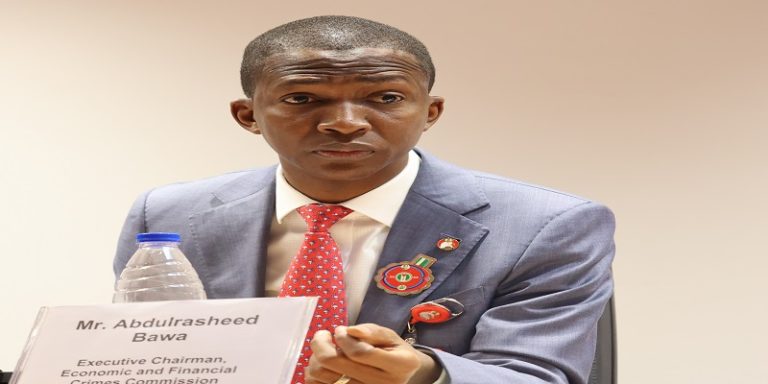
THE chairman of the Economic and Financial Crimes Commission (EFCC), Abdulrasheed Bawa, has sought more support from journalists in tackling corruption, urging them to use investigative reporting tools to expose corrupt practices.

This was disclosed in a statement that the EFCC spokesperson Wilson Uwujaren issued and signed on Saturday, April 29.

According to Uwujaren, Bawa made the call on Thursday, April 27, 2023 at a training workshop for journalists in Maiduguri, Borno state. The theme of the one-day workshop was, ‘Effective Reporting of Economic and Financial Crimes for Journalists’, especially those covering the agency’s activities.

The anti-corruption agency chairman called on journalists in the Northeast to be proactive and use investigative journalism tools to expose money laundering and terrorism financing.

Journalists during EFCC training IN Maiduguri, Borno state
Journalists at the EFCC training programme in Maiduguri, Borno state

Bawa, speaking through the Commander of the Maiduguri zonal command of the Commission, Oshodi Johnson, urged the participants to be alive to their responsibilities as members of the fourth estate of the realm, and to ask questions where corrupt practices were suspected.

He drew the attention of the journalists to the new anti-money laundering framework and told them to be conversant with it in order to inform the public and other stakeholders better. 

In his words, “The Money Laundering (Prevention and Prohibition) Act, 2022, Proceeds of Crime (Recovery and Management) Act, 2022 and the Terrorism (Prevention and Prohibition) Act, 2022 are new legislations designed to prevent and tackle illicit financial flows and money laundering in Nigeria.”

Bawa further urged journalists to monitor the activities of designated non-financial businesses and professions (DNFBPs) to determine their level of compliance with their obligations to the Special Control Unit Against Money Laundering (SCUML) under the Money Laundering (Prevention and Prohibition) Act, 2022, and the Terrorism (Prevention and Prohibition) Act, 2022.

Journalists after the EFCC training IN Maiduguri, Borno state
Journalists after the EFCC workshop Maiduguri, Borno state

He pointed out that Section 56 of the Terrorism Act empowers SCUML, which is now fully domiciled in the EFCC, to refuse or revoke the registration of any NGO linked to terrorist groups.

Three papers were presented at the workshop. Chris Msheligaveed, in his overview of the anti-money laundering framework, drew attention to the important provisions of the new Money Laundering Act 2022 and the obligations for individuals and corporate bodies, while Obiageli Okechukwu spoke on ‘Digital Payment Statement: Emerging Opportunities for Fraud and Prevention Tips for Victims.’

Assistant Director, Public Affairs, Dele Oyewale, charged the Nigerian media to focus on investigative and developmental journalism, rather than on sensational news.

According to Oyewale, “The fight against corruption can be won if you journalists discharge your responsibilities professionally by engaging in investigative journalism with a focus on social justice and accountability.”

The EFCC said the workshop was organised to interface with journalists and deepen the relationship between the Commission and the media.
Sudan Crisis: Evacuation commences for second batch of Nigerians – FG

0

THE Federal government has said evacuation of the second batch of Nigerians stranded in Sudan would commence on Saturday, April 29.

This was contained in a statement jointly issued and signed on Saturday by the Ministry of Foreign Affairs and the Federal Ministry of Humanitarian Affairs, Disaster Management and Social Development.

According to the statement, the first batch of evacuees at the Egyptian border were currently undergoing required documentation to ensure their entry into the country.

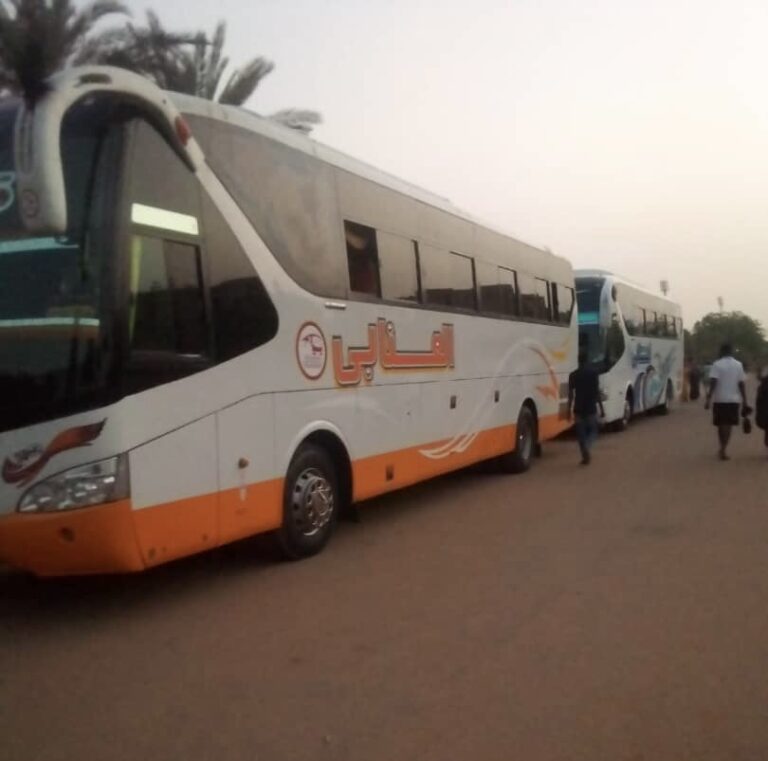
“The movement of the second batch of 29 buses will commence on Saturday, 29th April, 2023. The evacuees are advised to be at the designated locations with only one luggage.

“Contrary to insinuations on the social media, Embassy staff are very much on ground in Khartoum to coordinate the evacuation exercise to the very end,” the statement read.

Nigerians in Sudan awaiting evacuation were advised to cooperate with officials to ensure proper documentation and avoid delays during the journey.

“While the Federal Government empathises with affected Nigerians, maintaining order amidst the desperate situation remains crucial to getting all interested Nigerians out of the war zone in record time before the expiration of the ceasefire, which has been extended by 72 hours,” the statement read.

The ministries also announced that the first batch of Nigerians at the Egyptian border would be evacuated shortly by the Air Peace airline and officials of the Nigerian Air Force, who have been on standby.

Public outcry over the sum of $1.2 million released for the evacuation was also addressed in the statement.

“The outcry over the negotiated sum of $1.2 million for the buses hired for the exercise, is uncalled for. The amount in question, was negotiated in a condition of war, and there are competing demands for same bus services by other countries also trying to evacuate their citizens.

“Therefore, the cooperation and understanding of all and sundry is required to complement ongoing efforts aimed at ensuring the safe return of every Nigerian trapped in Sudan,” the statement read.

The crisis had frustrated the Nigerian government’s efforts to airlift thousands of stranded Nigerians directly from Khartoum, the Sudan capital.

Manufacturer debunks cancer-causing substance claims in indomie products

0

INDOFOOD, the producer of indomie noodles, has debunked the claims by the Taiwan and Malaysian governments that one of its product varieties – chicken flavour – contains ethylene oxide (“EtO”), a cancer-causing chemical linked to lymphoma and leukaemia.

In a statement on Friday, the company said its products are safe for public consumption.

Following their claims, Taiwan and Malaysia have ordered the recall of the products.

The ICIR reports that indomie is a staple food in many homes in Nigeria, cherished by children and adults.

Because of its popularity, many people in the country identify all noodle products as indomie.

The product became popular in Nigeria in the ’90s, though it was first produced in Indonesian, the current headquarters of its manufacturer, in 1972.

Indofood is one of the largest instant noodles manufacturers worldwide. The products are in over 100 countries, including Australia, New Zealand, the USA, Canada, Asia, Africa, Europe and the Middle East.

The product comes in many varieties, from classic soup flavours such as chicken, vegetable, and curry to its most popular flavour indomie mi goreng. 

Its manufacturer claims it produces 19 billion packs annually.

Claims by Taiwan and Malaysia 

On Monday, April 24, Taipei City in Taiwan issued a statement showing the result of the tests it conducted on indomie products in the country.

Part of the statement reads, “In order to ensure the hygiene and safety of food consumed by consumers, the Health Bureau of Taipei City Government sampled 112 instant noodle products in supermarkets, supermarkets, supermarkets, traditional markets, Southeast Asian food specialty stores, general vending stores or wholesale importers to test the ethylene oxide content in 30 stores, and the inspection results found that the residual ethylene oxide did not comply with the requirements.”

Reacting to the statement, the Malaysian Health Director-General Radzi Abu Hassan said the locally produced “Ah Lai White Curry Noodles” ( indomie chicken) had met local compliance standards, but the ministry decided to proceed with the recall to ensure food safety.

Product contains chemical, but safe – Indonesia

Meanwhile, the Indonesian National Agency of Drug and Food Control, known as the BPOM, confirmed the product contained the substance, but at a level acceptable to the standard applied by the agency.

The office said in a statement issued on April 27 that the standard for food products manufactured in the nation could contain up to 85 parts per million (ppm) of Ethylene oxide.

“The level detected in the instant noodle sample in Taiwan (0,34 ppm) is still way below the standard applied in Indonesia and in other countries like the United States and Canada,” part of the statement said.

Our products are safe – Indomie producer

Reacting to the reports on Taiwan’s tests and recall of its products by the country and Malaysia, the manufacturer said in a statement signed by its director, Taufik Wiraatmadja, “All instant noodles produced by ICBP in Indonesia are processed in compliance with the food safety standards from the Codex Standard for Instant Noodles and standards set by the Indonesian National Agency for Drug and Food Control (“BPOM RI”).

“Our instant noodles have received Indonesian National Standard Certification (SNI) and are produced in certified production facilities based on international standards. 

“ICBP has exported instant noodles to various countries around the world for more than 30 years. The Company continuously ensures that all of its products are in compliance with the applicable food safety regulations and guidelines in Indonesia as well as other countries where ICBP’s instant noodles are marketed.”

We’ll address Nigerians on claims – NAFDAC

When contacted by The ICIR Saturday morning, the Director of Public Affairs at the National Agency for Food and Drugs Administration and Control (NAFDAC), Jimoh Abubakar, a doctorate holder, forwarded a text message by The ICIR seeking the agency’s reaction to the issue to the NAFDAC Director-General, Mojisola Adeyeye, a professor, for a response.

Abubakar promised to get back to The ICIR.

The response had yet to come as of the time of publishing this report.

Buhari okays postponement of 2023 census

0

PRESIDENT Muhammadu Buhari has approved the postponement of the 2023 Population and Housing Census, earlier scheduled for May 3 to May 7, 2023 till further notice. 

The ICIR had earlier reported that there were indications that the 2023 that the exercise may be postponed following the statement of the 2023 Census Manager and Director, National Population Census (NPC), Inuwa Jalingo on Friday.

The 2023 census manager had said that there are a series of technical problems and issues that need to be fixed before the Commission proceeds to conduct the exercise.

Meanwhile, in a statement signed by Minister of Information and Culture, Lai Mohammed on April 29, Buhari gave the approval after meeting with some members of the Federal Executive Council and the Chairman of National Population Commission and his team at the Presidential Villa in Abuja on Friday (28 April 2023).

According to the statement, the new date for the census to be determined by the incoming administration which would be led by the President-elect, Bola Tinubu.

Part of the statement read: “In arriving at the decision to postpone the Census, the meeting reiterated the critical need for the conduct of a Population and Housing Census, 17 years after the last Census, to collect up-to-date data that will drive the developmental goals of the country and improve the living standard of the Nigerian people.”

Buhari explained that with the completion of the Enumeration Area Demarcation of the country, conduct of first and second pretests, the recruitment and training of adhoc workers and procurement of Personal Digital Assistants (PDAs) and ICT infrastructures, remarkable progress has been made in the implementation of the 2023 Population and Housing Census.

He commended the methodology being put in place by the Commission to conduct accurate and reliable Census, especially the massive deployment of technology that is capable of delivering world class Census and laying a sustainable basis for future censuses

Buhari instructed the Commission to proceed with arrangements for carrying out the 2023 Population and Housing Census to maintain the progress already made and establish a foundation for the next administration to strengthen these accomplishments.

According to the National Population Commission (NPC), the census earlier scheduled to take place in May 2023 will be Nigeria’s first national population census in 17 years, and it is expected to adhere to international best practices. However, it was earlier postponed due to the postponement of the gubernatorial and state assembly elections.

The ICIR had earlier reported that the National Population Commission (NPC) postponed a training programme organised for enumerators and supervisors involved in the 2023 population census.

The NPC had earlier stated that the census will be conducted digitally in line with the United Nations (UN) recommendations and the Federal Executive Council (FEC) recently approved N2.8 billion for the Commission to procure software to be used for the conduct of the exercise.

Tomato ebola: How farmers, government can curb outbreak after N1.3bn loss – expert

0

FOLLOWING a ravage of tomato farms by the tomato ebola and a consequent loss of about N1.3 billion to farmers, Ikechi Agbugba, a former United Nations consultant, has advised governments and farmers to take necessary steps to prevent further losses.

Agbuba was a consultant to the food crop production transfer station at Ubiaja, and the National Horticulture Research Institute (NIHORT), Ibadan.

Agbugba, who is the senior advisor with Tomato and Orchard Producers’ Association of Nigeria (TOPAN), shared his thoughts with The ICIR on what needed to be done to rescue the situation, which he described as quite saddening.

Caused by an insect called tuta absoluta, tomato ebola or tomato leaf miner is a specie of moth that ravages tomato farms.

The infectious insects had started their destruction of tomato farms from Galama Local Government in Kano and spread to Kaduna, Katsina and Gombe states, according to the Federal Ministry of Agriculture and Rural Development (FMARD).

The FMARD feared the situation could become more severe, with a consequent widening of the country’s tomato needs to three million metric tonnes from the 1.3 million deficit being experienced.

Nigeria actually needs about 5.4 million metric tonnes, FMARD noted.

Agbugba, who also is a senior lecturer at the Department of Agriculture and Applied Economics, Rivers State University, Port Harcourt, warned that the tomato ebola could afflict more farmers.

What farmers can do?

According to the tomato farming expert, farmers can minimise the likelihood of disease outbreaks by adopting better management practices and farming techniques for effective performance.

“One approach is to use tomato seed varieties that are resistant to the tomato ebola disease, and farmers may adopt the practice of crop rotation in controlling its spread,” he said.

Agbugba: advises farmers to use seed varieties resistant to tomato ebola

“Moreover, infested plants and post-harvest plant debris should be totally removed or eliminated from the farm. Predatory mirid bugs could be deployed as biocontrol to manage tuta absoluta infestation,” he suggested.

He also suggested that farmers could avail themselves of financial and technical assistance from non-government organisations (NGOs) and government entities to tackle the difficulties they are encountering.

Farmers could also collaborate with research institutions, as well as food and agricultural experts to devise or execute novel farming methods and technology solutions that can limit crop losses.

Ways government can rescue the situation

As an academic and researcher with diverse exposure consulting for the UN on horticulture-based projects, Agbugba called for government’s considerable investment in research.

“This will be needed to effectively tackle the situation,” he said.

According to the senior lecturer, the government could further provide subsidies and other funding solutions to aid farmers and horticulture-based researchers, particularly those focusing on tomatoes in purchasing superior quality seeds, fertilisers and equipment.

In other words, NGOs can offer training and technical assistance to build farmers’ capacity in improving their productivity and adopting better farming practices.

“Undoubtedly, the government can implement policies and promote programmes that can enhance, as well as encourage investment in the tomato industry, thereby strengthening tomato supply chains and also supply chain stakeholders’ collaboration so as to create a unified approach in addressing the challenges faced by the sector,” he said.

Tax incentives, for instance, can be granted to firms that invest in tomato production and processing.

“There is, therefore, room for the government to invest in transportation and storage infrastructure as that will, to a large extent, mitigate post-harvest losses.

“The government can also collaborate with supply chain stakeholders to create a unified approach to address the challenges faced by the sector,” Agbugba added.

New benefits unlocked for Nigerian migrant workers

IN a bid to improve migration governance and management, the Nigerian government has launched the revised National Policy on Labour Migration (NPLM) 2020.

As a source, transit and destination country, managing migration in Nigeria has remained a priority for the government, which has taken a firm stance against slavery and exploitation.

Unveiling the 95-page document in Abuja on Thursday, April 27, the permanent secretary, Federal Ministry of Labour and Employment Kachollom Daju, said managing migration represents a growing challenge as Nigeria occupies an important position in the global migration landscape.

“Formulation and implementation of labour migration policies and processes globally is a shared responsibility which requires the participation of all stakeholders to ensure efficacy and success,” Daju said.

The revised national policy, which was approved by Nigeria’s Federal Executive Council (FEC) in 2022, is divided into seven parts that include chapters that broadly illustrate the governments’ policy aspirations in certain key areas.

Daju identified some of the benefits of having a functional and implementable migration policy as promoting safe, fair, regular labour migration and harnessing its benefits for national development.

Some of the new features of the revised policy relate to safeguarding the rights of migrant workers, including a gender-responsive approach to labour migration and grievance, and justice mechanisms.

It also seeks to combat the increasing challenges of irregular migration, exploitative practices, forced labour, smuggling and human trafficking.

The Nigerian government first launched the NPLM document in 2014, with a vision to establish an effective, responsive, and dynamic governance framework for labour migration in the country.

The policy provided for a periodic review, which informed the initiative led by the ministry in collaboration with relevant stakeholders, and was based on an analysis report on the extent of its implementation.

The permanent secretary said the 2014 edition of the policy recommended that it should be reviewed every three years by the Technical Working Committee on Labour Migration Governance and Management in Nigeria.

She said this was based on “the need to incorporate emerging global migration dynamics and national realities on labour migration to further strengthen labour migration governance in Nigeria.”

Daju appreciated the German Development Cooperation and the International Labour Organisation for their support towards the development of the revised policy.

The Country Director of the International Labour Organisation (ILO), Vanessa Phala, commended the Nigerian government for its recent approval of the amendment of the labour laws and ratification of ILO Conventions on Migrant Workers (Supplementary Provisions), Private Employment Agencies and Violence and Harassment.

This, according to Phala, demonstrates the commitment of the government towards attaining the objectives of the Abidjan Declaration towards shaping the Decent Work Agenda across the continent, including through promoting fair and effective labour migration governance.

“Suffice to state that these frameworks embody provisions of various International Labour Standards aligned to decent work agenda, including through normative provisions that seek to ensure adequate safeguard mechanisms for migrant workers in a bid to facilitate well-functioning labour markets,” she said.

Nigeria is currently experiencing a brain drain, popularly known as ‘japa’ in Yoruba, due to highly qualified migrant outflows in critical sectors such as health, IT and entertainment.

Yet, many Nigerian migrants are not treated as expatriates, but end up doing menial jobs even though they might have graduate degrees or other qualifications.

Nigeria’s revised National Policy on Labour Migration is focused on protecting the dignity and security of Nigerians who migrate from the country in search of greener pastures.

We incurred losses of N50bn due to CBN naira policy – Southwest poultry farmers

0

POULTRY farmers in Nigeria’s Southwest have said they incurred losses of about N50 billion due to the disruption in their businesses caused by the recent naira redesign policy of the Central Bank of Nigeria (CBN).

According to the chairman of the Poultry Association of Nigeria (PAN) in the zone, Gideon Oluleye, the losses were due to egg glut and perished poultry products during the implementation of the policy.

Oluleye, who spoke to newsmen in Ibadan, the Oyo state capital, on Friday, April 28, expressed concern that about 25 million jobs in the poultry industry could be under threat if the government did not intervene to mitigate their challenges.

He stated that while farmers were not against the policy, the losses associated with its implementation before the Supreme Court judgment had almost destroyed the poultry industry.

Oluleye, appealing to the Federal government to quickly take action, highlighted the heavy losses that farmers suffered, with many farms collapsed or running at half capacity, and others in danger of shutting down.

He urged the government to mop up approximately 15 to 20 million crates of unsold eggs and chickens, and to use these products to feed internally displaced persons (IDPs) in camps and all correctional facilities throughout the country.

He also suggested using unsold eggs in government hospitals, saying eggs aid in quick recovery and building up immunity of sick patients, just as he called for the resuscitation of the school feeding programme, which he said relies heavily on eggs and chicken meat.

Oluleye further requested that the government should intervene by subsidising major inputs in poultry farming, particularly maize, which sells for N240,000 a tonne, while a tonne of soya beans goes for N450,000.

He said, “Let me remind you that the negative impact the COVID-19 had on farmers and farms is yet to abate.

“Hardly had farmers recovered from this when the CBN brought another hardship on them through the policy of the naira redesign.

“As we speak now, between 15 and 20 million crates of eggs are in the economy looking for buyers.”

He emphasised the urgent need to rescue the poultry sector of the Nigerian economy, which generates approximately six per cent of the county’s gross domestic product (GDP).

Similarly, the Ogun state chairman of PAN, Idowu Asenuga, who also spoke with journalists, lamented that the sharp fall in the prices of poultry products in the Southwest alone resulted in N40 billion losses, while farmers incurred N10 billion losses from perishable products in their inventories.

Asenuga appealed to international grants and donor agencies, including the International Fund for Agricultural Development (IFAD), the World Bank, and the Private Financial Advisory Network (PFAN), to support poultry farmers in Nigeria.

The naira redesign policy, which was the brainchild of the Muhammadu Buhari administration through the CBN, entailed the reconfiguration of the 200, 500 and 1,000 naira banknotes. The policy also involved the recalling of the old naira notes in those categories.

It was initiated last year with the intention to address high inflation and address vote buying, among others.


READ ALSO:


However, its poor implantation by the CBN cost the Nigerian economy N10 trillion to N15 trillion of national productivity in the first quarter of 2023, according to the former director-general of the National Bureau of Statistics (NBS), Yemi Kale.

The Supreme Court nullified the policy in February and extended the validity for the old currency circulation till December 31, 2023.

The apex court’s decision arose from a suit filed by the Zamfara, Kogi and Kaduna state governments challenging the implementation of the policy.


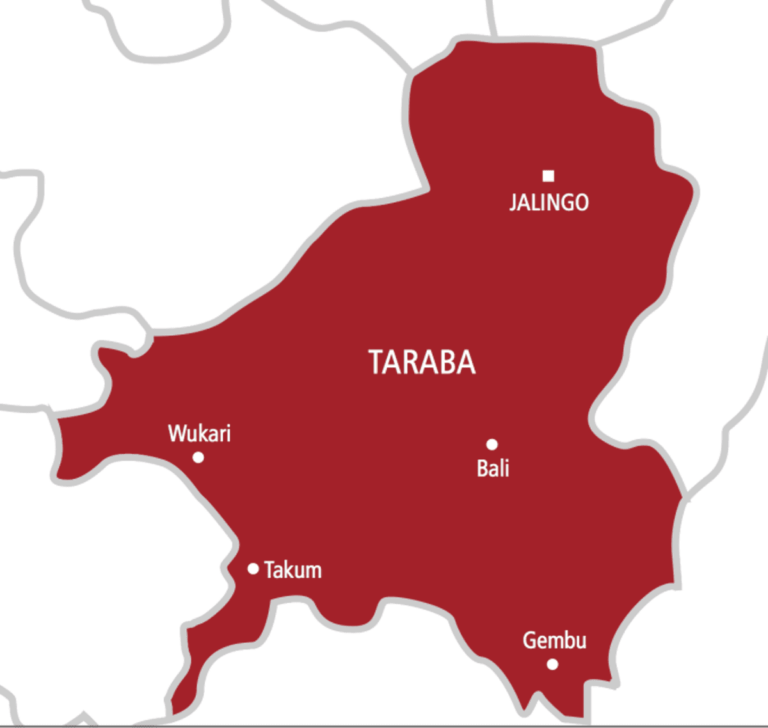
New twist in Taraba APC crisis: Faction demands arrest of ex-chairman as new leadership emerges 

SOME members of the All Progressives Congress (APC) in Taraba state have called for the arrest of the party’s former chairman, Ibrahim El’Sudi, for alleged impersonation. 

A new set of party leadership has also emerged as the intra-party crisis rocking the state chapter of the APC deepens. 

The party is currently divided into two factions, with one loyal to the APC governorship candidate, a senator, Emmanuel Bwacha, and the other to David Sabo Kente, a governorship aspirant.

Addressing journalists at the state capital, Jalingo, on Friday, April 28, the acting chairman, James Ahmadu, criticised the expulsion of Kente and the senator-elect for Taraba South senatorial district, David Jimkuta, by the chairman. 

Ahmadu said, “We are responding to the purported expulsion of David Kente and our senator-elect for Taraba South Senatorial district, David Jimkuta, by the former state chairman, Ibrahim El’Sudi.

“I and members of my state executive, as well as members of the APC in Taraba state, received the pronouncement with rude shock and utmost disappointment.”

Ahmadu described the move as illegal, noting that El’Sudi ceased to be the state chairman of APC in February. 

About three weeks before the 2023 elections commenced in February, 38 members of the State Executive Committee had passed a vote of no confidence on El’Sudi as the party chairman and allegedly removed him from office. 

The aggrieved executive committee members said El-Sudi’s dismissal as the party chairman was due to his failure to discharge his responsibilities, negligence, and misconduct.

But the party’s other faction, the Bwachi loyalists, opposed the move, saying “perpetrators of this unholy idea are in deep romance” with people outside the party. El’sudi also said he remained the chairman of the APC in Taraba.

Last Tuesday, the crisis took a dramatic turn when El’Suldi announced the expulsion of Kente and  David over alleged anti-party activities, and recommended their expulsion from the party to the national secretariat.

Ahmadu told journalists in Jalingo that sanctioning two prominent party members was an act of desperation from “a man acting the script of his paymasters.”

He said El’Sudi had been removed as the party chairman and was no longer in the capacity to eject or expel anyone.

He noted that as the then deputy chairman and highest-ranking official of the state executive, he was unanimously and legally endorsed as the state acting chairman of the party.

“By the provision of the APC constitution, El’Sudi ceased to function as chairman since February 10 and has no legal right to suspend or expel any member from the party.

“We find his actions in this sad development as an act of desperation from a drowning man who is acting the script of his paymasters. We also call on the national leadership of our great party to expediently call him to order before he creates confusion in the party,” he said.

Backstory

The current crisis in Taraba APC has links to when Bwacha became its candidate in the 2023 gubernatorial election.

Bwacha, who had been elected in the senate to represent Taraba South in the National Assembly on the platform of the Peoples Democratic Party (PDP) in the 2011, 2015 and 2019 general elections, defected to the APC in February 2022. 

Bwacha’s nomination attracted controversy as aspirants who participated in the primary election alleged irregularities.

Kente, a leading aspirant, rejected the results and approached the judiciary for an annulment.

The Federal High Court in Jalingo removed Bwacha as the APC’s governorship candidate in September 2022. The court held that the party did not conduct a primary that produced Bwacha as a governorship candidate.

The Supreme Court also upheld the judgment, nullifying Bwacha’s candidature. 

APC conducted a rerun in February 2023 and Bwacha re-emerged as the winner, although Kente and four other aspirants boycotted the election.

Displeased, Kente filed a contempt suit against the APC, INEC and Bwacha. He said they violated the court’s orders by conducting a rerun because the apex court never ordered it.

After the rerun, Bwacha proceeded as the APC guber candidate. However, he lost the election to Agbu Kefas, the candidate of the PDP.

Sudan crisis: Nigerian students, others stranded at Egyptian border

0

CHAIRMAN of the Nigerians in Diaspora Commission (NiDCOM) Abike Dabiri-Erewa has said about 7,000 people, including Nigerian students being evacuated from Sudan, are stranded at the Egyptian border.

According to a statement by the Commission’s Media, Public Relations and Protocol Officer, Gabriel Odu, on Friday, April 28, Dabiri-Erewa said the Nigerian Mission in Egypt was making efforts to secure the students’ entry into the country.

“Dabiri-Erewa said over 7,000 Nationals, including Nigerians, are not being allowed to cross the border into Egypt since their arrival late yesterday evening.

“She added that The Nigerian mission in Egypt has been working tirelessly on this as the Egyptian authorities are insisting on visas by fellow Africans to transit back to their countries. She appealed to the Egyptian authorities to kindly allow the already traumatised travellers to transit to their final destinations in various countries in Africa,” the statement noted.

The students had left Khartoum, the Sudan capital, by road for Aswan, in Egypt, early on Wednesday, April 28.

During the journey to Aswan, a video circulated on social media in which students complained of being abandoned in the desert due to non-payment of fees to the bus operators by the Federal Government.

However, Dabiri-Erewa later confirmed that the issues were settled, and the students arrived at the Aswan border in Egypt on Thursday, April 27.

The National Emergency Management Agency (NEMA) had confirmed that they would be airlifted from Aswan, Egypt, to Abuja, Nigeria.

The Sudan crisis had frustrated the Nigerian government’s efforts to airlift the stranded students directly from Khartoum.

Thousands of foreigners, including at least 10 000 Nigerian students and over five million Sudanese of Nigerian origin, were trapped in Sudan, following intense fighting between two rival forces in the country.

Ex-lawmaker arrested over alleged rape of teenager in Cross River

0

A FORMER member of the Cross River State House of Assembly Patrick Uguge has been taken into police custody over the alleged rape of a 19-year-old girl.

Principal Counsel at the Basic Right Counsel Initiative (BRCI) James Ibor confirmed to The ICIR that the ex-lawmaker was arrested on Thursday, April 27.

The teenager, said to be a relative of Uguge’s wife, reported the alleged rape to the BRCI. The unnamed teenager alleged that the incident occurred at a hotel in Ogoja on Friday, April 21.

Ibor said: “I can confirm that the survivor reported to us, and we are trying to stabilise her, we are providing psycho-social support to her, and we have notified the police to investigate the case. He was arrested yesterday (Thursday) night. I am aware that the police have commenced investigations, even though there is a lot of pressure on them which is capable of suffocating investigations.

“In fact, the Police Headquarters has become a tourist site, sort of. They’ve been swarming around the station and calling some of my staff to mount pressure on me.”

He also stressed the need for rape cases to be adequately prosecuted and called on the Commissioner of Police (CP) in the state, Sule Balarabe, to ensure the prosecution of the suspect.

“My only concern is that the pressure on the survivor and the investigators is actually unnecessary. I want to use this opportunity to urge the CP Balarabe, to bow out honourably by refusing to be intimidated or harassed by these political office holders who should be held to account,” he said.

The ICIR contacted the Public Relations Officer (PRO) of the Cross River State Police Command, Irene Ugbo, who also confirmed that Uguge had been arrested.

“I have confirmed the case. The man is with us, they are interrogating him now,” she said.