THE sittings of the Ebonyi State Election Petition Tribunal have been moved to the Federal Capital Territory (FCT), Abuja.
The Secretary of the Tribunal, Nyior Henry Sekulla, in a statement on Wednesday, April 26, said the relocation is with immediate effect.
According to Sekulla, the relocation followed a directive issued by the President of the Court of Appeal, Monica Mensem.
Sekulla observed that the election petition tribunal office in Ebonyi State Judiciary Headquarters in Abakaliki has ceased operations due to the decision.
According to him, all proceedings about the matters before the tribunal will continue in Abuja.
“The Honourable Justice Monica Dongban Mensem, President Court of Appeal – HPCA, has through the Deputy Chief Registrar, Election Petition Tribunal (EPT) Headquarters Abuja, directed the relocation of EPT sitting here to FCT Abuja.
“Therefore, in compliance with the HPCA directives, the petitioners, counsel to parties and the general Public is hereby informed via this medium that the EPT sitting here in Abakaliki thereby cease to operate in Abakaliki as at 26-04-23; filings of processes, taking of proceedings etc. shall henceforth continue at Abuja,” Sekulla said.
Sekula said he lacked the authority to explain the reason for the action.
However, he pointed out that the development also affected the Rivers State Election Petition Tribunal and another state.
The All Progressives Congress (APC) candidate, Francis Nwifuru, emerged as the winner of the March 18 governorship election in Ebonyi State.
The Independent National Electoral Commission (INEC) returning officer in Ebonyi, on Monday, March 20, declared Nwifuru winner after he polled 199,131 votes to edge his closest rival, Ifeanyi Odii of the Peoples Democratic Party (PDP).
Odii scored 80,191 votes, while the All Progressives Grand Alliance (APGA) candidate Benard Odoh got 52,189.
Odii and Odoh haverejected the declaration of Nwifuru as the winner of the election and governor-elect of the state.
Nwifuru is the Speaker of the Ebonyi House of Assembly.
The different political parties are yet to react to the election tribunal’s move to Abuja.
NIGERIAN students left stranded as a result of the ongoing war in Sudan on Wednesday, April 26, began their journey back home.
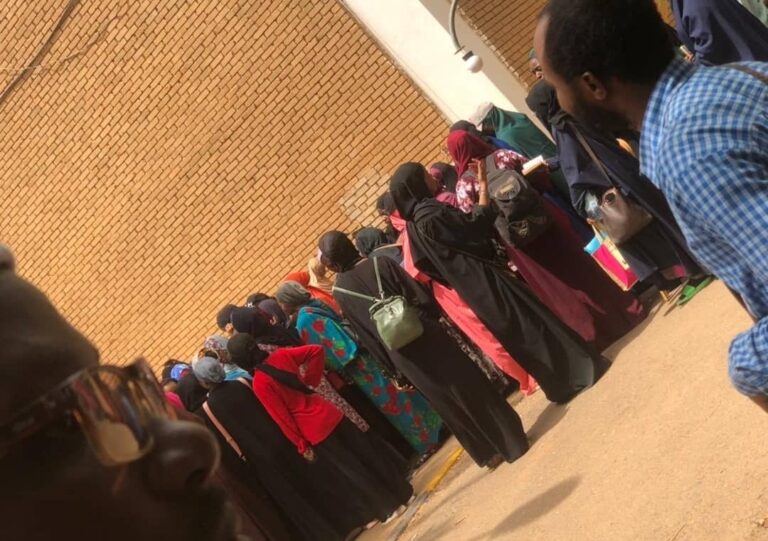
Chairperson and Chief Executive Officer of the Nigerians in Diaspora Commission (NIDCOM) Abike Dabiri-Erewa, disclosed that the students would be ferried in buses to Egypt before taking a flight to Nigeria. The evacuation is being supervised by Nigerian mission officials in Sudan.
The students will spend approximately 28 hours on the road to cover a distance of 2032 kilometres. From Egypt, they will be airlifted to Nigeria, according to arrangements made.
Dabiri-Erewa said in a tweet: “Let’s remember them in our prayers as they journey home. War is a terrible thing!!”
Nigeria’s Foreign Affairs Minister Geoffrey Onyeama, stated earlier during a television programme that the students would be evacuated by road as airports were being bombed.
Onyeama said about 5,500 students had already indicated interest in returning home.
Meanwhile, there are no signs that the warring parties in Sudan are ready to seriously negotiate an end to fighting, the United Nations (UN) envoy to Sudan Volker Perthes told the Security Council meeting in New York City on Tuesday, April 25.
“There is yet no unequivocal sign that either side is ready to seriously negotiate, suggesting that both think that securing a military victory over the other is possible,” Perthes said.
More than 420 people have been killed and over 3,700 others have been wounded in the conflict, according to the WHO’s Eastern Mediterranean Regional Office.
Of those killed, at least 273 are believed to be civilians, while 1,579 non-combatants are among the injured, according to the Sudan Doctors’ Syndicate, a pro-democracy group monitoring casualties.
UN Secretary-General Antonio Guterres, described the violence and chaos in Sudan as “heartbreaking” and warned the UN meeting on Tuesday that the fighting could spread to other countries in the region.
On Tuesday, it was reported that one American and five UN staffers were among the hundreds that have been killed amid the ongoing conflict, according to officials.
“Sudan borders seven countries, all of which have either been involved in conflict or seen serious civil unrest over the past decade,” Guterres said.
“The power struggle in Sudan is not only putting that country’s future at risk. It is lighting a fuse that could detonate across borders, causing immense suffering for years, and setting development back by decades.”
THE first batch of Nigerian students trapped in Sudan following the unrest in the country will likely arrive Abuja, Nigeria’s capital, on the evening of Thursday, April 27, according to the National Emergency Management Agency (NEMA).
Public Relations Officer (PRO) of the Agency Manzo Ezekiel disclosed this during an interview with The ICIR on Wednesday, April 26.
Ezekiel said the Nigerian government had begun transporting the first set of students to Aswan, a city in Egypt, from where they will be airlifted to Nigeria.
He also said the students will likely return late on Thursday night due to the distance between the Sudan capital city, Khartoum, and Aswan.
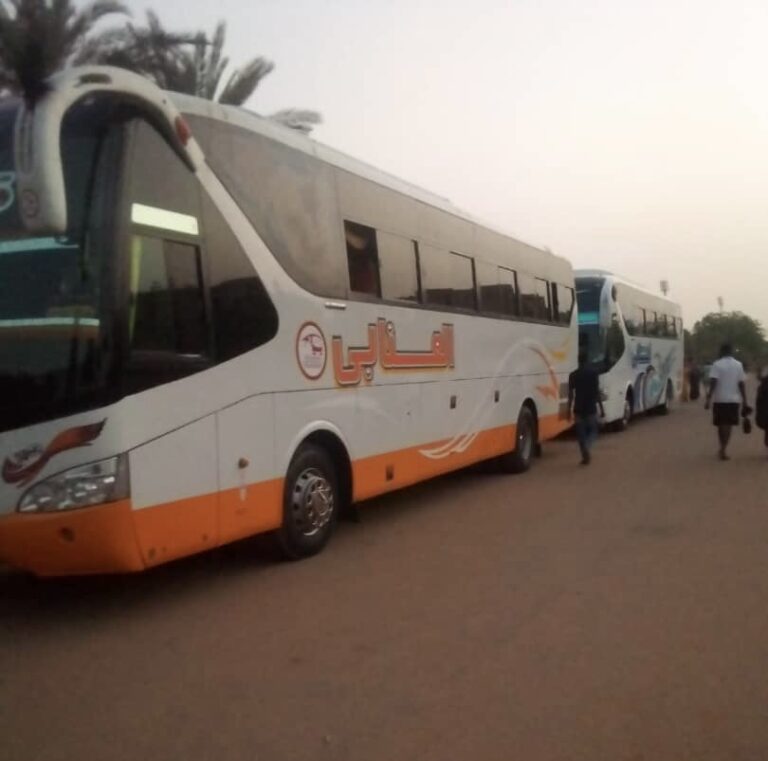
“The government has engaged bus operators’ services that will move these Nigerians out of the warzone to Aswan in Egypt. So the airlift is going to take place from Aswan to Abuja. We are using buses, quite okay, but we are not using buses to convey them from Sudan to Nigeria.
“And the distance between Khartoum and Aswan is roughly 45 hours. So it is quite a long journey. Now, I can confirm that the buses have arrived and as we are speaking now, I believe the first batch of movement must have commenced. So if they have taken off now, it will mean that we should be expecting their arrival at Aswan, maybe tomorrow evening,” he said.
He noted that the stop in Aswan would be brief, after which the journey to Abuja would begin.
“I don’t think they are going to stay there for long because arrangements have been made for their feeding so that as they arrive there, they will be fed, then they will be airlifted to Nigeria. They may arrive tomorrow, but if it is tomorrow, it will be at night.”
Ezekiel said that several technicalities had stalled efforts by the government to evacuate the students earlier.
“The students that we are talking about, they are mostly young people. When you are moving young people in a conflict zone, there is bound to be suspicion one way or the other. You can’t just move young people like that in a war zone without having security cover, at least to take them to the border, then the security in Egypt will take over to escort them to Aswan,” he said.
Chairman, Nigeria in Diaspora Commission (NIDCOM) Abike Dabiri-Erewa announced via her Twitter handle on Wednesday, April 25, that students had begun boarding the buses that would convey them to Egypt.
“As our students in Sudan queued up orderly to board their buses to Egypt enroute to Nigeria, supervised by Nigerian mission officials in Sudan. Let’s remember them in our prayers as they journey home,” she tweeted.
At least 10,000 Nigerian students and over five million Sudanese of Nigerian origin have been trapped in Sudan following a conflict between the Sudanese armed forces, led by Abdelfattah al-Burhan, and the Rapid Support Forces (RSF), a paramilitary force under the leadership of Mohamed Hamdan Dagalo.
According to the World Health Organisation (WHO), at least 400 people have died in the fighting, and almost 3,500 more have been wounded in Khartoum, the western region of Darfur and other states.
The Nigerian embassy created WhatsApp and Telegram platforms for the students and other Nigerians in Sudan for proper coordination and regular updates.
Nigerians can contact the embassy on any of the following numbers: +249 90 765 0702, +234 803 698 1824, +249 90 132 5359, +249 92 440 1217.
I was privileged that I had her as my wife for 32 years and for an additional five years earlier as a schoolmate and friend in courtship.
Our friendship and companionship were designed like no other. Ours was carved in rare blocks from whichever angle you look at it.
We met in the course of an unusual circumstance and built up from scratch.
On our wedding day, we set out on a bus ride to the marriage registry.
We had no new dresses.
No Photograper.
No guests.
No wedding reception. We could not afford them all.
We had faith in God.
We were full of determination.
The defunct Ogwashi-Uku Polytechnic gave me admission in 1983 to Study Mass Communications.
The same year, she gained admission into Ozoro Polytechnic to study Banking and Finance.
It is not difficult to conclude that unless something extraordinary happened, our paths could never have crossed.
Midway into our programmes, both schools were shut down by the General Jeremiah Useni military administration in the then Bendel State.
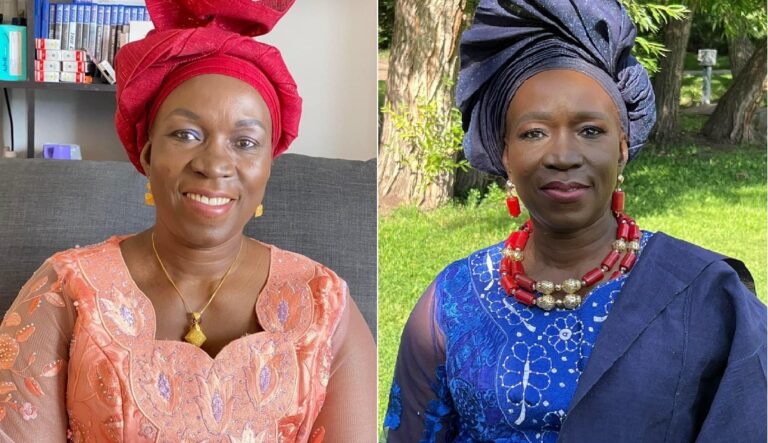
Late Mercy
The forced closure of the two tertiary institutions brought excruciating anxieties for students of both institutions who had their hope hanged in the balance.
Just right inside this anxiety and uncertainty was the story of our lives, our future, and our family.
Following the shutdown of the two polytechnics, Students of both schools were asked to report to Auchi Polytechnic for absorption.
But Auchi Polytechnic, for administrative and academic reasons, could not accommodate all the students.
About half of the students were provided space in Benin City at the Institute for Continuing Education (ICE) to study for the Auchi Polytechnic Diploma.
All the affected students of both Ozoro and Ogwashi-Uki Polytechnics, including Mercy and I, resumed classes at ICE premises in Benin.
The closure of the two schools had a silver lining for us.
So, there was this beautiful girl, ebony black and well-shaped, Mercy Ogie, one of the students studying Banking and Finance from Ozoro Polytechnic.
We both entered this school arrangement without knowing that this was the most significant event to influence our lives. And it was carefully embedded by providence, destiny and fate inside this seemingly intractable crisis of the closure of our different institutions.
About three months before concluding the program at ICE, I was at the departmental block when I saw this pretty girl again.
Recently my eyes were on her, but we had never spoken to each other, except during our passive meetings at students’ brief meetings, where, as one of the students’ leaders, I explained the efforts to be sure we completed our program in one piece.
It was always like a general meeting where those of us in the forefront addressed the students. So I can say, and she confirmed that she knew me from those public meetings.
This morning I saw her again, smart, beautiful and exuding all the seriousness you can possibly infer from a physical demeanour.
My heart pounded, and my head went turning again. I couldn’t resist it this time.
And was it a voice I heard? It was loud inside of me, and it was clear. “That’s your wife.”
“Wife ke?”, (wife?), I queried, but without thinking, I ran after her to her class, Banking and Finance, about three class halls away from the Mass Comm hall.
I stood at the door and beckoned on her to be excused outside to the car park, a few steps away.
She obliged.
The message was straightforward.
It was respectfully delivered.
No introductions.
Just salutations and I dropped my message:
“I don’t expect you to respond to what I want to tell you. I am not looking for a girlfriend. I am convinced that you will be my wife.“
Classical.
She didn’t disappoint.
“Is that all” she responded.
I replied, “Yes.”
“Can I go now?” she asked, and I responded, “Yes,” again.
I was not expecting anything more.
The encounter was not more than 3 minutes.
I watched her step off and away from my sight.
She didn’t look back, against my expectations, that she would, at least, look back.
I was greatly relieved, and I didn’t see her again until three weeks later when I went to her class to invite her for a drink at the kiosk.
That was when we introduced ourselves, and we got to say a little about our backgrounds.
“I am Mercy,” she told me.
She told me she had been trying to process the message I had dropped with her. According to her, she couldn’t understand. I told her that I hardly understood too.
She wasn’t considering marriage, as the current academic challenge was big enough.
I wasn’t thinking of marriage either.
We became friends, got along, and we soon graduated.
I moved to Lagos to join The Guardian on an internship.
She got a job with the defunct New Nigeria Bank, and she picked the offer to resume in the bank’s branch in Lagos.
Five years later, we got married at the City Hall Registry, Lagos.
The entire marriage ceremony at City Hall couldn’t have lasted more than 30 minutes.
We were not quite ready financially, but we avoided unnecessary expenses.
We were packed with determination.
We had a budget of N14,000, about my annual salary on The Guardian Newspapers as a Staff Reporter, for both the traditional ceremonies and the registry.
A week earlier, on May 11, 1991, we were in Benin City for the traditional ceremonies.
It was attended by only our close friends and family members.
She had confided in her parents that our budget was nothing to write home about.
So in one of those pre-wedding visits, my father-in-law, Pa Gabriel Ogie, of blessed memory, a school Principal, took me into the inner recess of the house for a discussion.
“I know you don’t have all the means for an elaborate marriage ceremony. Just bring in your parents and immediate family members. I will bless you and my daughter in marriage. You don’t need to bother yourself with anything”, he said.
We had a wonderful ceremony: my parents, siblings and a few cousins. A few friends – David Ogah and Edetean Ojo, both of whom were my colleagues at The Guardian Newspapers, Frank Alabi of blessed memory from Daily Times, Gloria Oyerior, my course mate and a couple of my other friends and Mercy’s colleagues from New Nigeria Bank – it was a small group of family and close friends.
From the lean budget, we decided we could only buy new clothes for the traditional ceremony.
She didn’t insist on “standards.”
We couldn’t afford to buy any new dresses for the ceremony at the registry.
In the office, I told Edetean Ojo and David Ogah that we have decided to have them as witnesses to our marriage.
They obliged us.
On Saturday, May 18, 1991, very early morning, my Mercy and I headed to the bus stop.
We had no budget for a taxi.
Edetean and David found their way to City Hall at 8 a.m.
None of us had personal cars.
We took our first bus from Iyana-Ipaja to the Ikeja bus stop.
From Ikeja, we took another bus heading to CMS.
But something happened.
In Maryland, just before the bus stop, there was a slight traffic build-up on both sides of the road.
I sat near the window in the yellow-painted small FEDECO bus on the side of the inner lane, and right from the other side of the road, I heard a call.
I saw a senior colleague in The Guardian newsroom, Emeka Okoroayanwu. He sighted me on the bus.
He wasn’t aware of our marriage ceremony. He was one of the three reporters proudly owning a car, a Peugeot 504, in the entire newsroom of The Guardian.
“Austine, where are you headed,” he asked.
“Just get down from the bus and wait for me at the bus stop,” was his quick response when I told him we were going to City Hall for our marriage.
He turned around and took us to City Hall, to our delight.
Edetean Ojo and David Ogah were already waiting when we got to City Hall.
It was a few minutes past eight, and the Registrar was already waiting.
There were usually dozens of marriage ceremonies in City Hall on Saturdays.
I had pleaded with the registry that we desired that our ceremony be the first in the morning, and they obliged and fixed 8 am.
I wore my regular shirt and trouser while she dressed in her typical office attire.
No new dress.
No crowd.
No photographer and no reception party.
After clearing the doubts, which the Registrar very clearly expressed, he joined us together in matrimony.
The only spectator was my senior colleague, Emaka Okoroayanwu.
The other two, Edetean and David, took turns to sign and witness our marriage.
Both of them were bachelors.
From City Hall, we all, except David Ogah, proceeded to Blue Cross Hospital, Ogba, driven by Oga Emeka, to see a mutual friend, Emmanuel Okoyomo, who was hospitalised.
Okoroayanwu discarded his weekend engagements, drove us all around and took us home to Iyana-Ipaja.
None of the other tenants in the face-me-I-face-you room and parlour setting of our house knew it was our wedding day.
No family members were involved.
The man whose rooms were opposite our rooms was furious a week later when I told him the story.
He said he would have driven us down in his car if I had told him.
We didn’t know him much as we had just moved into the apartment from a single room where I lived.
I apologised and explained that we didn’t want to bother anyone.
Ours was a firm reliance on God for everything and avoiding unnecessary expenses.
Our experience in school was partly responsible for our desire and decision not to send our children to any university or polytechnic in Nigeria if we could afford it.
This desire was a family prayer point. For this reason, we didn’t have more than two children. We feared more children could hamper our desire to have our children attend some of the best institutions in the world.
The prayer was answered.
We moved our children, one after the other, midway through their secondary school in Nigeria to Southern Ontario College, a high school in Canada.
They ended up at the University of Toronto and York University, to our delight.
They are our story, our success, our perseverance, hope and commitment.
Our joy remains that despite her battle with cancer, which lasted ten years, she saw Bright and Clifford grow into very responsible young adults. They crowned it up with their marriage to the most beautiful, well-groomed and equally well-educated girls who have now filled the space for daughters in our home.
For over thirty-five years, I sojourned with an angel, a woman of class and ideas.
Her respectful disposition, intelligence, discipline, her sincerity and love have enabled our success, my success.
I derived my energy, my inspiration and courage from this woman.
She made more sacrifices to keep us going.
She wrapped up her job in the bank in Lagos to join me in Abuja.
She dropped her thriving telecoms business in Nigeria to join and live with our kids in Canada.
I valued and enjoyed her trust and unimaginable confidence and tolerance.
I saw the efficacy of her prayers over the children and me.
On average, she lived with and managed the children for at least 70 percent of our joint parenting, while I probably did not go up to 30 percent, most times, remotely.
She sets the rules and requests my endorsement.
For instance, at the ages of 14 and 16, when the children were alone in high school in Canada, it was compulsory, according to her rules, for us to stay awake till around midnight because of the time difference to be able to Skype with them before we sleep, every day.
Time-in for the children, even as adult university students, was set by her for 7 pm unless they had evening or night classes. Her love, submissiveness, good home management, sound financial management and loyalty combined to cover my inadequacies and shortcomings.
My huge success as a journalist is largely because she supported me. She gave me peace of mind, and God gave us a peaceful home.
For thirty-two years of our marriage, a third party was never invited to settle any quarrel.
She bridged the gaps at home and allowed me to be away, travelling around the country and the world while maintaining an unusual calmness, efficient control and trust.
I have not been able to stop the tears. It is difficult for me to process. We prayed, and we believed, but God made the final decision.
Her battle with cancer was a battle for the family. Our boys gave it everything they had. I was mostly in Nigeria during this period, but I relocated in 2020 to be with them. I had the opportunity to nurse her, gist with her, eat with her and pray with her.
I was by her bedside in the hospital night and day in her last two months. I took a few hours during the day to dash home, and during that time, my son came in to be with her and to read out Bible verses to her.
As she is laid to rest on Saturday, April 29, I bless the day I met her. I salute her courage, tolerance, trust, commitment and love.
Above all, we give all the glory to God, who formed us and who, from the beginning, permitted us to walk according to his plans.
We thank our friends and family members who believed in and supported our dreams.
Adieu, my friend, my companion and my unconditional lover.
I will meet you again on the day of the resurrection.
Agbonsuremi Augustine In Regina, Saskatchewan, Canada, April 2023 agbonsuremi@yahoo.com
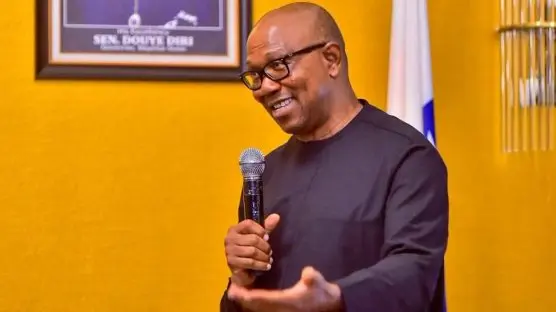
On April 19, 2023, a Twitter user, @PastorMarvy claimed that Anambra recorded 53.7 per cent poverty rate when the Labour Party presidential candidate, Peter Obi was the governor of the state.
@PastorMarvy said this while reacting to a tweet from Obi where he promised to work to mitigate poverty starting from northern Nigeria.
Obi served as the governor of Anambra from March to November 2006, February to May 2007, and June 2007 to March 2014.
The tweets reads: “The guy that had a 53.7% poverty in a population of 4 million as governor of Anambra state wants to pull 128.1 million Northerners out of poverty. This is why many countries sees us as Jokers because what is giving that guy the audacity?” (SIC).
The tweet has generated over 50 retweets and likes as of April 22, 2023.
He later tweeted the photo of President/Chief Executive of the Dangote Group, Aliko Dangote and BUA Group chairman AbdulSamad Rabiu with a caption that reads :
“These are the people Peter Obi wants to pull out of poverty.”
Anambra recorded 53.7 per cent poverty rate during Peter Obi’s era as the governor of the state.
THE FINDINGS
Findings by FactCheckHub show that the claim is TRUE.
Poverty is generally defined as a state of being poor.
The 2010 Poverty report by National Bureau of Statistics capturespoverty ratesacrossNigeria based on three different approaches namely: Absolute Poverty Approach, Relative PovertyApproach and Dollar per day.
According to the report, which documents the average poverty headcount rate across Nigerian states, Anambra recorded 53.7% poverty rate between 2009-10 when Obi was the governor of the state.
Between 2003-2004 before Obi became the governor, the poverty rate in the state stood at 41.4% meaning that the figure increased by about 28% under Peter Obi.
FactCheckHub could not access the poverty report for the period when Obi left the office in March 2014 because the National Bureau of Statistics did not release subsequent poverty reports until 2020. The report shows that Anambra’s poverty rate reduced to 14.8% in 2019.
THE VERDICT
The claim that Anambra recorded a 53.7% poverty rate under Peter Obi’s leadership as the governor of Anambra state is TRUE, according to data obtained from the National Bureau of Statistics.
This report was first published by the FactCheckhub read the original here
NIGERIA needs to negotiate for easier terms on debt portfolios this year to avoid a debt trap by 2024, a white paper shared by APO Group, a pan-African communications consultancy, has suggested.
In the report shared on Tuesday, April 25, Nigeria, Ghana and Kenya topped the list of African countries expected to seek a unique treatment out of their debt obligations.
While the federal government of Nigeria had in December last year denied having any plan to restructure its debt, the country’s total public debt stock of N46.25 trillion as at December 31, 2022 remains a concern, The ICIR can report.
Primarily, what Nigeria needs to do is focus attention on negotiating its domestic debt, which stands at N27.55 trillion, since the cost of servicing it has become unaffordable owing to increasing benchmark rate resting at 18 per cent in March, from 11.5 per cent in January 2022.
According to the report, the Nigerian government has passed a wrong message on the need for a potential debt restructuring, and the extent such a treatment would take.
While an external restructuring seems unlikely in the immediate outlook, a domestic debt swap is on the cards in 2023, despite concerns over its rationale.
“Transparency over Nigeria’s debt profile, future central bank lending policies, and relations with creditors will determine whether Nigeria is heading towards a managed debt treatment in 2023 that would reset its debt profile on a sustainable path, or if the country is facing a debt crisis and potential non-payment scenario,” the report stated.
The chief executive officer of Pangea-Risk, Robert Besseling, added, “If Nigeria’s central bank does not cease its controversial direct budget financing and development funding policies later this year, the country’s debt position will significantly deteriorate and make a painful restructuring inevitable.”
Although Nigeria’s public debt-to- gross domestic product (GDP) remains below the 40 per cent threshold that is considered healthy for a developing economy, the report argued that its debt servicing costs had become unaffordable.
Debt-service costs consumed 83 per cent of government revenue in the first eight months of 2022, the report stated, before spiking to 113 per cent, and then stabilising at 103 per cent by the end of 2022.
It blamed the main cause for the unaffordable cost of Nigeria’s debt on the rising cost of goods and services – headline inflation which has risen to 22.04 per cent in March this year, from 15.60 per cent in January 2022.
In recent times, the federal government has become more dependent on loans from domestic sources of credit, rather than borrowing from international debt markets.
The report showed that about $1.8 billion was used in servicing domestic debts in the third quarter of 2022, compared to $800 million used for external loan servicing in the same quarter.
Meanwhile, the government plans to convert the expensive high-interest bearing loans into 40-year bonds with a coupon of nine per cent. This swap, the report showed, would contravene section 38 of the Central Bank of Nigeria Act, also known as the Ways and Means Act.
This scenario would also have worrying liquidity implications for some of Nigeria’s largest commercial banks that hold significant debt issued by the federal government.
The report expected Nigeria to rein in its heavy borrowing costs that now consume all state revenues, while curbing increasing inflation rate.
It stated that in the longer-term, the apex bank would also have to phase out its development finance activities, which the International Monetary Fund (IMF) warned creates efficiency costs and market distortions.
Nigeria is expected to swear in the President-elect, Bola Tinubu, on May 29
The managing partner at Acre Impact Capital, Faisal Khan, said , “An orderly and peaceful conclusion of elections with the new president coming into office in May, followed by a much-needed reform agenda, could certainly provide an upside to Nigeria’s growth prospects and credit performance.”
THE Federal government has promised to offer land to Indian investors who are ready to invest in Nigeria’s creative industry.
The minister of Information and Culture, Lai Mohammed, stated this on Tuesday, April 25 in Abuja when he received the India High Commissioner to Nigeria, Shri Balasubramanian.
“We are ready to welcome Indian investors into Nigeria. We will offer them land in both Abuja and Lagos to build comprehensive film cities in so that we can boost the economy of our creative industry,” Muhammed said.
The minister assured of open collaboration between Nigeria and India in the area of creative industry.
Mohammed noted that Nigeria was ready to take advantage of the low-hanging opportunities available in the creative industry to boost job creation.
He said India would be a strategic partner in that regard because of its sprawling movie industry, Bollywood.
The minister recalled that two of the world’s biggest movie industries, Bollywood and Nollywood, had teamed up to produce some movies, including ‘Namaste Wahala’.
He also recalled that bilateral relations between Nigeria and India dated back to 1958 and had been very cordial.
He noted that also in the area of commerce, India was one of Nigeria’s biggest trade partners.
He assured the envoy that Nigeria would look into the two outstanding Memorandum of Understanding between both countries.
Earlier, Balasubramanian had said Nigeria and India had enjoyed cordial relations in different sectors, including the creative industry.
He said there were a lot for the two countries to do together in the sector, including joint productions and exchange of views and ideas.
The envoy said India, being the current chairman of the G-20 countries, sought the participation of Nigeria in some meetings of the Group, especially those relating to the creative sector.
Industry sources say Nigeria’s creative industry is yet to live up to its full potential, but has the capacity to contribute $100 billion annually by 2030, when the government and the private sector partner to create an enabling business environment.
An investment banker, Chika Chukwuka, told The ICIR that an unorthodox financing model should be adopted to expand wealth creation for the sector.
Available data have shown that Nigeria can have a large chunk of the $2.9 trillion creative industry market share through proper planning and development of local infrastructure through tax rebate for companies investing in the sector.
AMID court cases, the embattled chairman of Seplat Energy Plc, Basil Omiyi, will take a bow from the company before its May 2024 annual general meeting (AGM).
Seplat disclosed this in a statement, ‘Board Succession Strategy and Intention of Director to Resign,’ on Tuesday, April 25.
The statement said Omiyi and two executive members would be leaving the company before its 2024 AGM.
Seplat and its top executives have been involved in legal battles in recent times over issues of corporate governance, among others.
In a lawsuit filed on April 6 before the Federal High Court in Abuja, the Federal Government of Nigeria accused the company and its executives of alleged breach of extant provisions of the Immigration Act 2015.
The ICIR can recall that five minority shareholders of Seplat had in a petition joined Omiyi to a court case, which was adjourned for continued hearing to May 16, 2023.
On April 20, Seplat, however, revealed that the Federal government had withdrawn the immigration case against its company and directors.
Besides the court cases, Make a Difference Initiative (MADI), a civil society and good governance advocacy group, had called on Omiyi to step down as Seplat chairman, accusing him of being the root cause of the crises rocking the company.
In the statement on Tuesday, April 25, Seplat said its Senior Independent non-executive director, Charles Okeahalam, will also be retiring from the company.
Fabian Ajogwu, an independent non-executive director, is also to step down from the board on October 21.
According to Seplat, Ajogwu resigned from the Board citing recent events and deliberate external interferences which had prevented him from effectively discharging his fiduciary and statutory duties as an independent non-executive director to the highest standards of corporate governance he had written and subscribed to.
“The Board is fully committed to enhancing the corporate governance at the company and establishing a truly independent Board.
“Despite the recent targeted attacks aimed at derailing that process, the board remains strong and resolute in completing the task,” the company stated.
Seplat said it would immediately be embarking on a recruitment process to run a search for the next chairman, hinting that as part of that process, the independent non-executive directors of the board who qualify to be chairman of the company would also be evaluated.
“This is in line with the Companies and Allied Matters Act (CAMA) whereby the successor chairman must already be a director of the company and will be voted in by the other directors by a simple majority,” it explained.
The recruitment process is expected to be completed before the end of this year, with election of a new chairman to follow thereafter.
“Looking ahead at the likely completion timetable for the ongoing proposed acquisition, the business restructuring activities and the time needed to strengthen its governance, the Company has developed a Board of Directors’ Succession Forward Plan to underpin the transition and business transformation envisaged over the next 12 months,” Seplat added.
A FRESH suit has been filed at the Court of Appeal to stop the inauguration of President-elect Bola Tinubu on May 29.
In the suit, the candidate of the defunct Hope Democratic Party (HDP) in the 2019 presidential election, Ambrose Owuru, asked the Court of Appeal in Abuja to stop the inauguration Tinubu, the All Progressives Congress (APC) candidate who was declared winner of the 2023 presidential election.
Owuru, a constitutional lawyer, in the suit marked CA/CV/259/2023 filed alongside Hope Democratic Party (HDP), is praying the court for an order stopping the inauguration.
Owuru had earlier claimed he won the 2019 presidential election and had filed a suit, which is still pending in court, seeking to be declared President and sworn in, in the place of President Muhammadu Buhari.
In the latest suit, he prayed the Court of Appeal to prohibit Buhari, the Attorney General of the Federation (AGF) and the Independent National Electoral Commission (INEC), from inaugurating the 2023 President-elect on May 29.
Listed as respondents in the motion on notice are Buhari, the AGF and Minister of Justice Abubakar Malami, and INEC.
In addition, he requested a second order declaring that any form of inauguration Buhari holds on May 29, 2023, will be treated as an “interim placeholder” administration while his substantive appeal is heard and decided.
An eight-paragraph affidavit supporting the request asks the Court of Appeal for a speedy hearing before Tinubu is sworn in.
In the affidavit deposed to by an Abuja-based legal practitioner, Adebayo Anafowode, Oworu said he was concerned that the pending lawsuit he filed against Buhari should be given a prompt hearing so it would not be rendered ineffective.
“The applicant (Owuru) as the adjudged winner of the February 16, 2019, presidential election reserves the right of first refusal over any later presidential election returns in the face of usurpation of adjudged acquired constitutional rights.”
The court has not fixed a date for hearing of the suit.
The ICIR reported in January 2023 that an Abuja Federal High Court dismissed a suit filed by Owuru to challenge Buhari’s emergence as the candidate of the All Progressives Congress (APC) in 2019.
Owuru contested the 2019 presidential election on the platform of the defunct Hope Democratic Party (HDP).
The presiding judge, Justice Inyang Ekwo, threw out the suit on three significant grounds.
According to the judge, the suit constituted a gross abuse of the court process.
He also held that it was statute barred and an affront to the supremacy of the Supreme Court of Nigeria.
Justice Ekwo further held that the suit was baseless and frivolous.
Owuru had, in the suit, asked the court to declare the seat of the President vacant and swear him in as the authentic winner of the 2019 presidential election.
Additionally, he asked the court to rule on the legitimacy or otherwise of INEC’s 2019 decision to move the poll from February 16 to March 23.
Following the dismissal of the suit at the Federal High Court, Owuru filed an appeal at the Court of Appeal.
BUSES deployed by the Nigerian government have arrived the designated meeting point at International University of Africa in Khartoum to evacuate Nigerian students who are stranded in Sudan.
According to a report by News Point Nigeria and shared by the National Emergency Management Agency (NEMA) on Tuesday, April 25, a set of five 200-seater buses drove into the venue at exactly 7:30 pm local time (5:30pm – Nigerian time) with two Hilux trucks of security personnel and a small bus of embassy officials.
A student leader who spoke with News Point Nigeria confirmed the development, noting that the officials have begun the clearance and verification of students at the venue.
He also added that some students are ready to board.
“We are discussing giving out 60 per cent of the first available seats to the female students and children while the male students take up the remaining 40 per cent.
“We are told that more buses are coming and the officials also brought some snacks and water too. On this note, we wish to sincerely thank them for this gesture and their efforts toward ensuring that we returned home safe”, the student stated.
The Chairman of the Nigerians in Diaspora Commission Abike Dabiri-Erewa also confirmed this development via her twitter handle late Tuesday night.
She said that NEMA and the Nigeria mission, Sudan have sorted out some logistics delay, stressing that more buses are now arriving.
Speaking to News Point Nigeria before the arrival of the buses, an evacuation committee member said it’s risky to transport huge number of students from one point to another in present day Sudan without the assistance and cooperation of both warring troops.
“There are basically two reasons for the delay of the buses to the venue. One, we are yet to get clearance from both authorities as it is risky to move the students without such clearance and then the mode of payment to the bus company took a while to clear.
“But I assure you, the evacuation of the students will begin in a short while as the payment has cleared and we have secured clearance from both warring generals.
“The NEMA DG is already in Cairo and some staffs are at the Egyptian border to help ease their entry as we speak. Also, more committee members and officials are airborne to Egypt all in an effort to ensure the safe return of all Nigerians in Sudan”, the committee member explained.
The ICIR had earlier reported that the Federal Government set up a committee to plan and oversee the evacuation of Nigerians trapped in Sudan.
The committee, which consists of professional emergency responders, as well as search and rescue experts, will work towards rescuing citizens of the country from the civil unrest ravaging the country.
Meanwhile, On April 21, The ICIR reported that the non-adherence to calls for ceasefire by the warring parties — the Sudanese army and the paramilitary Rapid Support Forces (RSF) — has made the evacuation of Nigerian nationals in the country difficult.
The Sudanese Armed Forces (SAF) led by Abdel Fattah al-Burhan and the paramilitary Rapid Support Forces (RSF) led by Mohamed Hamdan Dagalo have been fighting for control of the country since February 15.
This has, however, resorted to many Nigerians are trapped in the country. About 10,000 Nigerian students study in the country and thousands of others are engaged in businesses.
The World Health Organization (WHO), disclosed that more than 400 people have been killed and over 3,500 others have been hurt so far due to the crisis.