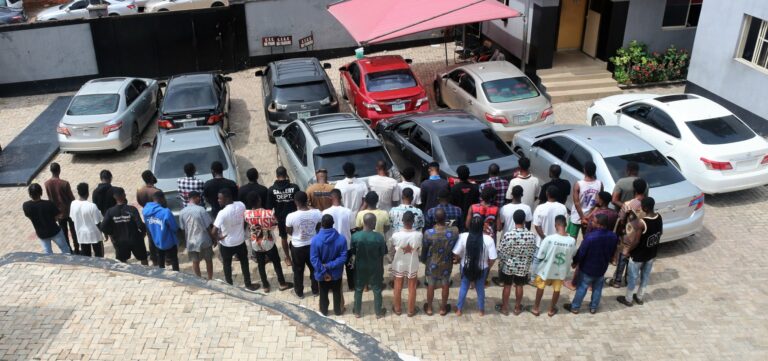
The alleged cybercriminals, according to the commission, are Aparimo Ogunfunminiyi Ojoola, Olalekan Taoreed Miller, Olamide Animashaun Ademola, Rotimi Samson, Waheed Abeeb Olamilekan, Jelili Abeeb Afolabi, Olamide Azeez Ayinla, Mohammed Lawal Segun, Peter Seyi Iyanuoluwa, Akinmoju Kolawole, Ibrahim Akande Abiodun, John Oluwatimilehin Moses, Oshunrinade Samuel, Moradeyo Abeeb Abiodun, Ogunmola Oluwabori Michael, Aderomu Gbenga Michael, Akinrinola Pelumi Sunday, Adeola Tunji, Opaniyi Yakubu Olasunkanmi, Oyedele Israel Sunday, Fiyin Adebayo Omotosho, Oladele Oladimeji John, Gbolahan Qudus, and Lawal Muiz Gbolahan.
Others are Alonge Timilehin Israel, Akinlade Tolulope Seyi, Taiwo Oluwatobiloba Daniel, Adesina Sodiq Ishola, Victor Paul Shedrack, Olawale Oladapo Olaleye, Muili Olamilekan Sodiq, Babalola Afeez Bolaji, Adeagbo Stephen Adegbenro, Ephraim Isaiah Joshua, Olanrewaju Muhammed Opeyemi, Dada Segun David, Okikiola Oluwateniola, Ayodele Victor Ayodeji, Oluwadamilare Isaiah Olanrewaju, Akande Afeez Gbolahan, Omotolani Samson Gbenga, Odesanya Michael Adedimeji, Akindele Timothy Olatunde, and Farayola Habeeb.
The EFCC disclosed it recovered 10 exotic cars, two motorcycles, 53 mobile phones, four laptops, one JBL speaker, and one PS game with two pads, among others.
It said the suspects would be charged to court as soon as investigations are concluded.
THE Jigawa State Police Command has launched a probe into the circumstances surrounding the death of a 16-year-old poor student (almajiri) in the state.
In a statement obtained from the Command by The ICIR on Saturday, April 15, the child told his teacher he was going into the bush to fetch firewood.
That was the last time his teacher, relations and friends saw him alive.
His relations and teachers launched a search party for him when he did not return home from the bush.
When he was found, one of his eyes had been plucked. The person(s) who attacked him left him in the pool of his blood.
His teacher, whom the police identified as Mustapha, approached a nearby police station and reported the incident.
The spokesperson of the Jigawa State Police Command, Lawan Shiisu Adam, sent graphic pictures of the dead boy to The ICIR with the police statement on the incident. The pictures, taken at the hospital, were too gory to publish.
The police statement read, “That on 14/04/2023 at about 1515hrs, information at Command’s disposal revealed that one mallam Mustapha (male) of Abuja Quarters, Shuwarin Town in Kiyawa LGA reported that on the same data at about 0800hrs, one of his students (almajiri) by name Yusufa Mustapha, (male) 16 years went to the bush to get firewood.
“He didn’t come back. Later, he was discovered in the bush lying in blood. One of his eyes was removed by an unknown person. The victim was taken to Dutse General Hospital. He was confirmed dead by a medical doctor. Effort to trace the perpetrators is in top gear.”
Mustapha’s death is one of the hundreds of similar killings in Nigeria in recent years.
Killings involving the removal of sensitive body organs are usually for rituals, though the police have not confirmed the child was killed for that purpose.
In February 2022, The ICIRreported the National Assembly calling for a state-of-emergency declaration on ritual killings in the country.
A FORMER Local Government Auditor-General in Kogi state, Usman Ododo, has emerged as the governorship candidate of the All Progressives Congress (APC) in the state.
The secretary of the National APC Governorship Primary Committee, Patrick Obahiagbon, declared Ododo winner of th party primary, which was held on Friday April 14.
Among those the winner defeated were the lawmaker representing Kogi West senatorial district Smart Adeyemi, who polled only 311 votes; Stephen Ocheni with 552 votes; and Sanusi Ohiere, who gathered 424 votes.
Obahiagbon said Ododo polled 78,704 votes out of the 93,729 registered votes across the 21 local governments in the state, defeating six other contestants in the primary, which was conducted via direct voting.
“I, Hon. Patrick Obahiagbon, Secretary of the Election Committee Kogi State, on behalf of the Chairman of the Committee, Governor Bello Matawale of Zamfara state, hereby declare that Ahmed Usman Ododo, having scored the majority of lawful votes cast at the direct primary election conducted on the 14th day of April, 2023 in Kogi State, is hereby declared as winner of the APC Kogi state primary election.
“He hereby returns as the duly elected governorship candidate of APC for the November 2023 governorship election,” he said.
Kogi state governor Yahaya Bello had announced Ododo as his preferred aspirant ahead of the party primaries.
Following the announcement, several aspirants voluntarily withdrew from the race, including Bello’s chief of staff, Abdulkareem Asuku; deputy governor of the state, Edward Onoja; and a former Commissioner for Finance, David Adebanji-Jimoh.
The deputy governor had been considered a leading aspirant in the pimaries, but withdrew from the race, leaving a terse message on his social media handles.
“To God be the glory for life and divine health. My appreciation to my leader, HE Alhaji Yahaya Bello and all my supporters for your love and prayers. Let love, patience and perseverance lead. I am forever grateful,” Onoja noted.
INVESTORS lost over N601 billion this week as negative sentiments persisted and caused the total market capitalisation and All-Share Index (ASI) to fall by 2.08 per cent apiece.
Amid the sentiments and other concerns, the Securities and Exchange Commission (SEC) assured investors it would protect their confidence in the Nigerian capital market.
The Director-General of SEC, Lamido Yuguda, who briefed journalists on Thursday April 13, on the outcome of the first quarter Capital Market Committee meeting (CMC), said, “Protection of investors is the central mandate of the Commission, and when the Commission protects investors, we do not discriminate between minority and majority shareholders.”
The ICIR can report that Oando Plc’s decision to delist from the NGX and the crises rocking the management of Seplat Energy Plc are recent concerns in the market.
At the close of the week’s trading session, the overall market value, which opened on Tuesday, April 11, at N28.87 trillion, dropped to N28.27 trillion on Friday, April 14, while the ASI fell to 51,893.94 basis points (bps) after it opened at 52,994.13bps.
Notable stocks that drove the market down on the floor of the Nigerian Exchange Limited (NGX) were Airtel Africa, Consolidated Hallmark Insurance and Neimeth International Pharmaceuticals.
Airtel’s share price fell by N133.10 to close at N1,198.00, Hallmark dropped by 13.64 per cent or 0.09k to close at 0.57k, and Neimeth lost 10.34 per cent or 0.15k to close at N1.30.
The ICIRreported that the Nigerian stock market closed in the first week of April in red as market value dropped by N674.53 billion. This brought the total loss to approximately N1.28 trillion in the two weeks of trading sessions.
The ICIR also reported that investors lost over N856 billion in March after the total market value fell below the N30 trillion mark.
At the close of the week’s trading session on Friday, April 14, a total turnover of 2.824 billion shares worth N10.964 billion in 15,686 deals was traded, compared to a total of 1.054 billion shares valued at N10.050 billion that exchanged hands in 16,155 deals in the previous week.
The conglomerates industry (measured by volume) led the activity chart with 1.797 billion shares valued at N2.495 billion traded in 931 deals, and contributed 63.65 per cent and 22.76 per cent to the total equity turnover volume and value, respectively.
The financial services industry followed with 590.745 million shares worth N5.615 billion in 7,869 deals, while the ICT industry returned a turnover of 313.737 million shares worth N1.213 billion in 1,340 deals.
Buying and selling interest in expectations for the pending 2022 audited financial statement and first quarter 2023 results were the reasons experts highlighted for the negative performance in stocks in the week under review.
“As market volatility remains, investors sought for safer investment haven as a hedge against inflation in the face of attractive fixed income yields,” analysts at Cowry Asset Management said.
Sell pressure in some of the small, mid and large capitalised stocks contributed to the negative performance.
While the year-to-date return declined to 1.25 per cent from 3.40 per cent, sector performance was largely on the decline across the indices tracked.
The banking index fell by 6.28bps to close at 448.23bps, the insurance index dropped by 3.19bps to close at 181.40bps, while industrial index also dropped by 9.93bps to close 2,455.43bps.
While the consumer goods index gained 0.34bps to close at 698.37bps, the oil and gas index closed flat.
THE Federal government has reiterated its commitment to recovering the school girls held captive by Boko Haram terrorists.
Despite the failure of the government to secure the release of all the school girls abducted by Boko Haram in Chibok, Borno state, nine years after the incident, the ministry of Women Affairs has urged Nigerians to keep hope alive.
According to the minister, Pauline Tullen, while efforts are in place to secure the girls, Nigeria must continue to pray for the success of the security operatives.
Tullen, at a prayer meeting in Abuja on Friday, April 14 organised against the backdrop of the ninth anniversary of the 276 school girls’ abduction, said the government had rescued 122 girls, while 97 are still in captivity. Fifty-seven escaped on their own.
According to her, some of the released girls went through de-radicalisation, and were part of the rehabilitation and reintegration programmes designed by the ministry.
The programme was funded by the Federal government and international partners, with a committee headed by Vice-President Yemi Osinbajo.
The minister also noted that the released girls were enrolled at the American University, Yola, and were involved in a special programme meant to help them cover lost sessions.
Abduction of Chibok girls
On the night of April 14, 2014, Boko Haram militants attacked a government secondary boarding school in Chibok, Borno state, where girls from surrounding areas had gone to take examinations.
The attack was the Boko Haram sect’s way of opposition to western education, which the militants believe corrupts the values of Muslims.
The gunmen arrived at night and raided the dormitories. They loaded 276 girls onto lorries and took them out of the town.
Some escaped by jumping off the lorries and running into the bushes.
MARY Katambi, one of the Chibok schoolgirls abducted by Boko Haram in 2014, graduated from the American University of Nigeria (AUN) in 2021.
Katambi bagged a Bachelor’s degree in Accounting, seven years after she escaped from the grip of the deadly Boko Haram terrorists who stormed Government Girls Secondary School, Chibok, Borno state, on the night of April 14, 2014.
Marking the ninth anniversary of the abduction, the presidential candidate of the Peoples Democratic Party (PDP) in the 2023 election, Atiku Abubakar, celebrated the AUN alumnus and other survivors “pursuing their education in other institutions at home and abroad.”
In a statement posted on his social media handles, Abubakar said the plight of Chibok girls “who have attained womanhood, has become a metaphor” for the protracted insecurity that has plagued Nigeria.
The former Vice President, founder of the university, added that 13 other students out of the 57 Chibok students from AUN’s New Foundation School (NFS) “are following in her footsteps” and were admitted into the university last year.
“Let’s remember how the escaped girls are bracing the odds to send a clear message to their abductors and agents of retrogression. We must not give up until the last Chibok girl is rejoined with their family”, the statement said.
Nine years after, UNICEF rues suffering of children
The ICIR had reported that nine years after Boko Haram terrorists abducted 276 Chibok schoolgirls in Chibok, the United Nations Children’s Education Fund (UNICEF) has lamented the continued violations of children’s rights in the north-eastern region of Nigeria.
UNICEF representative, Christian Munduate, said in a statement on Friday, April 14 that “the statistics are disturbing, the reality is devastating” for children in the region.
“It has been nine years since the horrendous abduction of the Chibok girls, yet the nightmare continues as children are still being kidnapped, forcibly recruited, killed and injured – their futures torn away.
“Nine years after 276 schoolgirls were abducted in the middle of the night from their dormitory in Chibok, Nigeria, 96 girls remain in captivity, and thousands more children have been subjected to grave violations of their rights”, the statement said.
Christian Munduate
UNICEF noted that children are still being kidnapped in Nigeria’s North-East.
“As recently as 7 April 2023, 80 children were reportedly abducted by militants in Zamfara State’s Tsafe Local Government Area, according to local media.
“Since 2014, there have been over 2,400 incidents of grave violations verified, affecting over 6,800 children in the North East.
The UN agency further observed, “The most common violations are recruitment or use of children by armed groups “with 700 verified cases, followed by abductions of children, with 693 incidents, and killing and maiming, with 675 incidents.
“This reinforces the urgent need for action to protect children in Nigeria.”
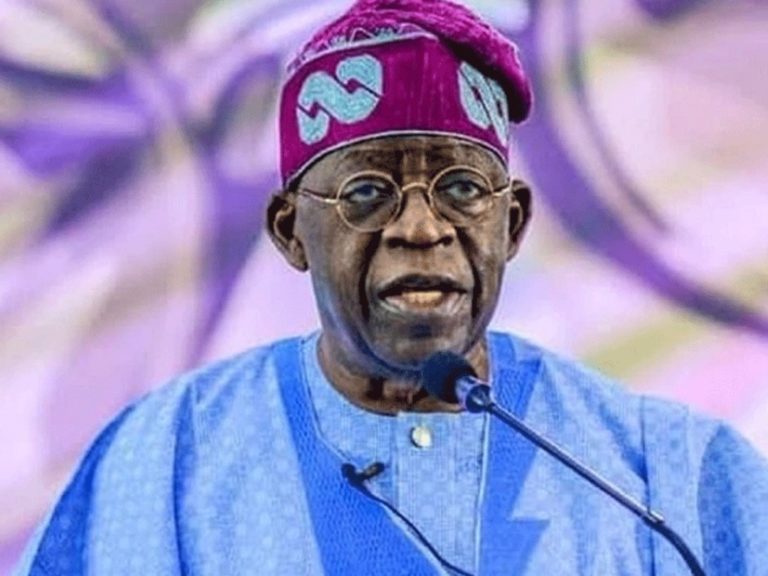
THE president-elect Bola Ahmed Tinubu has urged Nigerians to remain calm and peaceful during the supplementary election.
The election will hold on Saturday, April 15, in Kebbi and Adamawa states, five senatorial districts, and 31 federal and 58 state assembly constituencies across the federation.
Ahead of the election, the president-elect asked Nigerians to shun violence as it is the final leg of the polls.
Tinubu, who is out of the country, said this in a statement he issued on Friday.
“I call on Nigerians in the areas slated for the polls to conduct themselves peacefully and eschew violence and any act prejudicial to orderly electoral processes.
“We must ensure that the electoral processes are brought to a final, peaceful conclusion. I urge all Nigerians in areas where the additional polls will take place to eschew violence and conduct themselves in an orderly and peaceful manner,” he said.
He also called on APC supporters to come out in large numbers and vote for the party supporters.
“I must also use this opportunity to enjoin my All Progressives Congress members and the teeming supporters in the areas listed for the polls to come out in their large numbers to cast their votes for the party’s candidates.
“Our party members and supporters should vote overwhelmingly for APC to complement and solidify the victory we recorded in the earlier polls. This will no doubt help in the effective functioning of government at the federal and state levels for the benefit of our people,” he said.
Following the February 25 presidential/National Assembly elections, and the March 18 governorship/state assembly elections, the Independent National Electoral Commission (INEC) announced that it would conduct outstanding governorship and national and state assembly supplementary elections.
The two states with outstanding governorship elections, Adamawa and Kebbi, had been declared inconclusive in the March governorship poll.
In the Adamawa governorship poll, the incumbent Ahmadu Fintiri of the Peoples Democratic Party (PDP) polled 421,524, while the All Progressives Congress (APC) candidate, Senator Aishatu Dahiru, scored 390,275, but INEC declared the election inconclusive due to vote margin.
In Kebbi, the APC polled 388,258 votes, while PDP had 342,980 and the election was declared inconclusive.
According to INEC returning officer in the state, Professor Yusuf Sa’idu, violence, destruction of election materials, disruption of electoral proceedings, and over-voting played a role in the decision.
Also, elections in the five senatorial districts and 31 federal and 58 state assembly constituencies were suspended or declared inconclusive.
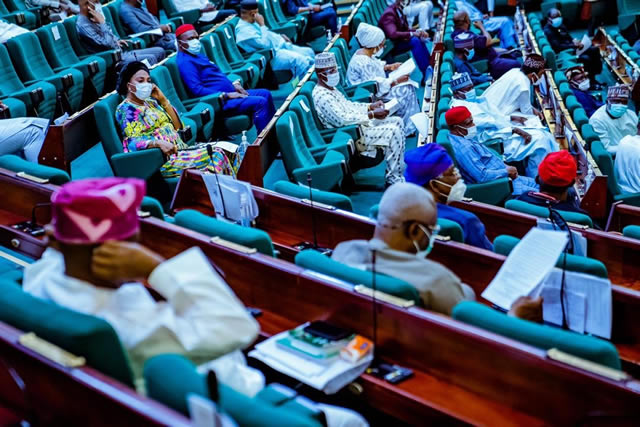
A MEMBER of the House of Representatives, Johnson Ganiyu, who sponsored a bill seeking to withhold full licensing of doctors and dentists to restrict emigration, said on Friday, April 14, that he would be presenting a similar bill on nurses and pharmacists.
Ganiyu disclosed this during an interview on the Channels Television programme, Hard Copy.
“There is another bill coming up on nurses and another one for the pharmacists. It’s a similar thing: put a peg. I’m going to read that very soon. This is just the first phase and it is a short term measure. I’m not saying this is a permanent solution.
“It is a stop gap, short-term measure for us to take stock of what we have; whether it is going to solve the problem is a different thing. By the time we are able to mitigate against this using this approach, I know with time it is going to be a win-win for the doctors and the country as a whole,” he said.
Ganiyu’s bill seeks to amend the Medical and Dental Council of Nigeria (MDCN) Act to prevent Nigeria-trained medical and dental practitioners from being granted full licences until they have worked for, at least, five years in the country.
The bill passed second reading at the House of Representatives on April 6.
The legislator said the alert by the World Health Organization (WHO), which led to the United Kingdom placing Nigeria on a red list, was an indication that the bill was a step in the right direction.
Speaking on unresolved issues within the health sector, Ganiyu said he had moved a motion which called for the upgrade of health centres in Nigeria and better welfare packages for doctors.
However, motions are only proposals for discussion that may end up as advisories, while a bill is a draft of a proposed law.
The MDCN bill has attracted a lot of criticisms, and many Nigerians described it as discriminatory and a form of enslavement.
Ganiyu, however, regarded the criticisms as “personal opinions”, adding that his bill was not targeted at doctors, but was rather borne out of his passion for the healthcare sector and service to Nigerians.
Doctors in Nigeria and abroad have described the bill as ill-researched, but Ganiyu said he consulted with friends before drafting the bill. He also said he arrived at the conclusion that there was a decline in doctors practising within the country through a personal survey.
“I discussed with some of my doctors friends in the house and I read some literature. That’s all. I conducted a kind of survey on my own. I noticed there is a heavy decline; there is a capital flight of doctors from Nigeria, outside the shores of Nigeria. So should we fold our arms?” he asked.
THE Federal Road Safety Commission (FRSC) has disclosed that 1,349 people were killed in road accidents between January 1 and April 12, 2023.
The Commission also said that 2,463 crashes occurred during the period.
According to the FRSC, the crash involved 3,965 vehicles conveying 16,102 people. Out of that number, 1,349 people were killed, while 7,744 got injured.
The spokesperson of the FRSC, Bisi Kazeem, disclosed this to The ICIR in a chat.
On what the Commission is doing to minimise road accidents in Nigeria, Kazeem said the FRSC had deployed various strategies to combat crashes.
He listed the introduction of motorised patrol along the critical corridors as part of the strategies.
“These sets of Patrol operatives play a key role in speed control to halt speed-related crashes on the highways.
“Our operational activities have been given an adequate boost through the injection of new vehicles for enhanced visibility on the highways and to enforce compliance by all road users.
“The public enlightenment aspect is also being enhanced. Of course, you are aware of the establishment of the National Traffic Radio 107.1 FM, an FRSC-owned station brought to life to boost existing platforms for the education, enlightenment, sensitisation and providing real time traffic update to mass population of road users,” he stated.
Kazeem said that presently, the Commission is undergoing a massive expansion of the Command base to meet expectations.
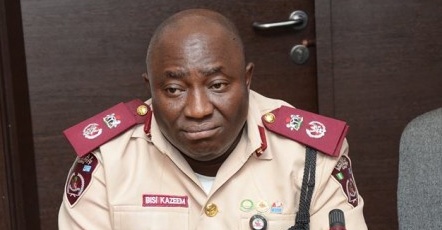
The FRSC spokesperson Bisi Kazeem Photo Credit: The Eagle Online
According to him, this expansion would usher in more highway patrol teams, more roadside clinics for prompt rescue services, and adequate deployment of tow trucks for speedy removal of obstructions.
“Our staff have also been subjected to continuous capacity building to enhance professionalism, competence, and ease of doing business in the work place,” he added.
He said the Commission had strengthened 122 as its toll-free number to accommodate the volume of calls that come in daily.
He also said the FRSC had beefed up response time for quick intervention.
Road traffic fatalities and injuries have emerged as a challenge in the country. Nigeria has been addressing the problem over time.
Kazeem said the absence of an effective road safety policy and strategy for the country and problems among relevant agencies compounded the road crash pandemic in Nigeria over the years.
Some major road crashes in 2023
In January 2023, in the Illela Local Government Area of Sokoto, a tragic motor accident claimed the lives of 18 people and injured 40 more.
The accident involved a truck carrying passengers and a herd of cattle.
On Sunday, January 28, not less than 11 persons were burnt to death in an auto crash involving a commercial passenger bus and a truck in Ondo State.
According to the FRSC, the incident happened on Soka Bridge along the Benin-Ore expressway in the Odigbo Local Government Area of the state.
An accident scene
The FRSC Commander, Ore Unit, Sikiru Alonge, blamed the accident on “one-way driving”.
Alonge said the truck had a head-on collision with a passenger bus.
On March 26, an accident occurred in Kebbi’s Liba neighbourhood, near Gonan Rogo in Kebbi, and on March 27, another tragic collision happened in the state’s Bunza region.
The FRSC Kebbi State Command said 35 lives were lost in the two separate road accidents in the state.
The state Sector Commander, Yusuf Haruna Aliyu, said 40 people were rescued in the accidents, while several passengers also suffered deadly injuries.
In another development, the FRSC said 24 persons were killed,while 354 others sustained injuries in road crashes in Gombe State between January and March 2023.
The Gombe FRSC Sector Commander, Felix Theman, disclosed this in an interview with the News Agency of Nigeria (NAN) in Lafiyawo, Akko Local Government Area of the state, on Friday, April 14.
At least 15 people were burnt to death in an auto-crash along the Port Harcourt-Enugu highway in Enugu state on Saturday, April 8.
Kazeem, confirming the incident in a statement on Sunday, April 9, said the victims were burnt beyond recognition in the accident, which occurred at about 8.20 p.m.
The vehicles involved in the crash were a Toyota 18-seater bus and a Mercedes truck.
Also, seven passengers were burnt to death on Thursday, April 13, when a commercial bus caught fire on the Lagos-Ibadan expressway.
FRSC officials said seven of the 27 passengers were burned beyond recognition.
Data on road accidents in Nigeria between January 1 and April 12, 2023
The Federal Road Safety Corps (FRSC) spokesperson in Ogun, Florence Okpe, confirmed the incident to reporters in Abeokuta.
Compensation for road accident victims
The FRSC said it was collaborating with the Nigerian Bar Association (NBA) to ensure compensation for road crash victims and prosecution of drivers and their employers whose activities on the road lead to road users’ injury.
In a statement released on Tuesday, April 4, Kazeem described the partnership as a concerted effort to ensure that victims of road crashes are duly compensated through established legal processes.
He said the organisations finalised the agreement to collaborate during a courtesy visit of the Corps Marshal, Dauda Biu, to the president of the NBA, Yakubu Maikyau.
Prosecution of drivers involved in accidents
In another development, the FRSC also said it had started preparations to prosecute drivers involved in accidents that resulted in the loss of lives.
In line with the plan, the FRSC will prosecute drivers involved in the Liba and Bunza fatal crashes in Kebbi State earlier in the year.
Biu disclosed in a statement on Tuesday, March 28, that the prosecution would protect passengers’ rights and deter other traffic violators.
Security analyst proffers solution
In an attempt to proffer solutions to the constant loss of lives on our roads, a security analyst with the SBM Intelligence, a security outfit, Emeka Okoro, said although Nigeria’s road traffic fatality rate has reduced dramatically in recent years, it is still relatively high when compared to the reported WHO estimates.
Okoro said driving on Nigeria’s road network can be risky and arduous as large parts have broken down and others ridden with potholes due to neglect.
“Indeed, apart from many of the highways littered with craters, driving at right is comparable to walking through a dark alley because of the lack of street lights.
“The absence of proper road safety and poor management of roads remain the basis of road accidents which regularly occur at some flashpoints, such as sharp bends, potholes, and at bad sections of the highways.
“At such points, overspeeding drivers usually find it difficult to control their vehicles, resulting in fatal traffic accidents, especially at night. This, for me, is the fundamental reason for the high rate of deaths reported by the FRSC,” he said.
Okoro said that in response to the United Nations’ decade of action for road safety, the FRSC launched a “safe road in Nigeria” to reduce road crash deaths and injuries by 50 per cent by 2030.
He said this campaign is based more on changing driving behaviour than advocating for good road infrastructure.
He added that the FRSC has stepped up the campaign in Nigeria to ensure that these objectives are met by strengthening legislation and enforcement in the following areas: drunk driving, speeding, seat belt use, education/training and enforcement.
He said that since road safety is primarily the responsibility of governments, road accidents can be reduced by providing basic conditions and services.
He added that stakeholders must seek collaboration among the Public and private sectors, academia, professional organisations, non-governmental organisations and the media to move towards a country free from road traffic fatalities and serious injuries.
THE Lagos State government has launched a probe into the collapse of a seven-storey building under construction on Banana Island, Ikoyi.
The state government said its officials were assessing the high-rise building, which had been under construction for months.
The building collapsed suddenly on Wednesday evening with many workers inside.
The state government has also suspended all development plans on the Island until a comprehensive audit of the situation is done.
In a statement issued on Thursday, the state Commissioner for Information and Strategy, Gbenga Omotoso, said the Lagos State Emergency Management Agency (LASEMA) would be conducting the probe.
So far, 25 people have been rescued from the wreckage by emergency responders, with 16 victims currently receiving treatment.
Omotoso confirmed that nobody died in the incident.
He said, “LASEMA confirmed that no one was trapped in the building and a roll call has also been done by the site supervisors, with everyone accounted for.
“Of the 25 persons rescued by LASEMA, 16 with moderate injuries were admitted at General Hospital, Odan, Lagos Island and Police Hospital, Falomo for treatment and care. Nine others with minor injuries, such as bruises, were treated and discharged at the site by the Lagos State Ambulance Services.
“Of the 16 persons on admission, 11 were taken to Police Hospital, Falomo. Eight of the 11 persons have been treated and discharged. Some are required to come for daily follow-up and management. Three with various injuries, including blunt traumatic chest injury, knee injuries, deep lacerations, and others, are on admission.”
There have been several incidents of building collapse in Lagos.
In the last decade, the state has recorded no less than 115 incidents of building collapse.
Lagos recorded the highest number of incidents between 2021 and 2022, each with, at least, 20 cases.
In some cases, there were no fatalities, while in others, scores of people perished in the rubble.
The collapse of a 21-storey building at Gerard Road, Ikoyi, in November 2021 led to the death of about 45 people.
Also, the collapse of a building at the Lekki Gardens in Ikoyi in 2016 claimed the lives of about 35 people.
According to LASEMA, between January and July 2022, Lagos recorded no less than 30 cases of total building collapse.