CHIEF of Army Staff (COAS), Lieutenant General Faruk Yahaya, has charged troops and field commanders of the Nigerian Army to maintain the tempo in the campaign against insecurity in the country.
Yahaya made the demand in his closing remarks at the 2023 Chief of Army Staff First Quarter Conference on Wednesday, April 5, in Abuja.
The Army chief noted that the collective efforts of the personnel led to operational successes being recorded across the theatres of operation.
He also urged commanders to strive to improve on recorded successes and also pay attention to the welfare of the troops.
“I enjoin you to make deliberate efforts to awaken the consciousness of adherence to basic tenets of tactics and field craft. You must always ensure thorough and detailed briefings and de-briefings of troops before and after any operation. Commanding Officers must take full responsibility for their units and always apply their initiatives in taking charge of their units,” he said.
He encouraged the troops to sustain the tempo in the defense of the country’s territorial integrity while commending their efforts and sacrifices across theatres of operations during the general election, noting that there is no lawful assignment the army cannot deliver on.
“I must also remark that we have the capacity and moral strength to deliver on our constitutional mandate.
“We should therefore, always be reminded that we are men of honour and we should perform our duty with courage and complete loyalty,” he stated.
Yahaya equally expressed appreciation to the media for the professional coverage during the conference and urged them to continue the good work of projecting the image of the Nigerian Army to Nigerians and the world at large.
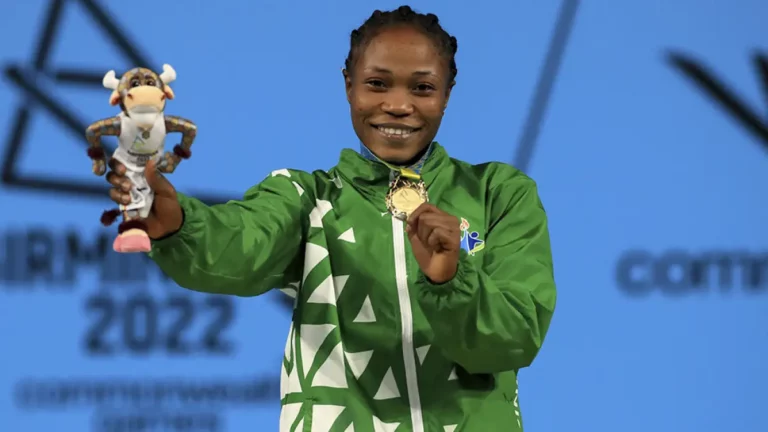
A NIGERIAN, Adenike Adjat Olarinoye, is among 12 athletes to be appointed to the Association of National Olympic Committees of Africa Athletes’ Commission (ANOCA-AC) as a member of the board.
Olarinoye won Nigeria’s first gold medal in the Women’s 55kg weightlifting event at the 2022 Commonwealth Games in Birmingham.
In a congratulatory message on Wednesday, April 5, the Nigeria Olympic Committee (NOC) said her appointment had brought glory to the country
“There’s no doubt that your appointment is a pride to you but the NOC as well and improve your personal growth generally in sports,” NOC Secretary-General, Tunde said, adding: “On behalf of members of the Olympic Family, we praise this outstanding achievement.”
The appointment was approved at an ANOCA Forum held in Algiers, Algeria on 11 and 12 March 2023, which had in attendance over 100 athlete representatives from more than 50 National Olympic Committee (NOC) Athletes’ Commissions (ACs) from across Africa.
Namibia’s Commonwealth Games shooting bronze medalist Gaby Ahrens and Cameroon volleyball player Victoire Ngon Ntame, were elected as Chair and Vice-Chair of the ANOCA executive board respectively, on the sidelines of the forum.
THE Federal Government has secured $800 million from the International Bank for Reconstruction and Development (World Bank), as part of its post-subsidy palliative plans.
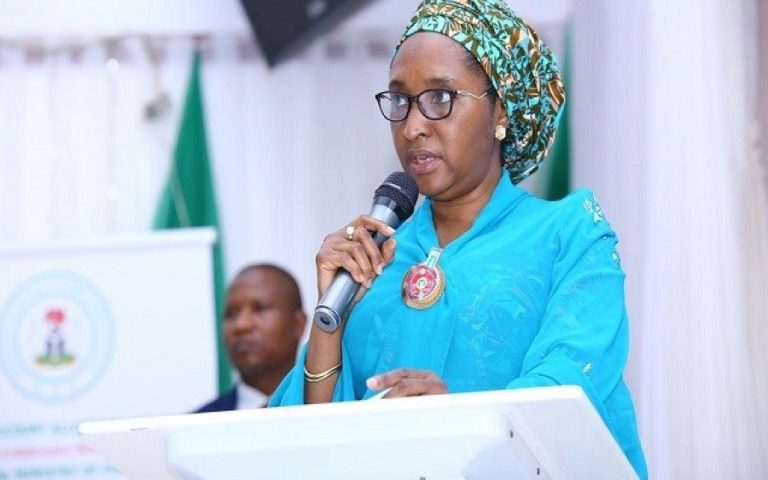
The Minister of Finance, Budget and National Planning, Zainab Ahmed, disclosed this to journalists after the federal executive council (FEC) meeting presided over by President Muhammadu Buhari on Wednesday, April 5.
Ahmed said the $800 million from the World Bank formed the first tranche of palliatives and will be disbursed to 10 million households considered to be most vulnerable.
“There is a provision in the Petroleum Industry Act that says 18 months after the effectiveness of the PIA that all petroleum products must be deregulated. That 18 month takes us to June 2023,” she said.
“Also, when we were working on the 2023 Medium Term Expenditure Framework and the Appropriation Act, we made that provision to enable us to exit fuel subsidy by June 2023.
“We are on course, we are having different stakeholder engagements, we’ve secured some funding from the World Bank, that is the first tranche of palliatives that will enable us to give cash transfers to the most vulnerable in our society that have now been registered in a national register,” she added.
It will be recalled that in 2022, the minister, while addressing the House of Representatives, said that the government will stop subsidy payments in June 2023.
However, she noted that the Federal Government must raise more resources to enable it do more than cash transfers.
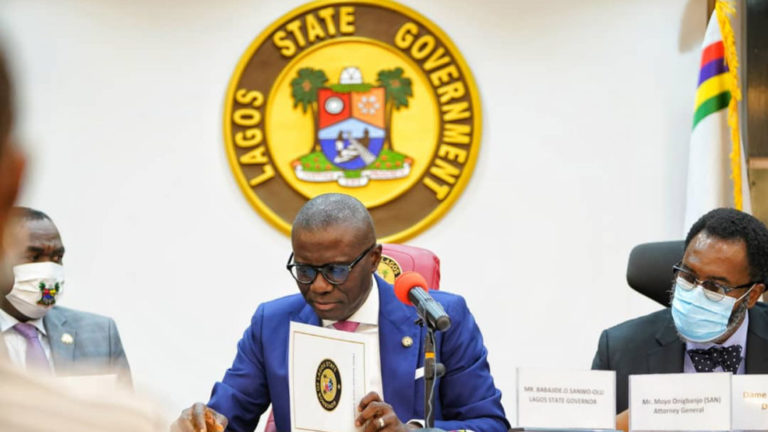
THE Lagos State government has teamed up with ARCA Payment Limited to develop a parking payment application to improve coordinated parking operations across the state.
The partnership was announced at a meeting between the Lagos State Parking Authority (LSPA) and ARCA Payment Ltd., and its goal is to improve the parking system and provide a seamless transaction process for permits, registration, inquiry, and other services.
LASPA General Manager, Adebisi Adelabu, who made the announcement on Wednesday, April 5, stated that the agency had been committed to integrating technological solutions into its parking management system.
Adelabu noted that the initiative would provide a user-friendly system while building an accurate database to manage parking proceedings for the state.
According to her, the initiative aims at giving Lagosians the best and most suitable parking experience by guaranteeing a stress-free process for end-users of the authority’s services, emphasising the effect on reconciliation and revenue assurance for the government.
Adelabu explained that the authority had been committed to supporting various organisations and business entities to identify and proffer long-term solutions to their parking challenges.
She noted that most organisations operating in the state lacked adequate parking space, which has contributed to indiscriminate parking.
She stated that the state government had started installing signage and lane markings in phases across the state to guide motorists and pedestrians on available parking lots.
Adelabu urged the public to support LASPA’s efforts towards improving the parking system of the state. She also noted that enforcement of parking regulations has significantly reduced road mishaps and traffic congestion across the metropolis.
It is not, however, clearly stated if the initiative will totally replace revenue collections by the National Union of Road Transport Workers (NURTW), also known as ‘agberos’ in the state.
The ICIR reported in 2021 how the state was annually losing more than N123 billion in revenue to the ‘agberos’, led by the infamous Musiliu Akinsanya, also addressed as MC Oluomo.
This amount of money could cover the annual budgets of Nasarawa, Niger, and Yobe states combined.
The NURTW levies on passenger vehicles, motorcycles, and tricycles to generate this revenue, and it also collects money from other sources like hawkers, articulated vehicles, and market-goers.
The report shows that the NURTW controls a total of 75,000 buses, 50,000 tricycles, and 37,000 motorcycles. Every day, the union levies N3,000 on buses, N600 on motorcycles, and N1,800 on tricycles, which results in N82.1 billion, N8.1 billion, and N32.9 billion in annual revenue for buses, motorcycles, and tricycles, respectively.
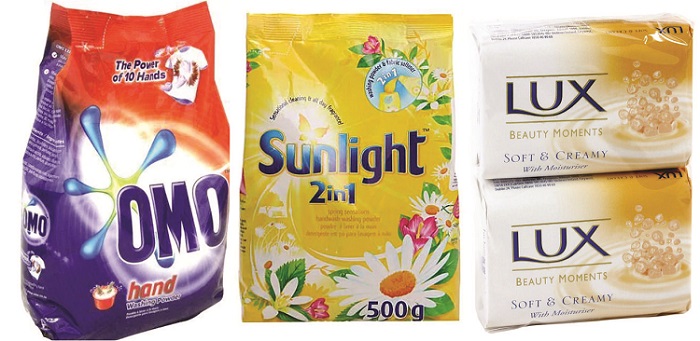
UNILEVER Nigeria Plc says it is stopping the production of the legendary OMO, Sunlight and Lux home care brands as it struggles to sustain its operations in Nigeria.
The company is “exiting the Home Care and Skin Cleansing categories to concentrate on higher growth opportunities,” according to a statement it issued on March 17.
Unilever began trading in Nigeria in 1923, introduced the OMO brand in 1960, and opened a production facility to manufacture the popular laundry brand locally in 1964. In 1982, it opened a factory in Agbara, which still operates to date.
Formerly known as Lever Brothers (West Africa) Limited, the company changed its business name to Unilever Nigeria Plc in 2001.
“We’re the longest-serving manufacturing company in the country, marking 100 years in Nigeria in 2023,” the company stated.
OMO, an acronym that stands for Old Mother Owl, is Unilever’s largest detergent brand and has become a household name, gaining traction among buyers.
Sunlight detergent is also popular, but not as OMO, while Lux, another brand of Unilever, has since 1925 been serving consumers, especially women, who take pride and pleasure in their beauty.
The consumer goods company has said it would repurpose its portfolio while putting in place measures to make the business more efficient and future-fit, to meet the needs of consumers, shareholders, and employees.
“The exit of these two categories over 2023 will boost the vision to make Unilever Nigeria great, building on the impressive progress made in other key aspects of the business, and is envisaged to result in overall improvement in profitability, growth and a more sustainable Unilever Nigeria Plc business.
“The Company will in due course review the optimal treatment of redundant resources and assets, in accordance with due process,” Unilever stated.
Move to cut back operations
Unilever had shocked most Nigerians when it announced it was cutting back operations of some of its production in the country.
The announcement to cut production of the key product lines came just two years after the fast-moving-consumer-goods (FMCG) spun off its tea businesses (e.g. Lipton) to a separate legal entity under the Unilever global group.
Stopping operations in some product lines is part of a global brand strategy for Unilever’s parent company to improve profit margins.
Stears, an online new medium, reported that the group had sold off its entire tea business for €4.5 billion, and the Nigerian unit, Unilever Nigeria Plc, earned a one-off income of €6.3 million (i.e. N2.8 billion) — which helped boost profitability in 2021.
In 2017, Unilever had sold off its spreads business, the Blue Band butter, for €6.8 billion, and in February 2023, the British-owned FMCG warned that customers would buy fewer of its products, following a 2.1 per cent decline in volume growth in 2022 and expectations of worse volume growth this year, the reported added.
Inflation, foreign exchange, others take a toll on Unilever’s profit
The ICIR check on the financial position of Unilever showed that the company’s profit margins dwindled in the past two years.
A look into Unilever’s audited financial statement for the year ended December 31, 2022 showed that the company posted a net profit margin of 4.83 per cent and 5.04 per cent in 2021 and 2022 respectively.
Rising interest rates, surging inflationary pressure, and foreign exchange volatility, among other factors, are impacting input costs, operating expenses, and, of course, the general profitability of businesses.
For instance, Nigeria’s monetary policy rate (MPR), the overall benchmark for other interest rates, had throttled to 18 per cent in March, while headline inflation reached an all-time high of 21.91 per cent in February, as the naira slumped to a record low against the dollar at above N800/$1 at the black market.
The Director, Centre for the Promotion of Private Enterprise (CPPE), Muda Yusuf, had presented in the Centre’s ‘Economic Review for 2022 and an Agenda For 2023’, that “Nigeria’s exchange rate policy settings are stifling business activities, investment and growth, and amplifying macroeconomic risks.”
Comparing key metrics between 2021 and 2022 results
Unilever’s 2022 audited financial result showed that the company’s revenue grew by 25.59 per cent to N88.57 billion in 2022, from N70.52 billion in 2021.
Gross profit rose by 53.11 per cent to N31.18 billion in 2022 from N20.36 billion 2021, after a 14.42 per cent rise in cost of sales to N57.39 billion in the current year, from N50.16 billion in the prior year, which weighed on its gross profit.
Although there was a huge jump in the company’s operating profit, sustained by profit before tax (PBT), however, income tax burden dragged its profit after tax (PAT), also known as net income, to below N5 billion in 2022.
In the review period, operating profit swelled by 568.05 per cent to N7.54 billion from N1.13 billion; PBT rose by 315.82 per cent to N7.81 billion from N1.88 billion; and company income tax increased by 180.98 per cent to N3.34 billion from N1.19 billion. The effect of this was that net income settled at just N4.47 billion in 2022 after rising by 31.03 per cent from N3.41 billion in 2021.
Gross profit, operating profit, and net income are earnings that a company generates, representing a profit at different parts of the production cycle and earnings process.
Last line
The move to cut back on its operations will have its effect on the informal sector, most especially. Unilever said, “In Nigeria, most people don’t shop for our products in supermarkets. Instead, products are more commonly sold in smaller, local stores run by individuals rather than retail companies. Online shopping and digital commerce account for a small but growing fraction of sales.”
THE presidential candidate of Labour Party (LP), Peter Obi has denied the alleged leaked audio conversation featuring him and David Oyedepo, the Founder and General Overseer of Winners Chapel.
Obi debunked the audio in series of tweets via his official Twitter handle on Wednesday, March 5.
Recall that a Nigerian media platform, Peoples Gazette, had published an exclusive report and audio conversation alleging that Obi solicited the support of Oyedepo to get votes from Christians in the South-West ahead of the February 25 presidential election.
The leaked audio has stirred heated debate among Nigerians on social media.
Reacting to the report, Obi stated that the attacks on his personality is part of a plot by the ruling party to divert the attention of Nigerians from issues raised concerning the just concluded 2023 election.
“Before, during, and after the campaign, it is on record that I have maintained my commitment and focus on issue-based campaign about a New Nigeria that is POssible, a shift of emphasis from consumption to production, a New Nigeria characterized by inclusion, justice, equity, fairness, and prosperity,” Obi said.
“I repeatedly stated that no one should vote for me based on Tribe or Religion, but rather on the assessment of Character, Competence, Capacity, Credibility, and Compassion that can be trusted to create a New Nigeria!
“The present attempts by the APC as a Party, and the APC Led-government through some government officials and agencies to divert our attention from our blatantly stolen mandate is unfortunate and sad.
“These have come and continued to manifest in different ways, such as the malicious accusation of the Minister of Information, Mr Lai Mohammed, the circulation of a fake doctored audio call, and a pressure on me to leave the country.”
Obi reiterated that the audio is fake adding that he has instructed his legal team to take a legal action against Peoples Gazette that published the audio.
He urged concerned Nigerians to stop the ruling party from attacking his personality and focus on major challenges facing the country.
AN Abuja Federal High Court on Wednesday, April 5, ordered the National Chairman of the Labour Party (LP), Julius Abure, and the National Secretary, Farouk Ibrahim, to stop parading themselves as national officers of the party, pending the hearing and determination of a suit brought against them.
The presiding judge, Justice Hamza Muazu, while ruling on an ex-parte application, also ordered some other members of the party’s National Working Committee (NWC) to stop parading themselves as national officers.
They include the National Organising Secretary, Clement Ojukwu, and the Treasurer, Oluchi Opara.
Justice Muazu issued the restraining order following an ex-parte application brought by some aggrieved members of the LP who are challenging the continued stay in office of the defendants over allegations of corruption.
The ex-parte application was argued before the court by the plaintiffs’ lawyer, James Onoja,
Onoja told the court that Abure and the others allegedly forged several documents like receipts, seals and affidavits of the court to carry out criminal activities.
He also noted that the LP had received a letter from the Chief Registrar of the Court concerning documents that were allegedly used in criminal activities by Abure and the three others.
According to Onoja, the four defendants will be arraigned in court after being charged by the police. He added that arrest warrants had already been filed for them.
In his ruling, Justice Muazu held that the application and supporting affidavits presented a good case for granting the request.
The judge subsequently ordered the four defendants to immediately stop parading themselves as national officers of the Labour Party, pending the hearing and determination of the substantive suit.
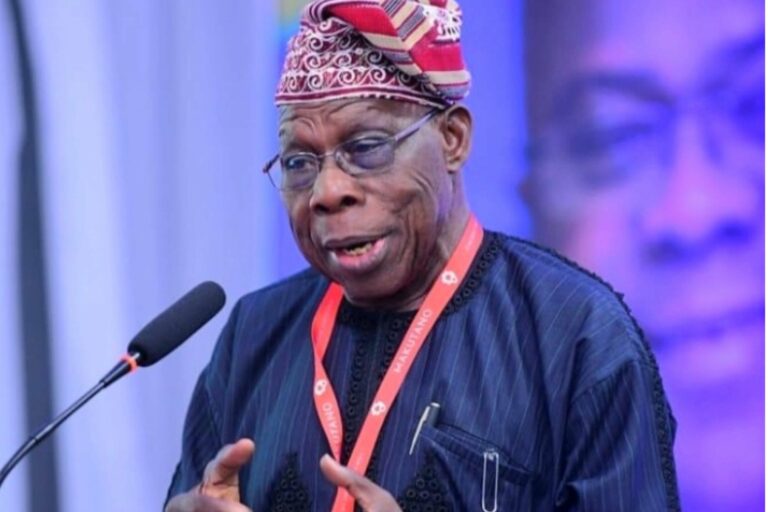
FORMER President Olusegun Obasanjo has pleaded for mercy from the United Kingdom (UK) court that convicted Nigeria’s former Deputy Senate President, Ike Ekweremadu, his wife, Beatrice, and a doctor, Obinna Obeta, for organ trafficking.
In the letter dated April 3, which Obasanjo wrote to the court, the former Nigerian leader condemned the Ekweremadus’ action but pleaded that the UK temper justice with mercy.
Explaining how he (Obasanjo) was enlisted into the British Army of the West African Frontier in 1958, rose to become a general, Head of State, elected President and worked with Ike Ekweremadu, he pleaded for mercy because of the lawmaker’s contributions to Nigeria’s fledging democracy and several lives he has touched positively.
Obasanjo also urged the court to consider the health of the lawmaker’s daughter, for whom the father and his wife attempted to assist with an organ that she needed.
On March 23, The ICIRreported how the UK court at the Old Bailey on March 23 convicted Ekweremadu, his wife, Beatrice and a doctor, Obinna Obeta, of organ trafficking in the first verdict of its kind under the Modern Slavery Act.
Ekweremadu, 60, his wife, Beatrice, 56, and Obeta, 51, were found guilty of facilitating the travel of a 21-year-old Nigerian man to Britain to exploit him by harvesting his organ for Ekweremadu’s daughter.
Prosecutor Hugh Davies KC said the Ekweremadus and Obeta had treated the man and other potential donors as “disposable assets” and “spare parts for reward”, a behaviour that showed “entitlement, dishonesty and hypocrisy”.
While the court found the couple and the doctor guilty and will sentence them later, it acquitted the lawmaker’s ailing daughter for whom the organ was sought.
In his letter to the court, Obasanjo explained that he realised the implications of the couple’s action, which he described as condemnable and could not be tolerated in any sane or civilised society.
Obasanjo’s letter reads: “My dear Chief Clerk, may I seize this opportunity to commend your utmost dedication and resourcefulness, which you have demonstrated with rare qualities of commitment and courage while also upholding the cherished traditions of the Public Service. I am Olusegun Obasanjo, a soldier commissioned into the British Army of the West African Frontier Force in 1958 and rose to the rank of a full General in the Nigerian Army. I received the surrender of the Biafran Army at the end of the Nigerian civil war. I was military Head of State from 1976 to 1979 and elected President from 1999 to 2007.
“It is with great pleasure that I write in respect of Senator Ike Ekweremadu, who I have known for over two decades. Within this period, I have followed and watched, with keen interest, Ike Ekweremadu’s inspiring career, which traversed private legal practice and administration. I recall, with fond memories, the beginnings of our political and social relationship at the outset of our collective quest for democratic rebirth for our fatherland. During my administration as a democratically-elected President of the Federal Republic of Nigeria between 1999 and 2007, Ike Ekweremadu and I had close relationship and interactions as staunch members of our political party, Peoples Democratic Party, PDP, and more so as he got elected into the Senate of the Federal Republic of Nigeria in 2003, of which he has since remained a member till date. Within this period of his service in the Nigerian Parliament, he has served as Deputy Senate President of the Senate and has headed so many Committees in various capacities and brought to bear his broad-based experience in legal practice and public administration. Sometime in 2009, he was appointed as the First Deputy Speaker of the Economic Community of West African States, ECOWAS, and made to lead an ad hoc Committee to work for the return of constitutional order in the Niger Republic.
“I clearly remember that in the heady days of the keen contest for the presidential ticket of our party in early 1999, he joined other well-meaning Nigerians from the South-Eastern part of Nigeria to set aside extraneous considerations and ensured that South East unanimously adopted me for the Presidency.
“This was without regard to the fact that my closest competitor hailed from their part of the country. I truly cherish his God-fearing, dispassionate, moderate and pan-Nigerian approach to national issues and developments in our multi-ethnic, multi-religious geo-polity. He dedicates himself to the service of God and humanity, and he continues to play visible roles in national development. Through the Ikeoha Foundation, a non-governmental organization founded by him and his wife in 1997, he and his wife have rendered a lot of charitable activities, enhancing poor people’s access to quality education and healthcare and building their capacity to participate in mainstream social, political and economic activities of their communities. Ike Ekweremadu’s conferment with the coveted national honour of Commander of the Federal Republic, CFR, is further testimony to his selfless service to our country, Nigeria.
“Mr Chief Clerk, I am very much aware of the current travails and conviction of Ike Ekweremadu and his wife in the United Kingdom, resulting from their being charged with conspiring to arrange the travel of a 21-year-old from Nigeria to the UK in order to harvest organs for their daughter. I do realise the implications of their action, and I dare say it is unpleasant and condemnable and can’t be tolerated in any sane or civilised society.
“However, it is my fervent desire that for the very warm relations between the United Kingdom and Federal Republic of Nigeria; for his position as one of the distinguished Senators in the Nigerian Parliament, and also for the sake of their daughter in question whose current health condition is in danger and requires an urgent medical attention, you will use your good offices to intervene and appeal to the court and the government of the United Kingdom to be magnanimous enough to temper justice with mercy and let punishment that may have to come to take their good character and parental instinct and care into consideration.
“I do hope Mr and Mrs Ekweremadu have learnt from this distressing experience of theirs to guide their future actions or inactions so they will continue to be outstanding members of their community and will continue to contribute fully to the good of society in particular and the nation in general.
“Please, accept the assurances of my highest considerations.”
THERE are concerns over the smooth implementation of the 2023 national budget as indications emerged Nigeria could suffer impactfully from revenue shortfall due to its inability to get buyers for its crude oil, and the Chinese-Exim Bank rejecting its $22.8 billion loan request.
Nigeria relies heavily on crude oil sales to run its economy, which quakes whenever there is a sharp drop in price of crude, or the country experiences hitches selling the product on the international market, as the situation currently is.
Globally respected business news media, Bloomberg, this week quoted four trade specialists in the West African oil market as saying that about 25 shipments of Nigeria’s crude for April loading were still searching for buyers. Each cargo was loaded with about a million barrels of crude.
Nigeria’s pitiable situation could be compounded by strikes in the French refining sector and maintenance at European plants. Nigeria refines her crude in European refineries, especially in Holland from where it imports petrol. There are fears that the maintenance round at the refineries could affect petrol import and trigger another round of scarcity in Nigeria.
France is one of Nigeria’s biggest customers, buying an average of 110,000 barrels daily of its oil over the past year. But France’s general oil imports have been dropping, halved actually in March as the strike over pension reforms worsened.
Nigerian news outfit, the Daily Post, quoted Viktor Katona, a lead crude analyst at Kpler (a Brussels-based global provider of commodities data, analytics, and market insight) as attributing Nigeria’s backlog to “a combination of higher freight costs, lower tanker availability – specifically into Europe – as well as lower overall demand for West Africa light sweet as crude from other regions is deluging markets.”
Implications on national budget
The Federal government has estimated a total revenue estimate of N10.49 trillion to fund the N21.83 trillion budget. Oil revenue was projected at N2.29 trillion, non-oil taxes were estimated at N2.43 trillion, and government independent revenues were projected at N2.62 trillion. Analysts believe the Nigerian economy would experience more distress if it failed to get the projected income from oil to fund its budget – with huge implications on deficit financing.
Ahmed: notes part of the 2023 budget to be funded by borrowing
The Federal government has already designed the N11.34 trillion deficit in the budget to be financed through domestic and foreign borrowing sources, including multilateral loan drawdowns.
The ICIR checks have shown that the $22.8 billion Chinese-Exim Bank loan is part of the multilateral drawdowns, which rejection is putting Nigeria under fiscal pressure.
Nigeria’s Minister of Finance, Zainab Ahmed, disclosed that at N6.31 trillion, debt service is 29 per cent of government expenditure – which threatens Nigeria’s economic base.
Available records from the National Bureau of Statistics (NBS) showed that Nigeria’s crude oil sales rose by 46.41 per cent to push Nigeria’s total export to N26.79 trillion in 2022.
In 2022, crude oil sales totalled N21.09 trillion, a 46.41 per cent increase from N14.41 trillion in 2021. In 2022, crude oil accounted for 78.74 per cent of total exports, which rose by 41.72 per cent, from N18.91 trillion in 2021 to N26.79 trillion in 2022. Imports also rose by 22.77 per cent, from N20.84 trillion in 2021 to N25.59 trillion in 2022.
Analysts are seeing a sharp drop this year in Nigeria’s revenue trajectory, as experienced in 2022, if its inability to find substantial buyers for its crude oil rolled into months.
Some oil sector governance experts who commented on these concerns argued that the big elephant in the room is unsustainable subsidy in the power and petroleum sectors, which they said drains the economy, as well as the inability of the Nigeria National Petroleum Limited (NNPCLtd) to transit to a proper deregulated market.
“There’s a mini glut in Nigeria’s crude oil market, and that happens once in a while. It’s not something to worry about seriously. However, if you look at the last eight months, NNPCLtd hasn’t remitted to the Federation Account. That’s the major worry. Crude oil sales hasn’t helped us much because of subsidy, That is why we must encourage full implementation of the Petroleum Industry Act to enable economic growth of the sector,” an oil sector governance expert, Henry Ademola Adigun, told The ICIR.
Adigun admitted that Nigeria’s borrowing was not almost sustainable as it is exposed to higher risk exposure.
“We have to curb all wastages – subsidies in power, subsidies on petroleum have to go. If the government said we have only a revenue problem, that is not true because we have both debt and revenue problems. Our revenue can’t pay our debts and that’s why we rely on borrowing to fund the budget,” Adigun said.
There is the concern that the oil glut would have negative implications to the economy, since the budget is largely funded by crude oil benchmarks. To worsen that concern is the confirmation last week Tuesday by the Federal House of Representatives at plenary of the Chinese-Exim Bank’s rejection of the $22.8 billion loan request.
A large chunk of the loan facility was meant to facilitate completion of key rail infrastructure projects.
The ICIR learnt the loan rejection was not unconnected with alleged poor fiscal discipline by the Federal government and failure to follow some fiscal responsibility procedures when borrowing.
A development economist, Kelvin Emmanuel, described the rejection as both “a qualitative and quantitative assessment” of Nigeria’s fiscal position.
“The current sinking fund of 29 per cent that covers debt servicing and refinancing in violation of the interest on GDP, as covered in the Fiscal Responsibility Act of 2007, is disturbing. It doesn’t help that securitization of the Ways & Means at 9 per cent annual coupon for a 40-Year Government bond will further raise the sinking fund from 29 per cent to 43.8 per cent, which will wipe out nearly half of the savings derived from removing under-recovery on petrol subsidy,” Emmanuel said.
He added that to worsen the matter, “the Eurobonds market is currently out of reach because at Caa1 sovereign rating grade, the Debt Management Office (DMO) will not find off-takers for its Eurobond offer,” he said.
He stressed that the Nigerian economy was in dire straits, with huge concerns about poor fiscal and responsible management.
Another oil governance expert, Najim Animashaun, told The ICIR that inability to repay previous loans may have put the Chinese on red alert about Nigeria.
Animashaun said, “China has issues in-country as it is witnessing defaults by its big construction company, which has triggered manufacturing contraction. Nigeria again has not been seen as a serious economic manager in recent times in terms of debt repayment. It is also part of the reason for such rejection. The risk is huge.
“China also has to keep money because of the ongoing ‘political-war’ with America. So, it won’t lend without caution again. They have to keep money aside.”
Concerns could lead to more domestic borrowing
Informed analysts remarked that the government may have to rely more on domestic borrowing to sustain the budget.
DMO records showed that the government raised N3.3 trillion from the domestic market to finance the 2022 budget deficit. The Office is currently issuing bonds as part of measures to make up for budget deficit.
The DMO, between 2017 and 2021, raised N362.57 billion sovereign Sukuk issued for finance infrastructure project nationwide.
Sukuk is a project-tied borrowing that enables the government to raise funding for specific infrastructure projects like roads and bridges.
THE Sokoto State Government has promised to pay its workers who did not receive their February salaries before the end of tomorrow, April 6.
All the state civil service workers will also receive their March salaries alongside those receiving their February pay before the Easter break, which begins on April 7.
In a statement signed by Muhammad Bello, the Special Adviser on Media and Publicity to the state Governor Aminu Tambuwal, the government denied claims by its workers that almost one-third of them did not receive the February pay.
He quoted the state Commissioner of Finance, Dr Ali Inname, as making the pledge to pay the salaries on Wednesday, April 5, while briefing newsmen after the state executive council meeting.
“Inname refuted allegations that over ten thousand staff are yet to receive their February salaries. He explained that out of the total 35,320 civil servants in the state, only 1,054 were yet to receive their February salaries.
“The commissioner described a statement credited to some civil servants claiming that about 10,000 government employees are yet to receive their February salary as false, malicious and misleading,” he said.
He blamed the delay in the payment of February salary on the challenges experienced by some banks where the salary of a portion of the state’s staff was lodged.
He gave the breakdown of those affected as 736 in GTBank while 323 are with other banks.
He said the commission assured that the challenges had been resolved and the payments would be effected before or within 24 hours together with the March salary that would be paid with the backlog.