THE Kano State Police Command has arrested a man, Philibus Ibrahim, for allegedly strangling his 22-year-old pregnant girlfriend, Theresa Yakubu, to death.
Commissioner of Police in Kano State Mamman Dauda confirmed the arrest to the News Agency of Nigeria (NAN) on Tuesday, April 4.
Dauda said the police received information on April 2 about a lady seen lying on the roadside unconscious.
”We received information from a good samaritan that a lady was seen lying on the roadside, unconscious on Kano-Jos Road in Anadaria village.
”On receiving the information, a team of policemen was rushed to the scene and the victim was taken to Tiga General Hospital where she was confirmed dead by a doctor.
”In the course of the investigation, the principal suspect was arrested and confessed to committing the offense by using the victim’s veil to strangulate her,” he said.
Dauda said the suspects are to be charged to court once investigation is concluded.
Ibrahim was arrested in Tudun Wada Local Government Area of the state alongside his accomplice Gabriel Bila. The suspects are both of Unguwar Korau, Tudun Wada LGA.
A JUDGE presiding over former United States (US) President Donald Trump’s arraignment in a Manhattan courthouse Tuesday afternoon refused requests from several media outlets to allow cameras to cover live courtroom proceedings, according to court documents.
New York Supreme Court Judge Juan Merchan said the court would allow a “limited number” of videographers, photographers, and radio journalists to be present but denied the motion to allow photos or live video during the court session.
In his ruling, Judge Merchan said he considered “all relevant factors” — which included whether the camera coverage would “interfere with the fair administration of justice… with law enforcement activity, the objections of the Defendant; and limitations related to the physical structure of the courtroom” — but ultimately denied the motion.
He ruled integrity of the court’s impartiality outweighed the “monumental significance” of the case and the “unparalleled public interest” it has generated.
Meanwhile, former US President Donald Trump has been consulting lawyers at Trump Tower in New York City as he prepares to face history-making criminal charges.
He is under investigation over hush money paid just before the 2016 election to a porn star who says they had sex but denies any wrongdoing.
Trump, 76, is the first ex-US President to face a criminal case and his Republican party has called it a “witch hunt”.
Once Trump is fingerprinted and processed by officials, he is considered under arrest and in custody. He will then be arraigned in court – meaning the charges will be read out and he will plead.
The full charges he faces will be disclosed in full at the hearing, which is scheduled for about 14:15 local time (07:15pm Nigerian time). His lawyers have already said he will plead not guilty.
Extra security measures are in place with the authorities expecting protests outside the Manhattan court on Tuesday, April 4.
THE Senate Committee on Public Accounts has queried about 558 Federal Government ministries, departments and agencies (MSAs) over their failure to account for intangible assets worth about N969 billion in the 2019 budgetary allocations.
Intangible assets are assets that lack physical nature like computer software, licences, trademarks, copyright, brand recognition and trade names while tangible assets are substantial assets such as land, vehicles, equipment and furniture.
Securities like stocks, bonds, and cash that derive their value from contractual claims are regarded as tangible assets.
Presenting the 2019 Annual Report of the Auditor-General of the Federation, the vice chairman of the Senate Committee on Public Accounts Ibrahim Hadeija bemoaned the exorbitant amount categorized as intangible assets in the document.
The report stated: “Audit observed from a review of notes 36 and 36A (Intangible Asset) to the FGN’s Consolidated Financial Statement that the sum of N969 Billion was categorised under Notes 36A as Intangible Assets without a schedule showing the classification/nature of the intangible assets contrary to the provision of the International Public Sector Accounting Standard) 31.”
The report further stated that there was no disclosure for the audit to confirm which of intangible Assets has finite and infinite life to determine whether amortisation should be or not.
According to the report, the concerned 558 agencies include the State House, Bureau of Public Procurement, Federal College of Forestry, Ibadan, Bureau of Public Enterprises, Federal College of Forestry, Jos, National Orientation Agency (NOA), National Population Commission (NPC), Bureau of Public Service Reforms (BPSR) and Nigeria Police Academy, Wudili.
Also, the Federal Civil Service Commission, Office of the National Security Adviser, Ministry of Interior, Nigeria Immigration Service, Federal Fire Service, Police Formation and Command, Headquarters, Nigeria Security and Civil Defence Corps (NSCDC), Administrative Staff College of Nigeria, Office of the Head of the Civil Service of the Federation, Federal Government Staff Housing Loans Board, Federal Training Center, Ilorin, Office of the Economic Adviser to the President and the National Broadcasting Commission.
Others include the Federal Ministry of Information and the agencies under it such as Voice of Nigeria (VON), Nigerian Film Corporation, National Theatre, Headquarters, News Agency of Nigeria (NAN) and many others.
Annual reports of the Auditor-General of the Federation usually reveal fraudulent activities in Federal Government agencies.
The ICIRreported that the 2019 Audit Report revealed that agencies of the Nigerian Federal Government paid for projects without any proof of performance, leading to misapplication and loss of government funds.
The report highlighted cases of non-compliance with Financial Regulations by several agencies of the Nigerian government.
THE Federal Government, through the Federal Competition and Consumer Protection Commission (FCCPC), has given full approval to 119 loan apps and conditional approval to 54 others.
The approval is to enable the loan apps to operate in the country.
The FCCPC introduced the ‘Limited Interim Regulatory/ Registration Framework and Guidelines for Digital Lending 2022’ to regulate the digital lending space and make registration and approval a prerequisite for companies seeking to operate in the space.
Loan apps act as platforms where subscribers can get quick loans with no collateral other than providing a bank verification number (BVN) and a request to allow pictures and contacts on a potential customer’s phone.
The apps are primarily unregulated in Nigeria, and debt collectors have devised methods to punish defaulting borrowers into repaying their debts.
Online loan fintech companies have developed crude strategies to recover their funds. Sometimes they send WhatsApp and text messages to every contact on their customer’s phones, claiming they are debtors and fraudsters.
Intermittent threatening phone calls are also part of their strategies.
Sometimes they use threatening messages like, “Pay our money, or we shall report you to all your contacts”,” Last warning: Pay up, or we lock you up,” ‘You have nowhere to run to; we are monitoring you,” Etc.
The ICIR has earlier done a detailed report, “Illegal loan apps’ victims’ form groups to seek retribution, vow not to repay’. Read it HERE.
The FCCPC has taken several steps to control the activities and excesses of illegal loan apps.
In a chat with The ICIR on Thursday, March 23, the spokesperson for FCCPC, Ondaje Ijagwu, said the Commission has come up with a ‘Limited Interim Regulatory/ Registration Framework and Guidelines for Digital Lending 2022’ to regulate the digital lending space and make registration and approval a prerequisite for companies seeking to operate in the area.
Ijagwu said the FCCPC have carried out intermittent raids on the premises of digital lenders to control and restrict their activities.
“We visited different outlets within Lagos; we got to know their whereabouts and made arrests.
“What we did was in conjunction with other agencies like the ICPC, NITDA and CBN.
“We came up with an Interim Regulations/Registration framework for Digital Lending. It is a body of guidelines. This is pending the introduction of a substantial regulation,” he said.
He said this interim regulation framework has helped to register loan apps to monitor their activities properly.
The FCCPC spokesman asked Nigerians who have complaints against any loan app operator to send a mail to lenderstaskforce@fccpc.gov.ng.
Nigerians can access the updated list of approved loan apps can HERE.
THE Media Foundation for West Africa (MFWA) has faulted the ruling of a Ghanaian court in a defamation suit filed by investigative journalist Anas Aremayaw Anas against a member of parliament Kennedy Agyapong of Assin Central.
The court had, on March 15, dismissed a defamation lawsuit filed by Anas against Agyapong, while also describing the journalist as a ‘blackmailer’ for seeking redress over injurious statements made against him by the lawmaker.
In a statement, the MFWA, which promotes the rights of journalists and citizens’ freedom of expression, said Anas was only doing his job, which pitched him against Agyapong.
According to the statement, a Ghanaian High Court judge dismissed the defamation suit filed by Anas, and also describes him as a “corrupt blackmailer”.
“We are informed that lawyers for Mr. Kennedy Agyapong petitioned the Chief Justice and obtained approval for Justice Eric Baah, then an interim judge, to be recalled to handle the case “to finality”. At that time, a substantive judge had been appointed to take over the case. This, we are informed, was without the knowledge of the plaintiff.
“Without wishing to go into the merits of the judgment, we wish to express serious concern about scathing remarks by the judge on the person and character of the plaintiff. For example, the judge described Anas as a “blackmailer, corrupt, extortionist and evil.” We find it rather worrying that a judge will formulate his opinion of a journalist’s work in such abusive and slanderous terms,” the group stated.
The MFWA said it had contacted its lawyers, who said the case was a civil case and it was wrong for a judge to come to criminal conclusions.
The Foundation added that it finds it curious that even though the ruling did not indicate that Agyapong produced any evidence to back his murder accusations during the hearing, the judge dismissed the case and proceeded to award costs against the journalist.
“We wish to point out the interesting paradox that Kennedy Agyapong, who incited violence against Anas’ team, including Ahmed Suale, who was later killed, is rather accusing the journalist of murder.
“Against this background, and the decision in respect of the choice of Justice Eric Baah to handle the case “to finality” as well as the judge’s unfortunate pronouncements about the plaintiff, the MFWA feels nothing but utter disappointment.”
The MFWA described the case’s eventual outcome as disturbing.
It added that Anas is entitled to appeal or any other judicial process and called on the Chief Justice and the judiciary not to act in ways that undermine journalism practice in the country.
The MFWA said it would not hesitate to call out any journalist who deviated from ethical standards and condemned what it termed sweeping and seemingly emotional outbursts by Justice Eric Baah.
The Foundation equally warned that such actions could dampen the spirit of journalists sacrificing to uphold Ghana’s democracy and encourage detractors to attack journalists.
Anas Aremeyaw Anas, a renowned investigative journalist in Ghana, was dealt a severe setback on Wednesday, March 15, when the Accra High Court dismissed the defamation lawsuit he filed against Kennedy Agyapong, an outspoken member of parliament for the Assin Central Constituency.
In 2018, Anas sued the politician for defamation and sought GH$ 25 million in compensation.
Anas had alleged that Agyapong defamed him during a live broadcast on a local television programme and filed a suit against the legislator.
The incident involved the documentary. “Who watches the watchman”, which was aired by Agyapong.
“Who watches the watchman” was in reaction to Anas’s Number 12 documentary, which accused football officials of corruption.
However, the court found the lawsuit to be without merit in its decision on Wednesday, March 15.
Also, Justice Eric Baah agreed with Agyapong’s claims that Anas is a blackmailer and an extortionist.
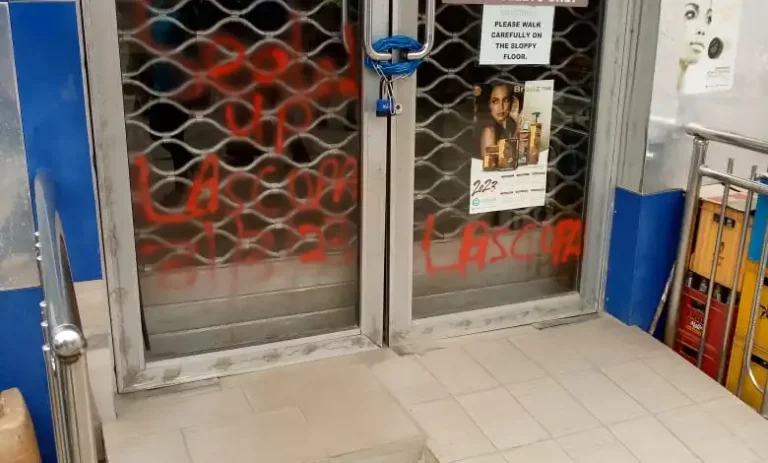
THE Lagos State Government has sealed two more supermarkets – Green Basket and TobbyEd, located at 35 and 40 Fola Agoro Street in the Shomolu area – for selling expired products.
The General Manager of the Lagos State Consumer Protection Agency (LASCOPA), Afolabi Solebo, a lawyer, said selling expired products contravened consumer rights law.
In a statement on Monday, April 3, Solebo said the expired products sold by the supermarkets include Tomi Apple Drinks, Nutriben Cereals, SMA Gold and Quick Oats, among others.
He explained that during its inspection of the supermarkets, the Monitoring and Enforcement team of the agency discovered that some of the products had expired since January 2023 yet were still being displayed for sale to unsuspecting consumers in violation of the Consumers’ Rights Protection Law of the state.
He urged people in the state to contact his organization about any outlet found selling expired or hazardous products to the public across the state by visiting the agency’s head office located at 2b, Soji Adepegba Close, Off Allen Avenue, Ikeja, or any of its Annex offices at Badagry Local Government Secretariat, Bariga LCDA Secretariat, Ikoyi-Obalende LCDA Secretariat and Ikorodu Local Government Secretariat.
He also advised the state residents to call 08092509777, 08124993895, 09064323154 or email lascopa@lagosstate.gov.ng or lascopa@gmail.com to report any individual or company that infringes on their rights.
The ICIR reports that sealing the two supermarkets followed a similar action by LASCOPA on March 29.
The agency shut down Chiffy Supermarket, located at 3 Oduduwa Crescent GRA, Ikeja, for selling expired toothpaste and other household products.
Solebo visited the supermarket following a tip-off from a consumer’s Facebook post alerting the agency and the general public on the sales of expired products.
“Upon arrival at the supermarket, Solebo disclosed that the toothpaste and other products found in the store had no price tags and were all expired. He added that some of the products displayed for sale at the supermarket were discovered to have expired several months ago while being sold to unsuspecting consumers,” the agency said.
CANDIDATE of the All Progressives Congress (APC) in the governorship election in Rivers State Tonye Cole was on Monday, April 3, attacked by thugs who attempted to prevent him from accessing the Independent National Electoral Commission (INEC) office in Port Harcourt.
Cole said he, along with other party members, had arrived the INEC office to get documents required to challenge the election of the state’s governor-elect Siminalayi Fubara of Peoples Democratic Party (PDP).
Cole alleged that the thugs were sent by the PDP and threw stones, food and water at him till he was wounded.
“On Friday, we were at INEC, and we asked for these documents, but they have not given us a single one. We said we were coming back today (Monday) and because we said we are coming back today, the PDP organised thugs everywhere to prevent us from getting to the INEC office.
“I wasn’t deterred and so I went with my party chairman, the women leader, the youth leader, and senior officials of the APC to the INEC office.
“They had barricaded the road from GRA Junction, everywhere boys, girls. They began to assault me, I came out and a woman began to drag my shirt, they pulled me from the back, first, they were throwing water then they began to throw food and the next minute they started throwing stones.”
He also noted that there were also gunshots during the attack and his vehicles were destroyed in the process.
“We are supposed to be in a democracy and one of the tenets of democracy is that after an election, INEC being supposedly an impartial umpire will have documents and these documents are available to everybody who participated in the election.
“These are critical documents which when we take to an electoral tribunal, we will build our case upon that to the electoral tribunal,” Cole noted.
He urged INEC to move the venue of the election tribunal out of the state as the violence and tension could affect the process.
Cole lost the governorship election held in Rivers to PDP candidate Fubara, who won with 302,614 votes. The APC candidate got 95,274 votes but rejected the result declared by INEC.
Cole, who insists he won, has vowed to reclaim his mandate at the tribunal.
On election day, Cole alleged that voters in certain areas of the state were intimidated by the ruling PDP.
A LAGOS High Court has dismissed the ‘no case submission’ filed by a suspended Assistant Superintendent of Police (ASP), Drambi Vandi, accused of killing Lagos-based lawyer Bolanle Raheem.
Vandi shot and killed the lawyer on December 25, 2022, while she was returning from Christmas Day church service in the Ajah area of Lagos.
He was subsequently arraigned before the court days after Police Service Commission (PSC) approved his immediate suspension.
At the resumption of the case on Monday, April 3, Justice Ibironke Harrison ordered the defendant to open his defence as a ‘prima facie’ case has been made against him.
Vandi had asked the court to dismiss the case and discharge him, stating that he had no case to answer.
In the no-case submission, Vandi’s lawyer, Adetokunbo Odutola, argued that none of the eyewitnesses saw the defendant fire the gunshot. He added that the ballistic report of the gun allegedly fired stated that the bullet could not be linked with any of the firearms recovered from the police officers at the scene.
Odutola also pointed out that the pathologist who testified mentioned that the bullet penetrated from the left through the armpit, while the prosecution stated that the deceased was shot in the chest.
The prosecution led by Attorney General of Lagos State, Moyosore Onigbanjo (SAN), countered the defence counsel’s arguments and urged the court to order the defendant to defend himself. He insisted that the prosecution had successfully made its case against the cop.
Ruling on the matter, the court dismissed the ‘no case’ submission and ordered the alleged killer cop to defend himself.
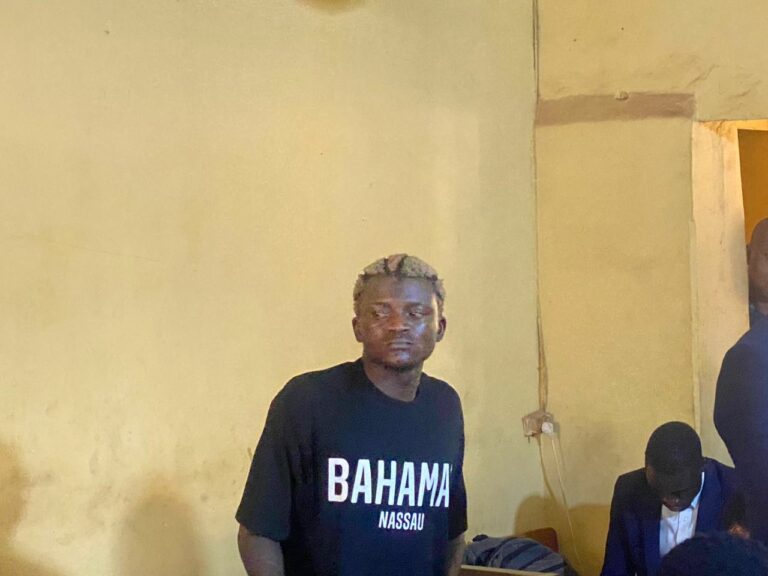
A FEDERAL High Court in Ogun State has granted singer Habeeb Okikiola (Portable) bail in the sum of N 300,000.
The ICIR had reported how Portable resisted arrest and hurled insults on the men of the Nigeria Police Force.
The incident led to the Police vowing to arrest and prosecute the musician.
Portable was subsequently arrested on Friday, March 31, by the Ogun State Police Command.
The Police, however, charged him to court today, Monday, April 3.
The charges against portable read, “That you, Badmus Habeebat Okikiola, M, A.KA Portable, and others now at large on the 28th day of March, 2023 at 11am at Odogwu Bar, Oke-Osa, Ilogbo, Ifo in the Ifo Magisterial District did willfully cause or inflict physical injury on one Inspector Hammed Moshood ‘m’ with your elbow on his nose which caused blood to gush out from his nose and thereby committed an offence contrary to and punishable under Section 4 (1) of the Violence against persons & Prohibition Laws of Ogun State of Nigeria, 2017.
“That you, Badmus Okikiola A.KA Portable on the same date, time and place in the aforementioned Magisterial District did resist to be arrested by Inspector Hammed Moshood ‘m’, ASP Gregory Iyoha ‘m’, ASP Kunle Badmus ‘m’ after serving you with Police Invitation Letter on the 20 day of January, 2023 for the offences you committed when they were about to discharge their duty with warrant of arrest on you thereby committed an offence and punishable under Section 197 of the Criminal Code Laws of Ogun State of Nigeria, 2006.”
The singer’s counsel Adodo Destiny prayed the court to grant the defendant bail.
Delivering his ruling on the prayer, Magistrate A.S Shoneye explained that the offences were bailable.
She, therefore, granted Portable bail with bail bond of N300,000 and two sureties who must reside within the jurisdiction of theke court.
Shoneye instructed that the defendant be transferred to the Ilaro correctional centre, pending the time his bail requirements were met.
The court adjourned the case till April 26 for the commencement of trial.
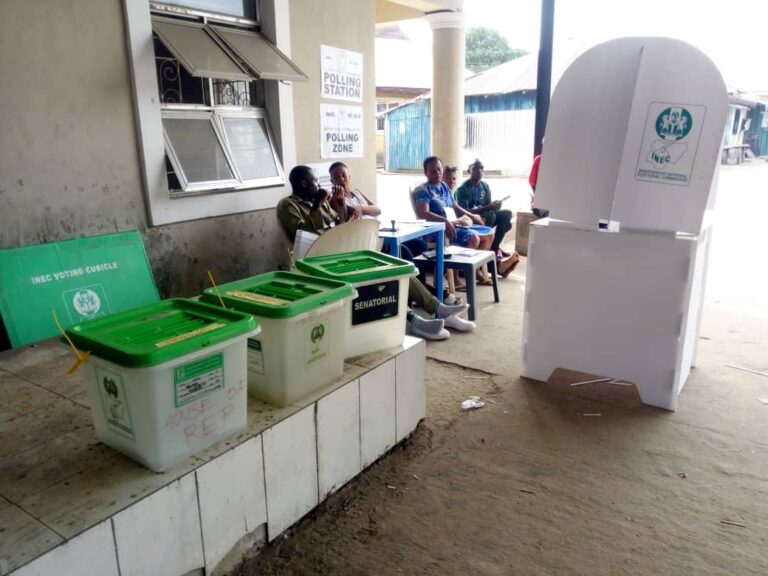
THE 2023 elections fell short of the promises and expectations of Nigerians, in spite of the deployment of world-class and highly expensive technology. The irregularities could put Yakubu Mahmood in the bracket of past electoral chairmen who failed the integrity test.
The Chairman of the Independent National Electoral Commission (INEC), Yakubu Mahmood, has come under criticisms for the controversial conduct of the 2023 elections, which fell far short of ‘the best election ever’ in Nigeria.
In the presidential election, the electoral umpire’s failure to upload results from polling units granted fraudsters the opportunity to intimidate electoral officials and subsequently announce doubtful results resisted by opposition parties. The governorship elections, promised to be an improvement on the presidential election, was also totally disappointing.
First, there was low voters turnout, explained as a manifestation of the lack of confidence in the electoral process, but worse still, there was naked violence, voter suppression, carting away of ballot boxes, and declaration of questionable results. As it stands, the professor of history is likely going to end his career on this note, as another intellectual who presided over an electoral process that failed the people. Below are the stories of previous electoral chairmen who have disappointed Nigerians:
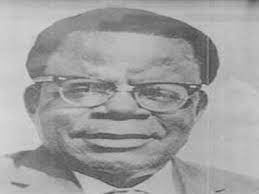
Eyo Esua: ‘We can’t deliver free and fair elections’
Eyo Esua
Perhaps, the most awkward but shocking episode in Nigeria’s electoral drama occurred in the 1964/1965 fire and blood elections, causing the chairman of the Federal Electoral Commission (FEC), Eyo Ita Esua (1901-1973), to throw in the towel in an unNigerian manner. Unconfirmed accounts said Esua actually wrote his resignation letter, dropped it on his table, and flew back to his base in Calabar, an odd style of dumping a national assignment. Instead of formally submitting the letter to Tafawa Balewa-led federal government, Esua was said to have run away from the job, as if he was being chased away by mysterious, deadly forces.
In the smoky confusion, Esua told a beleaguered nation that the FEC could not deliver free and fair elections under the chaotic political atmosphere, a confusion deliberately orchestrated by mischief-making politicians.
As it is the practice today, governments sought for credible Nigerians, especially, those with track-record of resisting corrupt practices and impartiality, to appoint as head of electoral umpire. In the case of Esua, the Balewa-led government plugged him from labour activism; he was a founding member of the Nigerian Union of Teachers and its National Secretary from 1943 to 1964. Being a schoolmaster who led a spartan lifestyle, and from the Efik minority ethnic group in Calabar, Esua was fit for umpire in elections involving rival candidates from Hausa-Fulani, Yoruba, and Igbo-dominating ethnic communities in Nigeria.
As the first indigenous head of the electoral body (the 1959 elections were conducted by the British colonial government), Esua was confused at the power struggle between the Northern, Western and Eastern regions, as mutual suspicion along ethnic and religious lines took the front seat instead of political and economic ideologies for the growth and prosperity of Nigeria.
In the December 1964 federal elections, there was so much electoral dispute that two electoral commission members dumped the job. The election in the Western region did not hold until 1965 due to a political crisis. But with widespread electoral malpractices and violence, Esua admitted that the Commission could not deliver a free and fair election and led the job. The electoral crisis in the Western Region dovetailed into the 1966 coup d’etat and the unfortunate three-year Nigerian Civil War.
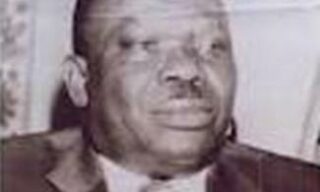
Michael Ani: Mathematical electoral chairman
After the Nigerian Civil War and about a decade of military rule, an accomplished and retired civil servant, who was found worthy of crucial tasks by the military governments, Michael Ani (1917-1985), got the plum job as Chairman of the Federal Electoral Commission (FEDECO) in 1976. The military Head of State, General Olusegun Obasanjo, appointed him to that position on the basis of his experience and credibility.
Michael Ani’s electoral commission conducted the highly contested 1979 general elections. Like the 2023 elections, the voting pattern was along regional and religious lines.
Shehu Shagari’s National Party of Nigeria (NPN) was dominant in the North; Obafemi Awolowo’s Unity Party of Nigeria (UPN) received more votes in the West, while Nnamdi Azikiwe’s Nigerian Peoples Party (NPP) got more votes in the East.
In the election, Shagari polled (5.6 million); Awolowo (4.9 million), and Azikiwe (2.8 million). With this polarisation, Ani’s electoral umpire, made up of 24 electoral commissioners, needed to interpret a clumsy section of the electoral law, which said, “a candidate must obtain one-quarter of votes cast in at least two-thirds of the states of the federation.”
Ani declared Shagari as president-elect on this basis. Not many people believed the electoral commission got the answer of the arithmetic correct; it was perceived that the formula Ani used to decide the winner was influenced by the Obasanjo military government’s design to shift political power to the North, by using the electoral body to anoint Shagari as the winner.
There were 19 States. Two-thirds meant the winner must produce a minimum of 25 per cent in 12.66 states. Shagari met the threshold in 12 states and 19.9 per cent of votes in Kano State, which was short of 12.66 states. Awolowo argued that the winner must secure 25 percent of votes in 13 states, approximating .66 per cent to a whole number. The case went up to the Supreme Court, which affirmed Shagari as the winner of the election. However, on his part, the perception that Ani’s arithmetic was biased did not erase until his death in 1985.
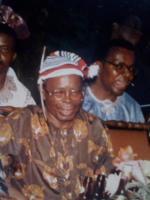
Justice Victor Ovie-Whisky: Tenure marred by unlikely NPN victory in Ondo State
Justice Victor Ovie-Whisky
In 1980, shortly after assuming office as president, Shagari appointed a justice, Victor Ovie-Whisky (1923-2012) as FEDECO chairman.
A former Chief Judge of the defunct Bendel State, Ovie-Whisky was perceived as non-political and upright. However, many irregularities marred the election conducted under his watch in 1983, and electoral officials were accused of malpractices in favour of the ruling NPN, to the point that journalists suspected water passed under the bridge in the electoral process.
Like the 1965 election, where an alliance between a section of the West and a dominant political party in the North caused serious violence, the 1983 electoral crisis was caused by the unlikely NPN victory in Ondo State, a traditional stronghold of the Unity Party of Nigeria (UPN).
In that election, FEDECO, headed by Ovie-Whisky was accused of using ‘federal might’ to rig the election in favour of Omoboriowo, a former deputy governor under UPN, who abandoned a governor, -Michael Ajasin, to grab the NPN governorship ticket.
The people could not endure that an NPN candidate would win a governorship election in the West, a stronghold of Awolowo – an arch-political rival to Shagari.
The turbulence generated by the election did not settle before the military sacked the Shagari government about five months after, on December 31, 1983. Ovie-Whisky said about the 1983 elections: “We did not expect to be perfect”.
The professor’s first major challenge was the conduct of local government elections which was marred by poor planning and malpractices. There were unmanageable crowds at many polling units and irregular voter registers, making it difficult for voters to locate their polling units.
Awa resigned from the position two years after, purportedly due to disagreements with IBB, but it was not clear what that disagreement was all about. In his memoir, published posthumously, Awa claimed some members of the Armed Forces Ruling Council (AFRC) ganged up against him over the outcome of the local government elections, discrediting the process due to the chaos in some three hundred out of over 5,000 polling stations across the country, and forced him to resign as NEC chairman.
The tone of his memoir, entitled ‘My Journey to Nigeria,’ echoed the bitter experience he had with the military and political class during his tenure as FEDECO chairman.
Humphrey Nwosu: June 12 and Option A4 electoral chairman
To his credit, Nwosu implemented the now famous Option A4 and Open Ballot system, which were meant to test the popularity of contestants in elections, from ward to national level. Then, to ensure transparency, voters were meant to queue on rows assigned to the party or candidate of their choice before they cast their vote.
It was, therefore, possible to predict winners in an election through the number of voters who lined up behind their party’s logos. Incidentally, it was Nwosu who conducted one of the freest and fairest elections in Nigeria – the June 12, 1993 presidential election that the late Moshood Abiola of the Social Democratic Party (SDP) was acclaimed to have won. But, the process was aborted as legal intrigues set in and the election was annulled, though Nwosu had announced the results from many states in Nigeria. The reason for the annulment of the election is still not clear, 30 years after it was cut short.
Okon Edet Uya: Electoral chairman who didn’t conduct an election:
However, the 1993 political crisis created serious confusion and an atmosphere that made it impossible for the conduct of fresh elections. Sani Abacha, a general, later swept away the interim government of Ernest Shonekan.
The new military government sacked Uya as chairman of the electoral body. He returned to the University of Calabar as Deputy Vice-Chancellor and later Acting Vice-Chancellor.
Karibi Dagogo-Jack: Umpire during infamous ‘Abacha-for-president’ era
Under General Sani Abacha, Summer Karibi Dagogo-Jack held sway as the powerful chairman of NECON. He was not a stranger to the electoral body because Dagogo-Jack was a member of the Humphrey Nwosu-led team.
The parties included the United Nigeria Congress Party (UNCP); Congress for National Consensus (CNC); Democratic Party of Nigeria (DPN); National Centre Party of Nigeria (NCPN); and Grassroots Democratic Movement (GDM). Though the parties adopted Abacha as their presidential candidate, Dagogo-Jack did not conduct the election before Abacha’s demise in 1998. However, he conducted local council and National Assembly elections. The fact that Dagogo-Jack was part of the infamous Abacha regime affected his image.
Ephraim Akpata: Conducted elections questioned by former US President Carter
Ephraim Omorose Ibikun Akpata (1927-2000), a Justice of the Supreme Court, was the first chairman of the INEC, appointed in 1998 by then Head of State Abdulsalami Abubakar, to conduct elections that ushered in the Fourth Republic.
In an election keenly contested by the Peoples Democratic Party (PDP), which fielded Olusegun Obasanjo, on the one hand, and the joint ticket Alliance for Democracy (AD) and All Peoples Party (APP), that had Olu Falae as the presidential candidate, Obasanjo won the votes by over 60 per cent.
Reports on later elections were more critical, describing irregularities including inflated vote returns, ballot box stuffing, altered results, and disenfranchisement of voters.
A former United States President Jimmy Carter wrote a letter to Justice Akpata, saying, “There was a wide disparity between the number of voters observed at the polling stations and the final results that have been reported from several states. Regrettably, therefore, it is not possible for us to make an accurate judgment about the outcome of the presidential election.” To his glory, Nigeria successfully conducted a democratic election which produced a president after about 15 years of military rule. But Akpata may not have been very proud of the process that produced the Obasanjo presidency.
Abel Guobadia: Caught up in do-or-die power struggle
Abel Guobadia
After the death of Akpata in 2000, Dr Abel Guobadia (1932-2011) was appointed in his place in May 2000. Sir Guobadia conducted the 2003 election that returned the PDP’s candidate Obasanjo as president until 2007, another four-year period. The election was passed by the government and Nigeria’s foreign allies as free and fair, ignoring malpractices. In that election, General Muhammadu Buhari of the APP, in his first attempt at returning to the top job in Nigeria, lost to Obasanjo.
It was the Human Rights Watch that provided an alternative report in its June 1, 2004 edition. It said, “In April and May 2003, at least one hundred people were killed and many more injured during federal and state elections in Nigeria.
The majority of serious abuses were perpetrated by members or supporters of the ruling party, the People’s Democratic Party (PDP). In a number of locations, elections simply did not take place as groups of armed thugs linked to political parties and candidates intimidated and threatened voters in order to falsify results.
The violence and climate of intimidation facilitated widespread fraud, invalidating the results of the elections in many areas. Nevertheless, the elections were hailed as peaceful by Nigeria’s President Olusegun Obasanjo, who was re-elected, and were widely praised by foreign governments, including Nigeria’s key foreign allies. The 2003 elections were significant for Nigeria as the country’s first sustained transition from one civilian government to another.”
After completing his five-year tenure in May 2005, Guobadia retired from his position as Chairman of INEC, the first to do so in the history of electoral commission in Nigeria.”
Maurice Iwu: Conducted elections faulted by winner
Maurice Iwu
If any Nigerian who is politically active is asked to mention the names of electoral chairmen Nigeria has had, it is most likely that Maurice Iwu would be mentioned among the first three of them.
Appointed as INEC commissioner from Imo State in 2003, Maurice Mmaduakolam Iwu, a professor, succeeded Guobadia as chairman of the commission in 2005. The tenure of the professor of Pharmacognosy was, however, very controversial.
First, Iwu drew the ire of civil society organisations when he told the world that international monitors would not be permitted during the country’s elections. His rancorous tenure made him an unforgettable INEC chairman. He was head of INEC during the 2007 elections, said to be so contaminated with a lot of irregularities that politicians demanded Iwu’s resignation.
As a way of repairing the electoral mess, Yar’Adua had to set up the Mohammed Lawal Uwais electoral reform panel in 2007, shortly after he was sworn in as president. Though the reform panel was a subtle indictment on Iwu, a sign that the government had lost confidence in him, he failed to resign from his position as INEC chairman, until 2010 when President Goodluck Jonathan sent him packing. Unfortunately, Iwu became an epitome of whatever could go wrong in an election in Nigeria.
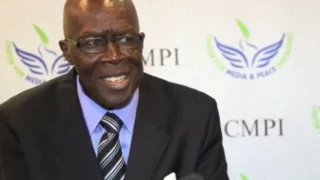
Attahiru Jega: Introduced electronic accreditation through card reader
Attahiru Jega
Another professor, Attahiru Muhammadu Jega, who was a member of the Uwais Electoral Reform panel, succeeded Iwu as INEC chairman. President Goodluck Jonathan appointed Jega to that position in June 2010, barely a year to the 2011 general elections. Jonathan claimed that he appointed Jega based on recommendations that the professor of political science was fair-minded, upright and could not be manipulated.
The issue of power rotation between North and South became a heated debate in Nigeria, challenging Jonathan’s decision to contest in the 2011 election, when the North felt it should produce the next president as Yar’Adua did not complete his term before his demise.
Ahead of the next election in 2015, Jega’s INEC introduced electronic card reader, a technology used to accredit voters before they were given ballot papers to vote. The device significantly reduced ballot box stuffing, a constant fraud that tainted previous elections.
In the 2015 election, Muhammadu Buhari of the All Progressives Congress (APC) challenged Goodluck Jonathan of the PDP. Though keenly contested, Jonathan took a step unprecedented in Nigeria’s political history, to congratulate Buhari when it was obvious the former head of state had won. The 2015 elections were acclaimed to be credible, though not without some flaws. While the ovation was still high, on June 30, 2015, Jega retired from his position as chairman, and handed over the Commission to the next most senior Electoral Commission.
Dr Abbah, a Fellow of the Chartered Institute of Forensic Investigation and Fraud Examiners of Nigeria, lives in Abuja. Follow him @theophilusa