

IN the buildup to elections, political actors charge up the electoral space with various campaign promises; however, in most cases, such promises trap them when they go unfilled.
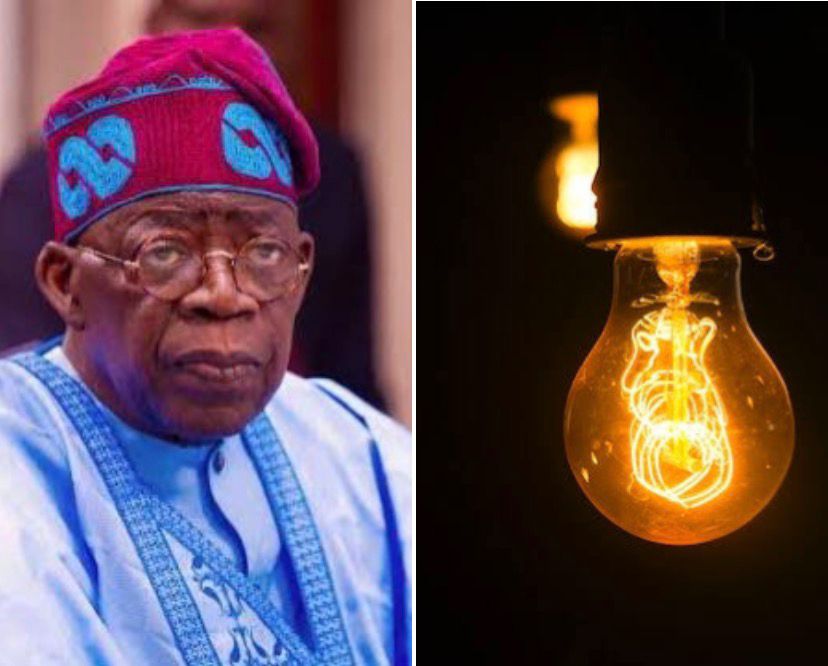
This is the case of President Bola Ahmed Tinubu, Nigeria’s current President, who is under intense public scrutiny for an election promise to deliver a constant power supply.
Having staked his re-election bid on constant electricity supply, the president is currently overwhelmed with myriad problems in the electricity sector, with electorates calling him out on the failed promise.
The president had said during the presidential campaign in 2023, “If I do not provide steady electricity in my first four years, do not vote for me in the second term…”
President Tinubu’s promise has put him on the spot and has elicited several reactions from Nigerians, including opposition party stalwarts.
“If I do not provide steady electricity in my first four years, do not vote for me for a second term,” a former presidential candidate, Peter Obi, quoted the president as saying. He noted that the national grid had already collapsed twice in January 2026 alone, adding that it collapsed about 12 times in 2025.
“This reality sharply contradicts the promise and should worry every patriotic Nigerian,” Obi said.
Despite power sector privatisation in 2013 and over $1.5 billion in intervention from the World Bank and other development partners, Nigeria’s power supply has gone from worst to worse.
From numerous records of grid collapse and inability to distribute and transmit power efficiently, Nigeria still oscillates between 4000 and 5000 megawatts (MW) of power for over 200 million of its population.
Several steps have been taken by the Nigerian Electricity Regulatory Commission (NERC) to unbundle the sector, but the transition is yet to yield the desired results maximally, as states are still on snail speed in taking regulatory responsibility and promoting energy mix beyond federal interventions.
A current teething problem is the inability of the sector to fund itself effectively without relying on government subventions or subsidies despite privatisation.
Recently, the federal government urged states to take up part of montly subsidy in the power sector, as the debt burden proves unsustainable.
This has placed a debt burden on the value-chain players, most especially the generation companies, who are currently being owed over N6 trillion for their power generation.
To worsen the concern, Nigeria’s prolonged power outages, affecting businesses across the country, are primarily due to inadequate gas supply to thermal power plants.
The Nigerian Independent System Operator (NISO) announced on Friday, February 27.
The system operator attributed the sustained drop in electricity generation to severe fuel constraints affecting the national grid.
Confirming this in a statement titled “Declining Power Output Attributable to Generation Shortfalls and Gas Supply Limitations,” released on its official handle, NISO said the average available generation currently hovers around 4300 megawatts, far less than Nigeria’s installed capacity of 15,500 megawatts.
This is not the first time NISO has issued this alert; the outages began in early February following scheduled maintenance on key Gas infrastructure by the Nigerian National Petroleum Company Limited and Replay Energy, which temporarily disrupter Gas deliverables to several thermal plants, triggering a nationwide decline in electricity generation.
The situation has persisted due to ongoing constraints in gas supply, worsening the power shortfall.
The NISO statement explained that the drop in supply is directly linked to severe gas constraints affecting thermal generating stations, which form the dominant share of Nigeria’s electricity generation mix.
“We hereby notify the general public and all market participants that the current average available generation of approximately 4,300MW is primarily due to inadequate gas supply to thermal generating stations,” the operator said.
It added that because thermal plants form the backbone of the national grid, any disruption in gas supply automatically translates into lower generation and reduced energy allocation to Distribution Companies.
“Given that thermal plants account for the dominant share of Nigeria’s generation mix, any disruption or limitation in gas supply directly affects available generation capacity and overall grid output,” the statement added.
NISO provided operational data to illustrate the extent of the shortfall, stating that thermal power plants require an estimated 1,629.75 million standard cubic feet (mmscf) of gas per day to operate at optimal capacity.
However, as of February 23, 2026, actual supply stood at approximately 692.00 mmscf per day — representing less than 43 per cent of the required volume.
Power generation companies confirm poor power supply nationwide
Commenting on the epileptic power supply, the Power Generation Companies (GenCos) have attributed Nigeria’s persistent average electricity generation of about 4,000 megawatts (MW), despite an installed capacity of 15,500MW, to liquidity challenges, weak contract enforcement and structural bottlenecks in the Nigerian Electricity Supply Industry (NESI).

The Association of Power Generation Companies (APGC), in a statement issued in Abuja by its Chief Executive Officer, Joy Ogaji, said the current market design discourages investment in capacity recovery and expansion, leaving about 7,000MW of mechanically unavailable capacity unrepaired.
According to the association, the failure to recognise and pay for available generation capacity under existing commercial arrangements has removed a key incentive for power producers to restore idle equipment.
“This singular reason has kept the sector at about 4,000MW of average grid generation for many years, notwithstanding an installed capacity of 15,500MW. This is a clear anomaly in the market,” the group stated.
The GenCos explained that electricity generation requires significant upfront investments and long-term cost recovery, but operators are paid only for power that transmission and distribution networks can absorb, rather than for capacity already made available for dispatch.
They noted that under standard Power Purchase Agreements (PPAs), generators are expected to receive payments for available capacity, nominated capacity and metered energy. However, the current practice of recognising only called-up power has weakened investor confidence and undermined the financial viability of power plants.
The association further disclosed that many power plants currently operate without active PPAs, describing the situation as a major risk for both local and international investors. It added that the absence of firm contractual backing has also made it difficult for generation companies to secure Gas Supply Agreements (GSAs), worsening fuel constraints across the sector.
GenCos also identified operational bottlenecks outside their control as major contributors to low power supply. These include the inability of the Transmission Company of Nigeria (TCN) to efficiently wheel available power, frequent load rejection by distribution companies (DisCos), and poor revenue collection across the value chain.
“The structure of the sector is such that poor performance is contagious,” the group said, noting that when DisCos fail to collect sufficient revenue, they are unable to settle energy invoices, further deepening liquidity problems.
The association revealed that generation companies are currently owed over ₦6.2 trillion, with only about 35 per cent of their invoices settled since 2015. It warned that persistent non-payment has rendered many GenCos technically insolvent and severely constrained their ability to invest in capacity maintenance and expansion.
According to the group, contrary to public perception, generation companies are not beneficiaries of electricity subsidies but are “the biggest victims” of the current system.
The GenCos stressed that the situation contradicts the objectives of the Multi-Year Tariff Order (MYTO) and the Federal Government’s Power Sector Recovery Programme, both designed to support a contract-based and financially sustainable electricity market.
They called for restoration of contract sanctity, full payment for available capacity and stronger enforcement of market rules, warning that failure to address these issues will continue to constrain electricity supply to consumers.
“Security of supply is strongly dependent on how quickly the electricity market can debottleneck the constraints imposed by other critical stakeholders,” the GenCos stated.
The association maintained that increased generation capacity would not translate into improved power supply unless financial and operational weaknesses across the electricity value chain are urgently addressed.
Nigeria’s power continues to fail despite privatisation
Nigeria’s power sector post-privatisation has failed to light up Nigeria despite over N7 trillion in intervention to uplift the sector.
This was disclosed by the Electricity Consumer Protection Forum (ECPA), National Coordinator, Ademola Samuel Ilori.
Ilori told The ICIR that consumers were not benefiting optimally from the privatisation.
“The government is still sinking money into the privatised power sector. This is not a good development. Already, N3.3 trillion was put into the sector under President Buhari without appreciable progress. We’re not far from 4,000MW despite these trillions. Consumers are not getting the best service.
“Banks are gradually taking over the bank’s acquisition due to illiquidity and huge debts by distribution companies (discos). We need to go back to the drawing board and review the licensing of the discos,” he said.
The power sector was privatised on November 1 2013. However, it still relies on intervention support from the World Bank, the Federal Government and the Central Bank of Nigeria (CBN) to survive.
After privatisation, the sector was projected to grow its on-grid power to 40,000 MW in 2020. But as of 2023, on-grid power is slightly above 4,000MW, raising concerns about the efficiency of the privatisation.
The former Special Adviser on Energy and Infrastructure, Office of the Vice President, Sodiq Wanka, had earlier said that ten years on, the objectives of the nation’s power privatisation had not been met as, according to him, over 90 million Nigerians still live in darkness due to a lack of access to grid electricity.
He noted that the key objectives of the privatisation were to improve the efficiency of the power sector, unlock private sector investments, and unleash the nation’s potential through an energised economy.
“I believe it is fair to say that the objectives of sector privatisation have, by and large, not been met. Over 90 million Nigerians lack access to electricity.
He further said the national grid only served about 15 per cent of the country’s demand. This, he said, left households and factories to rely on expensive self-generation, which supplies a staggering 40 per cent of the country’s demand.
“What is worse is that the total amount of electricity that can be wheeled through the national grid has remained relatively flat in the last 10 years.
“The grid capacity has increased from just over 3,000MW to typically just over 4,000MW today. Versus a 40,000MW target by 2020 that the Federal Government had set for the pre-privatisation”, he said.
He also said that liquidity problems in the sector could be averted if cost-reflective tariffs were enforced while different stakeholders honour their commitments to the terms of contracts entered into with the Nigerian Electricity Regulatory Commission (NERC).
“As of the second quarter of 2023, for every kWh of electricity sent to the grid, only 60 per cent of it is paid for. But as we know, even the tariff paid for that unit of electricity is far from being cost-reflective, especially in light of the recent devaluation of the naira.
“The sector has suffered from chronic underinvestment, especially in transmission and distribution. Many of the successor utilities of the Power Holding Company of Nigeria (PHCN) have failed to meet their performance improvement targets due to technical and financial capacity issues,” he added.

Harrison Edeh is a journalist with the International Centre for Investigative Reporting, always determined to drive advocacy for good governance through holding public officials and businesses accountable.